
The story of ayam goreng: chicken that takes on yellow aroma before it is fried
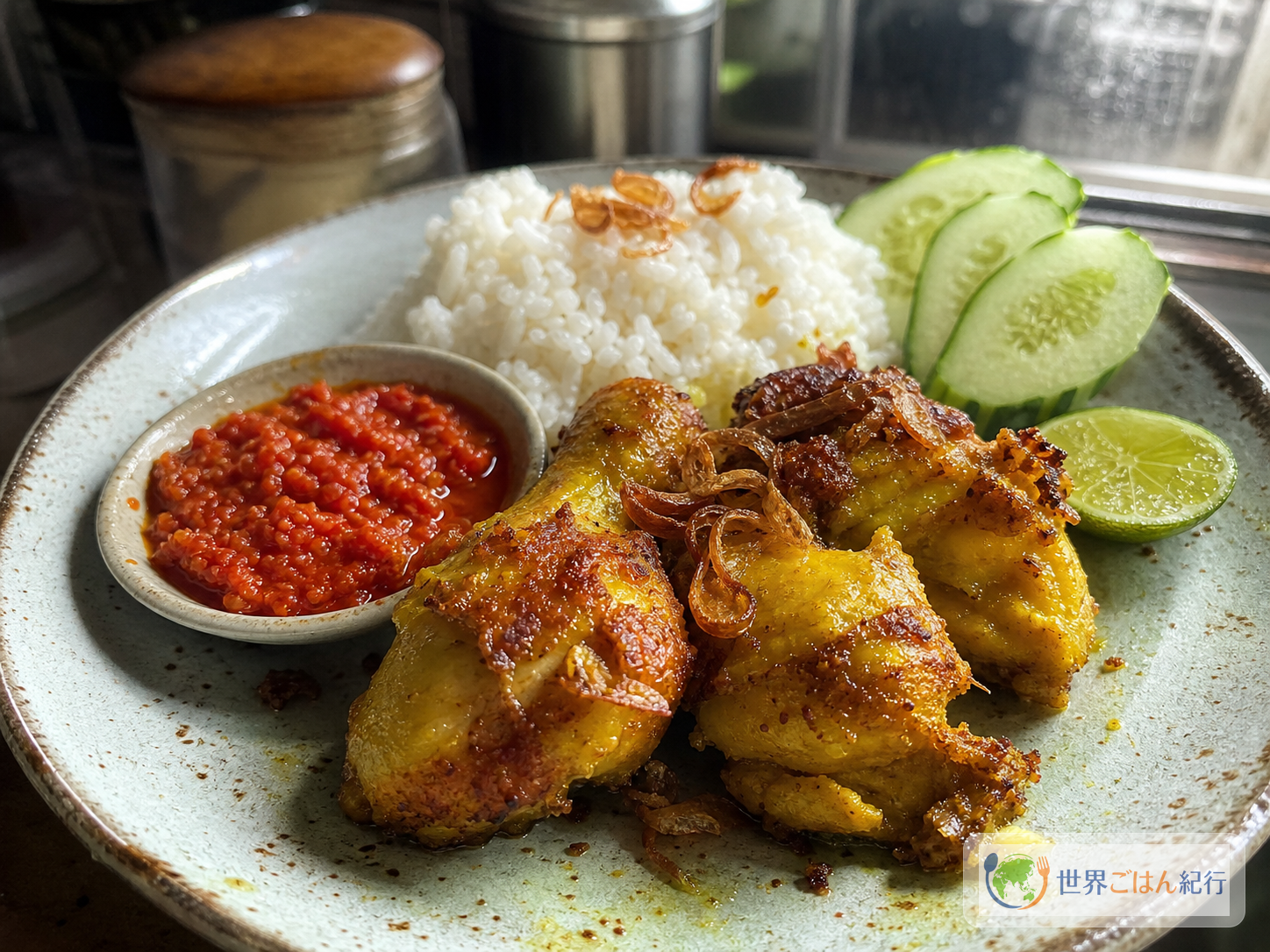
The moment the chicken goes into the frying oil, the aroma of turmeric and galangal fills the kitchen. Instead of a thick coating like fried chicken in the West or Japan, the chicken is first simmered in an aromatic paste called bumbu, so the flavor goes into the meat, and only the surface is fried briefly. This is the pleasure of ayam goreng.
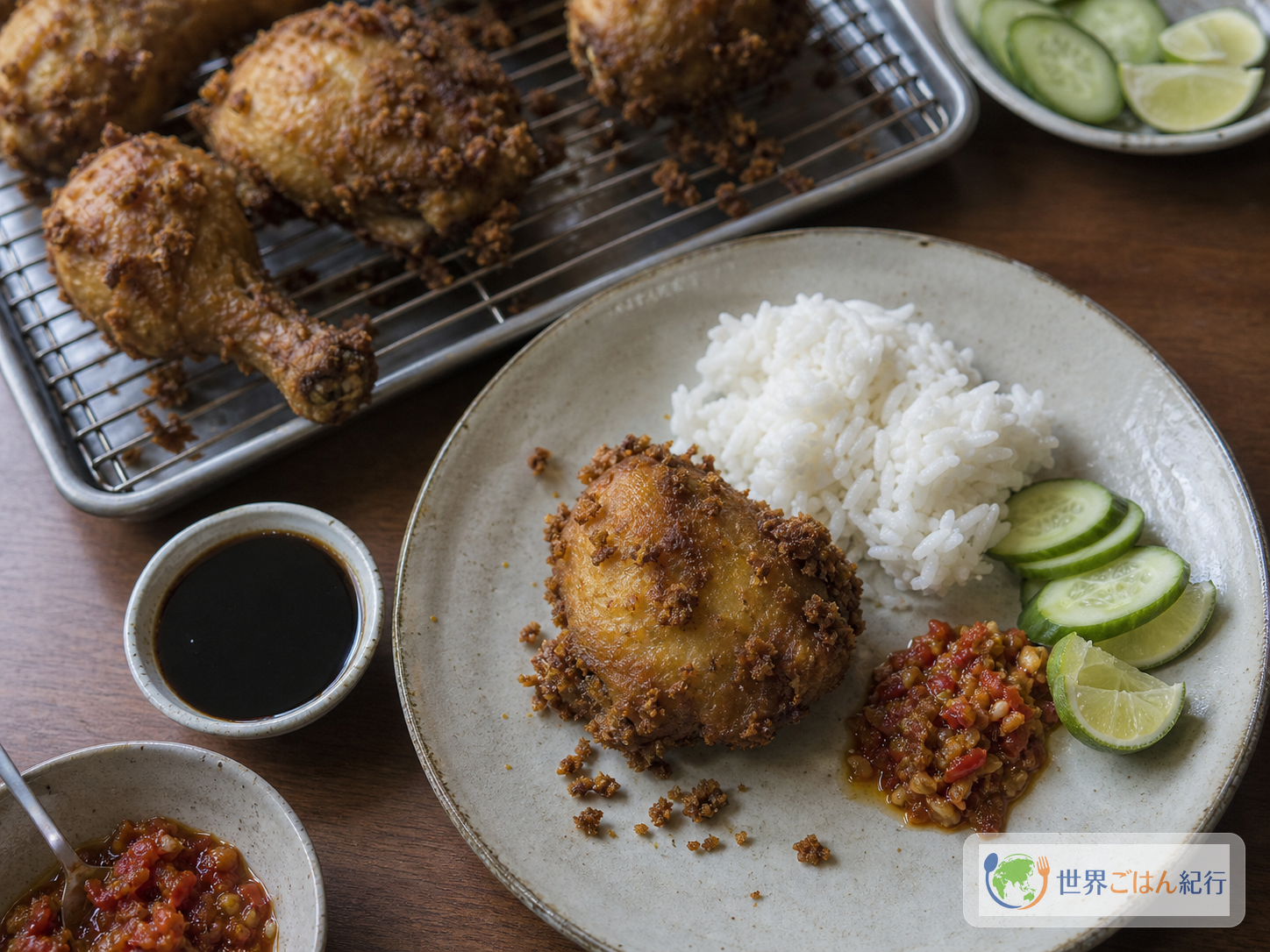
In Indonesian, ayam means chicken and goreng means to fry or stir-fry. You meet the dish at street stalls, eateries and in home-cooked batches, and it is usually served with white rice, sambal and raw vegetables such as cucumber and tomato. Wikipedia's ayam goreng entry also sorts out the way it is eaten with rice, sambal, cucumber and tomato, and the regional and shop variations such as galangal, kalasan, kremes and penyet.
In this article I use bone-in thighs or drumettes that are easy to handle at home, put the ungkep pre-simmer in between, and finish in shallow oil. The core to bring it close to the local taste is turmeric, galangal, lemongrass and makrut lime leaves. Even on days you can't gather them all, you can make it by sorting out where to hold the line and where you can substitute.
The ayam goreng you eat at a street stall is not only about the hot chicken. The sambal at the edge of the plate, the cold cucumber, the steaming white rice and the lime squeezed by finger are all part of the plate. Even when you bring it to a home dinner, it is easier to eat if you don't just pile the chicken on a big plate and stop there. If you set out in advance the rice that catches the oil, the small dish that divides the heat, and the vegetables that cool the mouth, it doesn't feel heavy despite being fried.
Background of the dish: put the flavor in with ungkep, then fry
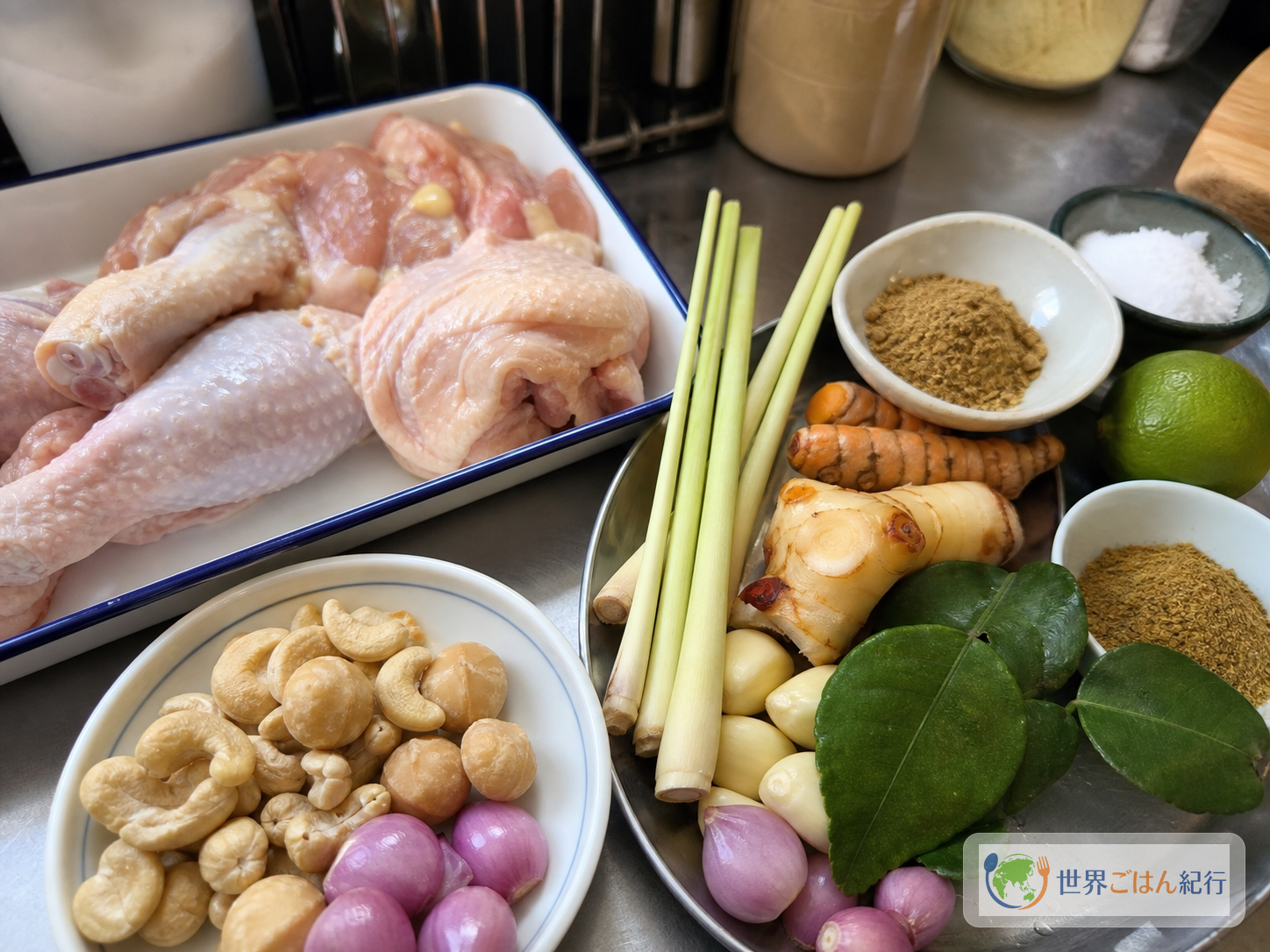
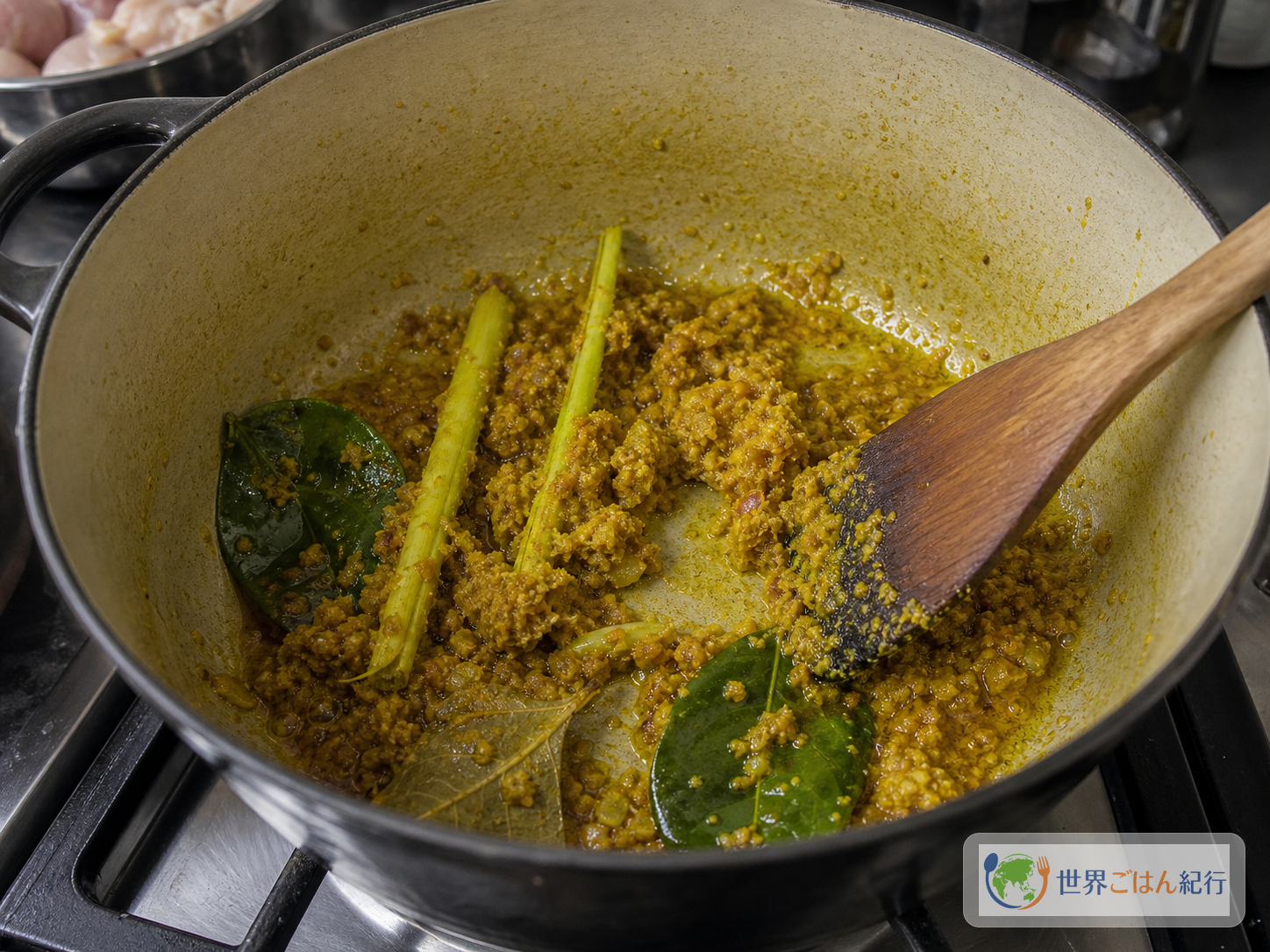
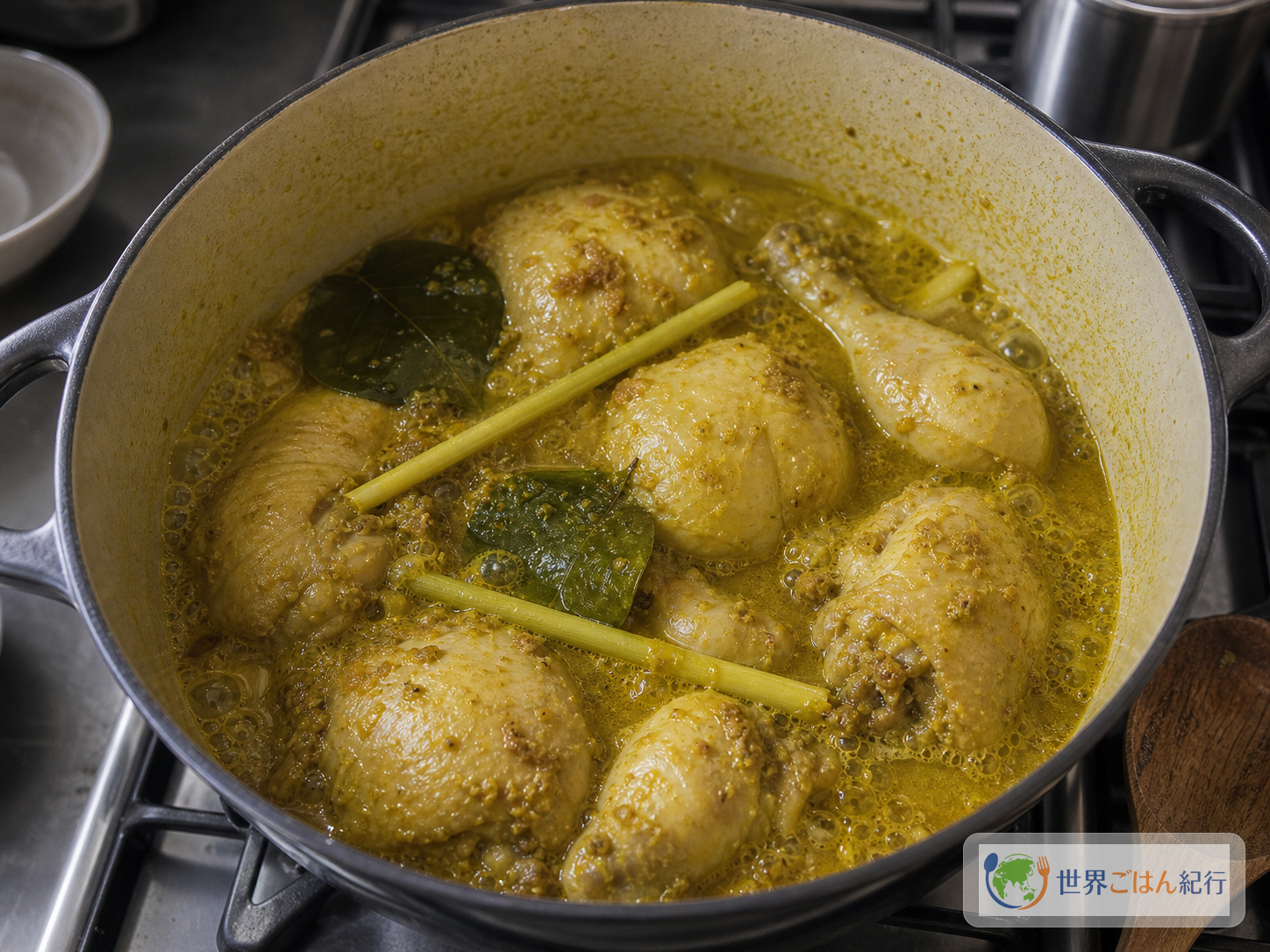
Kompas's ayam goreng bumbu kuning article describes coating the chicken with crushed aromatics, adding daun salam, daun jeruk and serai, simmering until the liquid is gone, and then frying in hot oil until it turns yellow. This "simmer first" step matters a great deal in home ayam goreng.
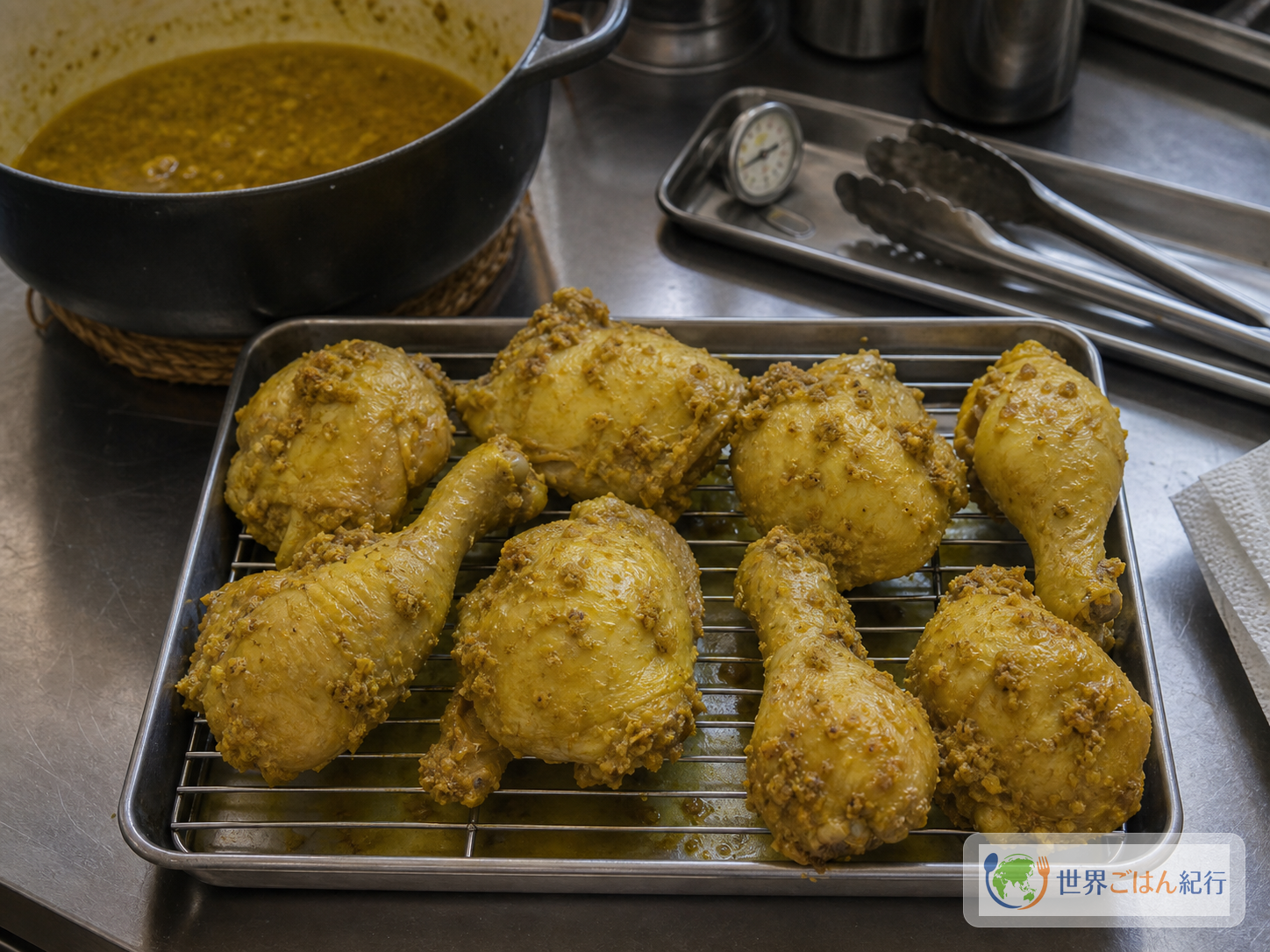
If you fry the chicken straight away, you worry whether it will cook through before the surface colors. Conversely, if you fry it too long, the aroma of the bumbu turns black and bitter. If you ungkep it first, the chicken cooks through and the aromatics move into the meat. The final oil is less a step for cooking than for making savoriness.
In Indonesia, "ayam goreng" does not only mean chicken in a yellow aromatic paste. In Javanese home cooking, the routine of simmering chicken in aromatics beforehand and frying it just before eating comes up often. It suits packed lunches and make-ahead cooking, and lets you serve only freshly fried pieces before guests. At street stalls, on the other hand, chicken that is already cooked is sometimes fried briefly again and eaten with the sambal or sweet soy sauce the customer chooses. In a home kitchen, holding to this idea of "cook through first, make savoriness last" lets you get a result even with little oil.
| Form | Region and way of eating | What to keep in mind at home |
|---|---|---|
| Ayam goreng bumbu kuning | Simmered in a yellow aromatic paste, then fried | Don't burn the turmeric and galangal |
| Ayam goreng lengkuas | Brings out the fibers and aroma of galangal strongly | Use a little more frozen galangal |
| Ayam goreng kalasan | A sweeter Javanese chicken, sometimes with coconut water | Too much sugar burns easily |
| Ayam penyet | Fried chicken lightly pressed onto sambal | Dividing the heat at the table makes it easier for a family |
| Ayam goreng kremes | Served with fried bits of the aromatics | They burn easily at home, so skip them the first time |
If ayam betutu is chicken wrapped in leaves to take on aroma slowly, ayam goreng is chicken that raises a yellow bumbu in a short time. It also differs from the sweet soy gloss of sate ayam, with earthy turmeric, sharp galangal and green lemongrass in front.
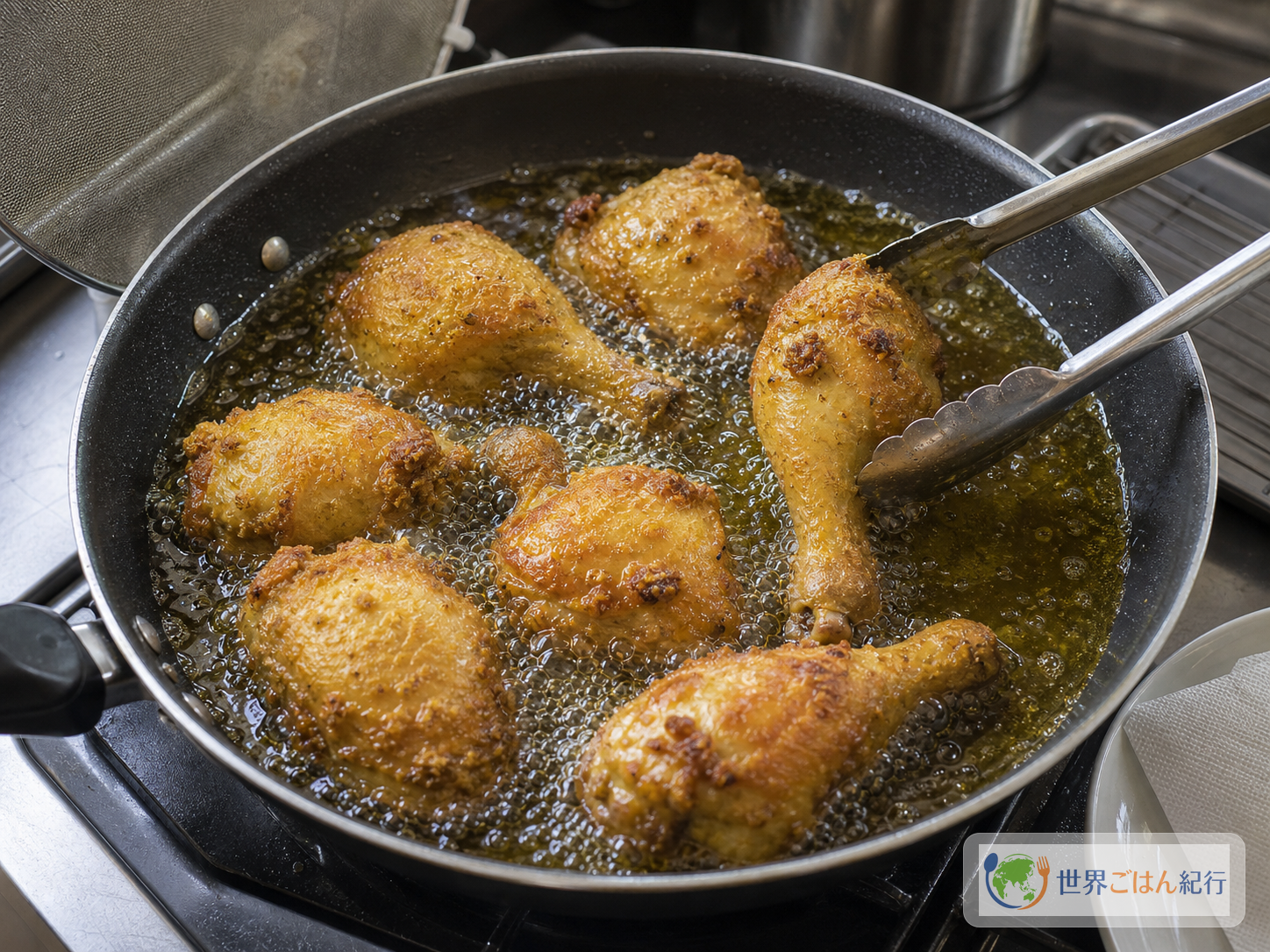
Calling it "Indonesian fried chicken" in English makes it seem close to Japanese karaage, but the idea of the method is quite different. Karaage coats seasoned meat in flour and cooks it in the oil. Ayam goreng is simmered first, so at the frying stage you watch the savoriness of the surface, not the center of the meat. Get this wrong and you fry longer trying to cook it through, and only the bumbu turns black. The first time, don't linger at the frying pot; stopping in the range from yellow to light brown is closer to the local aroma.
Ingredients | Separate the spice paste from what you fry
It serves four. Making it with 4 bone-in thighs, or drumettes and wing sections together to 900 g, makes the simmer and fry times easier to read. You can also make it with boneless thighs; cut 2 into large pieces and shorten the frying time.
It is less confusing to think of the ingredients in two groups: "what makes the chicken tasty" and "what makes the Indonesian aroma." Chicken, salt, lime and oil are fine from a nearby shop. Put your effort when shopping into the turmeric that gives the yellow color, galangal that smells like a hard citrus, green-scented lemongrass, and makrut lime leaves. Even on days you can't gather them all, understanding which ingredients overlap in role keeps it from leaning too far toward a plain fried chicken.
| Role | Main ingredient | How to think about substitutes |
|---|---|---|
| Color and earthy aroma | Turmeric | Use turmeric alone, not curry powder |
| Hard-citrus aroma | Galangal | Get close with ginger and lime zest, but treat it as different |
| Green aroma | Lemongrass, makrut lime leaves | Add aroma with zest or leaves, not more lemon juice |
| Thickness of the paste | Candlenuts, cashews | If nuts are not allowed, increase the onion and watch for burning |
The dish contains chicken, and the sweet soy sauce or store-bought sambal you might use can contain nuts, soy and wheat. In households with allergies, check product labels, and leave out the candlenuts and cashews and increase the onion by 20 g. Without nuts the paste is a little less thick, but it still works as a dish.
Shopping guide | Look at the aromatics, not the plain chicken
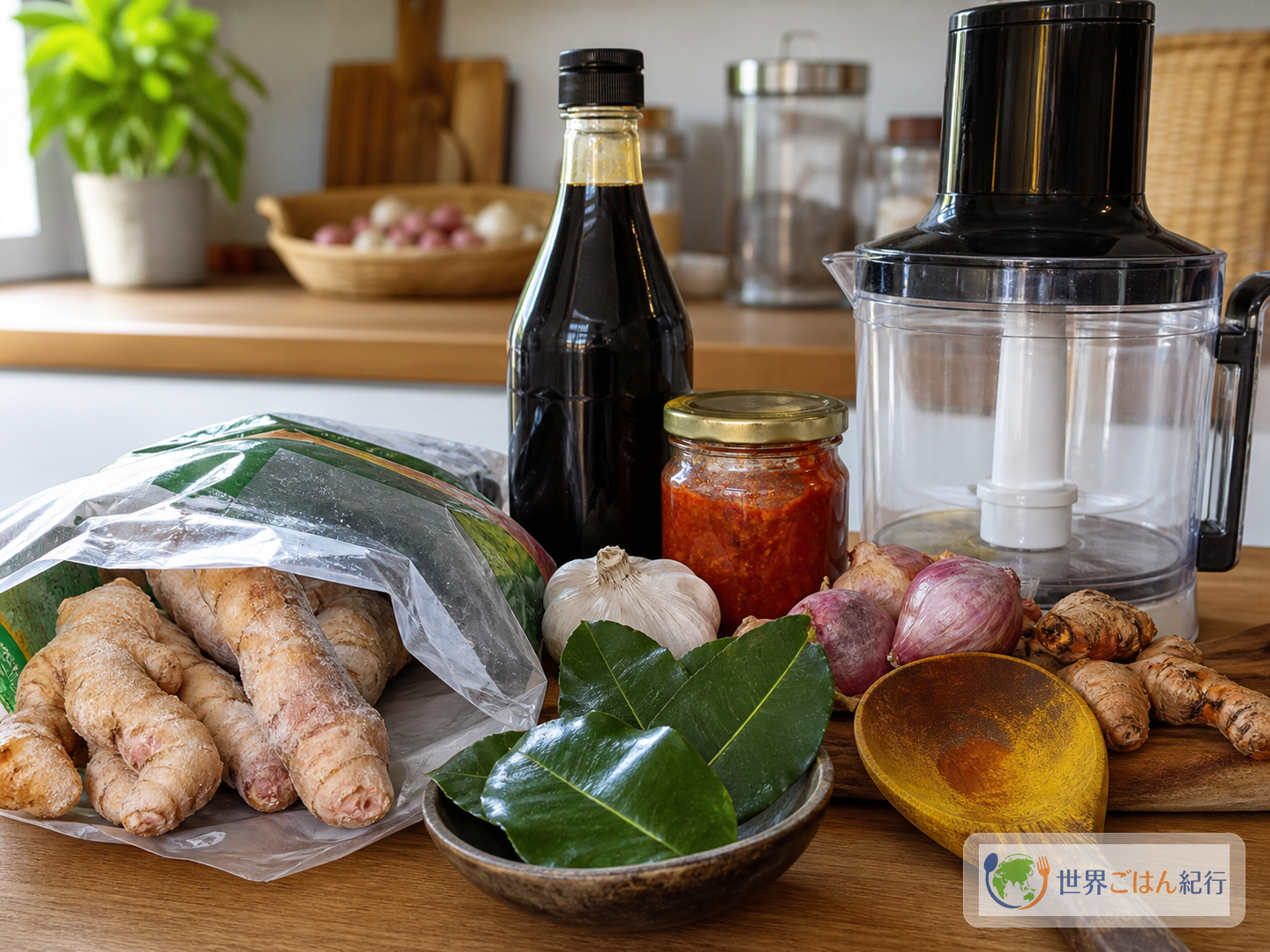
Chicken, onion, garlic and oil are fine from a nearby supermarket. What is worth seeking out at a specialty or Asian grocer is galangal, makrut lime leaves, and a tool for making the aromatic paste coarse. Once you have these, they can also go to soto ayam, nasi uduk, and how to make a sambal substitute.
Galangal smells different from ginger. With ginger alone it leans toward a warming stew, but with galangal there is a hard aroma like citrus and tree bark.
As a first one, frozen galangal is the least likely to go to waste. If it comes frozen in slices, you can snap off just what you need. It also goes into the aromatics of ayam betutu and seblak, so if you plan to keep cooking Indonesian food, its priority is high.
Makrut lime leaves are strongly scented in small amounts and make the heaviness of fried chicken feel lighter. They supply a citrus greenness that lemongrass alone doesn't.
You can make the dish without makrut lime leaves. But the green aroma that passes up your nose after frying changes a good deal. A frozen bag takes time to use up, but they are an ingredient easy to share among Thai, Lao and Indonesian cooking. If you try to substitute by increasing lemon juice, only sourness comes forward, so if you substitute, stay at thinly shaving some lime zest.
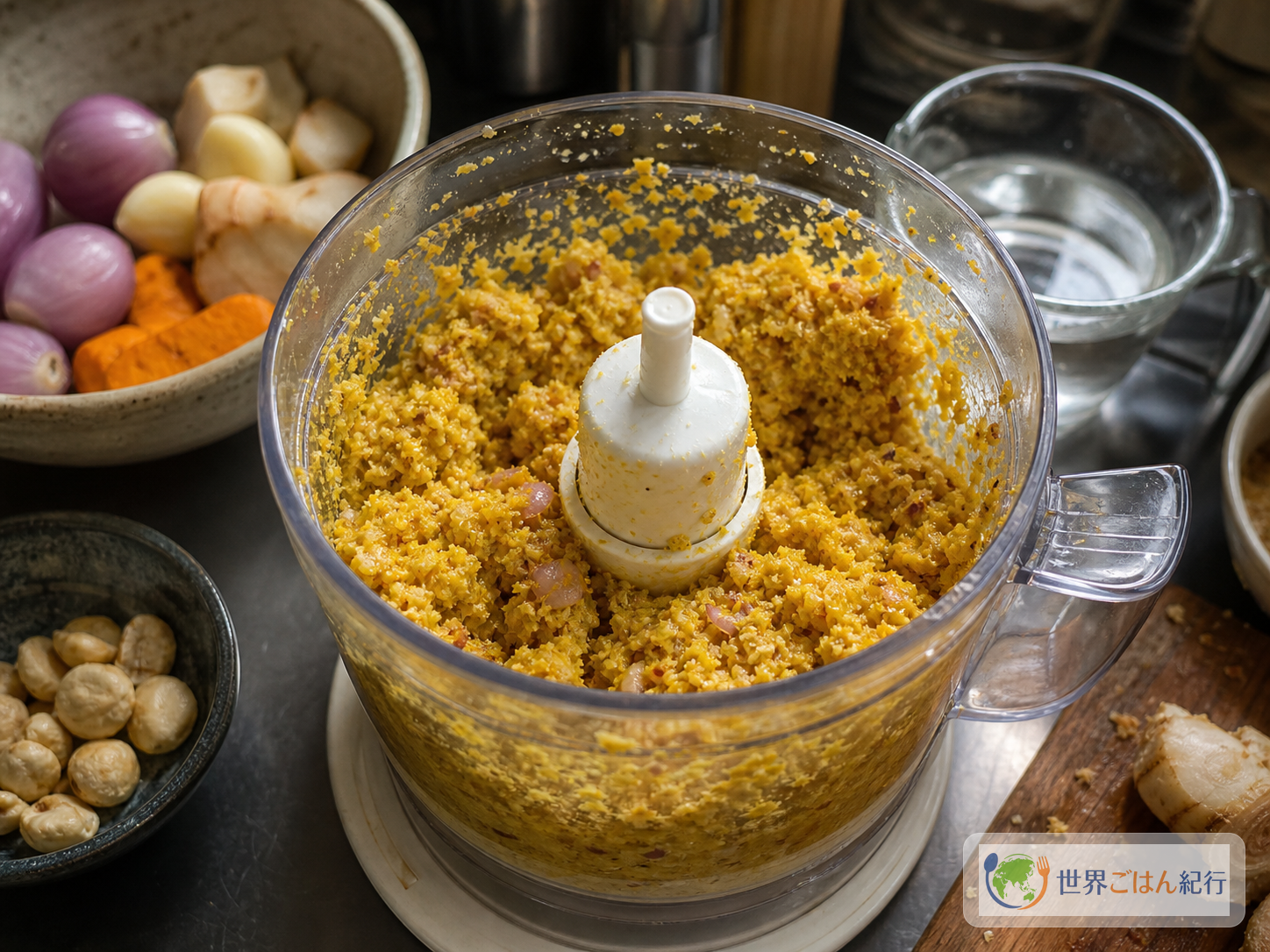
Chopping the aromatic vegetables finely with a knife alone is more of a burden the first time. A small food processor that can stop at a "coarse miso" texture can also be used for gado-gado sauce and the bumbu of soto ayam.
A food processor is not essential, but it lowers the mental weight of making the bumbu. If you chop onion, garlic, turmeric and galangal finely with a knife alone, you are tired at the prep stage. If you stop with a little coarseness left, the water cooks off easily when you sauté in the pot and the aroma rises. If you run it to a smooth liquid, the reducing takes longer and it burns easily on the bottom.
Instructions | Put the flavor in by simmering, then fry briefly at the end
Ayam goreng is not a dish that gets better the longer you fry. Simmer in the bumbu, cook through to the center of the meat, dry the surface, and then fry briefly. For the safe internal temperature of chicken, follow the guide for poultry from FoodSafety.gov, using 74°C as the standard.
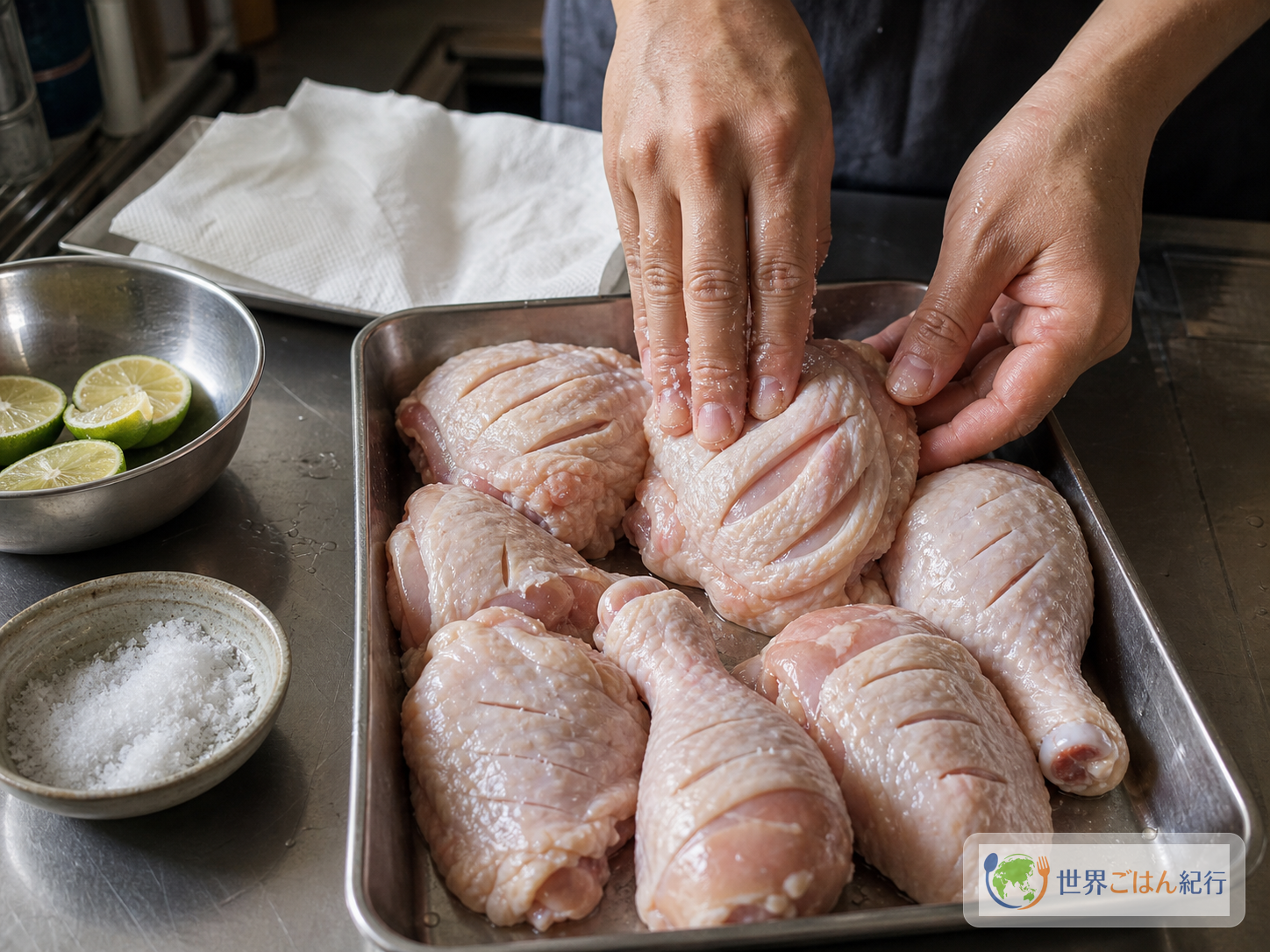
Cut 750 g boneless thighs into 6–8 large pieces. As a guide, ungkep over low heat for 12–15 minutes and fry at 170°C for 2 minutes per side. Cut too small, the meat tightens in the simmer and dries out when fried.
Branching table for approaching the local version in a home kitchen
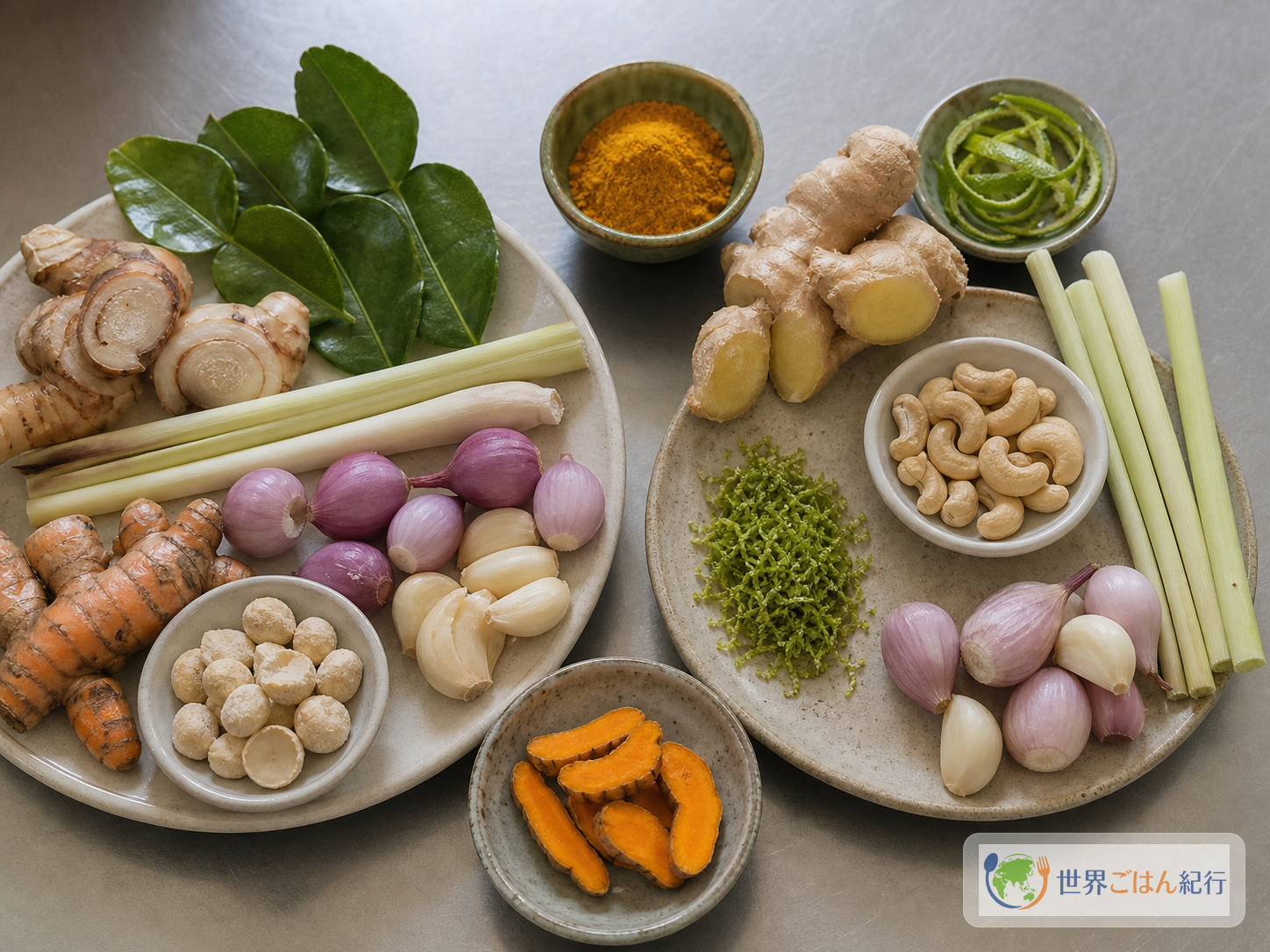
With ayam goreng, holding to the pillars of aroma works better at home than matching every ingredient to the local one. Even if you can't track down daun salam or candlenuts the first time, as long as the direction of turmeric, galangal, lemongrass and makrut lime leaves remains, it does not become just fried chicken.
If you are unsure when shopping, think in order of what can't be substituted. Chicken is no problem from an ordinary supermarket. Oil is fine as rice bran or neutral oil. What is worth taking time to find is what builds the outline of the aroma. Conversely, adding flour for kremes or local special seasonings from the first time makes the cause hard to see when it fails. It lasts longer if you first learn the structure of the yellow aromatic simmer and short fry, and then move on to regional differences.
| Ingredient or step in question | Local version | A realistic solution | Judgment |
|---|---|---|---|
| Chicken | Bone-in chicken, free-range type | Bone-in thighs, drumettes | Bone-in gives more aroma in the simmer |
| Turmeric | Fresh kunyit | 1 1/2 tsp ground | Don't substitute curry powder |
| Galangal | Lengkuas / laos | Frozen, or a little ginger and lime zest | Leaving it out makes the aroma rounder |
| Candlenuts | Kemiri | 25 g cashews | Responsible for the thickness of the paste |
| Makrut lime leaves | Daun jeruk | 1 thin strip of lime zest | Don't put a lot of lemon juice in the pot |
| Salam leaf | Daun salam | 1 bay leaf | Too much turns it Western |
| Frying oil | Plenty of hot oil | Shallow oil 2 cm deep | Short time is fine since it's already simmered |
What is close to non-substitutable are turmeric and lemongrass. Without turmeric both the color and earthy aroma are weak, and without lemongrass no green aroma remains after frying. Galangal and makrut lime leaves are ingredients you definitely want if you can get them. Conversely, for salam leaf one bay leaf is enough. In a home kitchen it lasts longer to choose by the role in taste rather than how hard something is to find.
Kecap manis is not essential in the ayam goreng simmer. Leaning toward a sweet soy glaze moves it closer to sate ayam and ayam kecap. In this article it is treated as a table seasoning served in a small amount with the fried chicken.
Serious Eats' explanation of kecap manis also treats sweet soy sauce as a seasoning widely used in nasi goreng and meat dishes. But in the yellow aromatic simmer for ayam goreng, it is less likely to burn if you don't put much kecap manis in the pot. On days you want a sweet gloss, mix it with sambal after frying and set it at the edge of the plate. If you add too much sweetness while cooking, it moves closer to a sweet-savory teriyaki than Indonesian fried chicken.
Why it goes wrong | Sort out black, bland and oily
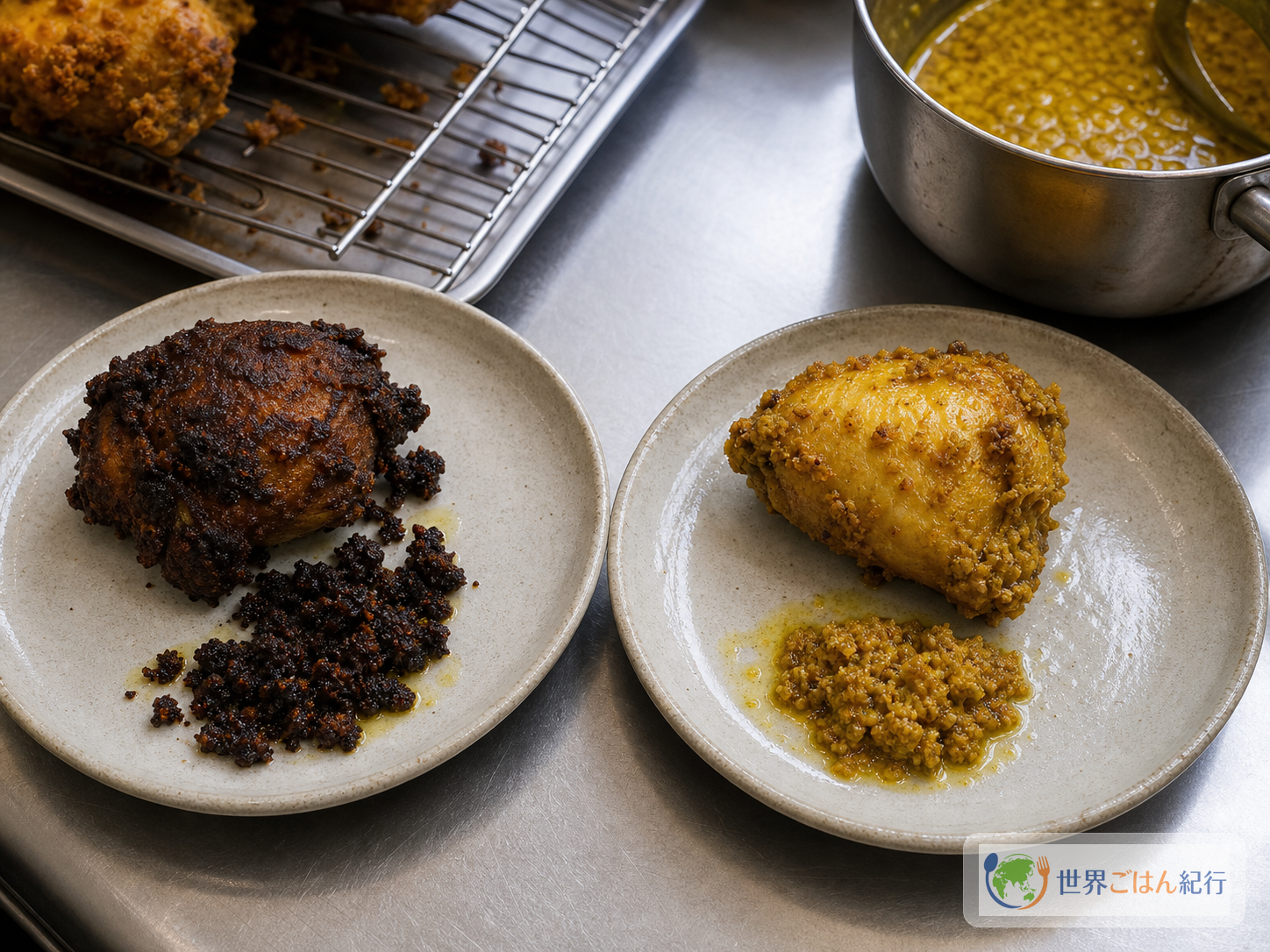
Failures in ayam goreng mostly look like a problem of the frying step alone. But in fact they are decided by how the bumbu was sautéed, how far the ungkep was reduced, and how well the chicken was dried before frying. If you think simply, "it burned, so lower the heat" or "it's bland, so add salt," you will hesitate at the same place next time.
Looking only at what happened in the oil gives you only half the cause. If the chicken is wet before frying, the oil temperature drops and only the bits of bumbu burn on the bottom. If the simmering liquid of the ungkep stays thin, the aroma doesn't get into the meat, and only the surface is strongly flavored after frying. On days it didn't go well, looking back at the state of STEP 3 to STEP 5 rather than the frying time makes it easier to fix.
| Symptom | Cause | How to fix it |
|---|---|---|
| The surface is black | The bumbu was wet, and the oil too hot | Next time dry 10 minutes and fry briefly at 170°C |
| Weak aroma | Under-sautéed bumbu | Sauté another 2–3 minutes in STEP 3 until the oil seeps out |
| Bland | Too much ungkep liquid left | Reduce the liquid to half in STEP 4 |
| Tough meat | Cut too small, or overfried | Cut larger and stop frying at 5–6 minutes |
| Oily | Put the fried pieces straight on a plate | Rest on a rack for 3 minutes to let the steam out |
| Worried it's undercooked | Not simmered long enough, cold near the bone | Ungkep another 5 minutes over low heat and check the internal temperature |
When it is about to burn, don't linger in the frying pot. Take it out, remove the burnt bits of bumbu, lower the oil temperature and then return it. If the color is short you can fry another minute, but blackened aromatics can't be restored.
When it is bland, look at the ungkep liquid before adding sambal or salt on the plate. If thin liquid remains, the chicken moved on to frying before the aroma got into the meat. Next time set the lid ajar, reduce the liquid to half and then dry it.
The oil bubbles are also a clue. Large bubbles right after the chicken goes in are normal, but if it keeps spattering violently after a minute, too much moisture remains on the surface of the chicken. Conversely, if the bubbles soon weaken and only the edges of the chicken turn black, the oil is too hot. On days you are unsure about holding around 170°C, use a thermometer or fry in two batches so you don't put in too much at once.
Storage and what to do the next day
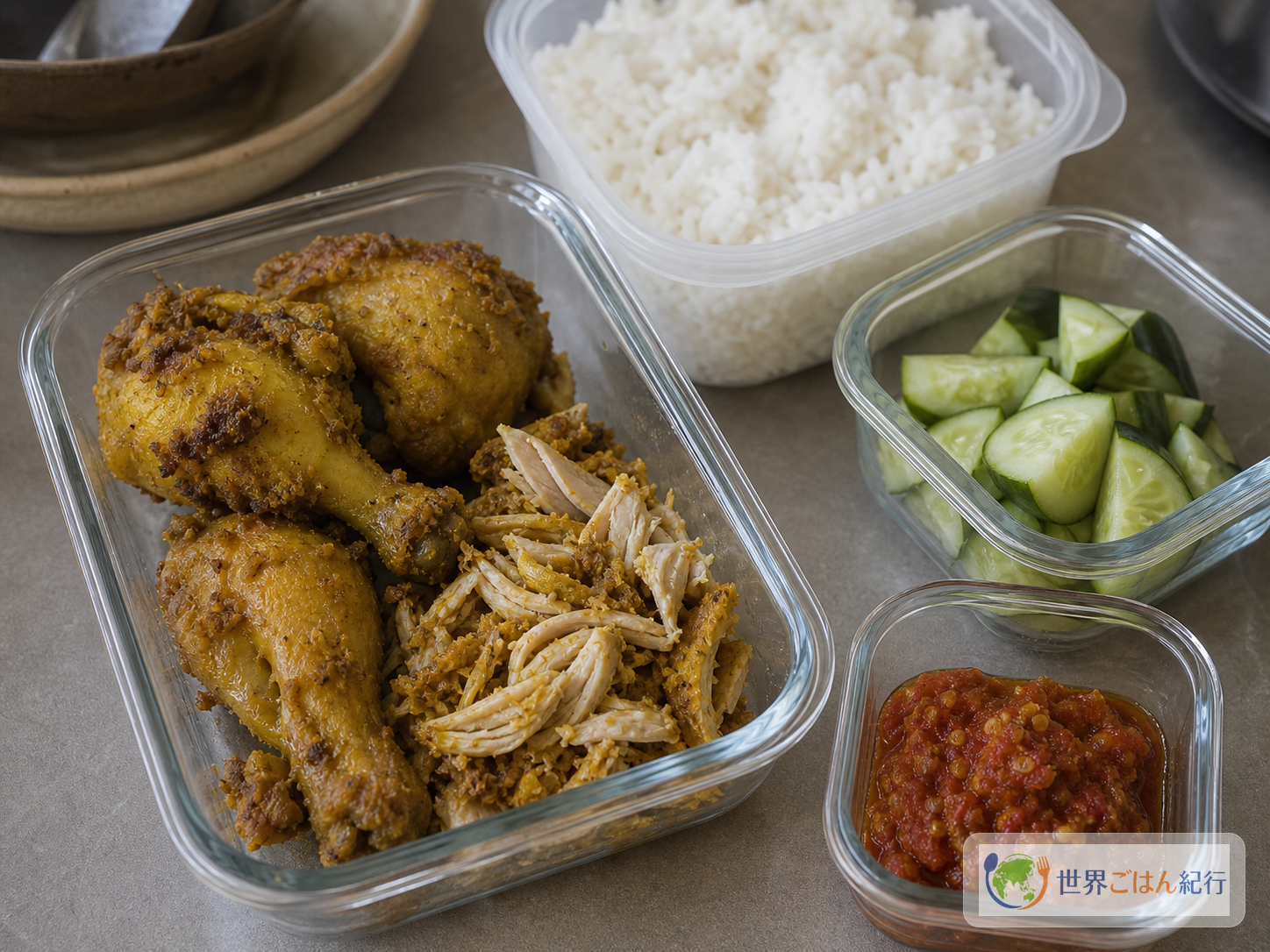
Let the fried ayam goreng cool a bit before moving it to a container. As a guide, 2 days refrigerated, 2 weeks frozen. Keep the rice, sambal and raw vegetables separate. If you put them in with cucumber and tomato, the skin gets damp and the aroma blurs.
To reheat, rather than just the microwave, warm it first at 600 W for 1 minute 30 seconds, then dry it 3–4 minutes in a toaster oven or on low in a fish grill to bring the texture back. It burns easily, so stop when the bumbu left on the surface starts to turn black.
The next day, stir-fry 80 g shredded chicken with 300 g rice over medium heat for 3–4 minutes for a simple nasi goreng-style dish. The aromatics are already in, so just 2 tsp kecap manis, 1 egg and a little scallion are enough. Looking at how to make nasi goreng (in Japanese) and adjusting only the heat with sambal is not a stretch.
Chicken that has been through the ungkep can be refrigerated before frying. Let it cool, coat it with just a little of the simmering liquid, seal it, and fry it by the end of the next day. Take it out of the refrigerator 30 minutes before frying, wipe the surface and dry it 10 minutes to reduce oil spatter. Fried cold, the surface colors before the center warms, so on make-ahead days especially check the internal temperature.
Indonesian dishes to make alongside
On days when ayam goreng is the main, getting the rice and the heat right settles the table. To layer more aroma, pair it with nasi uduk, and the coconut and lemongrass rice catches the chicken's oil. On days you want to add vegetables, make gado-gado light, with a little less peanut sauce, so it doesn't get heavy.
To serve it like a local eatery, rather than piling the chicken on a big plate, leave room on the plate to move around a little white rice, raw vegetables called lalapan, sambal and lime. Eating in the order of a bite of fried chicken, then rice, cucumber and sambal keeps the oil, aroma, heat and sourness separate so it doesn't get heavy to the end. For a home dinner, just chilling cucumber, tomato and lettuce is enough to do the job.
If you serve soup, soto ayam, which connects with the yellow aromatics, is natural. Conversely, on days you want the sweet soy gloss and a street-stall feel, going to sate ayam gives a completely different way of eating the same chicken.
If you divide the heat in the family, put the sambal substitute on a separate dish. Not making the whole pot spicy makes it easier for children and people who dislike heat to join the same table.
Frequently asked questions
Can I make it with boneless thighs?
Yes. Cut 750 g into 6–8 large pieces, and shorten the ungkep to 12–15 minutes over low heat and the frying to 2 minutes per side at 170°C. Cut small, the meat tightens in the simmer, so larger than karaage size suits it.
What do I do on days I have no galangal?
Add 10 g ginger and a little thinly shaved lime zest. But the aroma changes. With ginger alone it leans toward a plain simmered chicken, so if possible buy frozen galangal once and keep reusing the rest from the freezer, which makes it easier to move on to Indonesian cooking.
Are candlenuts essential?
No. You can replace them with 25 g cashews. If you can't use nuts, leave them out and increase the onion by 20 g. The paste is less thick, but if turmeric, galangal and lemongrass remain, the direction of the taste holds.
Can I finish it in the oven or air fryer instead of frying?
You can, but the aroma changes a little. After the ungkep, dry it for 10 minutes, brush on about 2 tsp oil thinly, and bake 8–10 minutes in a 200°C oven or air fryer. Stop when the surface is dry and the edges are golden. Take it out before black char appears.
Can I ungkep it the day before?
Yes. After the ungkep, cool it with the liquid, coat the chicken with about 2 tbsp of the liquid and refrigerate. The next day, wipe the surface moisture and dry it for 10 minutes before frying. Frying straight from the refrigerator makes it hard to warm the center, so leave it about 20 minutes at room temperature before putting it into 170°C oil. You do not need to leave it out for a long time.
Should I make kremes too?
You can skip it the first time. Kremes has the fun of finely frying bits of aromatics or a thin batter to serve alongside, but with a home kitchen's amount of oil it burns easily, and the flour spreads through the pot at once. Stabilize the ungkep and short frying of the chicken itself first, and try a small amount in a separate pot once you are used to it; there are fewer failures that way.
Can I reuse the oil?
I don't recommend reusing it, since a lot of turmeric and bumbu bits fall into it. If you really use it, let it cool, strain it through a fine mesh, and use only a little by the next day in a dish whose aroma suits it, such as stir-fried vegetables. Oil with many black burnt bits turns bitter, so discard it.
Isn't it un-Indonesian unless it's spicy?
It's fine to adjust the heat at the table. Make the ayam goreng itself around aromatics and salt, and serving sambal on a separate dish is easier to handle at home. When making sambal kecap, mix in a little kecap manis and cut the heaviness with lime.
Sources
- Wikipedia, "Ayam goreng", https://en.wikipedia.org/wiki/Ayam_goreng (accessed 1 June 2026)
- Kompas.com, "Resep Ayam Goreng Bumbu Kuning, Bisa Jadi Stok Lauk Sahur", https://www.kompas.com/food/read/2022/03/28/101100675/resep-ayam-goreng-bumbu-kuning-bisa-jadi-stok-lauk-sahur- (accessed 1 June 2026)
- Kompas.com, "Resep Ayam Goreng Lengkuas, Ide Masakan Sehari-hari", https://www.kompas.com/food/read/2024/07/12/111730975/resep-ayam-goreng-lengkuas-ide-masakan-sehari-hari (accessed 1 June 2026)
- Serious Eats, "All About Kecap Manis, Indonesia's Sweet and Syrupy Soy Sauce", https://www.seriouseats.com/guide-to-kecap-manis (accessed 19 June 2026)
- FoodSafety.gov, "Cook to a Safe Minimum Internal Temperature", https://www.foodsafety.gov/food-safety-charts/safe-minimum-internal-temperatures (accessed 19 June 2026)



