
A Leaf-Wrapping Tradition Raised in Javanese Homes
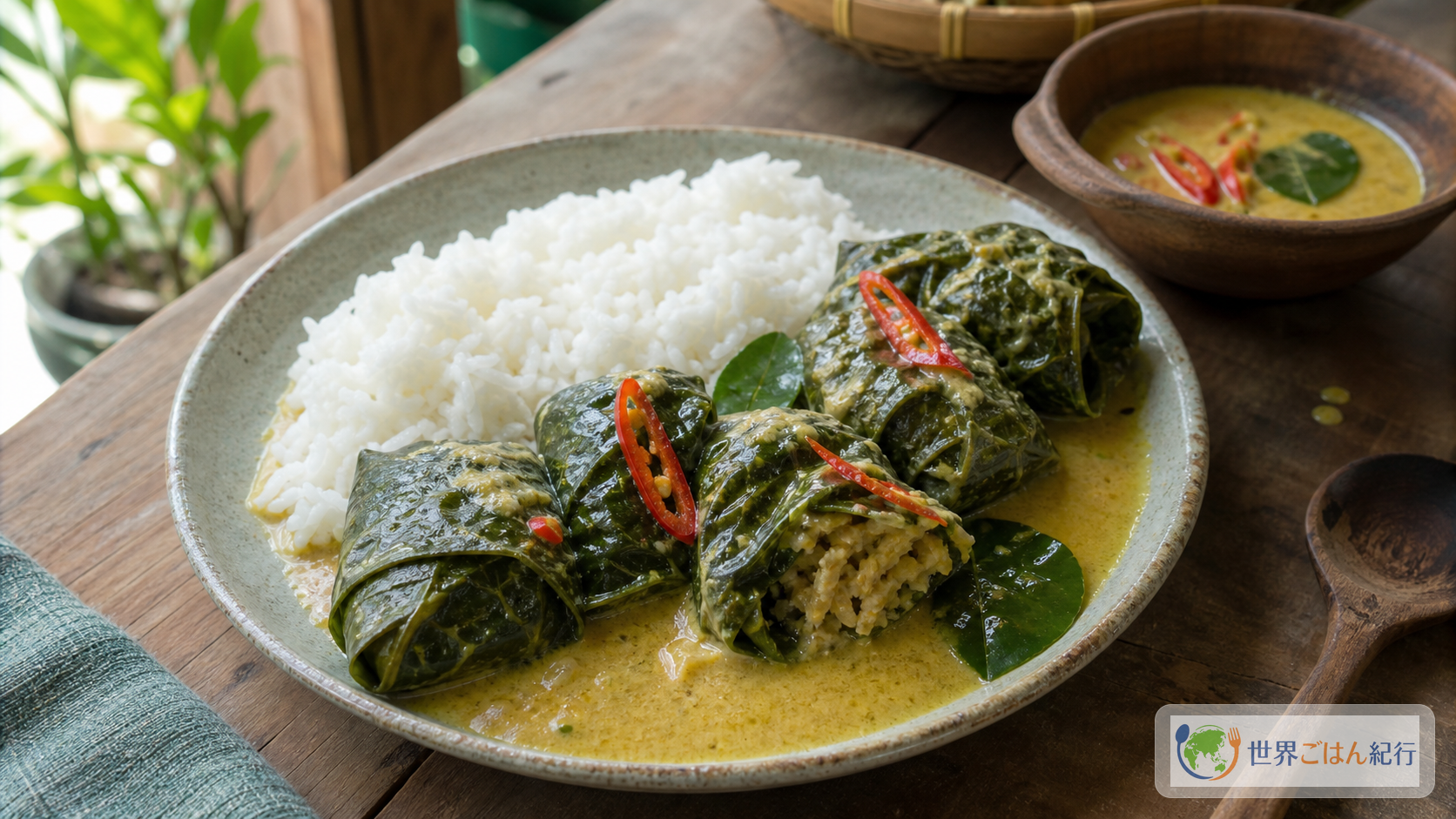
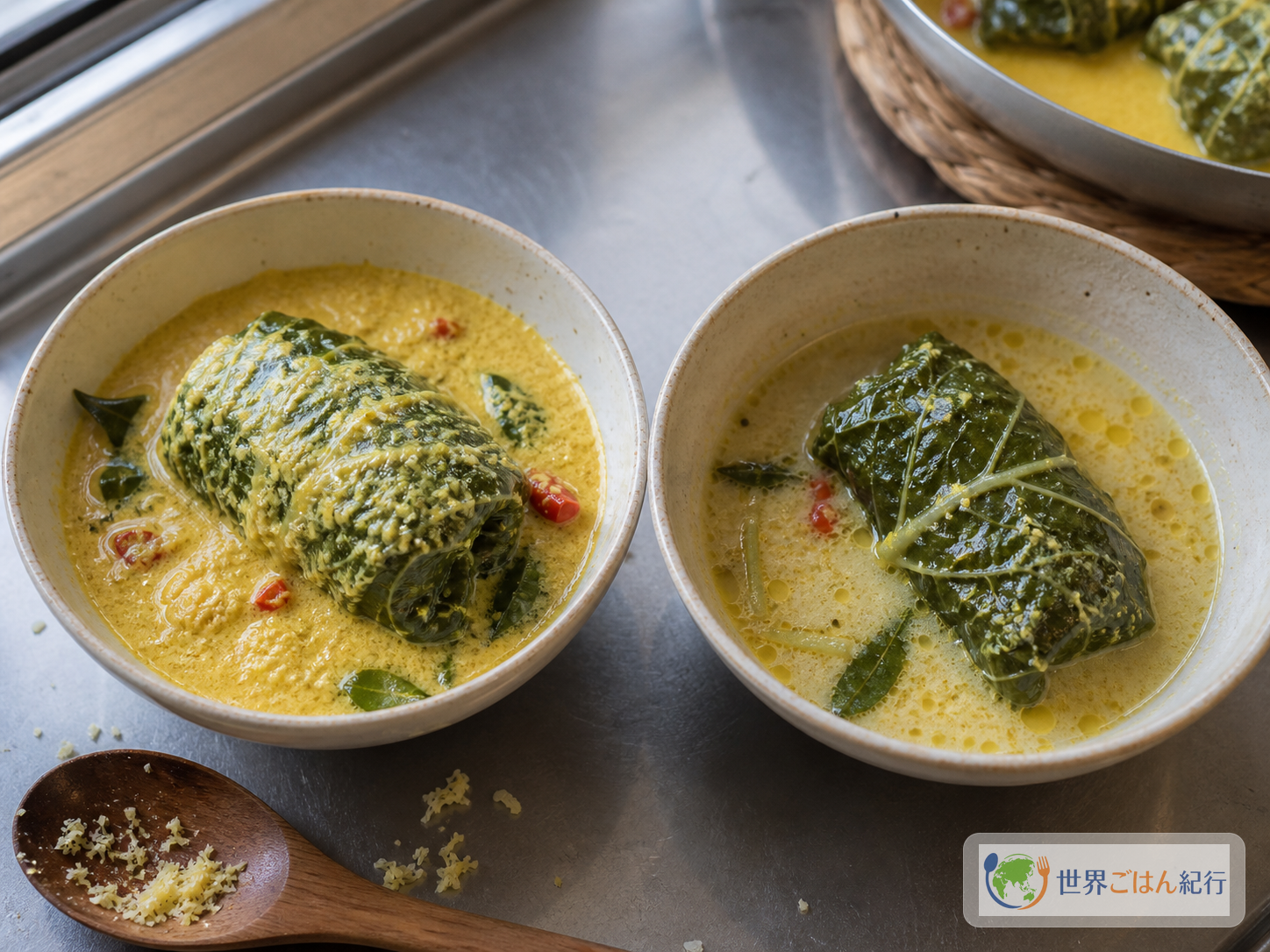
Lift the pot lid and between the bubbles of yellowish coconut sauce a few dark green parcels peek out. Split a leaf with chopsticks and the smell of crumbly coconut, dried shrimp, chili and makrut lime leaf spreads out. Buntil looks like a quiet wrapped dish, yet the moment you open it the table gets livelier. It is an Indonesian plate through and through.
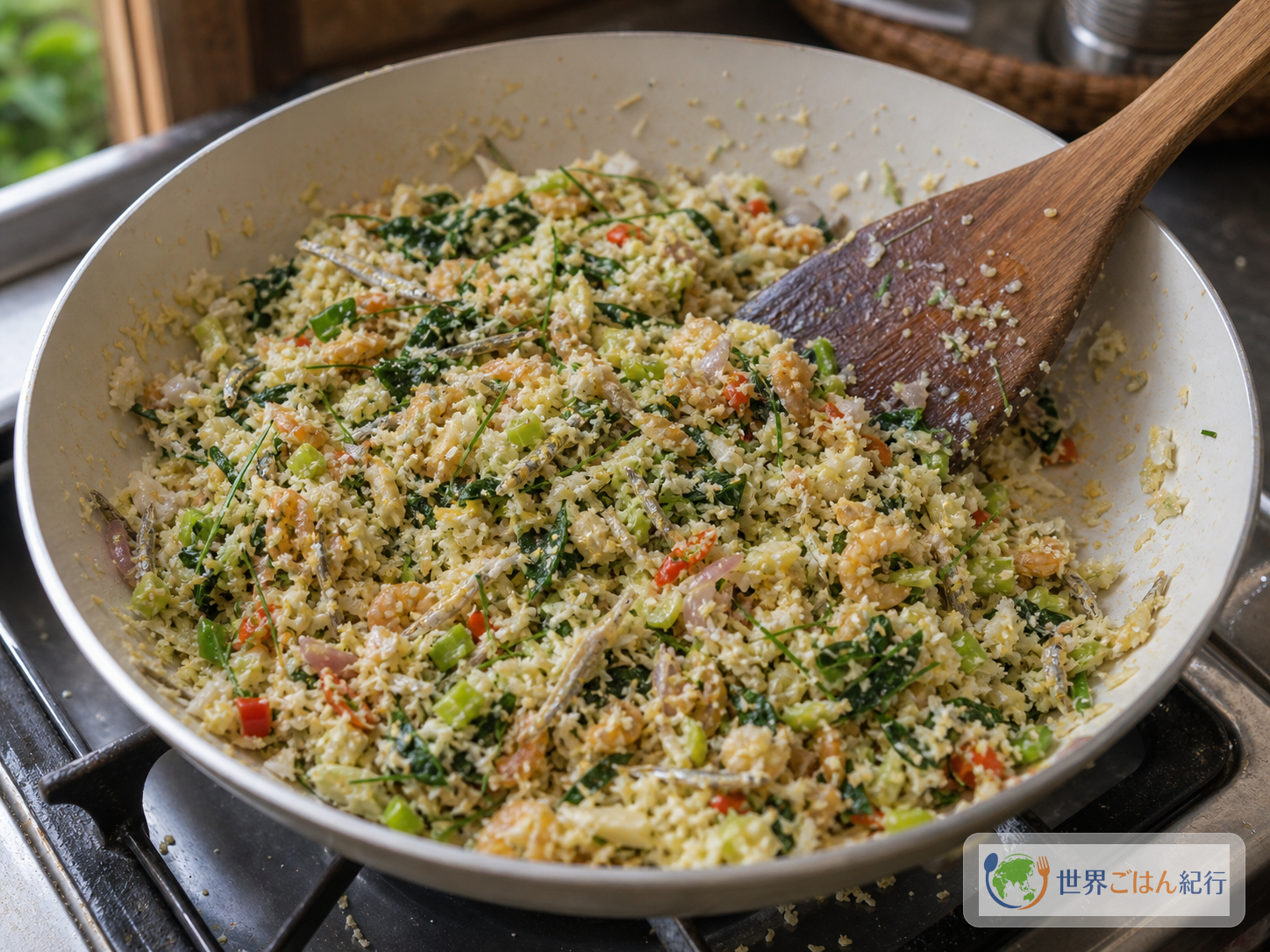
Buntil is a leaf-wrapped dish loved mainly in Java. Local descriptions often use daun singkong, cassava leaves, but there are also versions wrapped in papaya leaves, taro leaves and other large leaves. The filling is grated coconut combined with a bumbu of small fish, dried shrimp, chilies, garlic and shallots. The parcels are wrapped, steamed, then simmered in a sauce of coconut milk, called santan.
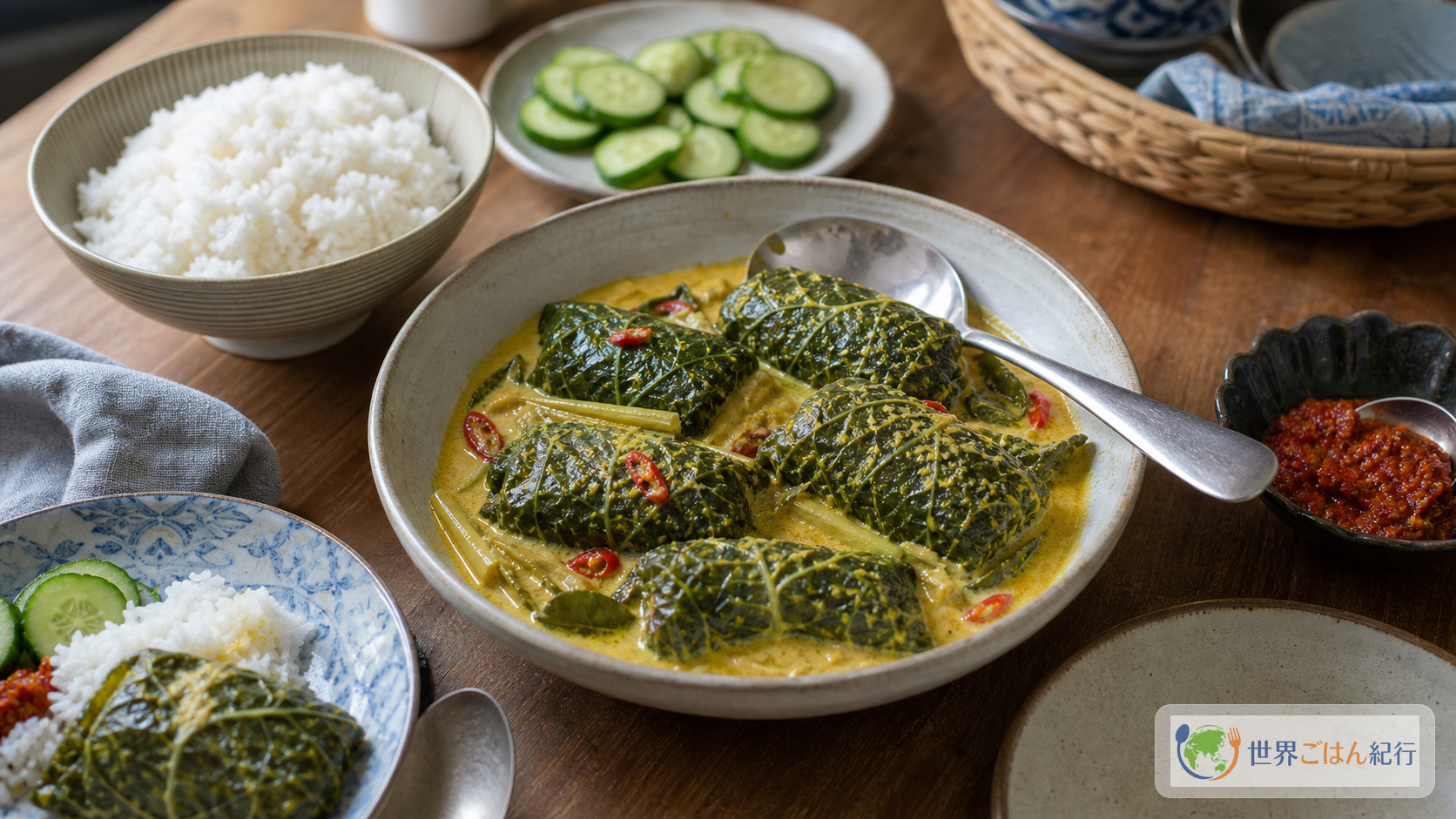
Few sources pin the name's origin to one explanation. But looking at the shape of the dish, the central idea is to make small bundles wrapped in leaves, steam them and return them to the pot. As a Javanese home dish it is interesting that it uses leaves available from the field or market, mixes coconut finely, and makes a side dish that sends rice down well with the umami of fish. It is less a feast with plenty of meat than a dish that builds satisfaction by layering leaves, dried goods and coconut.
Reading local recipes, buntil is easiest to understand as "a dish that locks the flavor inside the leaf." Masak Apa Hari Ini's buntil daun singkong describes wrapping grated coconut and small fish in leaves and finishing in a yellow coconut-based sauce. Cookpad Indonesia search results also repeat words like daun singkong, daun pepaya, teri, kelapa and santan. So rather than hunting for exactly the same leaf, the guide for a home version is how to keep bitter leaves, the umami of dried goods, the oil of coconut and the gentle simmer.
Even among "wrapped" dishes, the roles at an Indonesian table differ a little. Arem-arem (in Japanese) is a snack of half-cooked rice in coconut milk wrapped in a leaf, and lemper (in Japanese) is a portable snack of sticky rice and shredded chicken. Buntil stands somewhat apart: it is a side dish where the leaf itself is eaten. When you open the parcel you don't just see the filling; you also taste the green of the leaf, so how you handle the leaf is the flavor itself.
| Dish | What is wrapped | Role at the table | Entry point outside Indonesia |
|---|---|---|---|
| Buntil | Leaves, coconut, dried fish | A rich side dish to go with white rice | Wrap in outer cabbage leaves and kale |
| Arem-arem | Half-cooked rice and filling | Wrapped rice for markets and lunch boxes | Parchment paper can make the shape too |
| Lemper | Sticky rice and shredded chicken | One-handed snack | Watch the moisture of the rice and the dryness of the filling |
There are regional differences as well. Many descriptions wrap in cassava leaves, but depending on region and household, papaya leaves, taro leaves and other large greens are used. For the fish in the filling, some homes use small fish like ikan teri, and some versions lean on dried shrimp. It is natural for each shop to differ in heat and sauce thickness. So in your own kitchen, rather than treating the local leaf as the only right answer, think separately of the wrapping leaf, the leaf that adds greenness and the dried goods that add umami, and you are less likely to lose the thread of the dish.
The biggest worry when cooking outside Indonesia is the leaf. Cassava and taro leaves prepared for eating are not always reliably available. This is not a dish for trying garden or ornamental leaves. This article accepts that the leaf aroma will change a little and builds around easy-to-wrap outer cabbage leaves, kale for bitterness, and komatsuna or similar greens chopped into the filling. The core to keep is wrapping in leaves, making a filling of coconut and dried fish, and steaming first before simmering in coconut sauce.
Among Indonesian dishes, buntil differs from the rich meat dish rendang (in Japanese) and from nasi uduk (in Japanese), rice cooked with aroma; it is a dish eaten for the bitterness of green leaves and the sweetness of coconut. If East Indonesia's papeda (in Japanese) is a pairing of staple and soup, buntil is a rich side dish placed next to white rice. You unwrap the leaves and eat a little at a time, so moving sauce onto the rice suits it better than hurrying to bolt it down.
The Indonesian spelling is buntil. Daun singkong means cassava leaves, santan means coconut milk, and bumbu is used for an aromatic paste or seasoning blend. This article uses "buntil" throughout.
Ingredients (serves 4)
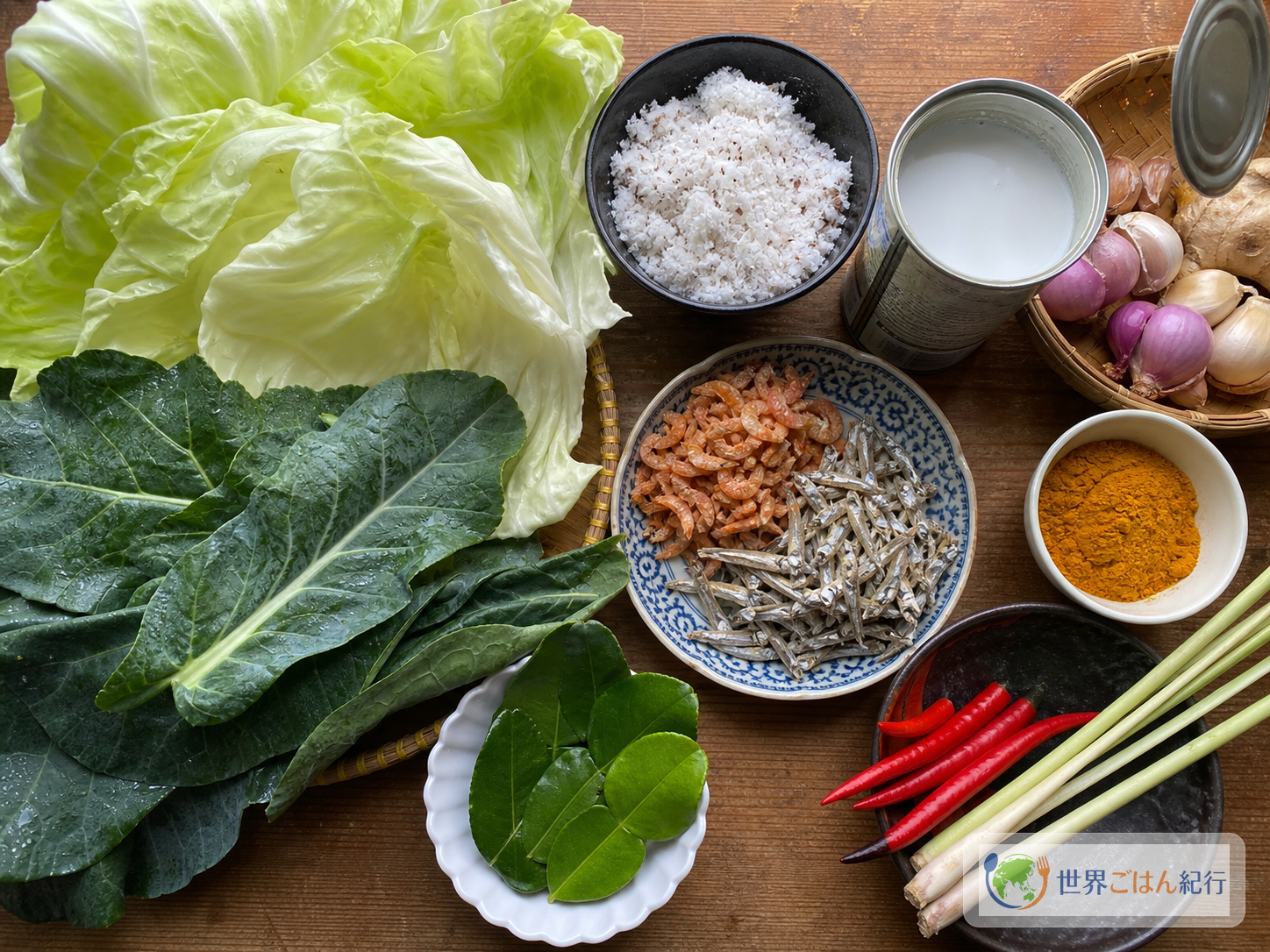
This dish uses shrimp, fish and coconut. Store-bought dried shrimp and dried anchovies may contain wheat, soy, shellfish or fish depending on the manufacturing environment. If you have allergies, check the product's ingredient label, and replace the dried shrimp with 2 tsp dried shiitake powder and a little dried bonito flakes.
Use only leaves sold for eating and whose cooking method you know. Even if you find cassava or taro leaves, don't use them if their preparation or variety is unknown. For the first time, making it with cabbage and kale is less likely to go wrong in the kitchen.
Shop Only for the Ingredients That Build the Aroma
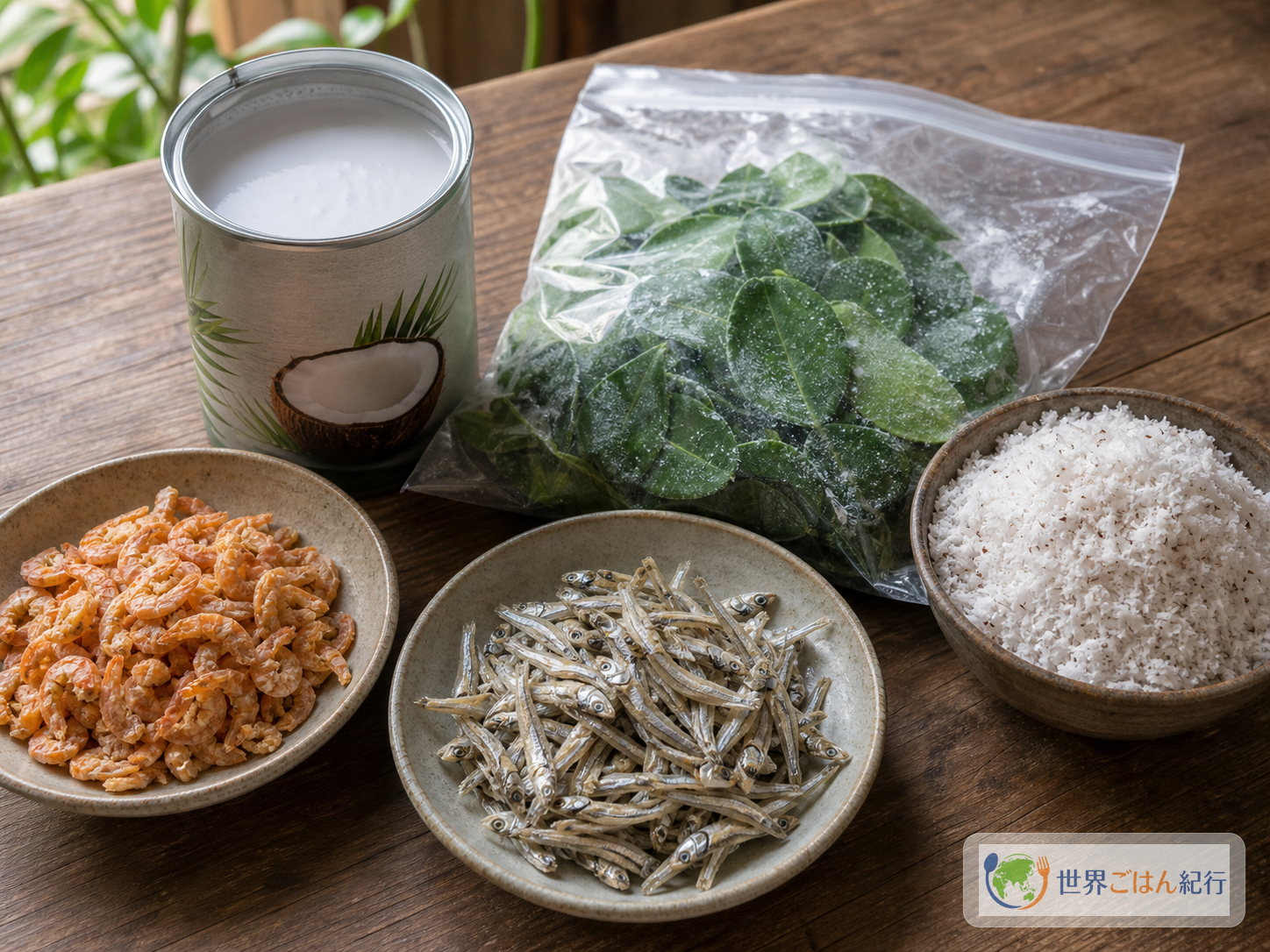
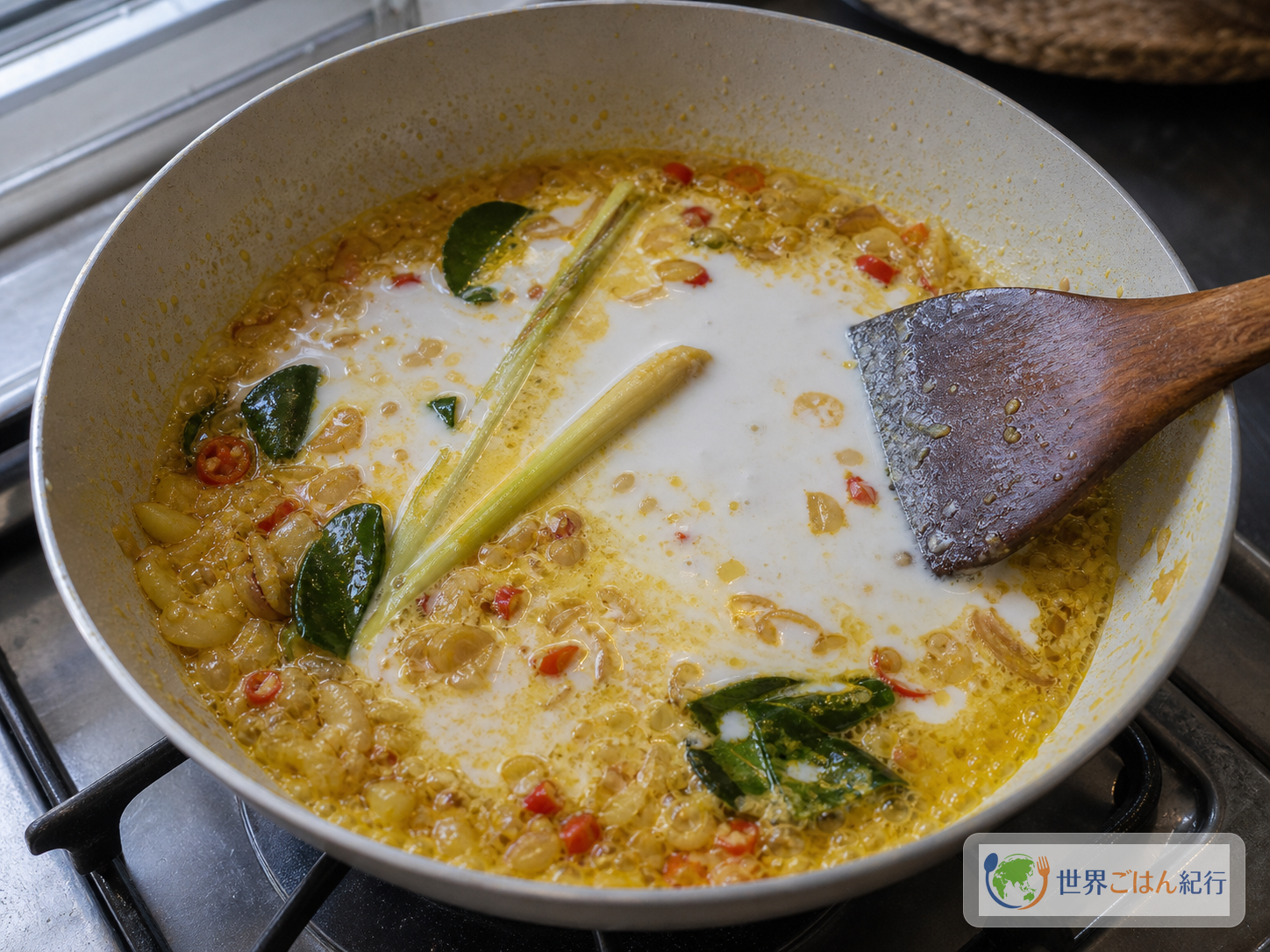
Cabbage, komatsuna, onion and garlic are available at any local supermarket. What is worth searching for specially is not ordinary vegetables but the ingredients that shape buntil. Coconut milk sets the body of the sauce, makrut lime leaf adds a citrus outline to the green smell of the leaf parcels, and dried shrimp gives depth to the filling even in a small amount.
Use canned coconut milk made for cooking. Coconut beverages or sweet dessert products don't suit a savory leaf-wrapped dish. If you design the recipe to use up one 400 ml can, nothing is left over and the sauce thickness stays stable.
The dish works without makrut lime leaf. But in a dish like buntil where coconut and dried fish layer on each other, a little citrus aroma lightens the aftertaste. It also carries over to soto ayam (in Japanese) and Thai cooking, so it is fine to buy it only when you spot a frozen pack.
Dried shrimp supports the umami of the filling in a small amount. On days you want to get closer to local ikan teri, use small dried anchovies as well, but dried shrimp alone keeps the coconut's sweetness from going flat. At a table with a shellfish allergy, don't use it; lean toward a different direction of umami with dried shiitake powder and bonito flakes.
If you are unsure when shopping, first decide "what can't be substituted in today's plate." Cabbage is available nearby, but makrut lime leaves and dried shrimp are hard to get at short notice. Coconut milk is at supermarkets too, but the canned cooking kind keeps the thickness stable. Conversely, for kale, komatsuna and red onion, don't fuss over variety; choose by freshness and ease of handling.
If you plan to make nasi uduk (in Japanese) or arem-arem (in Japanese), buying coconut milk cans in a batch is unlikely to be wasteful. Makrut lime leaves can go into the yellow soups of soto ayam (in Japanese) and papeda (in Japanese). Dried shrimp looks hard to use up outside buntil, but a small amount chopped goes into the sauce of gado-gado (in Japanese) or into stir-fried vegetables for extra umami.
Method: Soften the Leaves, Wrap, then Simmer
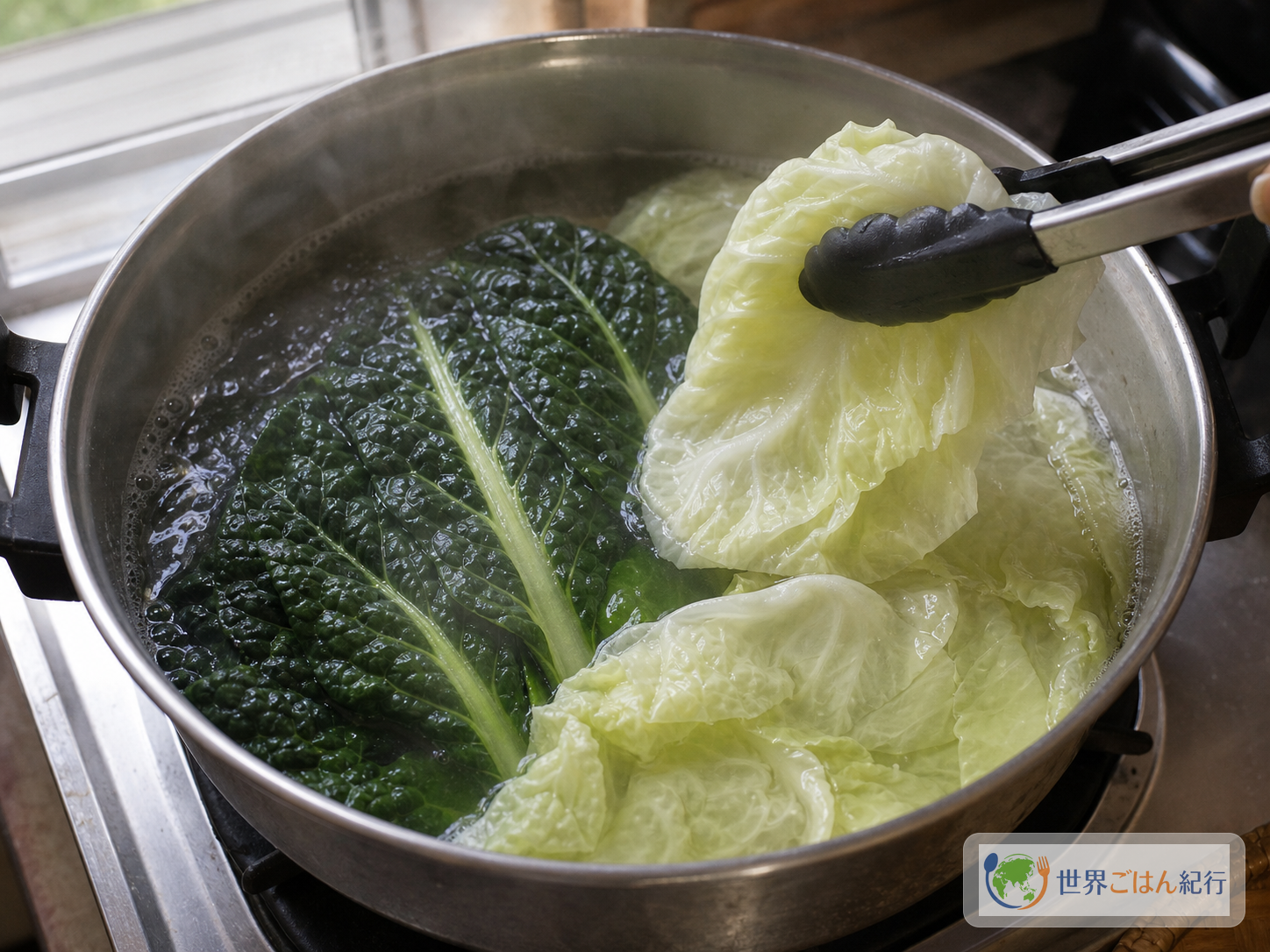
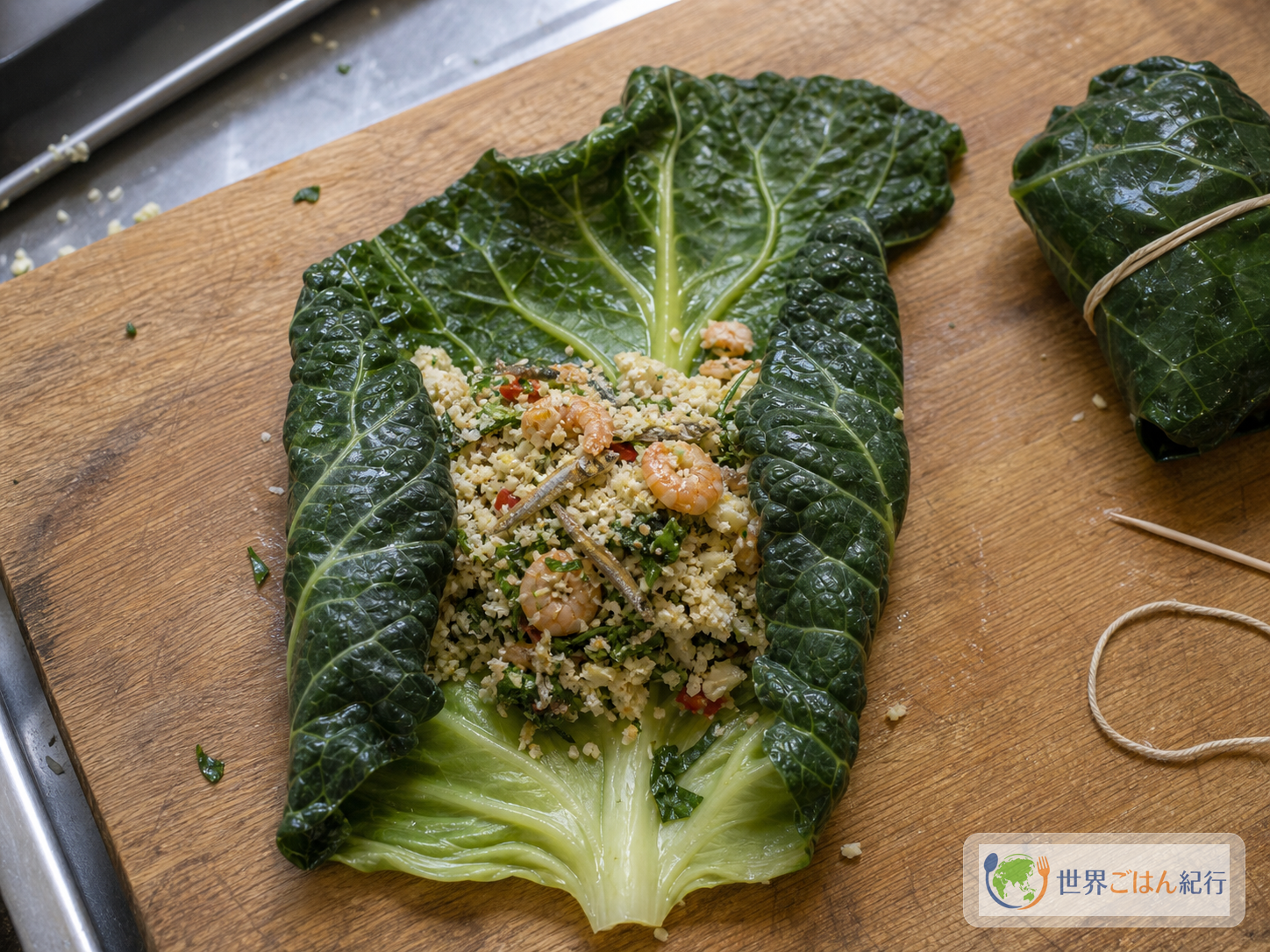
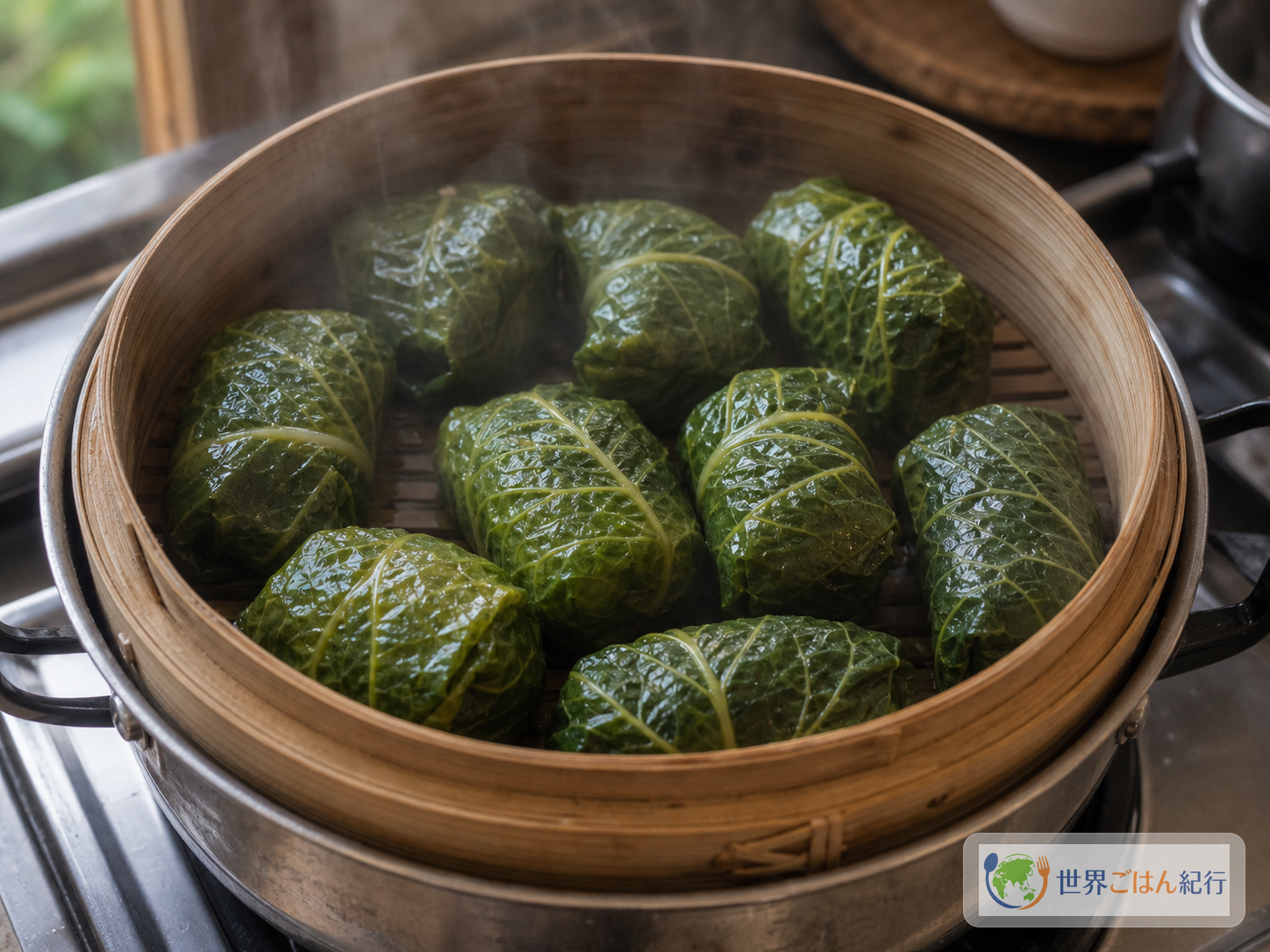
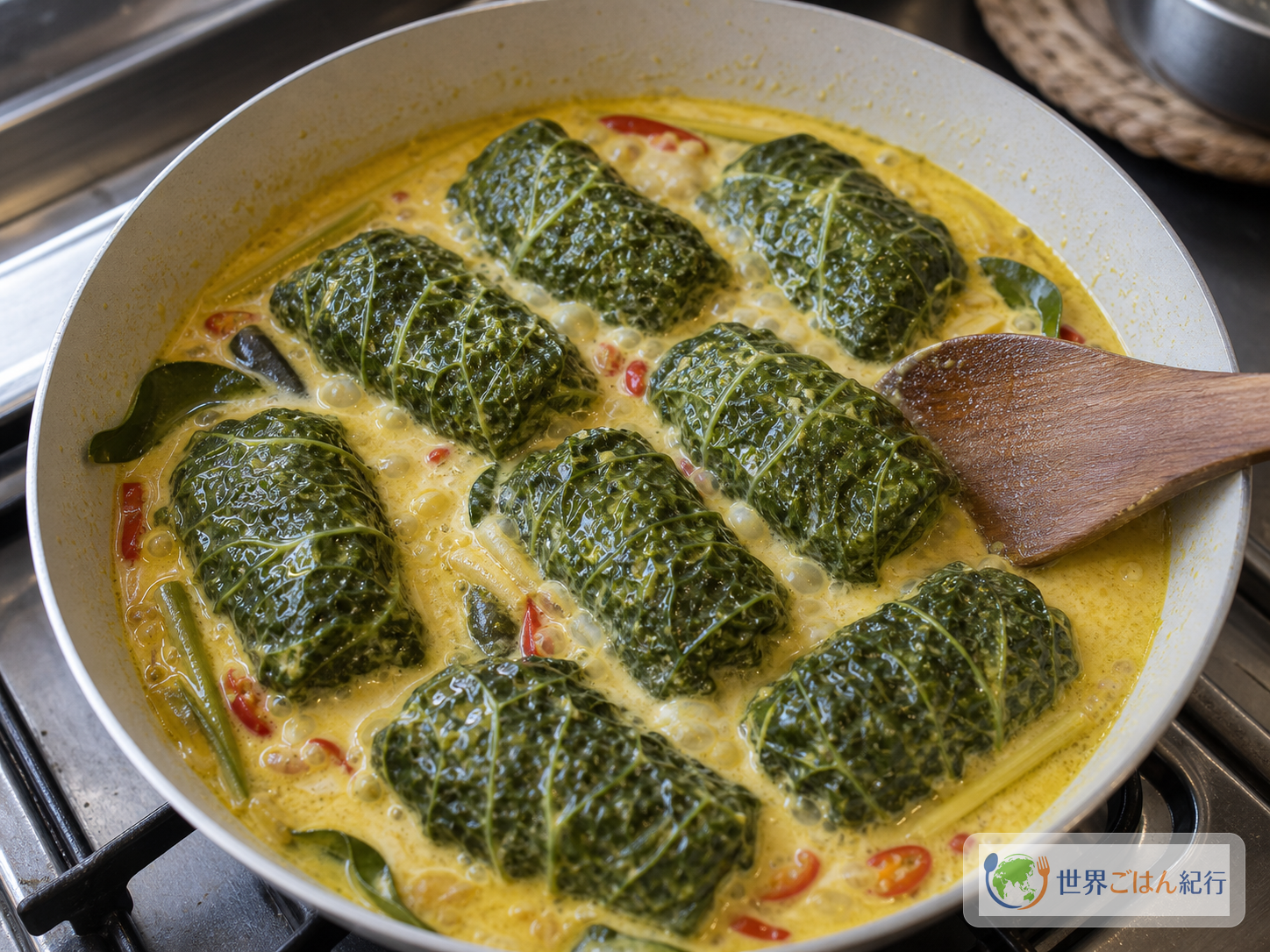
Buntil is made in this order: blanch the leaves so they are easy to wrap, lightly stir-fry the filling, wrap, steam, then simmer in sauce. If you simmer directly in coconut sauce, the parcels come apart easily and the filling does not lose its moisture. Steaming first to set the shape makes the cabbage and kale easier to handle.
Don't aim for a neat square. Gather it like a drawstring pouch and tie loosely with kitchen string. Put torn parcels at the edge of the steamer and treat them as the first to eat after simmering in sauce, so that if they fall apart on the plate it isn't noticeable.
At the Table, Open the Parcel and Pass It onto the Rice
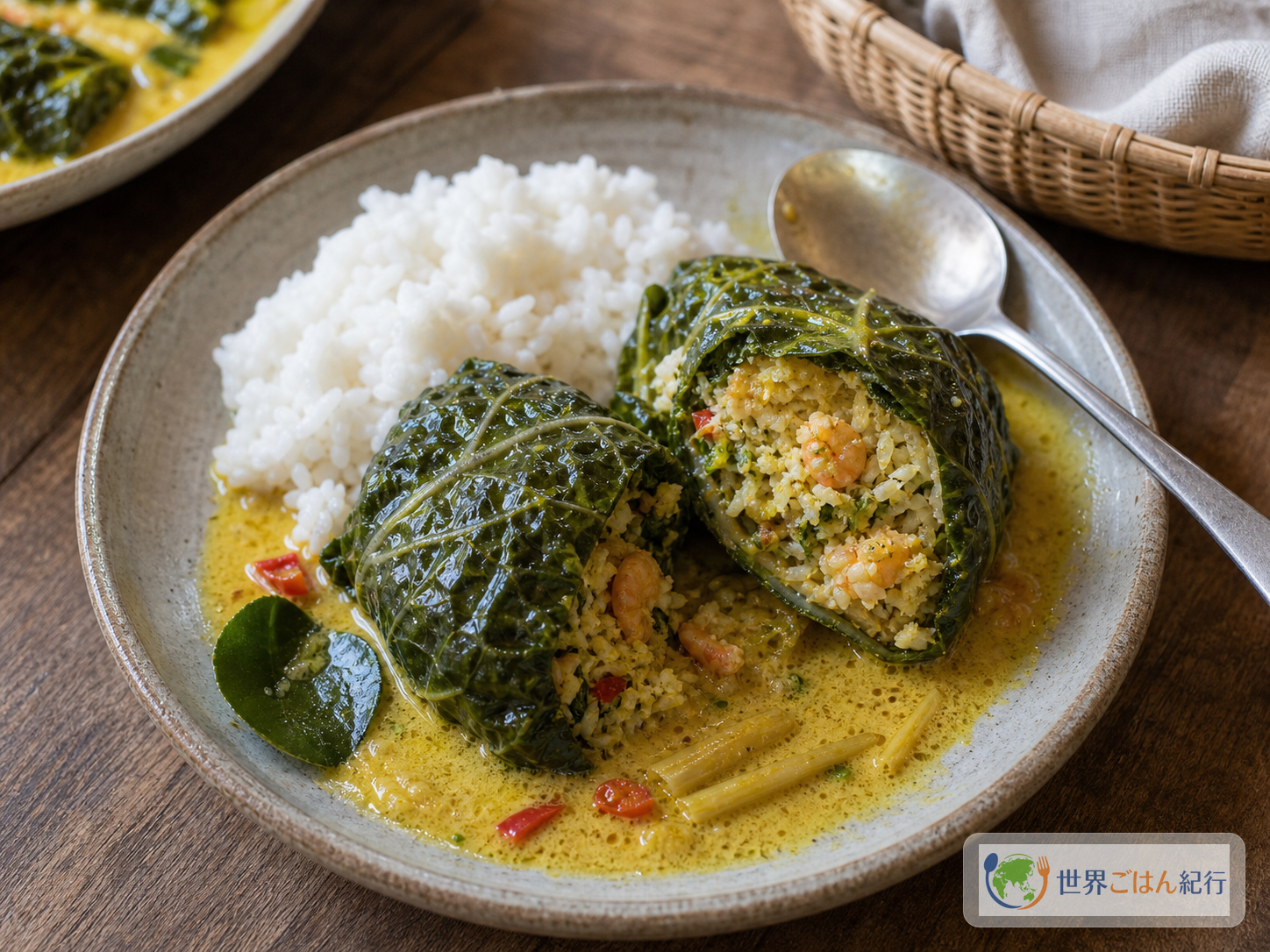
Buntil suits being opened a little at a time as you eat rather than broken apart all at once on the plate. Take a little of the coconut and dried fish inside the leaf and move the yellow sauce onto white rice. The first bite is the bitterness of the leaf, then the sweetness of coconut, and last the saltiness of dried shrimp and anchovies lingers. When serving at your own table, keeping this order makes the "meaning of the leaf wrapping" easier to convey.
Buntil is seen not only at home but at warung, roadside stalls, and temporary markets before Ramadan. What matters is that it is less a lavish meat main than a rich leaf side dish for eating rice well. Open a small parcel, spoon sauce over rice, and reset your mouth with sambal or cucumber. Imagining that way of eating, you see that even a home version doesn't need to overfill the plate; four points of parcel, rice, heat and a fresh vegetable are enough.
For dinner, treat buntil as the main. Coconut milk and dried-goods umami are strong, so piling creamy soups or fried foods on the same table gets heavy. If you serve a soup, a clear broth with a little ginger, a thin chicken soup, or a small tomato and cucumber dish with acidity suits. Plain white rice is fine, but on days you want to bring in aroma, a small portion of coconut rice such as nasi uduk (in Japanese) pulls the table together as an Indonesian meal.
| Table plan | What to serve | Reason |
|---|---|---|
| Weeknight dinner | White rice, cucumber, tomato, a little sambal | Rice catches the sauce, and acidity and heat cut the weight |
| Weekend Indonesian menu | Nasi uduk, hard-boiled egg, cucumber, thin chicken soup | Ties in the coconut aroma and keeps the soup light |
| Table with less heat | White rice, lime, scrambled egg, cucumber | Without chili, acidity and egg still give satisfaction |
| Make-ahead lunch | Rice, 1 buntil, 3 tbsp sauce, a small bowl of greens | Reheated, it won't be too strongly flavored as one plate |
For plating, opening a parcel only about 2 cm is easiest. If you cut it all open the filling spills and the leaf sinks into the sauce. Show a little of the inside, drop the sauce beside the rice, and leave room for the eater to unwrap the leaf. That brings the pleasure of eating rather than photogenic looks. For tables with children or people who dislike heat, reduce the chili in the sauce and put sambal in a separate dish. Not locking the heat into the dish itself makes it easier to adjust the bitterness of the leaf and the sweetness of the coconut.
Prepare the day before, keeping things separate until just before wrapping
Buntil has many steps, and starting everything in the evening messes up the kitchen. The day before you can blanch the leaves, soak the dried shrimp, stir-fry the filling and chop the aromatics for the sauce. However, leaving them wrapped for long makes the leaves release water and the parcels come apart more easily when steamed the next day. For the first time, the safe flow is to proceed up to "just before wrapping" the day before, then wrap, steam and simmer in sauce on the day.
| What you can do the day before | How to store | Caution on the day |
|---|---|---|
| Blanch the leaves | Press out water and keep in a container without stacking | For leaves that tear easily, pat dry again before wrapping |
| Stir-fry the filling | Cool, seal and refrigerate | If stiff, loosen with 2 tsp lukewarm water |
| Chop the aromatics | Keep garlic, ginger and onion separate in the refrigerator | If they release water, wipe lightly before frying |
| Cut the makrut lime leaves | Put in a small bag so they don't dry | If the aroma is weak, add a little at the end |
For guests, finish the wrapping and steaming at midday and simmer in the sauce 30 minutes before eating. If you refrigerated the steamed parcels, putting them cold into hot sauce keeps the center from warming through, so leave them at room temperature for 10 minutes and then simmer over low heat. Don't move them around in the pot; just spoon sauce over the top and the parcels keep their shape.
For Leaf Substitutes, Prioritize Ease of Handling over Aroma
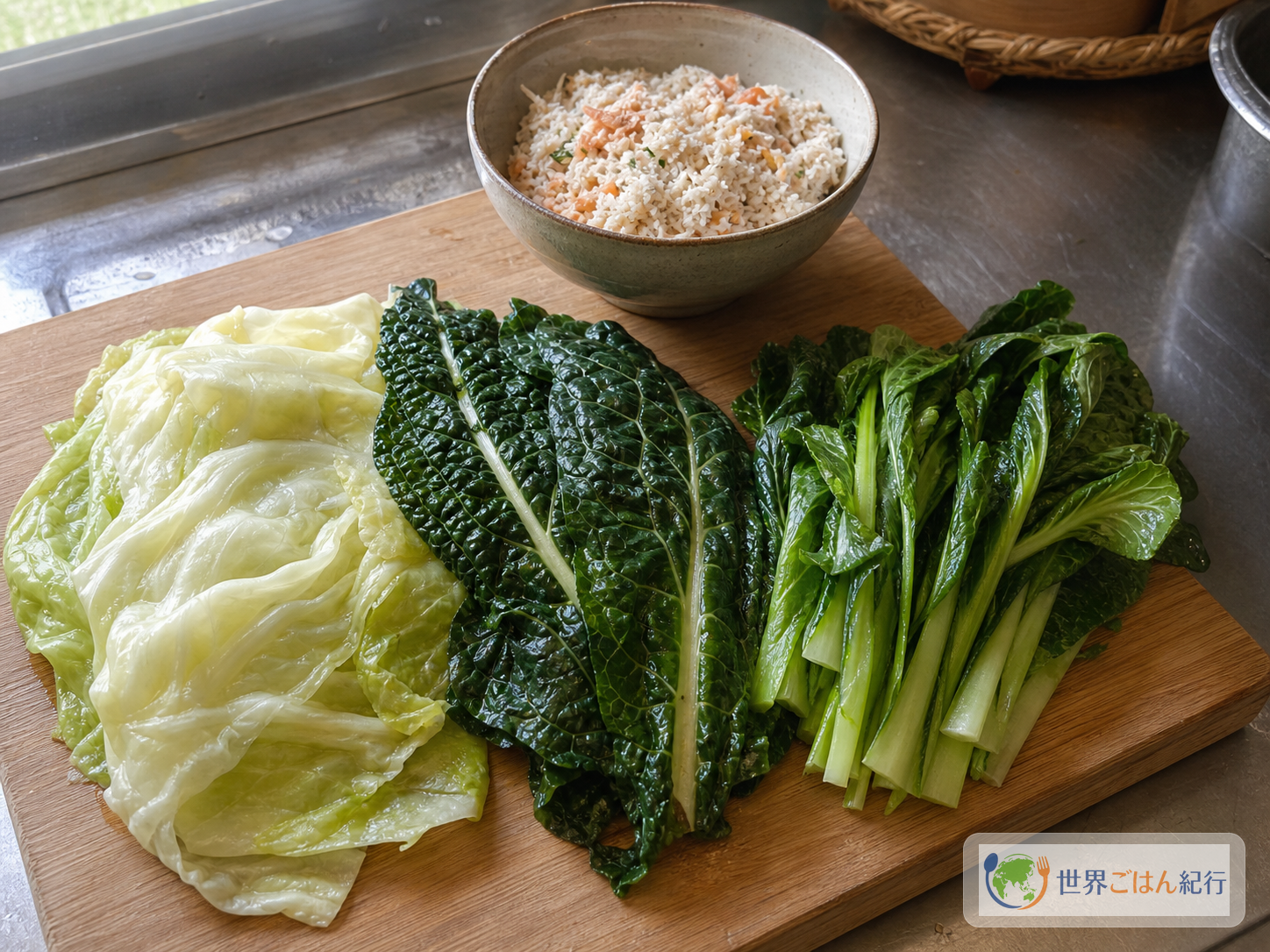
Reading about local buntil, you often find cassava leaves used. They have bitterness and greenness that go well with coconut and small fish. But when looking for them at home, it can be hard to judge their preparation for eating, variety and distribution condition. Taro leaves are the same. Avoid using garden or ornamental leaves just out of the wish to approximate a foreign dish.
In the home version, separating the wrapping role from the aroma-adding role makes failure less likely. The wrapper is the outer cabbage leaf, which doesn't tear easily. Its flavor is mild, but it is supple after blanching and holds the parcel shape. Bitterness and greenness come from kale. Komatsuna is too small to wrap, so chop it into the filling. With this combination, it is not the local leaf itself, but the skeleton of the dish remains: the greenness of leaves, coconut, dried fish and coconut sauce.
The most important thing in choosing leaves is not aroma but "doesn't tear, is edible, and keeps its shape through simmering." Forcing a strongly scented leaf into use is not right for the table if you don't know how to prepare it. Outer cabbage leaves differ from the local taste, but the state of blanching is easy to see and it is easy to recover when one tears. Kale supplies greenness, but if wrapped with thick ribs it cracks, so shave them thin with a knife or increase the amount chopped into the filling. If using takana (mustard greens) leaves, desalt them first if salt-pickled. Raw takana has a strong aroma, so for the first time mixing in just one leaf is the safe amount.
| Leaf | How to use | Result | Caution |
|---|---|---|---|
| Outer cabbage leaves | Main wrapper | Sweet, doesn't tear easily | Shave the core thin |
| Kale | Layer on the wrapping leaf | Brings bitterness | Cut away thick ribs |
| Komatsuna | Chop into the filling | Adds greenness | Drain well |
| Takana (mustard greens) leaves | Wrap | Strong flavor | If salt-pickled, desalt first |
| Edible cassava leaves | To approach the local version | Strong green aroma | Only if prepared for eating and the cooking method is known |
A thicker sauce is not necessarily better. Buntil is a dish that simmers leaf parcels, so if the sauce is too thick only the surface gets heavy and it does not go inside. For the first time, add 180 ml water to 400 ml coconut milk and just reduce it lightly over low heat. If you plan to reheat it the next day, keep 2 tbsp more water aside and it is easier to handle.
Why It Fails: Torn Parcels, Separated Sauce, Watery Filling
| Symptom | Cause | Fix |
|---|---|---|
| Leaves tear | Under-blanched, thick core, tied tight | Shave the core thin, blanch until supple. Tie string loosely |
| Parcels come undone | Seam on top, simmered before steaming | Seam side down, steam first |
| Filling is watery | Water on the leaf, over-rehydrated coconut | Press the leaves dry and re-fry the filling over low heat |
| Sauce separates | Boiled over high heat | Keep small bubbles on low heat. If it separates, add 2 tbsp water and stir slowly |
| Flavor is blurry | Too little dried fish, weak salt | Add a little more dried shrimp or a pinch of salt at the end |
| Feels heavy | Coconut is rich, no acidity | Serve with cucumber, sambal, or a little lime |
The most common failure is trying to make the parcels neat and tying the leaves too tight. Steaming makes the filling swell a little and the leaves soften, so rolling hard from the start makes them split. Leaving a little room and placing the seam down is safer.
You needn't throw out sauce that has separated and turned white. Turn off the heat, add 2 tbsp water and stir slowly with a wooden spoon and it may recover. Even if some separation remains, buntil is eaten over rice, so a little floating oil is no problem. If the aroma feels heavy, add just a few drops of lime at the end.
Storage and Reheating
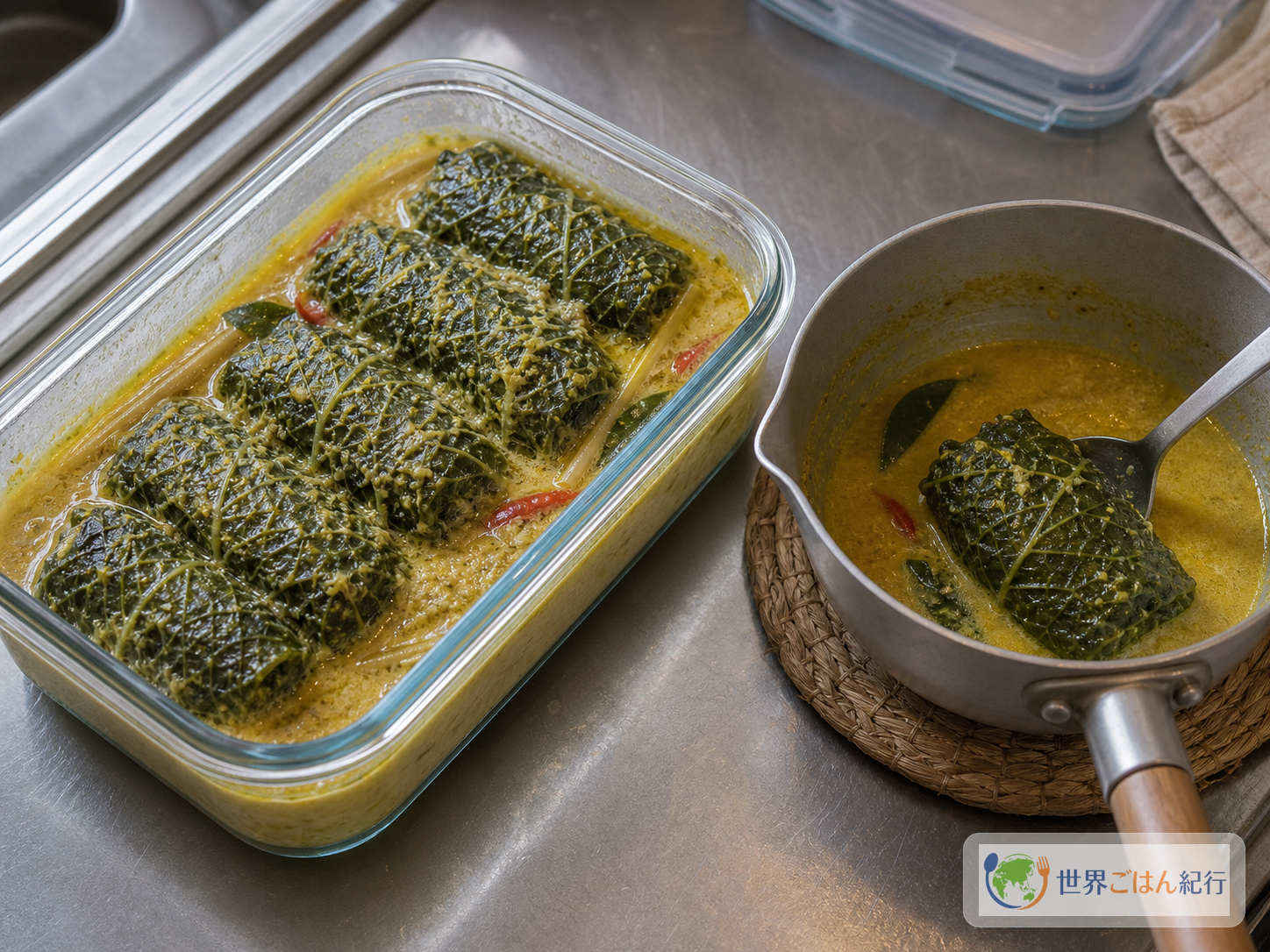
To refrigerate, cool a little, put it in a container together with the sauce and finish within 2 days. If you separate leaves and sauce, the leaves dry out easily when reheated. The next day, move to a pot, add 2 to 3 tbsp water and heat over low heat. In a microwave, put in a deep bowl, loosely cover with plastic wrap, heat at 600 W for 1 minute 30 seconds, turn over and heat another 30 seconds. The leaves tear easily, so don't stir hard in between.
You can freeze it, but the texture of the leaf suffers. Wrap each parcel in plastic wrap, put the sauce in a separate small bag and use within 2 weeks. Thaw overnight in the refrigerator. Microwaving from frozen heats the leaf and filling unevenly and the parcels split easily.
Leftover sauce from the table can be used. Since it contains the soaking liquid of fish and shrimp, rather than pouring it over white rice the next day, simmering thinly sliced eggplant, thick fried tofu or komatsuna in it over low heat for about 5 minutes makes a light side dish. If the coconut aroma feels strong, add a few drops of lime or just 1/2 tsp vinegar at the end. Reducing only the sauce too far makes the oil float, so always return a little water before reheating.
FAQ
| Question | Answer |
|---|---|
| Can I use desiccated coconut? | If unsweetened, yes. Rehydrate with 3 tbsp lukewarm water and use it once it holds together lightly when squeezed. |
| Can I leave out the dried shrimp? | You can, but the flavor gets lighter. Add umami from another direction with 2 tsp dried shiitake powder and 5 g dried bonito flakes. |
| Can I make buntil that is not spicy? | Leave out the chili and serve sambal in a separate dish. Keep the ginger and makrut lime leaves in the sauce so the aroma doesn't feel thin. |
| Does it go with anything besides white rice? | It goes with scented rice such as nasi uduk (in Japanese), but for the first time plain white rice makes the flavor of the sauce easier to read. |
| Can I add meat? | As a home-cooking variation, yes. But what makes buntil buntil is the combination of leaves, coconut, dried fish and coconut sauce. |
| What goes well as another dish on the table? | Rather than an oily fried food, small dishes that add acidity or heat suit it. The sambal substitute recipe, or cucumber, tomato and lime on the side, cut the weight. |



