Pancit Batil Patung: Noodles and Egg Soup That Belong Together
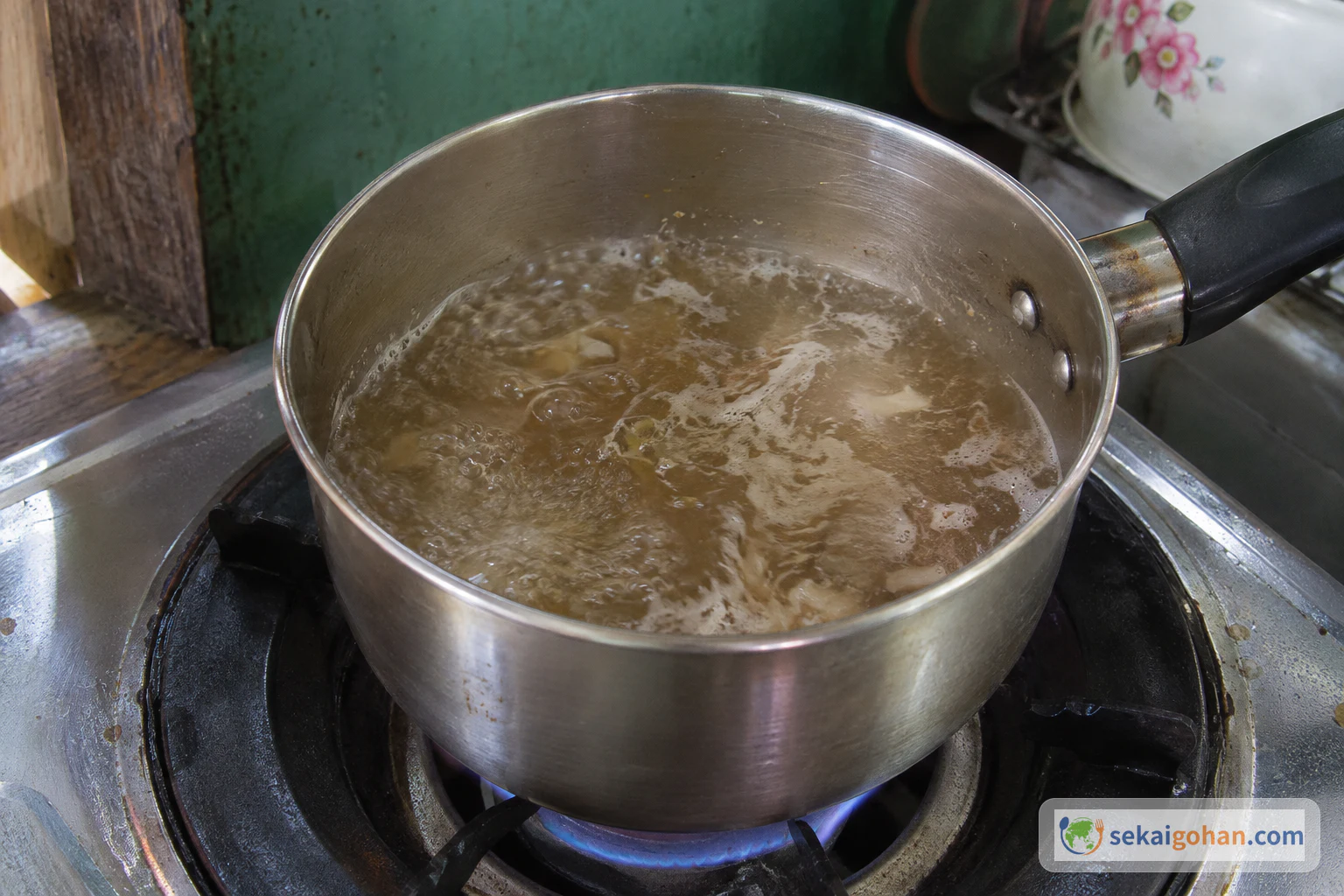
One stock does two jobs: it seasons the noodles in the wide pan, and what remains in that pan becomes the egg soup served on the side. Keep that connection and the dish holds together.
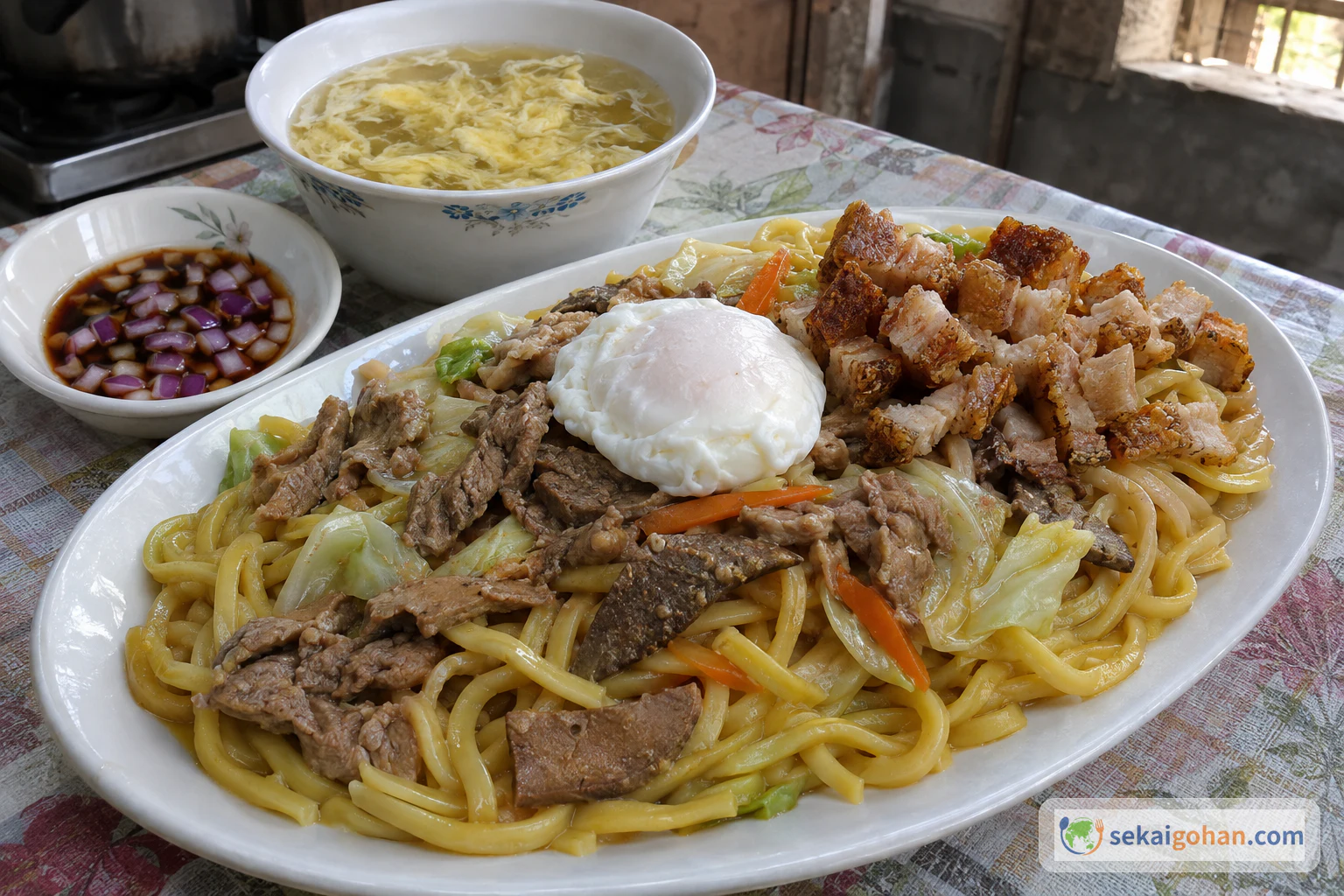
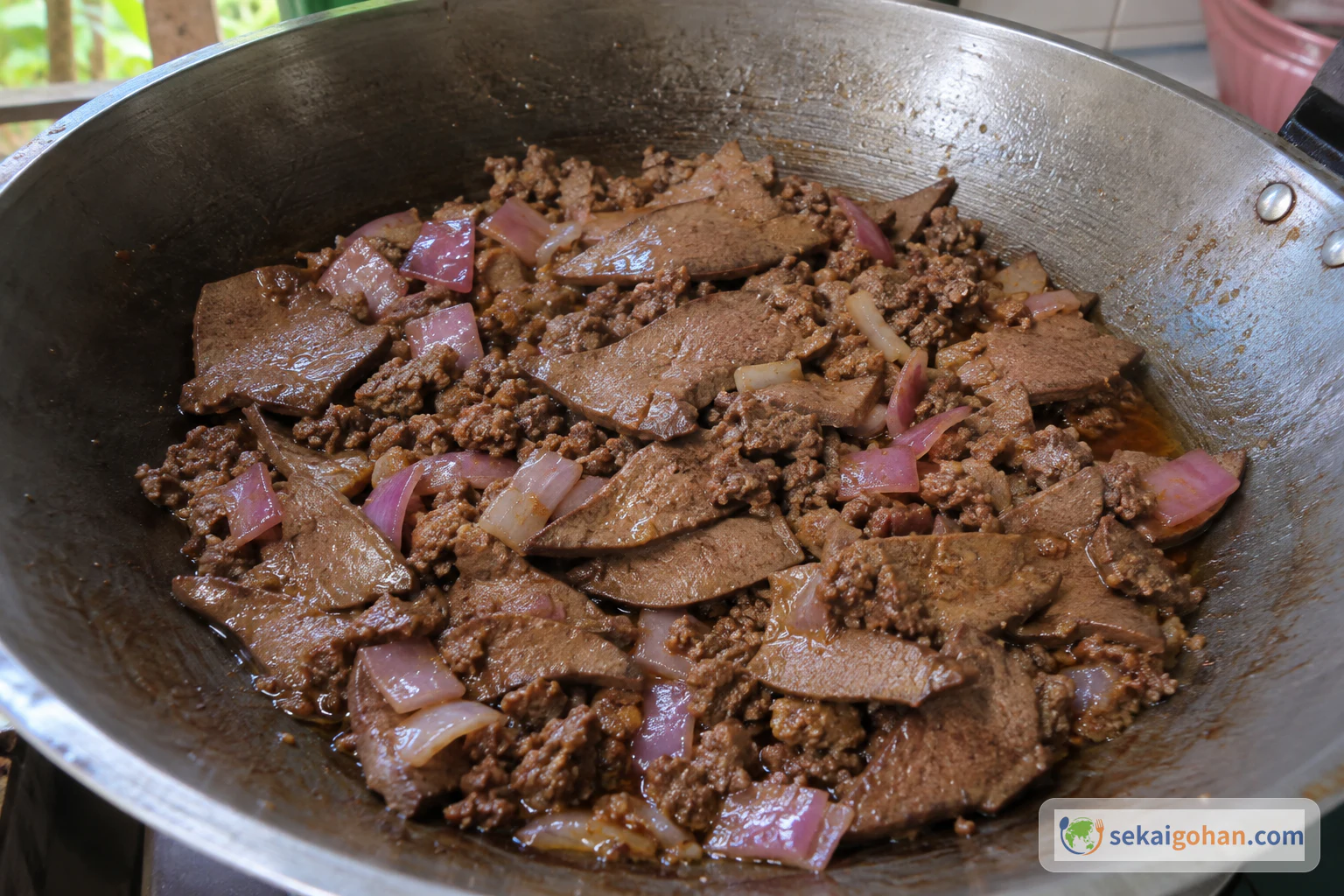
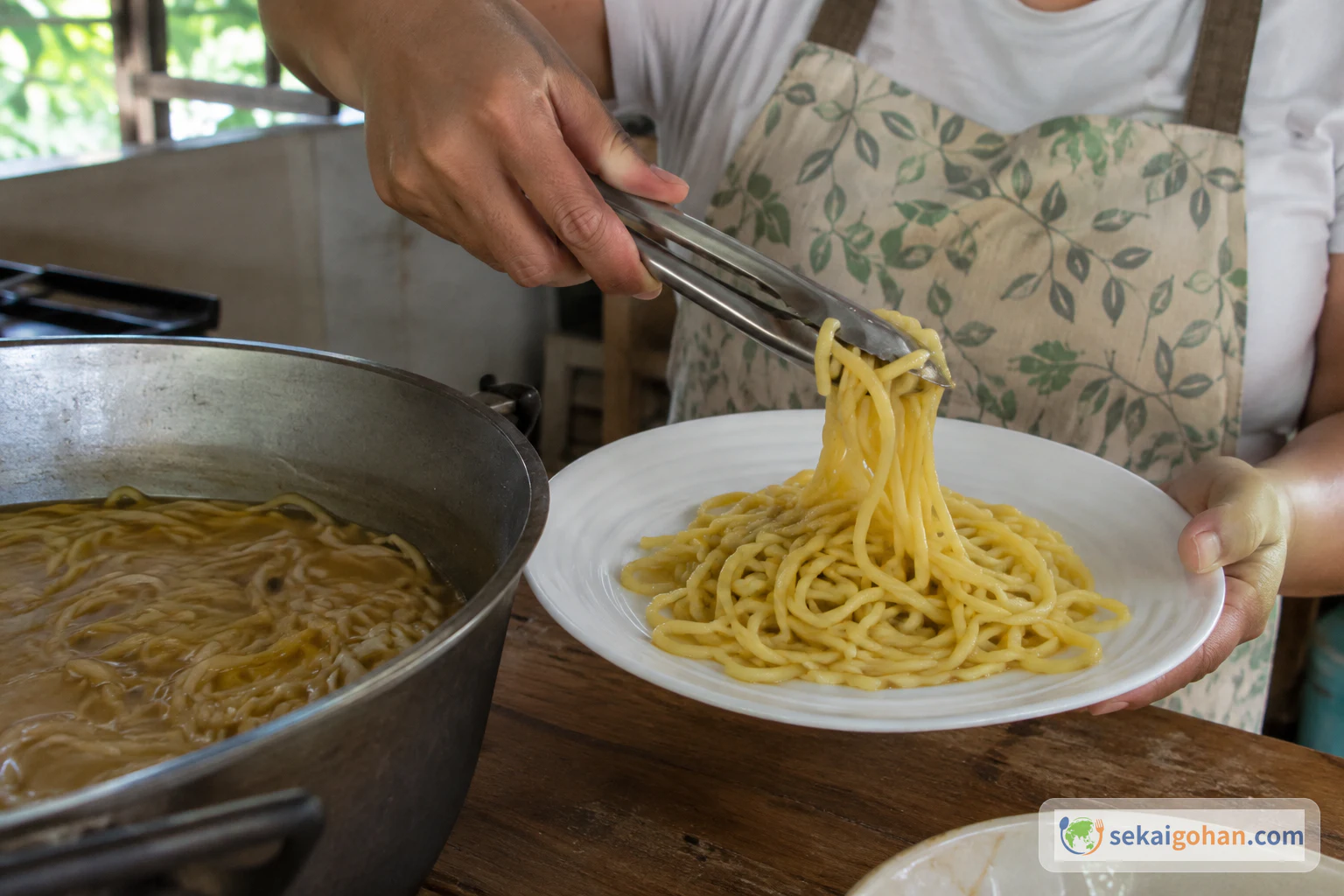
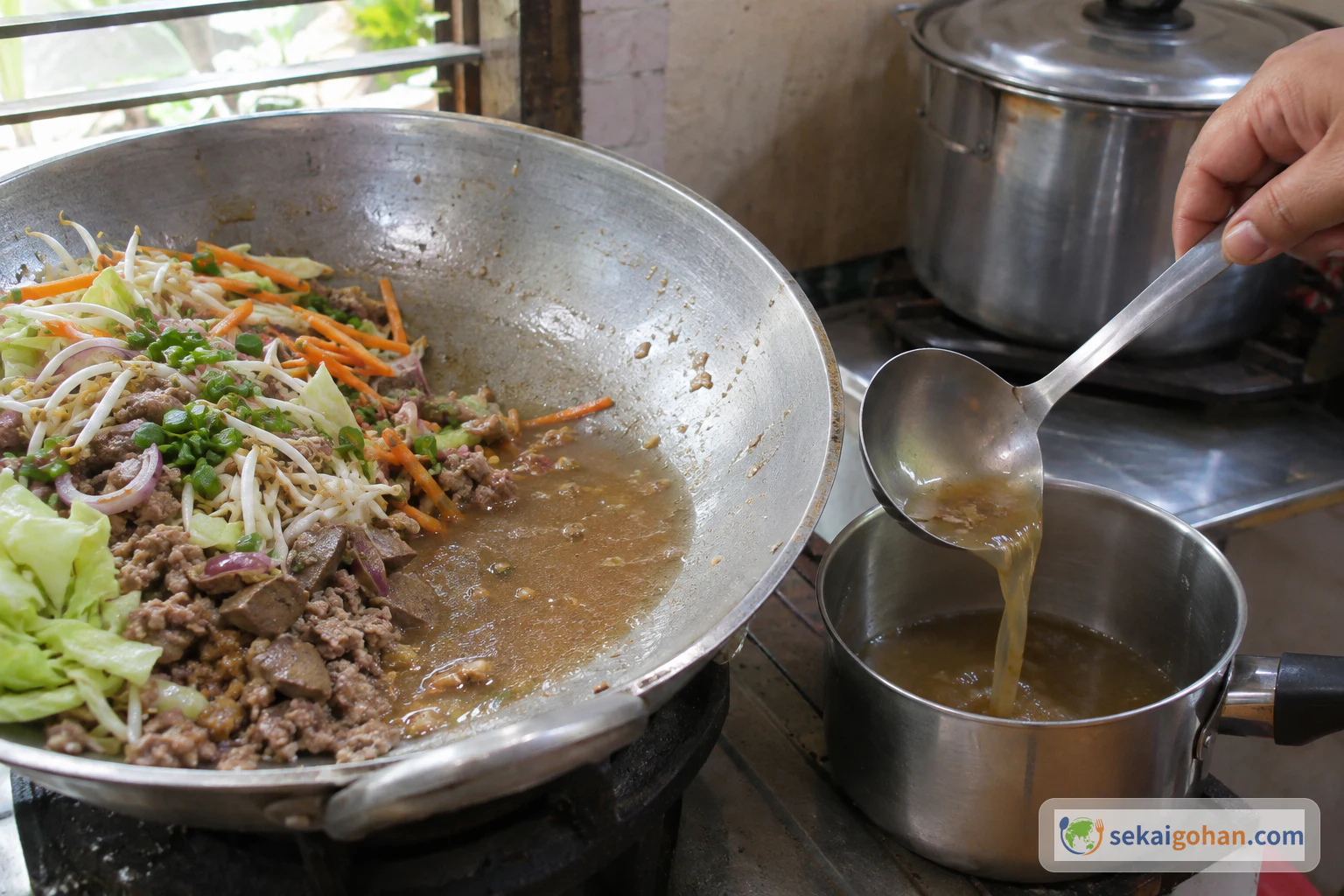
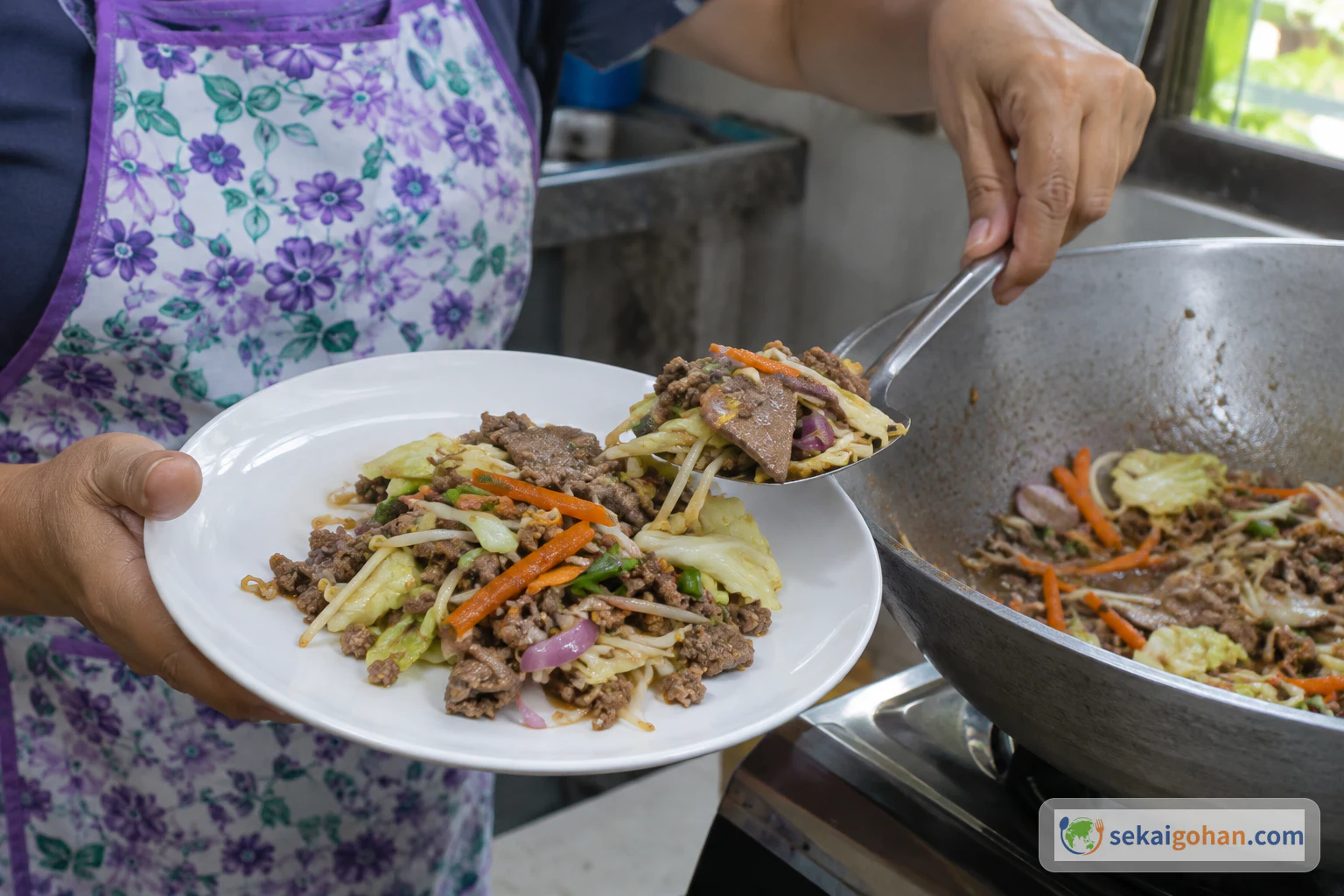
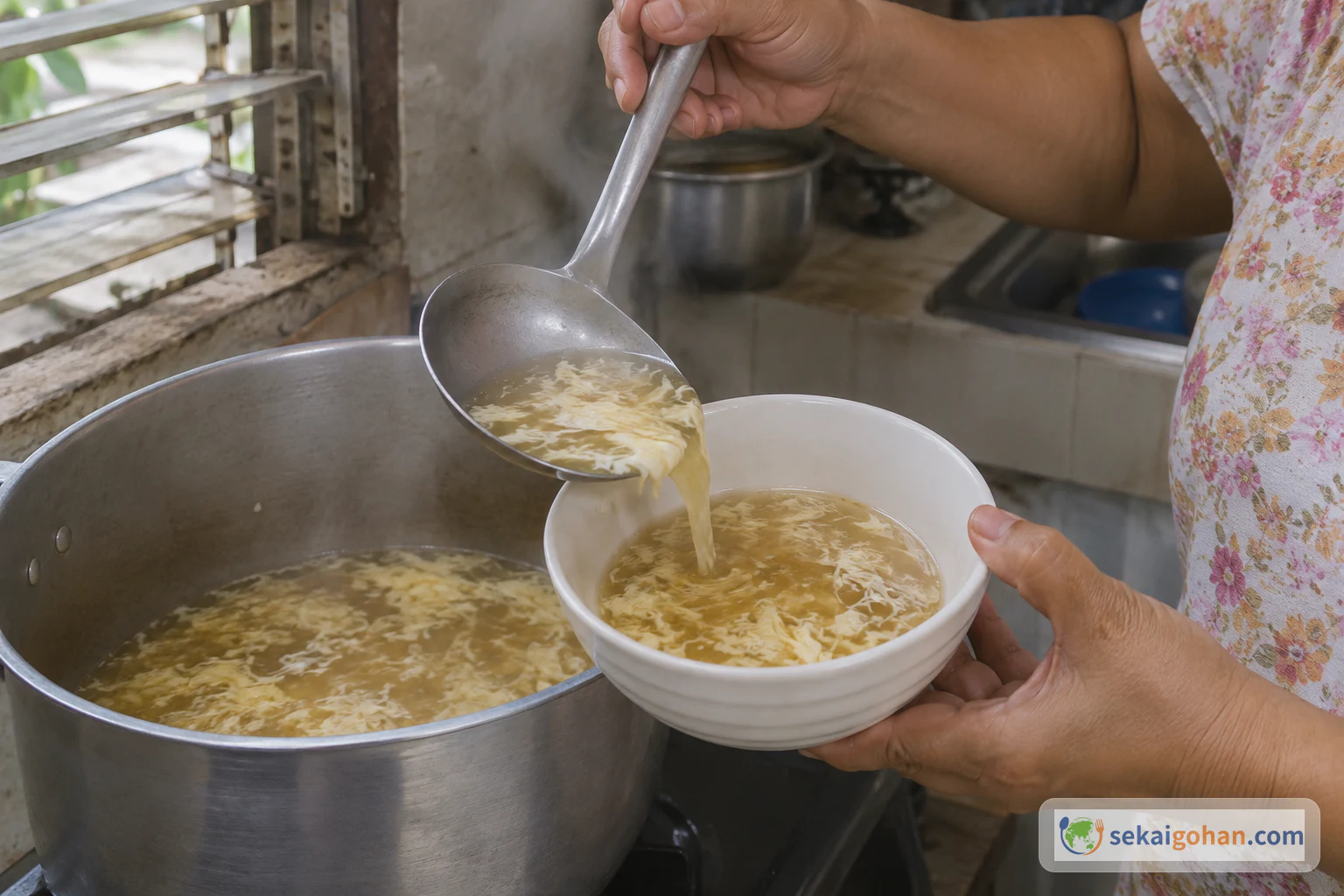
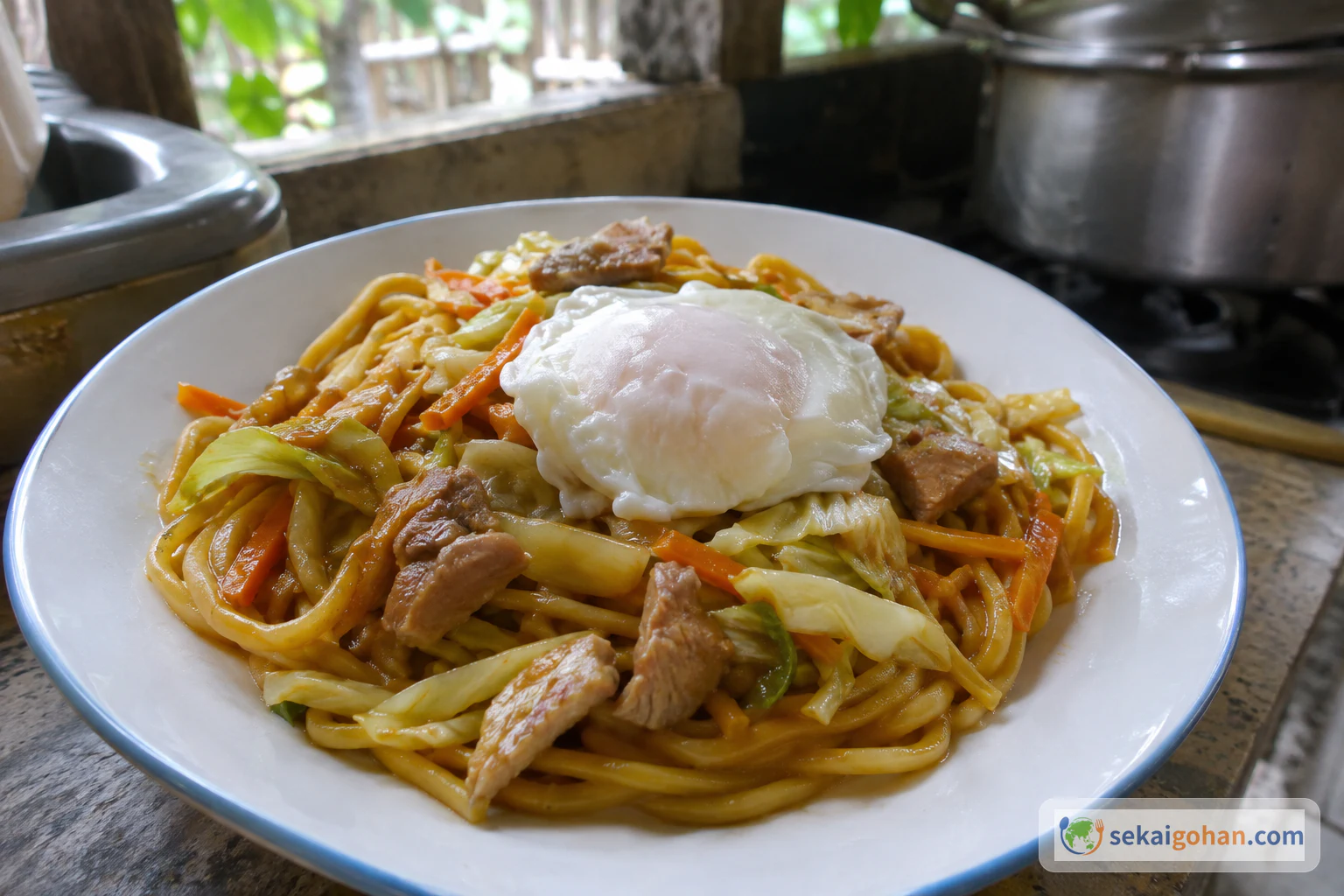
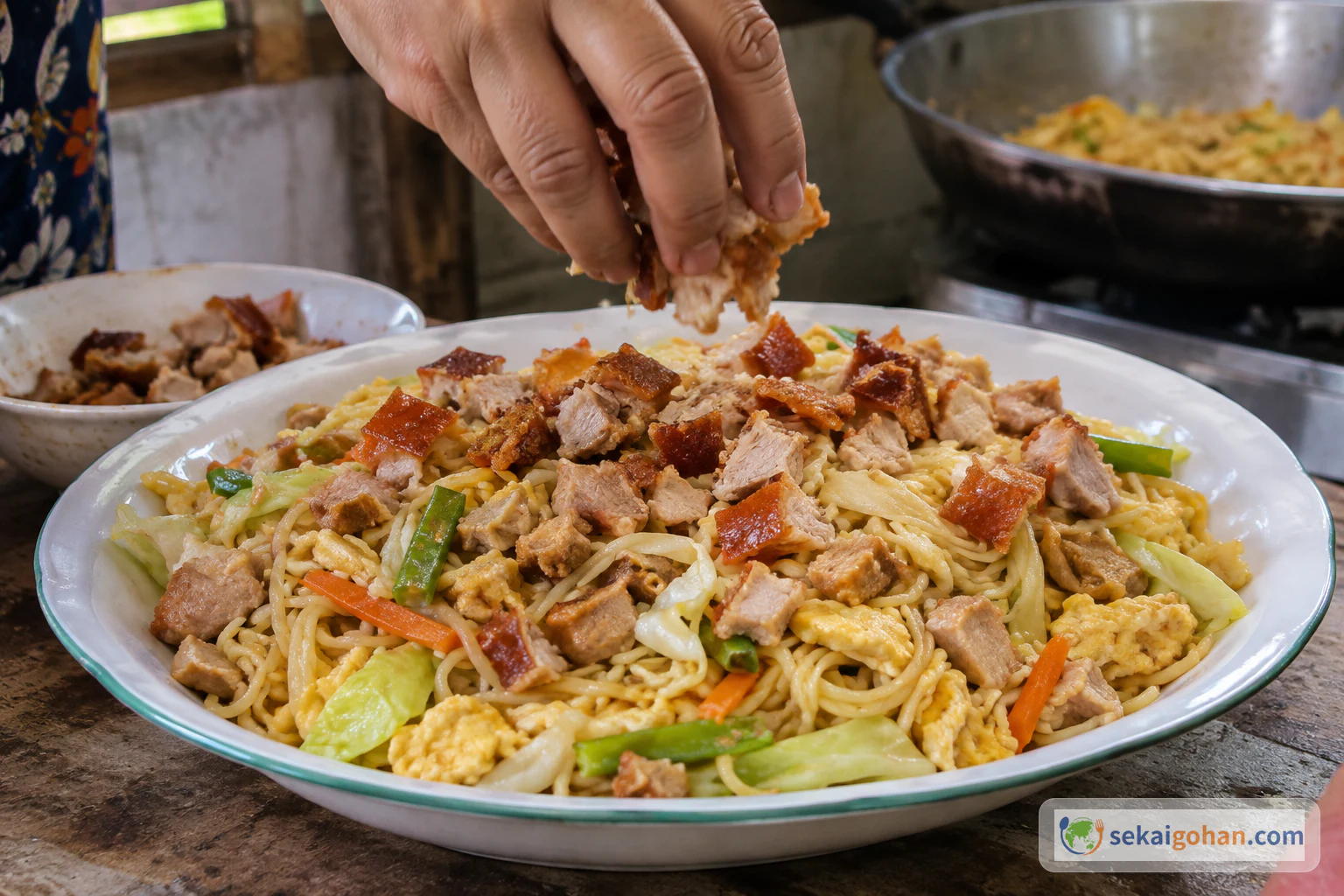
Picture a plate of thick, soft yellow noodles under sautéed beef, pork liver and vegetables, with crisp chopped pork on top. Beside it sits a bowl of stock threaded with fine strands of egg, and a small dish of chopped raw onion in soy sauce and vinegar. Vanjo Merano of Panlasang Pinoy presents this as a signature noodle dish of Tuguegarao, and this article follows his recipe. You will also see the name spelled Batil Patong.
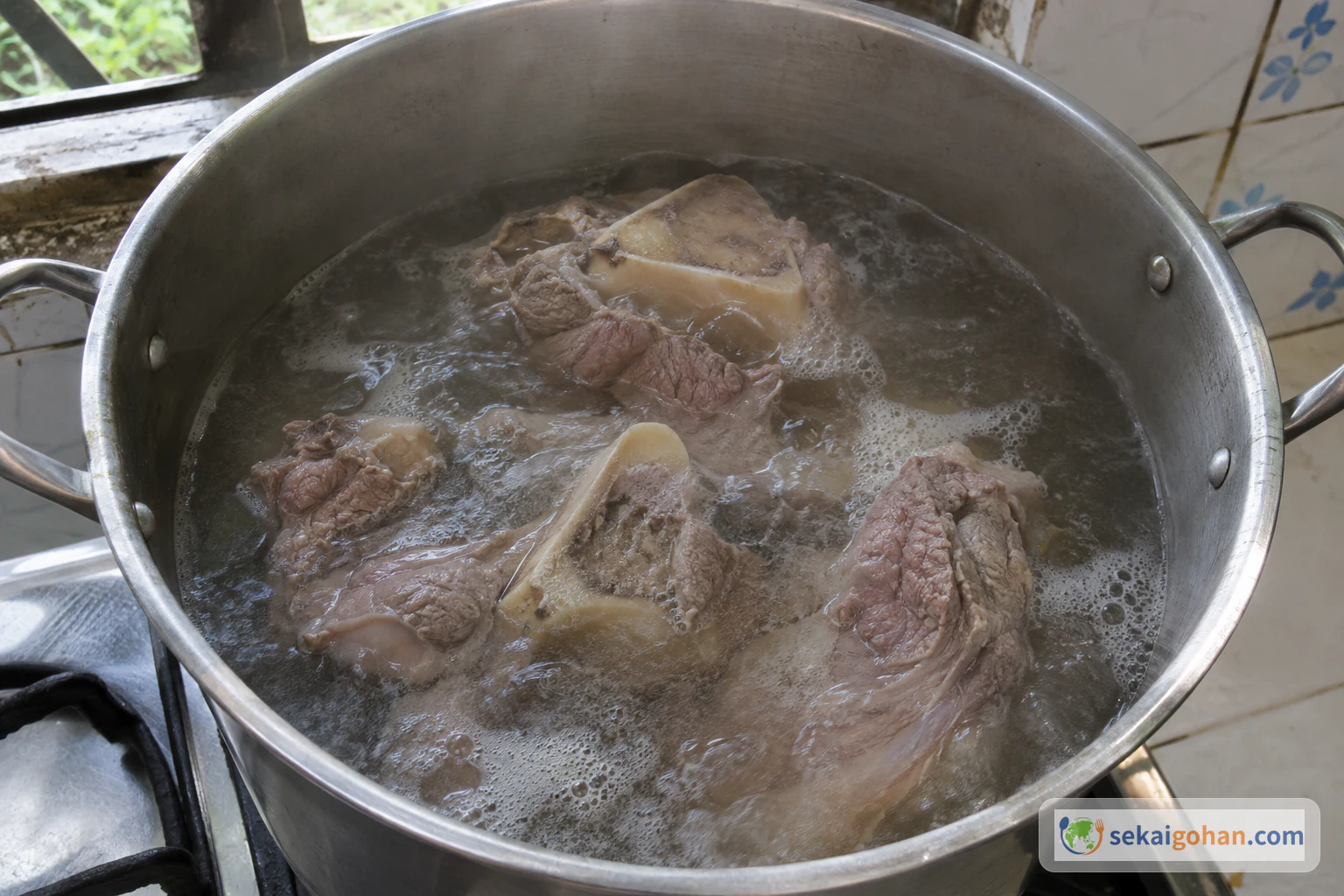
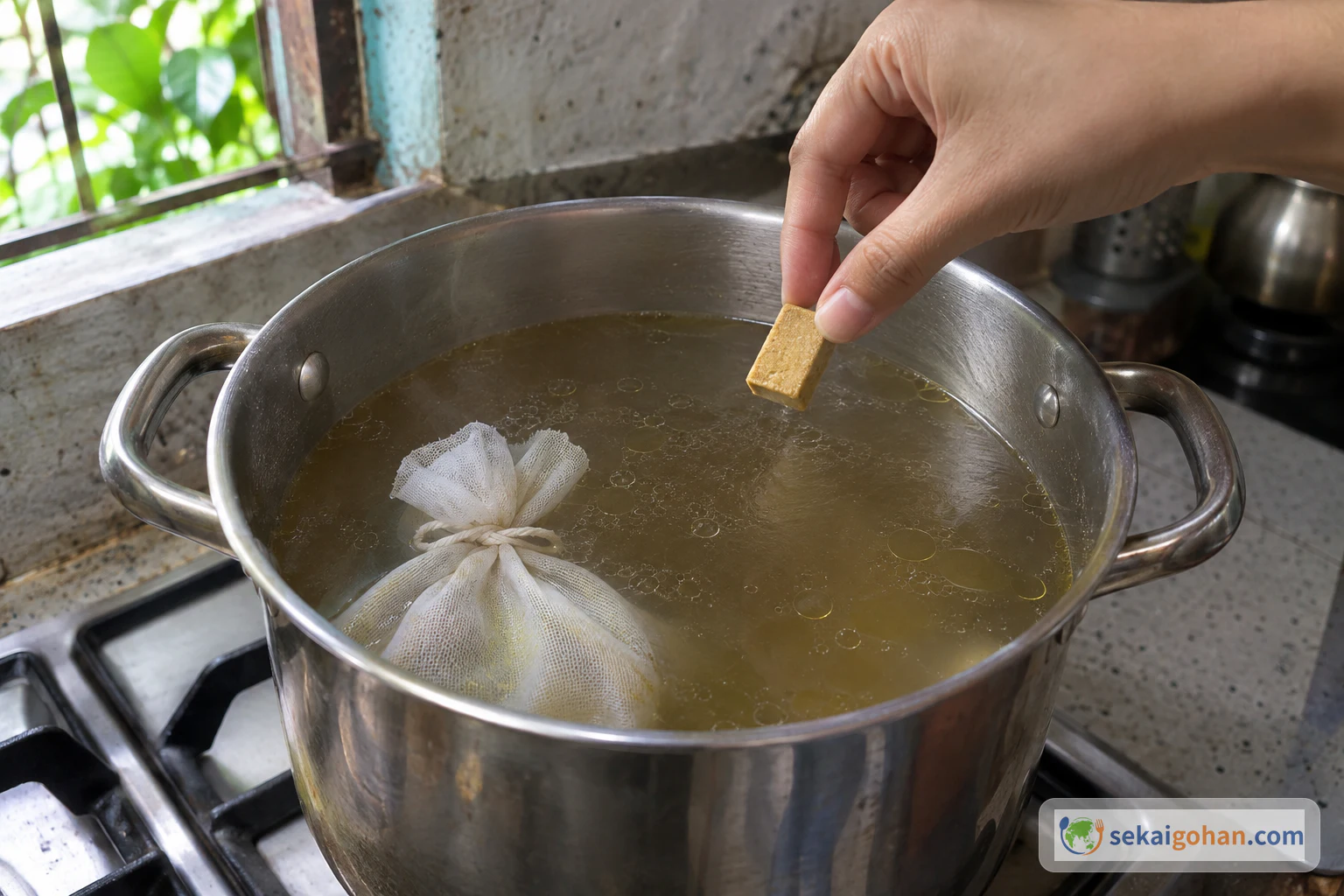
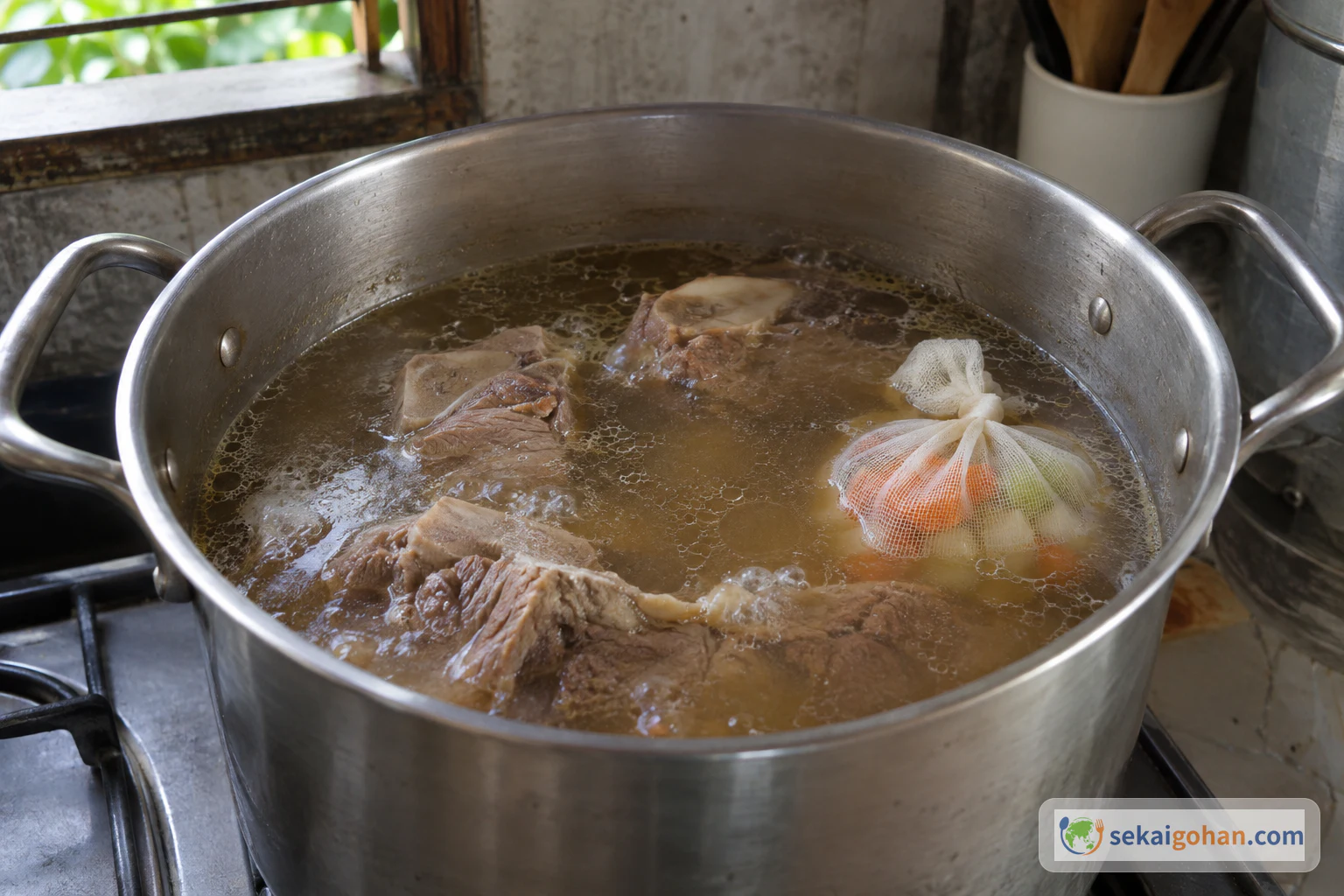
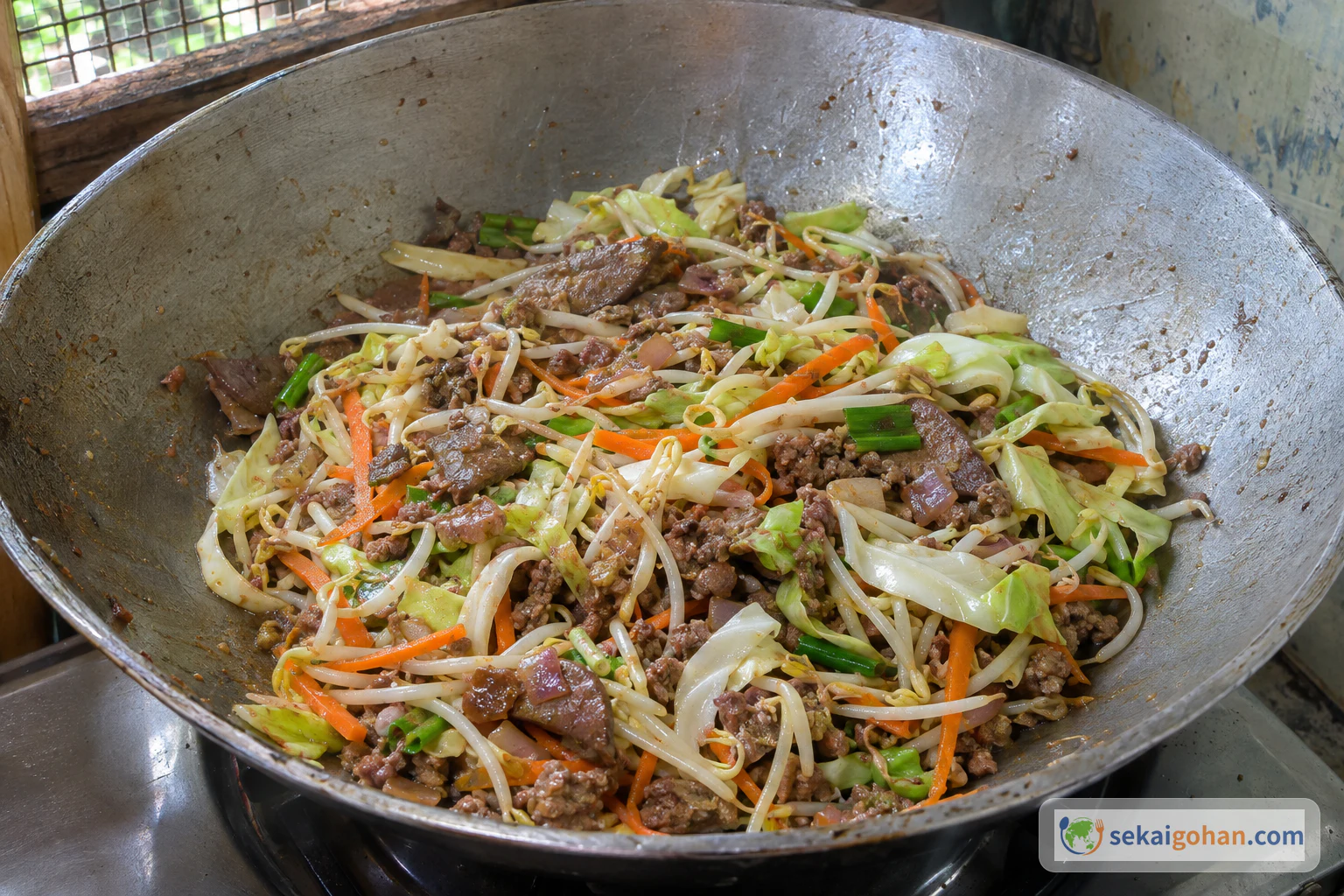
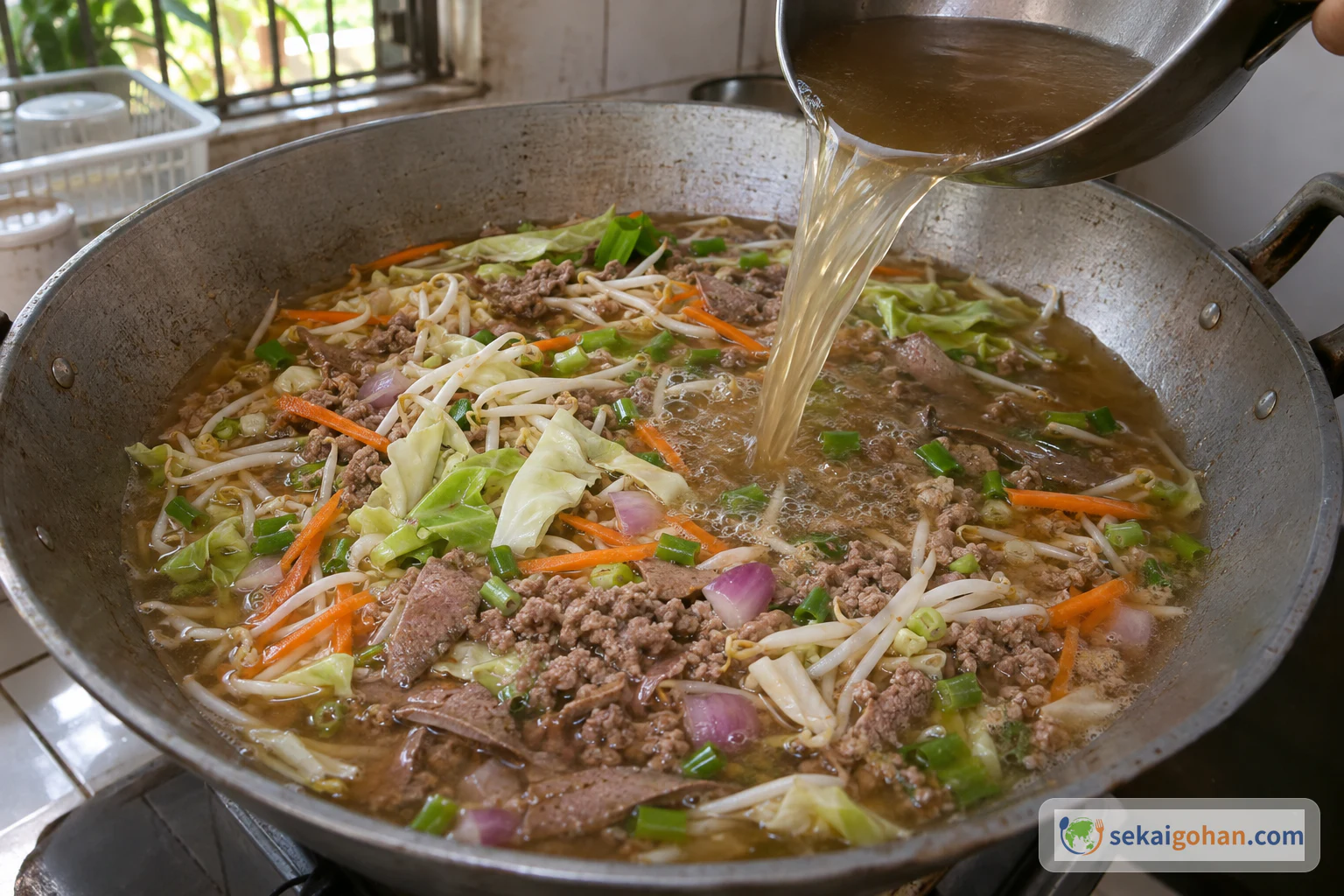
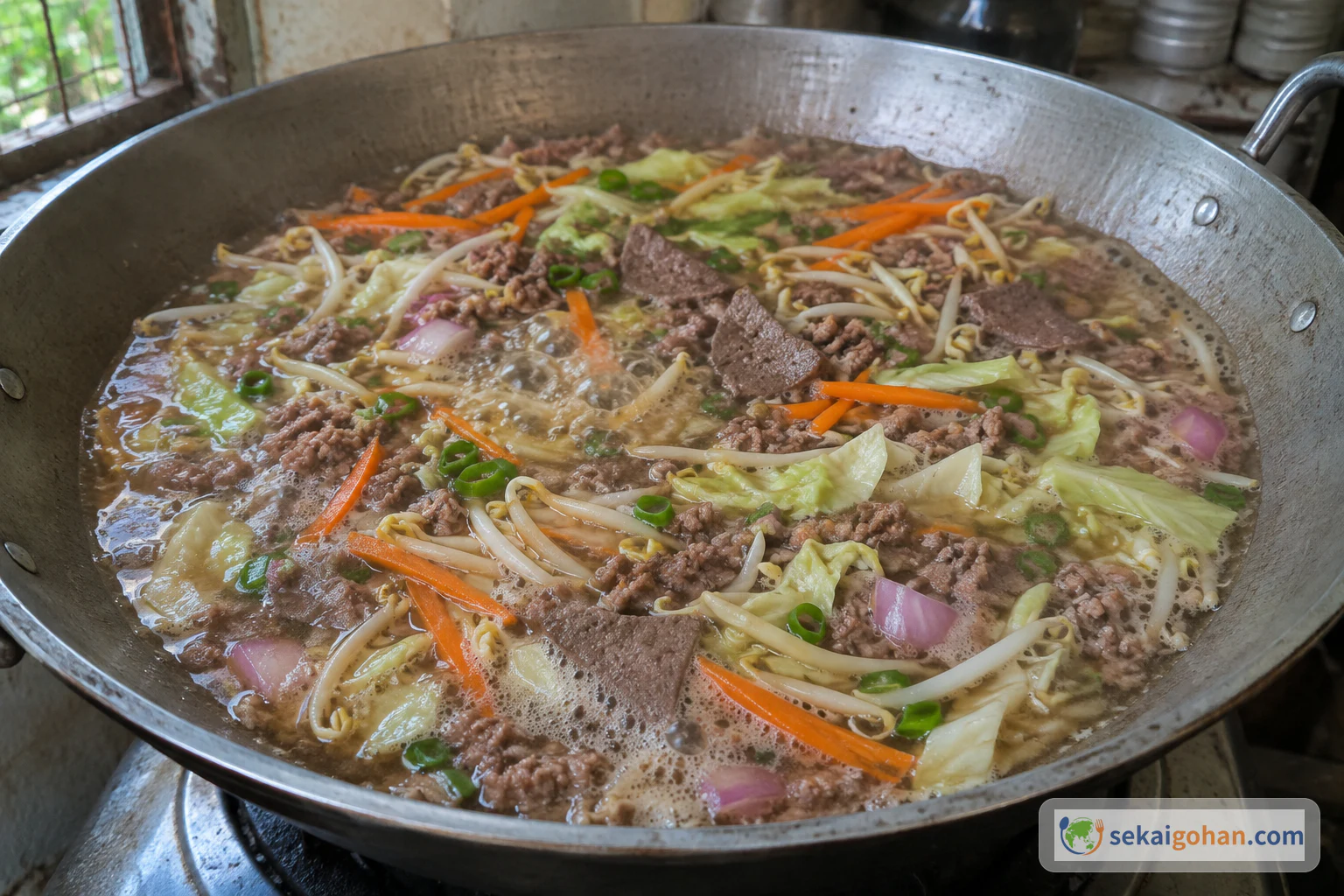
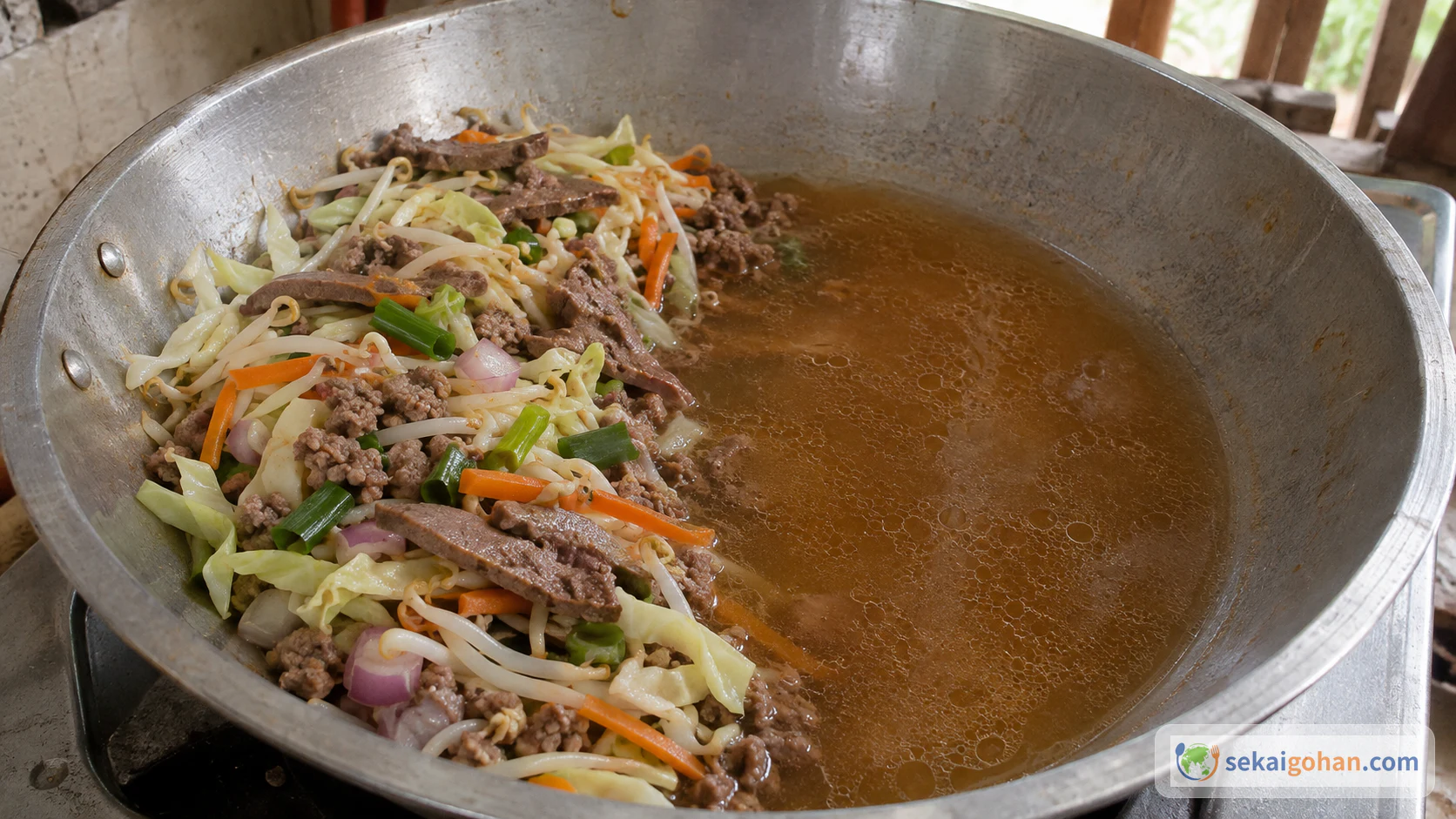
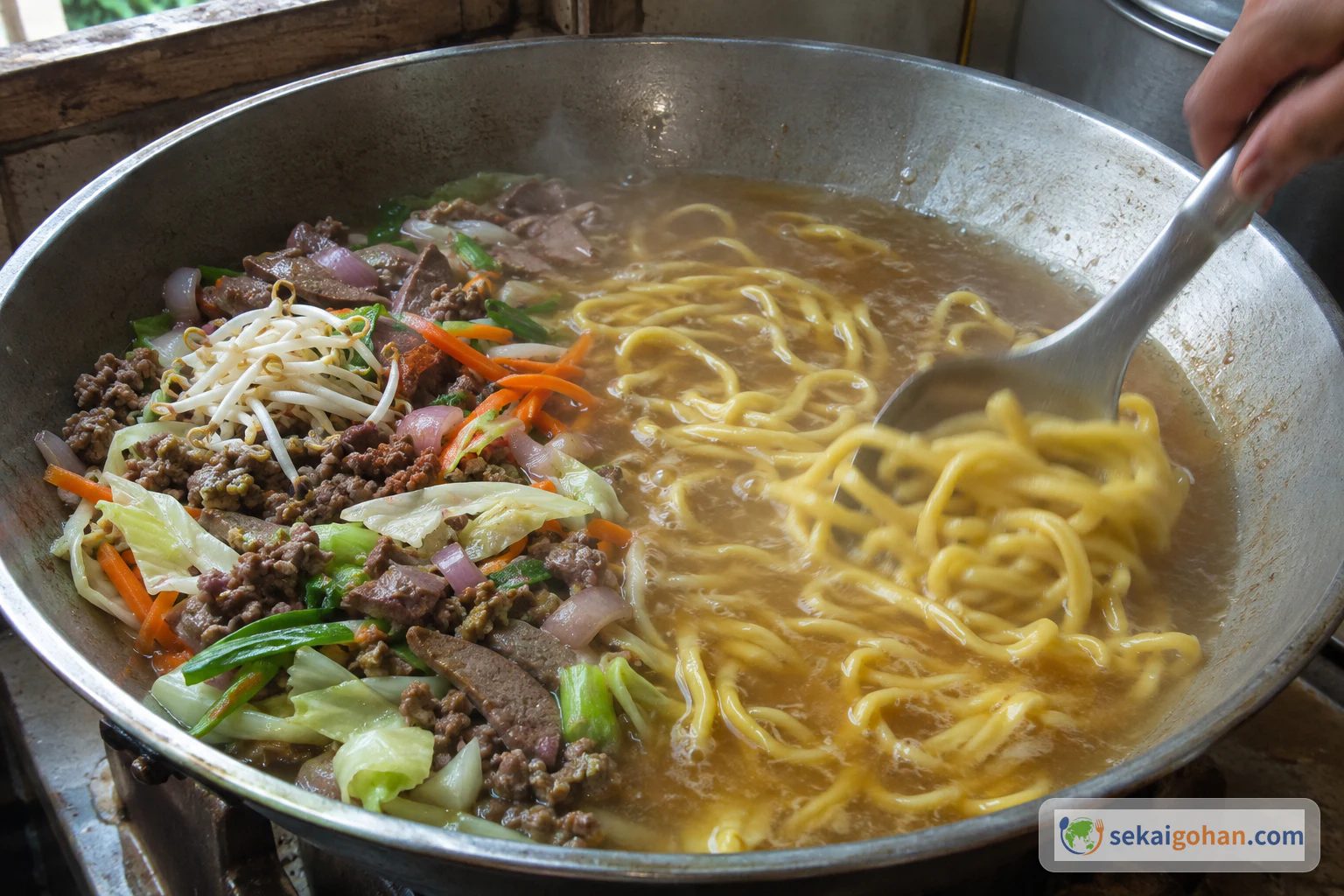
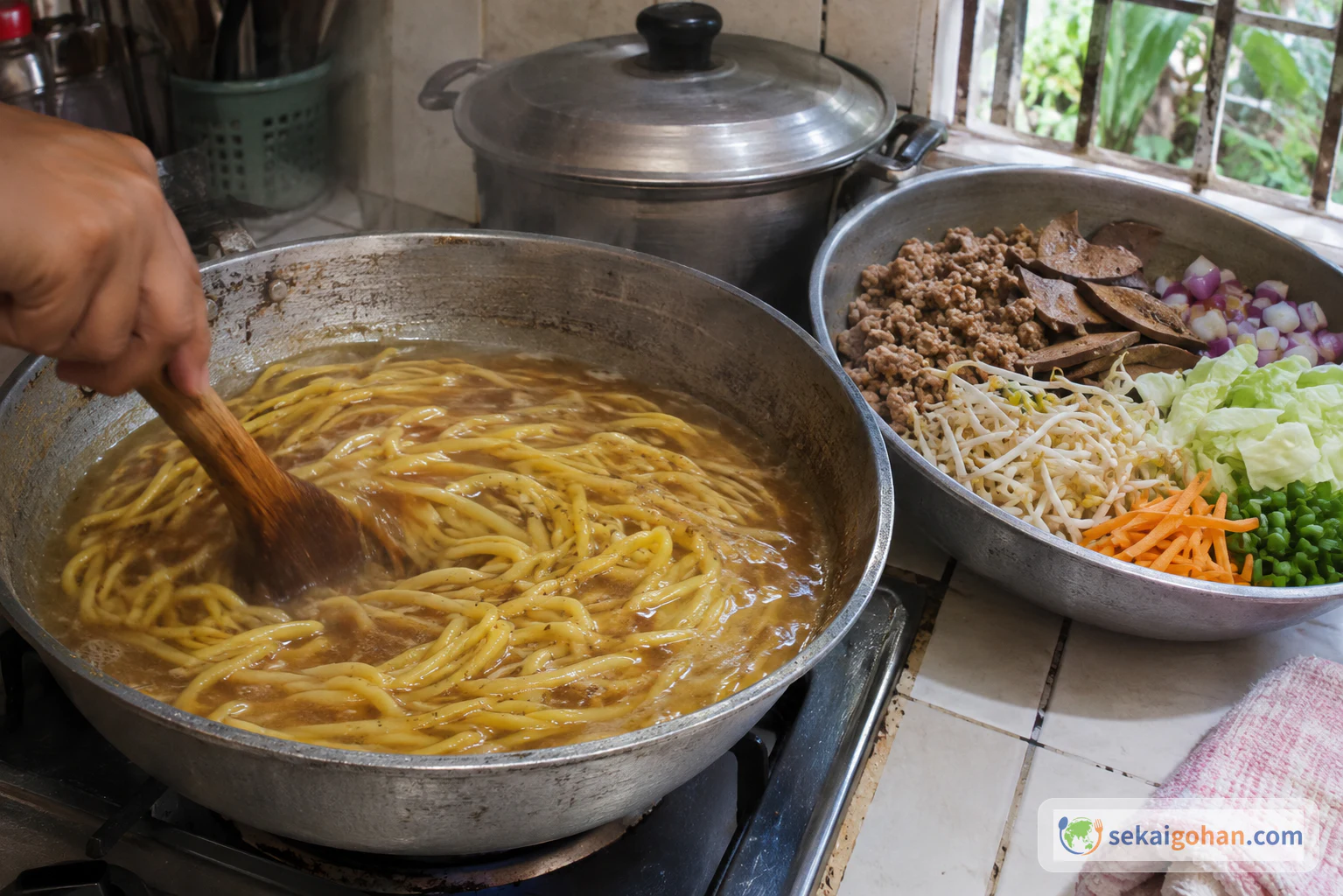
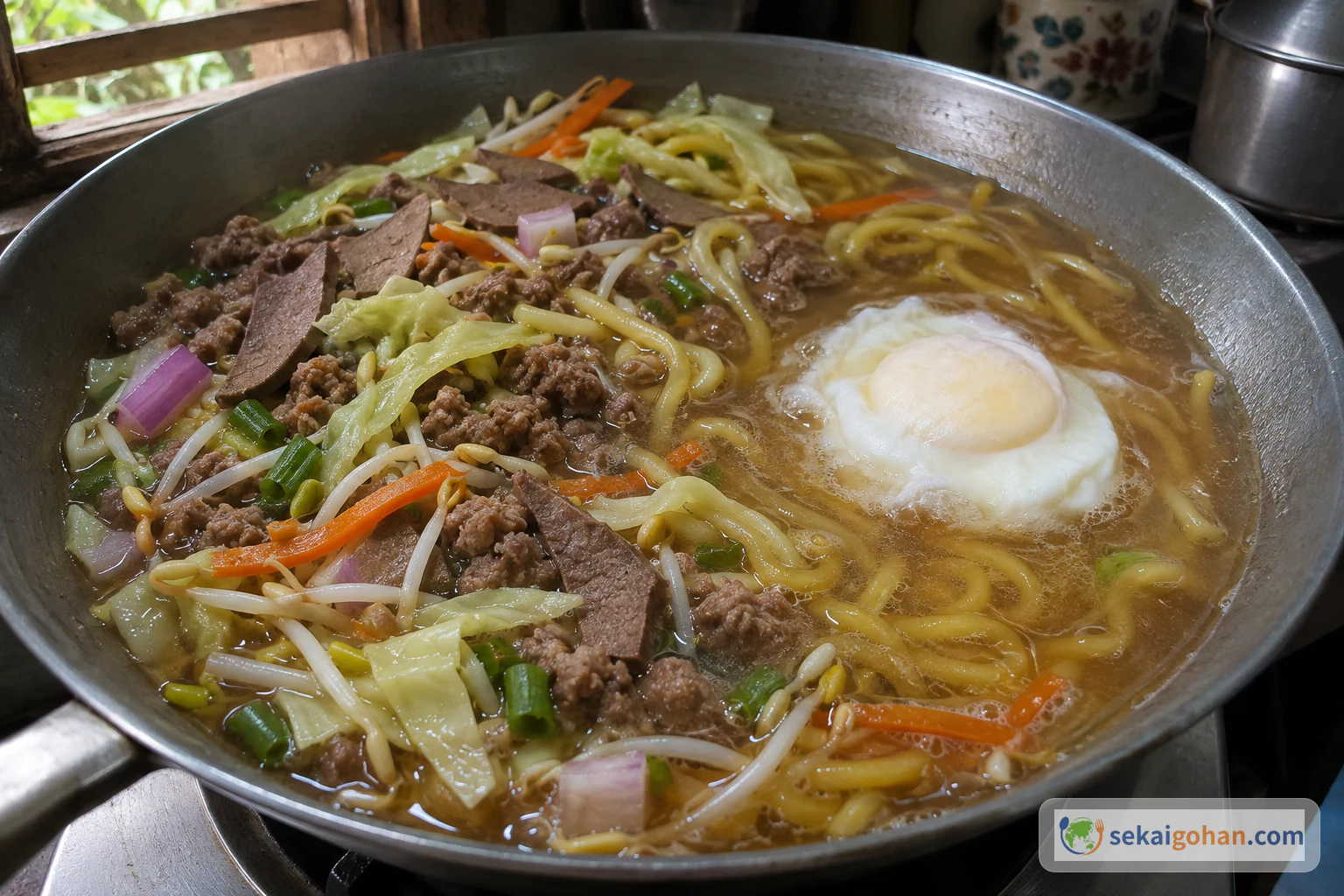
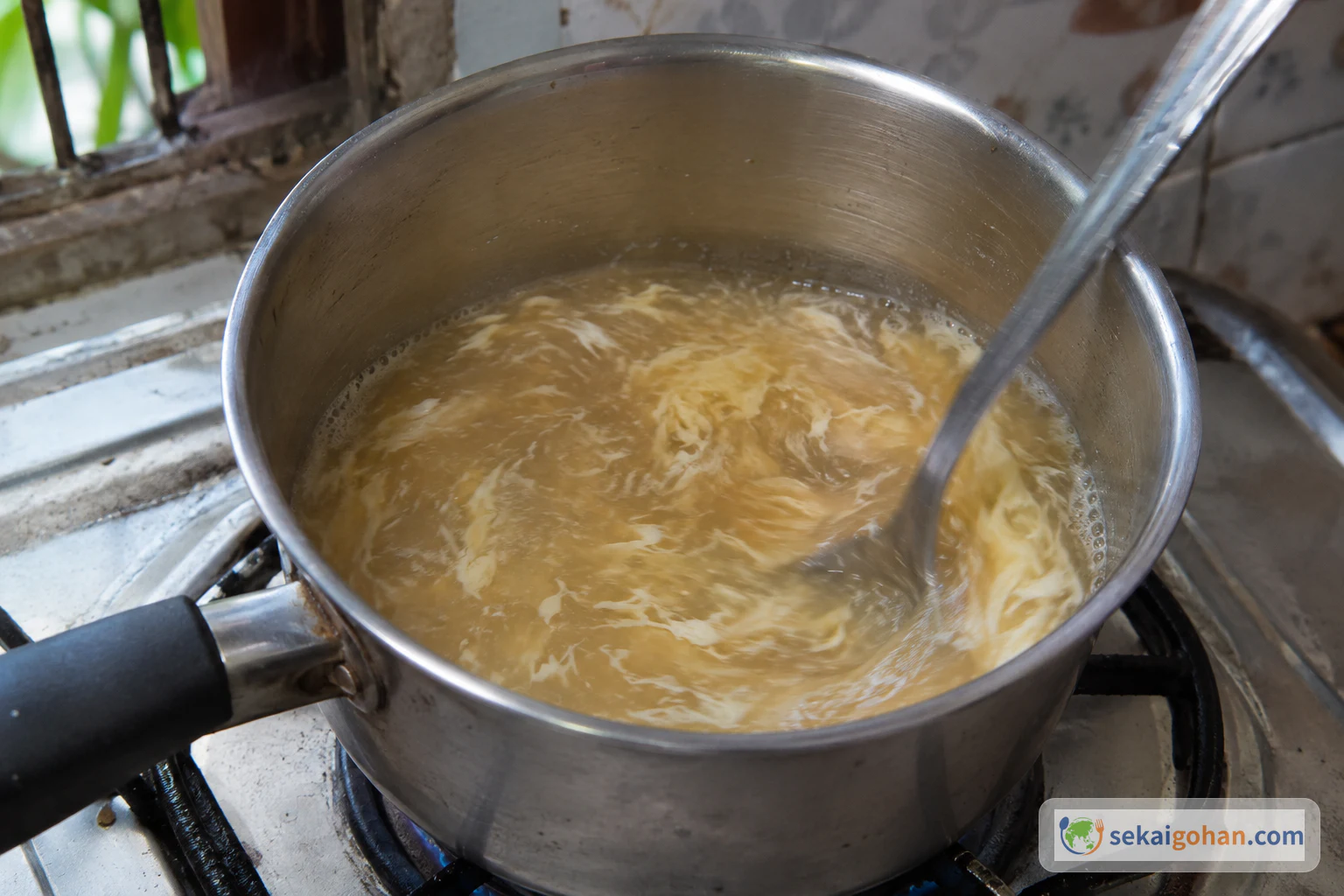
The stock comes first and carries through the whole meal. Part of it goes into a wide pan, where the noodles cook with soy sauce and black pepper. The liquid left in that pan then becomes the batil, the egg soup, so the soup already tastes of the noodles when it reaches the table.
This is one home version, not the single authentic recipe. It keeps to Merano's formula and does not borrow from Pancit Cabagan, pancit canton or other noodle dishes. For more dishes from the same country, see our Philippines page.
How This Version Handles the Meat, Eggs and Dip
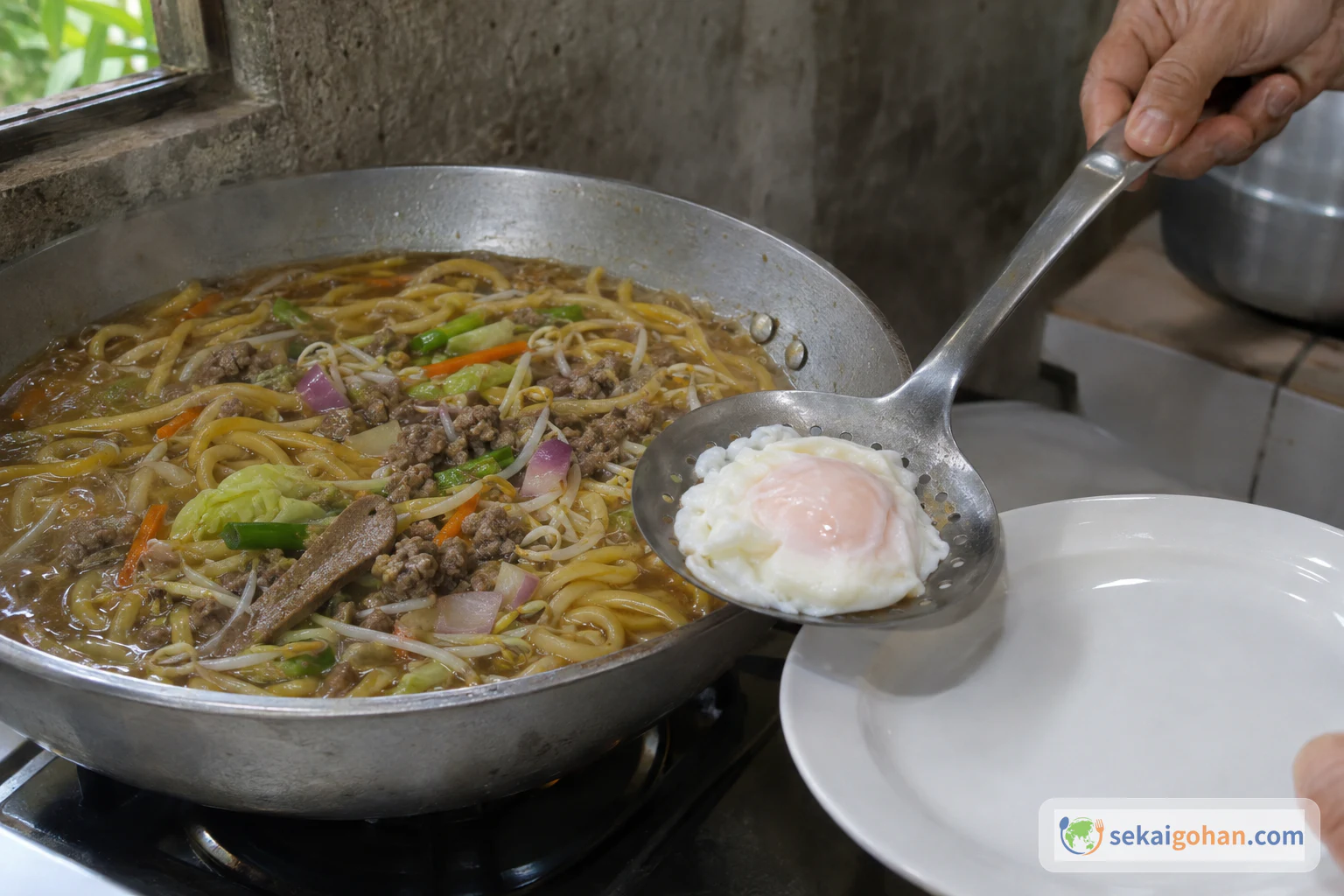
This recipe has not been kitchen-tested. We have not cooked it or taken temperature readings for this article. The images illustrate each stage, but they do not show quantities, doneness or temperature.
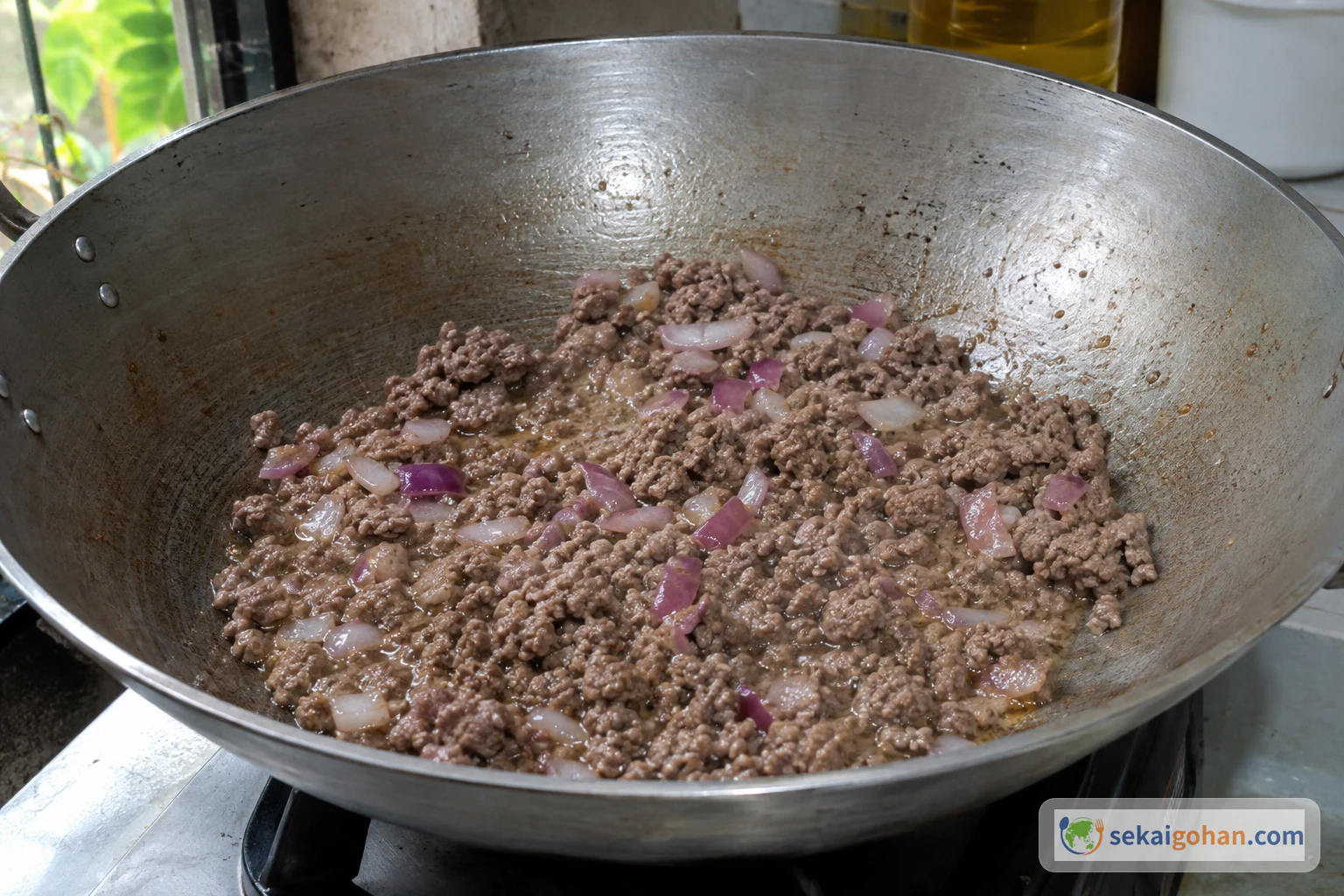
The meat is beef. Merano describes carabeef as traditional in Cagayan and uses beef where carabeef is hard to find. This article uses his beef version as it stands. His four servings are a published figure rather than something we measured, and his cups, ounces and spoons are kept without conversion.
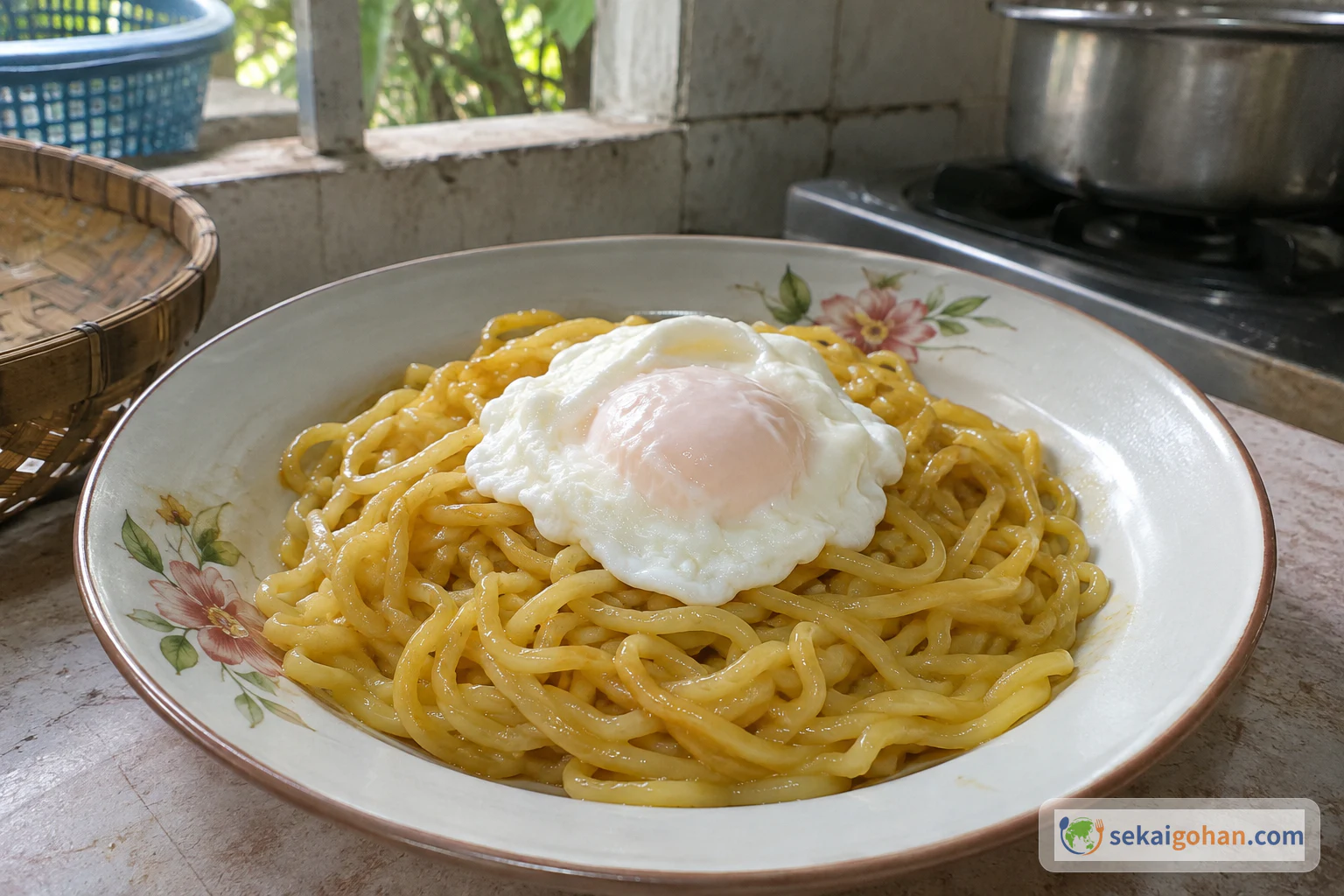
The eggs are cooked firm. This is our own safety adaptation, so the dish does not try to reproduce a soft yolk. The U.S. Food and Drug Administration (FDA) advises cooking eggs until both yolk and white are firm, so the poached egg is cooked that far.
A thermometer decides when the rest is done. The minced beef, pork liver and egg soup are checked against the home guidance from Japan's Ministry of Health, Labour and Welfare (MHLW): 75°C at the center for at least 1 minute. The FDA separately says egg dishes should reach 160°F. These are two different agencies' figures, and this recipe uses the 75°C check. The cooking times below are guides, and neither they nor color or steam confirm that food is safe.
The lechon carajay is bought ready to eat. Merano's ingredient is finished fried pork belly, so we use a fully cooked ready-to-eat product. We have not tested any particular brand for safety.
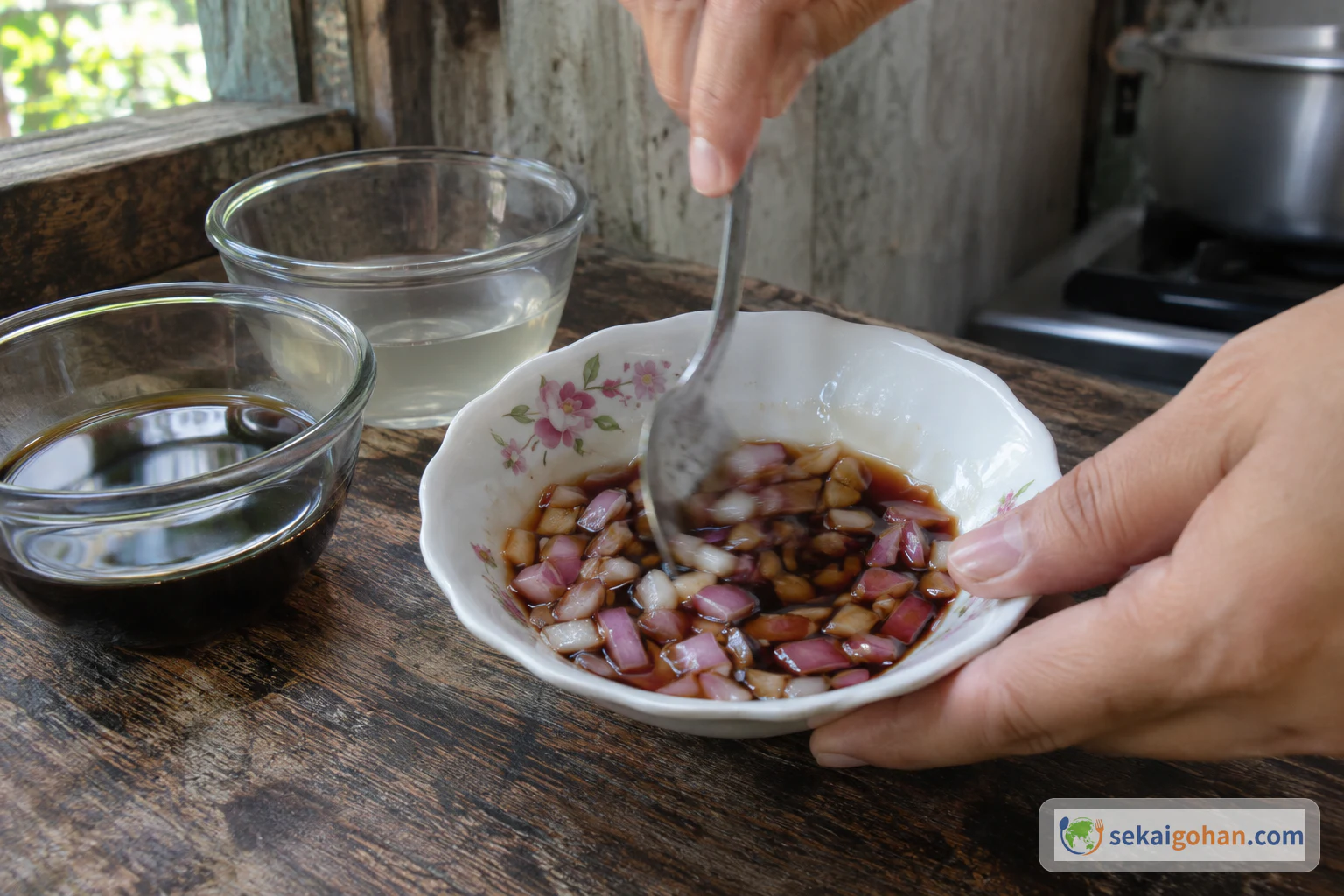
The dip stays raw. It is part of the dish, so we keep it, with the onion peeled and washed well under running water and kept away from anything that touched raw meat. Merano suggests a separate red onion for the dip, but his recipe card lists no dip quantities or soy-to-vinegar ratio, so those are left to you. Neither vinegar nor soy sauce should be treated as sterilizing the onion.
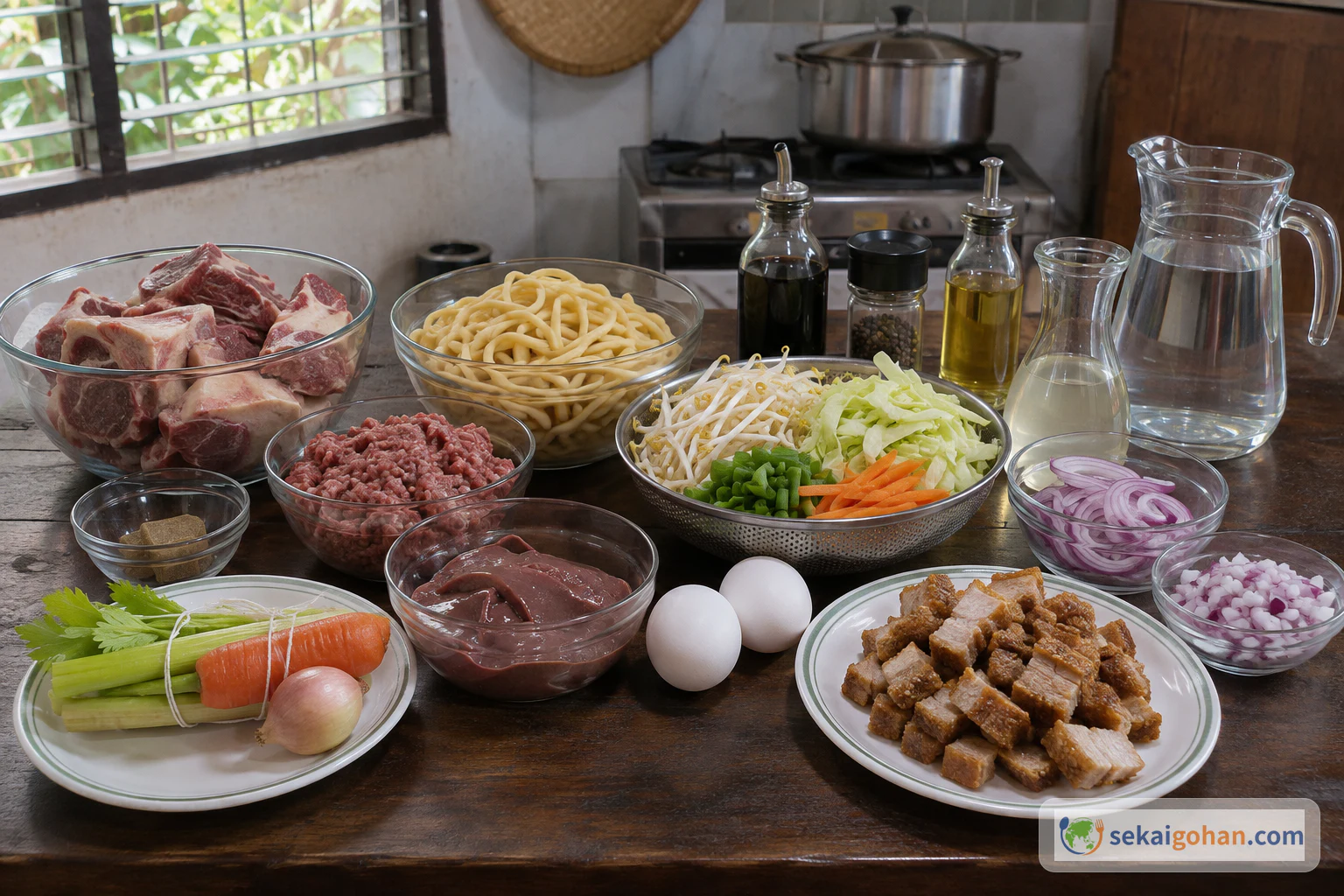
Ingredients (Serves 4)
Telling Similar Ingredients Apart
This recipe uses several onions and carrots, and each has its own job:
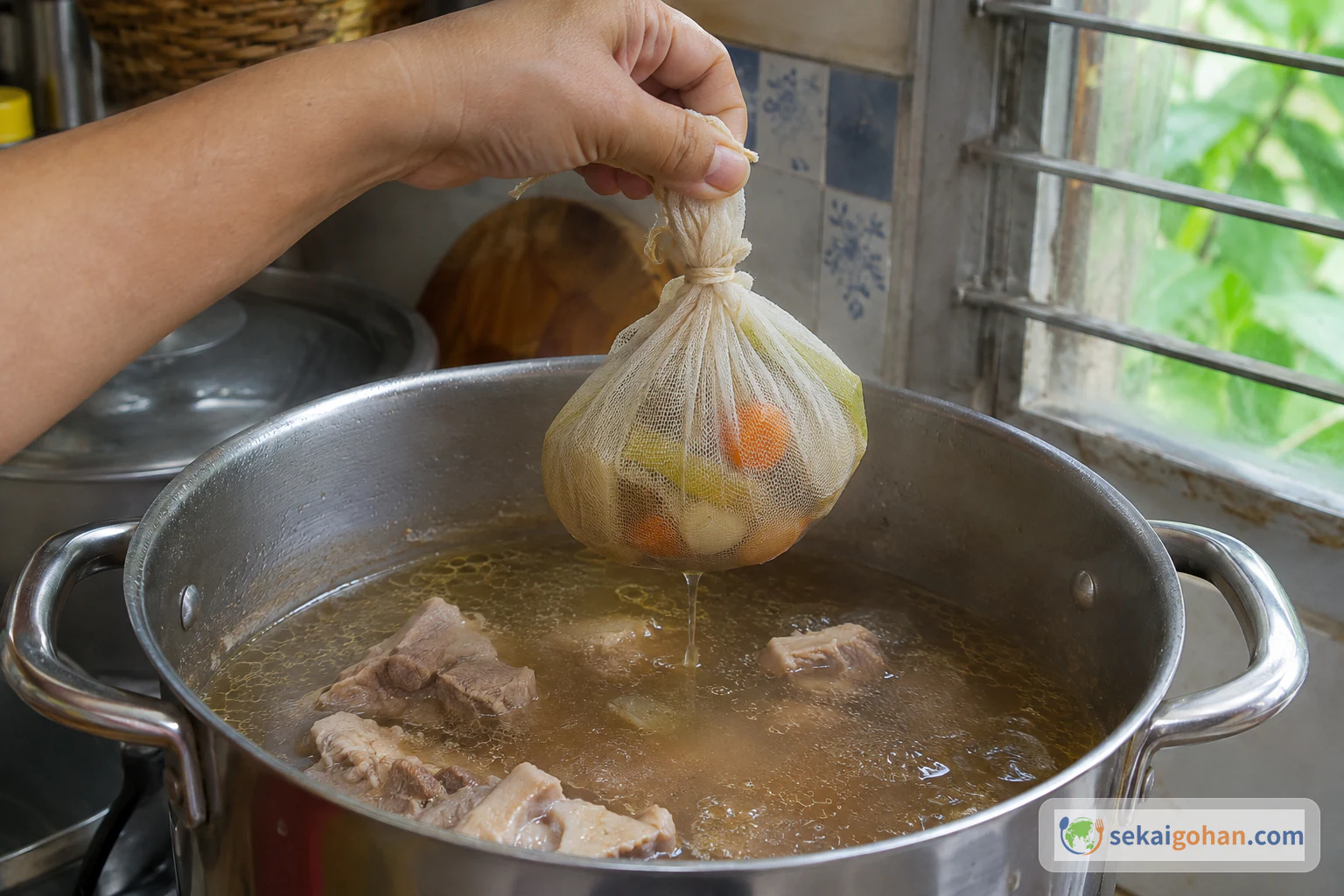
- Stock vegetables: the small onion, medium carrot and celery flavor the stock and leave the pot in their bag.
- Topping vegetables: the cubed medium red onion and the julienned carrot stay in the dish.
- Dip onion: this is a separate raw onion. Don't take it from the topping onion.
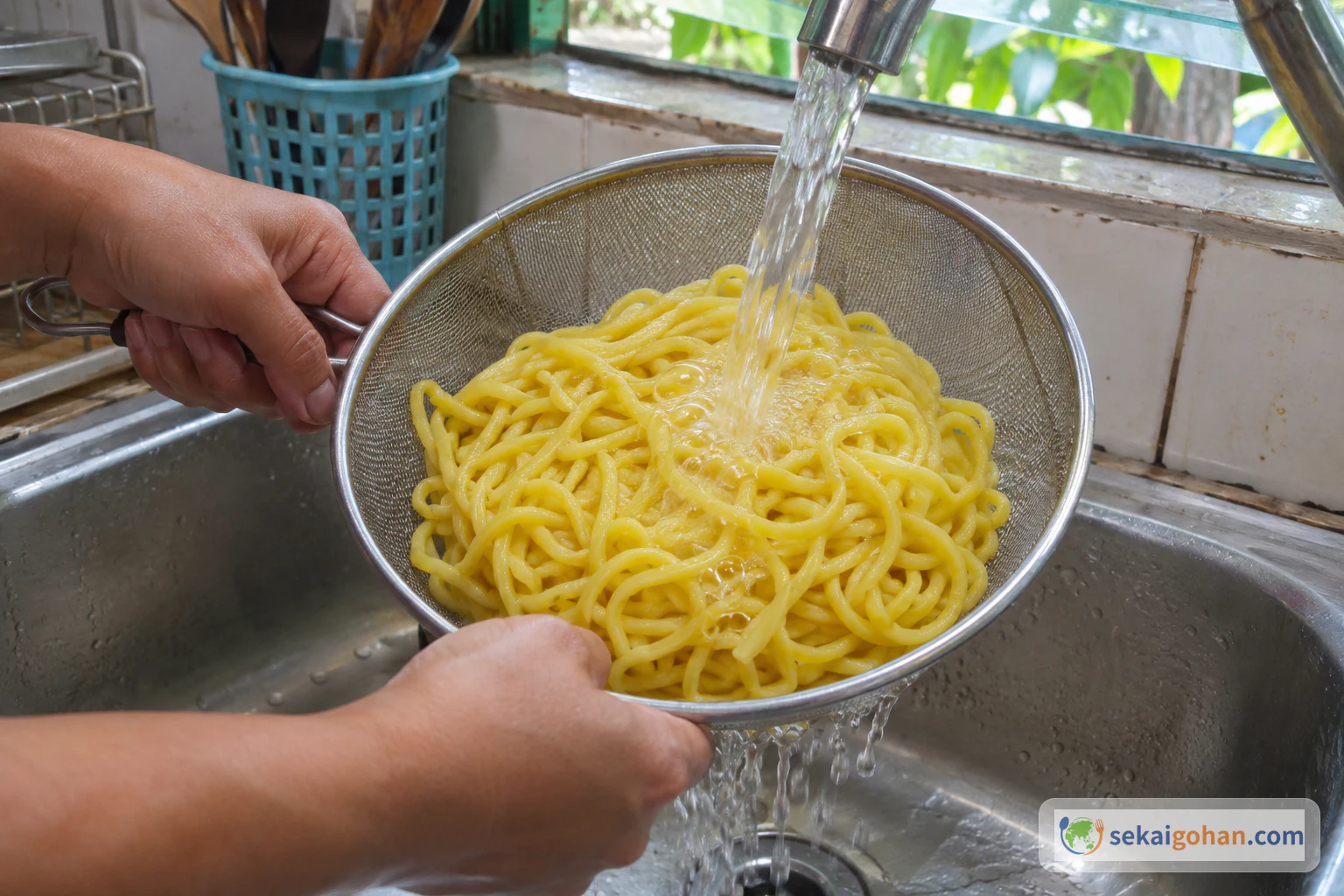
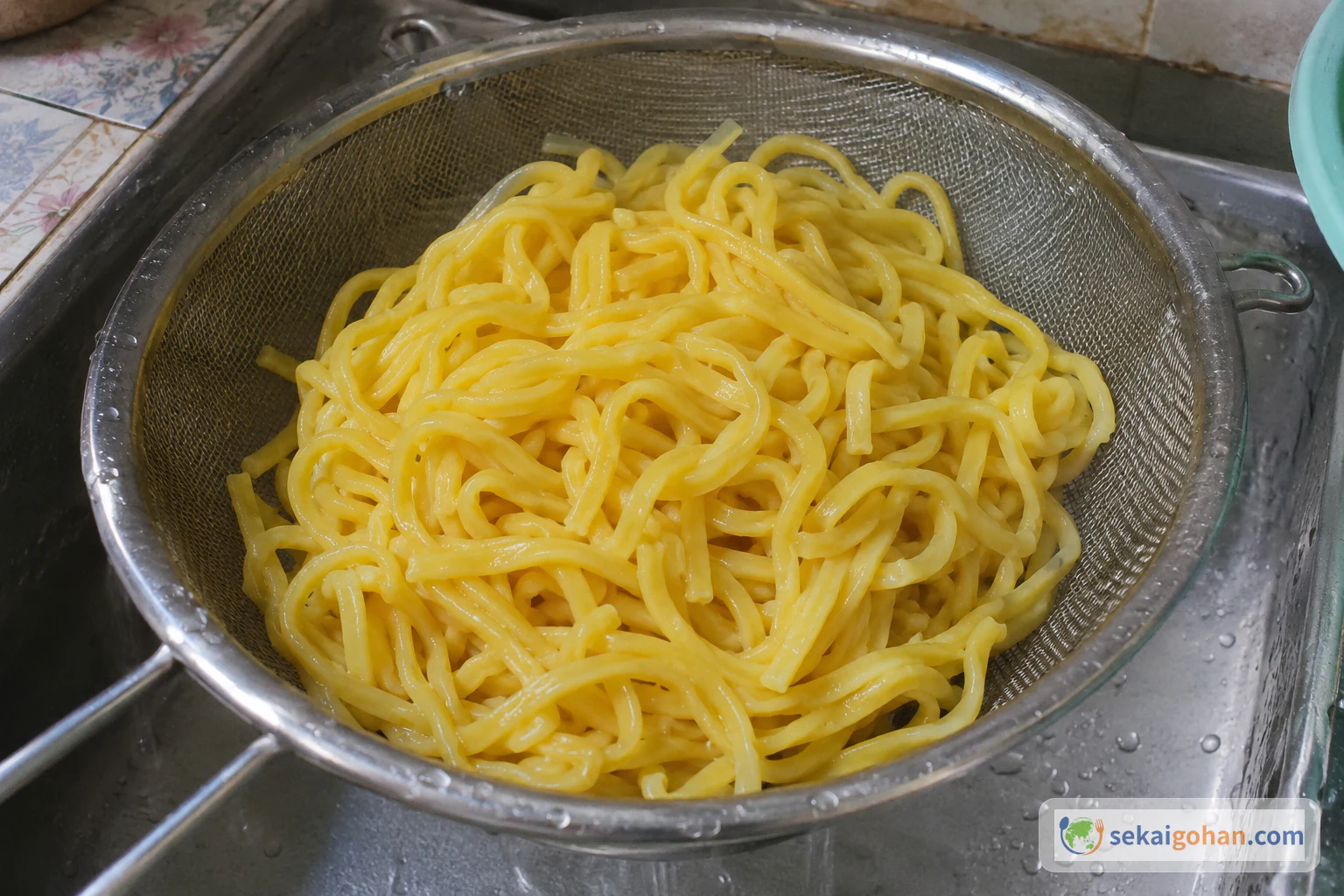
Noodles: look for fresh miki, a thick, soft yellow egg noodle. White rice noodles would make a different dish.
Lechon carajay: choose a fully cooked ready-to-eat product and follow its label for refrigeration and reheating. Don't quietly swap in uncooked pork or a different dish. Making your own would need its own full recipe, which this article does not cover.
Equipment
- Stockpot
- Cheesecloth and string for the vegetable bag
- Wide pan
- Small saucepan
- Sieve
- Food thermometer
- Slotted spoon and ladle
- Clean plates for holding cooked food
- Separate or freshly washed cutting board, knife and utensils for raw meat and for the dip onion
- Small dip bowl and soup bowl
Method: From Stock to Noodles to Egg Soup
Wash your hands, cutting boards and utensils after they touch raw beef or liver, or use separate ones, before they touch cooked food, the raw dip onion or the dip. Keep raw meat juices away from the noodles, the lechon and the serving plates.
Serving: Noodles, Batil and Dip
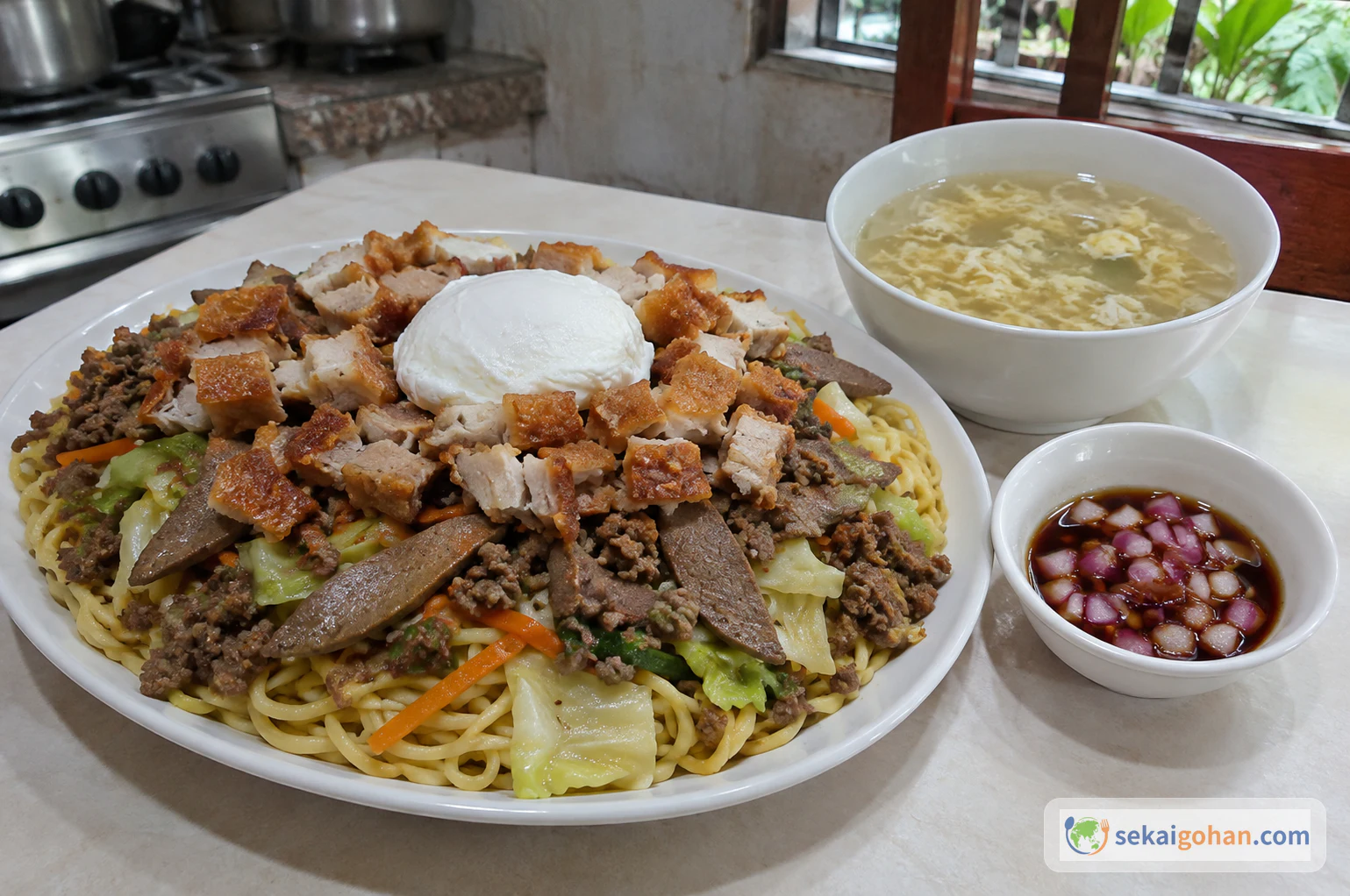
Bring the noodle plate, the bowl of batil and the dip to the table together, and serve right away. Eat the noodles with the soup alongside, adding the dip as you like.
Troubleshooting
| Problem | Likely cause | What to do |
|---|---|---|
| Less than 6 cups of stock after simmering | Too much liquid boiled off | Add hot water until you have at least 6 cups |
| The thermometer reads below 75°C | The food needs more heat, whatever the guide time says | Keep cooking and check again, holding at least 75°C at the center for at least 1 minute |
| The poached egg yolk is still soft | It has not cooked long enough | Keep poaching until yolk and white are both firm |
| The noodles look dry in the pan | Too little liquid for this moist style | If you started with 4 cups, add more stock up to the 5-cup limit |
| The batil tastes plain | Unused stockpot stock went in instead of the noodle pan liquid | Next time, use the liquid from the wide pan, which carries the soy sauce and pepper |
| The vegetables taste of stock | The cloth bag leaked or the vegetables went in loose | Lift out any loose pieces and tie the bag more securely next time |
Variations
| What changes | This version | If you change it |
|---|---|---|
| Meat | Minced beef | Merano names carabeef as the traditional meat in Cagayan. If you use it, keep the same thermometer check. We have not worked out separate timings for it |
| Egg doneness | Yolk and white fully firm | This article does not offer a soft-yolk version |
| Crisp pork | Ready-to-eat lechon carajay | Frying your own pork belly needs a separate full recipe |
| Dip | Onion, soy sauce and vinegar to taste | Adjust the balance to your taste, but keep the washing and separation steps. Leaving it out changes how the dish is served |
Tuguegarao, Carabeef and the Limits of This Story
What we can say comes from Merano's account. He presents the dish as a Tuguegarao signature, built on fresh miki, sautéed minced meat, pork liver, vegetables, a poached egg and crispy pork, with a beaten-egg stock soup served separately. He also links carabeef to Cagayan's tradition, which is why the choice of beef in this version is worth noting.
We don't offer an origin story, a definitive translation of the name or a claim to the one correct recipe here. Treat this as one clearly attributed home version.
Frequently Asked Questions
Why are there only two eggs for four servings?
Merano's recipe uses one egg for poaching and one for the batil, and it lists four servings. It isn't a one-egg-per-plate formula, so this article keeps the total at 2.
Can the yolk stay runny?
Not in this version. The firm egg is a deliberate safety choice, in line with the FDA's advice to cook eggs until both yolk and white are firm. For raw or undercooked egg preparations, the FDA says to use pasteurized shell eggs or pasteurized egg products.
How do I eat the batil?
Merano's description allows for both pouring a little over the noodles and sipping it separately. Either way, it comes to the table in its own bowl.
Is the leftover stock in the pot the same as batil?
No. Batil is made from the liquid left in the wide noodle pan. The stock left in the stockpot has not cooked with the noodles or their seasoning, and this recipe gives it no further job.
What about the meat and cartilage on the bones?
Merano mentions eating them separately as an aside. That is optional, and they are not part of the noodle topping here.
Is raw onion safe because of the vinegar?
Don't rely on vinegar or soy sauce for that. This recipe's precautions are peeling the onion, washing it well under running water, and keeping it away from anything that touched raw beef or liver.
Can I keep leftovers?
Egg dishes are best served right away, as the FDA advises. If you refrigerate a cooked egg dish for later, the FDA says to reheat it thoroughly to 165°F. MHLW's home guidance also calls for thorough reheating. Follow the product label for the lechon. We don't give storage periods here because we have not confirmed any for this version.
Sources
- Vanjo Merano, Panlasang Pinoy, "Pancit Batil Patung Recipe." Basis for the dish description, the four-serving recipe and method, the note on carabeef and beef, and the onion, soy sauce and vinegar dip. https://panlasangpinoy.com/pancit-batil-patung-recipe/
- U.S. Food and Drug Administration, "What You Need to Know About Egg Safety." Firm yolk and white, 160°F for egg dishes, pasteurized eggs for raw or undercooked preparations, serving egg dishes right away, and reheating refrigerated egg dishes to 165°F. https://www.fda.gov/food/buy-store-serve-safe-food/what-you-need-know-about-egg-safety
- Ministry of Health, Labour and Welfare, Japan, "家庭でできる食中毒予防6つのポイント" (Six points for preventing food poisoning at home). 75°C at the center for at least 1 minute, washing hands and utensils, keeping raw meat juices away from other food, and thorough reheating. https://www.mhlw.go.jp/stf/seisakunitsuite/bunya/kenkou_iryou/shokuhin/syokuchu/01_00006.html