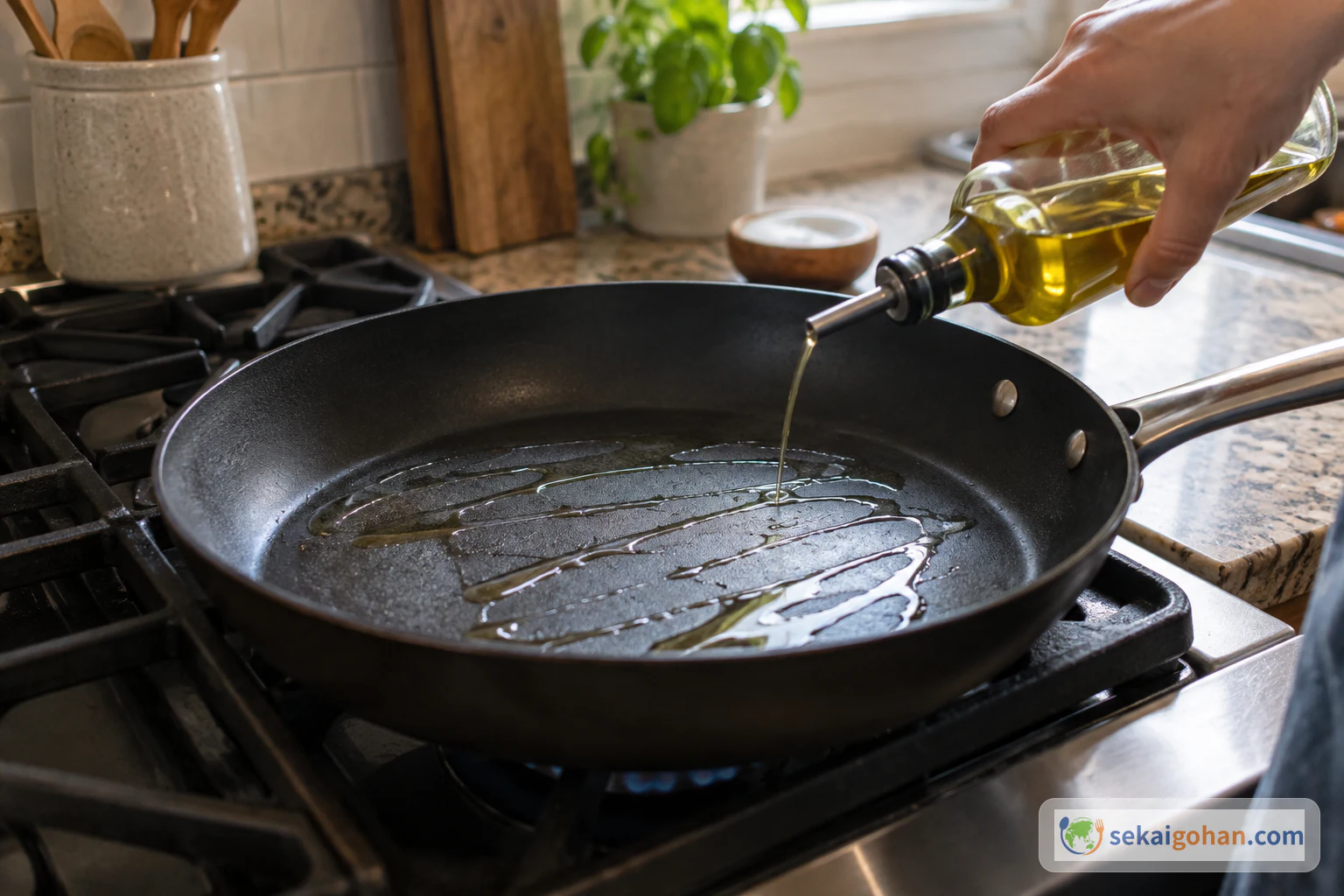
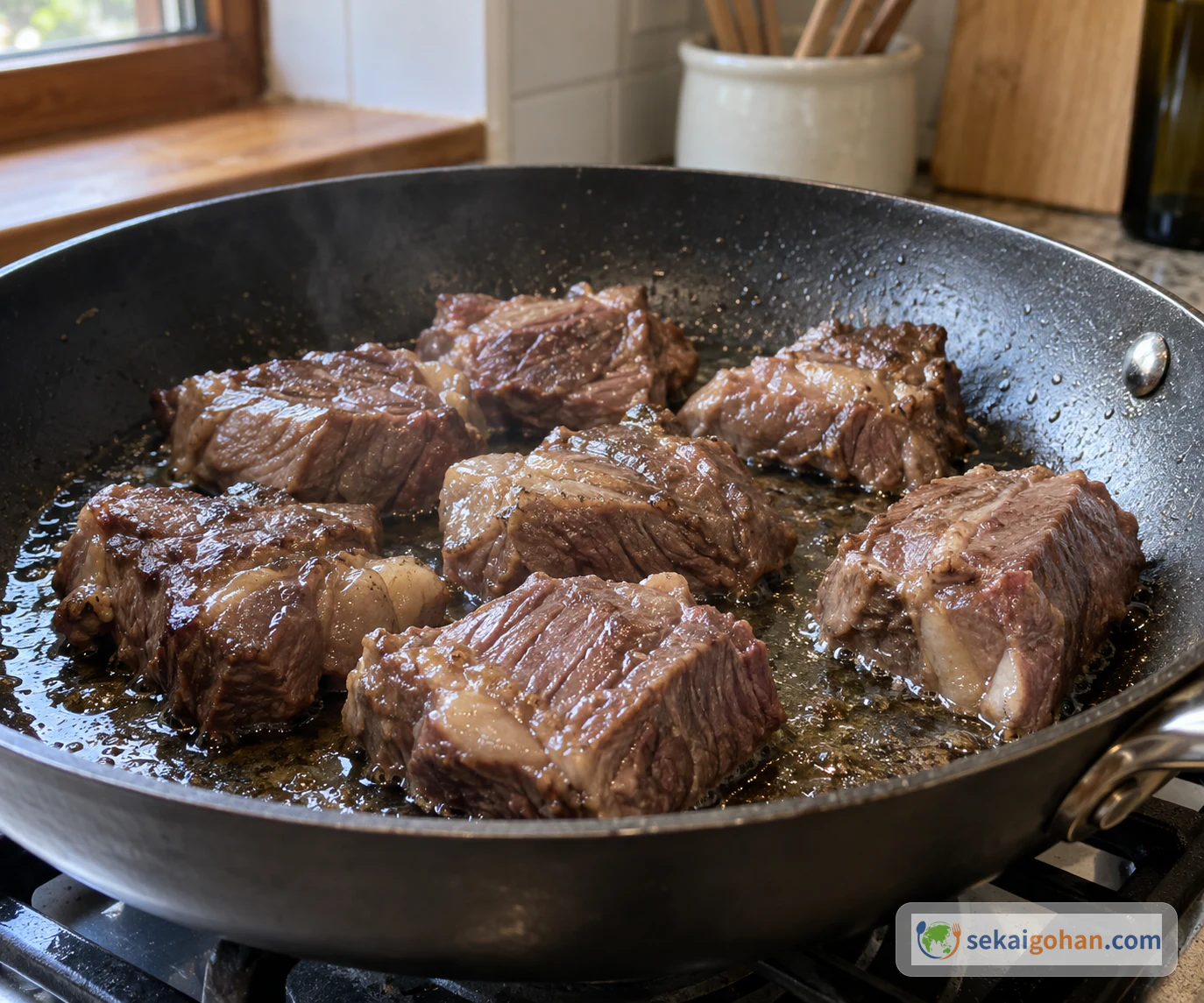
Empal Gepuk: Beef That Has Soaked Up Coconut Milk and Spice
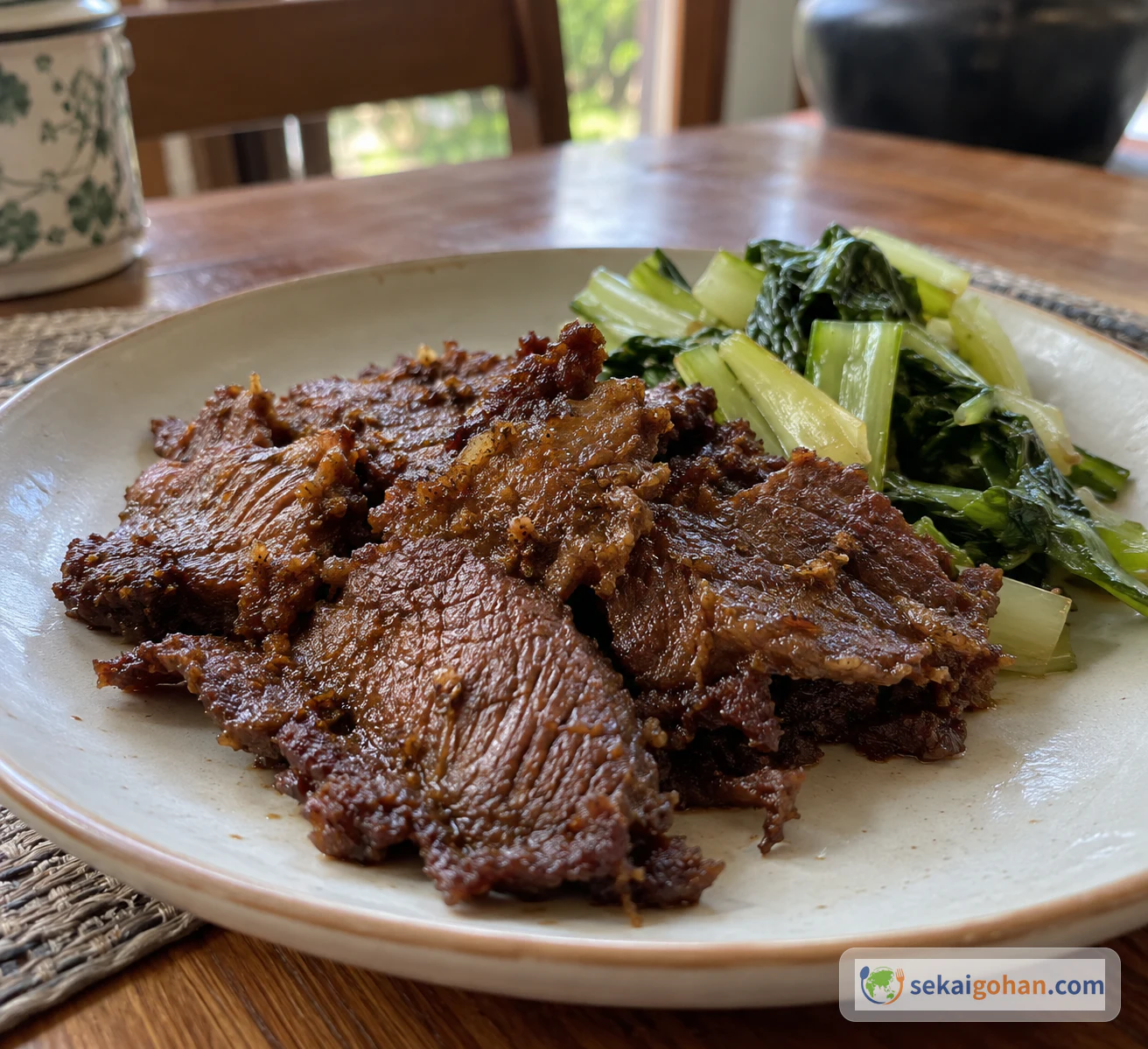
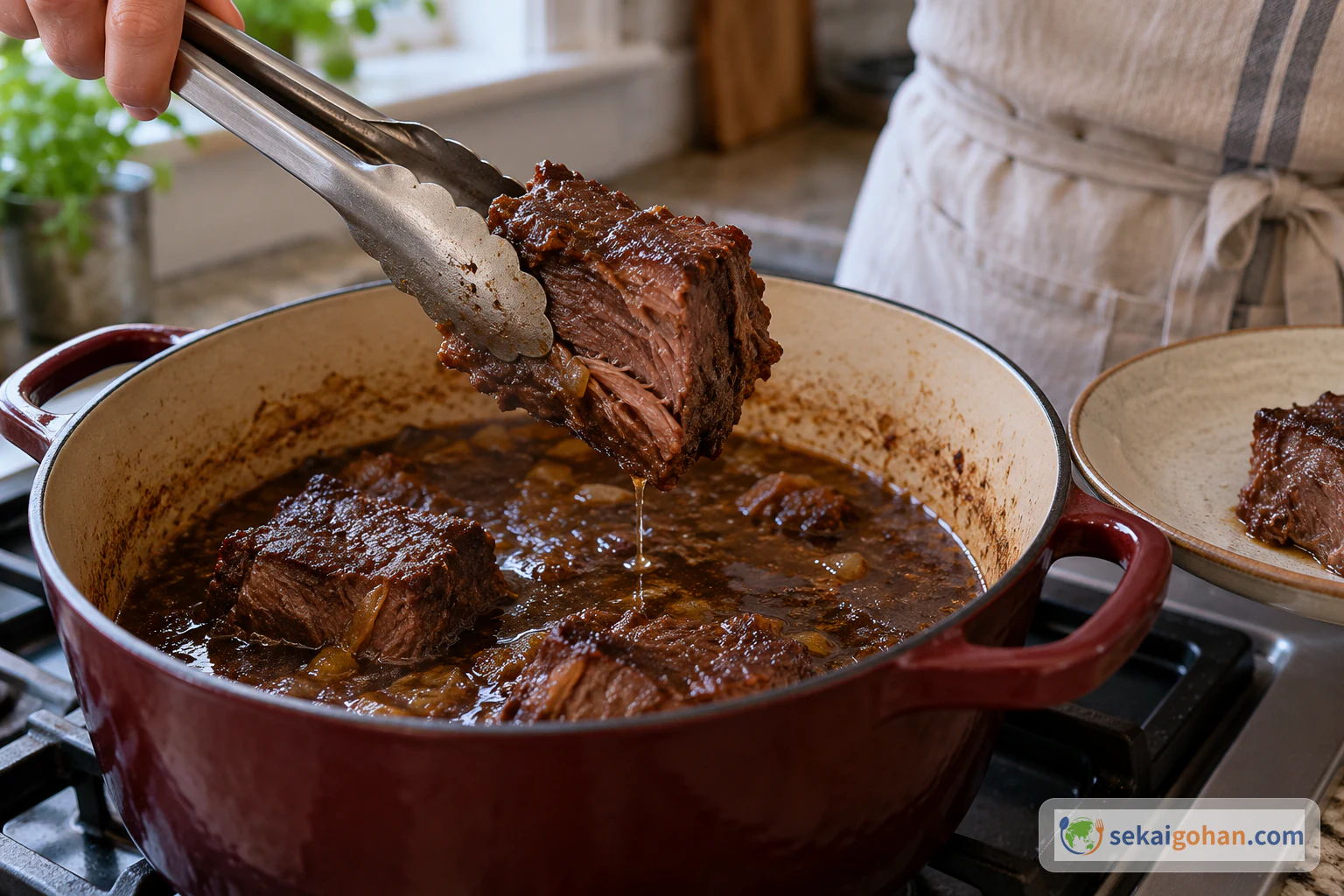
The beef should be very tender, with the spiced coconut milk cooked down until almost none is left. Then give it a short fry in a little oil and stop before it dries out.
On 29 October 2008, Lia, the writer of the Indonesian-language home-cooking blog Dapur Gue, posted a recipe for empal gepuk. Lia called it their own cooking, a dish Lia's husband and father-in-law had asked for. The recipe below follows that single household version. It is one family's recipe, not the only correct one and not a professionally tested standard. Sekai Gohan has not kitchen-tested it.
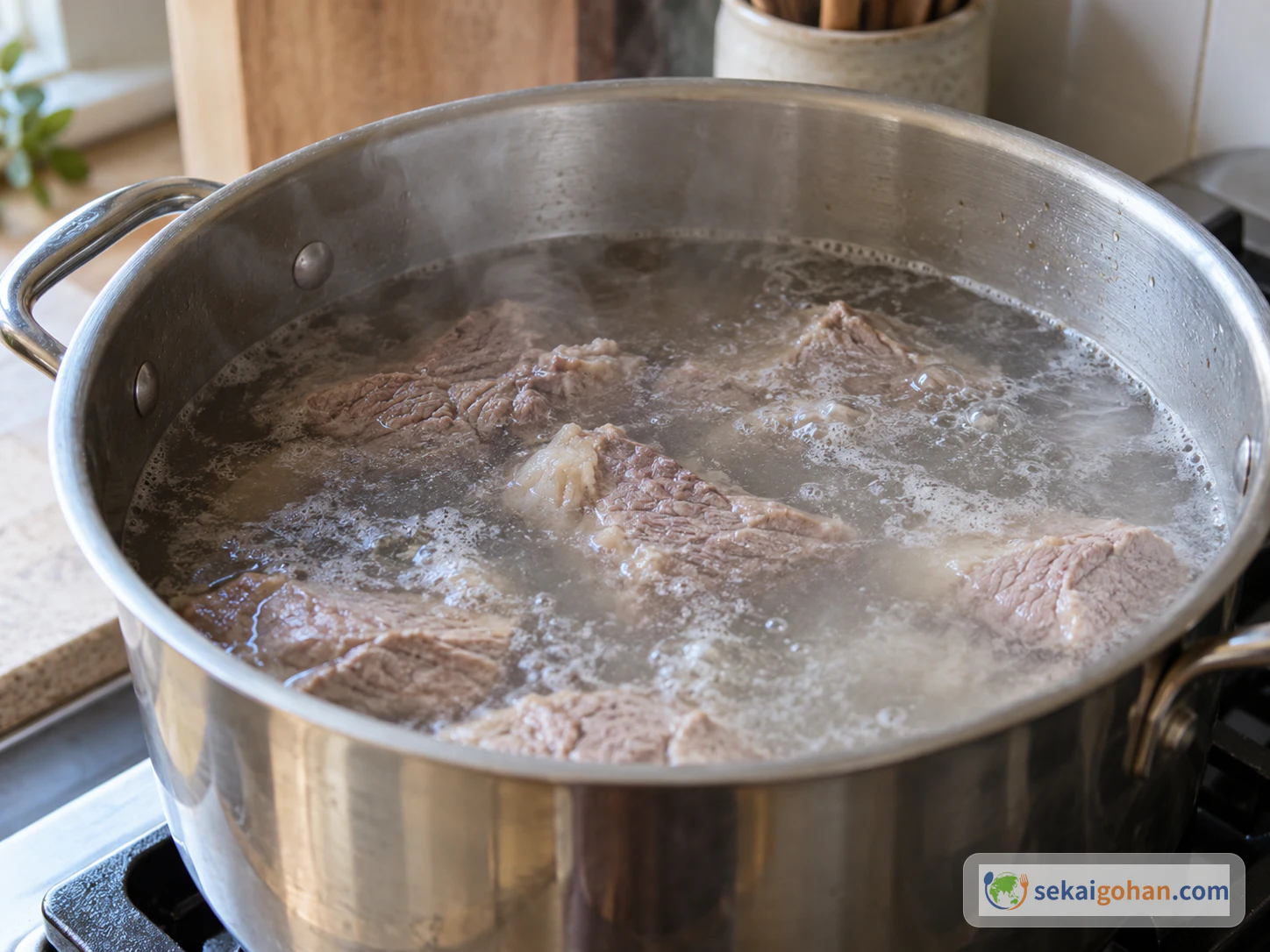
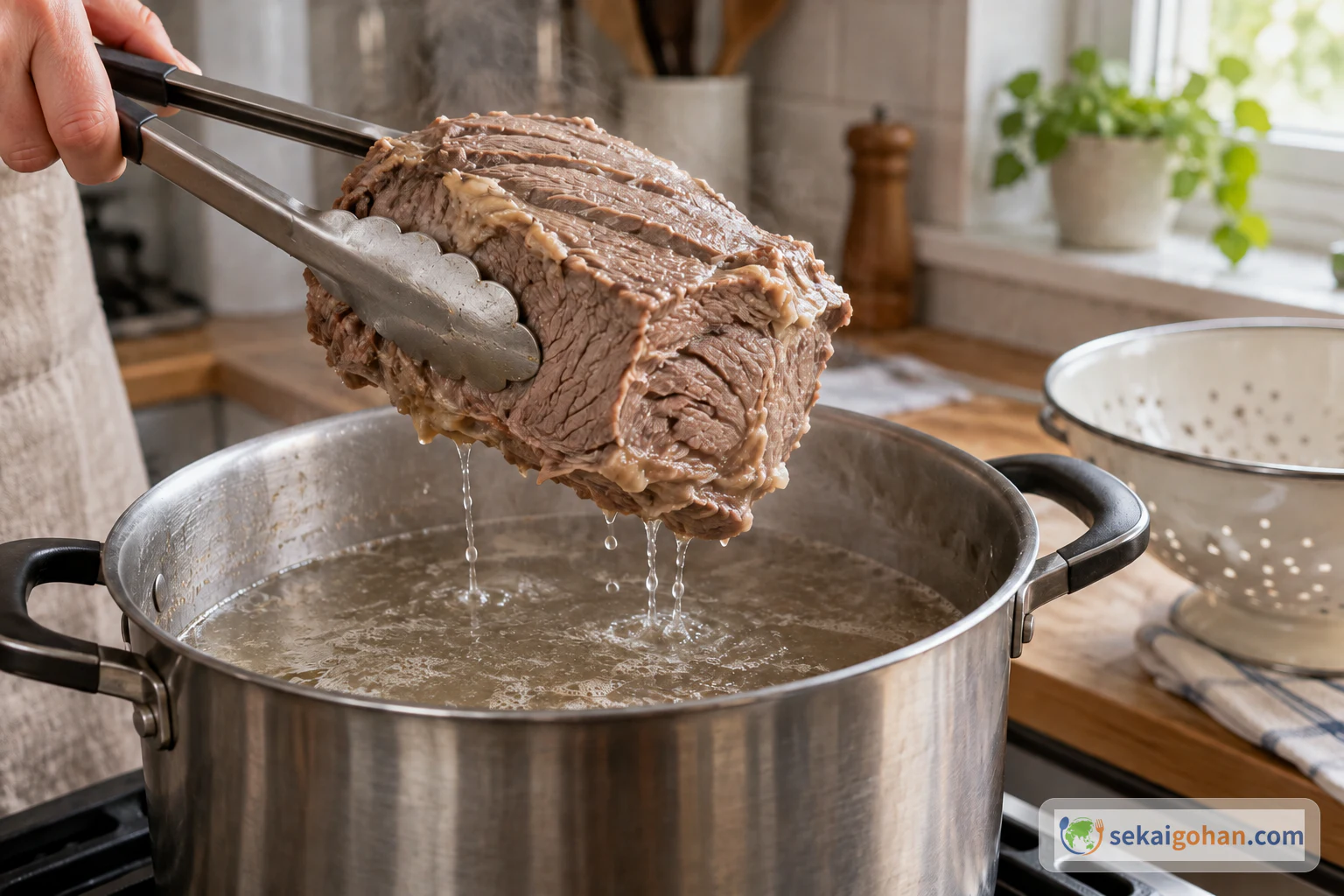
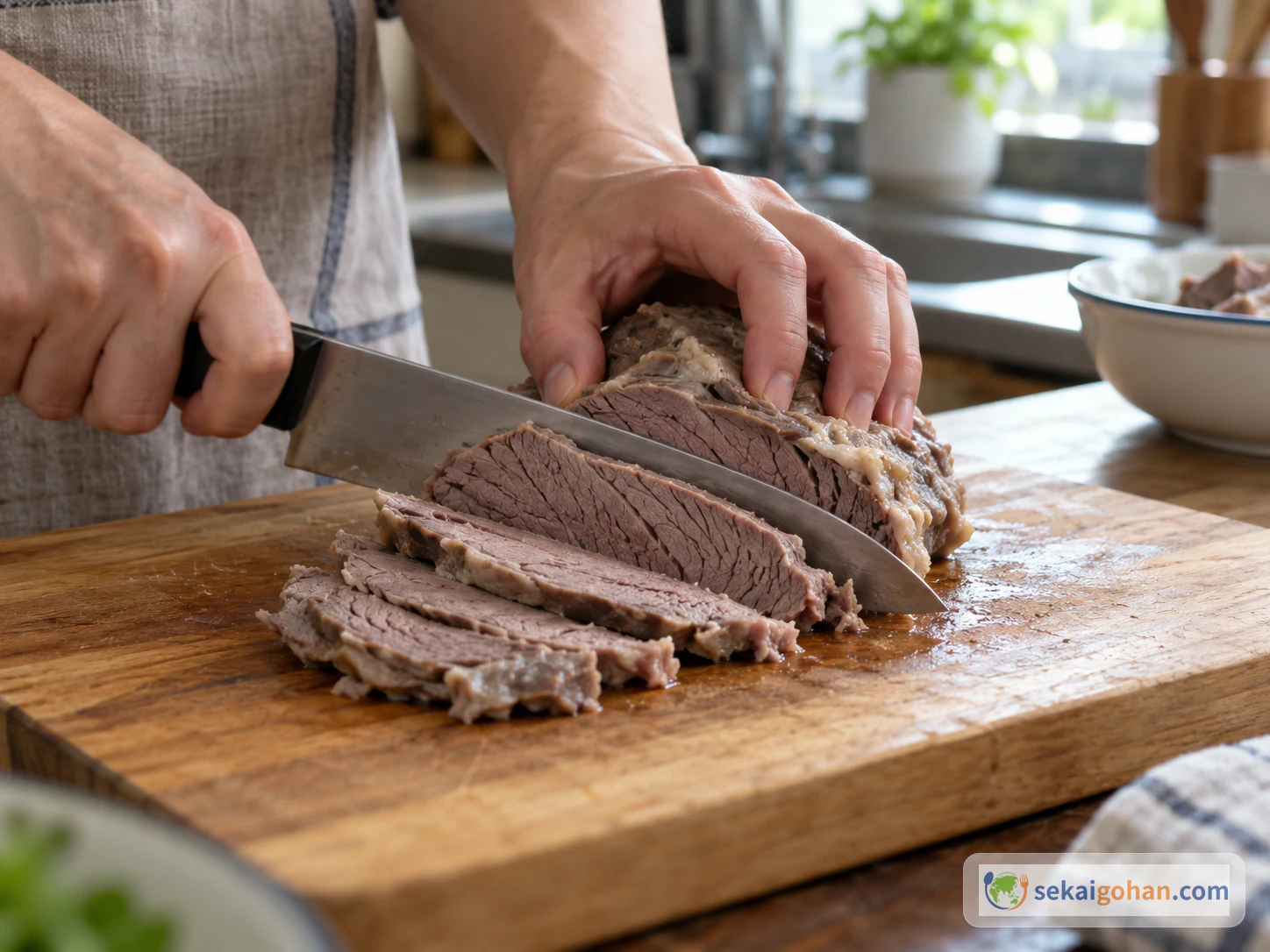
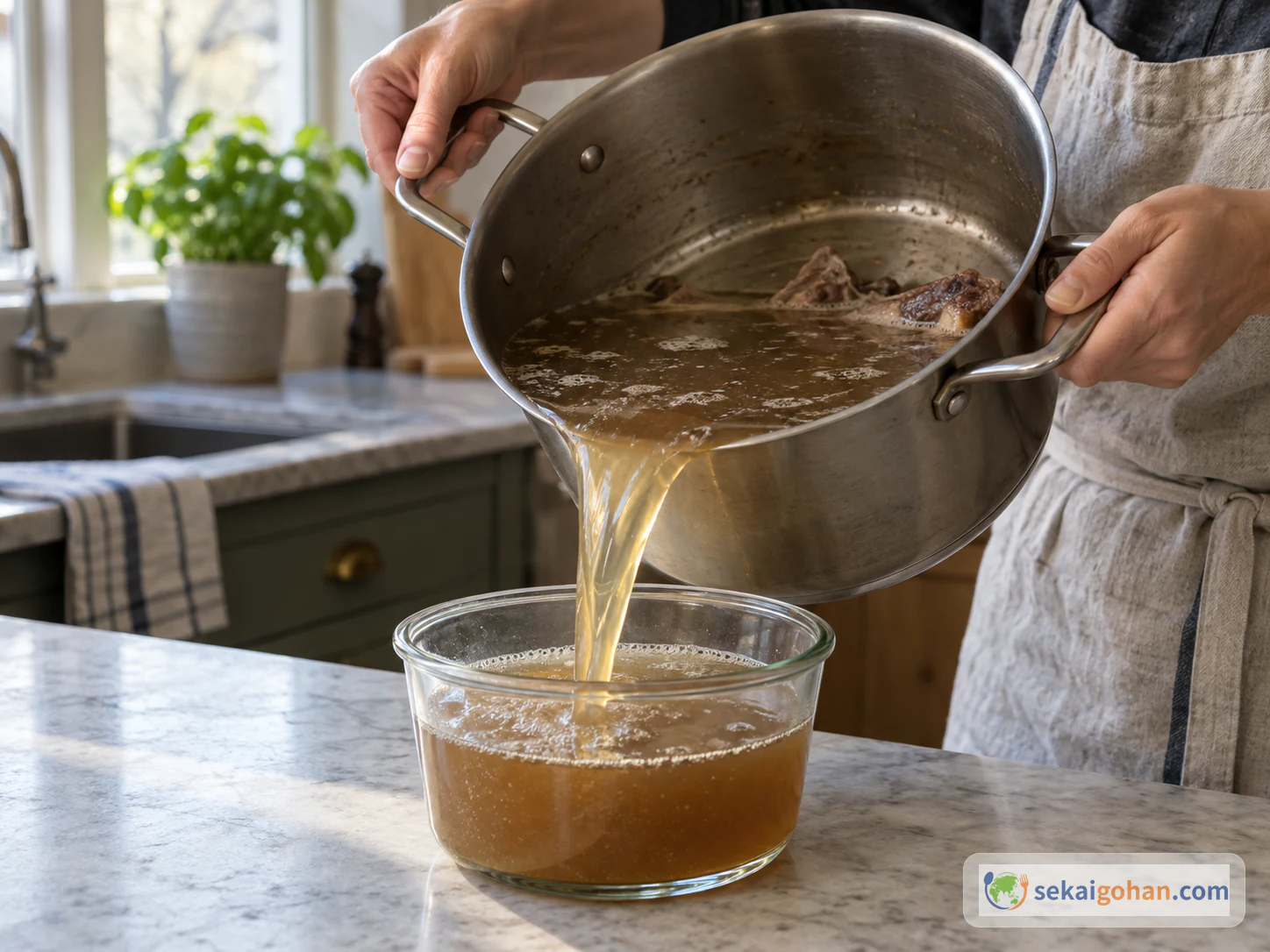
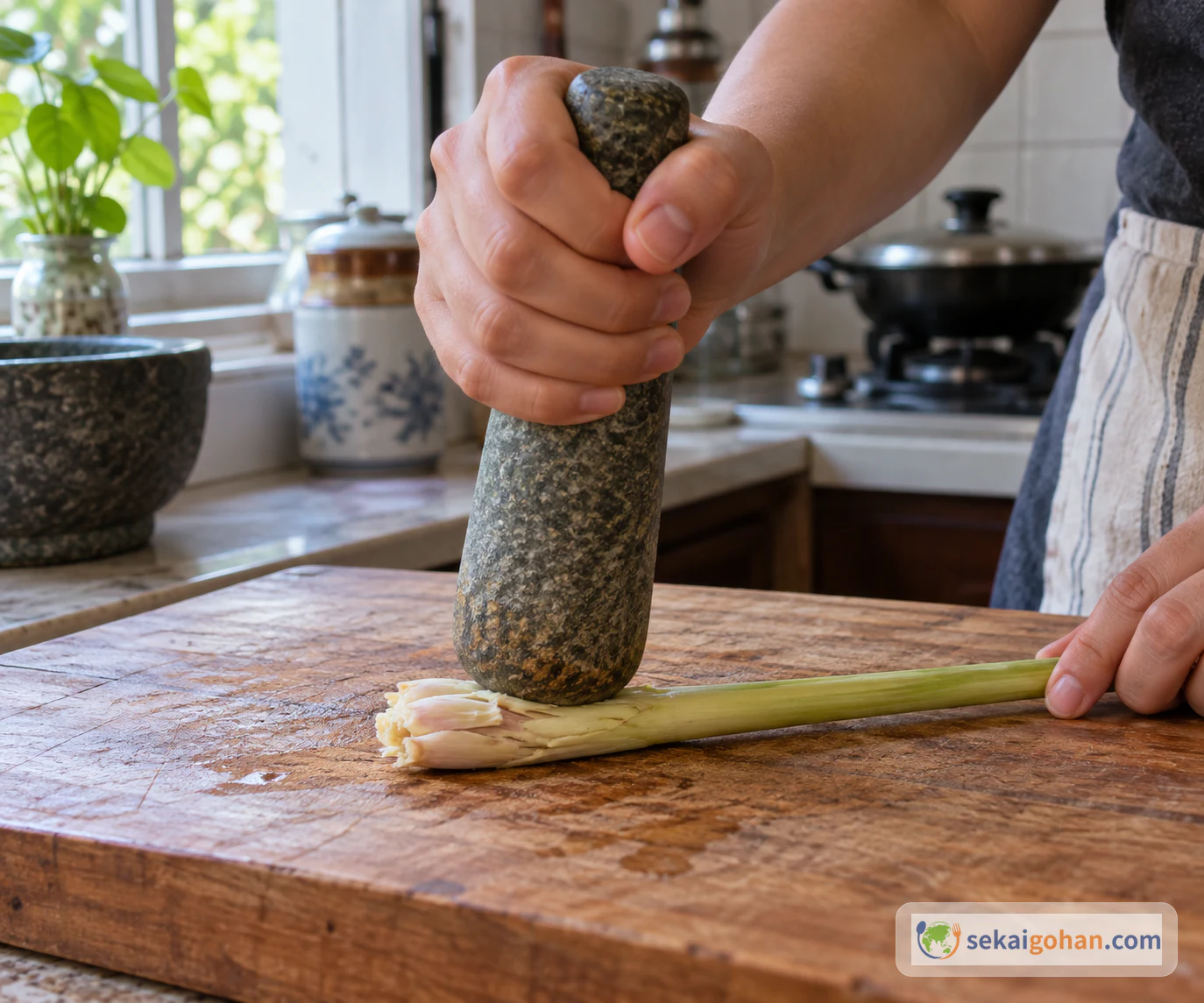
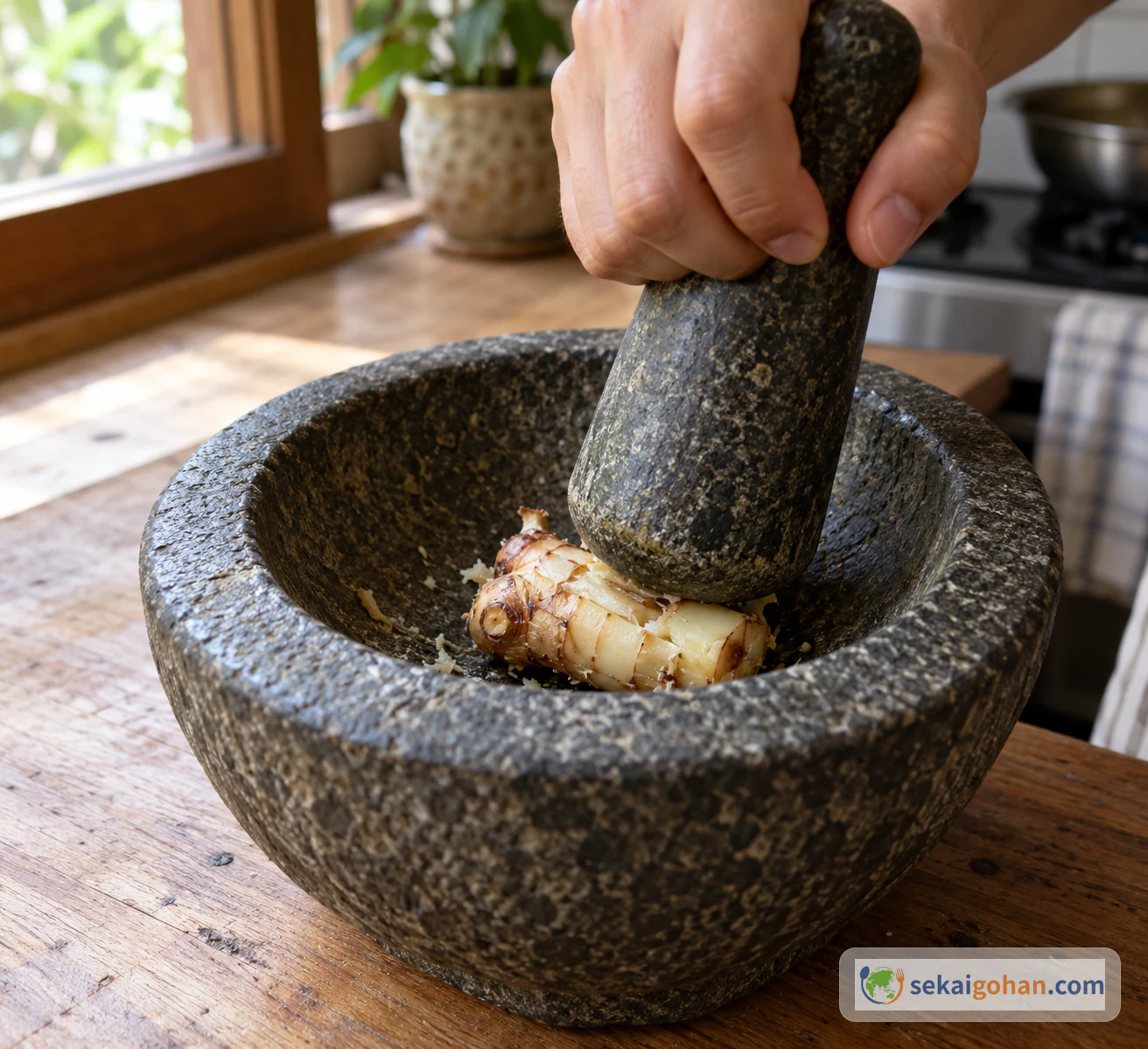
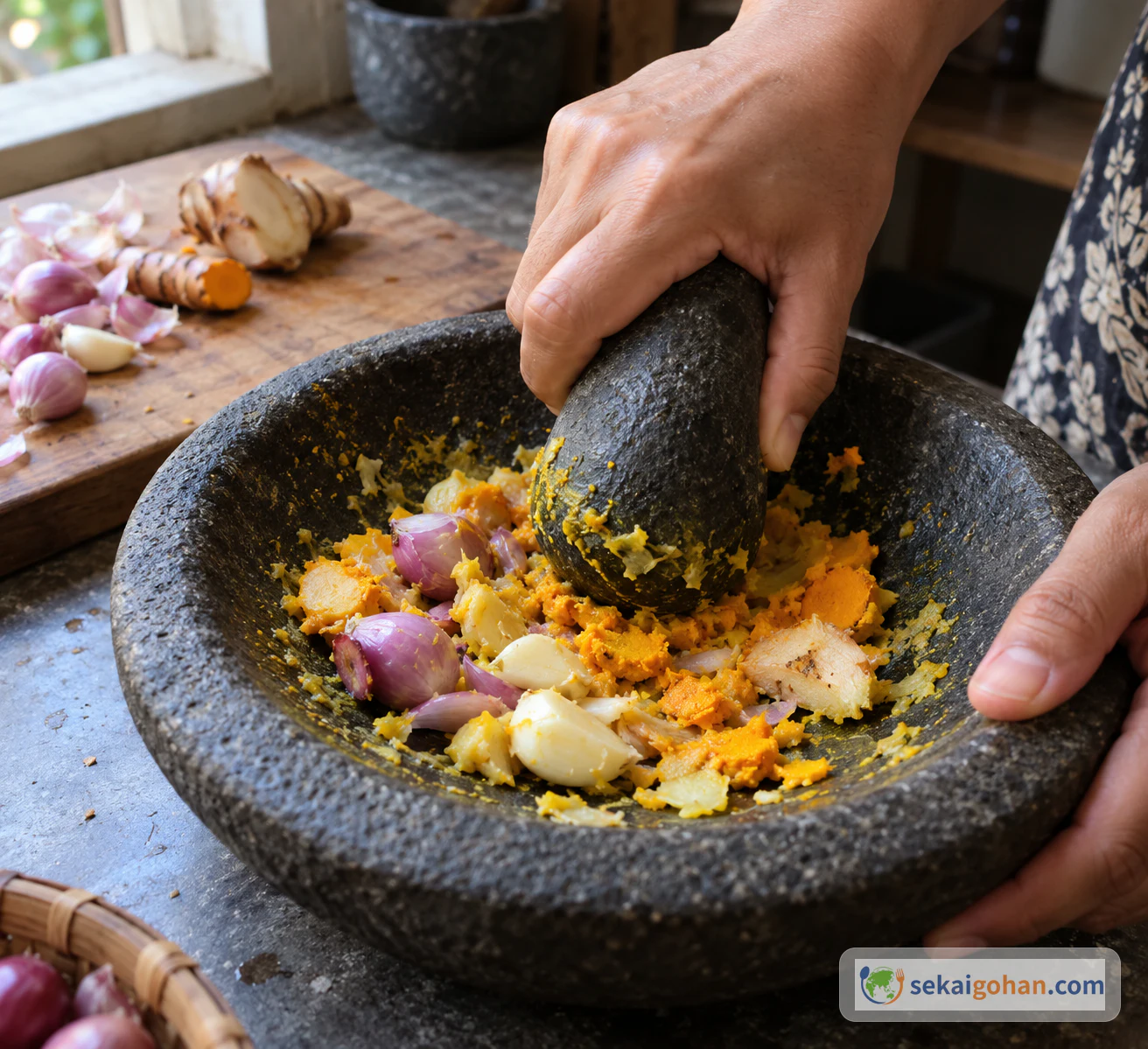
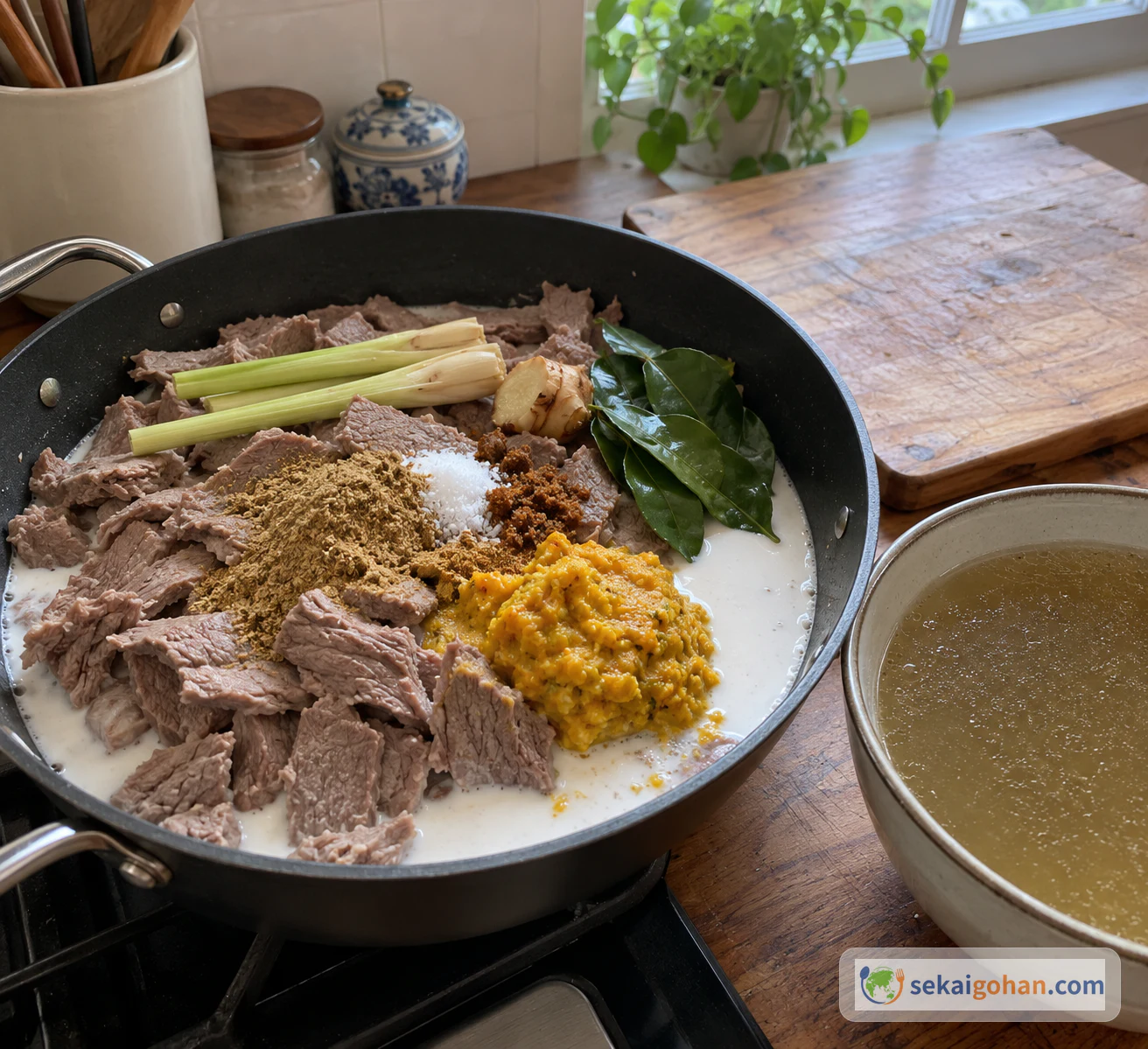
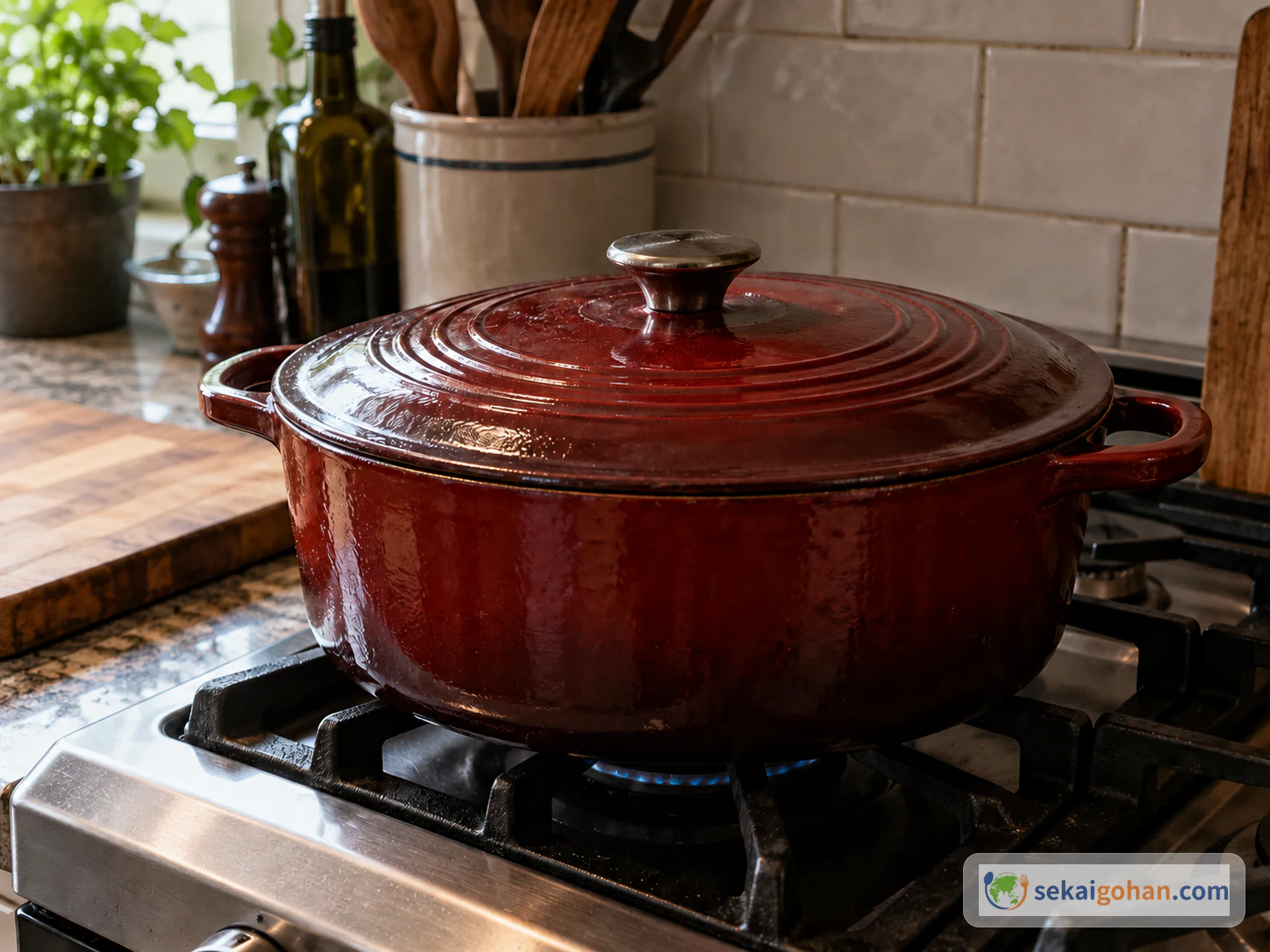
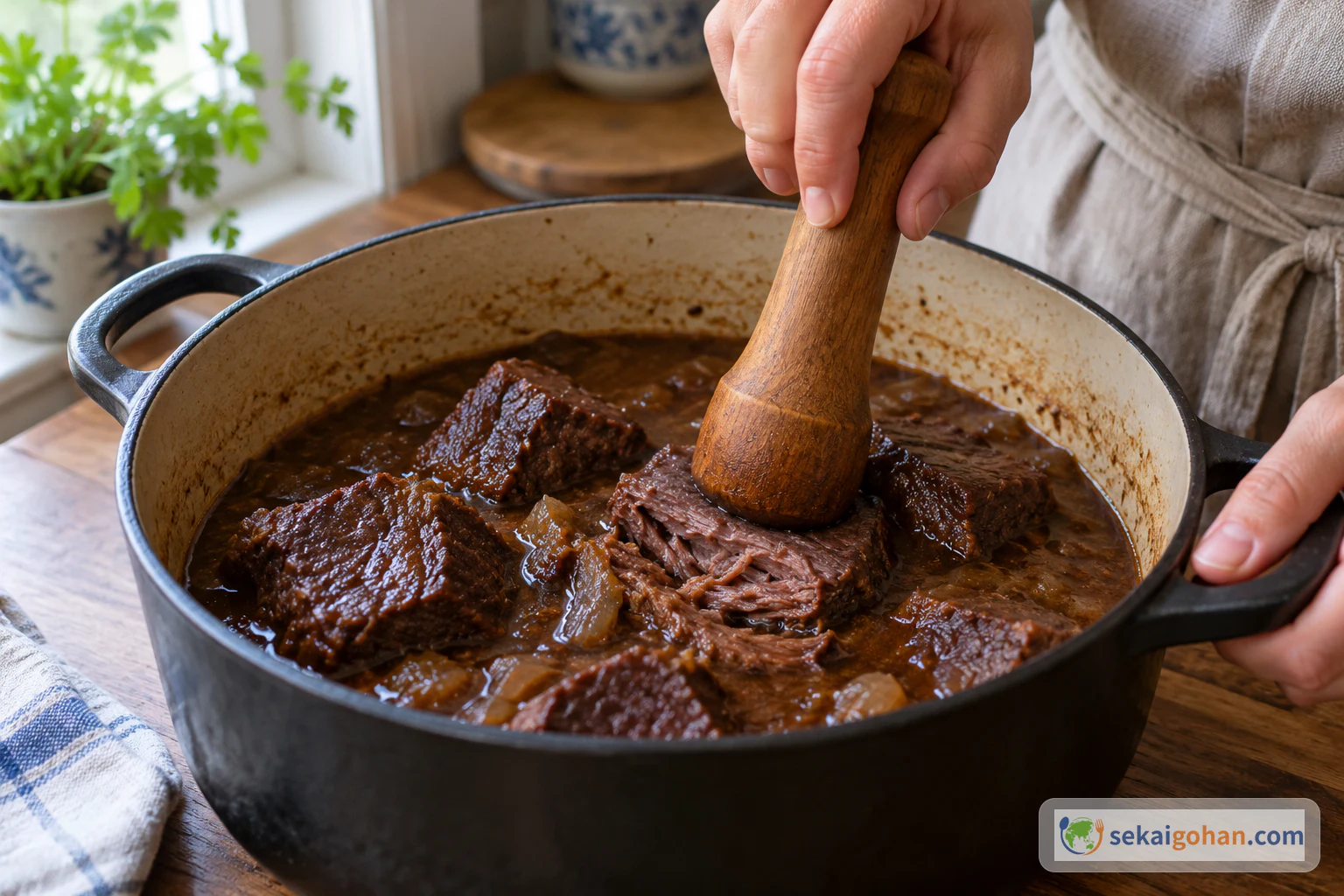
The method takes several stages. First the beef is boiled until half tender, then lifted out and sliced along the grain. The boiling broth is set aside for another use. The slices go into a pan with santan (coconut milk), salt, gula merah, whole aromatics and a ground spice paste, and they braise under a tight lid over the lowest heat until the meat is very tender and the seasoning has almost dried. After that, the meat is pounded lightly only if it needs it, fried briefly in a little oil, and served with vegetables.
The recipe gives no servings, no cooking times and no temperatures. You judge each stage by the cues the recipe describes: "half tender," "very tender," "nearly dry," "not too dry." The steps below keep those cues as they are. For more dishes from the same country, see the Indonesia country page.
Empal is the name for this kind of spiced, fried beef, and gepuk refers to the pounding. You may also see the dish called simply gepuk. Its ingredient names are given in Indonesian alongside English below, because the Indonesian names are what you'll find on labels at Asian grocers.
What Gepuk Is, and Why It Is Not Empal Gentong
The Kamus Kuliner Jawa Barat (West Java Culinary Dictionary), published in 2023 by the West Java provincial language office, has an entry for gepuk. It describes beef that is boiled, cooked with spices until tender, pounded and fried. That matches the order of Lia's recipe. The dictionary records the method, but it doesn't name one city as the dish's birthplace or set out one fixed formula, so this article doesn't either.
The same dictionary lists empal gentong as a separate dish: a soup from Cirebon. The names overlap, but empal gentong is eaten as a soup, while empal gepuk is sliced beef braised until the liquid is nearly gone and then fried. Don't bring a gentong recipe's broth, offal or soup seasoning into this one.
Other published empal gepuk recipes are quite different from Lia's. The Primarasa recipe uses tamarind and cumin, pounds the beef before braising it in leftover broth and thick santan, and then fries it in plenty of oil. Its introduction and ingredient list also name different beef cuts. The ResepKoki recipe pounds the beef first, saves 400 ml of the boiling broth to use in the braise, and adds instant santan, extra water and tamarind water to a sautéed spice paste. A Dapur KOBE recipe from a seasoning brand uses oyster sauce, kecap manis and margarine, and finishes the beef on the grill while brushing it with sauce. These are all valid recipes in their own right. This article uses only Lia's version and doesn't mix in ingredients or steps from the others.
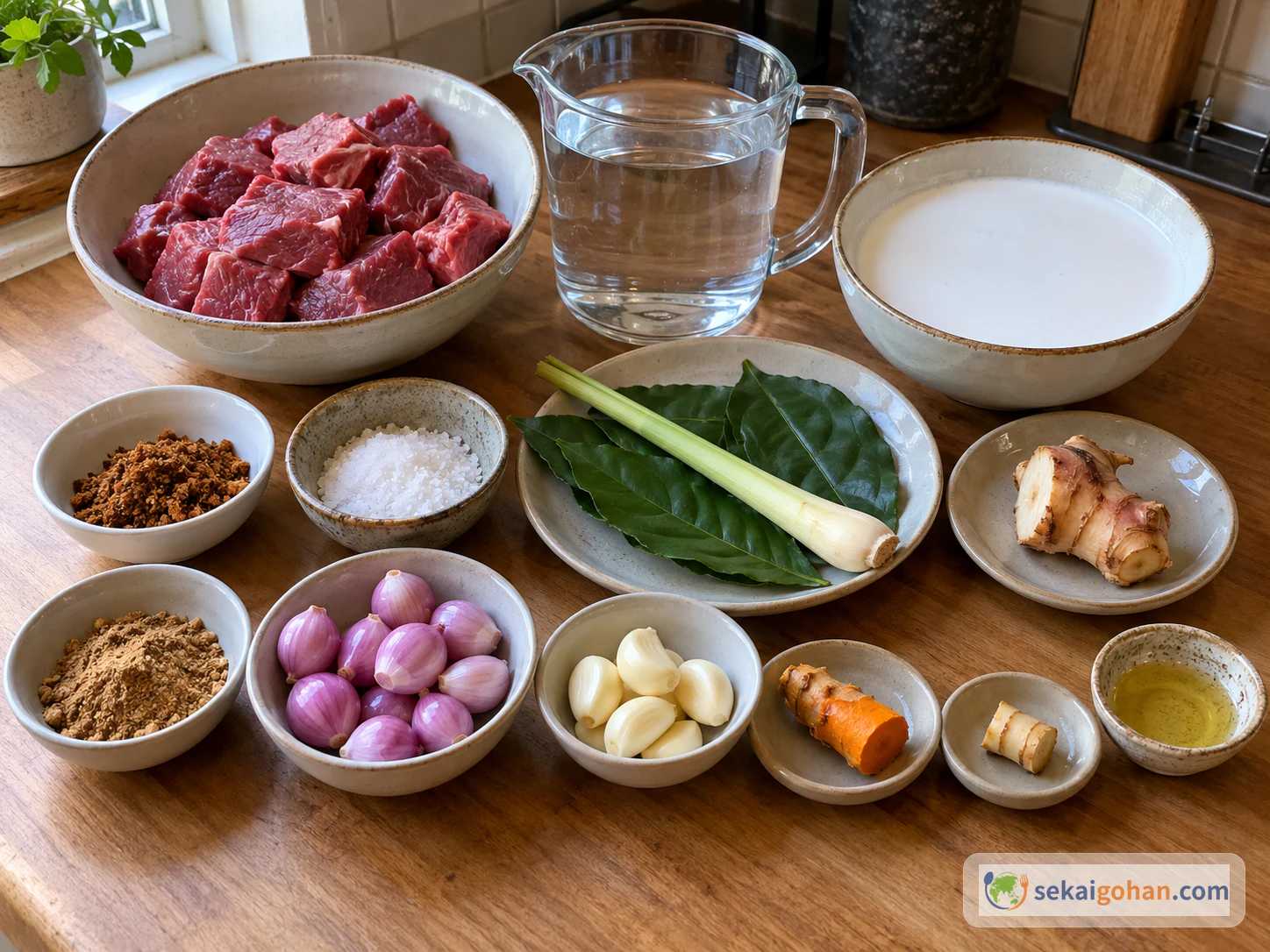
Ingredients for Empal Gepuk
Equipment
- A pot for the first boil
- A separate container for the broth
- A knife and cutting board
- A pan with a tight-fitting lid for braising
- A mortar and pestle (for grinding the spice paste, and for pounding the beef if needed)
- A flat pan for the final fry
Choosing and Finding the Ingredients
Beef. Daging bagian paha means meat from the thigh. It doesn't point to one particular muscle. If you buy from a butcher, explain that you want beef from the thigh for boiling and braising, and ask what they recommend.
Santan. Look for coconut milk labeled santan or "coconut milk." No particular brand or type is required. Instant santan is covered under the options below.
Daun salam. Salam leaf is an Indonesian leaf and a different plant from bay laurel. Don't treat the two as the same.
Bawang merah, lengkuas, kunyit. Look for these under their Indonesian names at Asian grocers or in the spice section: small Indonesian shallots, galangal and turmeric. Don't replace the shallots with ordinary yellow onions.
Gula merah. Buy it under its Indonesian name. The amount is 1 tbsp or to taste, so you can adjust the sweetness yourself.
Method: Boil, Slice, Braise Dry, Fry Lightly
None of these steps has a set time or temperature. Move on when the beef looks the way each step describes.
Reading the Cues
The recipe doesn't give times, so trouble usually comes from moving on too early or cooking too long. Here is what each cue tells you and what to do within the method.
| What you see | What it means | What to do |
|---|---|---|
| The beef is still firm after boiling | It hasn't reached half tender | Keep boiling until it does |
| There is still a lot of liquid in the braising pan | The seasoning isn't nearly dry yet | Keep braising, tightly covered, over the lowest heat |
| The braised beef is already falling apart | Pounding isn't needed | Skip the pounding and go straight to frying |
| The beef is getting too dry in the flat pan | It's being fried too long | Take it out sooner next time |
| You're tempted to add the broth to the braise | The broth is meant for another use | Leave it out; the braise uses only santan and the seasonings |
Options From the Recipe's Author: Coconut Water and Instant Santan
These notes come from Lia's post and from Lia's reply to a reader comment. They are options, not changes to the basic recipe, and none of them comes with amounts.
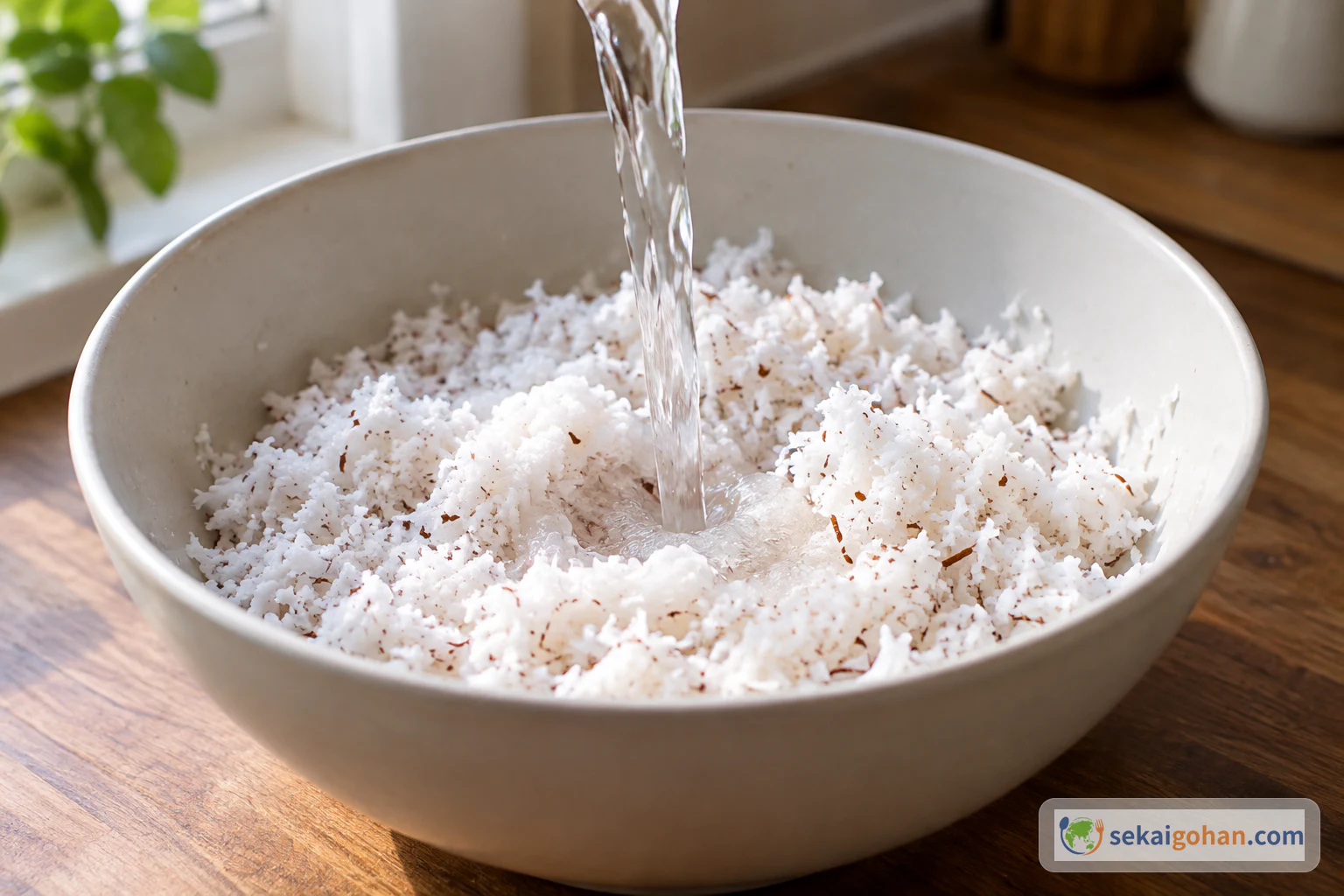
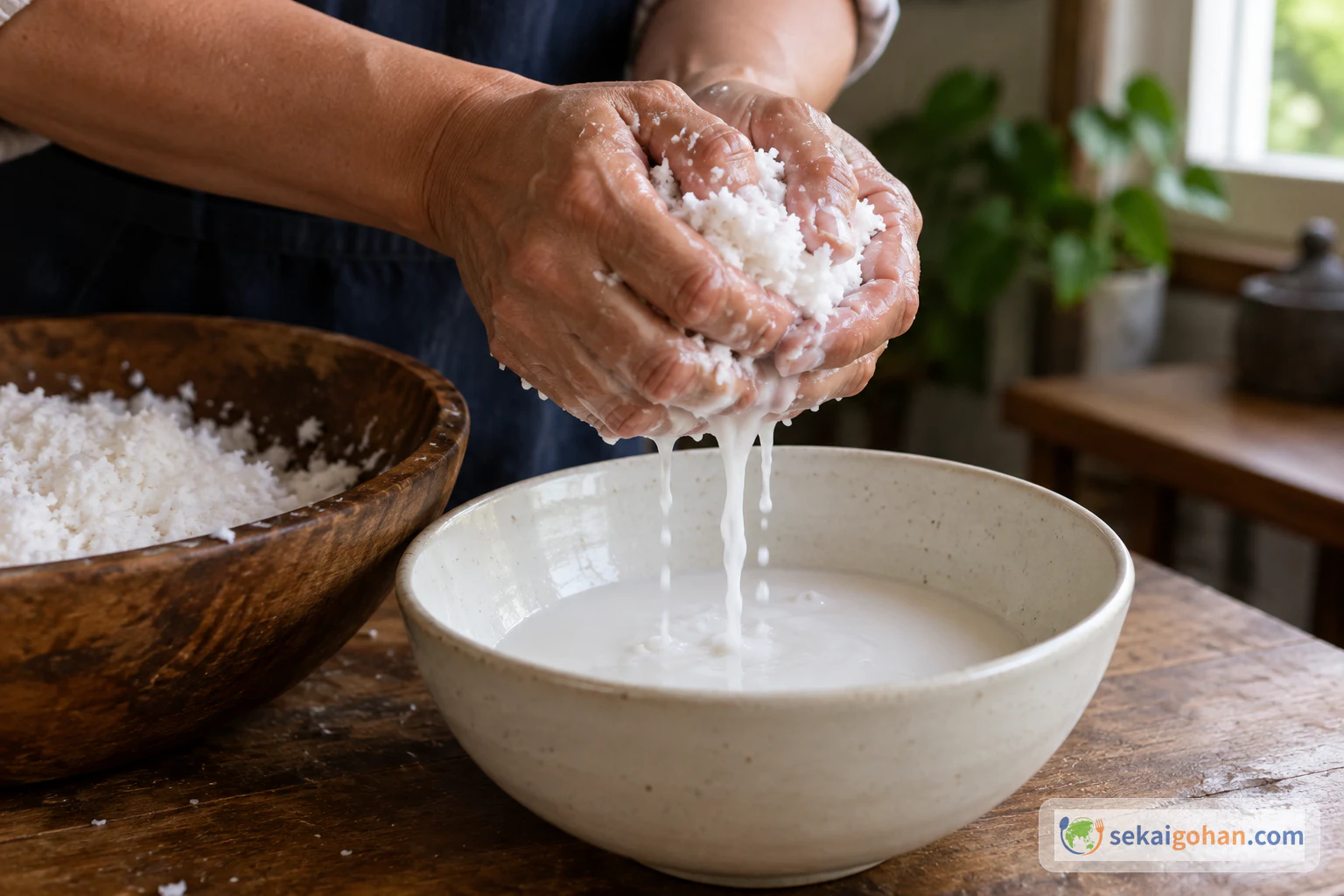
Coconut water for pressing the santan. Lia notes that if you use coconut water when pressing your own santan from grated coconut, the empal comes out browner. In that case, cut back on the sugar to taste. No ratio of coconut water or amount of sugar reduction is given, and the 350 ml santan in the ingredient list stays as written.
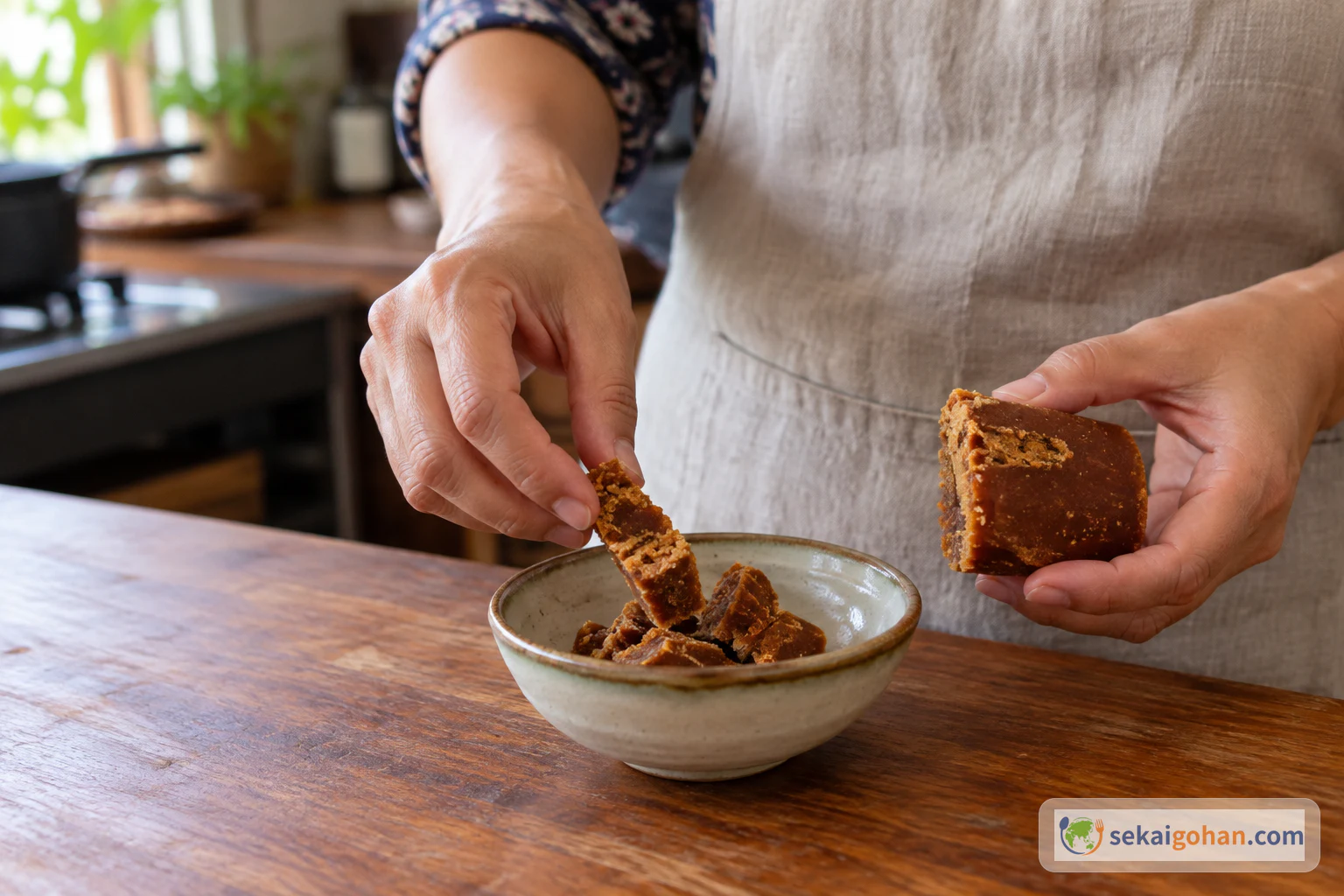
The two pictures below only illustrate the idea. The note doesn't say how or when the coconut water is added to the coconut, and it doesn't name a cloth, strainer or any other tool for pressing.
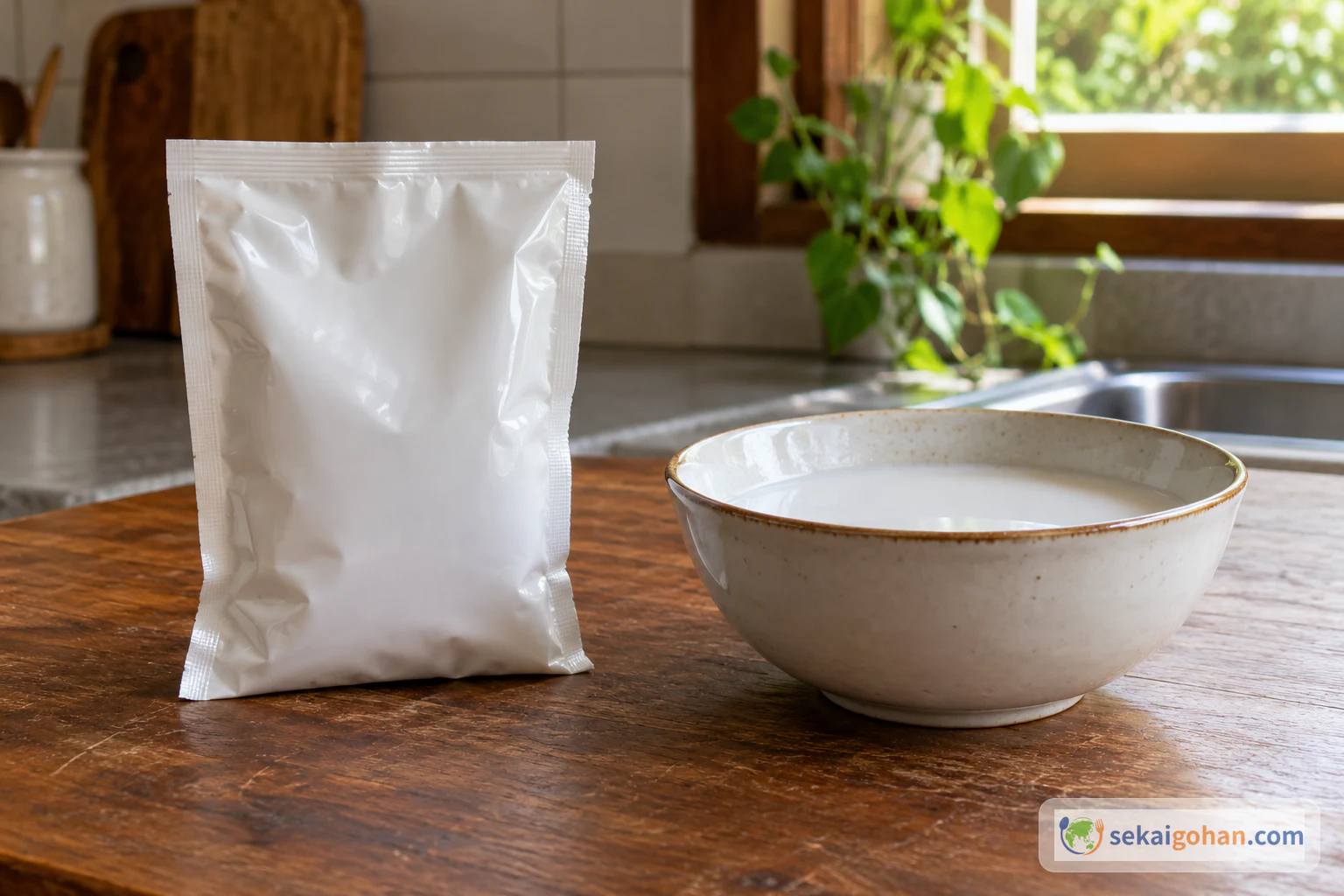
Instant santan. A reader asked about instant santan, and Lia replied that it can be used and the dish stays gurih (savory). No package amount or dilution was given, so don't assume a given amount of instant santan equals the 350 ml in the basic recipe. In the same reply Lia also wrote "blender dan cemplung" (roughly, "blend and drop it in"), but didn't say what goes into the blender or where it fits in the method.
Food Safety and Leftovers
The recipe itself doesn't cover storage. The points below are general home food-safety guidance from Japan's Ministry of Health, Labour and Welfare. They aren't specific to empal gepuk, and they don't replace the cooking cues above.
- Keep raw meat apart from other foods while you prepare it.
- Cook food thoroughly. The general benchmark is a center temperature of 75°C for at least one minute.
- Divide leftovers into shallow containers so they cool quickly, then refrigerate.
- Reheat leftovers thoroughly. Soups should be brought to a boil.
No safe storage period has been established for this dish, so none is given here.
Frequently Asked Questions
Does the boiling broth go into the santan braise?
No. Lia's recipe says to set the broth aside for another use, and it never goes back into the braise. Some other published recipes do reuse the broth, but that belongs to their method, not this one.
Is empal gepuk the same as empal gentong?
No. The West Java Culinary Dictionary lists them separately. Empal gentong is a soup from Cirebon, and gepuk is beef cooked tender with spices, then pounded and fried.
Do I have to pound the beef?
Only if it needs it. Lia notes that the beef is often well broken down already, and then you can skip pounding.
Can I use instant coconut milk?
Lia said yes in reply to a reader comment, adding that the dish stays savory. No amount or dilution was given, so you'll need to work out the quantity yourself and taste as you go.
Can I use bay leaves instead of salam leaves?
Salam leaf and bay laurel are different plants, and this recipe gives no substitute. Look for daun salam at an Asian grocer.
How many servings does it make, and how long does it take?
The recipe doesn't say. It gives no servings and no prep, cooking or total time, so this article doesn't give them either.
How many days will it keep?
The recipe gives no storage period. Follow the general guidance above: cool leftovers quickly in shallow containers, refrigerate them, and reheat them thoroughly.
Sources
- Lia, "Empal Gepuk," Dapur Gue, The Story of My Smokey Kitchen (personal food blog), 29 October 2008. The adopted recipe: all ingredients and amounts, the order of the method, the optional coconut-water note, and Lia's comment reply on instant santan. A household recipe, not an independently tested standard. https://dapurgue.blogspot.com/2008/10/empal-gepuk.html
- Primarasa, "Resep Empal Gepuk." A separate recipe used only for comparison: tamarind, cumin, pounding before braising, frying in more oil, and differing beef-cut descriptions. https://www.primarasa.co.id/lauk-pauk/empal-gepuk
- ResepKoki, "Resep Empal Gepuk Praktis dan Menggugah Selera." A separate recipe used only for comparison: pounding before braising, reserved broth, instant santan with added water, and tamarind water. https://resepkoki.id/resep/resep-empal-gepuk/
- Dapur KOBE, "Resep Empal Gepuk." A separate, brand-promotional recipe used only for comparison: oyster sauce, kecap manis, margarine, and grilling while brushing with sauce. https://www.dapurkobe.co.id/empal-gepuk
- Balai Bahasa Provinsi Jawa Barat, Kamus Kuliner Jawa Barat (2023). The gepuk entry (beef boiled, cooked tender with spices, pounded and fried) and the separate entry for empal gentong as a Cirebon soup. Not evidence of a city of origin or a single universal recipe. https://repositori.kemendikdasmen.go.id/34666/1/Kamus-Kuliner-Jawa-Barat_siap-cetakneo.pdf
- Ministry of Health, Labour and Welfare (Japan), "家庭でできる食中毒予防の6つのポイント" (Six points for preventing food poisoning at home). General guidance on handling raw meat, thorough cooking, cooling leftovers in shallow containers, refrigeration and reheating. Not specific to this recipe. https://www.mhlw.go.jp/stf/seisakunitsuite/bunya/kenkou_iryou/shokuhin/syokuchu/01_00006.html