
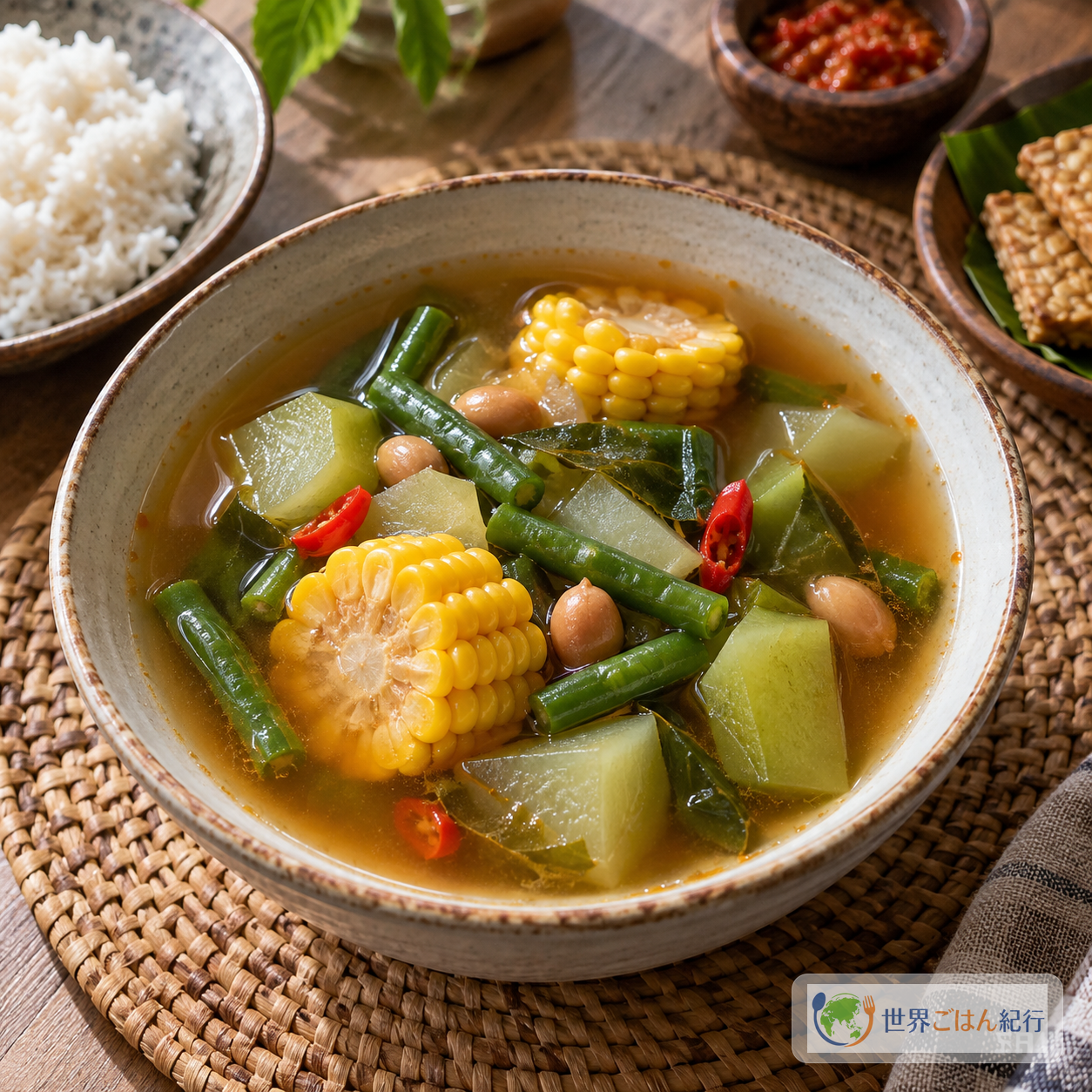

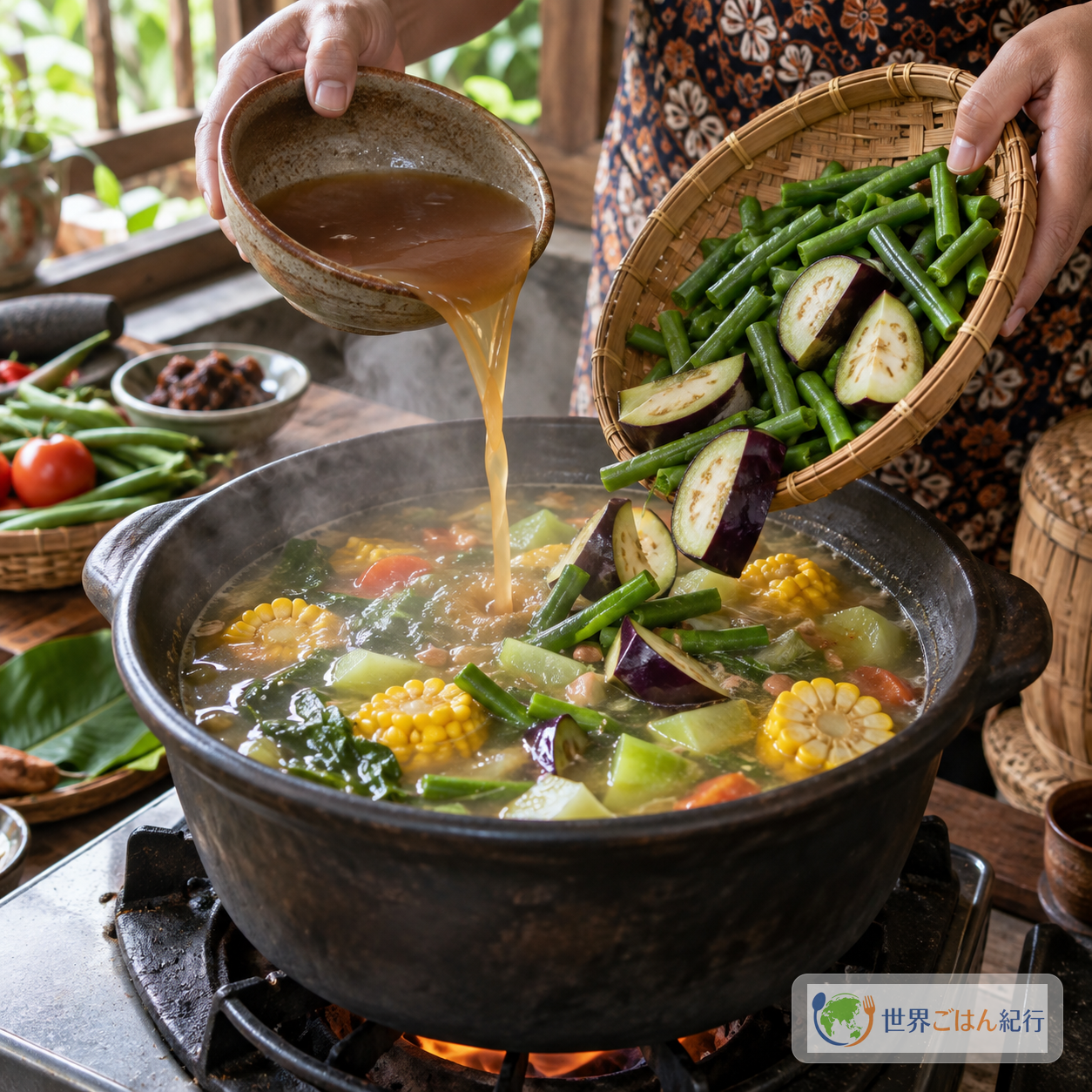
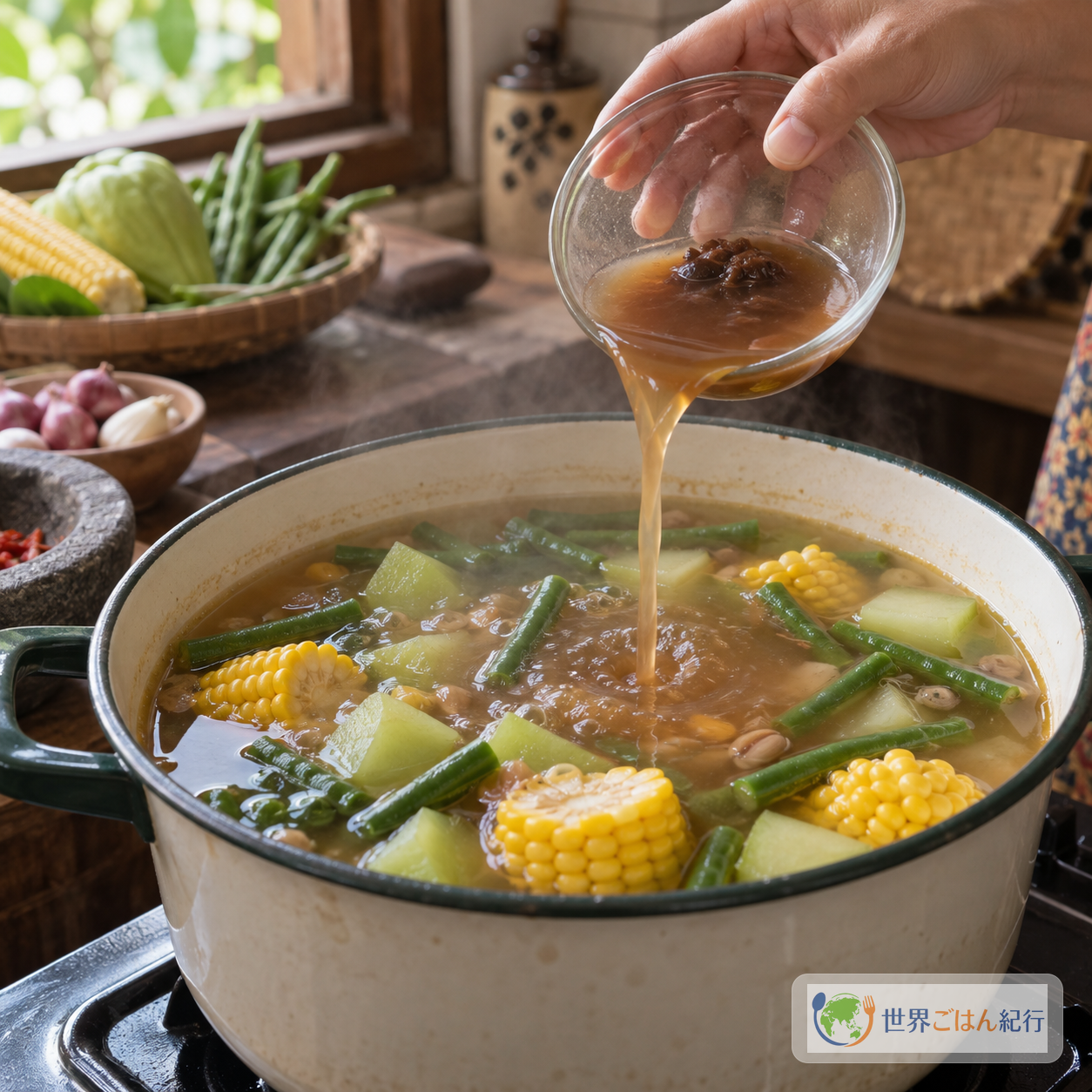
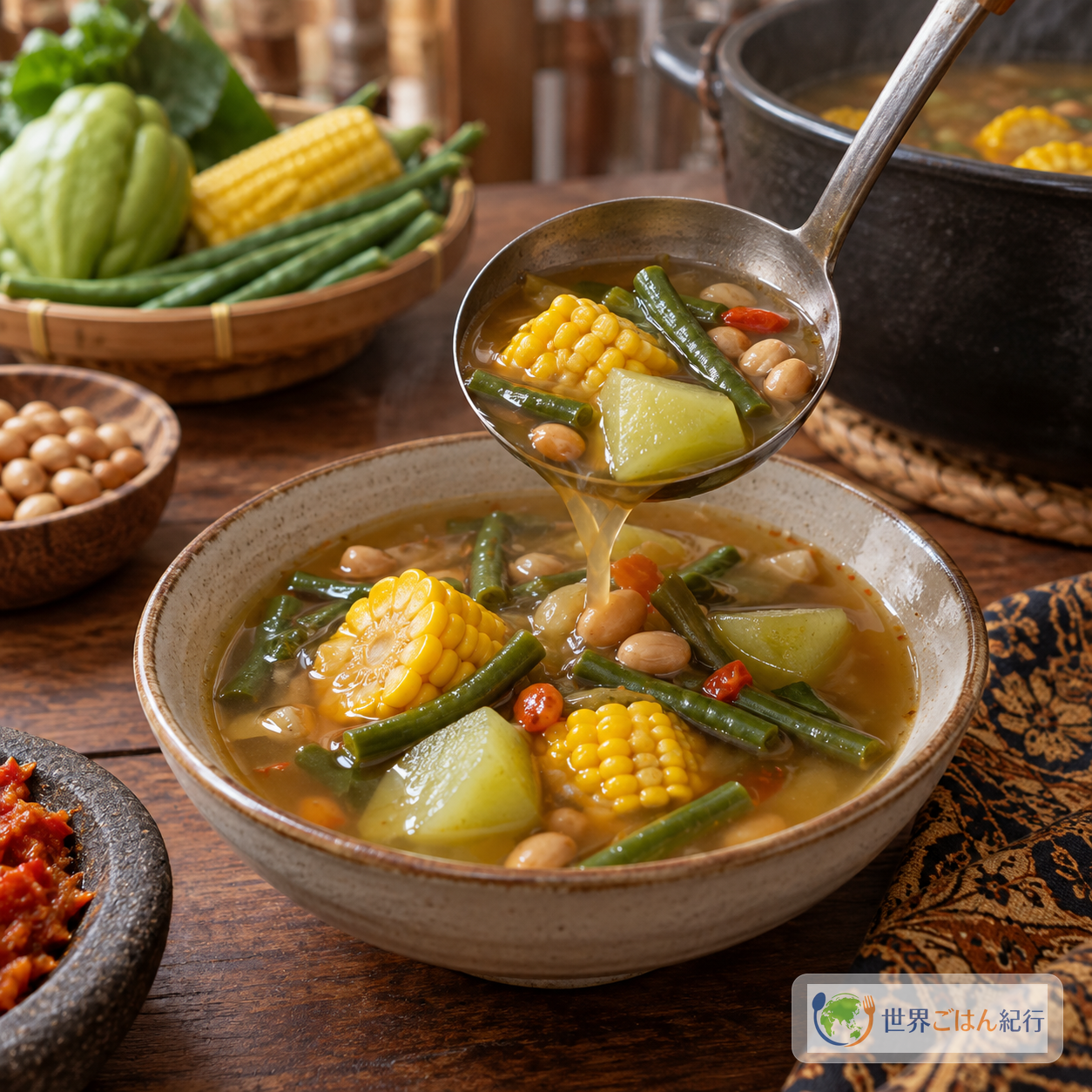
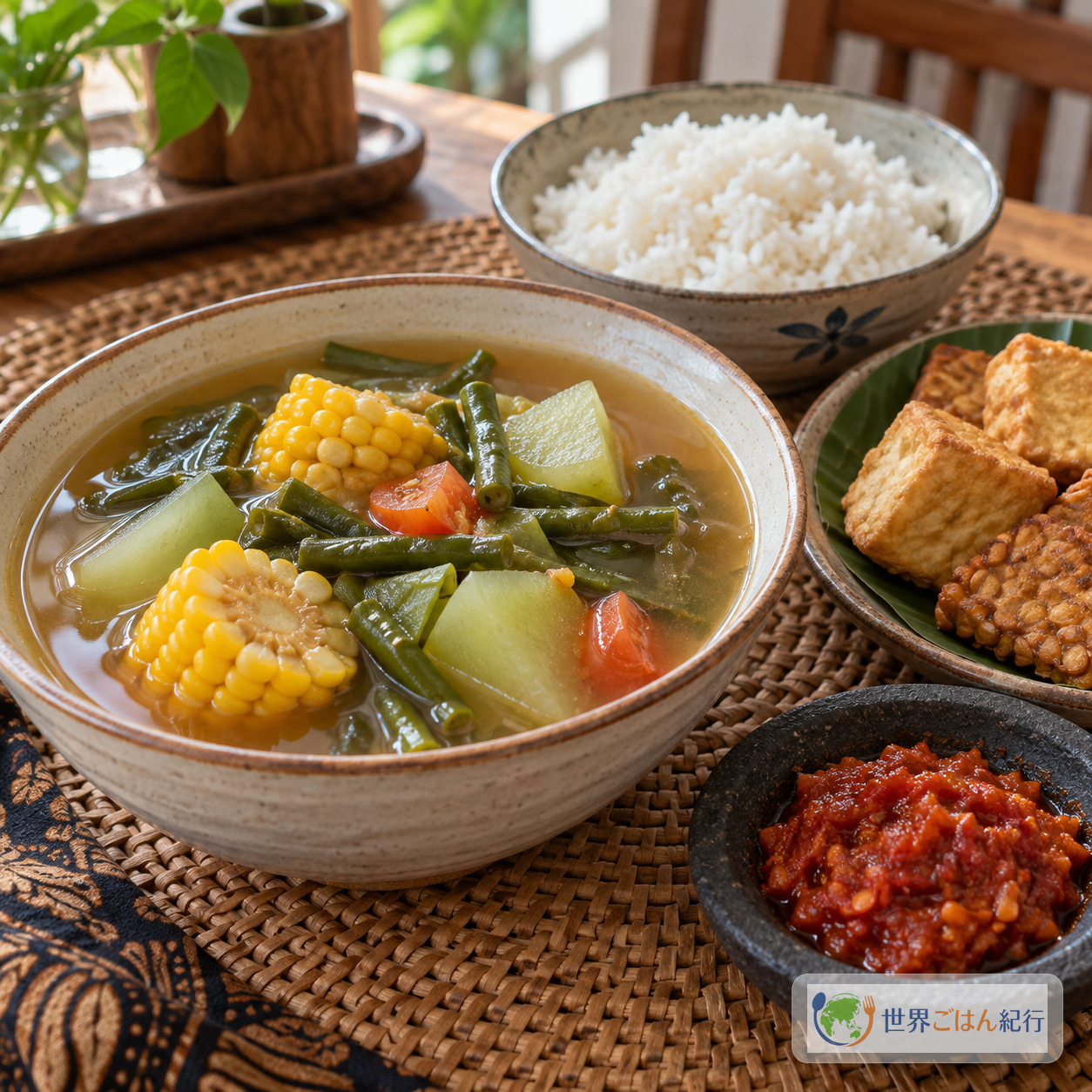
In the pot, the sweetness of the corn and the sourness of the tamarind rise separately, then come together into a single broth at the end. Sayur asem is a sour vegetable dish in which the ingredients are simmered until tender.
A "sour soup" might make you picture a light broth brightened with a squeeze of lemon. Sayur asem is different: you taste the sourness together with the fruity aroma of tamarind. Peanuts add richness, corn adds sweetness and the aromatics bring heat, so the sourness never turns sharp on its own.
The name covers more than one table, from the version presented as Betawi cooking around Jakarta to the Indramayu style that pairs vegetables with a peanut sauce. This recipe keeps that range in mind while building a home-style pot with tamarind as the star and no meat or fish. Served with white rice, the sour broth bridges the gaps between richer, more strongly seasoned dishes.
Tamarind sets the outline of the flavor, and it is easiest to handle if you dissolve it a little at a time and add it at the end. Powdered souring agents change the aroma as well as the acidity, so if this is your first time, having a jar of tamarind paste on hand gives you the most room to adjust.
The recipe uses about 25 g, so the rest can go into other sour dishes or dressings. If you skip tamarind, you can build the sourness with the substitute described below, but you won't get tamarind's particular aroma or the way a little sugar rounds off its edges.
A dish with no single origin
We could not find any source that confirms a single birthplace for sayur asem, or one original form shared by every household. What we could confirm is a stew presented as Betawi cooking from Jakarta, a different form in Indramayu called rumbah asem, and a home dish whose ingredients change with what the market has. That is exactly why it helps to read regional tables and cooking choices separately, rather than turning legends into historical fact.
Sayur asem is more than a "sour vegetable dish"
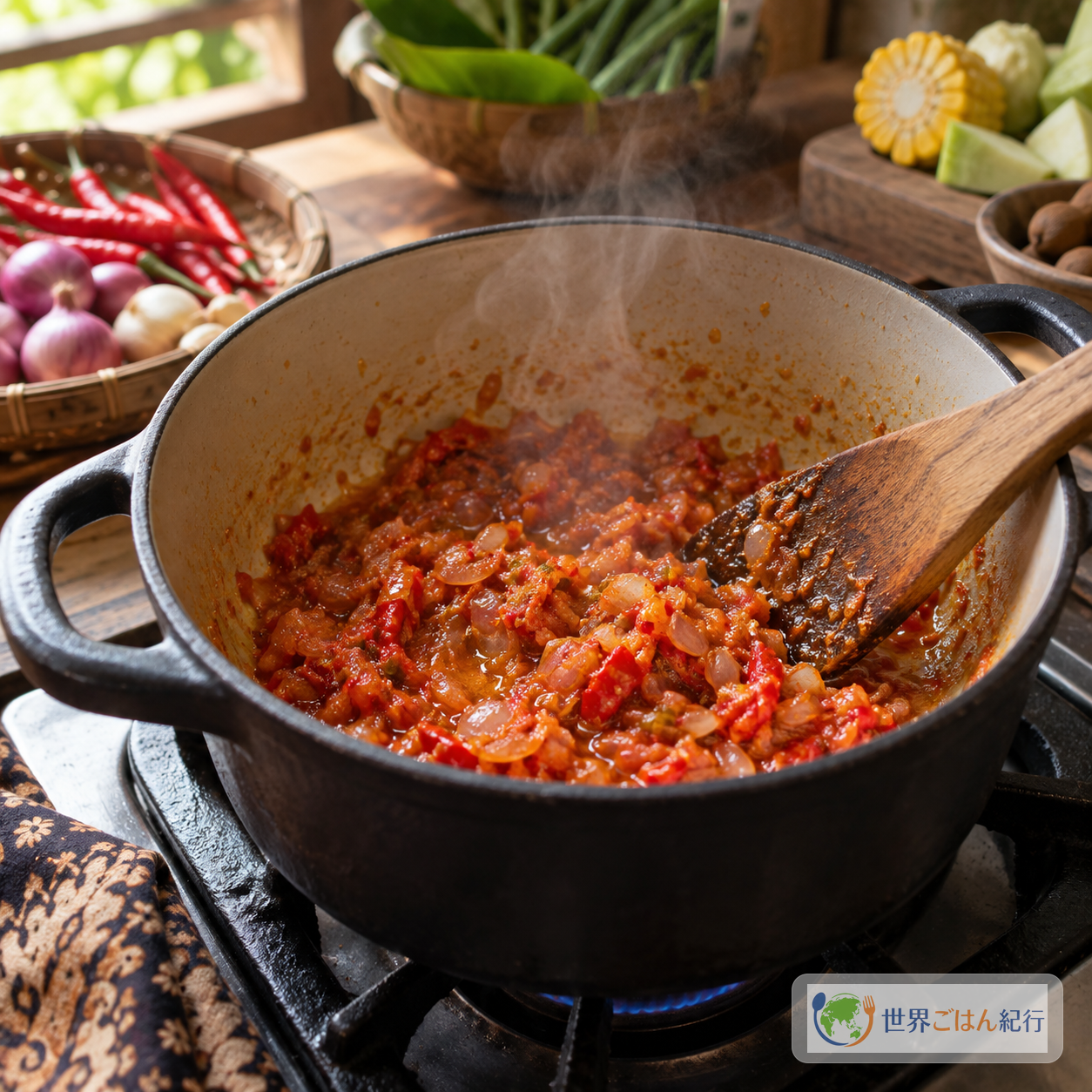
In the name, sayur means vegetables and asem refers to tamarind or sourness. Even though the ingredients are mostly vegetables, the backbone of the flavor isn't sourness alone. Warming an aromatic paste in oil and simmering nuts and corn in the broth gives a clean-tasting soup real depth.
Indonesia Travel presents Sayur Goreng Asem as a Betawi dish from Jakarta. It uses yardlong beans, melinjo and chayote, sharpened with tamarind. The method described is to grind the spices, fry them until fragrant, then add liquid and vegetables, and the dish is shown on a table with white rice and salted fish.
Indonesia Travel also presents rumbah asem from Indramayu, a vegetable dish similar to pecel. Water spinach, bean sprouts, yardlong beans and other vegetables come with a sauce of peanuts, chili and garlic, combined with a tamarind-sour liquid. It is eaten with warm rice or lontong, so it takes a different form from sayur asem, where the vegetables are simmered in the pot, but the idea of linking vegetables, sourness and peanuts to rice is the same.
These differences are a reminder not to lock the recipe into one right answer. Regional variation shows up not only in the names of the vegetables, but also in whether they are simmered into the broth or served alongside a sauce. At home, you can swap zucchini for chayote, leave out melinjo rather than hunting for it, and use ordinary green beans in place of yardlong beans. What matters is cooking the firm vegetables first and keeping the crunch of the green vegetables to the end.
Keeping the flavor's backbone in a home kitchen
Sayur asem isn't a dish that demands every ingredient under its Indonesian name. It is described as a dish whose ingredients change with the market, so substitutions are less a compromise than a natural part of home cooking. That doesn't mean anything goes, though.
Tamarind does a different job than lemon
Tamarind carries a dried-fruit aroma along with its sourness. Lemon juice leads with a bright, sharp aroma, so it works in a pinch but won't give the same flavor. If you must substitute, add 2 tsp rice vinegar and 1 tsp lemon juice at the end and increase the brown sugar slightly to round things out. This is a guide for balancing sourness in a home kitchen, not a formula that reproduces the Indonesian flavor.
Tamarind pastes vary in strength from brand to brand. Don't add it all at once: dissolve it in a ladleful of the broth and add it back to the pot as you taste. If it isn't sour enough, add more 5 g at a time; if it's too sour, add a little water, cooked corn and brown sugar, in that order. Avoid masking sourness with more salt, which tends to make the whole broth heavy.
What to do about chayote and melinjo
Cooked chayote turns translucent and stays crisp, zucchini becomes soft, and daikon brings its sweetness forward. All of them work, but you change the cut size and the timing: zucchini goes in for the last 5 minutes, daikon at the same time as the corn.
Melinjo is often listed as a typical ingredient, yet the recipes we checked also describe it as hard to find outside Indonesia. Rather than forcing in another vegetable to mimic its slight bitterness, leave it out of the basic pot and lean on the sweetness of the corn and peanuts; the flavor comes together better.
Keep heat and fermented seasonings at the table
The aromatic paste uses just one chili to keep the heat down. If you like spicy food you can use two, but the line between heat and sourness gets harder to read, so taste a bowlful first before adding more. Some recipes add meat or shrimp paste; this version stays plant-based, and heat comes from sambal served on the side.
Ingredients (serves 4)
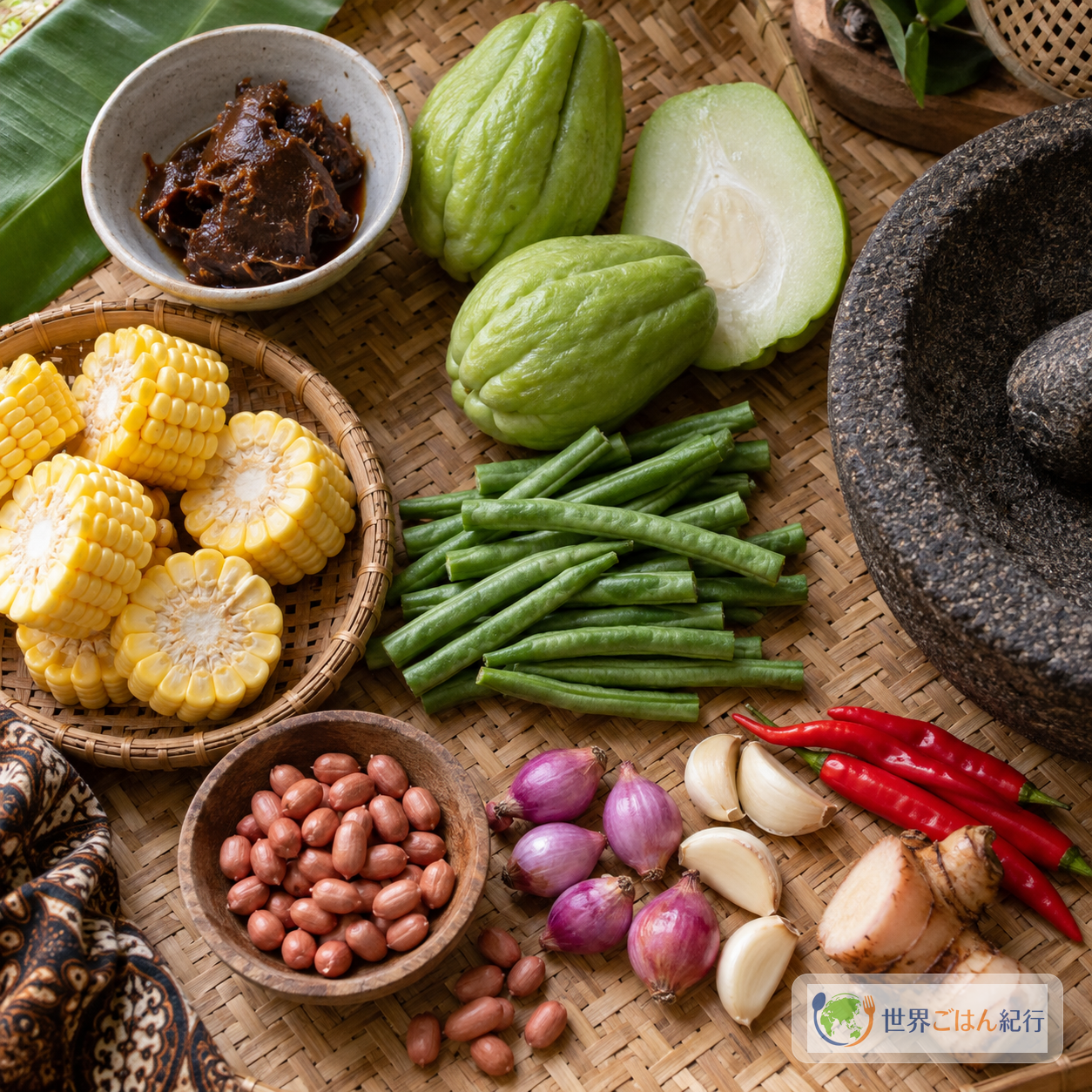
This recipe uses peanuts and macadamia nuts. The macadamias can be left out; if you omit the peanuts, you can use 2 tsp tahini instead. If you also avoid sesame, add a few more vegetables and adjust the seasoning. Check the ingredient labels on store-bought tamarind products, and if you avoid shrimp or other seafood, always read the label.
Choosing a tool for the aromatic paste
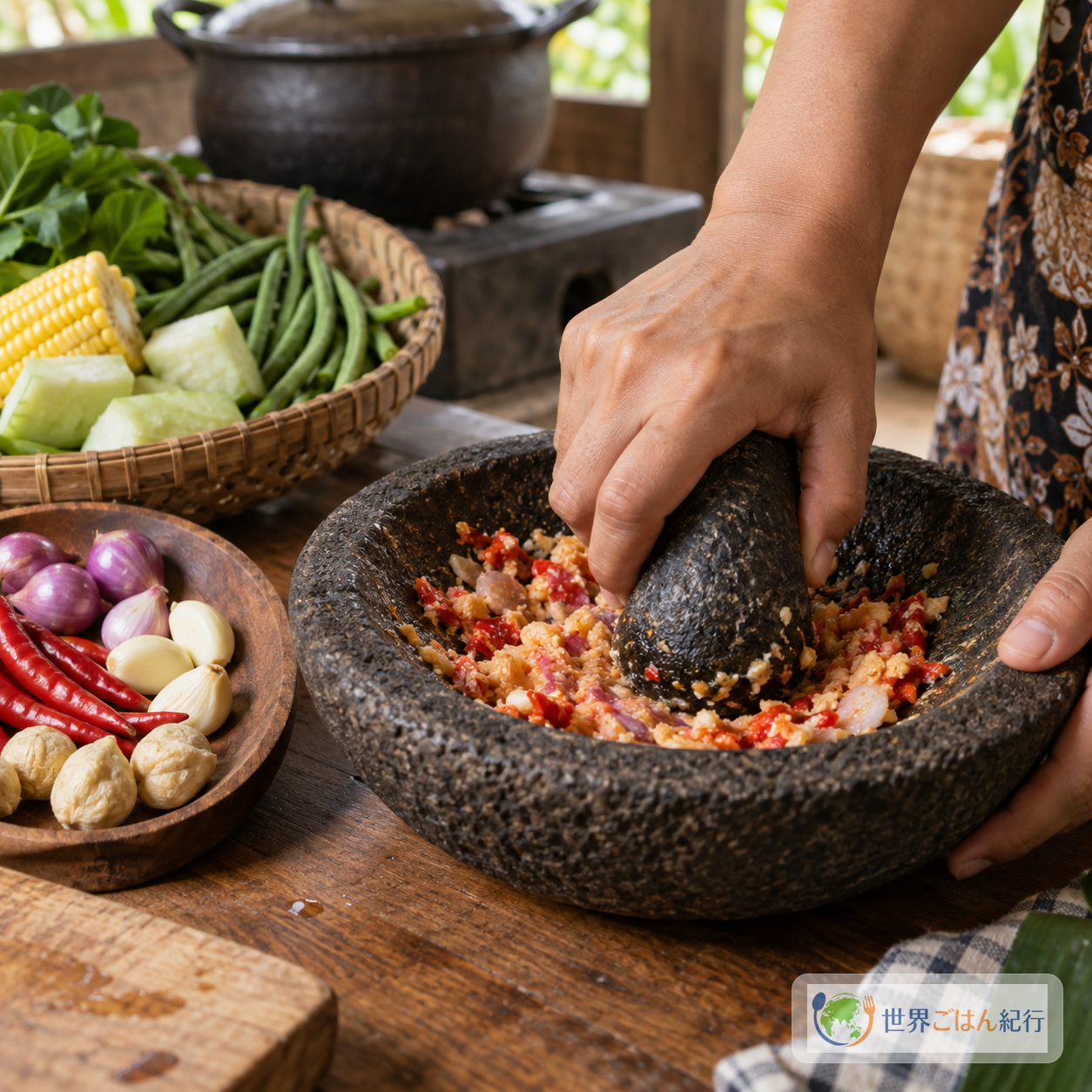
The aromatics release their flavor into the broth better when they are left slightly coarse rather than ground into a smooth paste. You can mince them finely with a knife, but when you're combining small amounts of onion and chili, a heavy mortar and pestle makes it easy to control the texture.
A mortar earns its place if you also make sambal, curry pastes or small batches of condiment sauces. If storage space is tight, or you make spice pastes only once a year, mincing with a knife and frying a little longer in oil is plenty. Decide on the tool based on whether you'll keep making spice pastes, not on this one pot.
Instructions
Prep and aromatic paste (10 min)
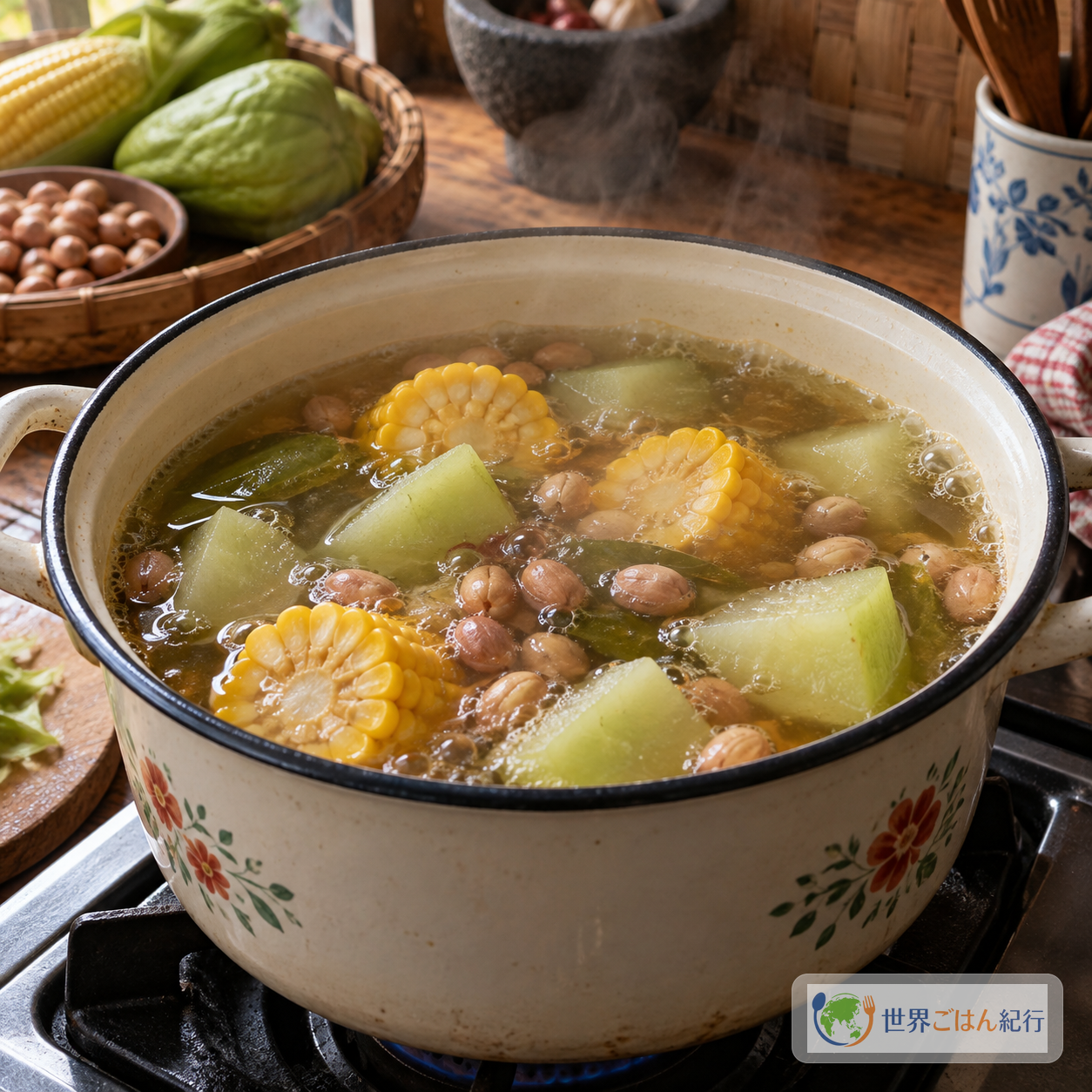
Make the broth (25 min)
Add the sourness and finish (10 min)
The chayote is cooked to translucence but still has its edges, the green beans don't snap when lifted with chopsticks, and the broth leaves the roundness of the sugar after the sourness. A cloudy broth isn't a failure, but vegetables cooked hard over high heat for a long time tend to break down.
How to fix it
Too sour
Add water 50 ml at a time, along with a little more cooked corn or chayote. Only if it still tastes sharp, add brown sugar 1/2 tsp at a time. Covering it with sugar alone pushes it toward a sweet vinegar dressing, so dilute it first.
Not sour enough; it tastes like plain vegetable stock
Dissolve 5 g tamarind in water and add it gradually to the pot over low heat. Tamarind added directly tends to clump on the bottom, leaving only certain bites sour. Even if it seems to need salt, set the sourness first, then adjust the salt.
Hard peanuts or a cloudy broth
Take out just the peanuts, add a little water, cover and cook over low heat for 5 more minutes. A cloudy broth may mean the peanuts split over high heat. If it tastes fine, it's perfectly good to eat; next time, lower the heat after it boils and don't stir the vegetables too much.
Vegetables that fell apart
Separate the broth and vegetables and reheat only the broth over low heat. If you add freshly cut green beans or eggplant, don't let it boil, and stop within 5 minutes. Don't throw out the broken vegetables: serve them as a thicker soup to spoon over white rice so nothing goes to waste.
Serving it and enjoying the regional differences
Sayur asem shows its character best set between white rice and other dishes, rather than as one big bowl on its own. With a few savory dishes such as fried tofu or tempeh, some salty fish and a hot sambal on the table, the sour broth resets your palate. The official tourism source presenting the Betawi dish with white rice and salted fish is a clear example of this way of eating.
As with Indramayu's rumbah asem, vegetables can also be served raw or blanched with a peanut sauce, alongside lontong or warm rice. That isn't the same as simmered sayur asem, but both put vegetables at the center and use sourness and nutty richness to carry the rice. On days you want soup, make this pot; on days you want crunch, blanch the vegetables briefly and serve the sauce separately.
In Indonesia, dishes with the same name change with the region and household, in both the ingredients and how the sourness is brought in. Comparing the stew presented as Betawi cooking from Jakarta with rumbah asem from Indramayu in West Java makes the difference easy to see.
If you want more dishes alongside, gado-gado (in Japanese), which brings vegetables together with peanut sauce, is a natural match. On days you want the aroma of coconut, move on to the vegetable dish urap (in Japanese) to see a different way of building flavor from a sour broth. To try sourness in a fish dish, compare it with asam pedas (in Japanese), and you'll see why a vegetable soup makes a milder base for the table.
Storage and reheating
Don't leave leftovers in the pot at room temperature for a long time to cool; divide them into clean, shallow containers. Japan's Ministry of Health, Labour and Welfare advises cooling leftovers quickly in shallow containers, not leaving them at room temperature, and reheating them until the center reaches at least 75°C (167°F) before eating. At home, use refrigerated soup by the next day, and don't eat it if the smell, texture or taste seems off or it has turned slimy.
Reheat one portion at a time in a small saucepan, bringing it to just below a boil. Sourness tastes different once the soup has cooled, so reheat it first and then add a little water or tamarind liquid as needed. To keep the green beans' color, stop cooking them slightly firm before storing, or blanch them separately and add them just before eating.
FAQ
What can I use instead of tamarind?
Start with 2 tsp rice vinegar and 1 tsp lemon juice, plus a little extra brown sugar, to get the sourness heading in the right direction. You won't reproduce tamarind's dried-fruit aroma, though. A practical approach is to try the dish's structure with the substitute first, then decide whether to buy tamarind.
Can I leave out melinjo?
Yes. Melinjo is a characteristic ingredient, but it's also described as hard to find outside Indonesia. This basic recipe leaves it out and builds sweetness and richness with corn, chayote and peanuts.
Can I add meat or shrimp paste?
You can, but meat changes the character of the broth. If you use beef, add thin slices for the last few minutes; if you use shrimp paste, reduce the salt and start with a small amount. If you're cooking plant-based or have allergies, check the ingredient labels and avoid seasonings that contain seafood.
When should I add more chili for extra heat?
Add one more red chili when you make the aromatic paste. If you'd rather let people choose their heat at the table, serving sambal on the side instead of adding more to the pot keeps the outline of the sourness intact.
Can I make it the day before?
Yes, but cool it quickly in shallow containers, refrigerate it, and reheat it thoroughly to the center before eating. If the texture of the green beans and eggplant matters most, make just the broth and firm vegetables the day before and add the later vegetables on the day.
Nutrition (approximate, per serving)
About 180 kcal, 6 g protein, 7 g fat, 26 g carbohydrates, 7 g fiber and 2.0 g salt equivalent. This is a rough estimate based on the corn, peanuts, oil and seasonings, and doesn't account for vegetable size, the tamarind product used or the rice served alongside.
Summary
The heart of sayur asem isn't making the tamarind stronger; it's layering the sweetness of corn, the richness of peanuts and the heat of the aromatic paste into one broth. Using the ingredients and sourness of the Betawi table, and the pairing of vegetables and peanuts that Indramayu's rumbah asem shows, as your guide, the dish keeps its character even with ingredients from your local store.
Dissolve the tamarind in water, cook the firm vegetables first, then bring in the soft vegetables and the sourness. Even without melinjo, and even with zucchini in place of chayote, you'll be fine as long as you bring the sourness back to suit your own table at the end. With white rice and fried tofu on the side, spooning up the broth little by little, it's a dish that doesn't feel heavy even on a hot day.
Sources
- Indonesia Travel「Sayur Goreng Asem」: Betawi ingredients, tamarind sourness, cooking the spice paste, serving with white rice and salted fish. Accessed and checked September 27, 2026 (JST).
- Indonesia Travel「Rumbah」: rumbah asem from Indramayu, vegetables, peanut sauce, tamarind, pairing with rice. Accessed and checked September 27, 2026 (JST).
- Cook Me Indonesian「Sayur Asem: Sour Tamarind Soup with Vegetables and Beef Trimmings」: flexibility of ingredients, availability of melinjo, choice of tamarind, cooking the firm vegetables first. Published July 7, 2020. Accessed and checked September 27, 2026 (JST).
- CRS Rice Bowl「Sayur Asem (Indonesia)」: explanation of the dish name, and cross-check of the order for adding aromatics, vegetables and tamarind. Accessed and checked September 27, 2026 (JST).
- 厚生労働省「食中毒予防のための3原則」: quick cooling of leftovers, avoiding leaving food at room temperature, reheating to 75°C or higher. Accessed and checked September 27, 2026 (JST).



