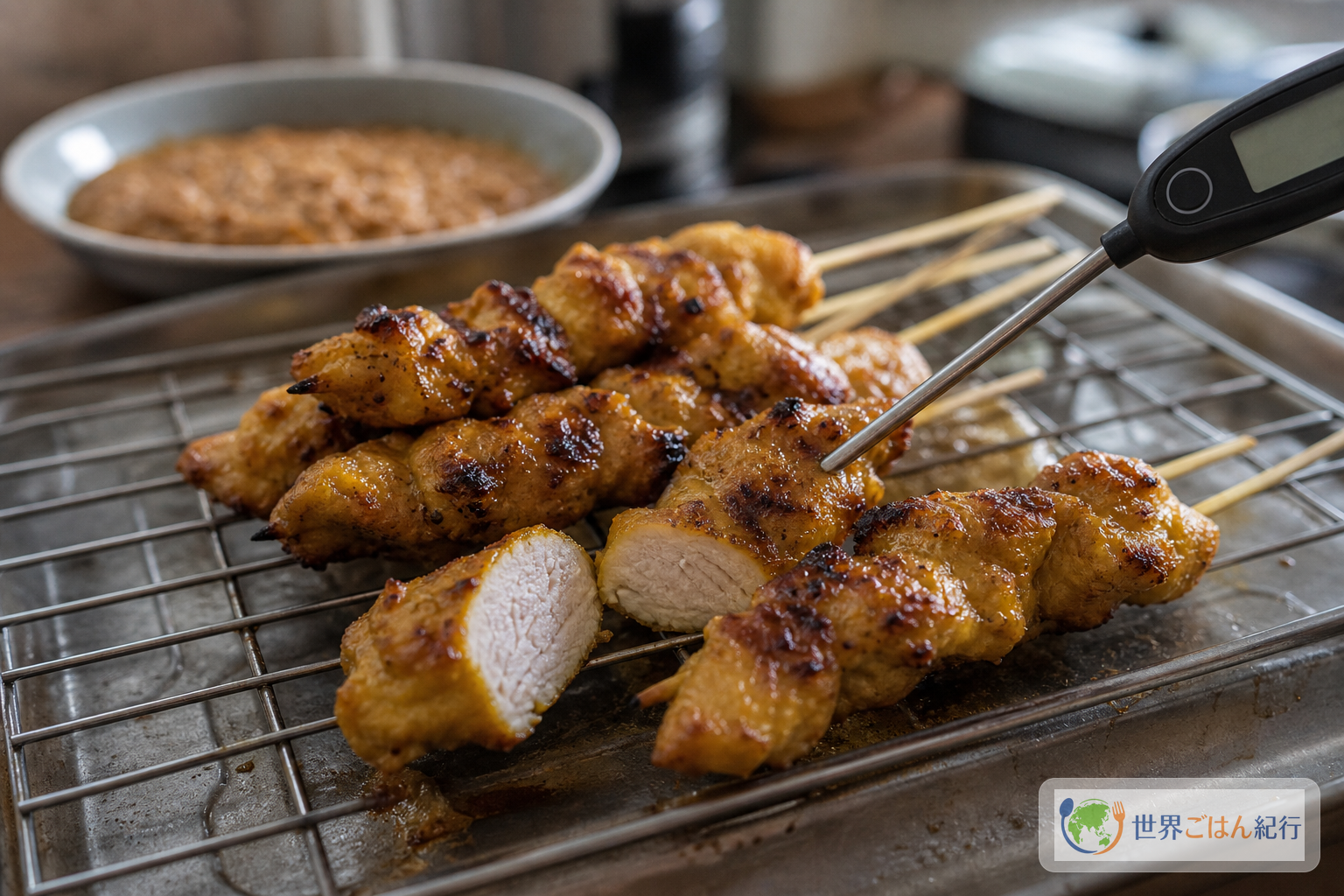
In the evening kitchen, Southeast Asia rises from the skewers
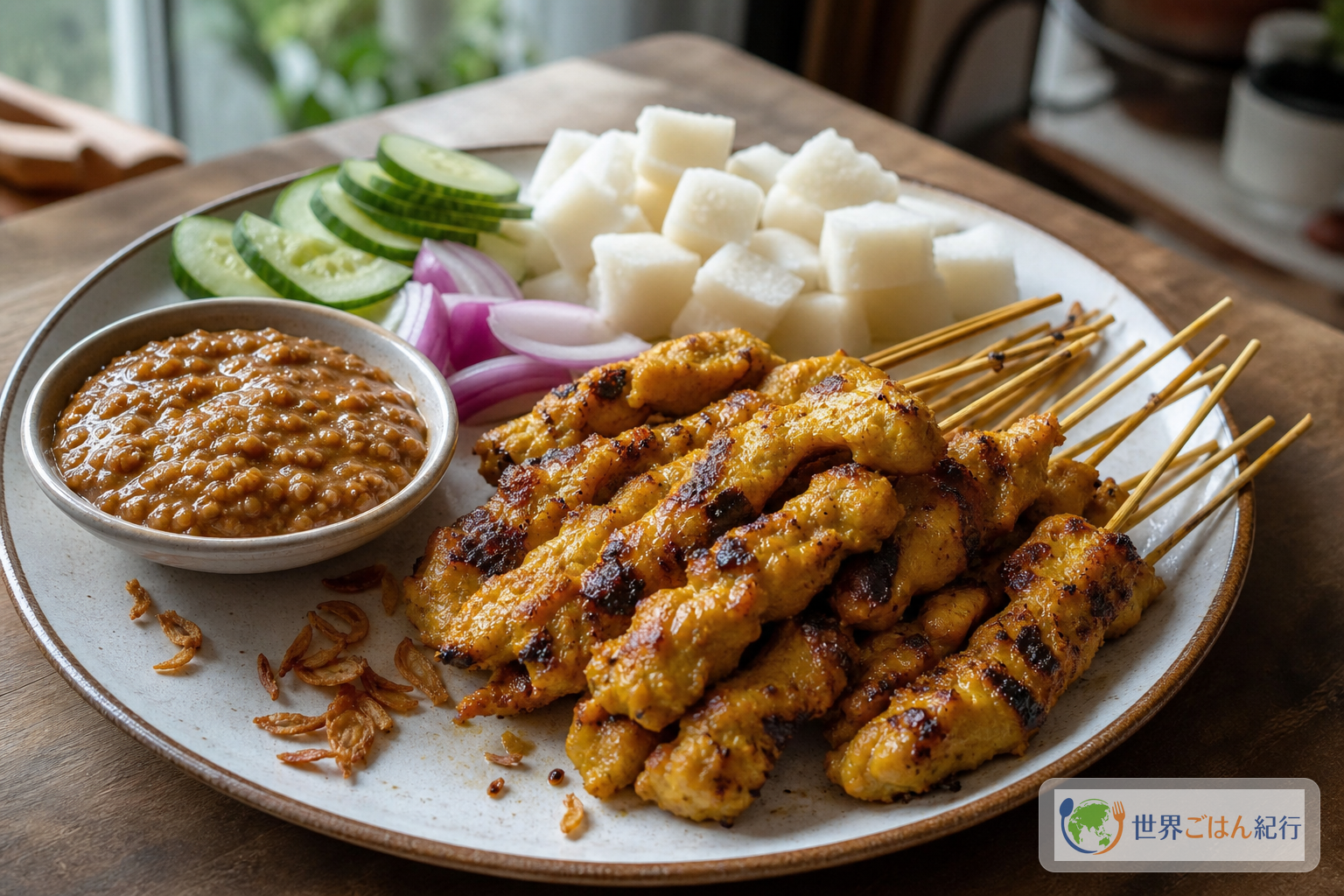
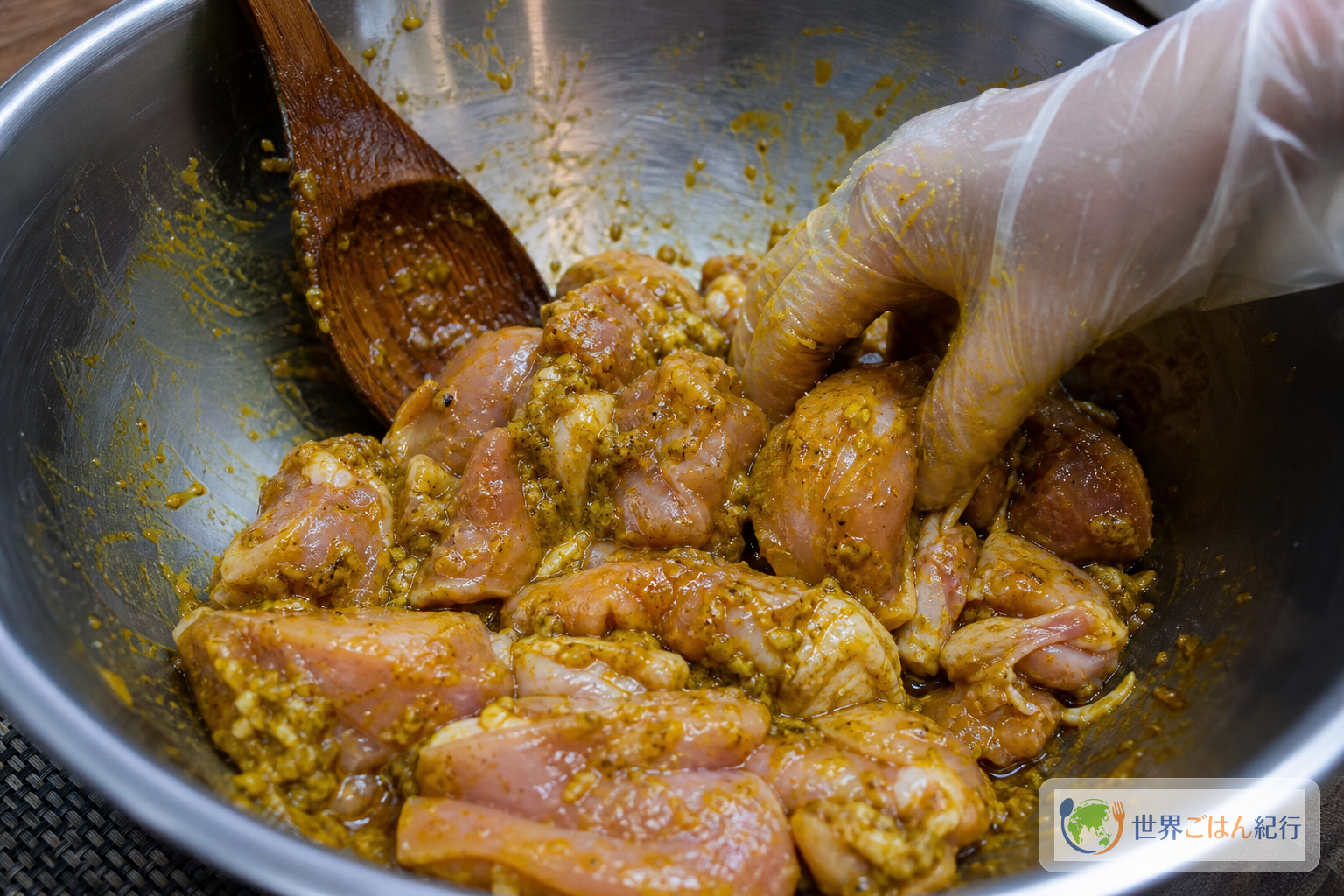
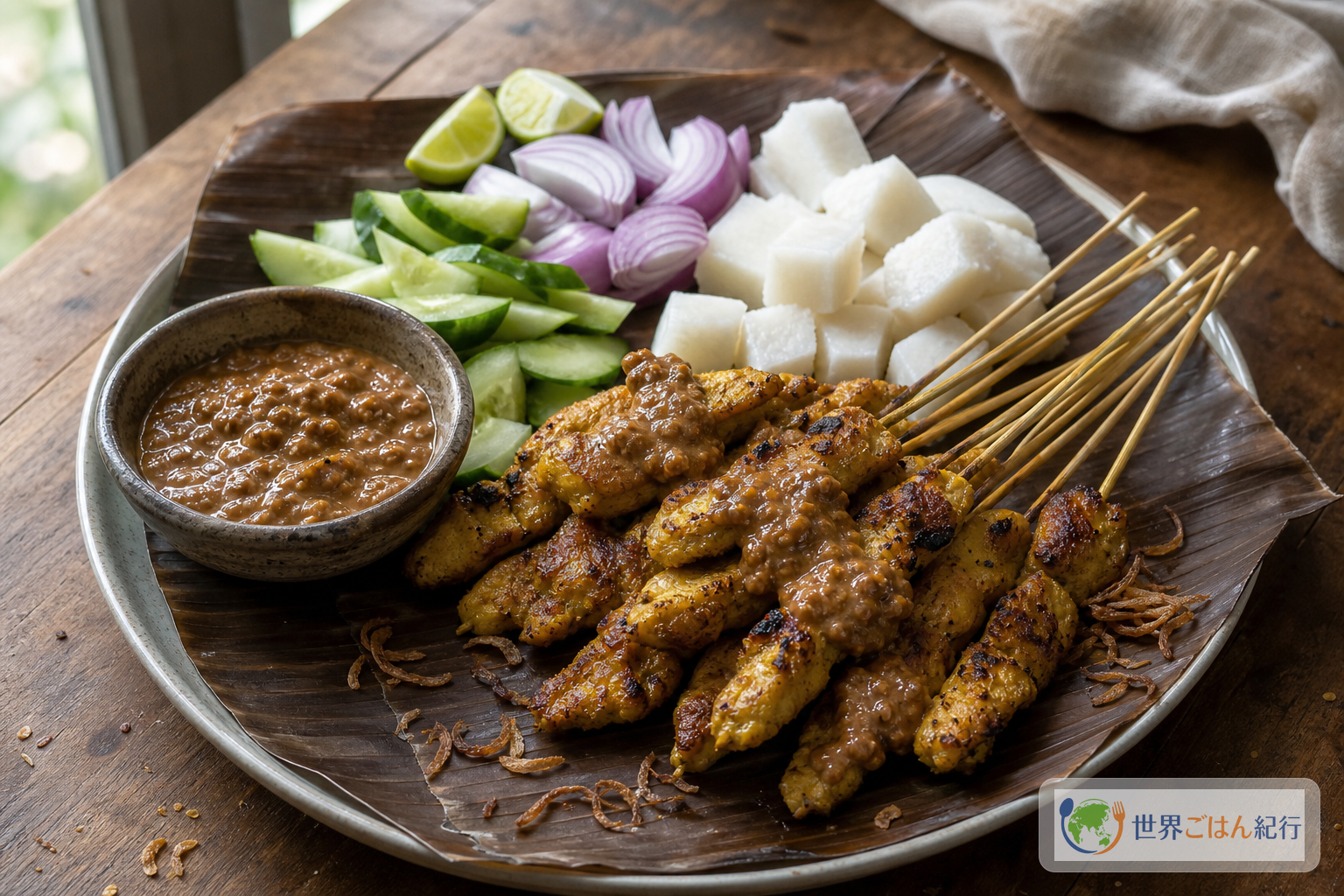
Cut chicken thighs small and stain them yellow with turmeric. Mix in lemongrass, garlic, ginger, coriander and cumin, and the air in the kitchen changes before anything touches heat. It looks like Japanese yakitori, but the aroma heads somewhere else entirely. Malaysian satay (sate / satay) is meat threaded small on skewers and grilled, then eaten with a thick peanut sauce, cucumber, red onion and a block of rice called ketupat.
In the 2009 list of Malaysia's National Heritage Department, Sate atau Satay appears as one of the food entries. It is less a dish made for tourists than something people eat "by the dozen" at night markets, street stalls and family gatherings. The satay recipe on Kuali likewise marinates with coriander, cumin, lemongrass and turmeric, and serves it with cucumber, onion and ketupat.
In a home kitchen, the hard part is less the charcoal than keeping the spice paste from going thin. Skip the lemongrass and bind the spices with curry powder, and you get curry-flavored grilled chicken, not satay. This recipe uses chicken thighs, easy-to-find ground spices, and ginger to stand in for the sharpness of galangal, scaled down to a version you can make under a broiler or in a grill pan.
The dish is written sate in Malay and most often satay in English. This article uses "satay," but it treats the paste, the accompaniments and the sauce separately from Indonesia's sate ayam.
What to protect in this satay
In Malaysian satay, the meat, the sauce and the sides belong together. Grill only the skewers and the table feels a little monotonous. Sweet, smoky meat, a coarse peanut sauce, the moisture of cucumber and red onion, and rice to catch it all: if you build that whole combination, even a home broiler gets quite close.
| What to protect | The local character | How to do it at home |
|---|---|---|
| Small pieces of meat | Cooks quickly and takes the sauce | Cut chicken thighs into even 2.5 cm cubes |
| Yellow marinade | Color and aroma of turmeric and aromatics | Build with individual spices, not curry powder |
| Lemongrass | A green aroma rises when grilled | Frozen or paste if you have no fresh |
| Coarse peanut sauce | A grainy thickness that clings to the skewer | Don't grind the peanuts to powder |
| Fresh sides | Cut the sweetness of the meat | Serve cucumber, red onion and lime |
| Rice to catch the sauce | Ketupat soaks up the sauce | Press firm cooked rice and cut it into cubes |
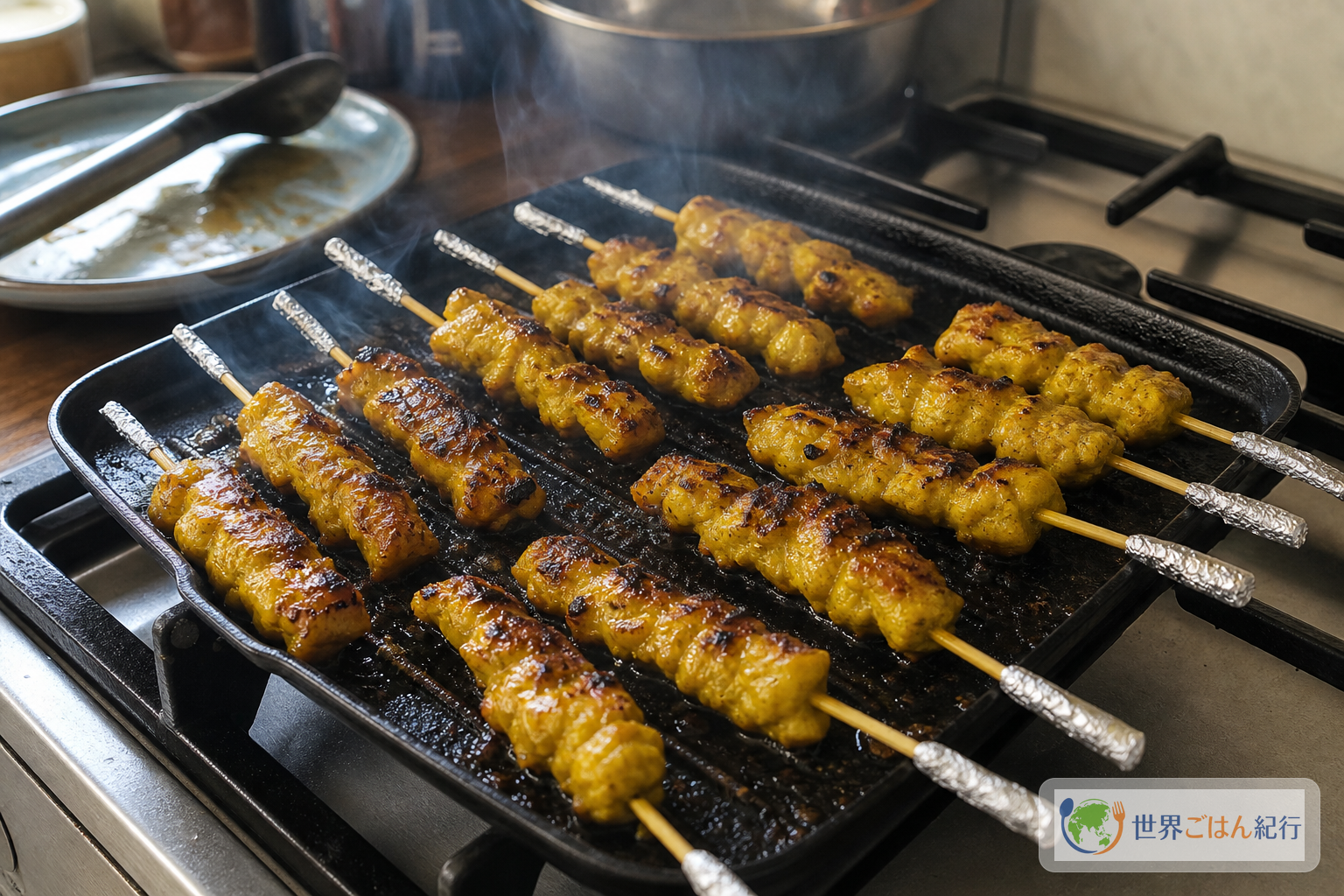
Charcoal gives a stronger aroma. But at home, a heat that doesn't scorch the sweet marinade matters more than forcing charcoal. If the heat is too high, the sugar and spices blacken before the center of the meat cooks.
Ingredients (serves 4)
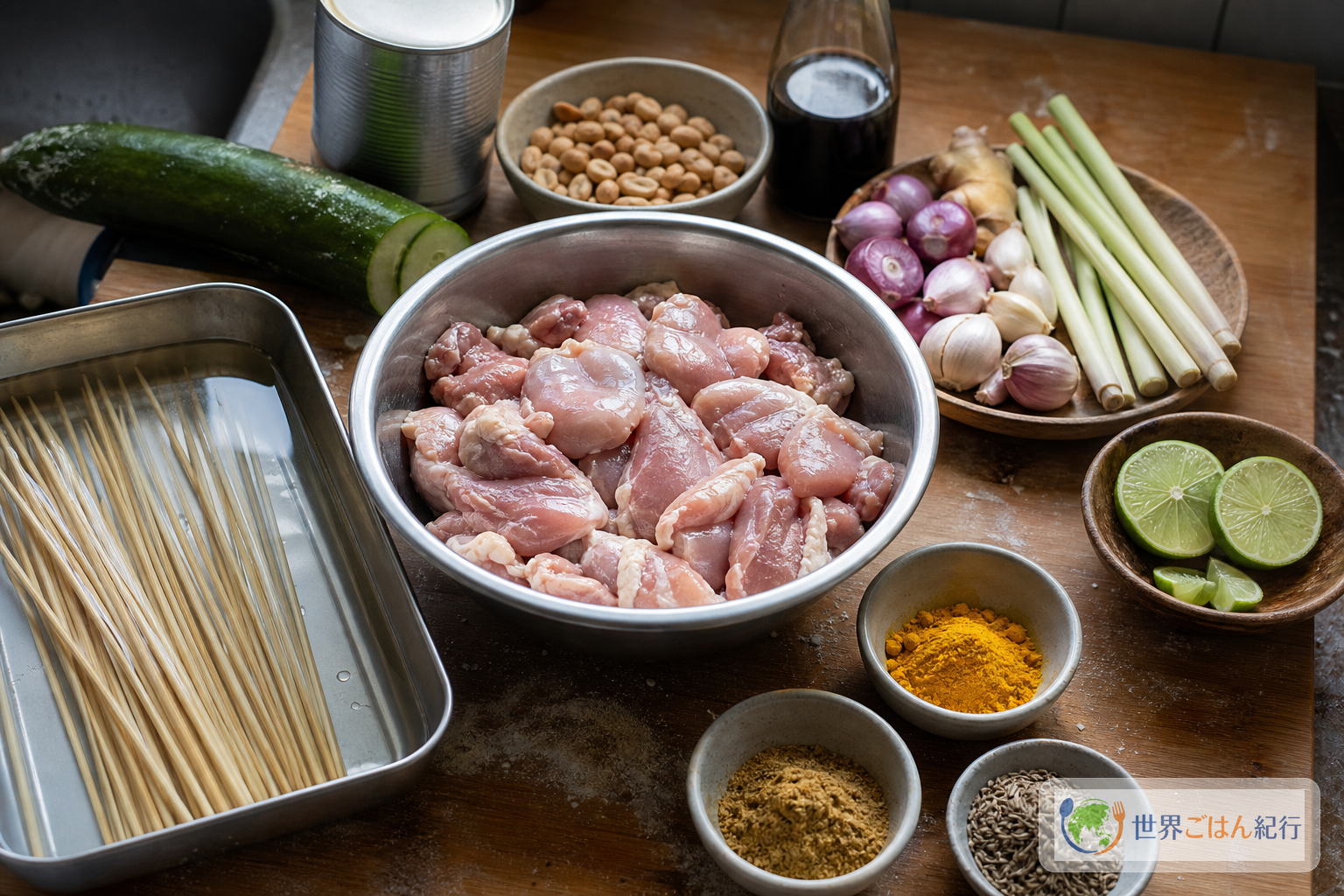
This makes about 16 short skewers. It serves 4 as a main, or 6 as a snack beside nasi lemak or laksa. Chicken breast works, but for a first try thighs stay moister and make the browning easier to judge.
This recipe uses chicken, peanuts, and seasonings that may contain soy and wheat. If someone has a peanut allergy, skip the peanut sauce and eat the skewers with a sweet-hot dip of kecap manis, lime and chili. Cook the chicken through to the center and confirm 75 °C or higher at the thickest part. Keep chopsticks, plates and cutting boards that touched raw meat separate from those used for the cooked skewers.
Shopping questions
Chicken, onion, cucumber, rice and peanuts are easy to find. What is worth ordering online are the spices that separate satay's aroma from yakitori. Turmeric, coriander and cumin also go into rendang (in Japanese), roti jala and char kway teow, so the set is easy to use up.
Turmeric is not just for color. Once oil and heat are involved, it adds a slightly earthy note to the sweetness of the chicken and connects it to the peanut sauce. Curry powder as a replacement drifts toward Japanese-style curry flavor, so it is worth keeping turmeric on its own.
Cumin works in ground form, but lightly crushing whole seeds keeps the aroma longer. In satay it is easier to eat when it stays behind the lemongrass and coriander rather than leading.
Ground coriander builds body, not heat. It rounds off the edges of ginger, garlic and lemongrass and carries the richness of the peanut sauce over into the meat.
Method
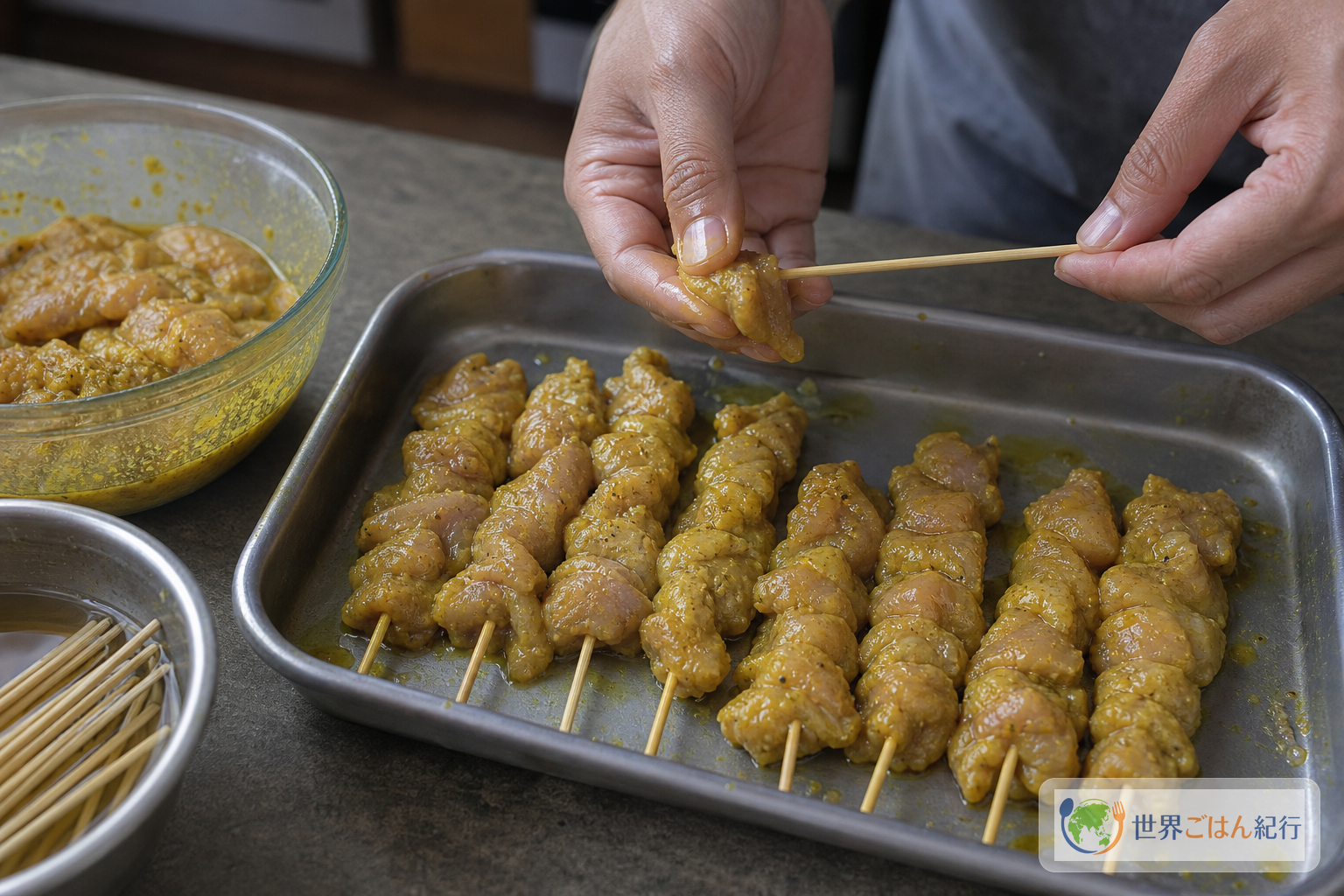
Satay gets its flavor from the marinade and its aroma from the grill. If the meat is cut large, the surface scorches before the inside cooks. If it is too small, it dries out. Aim for 2.5 cm cubes and thread 4–5 pieces on each skewer.
Substitution table
Malaysian satay is not a dish where everything has to be local. What matters is keeping the direction of the aroma. When you substitute, don't lose sweetness, sourness, green aroma and the coarseness of the peanuts all at once.
| Ingredient in doubt | Closest choice | Substitute | Judgment |
|---|---|---|---|
| Lemongrass | Fresh or frozen | Lemongrass paste | Leaving it out pushes it toward yakitori |
| Galangal | A little from an import grocery | Ginger | Ginger is a bit sharper, so use less |
| Kecap manis | Sweet soy sauce from Malaysia or Indonesia | 2 tsp regular soy sauce + 2 tsp dark brown sugar | Needs sweet gloss, so avoid plain soy sauce alone |
| Tamarind | Paste | 2 tsp lemon juice | Sourness is less deep but acceptable |
| Palm sugar | Gula melaka, coconut sugar | Light brown sugar, a little dark brown sugar | Dark brown sugar alone is heavy |
| Ketupat | Rice packed in leaves and set | Firm cooked rice pressed into a block | Enough for a first try |
| Charcoal | Outdoor charcoal | Broiler, grill pan | Avoid charcoal indoors |
For the rice cubes, press 500 g firmly cooked rice into a 2 cm layer with plastic wrap, chill 30 minutes, and cut into 2.5 cm squares. It isn't true ketupat, but it does the job of catching the peanut sauce. It is also easier to pick up alongside a skewer than plain rice on a plate.
Where it goes wrong
| Problem | Cause | Fix |
|---|---|---|
| Black outside, raw inside | Heat too high, meat too big | Drop to medium-low and cut the meat into even 2.5 cm cubes |
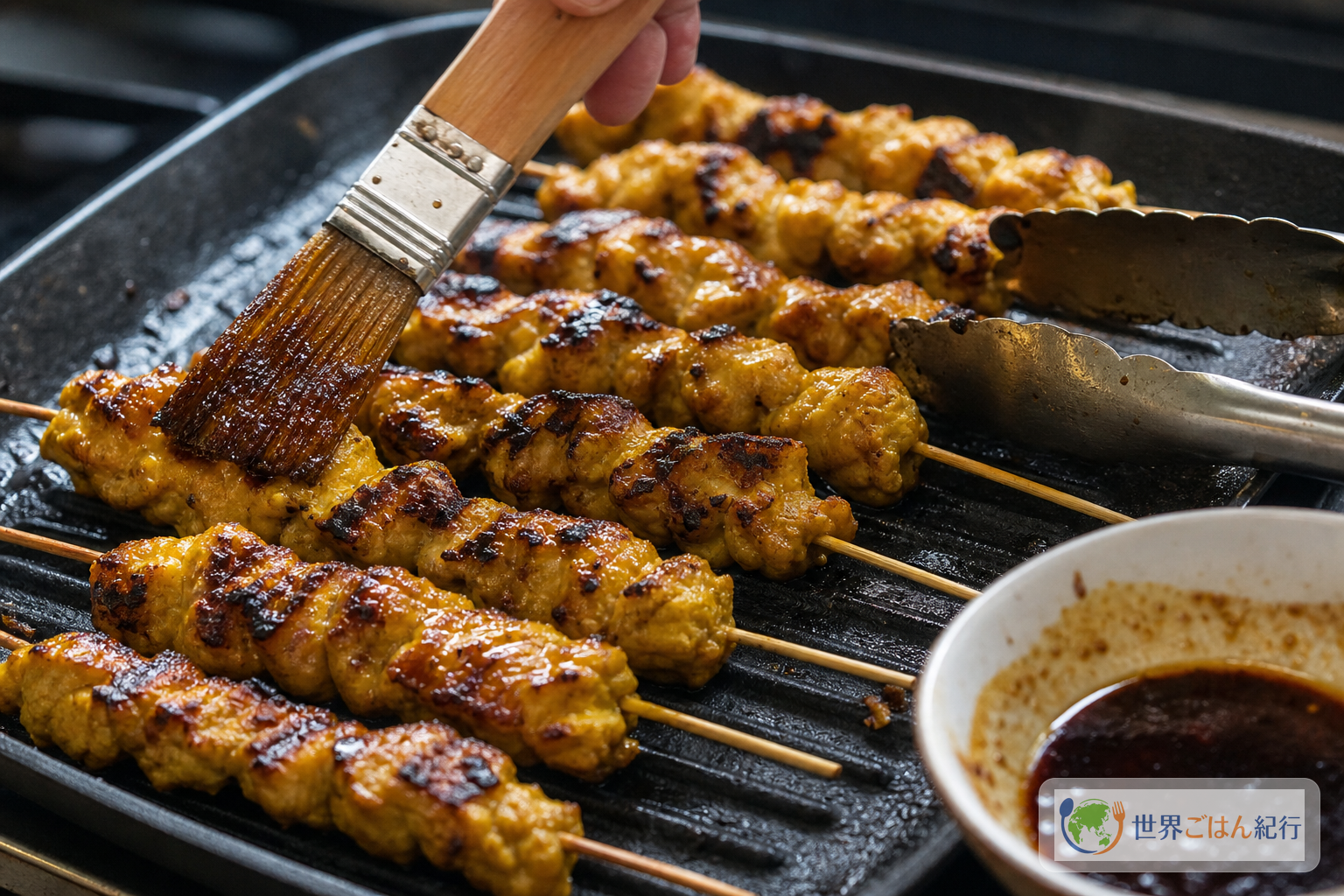
| Dry meat | Breast meat, overcooked, not enough oil | Use thighs the first time. Brush the glaze thin and stop by internal temperature |
| Sauce is chalky | Peanuts ground too fine, reduced too far | Add a little hot water and loosen over low heat for 1 minute |
| Tastes like curry | Bound with curry powder | Use turmeric, coriander and cumin separately |
| Aroma is flat | Left out the lemongrass | Add a little, even as paste |
| Too sweet and heavy | Not enough acidity or sides | Add more lime, cucumber and red onion |
A coarse sauce with grains left in suits satay better than a smooth bisque. If you over-processed it, adding 2 tbsp chopped roasted peanuts brings back the texture.
Serving and menu
Rather than piling skewers in the middle of the plate and putting the sauce at the edge, satay is easier to eat with sauce, cucumber, red onion and rice set close from the start. Skewers alone, dozens of them, leave sweetness and oil behind; a slice of cucumber in between makes it easy to move on to the next one.
For a bit of local context: Kajang in Selangor is known as the satay town. Tourism Selangor's event listings also announce an event proclaiming Kajang Satay as the state's Heritage Food. You don't need to reproduce that at home, but on a day you want to lean toward Kajang style, keep the sauce from getting too smooth, make the skewers small, and always set cucumber, onion and rice alongside. That small composition gets closer to how Malaysians eat it than a plain chicken skewer does.
As a Malaysian menu, a small portion of satay beside coconut rice nasi lemak looks like a street-stall plate. On days you want a soup, a vegetable-heavy soup or salad is lighter than laksa. To compare with Indonesian skewers, reading sate ayam, with its sweet soy front and center, and sate padang (in Japanese), with its yellow sauce, shows regional differences within the same "skewer" idea.
If you make ahead, it is easier to store the marinated meat and the sauce separately than skewers that are ready to grill. Skewers left assembled for long dry out on the surface, and the bamboo takes up room in the refrigerator.
| What to store | How long | Point |
|---|---|---|
| Marinated meat | 1 day refrigerated | Take out 15 minutes before grilling to lose the chill at the center |
| Peanut sauce | 3 days refrigerated | Loosen with hot water if it stiffens |
| Grilled satay | 2 days refrigerated | Reheat in a covered pan over low heat |
| Freezing | 2 weeks | Freeze only the marinated meat. Thread onto skewers after thawing |
FAQ
Can I make it with chicken breast?
Yes. It dries out more easily than thigh, so cut each piece to 2 cm cubes and add 1/2 tbsp more oil to the marinade. Shorten the grilling time and stop when the center turns white.
Can I make the peanut sauce with peanut butter?
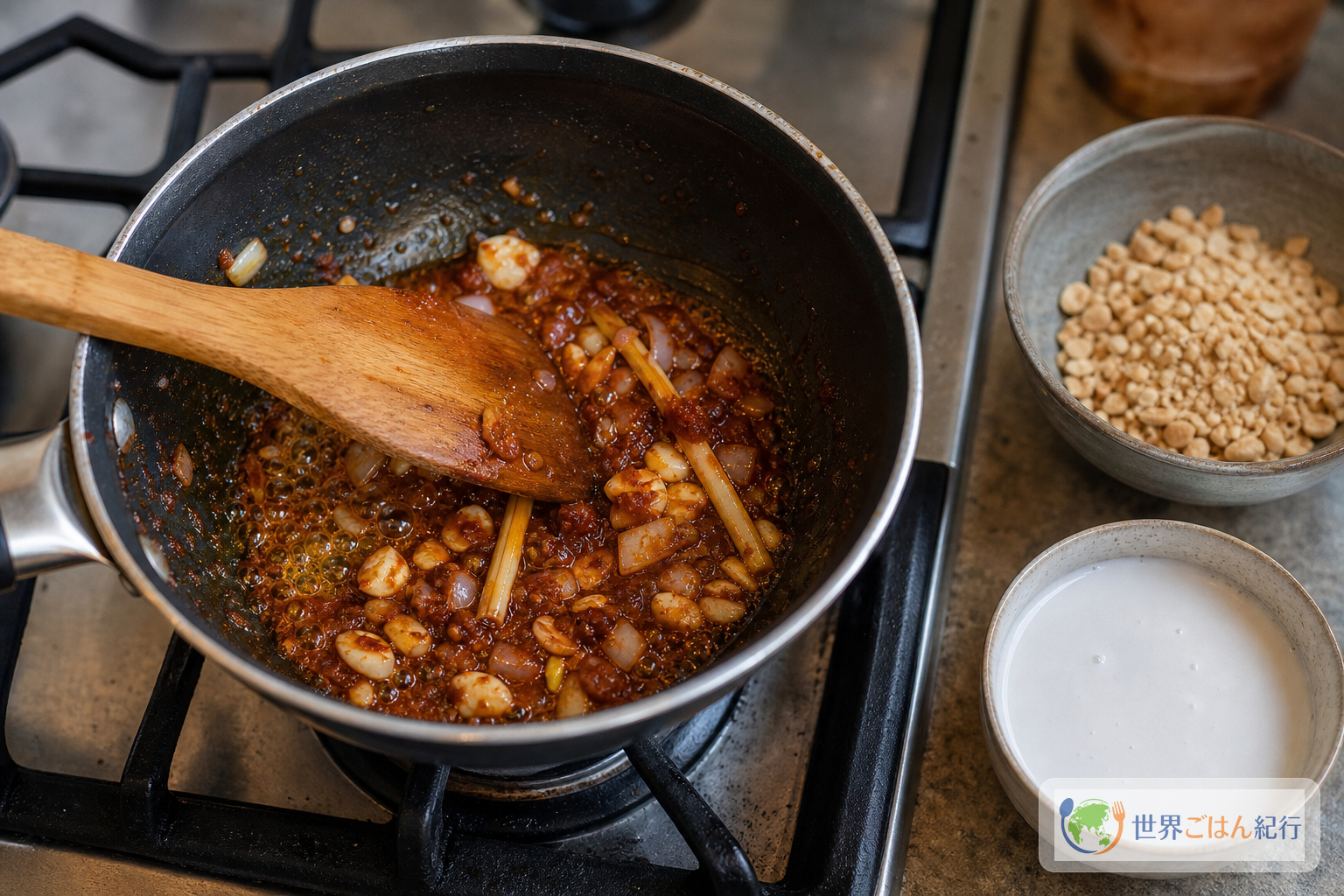
Yes, but use an unsweetened one. Mix 120 g peanut butter, 180 ml water, 1 tbsp sugar, tamarind or lemon juice and the fried aromatics, and warm over low heat. The texture is less grainy, so adding 2 tbsp chopped roasted peanuts makes it easier to eat.
I don't have kecap manis
Mix 2 tsp regular soy sauce, 2 tsp dark brown sugar and 1 tsp water, warm over low heat for 1 minute, and let it cool. With plain soy sauce alone you lose the sweet gloss and it moves toward yakitori.
Any cautions for grilling over charcoal?
With charcoal, grill over medium heat at a distance, not over strong direct flame. If fat drips and flames flare, lift the skewers off and let the fire settle. Charcoal indoors is dangerous, so use it only outdoors or in a purpose-built ventilated space.
Does the sauce have to be spicy?
No. Leave out the red chili and sambal, and let those who like heat add sambal at the table. With children at the table, make the sauce sweeter and add more red onion and lime for the adults.
What can I do with leftover sauce?
It goes with steamed vegetables, boiled eggs, grilled fried tofu and chilled cucumber. Thinned with water and warmed, it is also handy beside roti jala. Don't keep sauce from a brush or plate that touched raw meat.
Sources
- Jabatan Warisan Negara, "Warisan Kebangsaan 2009"
- Kuali, "Satay"
- Tourism Selangor, "Karnival 1001 Rasa Sate Kajang"
- Taste Of Asian Food, "Chicken Satay with Peanut Sauce - Malaysian style"