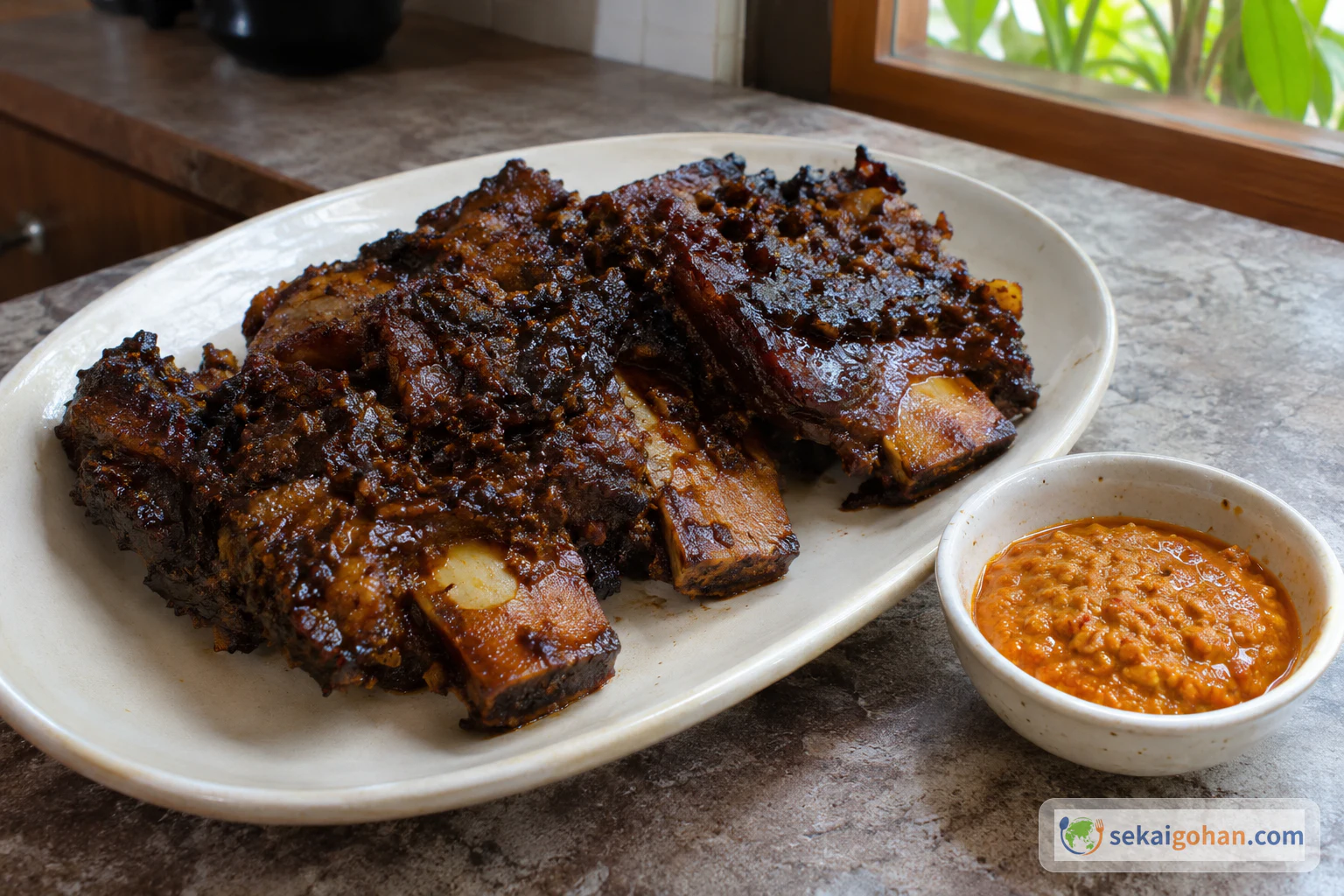
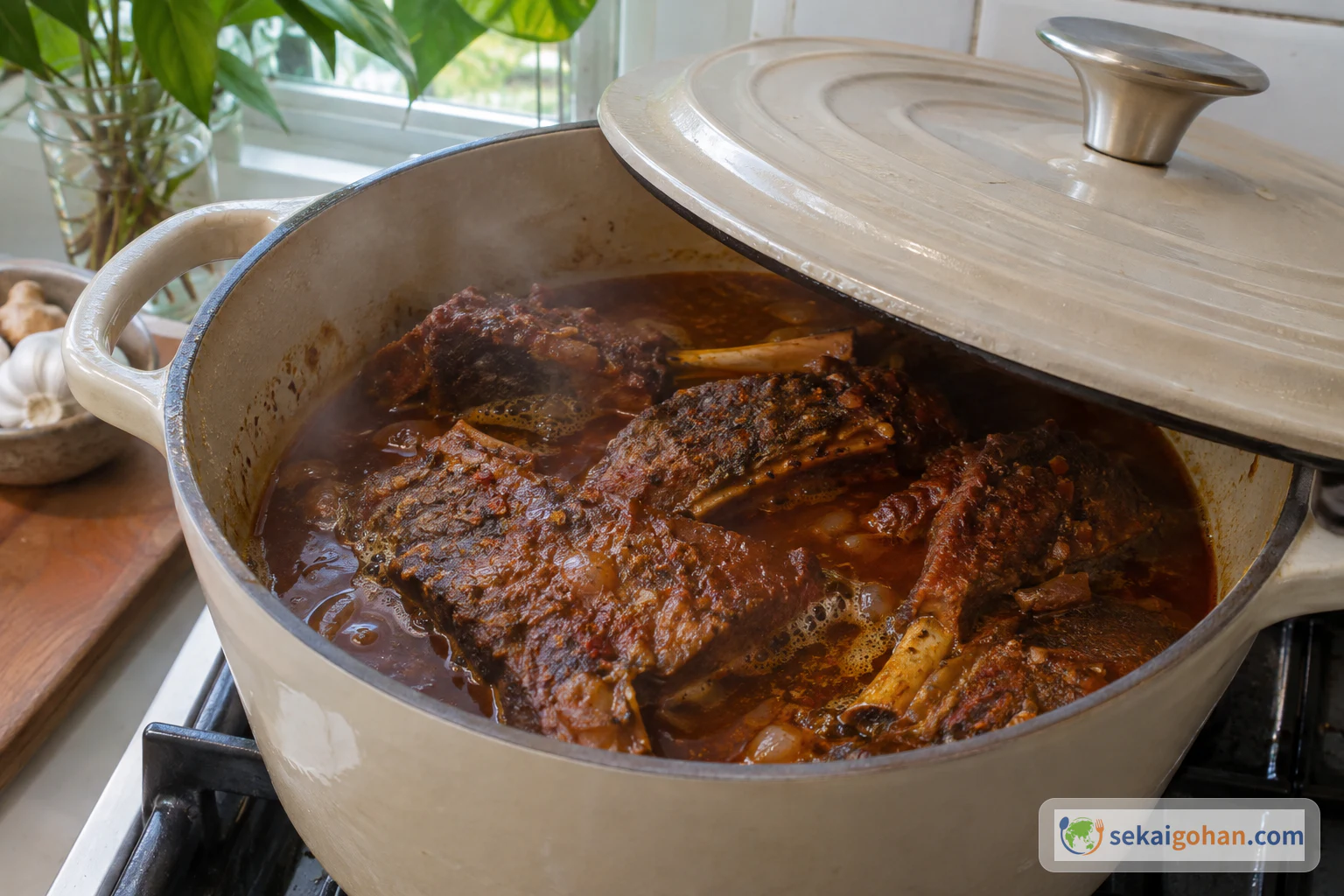
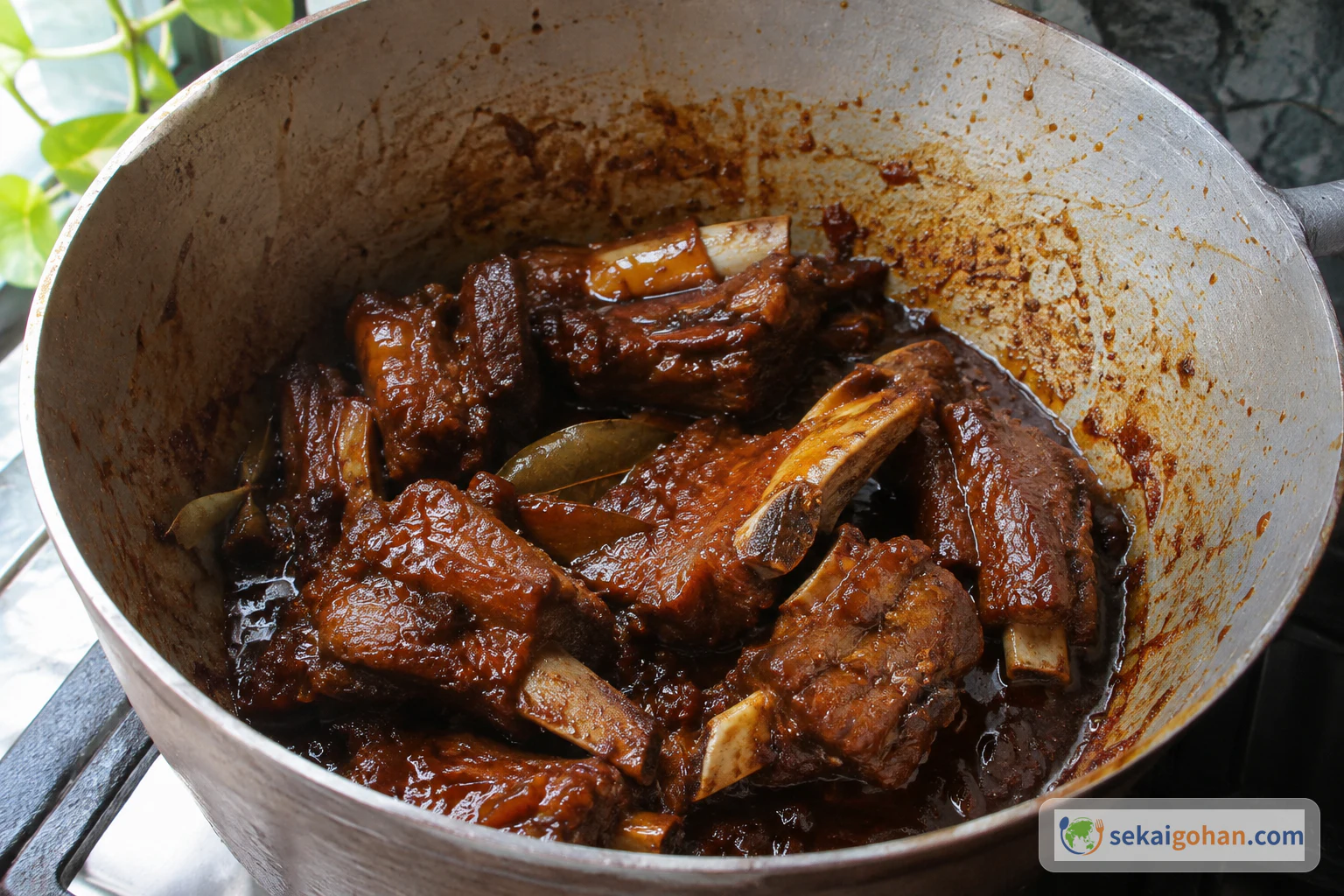
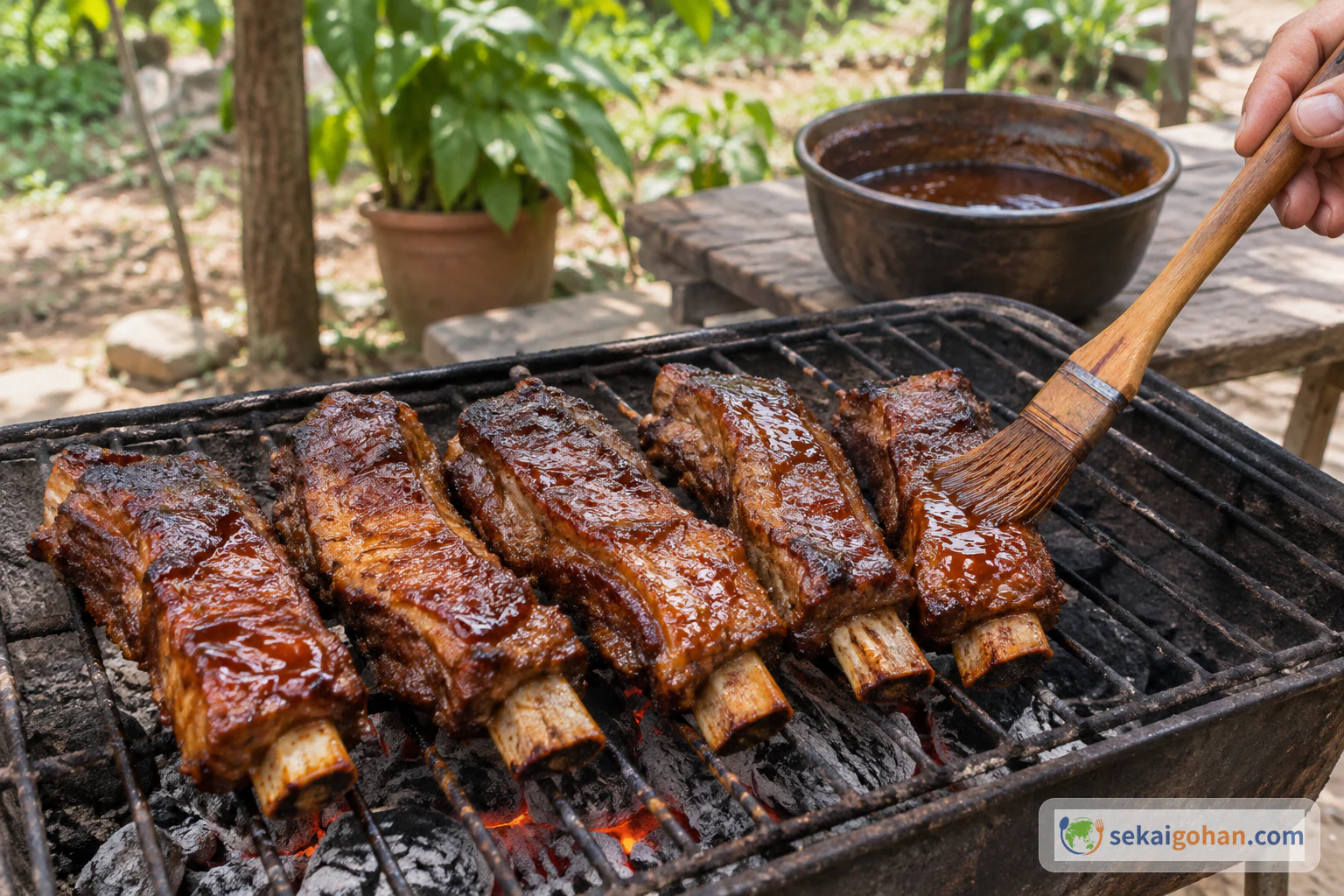
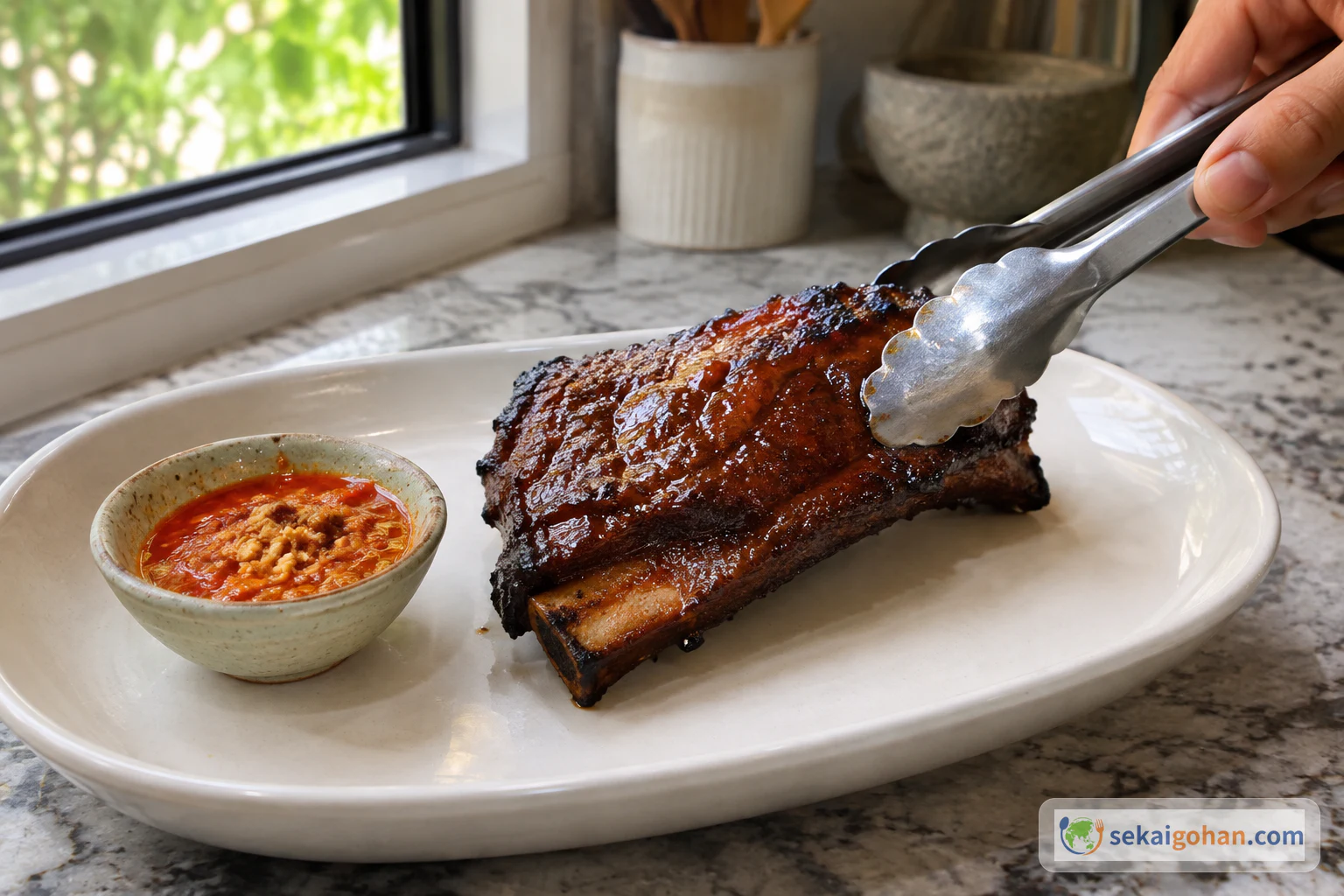
The ribs come out of the pot almost black, slick with a glaze that has been cooking down for a long while. Brushed once more and set over charcoal, the edges start to hiss and the sugar in the sweet soy catches, and the smoke smells of clove, lemongrass and something deep and earthy that no other spice gives. That earthy note is keluak, the dark kernel that defines konro, the beef rib dish of Makassar in South Sulawesi. This is the grilled form, konro panggang: ribs braised in a spice paste until tender, glazed with their own reduced juices, finished over coals and eaten with a thick peanut and coconut sambal on the side.
Konro in Makassar: Ribs in Two Forms
The name points straight at the cut. Konro is tied to the local word for rib, and the dish belongs to the Bugis-Makassar cooking of South Sulawesi. Its best-known form is a soup, sop konro, with beef ribs sitting in a dark brown broth coloured by keluak and a long list of spices. In Makassar that soup comes to the table with burasa or ketupat, rice cakes that soak up the broth, and buras is a common partner for sop konro and the city's other soups.
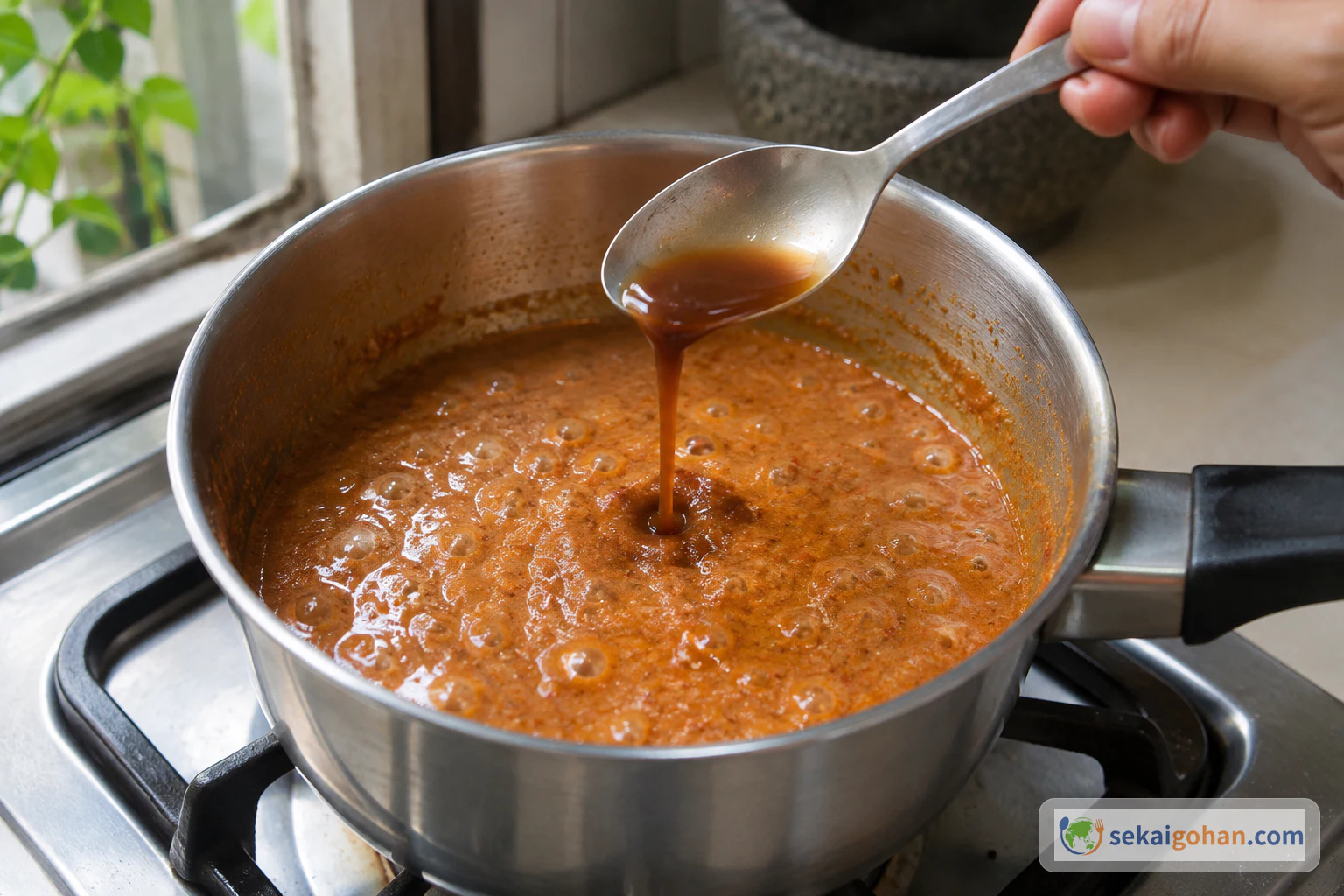
Konro panggang takes the same ribs and the same dark spice profile in another direction. The ribs are braised until the meat gives, the liquid is reduced to a sticky glaze with kecap manis and tamarind, and the ribs go onto charcoal. The grilled form is a separate, more modern way of serving konro, and it also goes by konro bakar. Instead of broth, the ribs meet a spoonful of peanut sambal enriched with coconut milk and fermented soybean paste, so each bite moves between char, sweet-salty glaze and the creamy heat of the sauce.
Where the grilled version was first made is not settled. What is clear is that both forms share the black, faintly bitter depth of keluak, and that the soup and the grilled ribs are kept apart in the kitchen: the grilled ribs never go back into a broth, and the sambal never goes into the glaze. Makassar has other famous beef dishes, and the rest of Indonesian cooking is on the Indonesia country page.
Sekai Gohan has not cooked this recipe as a whole in its own kitchen. The quantities and order follow a published recipe for four, and the water and braising time are left to judgement, as in that recipe.
Keluak is the kernel of Pangium edule. Depending on the island and the shop, you will see it as kluwak, kluwek, pucung or kepayang. Searching under several of these spellings makes it far easier to find.
Ingredients (serves 4)
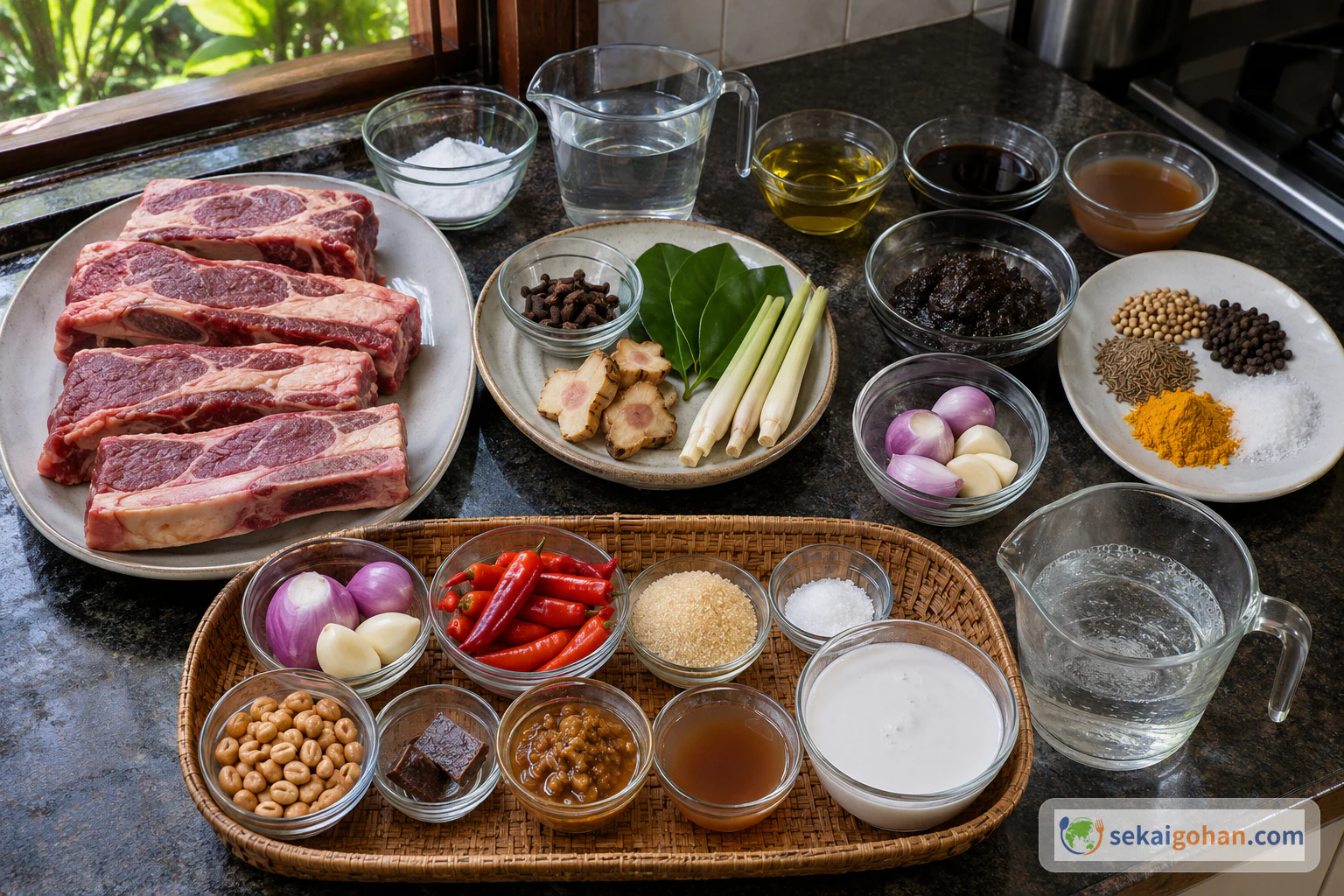
The sambal contains peanuts, shrimp (terasi), soy (taoco) and coconut, and the glaze contains soy (kecap manis). Check the labels on kecap manis, taoco and terasi for other allergens before cooking for guests.
Equipment
- Shallow tray for resting the raw ribs
- Cutting board and knife kept for raw meat only
- Mortar and pestle or a food processor
- Wok or wide pan for frying the paste
- Heavy lidded pot large enough to hold the ribs submerged
- Small saucepan for boiling the sambal aromatics, and a second small saucepan for the sambal
- Charcoal grill, used outdoors in the open air
- Long-handled basting brush and long tongs
- Instant-read thermometer
Choosing Keluak, Sweet Soy and the Sambal Pantry
Keluak is the one ingredient that cannot be let go. Without it the ribs lose their dark colour and the bitter-earthy depth that makes konro taste like konro. Buy keluak sold as food, either shelled kernels or the dark, oily kernel paste that Indonesian and other Southeast Asian grocers stock, or from online shops that sell Indonesian groceries. Use only the processed black flesh. The raw seed contains cyanide and is edible only after it has been processed to remove it, so never use fresh or pale seeds, whole fruit, wild-picked nuts or seeds sold for planting or decoration.
Kecap manis is a thick, sweet Indonesian soy sauce, and it behaves very differently from Japanese or Chinese soy sauce. Plain soy sauce brings salt without the syrupy sweetness, so the glaze stays thin and will not caramelise on the coals. Taoco is a fermented soybean paste with its own salty, savoury tang; it is a distinct product from Japanese miso, and both are worth buying from an Indonesian shelf rather than swapping.
The sambal pantry is easy once you know what to look for. Terasi and the peanuts both go in already roasted, so buy roasted terasi and roasted peanuts, or roast them before you start. Use thick coconut milk, the rich first pressing, rather than a thin one; watery coconut milk gives a loose sambal that slides off the meat. Salam leaves, galangal and lemongrass are all on the shelves of Indonesian and Southeast Asian grocers.
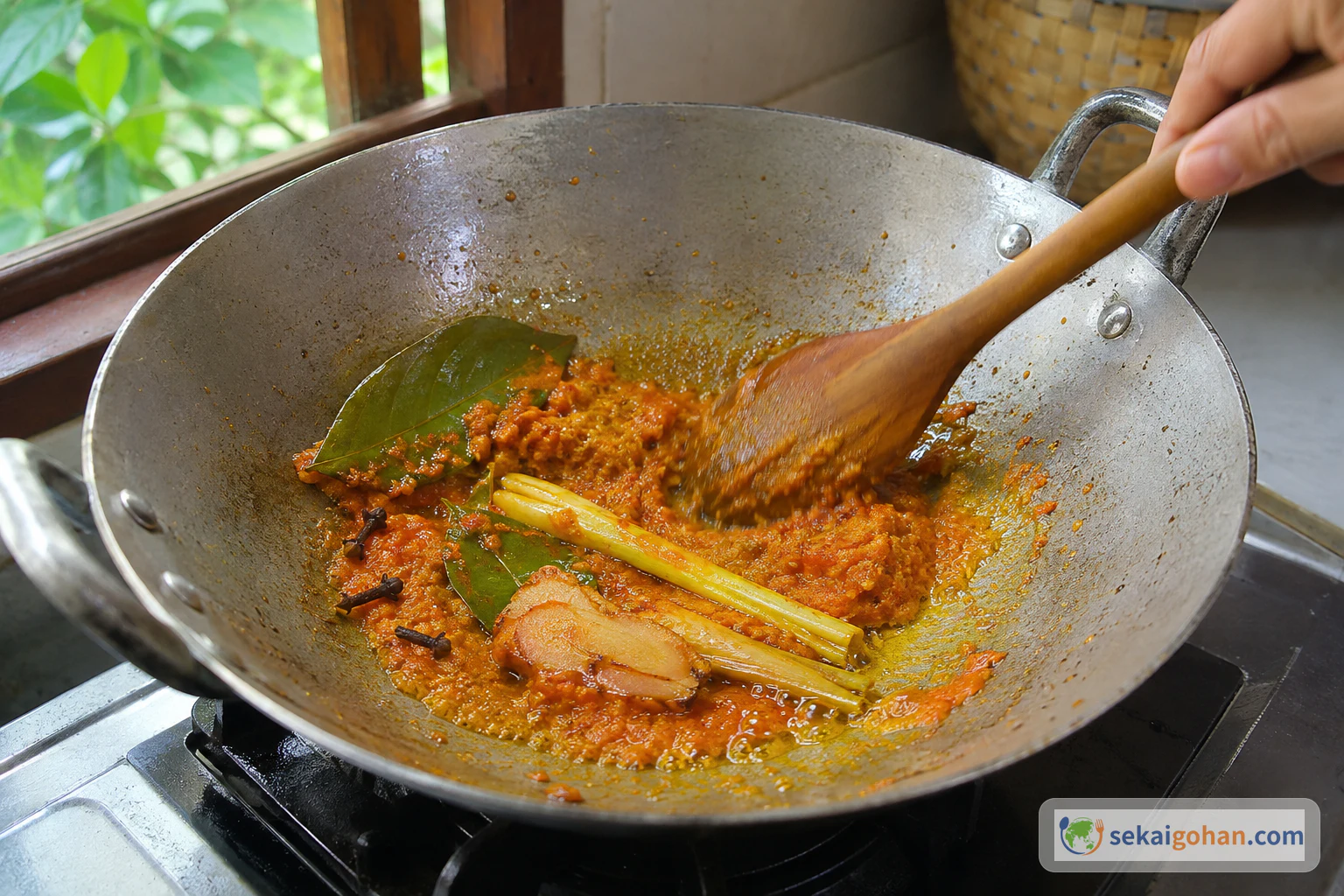
The paste is fried in the full 4 tbsp of oil.
Method: Braise, Reduce, Grill
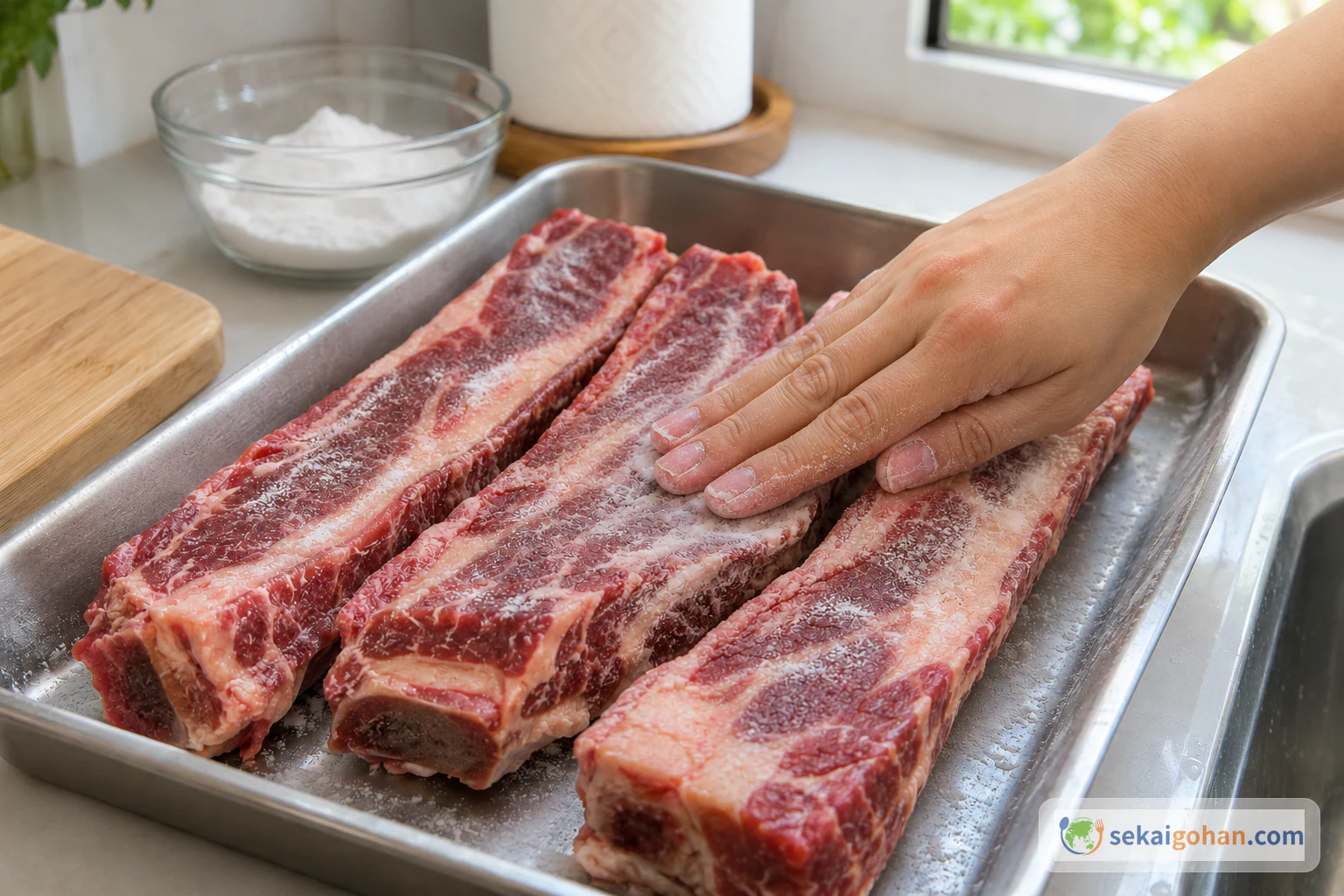
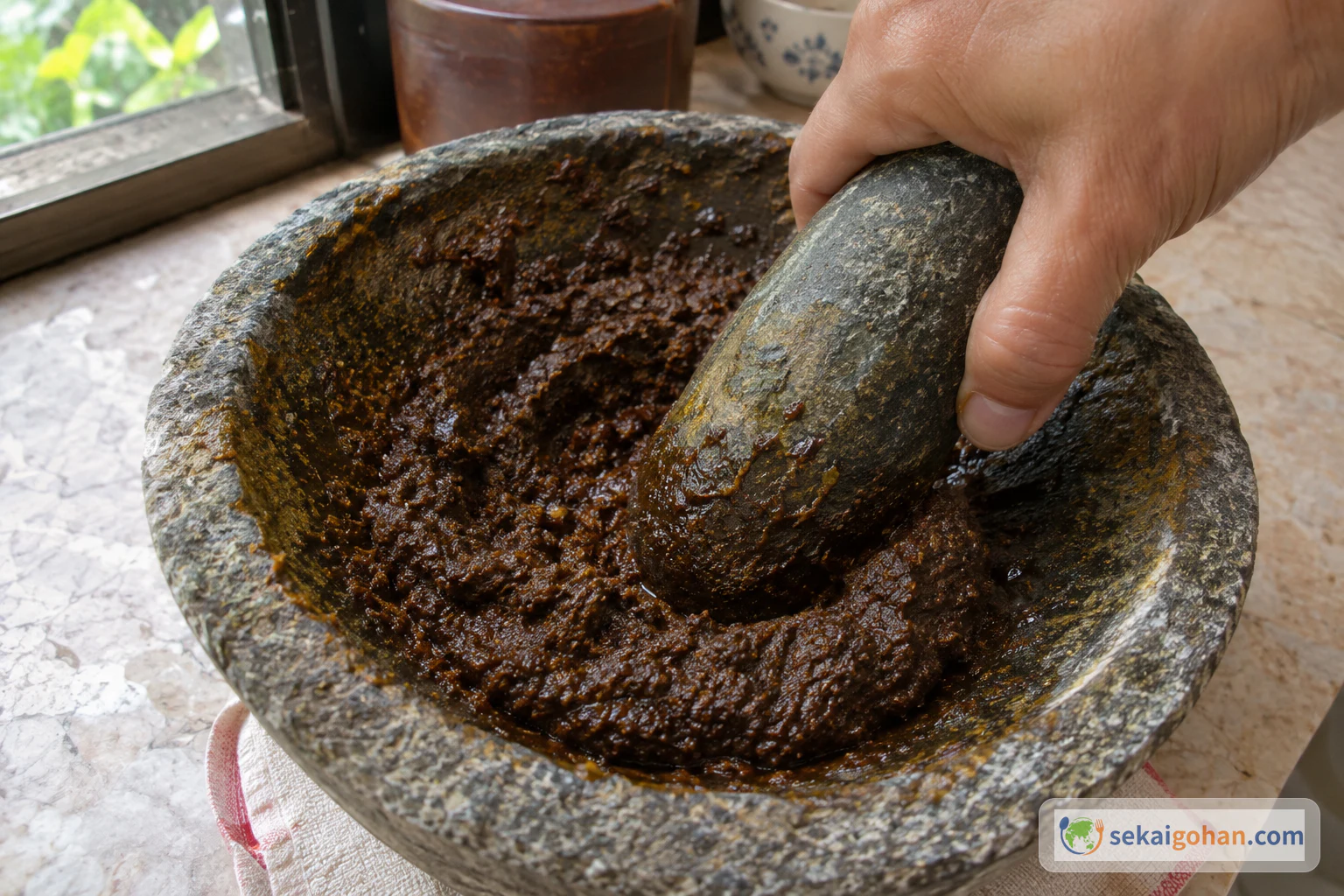
The ribs move through one long line of work: a rest with baking soda in the refrigerator, a spice paste fried in oil, then a covered braise until the meat is tender. The braise is the hands-off stretch, and it is the right time to make the sambal, which is cooked in its own pans and never meets the rib liquid. Light the charcoal outdoors while the glaze reduces, so the coals are ready when the ribs are.
Use a separate board and tools for the raw ribs, and wash your hands, the board and the tray after handling them. Rest the ribs in the refrigerator, at 40°F (4°C) or below. Beef whole cuts are safe at 145°F (63°C) with a 3-minute rest; check with a thermometer in the thickest part. The braise continues until the meat is tender, which is a separate cue from that minimum.
Grill over charcoal only in an open-air outdoor area. Burning charcoal in a closed room, a garage or a poorly ventilated space can be fatal. Never heat charcoal on a portable gas cassette burner; the heat can make the canister explode.
If the glaze is still runny, it drips into the coals and flares instead of sticking. Reduce it until only a little liquid remains before you carry the ribs outside.
The sambal is a dip, never a basting sauce. Brushed onto the ribs, peanuts and coconut milk scorch on the coals and the glaze loses its shine.
When It Goes Wrong
| What you see | Why | What to do |
|---|---|---|
| The paste blackens and smells bitter while frying | Heat too high, or the paste sat without stirring | Lower the heat and stir constantly; scrape the bottom so nothing settles |
| The ribs are still tough but the liquid is nearly gone | The braise reduced faster than the meat softened | Add a splash of water, cover and keep simmering until the meat is tender |
| The glaze stays thin after adding kecap manis | It needs more time uncovered | Keep cooking with the lid off, spooning over the ribs, until only a little liquid remains |
| The glaze burns black on the grill | Coals too hot, or the ribs were left unturned | Move the ribs to a cooler part of the grill and turn them more often |
| The sambal is loose and runny | Thin coconut milk, or it did not come to a boil | Use thick coconut milk and bring it fully to the boil before adding tamarind |
Serving and Variations
At the table
Konro panggang is meant to be eaten hot, with the glaze still tacky and the sambal next to it. Hold the ribs by the bone and pull the meat off in strips, dipping each strip as you go. Plain steamed rice goes well alongside, and in Makassar rice cakes such as burasa and ketupat are eaten with sop konro, so a plate of sliced rice cakes is an option if you can find them.
Changing the dish
Using 3 keluak in the paste makes the glaze blacker and more bitter, which suits people who love that earthy edge.
Leftovers
Cool leftover ribs and sambal, then refrigerate them promptly in separate covered containers at 40°F (4°C) or below.
Frequently asked questions
Do I rinse off the baking soda before cooking?
No. After the cold rest the ribs go straight into the wok with the fried paste. A light, even dusting is all that should be on the meat, so there is nothing to wash off.
Can I make the dish without keluak?
You can braise ribs in the same paste without it, but the result is a different dish. The black colour and the deep, slightly bitter flavour of konro both come from keluak. Look for the processed kernels or paste at an Indonesian grocer or online before cooking.
Can I make the sambal ahead of the ribs?
Yes, it is cooked in its own pans and works well made during the braise. Cover it until the ribs come off the grill, and stir it if you warm it again so the peanuts do not catch.
Why add the tamarind to the sambal only at the end?
The sambal comes to the boil with the coconut milk and taoco first, and the tamarind is stirred in just before it leaves the heat. That keeps its sourness bright against the rich peanut and coconut.