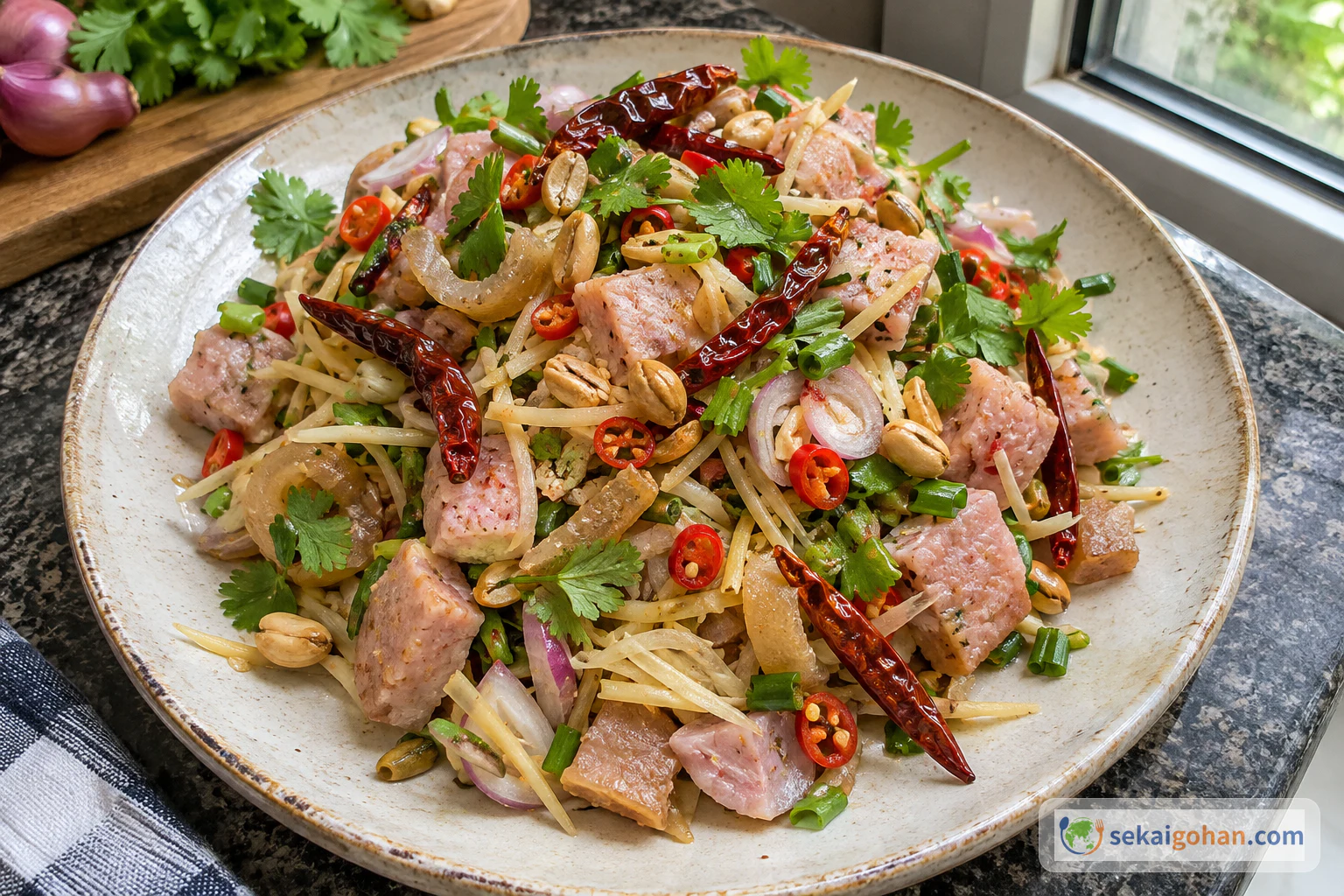
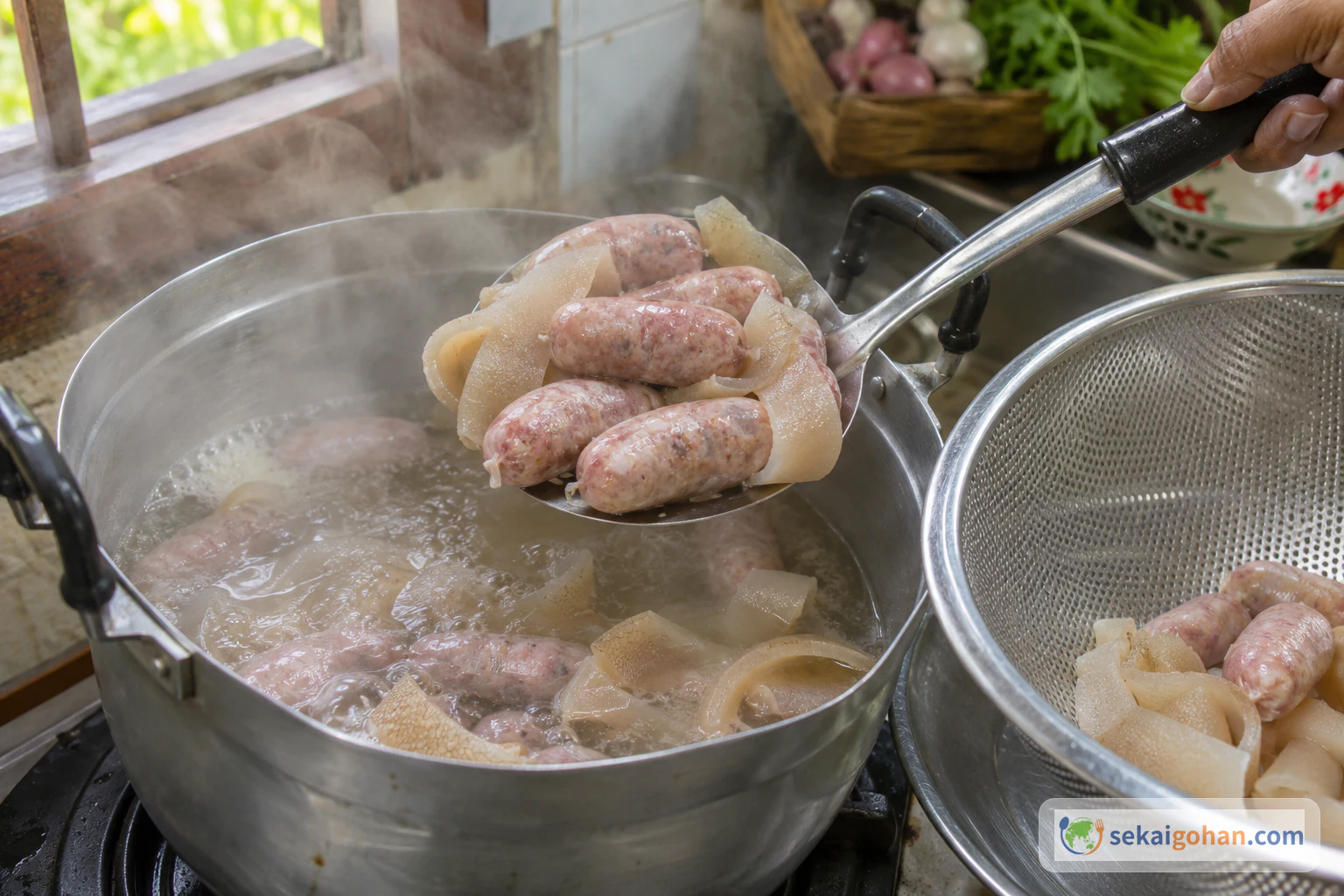
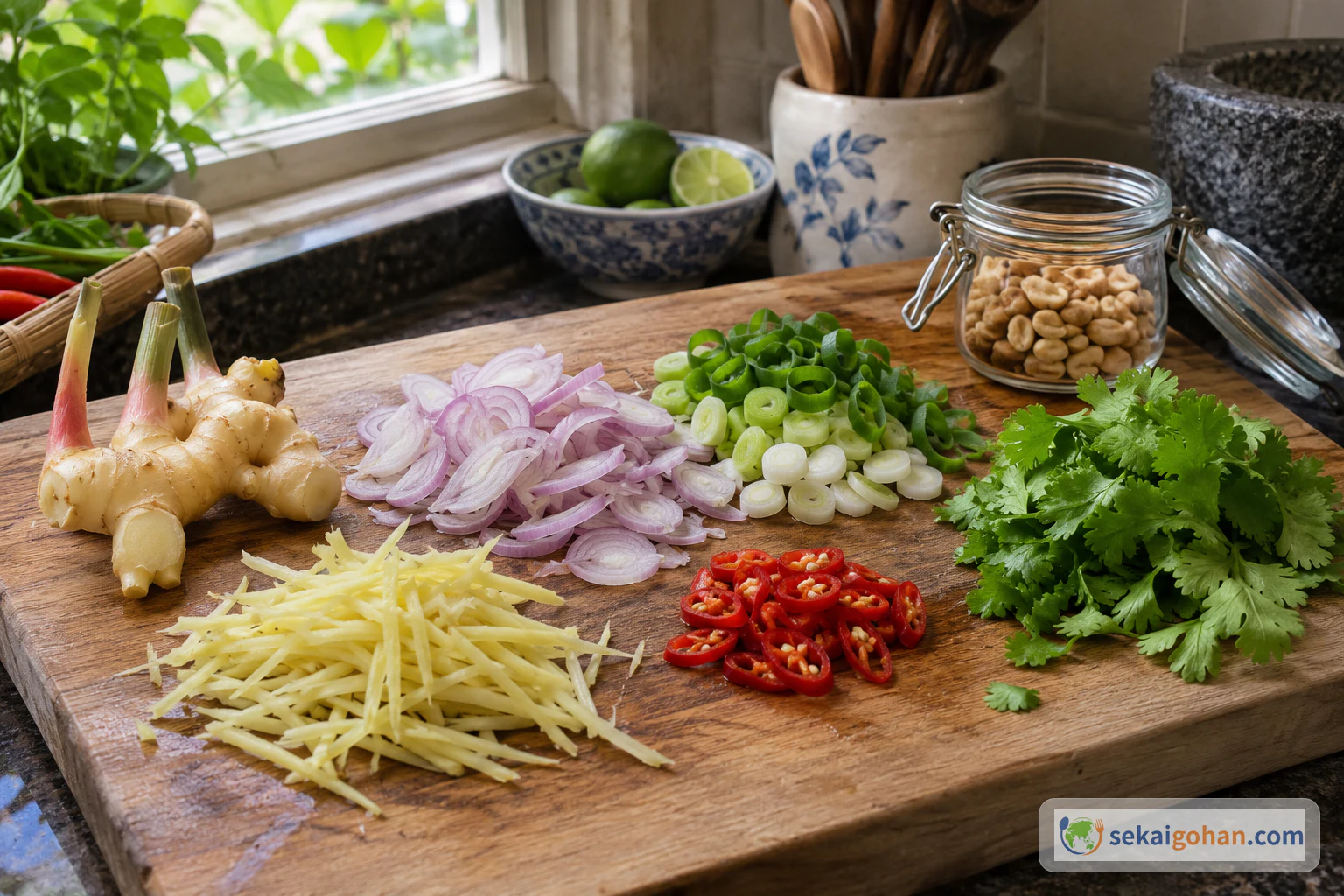
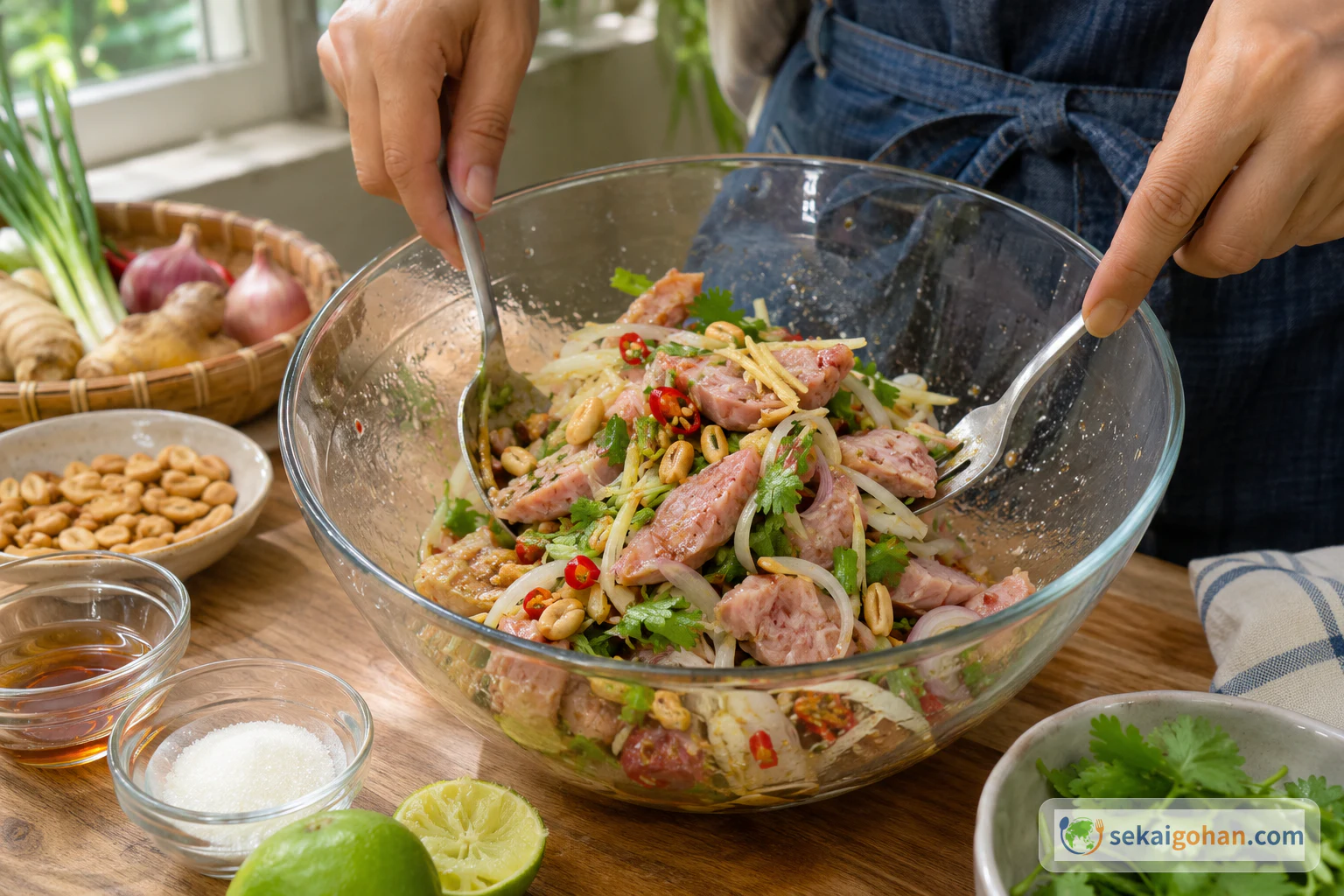
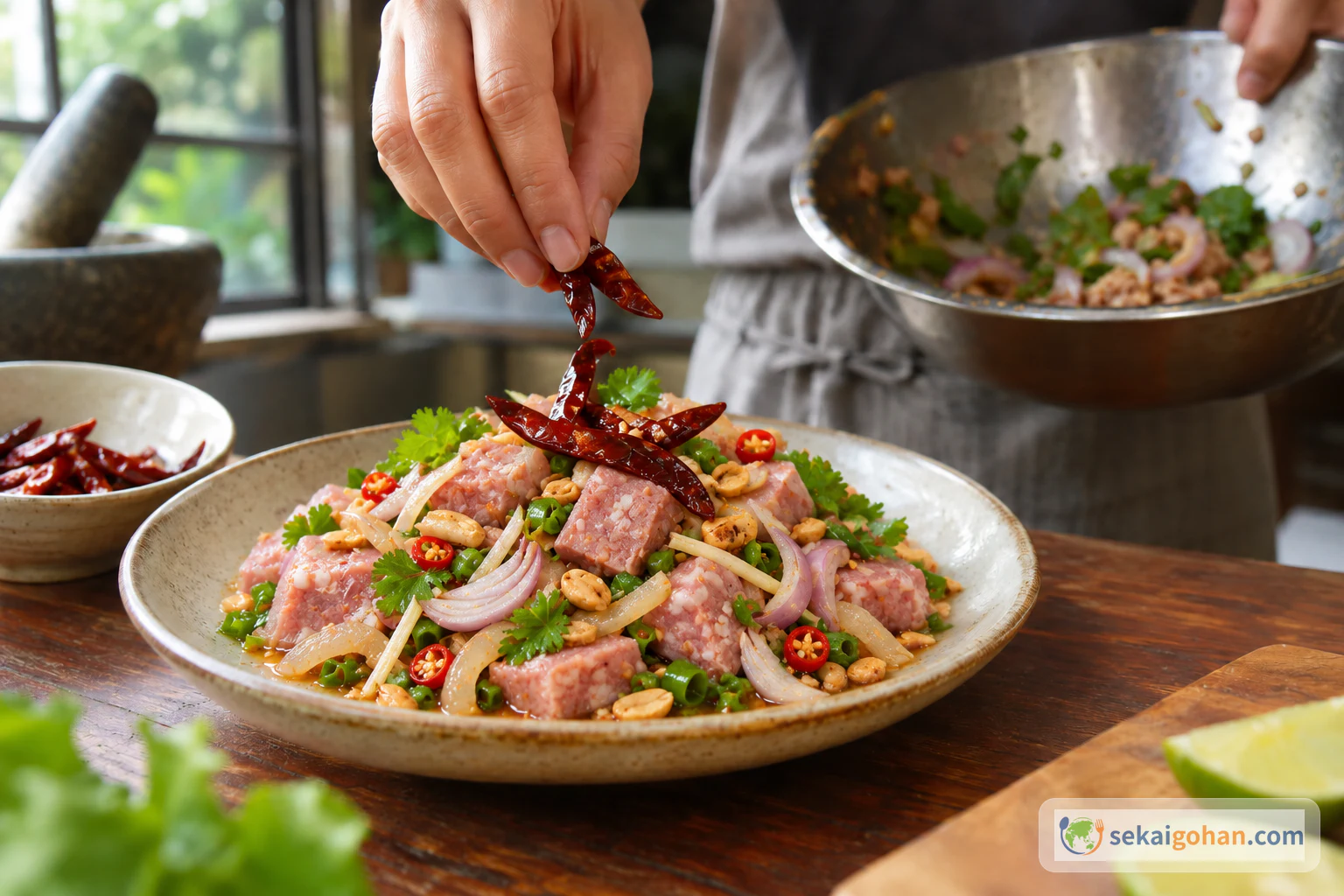
Steam rolls off the pot as the pale pink chunks of naem come up out of the boiling water, and a few minutes later they hit a bowl of slivered young ginger, shallot and bird's eye chili. Fish sauce and lime go in, then a spoonful of sugar, coriander and a handful of roasted peanuts, and the whole bowl turns glossy as you toss it. Yam naem is a Thai salad built on naem, a fermented pork that is already sour and salty before any dressing touches it. The lime sharpens that sourness, the ginger and chili bring heat, and the pork skin and peanuts give every mouthful something to crunch. In Thailand it sits among the dishes eaten as a snack or light side, and it is easy enough to make at home on a weeknight.
Sour Pork, Raw Heat and a Yam Family Resemblance
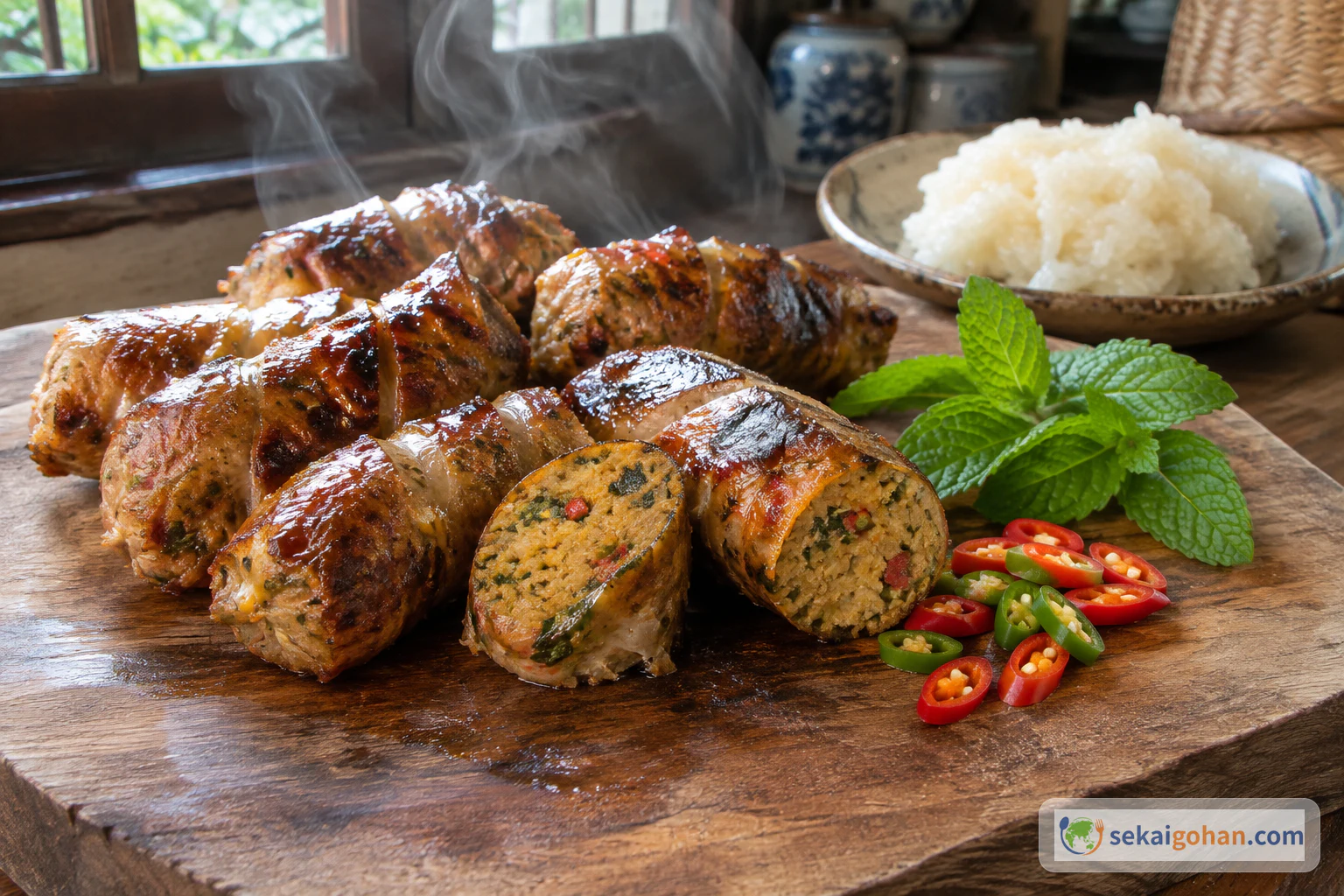
Naem is fermented pork, eaten widely in Thailand and Laos. Ground pork is mixed with boiled pork skin, cooked rice, garlic, chili and salt, wrapped in banana leaves or plastic, and left to ferment for a few days. Lactic fermentation gives it its clean sourness, and the bits of pork skin inside give it a gentle chew. The naem itself changes with the region. In the north and northeast it is mildly sour, in central Thailand it is strongly sour, and in the south it leans spicy.
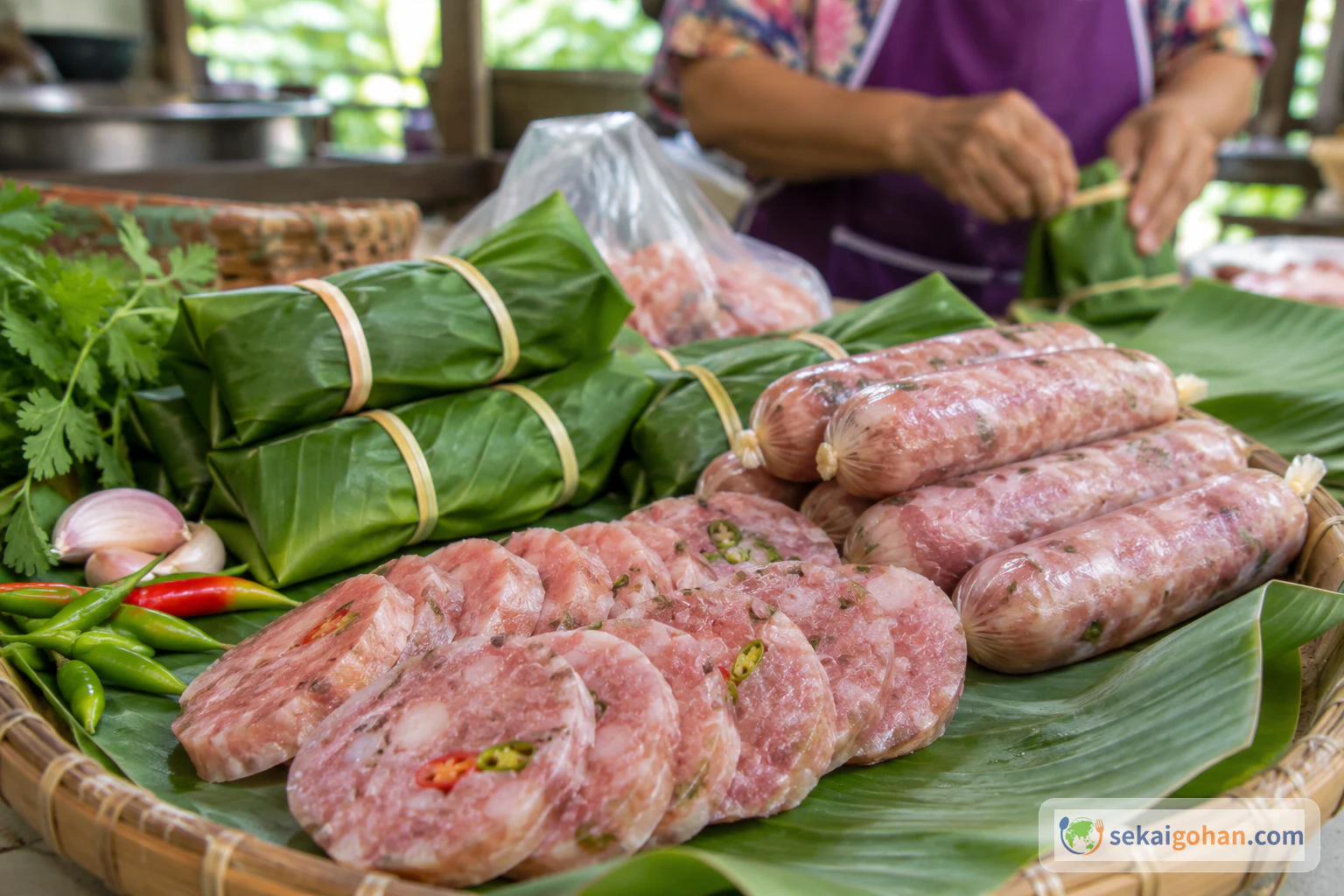
A yam is a Thai salad tossed with sour and hot seasonings, and yam naem belongs to the same family as som tam. Where som tam pounds green papaya in a mortar, yam naem puts the pork in the center and lets fresh aromatics do the rest. Nothing here is cooked down or reduced. The young ginger, shallot and chili go in raw, so their bite stays sharp against the salty, sour meat.
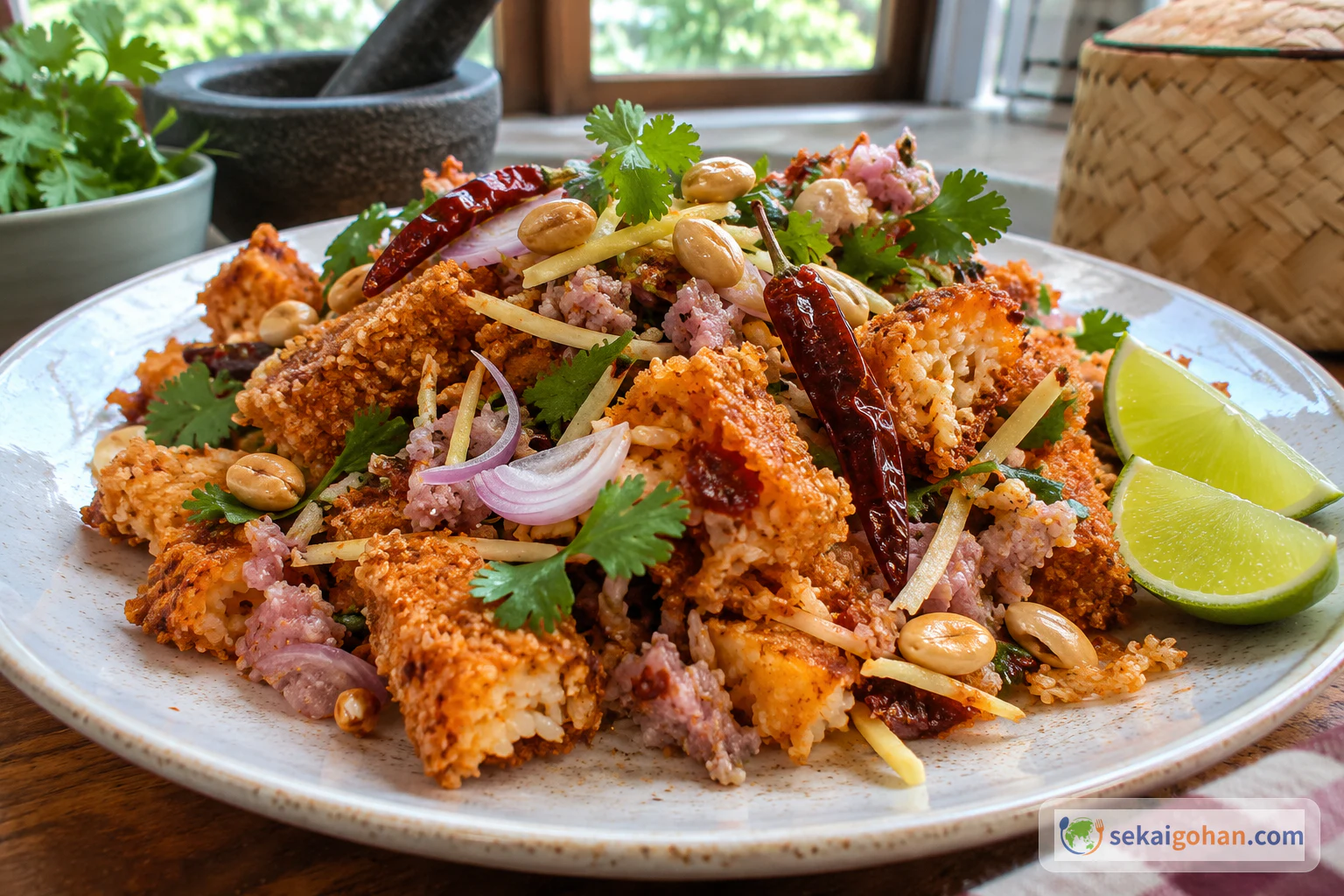
Across the border, Lao som moo goes into nam khao, a crispy rice salad. Thailand has its own version of that idea, yam naem khao tod, where deep-fried rice balls are broken into the salad. The plate here keeps to the simpler form with no rice balls, which keeps the work to a pot of boiling water and a mixing bowl. For more dishes from the same table, see the Thailand recipes.
Naem also appears as nam, naem moo and som moo. The version with fried rice balls goes by yam naem khao tod (ยำแหนมข้าวทอด), and it is also called naem khluk (แหนมคลุก).
Ingredients (serves 2)
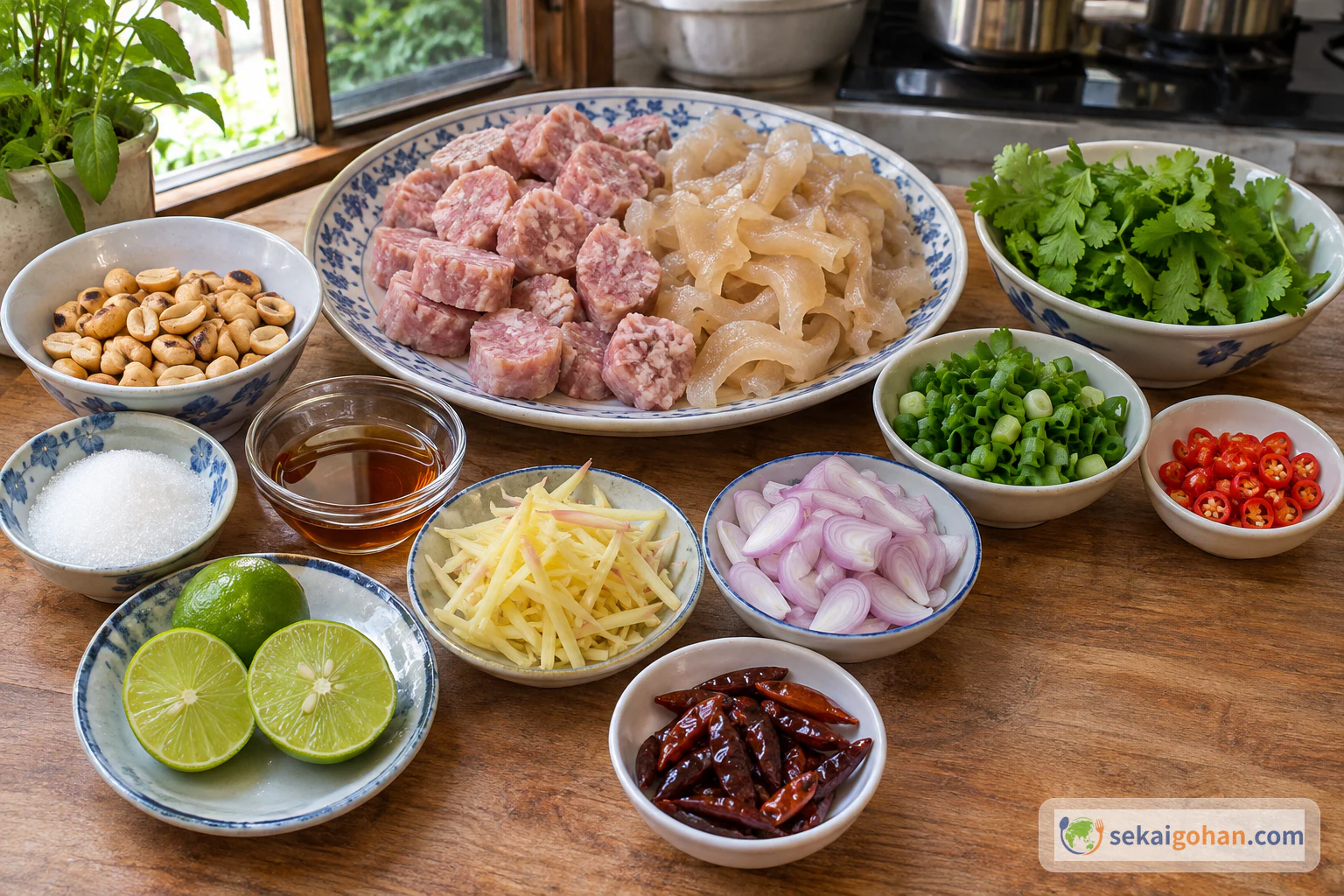
This dish contains pork, peanuts and fish (in the fish sauce). Leave it off the table for anyone with a peanut or fish allergy, and check the label on bought naem and fish sauce for anything else they contain.
Equipment
- Pot for boiling water
- Slotted spoon and a strainer
- Cutting board and a thin-bladed knife for julienning
- Dry frying pan for the peanuts
- Glass jar with a tight-fitting lid
- Heatproof mixing bowl
- Tongs or long cooking chopsticks
What to Buy and What to Swap
Naem is the one thing worth hunting for. Look for a refrigerated pack labeled แหนมสด at a Thai grocery or from an online shop; it is not easy to find outside Thailand, so buy it when you see it. A Thai fish sauce is the next priority, because the dressing has only three seasonings and the fish sauce carries the salt and savor. Boiled pork skin is sold ready to use at some Asian butchers, or you can boil a piece of pork skin yourself and slice it.
Everything else comes from an ordinary supermarket, and most of it bends well.
| If you cannot find | Use | What changes |
|---|---|---|
| Boiled pork skin | Leave it out and add more peanuts | The springy chew goes; the extra peanuts bring back bite |
| Young ginger | Regular ginger, sliced thin, then julienned | Hotter and more fibrous, so cut it as fine as you can |
| Shallots | A small onion, thinly sliced | More watery, which loosens the dressing |
| Fresh bird's eye chilies | Dried red chilies, chopped | Heat without the fresh chili aroma; leave the seeds in for more heat, take them out for less |
| Thai fish sauce | Another fish sauce | The aroma and the saltiness shift |
Any lime works; you only need the juice. Roasted peanuts from a bag are fine, though roasting your own means you know they are fresh and free of mold.
Never eat naem raw. Fermentation does not reliably kill parasites such as Trichinella, and Salmonella, Staphylococcus and Listeria have all been found in naem. Boil it as in step 1 whatever the pack says. Pregnant people and anyone with weakened immunity should not eat this dish.
Method
The only heat in this recipe is the blanch at the start and the peanut roast. Get the naem and pork skin into the boiling water first, and while they drain, cut the aromatics and toast the peanuts. After that, everything comes together in one bowl in a few minutes.
The peanuts go in with the seasonings, at the very end. Once they sit in lime juice for a while they soften, and the salad loses its crunch.
When It Goes Wrong
| What you see | Why | What to do |
|---|---|---|
| Too sour to eat comfortably | The naem is very sour, and the lime adds more | Use less lime juice and add sugar a little at a time until it rounds out |
| The ginger burns more than the chili | Raw ginger, or regular ginger in place of young ginger | Soak the julienned ginger in water before using it to soften the bite |
| Too hot | A lot of chilies, or the seeds left in | Cut back on the chilies but keep some, so the heat still balances the sourness |
| Watery dressing pooling under the salad | The naem was not drained dry, or onion went in for shallot | Drain the naem longer, and squeeze excess water from onion before adding it |
| The salad feels soft and flat | No pork skin, or the peanuts went in too early | Add more peanuts to bring back crunch, and add them only at the end |
Serving, Variations and Leftovers
At the table
Yam naem is a snack and a light side, so put it out with other dishes for sharing, not as a meal on its own. Its sour, salty bite sits well beside milder plates, and a bowl of it disappears quickly when people pick at it with chopsticks or spoons. The contrast with something crisp and sweet like mi krop works well when you are setting out several Thai plates.
Variations
With fried rice balls (yam naem khao tod). Cooked rice is kneaded with ground pork, red curry paste, kaffir lime leaves, fish sauce and sugar, rolled into balls, coated twice in tempura batter and egg, and deep-fried. The balls are broken into shards and tossed with the naem, pork skin, chili powder, fish sauce, lime, herbs, fried peanuts and fried dried chilies, and some cooks add MSG. The rice turns the salad into something more filling, crisp outside and red-tinted inside, and it takes far more work than the plain version.
Without pork skin. Leave it out and add more peanuts. The salad loses its springy chew and gets a drier, nuttier crunch.
Milder heat. Cut back on the bird's eye chilies and seed them, but keep some in. The fried chilies on top still bring a toasty warmth without much fire.
Leftovers
Yam naem is best eaten the day it is dressed. Refrigerate any leftover promptly in a covered container and finish it by the next day. Do not reheat it; the raw shallot, ginger and coriander lose their aroma in the heat.
Frequently Asked Questions
My naem says it is ready to eat. Do I still blanch it?
Yes. Blanch every pack of naem in boiling water as in step 1, whatever the label says. It also takes the edge off the fermented sharpness and warms the pork so it takes the dressing well.
Are the fried dried chilies the same as the fresh chilies?
They do different jobs. The fresh bird's eye chilies go into the salad and bring sharp, green heat. The fried dried chilies go on top at the end and add a darker, toasty warmth and a little crackle.
Do I need MSG?
No. The fish sauce gives the dressing all the savoriness it needs. MSG appears in some versions of the fried rice ball salad, but this plate goes without it.