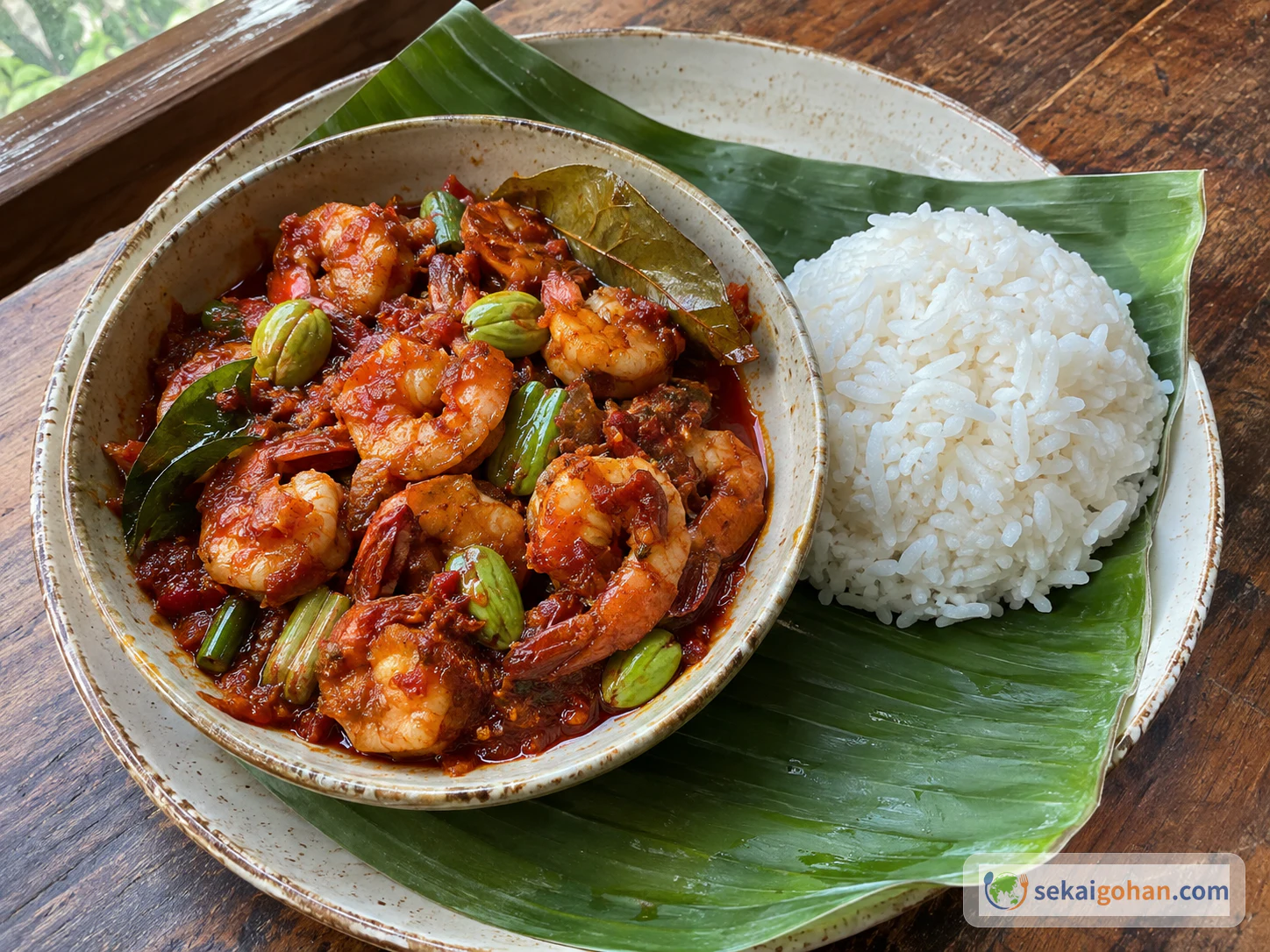
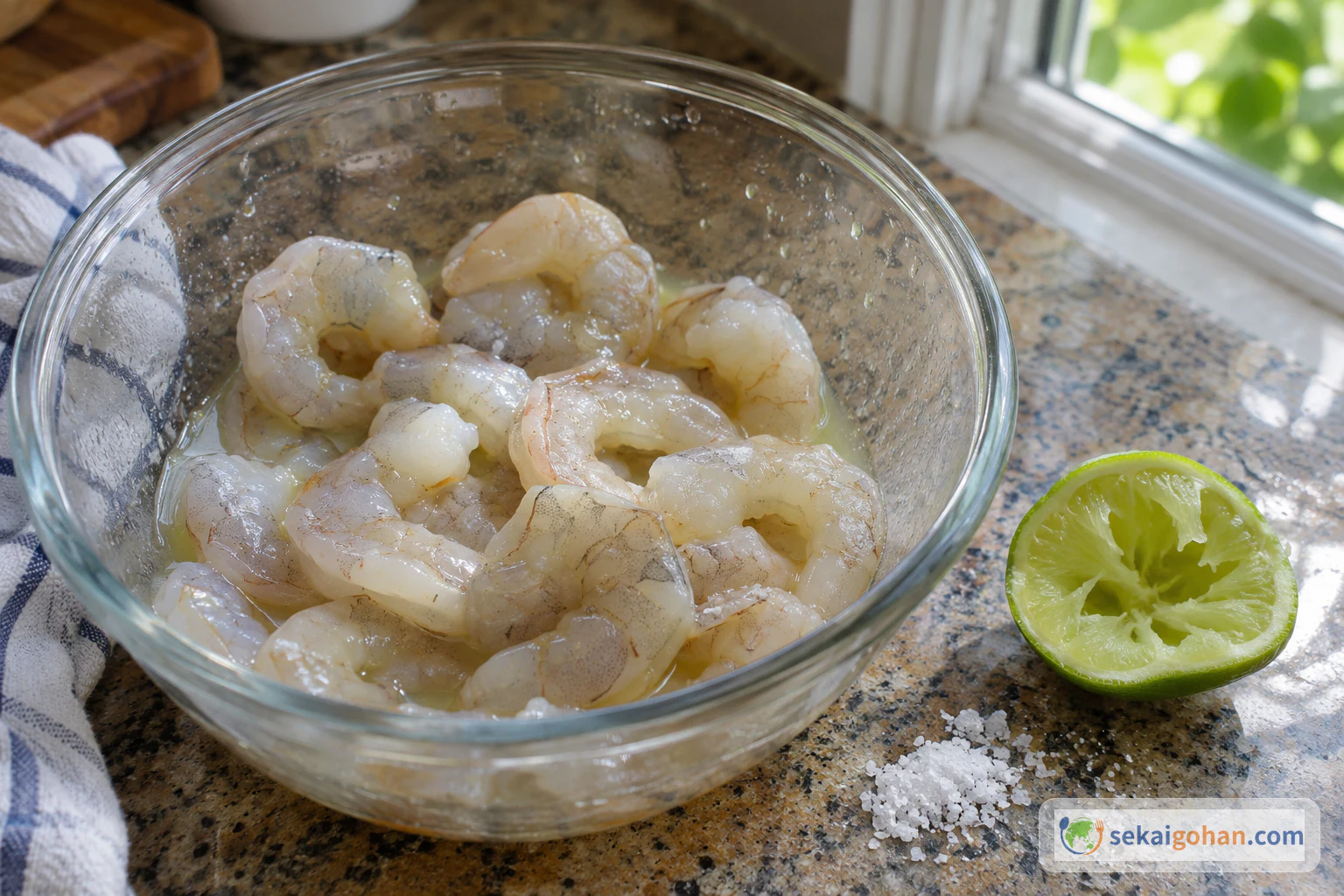
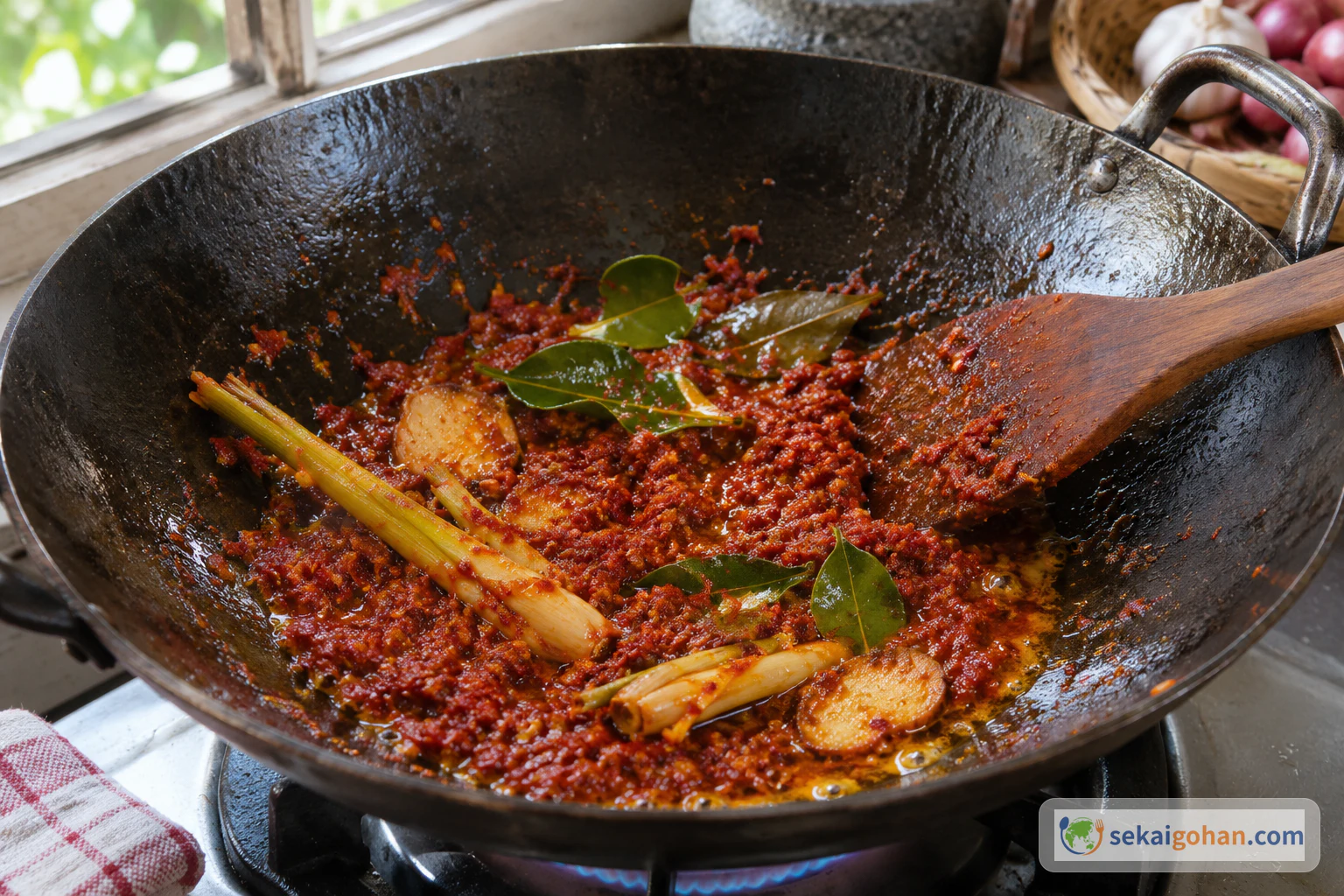
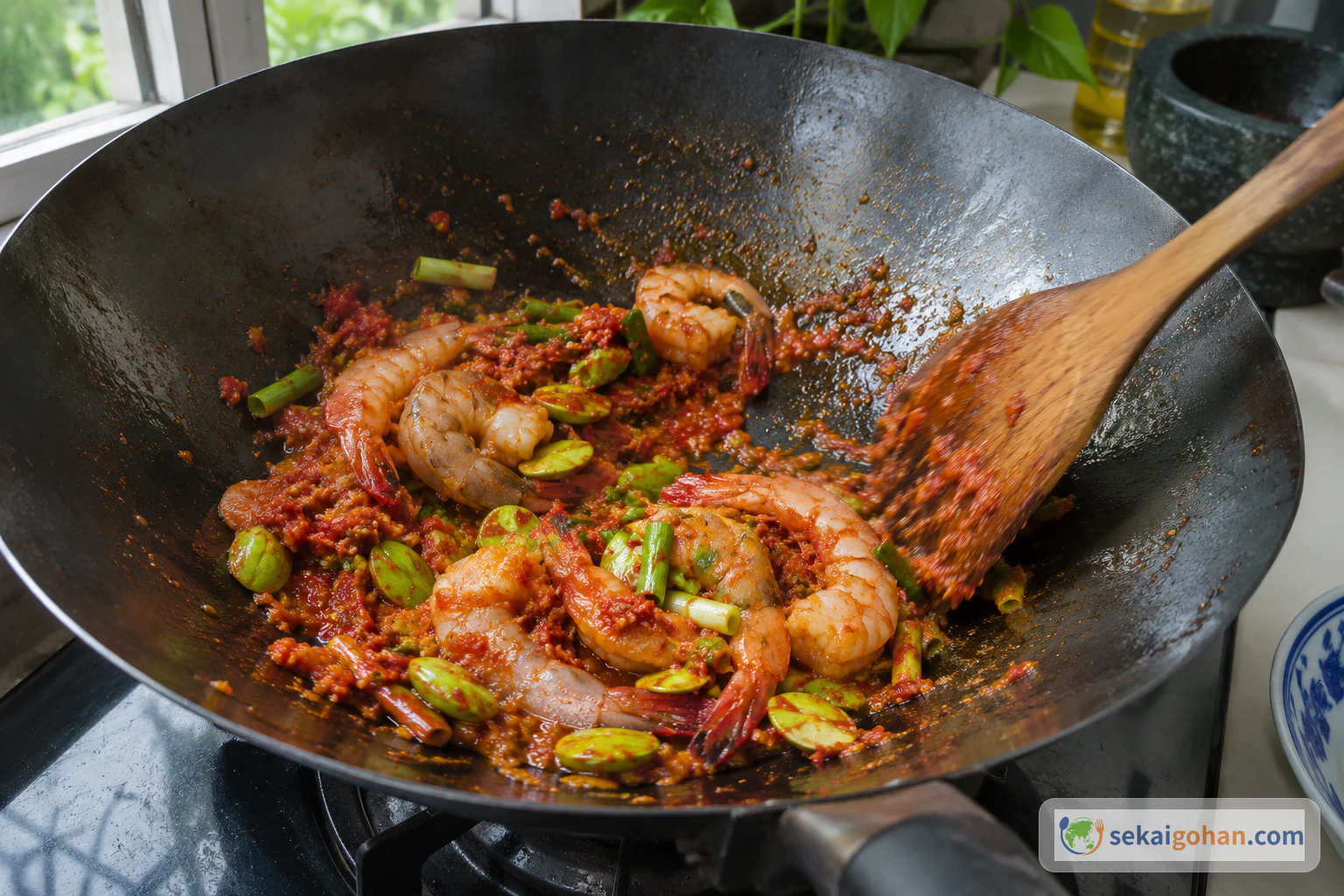
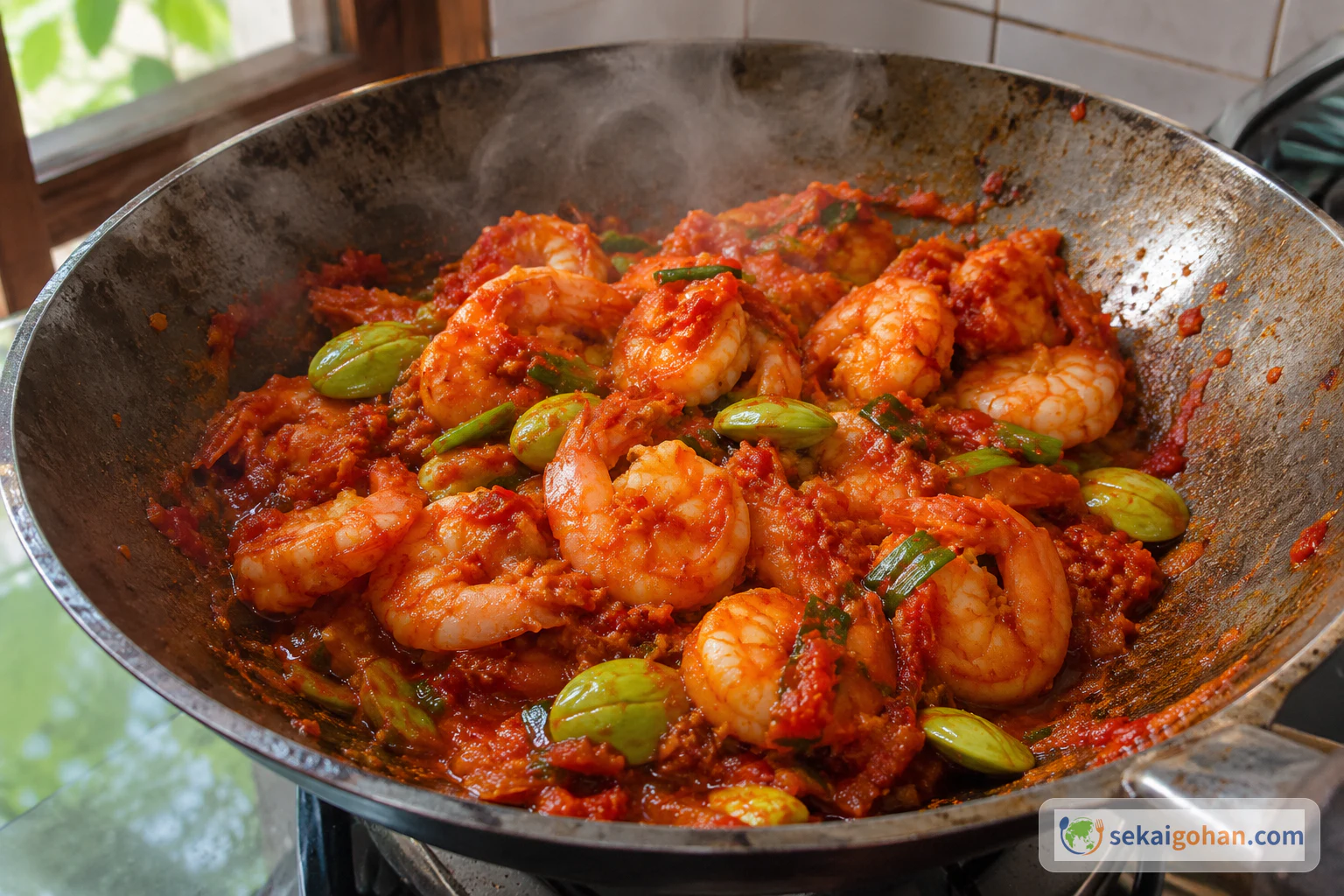
The paste hits the hot oil with a hiss, and the kitchen fills with the sharp breath of chilies, then the softer smell of lemongrass and lime leaf as they warm through. When the shrimp go in, they slide into a red so deep it looks almost lacquered, and within moments the grey flesh starts to blush pink at the edges. Udang balado is Indonesian shrimp stir-fried in a paste of shallots, garlic and three kinds of red chili, and this is the Padang-style version. It tastes hot first, then sweet from the shallots, with a sour edge from the lime that seasons the shrimp before they ever reach the pan. It belongs next to a mound of steamed white rice, which is exactly what all that heat is asking for.
Where Udang Balado Comes From and How It Changes
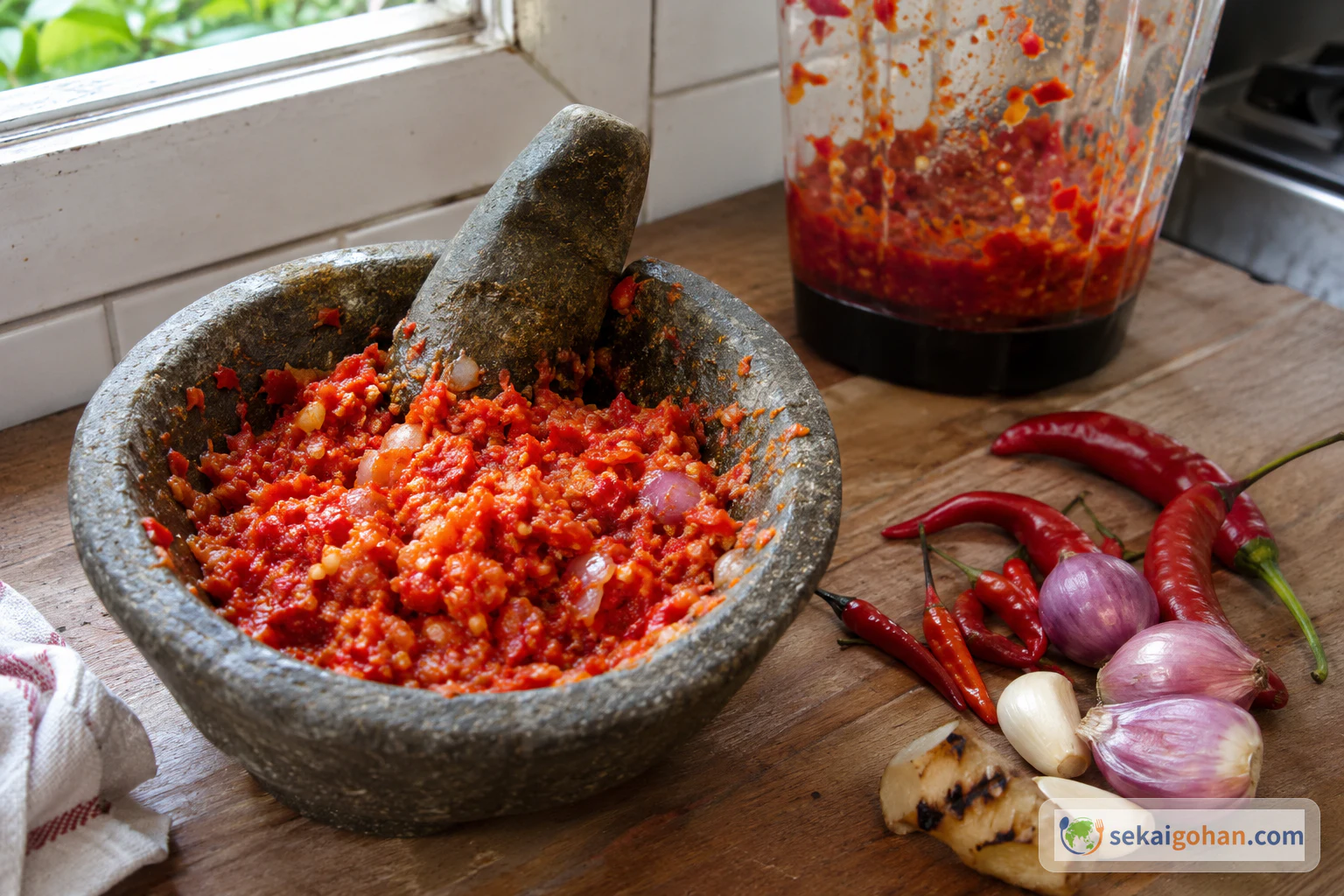
Balado is a style of spicy chili seasoning from Minangkabau cooking, and udang balado is that style applied to shrimp. The paste is built mostly from red chilies and shallots, fried in oil until it turns from raw and sharp to fragrant and glossy, and then whatever goes into it is cooked briefly so the paste clings. In the Padang-style pan, the paste carries three chilies at once: large red chilies, the thin curly red chilies called cabai merah keriting, and small red bird's eye chilies. Lime leaves, Indonesian bay leaves, galangal and lemongrass go into the oil with the paste, and a handful of petai beans and scallion go in with the shrimp at the end.
The dish travels well beyond its Minangkabau home. It turns up in Malay, Sundanese, Javanese, Balinese and Manado cooking across Indonesia, and each kitchen tilts it its own way. One version adds tomatoes and grinds everything smooth, which gives a softer, brighter red sauce. Another, often called sambal udang pete, uses shrimp paste in the sambal, fries the shrimp separately before folding them back in, and leans hard on petai. Households also bulk the pan out with green beans, quail eggs, fried potato or tofu, so the same red paste coats a whole spread of things on the plate.
Udang balado is also called sambal goreng udang. Be careful with that second name: it is also used for a different shrimp dish cooked with coconut milk and tempeh. Malaysian sambal udang is another separate dish again, built on tamarind and belacan (shrimp paste), with a sourer, funkier sauce than the Padang-style balado here.
Ingredients
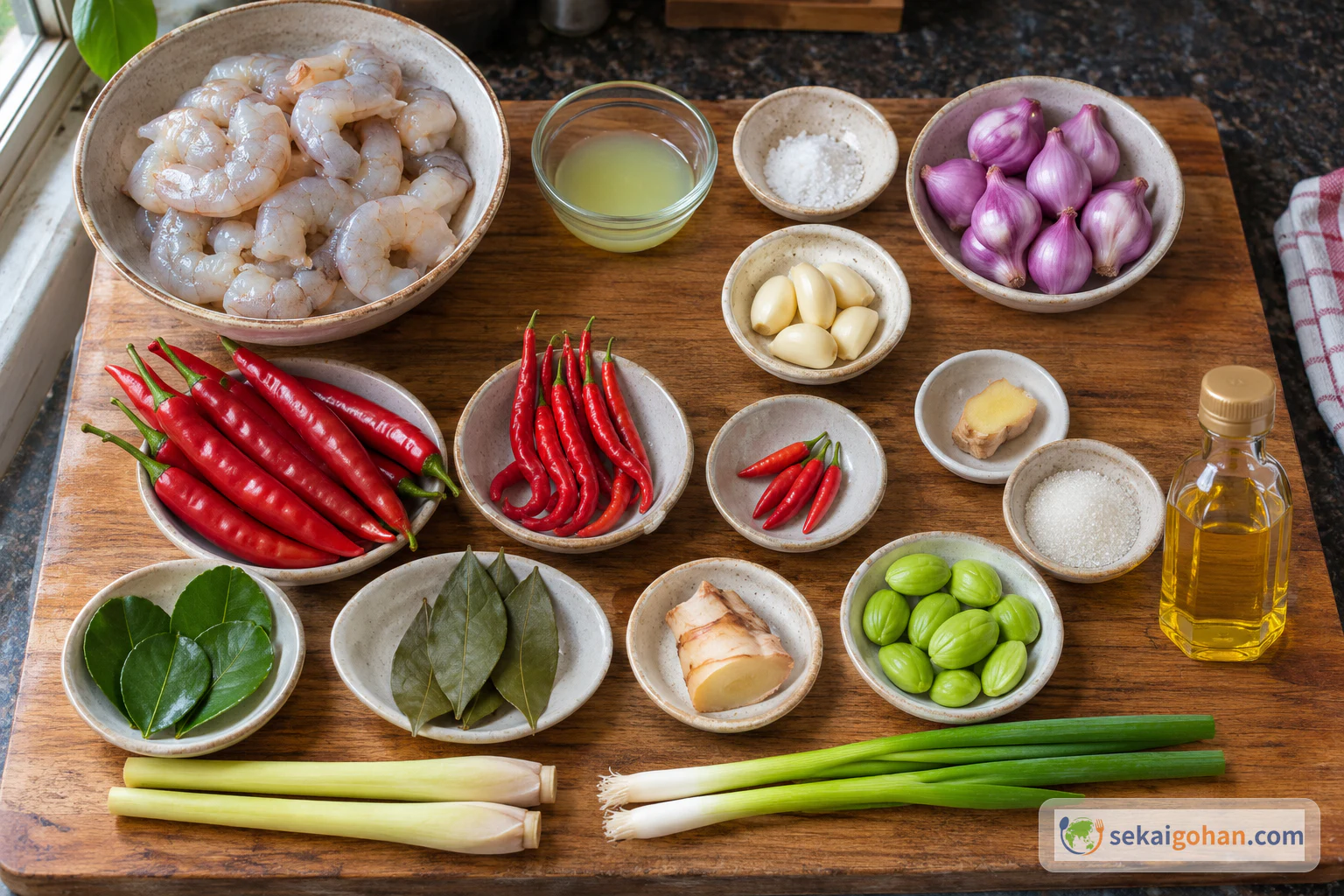
The pan is very hot: nineteen chilies go into the paste. That heat is the dish, so cook it as written the first time if you can take it, and keep plenty of rice on the table.
This dish contains shrimp, a crustacean shellfish. Keep it away from anyone with a shellfish allergy, and wash boards, bowls and knives used for the raw shrimp before they touch anything else.
Equipment
- Mortar and pestle, or a mini food processor or blender
- Wok or wide frying pan
- Wooden spatula
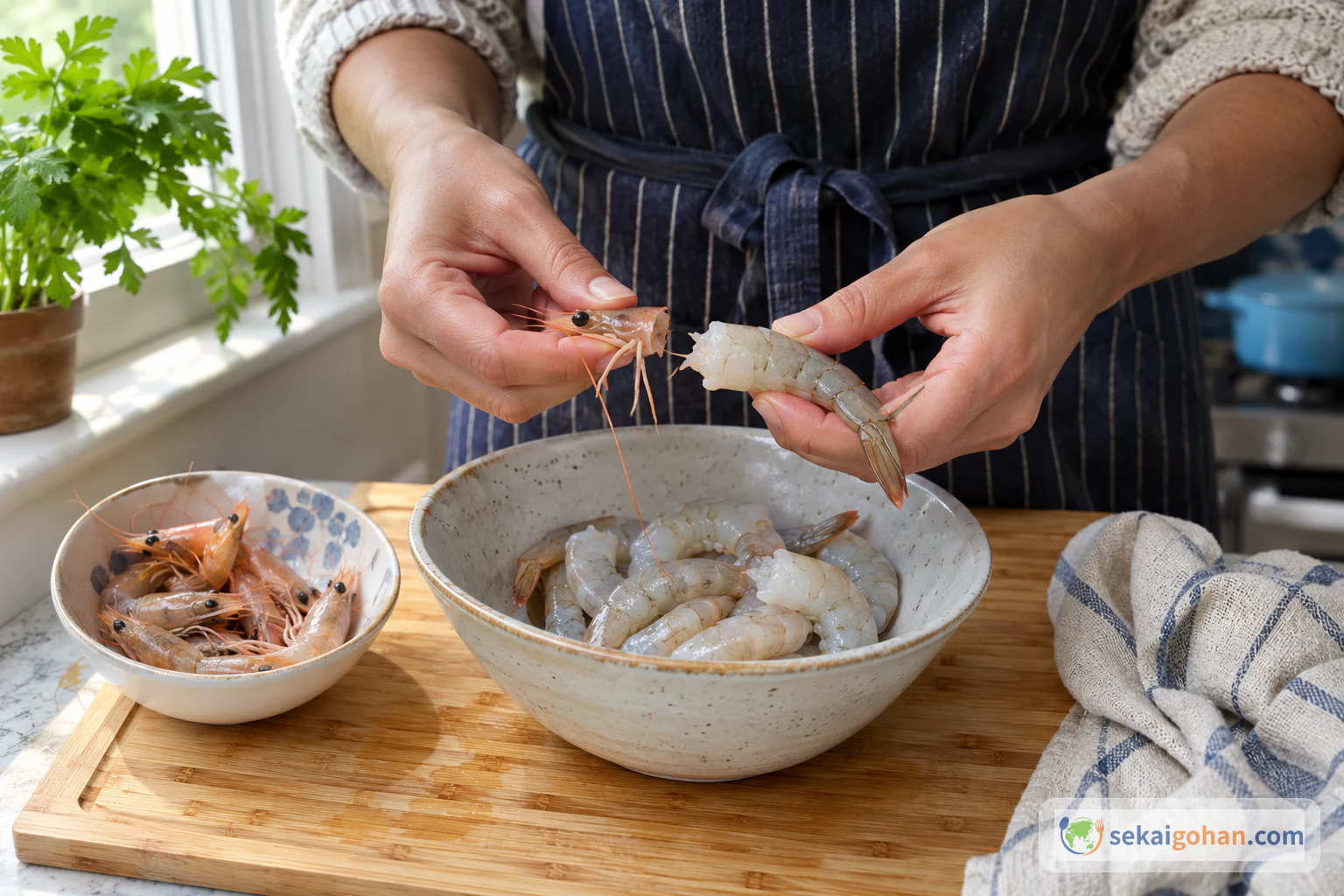
- Two bowls (one for the shrimp, one for the heads)
- Knife and cutting board
Shopping and Substitutions
An Asian grocer is the place to look for lime leaves, galangal and lemongrass, and petai can be found frozen or canned outside Indonesia. Indonesian bay leaf is the hardest to track down.
| Ingredient | What to buy or do | What changes |
|---|---|---|
| Red shallots (bawang merah) | Ordinary shallots, or small red onions | Shallots stay closest; red onion gives a slightly coarser sweetness |
| Daun salam | Leave it out if you cannot find it | European bay leaf is a different leaf with a different smell, so treat it as a separate ingredient rather than a stand-in |
| Petai | Frozen or canned petai | Leave it out if you cannot get it; the dish is still udang balado, just without the pungent green bite |
| Red bird's eye chilies | Use fewer for less heat | This is the chili to cut first; the large and curly chilies keep the color |
What has to stay is the three-chili paste and the lime-and-salt marinade. Those two make the dish taste like Padang. Petai and daun salam are the parts you can let go when you cook far from Indonesia. Green beans show up in some kitchens' versions of this dish, but they belong to that variation; they do not replace petai.
Petai has a strong, distinctive smell that some people love and others take time to warm to. If you have never eaten it, split a bean and taste it before the whole handful goes in.
Method
The work splits cleanly into two halves. While the shrimp sit in lime and salt, roast the ginger and grind the paste; once the paste is ready, everything at the stove moves fast and in one pan. The shrimp are the last thing in and the first thing to watch.
All the cooking time belongs to the paste. If the shrimp go in while it still smells of raw shallot, they finish before the paste does, and the sauce stays harsh.
Galangal and lemongrass go in bruised and whole so they release aroma into the oil without breaking into woody bits in every bite. Push them to the side of the plate as you eat.
Cook the shrimp until they are opaque all the way to the center, and do not serve them undercooked. With fresh petai pods, split the beans open and check for worms before cooking.
When It Goes Wrong
| What you see | Why | What to do |
|---|---|---|
| Shrimp are rubbery and curled tight | They stayed on the heat too long | Turn off the heat at the loose C-shape and serve at once |
| The sauce tastes sharp and raw | The paste went short before the shrimp went in | Next time, fry the paste until the oil shows at the edges first |
| Grey, glassy flesh in the center of a shrimp | Undercooked | Return to the heat and stir until opaque through |
| The paste will not grind, blades spin freely | Too dry | Add water a little at a time and scrape down the sides |
| The paste darkens and sticks to the wok | Not stirred often enough | Keep the spatula moving and scrape the bottom constantly |
| Far too hot to eat | The full count of bird's eye chilies | Eat it with more rice now; use fewer bird's eye chilies next time |
Serving and Variations
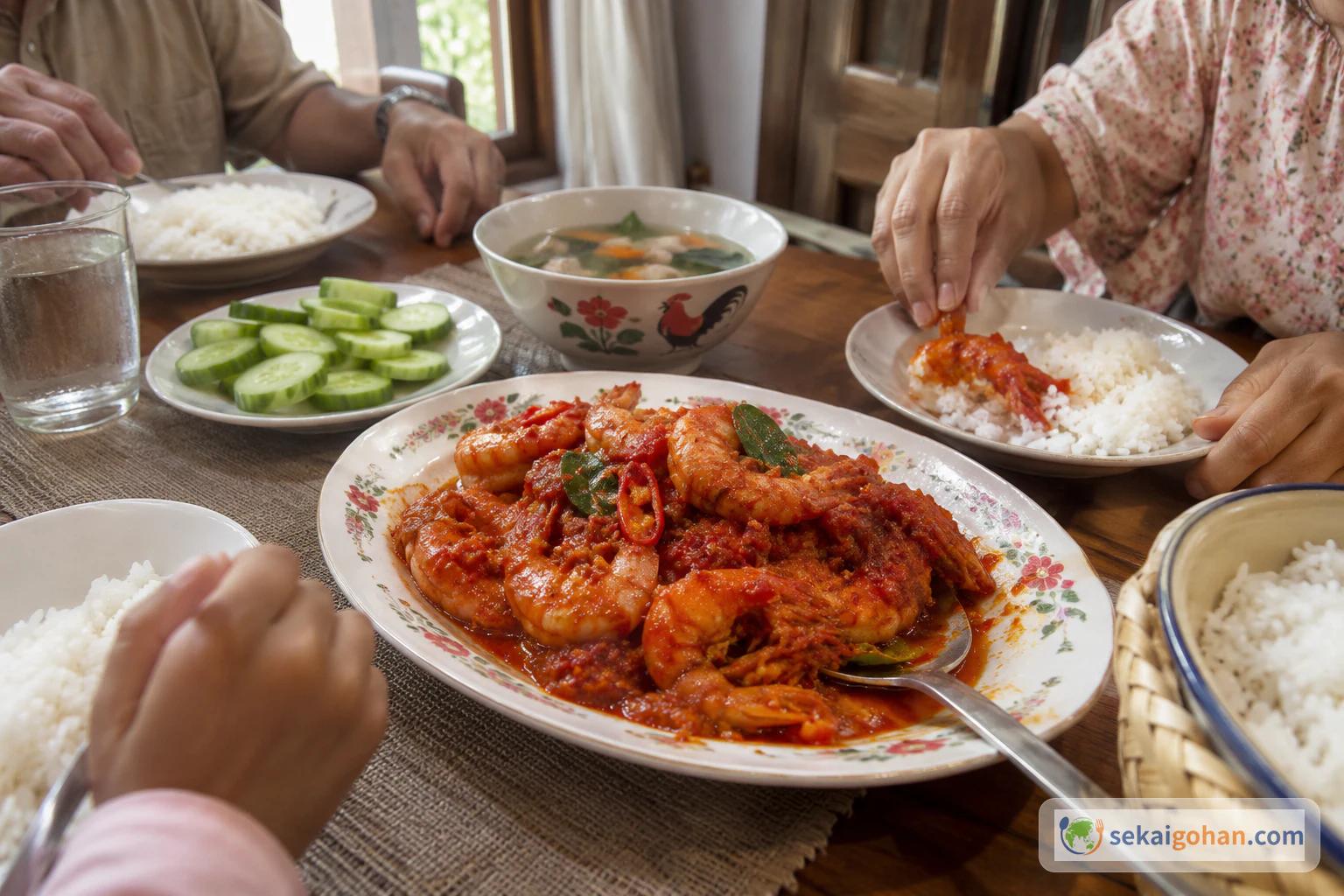
At the table
Steamed white rice is not optional: the red paste is made to be spooned over it and mixed through, so serve the shrimp with every drop of oil and paste from the wok. Set the plate in the middle and let people help themselves, taking as much paste as they can handle.
Other ways to cook it
- Tomato balado. Add tomatoes to the paste and grind it smooth. The sauce turns lighter and brighter.
- Sambal udang pete. Fry the shrimp separately first, cook a sambal with shrimp paste, and bring them together with plenty of petai. The flavor gets deeper and funkier, and the petai takes center stage.
- More things in the pan. Green beans, quail eggs, fried potato or tofu all take the same red paste. They stretch the dish into a bigger meal and soften the heat per bite.
Frequently Asked Questions
What do I do with the shrimp heads?
Use them for shrimp stock. They carry a lot of flavor, so simmer them for a broth to use in another dish. Keep them cold until you do.
Can I grind the paste in a blender instead of a mortar?
Yes. A mini food processor or blender works well; add water a little at a time so the blades catch, and stop while the paste still has some texture. A mortar gives a coarser paste with more body when it fries.
Should I take out the lemongrass and galangal before serving?
Leave them in the wok while it cooks, then push them aside on the plate. They are there for aroma rather than for eating, and the lime and bay leaves are handled the same way.