Jeow Mak Len: Tomatoes, Chillies and a Mortar
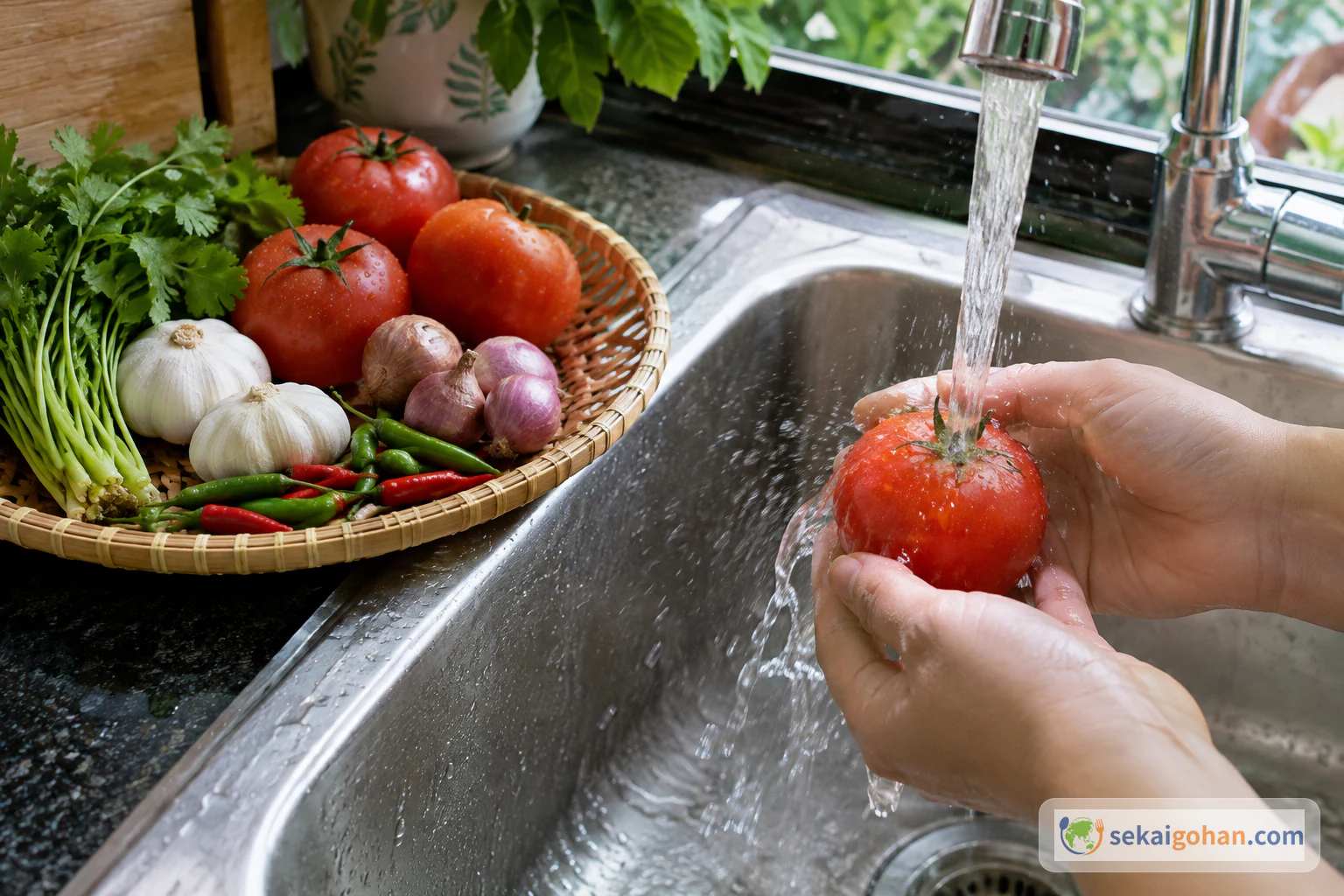
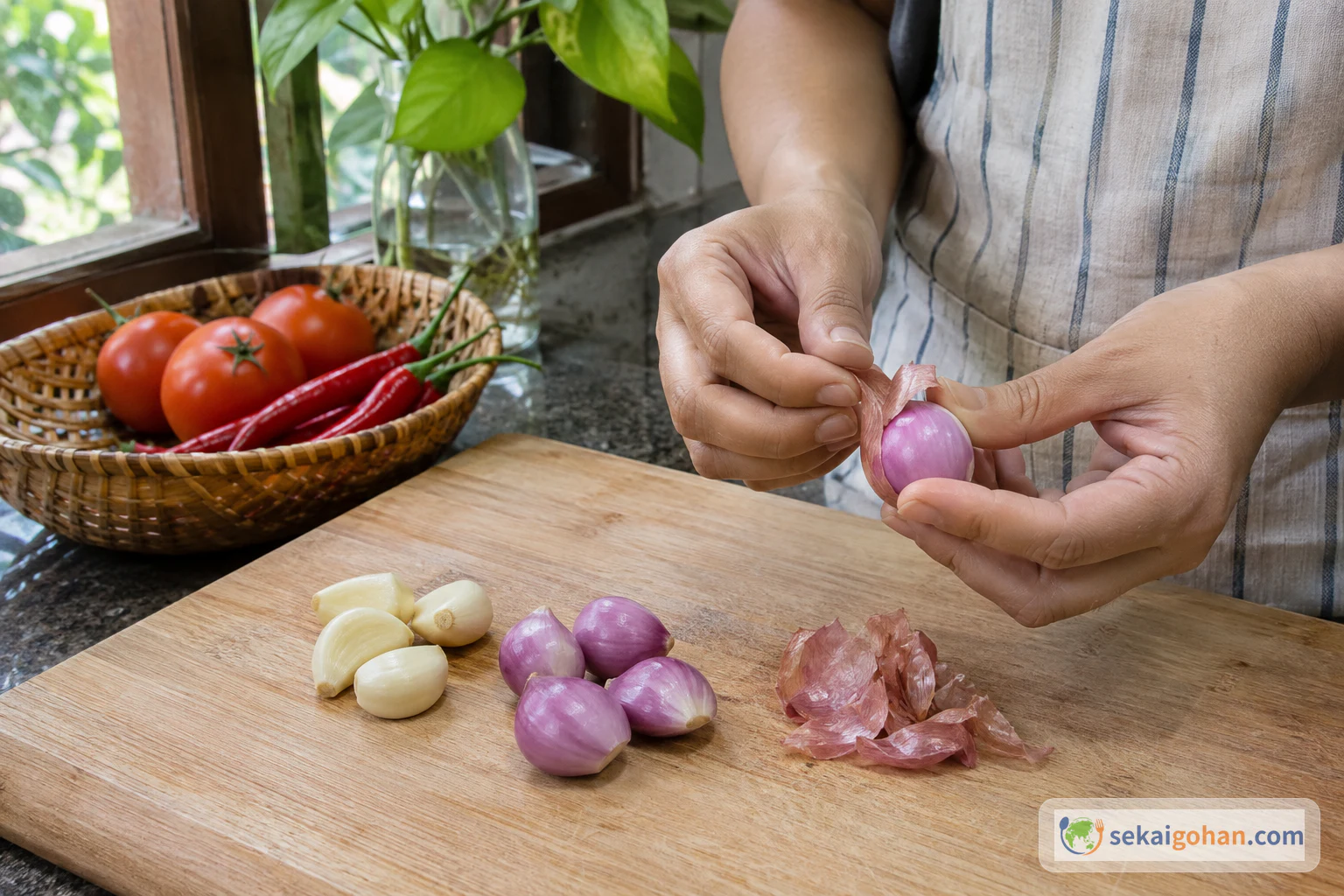
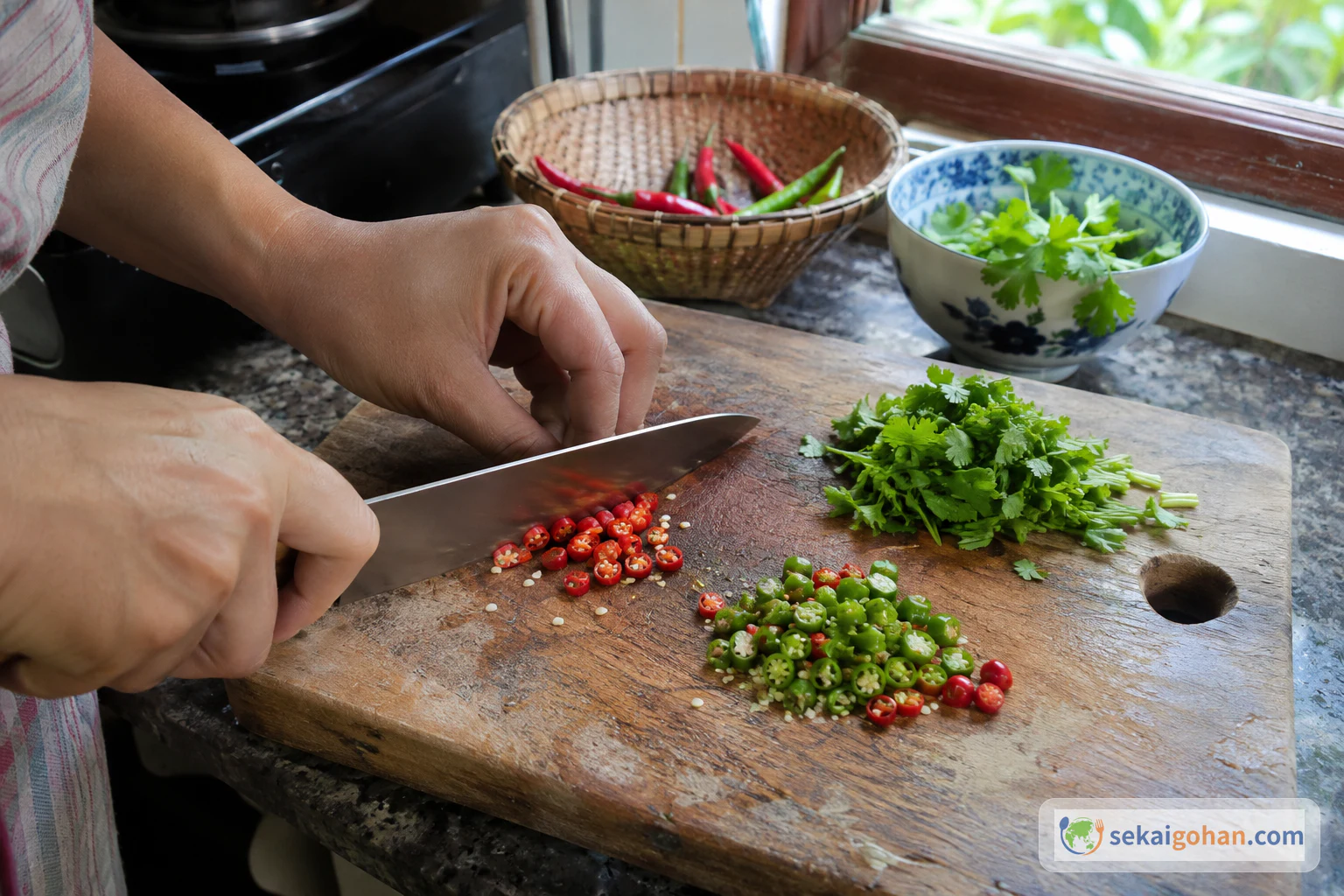
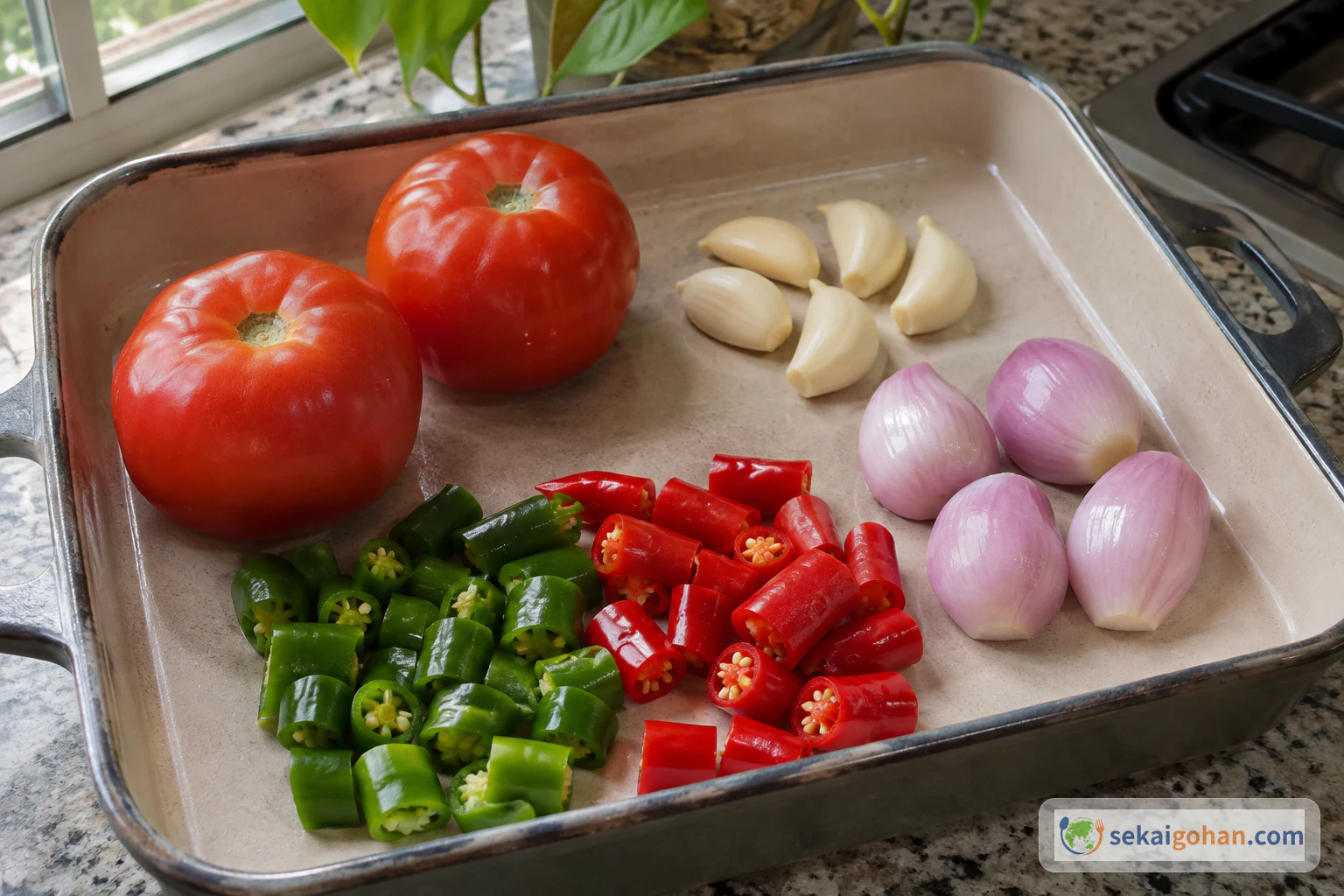
Only the tomatoes go into the oven whole. The garlic and shallots are peeled, the chillies are chopped, and the coriander stays out of the heat until the very end.
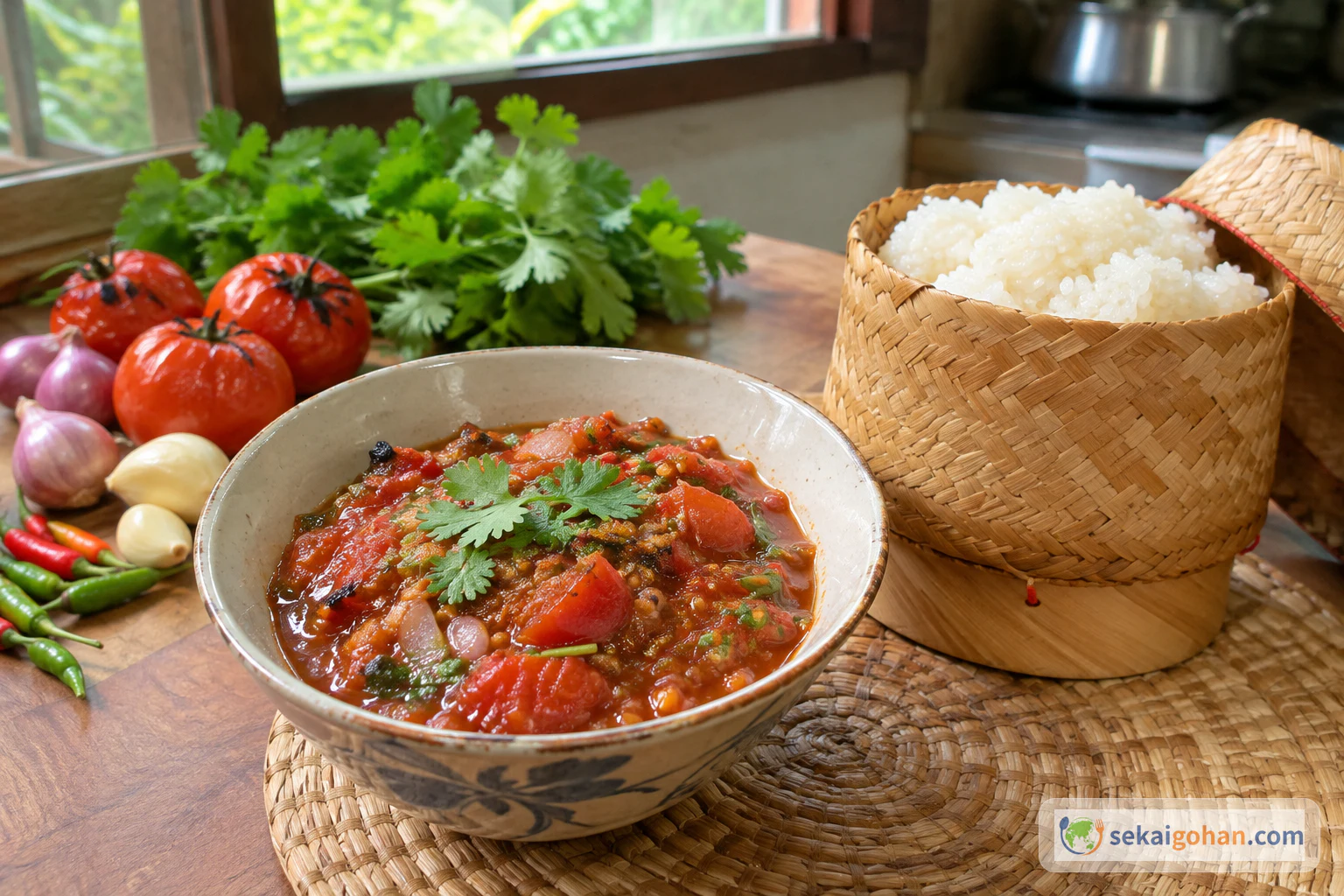
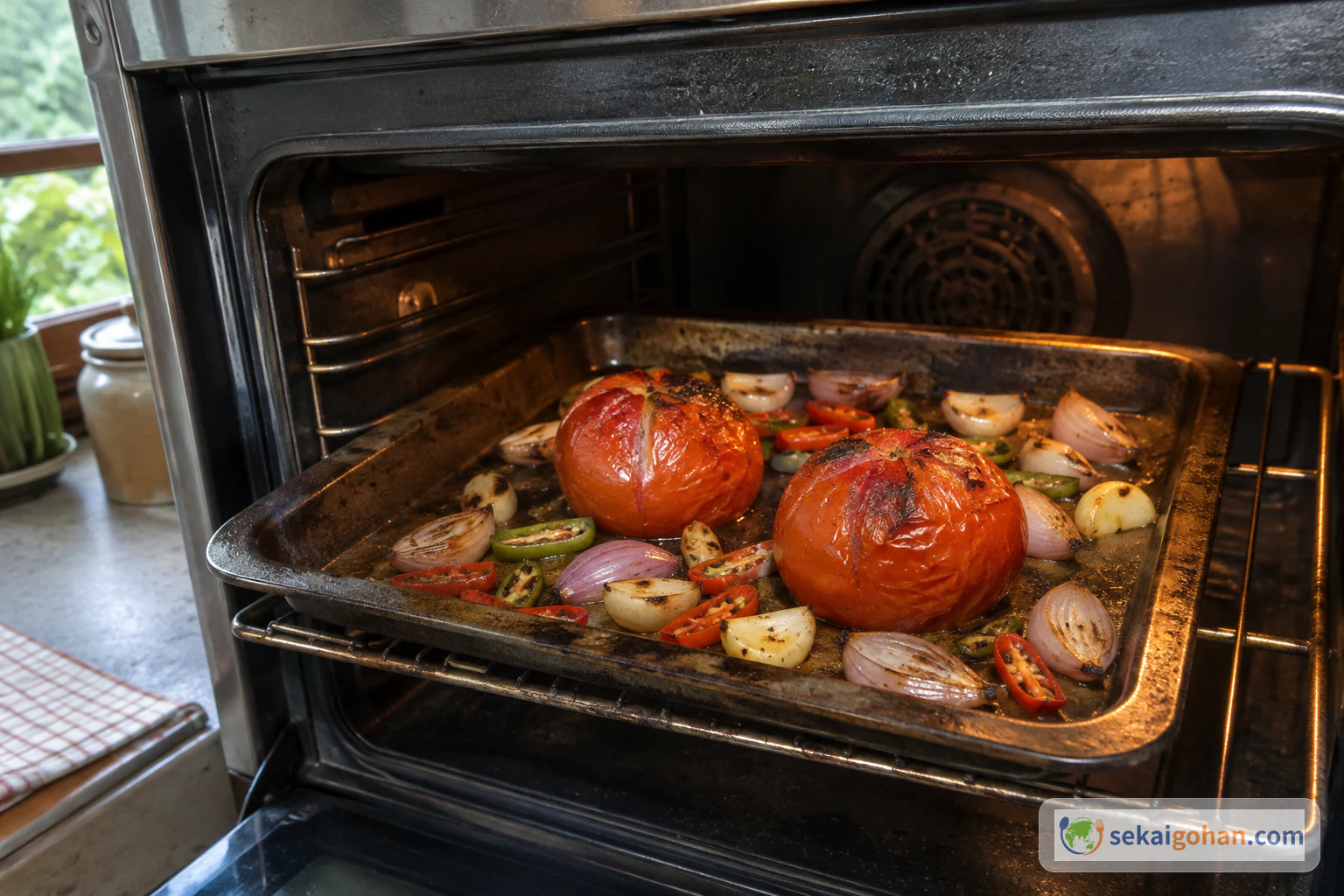
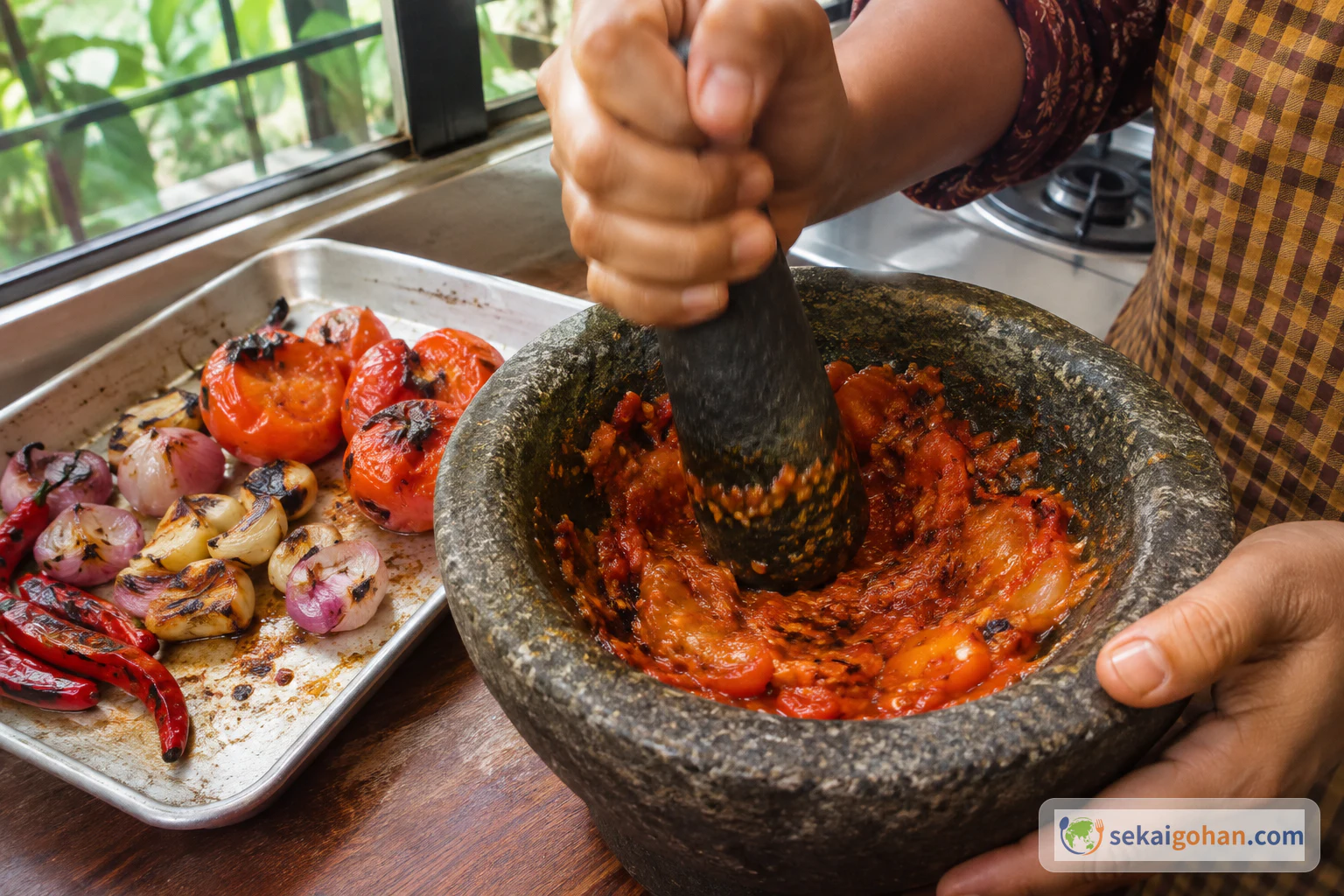
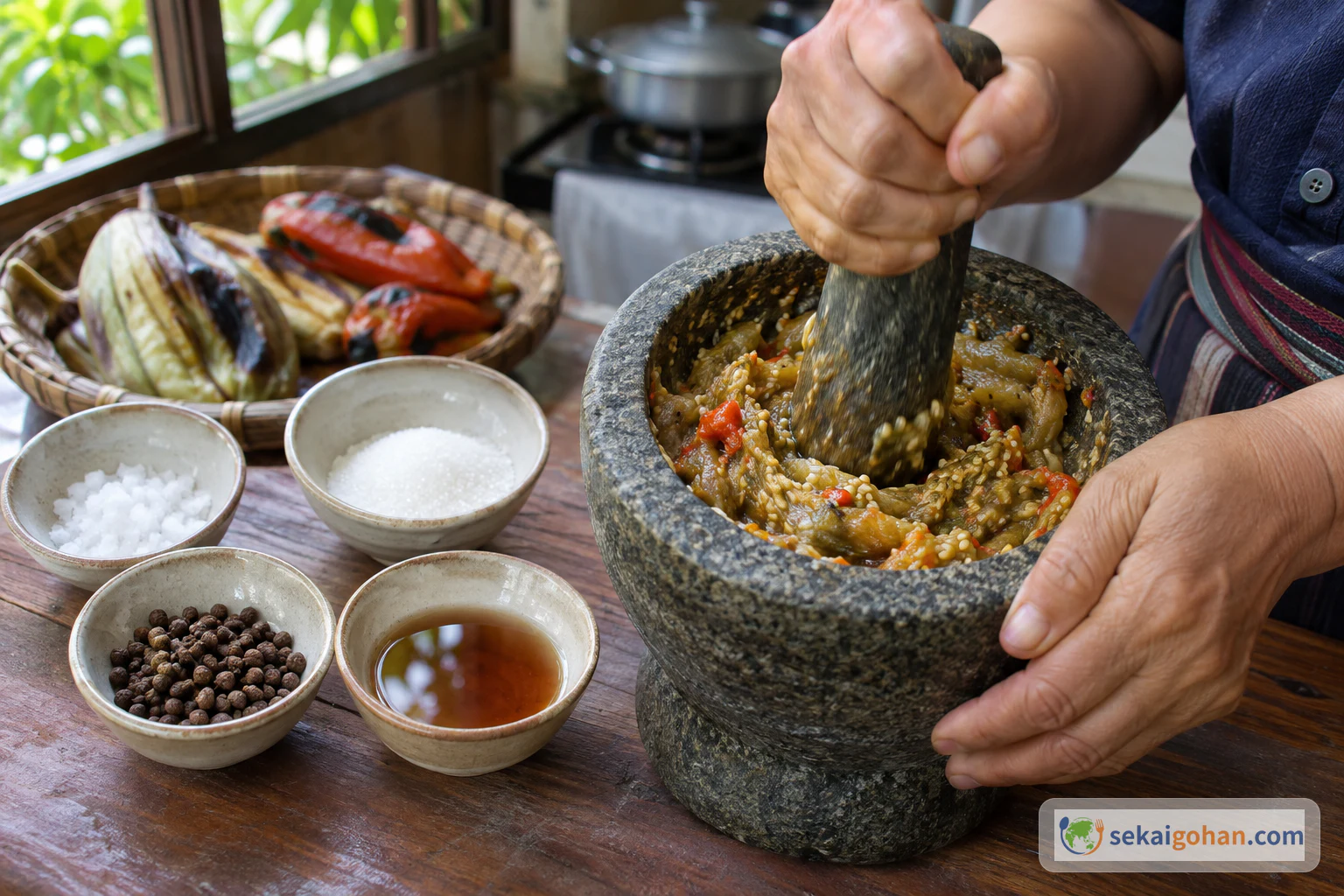
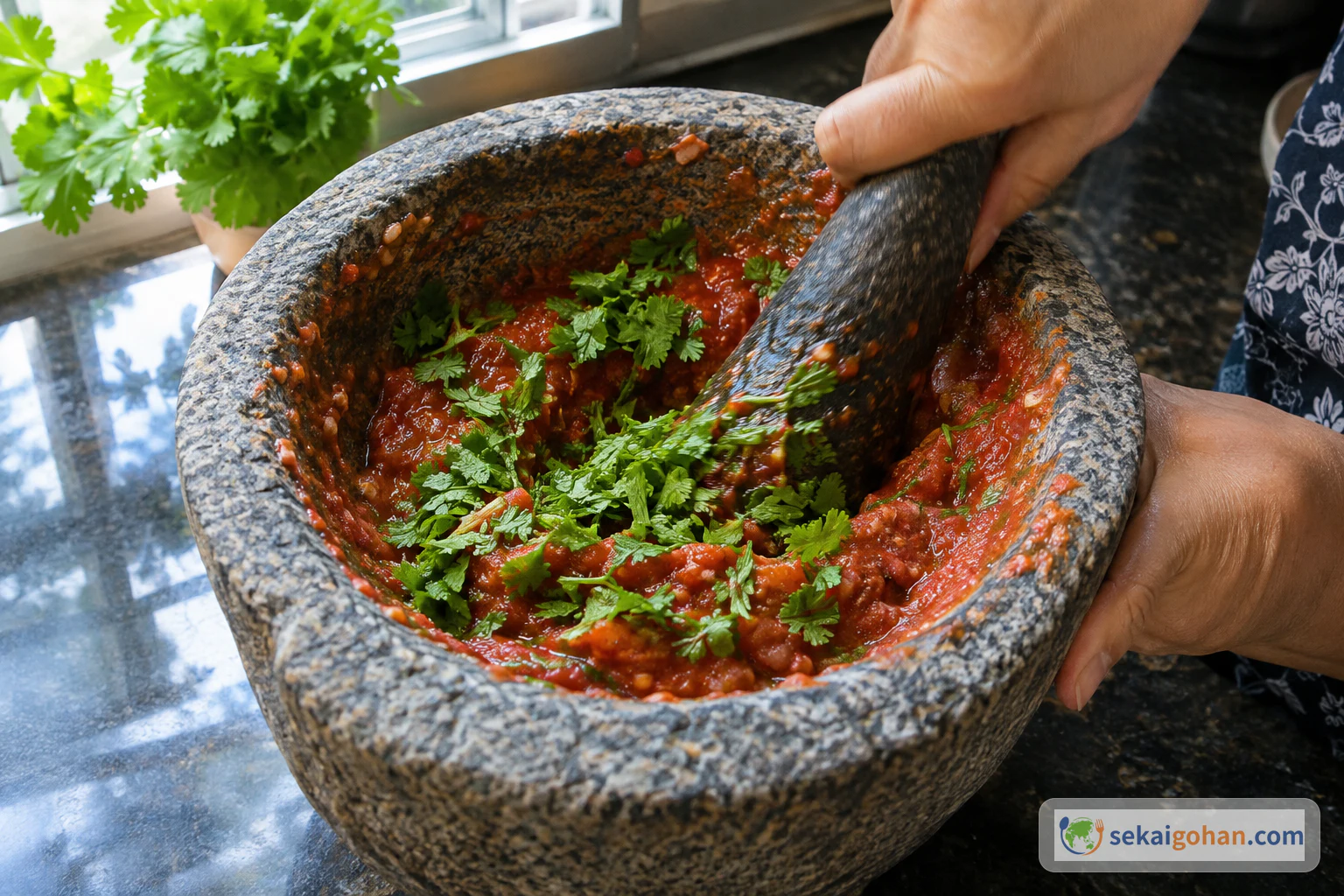
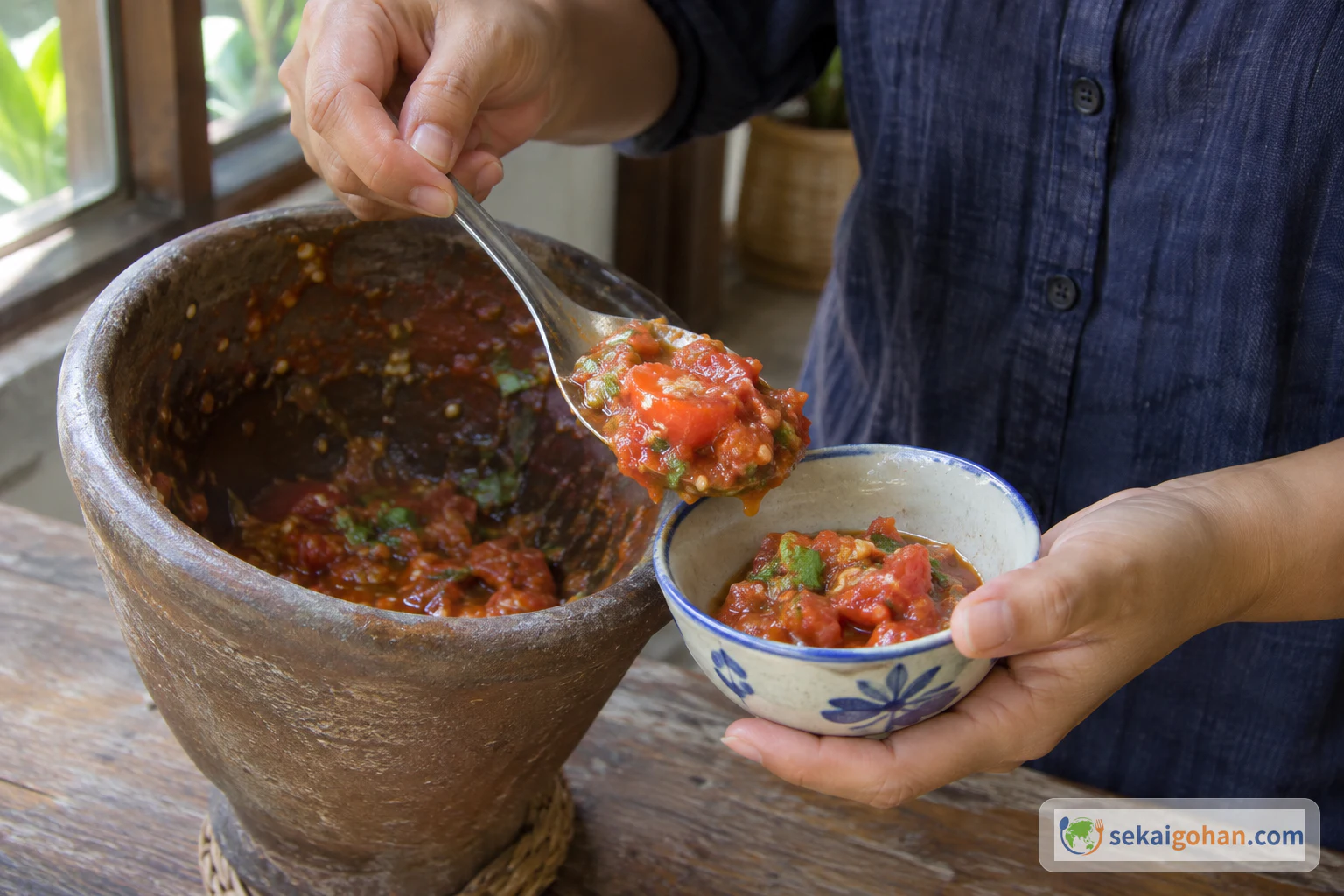
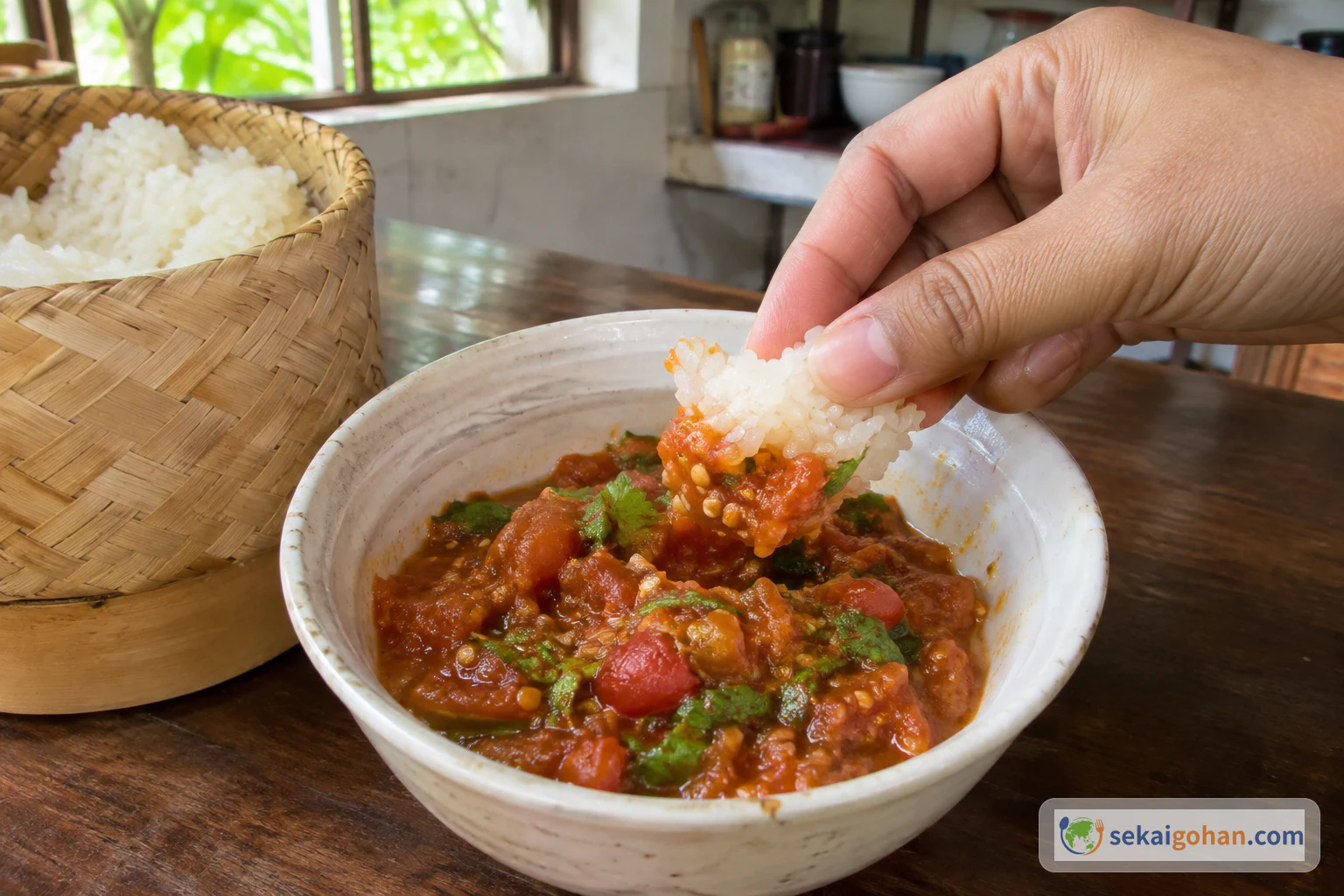
Two large red tomatoes go into the oven whole, sharing the tray with peeled garlic, peeled shallots and chopped green and red bird's-eye chillies. After around 20 minutes at 180°C, their surfaces are beginning to brown, and everything moves to a mortar to be pounded into a paste. Salt, white sugar, Mak Khen pepper and a little fish sauce follow, then chopped coriander. The finished dip is for scooping up with sticky rice.
This is Jeow Mak Len as published on the recipe page of YoYo Laos Sauce, a commercial brand. Jaew, also written jeow, is a broader name. Lao tourism authorities describe jaew, or chili paste, as a dipping element of a common Lao meal, so this article covers one specific tomato version, not every jaew and not the only way to make this one.
About This Version and Its Amounts
Sekai Gohan has not kitchen-tested this recipe. The vegetable counts, oven setting and order of work come from the YoYo Laos Sauce page. The seasoning amounts are our own editorial starting points, so taste as you go.
The recipe page lists fish sauce, salt, sugar and Mak Khen pepper with no amounts. In the method, the fish sauce appears as "a little fish sauce (teaspoon)", which doesn't settle a dose. To give you somewhere to start, we looked to a specialist cookbook, Dorothy Culloty's Food from Northern Laos: The Boat Landing Cookbook. These figures aren't part of the YoYo recipe. The cookbook also treats its own measurements as a guide and leaves the final tasting to the cook.
| Seasoning | Starting amount in this article | What it is based on |
|---|---|---|
| Salt | 1/2 tsp to start | The cookbook's jeow mak len uses 1/2 tsp with 2 medium tomatoes, adding more after tasting (p.91). Its tomato and Vietnamese balm jeow uses 1 tsp with 2 large tomatoes and 2 tbsp fish sauce (p.86). The Seng Luangrath site's grilled version also lists 1/2 tsp. |
| Fish sauce | 1 tsp to start | The "(teaspoon)" note on the YoYo page, and an optional 1 tsp in the cookbook's young green chilli jeow (p.89). Other tomato versions go as far as 2 tbsp (cookbook p.86; Seng Luangrath site), so there is room to add more. |
| White sugar | A very small amount, about 1/4 tsp | The cookbook's tomato jeow uses a small amount to taste, as an option (p.86). The 1/4 tsp figure comes from a different jeow (p.84), so it is only a rough reference. |
| YoYo Mak Khen pepper | Up to 1/2 tsp, a little at a time | The cookbook's prickly ash berry jeow uses 1/2–1 tsp to taste (p.88). Mak Khen is the star there and a supporting seasoning here, so treating the low end as a ceiling is our editorial decision. |
The coriander stays at the page's "small bunch". For a sense of scale, the cookbook's jeow mak len uses 2 tablespoons of finely chopped leaves (p.91), though we aren't saying that equals a small bunch.
The page's header shows prep 25, cook 10 and total 35 minutes. Those figures don't reconcile with the around 20-minute oven roast in its own method, so this article gives no total time. No home fermentation is involved.
Ingredients: Fresh Vegetables and Seasonings to Taste
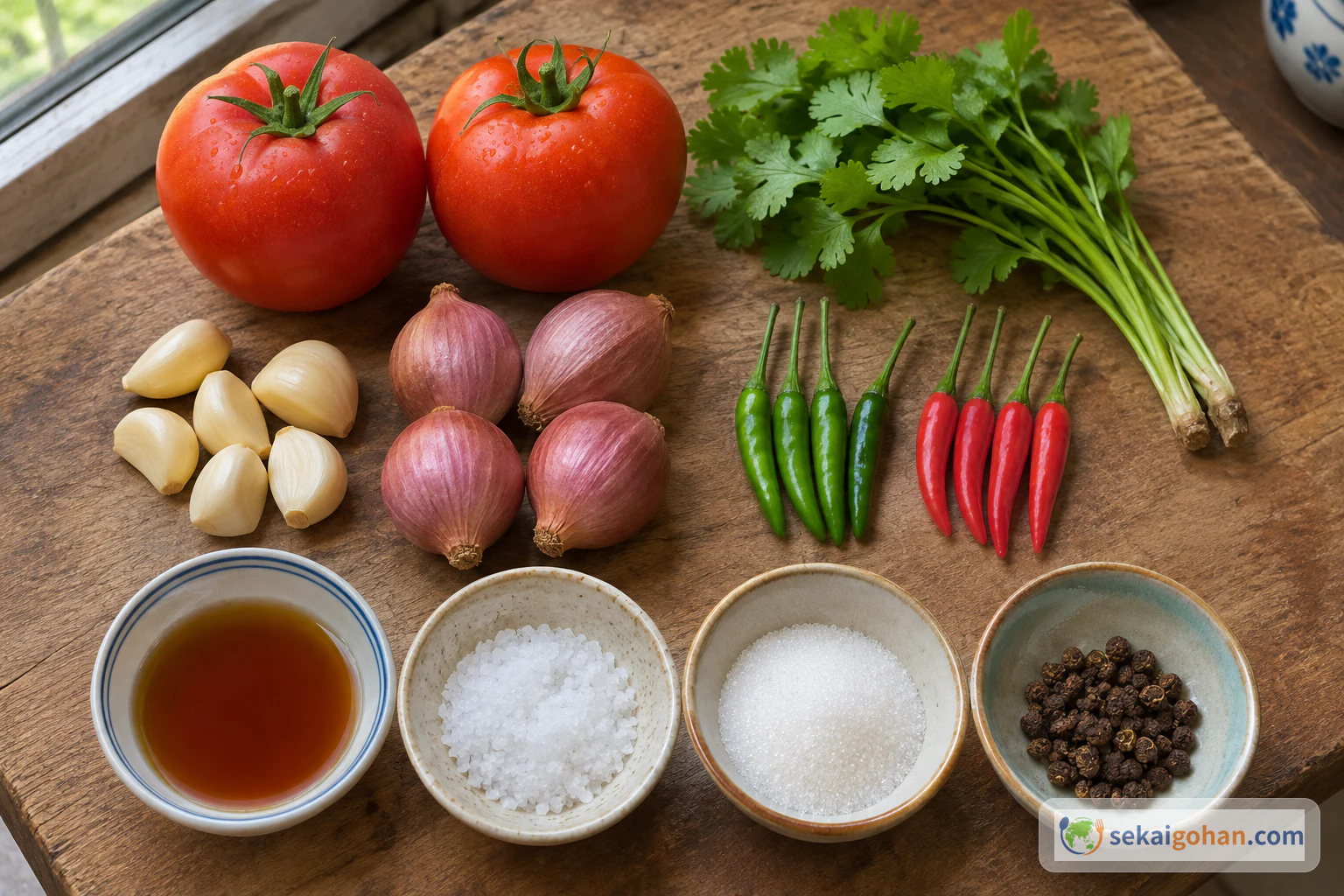
Serves 4+ (to share).
Check the labels on the fish sauce and Mak Khen pepper for ingredients and allergens.
Equipment
- Home oven
- Oven-safe tray, suitable for your oven according to its manual
- Mortar and pestle
- Knife and cutting board
- Measuring spoons
- Spoon and small bowl for serving
Choosing and Swapping
- Mak Khen pepper: If you can't find it, use Sichuan pepper. Don't extend this swap to black pepper or other peppers.
- Shallots: Use shallots, and don't treat ordinary onions as the same ingredient.
- Fish sauce: It is part of the base recipe. See the variations below for leaving it out.
Troubleshooting
| What you notice | What to look at | What to do |
|---|---|---|
| The vegetables aren't browning at around 20 minutes | The time is approximate and ovens differ | Keep roasting, checking often, until the surfaces begin to brown |
| The mixture still isn't a paste | It hasn't been pounded enough | Keep pounding before you add the seasonings |
| The flavor seems flat | The seasoning amounts are only starting points | Add a little salt or fish sauce, pound, then taste again |
| It tastes unpleasantly bitter | Black Mak Khen seeds may have gone in | Remove any you can see, and pick them out first next time |
| The tingling is too strong | Too much Mak Khen pepper | Use less next time, adding it a little at a time |
| The heat doesn't suit you | The number of chillies | Change the number of chillies next time |
Variations
- More or less heat: Raise or lower the number of chillies. The base recipe uses 4 green and 4 red.
- Vegan: Leave out the fish sauce. Treat this as a change from the base recipe, and don't expect the same flavor. Check the label on your Mak Khen pepper too.
Jaew on the Lao Table
Lao tourism authorities describe jaew, or chili paste, as a dipping element in a common Lao meal, with sticky rice as a staple of most meals. They also note regional variation in Lao cuisine. VisitLaos.org describes sticky rice as a staple food among the Lao Loum, commonly eaten by hand with soup, vegetables or meat dishes. For more of the country's cooking, see our Laos page.
The version here has a commercial background. The YoYo Laos Sauce About page says its founder, Hatsadee, known as Yoyo, moved from Laos to the UK and began recreating the Jeow sauces missed from home. That page gives the brand's story, but it doesn't credit Yoyo as the author of this recipe, and the recipe page names no individual author. We therefore credit the recipe to the brand.
The same brand sells the Mak Khen pepper the recipe calls for, in 25 g packs. Its product page describes Mak Khen, also known as wild pepper or prickly ash, as coming from northern Laos, with a tongue-tingling warmth and citrusy heat, and says the Akha and Hmong use it for grilled meats, soups and stews. That description is the seller's own.
Other tomato versions differ considerably. The Boat Landing cookbook's jeow mak len is grilled over embers, on a wire rack or in foil, and has no fish sauce, sugar, shallots or Mak Khen. The Jeow Marg Len on Seng Luangrath's site is skewered and grilled, using cherry tomatoes and no sugar or Mak Khen. We used those two only for the labeled amounts and Mak Khen notes above and kept their methods and ingredient lists out of this recipe.
Frequently Asked Questions
This is one published tomato version of jaew. The seasoning amounts are editorial starting points, so your own tasting decides the finish.
Is all jaew made with tomato?
No. Jaew is a broad name, and this article covers one published Jeow Mak Len. It doesn't present this as the only formula in Laos.
Is this the same as Thai nam jim jaew?
Don't treat them as the same. Nam jim jaew is a Thai dipping sauce, from a different country and a different tradition of sauces.
What is Mak Khen?
It is the prickly ash berry used in northern Laos, also called wild pepper. Food from Northern Laos identifies it as Zanthoxylum rhetsa. The book says only the outer casing is eaten, the black seeds are very bitter and are removed, and it makes the tongue tingle and go numb.
Can I use Sichuan pepper instead?
Yes. Food from Northern Laos says to use Sichuan pepper when mak ken is unavailable. It describes the berries as smaller and darker than Sichuan pepper but virtually the same in taste. That assessment is the book's own.
How much fish sauce should I use?
The recipe page says only "a little fish sauce (teaspoon)", which doesn't fix an amount. This article starts at 1 tsp and adds more after tasting. Other tomato versions use as much as 2 tbsp.
How long does it take?
The method gives around 20 minutes at 180°C, until the surfaces begin to brown. The page's header times of prep 25, cook 10 and total 35 minutes don't match that method, so we don't promise a total time.
Can I leave out the fish sauce?
Yes. The page says it may be omitted for a vegan version. The base recipe here keeps it, and we can't say the flavor stays the same without it.
Can I use a pan instead of the oven?
The page prefers oven roasting. Its optional pan note covers frying only the garlic, shallot and chillies, not the tomatoes, so it isn't a full replacement. This article stays with the oven.
How long does it keep?
We have no confirmed storage time or reheating guidance for this dip, so we don't give any. The recipe is written to be made and served with sticky rice.
Sources
- YoYo Laos Sauce, "Jeow Mak Len." Brand recipe page with no individual author named. Basis for the name, the 4+ (to share) serving statement, the ingredient list and produce counts, the oven method, the mortar steps, the coriander finish, the sticky rice suggestion, and the chilli, vegan and pan notes. https://yoyolaossauce.co.uk/blogs/recipes/jeow-mak-len
- YoYo Laos Sauce, "About." Brand and founder background only; it doesn't establish personal authorship of this recipe. https://yoyolaossauce.co.uk/pages/about
- YoYo Laos Sauce, "YoYo Wild Mak Khen Peppers." Seller's product page, used for pack size and for the description of Mak Khen as wild pepper or prickly ash from northern Laos. https://yoyolaossauce.co.uk/products/your-wild-mak-khen-peppers
- Dorothy Culloty, Food from Northern Laos: The Boat Landing Cookbook, photographs by Kees Sprengers, Galangal Press, 2010, ISBN 978-0-473-17236-7. Used only for the labeled seasoning reference amounts and the Mak Khen identity, handling and substitute. Its methods and ingredient sets aren't part of this recipe. https://phakhaolao.la/wp-content/uploads/2024/09/food-from-n-laos-pdf-2019.pdf
- chefseng.com (site of chef Seng Luangrath; post credited to "admin"), "Jeow Marg Len: Roasted Tomato Dipping Sauce." A different, grilled version, used only to cross-check the salt amount and the upper range for fish sauce. https://www.chefseng.com/jeow-marg-len-roasted-tomato-dipping-sauce/
- Tourism Marketing & Promotion Department, Ministry of Culture and Tourism, "Food & Flavours." General context on jaew as a dipping element, sticky rice as a staple, and regional variation. https://www.tourismlaos.org/welcome/food-flavours/
- VisitLaos.org / Travelindex, "The People." General context on sticky rice among the Lao Loum and eating it by hand. https://www.visitlaos.org/essentials/thepeople/