Batchoy: Hot Broth, Springy Miki and a Crackle of Chicharon
Keep the noodles apart until serving, cook the pork and offal all the way through, and add the crunchy toppings last.
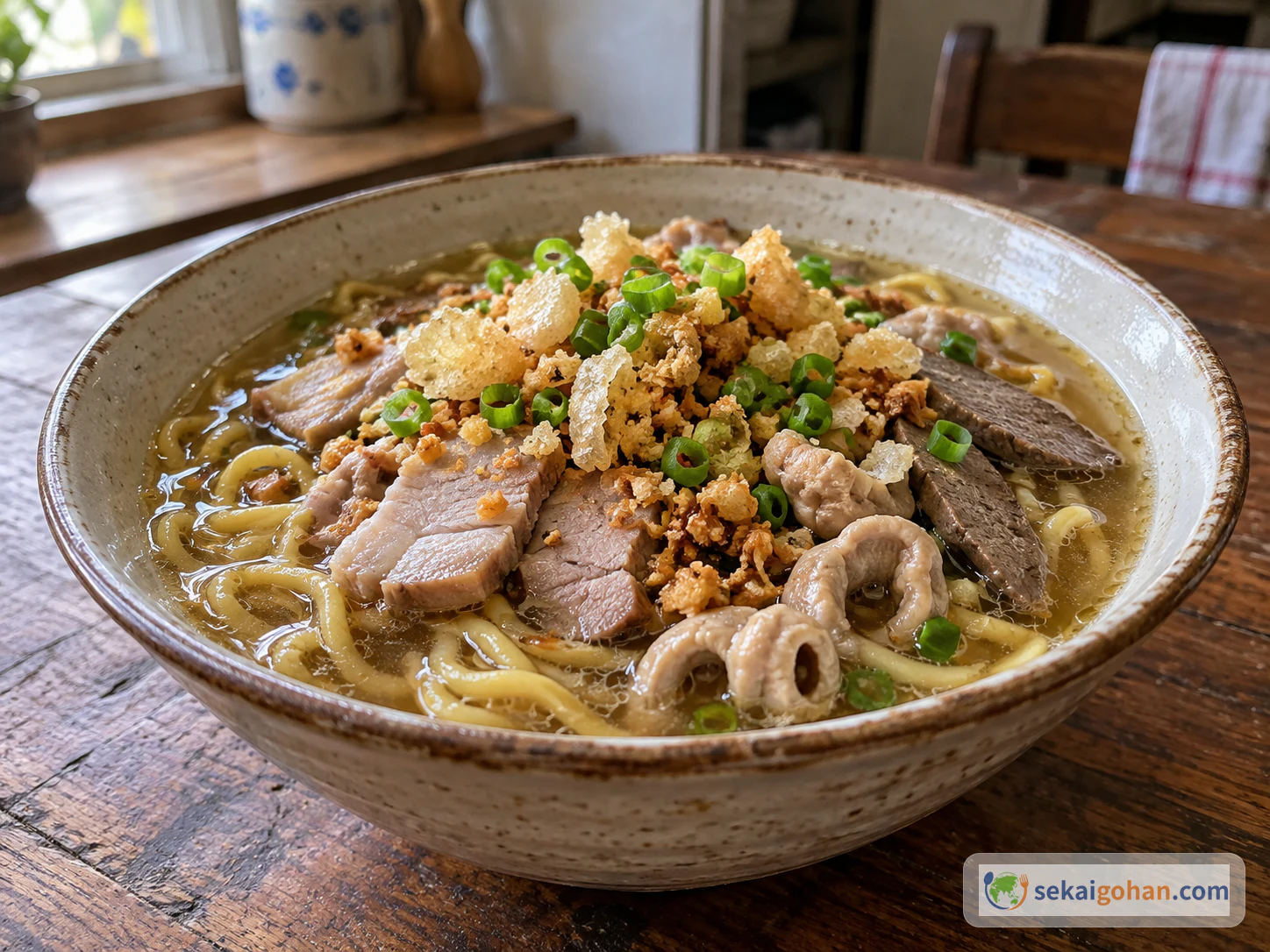
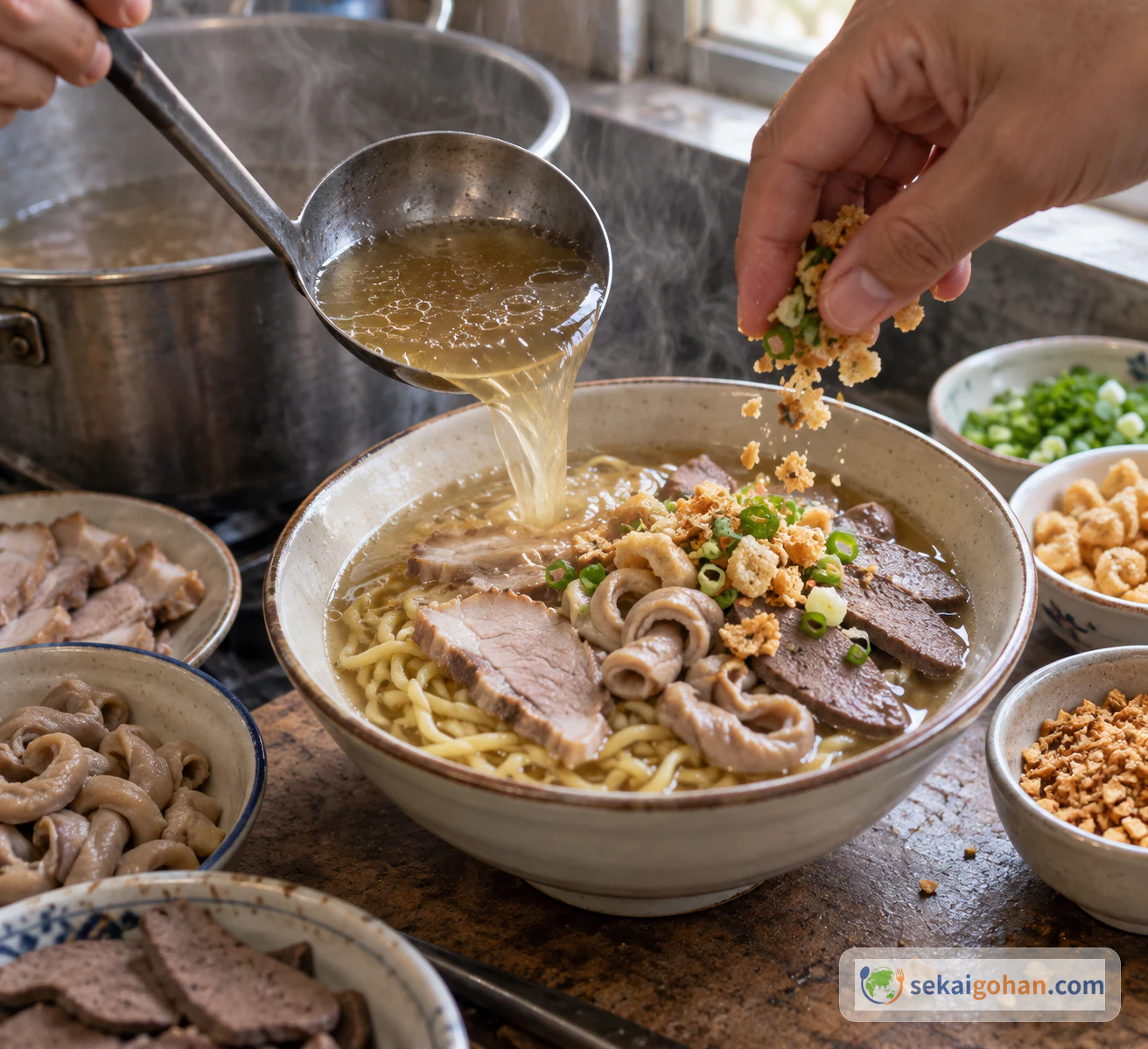
Picture the bowl as it comes together. Miki noodles go in first, followed by slices of pork, intestine and liver. A ladle of hot, savory broth runs over them, and then come crushed chicharon, chopped spring onion and toasted garlic. The toppings stay crisp and sharp for a moment against the soft noodles and tender meat.
This is batchoy, often called La Paz batchoy after the district of Iloilo City with which it is strongly associated. The name points to a place and a family of versions rather than one agreed formula. A University of the Philippines policy brief describes the dish as local culinary heritage and notes both differing origin stories and differences between outlets.
About this version
The recipe here is the single home-style recipe published by Tito J on The Asian Living (formerly Fab Asian Lifestyle). It does not claim to reproduce any particular Iloilo stall's broth. A few things about it are worth knowing before you shop:
- Yield: The recipe states no number of servings, so this article presents its amounts as one batch and does not name a serving count or a portion size.
- Measures: The recipe does not define its cup or spoon standards. Cups, tablespoons and teaspoons are kept as published, without conversion.
- Testing: This recipe has not been kitchen-tested by Sekai Gohan. The timings are the recipe's guides, not measurements of ours.
- Safety: The recipe gives no cooking temperature, so the temperatures in the method are our addition. They come from Japanese public food-safety guidance, as presented by Yamanashi and Shimane prefectures, and they decide when the meat is done, ahead of the clock.
Ingredients for One Batch
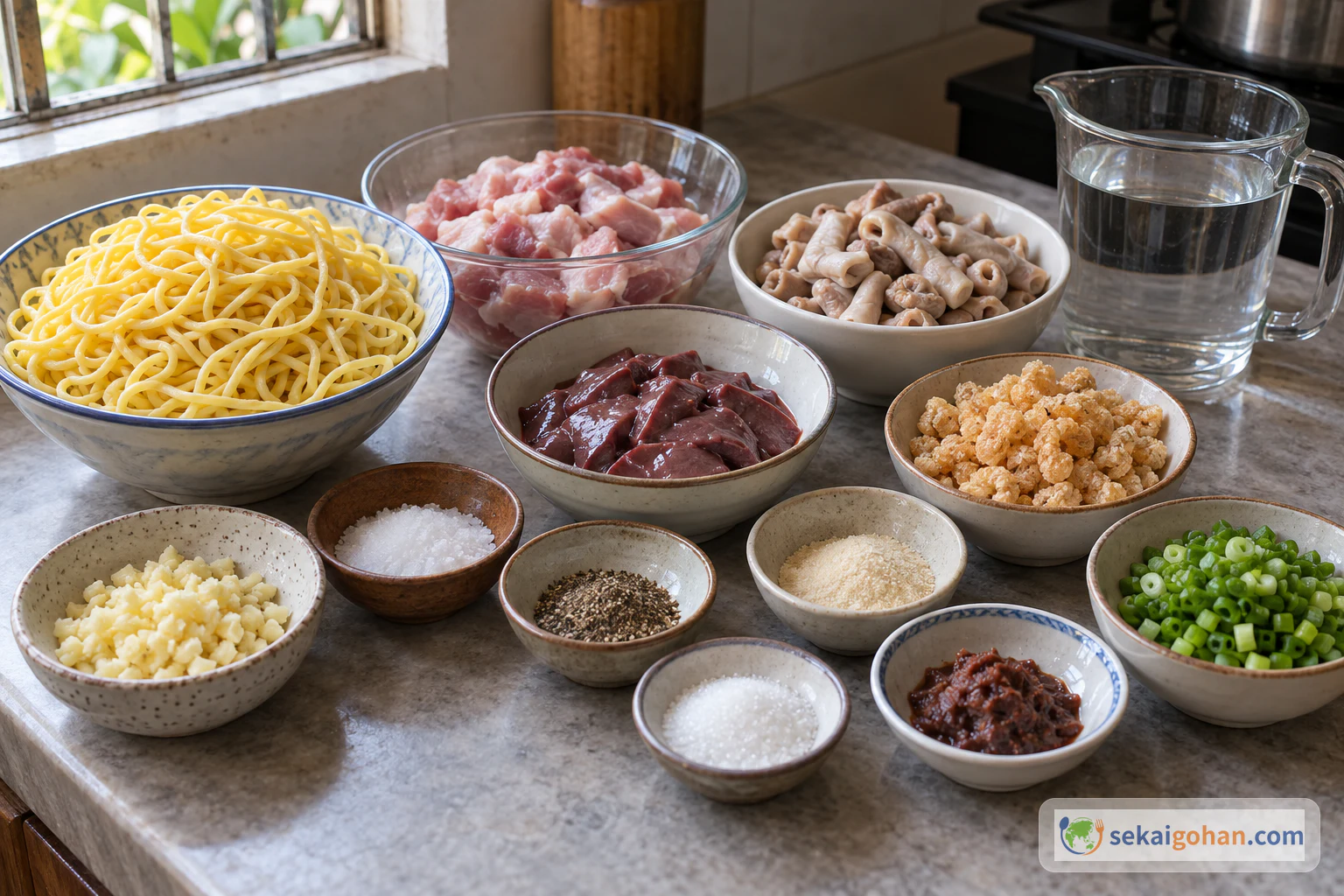
These amounts make one batch. Leave out the shrimp paste for anyone with a shellfish allergy, and check the labels on packaged ingredients.
Equipment
- A heavy-bottomed stockpot that comfortably holds the water and pork
- Measuring cup and measuring spoons
- A second pot and a strainer for the noodles
- A cooking thermometer
- A ladle
- A separate knife and cutting board for raw pork and offal, plus a clean set for cooked meat
- Serving bowls
Choosing and Substituting: Noodles, Offal, Paste and Crunch
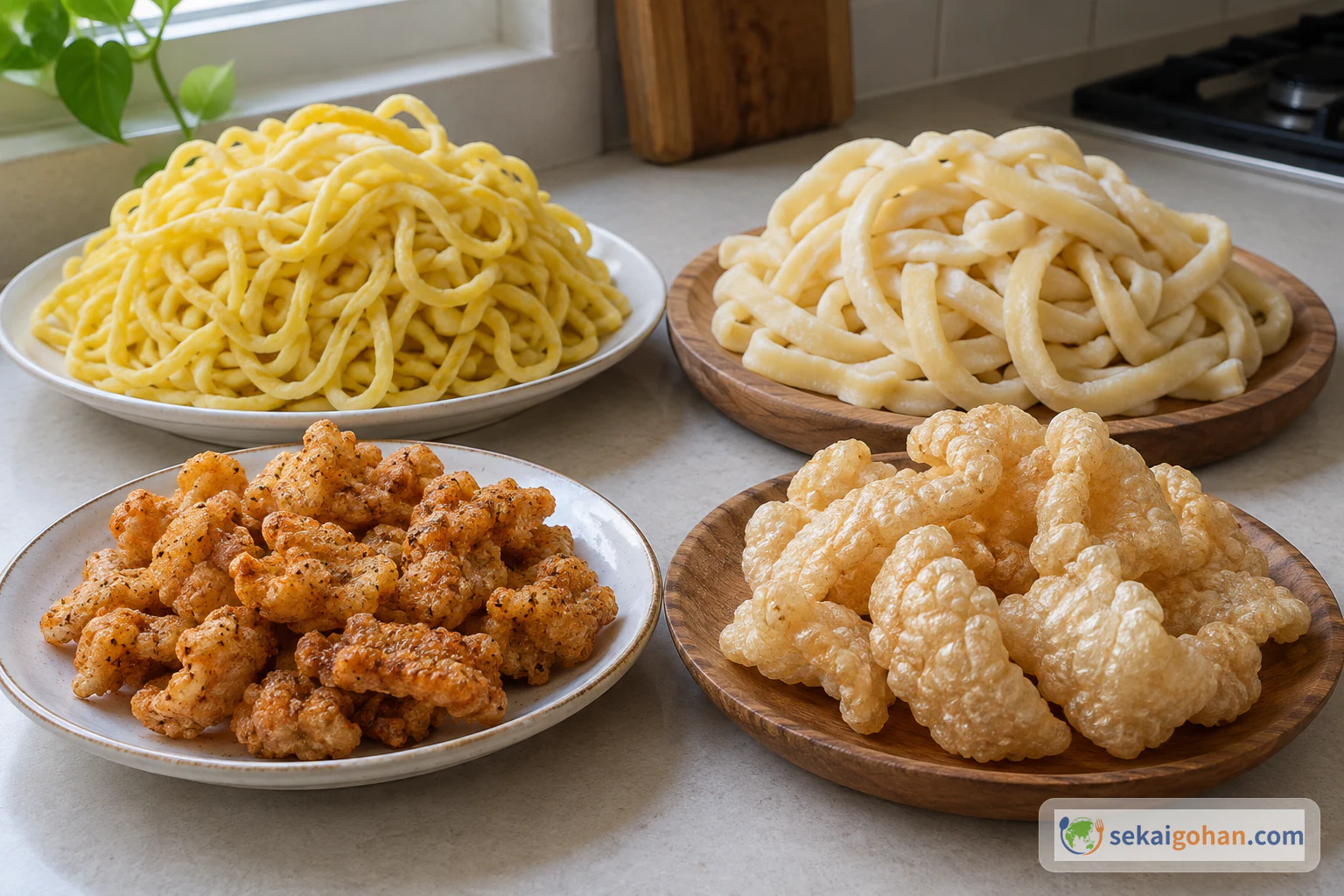
Miki. Look for fresh miki at Filipino or Asian grocers. If you can't find it, a thick fresh egg noodle is our suggested fallback. Both the texture and the way the broth clings will differ.
Pork. Shoulder is a reasonable choice if you need a specific cut. Keep the amount at 1 lb.
Intestines and liver. Buy from a butcher you trust and ask for cleaned pork intestine, then clean it further as your supplier advises. Use intestines that are already cleaned, boiled and sliced. Pre-cleaned intestines still need full cooking in the soup. Use fresh pork liver. Beef liver would change the flavor, so it isn't a like-for-like swap.
Shrimp paste. Bagoong and guinamos are listed together as an optional seasoning, but the two names aren't universally interchangeable. Buy shrimp paste when you can find it, and expect both salt and fermented aroma. Fish sauce isn't an equivalent; if you try it, treat the result as your own variation.
Chicharon. Filipino chicharon is the first choice. Plain pork rinds can stand in, but their salt and seasoning differ, so compare the packages and taste as you add them.
Garlic. Toast the garlic and stop before it burns, then keep it dry until serving.
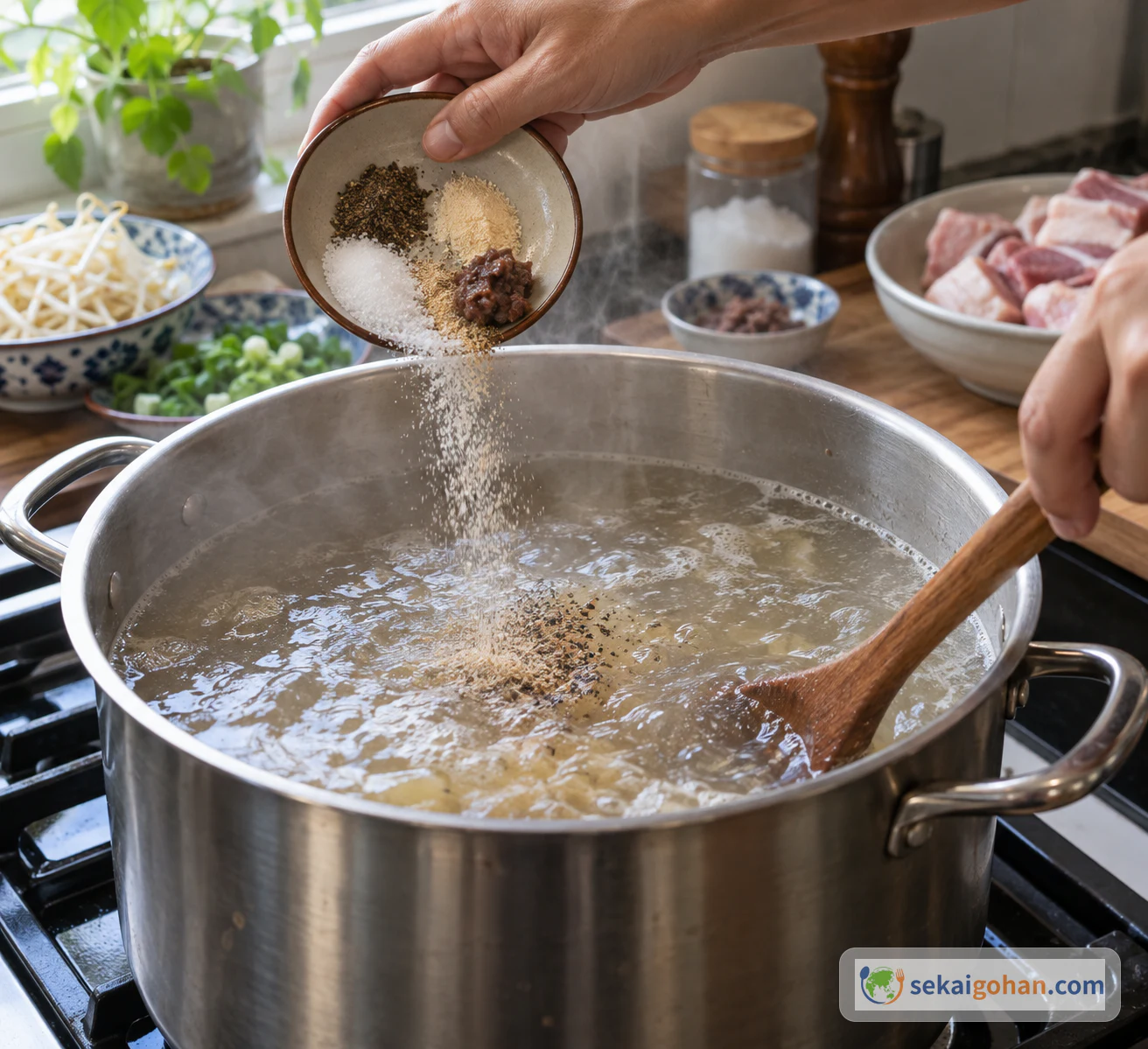
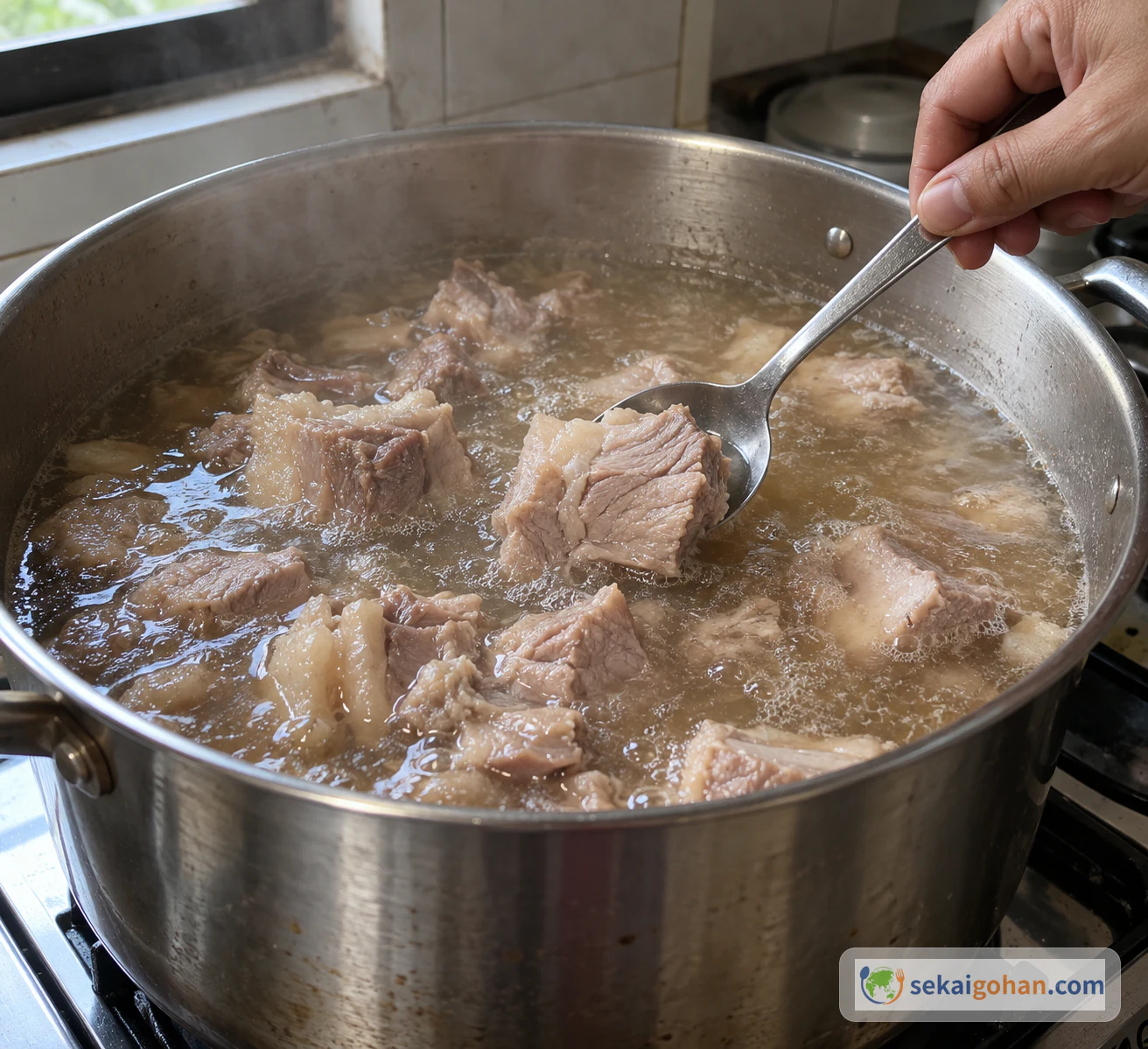
Method: Season the Water, Cook the Meat Through, Assemble at the End
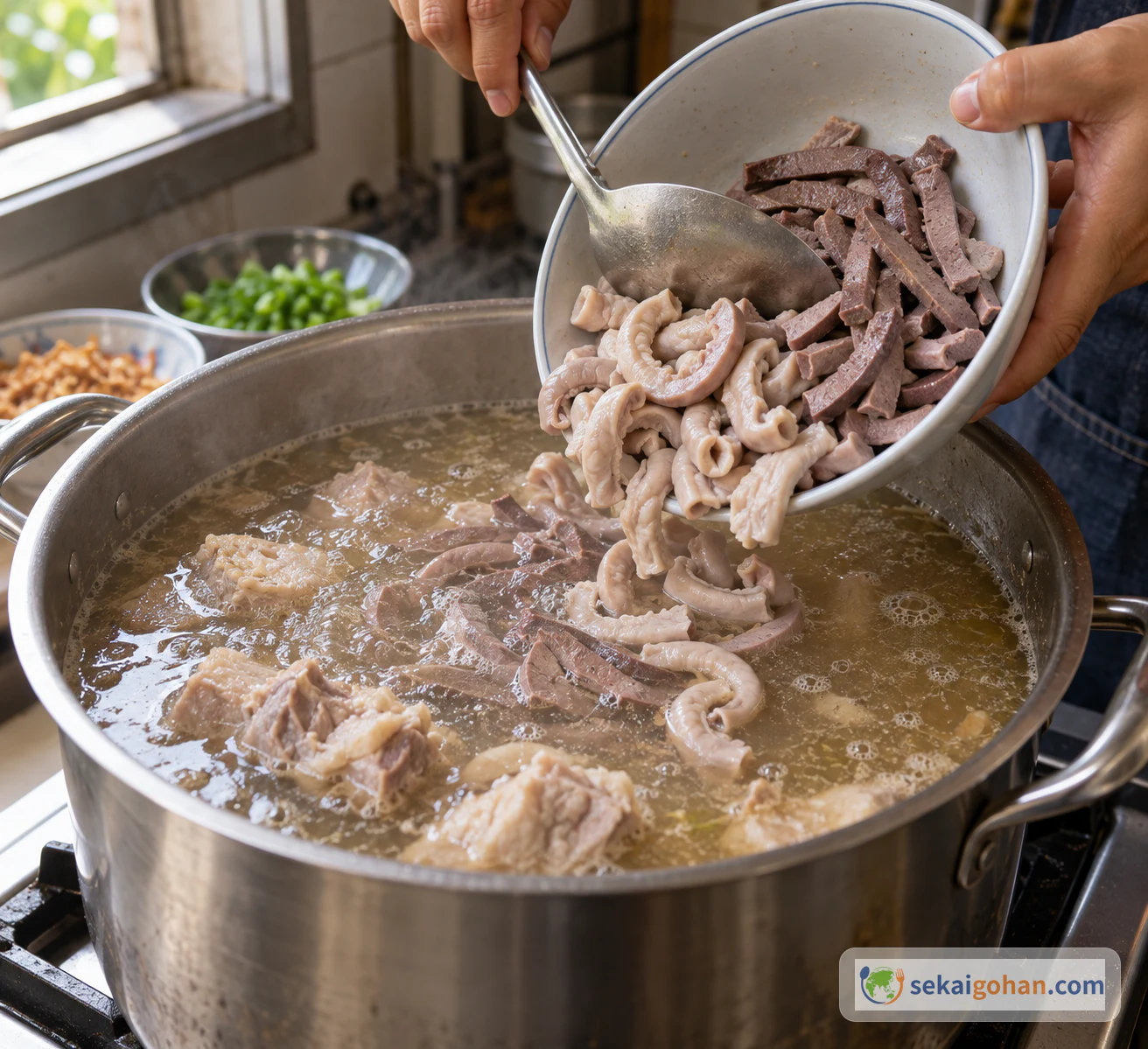
Cook pork, intestines and liver until the center reaches 75°C for at least 1 minute, or 63°C for at least 30 minutes, and confirm with a thermometer at the thickest part. Do not eat liver raw or half-cooked. Keep the knife, board and hands used on raw pork and offal away from the spring onion, garlic and noodles: wash them first, or use a separate set for raw meat.
Fixing Common Problems
These are general cooking suggestions rather than results from a test kitchen, so treat them as places to start.
| Problem | Likely reason | What to do |
|---|---|---|
| The broth tastes flat | Seasoning is too light for your taste, or the shrimp paste was left out | Taste the broth and add salt a little at a time. If you add shrimp paste, remember that it brings salt too |
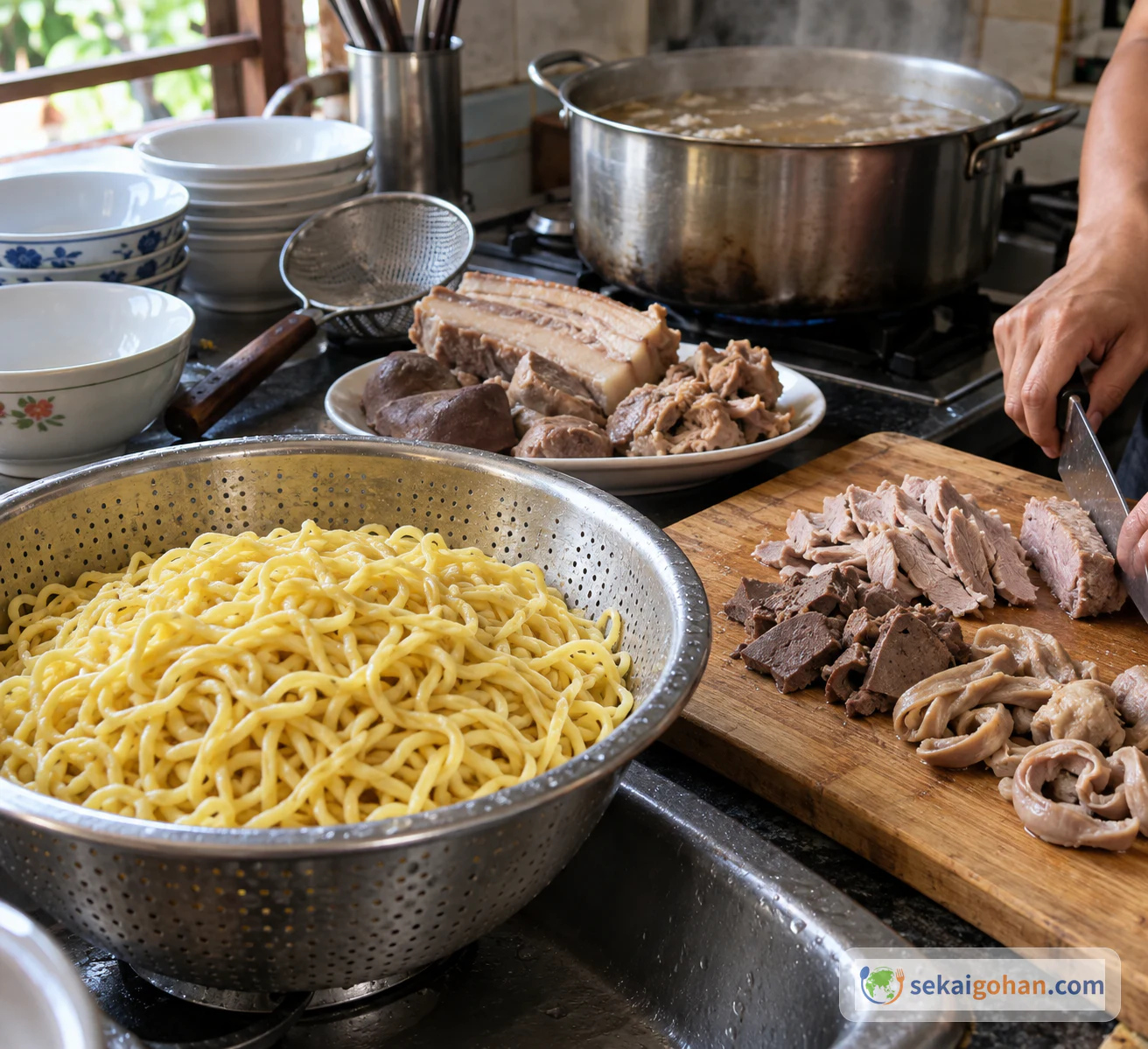
| The noodles are soft | They sat in the broth or were assembled too early | Drain them well and build the bowls at the last moment |
| The pork is still firm after 45 minutes | The cut or the size of the pieces needs more time | Keep simmering until tender and check the temperature again |
| The offal is chewy | Cleaning, cut or earlier boiling may be the cause | Cook until it passes the temperature check. Extra time may not solve everything, so next time look at how it's cleaned and how thickly it's sliced |
| The thermometer reads low | The thickest piece hasn't heated through | Return it to the simmering broth and check again before serving |
| The toppings have gone soggy | They went on too early | Add chicharon and garlic just before the bowl reaches the table |
Variations and What They Change
Each of these changes the bowl in its own way, so try them one at a time rather than combining them.
| Variation | What changes | Keep in mind |
|---|---|---|
| With or without shrimp paste | Fermented seafood aroma and salt | Use 1 tsp or leave it out. Omit it for shellfish allergy |
| Thick fresh egg noodles instead of miki | Texture and broth cling | A home substitution, not an equivalent |
| Plain pork rinds instead of chicharon | Salt and seasoning | Keep them separate until serving |
| Adding egg | Adds a separate, richer element | The recipe's introduction mentions a fresh egg as optional, but its ingredient list and steps omit it. We give no amount or method here |
| Restaurant-style bone stock | Becomes a different recipe, with far longer cooking | See below |
For a sense of how far versions can range, Unilever Food Solutions Philippines publishes a commercial La Paz-style recipe credited to Executive Chef Kenneth Cacho. It uses pork and beef bones, pork and beef legs, beef and pork shoulder, liver, intestines, caramelized onion and guinamos in 10,000 ml of water, with the stock simmered for 4–6 hours. It has no clear serving count, and its ingredient list and method don't fully agree on the seasoning. We mention it only for contrast, and none of its quantities belong in the home recipe above.
What La Paz Batchoy Means on the Table
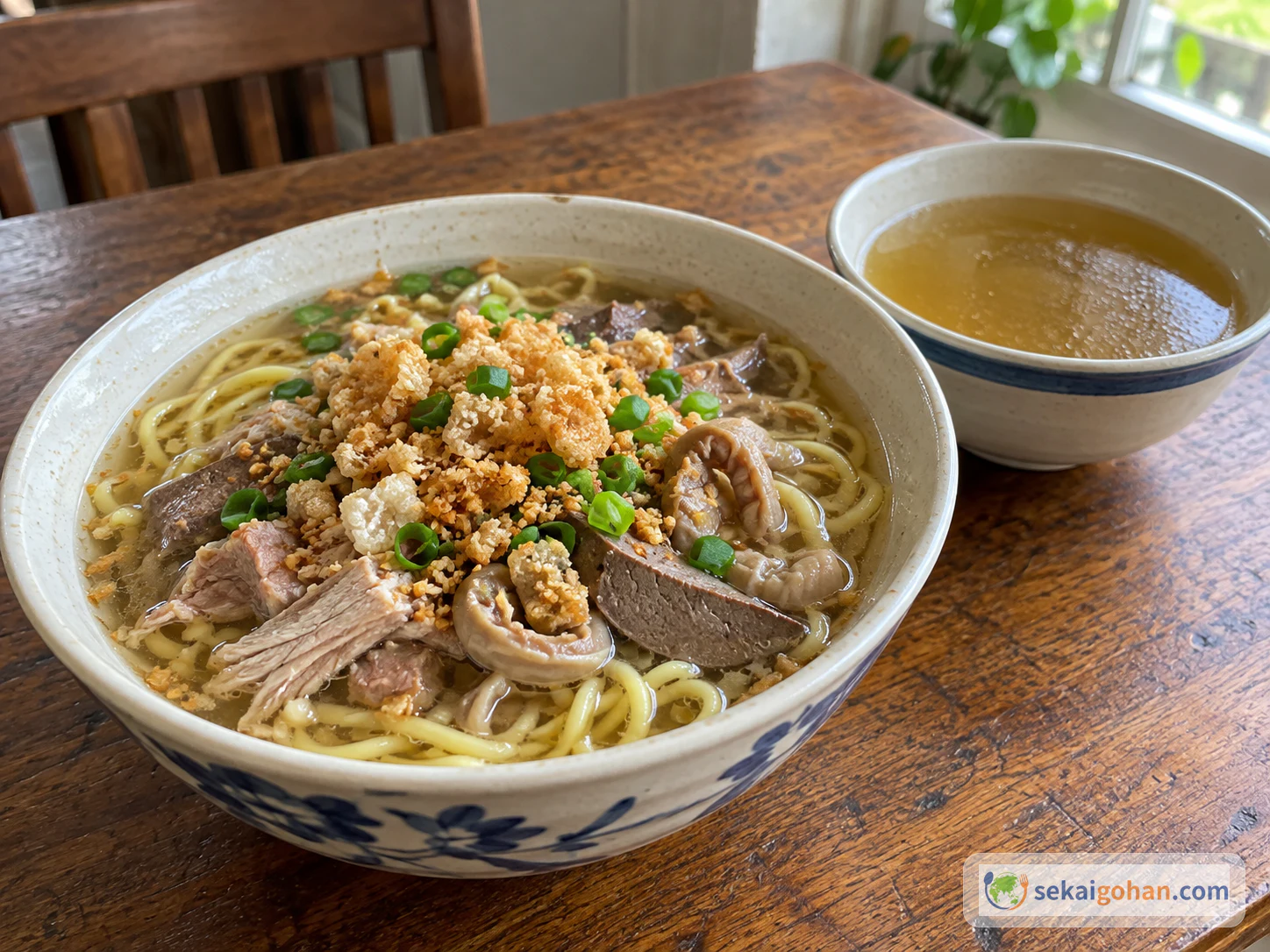
The University of the Philippines Center for Integrative and Development Studies (UP CIDS) brief reports a dining custom of asking for refills of kaldo, or broth. It is an attributed local description, not a rule for every table, but it shows how much of the bowl's identity sits in the broth as well as in the noodles and meat.
The brief's general description of the bowl includes tender pork, innards, flavorful broth, crushed chicharron, scallions and garlic, and it says some outlets add Ilonggo ginamos. The home recipe used here makes bagoong or guinamos optional. Seen together, these point to a seasoning that some cooks use rather than a requirement for the dish.
Where batchoy began is still unsettled. The Asian Living says origin claims are debated, and the brief notes multiple origin stories, so we name no single inventor or year. The brief also discusses ongoing work toward geographical indication (GI) protection and records that technical standards had not been agreed at the time it was written. It doesn't describe a completed registration, and the name can remain culturally important even while ingredients and standards vary.
Batchoy is one of several Filipino dishes built on noodles, broth or offal. Pancit canton is stir-fried, sopas is a chicken macaroni soup, pares pairs beef stew with rice and soup, and bopis is a sour offal stir-fry. You can explore more dishes from the Philippines.
Frequently Asked Questions
How many people does this serve?
The recipe doesn't say, so we don't either. Treat the amounts as one batch and divide the bowls to suit your table.
What size cup should I use?
The recipe doesn't define its cup, tablespoon or teaspoon, so we keep its measures as published and don't convert them.
Has this recipe been tested?
No, this recipe has not been kitchen-tested by Sekai Gohan. Use the times as guides and let tenderness and the thermometer decide when the meat is ready.
Why use a thermometer if the recipe gives times?
The 30–45 minutes and 6–10 minutes are the recipe's guides and don't guarantee doneness. Japanese public guidance says pork and pork offal should be heated through, with a center of 75°C for at least 1 minute, or 63°C for at least 30 minutes. Japan has banned the sale and serving of raw pork and pork offal for raw consumption since June 2015.
What can I use instead of miki?
A thick fresh egg noodle is the fallback we suggest. It's an adaptation, and the texture will differ.
Is it still batchoy without offal?
Leaving it out makes a different home variant. Intestines and liver are part of both this recipe and the bowl described by UP CIDS, so the result will be a lighter relative of this dish.
Do I need ginamos?
Not for this recipe, where it's optional. Some outlets do add it, according to the UP CIDS brief. Skip it for shellfish allergy.
What if I can't find chicharon?
Use plain pork rinds if you can get them. The seasoning will differ, and the bowl loses its crunch if you leave out this topping with nothing in its place.
Can I add an egg or bones?
Neither is part of this recipe's ingredient list or steps. The Asian Living mentions an optional fresh egg in its introduction and has a general remark about slow-cooked bones, but gives no amounts or method for either, so we haven't added them.
Can I store and reheat leftovers?
We don't have a sourced storage period, so we don't give one. The bowl is meant to be served immediately after assembly. If you do reheat the soup or meat, heat it until the center reaches 75°C or above.
Sources
- Tito J, The Asian Living (formerly Fab Asian Lifestyle), "LA PAZ BATCHOY RECIPE | Iloilo City." The home-style recipe used here, including its ingredients, amounts and sequence, the optional shrimp paste, and the note that origin claims are debated. https://www.fabasianlifestyle.com/la-paz-batchoy-recipe/
- Mary Rose Rebueno, University of the Philippines Center for Integrative and Development Studies, "Geographical Indication for the La Paz Batchoy." The dish's link to La Paz, its general description, ginamos at some outlets, the kaldo refill custom, and the discussion of GI protection and standards. https://cids.up.edu.ph/wp-content/uploads/2025/03/GI-for-La-Paz-Batchoy-Policy-Brief.pdf
- Kenneth Cacho, Unilever Food Solutions Philippines, "Classic La Paz Style Batchoy." A separate commercial-scale version, used only for contrast. https://www.unileverfoodsolutions.com.ph/recipe/classic-la-paz-style-batchoy-R90029750.html
- Yamanashi Prefecture, Hygiene and Pharmaceutical Affairs Division, "Raw pork and pork offal (such as liver) may no longer be sold or served for raw consumption" (in Japanese). Introduces the Japanese health ministry's pork standard and the 75°C and 63°C cooking figures. https://www.pref.yamanashi.jp/eisei-ykm/butanikunamasyokukinsi.html
- Shimane Prefecture, "Do not eat pork or pork offal raw" (in Japanese). The June 2015 ban on selling or serving them for raw consumption, and the advice to heat them through to the center. https://www.pref.shimane.lg.jp/medical/yakuji/kikan/kenou_hoken/syokuhin/shokuhin-anzen/butareba-.html