Khao Niao: Sticky Rice You Pinch, Roll and Use to Scoop
Only sticky rice and water. Soak the rice, steam it above the water without letting it touch, and let the steam out before serving. The grains should be soft all the way through, holding together without turning into paste.
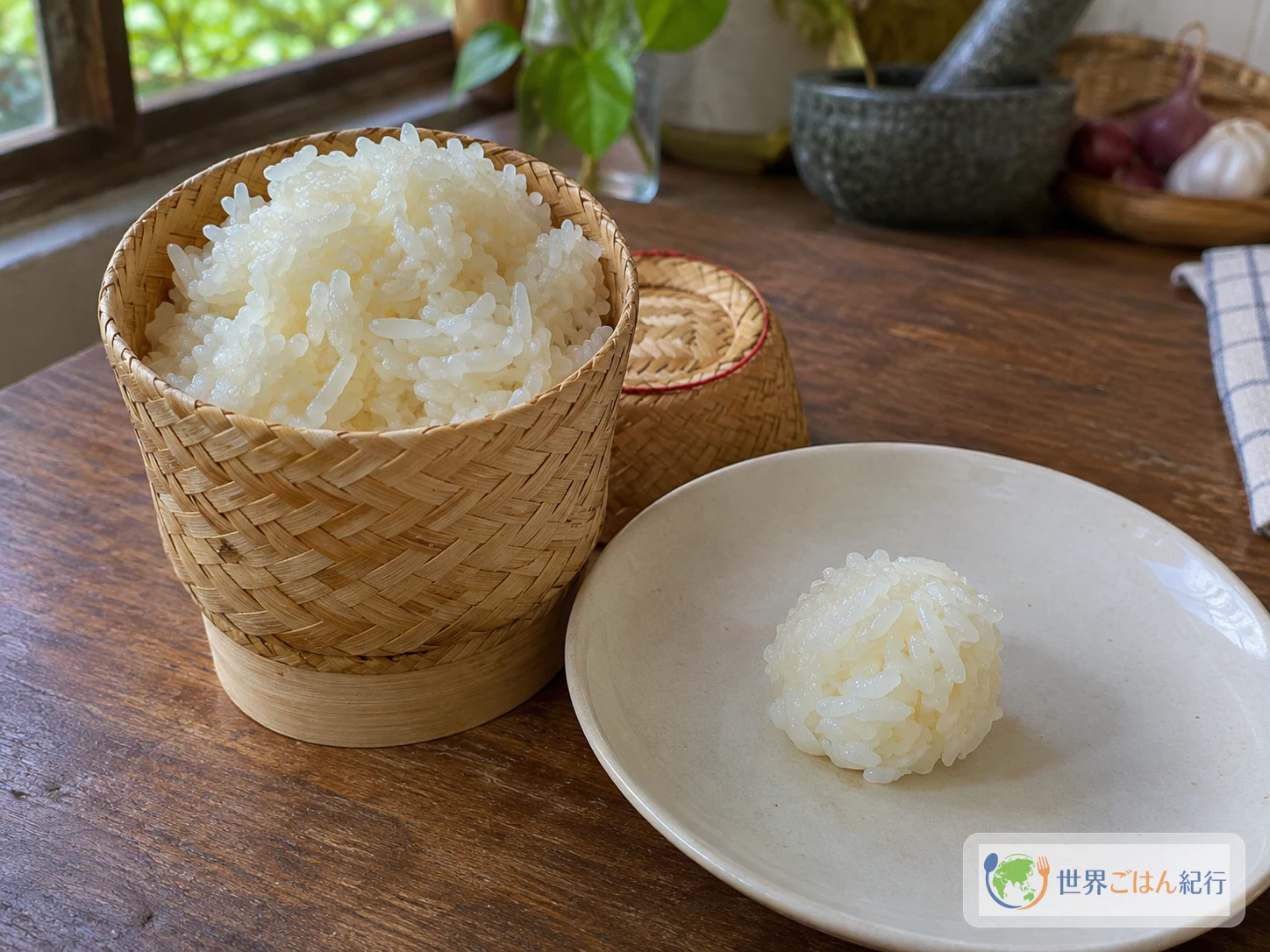
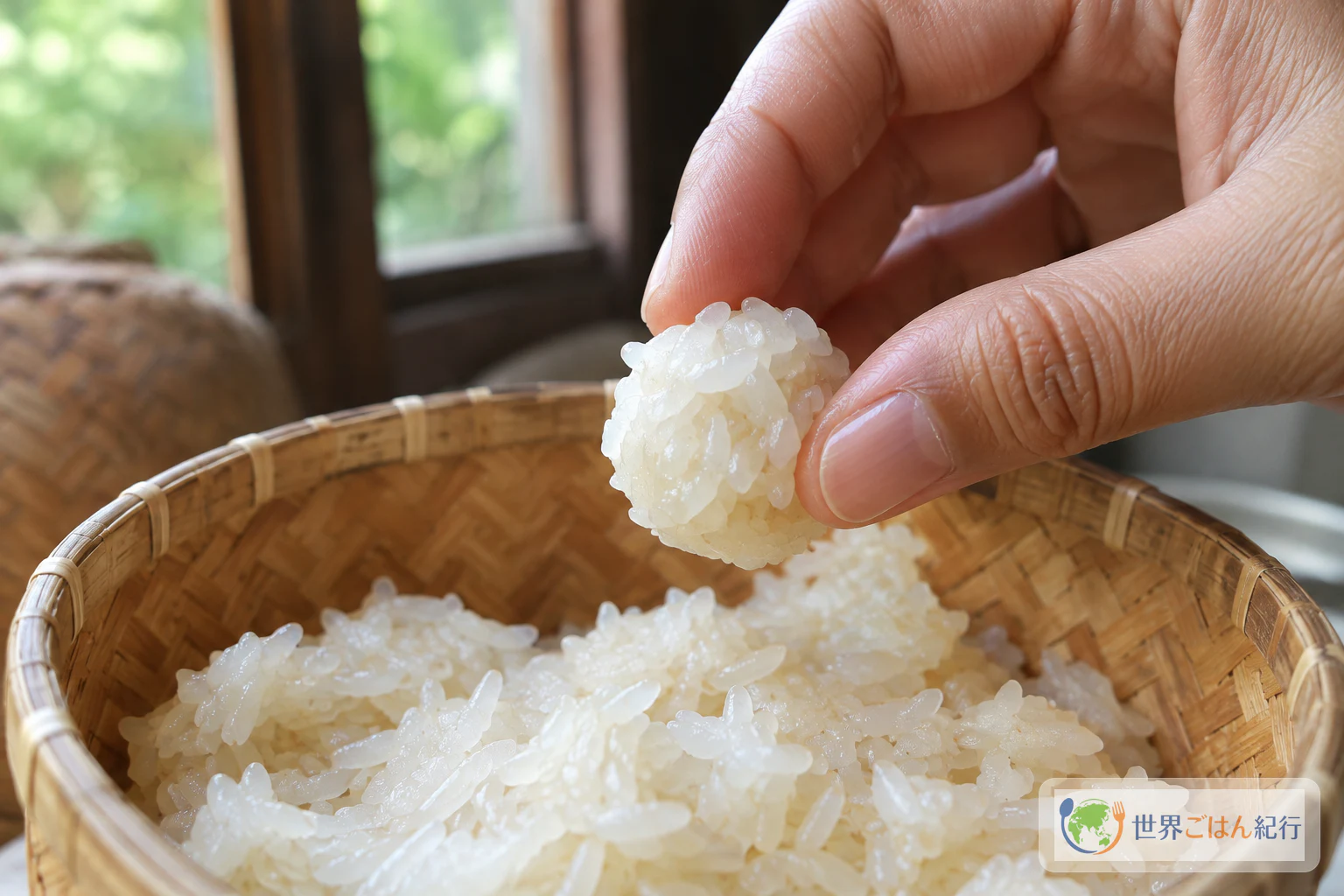
Steamed sticky rice is not scooped up grain by grain like a bowl of ordinary white rice. You pinch off a small portion, roll it in your fingers into a bite-sized ball, and use that ball to pick up a sauce or another dish. Penn Hongthong's Lao recipe describes sticky rice eaten this way, and the International Rice Research Institute's Rice Today magazine shows Lao sticky rice formed into hand-sized balls to eat with an eggplant dip or another Lao dish.
Khao niao (ເຂົ້າໜຽວ, written Kao Neo in Penn Hongthong's recipe) is plain, unseasoned white sticky rice, soaked and then steamed. This article is about that everyday rice only. It is not Thai mango sticky rice, which is a sweet dessert made with coconut, and it is not black sticky rice, khao khua (toasted rice powder) or khao poon (a noodle dish).
Below you can decide how long to soak, what steamer to use, how to tell when the grains are cooked through, and how to eat the rice by hand. The recipe follows Penn Hongthong's version: 1 cup of uncooked rice per serving, here doubled to 2 cups for two. Her recipe does not say what size of cup it means, so no weight or metric conversion is given. Her steaming time is an approximate guide, not a guarantee for every stove, basket or bag of rice, and Sekai Gohan has not kitchen-tested this version. Judge the finish by the grains themselves.
In Lao script it is ເຂົ້າໜຽວ, usually romanized khao niao; Kao Neo is another spelling. In English it is called sticky rice, sweet rice or glutinous rice. "Glutinous" describes the sticky texture of the cooked rice.
A Bite Rolled by Hand: Sticky Rice at the Lao Table
In this rice, the cooking and the eating are linked. It is steamed in a basket, loosened so the steam can escape, and then shaped by hand at the table. Penn Hongthong compares sticky rice to bread in Lao meals: the thing you tear off and use to carry the rest of the food. Rice Today likewise describes rolling the rice into a ball to eat with dishes.
Food from Northern Laos: The Boat Landing Cookbook, edited by Dorothy Culloty with credited Lao cooks, places sticky rice within the foodways of northern Laos. As described in the book, it covers the varieties grown there, the traditional conical steaming basket and serving basket, turning or spreading the rice to release steam, and hand-formed rice balls used to scoop food. Those details come from specific northern communities, so read them as examples from that region, not as one rule for every household in Laos.
What carries across is a reproducible technique: steam the rice so it never sits in water, let the steam out so the grains do not turn heavy, and form one bite at a time. For other Lao dishes and their place on the table, see Laos.
Ingredients: Sticky Rice and Water, for 2 Servings
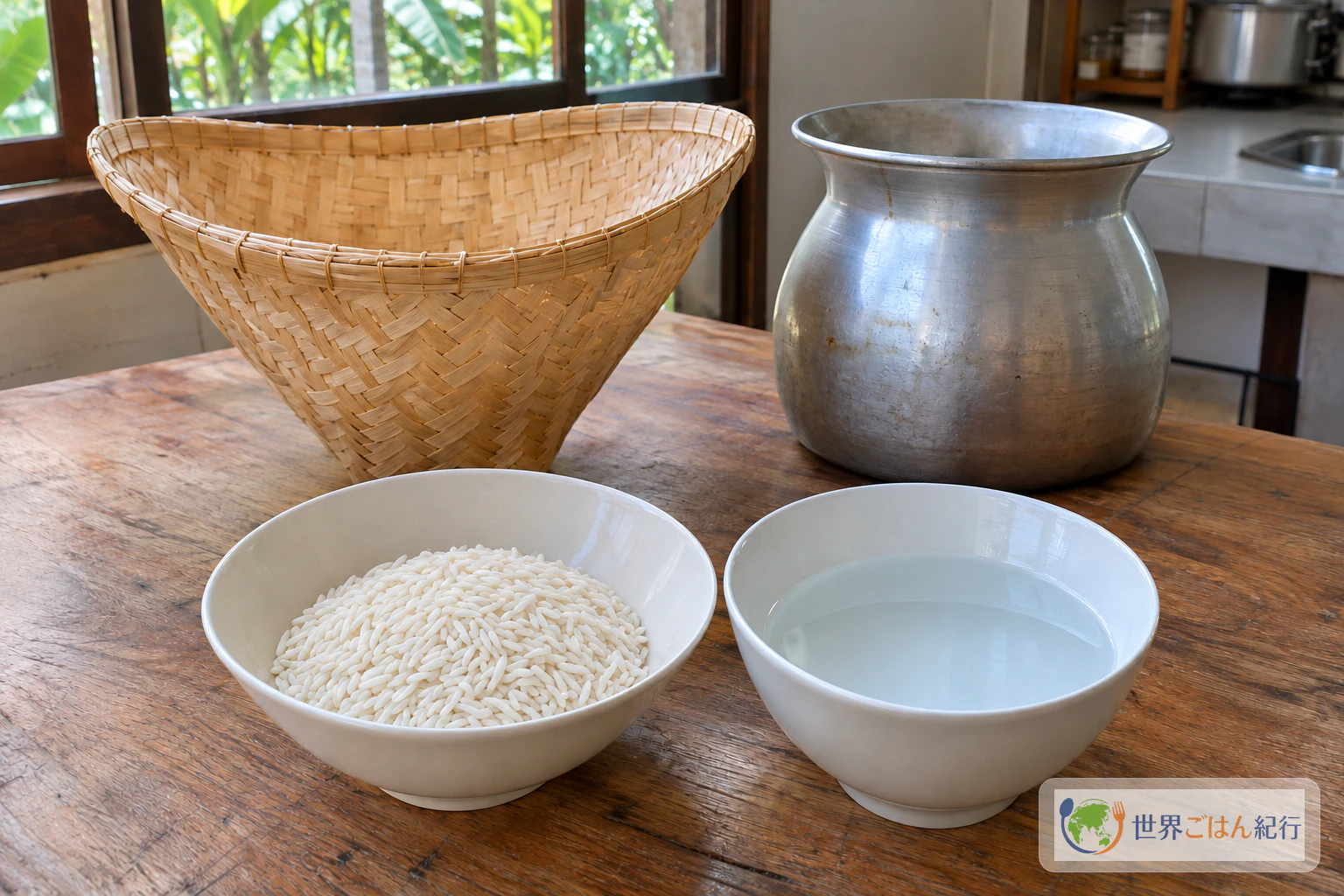
Nothing else goes in: no salt, sugar, oil or coconut milk.
Equipment
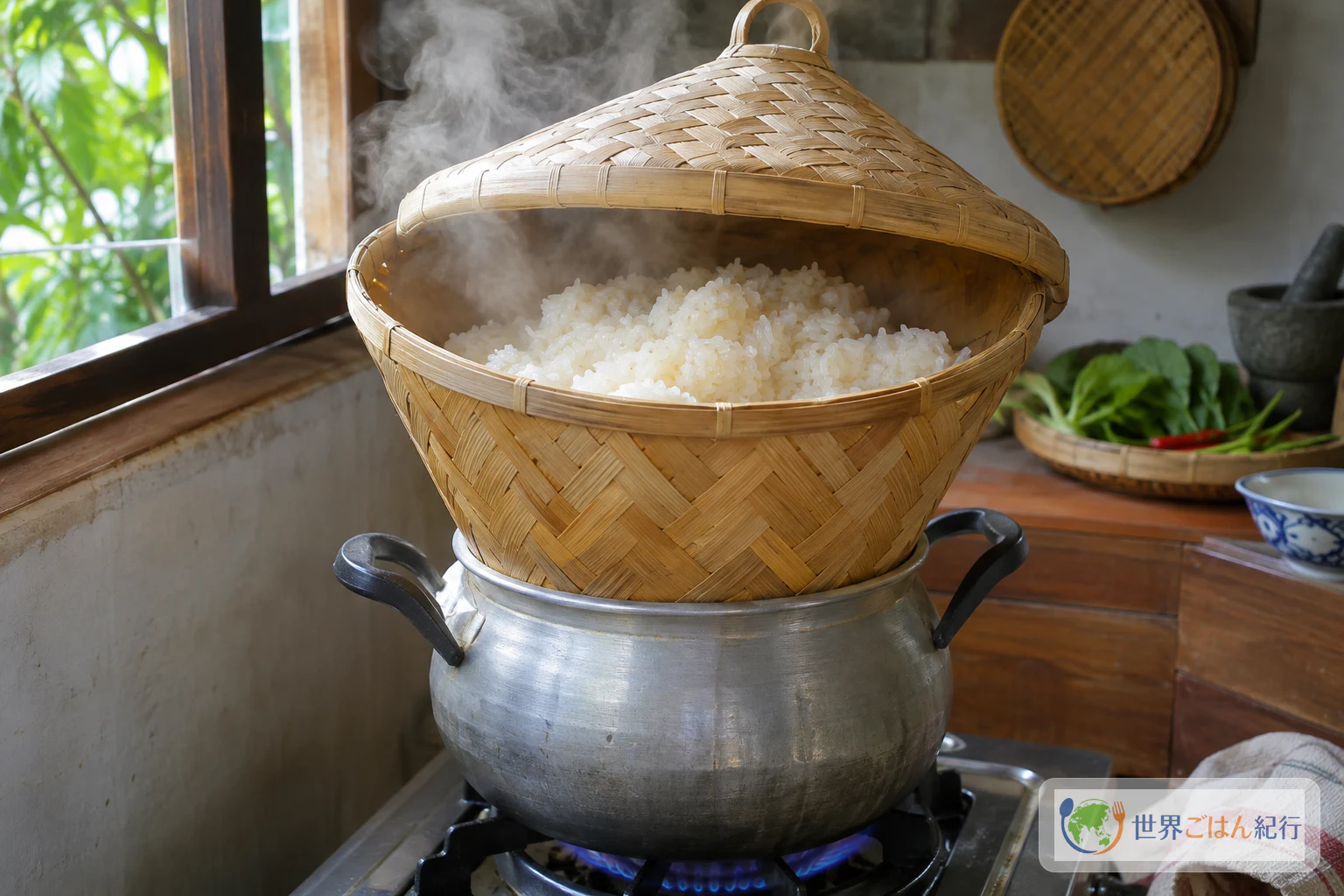
- Conical bamboo sticky-rice steaming basket and a matching pot, with a lid
- A bowl for soaking
- A wooden spoon, dampened before use (a damp ordinary spoon also works)
- A clean heatproof stand or surface to rest the hot basket on
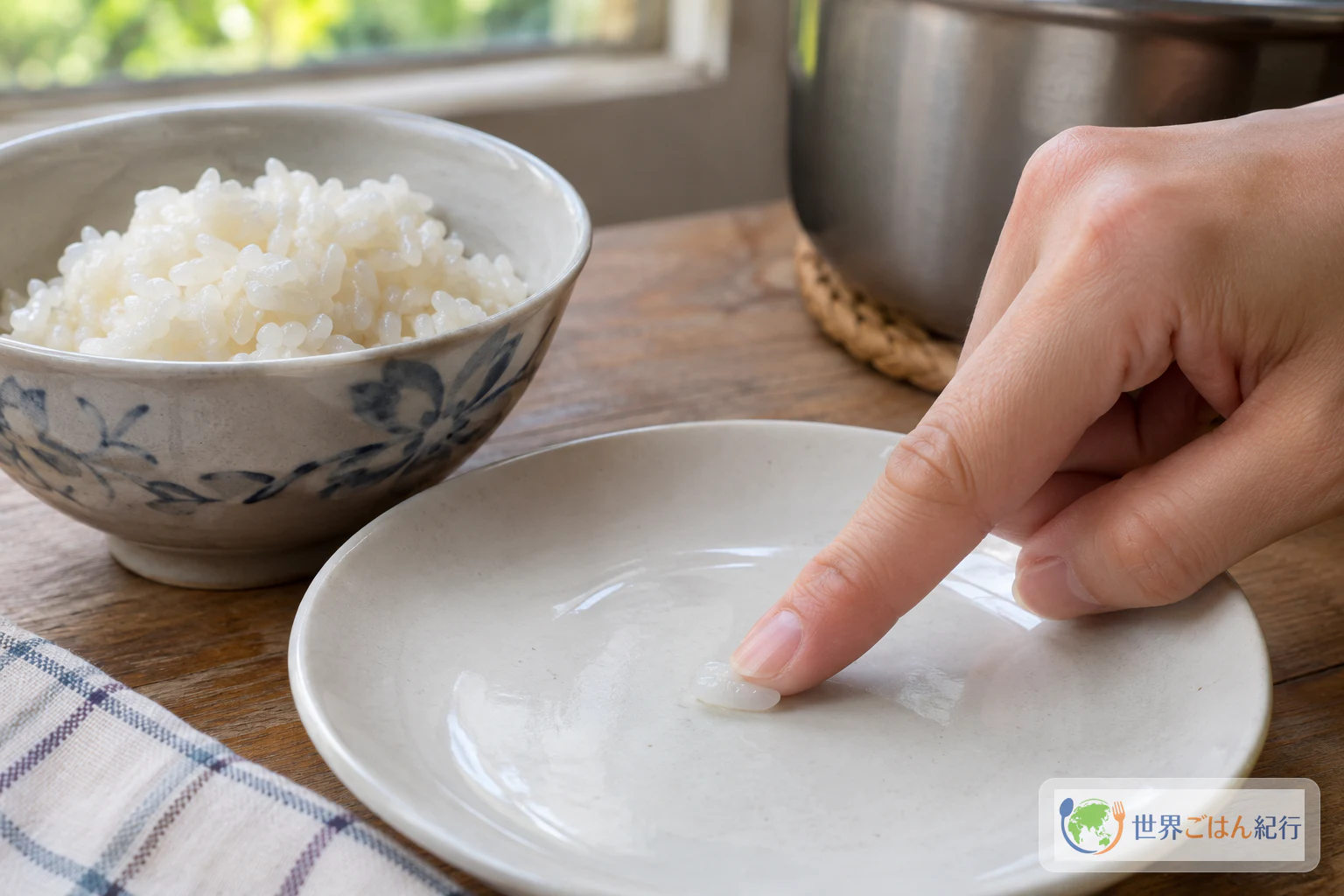
- A small clean plate for checking a grain
- A bamboo rice container for serving (optional)
Choosing the Rice and the Steamer
Rice. Look for bags labeled Thai sticky rice, sweet rice or glutinous rice, and check the ingredients and the bag size. Thai glutinous rice can have long, slender grains. Go by the label, not the look of the grain.
If Thai sticky rice is hard to find or comes only in large bags, short-grain glutinous rice (such as Japanese mochigome) is a reasonable rice to try. Its aroma and grain shape can differ, so do not expect exactly the same result. Ordinary non-glutinous rice, such as jasmine or sushi rice, is a different ingredient and does not make khao niao.
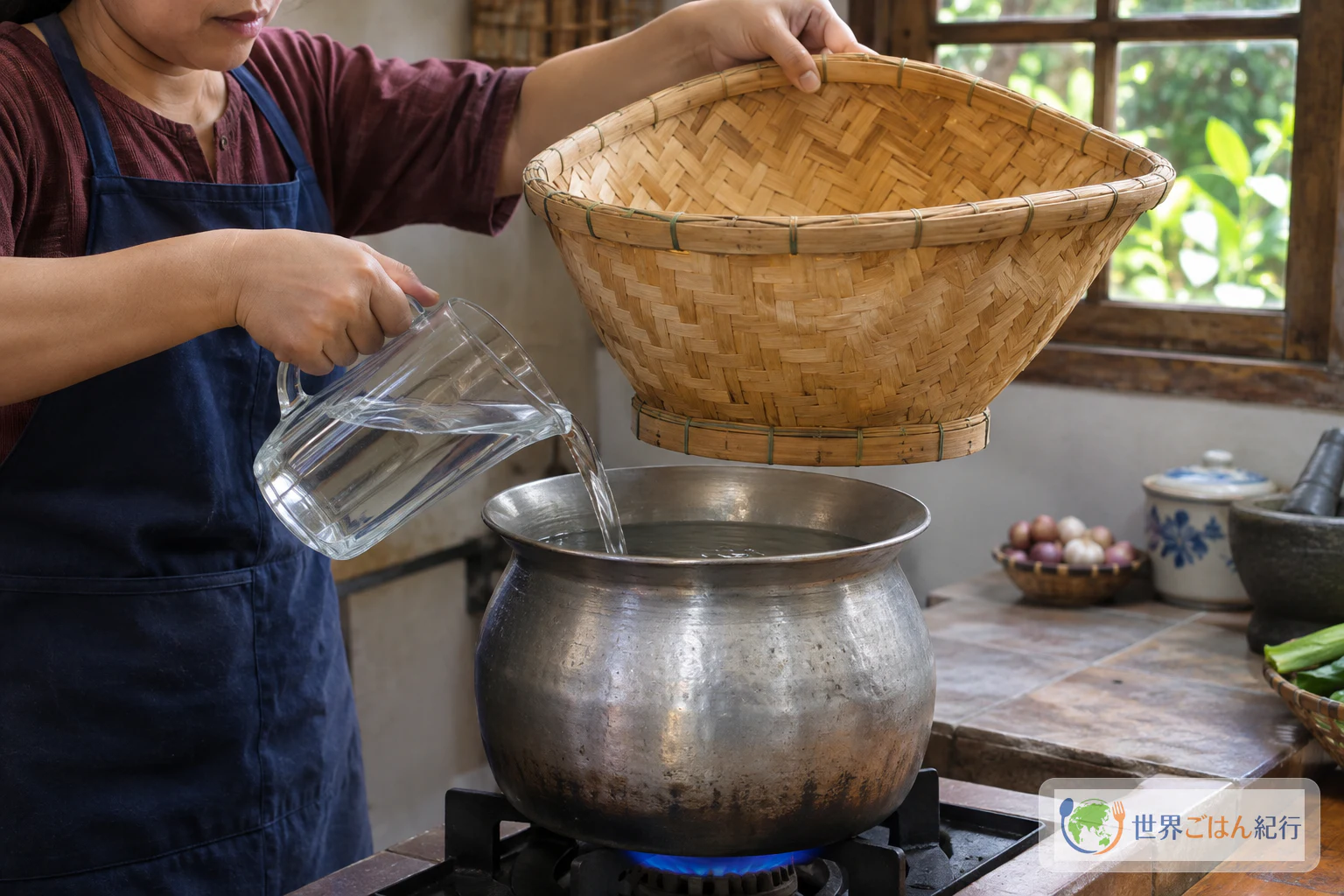
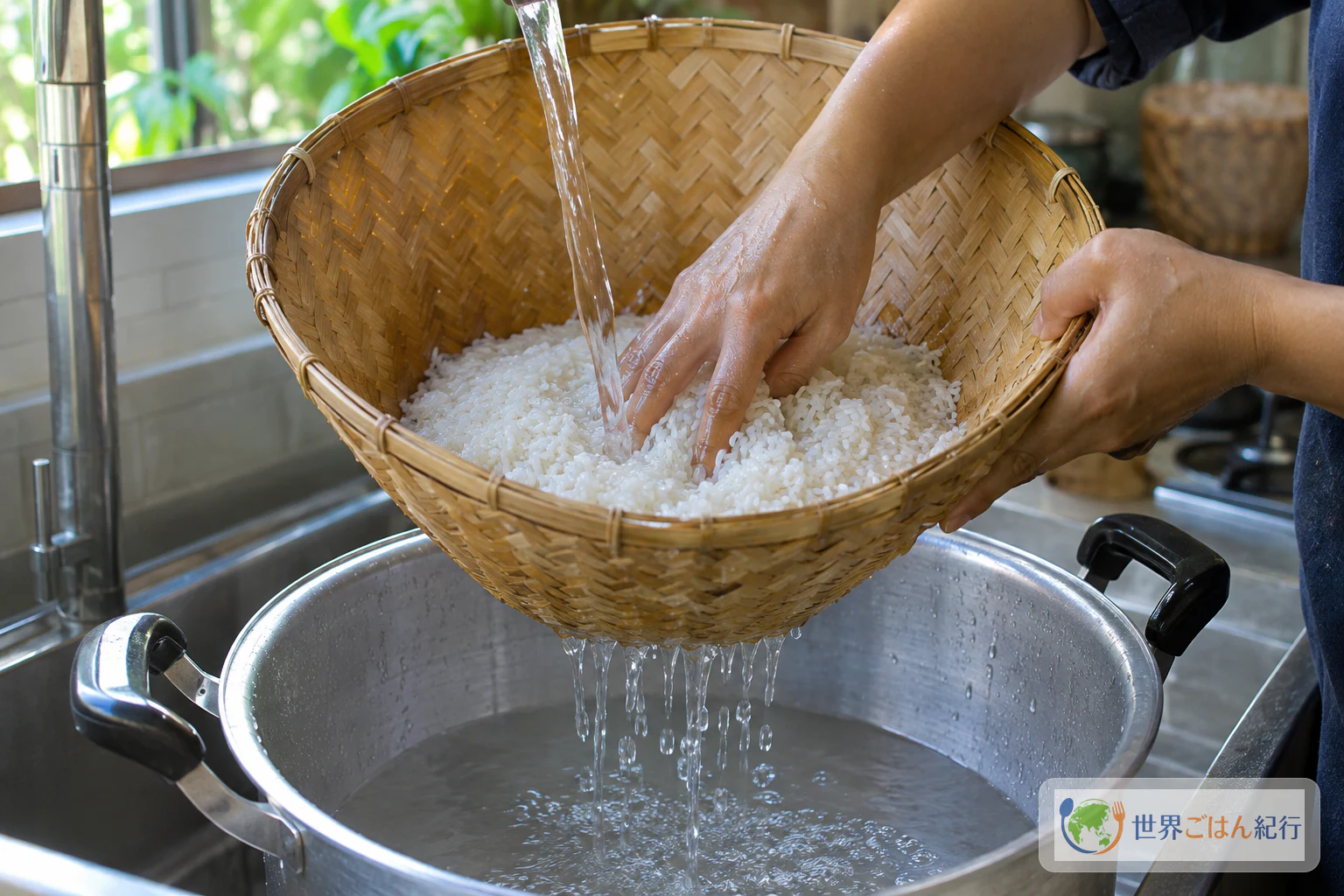
Steamer. The conical bamboo basket (sometimes sold as huad or huat) sits in the mouth of its pot, so the rice hangs above the water in the steam. If you buy one, check that its diameter and height fit the pot. You do not have to buy one to start. A deep pot with a steamer insert lined with a steaming cloth or cheesecloth can stand in. The cloth should be loose-woven enough to let steam through but tight enough that grains do not fall through, and it should not touch the lid. Check the label on any cloth for washing and reuse. The photos in this article all use the conical basket.
Serving container. A bamboo rice container keeps the rice covered without sealing in all the moisture. A bowl with a loosely set lid works too. Neither is a way to keep rice at a safe temperature for long; see the leftovers section below.
The only ingredients are rice and water. "Glutinous" refers to the sticky texture, not to wheat gluten. Still, check each product's label and any manufacturing-facility statements for allergens.
Method: Soak, Steam, Let the Steam Out
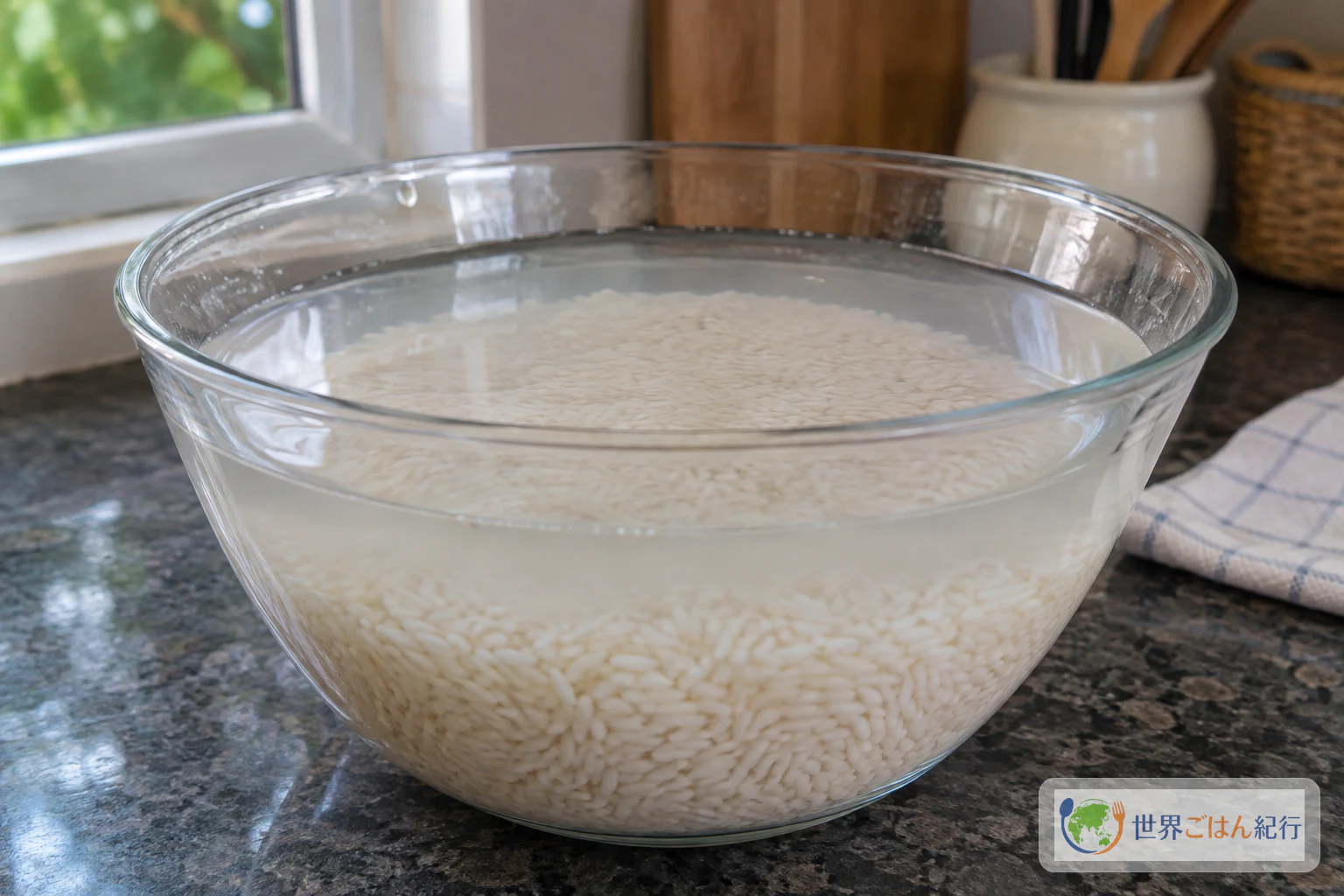
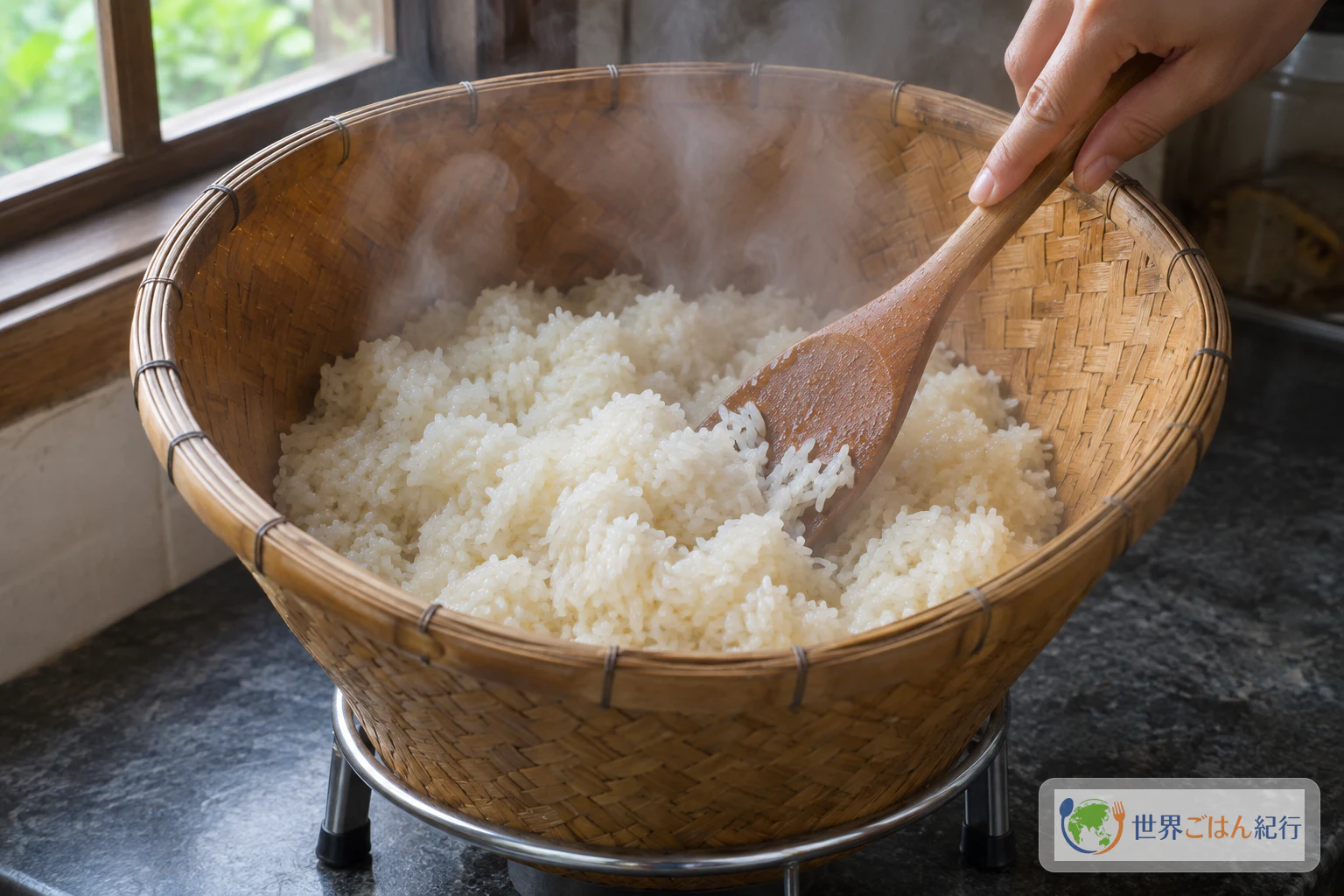
Two hours of soaking is the standard; 45 minutes in very warm water works when you are in a hurry. Do not rely on the clock alone at the end: check that no hard core remains in the grains.
Reading the Rice: Hard, Watery or Gummy
Judge doneness by checking a grain for a hard core.
| Condition | Likely cause | What to do |
|---|---|---|
| Hard core in the grains | Not enough soaking or not enough steam; differences in rice or equipment | Cover again and steam a little longer with the steam going, then check another grain. Next time, try the full 2-hour soak |
| Wet, watery rice | The basket or rice touched the water in the pot | Next time, keep the water level below the bottom of the basket |
| One heavy, gummy mass | The steam was not let out after cooking, or the rice was pressed down | Do not skip the minute of stirring with a damp spoon. Loosen, don't knead |
| Surface drying out before the meal | Rice left uncovered | Keep it in a clean, covered container until you eat |
| No conical basket | — | Use a deep pot, a steamer insert and a steaming cloth that holds the grains but lets steam through, with the cloth clear of the lid |
Timing differs between published recipes. Penn Hongthong gives about 10–15 minutes of steaming. Food from Northern Laos gives 20–30 minutes, and up to 40 minutes for a larger amount. Rice Today steams for about 30 minutes, turns the rice and steams another 10–15 minutes. These are different methods with different soaking times and quantities, so they are not mixed into this recipe. They do show why the grain, not the timer, decides when the rice is done.
Variations: Five Ways to Read the Same Recipe
Each of these changes one thing at a time, keeping the rice-and-water recipe the same.
- Thai sticky rice or short-grain glutinous rice. Notice how aroma and grain shape differ. The result is not guaranteed to match.
- 45-minute soak or 2-hour soak. Use one next time and compare the texture after steaming.
- Conical basket or cloth-lined steamer. Compare how the steam passes through and how well the rice drains.
- Bamboo container or lidded bowl. Choose whichever you prefer for bringing the rice to the table.
- Bite size. Make the balls larger or smaller depending on whether you are scooping a dip, a minced-meat salad or steamed fish.
Eating Khao Niao with Other Dishes
Khao niao is a staple eaten with other dishes, not something you season itself. Penn Hongthong describes forming the rice into a ball by hand to eat with food and sauces. Rice Today pairs it with an eggplant dip or another Lao dish. Sticky rice also appears beside other Lao dishes on Sekai Gohan, such as laab (a minced-meat salad with toasted rice powder and herbs) and mok pa (fish steamed in leaves). Those are separate recipes; nothing from them goes into the rice.
If you see "khao niao" in the name of Thai mango sticky rice, that is a sweet dessert made with coconut and mango, a different dish from this plain rice.
Leftovers and Food Safety
Rice is one of the foods that can cause food poisoning by Bacillus cereus. Serve khao niao freshly steamed and do not leave it standing at room temperature for a long time.
Following Japan's Ministry of Health, Labour and Welfare (MHLW) household food-poisoning guidance: divide leftovers into small portions in clean, shallow containers, cool them quickly, and refrigerate promptly. When you reheat, heat thoroughly.
A HACCP hygiene guide for yakiniku restaurants, published by Japan's National Yakiniku Association and hosted on the MHLW website, notes that rice-based foods can cause Bacillus cereus food poisoning. It advises against leaving them at room temperature. For storage, it says to divide food into small portions, cool it quickly and keep it at 8°C or below, or hold it hot at 55°C or above. That is guidance for food businesses with controlled equipment. A bamboo rice container keeps rice covered at the table, but it is not hot-holding equipment and should not be used to store rice.
Penn Hongthong's recipe also says the rice can be kept at room temperature for days. This article does not follow that advice, because it conflicts with current food-safety guidance. No storage period is given here.
Frequently Asked Questions
Can I make it with ordinary rice?
No. Ordinary non-glutinous rice, such as jasmine or sushi rice, will not give the sticky texture that lets you roll a bite by hand. Use rice labeled sticky, sweet or glutinous. Short-grain glutinous rice can work, but expect some differences from Thai sticky rice.
My Thai sticky rice has long, slender grains. Is it the wrong rice?
Not necessarily. Thai glutinous rice can be long-grain; a Japanese government procurement document lists Thai long-grain glutinous polished rice. Check the label rather than judging by grain shape.
How long should I soak it?
This recipe uses 2 hours as the standard, or 45 minutes in very warm water if you are in a hurry. Food from Northern Laos soaks for 6 hours, or 2 hours in warm water when time is short, and Rice Today soaks for 2–3 hours. Those belong to their own methods, so they are not a range for this one.
How many minutes does it steam?
About 10–15 minutes, covered, over high heat. Other recipes use 20 minutes or more with different soaking and quantities. Your rice and steamer may differ, so check a grain on a separate plate and keep steaming briefly if a hard core remains.
Do I need the special bamboo basket?
It makes the traditional setup easiest, because the rice hangs in the steam above the water. If you don't have one, a deep pot with a steamer insert and a steaming cloth can stand in. That option is Sekai Gohan's equipment suggestion, not part of Penn Hongthong's recipe.
Can I keep leftover rice at room temperature?
No. Do not leave it out for a long time. Divide leftovers into small portions in clean, shallow containers, cool them quickly and refrigerate promptly, then reheat thoroughly before eating.
Sources
- Penn Hongthong, "Sticky Rice or Sweet Rice (Kao Neo)," in a Lao recipes handout hosted as a PDF on cplib.org (author as stated in the document; publisher not stated). The main recipe: Thai sticky rice at 1 cup uncooked per serving, a very warm-water soak of 45 minutes when rushed or 2 hours preferred, pot water about 3 inches deep and below the basket, rinsing and draining in the basket, covered high-heat steaming for about 10–15 minutes, stirring with a damp wooden spoon for about 1 minute to release steam, transfer to a bamboo rice container, and hand-formed rice balls. Its room-temperature storage claim is not adopted. https://www.cplib.org/wp-content/uploads/2020/11/Lao-Recipes.pdf
- Dorothy Culloty (ed.), Food from Northern Laos: The Boat Landing Cookbook, Galangal Press, with Lao cooks credited in the book. Northern Lao sticky-rice foodways and varieties, the traditional steamer and serving basket, releasing steam, hand-formed rice balls, and a separate method with different soaking and steaming times, used for comparison only. https://phakhaolao.la/wp-content/uploads/2024/09/food-from-n-laos-pdf-2019.pdf
- Rice Today / International Rice Research Institute (IRRI), "Laotian steamed sticky rice with eggplant dip." Lao sticky rice eaten as a hand-sized ball with an eggplant dip or another Lao dish, and a separate soak-and-steam method used for comparison only. https://www.ricetoday.irri.org/laotian-steamed-sticky-rice-with-eggplant-dip/
- National Yakiniku Association (Japan), HACCP hygiene management guide for yakiniku restaurants, section on Bacillus cereus, hosted on the Ministry of Health, Labour and Welfare website. Rice-based foods as a possible cause of Bacillus cereus food poisoning, avoiding room-temperature holding, and business storage conditions of quick cooling in small portions to 8°C or below or hot holding at 55°C or above. https://www.mhlw.go.jp/content/11135000/000708827.pdf
- Ministry of Health, Labour and Welfare (Japan), "Preventing food poisoning at home" (家庭での食中毒予防). Not leaving cooked food at room temperature for long, cooling leftovers quickly in shallow containers, and reheating thoroughly. https://www.mhlw.go.jp/stf/seisakunitsuite/bunya/kenkou_iryou/shokuhin/syokuchu/01_00008.html
- Ministry of Agriculture, Forestry and Fisheries (Japan), bid-monitoring committee materials (65th meeting), procurement table. Lists Thai long-grain glutinous polished rice, showing that a long, slender grain does not by itself mean non-glutinous rice. https://www.maff.go.jp/j/supply/iinkai/attach/pdf/index-172.pdf