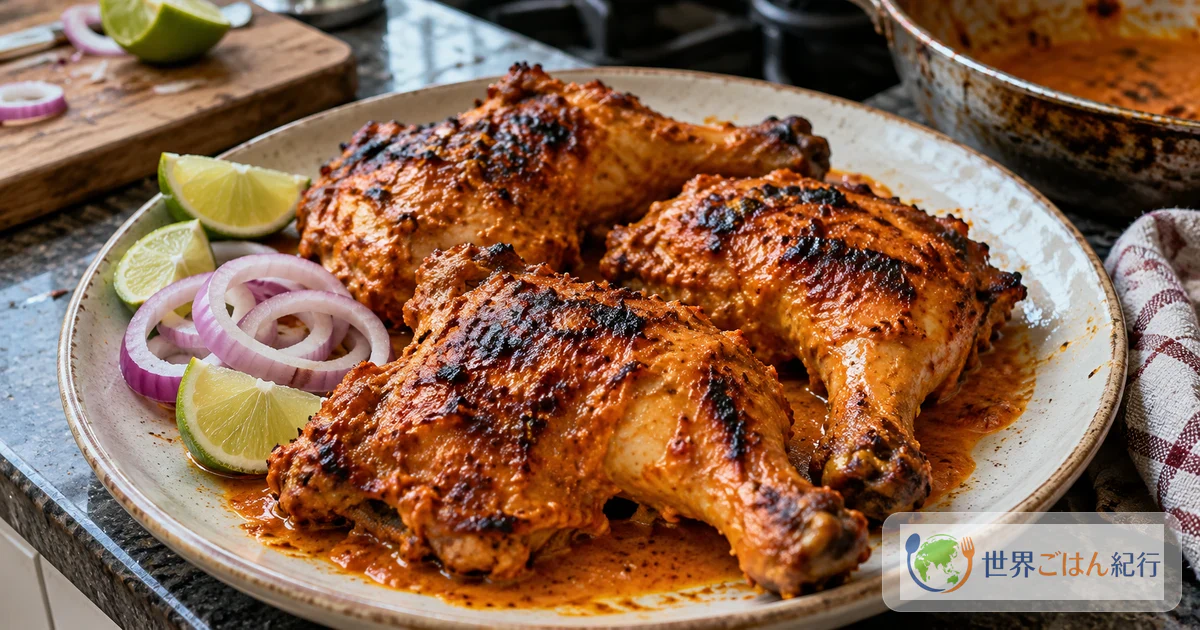
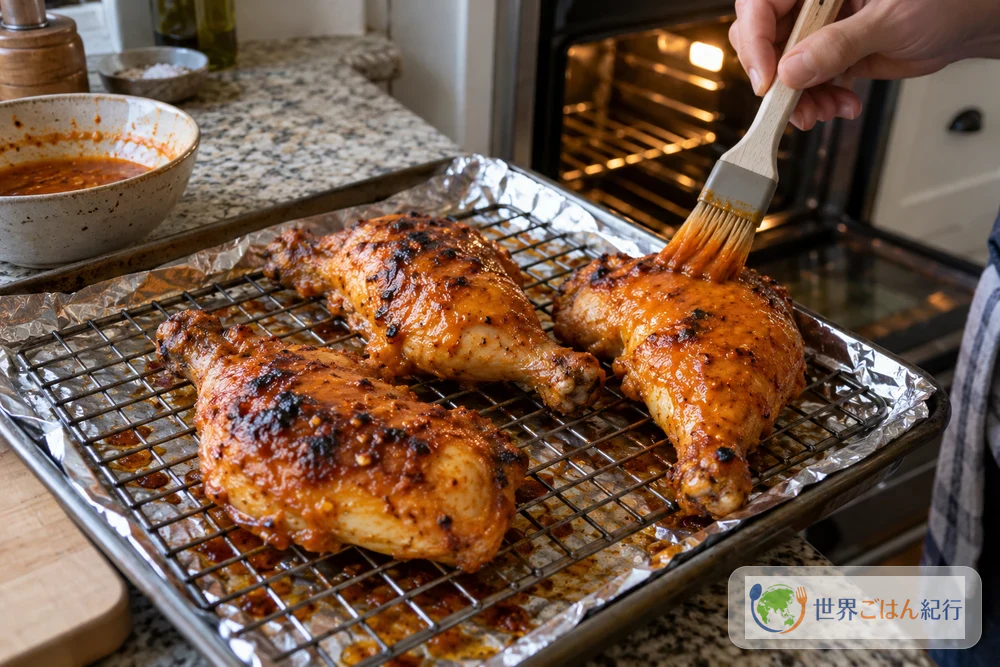
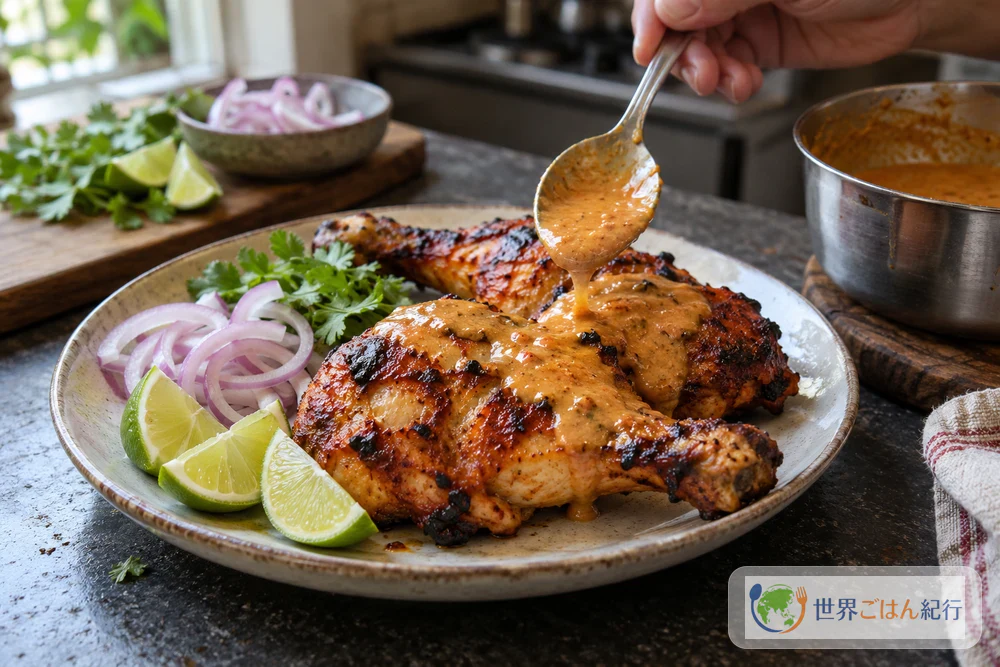
In the evening, the Ramadan bazaar begins to fill with people waiting to break the fast. Over long charcoal grills, chicken coated in an orange sauce lines up in rows, and each time a seller brushes on more sauce it hisses and smoke rises. The sweet aroma of coconut, lemongrass and turmeric, and the smell of scorched sugar. This is the specialty of Kelantan in northeastern Malaysia, ayam percik.
A grilled chicken from the east coast, named for the sound of sauce splashing
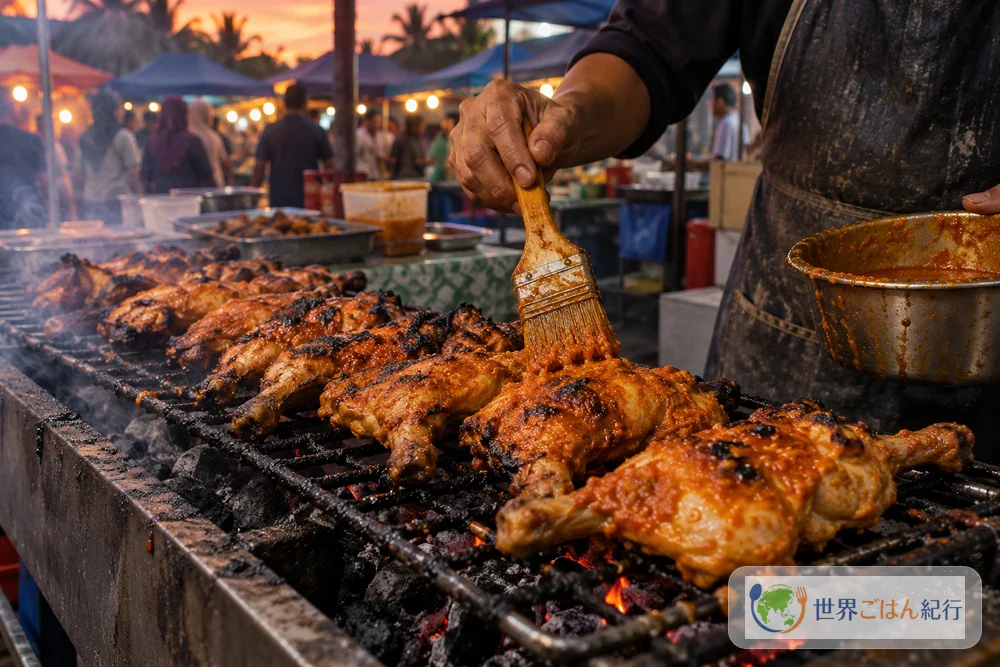
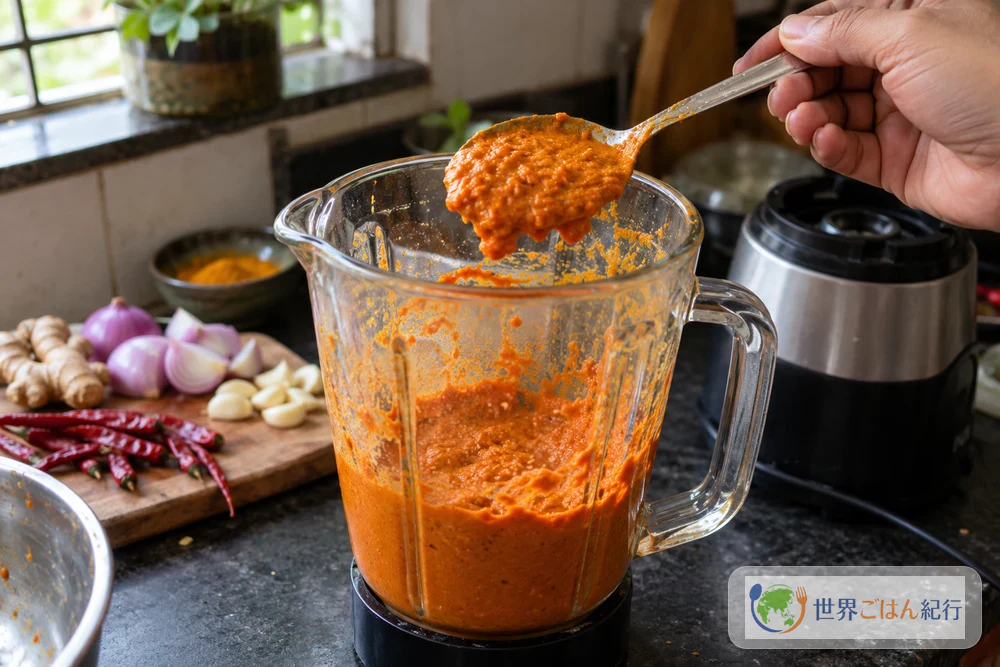
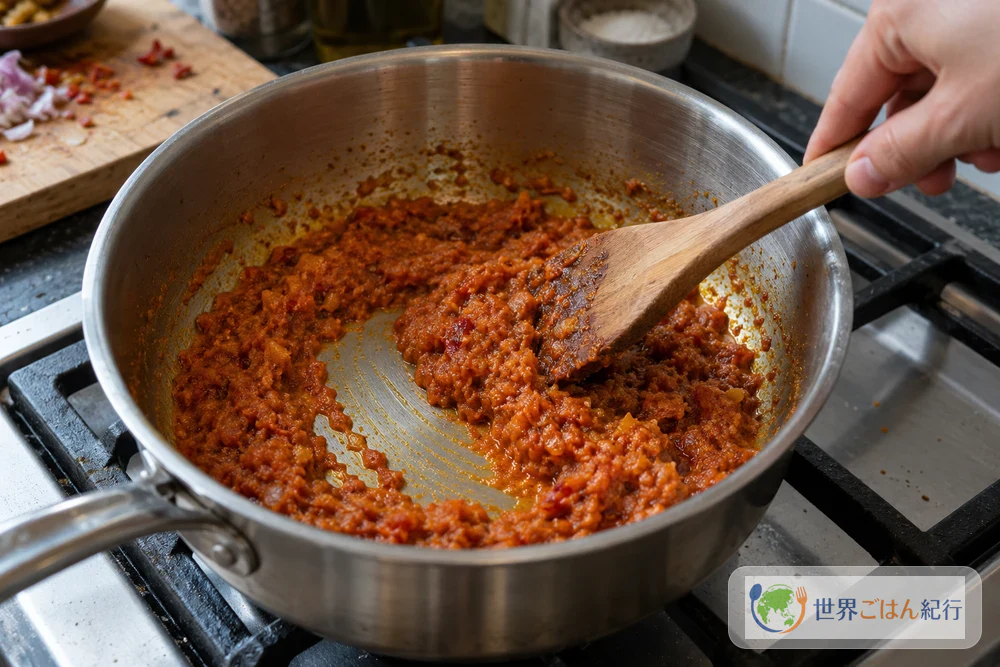
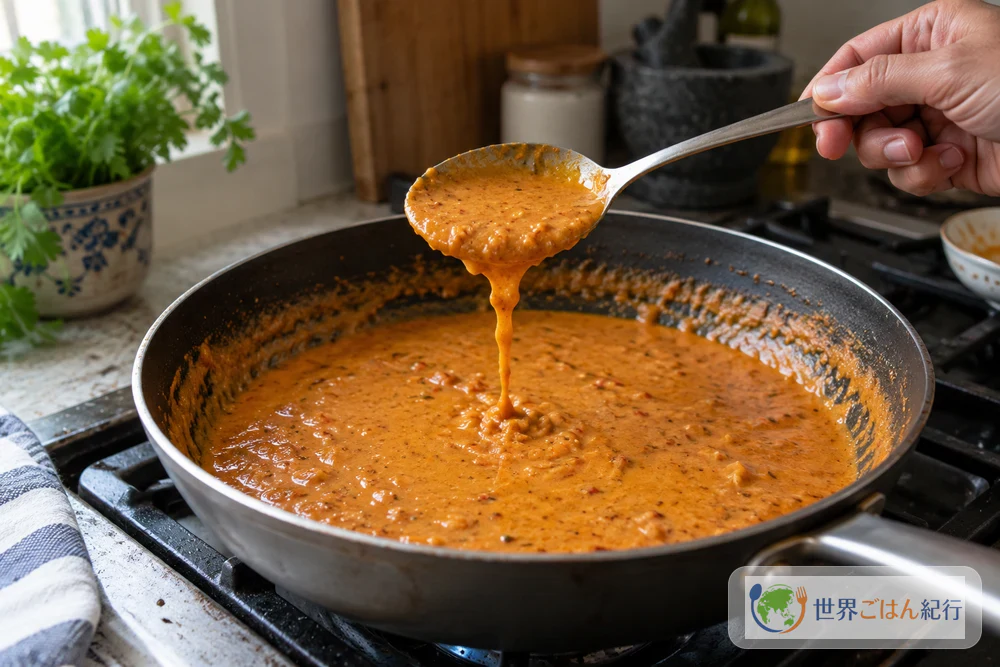
In Malay, "ayam" is chicken and "percik" means to splash or spatter. The food blogger K.P. Kwan writes that the name may come from the way the sauce brushed on spatters onto the chicken as it grills over charcoal. The sauce combines the rich cream of coconut with a paste of fried spices. It is brushed on during grilling and spooned generously over afterward, so you get a grilled chicken with a fragrant surface and a thick, sweet sauce.
It is eaten across Malaysia but is known as a specialty of Kelantan. In Kelantan there are two broad schools: a white sauce that leaves out chili and finishes sweet and creamy, and a red sauce with chili paste added for gentle heat. This article makes the red sauce.
During Ramadan, ayam percik stalls are extremely busy. At a shop in Pasir Mas, Kelantan, where about 50 chickens are usually sold in a day, the number rises to 250 to 300 during the fasting month, the Malaysian English-language newspaper New Straits Times reported. This shop's sauce is made with pure coconut milk with no water added.
An article introducing a Malaysian restaurant in Sydney, Australia, describes the sauce as "a thick, half-sweet sauce made from fried spices, coconut milk and coconut flesh." You brush it onto the chicken partway through grilling, take it off the heat once it has taken on good color, and cover it with sauce again. Repeating the brushing and grilling is the foundation of the dish. It is grilled in large quantities at festivals and Ramadan bazaars, and also at village feasts.
What to know when making it in a home kitchen
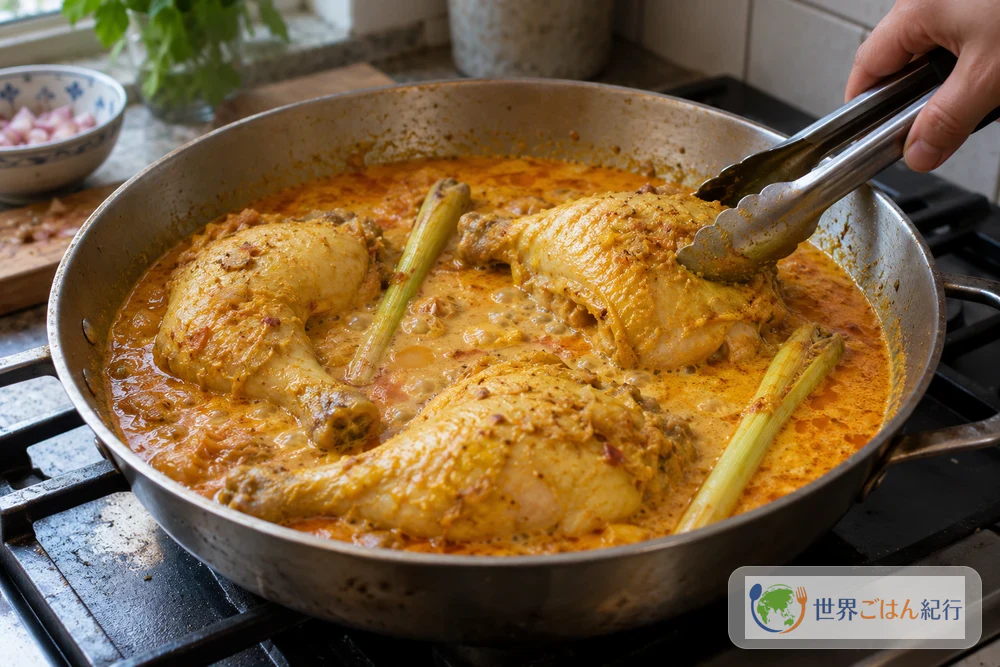
The authentic way is over charcoal, but this article is based on the oven-roasted recipe that K.P. Kwan presents on his site Taste Of Asian Food. You first simmer the chicken in the sauce, then bake it in the oven, brushing it again and again, which has the advantage at home of cooking through to the center without scorching too much.
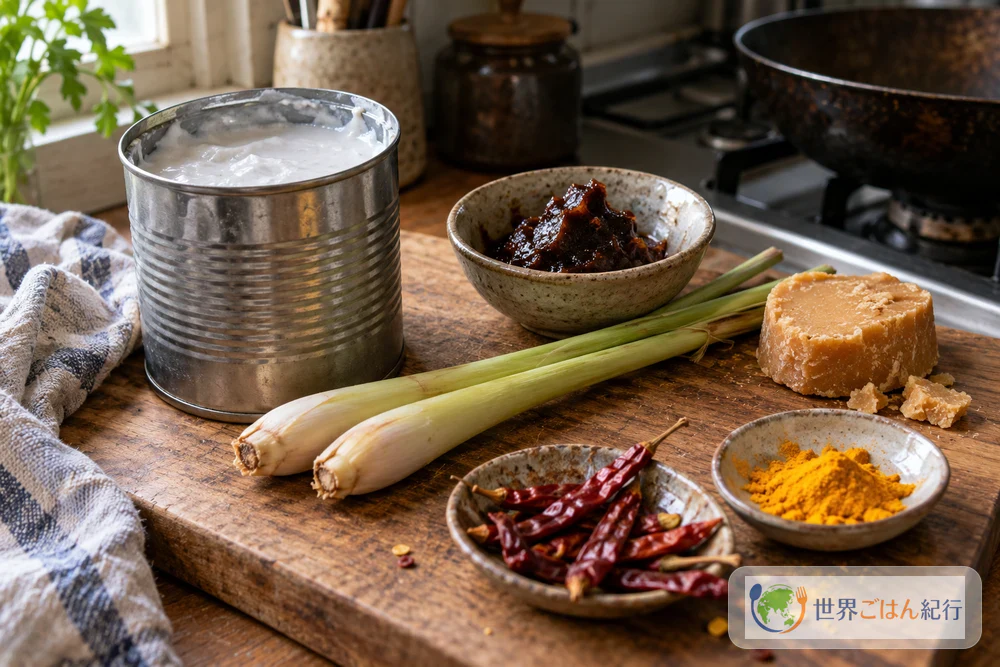
The pillar of the sauce is coconut cream. With a rich, high-fat one, the sauce is less likely to run off when grilled and stays firmly on the chicken. Canned coconut cream is convenient, but if you use coconut milk, scoop plenty of the thick part that has set on top of the can.
Bruise the white base of the lemongrass by crushing it with the back of a knife or a rolling pin before adding. Once the fibers break, the aroma comes out into the sauce more easily. If you can't get fresh lemongrass, frozen works the same way.
Tamarind is the fruit of a legume tree, and its sour pulp is sold as a paste. Its job is to tighten the sweetness of the sauce. Where you can't find it, some recipes substitute lime juice. Palm sugar can be replaced with raw cane or light brown sugar. Fresh turmeric (the root) is hard to find, so ground can substitute.
Ingredients (serves 3)
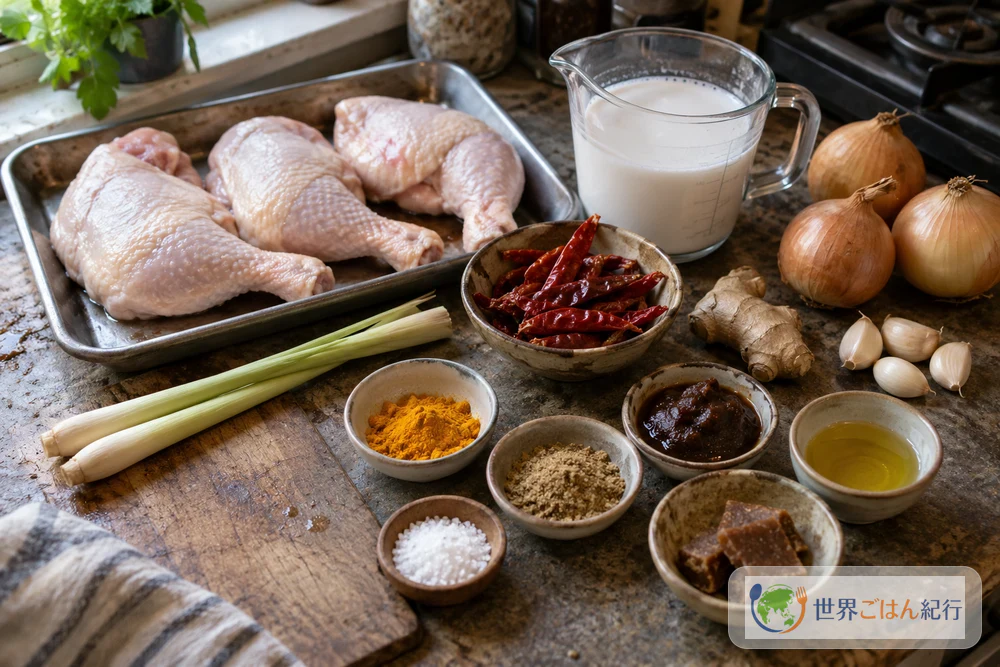
This dish contains no major allergens, but coconut cream is made from coconut. Turmeric easily stains clothing and plastic cutting boards, so wear an apron and wash up right after use.
How to make ayam percik
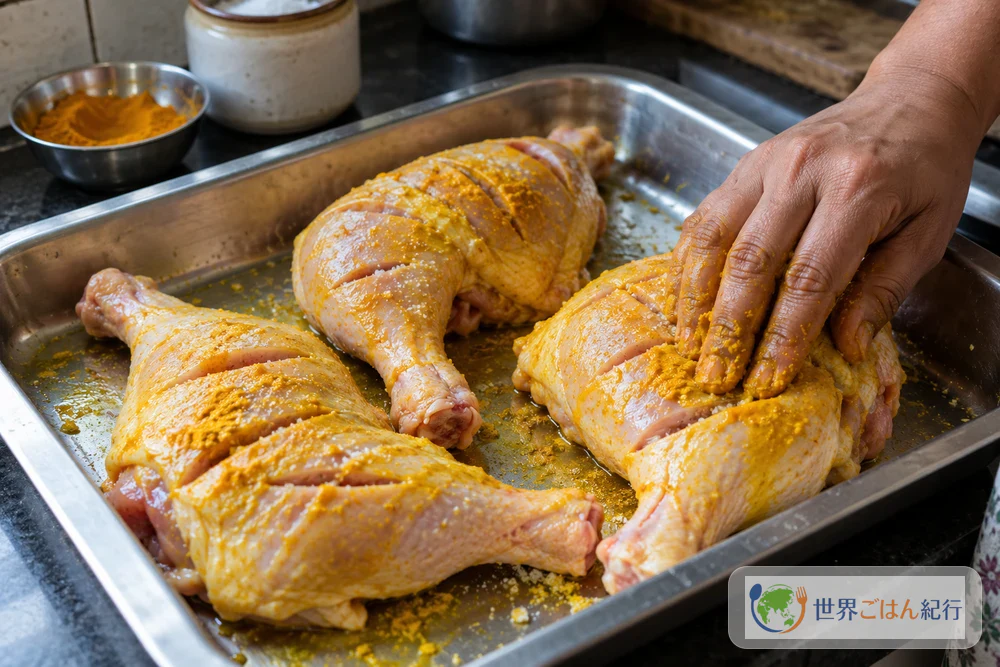
The chicken is marinated for half a day (about 6 hours), and the cooking after that takes about 1 hour 10 minutes. If you marinate it the night before, it is ready in time for the next day's dinner.
Cook the chicken thoroughly to the center. To prevent Campylobacter food poisoning, Japan's Ministry of Health, Labour and Welfare urges cooking chicken to 75°C at the center for at least 1 minute. Even if the sauce has darkened the surface, the area around the bone is slow to cook, so check at the thickest part.
The sauce is high in sugar, so on the upper rack of the oven it will scorch first. Put the baking sheet on the middle rack, and if the char is getting too strong, lay foil loosely over it and keep baking. Lining under the rack with foil makes it easier to clean up the sauce that drips.
Over rice, sauce and all
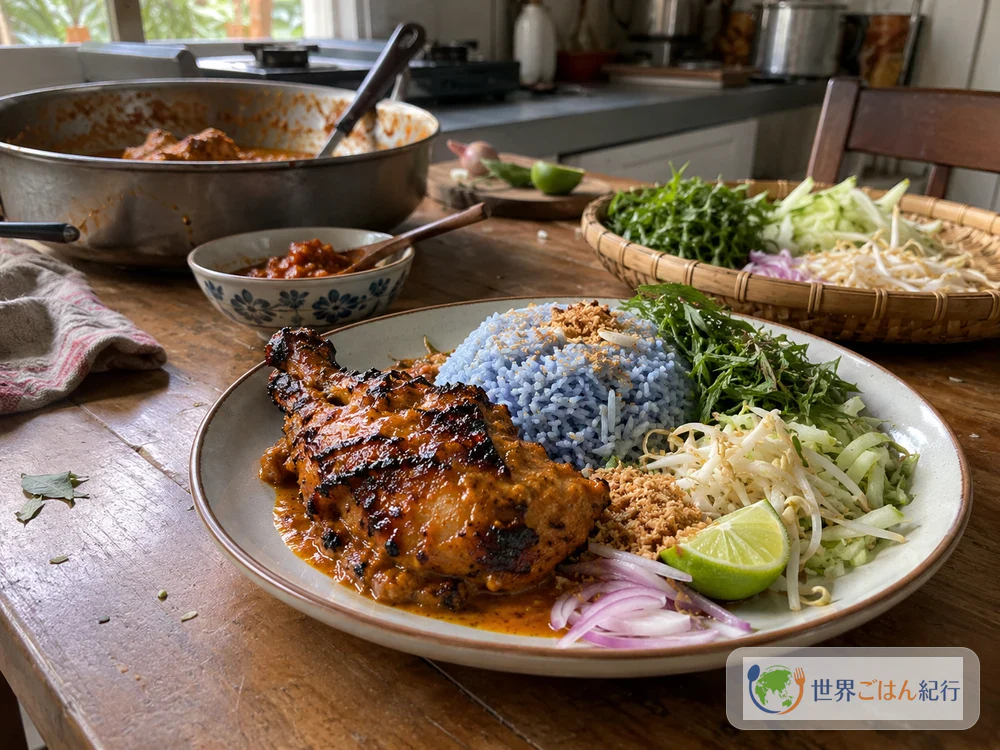
Ayam percik is typically eaten with rice. In Kelantan it is sometimes paired with nasi kerabu (in Japanese), rice dyed blue with butterfly pea flowers and served with herbs and vegetables. At home, plain white rice is plenty. Mixing the sauce left on the plate into the rice, with the sweetness of coconut and the aroma of lemongrass, makes the rice disappear.
The raw onion and lime on the side are a palate cleanser for the rich sauce. Squeeze the lime over and the sweet sauce lightens. To add more Malaysian dishes to the table, ayam masak merah (in Japanese), chicken simmered in a sweet-hot tomato sauce, and nasi lemak, rice cooked in coconut milk, also go well.
The traditional way to cook ayam percik is over charcoal. Because the sauce is brushed on again and again as it grills, smoke rises each time sauce drips onto the coals, layering toasty flavor onto the chicken. A home oven can't produce that smoke aroma, but getting a good char brings you to a similar toastiness.
Variations
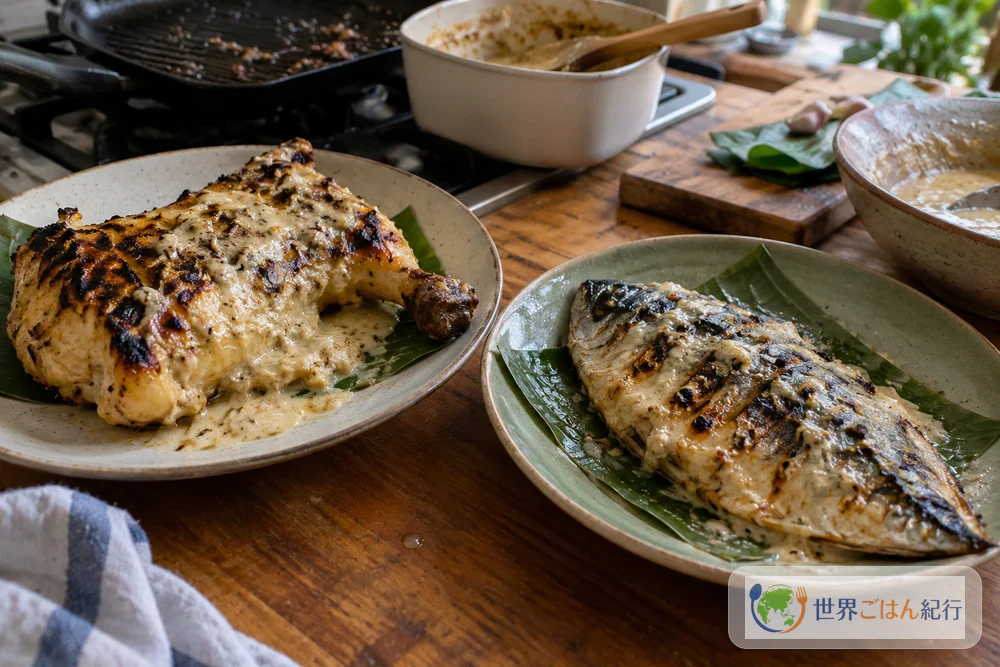
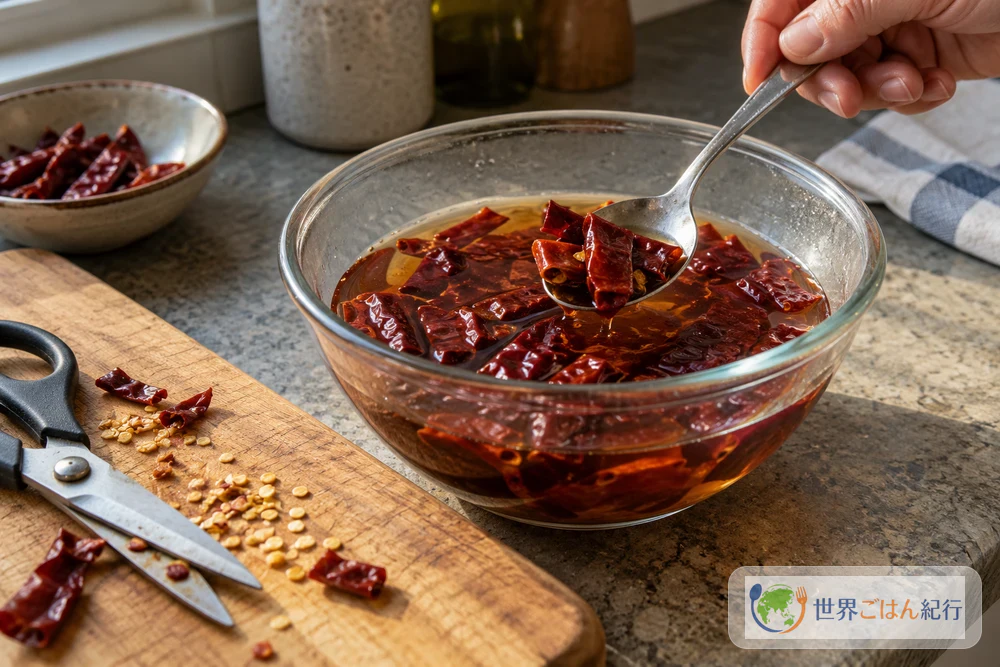
Leave out the chili and you get ayam percik with the white, sweet sauce, the other Kelantan school. Remove the dried red chilies from the paste and follow the same steps otherwise. It also suits eating with children. If you want less heat but still want the chili aroma, blanch the soaked chilies briefly before using, which softens the heat.
You can also make it with fish fillets instead of chicken. At ayam percik shops in Kelantan, grilled fish is sold alongside. Season mackerel or white fish fillets in the same way, skip the simmering step and grill them while brushing with sauce, and the fat of the fish goes well with the coconut sauce. Cook fish for a shorter time than chicken; it is done when the flesh flakes.
Frequently asked questions
What if I don't have an oven?
You can cook it on a fish grill or in a skillet. Grill the chicken simmered in sauce over medium heat on a fish grill, brushing with sauce; or line a skillet with parchment, cover and cook over medium-low heat, then remove the lid at the end and brush with sauce to add color. In either case, be sure to check that it is cooked through to the center.
Can I make it ahead?
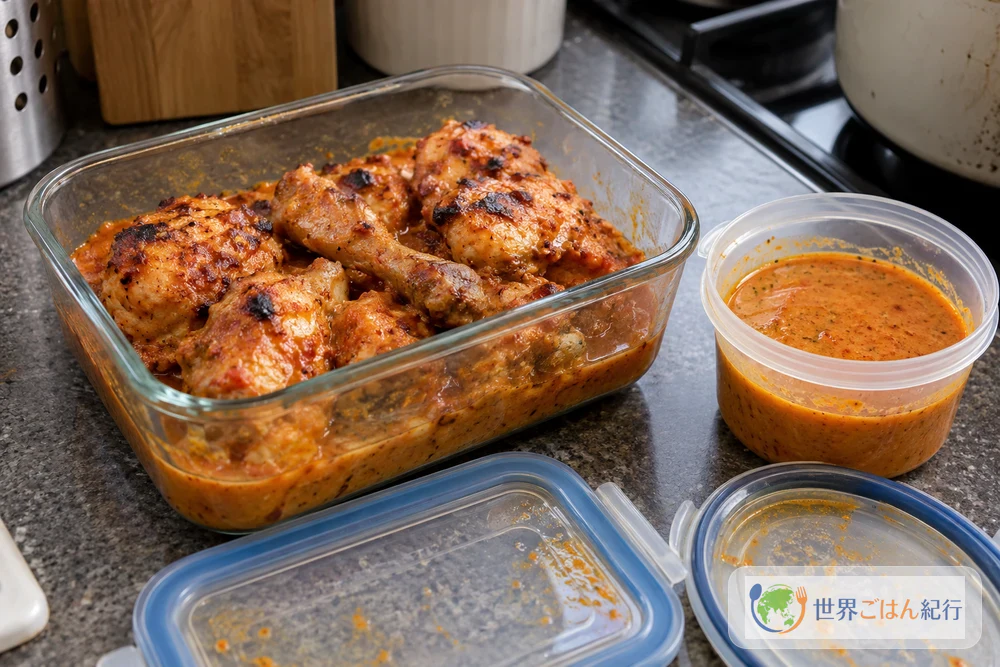
Cool the baked ayam percik, put it in a storage container, refrigerate, and finish it by the next day. Keeping the sauce in a separate container makes it easier to handle. To reheat, bake it in a toaster oven until hot through and spoon over warmed sauce.
What is the difference between coconut cream and coconut milk?
Both are the liquid pressed from coconut flesh, but coconut cream has more fat and is thicker and richer. K.P. Kwan recommends choosing a rich one with 20% or more fat for cooking. If you make it with coconut milk, reduce the sauce for longer.
What if I don't have tamarind?
You can substitute 1 tbsp lime juice. Tamarind's sourness is mellow with a little sweetness, but with lime you get a cleaner sourness.
Sources
- Taste Of Asian Food, KP Kwan, "Ayam Percik (Malaysian Spicy Roast Chicken)," published July 27, 2022. Accessed and checked October 22, 2026. https://tasteasianfood.com/ayam-percik/
- New Straits Times, Syaherah Mustafa, "From 50 to 300: Ramadan demand fuels ayam percik sales surge," published March 9, 2026. Accessed and checked October 22, 2026. https://www.nst.com.my/news/regional/2026/03/1393058/50-300-ramadan-demand-fuels-ayam-percik-sales-surge
- Broadsheet, Nicholas Jordan, "Local Knowledge: Makan by Chef Tan," published March 12, 2019. Accessed and checked October 22, 2026. https://www.broadsheet.com.au/sydney/food-and-drink/article/local-knowledge-makan-chef-tan
- Ministry of Health, Labour and Welfare (Japan), "Let's prevent food poisoning from Campylobacter" (leaflet; in Japanese). Accessed and checked October 22, 2026. https://www.mhlw.go.jp/file/06-Seisakujouhou-11130500-Shokuhinanzenbu/0000128335.pdf