
At dawn, the steam smells of white pepper and star anise
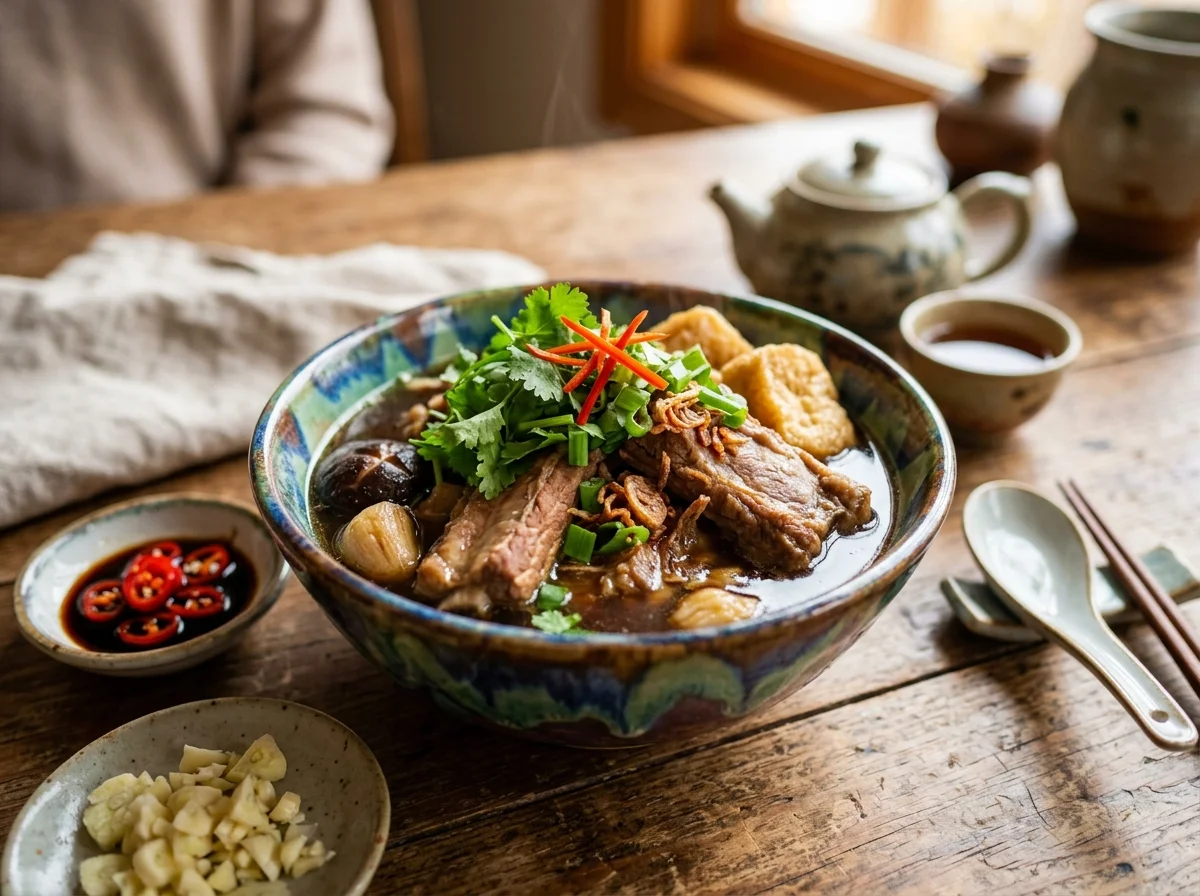
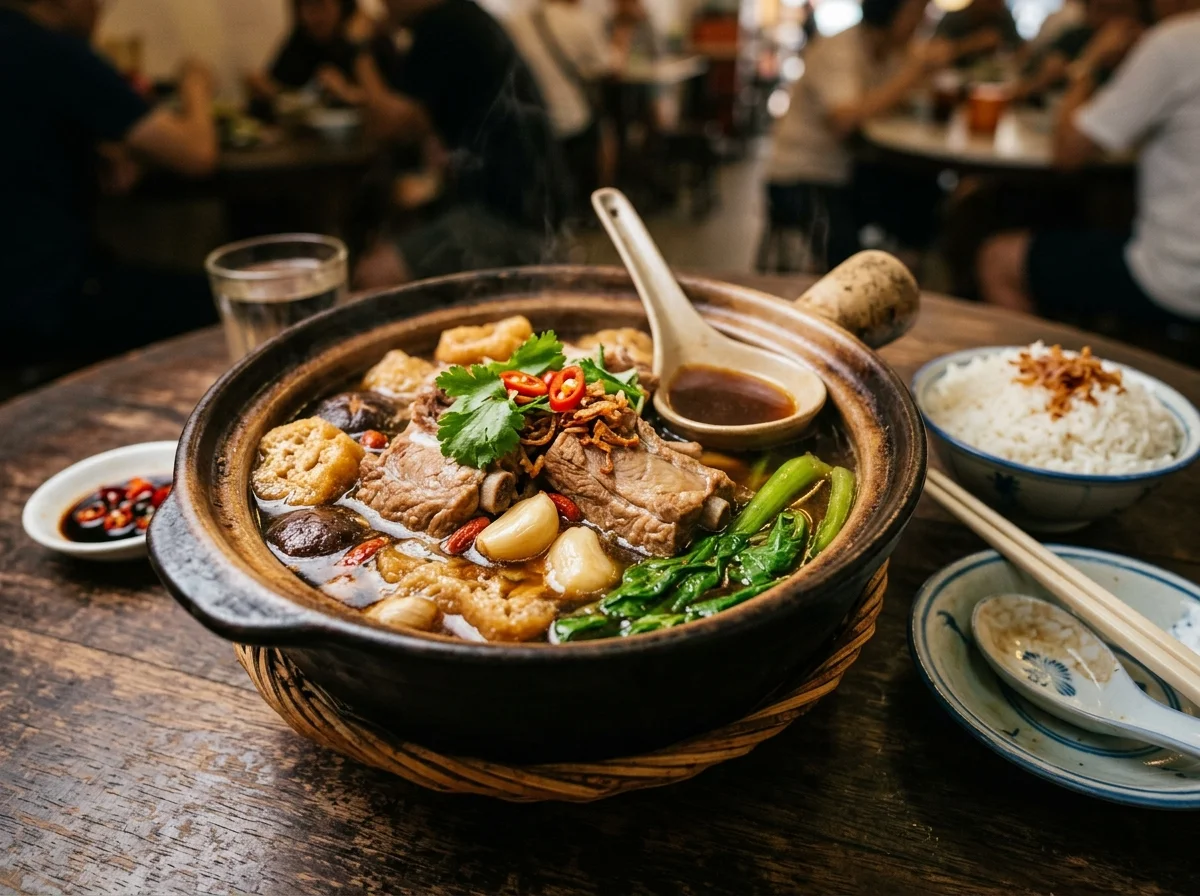
Picture a morning in Klang and the first thing you notice is not the meat but the white pepper. Nudge the lid of a clay pot aside and up comes steam carrying garlic, star anise, and dark soy sauce, while at the next table someone tears a youtiao (fried dough stick) and sinks it into the broth. Bak kut teh (肉骨茶) is a bone-in meat soup that spread from the tables of Malaysia's Chinese community.
The "tea" in the name does not mean there are tea leaves in the soup. The name is usually tied to the custom of drinking Chinese tea alongside the pork-rib broth. At home, it helps not to think of it as pork ribs braised until dark and heavy, but as a dish where you slowly draw the aromas of bone-in meat, white pepper, garlic, star anise, and cassia into a broth without letting it turn cloudy.
Malaysian cooking has other entry points, too: nasi lemak (in Japanese), built around coconut and sambal, or roti canai (in Japanese), cooked on a griddle. Bak kut teh is quieter, a pot dish that works for breakfast or dinner.
肉骨茶 is read "bak kut teh" from its Hokkien pronunciation. In English it is Bak Kut Teh, and in Malay-speaking contexts the spelling sometimes drifts to Bah Kut Teh. This article uses bak kut teh throughout.
Klang style and Singapore style share a name, not an aroma

Look up bak kut teh and you will find herbal soups, white pepper soups, and soy-braised spare ribs all under the same name. That is less a mistake than a regional difference. The Klang style from Malaysia is dark, using soy sauce, garlic, star anise, cassia, licorice root, and similar spices. The Teochew style best known in Singapore has a clearer broth, with white pepper and garlic up front.
| What to look at | Closer to Klang style | Closer to Singapore style |
|---|---|---|
| Broth color | Deep amber | Clear to light brown |
| Core aroma | Star anise, cassia, licorice root, soy sauce | White pepper, garlic |
| The meat | Bone-in meat soaked with seasoning | You sip a pork-and-pepper broth |
| Ease at home | Steady results with a store-bought bak kut teh spice mix | Easy to adjust the amount of white pepper |
| Served with | Rice, youtiao, Chinese tea | Rice, youtiao, greens |
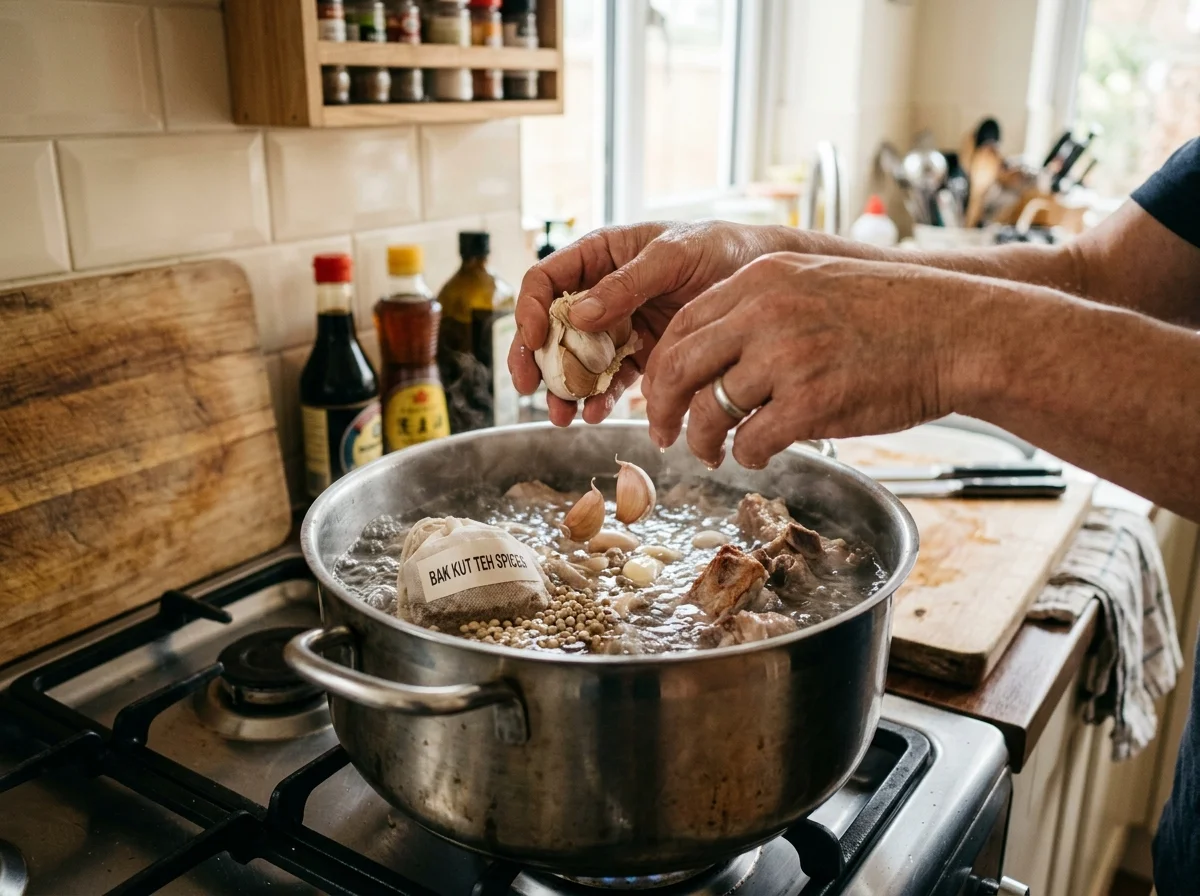
This recipe leans Klang style, because it makes it clear what to buy for something that tastes like bak kut teh. Use a store-bought bak kut teh spice packet, and add aroma with white peppercorns and unpeeled garlic. Stick to that, and you will not end up with pork that has simply been braised sweet and salty.
Ingredients: think of the bone-in meat and the spices separately
Serves 4. Ordinary bone-in pork spare ribs from the supermarket are fine. Rather than collecting every medicinal herb, you get more reliable results by blanching the meat, keeping the heat low, and getting the white pepper right.
This dish uses pork, oyster sauce (which may contain wheat), and seasonings that may contain soy or wheat depending on the brand. For people unfamiliar with medicinal herbs and spices, pregnant people, and anyone with a chronic condition or on medication, avoid serving it with extra herbs added. Here the herbs are used only for aroma, as a dish.
What to look for when shopping
Pork spare ribs, garlic, greens, and rice can be bought nearby. Worth seeking out at an Asian grocer or online: a bak kut teh spice mix, star anise, a heavy pot that can hold a low simmer for a long time, and a thermometer for checking that the meat is cooked through. The ingredient list looks long, but you don't need to gather the medicinal herbs one by one the first time.
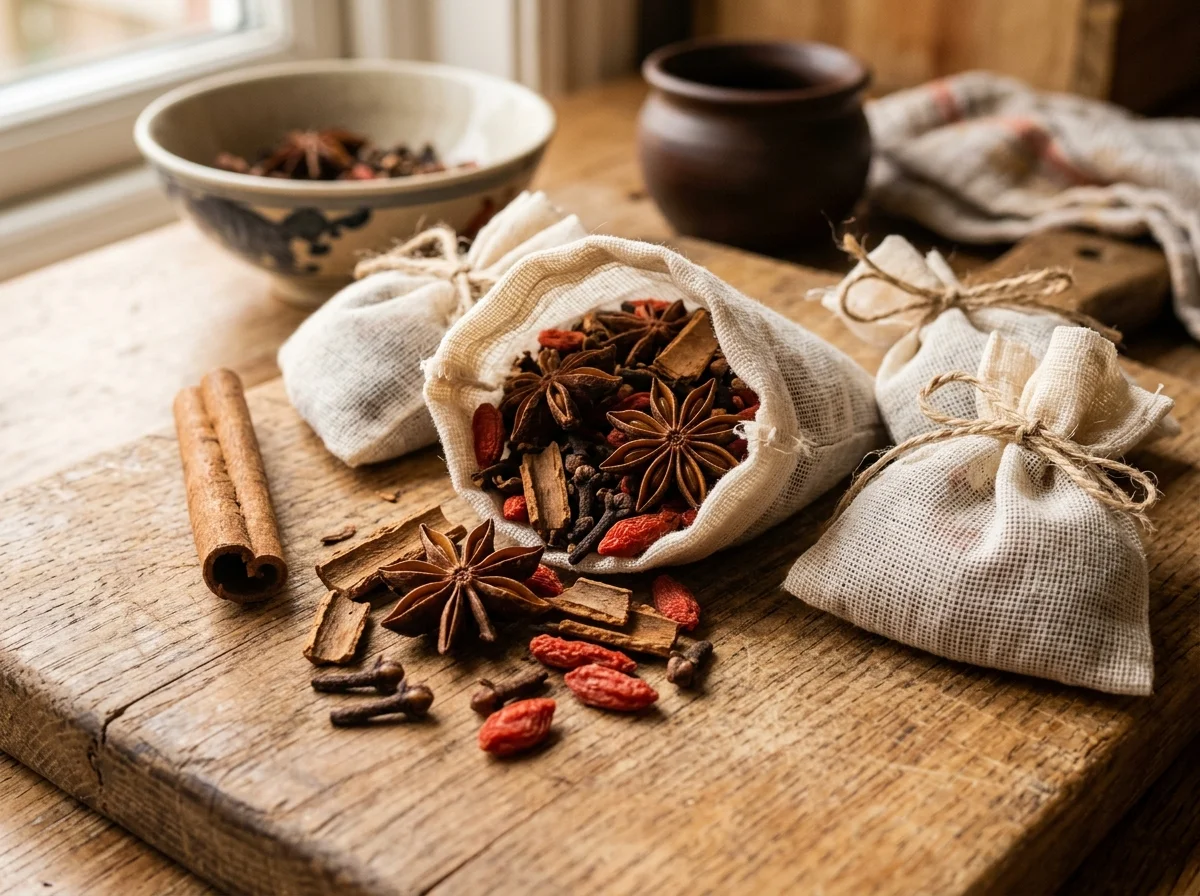
A bak kut teh spice packet is the shortcut to the dish's basic flavor profile on your first try. With star anise, cassia, licorice root, white pepper, and the rest bundled in one bag, you are much less likely to overdo the herbs and end up with a bitter broth.
Star anise is the backbone that adds a sweet aroma to the color of the soy sauce. If you aren't using a spice packet, it is close to essential. Leftover star anise can go into khao kha mu or bo kho (in Japanese).
Simmer for two hours in a thin pot and the bottom gets hit with too much heat; the broth clouds, or the meat touches the bottom and falls apart. A heavy pot is the tool that keeps the small bubbles of a low simmer steady.
With spare ribs, the color near the bone can be hard to read. It is a long-cooked dish, so there is no need to worry too much, but on days you reheat it or make a chicken version, a thermometer makes the call faster.
Method
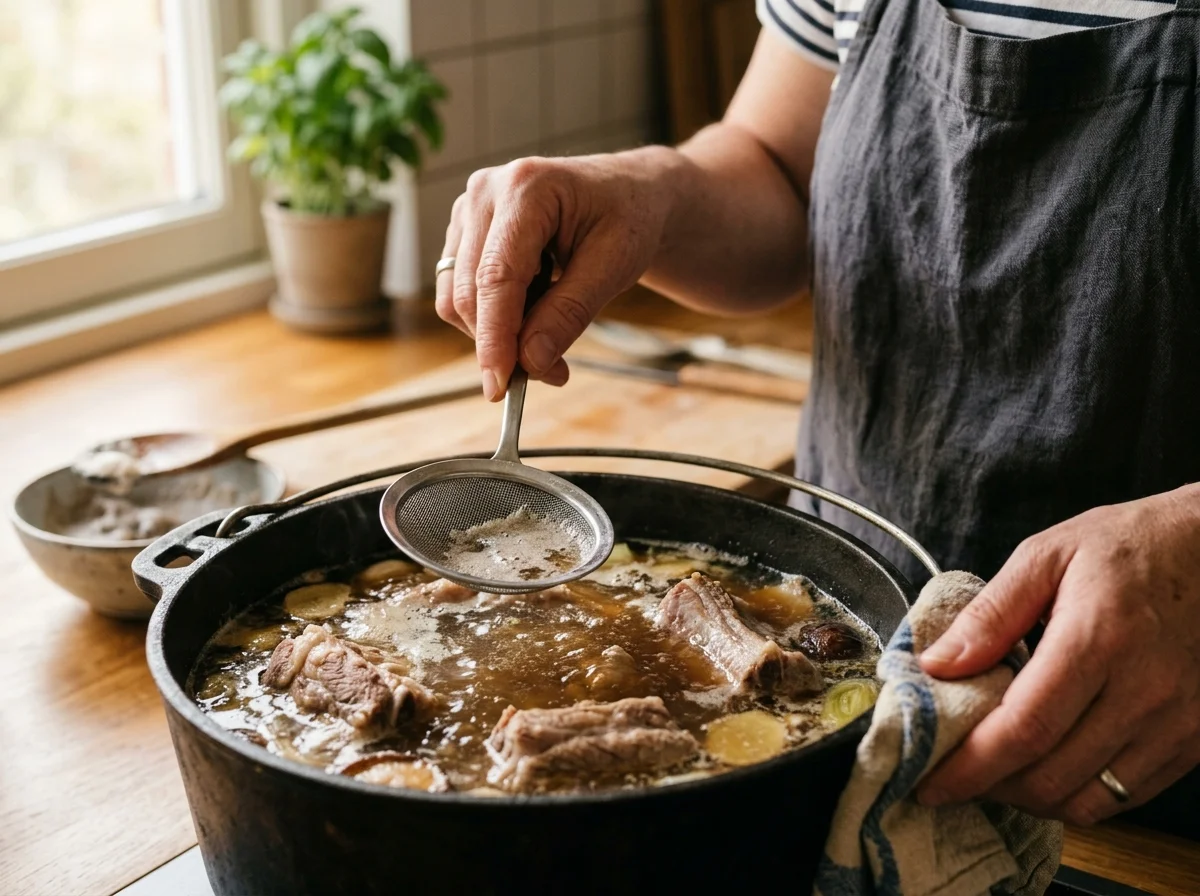
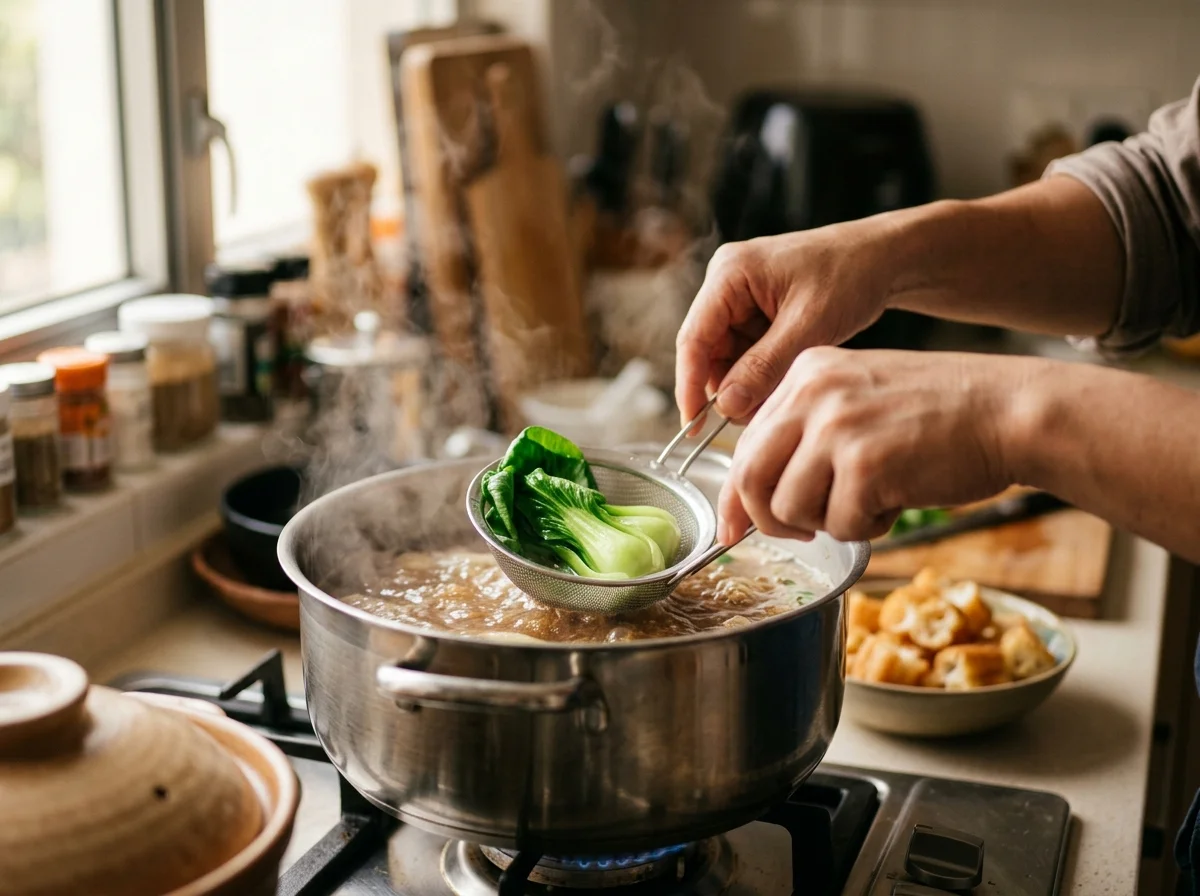
Bak kut teh goes wrong through heat, not seasoning. Boil hard at first to bring out the impurities, and never boil hard again after that. Get that switch right and the broth won't turn gray, and the meat is less likely to dry out.
Washing the pot and the meat once after blanching greatly reduces cloudiness and gamey smell. It looks like extra work, but it is the surest way to keep a clear color and aroma.
Making it at home: what to keep and what to swap
Bak kut teh is not a dish only for people who have gathered every authentic herb. Even in Malaysia, shops differ a lot in broth color, how strong the white pepper is, how much garlic goes in, and which cut of meat they use. In a home kitchen, separating what to hold onto from what to substitute makes it a dish you'll keep making.
| What to decide | The line worth holding | If substituting |
|---|---|---|
| Meat | Bone-in spare ribs | Bone-in chicken thighs. Cut the simmer to about 60 minutes |
| Herbs | A bak kut teh packet, or star anise and cassia | Go Singapore style with just white pepper, garlic, and soy sauce |
| Soy sauce | Separate the one for color from the one for salt | Get close with a little tamari plus regular soy sauce |
| Youtiao | Fried dough that soaks up the broth | Toasted baguette. Sandwich bread tends to taste sweet |
| Tea | Tieguanyin or pu-erh | Roasted green tea or oolong. Avoid sweet drinks |
At home, using white pepper and garlic properly holds the dish together better than piling on herbs. A bitter bak kut teh is hard to fix, so the first time, use no more than one store-bought packet, and if you add star anise, keep it to 2 pods.
At the table: the broth is not the only star
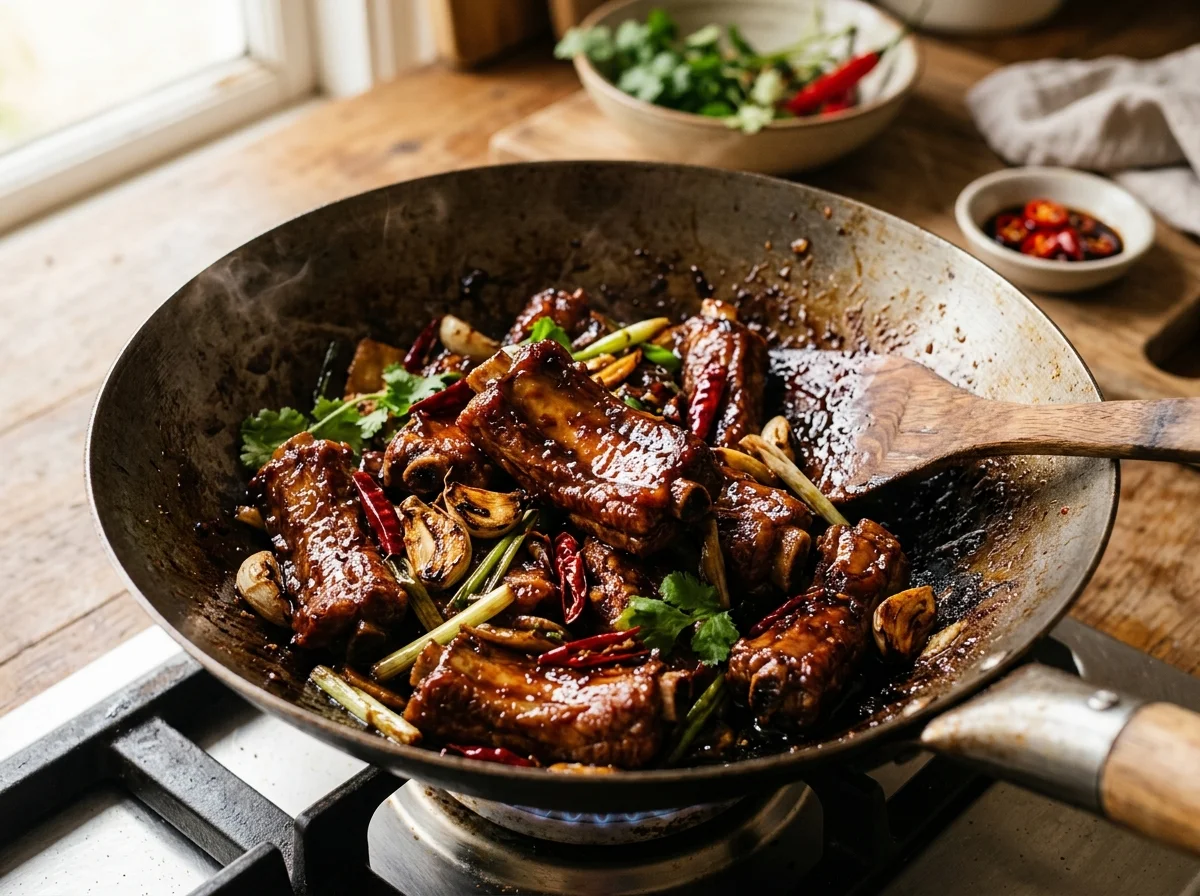
Bak kut teh is a soup you do finish, but treated like a drink it tastes salty. Spoon it a little at a time over rice, dip the youtiao, and pull the meat apart as you eat, and the depth of the soy sauce and the bite of the white pepper spread out.
Shops will sometimes top up your broth. Do the same at home: rather than filling a big bowl all at once, keep the hot broth in the pot and add a little as you eat, so it stays warm. For a pairing, make Malaysian roti canai (in Japanese) on another day to see a different way of using fat and wheat. If you want to branch out into a spice-heavy noodle dish, laksa (in Japanese) is the next step.
Common problems and how to fix them
| Problem | Likely cause | Fix |
|---|---|---|
| Broth turns gray and cloudy | Not blanched enough, or kept at a hard boil | Blanch for 3 minutes in a separate pot. Return the simmer to low |
| Bitter | Too many herbs, or simmered too long | Remove the packet earlier, and next time start with half |
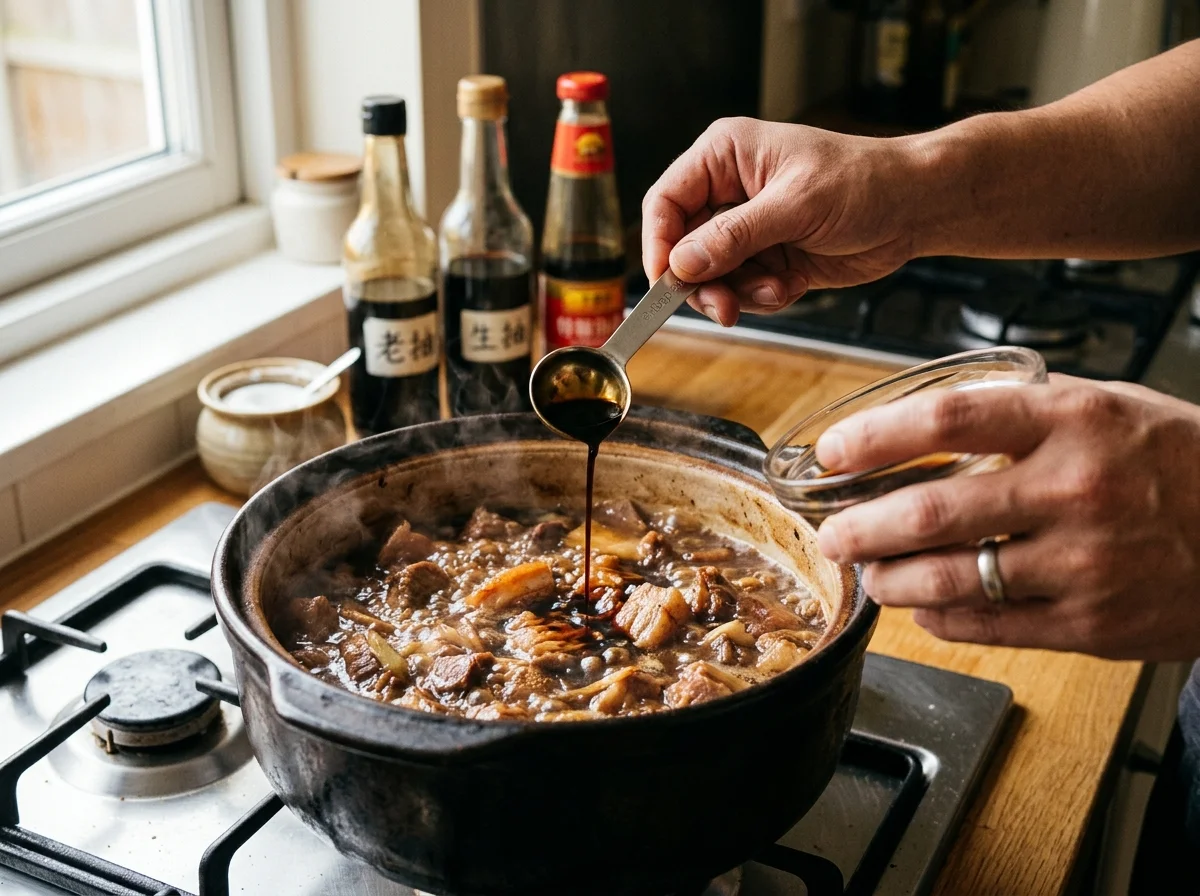
| Tough meat | Shrank over high heat, or soy sauce added too early | Add soy sauce in the second half. Keep the bubbles small |
| Too salty | Soy sauce and salt settled at the same time | Salt goes last. Plan to eat it with rice and youtiao |
| Weak aroma | Ground white pepper, or too little garlic | Use whole white peppercorns and a whole head of unpeeled garlic |
| Greasy | Fatty meat, no time to cool | Chill once and lift off some of the fat on the surface |
Storing and reheating
Bak kut teh keeps best in the refrigerator for up to 2 days. Store the meat and broth together, and keep the greens and youtiao separate. When the fat sets on the cooled surface, remove only about half of it. Take it all off and the aroma thins out; leave it all and the reheated soup feels heavy.
Reheat in a small pot over low heat. Boiling breaks up the meat and makes the white pepper sharp. For one serving, put the broth and meat in a small pot and warm over low heat for about 8 minutes. In a microwave, use a deep bowl, cover loosely with plastic wrap, heat at 600 W for 2 minutes, stir, then continue in 30-second bursts. Add the greens just before eating.
You can freeze it, but the garlic and greens lose their texture. If freezing, freeze only the meat and broth, and use within about 2 weeks. Thaw in the refrigerator for half a day. Don't freeze youtiao; it is lighter when you get it fresh on the day.
FAQ
Can I make it without a bak kut teh spice mix?
Yes. 2 star anise, 1 cassia stick, 3 cloves, 1 tbsp white peppercorns, 1 head of garlic, and soy sauce make a simple home version. Without angelica root (dang gui) or licorice root you lose some herbal depth, but avoiding bitterness makes it easier to eat than forcing more in.
How do I make it closer to Singapore style?
Cut the soy sauce to 1 tbsp, skip the dark soy sauce, and increase the white peppercorns to 1 1/2 tbsp. Leave out the star anise and cassia, or use only a very small amount. The broth will be paler, but the white pepper and garlic come forward.
Can I make it without pork?
You can make it with bone-in chicken thighs. For chicken, blanch for a shorter time and simmer over low heat for about 45–60 minutes. Stop when it is cooked through to the center and the meat near the bone has turned white. The flavor is lighter, so make up for it with white pepper and garlic rather than more soy sauce.
What can I serve instead of youtiao?
Cut a baguette into thick slices and toast lightly. Soft sandwich bread is sweet and tender, so once it soaks up the broth it drifts toward breakfast toast. If you can, tear a firm bread into small pieces and drop them in just before eating.
Is it okay to drink all the broth?
It tends to be high in salt, so it's easier not to plan on finishing every drop. Let some soak into the rice or youtiao, and if you need more liquid, add a little hot water at the table. For anyone who needs to cut back on salt, use less soy sauce and serve a smaller portion of broth.



