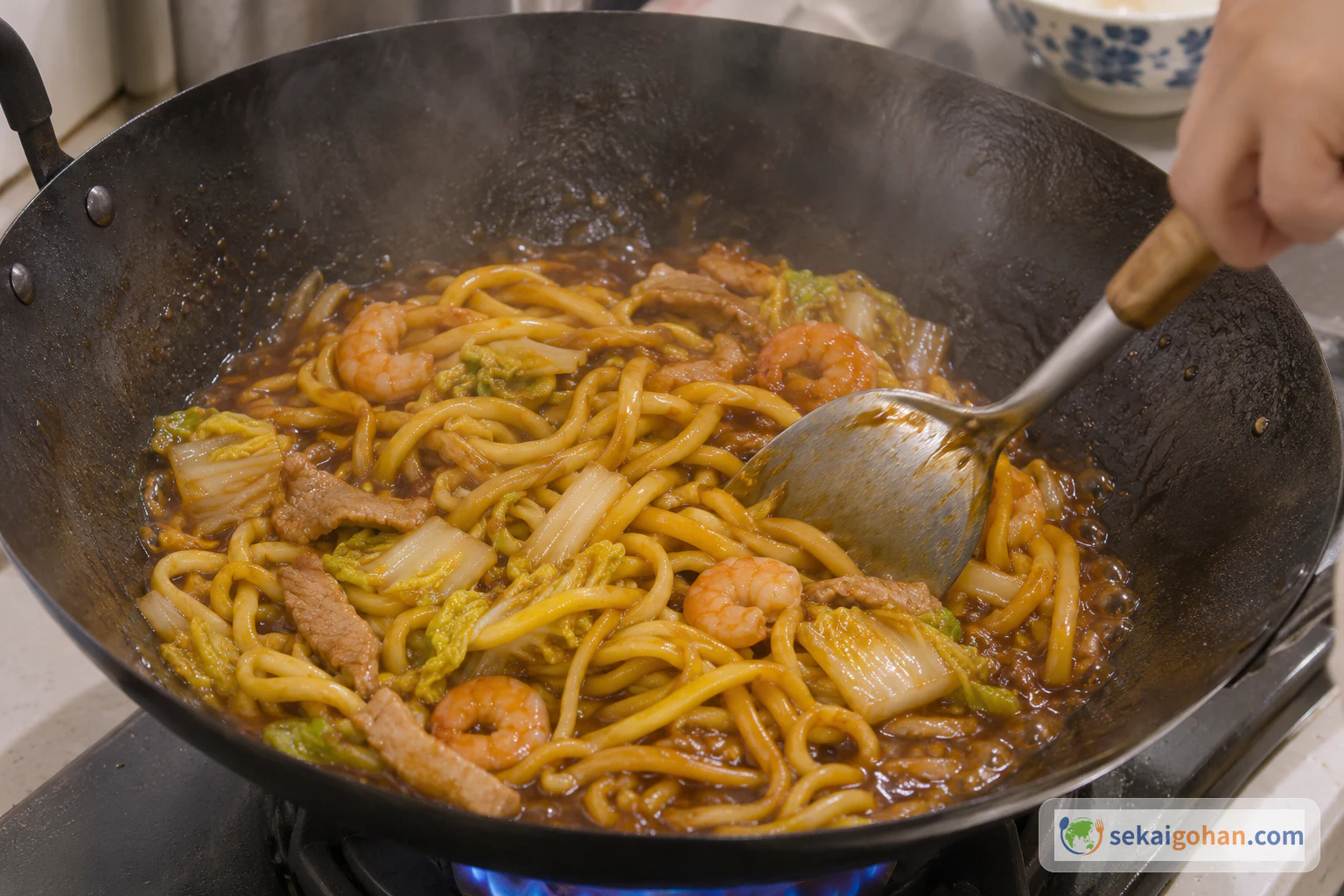
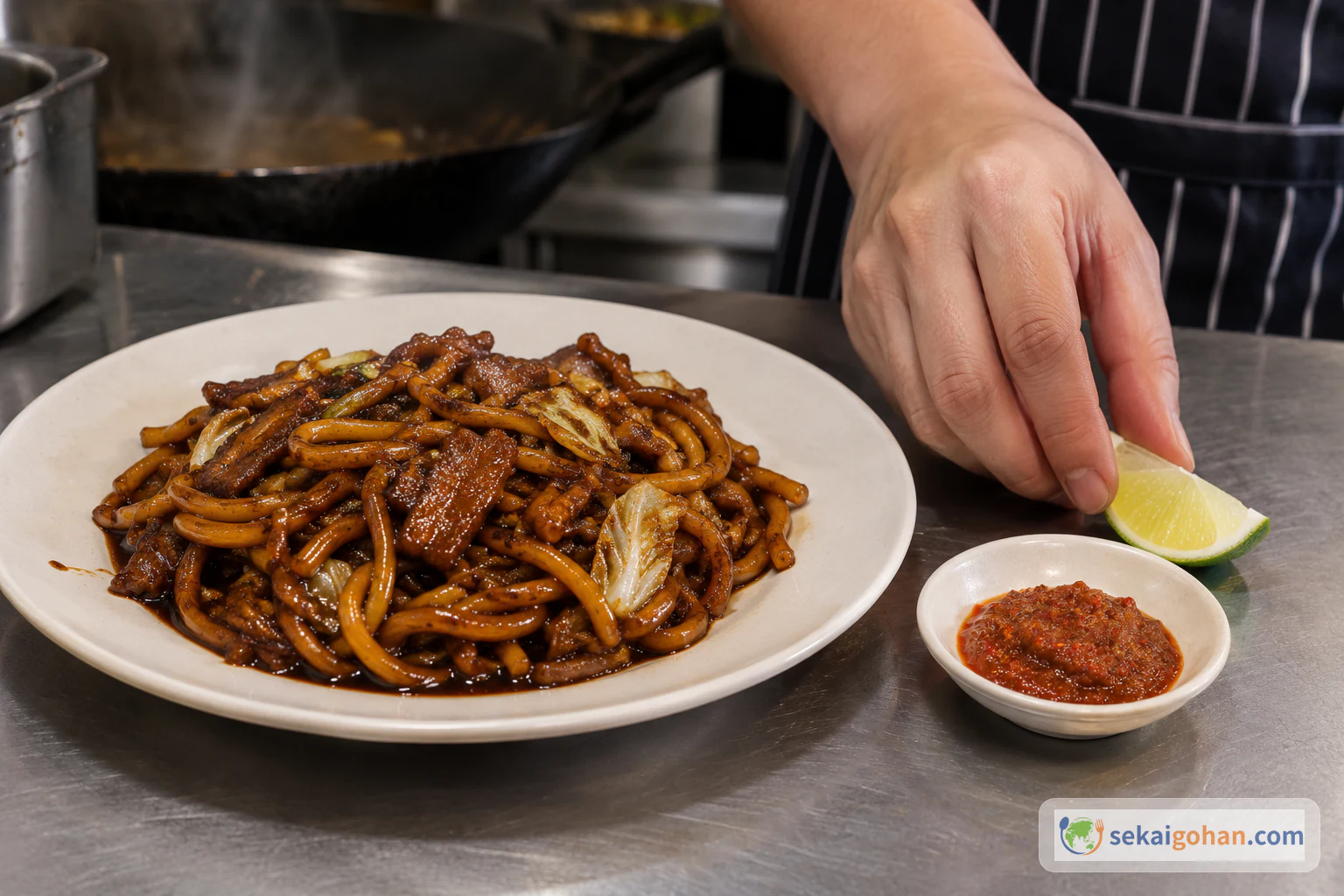
KL Hokkien Mee: Thick Noodles Braised in a Dark Sauce
This is the Kuala Lumpur (KL) version of Hokkien mee, following Adam Liaw's "KL hokkien mee" published by SBS Food on 22 November 2023. "Hokkien mee" covers more than one dish in Malaysia, so this is one specific version, not a single standard formula for every Hokkien mee. This recipe has not been kitchen-tested by Sekai Gohan.
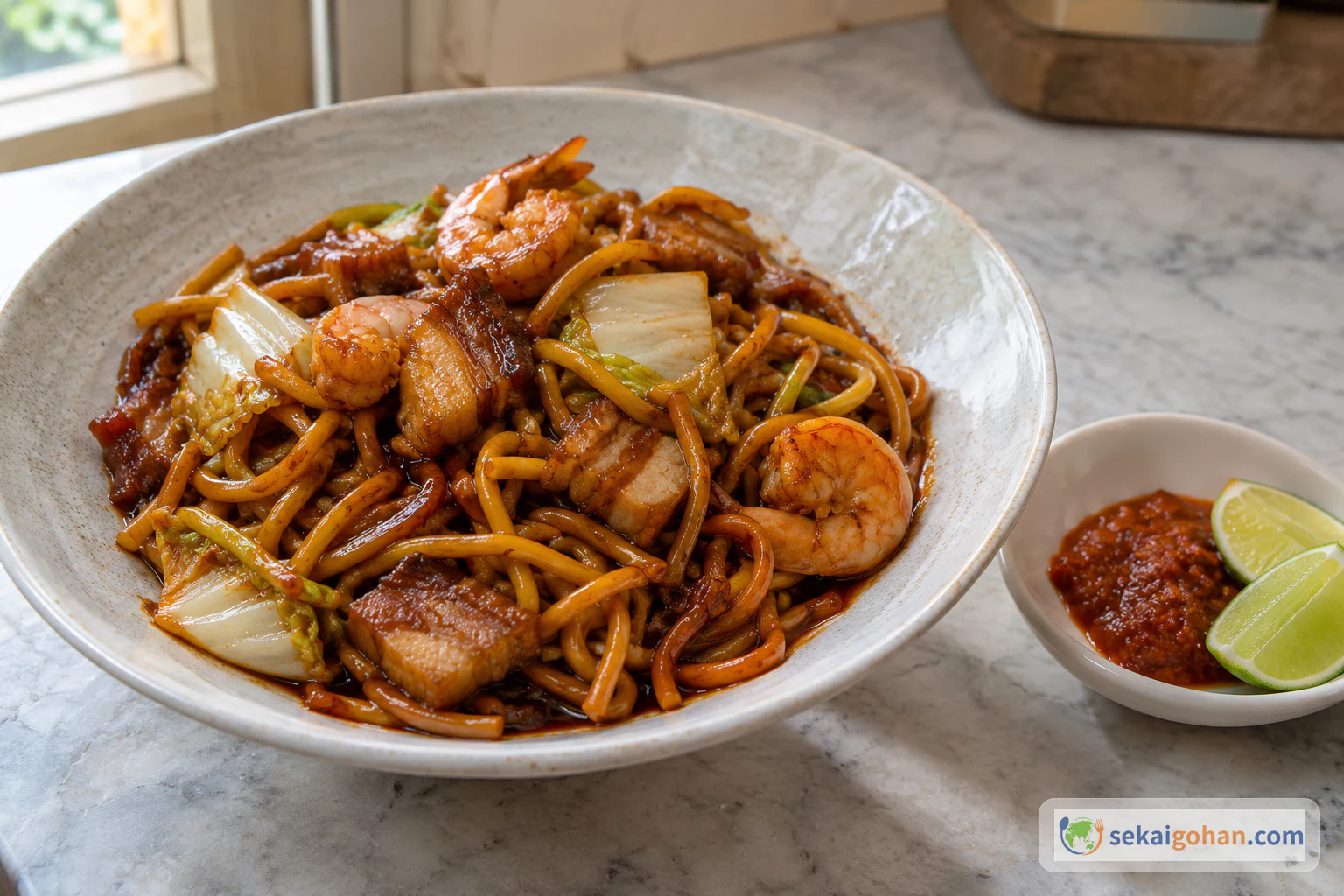
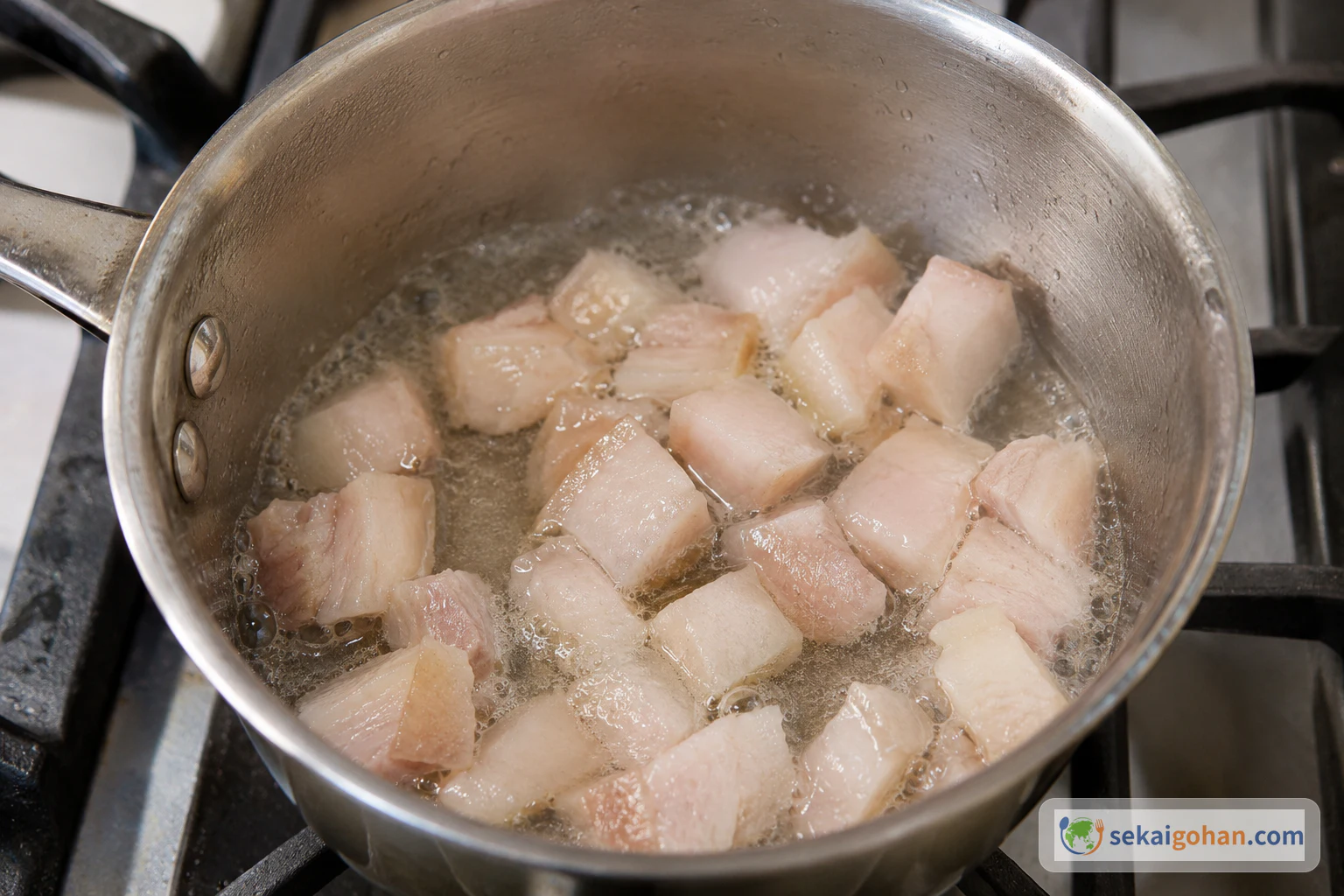
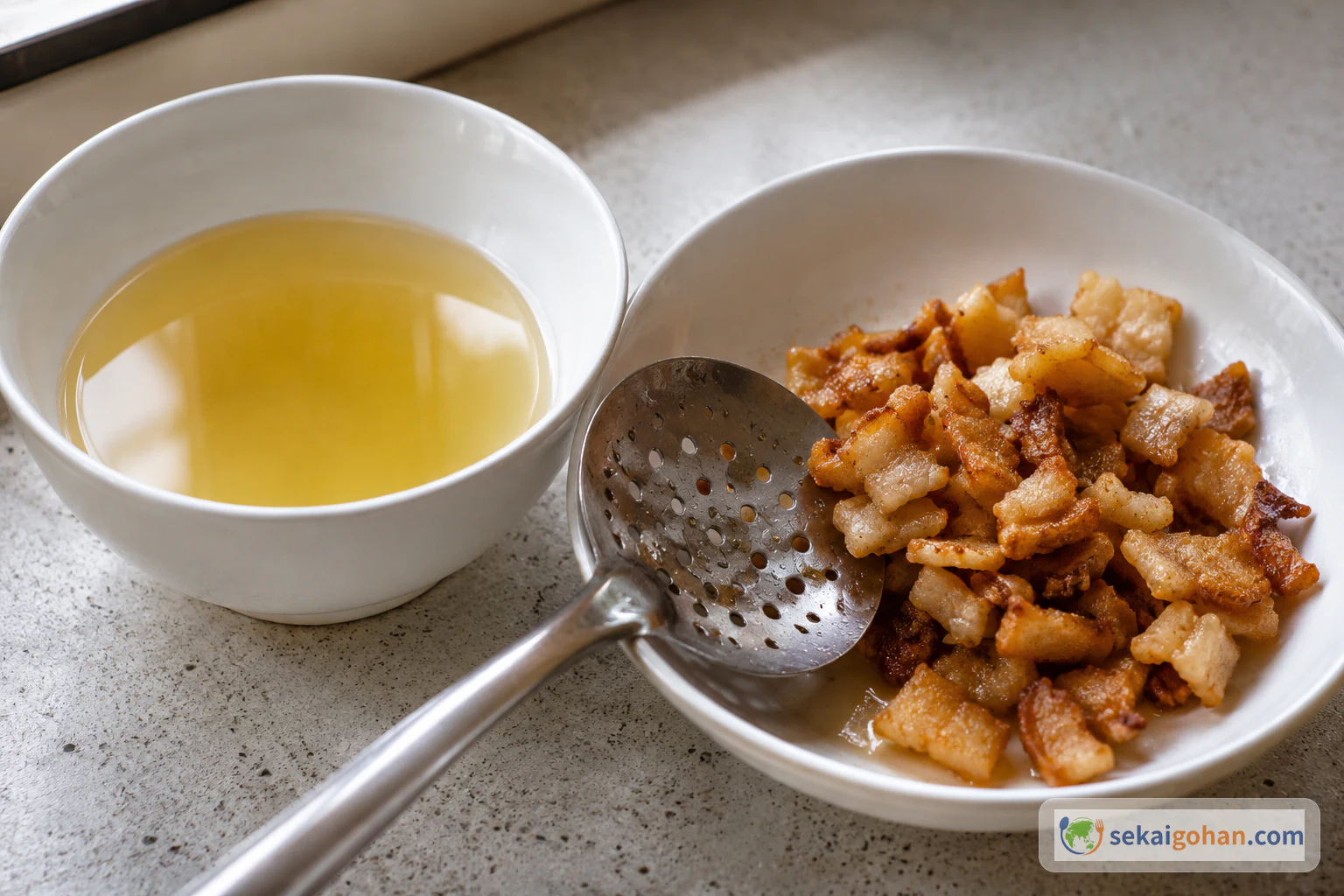
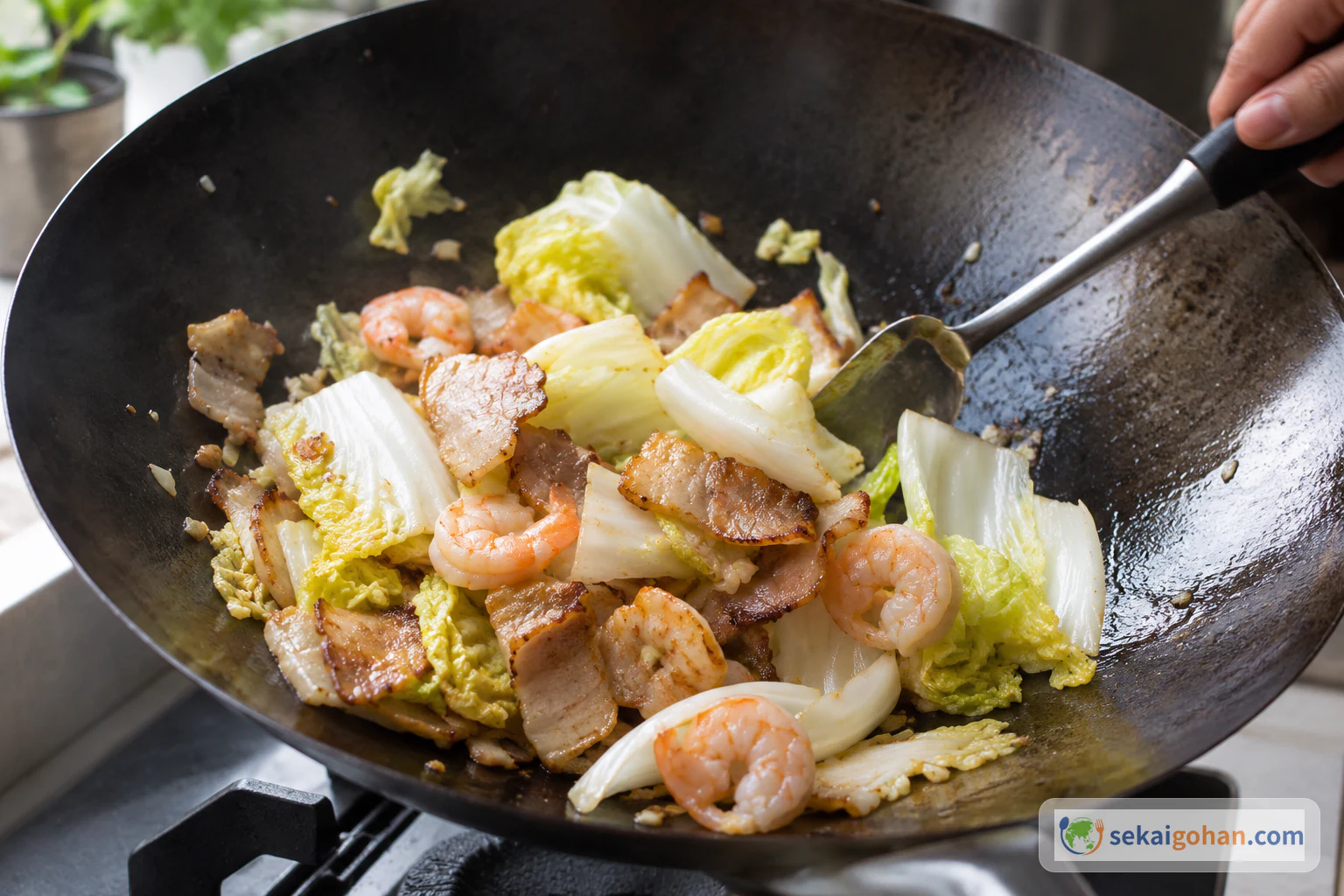
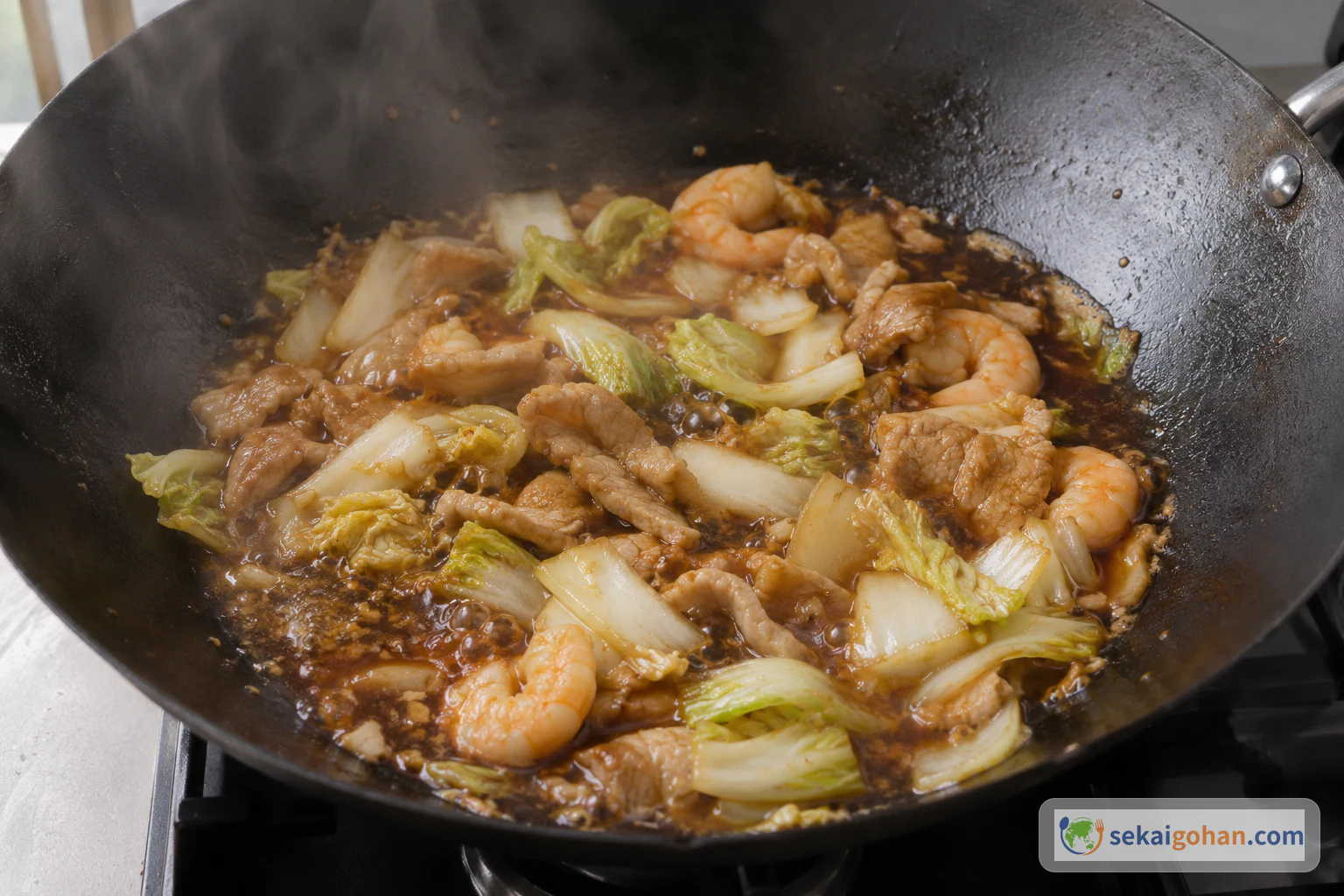
Cubes of pork fatback simmer in a little water until the water is gone, the fat has rendered out and the pieces have turned crisp. That rendered lard goes into a hot wok, followed by pork belly, garlic, prawns and wombok, then a dark sauce built on chicken stock, Cheong Chan caramel sauce and soy sauce. Thick yellow Hokkien noodles go in last and braise in that thick sauce until cooked. Sambal belacan and lime wedges sit on the side.
That is the shape of the KL Hokkien mee in Liaw's recipe: a dark, sauced noodle dish rather than a soup. In Penang, the name points to something else, a prawn noodle soup also called hae mee. This article stays with the Kuala Lumpur version only. For more dishes from the same country, see the Malaysia page.
Ingredients (Serves 2–4)
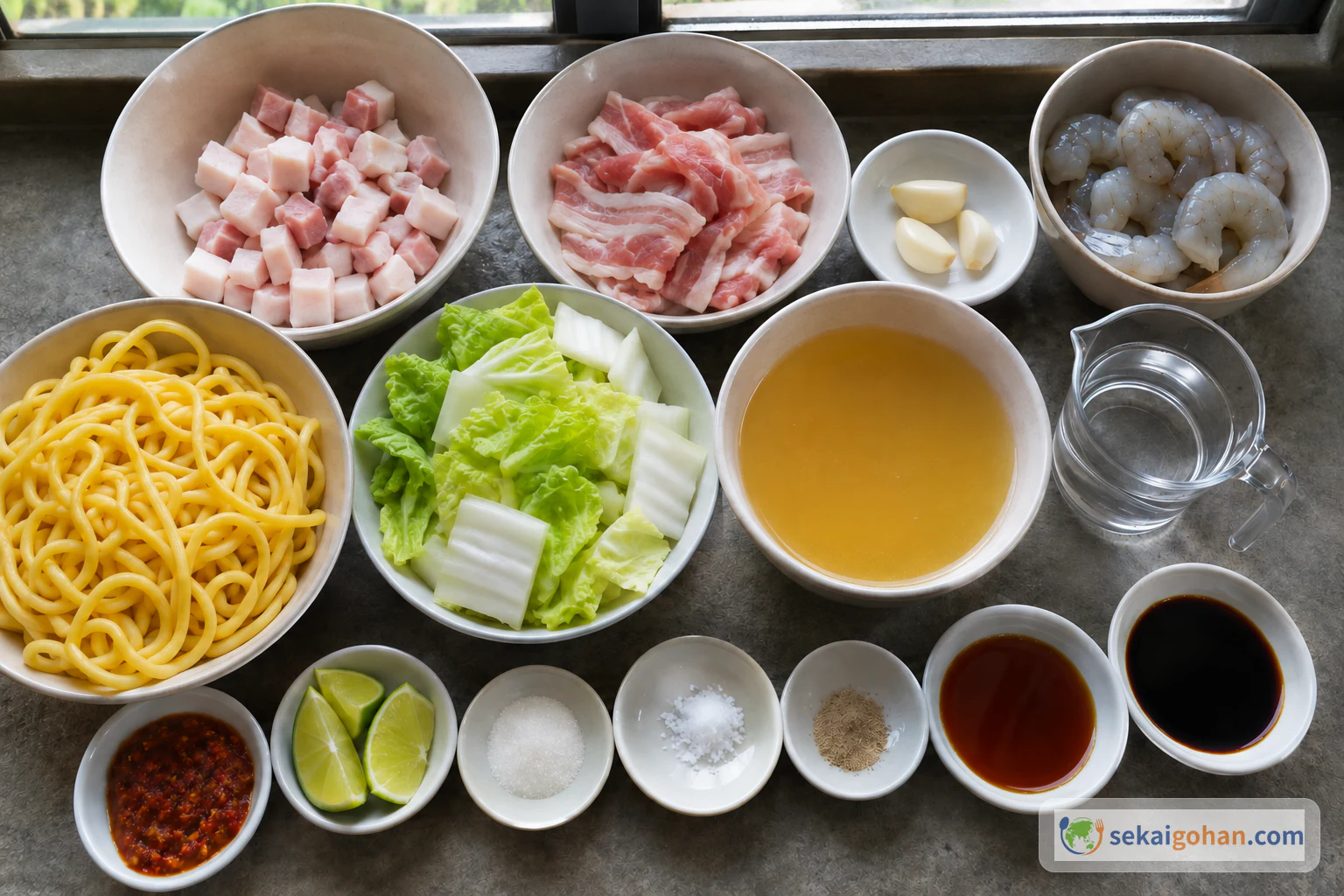
You will also need 125 ml (½ cup) water for rendering the fatback in step 1.
Equipment
- Small saucepan
- Wok
- A bowl for the liquid lard and a plate for the crisp pieces
- Serving plates
Choosing and Handling the Ingredients
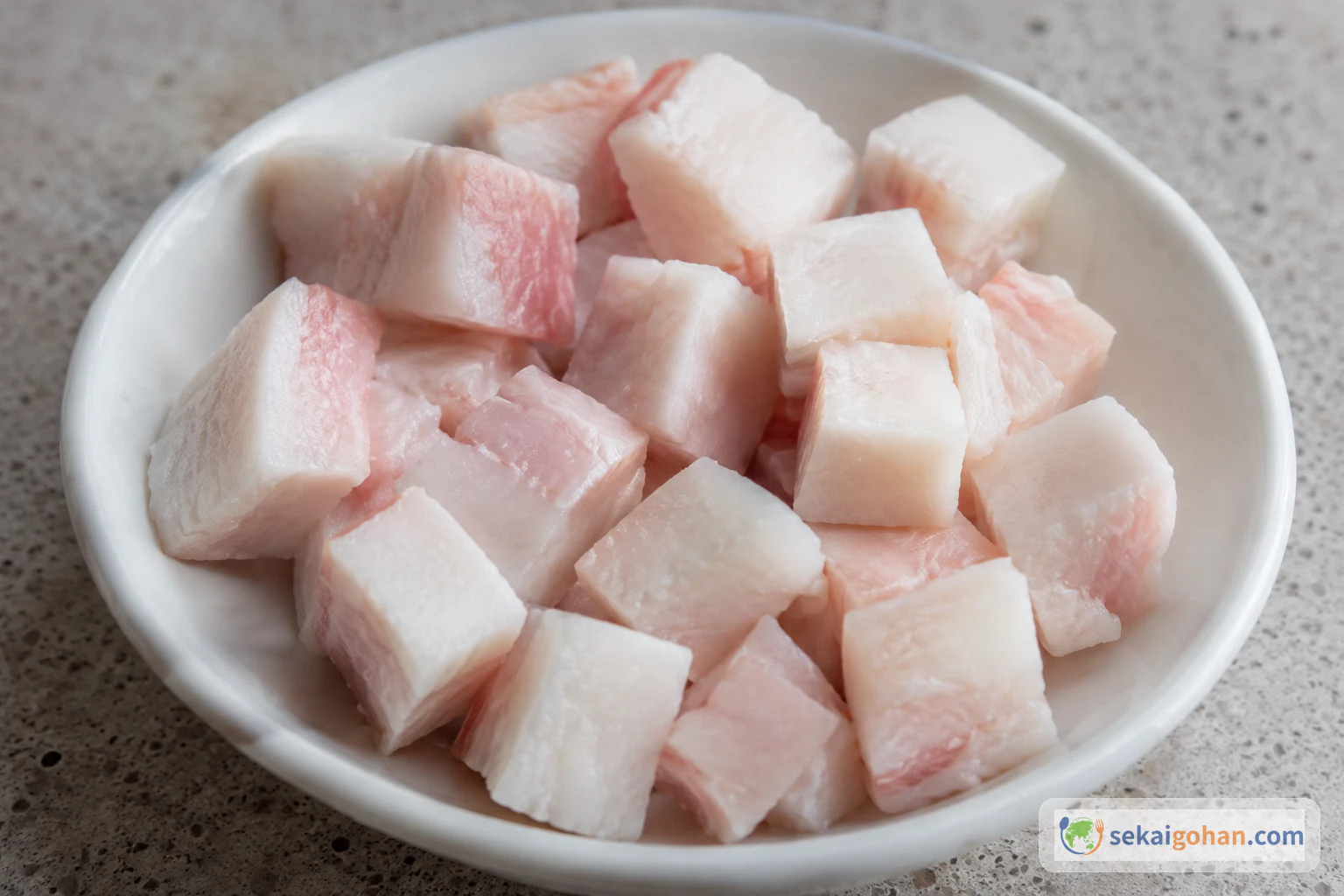
The caramel sauce and the soy sauce are two separate ingredients. Cheong Chan caramel sauce is a cooking caramel. Use 60 ml (¼ cup) caramel sauce alongside 2 tbsp (40 ml) soy sauce. Do not swap one for the other, and do not replace the caramel sauce with another kind of soy sauce.
Wombok is napa cabbage. Use the long, pale-green leaves, cut into 5 cm pieces.
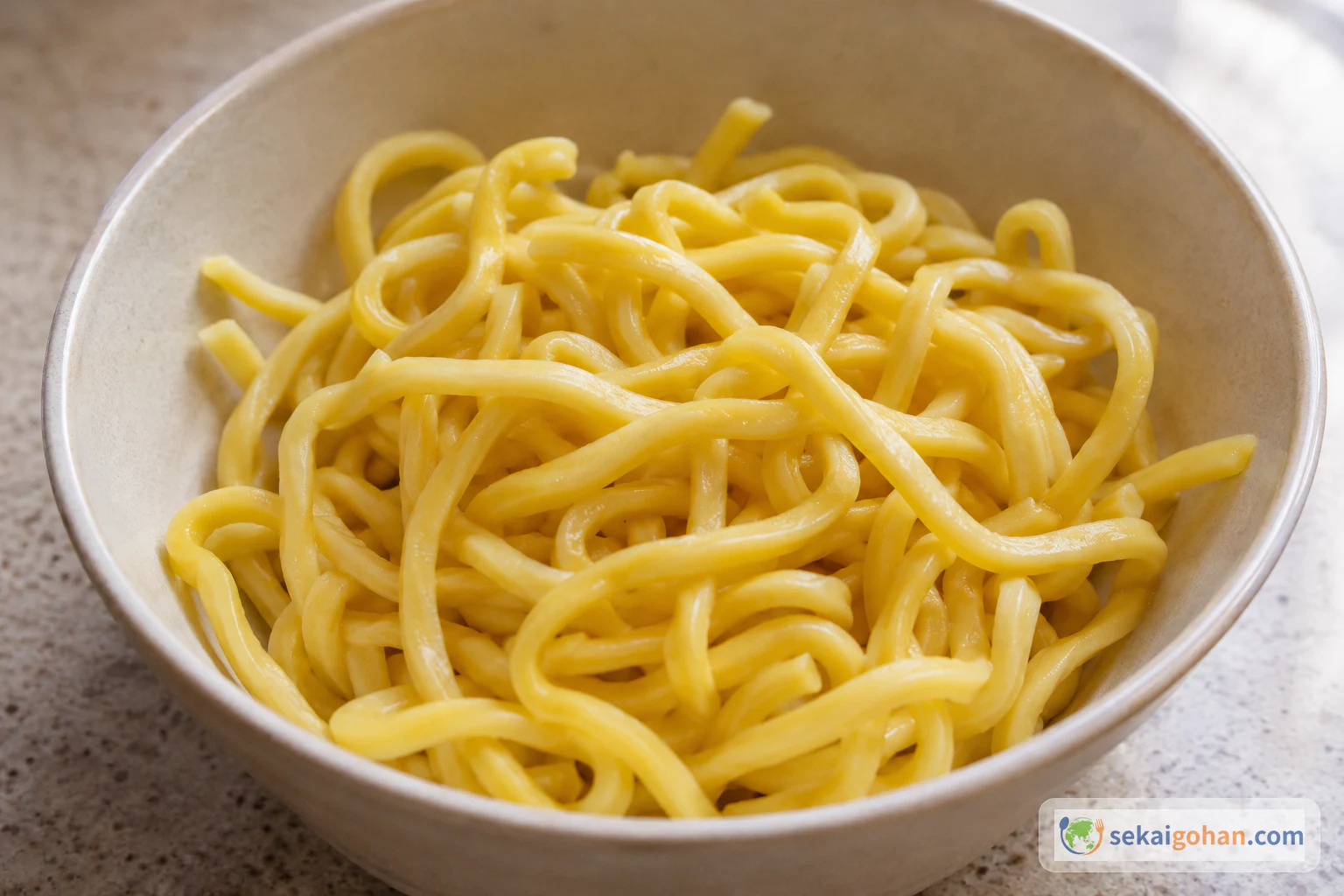
The noodles are thick yellow Hokkien noodles. They go straight into the sauce in step 3 and cook there until done.
Method: Render the Fat, Build the Sauce, Braise the Noodles
There are only three steps. Render the fatback first, then cook the pork and aromatics, simmer the sauce and braise the noodles.
Points to Watch at Each Stage
The recipe gives its doneness cues by sight and taste more than by the clock. These are the moments to check before moving on.
| Stage | What to look for | If it isn't there yet |
|---|---|---|
| Rendering the fatback | The water has evaporated, the fat has rendered out and the pieces are crisp | Keep cooking over medium heat; about 30 minutes is a guide, not a fixed stop |
| Frying the pork belly | The pork belly is browned before anything else goes in | Keep frying before adding the garlic, prawns and wombok |
| Adding the aromatics | The garlic smells fragrant | Keep tossing a little longer |
| Seasoning the sauce | It tastes very salty before the noodles are added | Adjust with salt and white pepper; the noodles still have to go in |
| Braising the noodles | The noodles are cooked through | Keep braising past the 3–4 minute guide until they are done |
Variations Within the Recipe
Stock. Liaw's recipe offers a choice of chicken, bonito or anchovy stock, 250 ml in each case. This article uses chicken stock throughout and does not combine the options.
Sambal belacan. In the original recipe the sambal belacan is optional. Here it is served on the side as part of the finished dish, in whatever amount you like.
Beyond these choices the recipe offers no substitutions, and this article does not add any.
KL and Penang: One Name, Different Dishes
The recipe this article follows is titled "KL hokkien mee" and is tagged Malaysian on SBS Food. It renders pork fatback into lard and braises thick yellow noodles in a thick sauce darkened with cooking caramel.
The Woks of Life describes the KL (Kuala Lumpur) version of Hokkien mee as a stir-fried noodle dish with a dark, sweet sauce and an emphasis on pork fat, and separately mentions Penang hae mee as a shrimp noodle soup. Searching for "Hokkien mee" alone can therefore turn up a dark sauced noodle dish or a prawn soup, depending on the region. Other published Malaysian versions use their own ingredient lists, too. Bosch Home Malaysia, for example, publishes a "Dark Hokkien Mee (Fried Prawn Noodles)" with flat yellow noodles and dark soy sauce. None of those other recipes are mixed into this one; they only show that the KL dish has more than one published formula.
Frequently Asked Questions
Is this the same as Penang Hokkien mee?
No. This recipe is the Kuala Lumpur version: thick yellow noodles braised in a dark sauce. The Woks of Life describes Penang hae mee as a shrimp noodle soup, a different form under a related name. The two are not combined here.
Which tablespoon measure should I use?
The recipe uses a 20 ml Australian tablespoon, so 2 tbsp soy sauce is 40 ml, and the about 4 tbsp of lard in step 2 is about 80 ml. If your measuring spoons are 15 ml, measure by millilitres rather than by spoon count.
Can I use Japanese or dark soy sauce instead of the caramel sauce?
The recipe uses Cheong Chan caramel sauce and soy sauce as two separate ingredients and does not offer a substitute for the caramel sauce. This article doesn't suggest one either. The soy sauce is simply "soy sauce"; the recipe doesn't specify a light or dark type.
How long does the whole dish take?
The recipe card on SBS Food lists 10 minutes preparation and 10 minutes cooking, but step 1 alone calls for about 30 minutes of rendering the fatback. Because the two don't agree, this article gives no total time. Plan for the rendering step, then the shorter wok stage.
What do I do with the crisp pork fat pieces?
The recipe separates the crisp pieces from the liquid lard but does not say what to do with them afterwards. They are not added to the wok or scattered over the noodles in the method, so this article doesn't add a use for them either.
Should the noodles be dried, fresh or pre-cooked?
The recipe asks for 500 g thick yellow Hokkien noodles without stating whether they are dried or already cooked. It only says to braise them in the sauce for about 3–4 minutes, or until cooked, so judge by whether the noodles are cooked through.
Do I need to marinate the pork or prawns?
The recipe's introduction uses the word "marinade" for the sauce, but the written method has no marinating step. The sauce is built in the wok in step 2, and the noodles braise in it in step 3.
Why isn't the 125 ml water in the ingredient table?
In the original recipe, the 125 ml (½ cup) water appears only in the method, for rendering the fatback, and not in the ingredient list. This article keeps that distinction and notes the water just below the ingredient table so you have it ready.
Sources
- Adam Liaw, "KL hokkien mee," SBS Food, published 22 November 2023. The recipe followed in this article: the Kuala Lumpur version, yield of 2–4 people, ingredients and quantities, the 125 ml rendering water in the method, the three-step method and its cues, the 20 ml Australian tablespoon, and the recipe card's 10-minute preparation and cooking times. https://www.sbs.com.au/food/the-cook-up-with-adam-liaw/recipe/kl-hokkien-mee/bsln8rxl9
- Bill Leung, "Malaysian Hokkien Mee (KL Version)," The Woks of Life, posted 12/10/2020. Used for the description of KL Hokkien mee as a dark, sweet-sauced stir-fried noodle dish with an emphasis on pork fat, and for Penang hae mee as a separate shrimp noodle soup. No ingredients or method from this page are used. https://thewoksoflife.com/malaysian-hokkien-mee/
- Bosch Home Appliances Malaysia, "Dark Hokkien Mee (Fried Prawn Noodles)," Experience Bosch Cookbook. Used only as an example of a separate published Malaysian dark fried-noodle recipe with its own ingredients. No ingredients or method from this page are used. https://www.bosch-home.com.my/experience-bosch/living-with-bosch/cookbook/main-dishes/dark-hokkien-mee