Chim Chum: Herb-Scented Pork Broth, Cooked at the Table
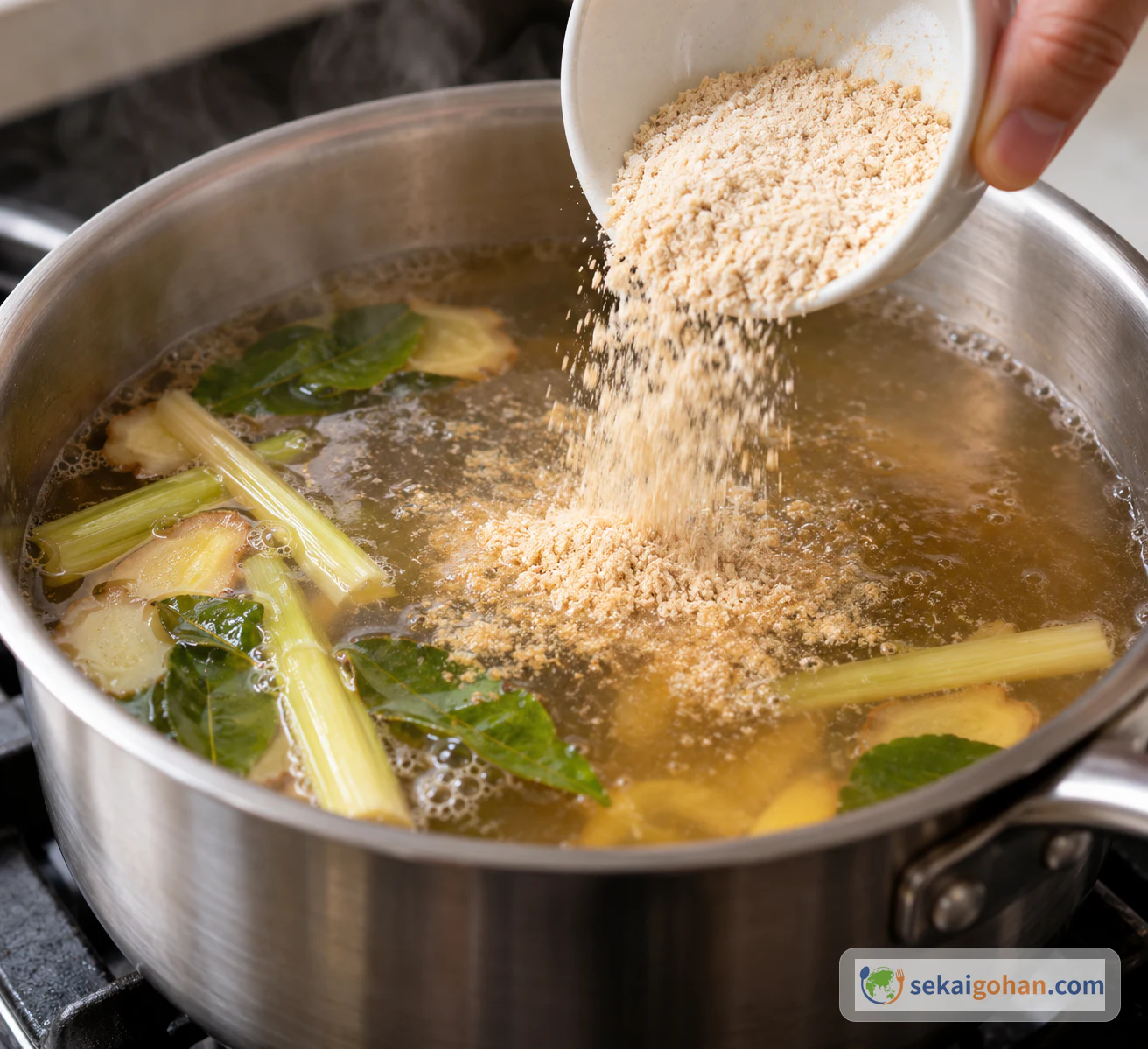
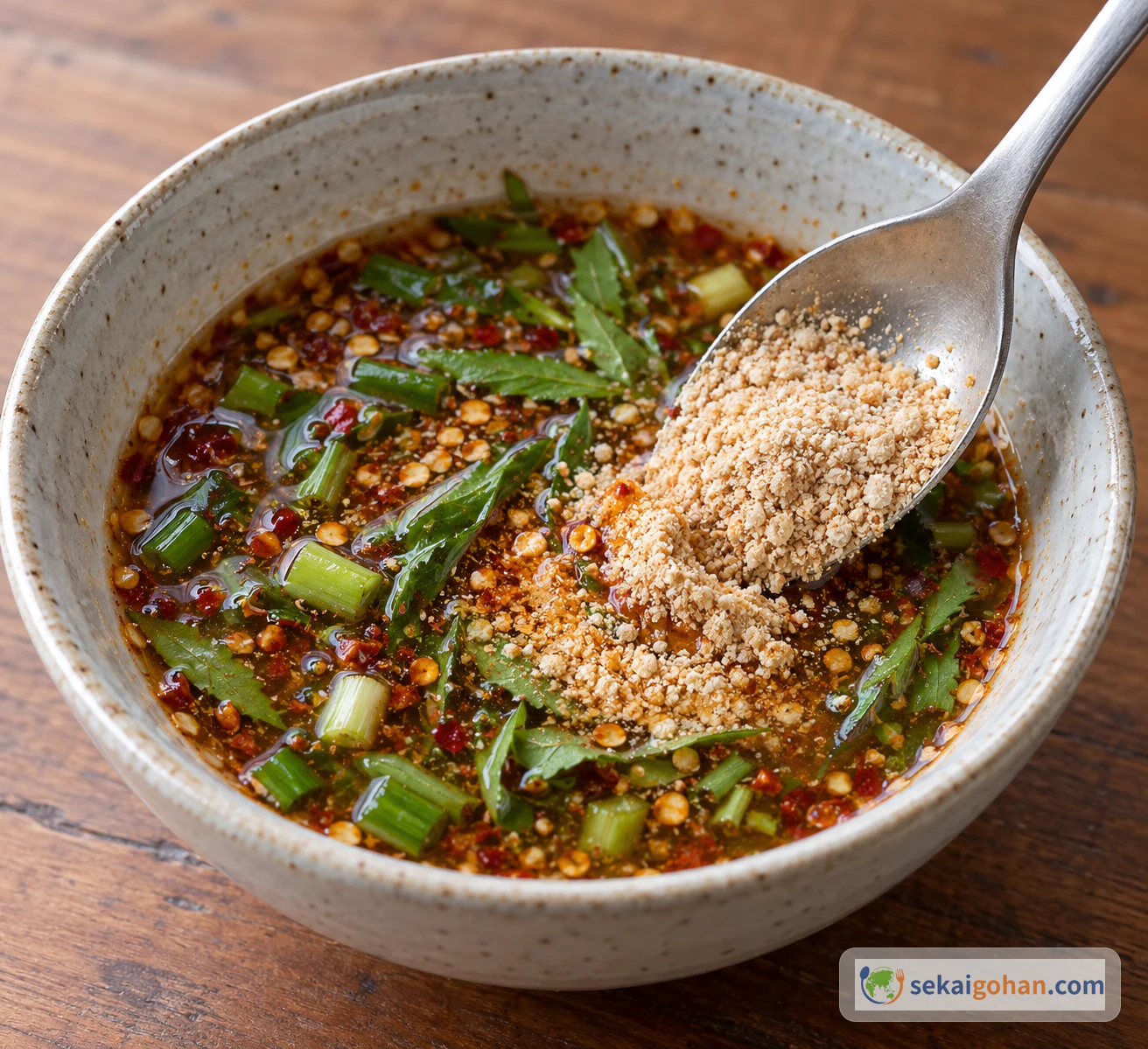
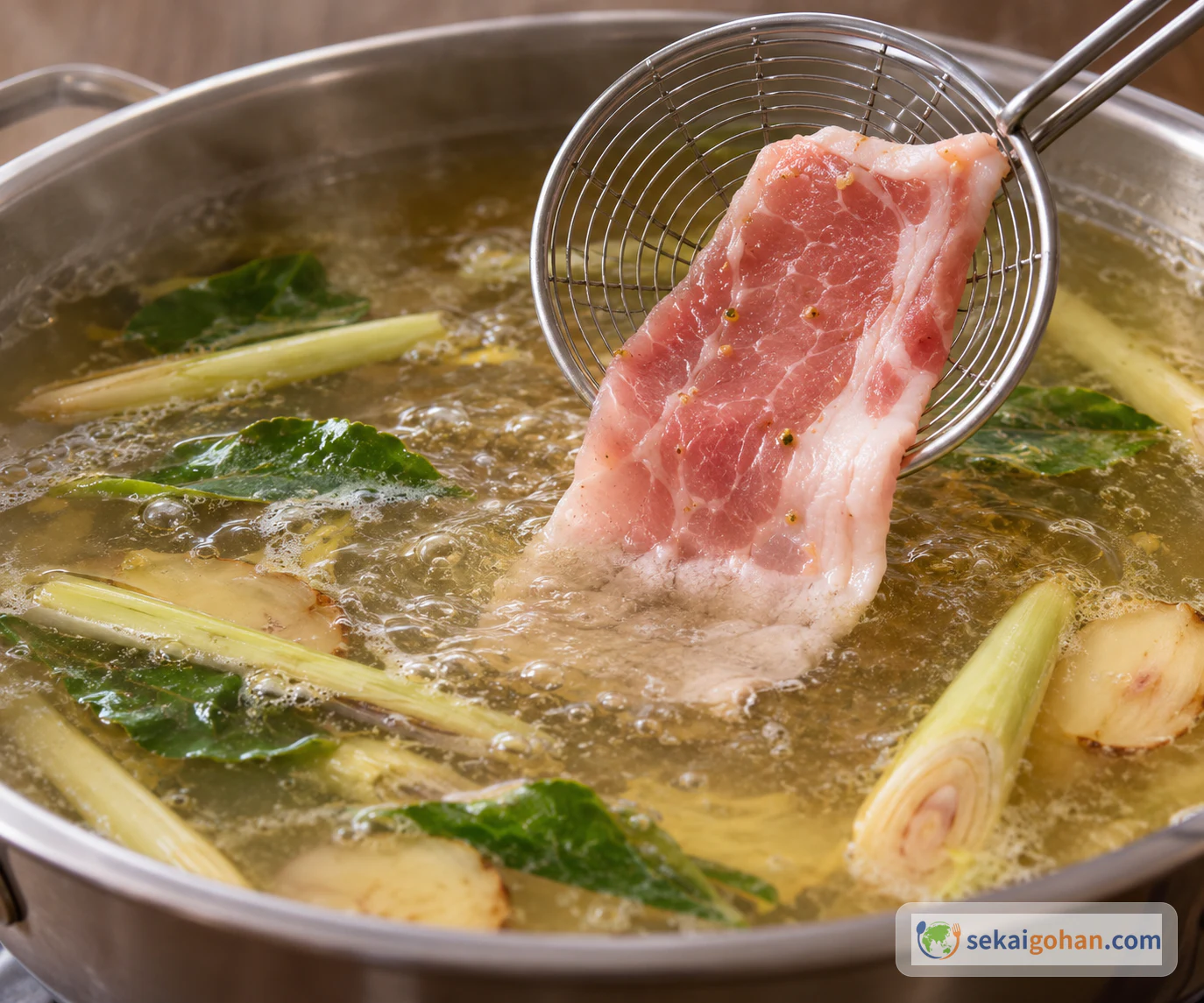
Keep the broth clear: plain unsalted pork stock with lemongrass, kaffir lime leaves and galangal. Keep the bright, sour, spicy flavors in the dip. Add toasted rice powder at the last moment, separately to the pot and to the dip.
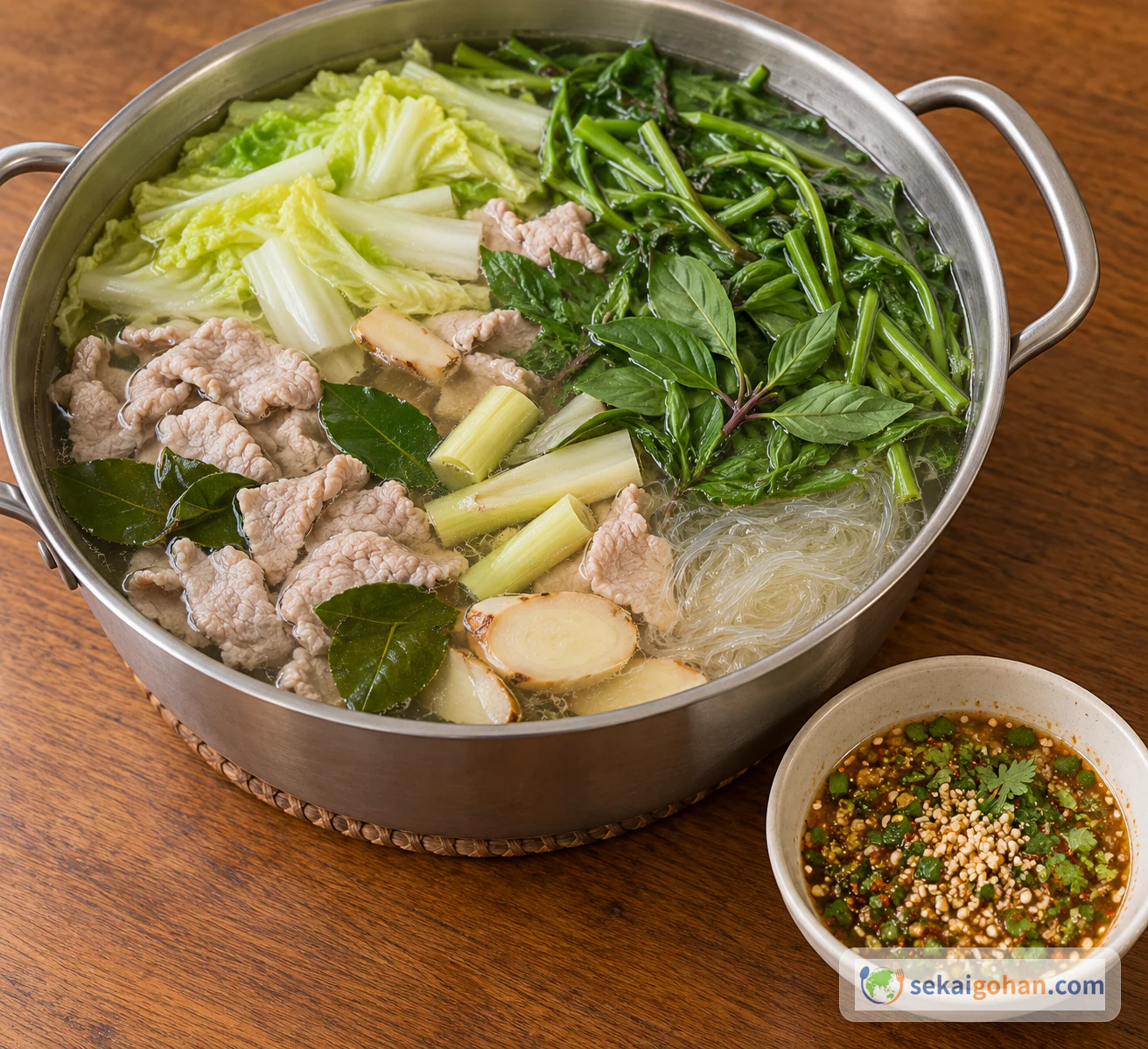
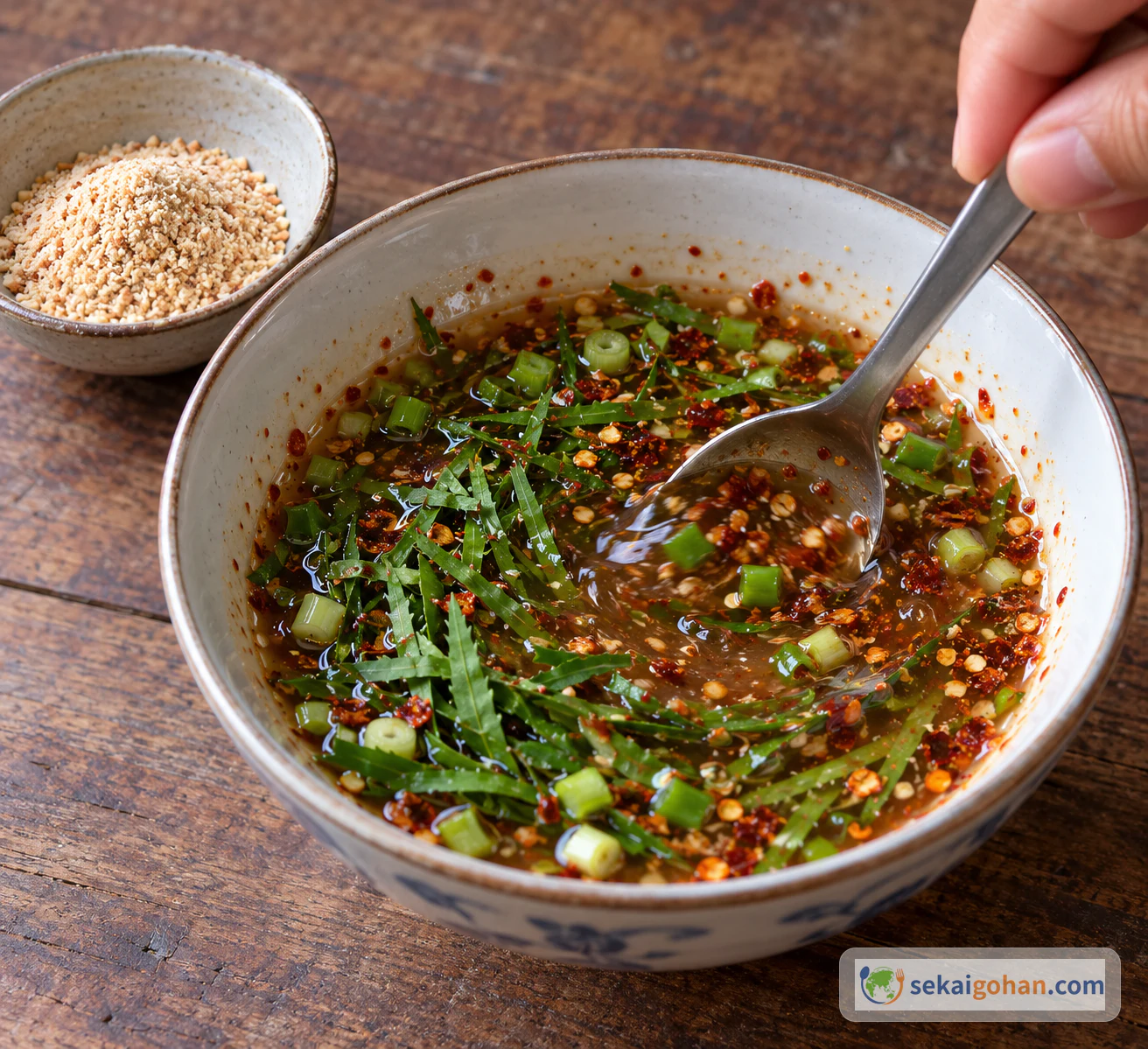
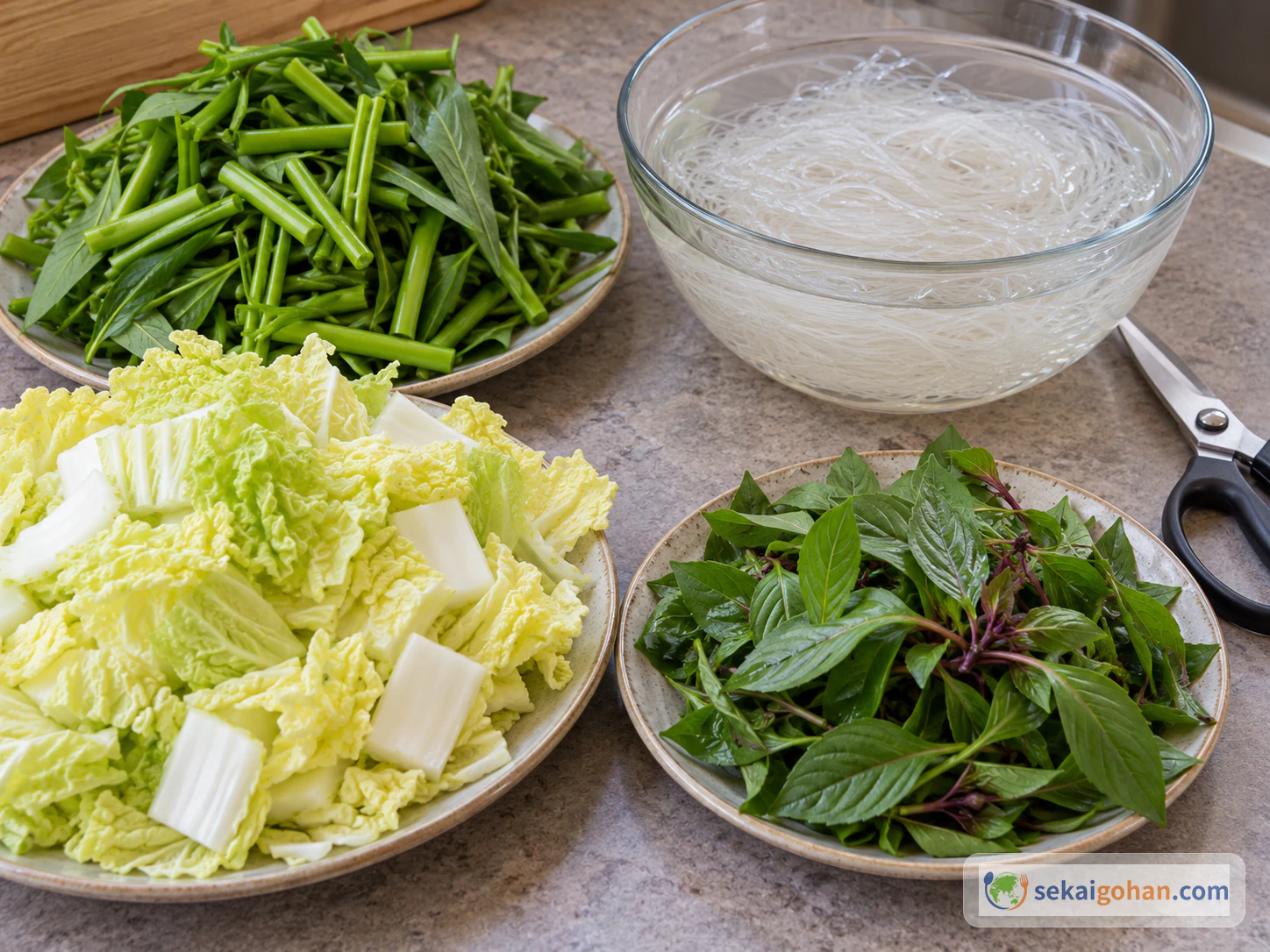
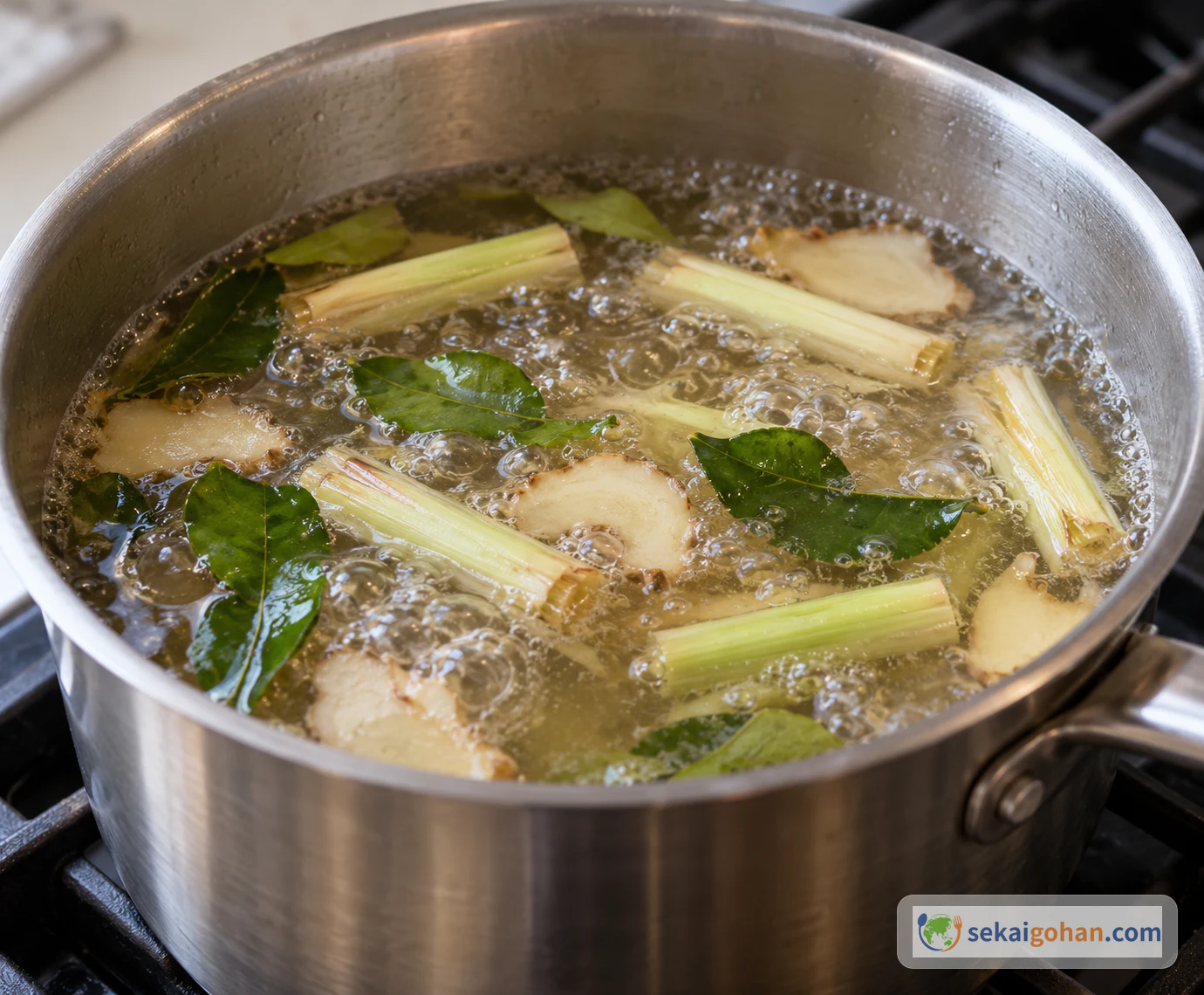
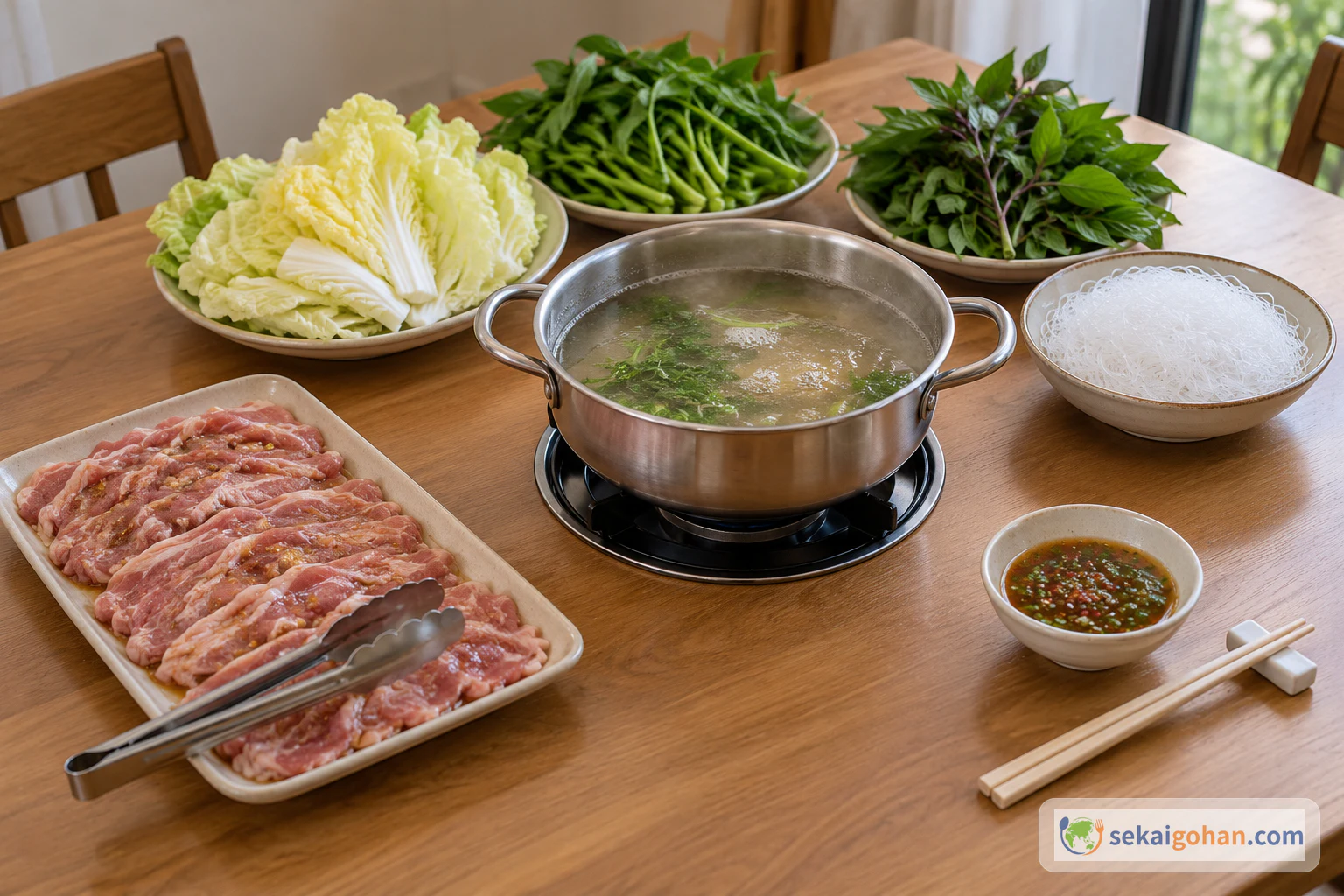
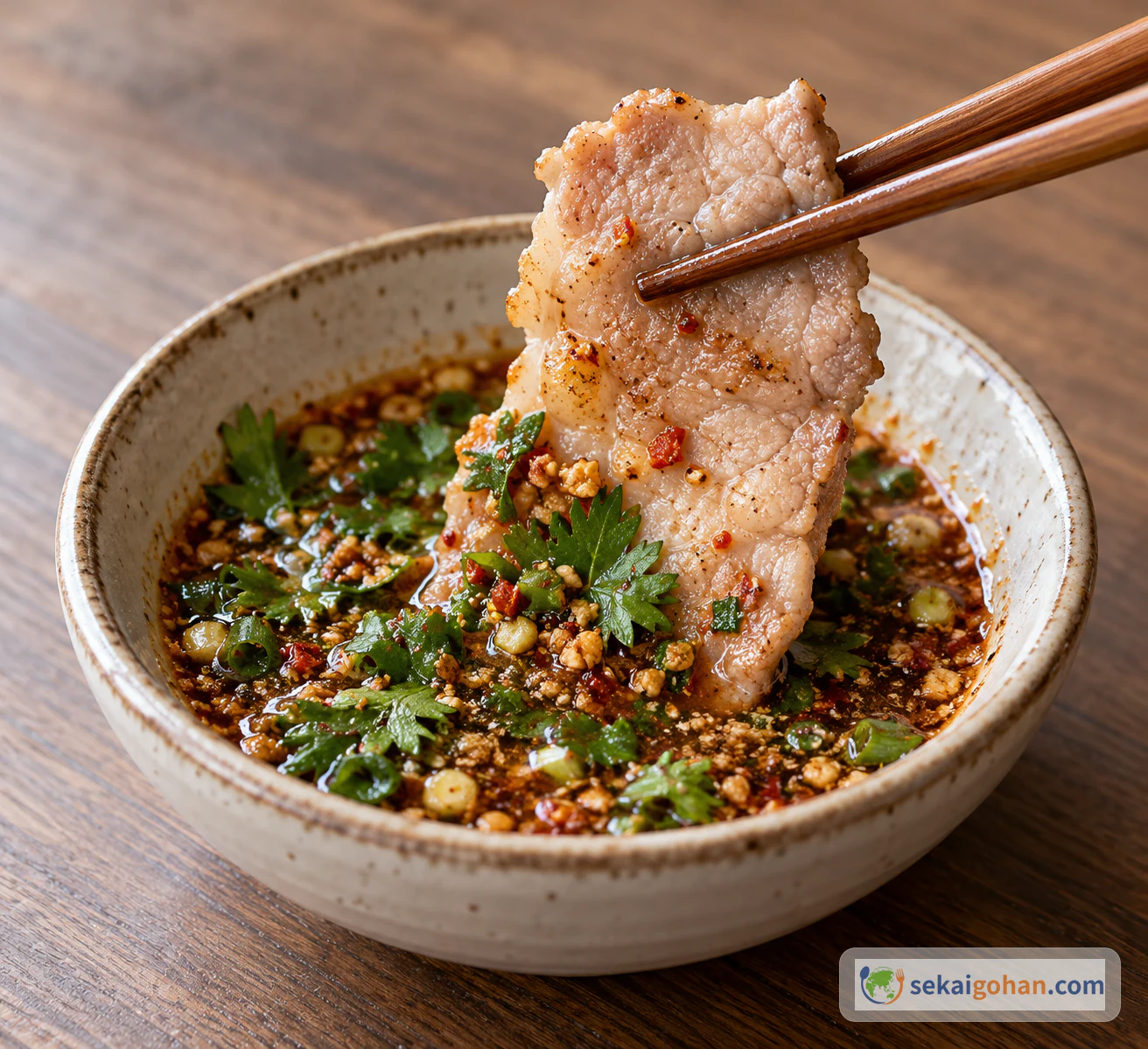
Plain pork stock comes to a rapid simmer. Smashed lemongrass, torn kaffir lime leaves and thin rounds of galangal go in and simmer rapidly for 3–5 minutes. The pot then moves to the table. Thin slices of marinated pork, napa cabbage, water spinach, Thai basil and softened glass noodles are cooked in it a little at a time. Each cooked piece is lifted out and dipped into a small bowl of fish sauce, lime, tamarind, roasted chili and toasted rice powder.
That is the shape of the recipe here. It is a version of the Thai hot pot that Pailin Chongchitnant publishes on Hot Thai Kitchen as "Jim Jum" (จิ้มจุ่ม). It is limited to one branch of that recipe: the clear pork-stock pot with pork as the only meat. The scaling, the vegetable choices and the food-safety notes are explained below. This version has not been kitchen-tested by Sekai Gohan.
For more dishes from the same country, see Thai recipes.
Whose Recipe This Is, and How the Name Shifts Between Sources
The recipe followed here is Pailin Chongchitnant's "Thai Hot Pot 'Jim Jum' จิ้มจุ่ม แจ่วฮ้อน." On that page, Jim Jum is described as a northeastern Thai hot pot that is also called jeaw hon in Isaan dialect. The page frames it as a meal cooked and shared with family and friends.
On the author's own profile, Pailin describes being a trained chef who grew up in Hat Yai in southern Thailand. The profile also mentions studying nutritional sciences at UBC, working in professional kitchens, and attending Le Cordon Bleu culinary school in San Francisco. That is background on who wrote the recipe. It does not make the recipe the single authoritative form of the dish.
Other sources group the names differently:
| Source | Names used | How the dish is framed |
|---|---|---|
| Pailin Chongchitnant, Hot Thai Kitchen | Jim Jum, จิ้มจุ่ม, แจ่วฮ้อน (jeaw hon) | A northeastern Thai hot pot. The title and body put the names side by side |
| Tourism Authority of Thailand media page | "Chim Chum or Chaeo Hon"; tags include Jim Jum and Jaew Hon | A popular Northeastern Thai food, with the names in one caption |
| MICHELIN Guide Thailand | Chim Chum and Jaew Hon as two names | Similar but not identical Isan-style hot pots. Chim Chum has a clear herbal broth. Jaew Hon has a richer broth with cow or pig blood and sometimes phia, and a different dipping sauce |
This article does not decide which naming is "correct," and it does not claim an origin town, inventor or date for the dish. It makes only the clear, herb-infused pork-stock version from Pailin's recipe. No blood, no phia, and no other dipping sauce.
Scaling for Two: Why the Pork Doubles but the Broth Does Not
Pailin's recipe card gives a yield of 2, "Serves 2–3." It lists 150 g of thinly sliced beef, pork or chicken, marinated with:
- 1 tsp each of oyster sauce, soy sauce and oil
- 1 tbsp egg white
- 1/2 tsp tapioca starch or cornstarch
The body of the same page, however, suggests about 150 g of protein per person.
This version is for two people eating pork. It follows the per-person guidance, so the pork is 300 g. Only the meat marinade is doubled, and tapioca starch is the chosen thickener. The stock, broth aromatics, dipping sauce, vegetables and noodles stay at the card's 2–3-serving amounts. This is a plain arithmetic adjustment made for this article. It is not a number printed on the card.
The card's optional step of dipping raw meat into raw egg yolk before cooking is left out of this version. Egg white is used only in the pork marinade.
Ingredients for Two
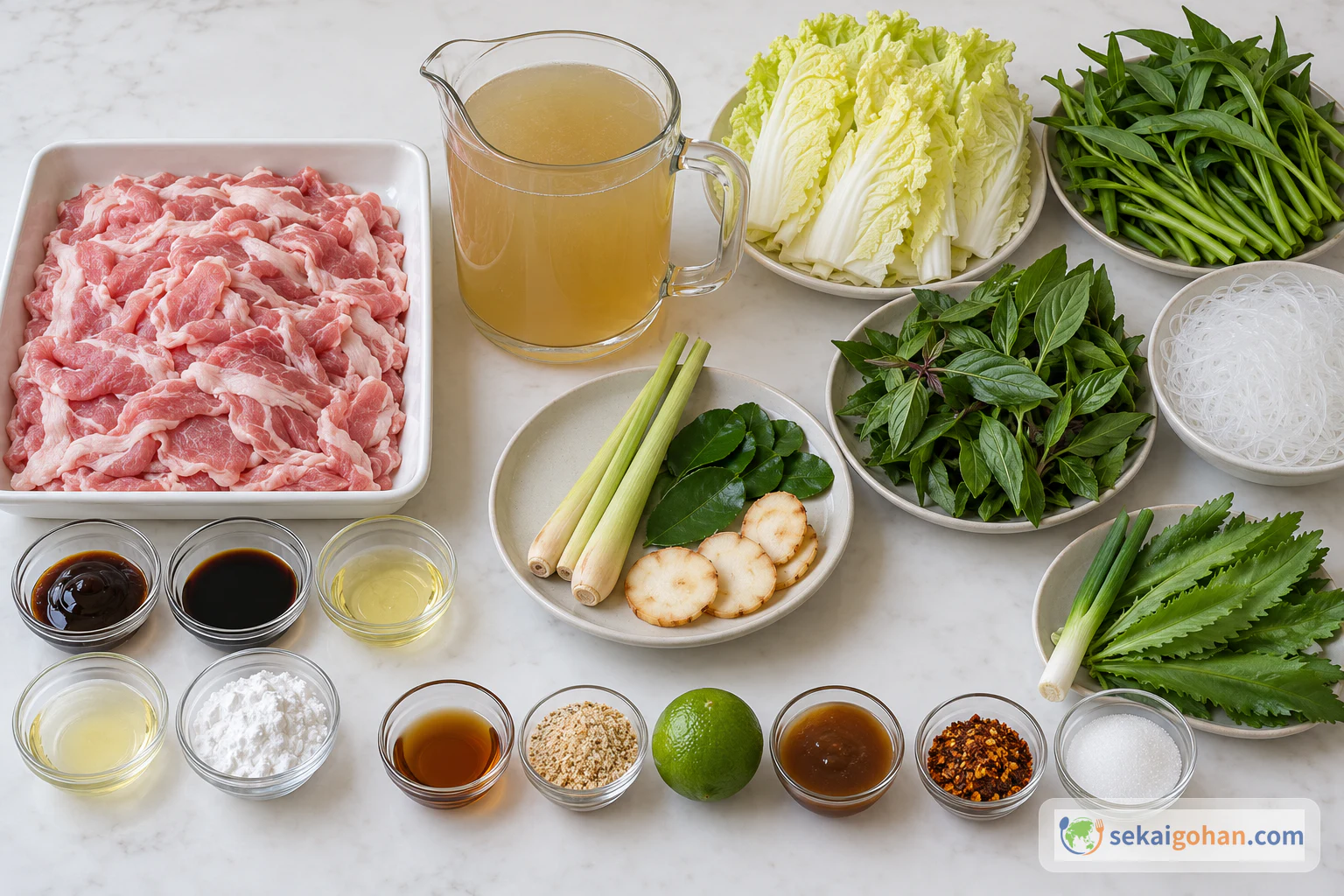
The pork and its marinade are for two people. The dip and the broth are made in one batch for the shared pot.
Toasted rice powder goes in twice, in separate amounts: 1 tbsp into the dip and 1 heaping tbsp into the pot. Fish sauce is also used twice: 2 tbsp in the dip and 1 tbsp in the broth.
Equipment
- Covered bowl for marinating the pork in the refrigerator
- Mixing bowl and spoon for the dip
- Small separate bowl to hold back the toasted rice powder
- Bowl of water for soaking the glass noodles
- Kitchen scissors
- Saucepan or pot for the broth that can be kept simmering at the table
- Separate plates for vegetables, noodles and the raw pork
- Tongs used only for the raw pork
- Clean hot-pot strainer
- Clean eating chopsticks and small dipping bowls
Choosing and Substituting
Pork stock. Use plain unsalted pork stock. If you make it from scratch, simmer pork bones in water for 2 hours.
Sawtooth coriander or cilantro. Use sawtooth coriander in the dip. Cilantro is the alternative, but it is not an exact equivalent.
Tapioca starch or cornstarch. Either works in the marinade. Use tapioca starch here, and use only one of the two.
Vegetables and noodles. Use napa cabbage, water spinach, Thai basil and glass noodles. Thai basil is a must-have.
Method: Marinate, Mix, Infuse, Then Cook at the Table
Toasted rice powder is added at the very end in two places: into the broth after the fish sauce, and into the dip. Keep it in a separate bowl until then.
Keeping Raw Pork Away from the Dip
This guidance comes from FoodSafety.gov, not from the recipe's author.
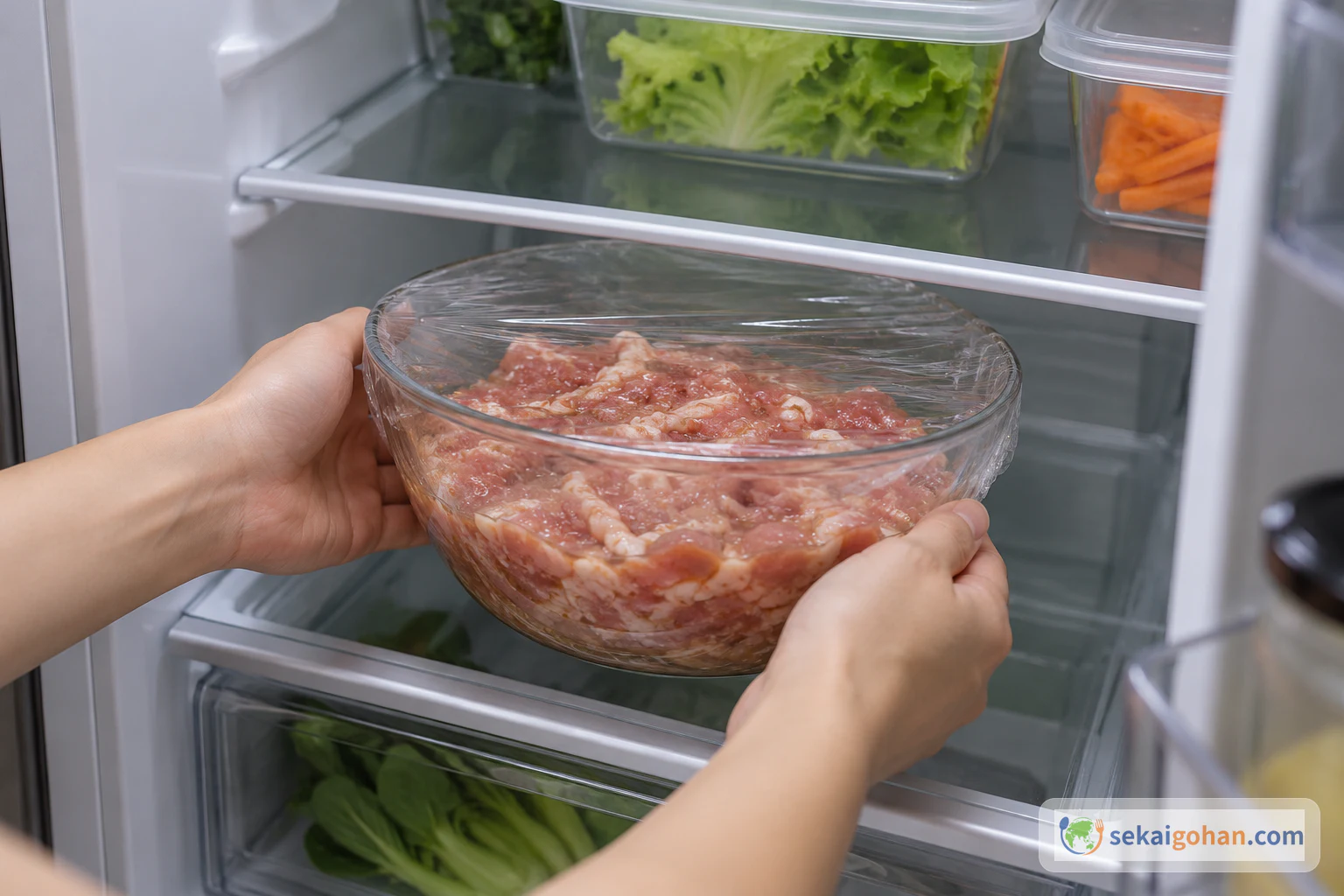
- Marinate meat in the refrigerator, not on the counter.
- Use separate plates and utensils for raw meat and for cooked or ready-to-eat food.
- Wash your hands after touching raw meat or eggs.
- Wash the surfaces and tools that touched raw meat.
- Do not use marinade that has touched raw pork as a dip.
The recipe does not give a cooking time for thin pork slices in the pot, and none is suggested here. FoodSafety.gov recommends using a food thermometer. Its chart lists pork steaks, roasts and chops at 145°F (63°C) with a 3-minute rest. That entry covers whole cuts, not thin hot-pot slices, so it should not be turned into a guessed number of minutes. Color alone is not a safety measurement.
When Something Goes Off Course
| Situation | What to do |
|---|---|
| The sugar is still grainy in the dip | Keep stirring the base until the sugar dissolves, before any rice powder goes in |
| You are not sure when to add the rice powder | Keep both portions in separate bowls. Add them only when you are about to eat: the heaping tbsp to the broth (after the fish sauce) and the 1 tbsp to the dip |
| The noodles are too long to handle | After soaking for 7–10 minutes, cut them a couple of times with scissors |
| You are unsure whether a pork slice is cooked | Don't judge by color alone. Keep it in the simmering broth, and use a food thermometer if you want a measurement |
| Raw-pork tongs or chopsticks touched the dip or cooked food | Don't eat from that dip or that food. Wash the utensils before going on |
Variations Within the Recipe's Own Options
Pailin's recipe card offers beef or chicken as well as pork, at the same 150 g line with the same marinade. The page also mentions seafood, liver and tofu as options that do not need the marinade. This article covers only the pork branch.
The recipe lists other vegetables as well: other greens, spinach, carrot, Asian mushrooms, cilantro stems and Chinese celery. They are not part of this version, and the recipe gives no amounts for them. The card also includes an optional raw egg yolk dip for the meat before it goes into the broth, which is omitted here. For context, FoodSafety.gov's chart says raw eggs should be cooked until the yolk and white are firm.
Sharing the Pot
Pailin's page presents the hot pot as a meal cooked together with family and friends. The MICHELIN Guide Thailand feature describes hot-pot eating as widely popular in Thailand. It calls Jaew Hon especially common in Isan, and describes sharing the pot with family or friends. Those are the sources' descriptions of how the dish is enjoyed. They are not a rule for every household in Thailand.
Cooking at a shared pot is a format this dish has in common with other table-cooked dishes. That shared format alone does not make it the same dish as any of them.
Frequently Asked Questions
Are Chim Chum and Jaew Hon the same dish?
The sources disagree. Pailin's recipe and the Tourism Authority of Thailand media page put the names together. MICHELIN Guide Thailand treats them as similar but different. In its account, Chim Chum has a clear herbal broth, and Jaew Hon has a richer broth that includes blood and sometimes phia. This article makes only the clear pork-stock version from Pailin's recipe.
Can I use cilantro instead of sawtooth coriander?
Pailin's recipe names cilantro as an alternative for the dip. This version uses sawtooth coriander. Cilantro is the recipe's own alternative, not a claim that the two taste the same.
How long does the pork take in the pot?
The recipe does not give a time, and this article does not suggest one. Cook each slice until done in the simmering broth. Don't rely on color alone, and use a food thermometer if you want a measurement.
Can I make the pork stock myself?
Yes. The recipe's note says to simmer pork bones in water for 2 hours. It gives no amounts of bones or water, so none are added here. You need 4 cups of plain, unsalted stock.
Is this the Thai version of Japanese sukiyaki?
No. Both are eaten around a shared pot, but this article does not treat chim chum as sukiyaki or as a version of it.
Has this version been tested?
No. This version has not been kitchen-tested by Sekai Gohan. It follows Pailin Chongchitnant's written recipe, with the pork and marinade doubled for two people as explained above.
Sources
- Pailin Chongchitnant, "Thai Hot Pot 'Jim Jum' จิ้มจุ่ม แจ่วฮ้อน," Hot Thai Kitchen. The main recipe: the meat marinade, vegetable and noodle options, dipping sauce, broth, the timings (marinade at least 20 minutes, noodles soaked 7–10 minutes, aromatics simmered rapidly for 3–5 minutes) and the just-before-eating rice powder. Also the card yield (2 / Serves 2–3, 150 g meat) and the body's guidance of about 150 g protein per person, the description of Jim Jum as a northeastern Thai hot pot also called jeaw hon in Isaan dialect, and the shared-meal framing. The article credits Pailin Chongchitnant; the recipe card's author field spells the name "Palin." https://hot-thai-kitchen.com/jim-jum-hot-pot/
- Pailin Chongchitnant, "About Pailin Chongchitnant," Hot Thai Kitchen. The author's own profile: a trained chef who grew up in Hat Yai in southern Thailand, studied nutritional sciences at UBC, worked in professional kitchens and attended Le Cordon Bleu in San Francisco. Self-reported. https://hot-thai-kitchen.com/about/
- MICHELIN Guide Thailand, "จานเด็ดระดับตำนาน: 'แจ่วฮ้อน' หม้อไฟไทยอีสานสุดแซ่บ พร้อมพิกัดชิมใน 'มิชลิน ไกด์'" (made with the Tourism Authority of Thailand). Chim Chum and Jaew Hon as similar but different Isan-style hot pots, with the clear herbal broth versus the richer broth with blood and sometimes phia. Also hot pot's popularity in Thailand and sharing the pot with family or friends. Not an origin study. https://guide.michelin.com/th/th/article/features/iconic-dishes-what-is-jaew-hon
- Tourism Authority of Thailand, Promotional Material Production Division, "Thai Food-Chim Chum (จิ้มจุ่ม) 251287PS.jpg." A media caption describing "Chim Chum or Chaeo Hon" as a popular Northeastern Thai food, with tags including Jim Jum and Jaew Hon. Image metadata, not a recipe. https://tatmediaassets.com/file/11173954
- FoodSafety.gov, "4 Steps to Food Safety." Marinating meat in the refrigerator, separate plates and utensils for raw meat and ready-to-eat food, handwashing after touching raw meat or eggs, and washing surfaces and tools. https://www.foodsafety.gov/keep-food-safe/4-steps-to-food-safety
- FoodSafety.gov, "Cook to a Safe Minimum Internal Temperature." Using a food thermometer, the 145°F (63°C) plus 3-minute rest entry for pork steaks, roasts and chops, and cooking raw eggs until the yolk and white are firm. Not a hot-pot time for thin slices. https://www.foodsafety.gov/food-safety-charts/safe-minimum-internal-temperatures