Through the steam, the root vegetables turn sweet
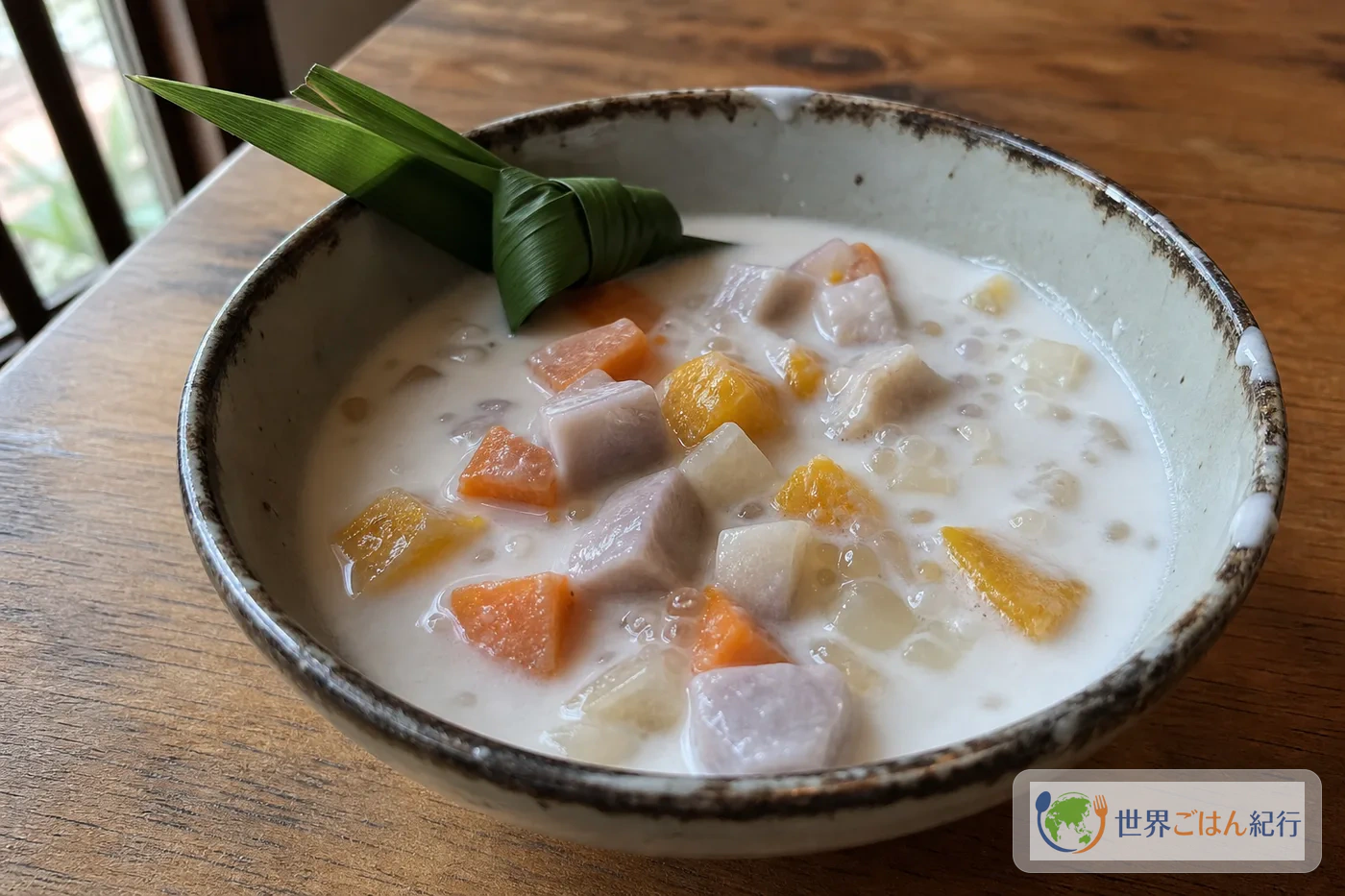
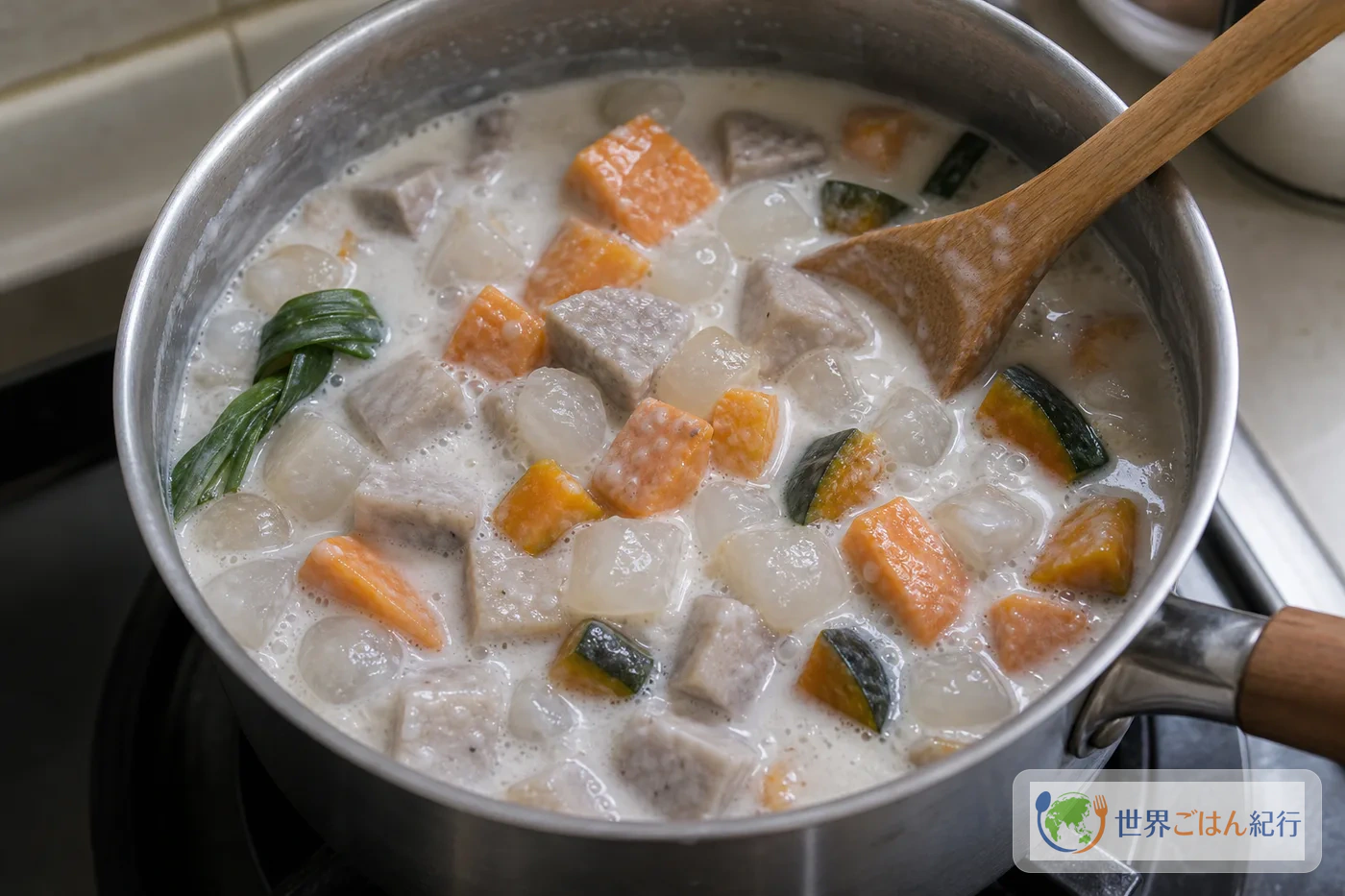
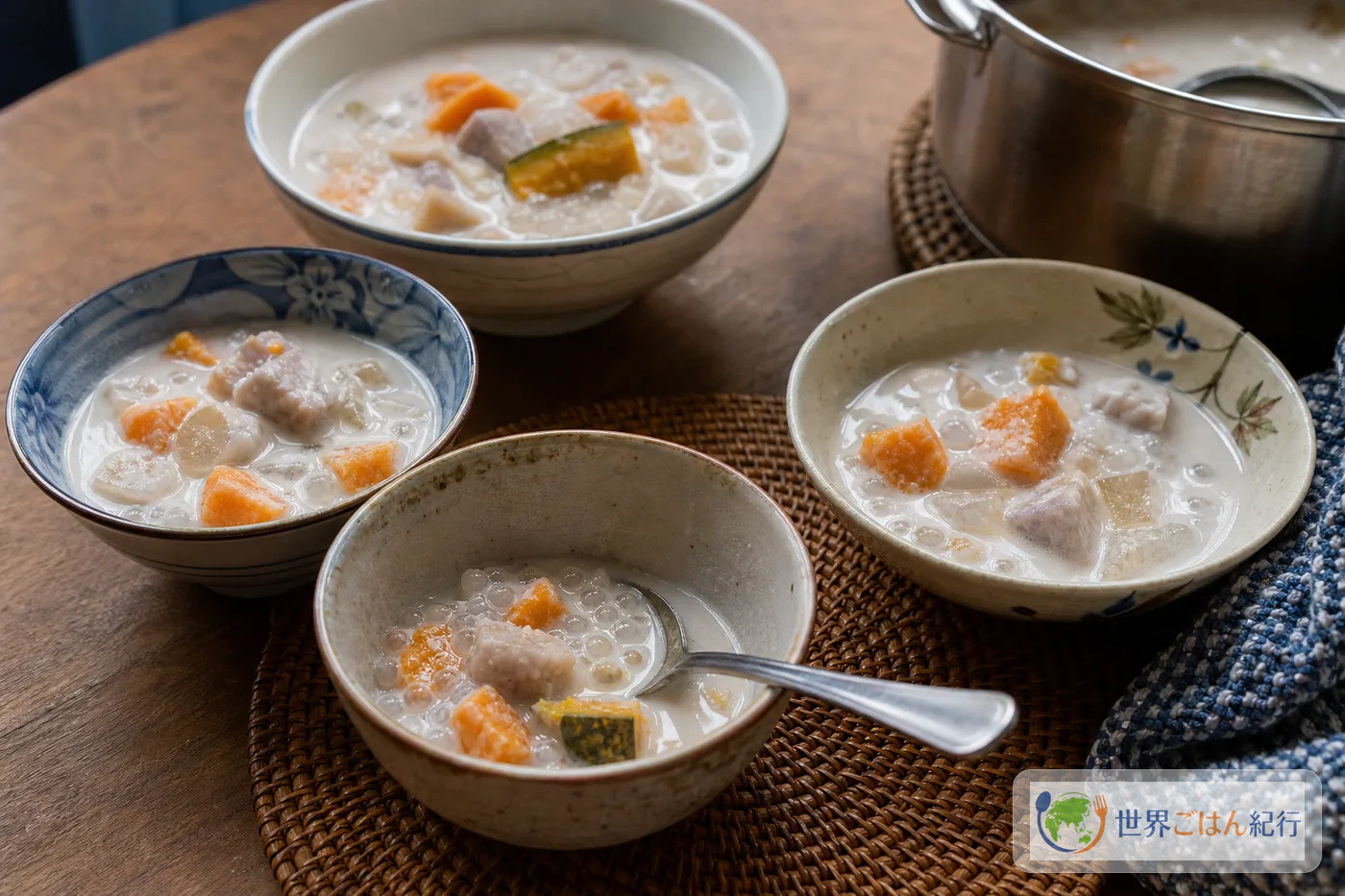
Warm coconut milk in a pot and the air in the kitchen suddenly leans toward Southeast Asia. Add steamed taro, sweet potato and pumpkin. Orange and pale purple sink into the white liquid, with the small translucence of tapioca mixed in, and the look is close to a sweet red bean soup while the fragrance heads in a completely different direction.
Bubur cha cha is a warm coconut-milk dessert enjoyed in Malaysia and Singapore. In Malay, bubur means porridge, and here it refers not to rice porridge but to a bowl of root vegetables and tapioca bound together in sweet coconut liquid. In a home kitchen, you can get quite close using regular taro in place of the Asian taro, orange sweet potato in place of the orange yam, and pumpkin to help with color and sweetness.
What is bubur cha cha?
Bubur cha cha is a sweet coconut-milk bowl eaten in Malaysian homes and at street stalls. The ingredients vary a little by region and household, and can include taro, purple sweet potato, sweet potato, pumpkin, sago, tapioca jelly and beans. It is eaten warm or chilled, and it sits closer to an afternoon snack that takes the edge off hunger than to an after-dinner dessert.
There are three things to keep as the backbone when you make it at home.
| Element | What it means in the local style | Realistic version at home |
|---|---|---|
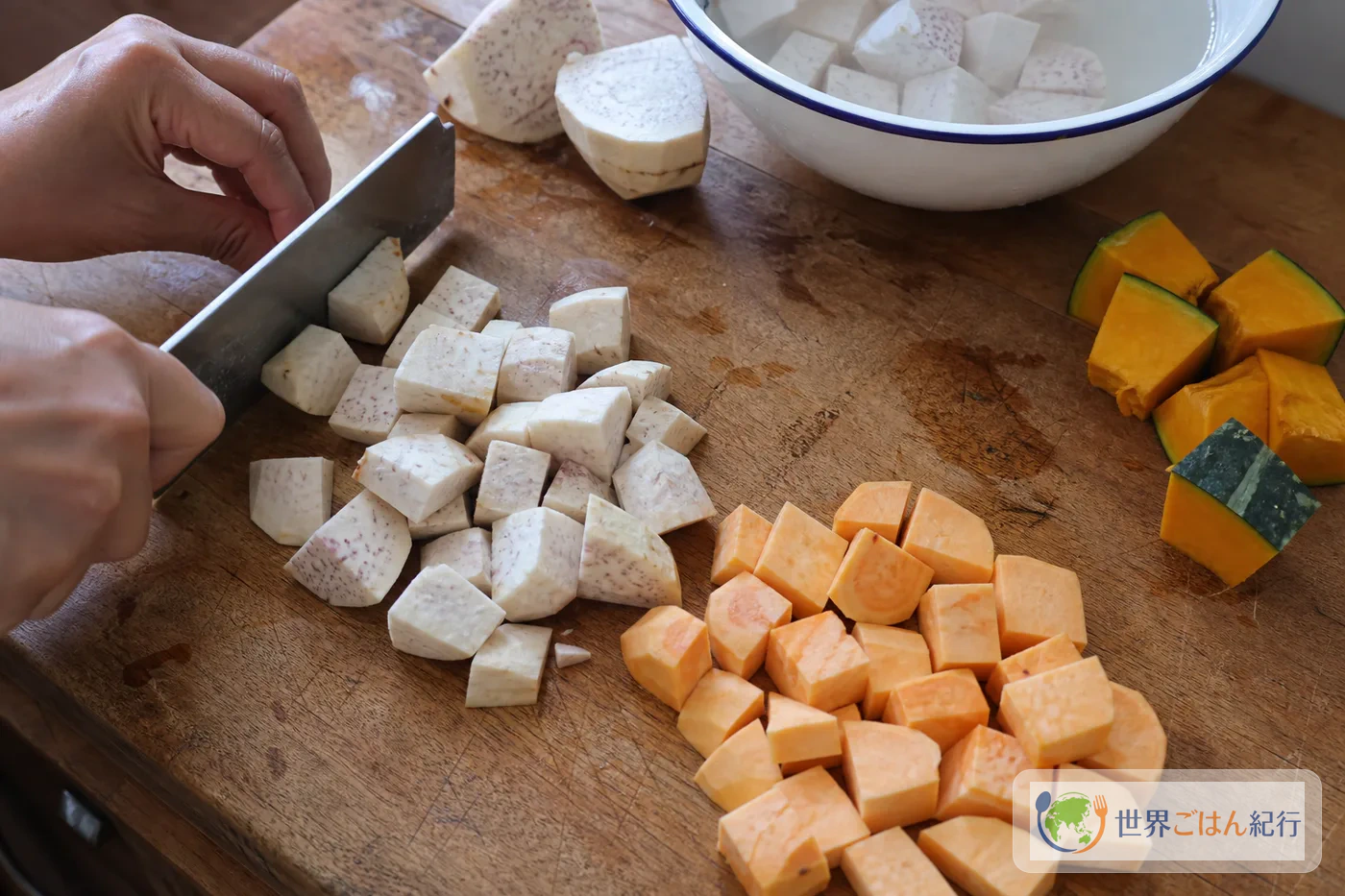
| Diced root vegetables | Color and texture change with every spoonful | Cut taro, sweet potato and pumpkin into 1.5–2 cm cubes |
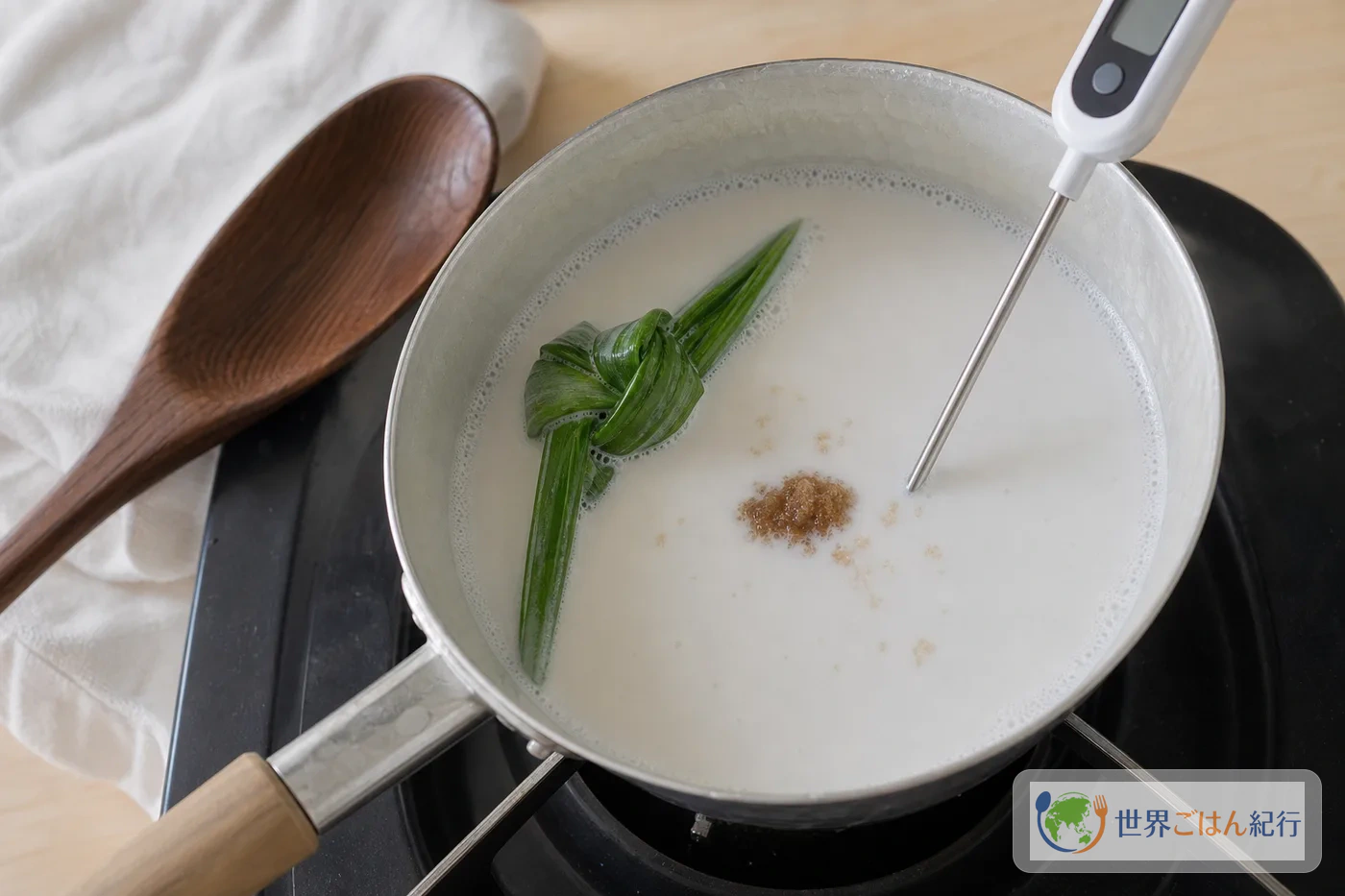
| Coconut milk | Gives the liquid its aroma and roundness | Dilute canned coconut milk and do not let it boil |
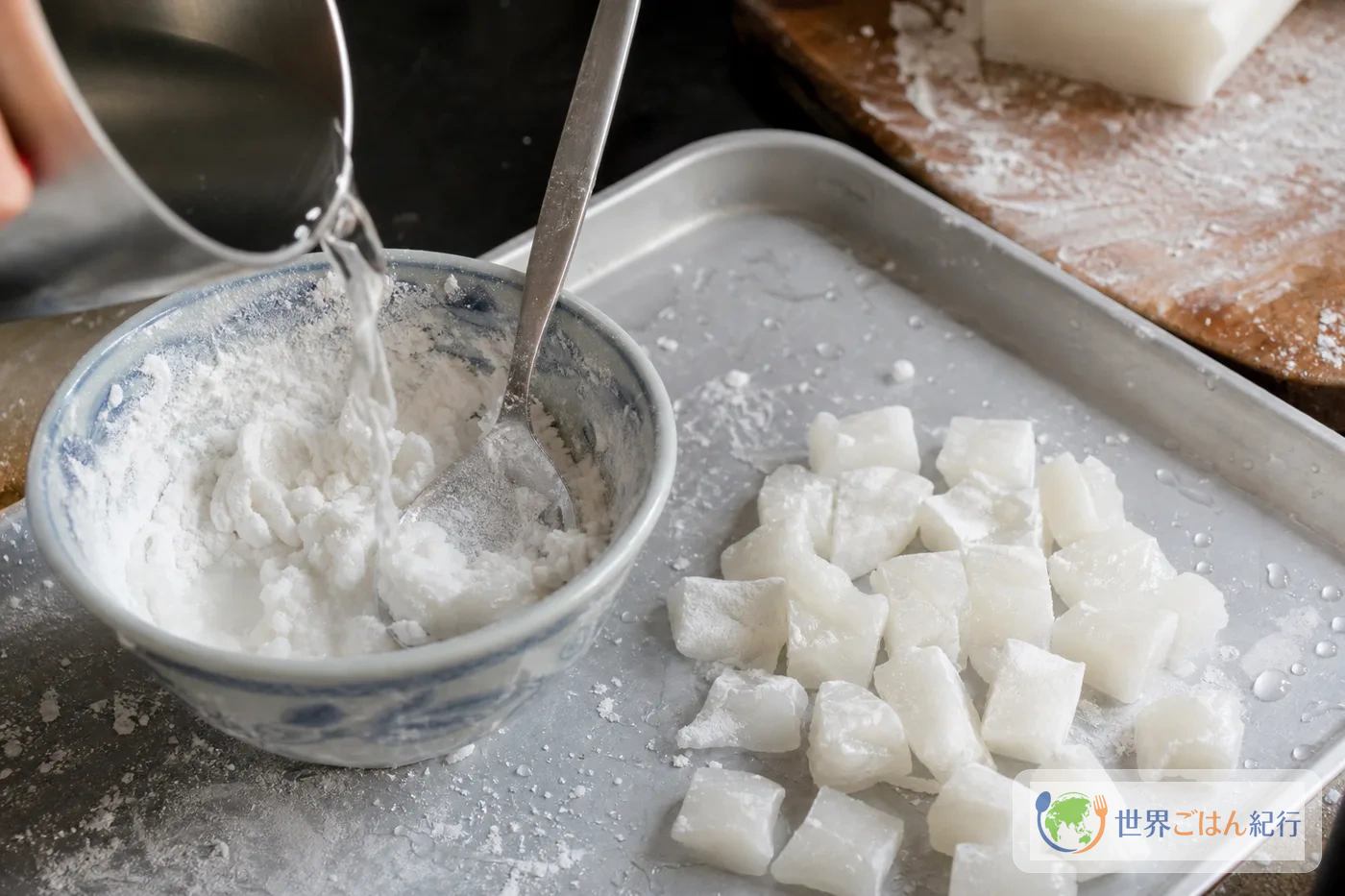
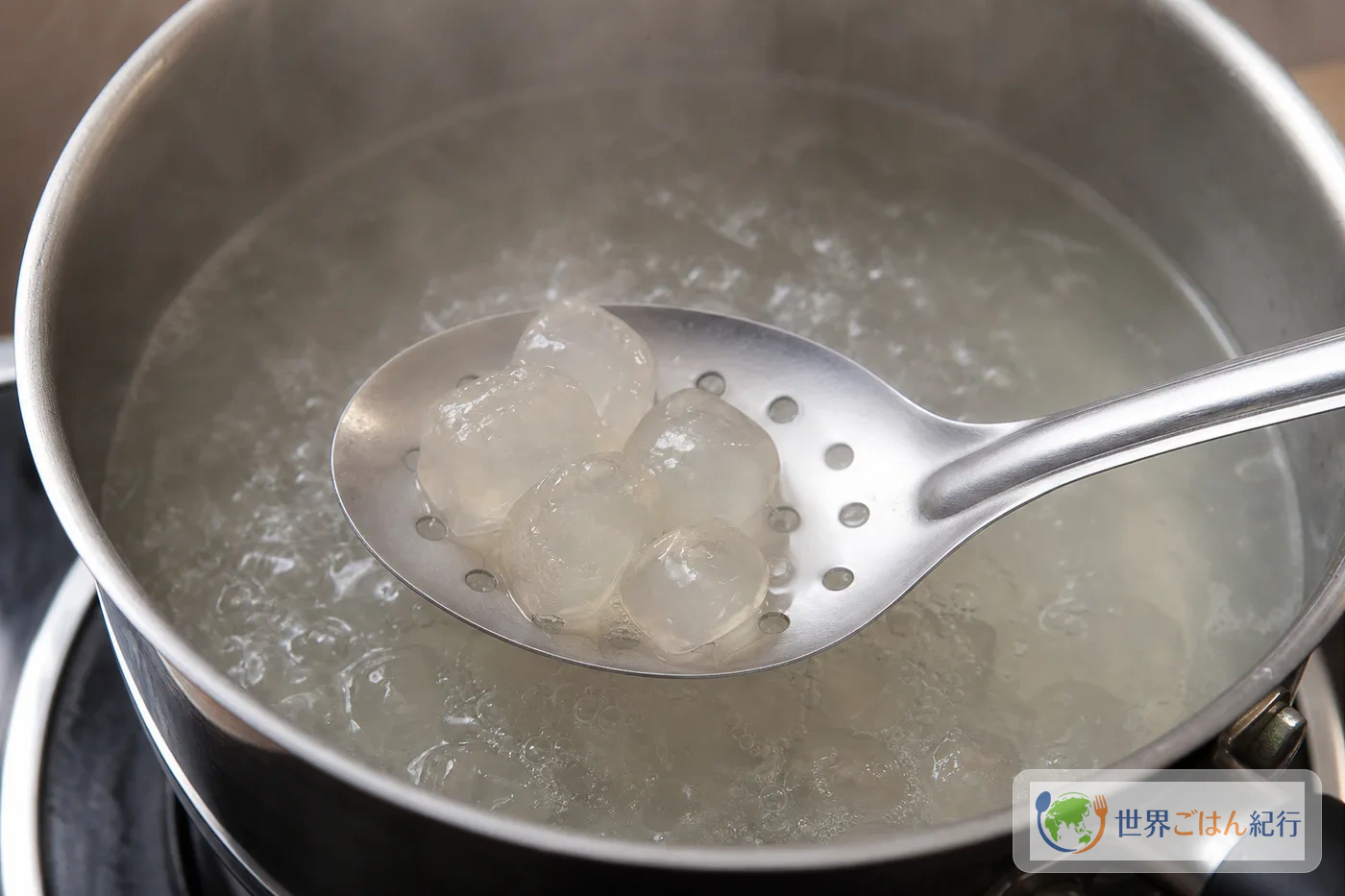
| Springy tapioca | Adds a small chewy interval | Make small dumplings from tapioca starch, or boil small tapioca pearls |
Sweets heading in a similar direction include the Philippines' sapin-sapin, and the coconut-based Malaysian nasi lemak. Bubur cha cha is neither a steamed cake nor a staple; it is easier to make if you think of it as a bowl where you eat the sweetness of the root vegetables together with the liquid.
Ingredients (serves 4)
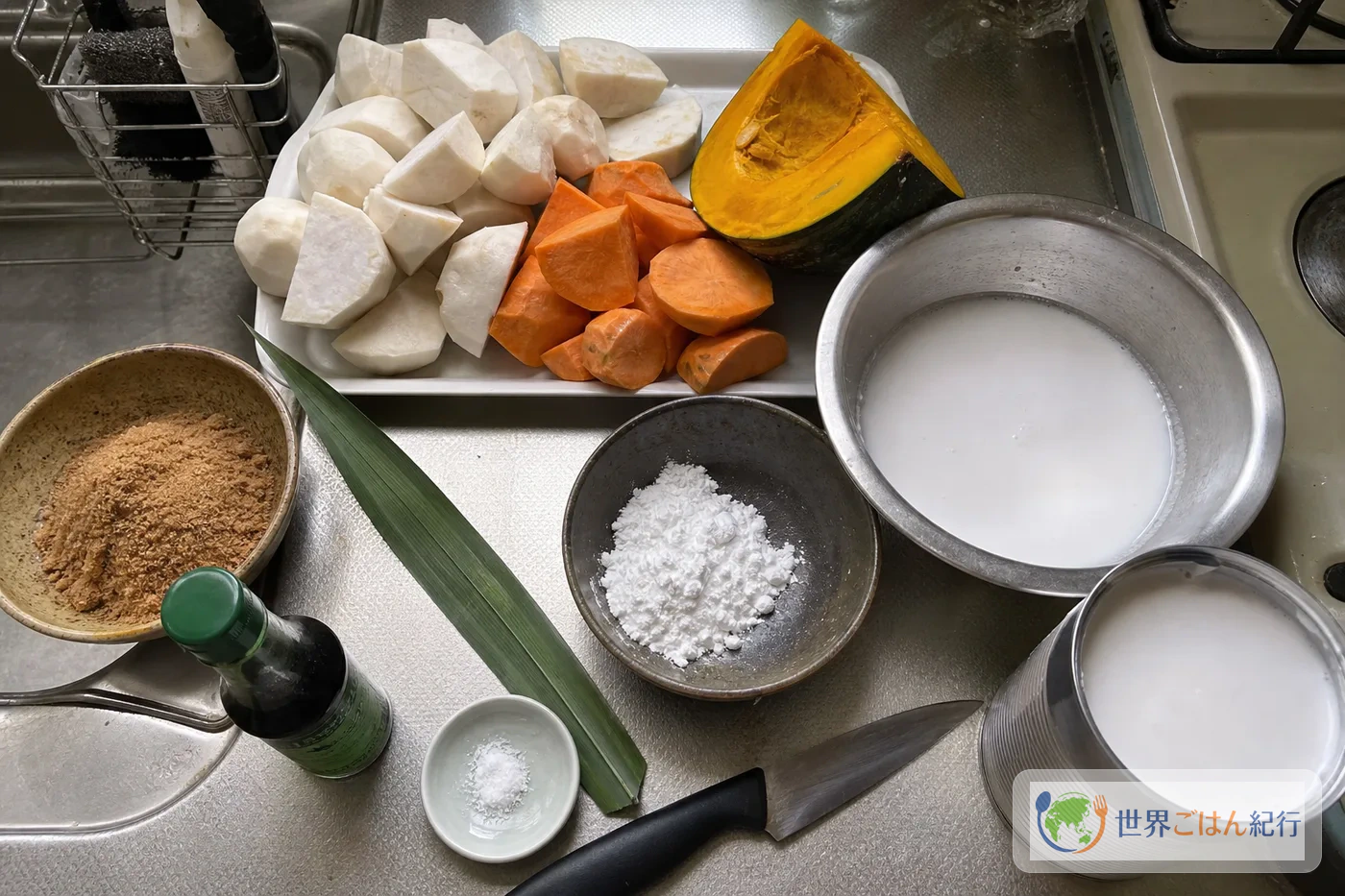
Watch out for coconut. This recipe does not use wheat flour, but check the production-line labeling of the tapioca starch and coconut milk on each product.
Shopping notes
Taro, sweet potato and pumpkin are available at any grocery store. The things worth hunting for online or at an Asian grocery are the coconut milk that forms the backbone of the flavor, the tapioca starch (easy to confuse with other starches), and a thermometer so you do not overheat the coconut milk.
Use pandan leaf if you can find it at an Asian grocery's freezer section. If you cannot, rather than chasing only the fragrance, putting priority on not boiling the coconut milk and not overcooking the root vegetables will bring the bowl closer to the local one.
Branching points for getting closer to the local version at home
What people hesitate over with bubur cha cha are three things: taro, sago and pandan. Trying to get everything perfectly makes shopping heavy, so here is what you can substitute and what changes the core of the dish if you do.
| Ingredient in doubt | Acceptable substitute | What happens if you go too far |
|---|---|---|
| Taro | Regular taro, frozen taro | Potato alone weakens the unity with the sweet liquid |
| Purple yam | Sweet potato, purple sweet potato | Pumpkin alone tends to cloud the liquid yellow |
| Sago | Small tapioca pearls, tapioca-starch dumplings | Potato-starch dumplings are less translucent and heavy when chilled |
| Pandan | Frozen pandan, pandan essence, 2 drops of vanilla | Too much and the impression of confectionery flavoring wins |
| Palm sugar | Raw cane sugar, with only 20 g of dark brown sugar mixed in | With dark brown sugar alone the liquid goes toward a traditional brown-sugar-sweets taste |
For the first time, taro, sweet potato, pumpkin, coconut milk and tapioca starch are enough. Pandan adds a layer of aroma, but unless the cooking of the root vegetables and the temperature of the coconut liquid are settled, the aroma just floats on top.
Where it tends to go wrong
| Condition | Cause | Fix |
|---|---|---|
| The coconut liquid separates | Boiled over high heat | Turn off the heat, add 50 ml lukewarm water and stir lightly. It will not fully come back but the mouthfeel is lighter |
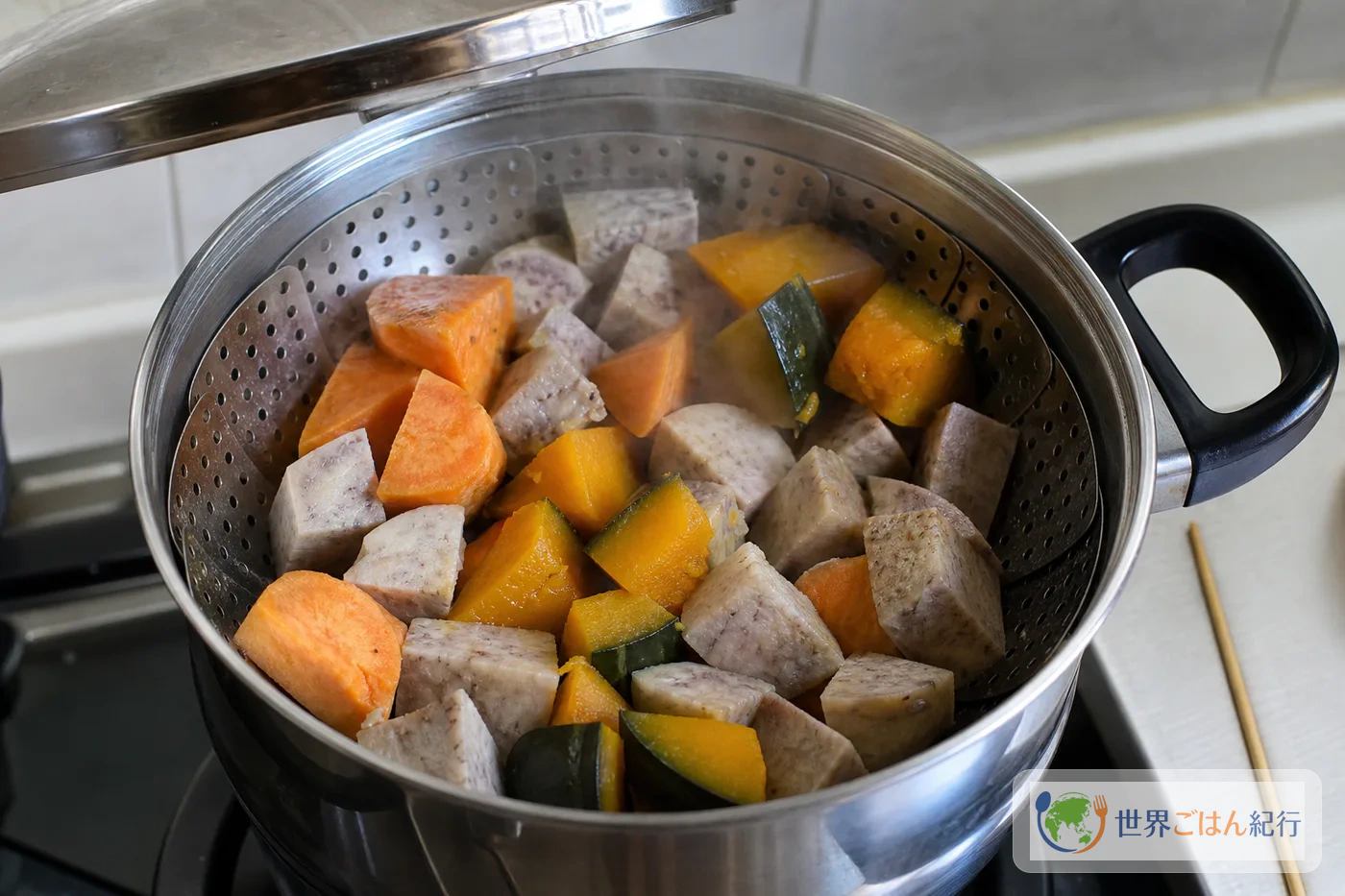
| The pumpkin melts | Cooked in the liquid from the start, or stirred too much | Add the pumpkin last. Next time cut the steaming time by 3 minutes |
| The tapioca is powdery | Boiled too briefly, white center | Boil another 2 minutes in boiling water and check translucence before putting it back |
| The sweetness is blurry | Too little salt, or the vegetables are watery | Use 1/4 tsp salt rather than a pinch. Look at the outline with salt before adding more sweetness |
| It is heavy when chilled | The coconut milk set while still rich | Loosen it with 2–3 tbsp water just before eating, not milk |
The area where explanations tend to be thin for this dish is serving it warm or cold. Warm bubur cha cha is led by the sticky texture of taro, and chilled, the sweetness of coconut milk and tapioca comes forward. If you plan to make it ahead, cut the vegetables slightly larger, at 2 cm, so their outlines remain after refrigeration.
Serving, storage and what to cook next
When warm, it is easiest to eat if a spoon scoops about the same amount of solids and liquid. Too much liquid makes it a coconut soup and too many solids pushes it toward a simmered dish, so put the solids in the bowl first and then pour in the liquid. If serving it chilled, leave it in the refrigerator for about 3 hours so the flavors meld.
It keeps up to 2 days refrigerated. Tapioca hardens over time, so move the portion for the next day to a small pot, add 2 tbsp water and reheat over low heat for 4 minutes. In a microwave, heat at 600 W for 1 minute 30 seconds and stir once halfway. Coconut milk separates easily under sudden high heat, so avoid strong reheating.
To expand into a Malaysian menu, you can follow a spicy noodle dish such as laksa with a sweet, cold bubur cha cha. In the direction of breakfast or snacks, roti jala and roti canai show the range of Malaysian flour-based dishes and coconut.
FAQ
Is bubur cha cha served warm or cold?
Both. Warm, the sweetness of the root vegetables stands out; cold, it feels more like a coconut-milk dessert. For the first time, set the flavor while it is warm and chill the rest to see the difference.
Are sago and tapioca the same?
They are treated as different raw ingredients, but when shopping outside Southeast Asia, replacing sago with small tapioca pearls or tapioca starch is realistic. In this recipe small dumplings are made from the starch to get translucence and spring.
Can I make it without pandan leaf?
Yes. The aroma changes, but if the combination of coconut milk, root vegetables and tapioca is right it still works as a dish. If you use vanilla extract, keep it to 2 drops and do not overdo it.
Can I use potato instead of taro?
With potato alone it tends to feel powdery in the sweet liquid. If you use it, replace only part, such as 150 g taro and 100 g potato, and keep the sweetness of the sweet potato and pumpkin.
Can I dilute the coconut milk with milk?
Diluting with milk moves it toward a milk-simmered dish rather than a Southeast Asian sweet. If you want it lighter, dilute with water and keep the coconut aroma, and it will be more like bubur cha cha.
How much can I reduce the sugar?
You can reduce it from 60 g to 45 g of raw cane sugar. Keep the 1/4 tsp salt, though. Without salt, the flavor blurs when you lower the sugar and only the coconut milk feels heavy.
Sources
- Malaysian Chinese Kitchen, "Bubur Cha Cha", https://www.malaysianchinesekitchen.com/bubur-cha-cha/ (checked for the basic makeup of taro, sweet potato, sago and coconut milk, and for serving warm or cold)
- F&N Life, "Bubur Cha Cha", https://www.fnnlife.com.my/recipes/bubur-cha-cha/ (checked for the ingredient makeup as a Malaysian home sweet and the cooking flow of combining with coconut milk)
- FairPrice Singapore, "Bubur Cha Cha", https://www.fairprice.com.sg/recipes/bubur-cha-cha/ (used as a reference for ingredient names in Southeast Asia and a home formula with taro, sweet potato and sago)
- Wikipedia, "Bubur cha cha", https://en.wikipedia.org/wiki/Bubur_cha_cha (consulted for the dish name, regions and an overview of common ingredients)