Curry Puffs with Spiral Layers: Two Doughs, Three Folds, One Mold
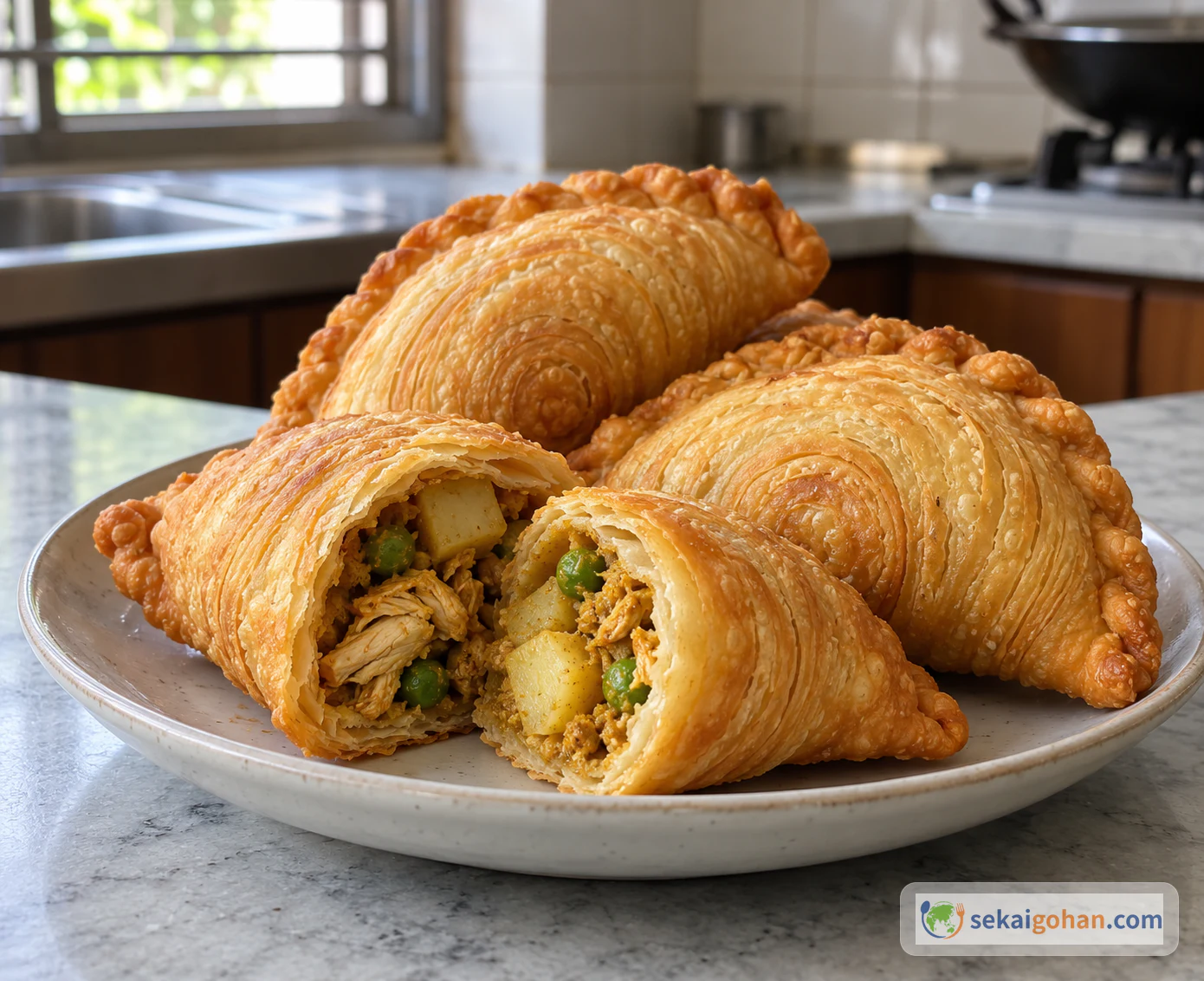
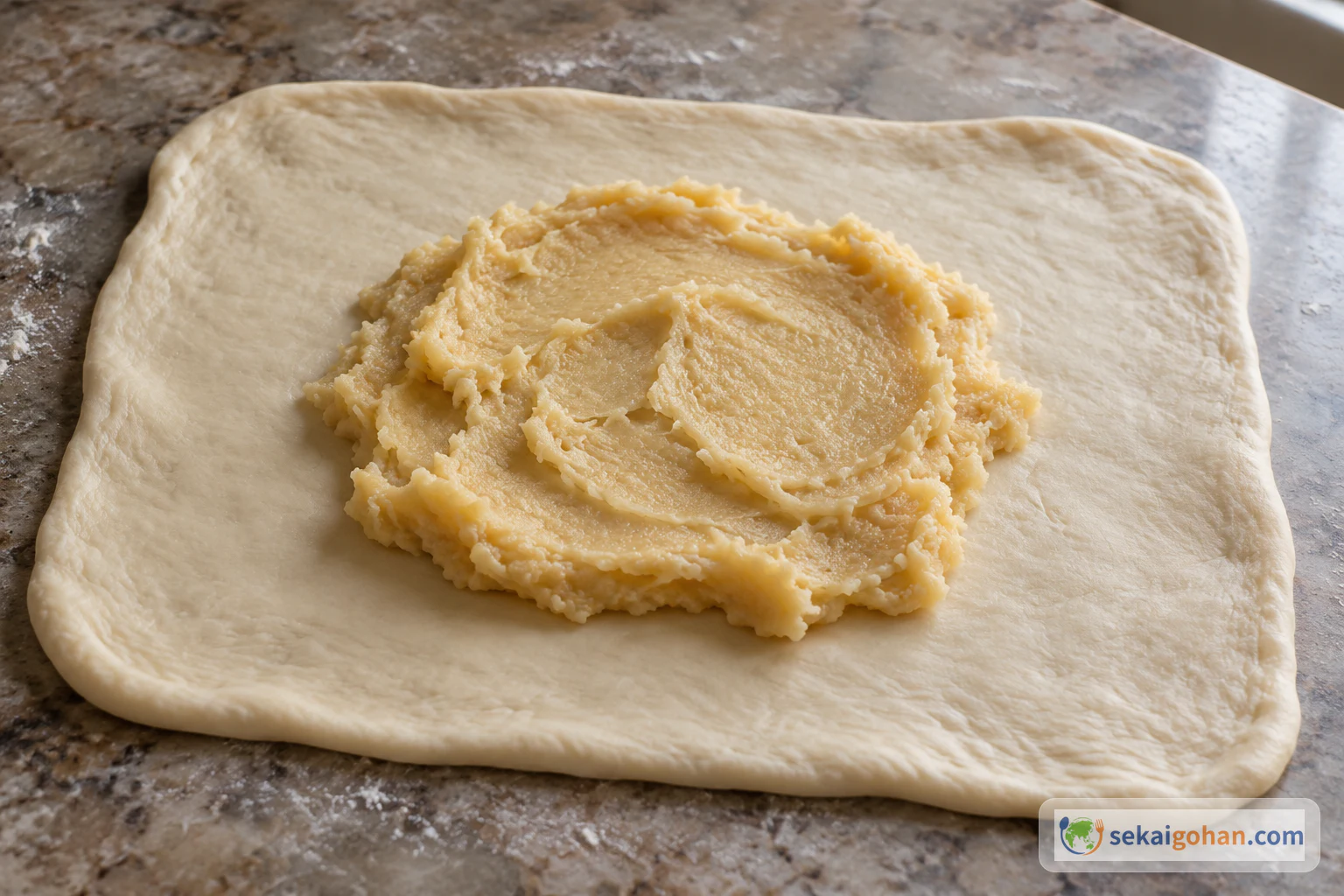
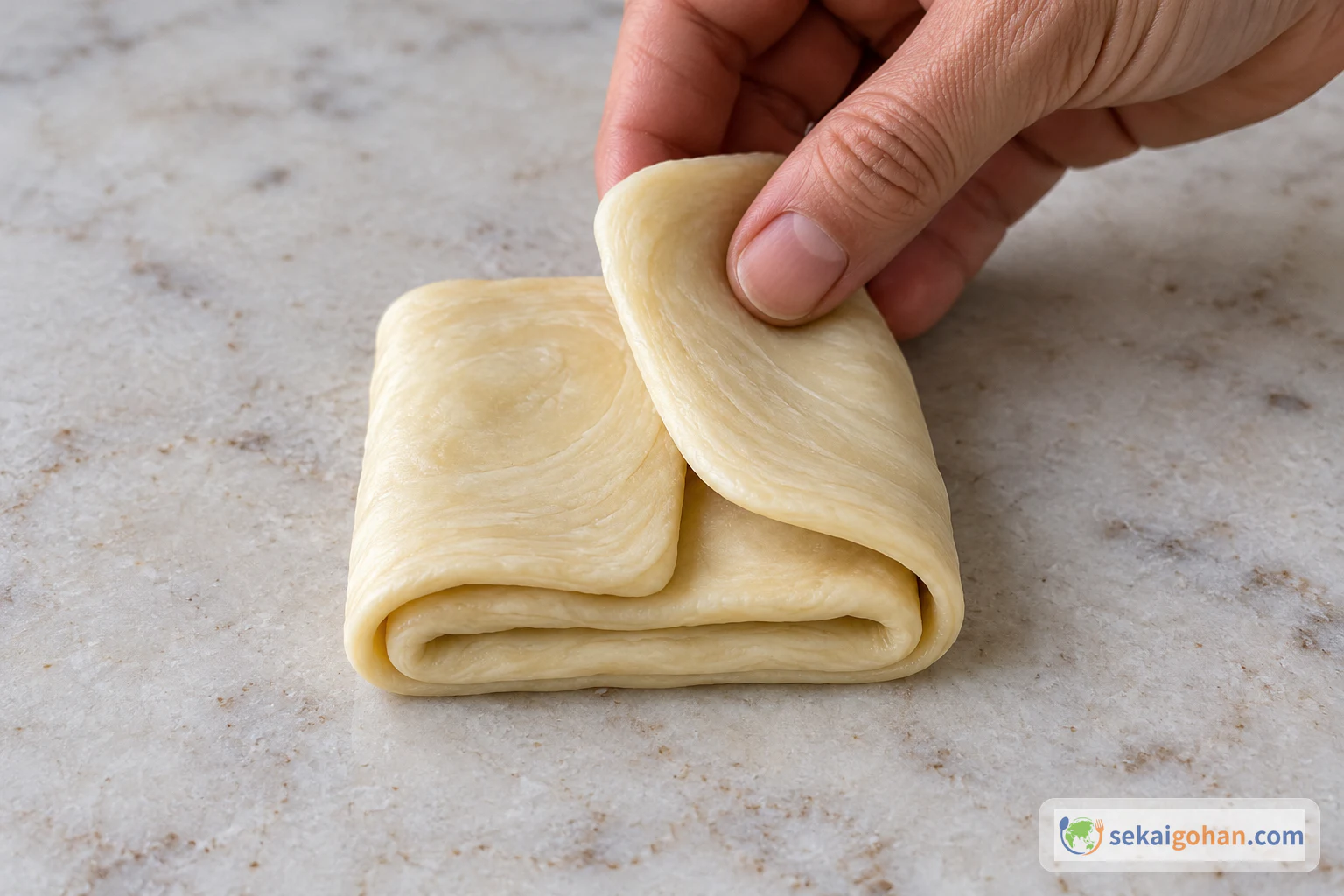
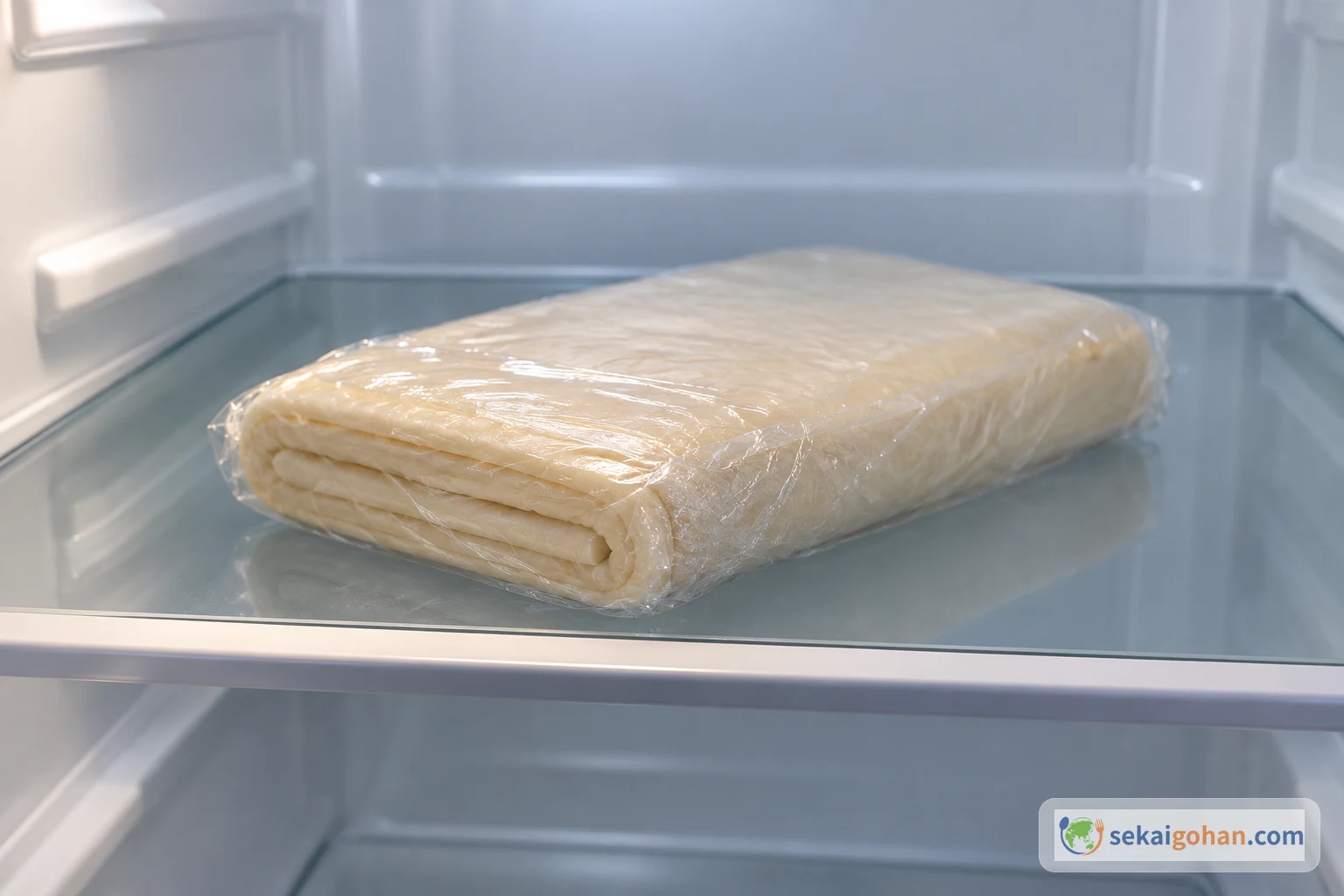
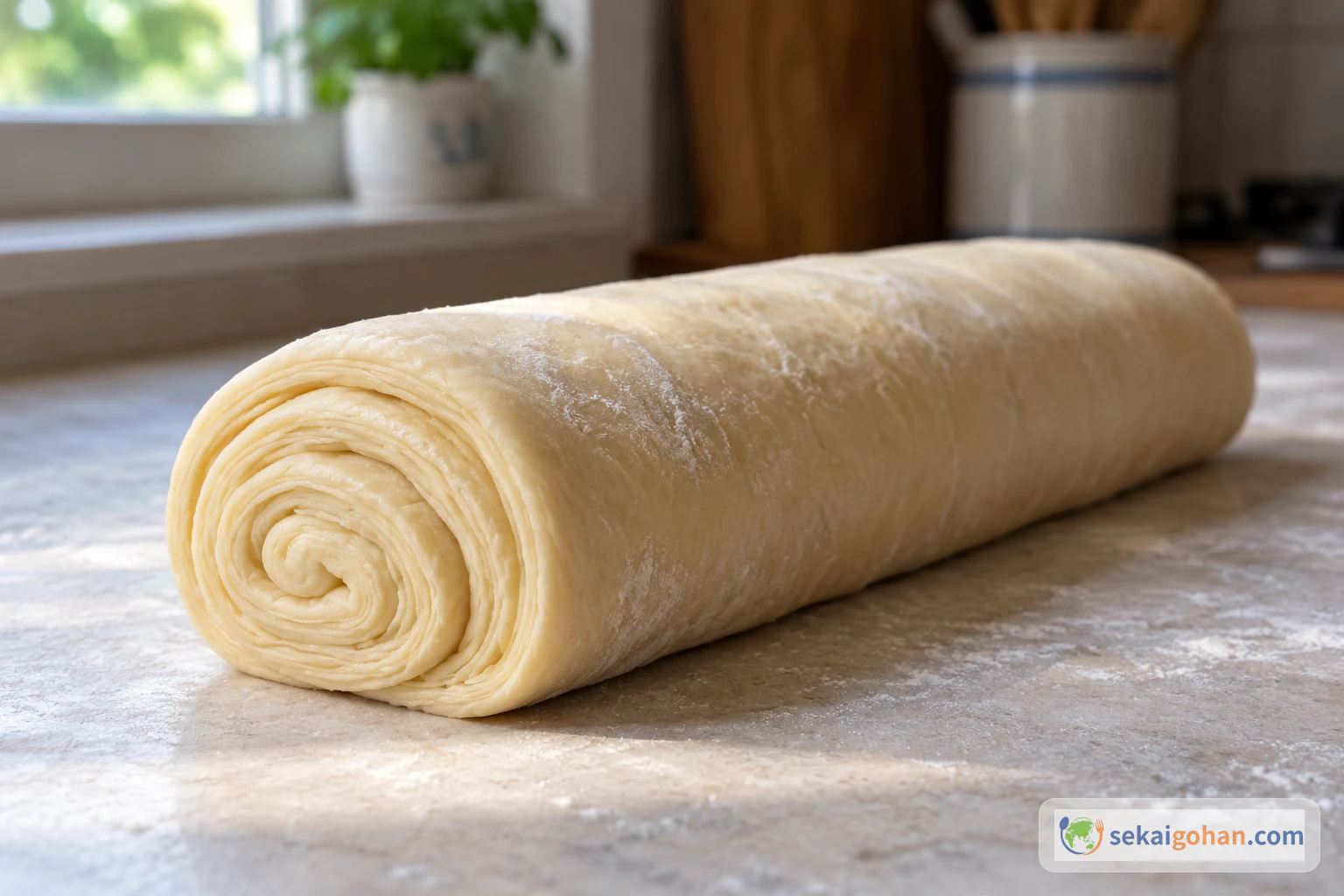
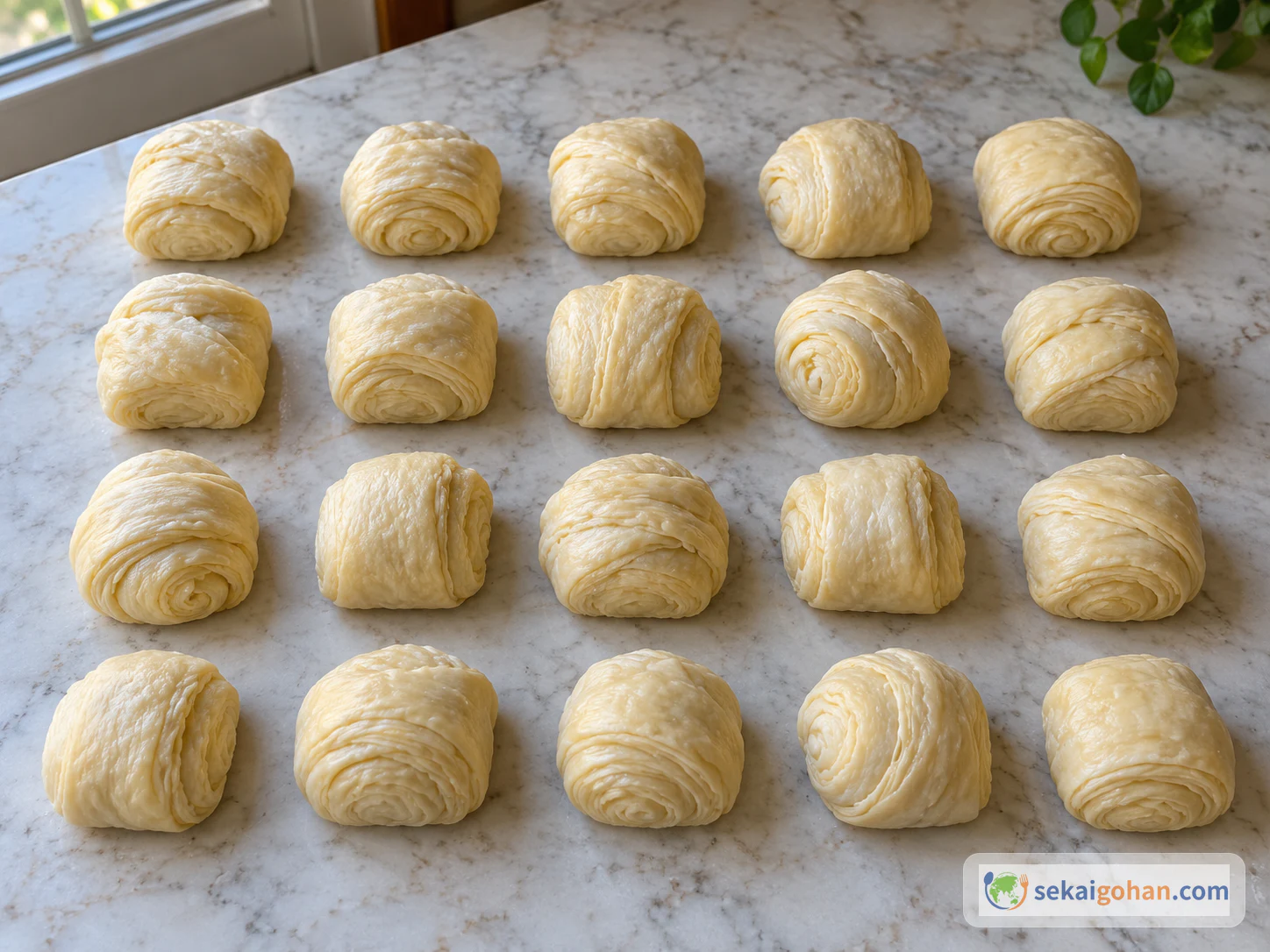
Two separate doughs become one laminated sheet. It gets folded three times and chilled after each fold, then rolled into a log and divided into 20 pieces. Each piece is shaped around a chicken and potato curry filling in a 10 cm mold and fried until golden.
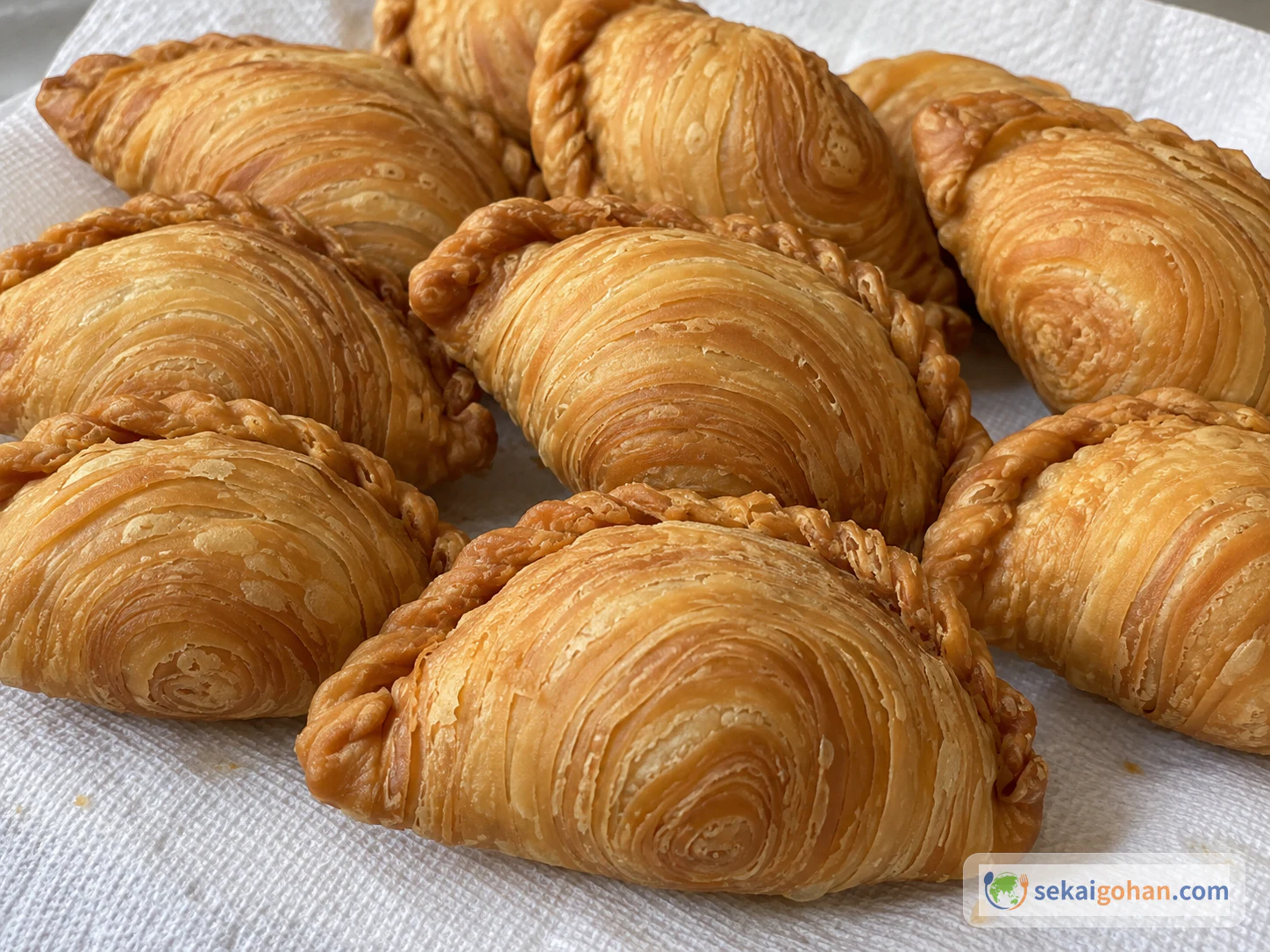
A spiral curry puff is a filled pastry made from two doughs folded into layers, with the curry filling inside. This article follows one specific version: the Malaysian-style spiral curry puff, or Karipap Pusing, published by KP Kwan on Taste of Asian Food. He describes it as the method used at the restaurant where he works, and it makes 20 puffs.
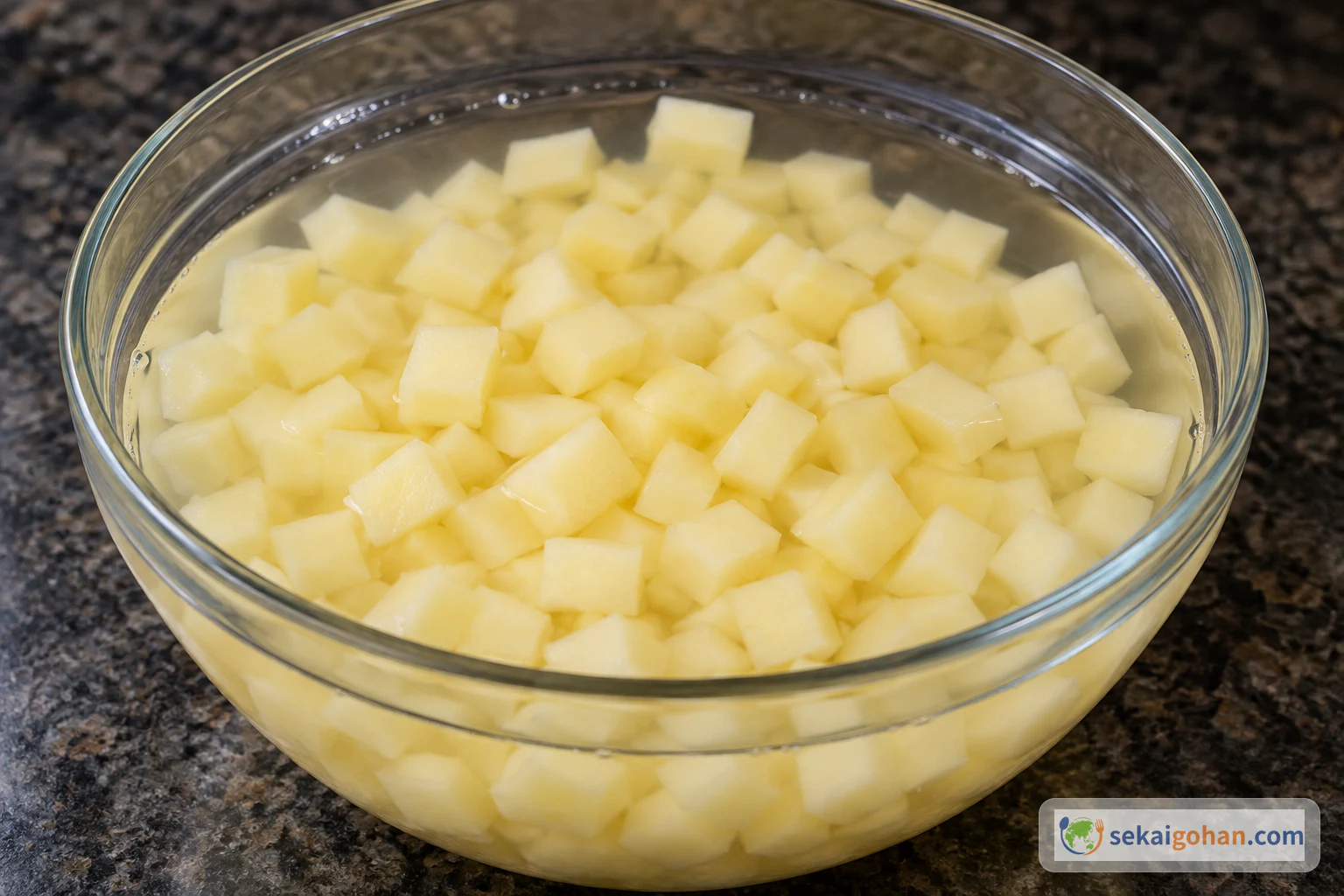
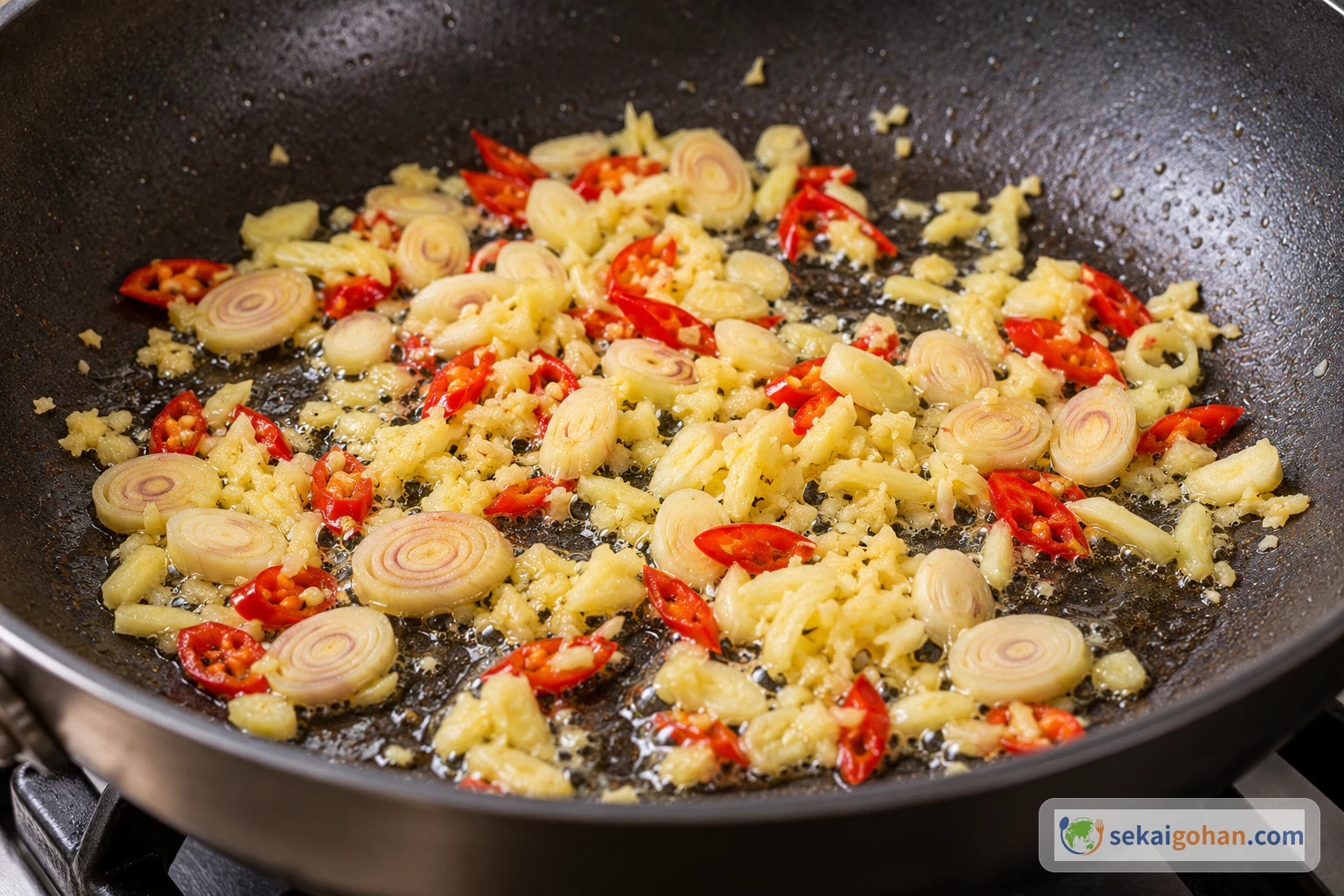
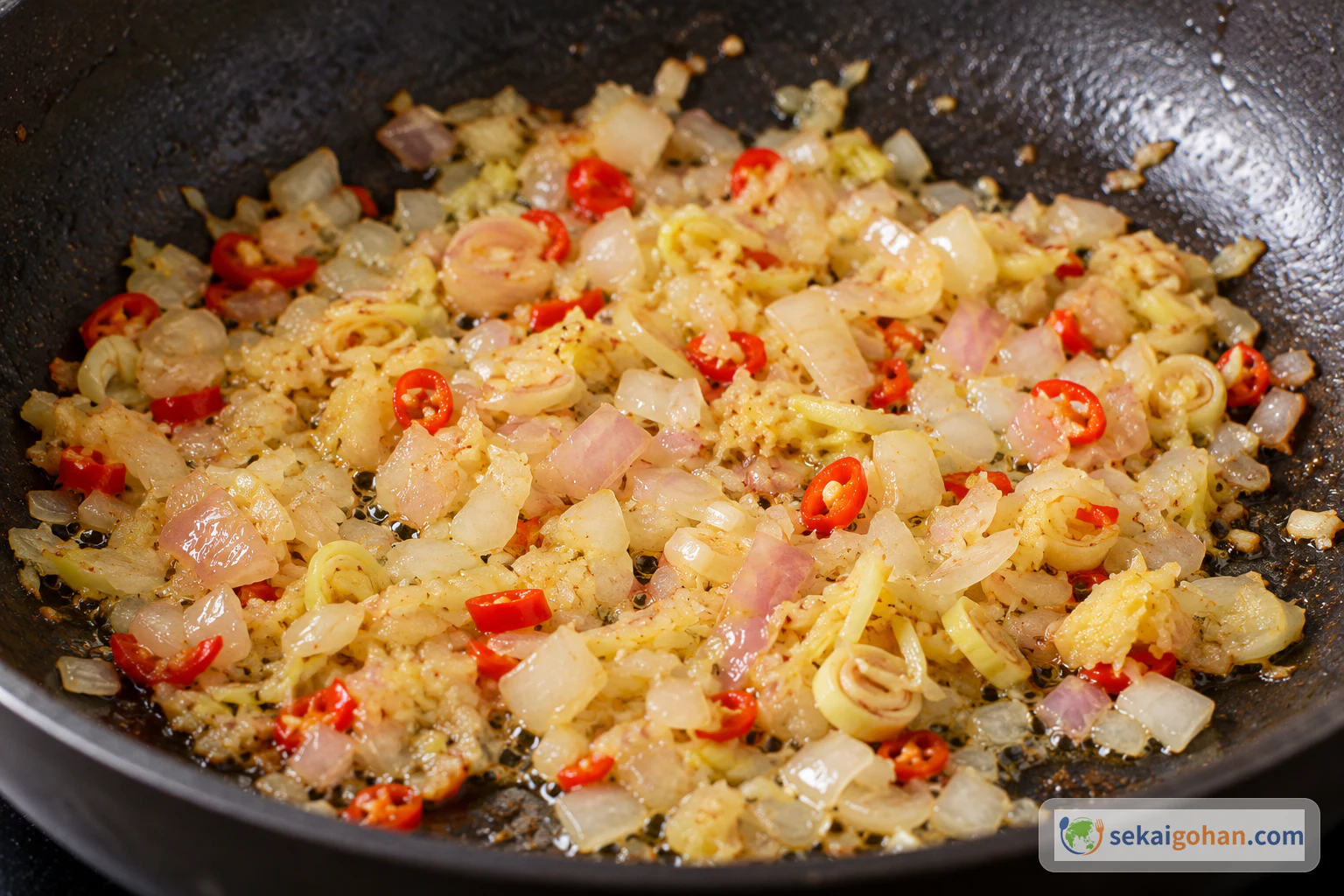
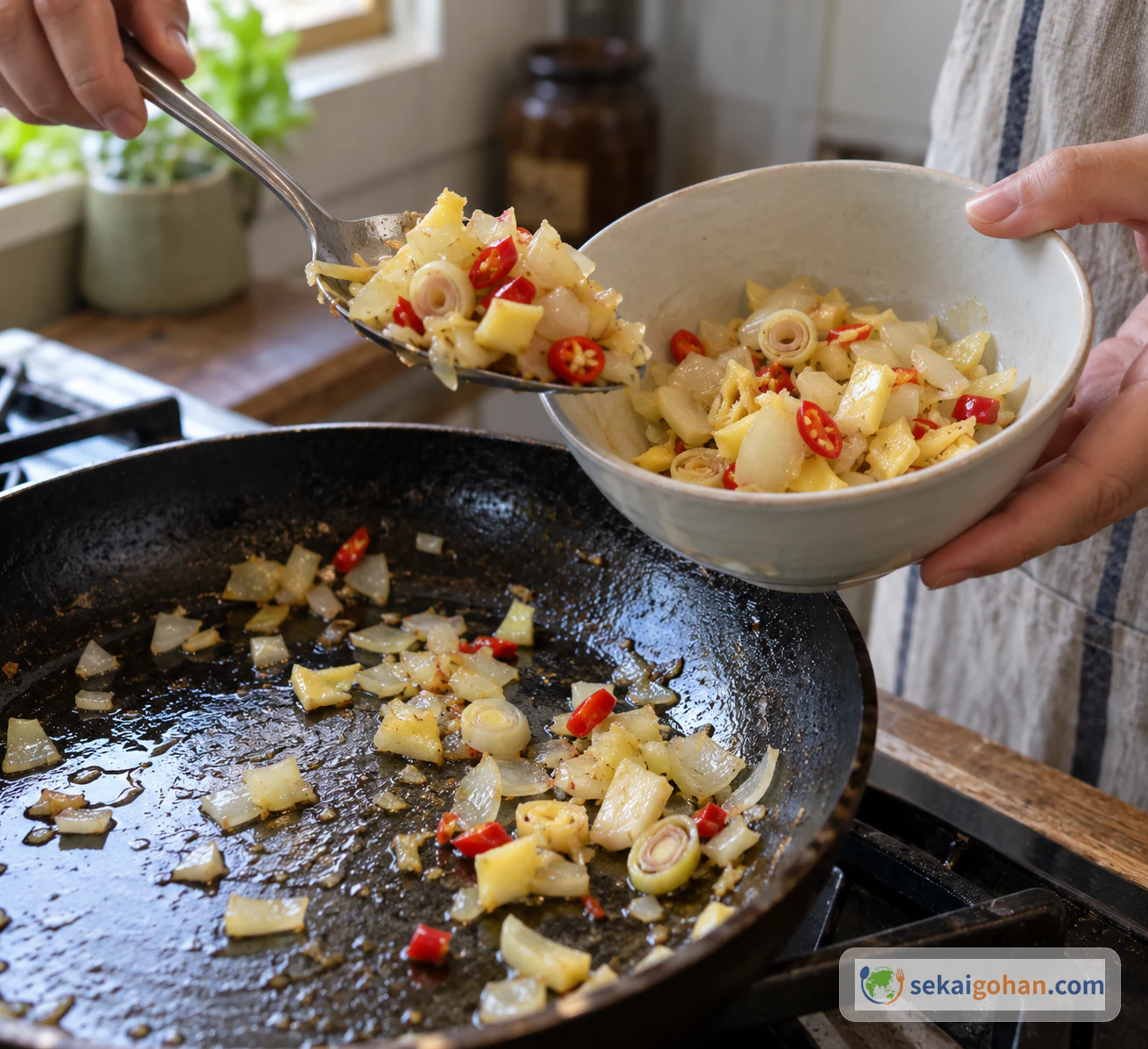
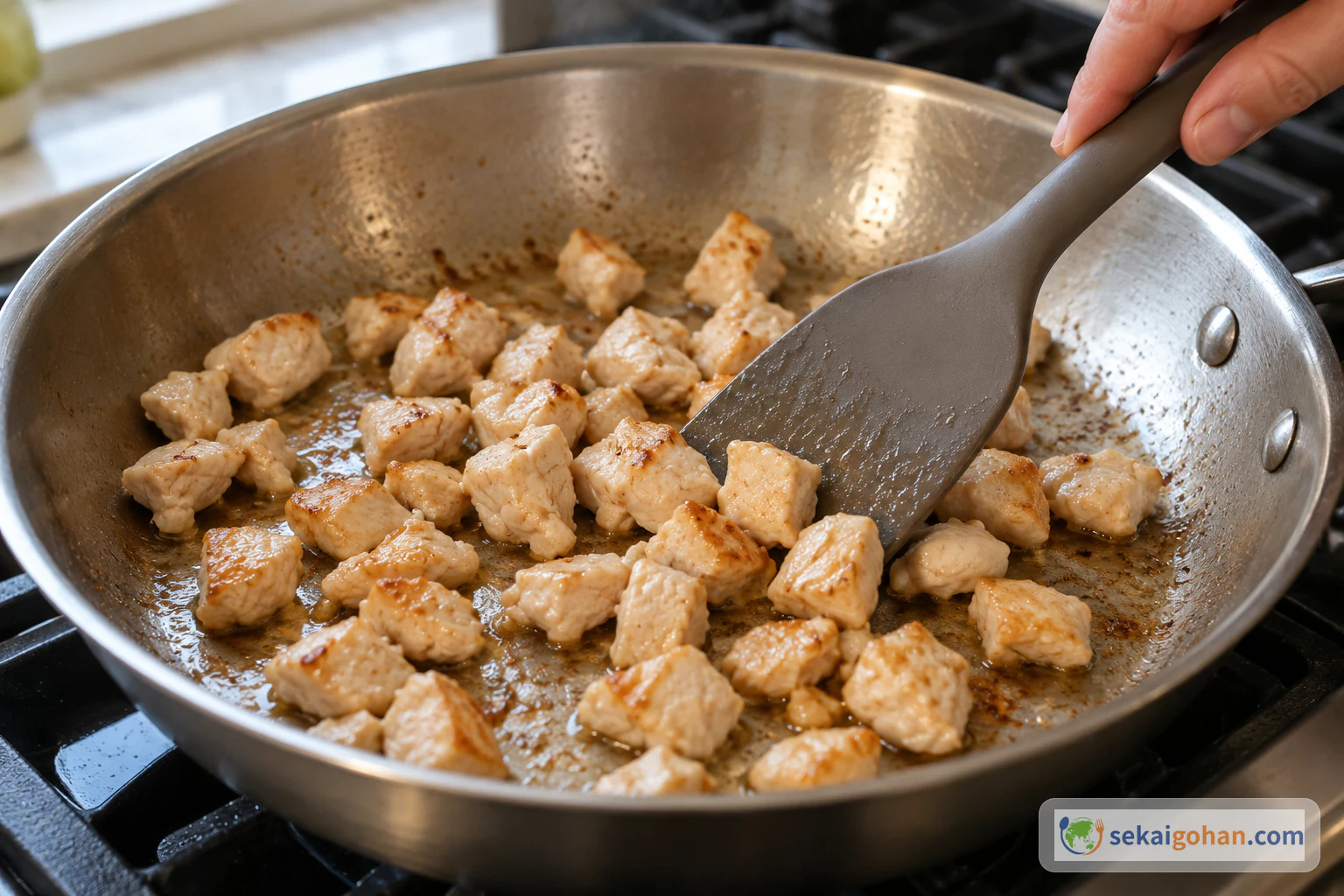
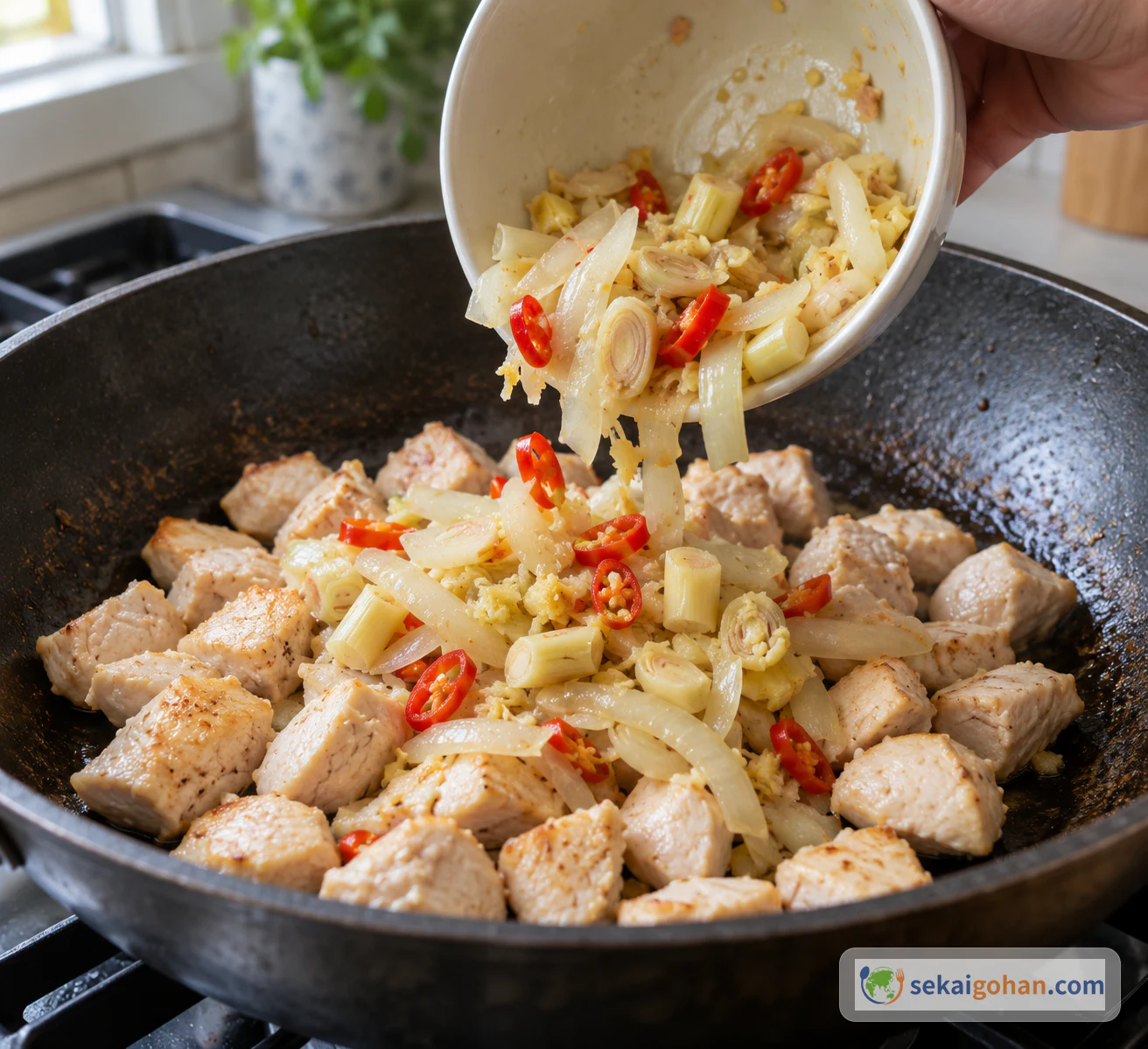
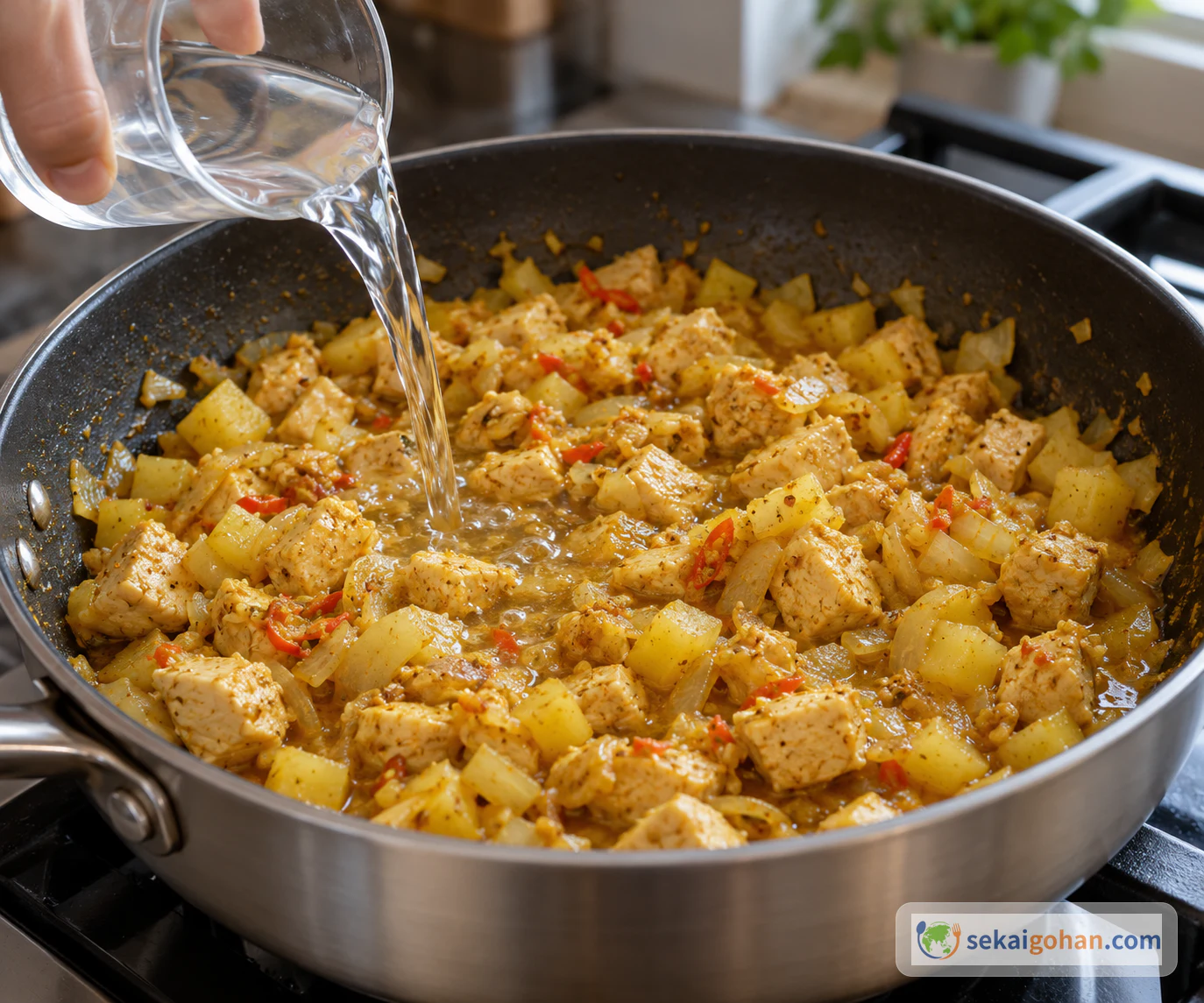
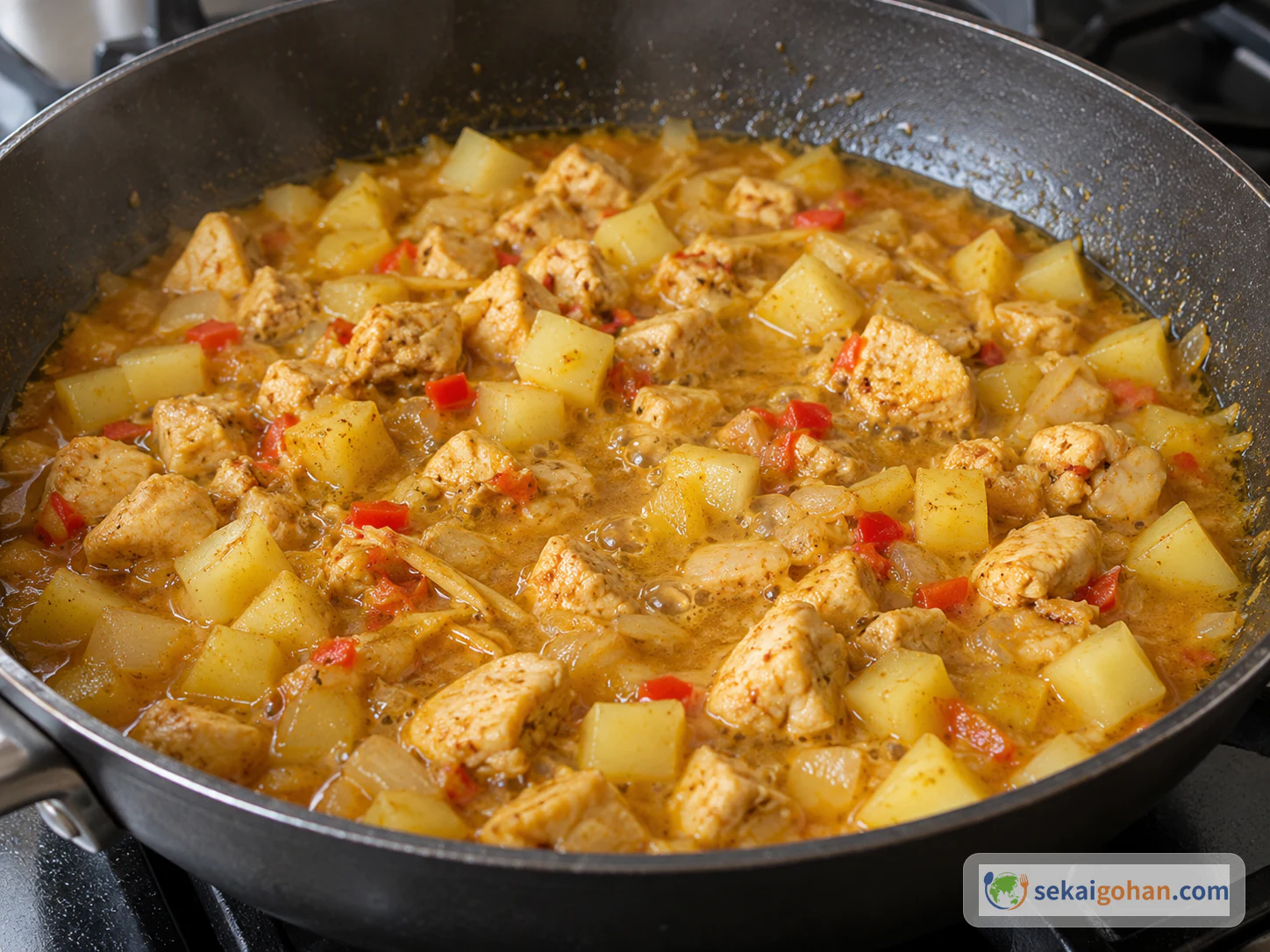
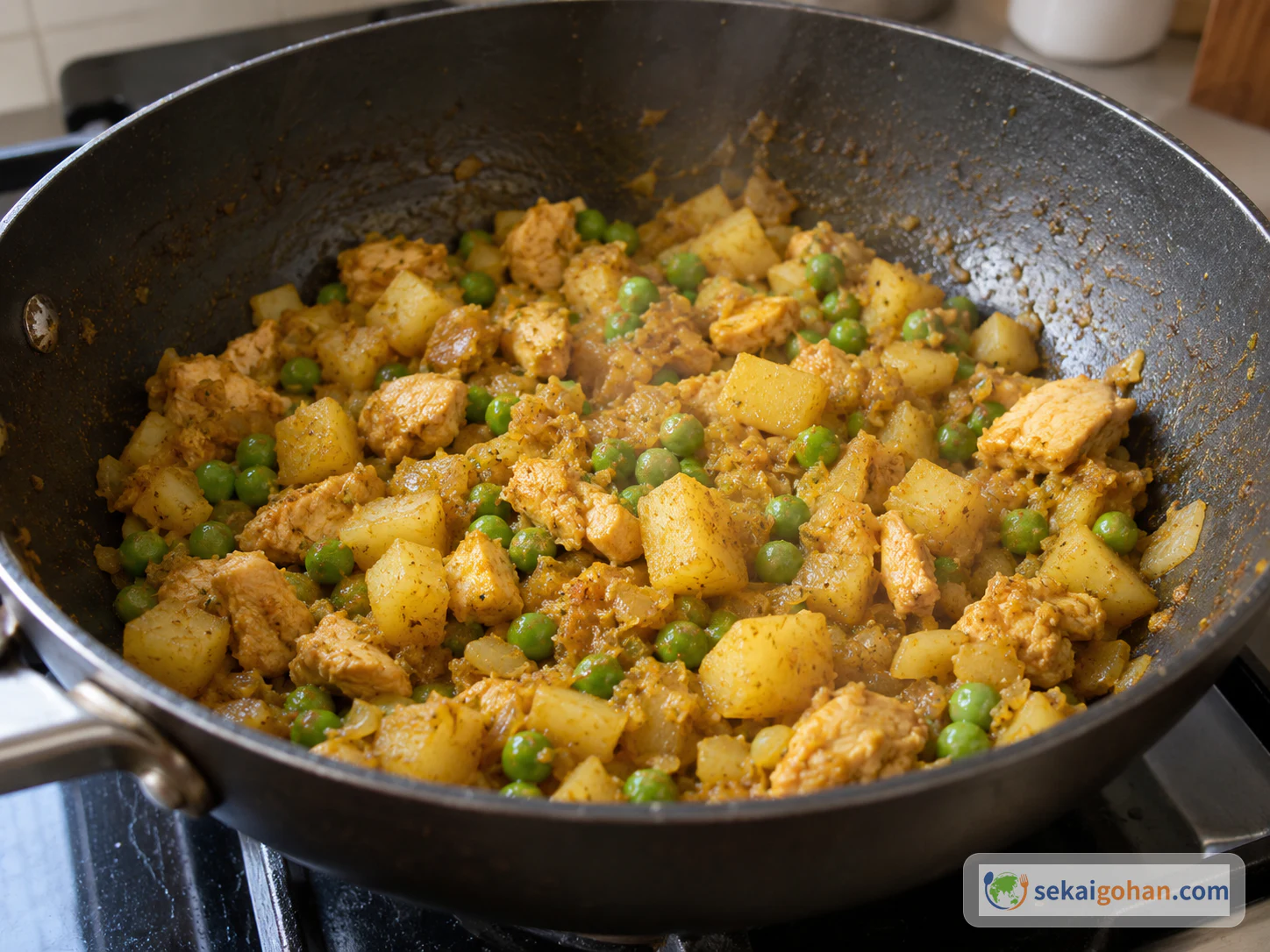
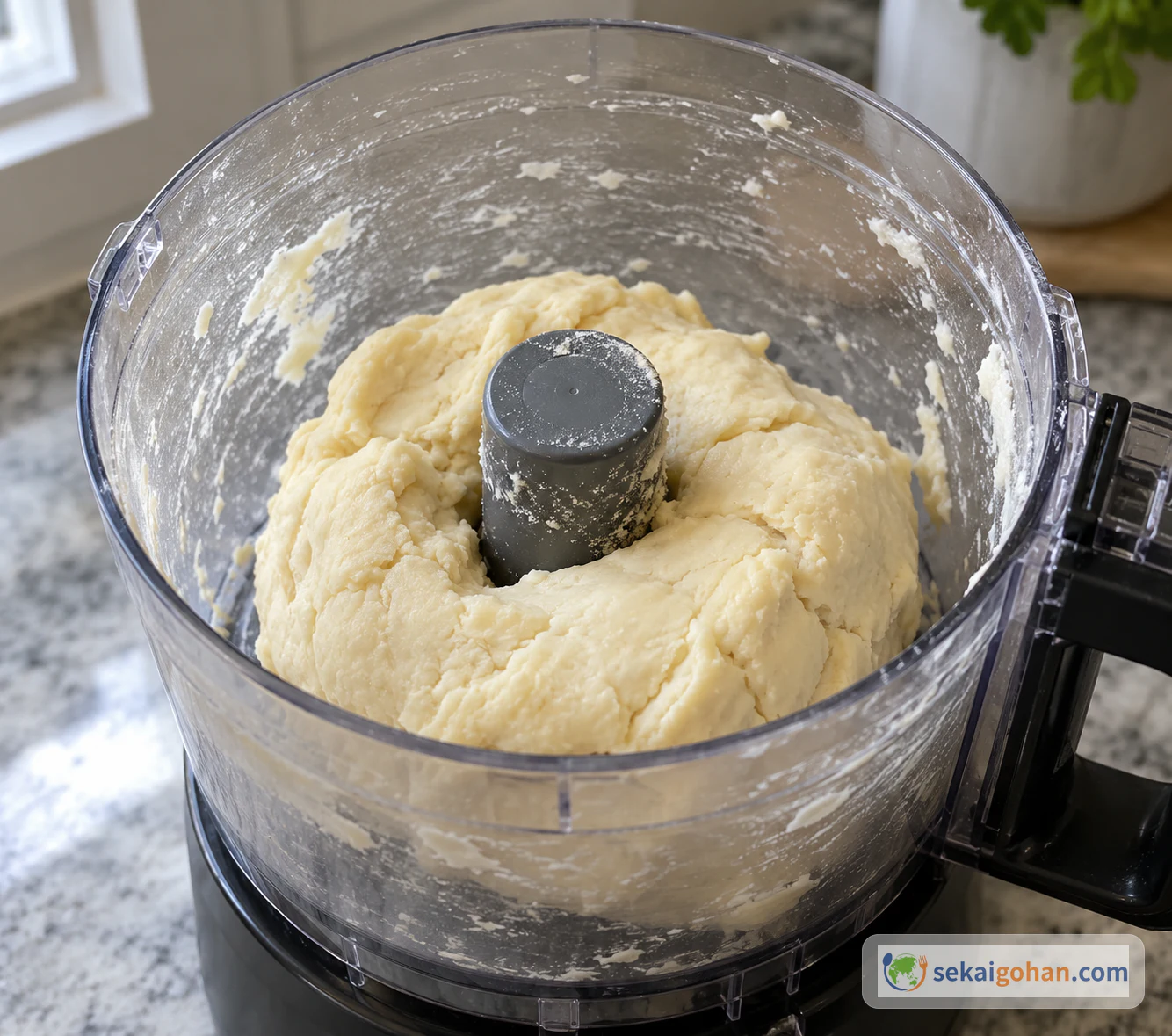
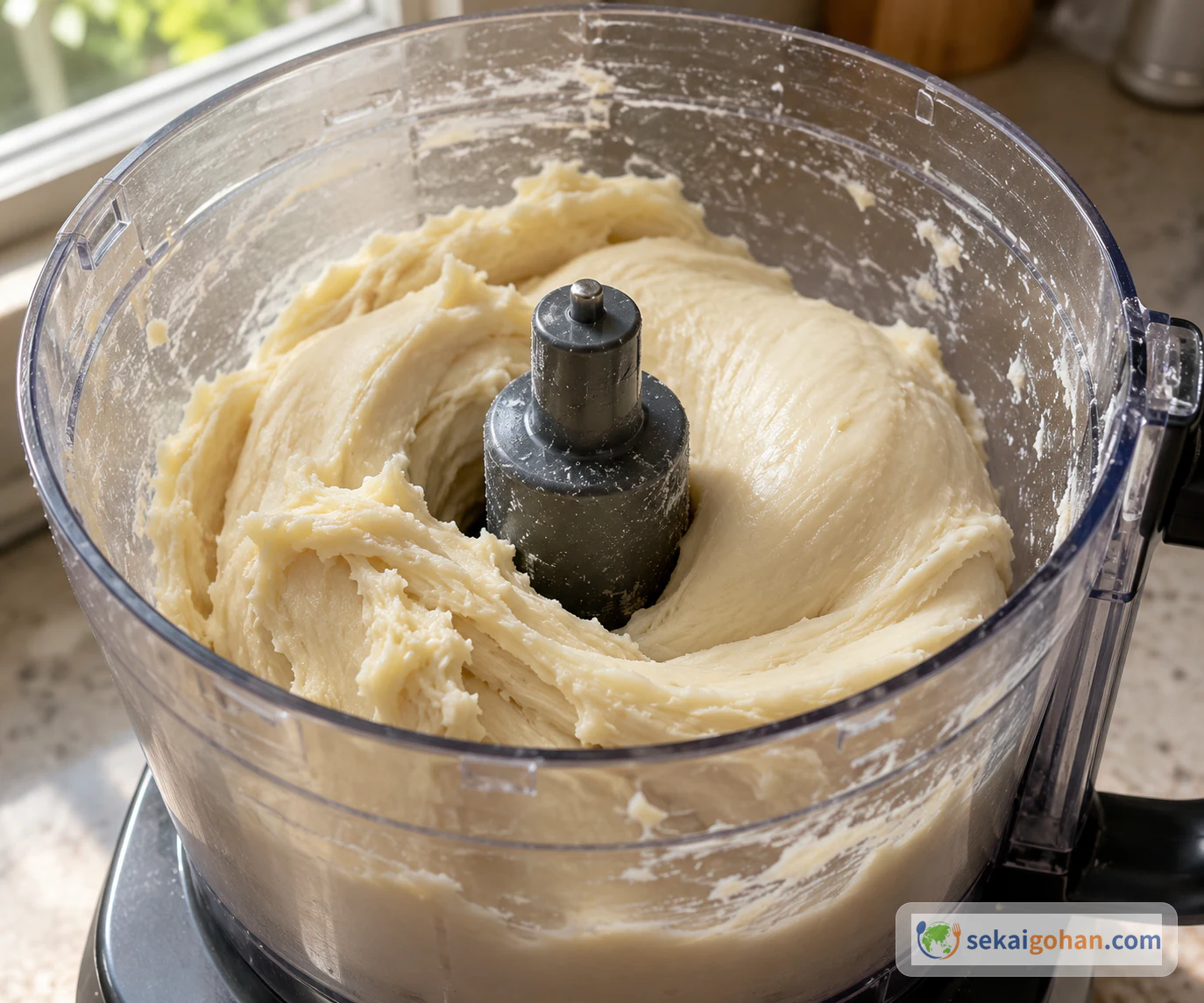
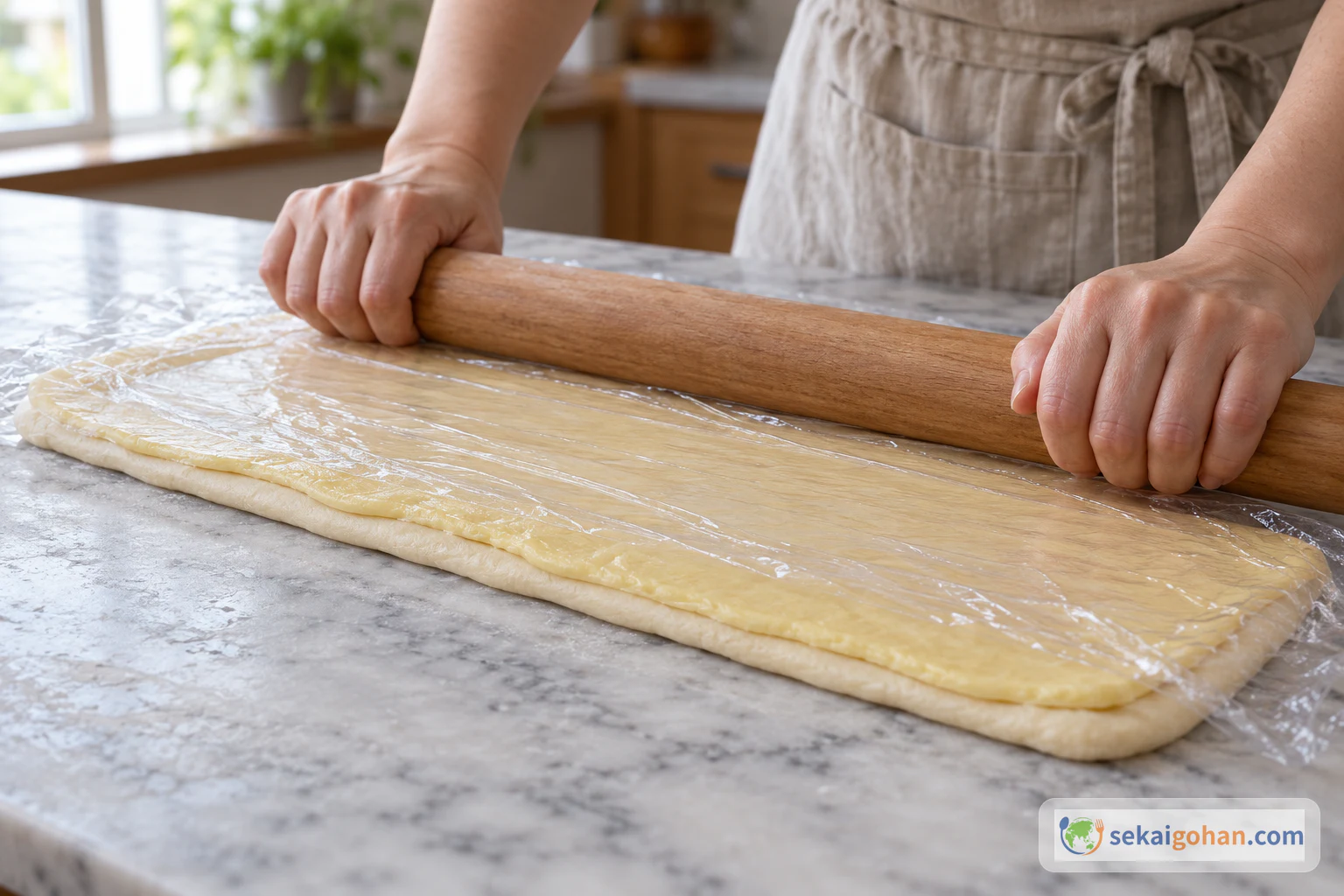
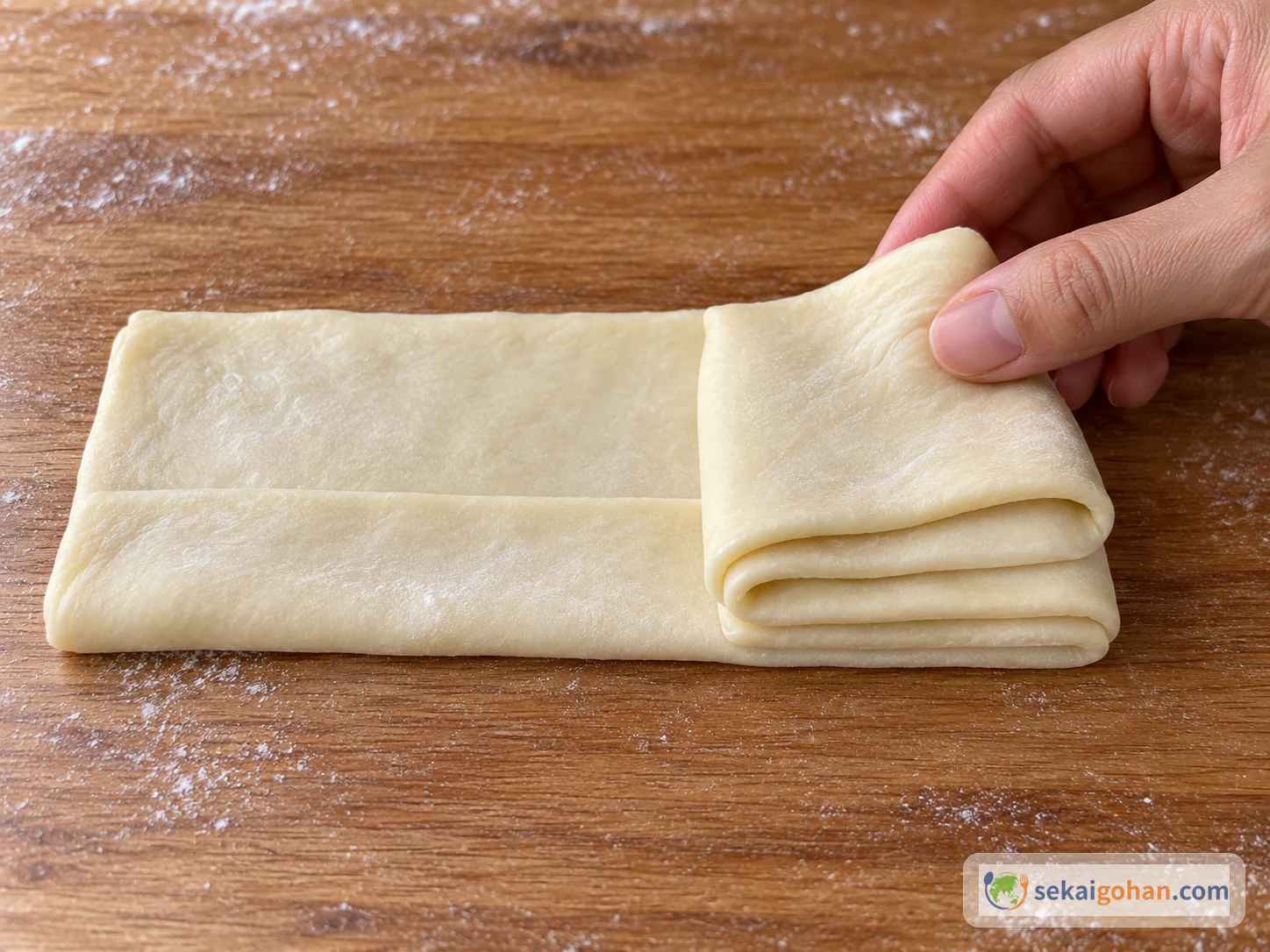
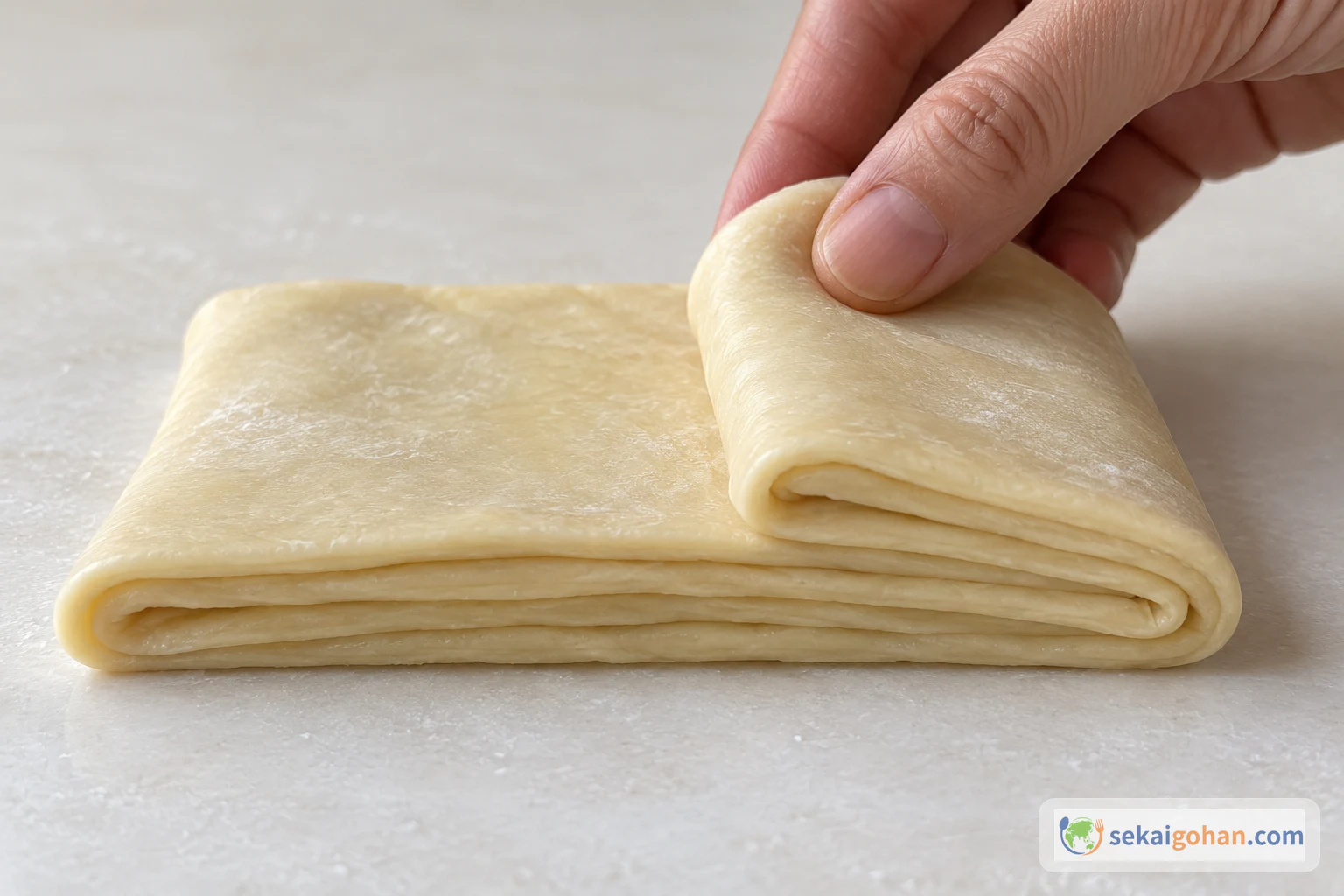
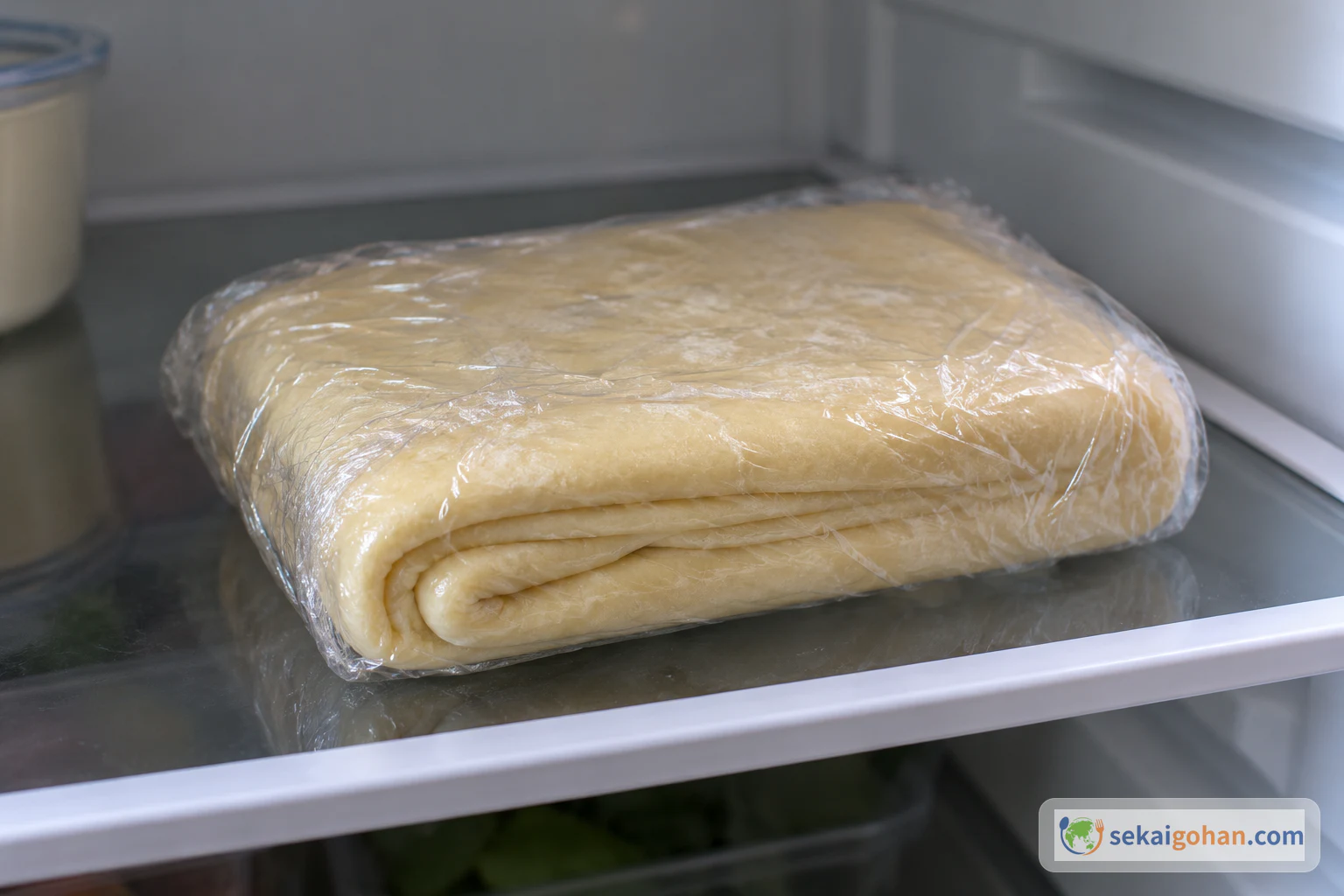
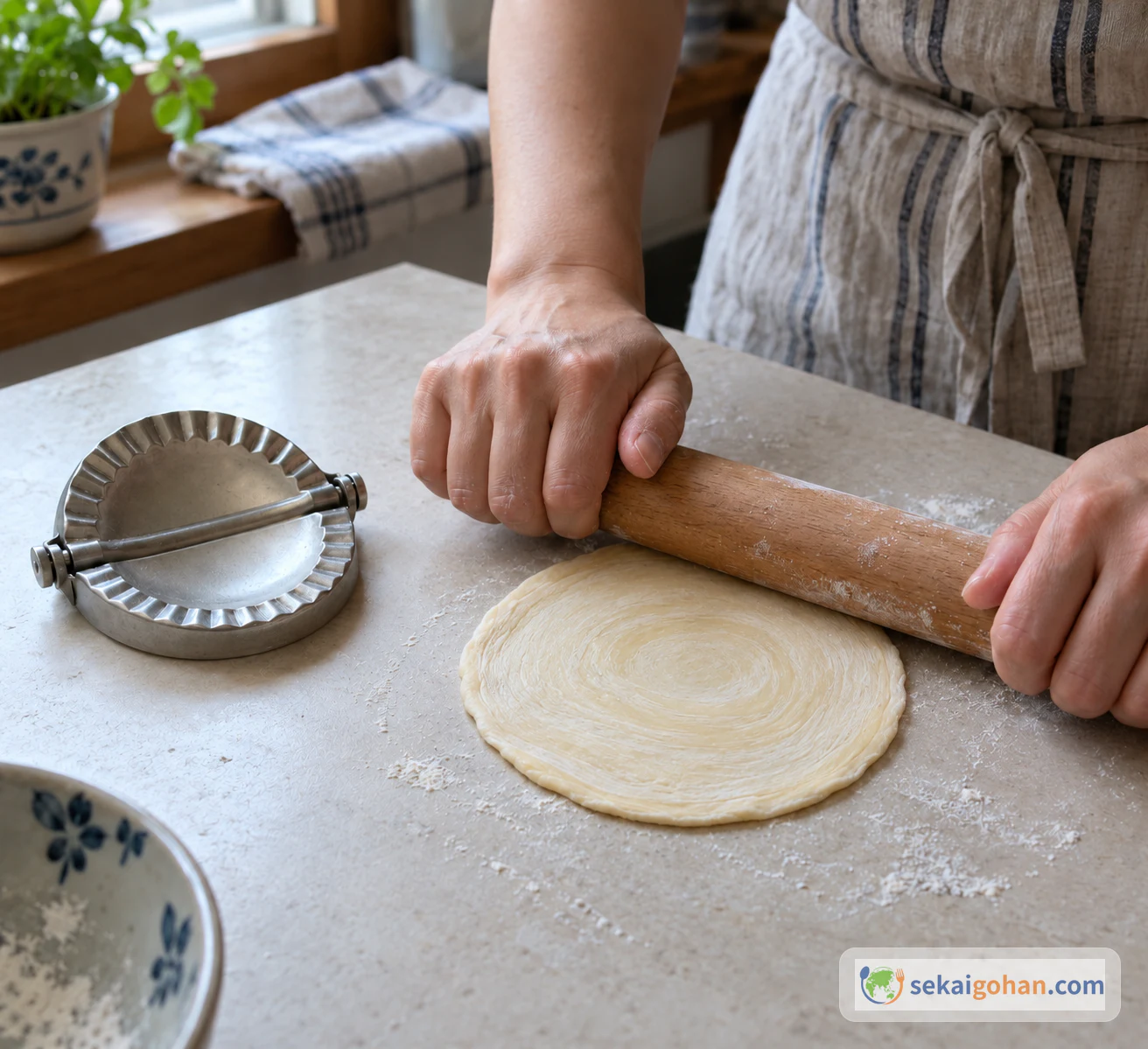
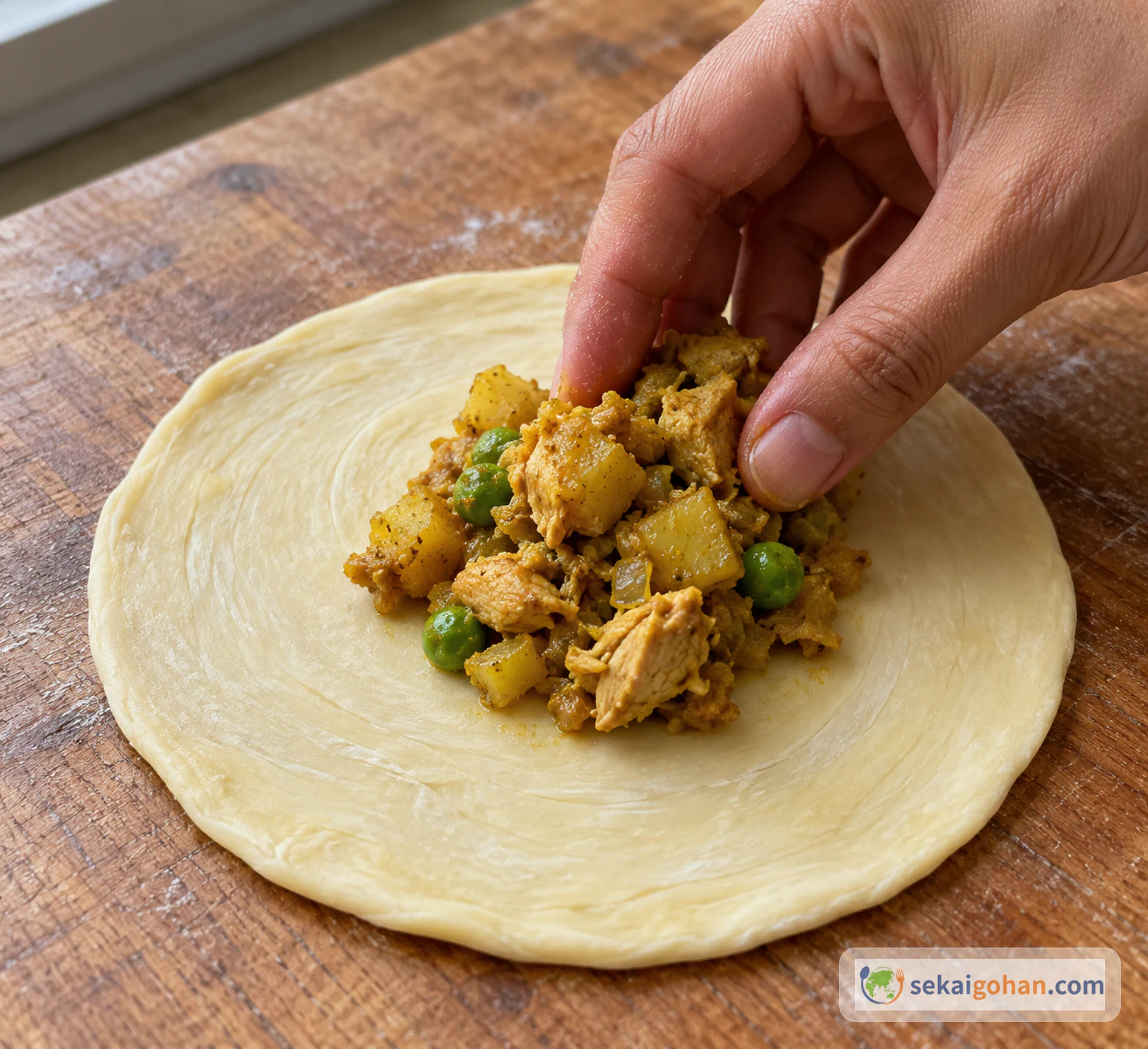
The pastry comes from two doughs made separately. One is a water dough of cake flour, cold butter, sugar, salt and water. The other is an oil dough of cake flour and shortening only. You set the oil dough on the water dough and roll them out together. Then you book-fold the sheet three times, chilling it after each fold. The filling is chicken breast and potato cooked with lemongrass, ginger, red chili, onion and curry powder, simmered until almost dry.
This recipe has not been kitchen-tested by Sekai Gohan. It is set out here as KP Kwan published it, and the places where his recipe gives no amount or time are marked in the FAQ below. Other curry puff recipes, including single-dough versions and other spiral formulas, are not mixed in.
Ingredients for 20 Curry Puffs
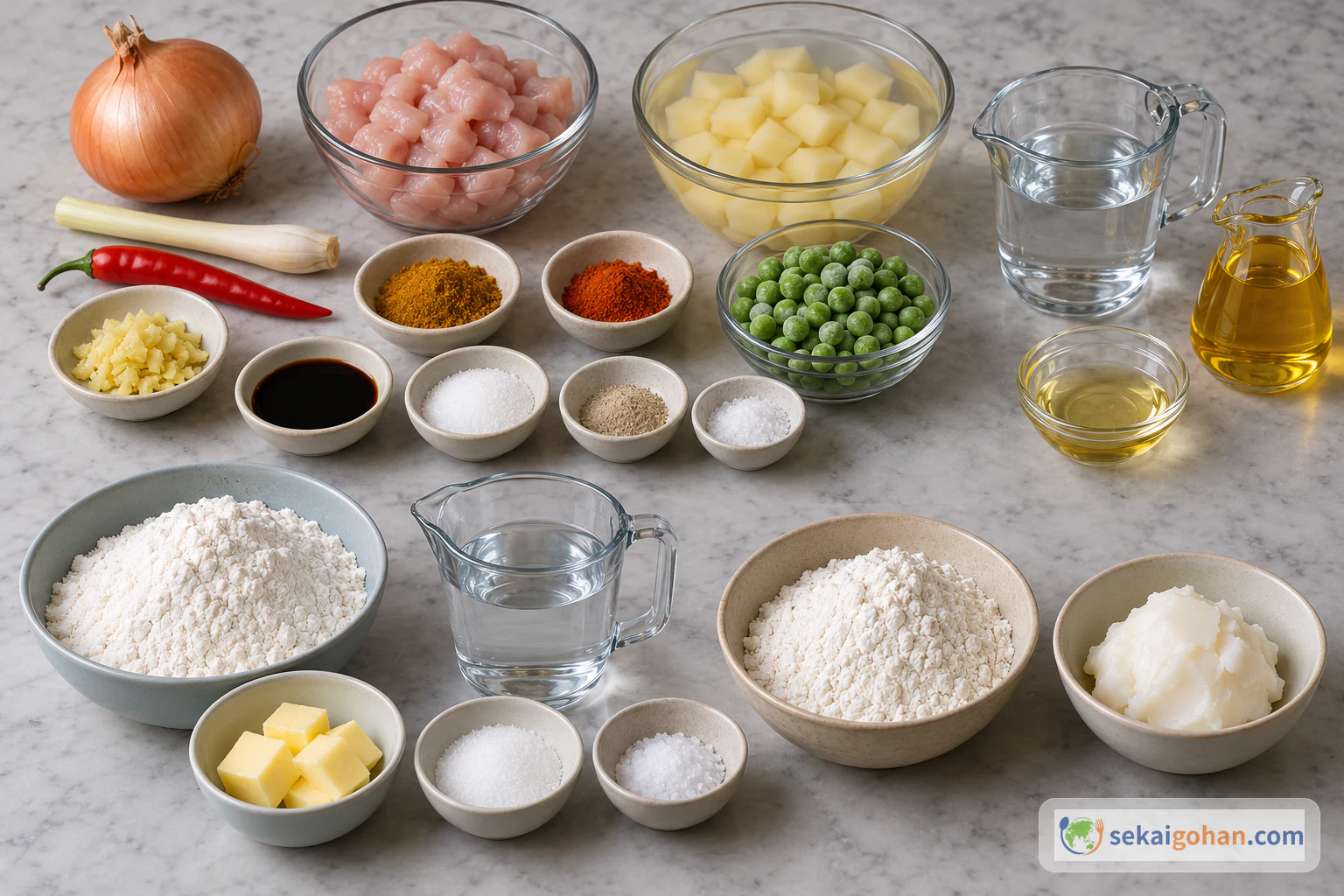
Water is used three separate times. The potato soaking water is as needed. The 100 ml is for simmering the filling, and the 85 ml goes into the water dough. The 2 tbsp of vegetable oil covers the whole filling, and the frying oil is separate.
Choosing and Shopping Notes
- Cake flour: both doughs use the same cake flour, 160 g for the water dough and 125 g for the oil dough. You don't need two kinds of flour.
- Shortening: the oil dough is made with shortening.
- Light soy sauce: look for a bottle labeled "light soy sauce."
- Lemongrass: one stalk; only the white part goes into the filling, so trim away the green part and the tough outer layer.
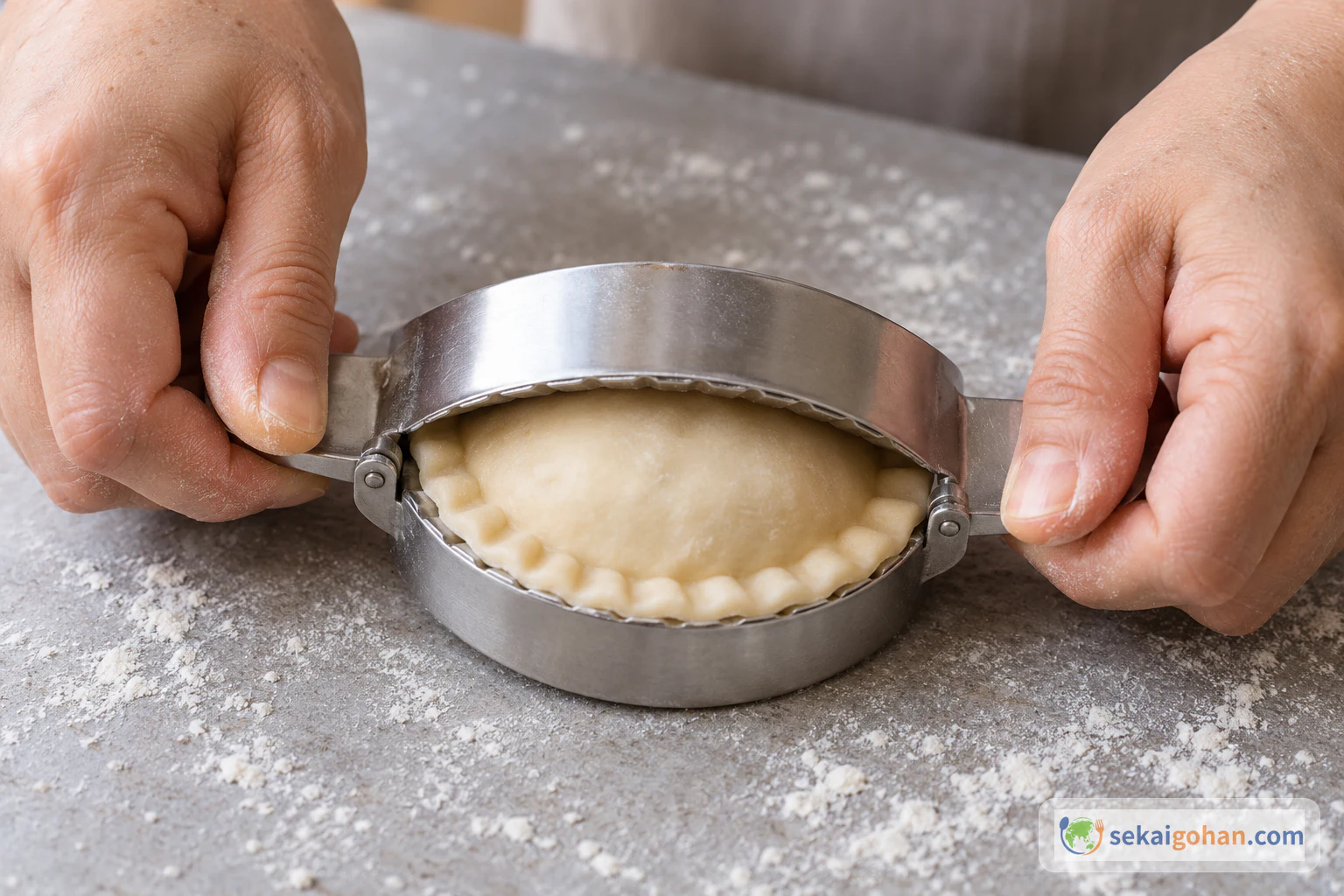
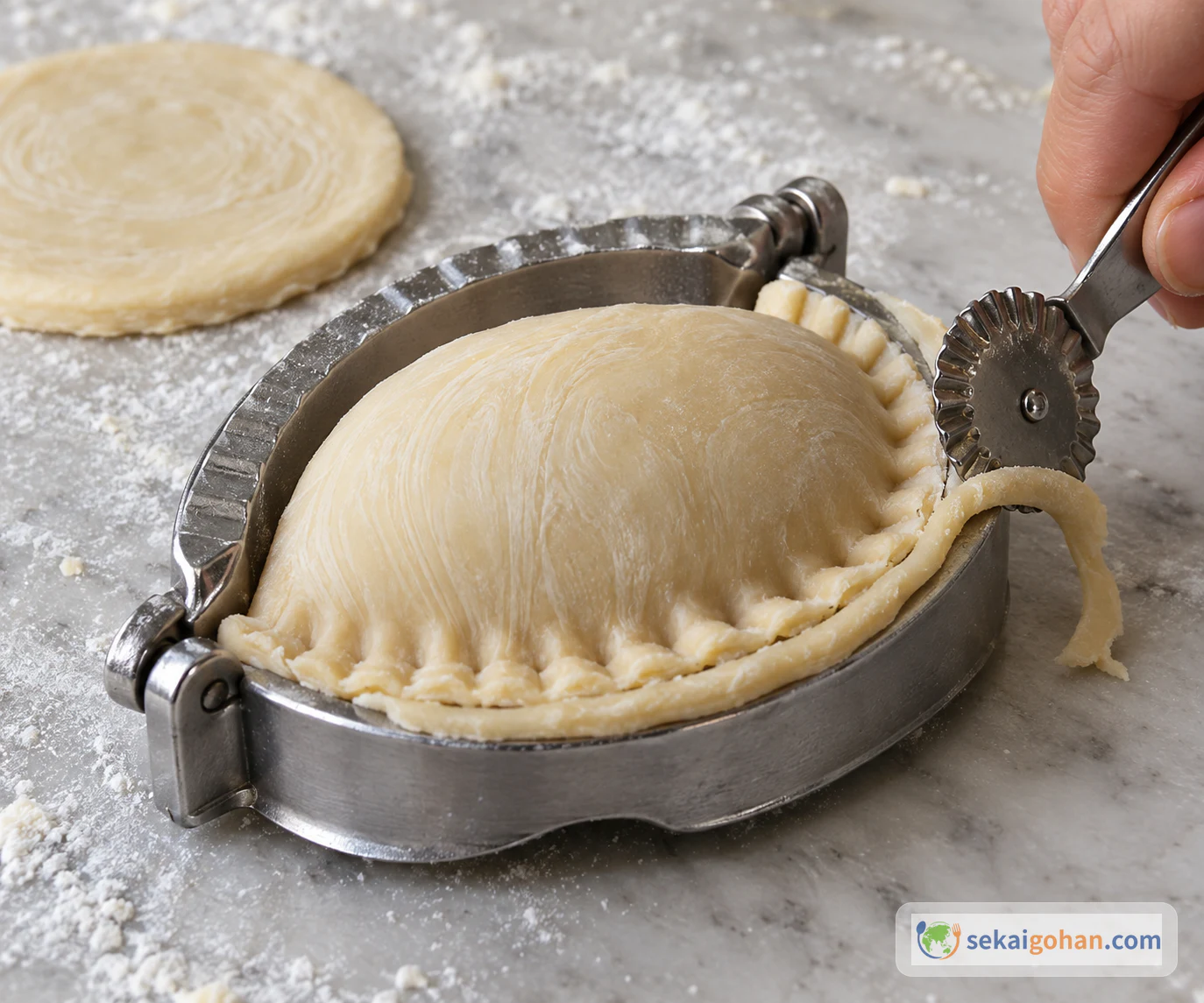
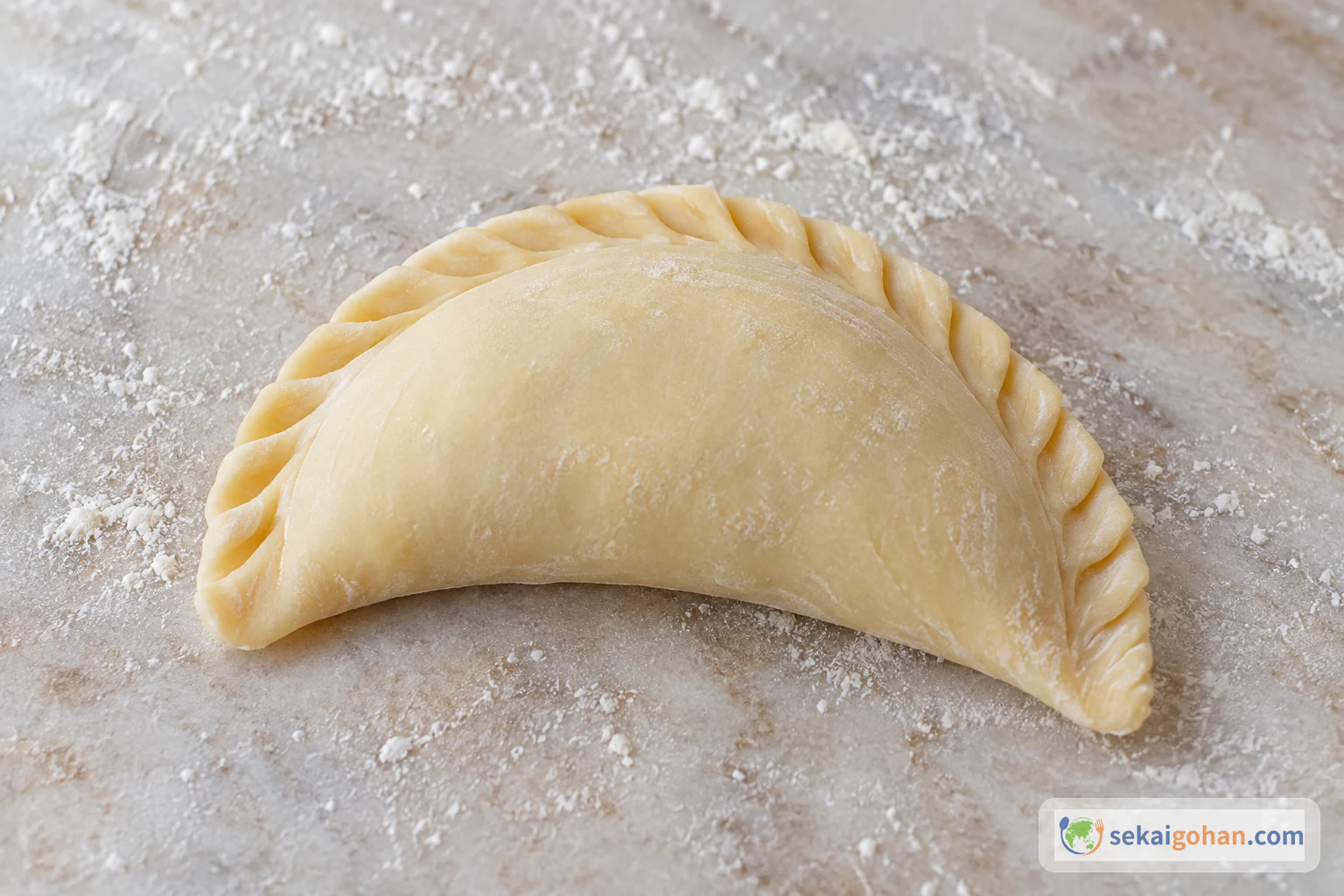
- Curry puff mold: the shaping relies on a 10 cm curry puff mold, which closes the puff and seals the edge.
Equipment
- Food processor
- Rolling pin
- Plastic film (cling film)
- Refrigerator space for a flat slab of dough
- Knife
- Pan for the filling
- 10 cm curry puff mold
- Pot or wok for deep-frying
- Kitchen towels
Method: Filling, Two Doughs, Folding, Shaping and Frying
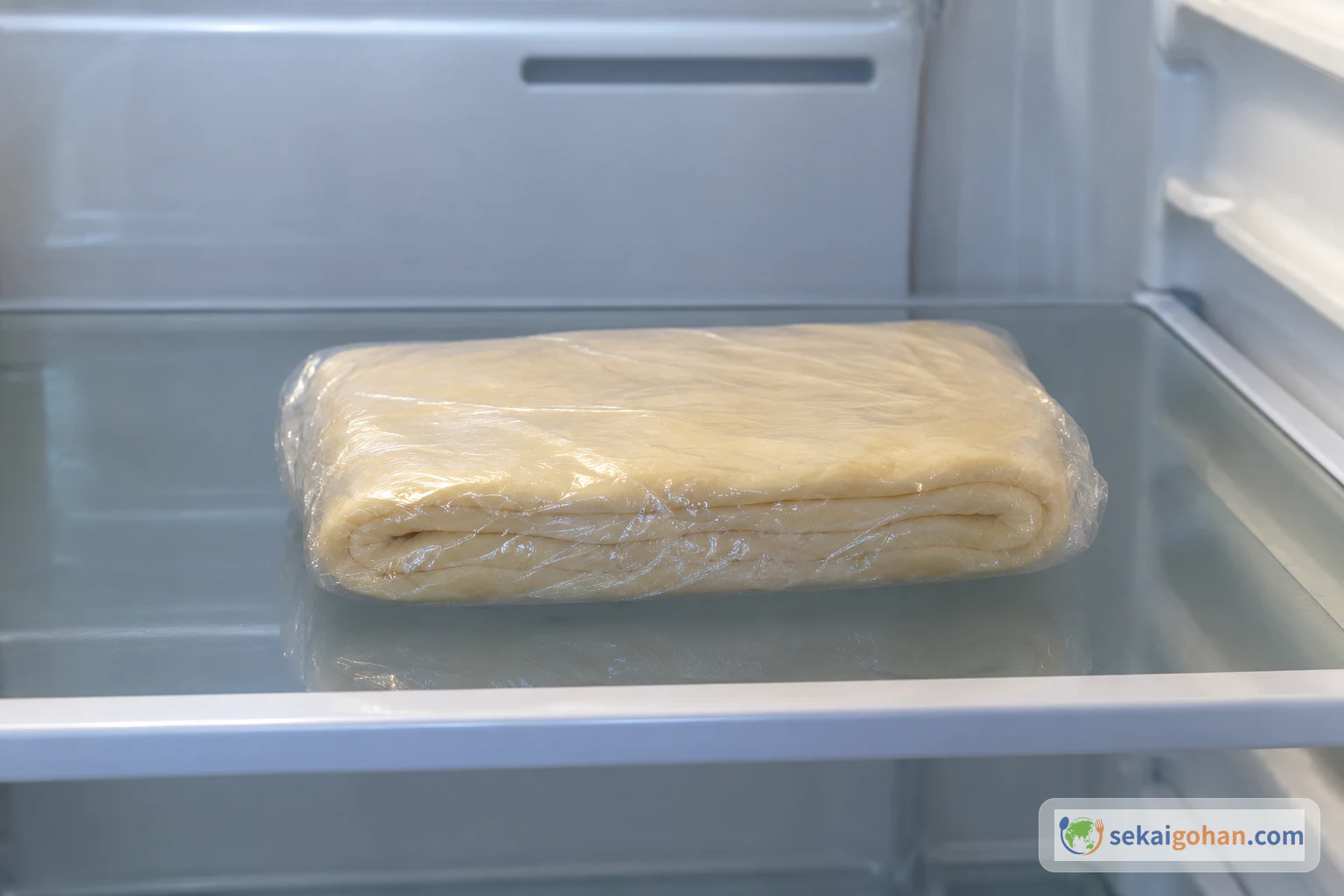
Steps 1–9 make the filling, and steps 10–21 build the layered dough. Steps 22–26 shape the puffs and steps 27–28 fry them. The folding stage takes the longest because the dough chills after each of the three folds.
When Something Goes Off Course
| What you see | What to do |
|---|---|
| The dough is still soft 30 minutes after the first fold | Keep chilling until firm before rolling it out again |
| The dough feels firm before 30 minutes after the first fold | Leave it in for the full 30 minutes anyway |
| The dough is soft after the second or third fold | Keep it in the refrigerator until it is firm |
| The Swiss-roll log is too soft to handle | Chill it again until it is easier to work with |
| The filling is drying out before the potato is soft | Add a little water and keep simmering over low to medium heat |
| The puffs are larger than usual | Expect them to take longer than about 6 minutes to turn golden |
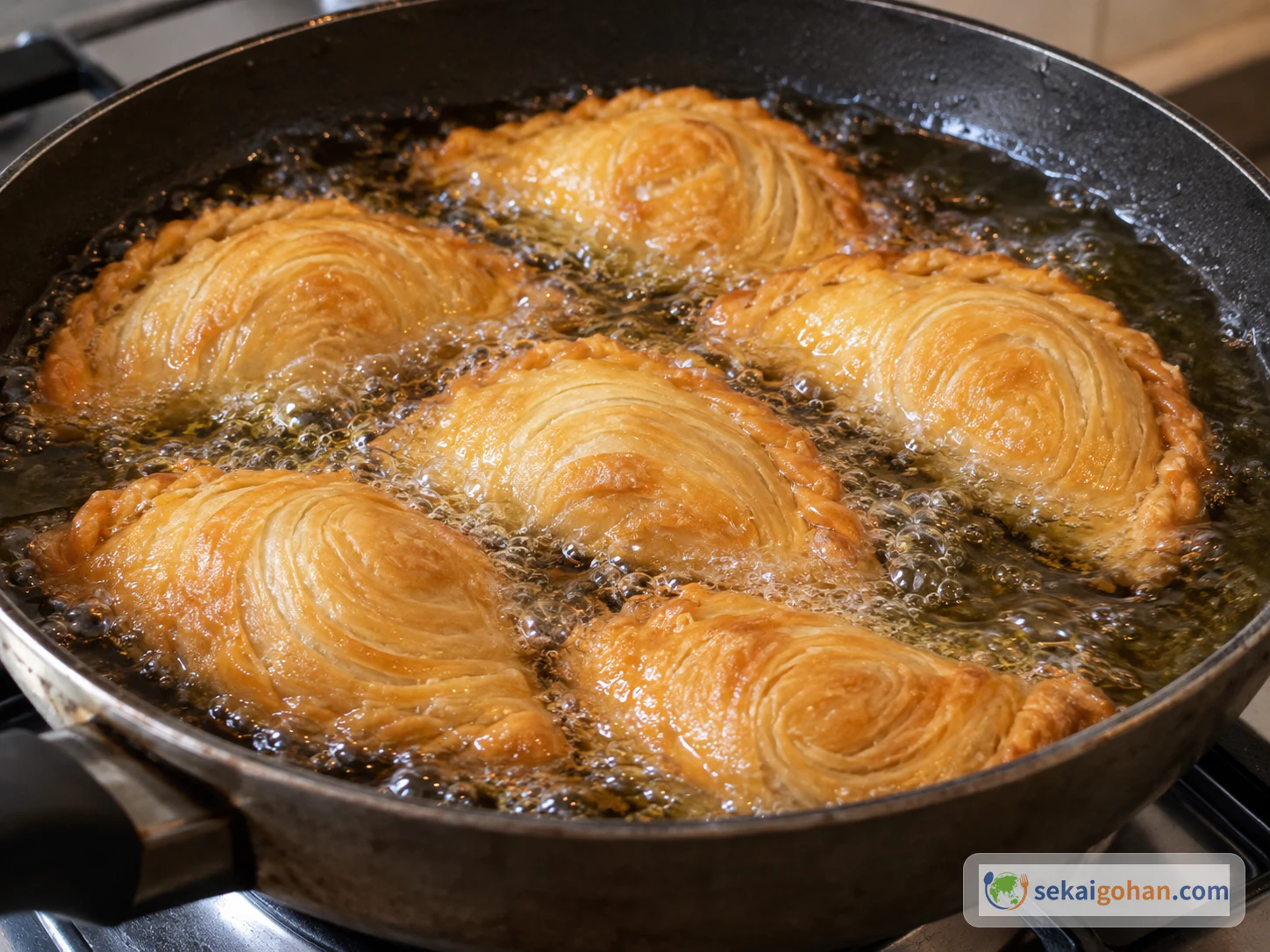
About 6 minutes is an overall guide for these puffs, not a time per side, and not a guarantee for every size. Use the golden color as your endpoint, and allow more time for larger puffs.
Other Curry Puff Versions, and Why They Stay Separate
Curry puff recipes are not all built the same way. Christie Lai's Malaysian curry puff on Christie at Home uses a single dough: flour and salt mixed with hot oil and then room-temperature water. Her recipe makes 26 pieces. Rasa Malaysia has another spiral curry puff recipe with its own water-dough and oil-dough formula and portion weights. That one makes 24 puffs.
These are different recipes from different authors. They show that home cooks have more than one way to make curry puffs, not a single national standard. Their amounts, dough handling and frying directions are not mixed into the version on this page. If you want a single-dough pastry, follow one of those recipes as a whole rather than swapping parts in.
The Names and Where You Find Them
KP Kwan's page gives the names curry puff, Karipap and 咖哩角. The recipe here is specifically the spiral type, Karipap Pusing. Many curry puffs are not spiral, so this name identifies one style rather than defining every curry puff. KP Kwan presents his version as the restaurant method from his workplace.
Christie Lai introduces her own curry puffs as a snack or appetizer sold at food stands and Malaysian restaurants. She also notes that nearby countries have versions of their own. That is how one author describes the dish today, not a history of it. This article does not cover where curry puffs began or how the name came about, because the sources here do not settle those questions.
KP Kwan's recipe card estimates 2 hours of preparation and 6 minutes of cooking. Those are published estimates, not a promise. Chilling until the dough is firm after each fold can stretch the time. For more of the country's food, see Malaysian dishes.
Frequently Asked Questions
Do both doughs get water?
No. The 85 ml of water goes only into the water dough. The oil dough is just cake flour and shortening.
Is it two different flours?
No. Both doughs use the same cake flour: 160 g for the water dough and 125 g for the oil dough.
Should the filling be cooled before shaping?
KP Kwan's recipe doesn't include a cooling step for the filling, and it gives no temperature or time for one. It also doesn't say the filling must be hot when you shape the puffs.
How much filling goes into each puff?
KP Kwan's recipe gives no weight or volume per puff. It says only to place the filling in the center of each round.
Is each of the three chills 30 minutes?
Only the first chill has a time: at least 30 minutes, and longer if the dough is still soft. The second and third chills go by firmness, with no set number of minutes.
Which way do I cut the log into 20?
KP Kwan's wording leaves the cutting direction unclear, so this article doesn't specify one. What is fixed is that the log is lengthened and divided into 20 pieces.
How is the 2 tbsp of filling oil split between the aromatics and the chicken?
The split isn't given. The 2 tbsp is the total for the whole filling, covering both the aromatics and the chicken, not 2 tbsp for each stage.
Can I use a different amount of curry powder?
The curry powder line on KP Kwan's recipe card starts an optional phrase that is cut off, with no alternative amount given. This article uses the stated 1 tbsp only.
Is it 6 minutes per side?
No. About 6 minutes is the overall frying guide, until golden. The 180°C and 350°F figures appear together in KP Kwan's instructions. The amount of oil, how many puffs to fry at once and when to turn them are not given.
Does 20 puffs mean 20 servings?
No. The recipe makes 20 puffs. It doesn't say how many people that serves.
Sources
- KP Kwan, "How to make curry puffs in three simple steps / Malaysian style spiral curry puffs," Taste of Asian Food, published 2018-06-11. The recipe followed in this article: the 20-puff spiral Karipap Pusing with its ingredients, filling method, water and oil doughs, three book folds, mold shaping and frying at 180°C (350°F) for about 6 minutes until golden; also the names curry puff, Karipap and 咖哩角, and the author's attribution of the method to his restaurant. https://tasteasianfood.com/curry-puffs/
- Christie Lai, "Easy & Simple Malaysian Curry Puff (Karipap)," Christie at Home, published 2023-11-08, modified 2024-11-06. Used for comparison only: a separate single-dough recipe making 26 pieces, and the author's description of curry puffs as snacks sold at food stands and Malaysian restaurants. https://christieathome.com/blog/malaysian-curry-puff/
- Bee Yinn Low (recipe card credits Ho Siew Loon), "Curry Puff," Rasa Malaysia, published 2024-11-04, updated 2026-06-10. Used for comparison only: a separate spiral curry puff formula making 24 puffs. Its account of the dish's origins is not used in this article. https://rasamalaysia.com/curry-puff/