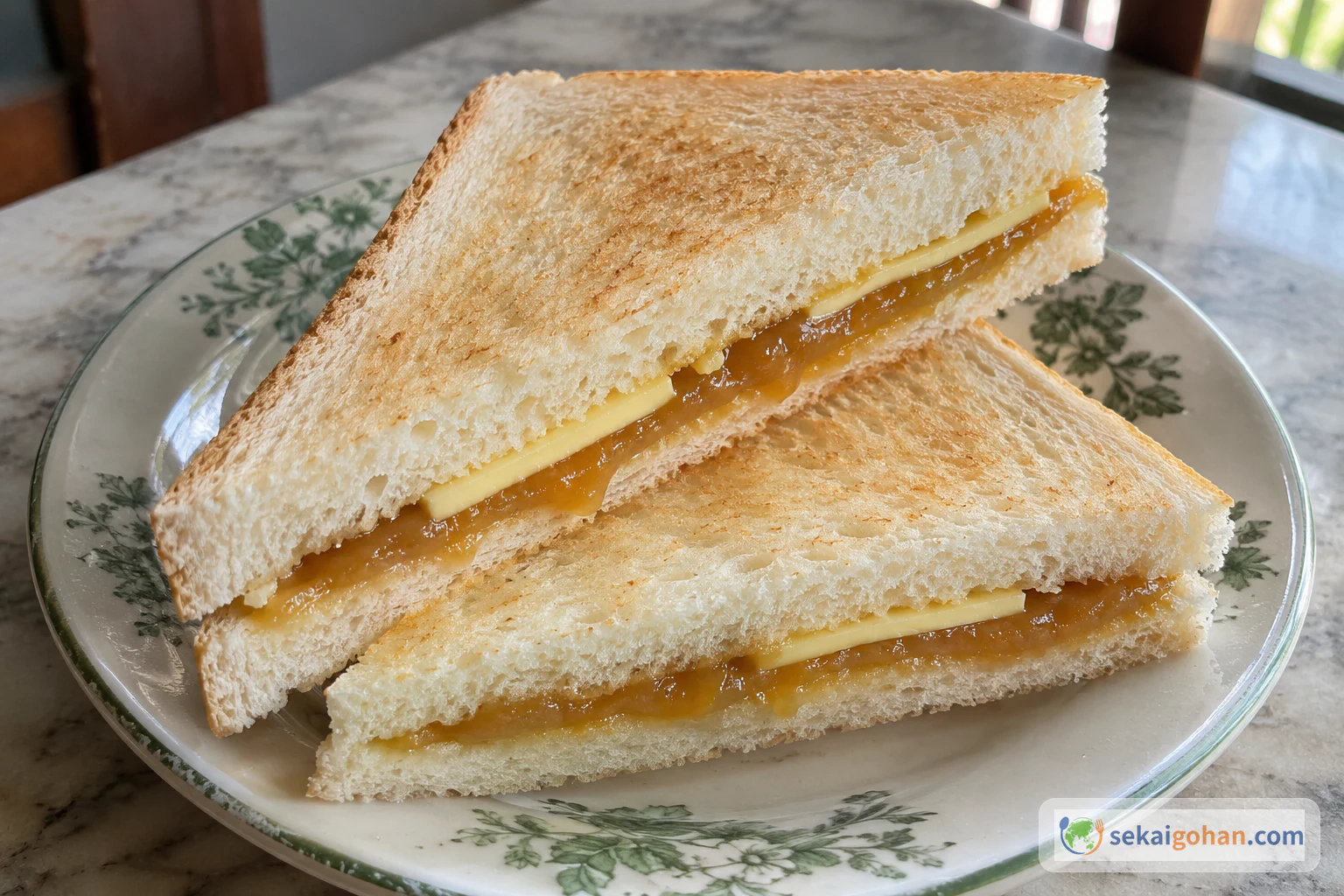
Kaya Toast: Warm Toast, Sweet Kaya and a Thin Layer of Butter
Toast the bread until it is golden, spread kaya on the inside of every slice, and keep the butter in thin slices. Three ingredients are all it takes.
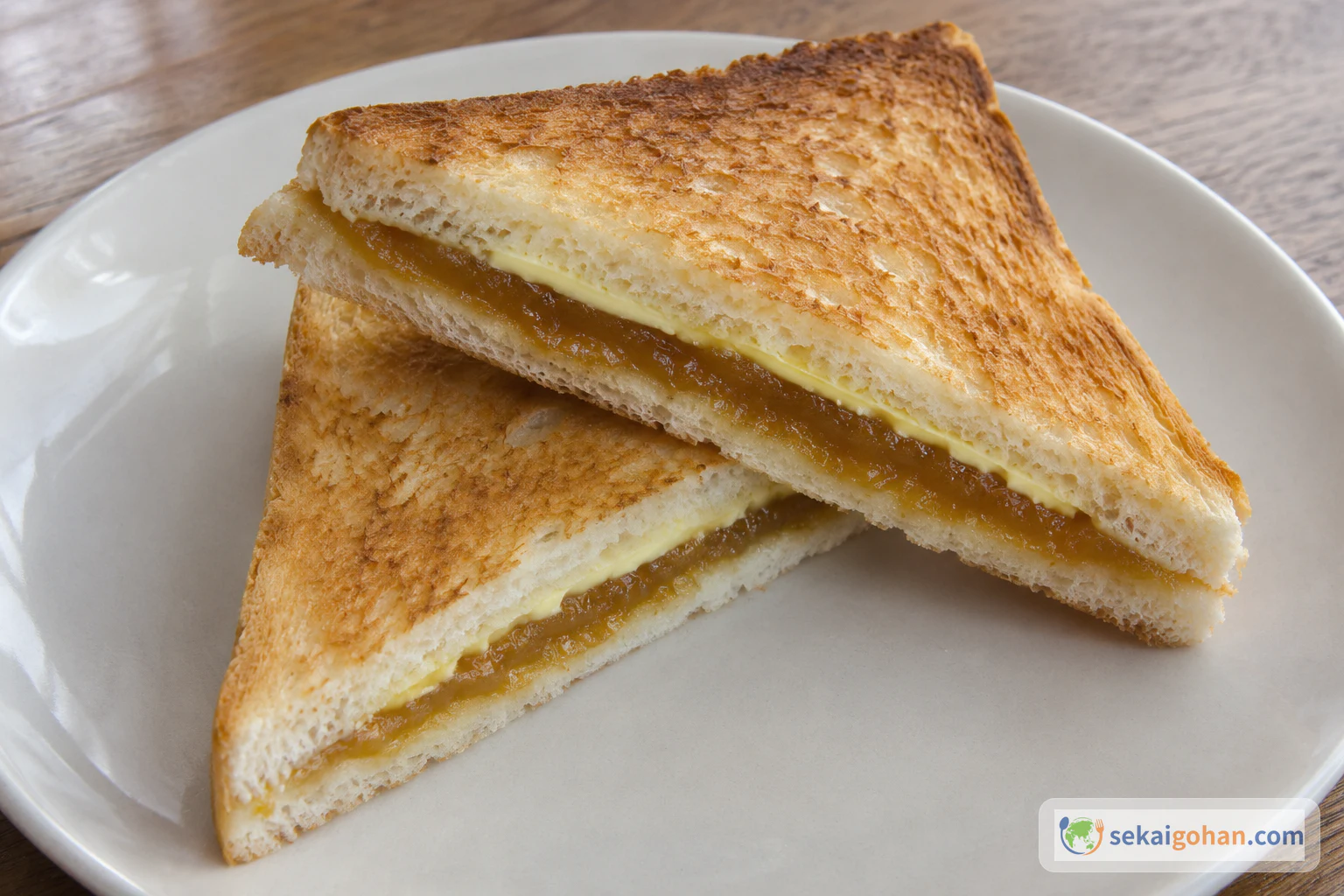
Kaya toast is a breakfast of toasted bread sandwiched with kaya and butter. SBS Food describes kaya as a sweet coconut jam that is a staple in Singapore and parts of Malaysia, and the Singapore government's SG101 heritage article describes kaya toast with thin slices of butter as part of a traditional breakfast alongside kopi (local coffee) and half-boiled eggs. The appeal lies in the layers: the crisp, browned surface of the toast, the sweetness of the kaya, and the richness of the butter tucked between them.
This article follows one basic, published assembly: the kaya toast recipe card by Jazmin Low on Babe.com.my, which makes two servings from 4 slices of white bread, 4 tablespoons of kaya and 2 tablespoons of butter. The kaya is ready-made, so there is no jam to cook. Sekai Gohan has not kitchen-tested this recipe as a whole. The kaya you buy shapes the final flavor.
Kaya toast is shared across Malaysia and Singapore. The Babe.com.my recipe card labels it Singaporean, while the text around it speaks of both countries, so this article treats it as a breakfast belonging to both rather than claiming a single national origin. Singapore tables often add half-cooked eggs, kopi or wholemeal bread; those belong to different sets and recipes, and they are described further down as ways of serving, not mixed into this method. For more dishes from the same country, browse Malaysian recipes.
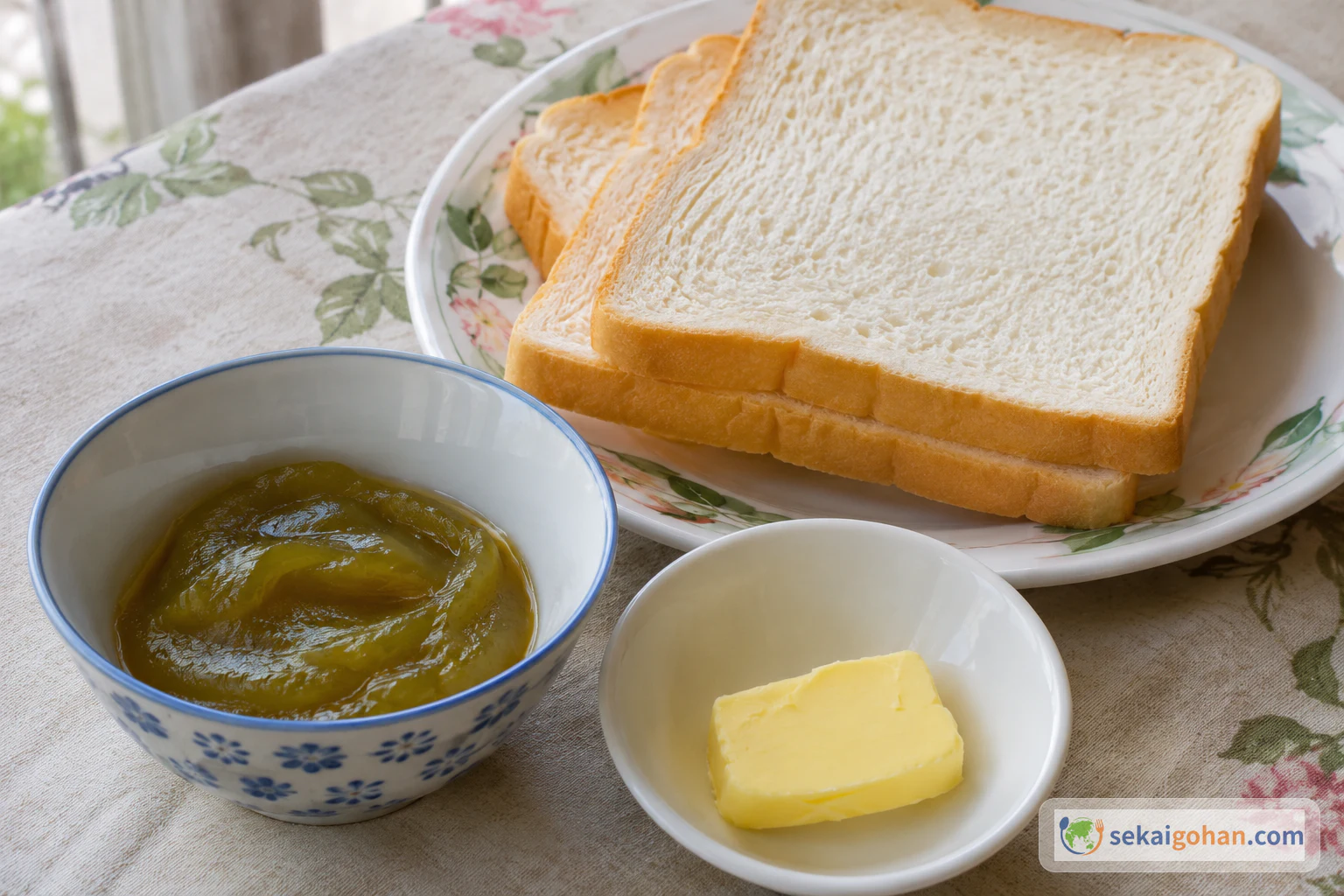
Ingredients (2 servings)
Equipment
- Toaster or toaster oven
- Butter knife for spreading the kaya
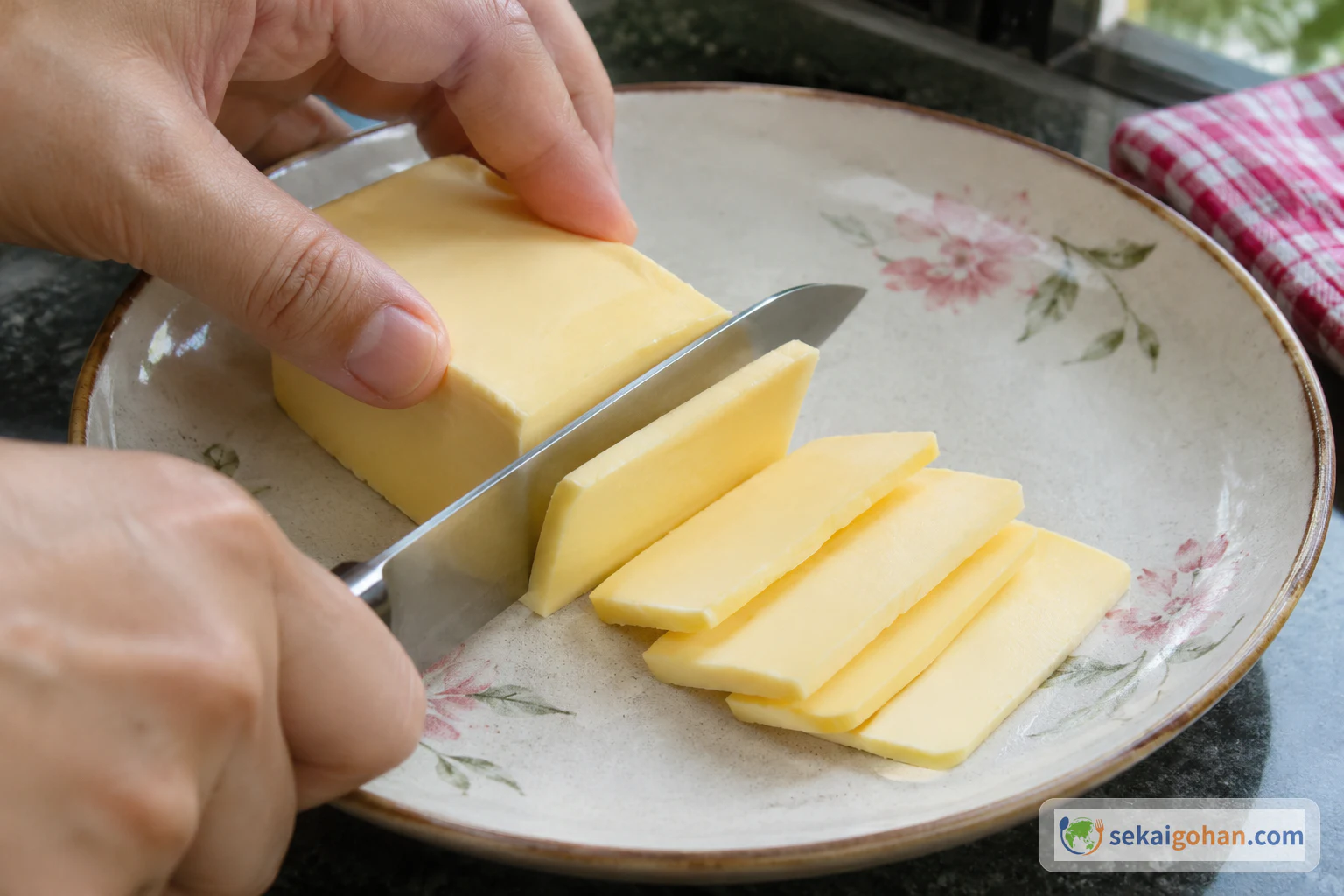
- Small knife and a plate for slicing the butter
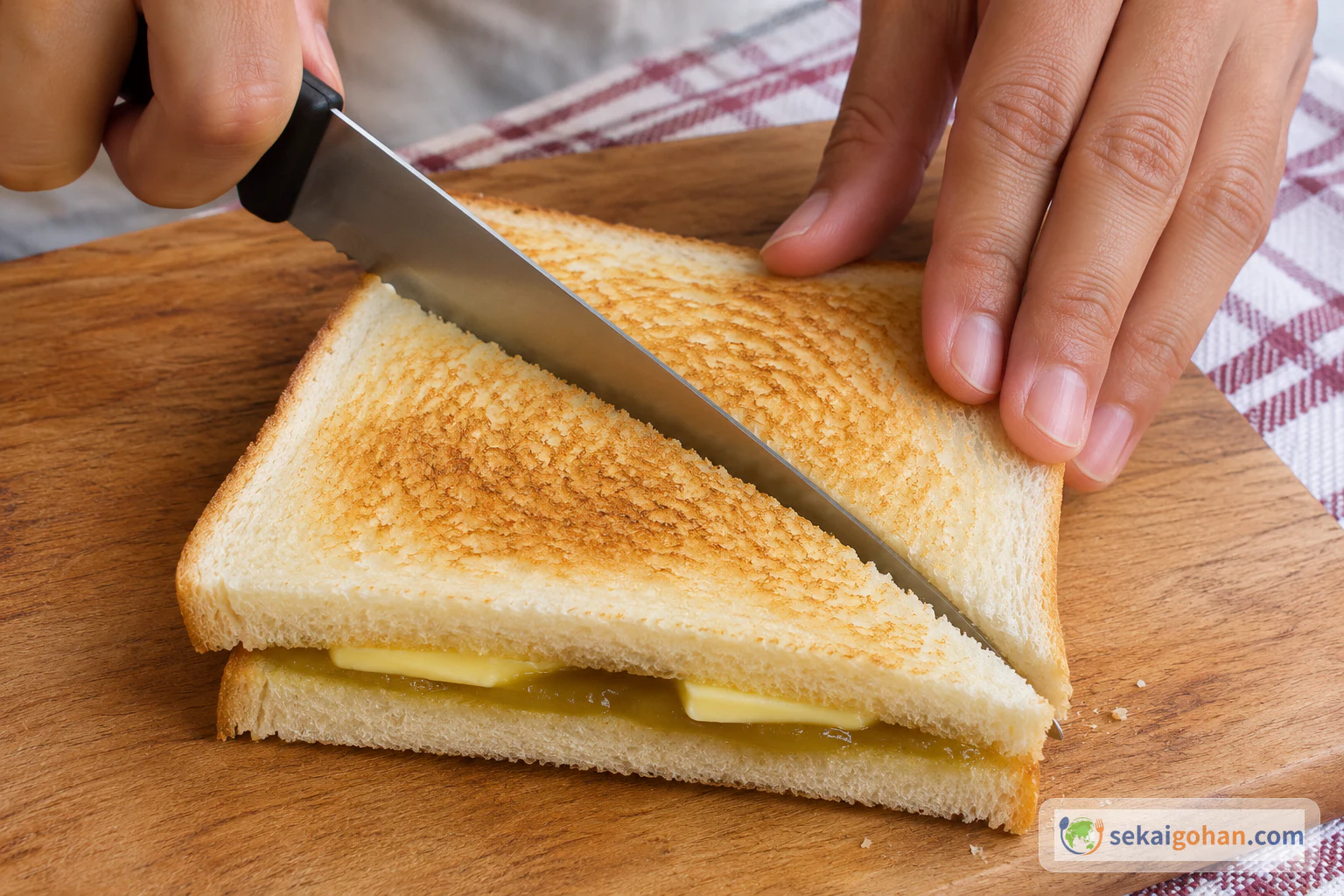
- Cutting board and bread knife, if cutting the sandwiches in half
- Serving plates
Choosing the Bread, Kaya and Butter
Bread. Use ordinary white sandwich bread from the supermarket, in the slices you normally toast. Wholemeal bread gives a different flavor and texture; see the serving variations below.
Kaya. Look for jars labeled kaya or coconut jam at Asian grocers. Using a ready-made product keeps the recipe to these three ingredients and these simple steps. The color of kaya differs between products; a photo or the color in the jar does not tell you what is in it. Read the label for the actual ingredients and allergens, and follow the label for how to store the jar once it is opened.
If you can't find kaya. Look for kaya or coconut jam at Asian grocers. Kaya is essential to this dish.
Butter. This recipe uses unsalted butter. If you only have salted butter, the toast will taste saltier; either way, do not add salt.
The bread usually contains wheat, and butter is a dairy product. Kaya commonly contains egg and coconut, but products differ, so check the label of the jar you buy, including any notes about shared facilities.
Method: Toast, Spread, Layer, Close
Slicing the butter thin before you start layering and cutting each sandwich in half diagonally are presentation choices. The sandwiches are complete once they are closed.
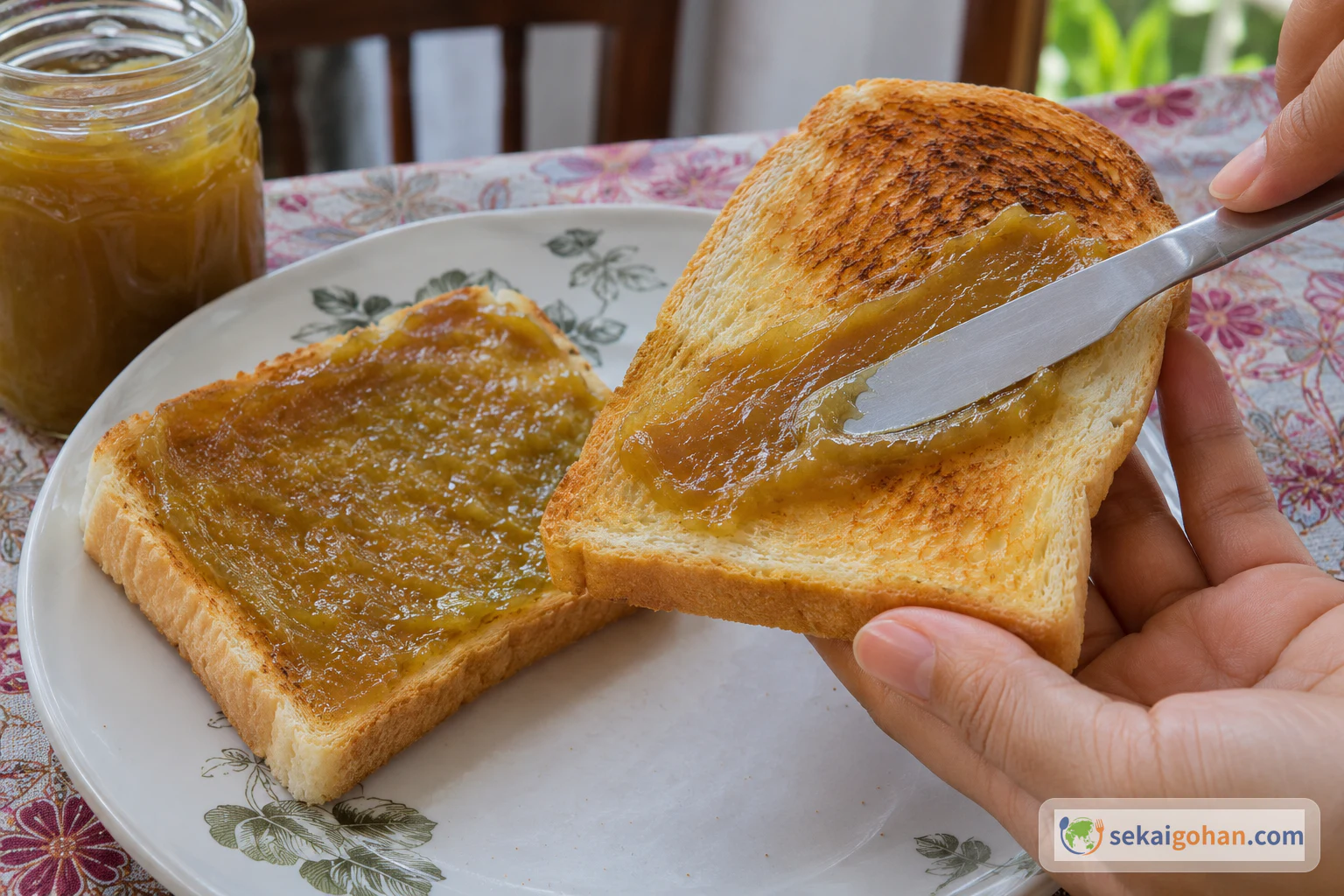
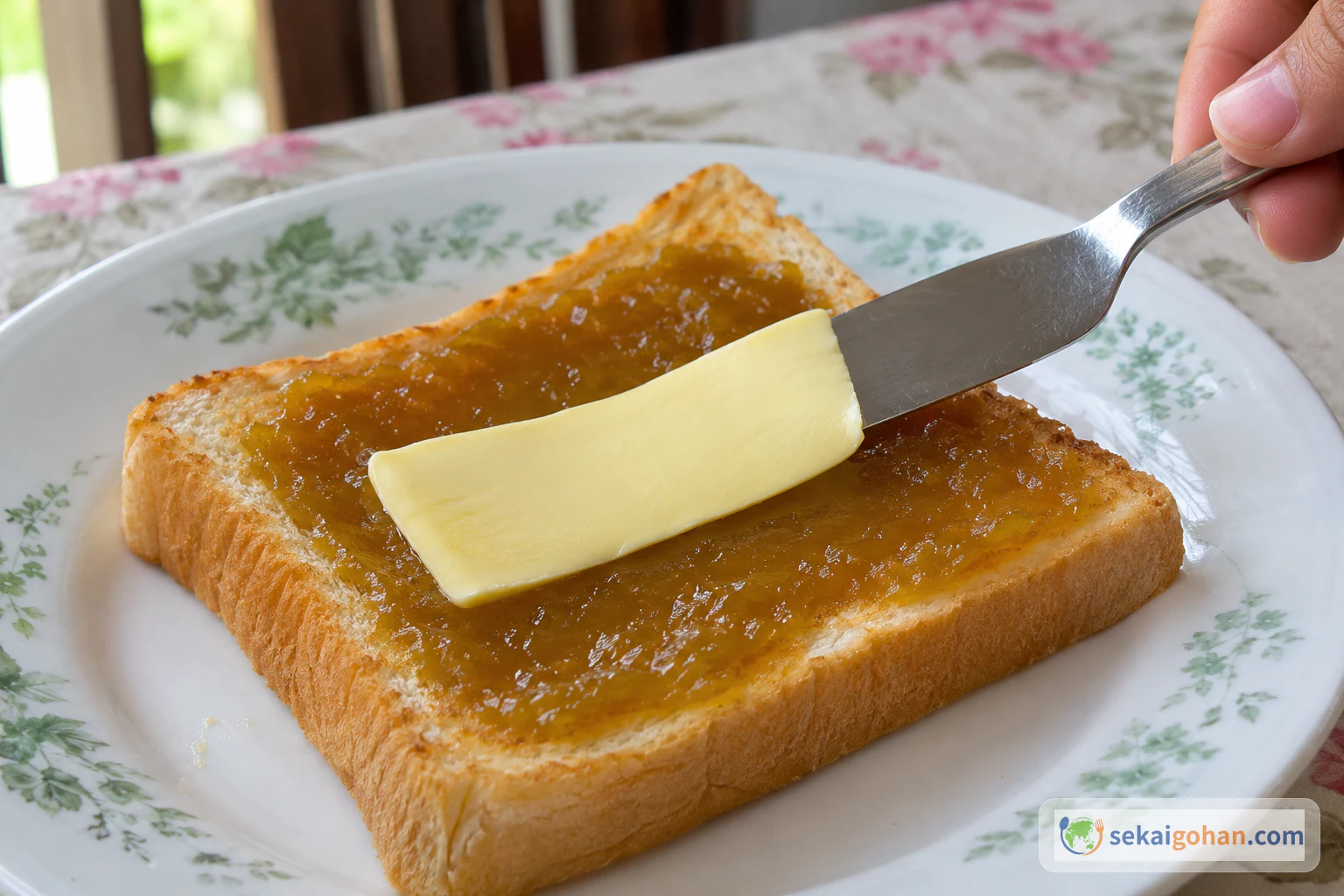
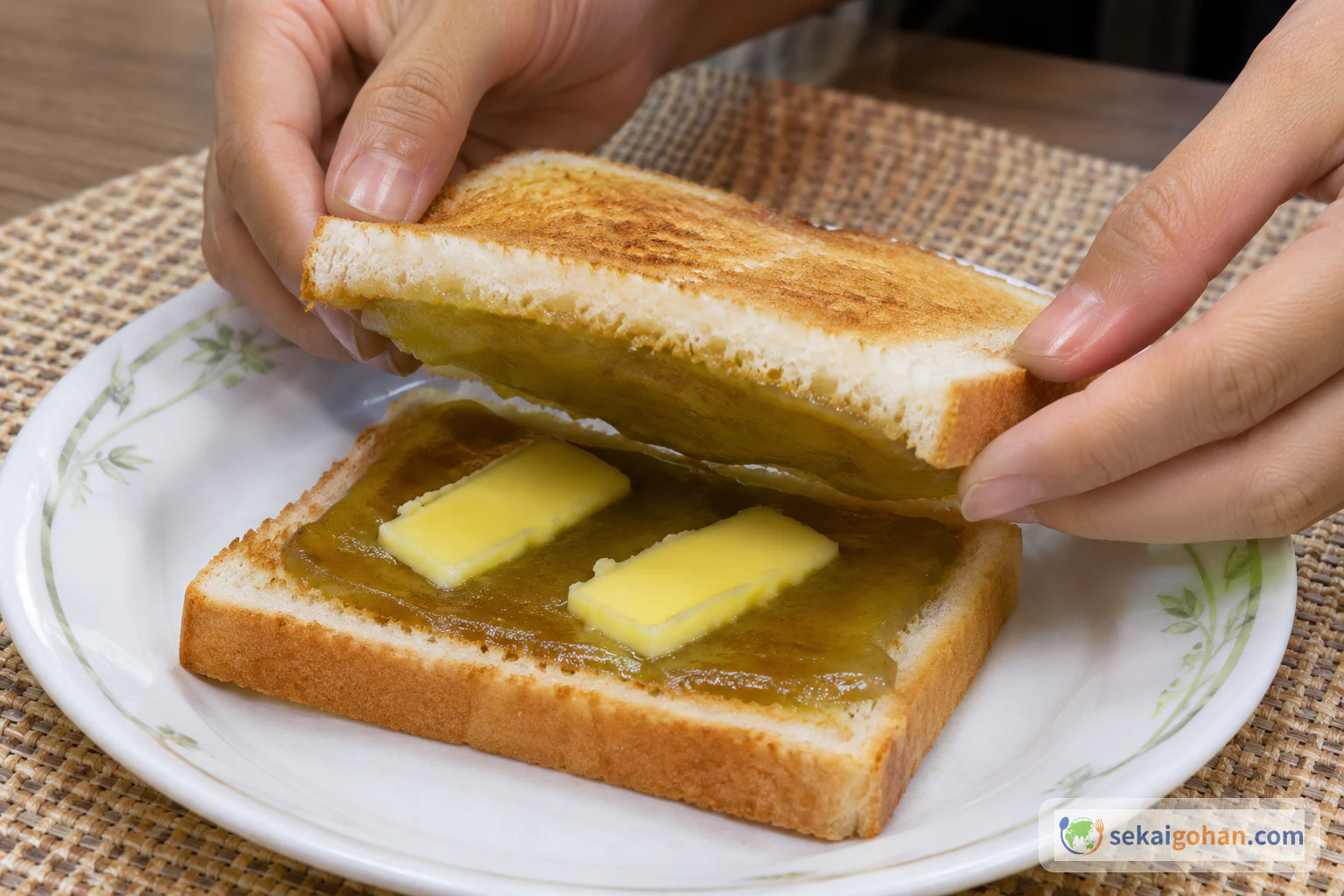
The 4 slices of bread become 2 sandwiches. Every slice gets kaya on its inner face, and the thin butter goes inside, so both sweet surfaces meet the butter.
Avoiding Common Slips
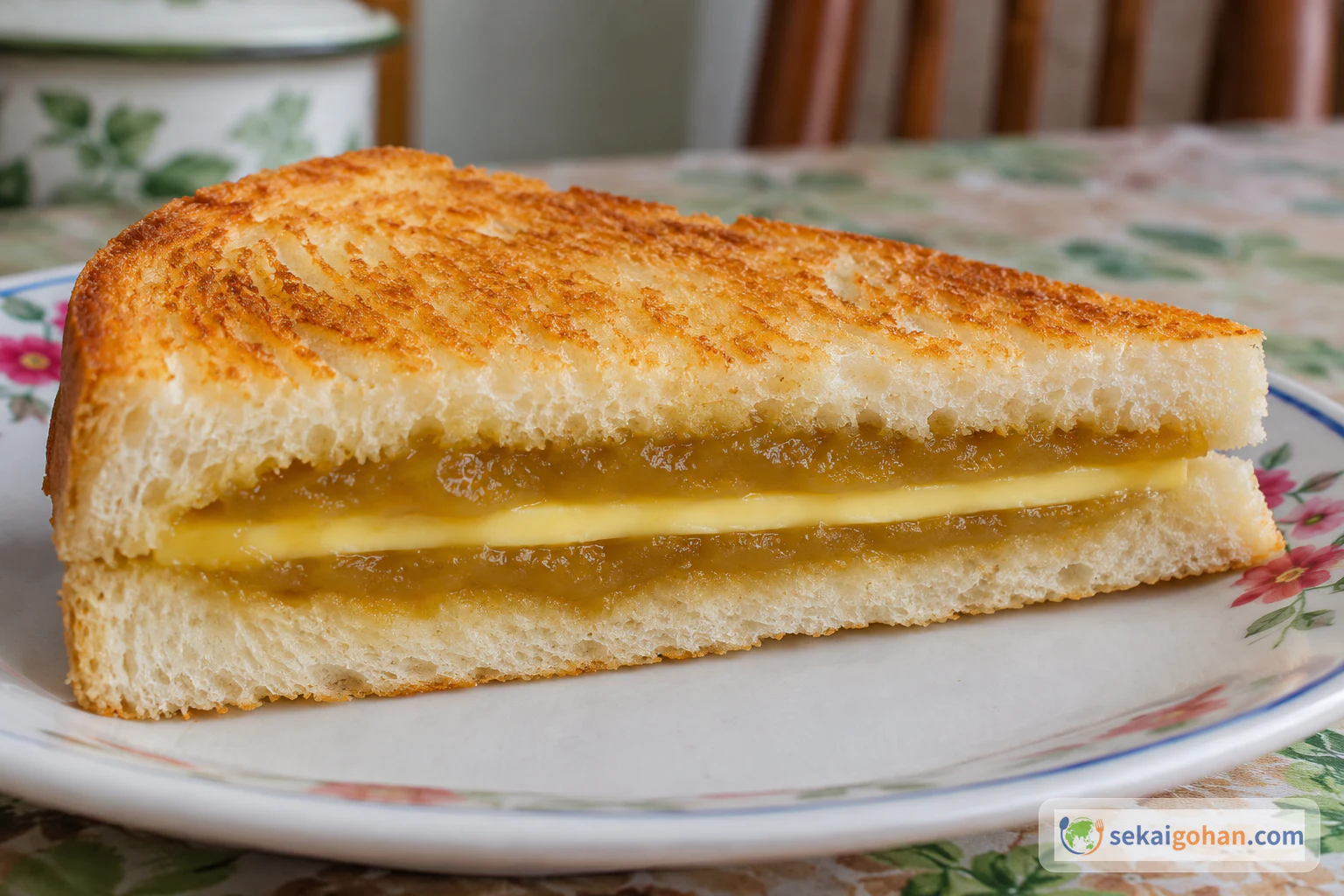
A finished sandwich shows golden toast on the outside, kaya on both inner faces and a thin layer of butter between them.
| What happened | Likely cause | What to do |
|---|---|---|
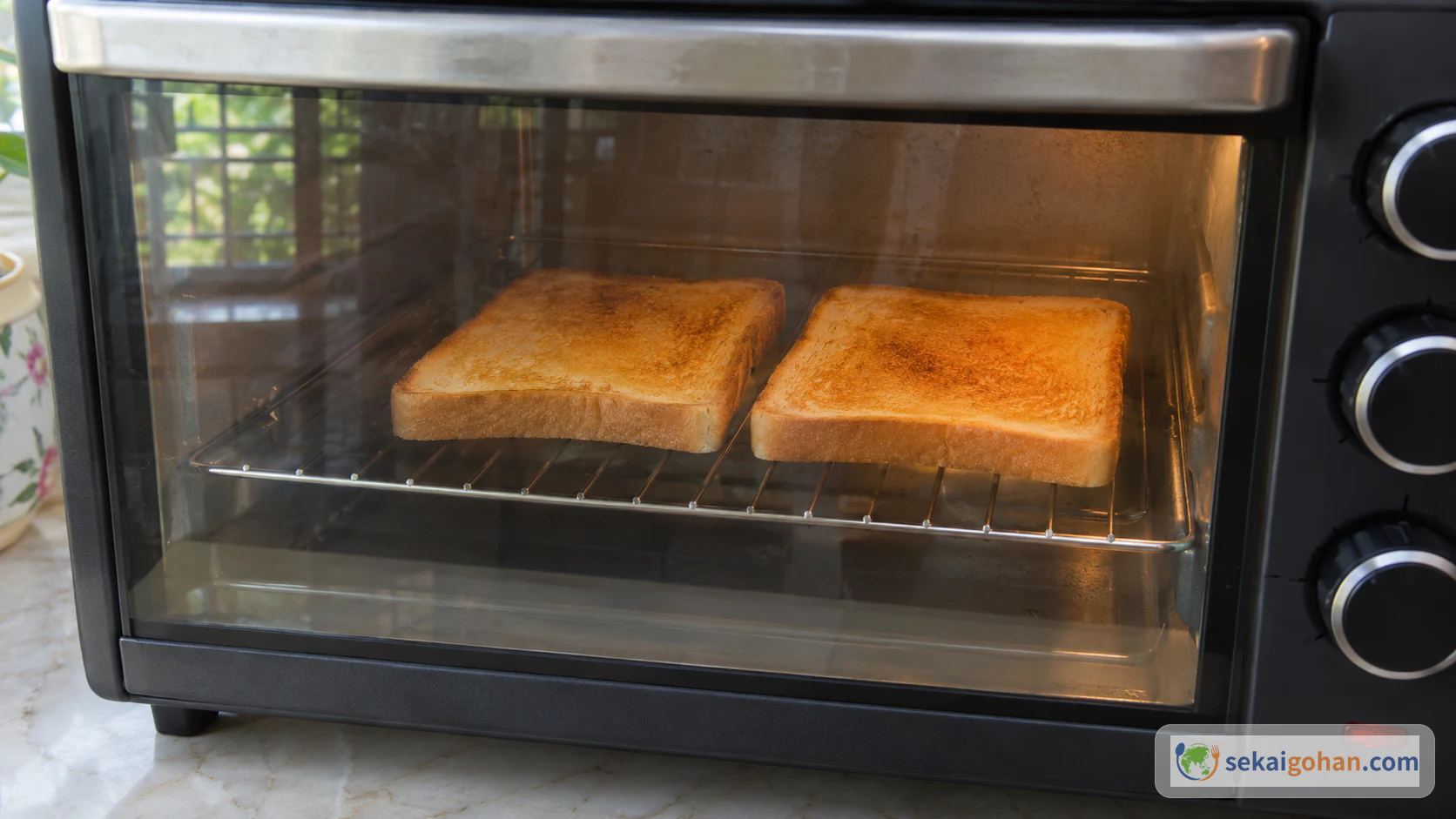
| The toast is pale or scorched | Appliances brown at different speeds | Watch the color and adjust next time; there is no fixed toasting time |
| Kaya squeezes out of the sides | Too much kaya on each slice | Stay within the 4 tablespoons and spread it evenly to the edges |
| The butter feels heavy | Butter sliced too thick | Slice it thinly and stay within the 2 tablespoons |
| The toast went soft | It sat before serving | Assemble just before eating and serve right away |
How Kaya Toast Is Eaten: Kopitiam Tables Across Malaysia and Singapore
SBS Food presents kaya as a sweet coconut jam enjoyed in Singapore and parts of Malaysia. Its recipe by Adam Liaw, Kaya toast with half-cooked eggs and Hainanese coffee, is a fuller Singapore-style breakfast: kaya toast on wholemeal bread with half-cooked eggs and strong coffee, and kaya made from scratch in a large batch. It is a separate authored recipe with its own measurements, so none of its amounts are borrowed here; it is useful mainly as a picture of how the toast is set out on the table.
SG101, the Singapore government's heritage site, describes a traditional breakfast of kaya toast with thin slices of butter, kopi, and half-boiled eggs seasoned with pepper and dark soy sauce. The same article mentions that the bread was traditionally toasted twice over charcoal, and gives an overview of how Hainanese-run kopitiam (coffee shops) helped popularize kaya toast. That is the article's own historical account, not proof of a single origin for the dish, and charcoal toasting is a traditional practice rather than something a home kitchen needs.
Ways to serve and vary it
| Variation | What it looks like | How to approach it |
|---|---|---|
| On its own | The simple sandwich in this recipe | A light breakfast or snack, made in minutes |
| Wholemeal bread | Used in the SBS Food Singapore-style recipe | Toast with a different flavor and texture from the white-bread version |
| With kopi and half-cooked eggs | The kopitiam breakfast set described by SG101 and SBS Food | An optional set around the toast; this article does not give an egg method |
| Different kayas | Colors and flavors vary between products | SBS Food's own kaya includes pandan and a separately cooked caramel; read your product's label rather than judging by color |
Frequently Asked Questions
What is kaya?
SBS Food describes kaya as a sweet coconut jam, a staple in Singapore and parts of Malaysia. Recipes and products differ, so check the label of your jar for exactly what it contains.
Which bread should I use?
Plain white sandwich bread, as in this recipe. Singapore-style versions such as the SBS Food recipe use wholemeal bread, which gives a different texture and flavor.
Can I use salted butter?
The Babe.com.my ingredient list simply says butter, and the author's FAQ recommends unsalted butter, which is what this article uses. Salted butter will make the toast saltier. In either case, don't add salt.
What size tablespoon should I use?
The Babe.com.my recipe card gives tablespoons without defining a spoon standard. The SBS Food recipe uses Australian 20 ml tablespoons, but that applies to its own separate recipe, not this one.
Are eggs and coffee required?
No. Kaya toast here is just bread, kaya and butter. Kopi and half-cooked eggs are part of the breakfast set described by SG101 and SBS Food, served alongside rather than as part of the toast.
How long does it take?
The Babe.com.my recipe card gives about 15 minutes in total as an overall estimate. Toasting depends on your appliance, so go by the color of the bread.
Can I make the kaya myself?
Homemade kaya is a separate recipe with its own ingredients and steps, and it is not covered here. This recipe uses ready-made kaya; follow the jar's label for its ingredients and for storing it once opened.
Can I make the toast ahead?
This toast is meant to be assembled and eaten right away. Serve it as soon as the sandwiches are closed.
Sources
- Jazmin Low, "Kaya Toast Recipe," Babe.com.my. The two-serving recipe card (4 slices of white bread, 4 tablespoons of kaya, 2 tablespoons of butter), its four steps of toasting, spreading kaya, adding butter and sandwiching, the use of ready-made kaya, the author's recommendation of unsalted butter, and the listed overall time estimate. The card's Singaporean label is not used as evidence of a single national origin. https://babe.com.my/kaya-toast-recipe/
- Adam Liaw, "Kaya toast with half-cooked eggs and Hainanese coffee," SBS Food. Kaya as a sweet coconut jam enjoyed in Singapore and parts of Malaysia, and a Singapore-style breakfast with wholemeal toast, half-cooked eggs and coffee. Used for comparison only; none of its amounts are used in this recipe. https://www.sbs.com.au/food/recipe/kaya-toast-with-half-cooked-eggs-and-hainanese-coffee/qlnnnm55x
- SG101, Government of Singapore, "Traditional Kaya Toast in Singapore." The traditional breakfast of kaya toast with thin slices of butter, kopi and half-boiled eggs with pepper and dark soy sauce, the traditional practice of toasting twice over charcoal, and the article's overview of Hainanese-run kopitiam. Historical context only, not a recipe or proof of a single origin. https://www.sg101.gov.sg/resources/archives/heritage-traditional-kaya-toast-in-singapore/