Bánh Nhãn: Tiny Golden Puffs with a Thin White Sugar Shell
This recipe has not been kitchen-tested by Sekai Gohan. It follows one small-plate recipe published on a local Hải Hậu tourism site, using its version without ginger. That recipe gives no oil temperature, oil quantity or number of pieces, so this article doesn't supply them either. Judge the frying and coating by how the puffs and syrup look.
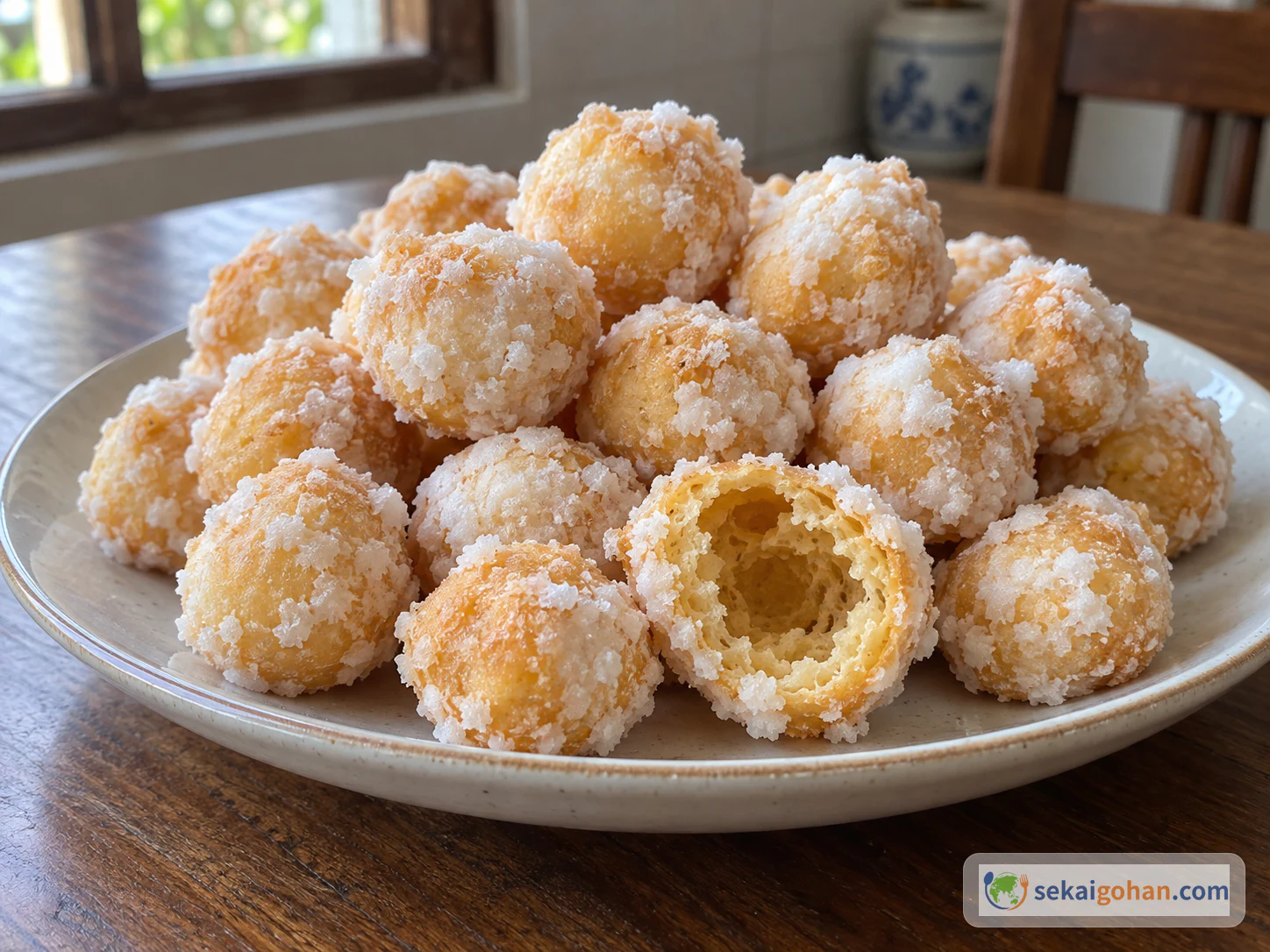
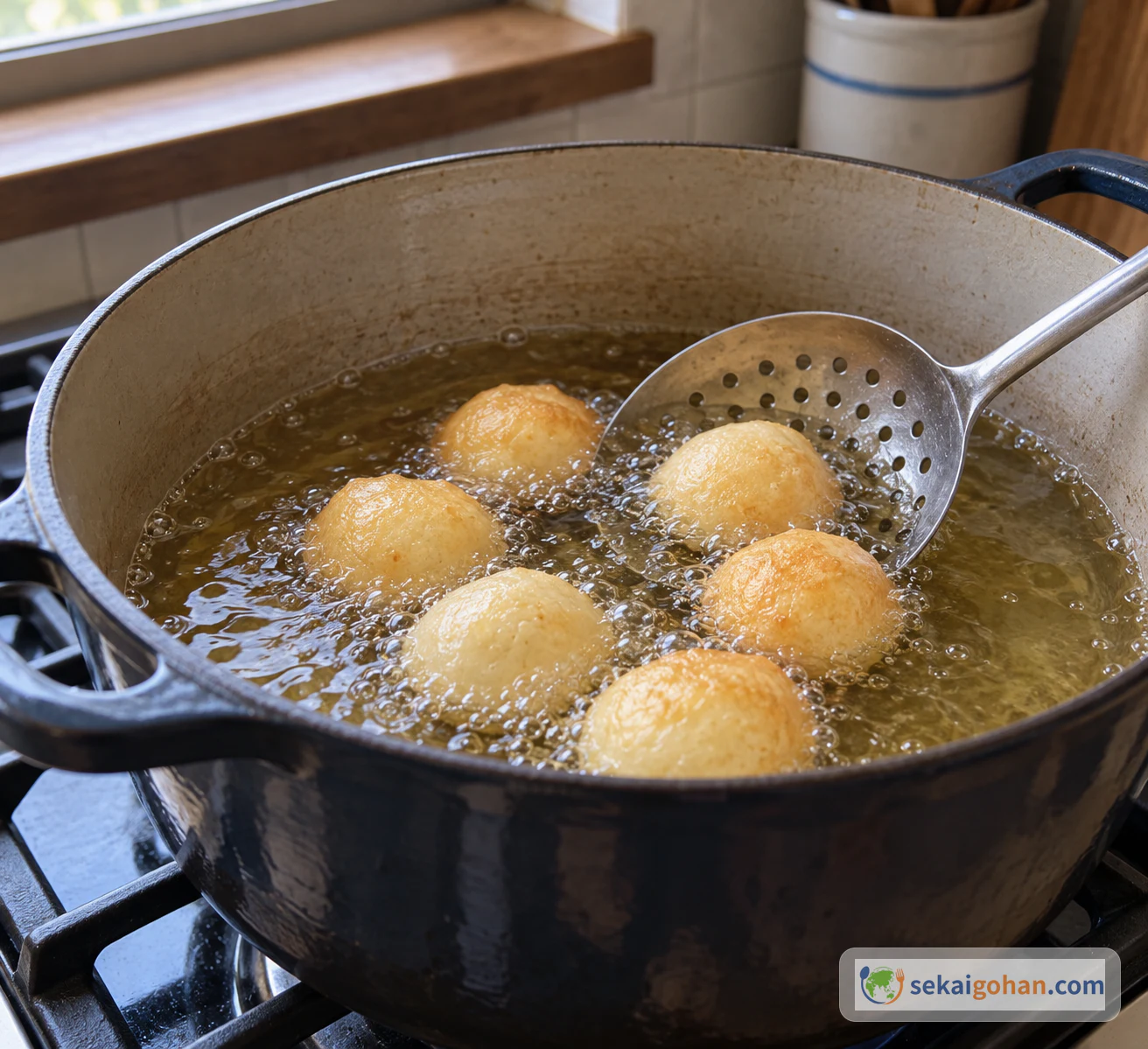
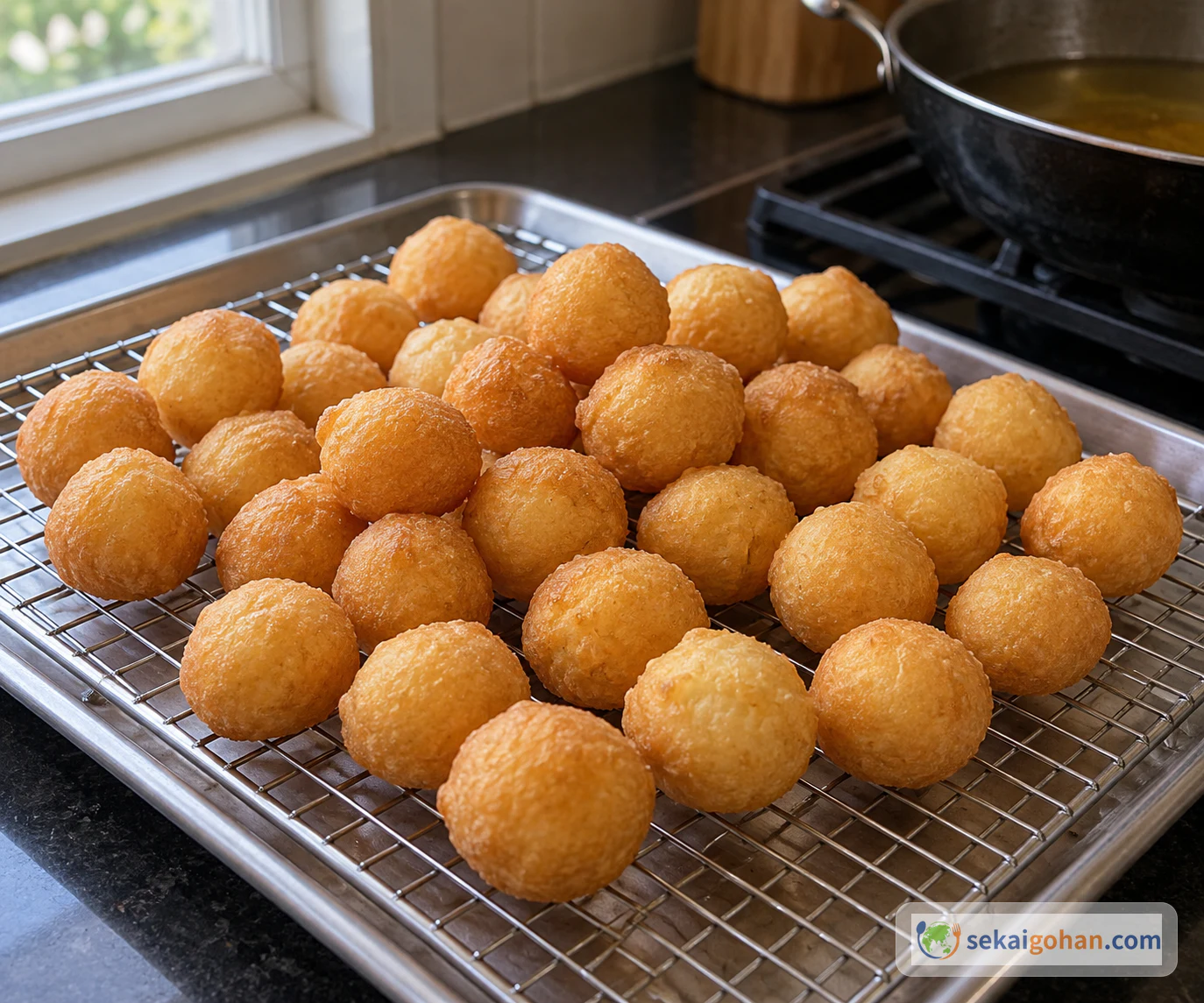
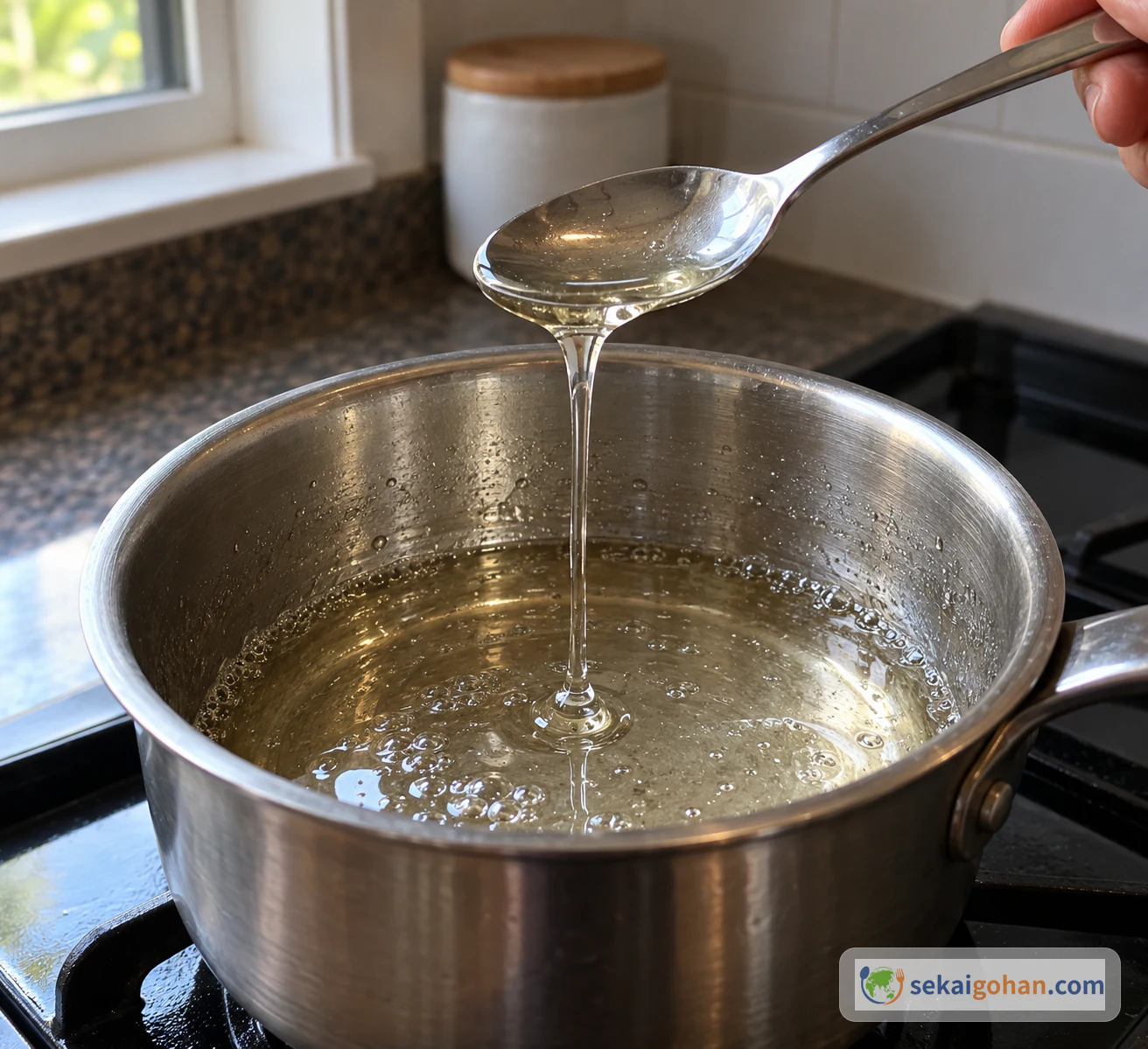
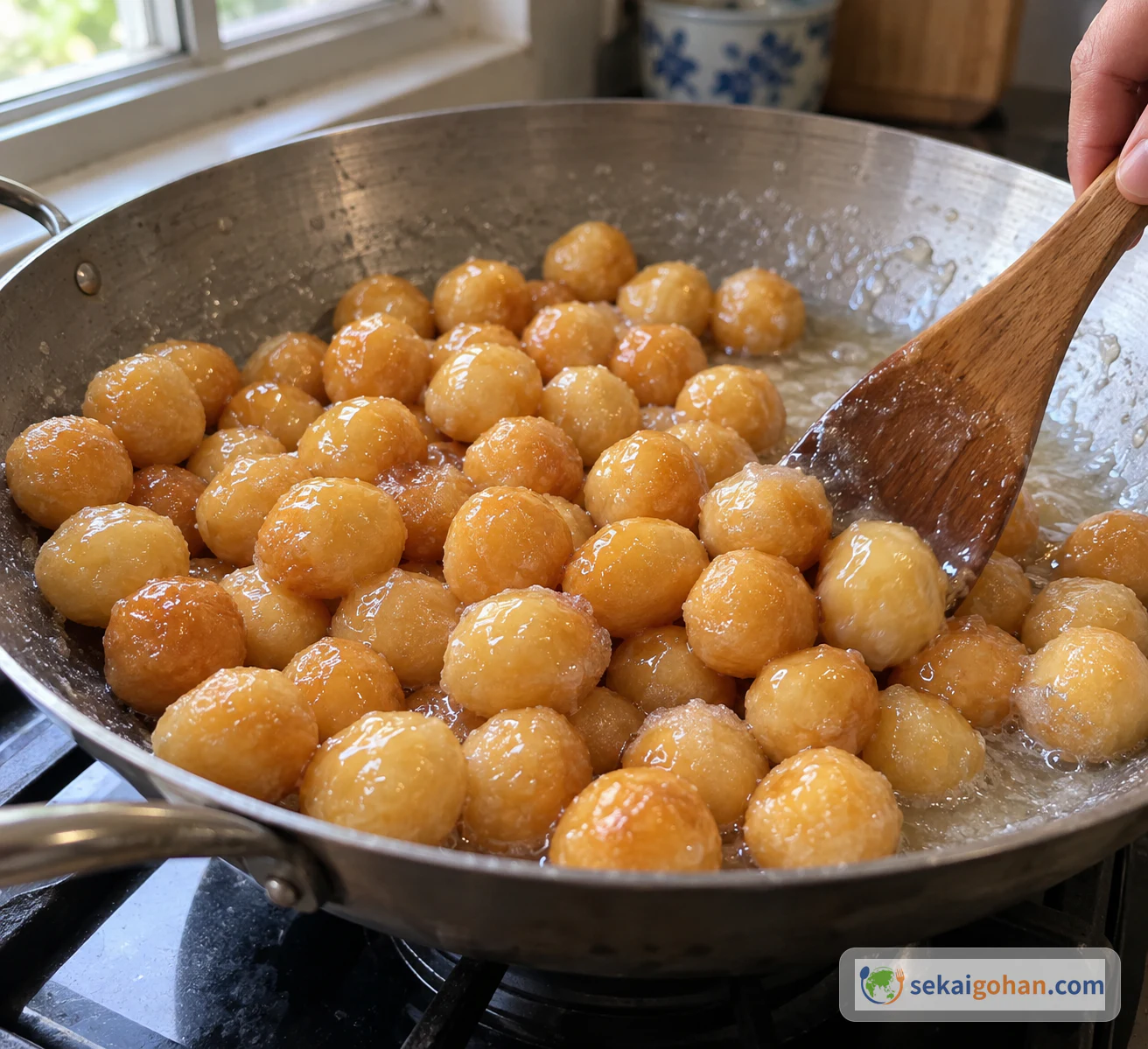
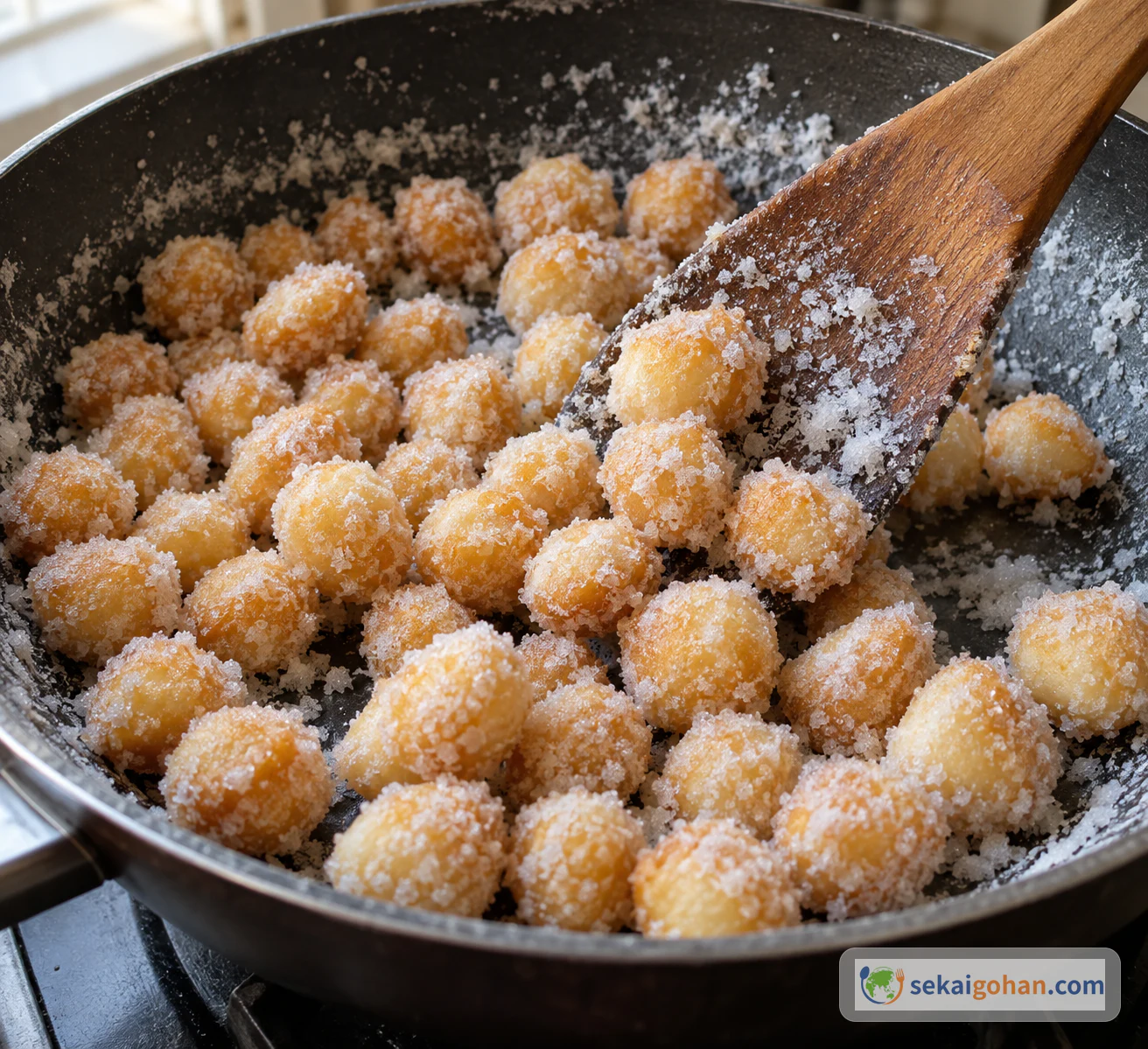
Fingertip-sized balls of egg-yellow dough turn slowly in a deep pot of fat over low heat, until they puff up and turn golden. Once cool, they go into a pan of reduced sugar syrup and are stirred until the syrup dries into a thin, matte white shell.
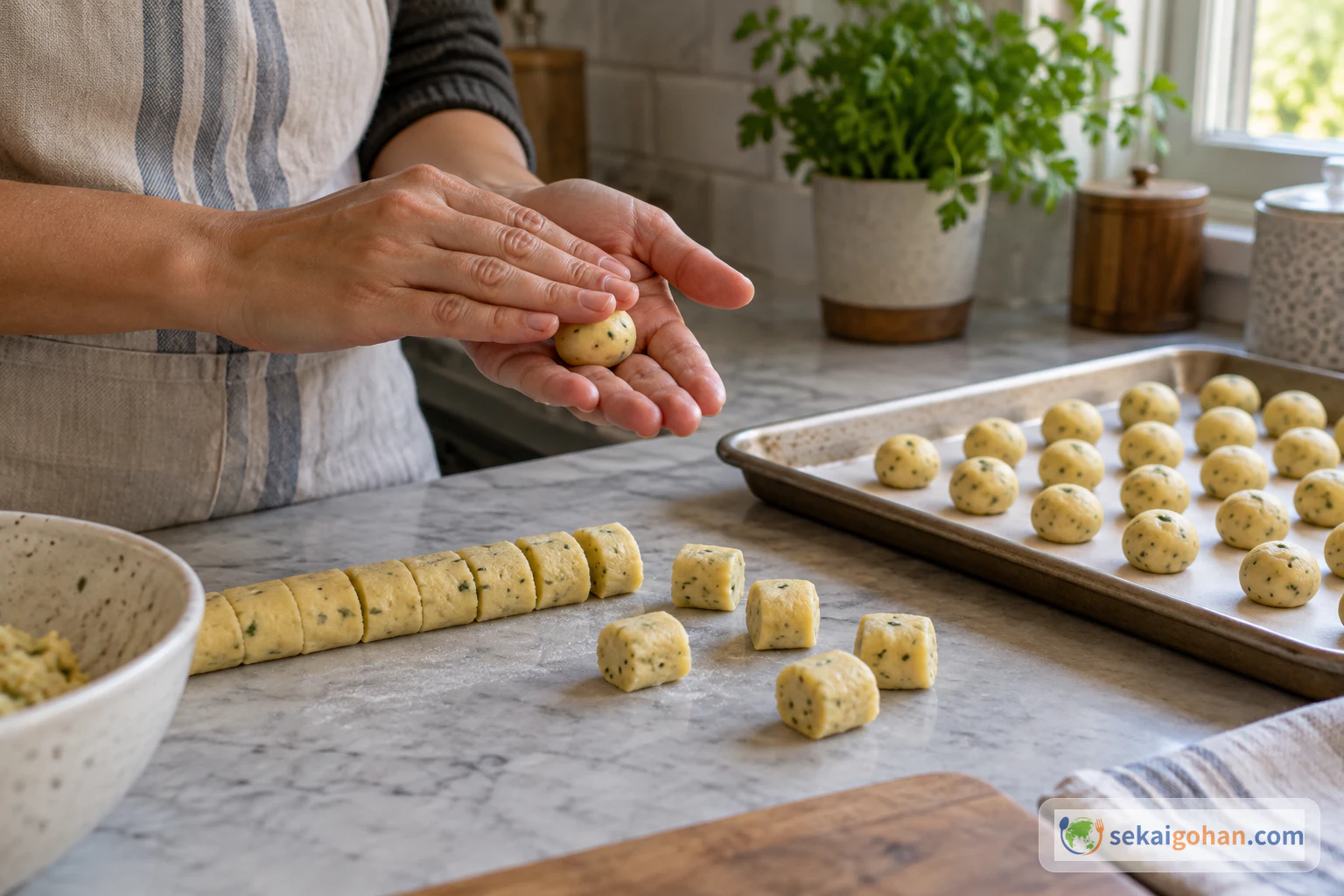
This is bánh nhãn, a regional sweet from Hải Hậu in Vietnam's northern delta, an area described in the sources as part of Nam Định. Nhãn means longan, but no longan goes into it. The dough is glutinous rice flour and egg, and the rest is fat and sugar. With so few ingredients, most of the work is in the hands: shaping small, even balls, frying them patiently, and knowing when the sugar has turned.
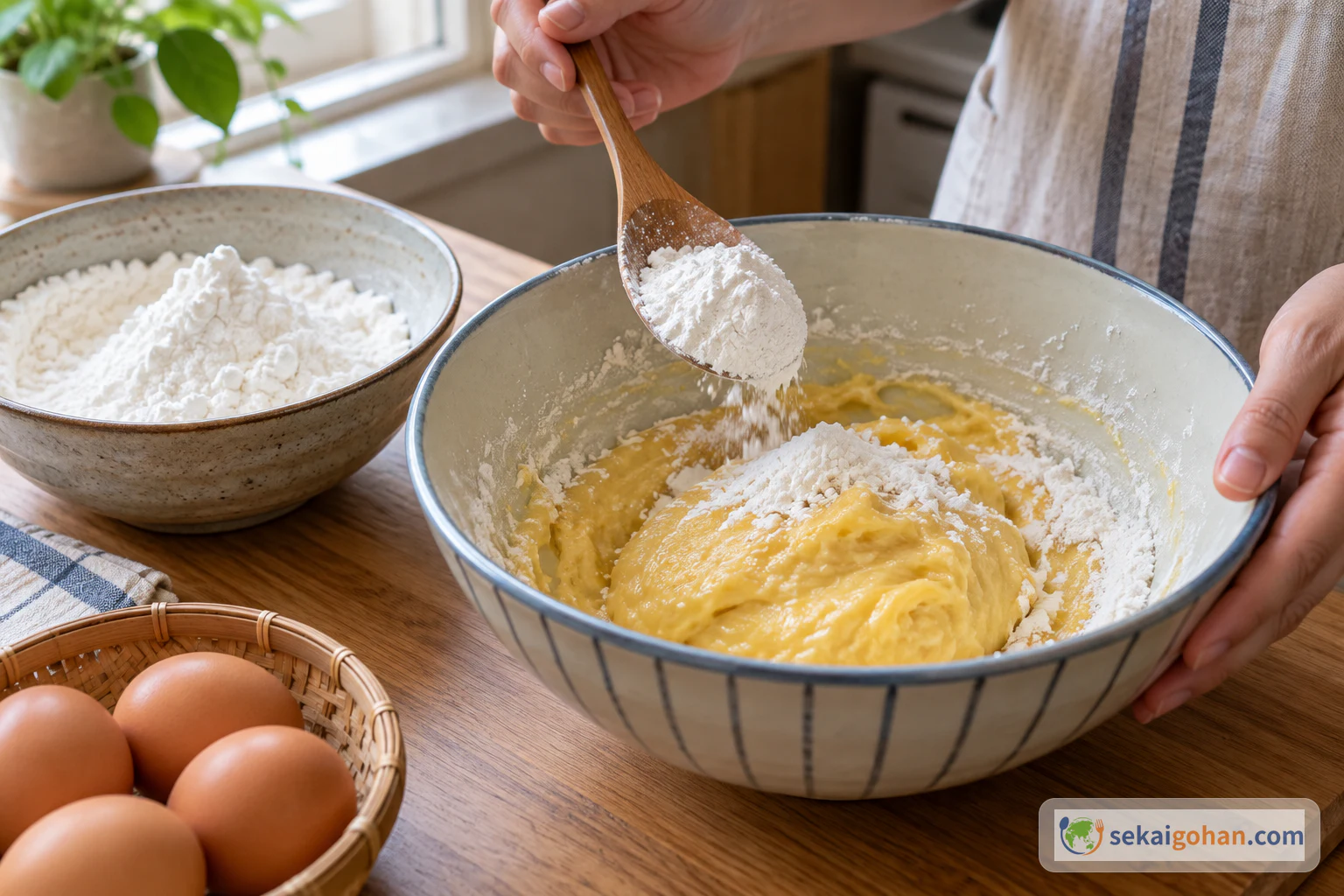
The dough here uses whole eggs, which the recipe's author says give a puffed, hollow center. You can find more dishes from the country on our Vietnam page.
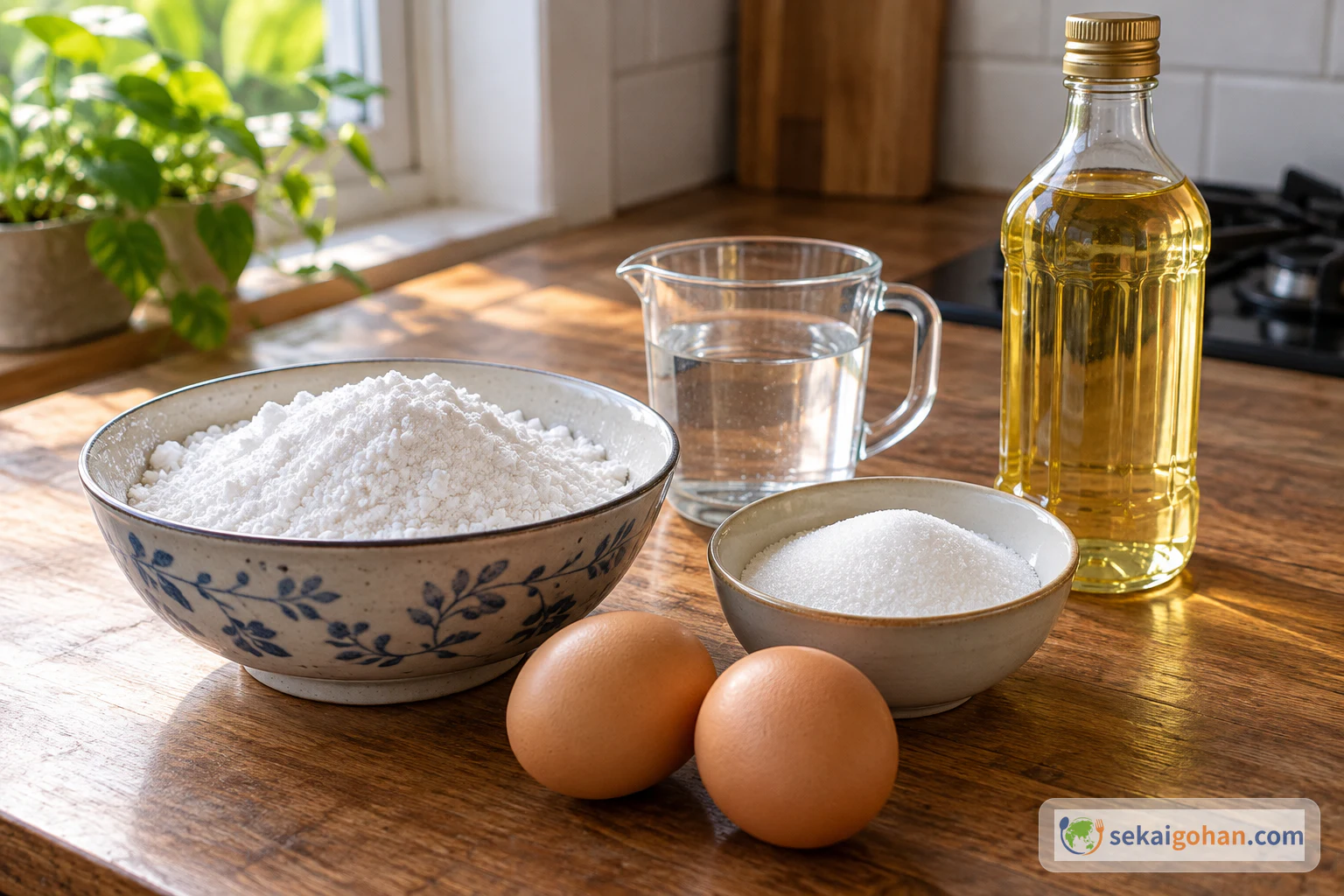
Ingredients for One Small Plate
Equipment
- Mixing bowl and spoon, both clean and dry
- Clean, dry board and a knife
- Dry tray for the shaped balls
- Deep, heavy pot
- Long slotted spoon
- Wire rack set over a tray
- Saucepan for the syrup
- Broad pan and wooden spatula for the coating
- Oil thermometer, if you have one, to help you see that the heat is holding steady
Choosing the Flour and Frying Fat
Flour. Look for powdered glutinous rice flour, sold as bột nếp in Vietnamese shops. Ordinary rice flour is not the same thing and shouldn't replace it. Wheat flour isn't used at all. Japanese shiratamako is also made from glutinous rice but is a different product, so don't swap it in at the same weight.
Fat. Either cooking oil or pork lard can be used. The aroma may differ between them, so don't expect this version to taste the same as a lard-fried batch. Choose one fat and don't mix the two.
Method: From Dough to White Sugar Shell
Both the oil and the syrup can cause serious burns, so keep children away from them. Never test hot oil with your fingers. Use a deep pot without overfilling it, keep water and wet utensils away from the oil, add only a few balls at a time, and stay with the pot while the heat is on.
Frying time depends on batch size, pot and heat level, so there is no fixed time. The steps below rely on color, puffing and dryness instead.
Serving and Keeping
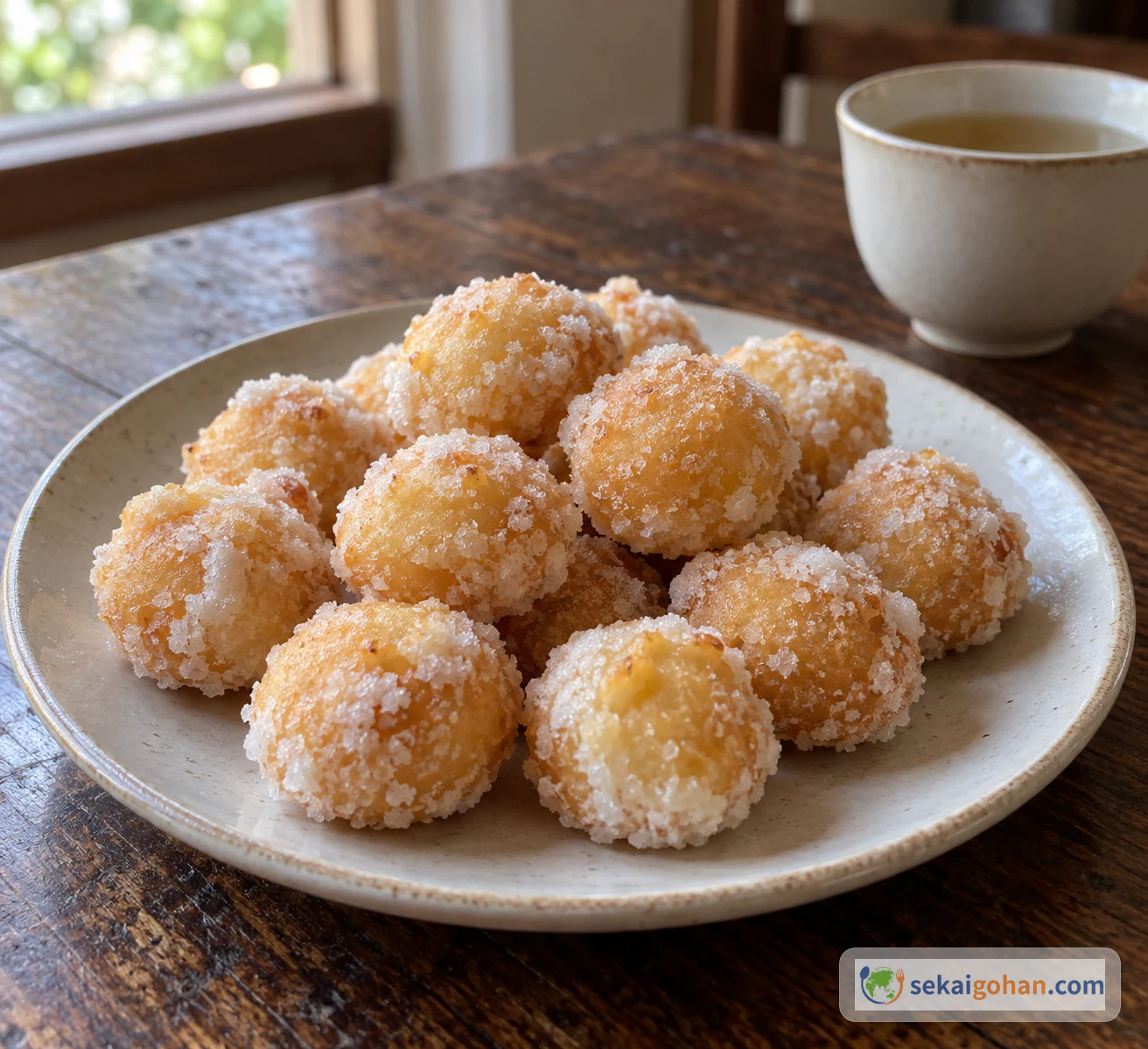
Serve bánh nhãn once it has cooled and the coating has set. A plain cup of tea is a quiet companion for something this sweet, but it is our suggestion and not a documented custom.
To keep them, let the puffs cool completely, seal them in an airtight container and store it somewhere cool, dark and dry, as Báo Thái Nguyên advises. That article gives no food-safety testing behind its advice. The recipe's author does mention a longer period for how the texture holds, but that isn't evidence of safety, so we give no shelf life here. We suggest eating them soon.
Troubleshooting
| What you see | Likely cause | What to do |
|---|---|---|
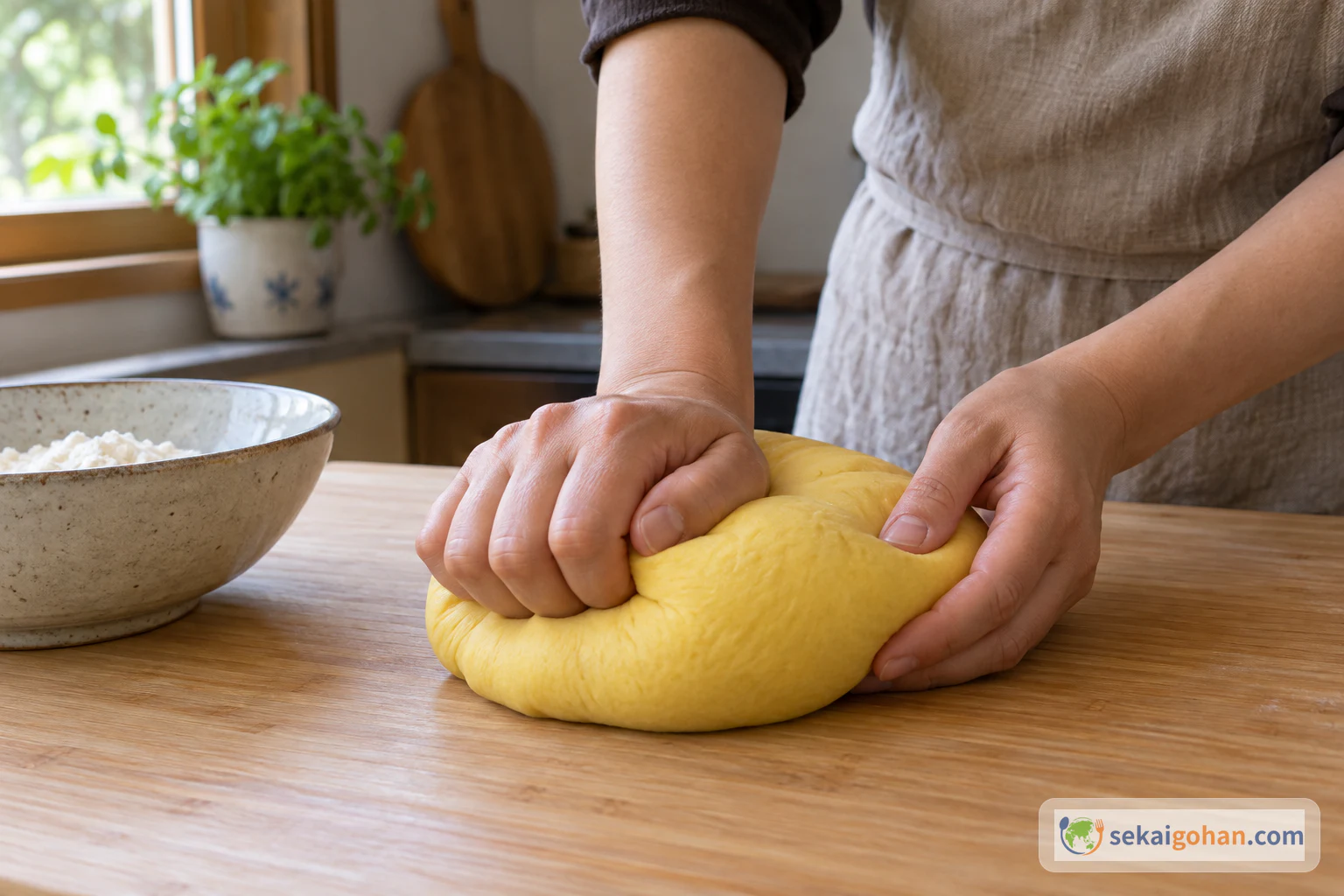
| Dough sticks to your hands | Not enough flour for the size of your eggs | Add a little flour at a time, staying within 120–130 g. Don't add water |
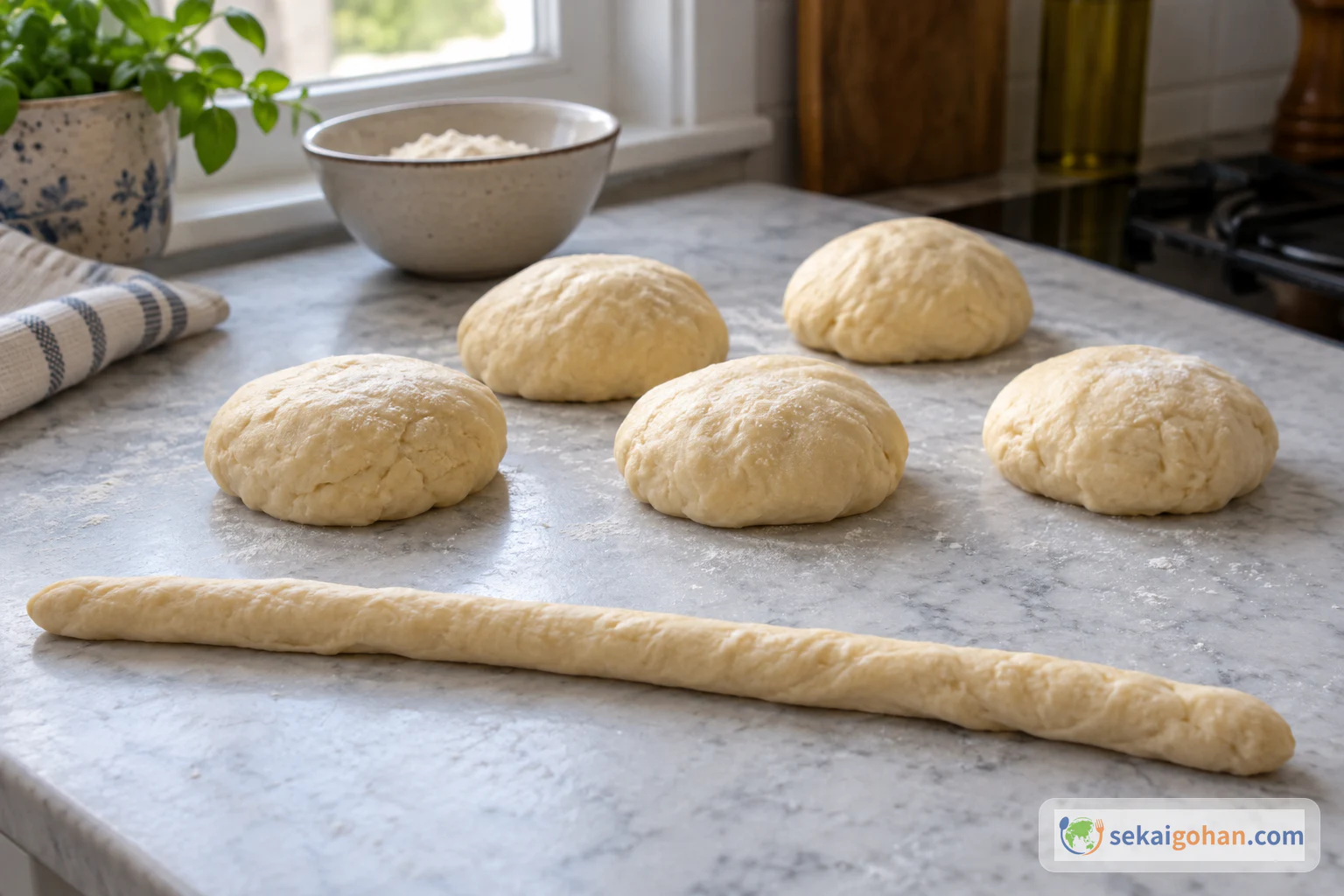
| Balls have cracks | Seams left open or uneven pieces | Cut even pieces and roll them between your hands until the seams close |
| Balls burst in the oil | Water may have reached the dough | Keep water out of the dough and use dry utensils and surfaces |
| Dark outside, wet inside | Heat too high or too many balls in the pot | Lower the heat, fry fewer at a time, and check the inside of a cooled puff |
| Puffs go soft during coating | They were still warm | Let the next batch cool completely on the rack |
| Syrup stays glossy | Sugar hasn't crystallized yet | Keep stirring over low heat until the coating turns white and dry |
| Sugar colors or smells scorched | Heat too high | Lower the heat straight away or take the pan off the burner |
Variations and How Far the Evidence Goes
| Variation | What the sources say | How to treat it |
|---|---|---|
| With ginger | The recipe lists 30 g ginger as optional, crushed with 100 ml water and strained. It then mentions 100 ml water again at the syrup stage | It's unclear whether the ginger water is part of the 100 ml or in addition to it. We don't pick a reading, so this article gives no fixed ginger recipe |
| With lard | The recipe allows it, and the maker interviewed by Báo Thanh Niên favors it | Use it in place of the oil, not mixed with it |
| Egg yolks only | The recipe's author says using only yolks gives a packed center rather than a hollow one | This explains how the egg affects the texture. It isn't a second recipe, because the matching flour amount isn't confirmed |
| Coating while warm | The maker interviewed by Báo Thanh Niên coats the balls while still warm, once the syrup pulls threads | This is a different maker's technique. Don't combine it with the full cooling used here |
Hải Hậu's Sweet and the Puzzle of Its Name
Báo Thái Nguyên and Báo Thanh Niên both tie bánh nhãn firmly to Hải Hậu. Báo Thái Nguyên's 2011 article explains that the name comes from the small, round, yellow shape, which resembles a longan. It also relays a local account placing the sweet's origin in Quần Phương Hạ. The Thanh Niên writer, reporting from a production area, found that even locals couldn't fully explain the name. The two accounts differ, and we don't treat either as the settled origin.
That Thanh Niên headline also calls the sweet tiến vua, a treat offered to the king. A headline and retold stories aren't primary evidence of royal tribute, so this remains a story rather than recorded history.
The sweet's place in daily life has also shifted over time. Báo Thái Nguyên includes a memory of families making it at home around Tết, which is one recollection and doesn't speak for every household. Báo Thanh Niên covers local production, the passing on of the craft, and the arrival of machinery alongside traditional methods. It also reports that the kind of egg can set one product apart from another. The maker it interviewed names four ingredients: glutinous rice flour, local chicken eggs, white sugar and lard. A home recipe and a commercial sweet are not necessarily the same thing, and this article follows the home recipe.
Frequently Asked Questions
Does bánh nhãn contain longan?
No. Báo Thái Nguyên and Báo Thanh Niên both describe a sweet made without the fruit. The dough is glutinous rice flour and egg, and the round shape is one local explanation for the name.
Is the origin of the name settled?
No. Báo Thái Nguyên gives the explanation based on its appearance, while Báo Thanh Niên reports that it couldn't be fully explained locally.
How many does this make?
We can't say. The recipe describes only one small plate and gives no count or number of servings, and we haven't measured it.
Why is there no oil temperature or frying time?
The recipe gives no temperature, and its figure of about 40 minutes comes without details of the batch size, pot or heat level. Rather than invent numbers, this article gives low heat and visual cues.
Do I have to use lard to get the local flavor?
Not necessarily. The Thanh Niên maker recommends lard, while the home recipe also lists cooking oil. The aroma may differ, but we can't say that one is better in general.
Can I use shiratamako instead of glutinous rice flour?
We don't recommend it at the same weight, because it is a different product and no source supports the substitution, so powdered glutinous rice flour is the better choice.
Sources
- Biển Thịnh Long, "Bánh Nhãn Hải Hậu." The main recipe: small-plate amounts, the effect of whole eggs or yolks, shaping, low-heat frying, cooling, and the sugar coating, including the version without ginger. It gives no oil temperature, oil quantity or yield, and its authorship and review are not stated. https://baibienthinhlong.vn/banh-nhan-hai-hau/
- Báo Thái Nguyên, "Bánh nhãn Hải Hậu" (2011). The sweet's link to Hải Hậu, the appearance-based explanation of the name, the local origin account, keeping water out of the dough, low-heat frying, cooling before coating, and sealed storage somewhere cool, dark and dry. https://baothainguyen.vn/que-huong-dat-nuoc/201109/banh-nhan-hai-hau-367FBDF/
- Báo Thanh Niên, "Hương vị quê hương: Về Nam Định ăn bánh nhãn tiến vua." A maker's four ingredients and use of lard, coating while warm at the thread stage, traditional and mechanized production, and the report that the name could not be fully explained locally. https://thanhnien.vn/huong-vi-que-huong-ve-nam-dinh-an-banh-nhan-tien-vua-1851513657.htm