Mee Goreng Mamak: Yellow Noodles, Chilli and a Wok Full of Greens
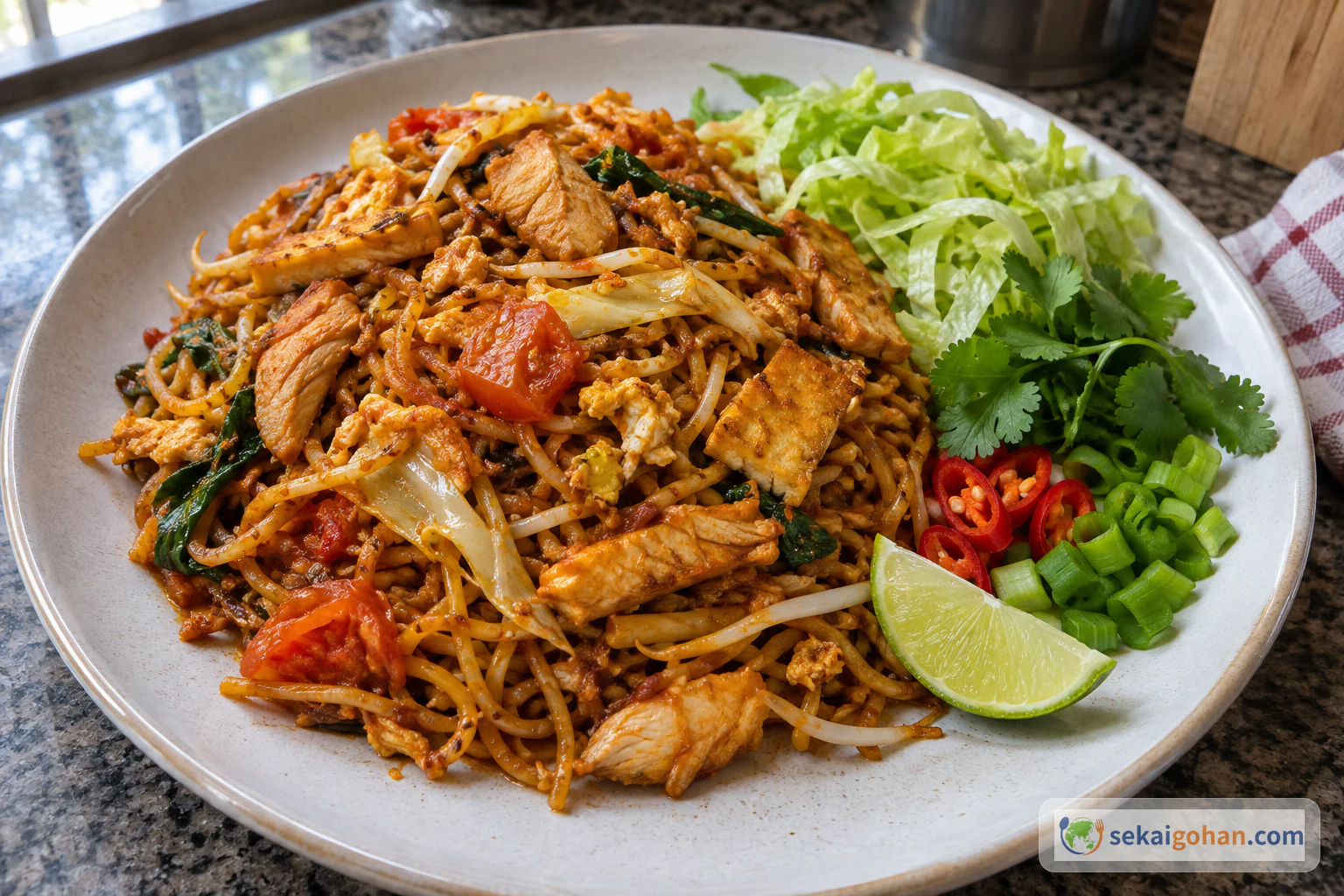
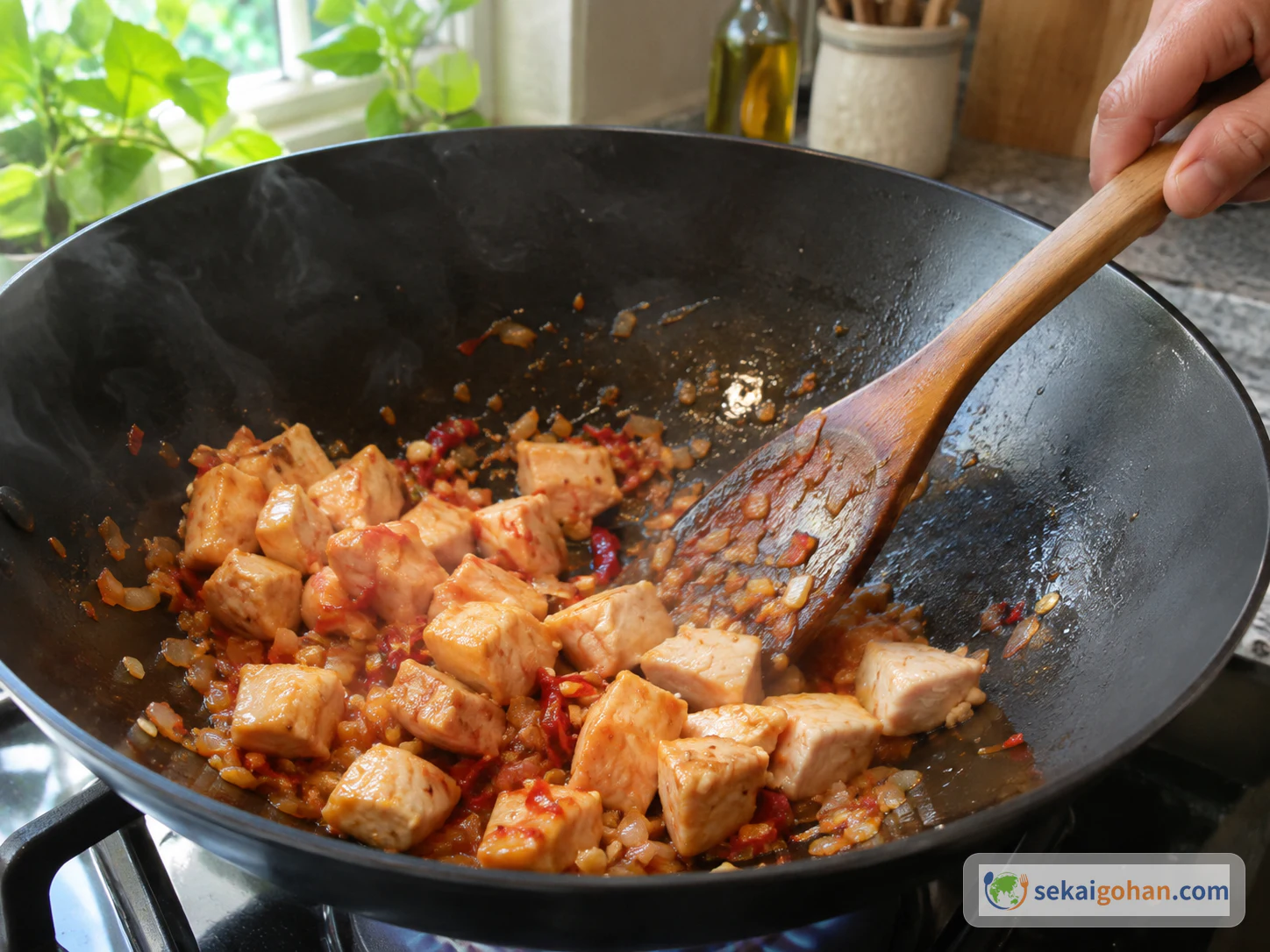
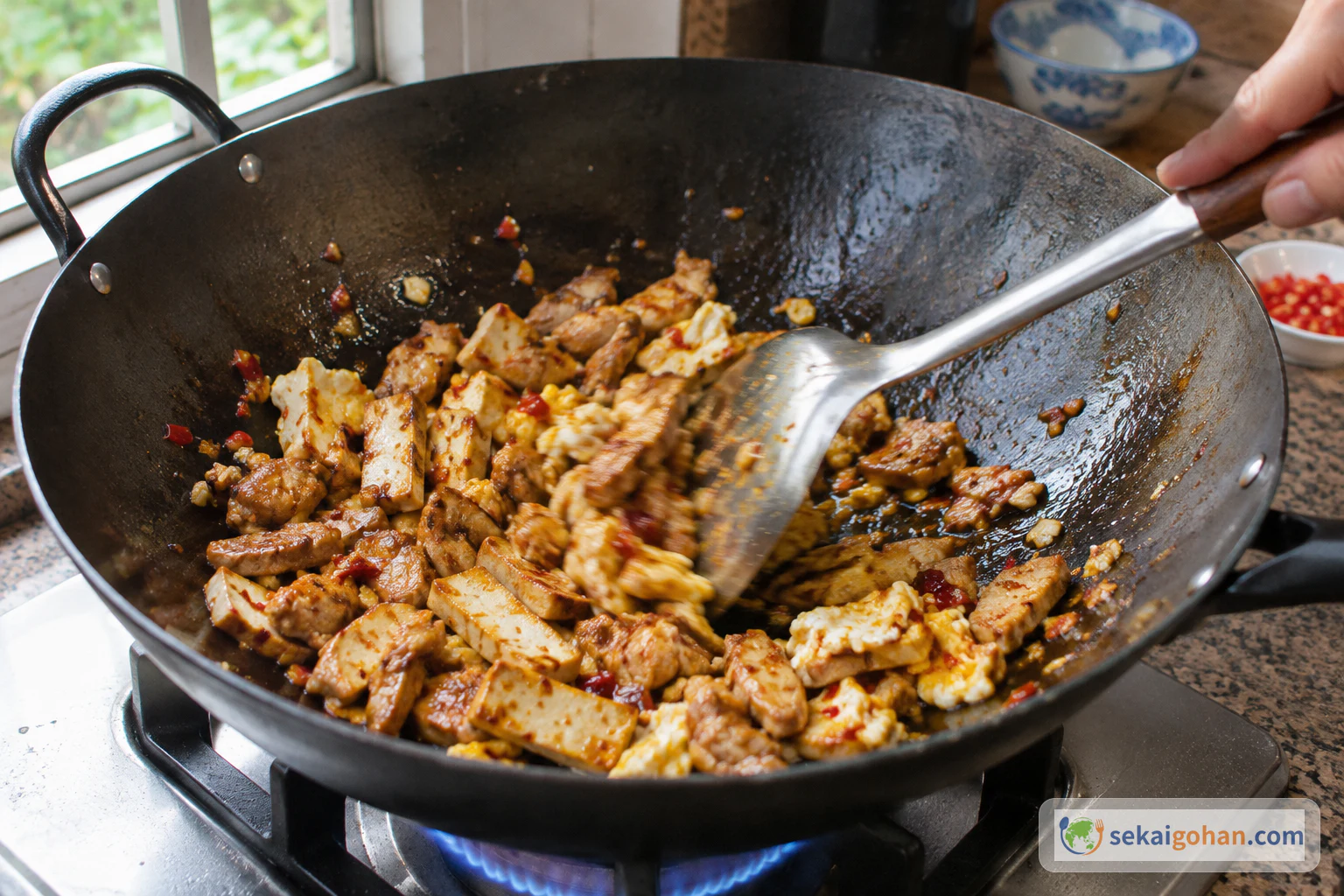
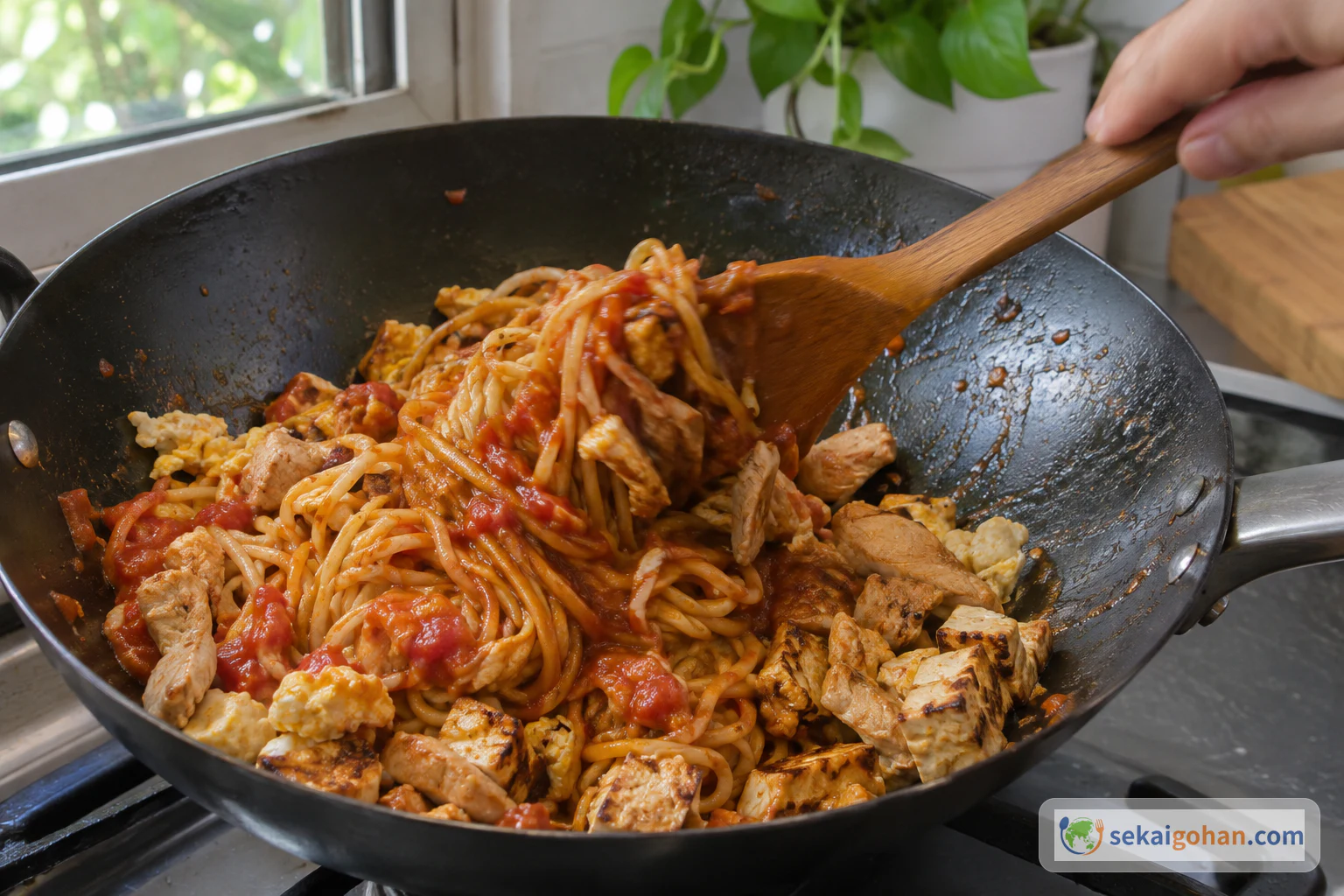
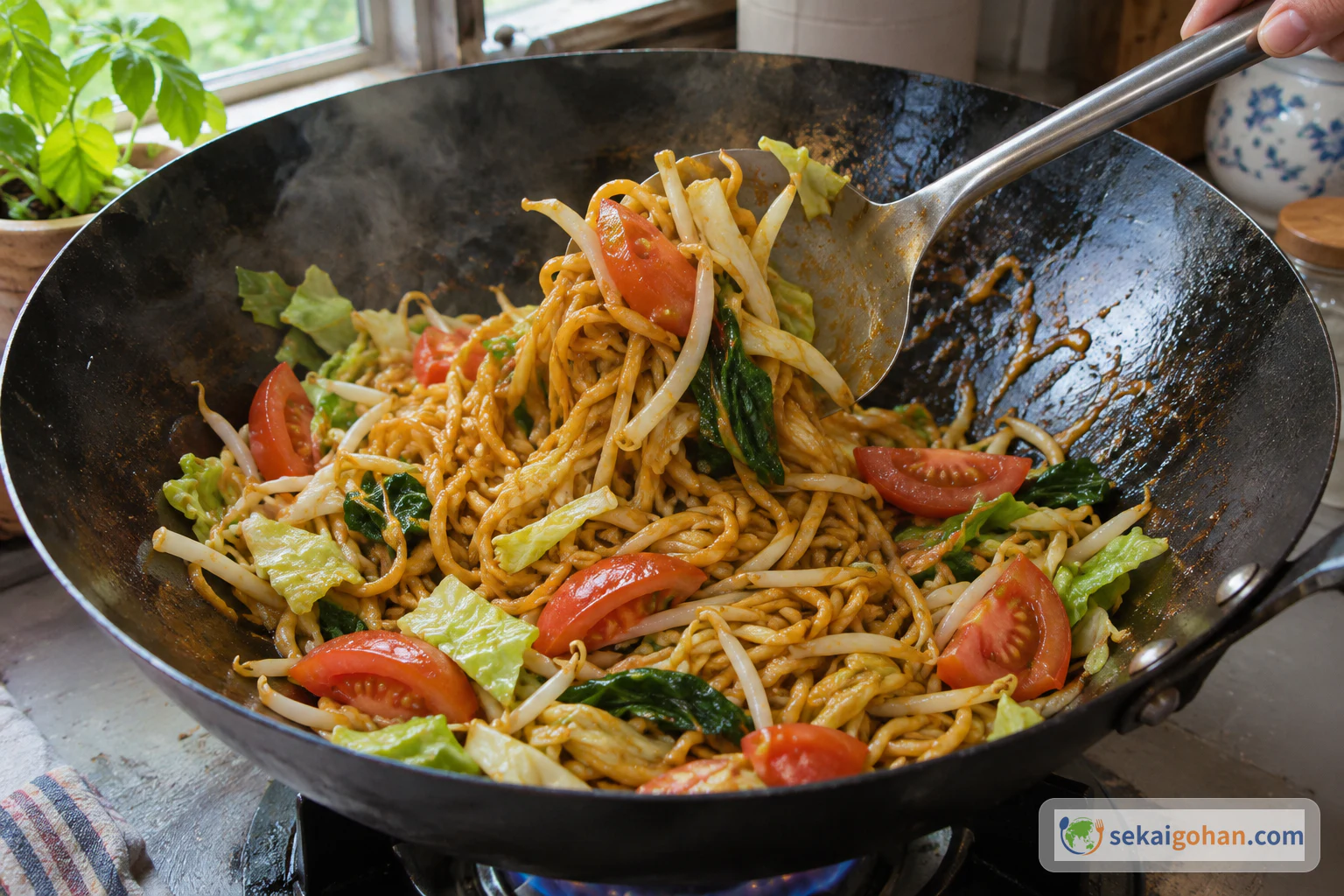
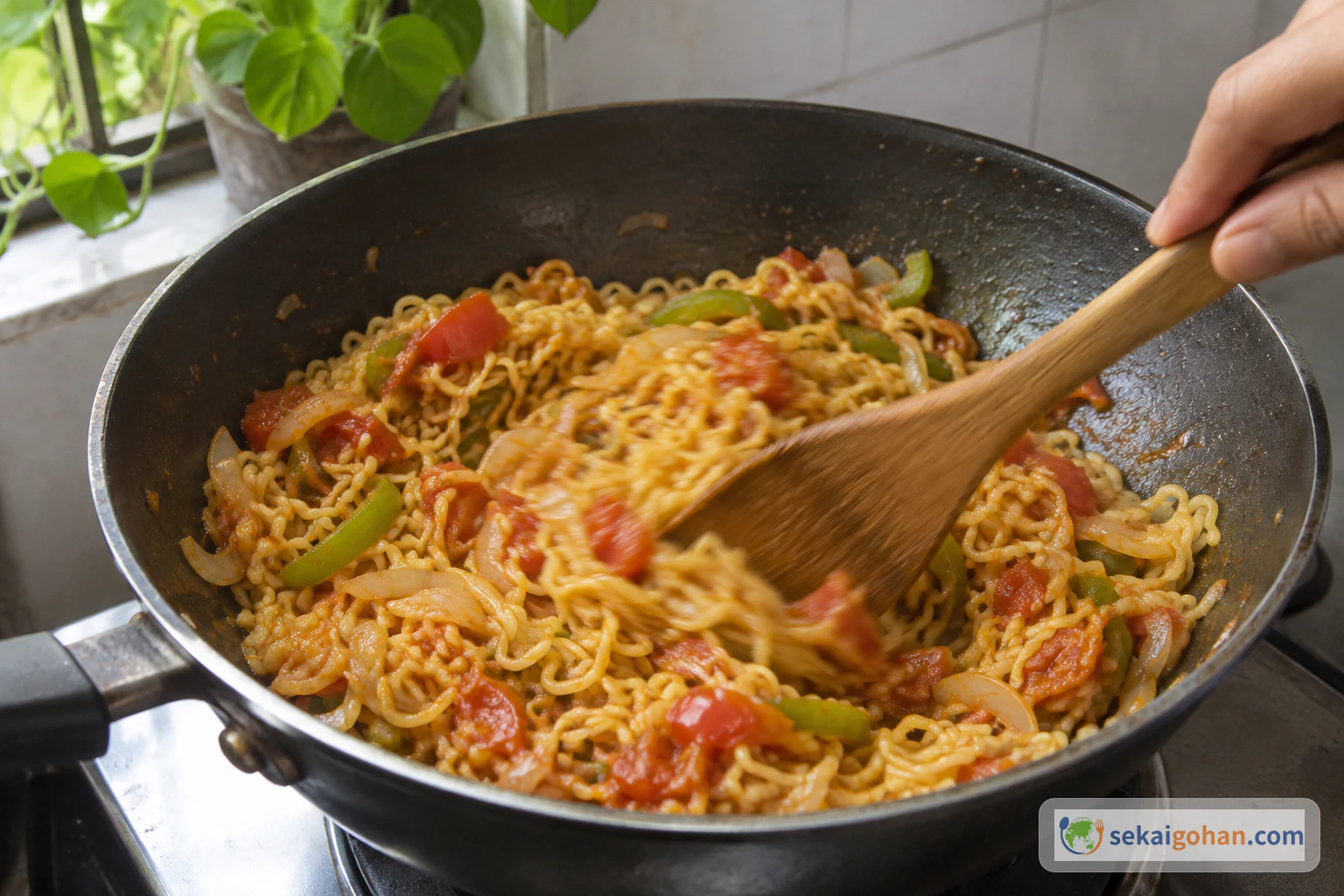
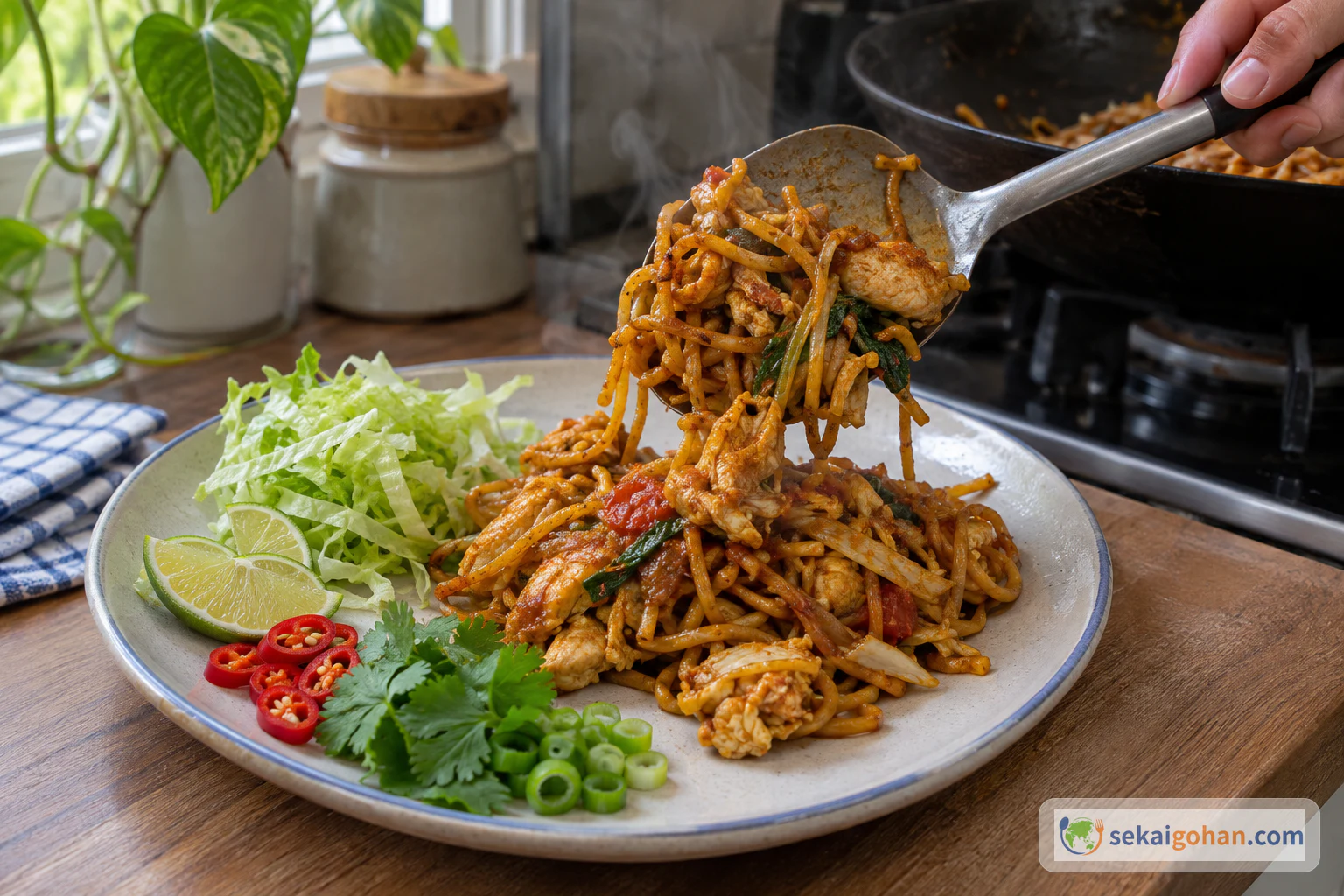
Chicken cooked all the way through, egg fully set, and yellow noodles coated in a light tomato–soy–chilli seasoning, with the greens, sprouts and tomato tossed in at the end.
A Penang heritage education resource tells a story that is said to explain where Mamak-style mee goreng began: local Indian Muslim vendors at Weld Quay cooking fried noodles for harbour workers. It is presented there as a local account, not settled history, and it describes a plate of Chinese yellow noodles, tofu, bean sprouts, cooked squid, flour fritters, fried shallots, ketchup, spices and local lime.
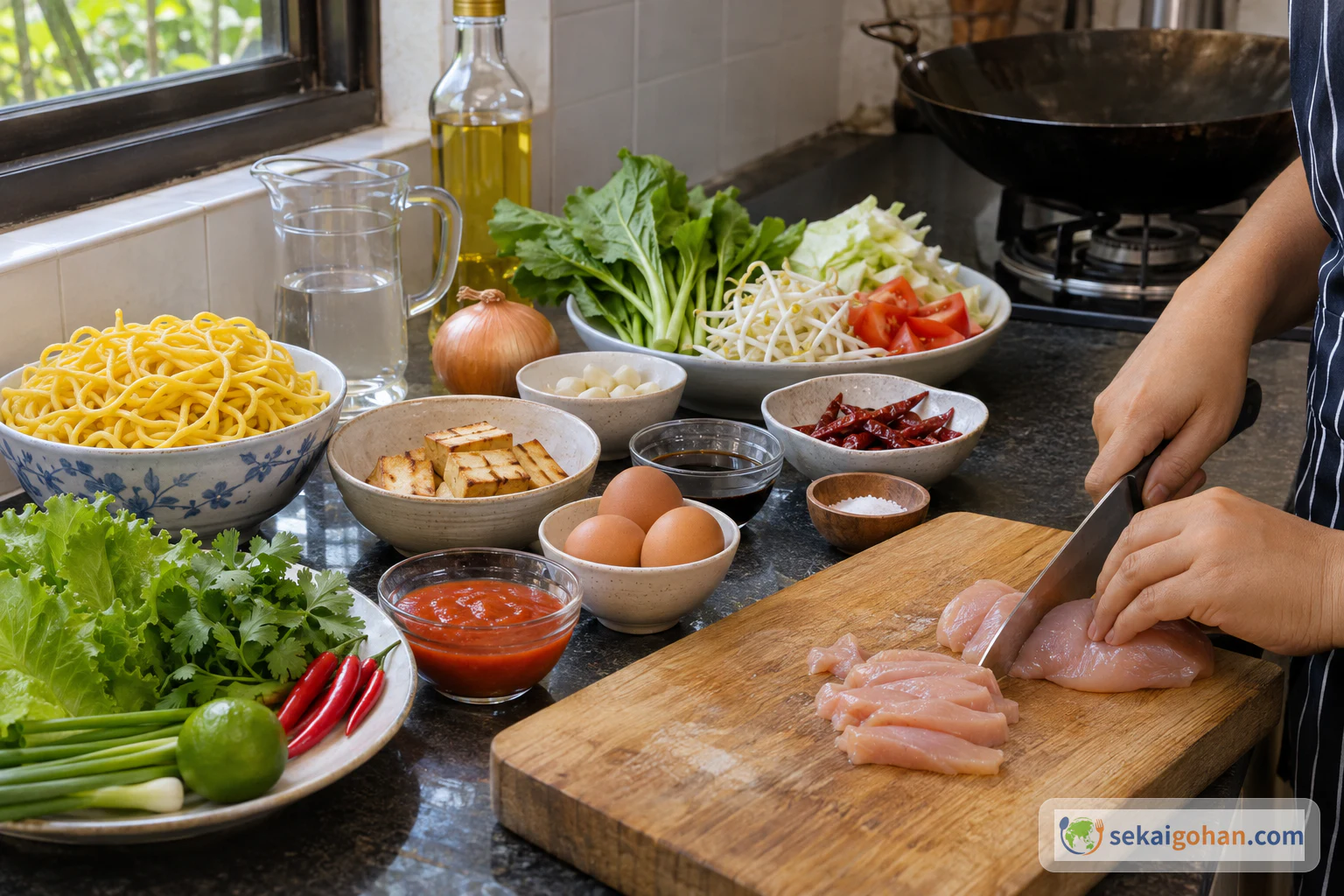
The version on this page is quieter and more specific. It follows a single published recipe, "Mamak-style Fried Noodle / Mee Goreng Mamak," from the second volume of Resipi Sihat, Pilihan Bijak, a 2002 recipe collection compiled by the Nutrition Society of Malaysia with the cooperation of the Ministry of Health Malaysia. It is a home-kitchen adaptation built on yellow noodles, chicken breast, grilled beancurd, egg, mustard greens, cabbage, bean sprouts and tomato, seasoned with a dried-chilli paste, soy sauce and tomato sauce. It is one version among many, not the single standard for every stall, and the "healthy" framing of the book's title is not a health claim for any individual.
This recipe has not been kitchen-tested by Sekai Gohan. The amounts and order below follow the published recipe, with the editorial choices explained in the next section.
About This Version: One Published Recipe and the Choices Made Here
Mee goreng is cooked very differently from one kitchen to the next, and the recipe pages consulted for this article make that obvious. A Penang-linked home recipe from Malaysian Chinese Kitchen makes a wetter version built on a pasembur-style sauce, with potato, firm tofu, squid fritters, squid, sweet soy, tomato ketchup, sprouts, lettuce and lime, and notes that vendors vary. Unilever Food Solutions Malaysia publishes a commercial kitchen formula with a separately prepared sauce and a mix of noodles, seafood, fishcake, tofu, potato, tomato and vegetables. The Meatmen, a Singapore recipe site, shows a red, sweet-savoury profile with prawns, sambal, ketchup, light and dark soy, egg and chye sim. None of those ingredients or sauces are mixed into this recipe; they are separate versions worth knowing about, not fixes for this one. For more dishes from the same country, see the Malaysia page.
Several points in the published recipe need a clear reading before you cook:
- The tomatoes. The ingredient list places 350 g of tomatoes under the garnishes, but the method, in both the Malay and English text, adds them with the vegetables near the end. The two parts of the recipe disagree. This article follows the method: all 350 g go into the wok with the cabbage, greens and sprouts, and no extra tomato is served on the side.
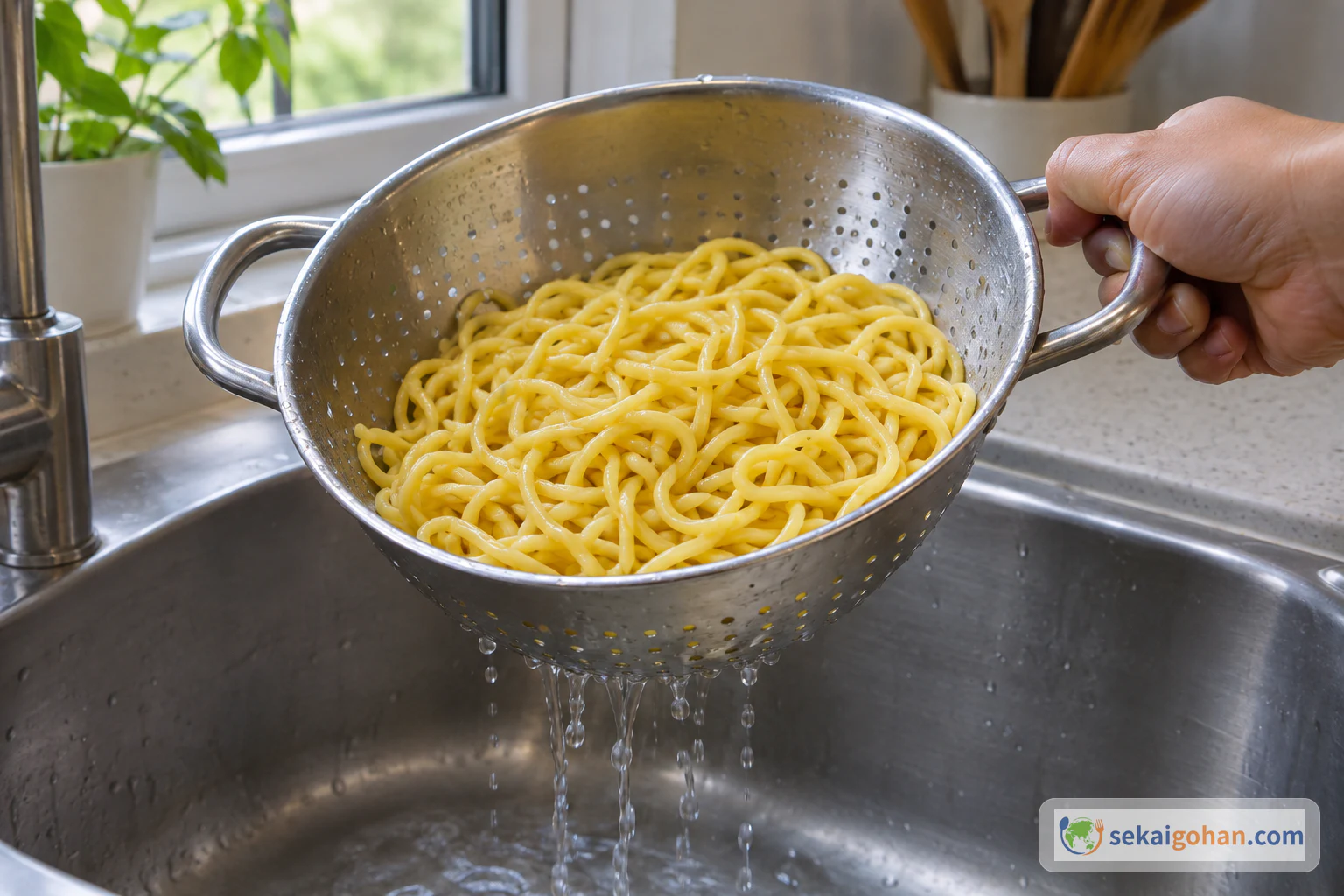
- The noodles. The recipe says to wash and drain 500 g of yellow noodles, but does not say whether they are raw or already cooked. This article chooses already-cooked yellow wheat noodles that are ready to stir-fry. That is an editorial product choice, not something the recipe states. The recipe gives no conversion to dried or instant noodles, and none is offered here.
- Weights versus spoons. The recipe prints gram weights with spoon measures in brackets, and for the oil (20 g, printed as 1 tbsp) and soy sauce (30 g, printed as 3 tbsp) those two don't match. This article uses the gram weights and the egg count as the working amounts and does not create new spoon conversions.
- Generic sauces. The recipe names soy sauce (kicap) and tomato sauce (sos tomato) without a style or brand. They are kept generic here.
The recipe states that it serves 5 and lists a serving weight of 250 g and nutrition figures. Those are the book's own printed values; they have not been measured for this article, and no nutrition values are given here.
Ingredients: Yellow Noodles, Chicken, Grilled Tofu and Vegetables
Choosing Noodles, Tofu, Greens and Sauces
Noodles. Look for yellow wheat noodles sold already cooked and ready to stir-fry. Read the pack: if it tells you to boil, soak or otherwise prepare the noodles before stir-frying, they are not the ready-to-use kind, and you should follow those directions before step 2. Don't put uncooked fresh noodles straight into the wok for a short toss. Dried and instant noodles are not covered by this recipe.
Tofu. Taukwa is a firm tofu. Use firm tofu that has been grilled or browned on the outside, then slice it thinly. Check the firmness and moisture of grilled tofu products before slicing.
Greens. Use mustard leaves (sawi hijau). Other leafy greens such as komatsuna can stand in, but the texture and bitterness will change.
Soy sauce and tomato sauce. Use an ordinary soy sauce; light, dark and sweet soy sauces each taste different, so the result shifts with what you use. Products sold as "tomato sauce" range from sweet, ketchup-like bottled sauces to unsweetened cooking sauces. Check the label and expect the sweetness and saltiness of the noodles to follow your choice.
Allergens. Noodles, tofu, soy sauce, tomato sauce and eggs can contain or be made with wheat, egg and soy. Check every product label for allergens and shared-facility statements.
Equipment
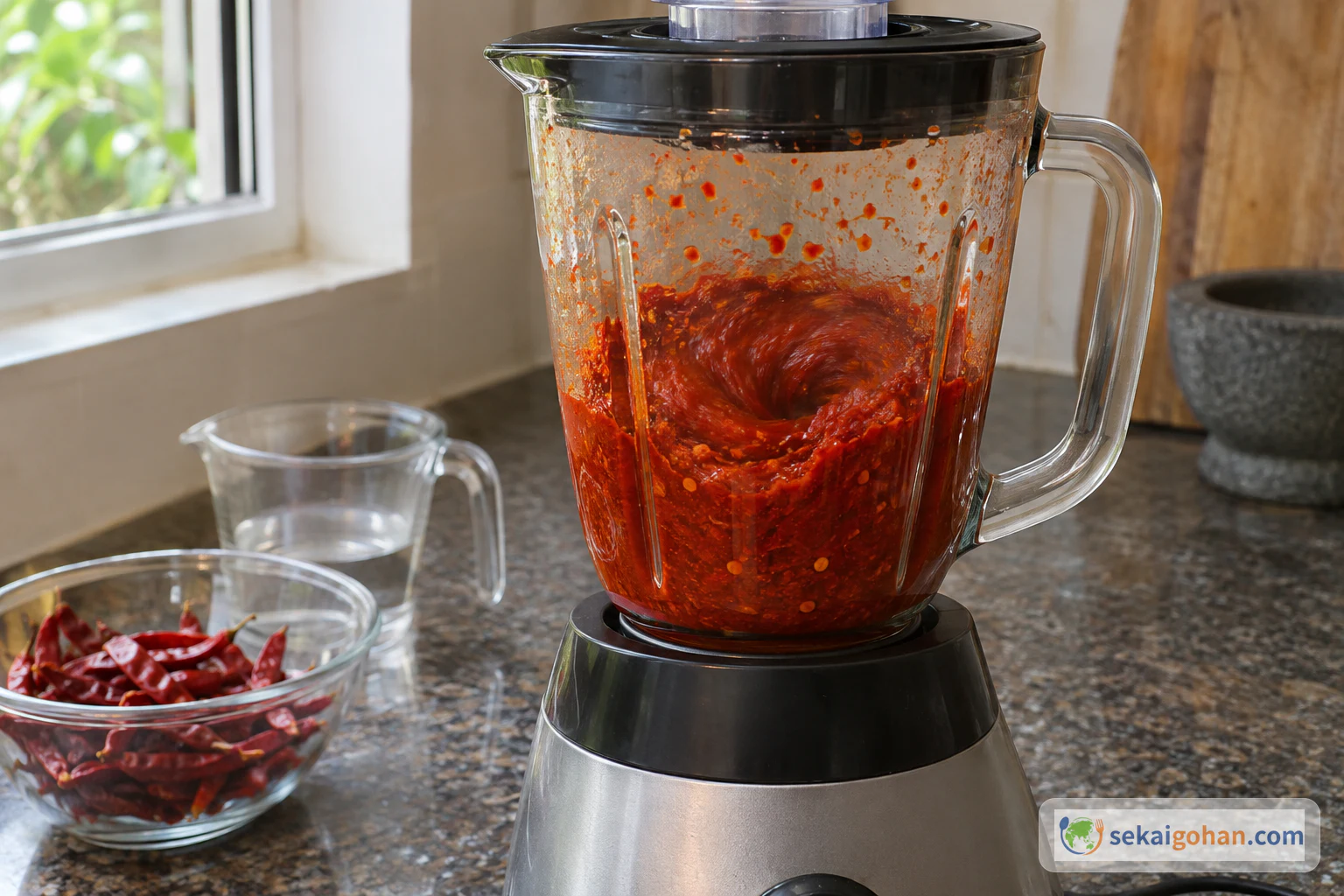
- Blender, for the chilli paste
- Colander
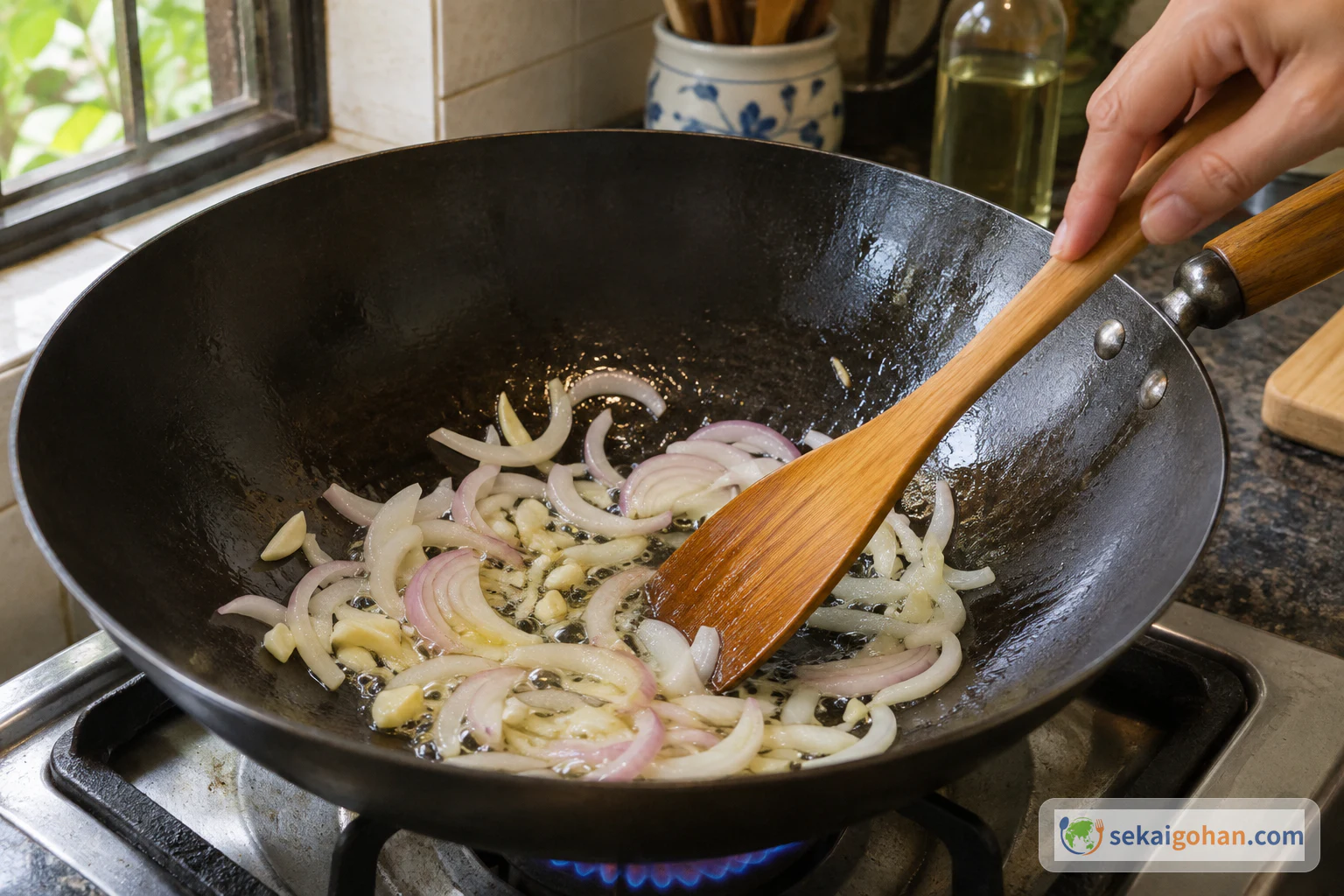
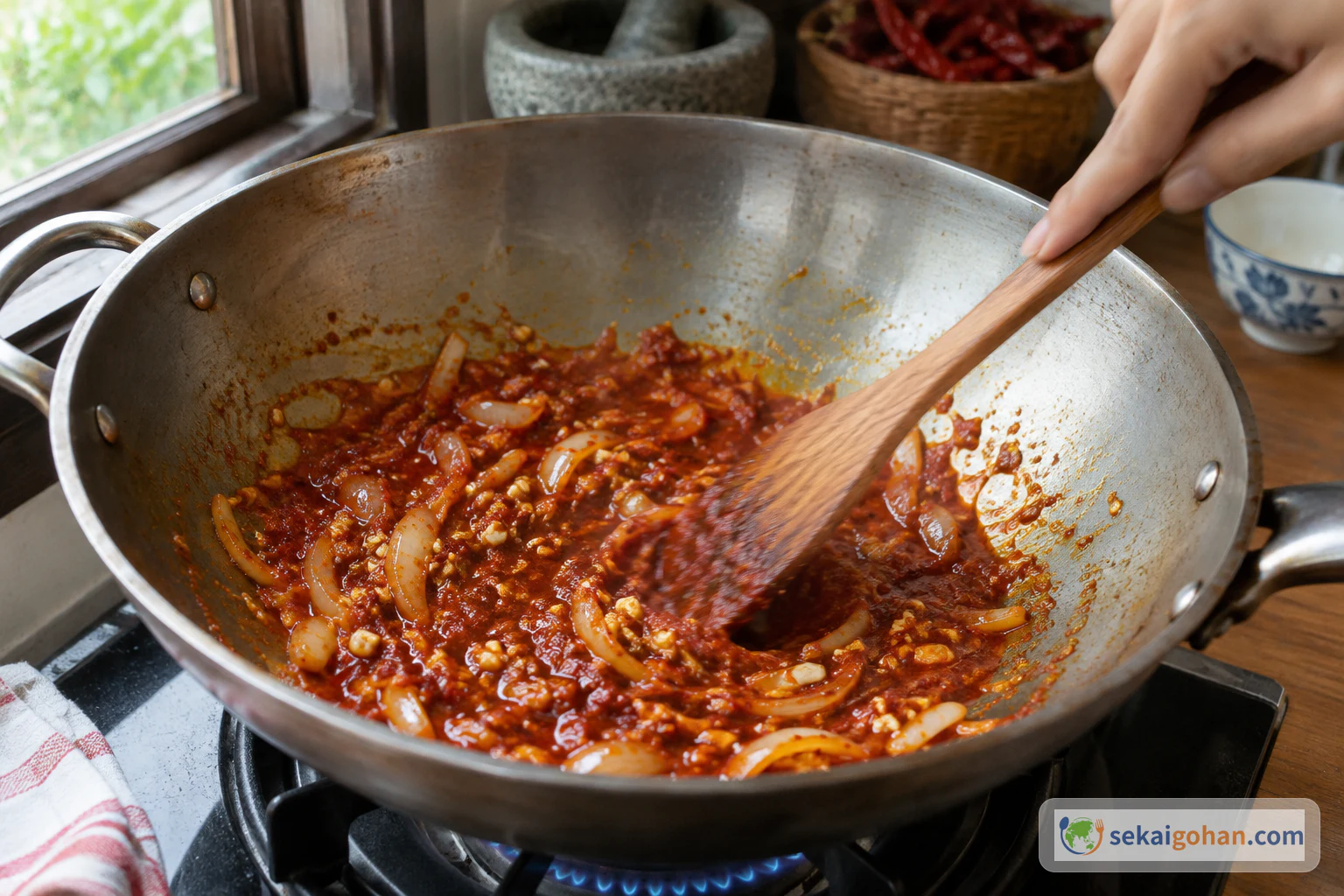
- Wok or wide frying pan
- Food thermometer
- Separate cutting board, knife and utensils for raw chicken
Cook the chicken until a food thermometer reads 165°F (74°C) in the thickest piece; color alone does not tell you it is safe. Cook the eggs until fully set. Keep raw chicken away from the lime, chilli, coriander, spring onion and lettuce served alongside, using separate boards and utensils, and wash your hands and any tools after handling raw chicken or eggs. Don't taste the mixture while the chicken or egg is still raw.
Troubleshooting: Fixing Problems in the Wok
| Problem | Likely cause | What to do |
|---|---|---|
| The chicken hasn't reached 165°F (74°C) | The chicken needs further cooking | Keep cooking and stirring before adding the tofu and eggs, and check again with the thermometer |
| The noodles stay hard or stiff | The noodles were not the ready-to-stir-fry kind | Check the pack; next time, prepare them as the pack directs before washing and draining |
| The egg is still runny | Moved on to the noodles too soon | Keep stirring until the egg is fully set before adding the sauces |
| The noodles taste too salty or too sweet | Soy sauce and tomato sauce products differ widely | Taste before adding all the salt in step 9; next time compare labels when you shop |
| Too spicy | The chilli level is too high for your taste | Next time use fewer chillies (see Variations) |
Variations
- Milder chilli. Using fewer dried chillies lowers the heat. This changes the recipe; don't replace the chillies with salt or a different chilli sauce.
- Other greens. Leafy greens other than mustard leaves can stand in, with a different texture and bitterness.
- Other styles of mee goreng. Versions with squid, prawns, fishcake, potato, flour fritters, sweet soy or a separate cooked sauce are different recipes. If you want to try them, follow those recipes on their own rather than adding their ingredients to this one. Indonesian mie goreng is a separate dish again.
Leftovers
Refrigerate leftovers within 2 hours of cooking, or within 1 hour if the room is above 90°F (32°C). Cool them in shallow containers and keep your refrigerator at or below 40°F (4°C). No storage period is given for this dish.
Frequently Asked Questions
Why does the tomato go into the wok instead of on the side?
In the published recipe, the ingredient list puts the 350 g of tomatoes under the garnishes, but the method in both Malay and English adds them with the vegetables. This article follows the method and adds all of the tomatoes in step 8, with no separate tomato on the plate, so the same tomatoes are not counted twice.
Can I use raw fresh noodles?
The published recipe only says to wash and drain the yellow noodles, without saying whether they are raw or cooked. This article chooses ready-to-stir-fry cooked noodles. If yours need cooking first, prepare them as the pack directs before step 2; don't add uncooked noodles straight to the wok for a short toss.
How many people does this serve?
The published recipe says it serves 5 and lists 250 g per serving. Those figures come from the book and have not been measured for this article, so your yield may differ.
Where does the 165°F (74°C) chicken temperature come from?
It comes from the U.S. government's FoodSafety.gov chart of safe minimum internal temperatures for poultry, not from the Malaysian recipe, which says only to stir until the chicken is cooked. The advice on separate utensils, washing up after raw chicken and eggs, and refrigerating leftovers comes from FoodSafety.gov's food safety guidance.
Why use grams instead of the spoon measures?
The recipe prints both, and for the oil and soy sauce the spoon measures don't match the weights. The gram weights are used here as the working amounts.
Should I add prawns, squid or sweet soy sauce?
Not to this recipe. Those ingredients belong to other published versions of mee goreng; this version is kept to the ingredients listed above.
Sources
- Nutrition Society of Malaysia, with the cooperation of the Ministry of Health Malaysia, Resipi Sihat, Pilihan Bijak, Volume 2 (2002), "Mee Goreng Mamak / Mamak-style Fried Noodle." The recipe this article follows: ingredients, amounts, method order, stated servings and serving weight. https://nutriweb.org.my/cms/picture/upload/file/ResipiSihatVol2a.pdf
- Malaysian Chinese Kitchen (recipe credited to Linda Ooi), "Mee Goreng Mamak." A Penang-linked home version with a pasembur-style sauce, used here for comparison only. https://www.malaysianchinesekitchen.com/mee-goreng-mamak/
- Unilever (Malaysia) Holdings Sdn Bhd, Unilever Food Solutions, "Mee Goreng Mamak — Recipe." A commercial kitchen formula showing how widely Mamak-style mee goreng varies, used here for comparison only. https://www.unileverfoodsolutions.com.my/en/recipe/mee-goreng-mamak-R0082121.html
- Arts-ED, "Resource Kit: George Town Heritage Walking Trail — Unique Indian Foods in Penang" (2010). Description of Penang's Mamak-style mee goreng and the attributed Weld Quay origin story. https://myartseducationarchive.com/wp-content/uploads/2019/12/Resource-Kit_George-Town-Heritage-Walking-Trail-1.pdf
- The Meatmen, "Mee Goreng." A Singapore-leaning version, used here for comparison only. https://themeatmen.sg/recipes/mee-goreng/
- FoodSafety.gov, "Cook to a Safe Minimum Internal Temperature." Poultry should reach 165°F (74°C), measured with a food thermometer. https://www.foodsafety.gov/food-safety-charts/safe-minimum-internal-temperatures
- FoodSafety.gov, "4 Steps to Food Safety." Separate utensils for raw poultry and ready-to-eat produce, washing after handling raw poultry or eggs, and refrigerating leftovers promptly in shallow containers. https://www.foodsafety.gov/keep-food-safe/4-steps-to-food-safety