
The aroma announces a Kuching morning
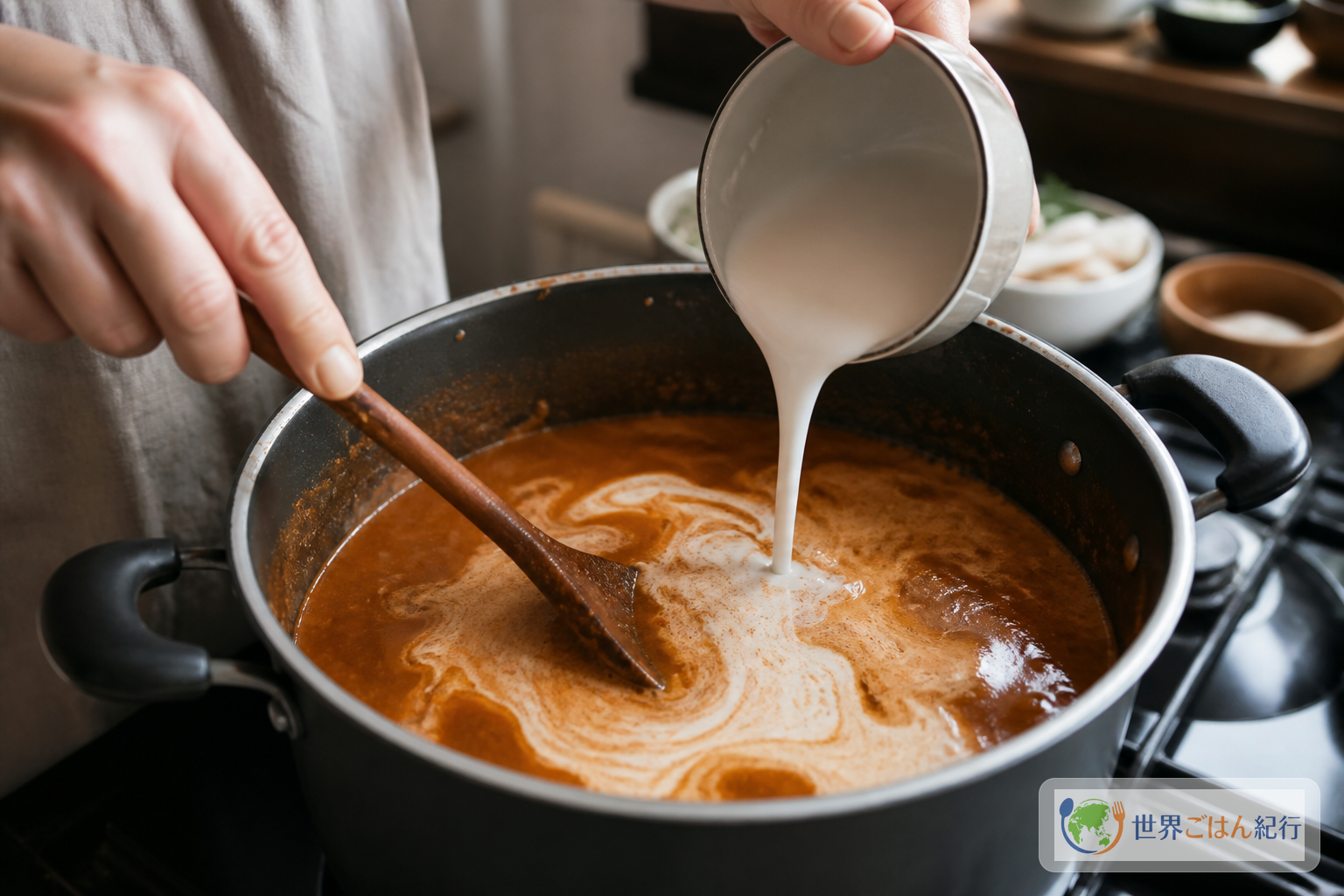
In the pot, a spice paste coated in red oil bubbles and hisses.
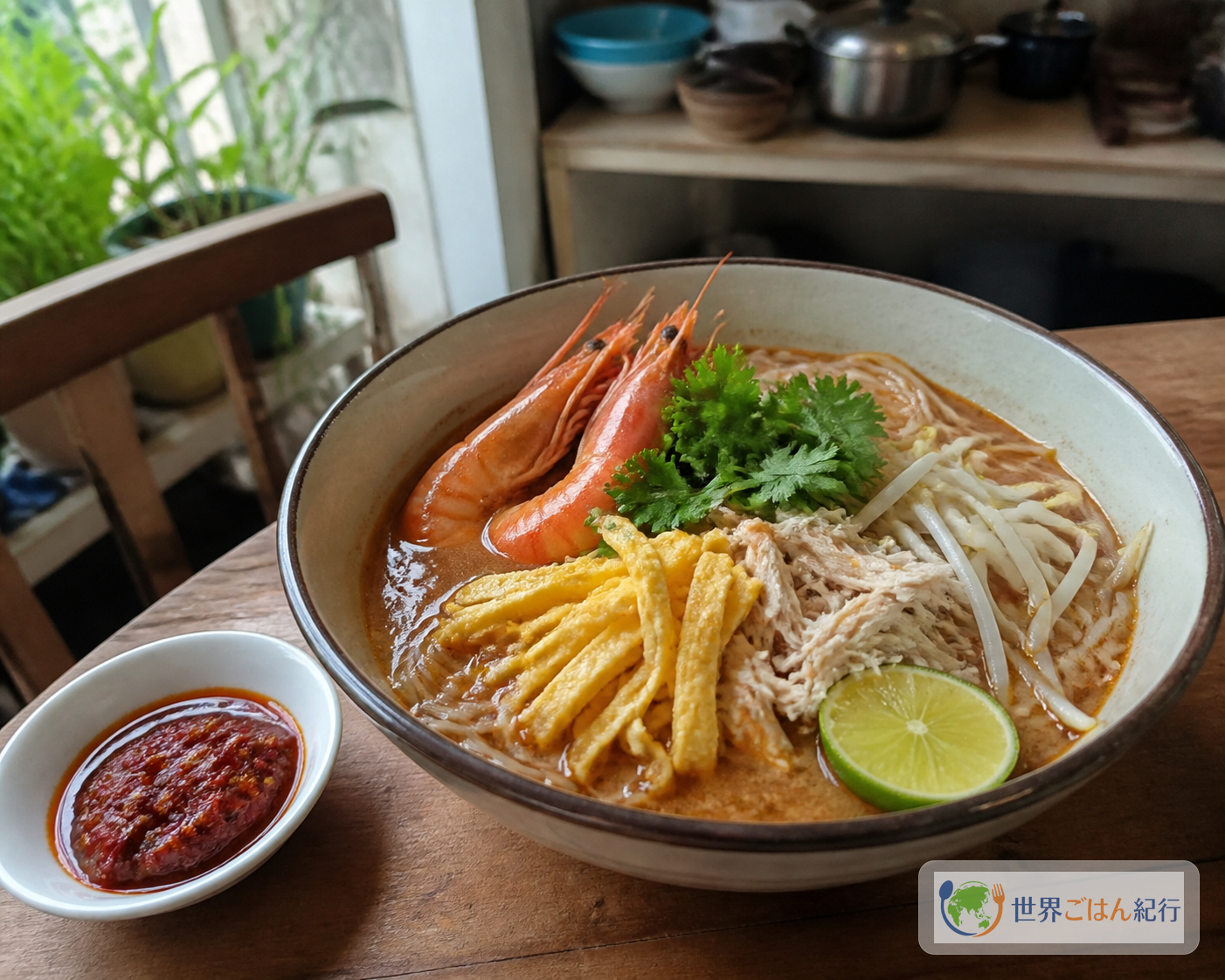
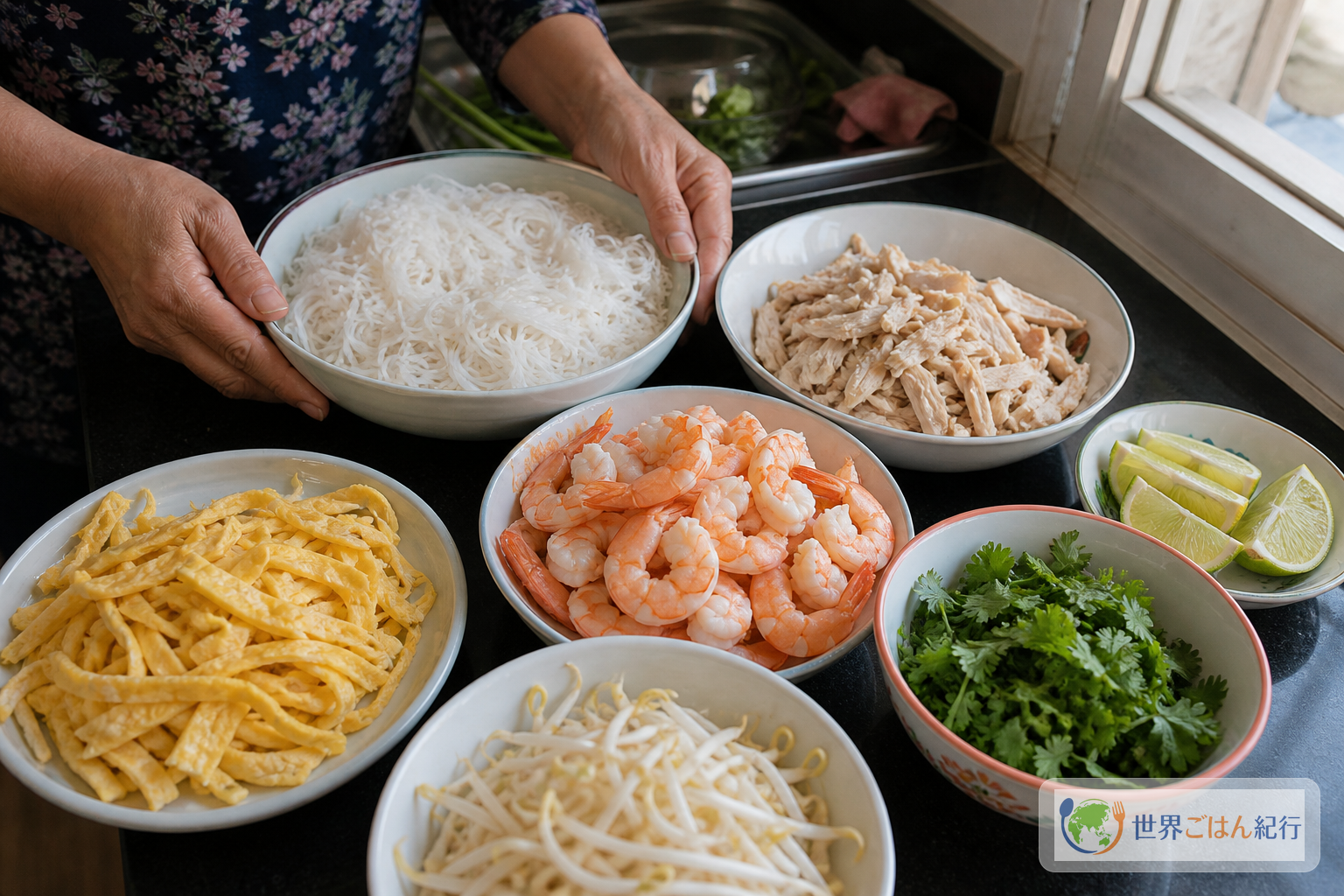
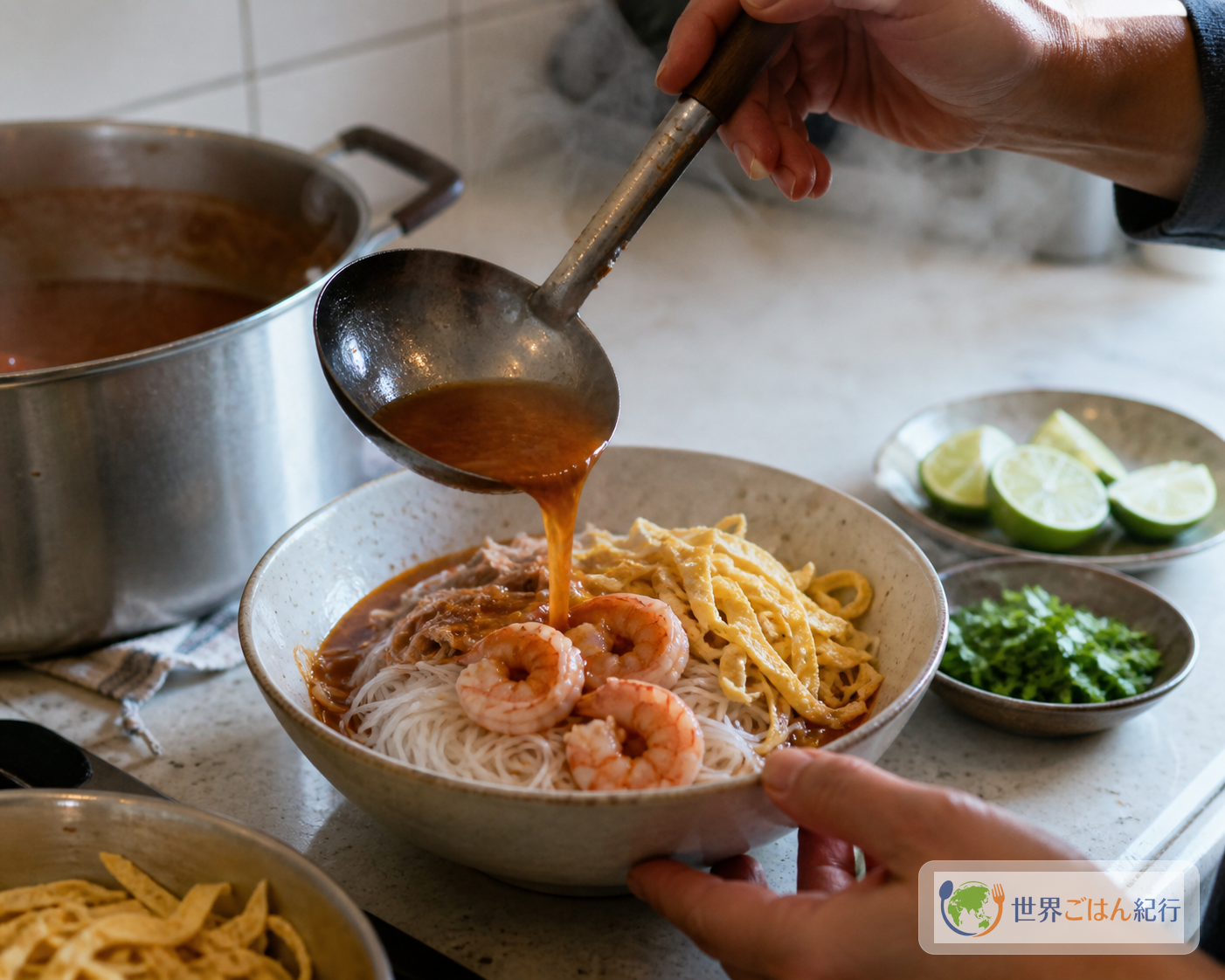
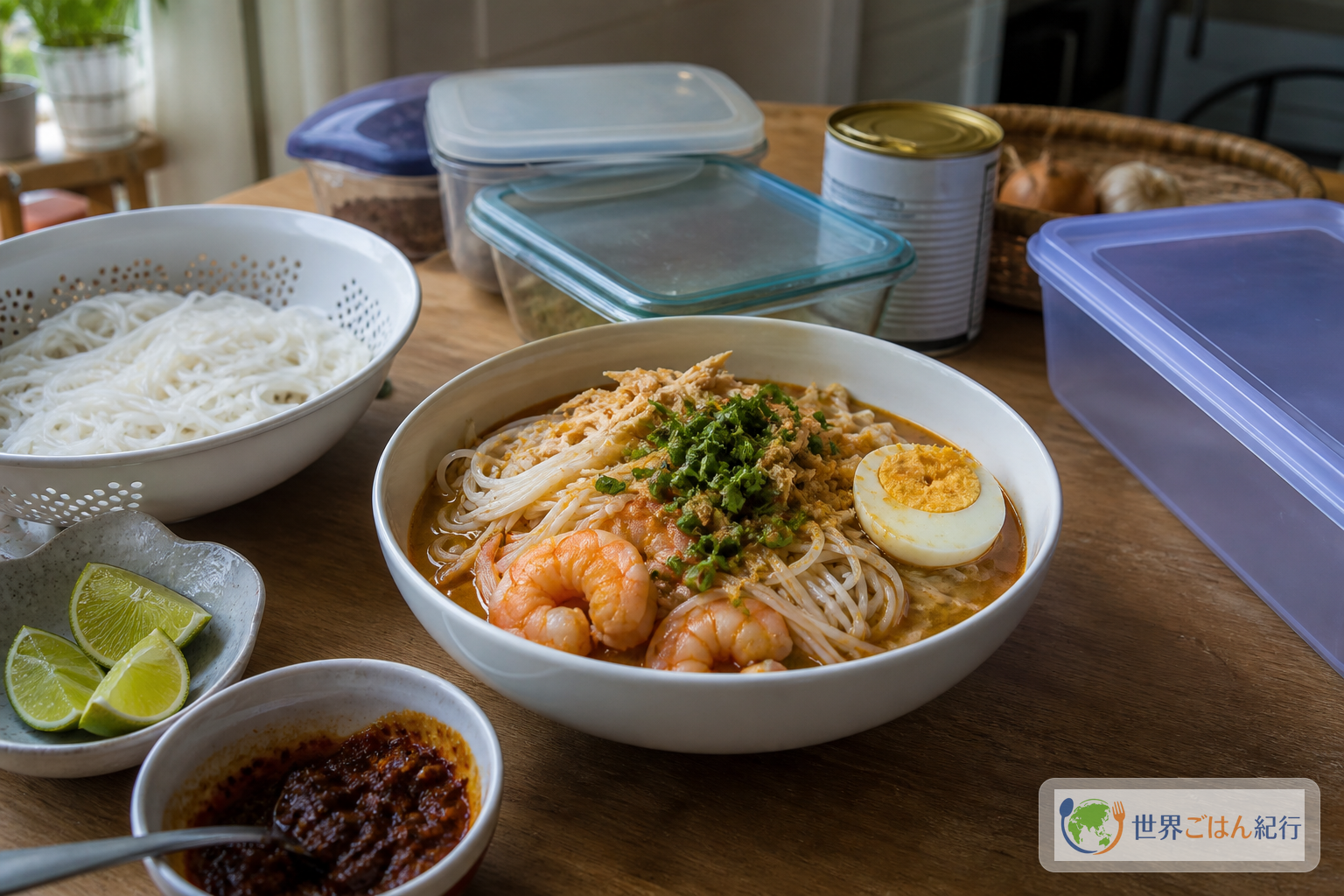
The green scent of garlic and lemongrass meets the sweet smell of simmered shrimp shells, and finally the roundness of coconut milk comes in. Pile rice noodles into a bowl, top them with chicken, shrimp, thin strips of omelet and bean sprouts, then pour over the hot soup, and the reddish-brown broth slowly sinks between the toppings.
This is Sarawak laksa (Laksa Sarawak), eaten in the state of Sarawak in East Malaysia. The Sarawak Tourism Board presents it as one of Kuching's signature breakfasts: a shrimp-based soup with rice noodles, chicken, shrimp, egg, bean sprouts and cilantro.[1][2]
It shares the name "laksa," but its starting point is different from Penang's asam laksa, where fish and the sourness of tamarind lead. The Sarawak version layers the savoriness of shrimp and chicken, a spice paste and a small amount of coconut milk in a single pot.[1][3]
The question at home is whether to use a ready-made paste from Sarawak or to gather the ingredients one by one and make your own rempah (spice paste). A commercial paste is the shortcut if you want the taste you'd find in Kuching, but at home it's worth making it from scratch at least once to learn the order in which the aromas develop.
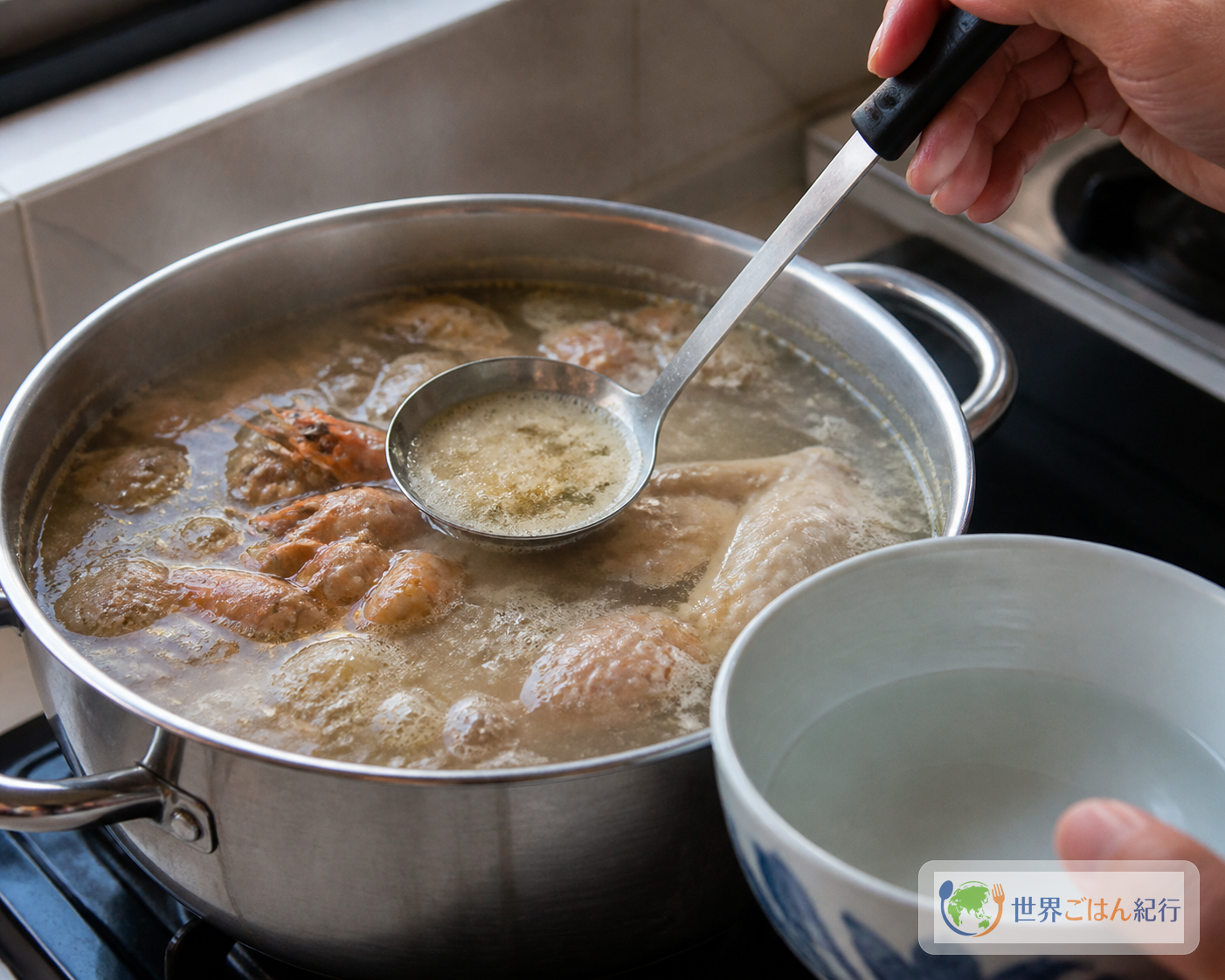
Turn the shrimp shells into stock, don't scorch the paste, and never let the coconut milk boil hard.
Keep to those three things and, even with easier-to-find substitutes, you'll taste sour, hot, savory, sweet and salty as distinct notes in one bowl.
Kuching's breakfast and food culture: what to take home from the table
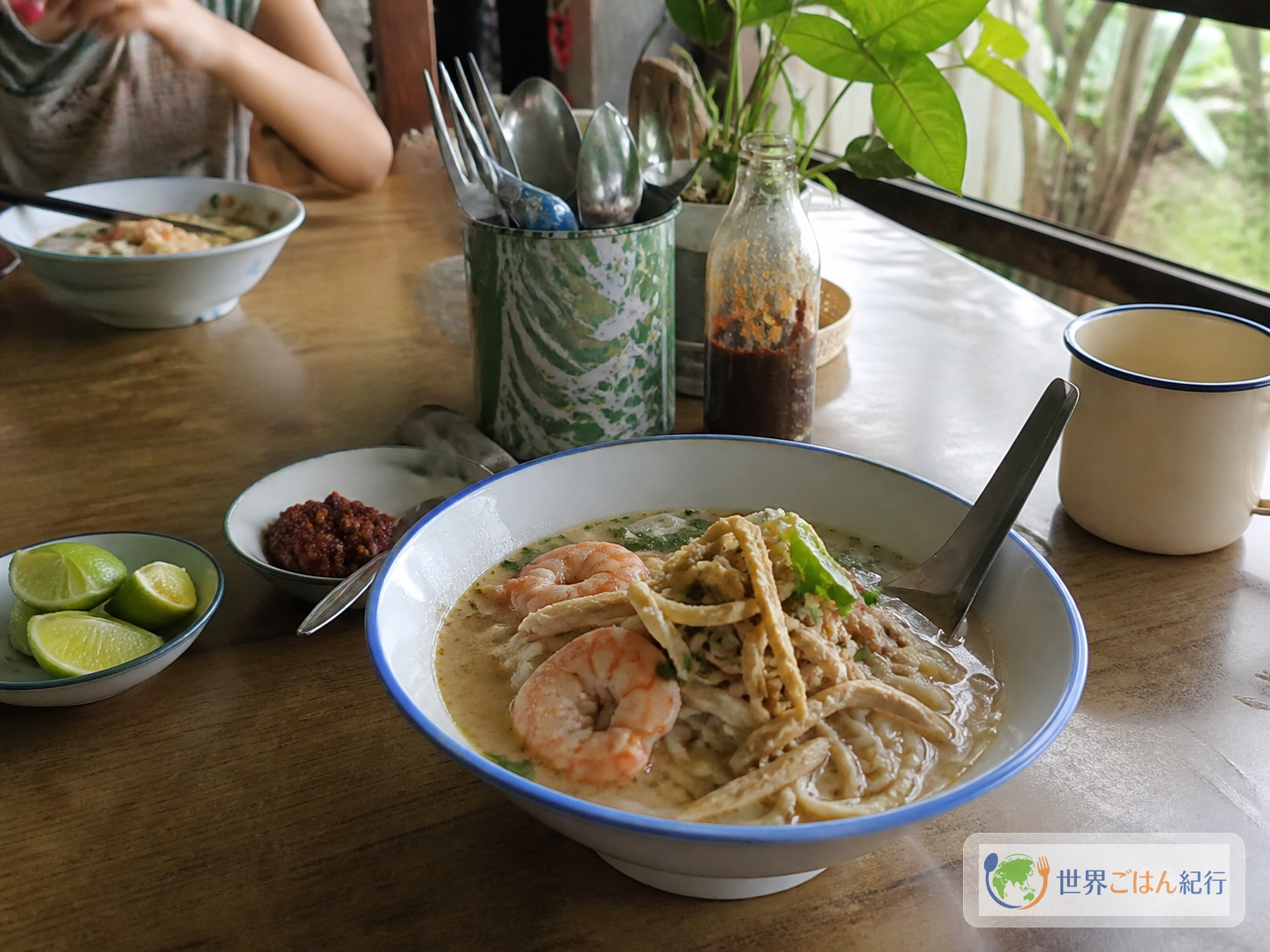
What makes Sarawak laksa interesting is that its name isn't tied to a single community or a single seasoning. The Sarawak Tourism Board explains that the flavor of the Sarawak version doesn't represent only Chinese, Malay or Peranakan cooking, but is an overlap of Borneo's many food cultures.[1]
It's hard to trace the dish back to a single inventor; it is described instead as several of Borneo's food cultures coming together at Kuching's breakfast table. If you compare regional styles, the Sarawak version turns on shrimp stock and spice paste, the Penang version on fish and tamarind sourness.[1][7]
In Kuching, laksa isn't a special dish just for tourists. It's known as an everyday bowl at morning coffee shops and hawker stalls, with the noodles and toppings sunk into the soup. In the Sarawak Tourism Board's guide, too, Sarawak laksa and kolo mee stand side by side as Kuching's signature breakfasts.[2]
The fact that each topping stays distinct is also essential. The chicken is shredded after it has made the stock, the shrimp go in at the end so they don't overcook, and the egg is cooked into thin sheets and cut into fine strips. The crunch of the bean sprouts, the fresh green of the cilantro and the sourness of the lime are there to lighten a rich soup. They aren't garnish for looks.
The Sarawak Tourism Board presents Sarawak laksa and kolo mee as Kuching's signature breakfasts. Even under the same laksa name, the Penang version turns on fish and tamarind sourness, while the Sarawak version turns on shrimp stock and spice paste.
For people who move abroad, the paste can carry not only a flavor but a place. A study of the meals of female Malay students in the UK records a student from Sarawak who brought laksa paste from home and cooked it with rice noodles, shrimp, chicken, coconut milk, cilantro and bean sprouts.[4] What that study describes is not "managing to recreate the authentic taste," but building connections with people by sharing the taste of home in an unfamiliar kitchen.
How is it different from Penang asam laksa?
| Point of comparison | Sarawak laksa | Penang asam laksa |
|---|---|---|
| Base of the stock | Shrimp shells and shrimp, chicken stock | Fish stock |
| Sourness | Tamarind in the spice paste, lime on the side | Tamarind and fish broth come to the front |
| Noodles | Thin rice noodles, rice vermicelli | Often thicker, round rice noodles |
| Toppings | Chicken, shrimp, omelet strips, bean sprouts, cilantro | Fish, vegetables, herbs and so on |
| At the table | Add sambal and lime to taste | Enjoy the sour broth as it is |
Malaysia's National Department for Culture and Arts (Jabatan Kebudayaan dan Kesenian Negara) likewise describes Penang laksa as a fish and tamarind broth with rice noodles, lime, cucumber, pineapple, mint and more.[7] Since even the direction of the toppings differs, swapping the paste alone won't turn one into the other.
In the Penang version, fish and sourness are the stars. Use a commercial asam laksa paste for the Sarawak version and you get not a spicy coconut noodle soup but a different dish led by sour fish. It isn't about which one is correct; thinking of it as change the paste and you change the dish's region too makes shopping easier.
The SBS Food recipe author also explains that there is no single fixed recipe for Sarawak laksa and that many people make it with paste bought locally.[3] The homemade version here doesn't claim that any particular home or stall blend is the one right answer; it is built so you can follow the combination of shrimp stock, rempah, rice noodles and toppings in a home kitchen.
Ingredients (serves 4)
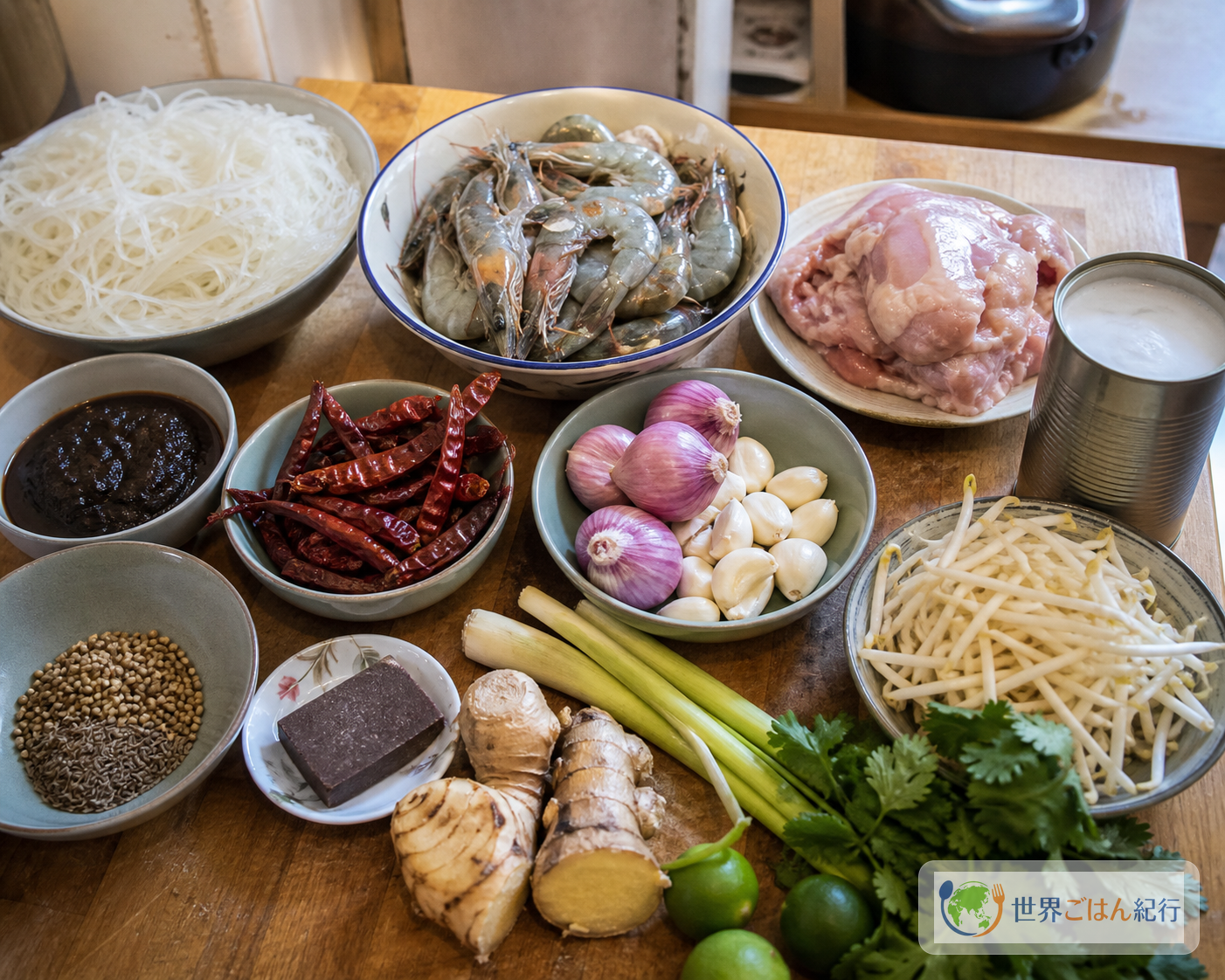
Dried rice noodles, bean sprouts and chicken are easy to find anywhere. The items worth seeking out are tamarind paste, whose sourness is hard to fake, unsweetened full-fat coconut milk, and galangal and belacan, which you'll find at Asian grocery stores or online.
You can substitute umeboshi (Japanese pickled plum) pulp for tamarind, but the plum's saltiness and fruity aroma come forward. If you're making it just once, it's fine to mix 15 g umeboshi pulp, 10 ml lime juice and 5 g dark brown sugar to approximate 30 g. If you cook Southeast Asian food regularly, a tamarind paste with a clearly labeled weight and ingredient list makes it easier to keep the sourness consistent from batch to batch.
If you open an unopened, in-date can of coconut milk and the white solids have separated, they'll come together when warmed gently in the pot. There's no need to melt them over a water bath. Look for "unsweetened" and "regular" (not "light") on the label; a can of about 400 ml (13.5 fl oz) is the usual size. If you already have a can that fits, there's no need to buy a new one.
Belacan is a fermented shrimp seasoning. Anyone who needs to avoid shellfish should check the product's ingredient label and not use it. Fish sauce can stand in for the saltiness, but the aroma of fermented shrimp won't come back, so treat the result not as a shellfish-free Sarawak laksa but as a different coconut noodle soup.
Without a food processor, pound the aromatics a little at a time in a stone mortar. Some fiber can remain, but hard rings of lemongrass are unpleasant in the mouth, so finely chop the white part before adding it. A knife can also do the job if you're making it only once.
Method
If you simmer the stock and the spice paste together in one pot from the start, the shrimp aroma turns muddy and the toasty notes from frying the paste fade. Use two pots: keep the stock at a gentle simmer, and develop the rempah slowly in oil.
Prep and stock (45 min)
Fry the rempah (30 min)
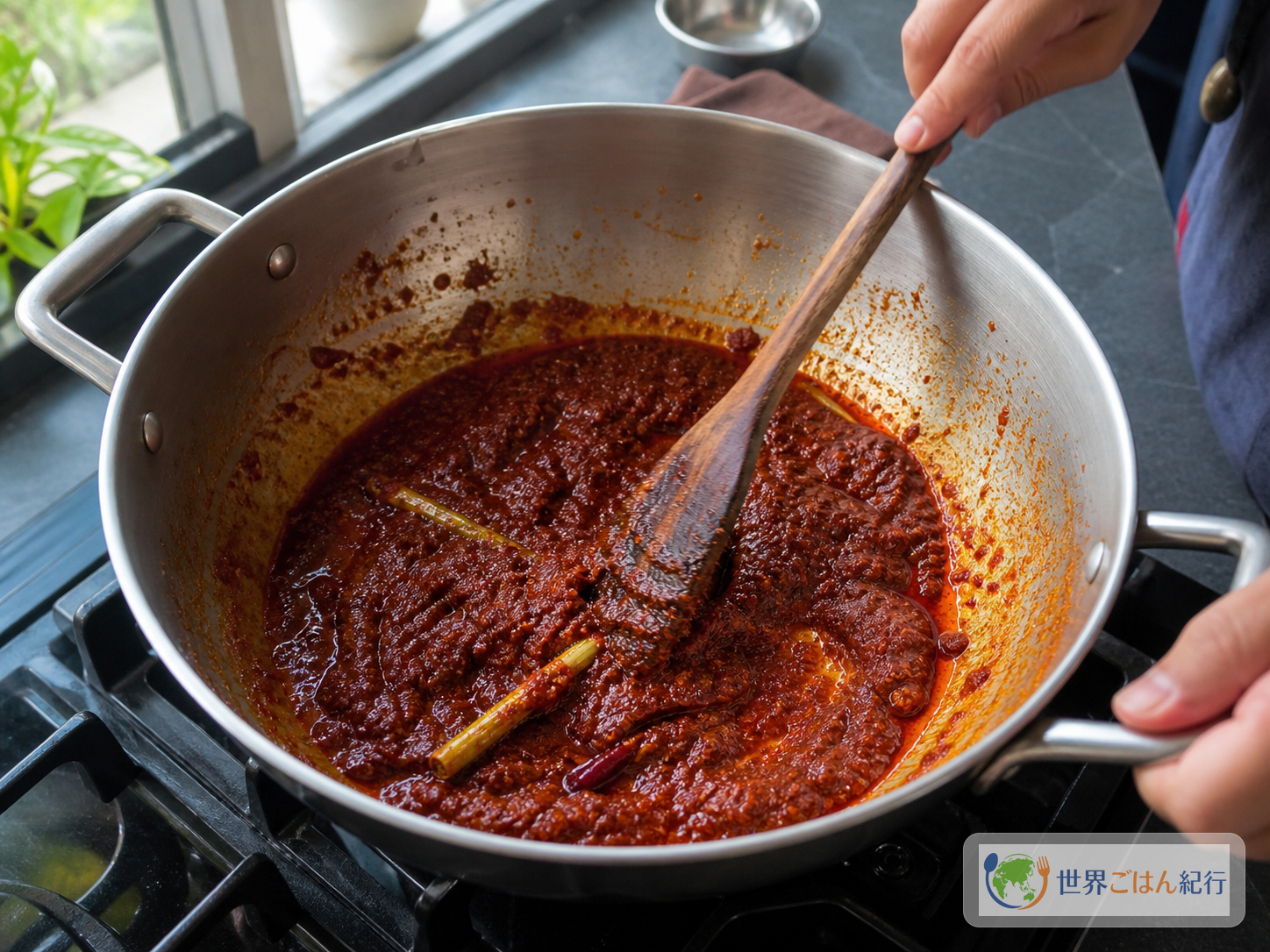
Put the drained soaked chiles, fresh chiles, red onion, garlic, ginger, galangal, lemongrass, tamarind, belacan, macadamia nuts and toasted spices in a food processor. Add just 2 to 3 tbsp water and blend into a coarse paste with no visible pieces. If it turns completely liquid it takes longer to fry, so stop when it falls slowly from a spoon.
Don't rush the rempah over high heat; fry it over medium-low heat for 15–20 minutes. When red oil seeps out at the edges of the pot and the raw smell of the onion and lemongrass is gone, it's done. If it burns, the whole soup turns bitter.
Turn it into soup and layer the flavors (20 min)
Finish in the bowl (5 min)
In a home kitchen: how far to substitute while keeping the flavor's backbone
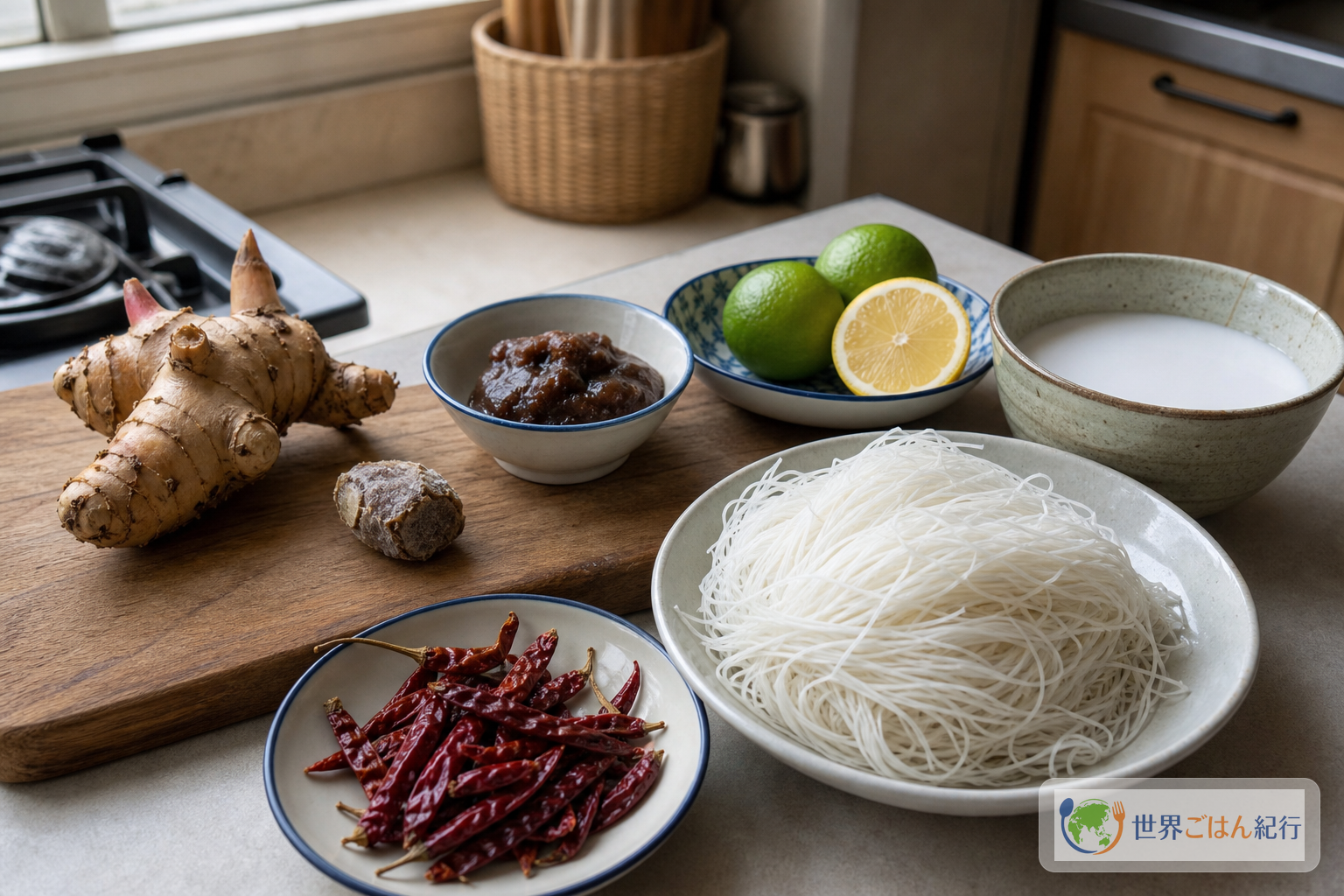
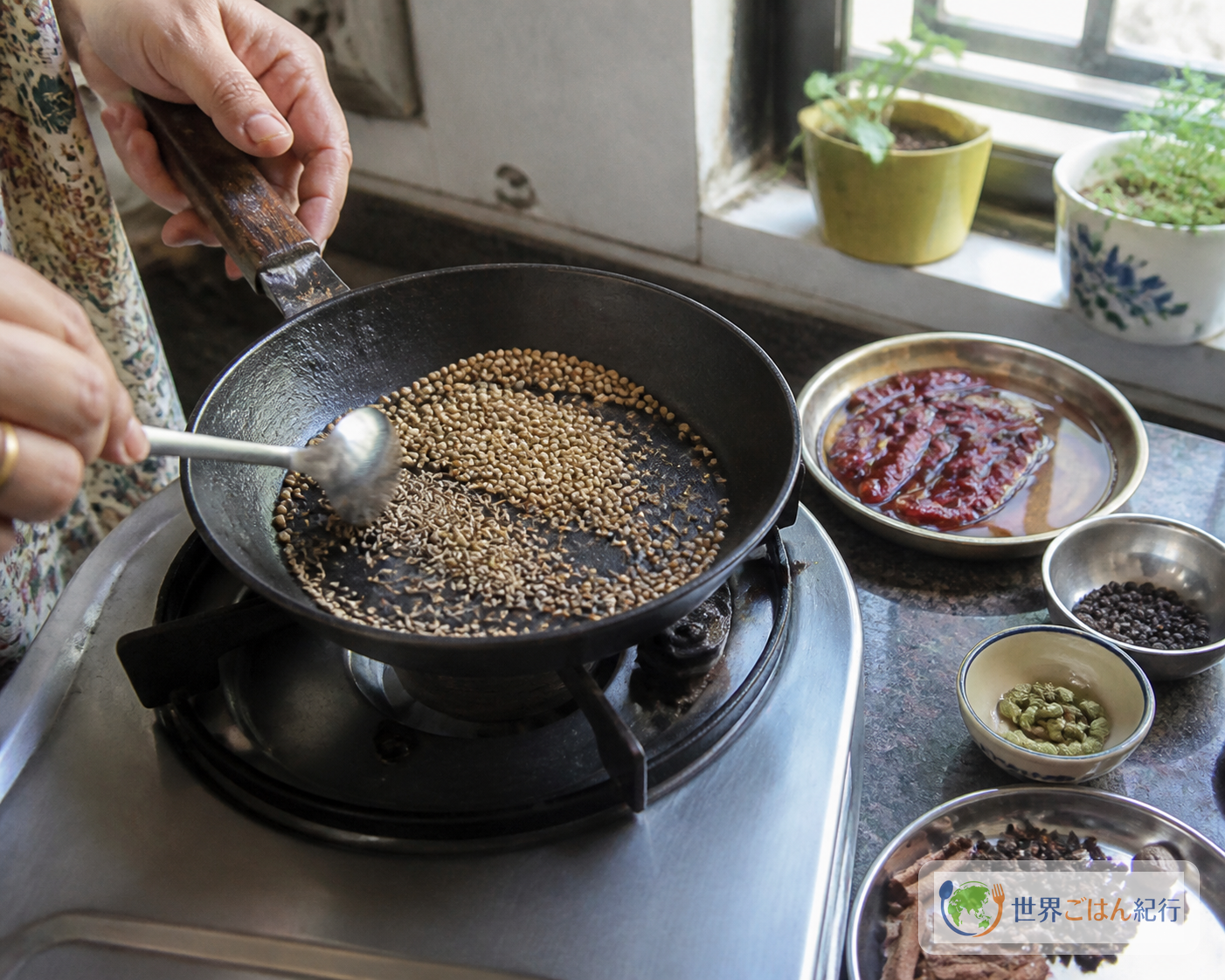
The Sarawak Tourism Board's recipe lists galangal, lemongrass, tamarind, chiles, coriander, cumin and more.[1] You don't need everything fresh, but avoid substitutions that erase an ingredient's role.
| Ingredient in question | Closer to the original | Easier option at home | How the flavor changes |
|---|---|---|---|
| Galangal | 20 g frozen or fresh galangal | 30 g ginger | The earthy, clean aroma weakens and ginger's heat comes forward |
| Belacan | 5 g fermented shrimp paste | Omit; add salt 1 g at a time | The fermented shrimp savoriness disappears and the broth tastes cleaner |
| Tamarind | 30 g paste | 15 g umeboshi pulp + 10 ml lime + 5 g dark brown sugar | Adds the plum's saltiness and fruity aroma |
| Calamansi | Fresh calamansi | Lime, or lemon if you have none | Lime's aroma is short and sharp; lemon's sourness lingers longer |
| Thin rice noodles | Bee hoon, rice vermicelli | Choose rice noodles over glass noodles | Glass noodles are clear and slippery, with less rice aroma |
Not every commercial paste labeled "laksa" will do. Thai red curry paste may lean the same way with chiles and herbs, but some products don't assume the shrimp stock and tamarind of the Sarawak version. If you use a paste, check that the package says Sarawak, Kuching or Laksa Sarawak, and check the dilution and ingredients.
At the table, heat is easier to handle if it isn't fixed in the pot. Seed the dried chiles and serve sambal on the side, and only those who like it hot will add more. On the other hand, if you cut the chiles and add too much coconut milk, it drifts toward a sweet, heavy curry noodle soup. Even when lowering the heat, keep the tamarind and shrimp stock.
If you swap the shrimp for mushrooms, leave out the chicken too and use a stock of dried shiitake and kombu with fried tofu and fried eggplant for a bowl that holds together. Once the toppings are plant-based without belacan, though, it's more accurate to call it a Sarawak-style coconut noodle soup than Sarawak laksa itself.
Rescuing a pot that went wrong, ingredient by ingredient
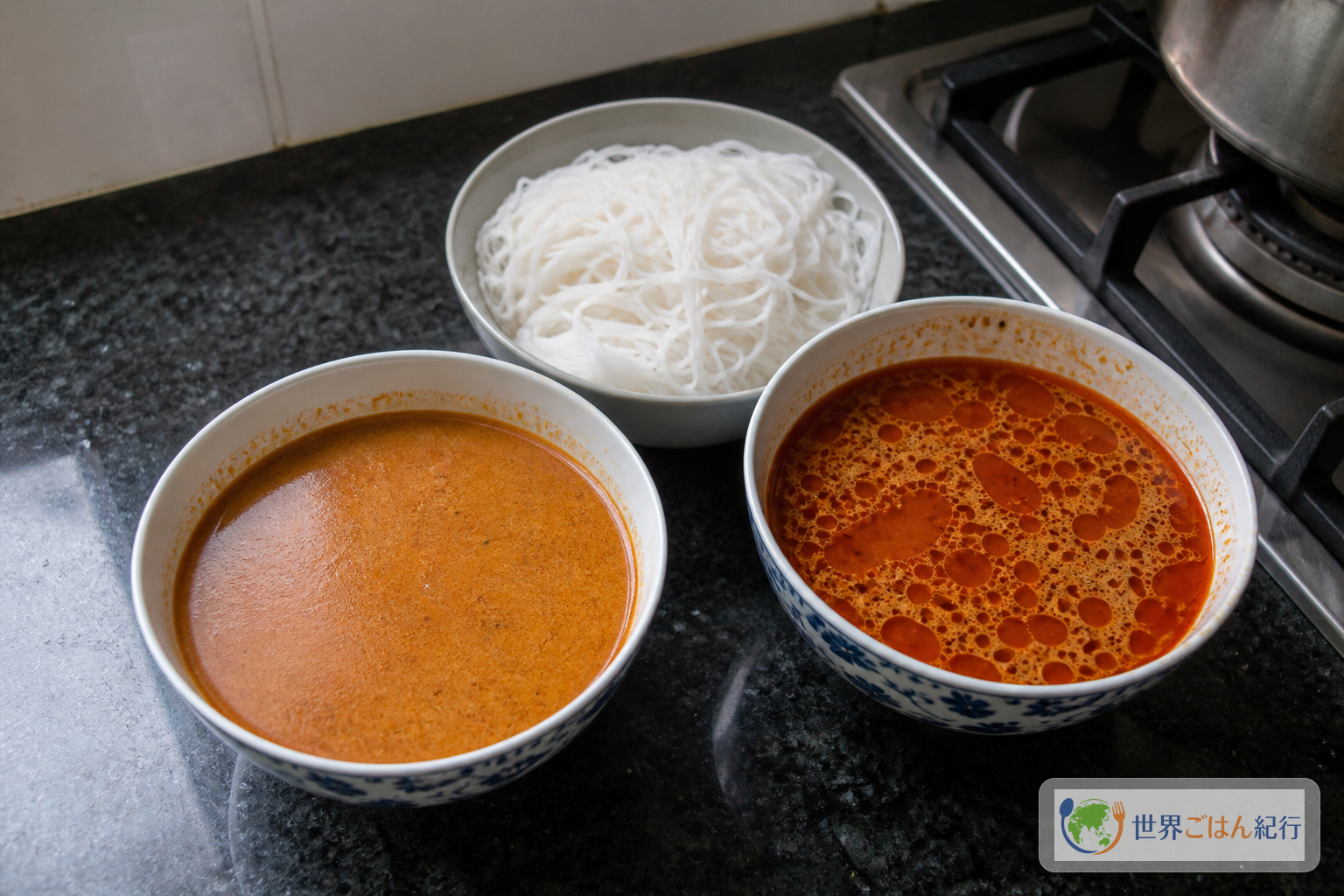
With a dish where the rempah fries for a long time, the gap between the moment before the aroma blooms and the moment after it burns is small. Watch the color at the bottom of the pot and listen to the sound as you adjust the heat, and more mistakes become fixable midway.
| Problem | Main cause | Fix |
|---|---|---|
| The soup is bitter | The rempah scorched over high heat | If there's only a little black scorching, move the clear top layer to another pot and add 100 ml stock. If it's still bitter, start over |
| The oil and liquid separated | The coconut milk boiled hard | Turn off the heat, add warm stock 2 tbsp at a time and whisk. Reheat over low |
| Too sour | Concentrated tamarind, or too much | Add 30 ml coconut milk, 2 g dark brown sugar and 1 g salt to round it out a little at a time |
| The flavor is flat | No shrimp shells used, and the paste was fried briefly | Reduce 100 ml stock, and restore definition with a little belacan or 5 g tamarind rather than salt |
| The rice noodles are soft | Left too long in hot water, or kept in the soup | Next time, cook 1 minute less than the package time and keep them on a separate plate until serving |
| The shrimp are tough | Simmered too long in the soup pot | Next time, take them out as soon as they turn white and opaque. Chop tough shrimp finely for spring rolls or fried rice |
Thickening a thin soup with potato starch adds body but changes how the Sarawak laksa broth flows. First simmer it uncovered over low heat for 5 minutes, then check the sourness, saltiness and heat one at a time. Reducing the pot after the toppings go in makes the shrimp and noodles tough.
A morning bowl finished at the table, and storage
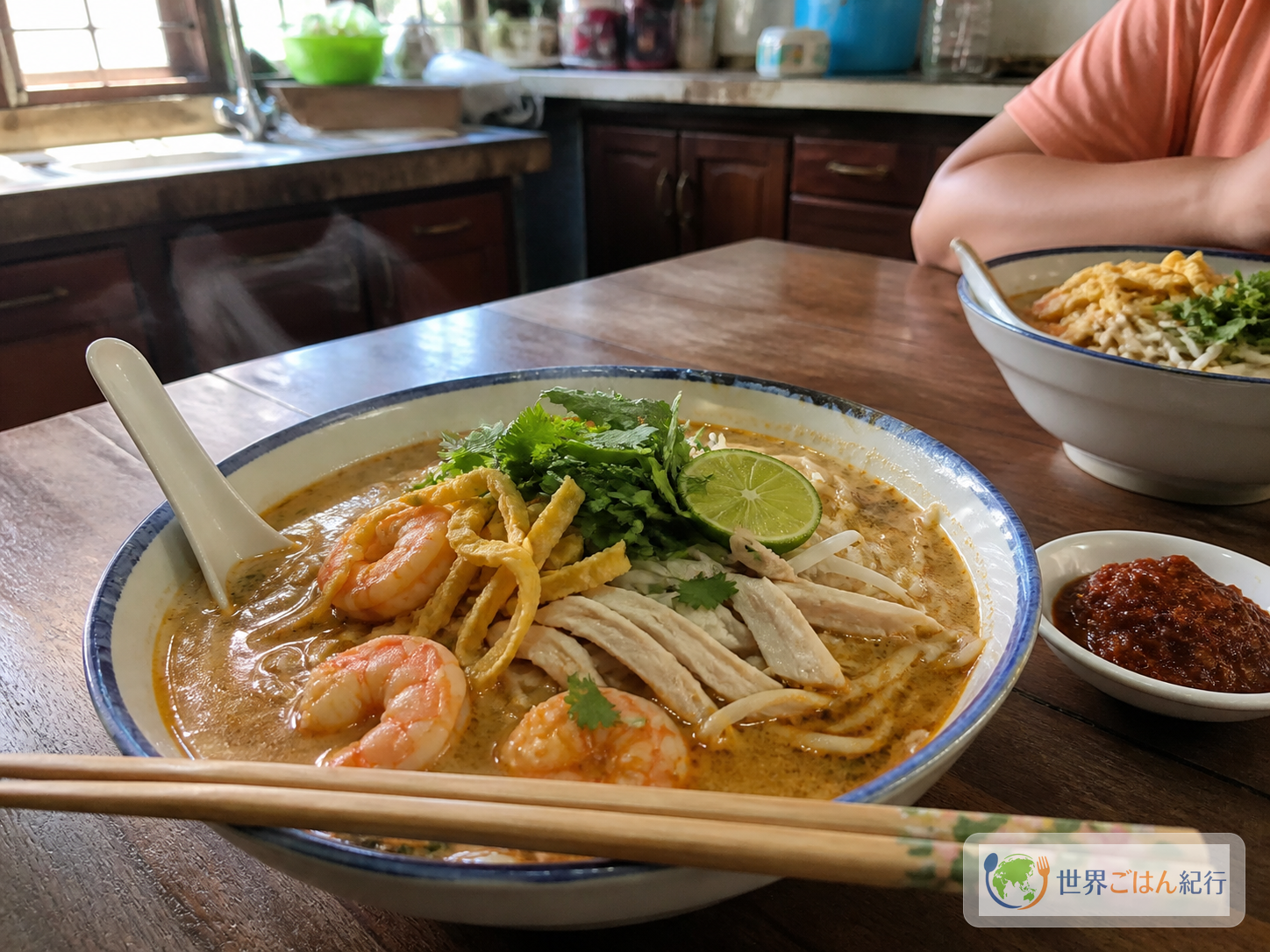
Sarawak laksa is less a dish finished in the pot and carried out than one where the toppings and soup meet in the bowl. Put the rice noodles in first, set the chicken and shrimp where they can be seen, and tuck the bean sprouts and omelet strips into the gaps. A final squeeze of lime brightens the aroma of the oil-rich soup.
To enjoy it the way it's eaten locally, bring sambal, lime and cilantro to the table in small dishes. Rather than making all 4 servings equally hot, keep the base soup mild and let everyone adjust at the table; that also keeps the easygoing feel of breakfast.
You can make the chicken and shrimp stock, the rempah and the shredded chicken the day before. Soup with coconut milk tends to separate as it cools, so reheat it over low heat on the day and adjust without boiling. Chill the rice noodles, bean sprouts, eggs and shrimp separately, and combine them just before eating.
Cook the chicken all the way through to the center, and cook the shrimp until the flesh is white and opaque. Refrigerate make-ahead soup in small portions, and when reheating, heat it until it is piping hot throughout.
For storage, portion and refrigerate the noodles and toppings separately. FoodSafety.gov gives a guideline of 3–4 days in the refrigerator and 2–3 months in the freezer for soups containing meat or vegetables, but keeping the noodles and toppings separate preserves their texture better.[6] Cook chicken to an internal temperature of 74°C (165°F) and shrimp until the flesh is white and opaque, and make sure reheated soup is piping hot.[5]
To widen the Malaysian table, nasi kerabu (in Japanese), with its fresh herbal aroma and sourness, and ayam pansuh (in Japanese), chicken cooked in bamboo, go well with it. Put it next to the more general Malaysian laksa (in Japanese), and you'll see how much a dish with the same name changes shape with fish, coconut or shrimp stock.
FAQ: ingredients and storage
Can I buy Sarawak laksa paste?
Look for names like Sarawak Laksa Paste or Laksa Sarawak Paste at Asian grocery stores or online. Availability and sizes change, so check the ingredients and dilution, not just the product name. Thai red curry paste and pastes for Penang asam laksa shouldn't be swapped in at the same amount; treat them as a different laksa.
If I can't find galangal, can I use only ginger?
You can, but the aroma will be different. Making up for it with 30 g ginger makes it hotter, so start the tamarind at 25 g and add more sourness at the end. If you can find frozen galangal, even a little brings it closer to the local aroma than ginger alone.
The soup separated after adding coconut milk. Is it still safe to eat?
If the oil has only risen to the top, turn off the heat and stir in warm stock a little at a time to restore its look. As long as it doesn't smell burnt and the chicken and shrimp are fully cooked, separation alone doesn't make it inedible. Next time, don't boil hard after adding the coconut milk.
Can I make it without shrimp and belacan?
Mushrooms, kombu and seared fried tofu make a different plant-based soup, but the shrimp stock and fermented shrimp savoriness define the dish, so it won't taste the same as Sarawak laksa. If you have a shellfish allergy, don't just use less belacan; leave it out completely, and also check your cookware and the labels of any commercial paste.
Can I use somen instead of rice noodles?
You can eat it that way, but somen (thin Japanese wheat noodles) brings the aroma and softness of wheat forward. The first time, choose bee hoon or rice vermicelli, cook them a little less than the package says, and let them reach the right firmness when the hot soup is poured over.
Sources
- [1] Sarawak Tourism Board, “How to Make Borneo’s ‘Breakfast of the Gods’” — checked for the spice paste of Sarawak laksa; shrimp, chicken, rice noodles and coconut milk; and the idea of the five tastes. Accessed and checked 18 August 2026 (JST)
https://www.sarawaktourism.com/web/stories/story-view/how-to-make-borneo-s-breakfast-of-the-gods- - [2] Sarawak Tourism Board, “Sarawak Laksa” — checked for its status as a signature Kuching breakfast, shrimp stock, chicken, shrimp, sambal and lime. Accessed and checked 18 August 2026 (JST)
https://www.sarawaktourism.com/web/things-to-do/thing-view/food/local-delicacies/sarawak-laksa - [3] SBS Food / Adam Liaw, “Sarawak laksa” — checked that there is no single fixed recipe, the makeup of the ingredients, and the steps for stock, rempah, noodles and toppings. Accessed and checked 18 August 2026 (JST)
https://www.sbs.com.au/food/recipe/sarawak-laksa/0f69sjldz - [4] Ireena Nasiha Ibnu, “The Taste of Home: The Construction of Social Relationships Through Commensality Amongst Female Malay Students in the United Kingdom,” Journal of Nusantara Studies, 2022, Vol. 7(1), pp. 316–334 — checked for the example of carrying Sarawak laksa paste into a kitchen abroad and the cultural context of sharing meals. Accessed and checked 18 August 2026 (JST)
https://journal.unisza.edu.my/jonus/index.php/jonus/article/download/695/364/ - [5] FoodSafety.gov, “Cook to a Safe Minimum Internal Temperature” — referenced for 74°C (165°F) for chicken, doneness of seafood, and checking with a thermometer. Accessed and checked 18 August 2026 (JST)
https://www.foodsafety.gov/food-safety-charts/safe-minimum-internal-temperatures - [6] FoodSafety.gov, “Cold Food Storage Chart” — referenced for refrigerator and freezer storage times for soups and cooked meat and poultry. Accessed and checked 18 August 2026 (JST)
https://www.foodsafety.gov/food-safety-charts/cold-food-storage-charts - [7] Jabatan Kebudayaan dan Kesenian Negara, “Laksa Penang” — checked for the fish and tamarind broth, rice noodles, accompaniments and method of Penang laksa. Accessed and checked 18 August 2026 (JST)
https://pemetaanbudaya.jkkn.gov.my/en/senibudaya/detail/910



