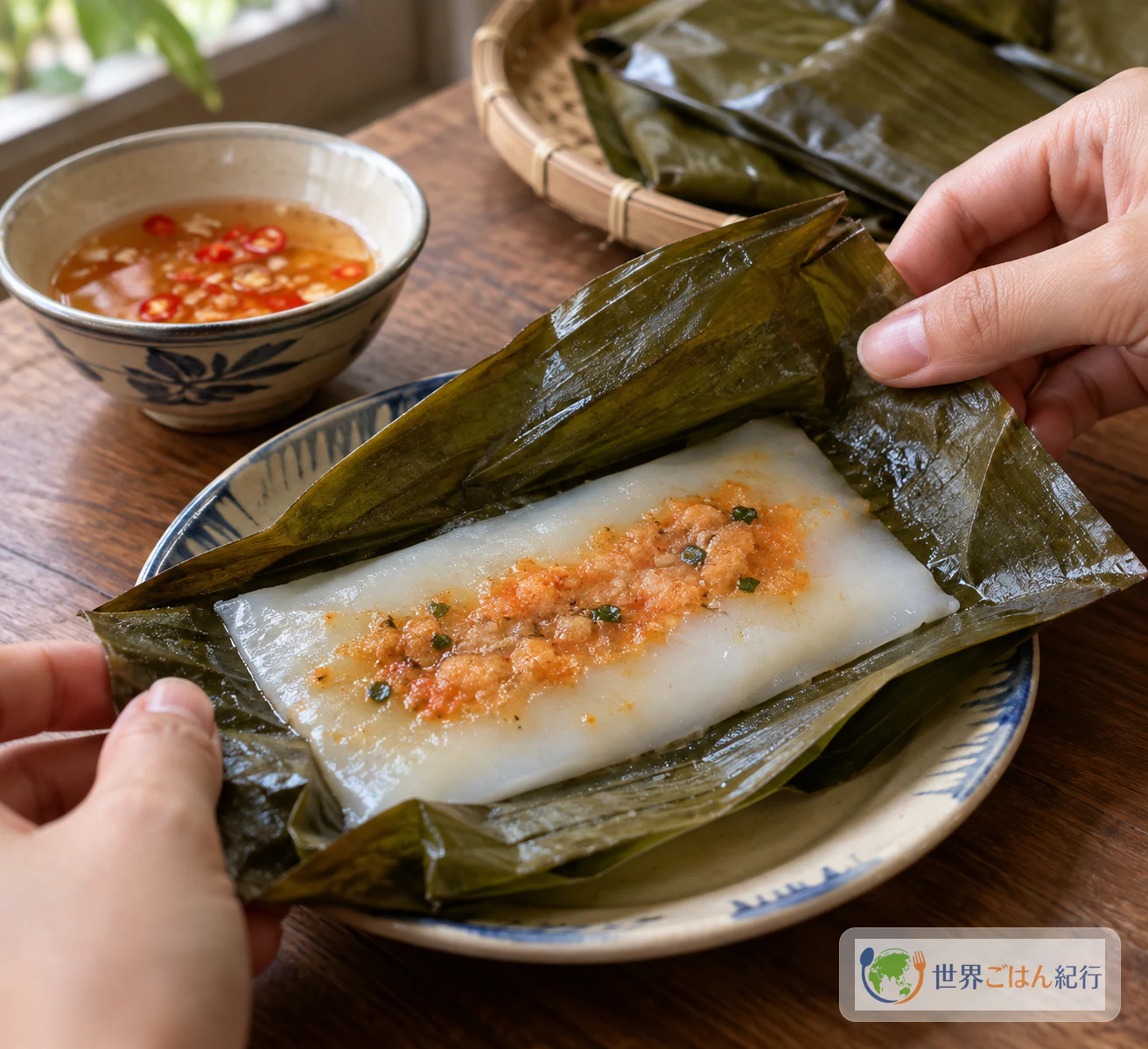
Open the Leaf and the Orange of the Shrimp Shows Through
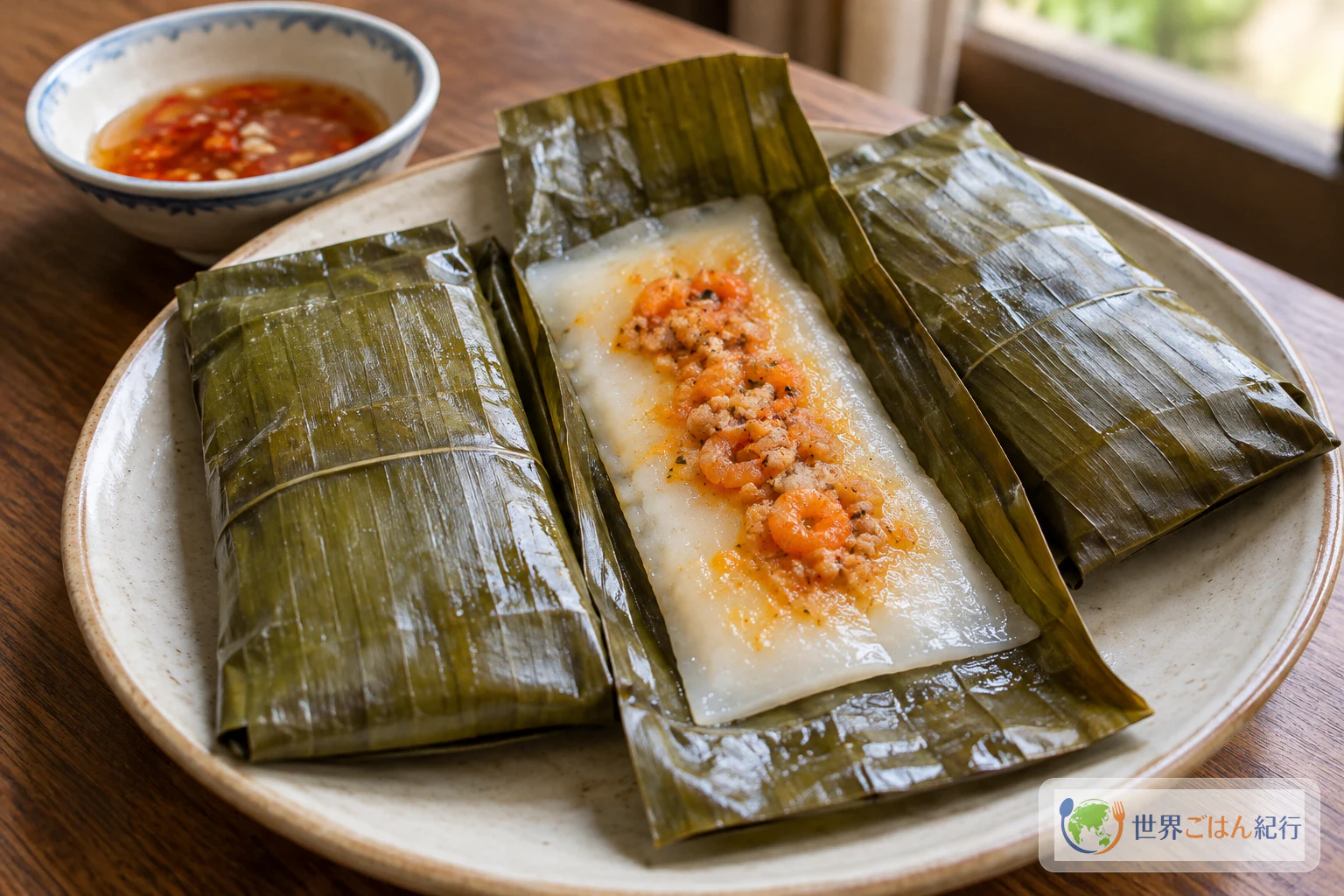
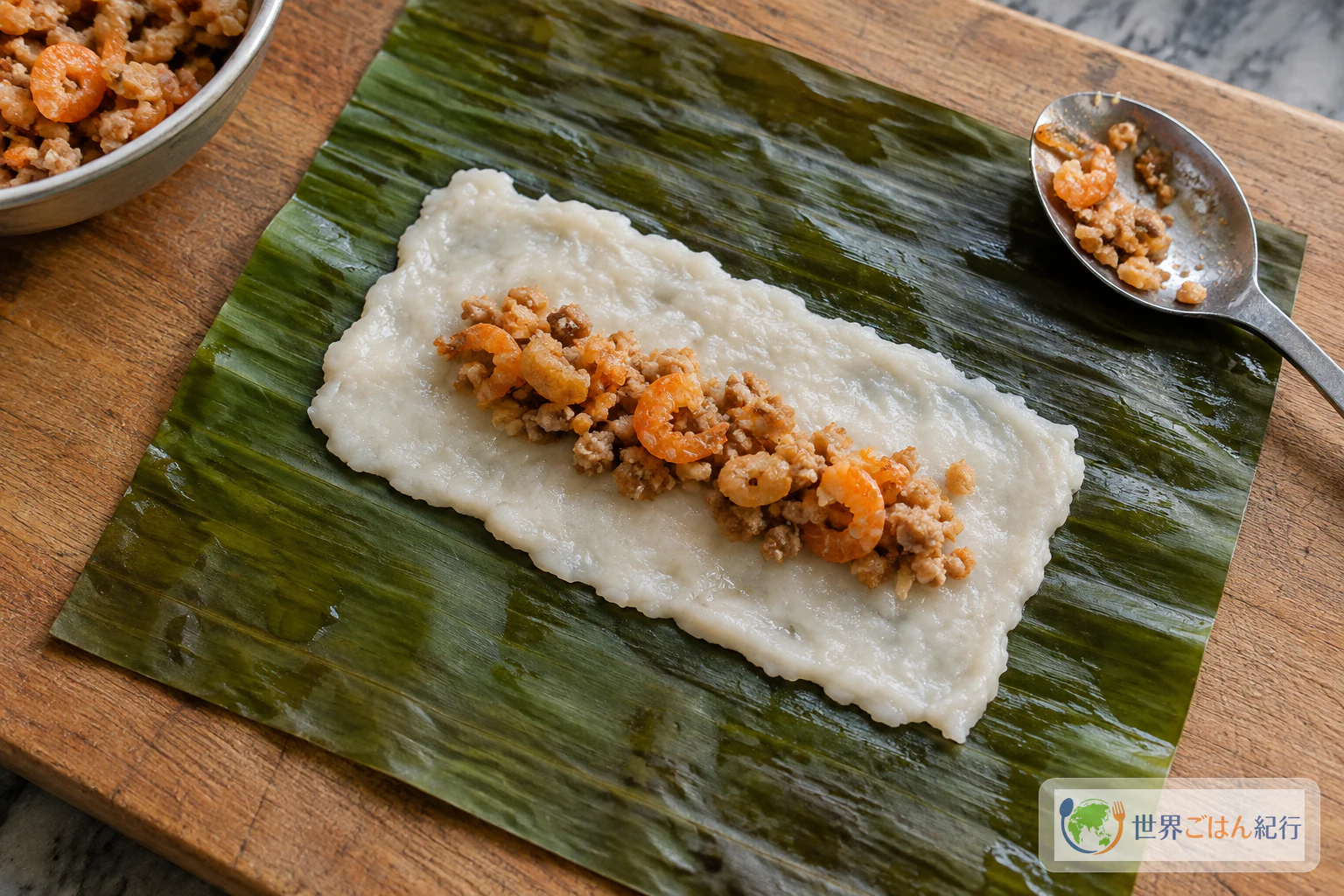
A thin, flat layer of soft rice-flour batter, a narrow line of dry, orange-gold shrimp and pork, the scent of banana leaf and a little salty fish sauce. Keep it flat and thin, not a thick dumpling.
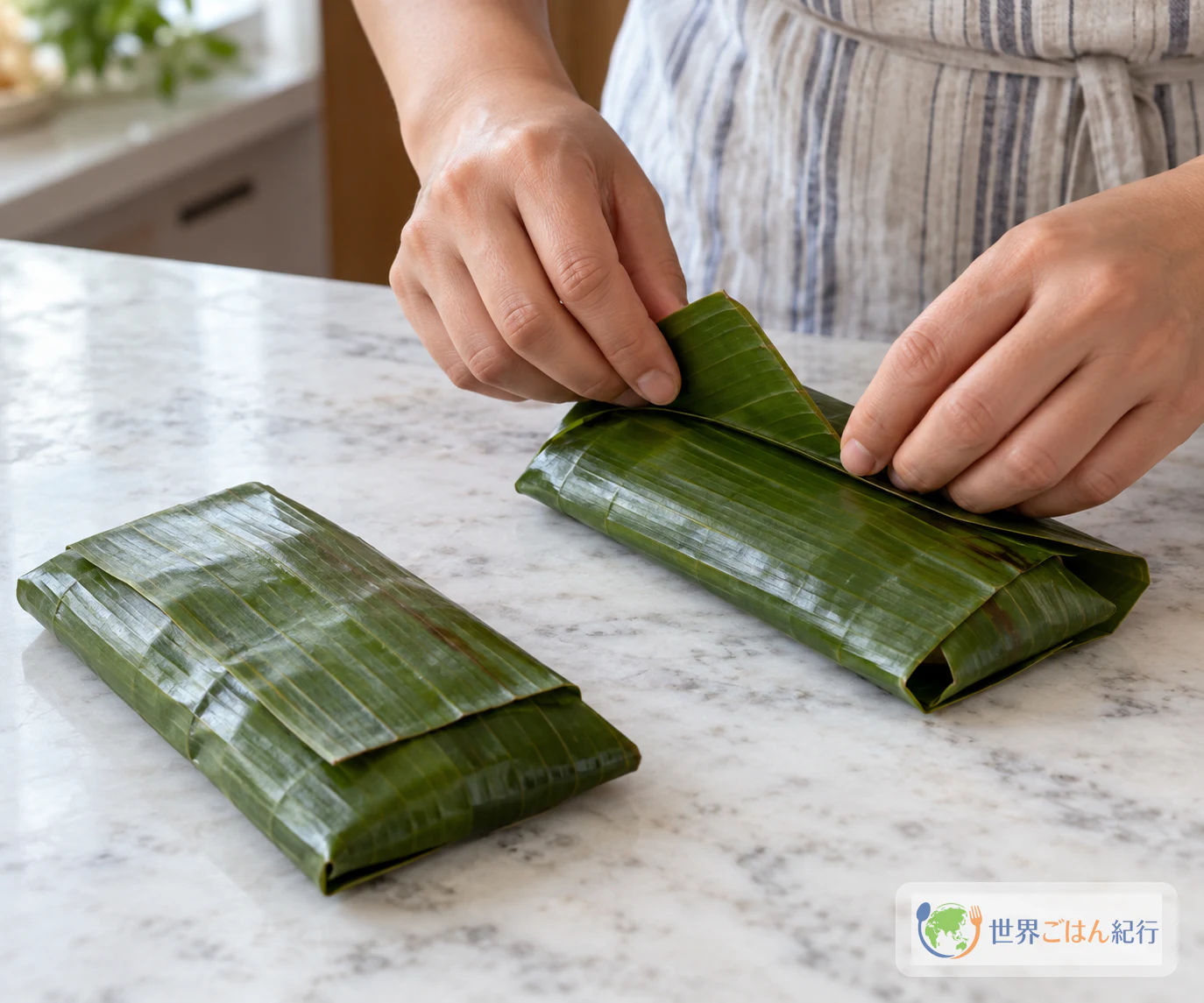
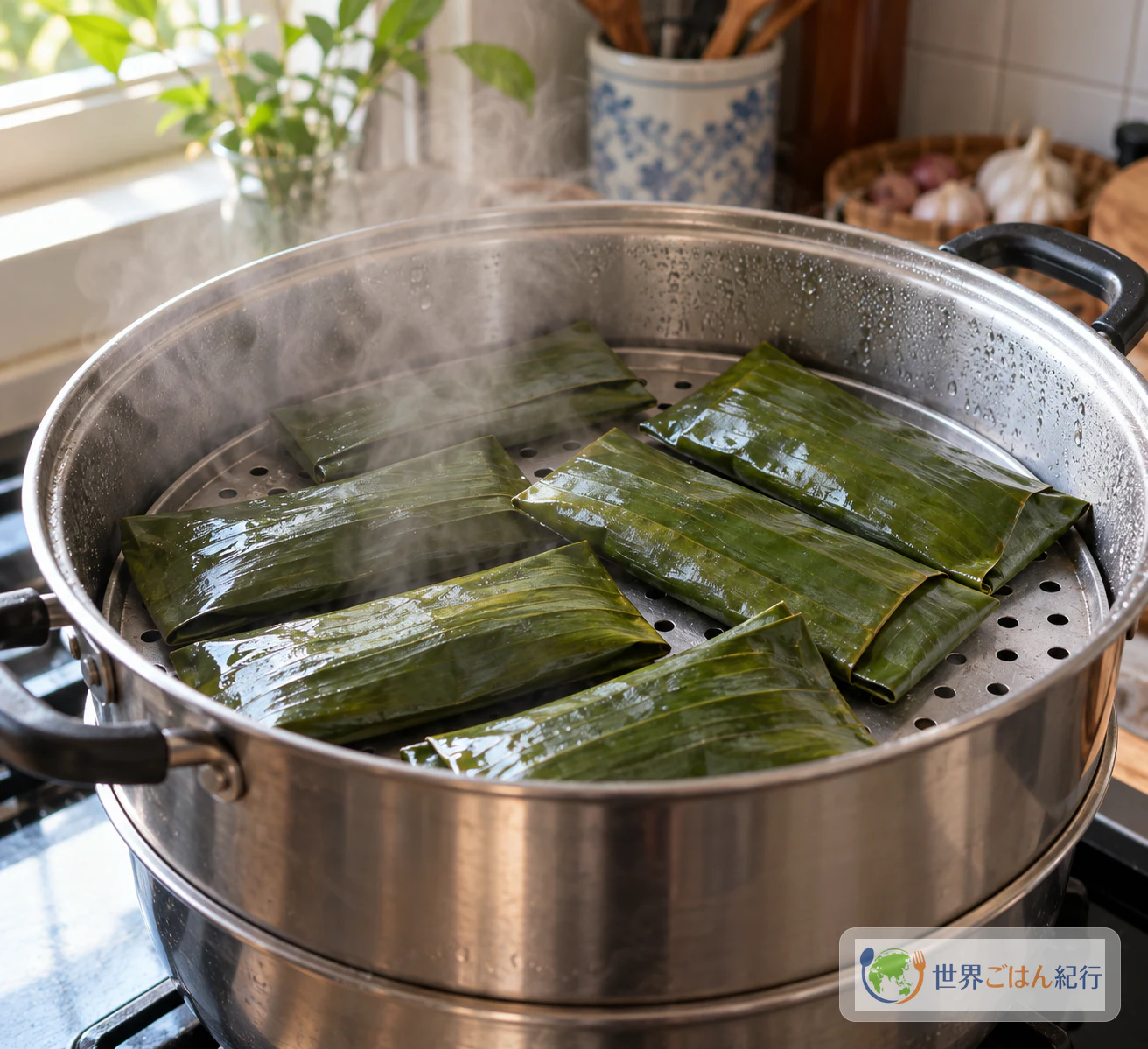
Unfold a steamed banana-leaf parcel and you find a smooth, ivory sheet of rice batter, with a slim stripe of orange shrimp and pork running down its center. Bánh nậm is a savory steamed snack from Huế, in central Vietnam. The batter is spread thinly on a leaf, the filling is laid in a narrow line, and the leaf is folded into a flat rectangle before steaming.
Vietnam's national tourism authority introduces bánh nậm as one of Huế's local specialties: a thin rice-flour batter with shrimp, wrapped in banana leaf, steamed, and eaten with a little fish sauce. The recipe here follows the version published by Vietnamese Cookbook Kitchen, for 4 servings and 12 parcels. Other published versions use different proportions and fillings; those are described under the variations section rather than mixed into the recipe.
Bánh nậm is easy to confuse with its Huế neighbors. Bánh bèo is steamed in small individual dishes, and bánh bột lọc has a translucent tapioca wrapper. Bánh nậm is neither: it is a rice-flour batter steamed flat inside a leaf. It is also not grilled or boiled, and it is not the pyramid-shaped bánh giò. For more dishes from the same country, see our Vietnamese food page.
This recipe has not yet been kitchen-tested by Sekai Gohan. The amounts and steps below follow one published recipe, and the substitution notes are untested suggestions.
Ingredients: Thin Batter, Dry Filling, Banana Leaves
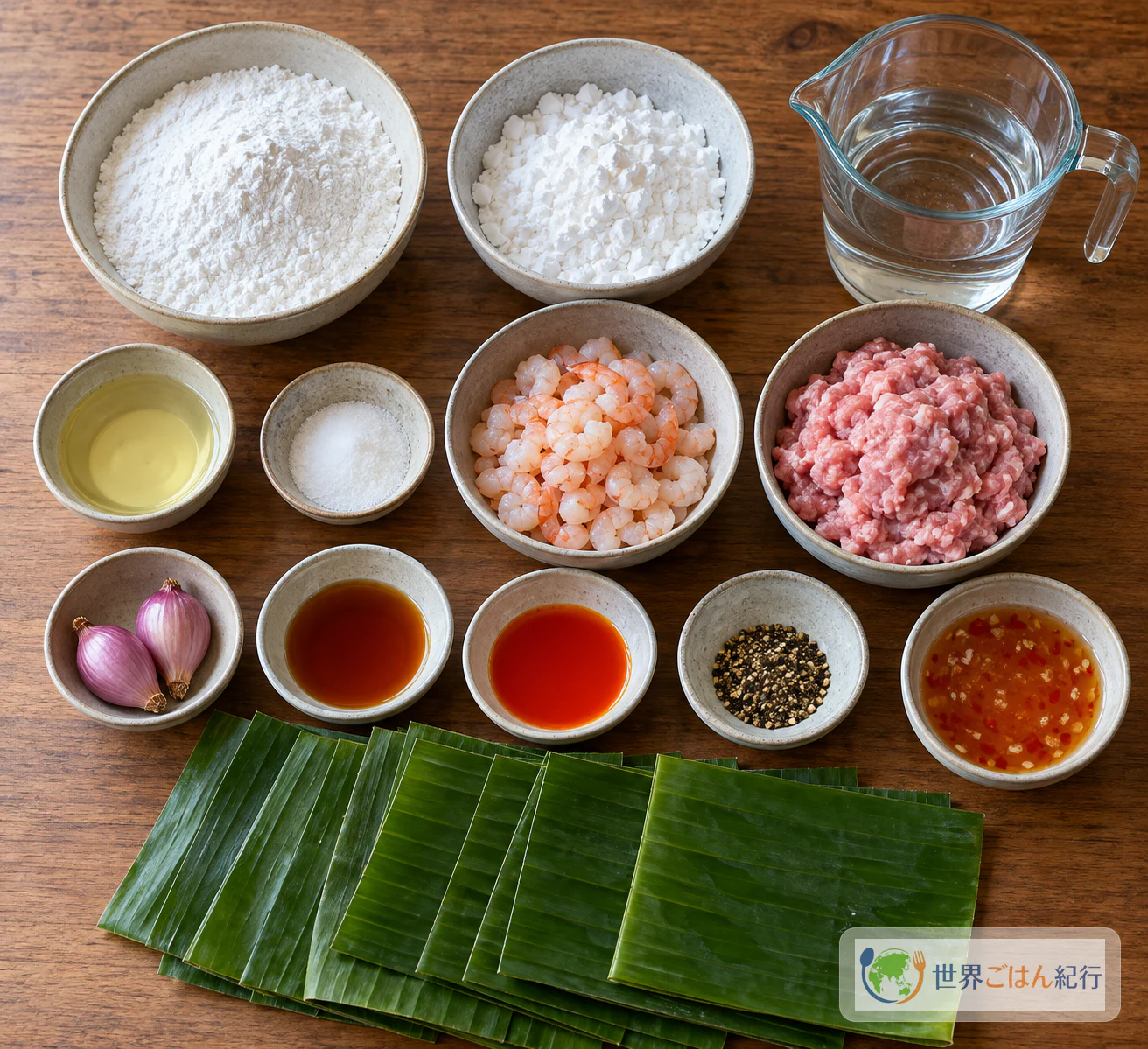
Makes 12 parcels, for 4 servings.
About 2 tbsp of batter goes onto each leaf. If a little batter or filling is left over at the end, don't force it into the parcels.
Contains shrimp (shellfish) and fish (fish sauce). Wheat is not among the ingredients, but check the labels of the flours, fish sauce and prepared nước chấm for allergens and shared-facility statements.
Equipment
- Steamer large enough to hold parcels in a single layer
- Heavy saucepan, easy to stir across the bottom without stopping
- Small skillet for the filling
- Dry skillet (or a gas flame) for softening the leaves
- Heatproof spatula and a wooden spatula
- Measuring tablespoon and teaspoon
- Pastry brush
- Clean board for filling and folding
Choosing and Substituting
Rice flour and tapioca starch. Use plain rice flour; glutinous rice flour gives a different, stickier result. Tapioca starch is not the same as potato starch (katakuri), so swapping one for the other is not recommended for this batter.
Annatto oil. Annatto oil gives the filling its orange-gold color. Paprika oil is a possible stand-in and brings the color closer, but it does not reproduce annatto's aroma. Annatto is the first choice here.
Fish sauce. Saltiness differs by product, so taste the filling at the end.
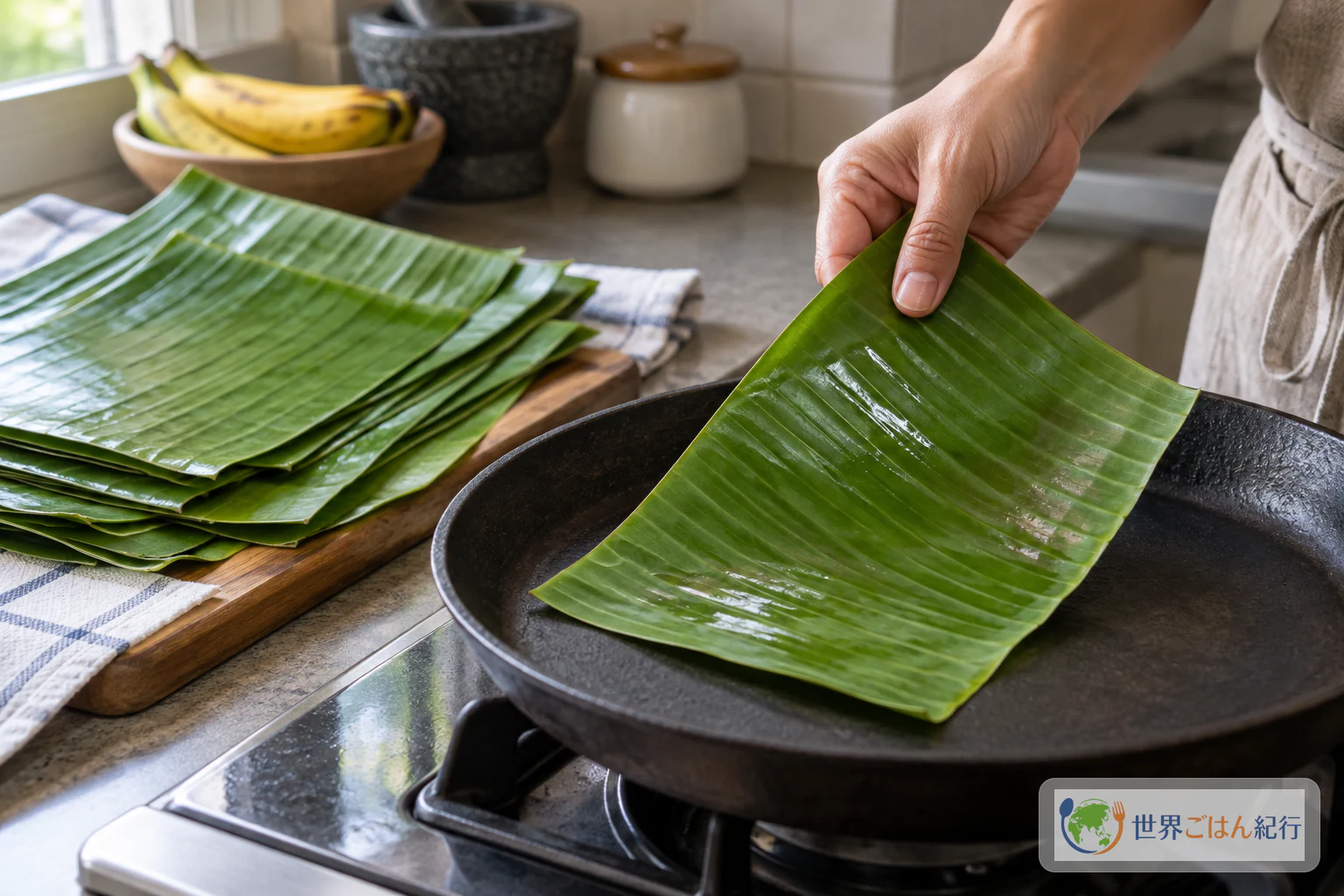
Banana leaves. The leaves carry aroma as well as shape. Frozen leaves sold at Asian grocers work once thawed. Parchment paper can hold the shape, but the leaf scent is lost and the result is not the same dish; treat it as an untested fallback.
Method: Dry the Filling, Half-Cook the Batter, Fold Flat
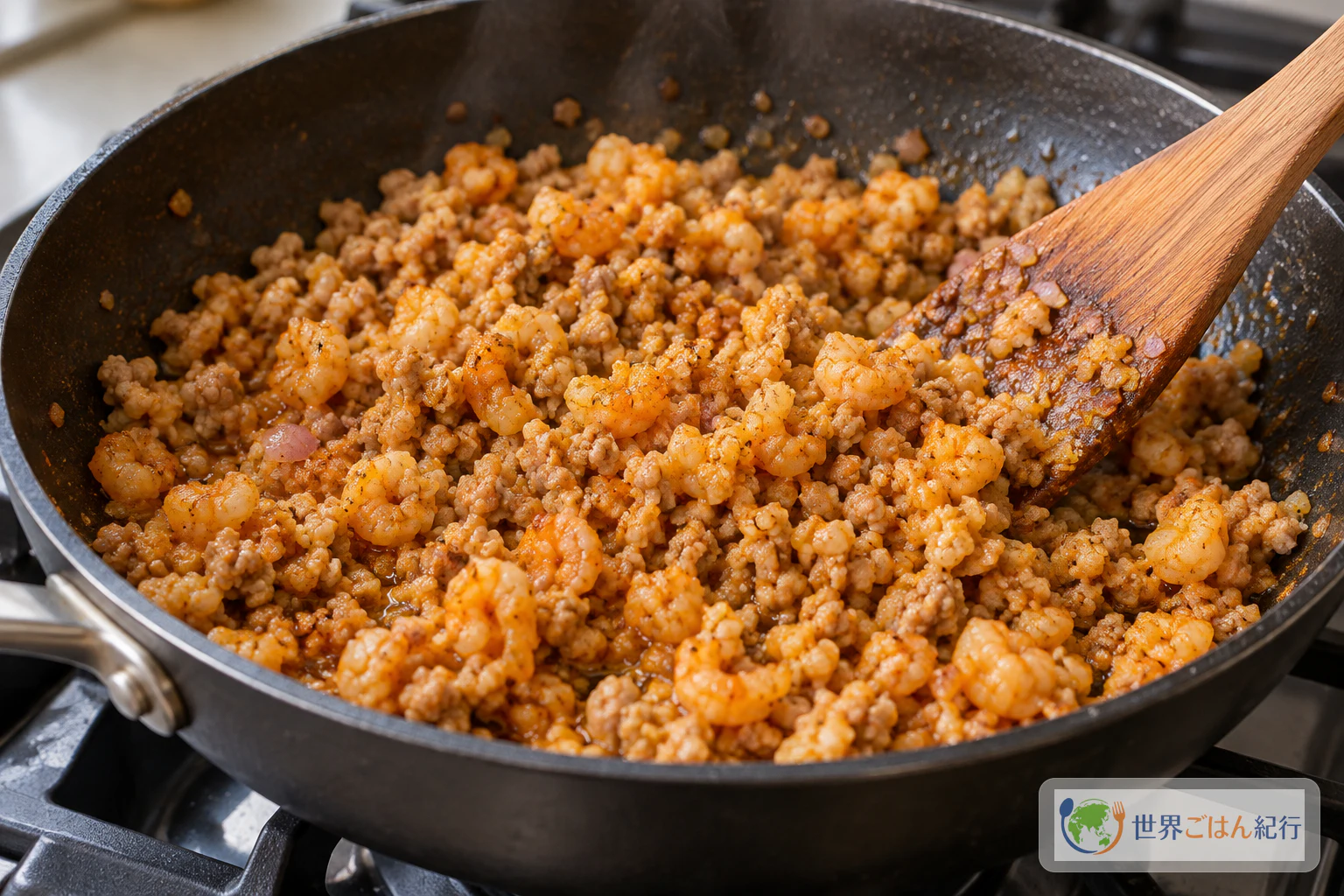
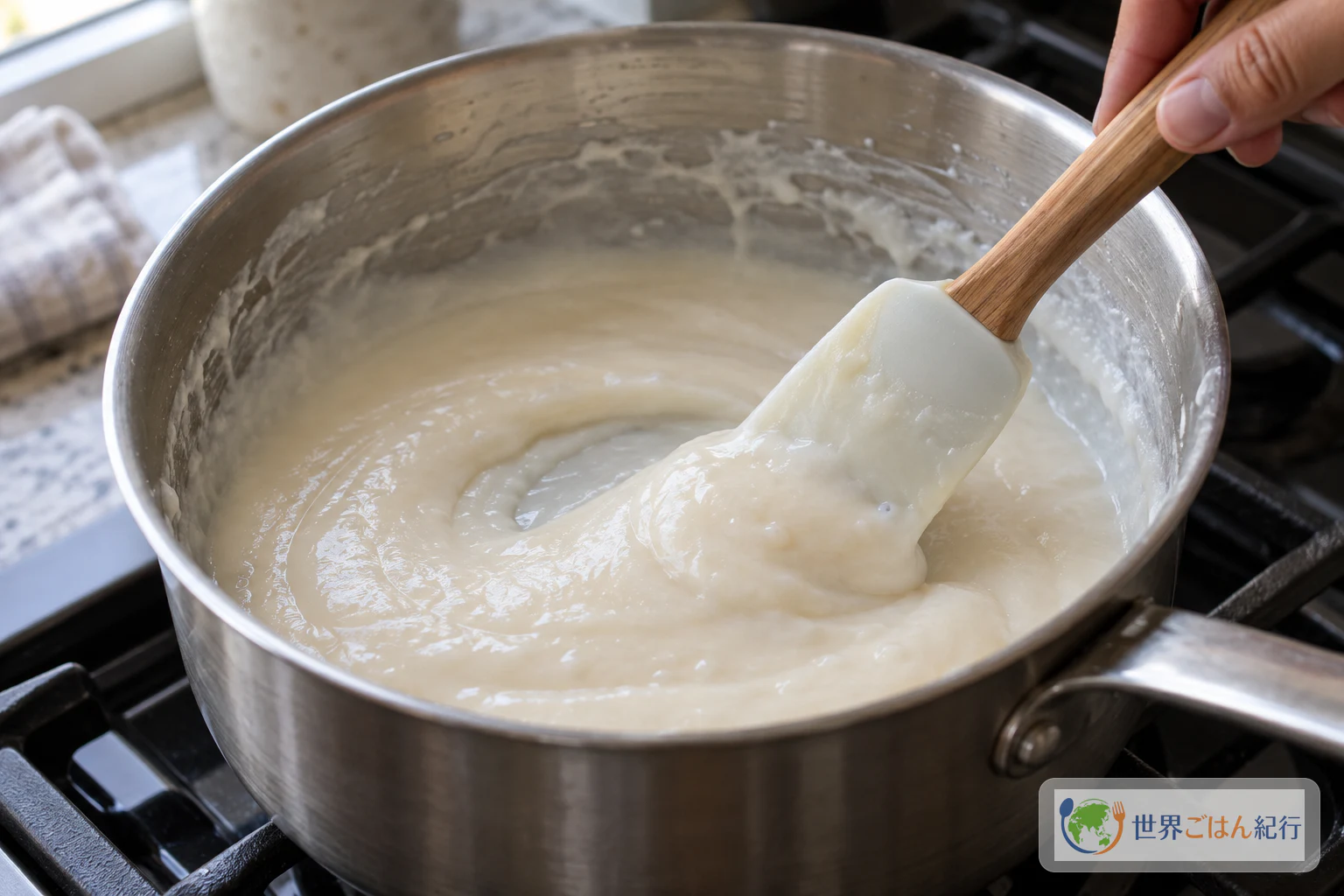
Make the filling first so it can cool and dry while you handle the batter and leaves. The batter is cooked only until it is a loose pudding, then spread, wrapped and steamed.
Keep boards, knives and bowls used for raw shrimp and pork separate from foods eaten without cooking, and wash your hands after handling them. Steamers and parcel thickness vary between kitchens, so make sure the parcels are heated through to the center. Japan's Ministry of Health, Labour and Welfare gives a general guideline of 75°C at the center for at least 1 minute for heated foods. If you pause partway through, refrigerate the raw ingredients and heat thoroughly when you resume.
Runny Batter, Bleeding Filling: Fixing Mistakes
| Problem | Likely cause | What to do |
|---|---|---|
| The batter runs to the edges of the leaf | Not cooked enough in the pan | Return it to medium-low heat and stir constantly until it reaches a loose pudding |
| The batter is too stiff to spread | Cooked too far | There is no tested fix; next time take the pan off the heat as soon as the spatula trail holds for a moment |
| Lumps or a scorched bottom | Heat too high, or stirring paused | Lower the heat and keep scraping the bottom and sides; keep stirring off the heat until smooth |
| The filling stains or wets the batter | Filling still moist | Cook the filling until fine and dry, and don't add any pan juices |
| The leaf tears or the parcel is thick | Leaf not softened; too much filling | Soften the leaf first, keep the filling in a narrow line, and fold to a thin rectangle |
Storage and Reheating
Bánh nậm is best eaten freshly steamed. Vietnamese Cookbook Kitchen suggests keeping the parcels wrapped in their leaves in the refrigerator for up to 2 days and re-steaming them for 8 minutes. Treat this as that recipe's suggestion, not a safety guarantee. Cool leftovers and refrigerate them quickly, and don't leave cooked parcels at room temperature for long. Heat them through to the center when reheating. Freezing and microwave reheating are not covered here.
Variations: Keep Each Version Separate
These are different versions, not adjustments to the recipe above. Don't combine their amounts with it.
- Shrimp-only bánh nậm. A recipe published by VnExpress uses shrimp (500g) without pork, with its own batter of 400g rice flour and 50g tapioca starch, wraps the parcels in dong leaves and steams them for 20 minutes. Make it as its own recipe if you want a pork-free version.
- Vegetarian bánh nậm. VnExpress notes that vegetarian versions exist in Huế, but gives no ingredients or method, so none is offered here.
- Paprika oil instead of annatto. Brings the color closer but not the aroma; start with a small amount.
- Other leaves. Dong leaves appear in the VnExpress version. Their size and scent differ from banana leaves.
A Small Steamed Bite in Huế's Food Culture
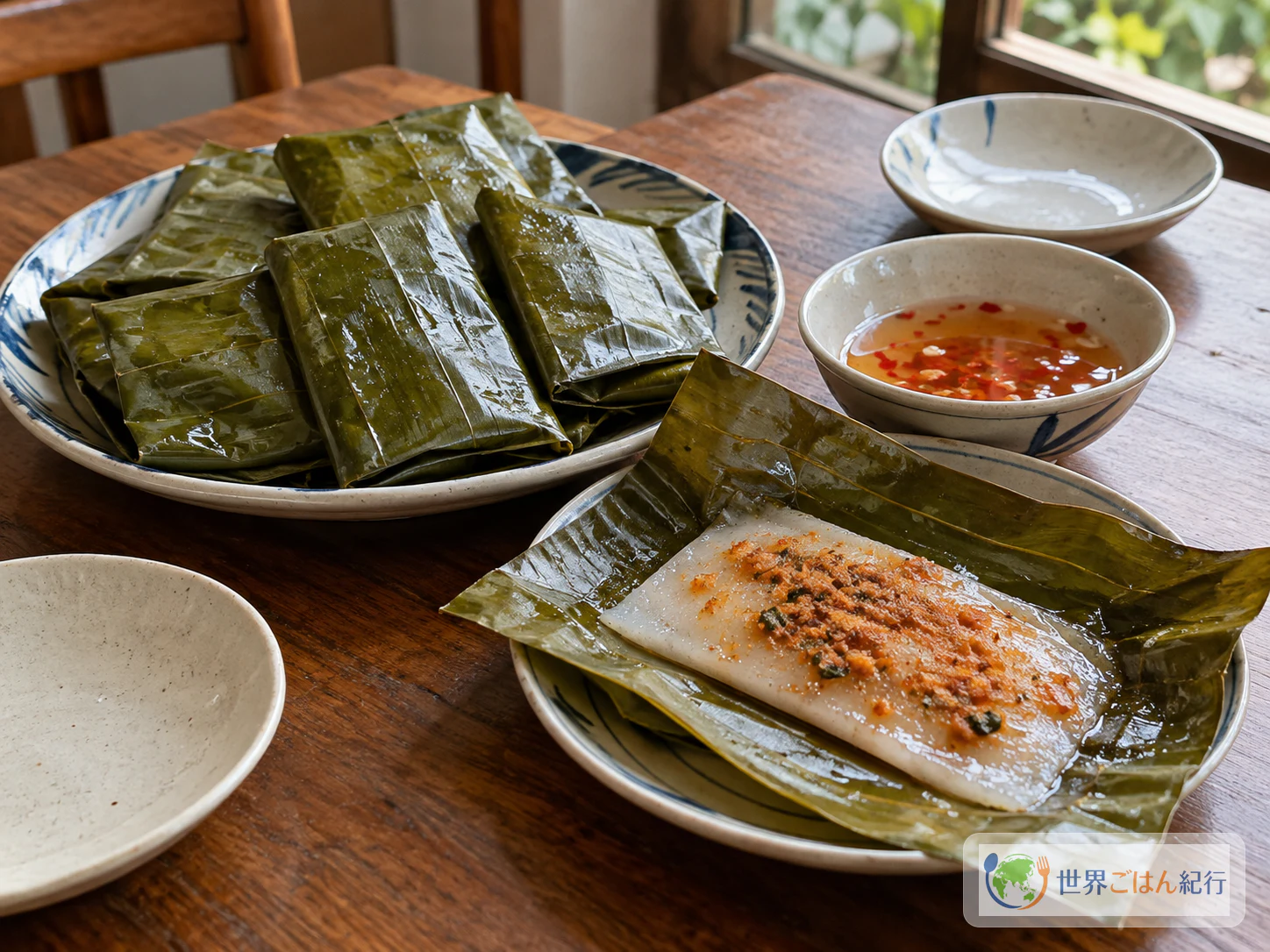
Vietnam Tourism's guide to eating in Huế places bánh nậm among the city's many small, individually portioned local dishes. It describes the thin rice-flour batter, the shrimp topping and the banana-leaf wrapping, with a little fish sauce added when eating. It is one of several small portions rather than one large plate.
VnExpress describes Huế bánh nậm as coming in both savory and vegetarian forms, with some regional and household versions made with shrimp alone. It also describes a way of eating it: the leaf is partly left under the cake like a small plate, and a thin, slightly sweet fish-sauce dip is spooned over.
Stories of royal or palace origins are sometimes told about Huế food. We could not confirm them for bánh nậm specifically, so this article describes it only as a regional dish of Huế. The meaning of its name is likewise not stated here.
Frequently Asked Questions
Can I use glutinous rice flour?
No. The recipe calls for rice flour, and glutinous rice flour behaves differently. Substitutes have not been tested.
Can I replace tapioca starch with potato starch?
It is not known to behave the same way in this batter, so it is not recommended.
What if I can't find banana leaves?
Parchment can hold the flat shape, but the leaf aroma is lost and the result differs from leaf-wrapped bánh nậm. This is an untested fallback.
Can I make it with shrimp only?
VnExpress publishes a shrimp-only version, but it is a different recipe with different amounts. Simply leaving the pork out of this recipe would not produce that version.
How long do I steam them?
12–15 minutes, then a 5-minute rest. Vietnamese Cookbook Kitchen lists a 25-minute cook time for the recipe, but that figure is a total for the page and is not the steaming time.
What size are the spoons?
The recipe lists tablespoons and teaspoons without naming a standard. The gram and milliliter amounts are the most reliable measures.
Sources
- Vietnamese Cookbook Kitchen, "Bánh Nậm." The recipe followed in this article: ingredients and amounts for 4 servings and 12 parcels, half-cooking the batter to a loose pudding, drying the filling, preparing and folding the banana leaves, steaming for 12–15 minutes and resting for 5 minutes, and the suggestion of 2 days refrigerated and 8 minutes re-steaming. https://vietnamesecookbook.com/recipes/banh-nam/
- VnExpress Đời sống, "Bánh nậm xứ Huế." Savory and vegetarian forms, a shrimp-based recipe with different proportions, dong leaves and 20-minute steaming, and eating with the leaf as a plate and a thin, slightly sweet fish-sauce dip. https://vnexpress.net/banh-nam-xu-hue-3222409.html
- Viet Nam National Authority of Tourism (Vietnam Tourism), "How to eat like a local in Hue." Bánh nậm as a Huế specialty of thin rice batter with shrimp, wrapped in banana leaf and steamed, eaten with a little fish sauce, within Huế's tradition of small-portion dishes. https://vietnam.travel/things-to-do/how-eat-local-hue
- Ministry of Health, Labour and Welfare (Japan), "家庭での食中毒予防" (Preventing food poisoning at home). General guidance: 75°C at the center for at least 1 minute, refrigerating when cooking is interrupted, not leaving cooked food at room temperature, and preventing cross-contamination from seafood. https://www.mhlw.go.jp/stf/seisakunitsuite/bunya/kenkou_iryou/shokuhin/syokuchu/01_00008.html