Take the Sourness Rising from the Pan with Rice
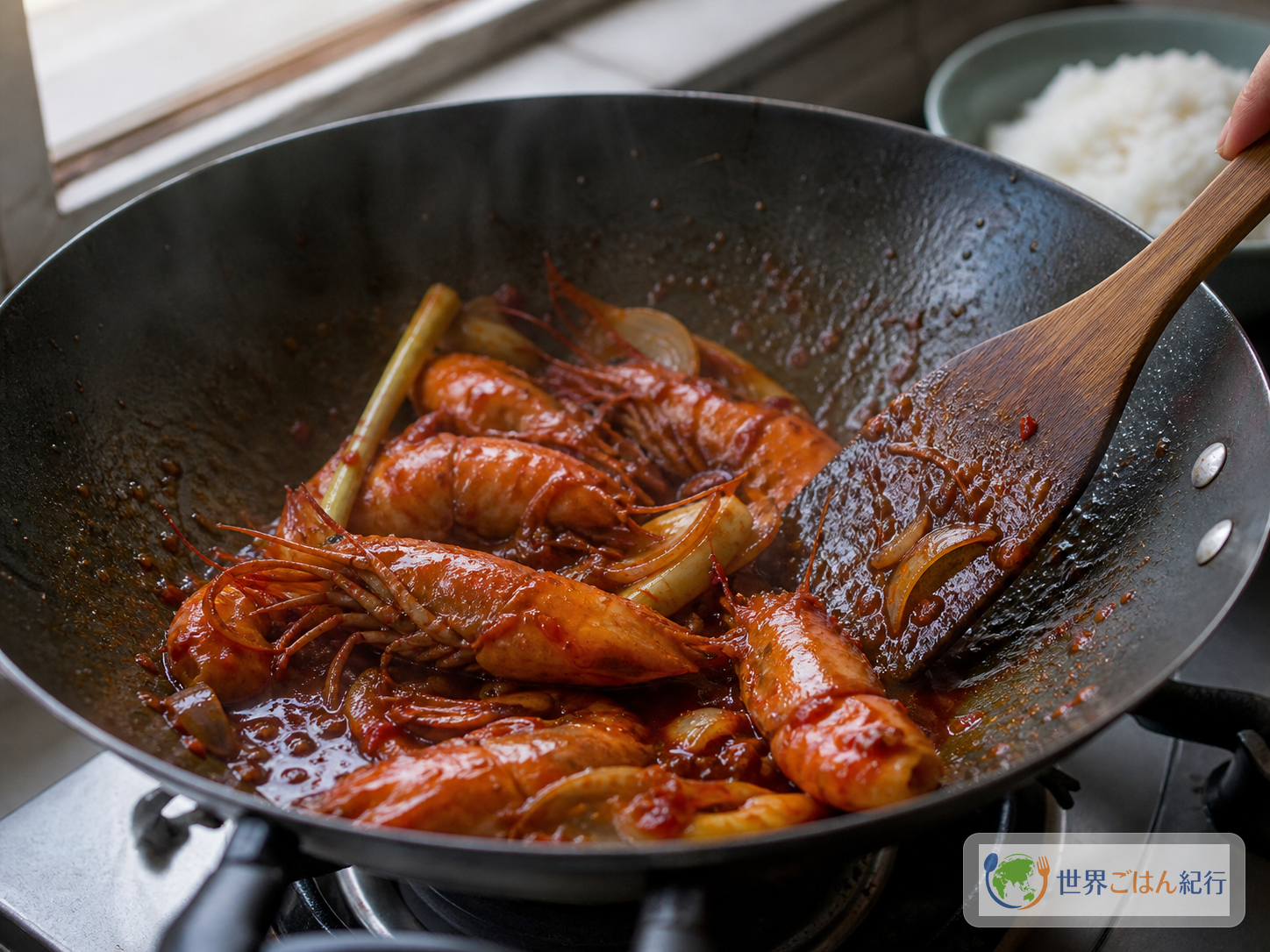
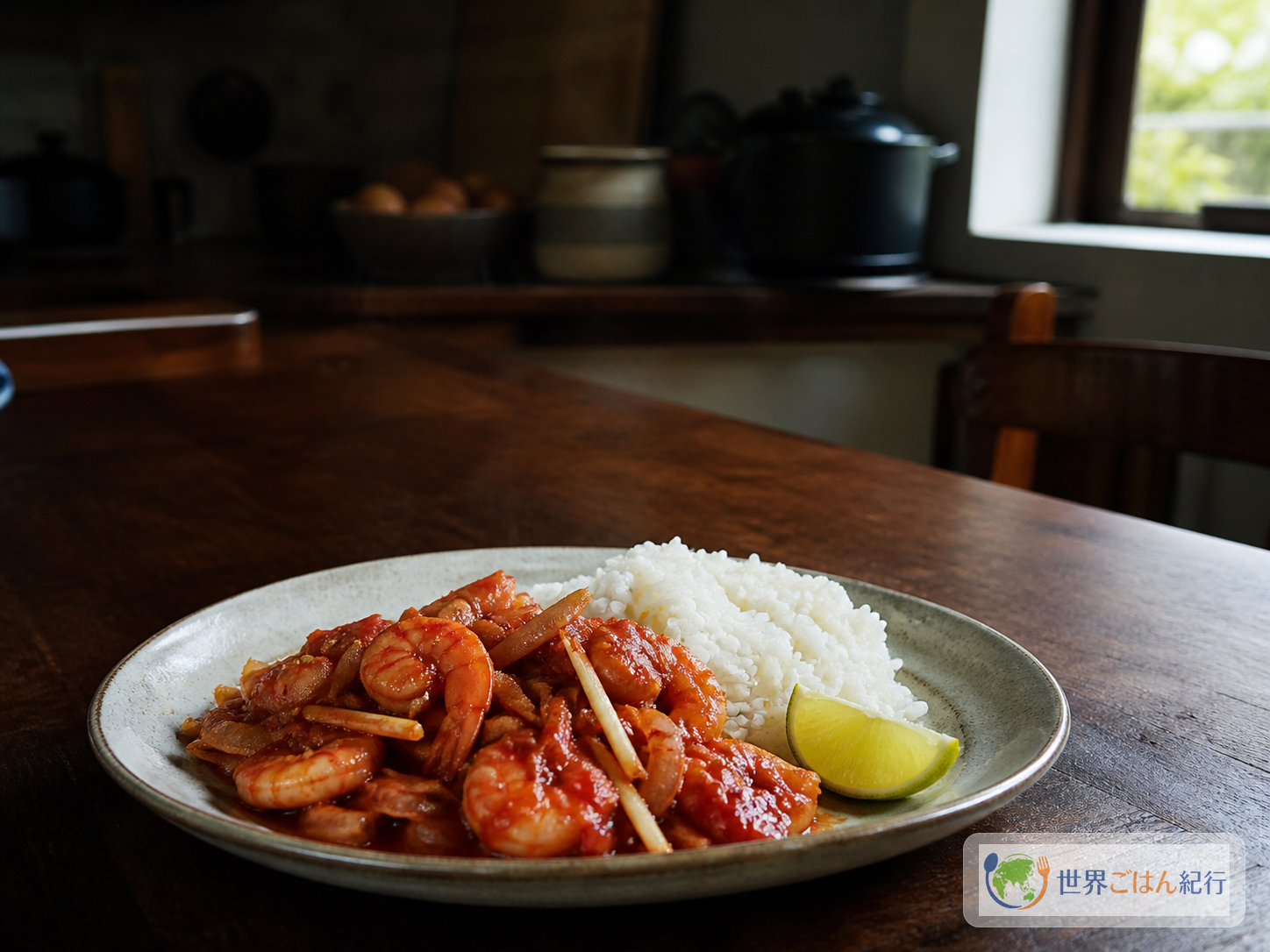
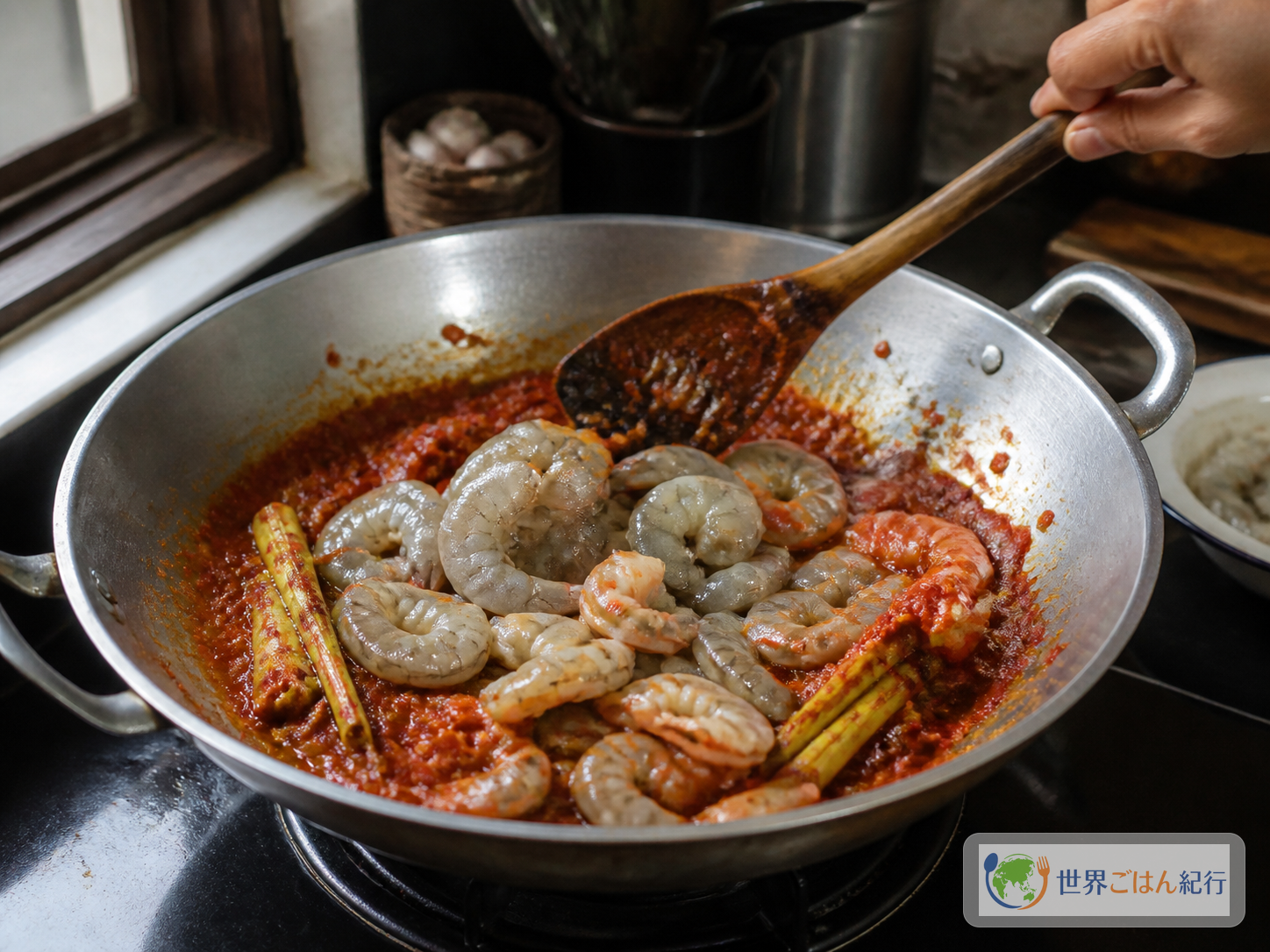
In the pan, the red sauce pops in small bursts, and the sweet-sour of tamarind lays over the aroma of lemongrass and fried onion. Add the prawns while they are still grayish, and they turn white from the surface as the red sauce slowly clings. You turn off the heat before the prawns curl up hard.
Sambal udang (Sambal Udang) is a Malaysian dish in which prawns are simmered and coated in sambal. Sambal is not simply a hot sauce; at Malay, Chinese and Peranakan tables alike it has served as a condiment, a dipping sauce, a marinade and the base of a dish. For that reason, the combination of chili, dried shrimp, fermented shrimp, lime and sugar, and the amount of liquid, vary from household to household.
What is easy to hesitate over when cooking this elsewhere is whether to track down belacan for the authentic aroma, or to build an approachable base with dried shrimp. In this recipe, you fry easy-to-find, uncolored dried shrimp, crush them, and add sourness with tamarind. How to substitute when you want a stronger fermented-shrimp aroma is covered separately in the cultural background section.
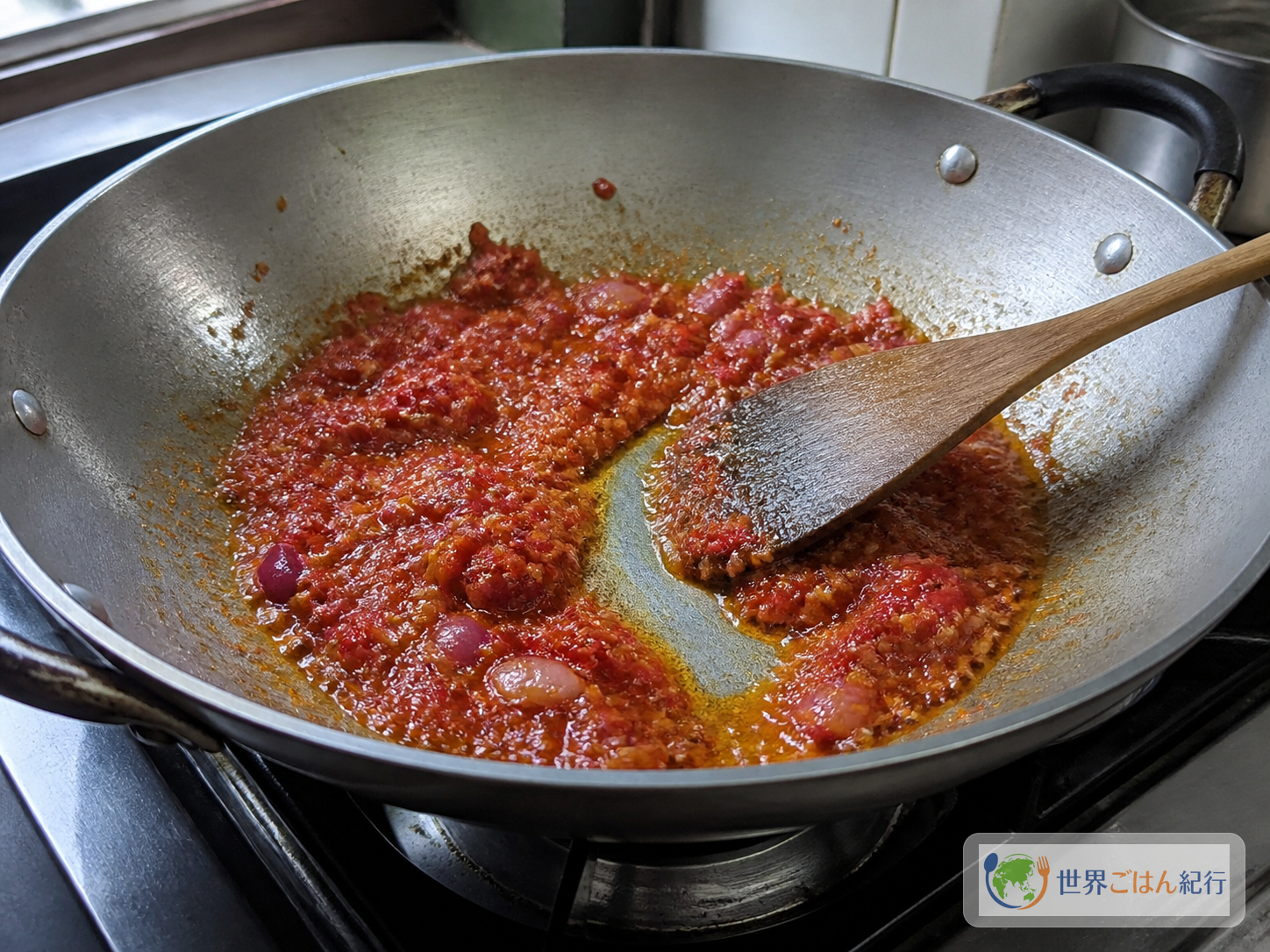
More than the red color, the heart of the flavor is frying the aromatic paste in oil all the way and adding the prawns last. Once you have cooked off the raw edge of the paste and reached the point where the sauce leaves a thin layer on the back of a spoon, the dish comes together easily even if the type of chili or the substitute ingredients change.
Put sambal udang over warm jasmine rice and serve it with cucumber and lime, and moisture and fragrance come in between the heat. It is a dish that pairs easily with a coconut-flavored rice like nasi lemak, and with the herb dishes of nasi kerabu (in Japanese).
Ingredients, with the Role of Each Aromatic Separated
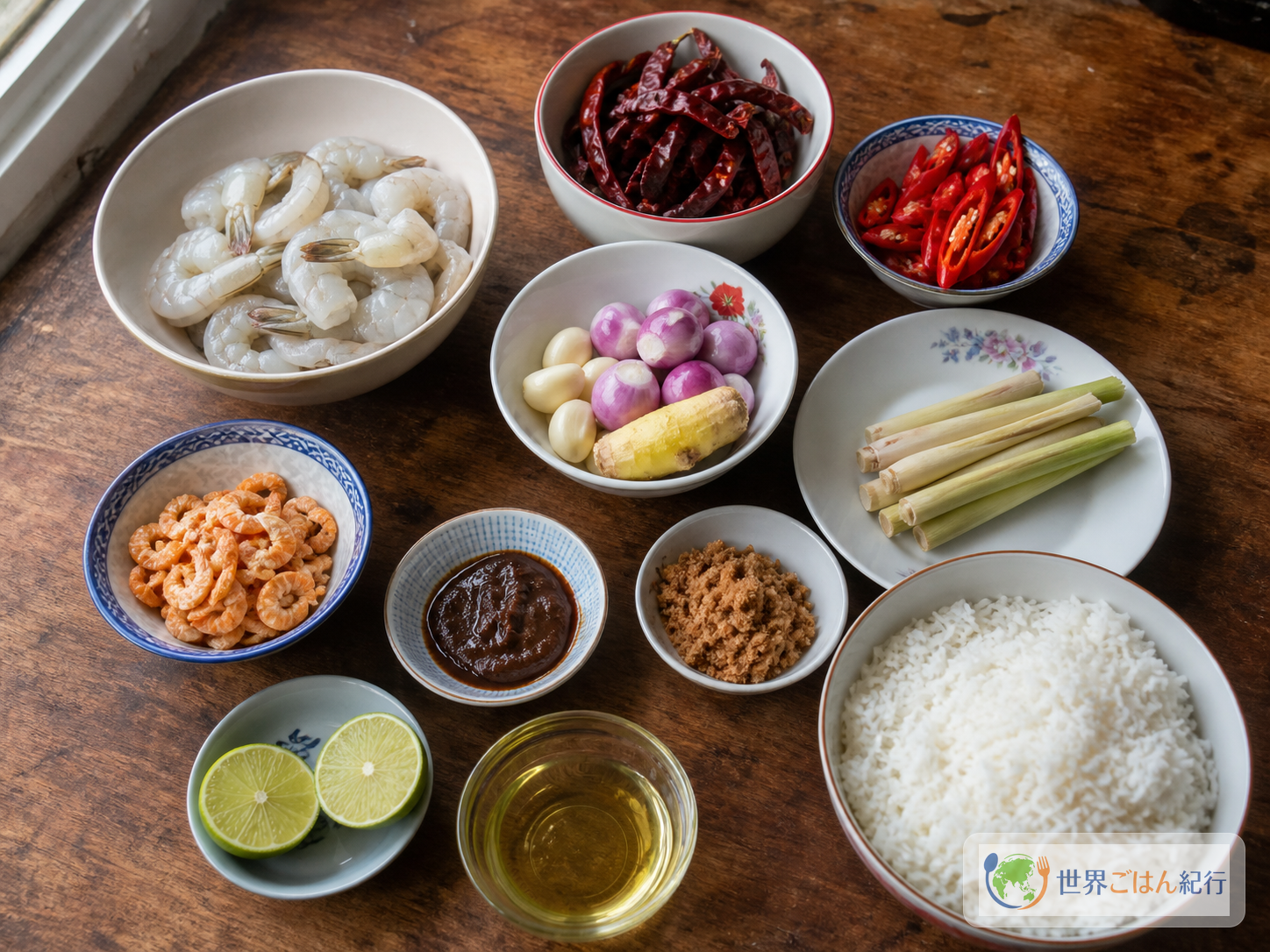
Sambal udang (serves 4)
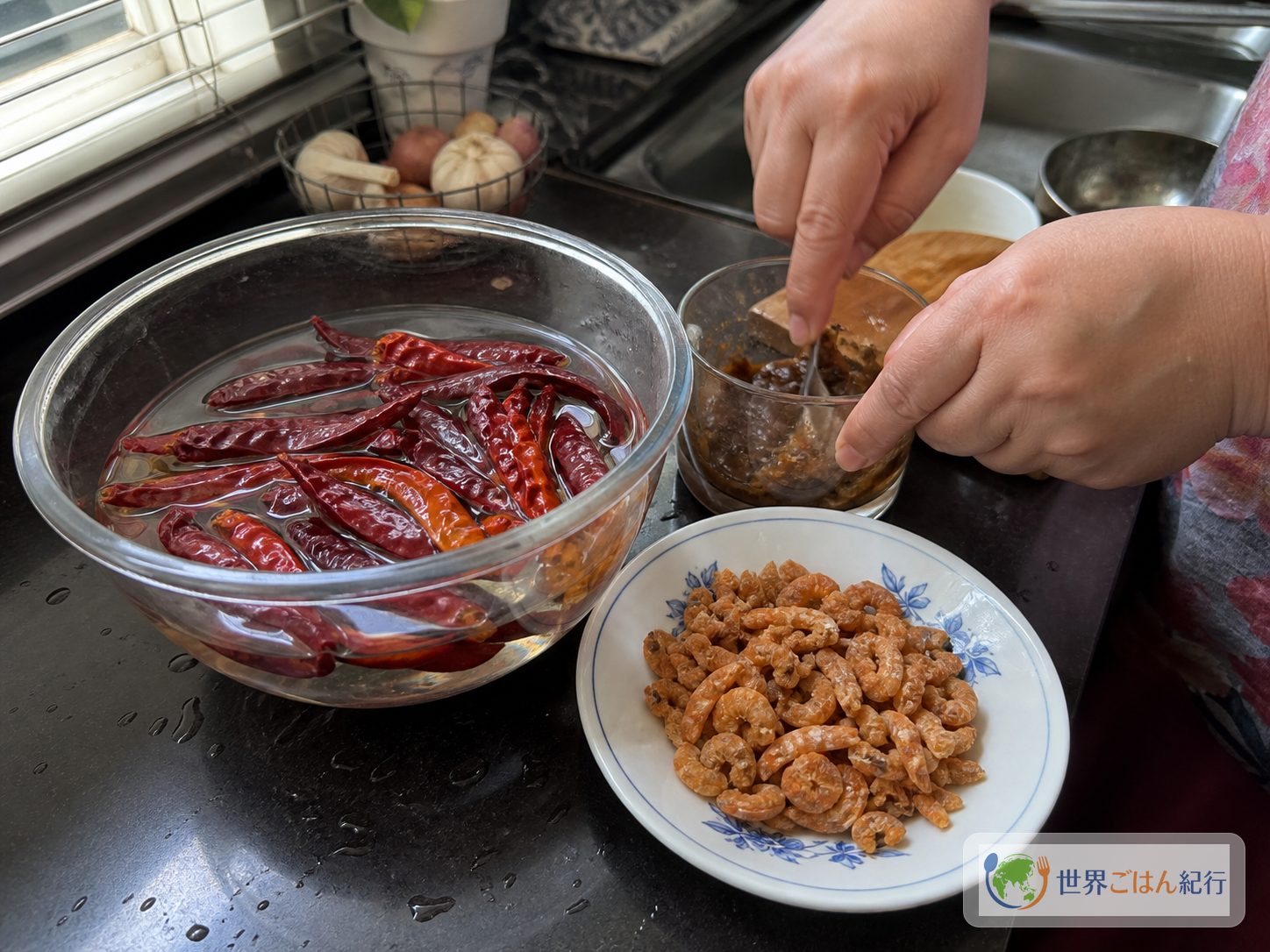
Dried shrimp is not there to increase the prawn flesh; it places a dry seafood savoriness deep in the sauce. Too much soaking liquid makes the aroma overly strong, so this time rinse them with water, pat dry, and dry-roast before turning them into a paste. Belacan, the fermented shrimp paste, is saltier and more strongly fermented than dried shrimp and cannot be swapped in by the same weight.
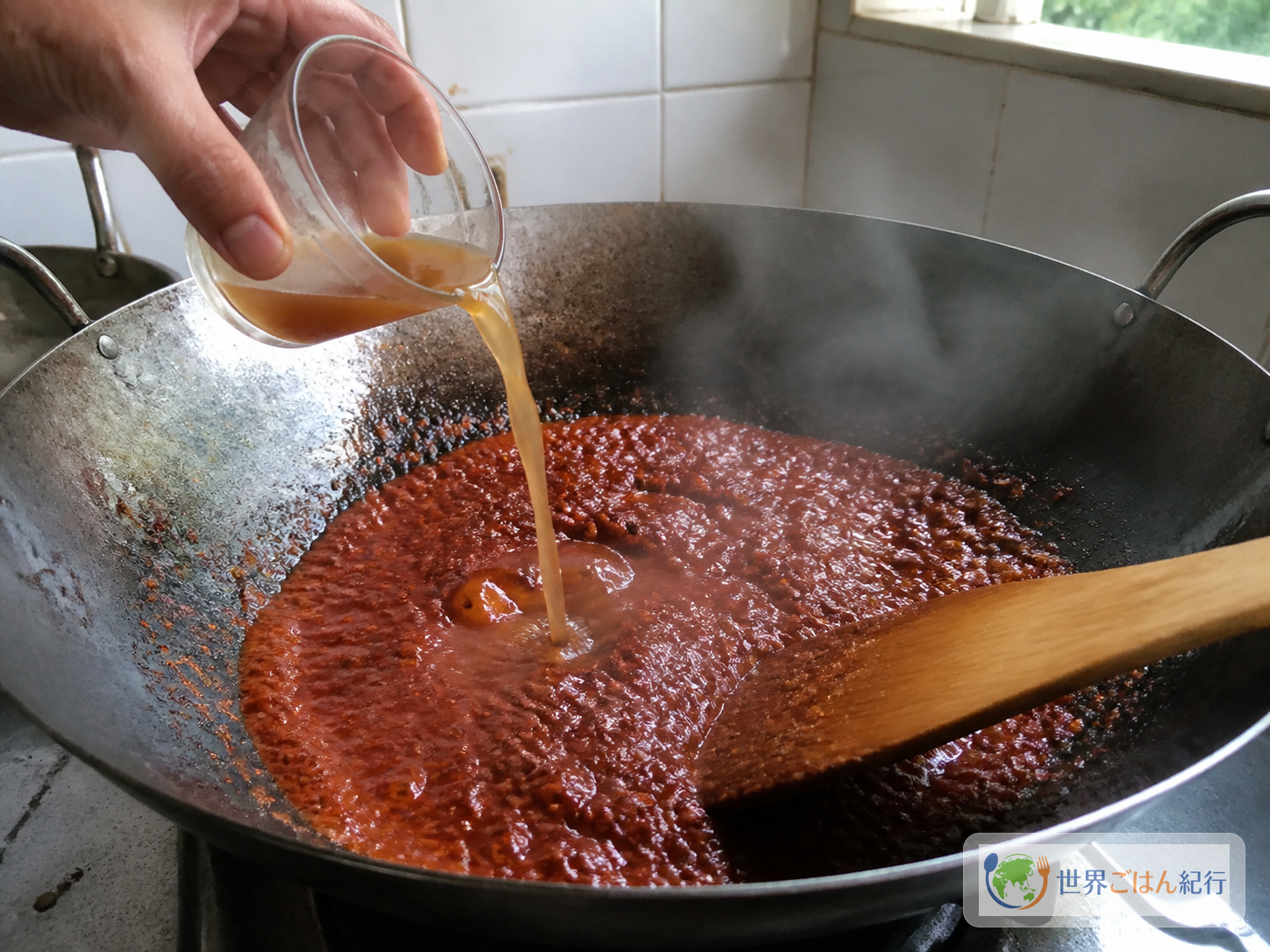
Tamarind has not only a bright sourness like lemon but also a round aroma resembling dark brown sugar. Paste only needs dissolving in hot water, while a hard seeded block is rubbed in warm water and the fibers and seeds strained out before use. Rather than adding sourness at the end, cooking it down as part of the sauce's liquid keeps the heat of the chili from stabbing the tongue.
When you shop for tamarind, check that it is labeled "tamarind paste," that the net contents are around 200g, and whether it has seeds. It is worth buying if you want sourness not just for this one dish but also for laksa Sarawak or Indian cooking. If you are only trying it once, you can approximate the sourness with 5g of pickled plum (umeboshi) pulp and 5ml of lime juice, but the fruity aroma specific to tamarind will not remain.
Fresh prawns, dried shrimp and fish sauce cannot be used by people with crustacean or seafood allergies. Leaving out only the dried shrimp and fish sauce will not give the same flavor, so if needed, omit them and make a different spicy sauce with salt and kombu water. Chilies vary greatly in heat by product. The first time, remove half the seeds, and adjust with lime and sugar after it is done.
Method: Fry the Aromatic Paste, Add the Prawns Last
If you keep the pan on high heat, only the chilies burn first, and moisture from the onion remains. First look at the coarseness of the crush, then the temperature of the oil, and last the color of the prawns. Cooking times are guides, so keep adjusting the heat until the moisture of the paste and the size of the prawns catch up with the state described.
Don't Let the Sourness and Heat Get Lost in the Pan
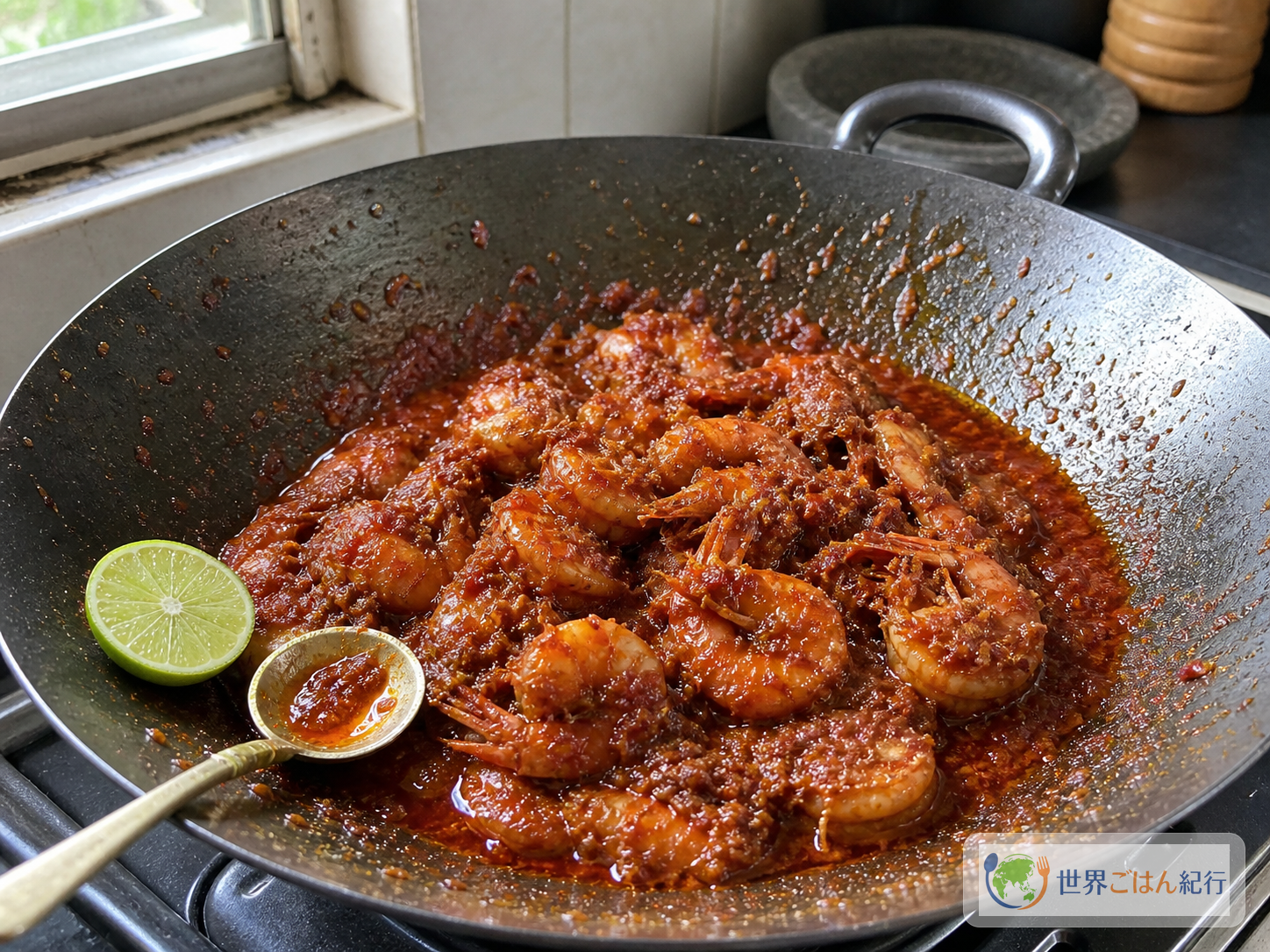
When the flavor of sambal udang is blurry, look at how well the paste has been fried before adding more chili. If moisture from the onion remains, the heat and sourness are diluted and only the sugar comes forward. Adding the tamarind liquid after the oil has separated red returns the aromatics into the sauce, and the flavor doesn't turn watery even after the prawns go in.
Dried shrimp has its aroma woken by dry-roasting, but you don't need to roast until the color deepens. Move it off when a toasty smell rises after about 1 minute 30 seconds, and if black spots appear, stop before bitterness comes out. Leaving a few grains of dried shrimp gives a small bite as an accent within the red sauce.
If you keep dried shrimp on hand, check whether it is uncolored, whether it can be ground to powder, and the capacity and storage method. It is an easy ingredient to buy if you will use it repeatedly for sambal, fried rice and soup stock, but for this one dish alone, buying a small amount of small dried shrimp (not sakura ebi) from a dried-goods shelf nearby is enough. If you want a fermented aroma, reduce the dried shrimp from 8g to 4g and add 2g belacan; this makes the saltiness easier to adjust.
Rescuing a sauce that went wrong
| Condition | Main cause | How to fix it |
|---|---|---|
| Only the sourness is sharp | Tasted before cooking down the tamarind liquid | Add 20ml water and 2g sugar, cook over low heat for 2 minutes, then check the saltiness |
| Bitter | Burnt the chilies or dried shrimp | Don't move the burnt part to a new pan; take only the unburnt upper part to another pan and adjust with 30ml water and 3g sugar |
| The sauce is watery | Paste not fried enough, or too much water added | Take out the prawns, cook down over low heat for 3–5 minutes, and return to the thickness where the trail on the bottom stays for 2 seconds |
| The prawns are hard | Cooked in the sauce for too long from the start | Stop any more heat, and eat them with a little warm sauce over rice. Next time cook 2 minutes per side |
| Too hot | Chili variety or amount of seeds was too much | Take only half the sauce to another pan and dilute with any of 30ml water, 50ml coconut milk or 3g sugar |
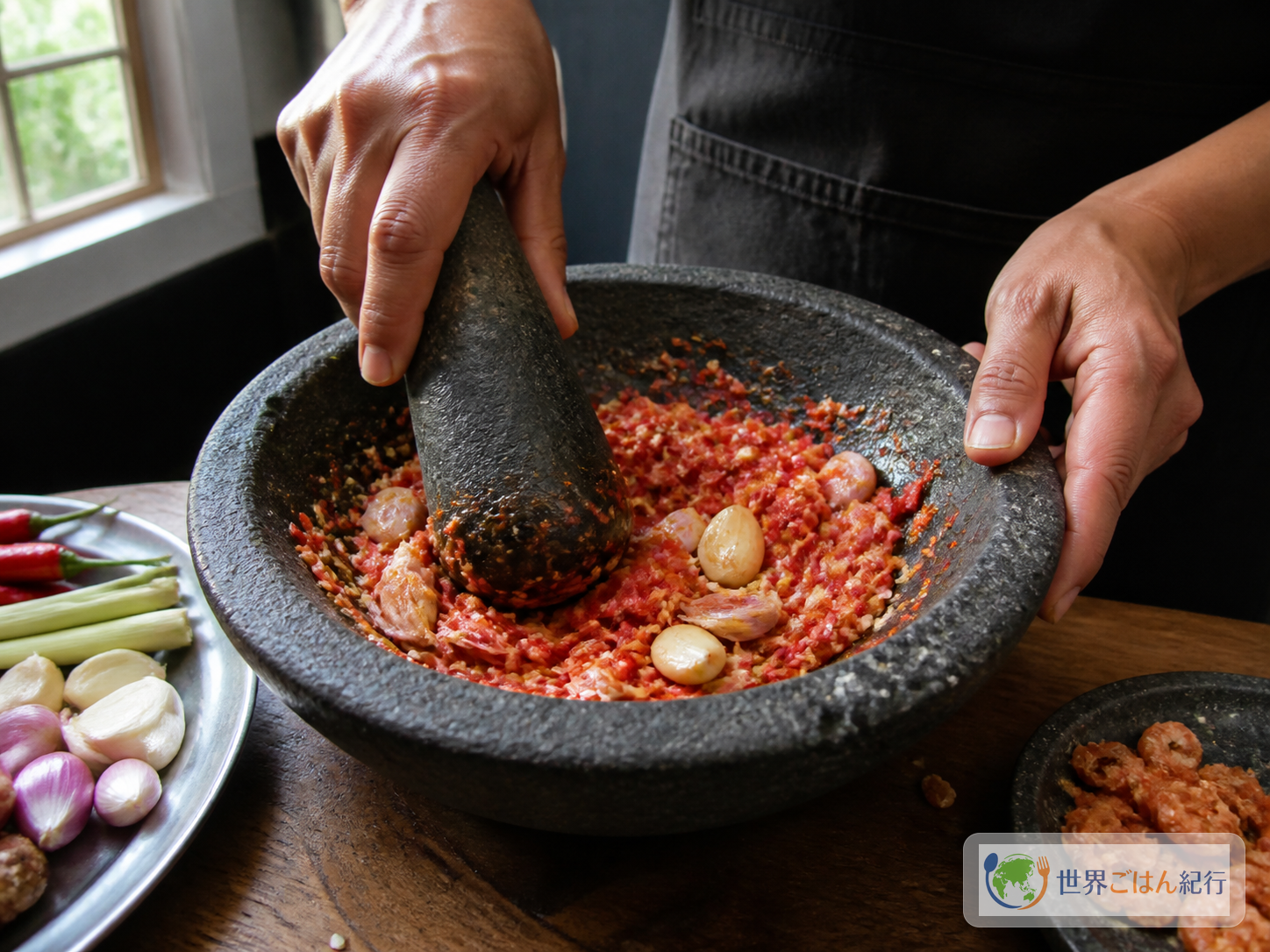
A mortar is not a necessity if you only make sambal once. You can make the flavor by chopping finely with a knife and crushing in a suribachi or a heavy bowl. Still, there is a reason to buy one if you repeatedly make aromatic pastes that keep their grains, like chili, dried shrimp and curry paste. The one point to check is that a heavy mortar such as granite comes with a pestle. A light vessel alone moves easily during cooking, and the red paste flies around it.
How Sambal Udang Shifts by Region and Household
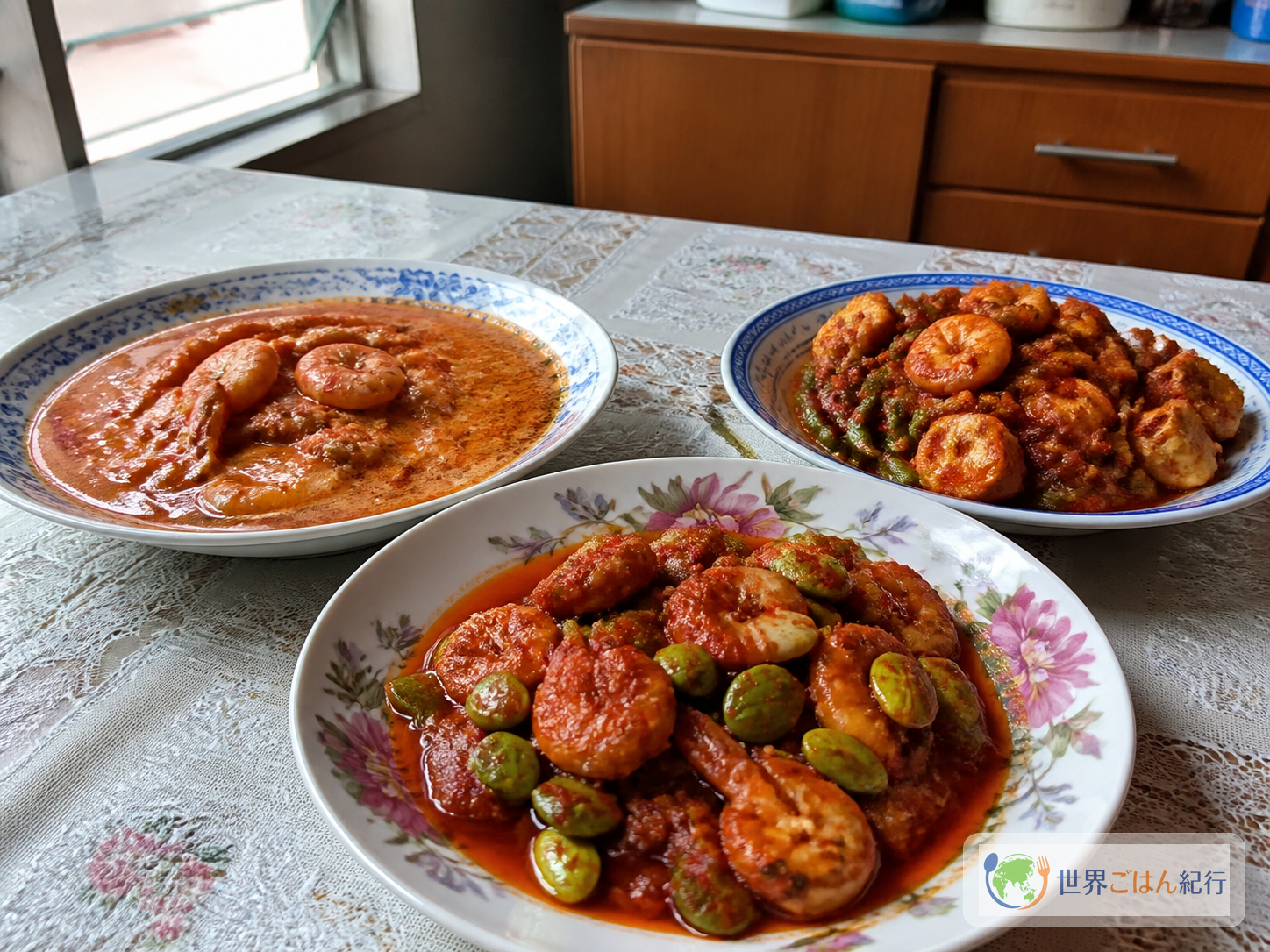
If you fix sambal as a single seasoning, regional differences become hard to see. Sambal tumis, which emphasizes sweetness; sambal belacan, which brings the fermented shrimp aroma forward; and the prawn dishes of the Straits coast that make tamarind sourness the star differ in how they carry through a meal, even in the same red color. Rather than renaming the dish, deciding what a substitution is meant to preserve lets you enjoy the branching even in a home kitchen elsewhere.
Add petai to layer on bitterness
The style presented in Malaysia as sambal udang petai layers the bitterness and earthy aroma of petai (stink bean) onto the sweetness of the prawns. If you use 80g of fresh or frozen petai, add it once the tamarind sauce has cooked down, warm for 2 minutes, then add the prawns. If you replace it with edamame because you can't find it, the green color and bite remain but the distinctive bitterness does not.
Make a rounder sauce with coconut milk
If you want to share the heat across the family, use 100ml unsweetened coconut milk in place of 50ml water. Add it once the sauce has cooked down, and warm for only 3 minutes over low heat without letting it boil hard. The corners of the sourness soften and you get a sauce you can spoon more generously over rice, but the aroma of tamarind feels thinner.
Use shell-on prawns to add the sea to the sauce
With 450g shell-on prawns, the shells pass savoriness to the sauce, and in place of the work of removing the flesh you gain the pleasure of peeling the shells at the table. Devein them, and lengthen the cooking in step 5 to 2 minutes on one side and 2–3 minutes after turning. Because the heat reaches differently depending on shell thickness, check that the center is opaque and has reached 63°C. Raising the tamarind to 20g gives a sourness that doesn't lose to the aroma of the shells.
Swap the prawns for squid to keep a clean bite
When you want to use seafood other than prawns, you can swap in 300g of sliced-into-rings squid. Pat the squid dry, add to the sauce and cook 1 minute, then turn and cook just 1 more minute. Stop immediately when the translucence is gone; the key is not cooking it long enough to harden. Keeping the fish sauce and dried shrimp makes the seafood aroma stronger, so for a lighter result reduce the dried shrimp to 4g.
Use chicken or thick fried tofu for a dish without prawns
For people who can't eat prawns, rather than calling it the same dish, make it as a separate dish that borrows how the aromatic paste is used. For 300g chicken thigh, cut into 3 cm pieces, salt it, brown it first over medium heat, add the sauce and cook through to the center. For 300g of thick fried tofu (atsuage), pat it dry, brown it, and coat it with the sauce at the end. In this case, omit the dried shrimp and fish sauce and make up the saltiness with salt and kombu water, and you can enjoy the heat and sourness without mixing in crustaceans.
Lower the heat and keep the lime aroma
Reduce the dried red chilies to 6g and remove all the seeds. Don't use the fresh red chili, and add 10ml lime juice after turning off the heat. Adding water just to dilute the heat makes the sauce run, so adding sugar 2g at a time and serving extra cucumber keeps the plate's intensity better.
Sambal Changes Shape with Each Family
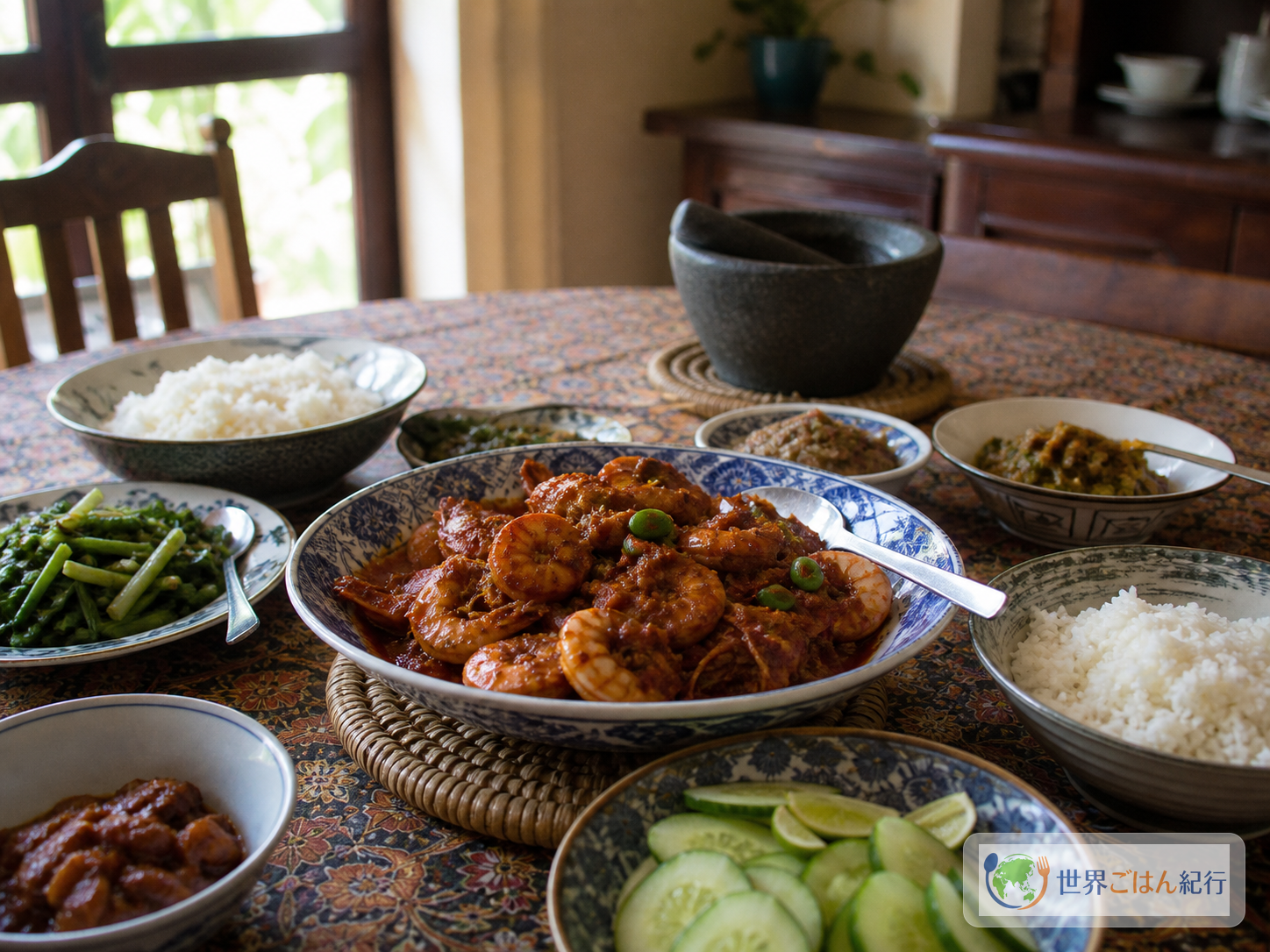
Research into Malaysian sambal shows that, even under the same name, the way of crushing, the chili variety, the amount of fermented shrimp, the moisture and the kind of sugar all vary. Singapore's cultural materials also explain that sambal spans the cooking of the Malay, Chinese, Peranakan and Eurasian communities, and is used not only as a dipping sauce but also as a marinade, a sauce and the core of a dish. Rather than flavor ending at a national border, it is more natural to see ingredients that traveled across the strait and household procedures taking different shapes at the tables of each place.
Reading similar names by their flavor axis
| Style | Tendency of taste and aroma | How to approximate it elsewhere |
|---|---|---|
| Sambal tumis | Sweetness and sourness layered on chili and onion fried in oil | Use 15g raw cane sugar and 15g tamarind, and fry until the oil seeps out |
| Sambal belacan | The strong aroma and saltiness of fermented, dried shrimp come forward | Reduce the dried shrimp to 4g, add 2g belacan and hold back the fish sauce |
| Peranakan sambal | An aromatic paste adjusted to household taste, the foundation of the whole dish | Coarsely crush shallot, garlic and chili in a mortar |
| Prawn dishes with tamarind | Sweet-sour acidity and the sea's aroma gathered at a thickness that suits rice | Dissolve tamarind in hot water, and add the prawns last for a short simmer |
| With petai | Bitterness and the bite of beans added to the sweetness of the prawns | Add 80g petai in the latter part of the sauce and warm for 2 minutes |
Peranakan recipes have been handed down on the assumption that each household adjusts them. Crushing chilies and shallots in a stone mortar leaves a coarser texture than turning them to liquid in one go with a blade. But using a mortar is not the only right way. On a day with little time, use an electric tool in short bursts and stop where the grains remain, and you can make up for the difference in tools with cooking judgment.
At the table, put the sambal udang on a large platter, serve the rice separately, and adjust the heat of each bite with cucumber and lime. If you pair it with coconut rice, reducing the sugar in the sauce by 3g keeps it from feeling heavy. Compared with nasi kerabu (in Japanese), which comes with herbs and raw vegetables, and ayam masak merah, which coats rice with a red sauce, you can see that sambal is a dish that moves between main and condiment.
Frequently Asked Questions
Are belacan and dried shrimp the same?
They are not. Belacan is a seasoning made of fermented shrimp pressed into a block; it is salty and strongly fermented, and a small amount changes the direction of the sauce. Dried shrimp is simply dried prawns, so even dry-roasted and crushed it will not give a fermented aroma. The first time, make it with 8g dried shrimp; next time, if you use belacan, start from 4g dried shrimp and 2g belacan to make the saltiness easy to restore.
What can I substitute if I don't have tamarind?
Mix 5g pickled plum (umeboshi) pulp with 5ml lime juice and add in step 4 together with the 50ml water. Plum pulp alone is strongly sweet-sour, so reduce the sugar from 15g to 10g, and return it as you taste. Lemon juice alone can add sourness, but the fruit has less body and the sauce is lighter.
Can I sear the prawns first?
If you want the toastiness of shell-on prawns, sear the surface in 1 tsp oil for 1 minute per side and take them out. Make the sauce, return them at the end, and heat until the center is opaque. If you fully cook them at the start, the flesh tends to shrink while being reheated in the sauce.
Can I make it ahead?
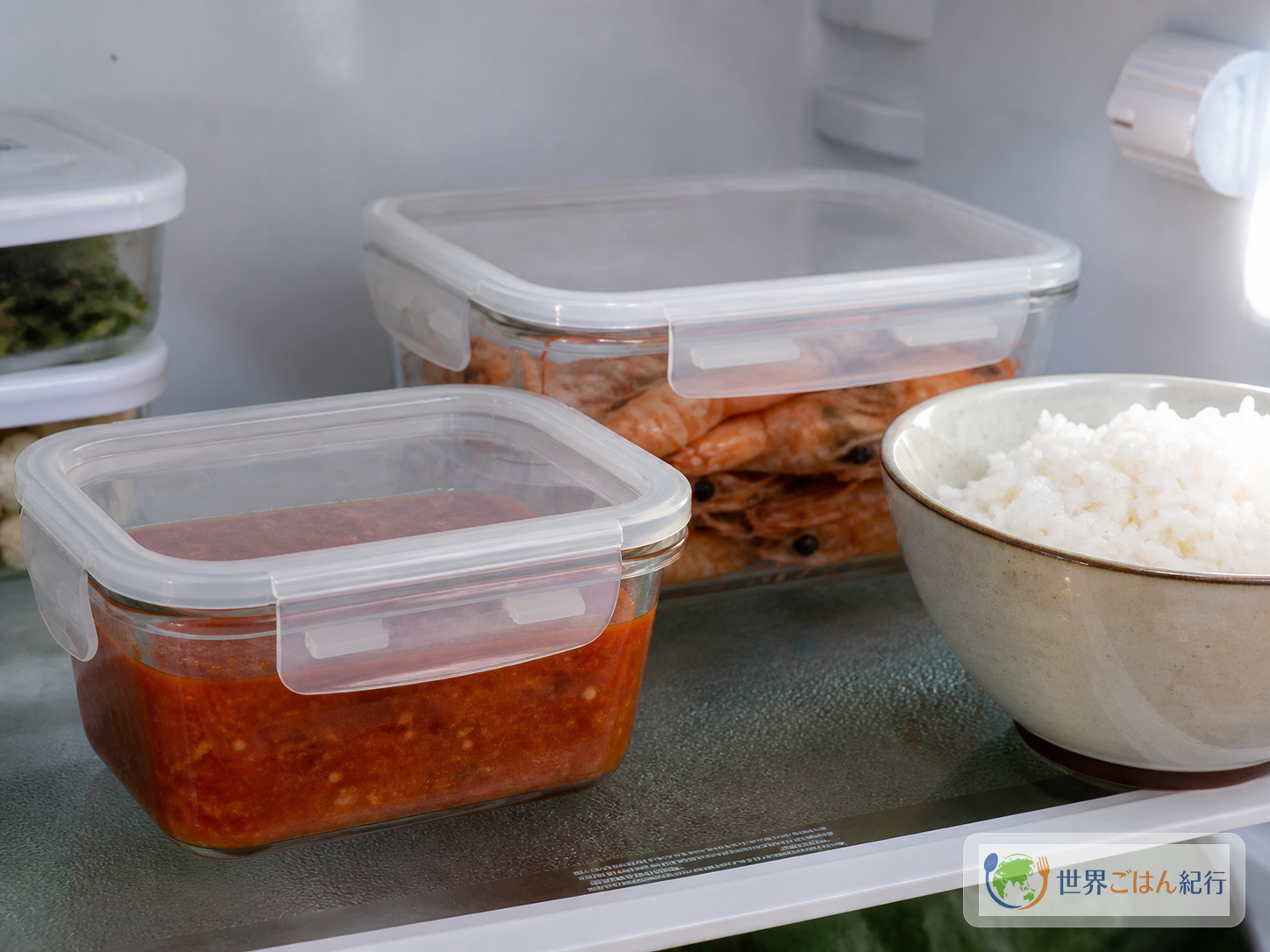
The sauce alone can be cooled, placed in a shallow airtight container and refrigerated. Refrigerate the cooked prawns the same way within 2 hours, and use them up within a guide of 3–4 days in the refrigerator. Heat only what you'll eat thoroughly in a pan, and don't keep cooking the prawns for long. Wash the cutting board and knife used for seafood separately from the serving utensils.
What is the nutritional information?
It is an approximation calculated by dividing the ingredients above among four people, rice included. One serving is about 430 kcal, 27g protein, 18g fat and 42g carbohydrate. Because it uses fish sauce and dried shrimp, the salt content varies greatly by product. To reduce sodium, start with 8ml of fish sauce and make up the flavor with the sourness of tamarind and lime.
Sources
- Making and Use of Sambal — National Heritage Board Singapore — Checked that sambal is used across multiple food cultures including Malaysia and neighboring regions, its types, fermented and dried shrimp, passing down and adjusting by household, and the role of the mortar. Accessed and checked: 2026-08-26 (JST)
- Baba GT Lye's Hae Bee Hiam: Recipes and Stories — National Heritage Board Singapore — Checked the idea of adjusting Peranakan cooking to taste rather than a fixed recipe, agak-agak, batu lesong (stone mortar), and the relationship between the crushing step and texture. Accessed and checked: 2026-08-26 (JST)
- My Recipes From Malaysia — Living in Malaysia — Checked, as an example of ingredients for sambal udang, the use of belacan, dried chilies, tamarind, lemongrass and oil, and the sequence of frying the aromatic paste until the oil separates and cooking the prawns for a few minutes. Accessed and checked: 2026-08-26 (JST)
- Malaysian Tamarind Shrimp — Christopher Kimball's Milk Street — Checked tamarind prawns as a Malaysian Chinese dish, the handling of shell-on prawns, and the idea of cooking down tamarind in a short time. Accessed and checked: 2026-08-26 (JST)
- Sambal Prawn with Bitter Beans (Sambal Udang Petai) — Chef Wan Lifestyle — Checked the Malaysian sambal prawns with petai, the style using tamarind, palm sugar and belacan, and the order of cooking. Accessed and checked: 2026-08-26 (JST)
- Sambal Tumis Recipe — Ajinomoto Food Biz Partner Malaysia — Checked the ingredient composition of sambal tumis, the step of adding tamarind liquid and cooking down, and the state of frying until oil floats. Accessed and checked: 2026-08-26 (JST)
- 4 Steps to Food Safety — FoodSafety.gov — Checked separating utensils used for seafood, cooling after cooking, and refrigerating within 2 hours. Accessed and checked: 2026-08-26 (JST)
- Cook to a Safe Minimum Internal Temperature — FoodSafety.gov — Checked the guide that shrimp should be cooked until the flesh is pearly or white and opaque. Accessed and checked: 2026-08-26 (JST)
- Cold Food Storage Chart — FoodSafety.gov — Checked the guide for how long cooked seafood and leftovers can be refrigerated. Accessed and checked: 2026-08-26 (JST)