
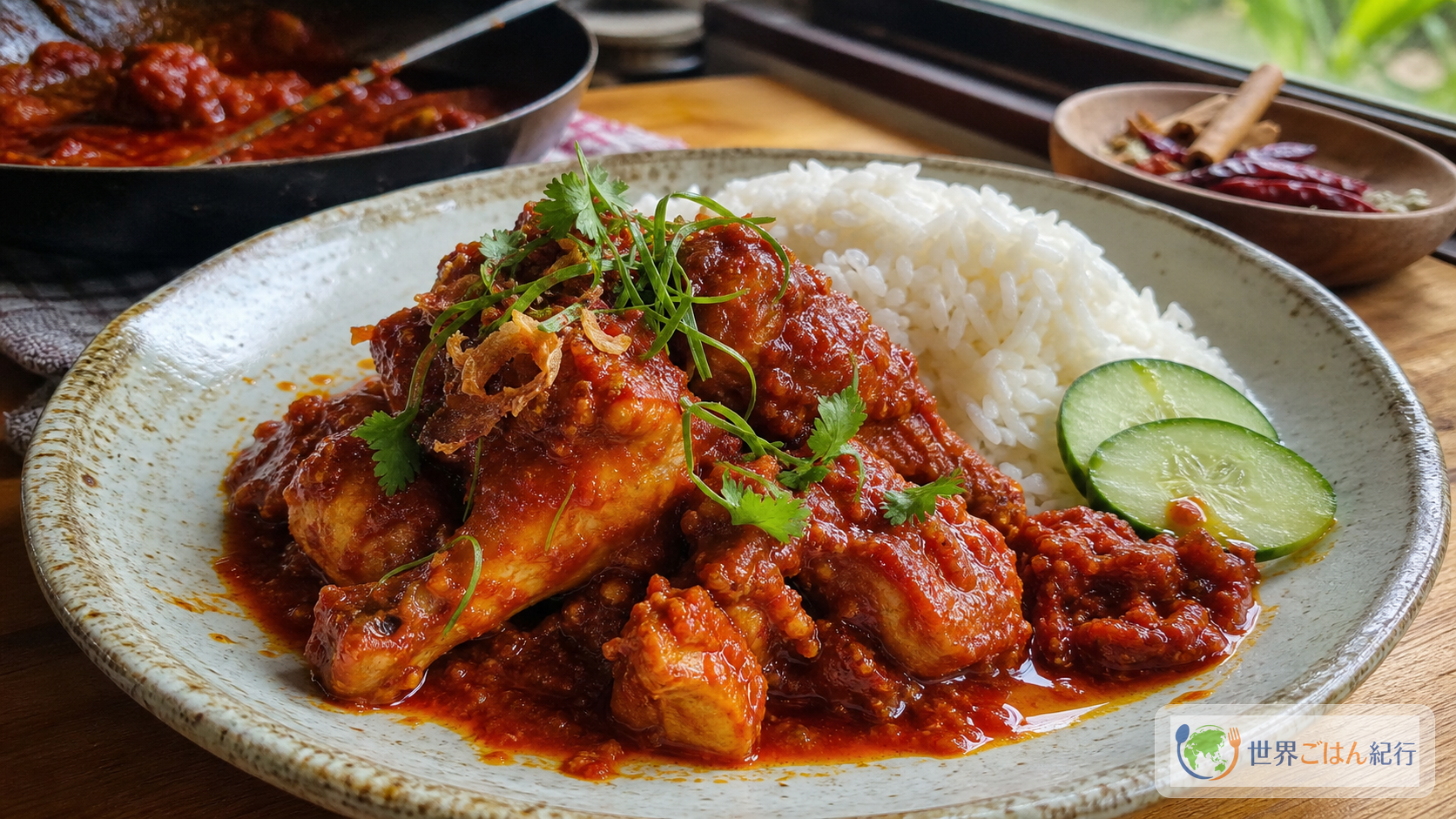
A red sauce that soaks into the rice: Malaysian chicken
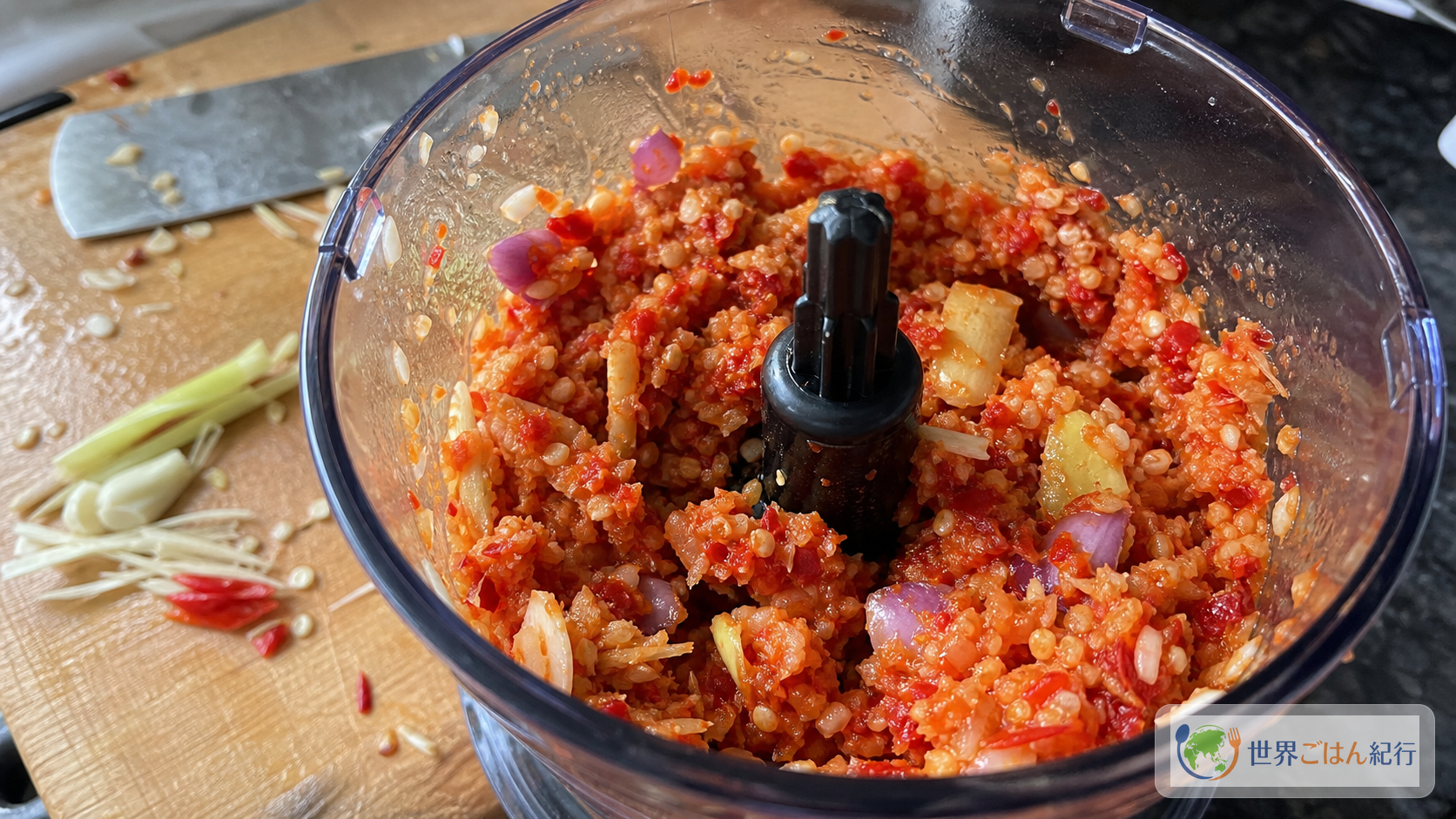
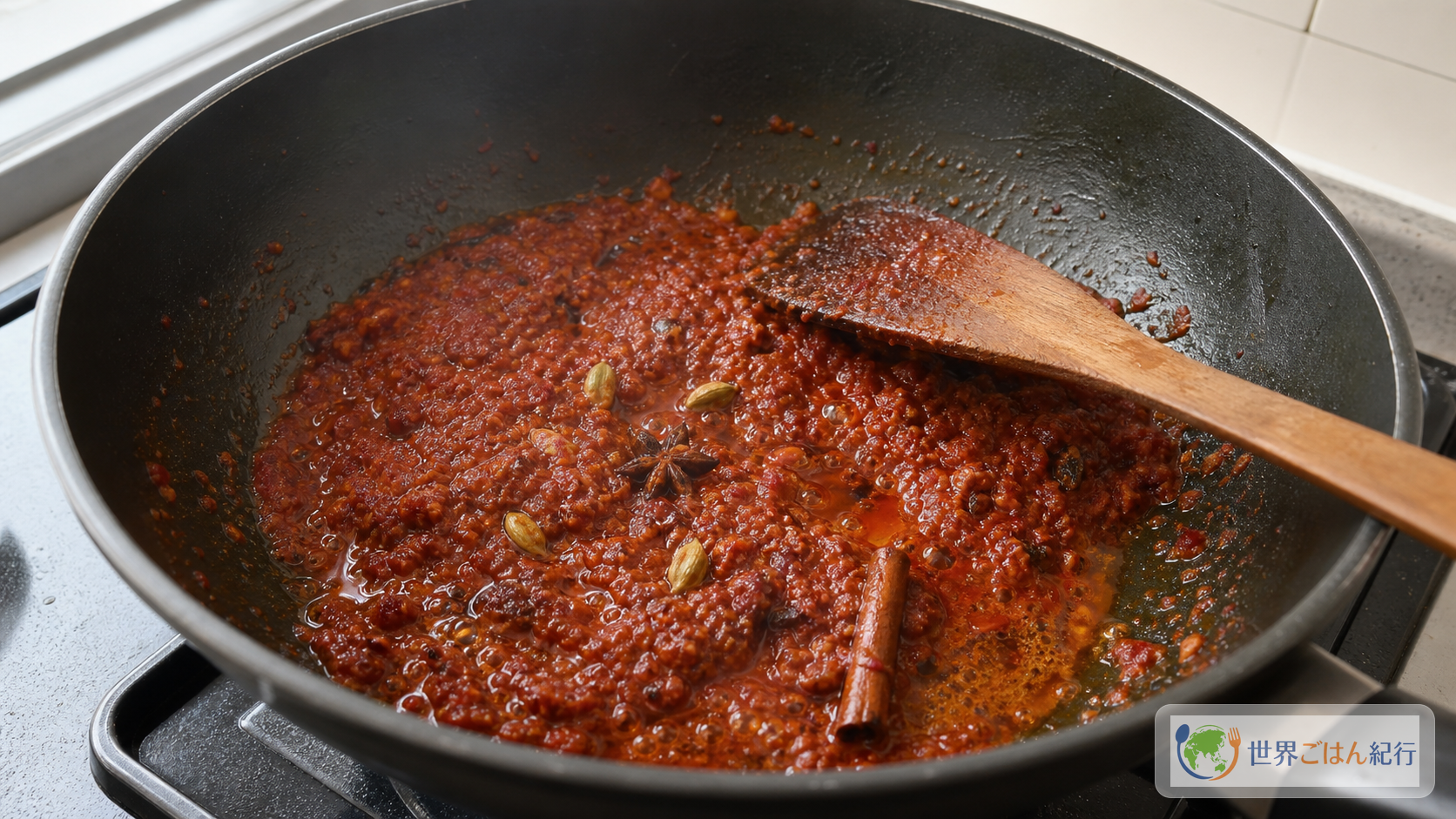
When you soak dried chilies in hot water in an evening kitchen, what rises first is not sharp heat but a dark, dried-fruit scent. Blend them with onion, ginger and lemongrass and fry the paste slowly in oil. The moment red oil seeps out at the edge of the pan, the dish leans firmly away from plain tomato stew and toward Malaysian cooking.
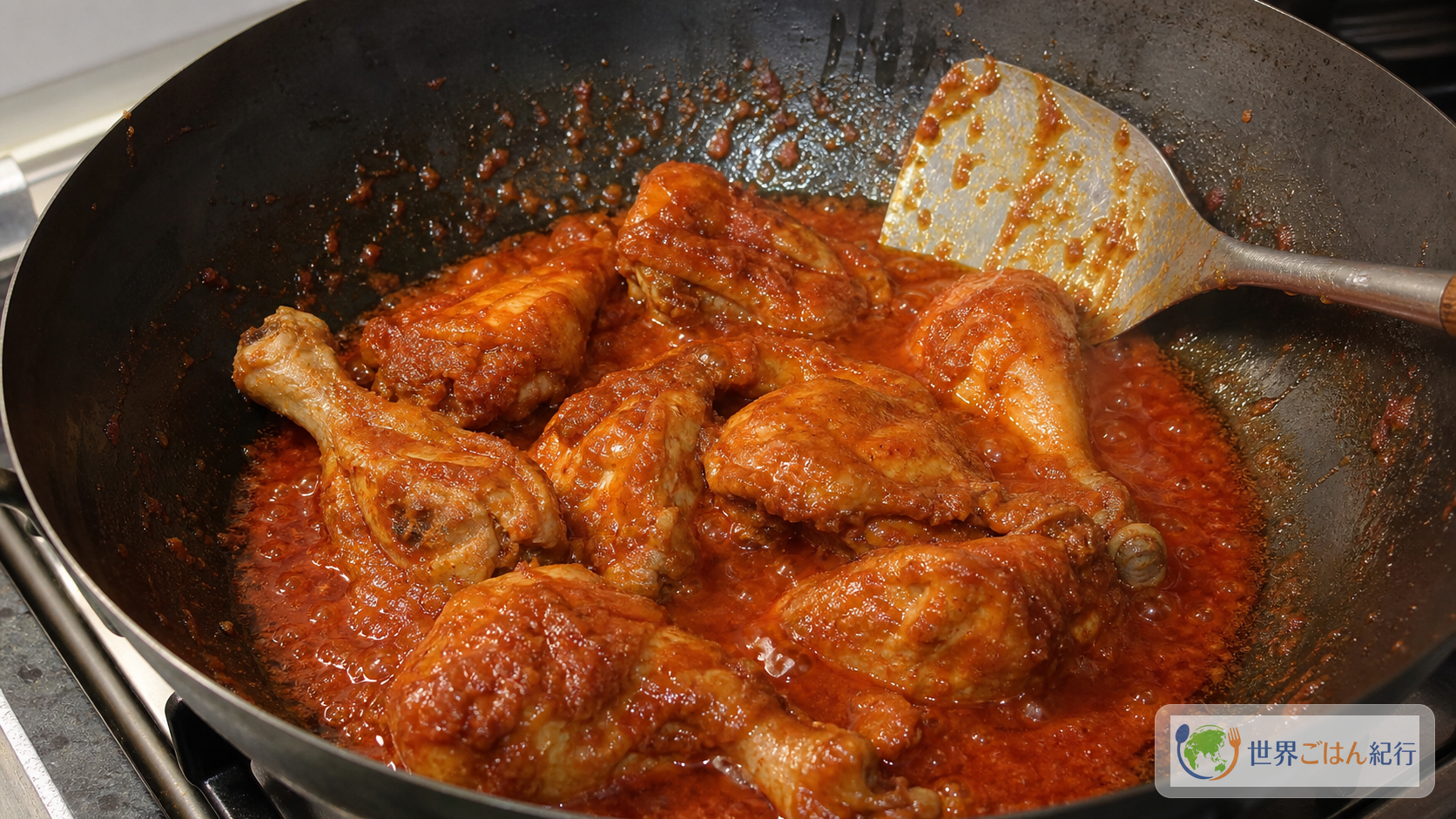
Ayam masak merah is Malay for, roughly, "chicken cooked red." Chicken seasoned with turmeric is fried once, then simmered in a red sauce of dried chilies, onion and tomato until it clings. It is eaten widely in Malaysia and Singapore, both as home cooking and as a celebration dish on the tables of Hari Raya and weddings.
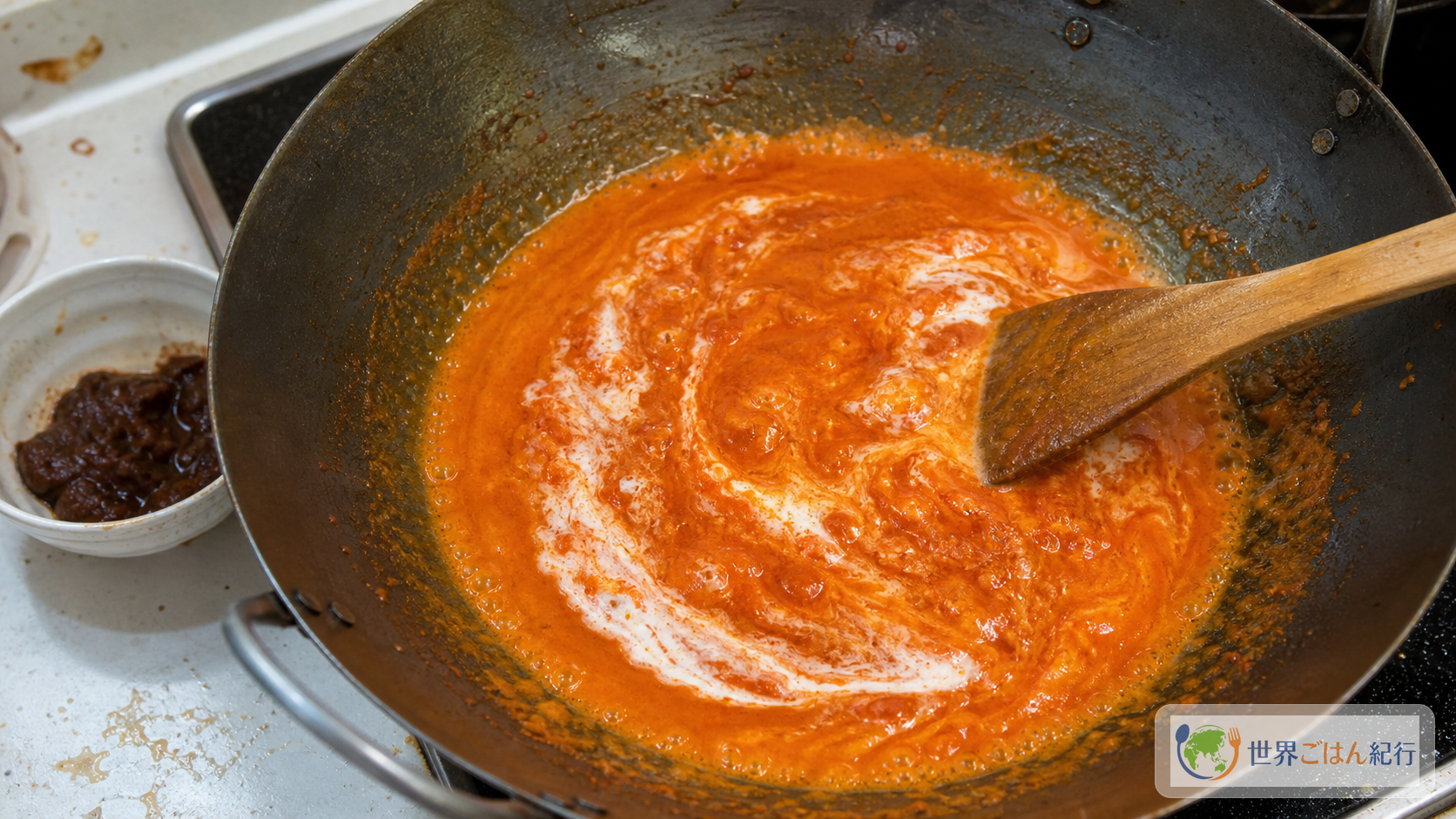
For the home kitchen, this article cuts the dried chilies back a little and uses sambal oelek to supply the red color and heat. The tomato comes from canned tomato and tomato paste, the sourness from tamarind paste, and the roundness of the sauce from a little coconut milk. If you like the sambal in nasi lemak, you will understand at once the pleasure of a red sauce spooned over rice.
The local spelling is Ayam Masak Merah. Transliterations vary from language to language (the Japanese original, for example, has several katakana renderings). This article uses "ayam masak merah" throughout.
How it is eaten locally, and the core to keep at home
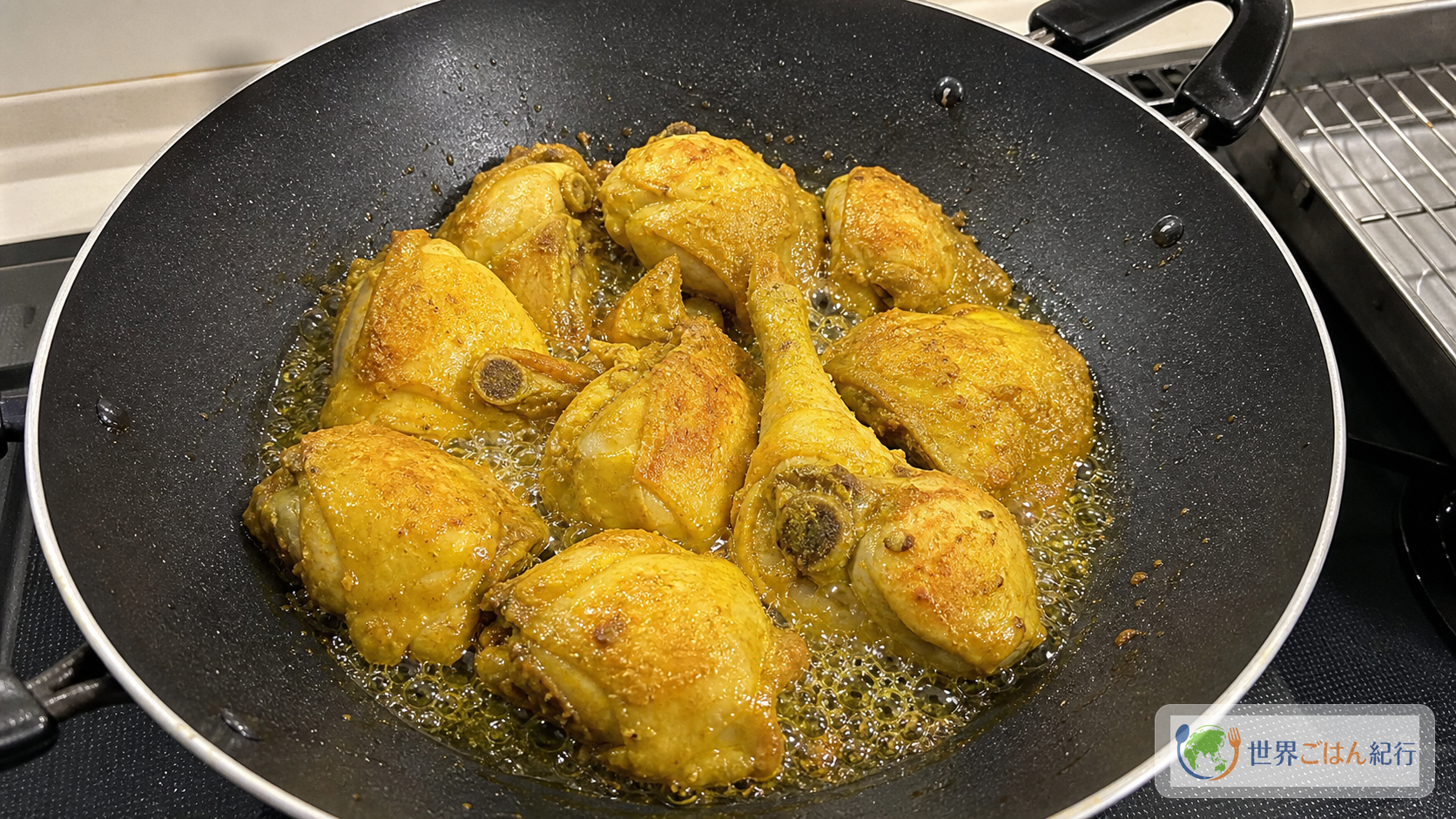
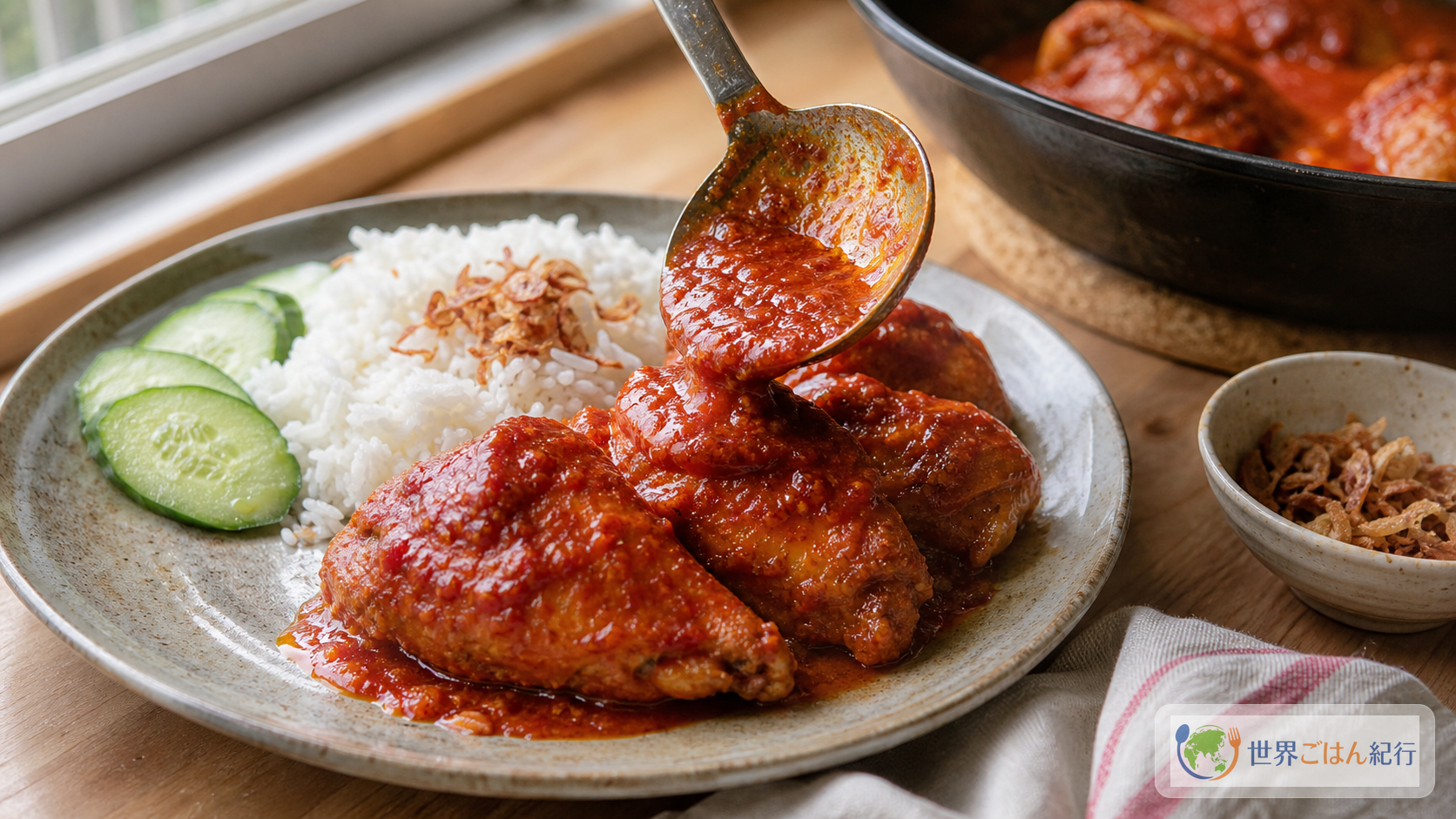
Ayam masak merah goes with plain white rice, and also with tomato rice, nasi minyak and nasi lemak. It is less a spicy dish than a red chili-tomato sauce that rice catches. The chicken is fried on the surface first, so it doesn't fall apart in the braise, and the sauce clings around the skin and the bones.
There are four things worth keeping when you make it at home.
| What to keep | Why | How to apply it at home |
|---|---|---|
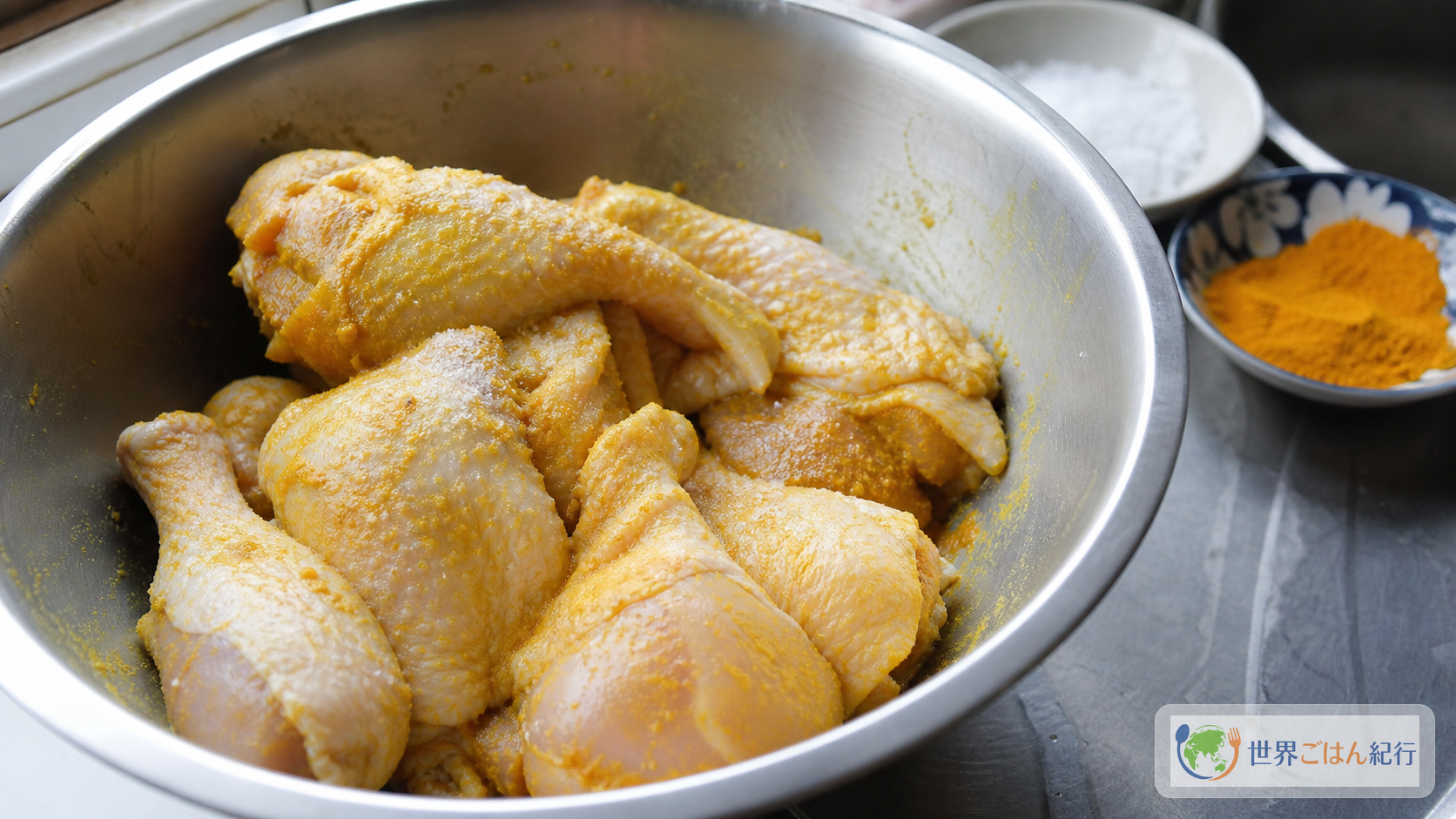
| Season the chicken with turmeric | Gives a yellow fragrance and toasty skin | Use bone-in thighs or drumettes |
| Fry the spice paste until done in oil | Turns a raw heat into a sweet aroma | Wait over medium-low heat until the oil seeps out |
| Don't stop at tomato | The sweet-sour note goes flat | Add depth with tamarind and sambal |
| Bring the sauce to a thickness that clings to rice | It becomes one with the rice on the plate | Stop when a wooden spoon leaves a trail for 1 second |
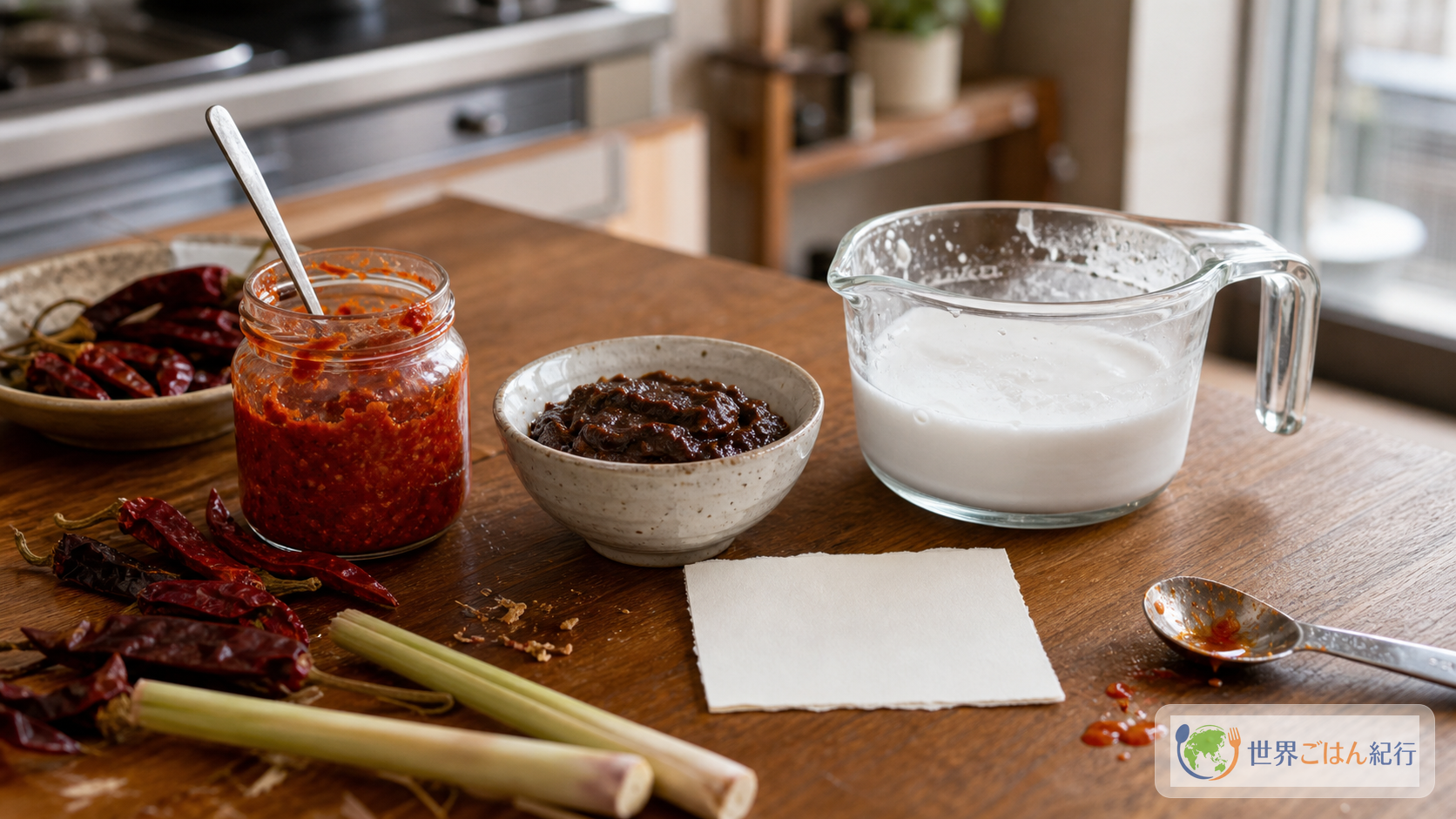
Among Malaysian dishes, ayam pansuh (in Japanese), the bamboo-tube dish of Sarawak, is closer to a steam-braise with lemongrass and ginger, while ayam masak merah is a deep red glaze that suits city eateries and festive plates. On a day you want noodles, pair it with laksa; on a day you want the aroma of grilled skewers, with satay (in Japanese), and you will see the range of the Malaysian table.
Ingredients (serves 4)
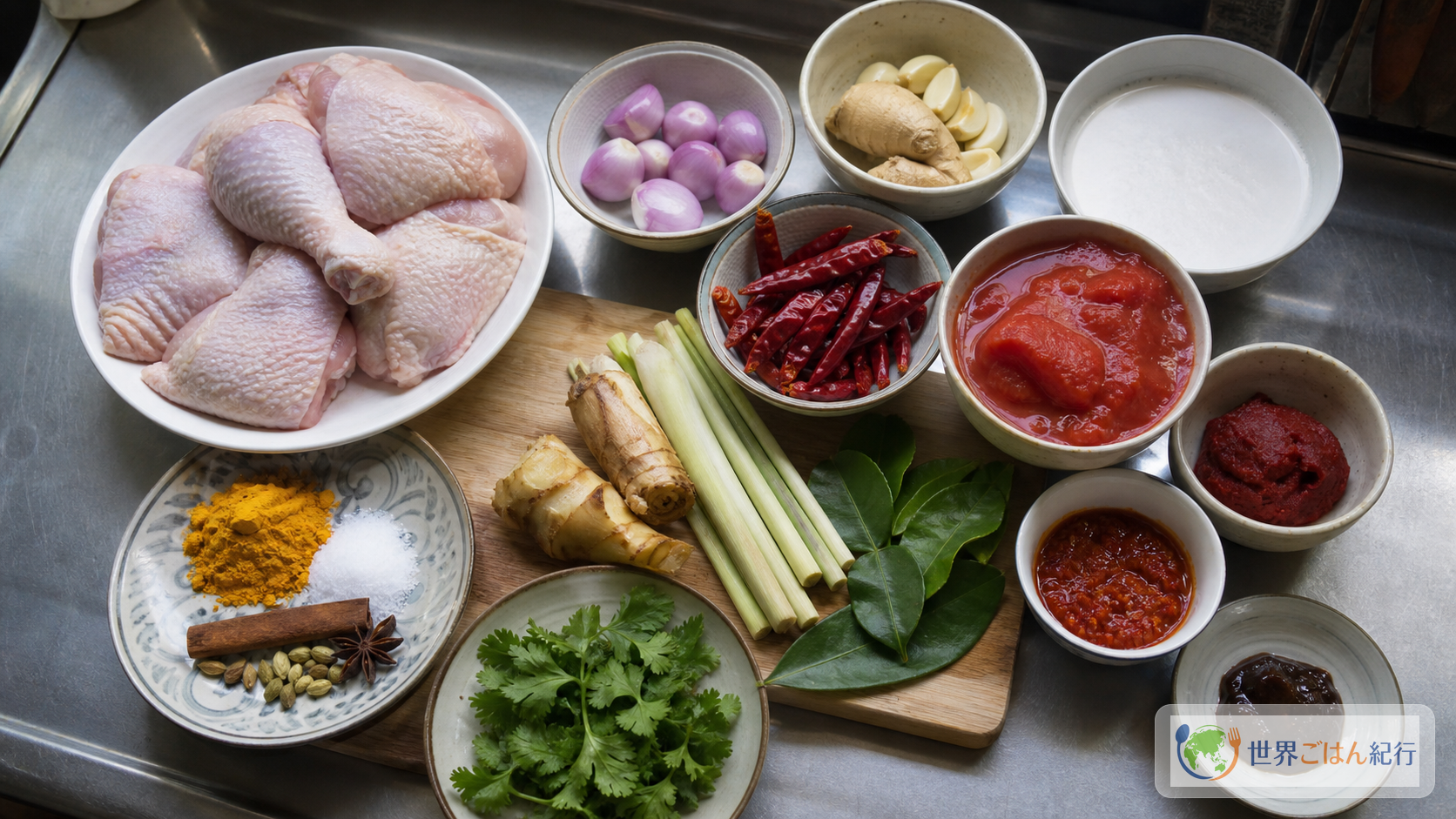
This dish contains chicken. Sambal oelek and tomato paste may contain seafood, garlic or preservatives depending on the product. For people who dislike heat, and when eating with children, reduce the dried chilies to 4 and the sambal oelek to 1 tbsp.
Ingredients worth hunting for
Chicken, onion and tomato are fine from an ordinary supermarket. The ones worth looking for at an Asian grocery or online are sambal, which gives the red aromatics their outline; tamarind, which rounds the sourness; and coconut milk, which pulls the sauce together for rice.
Method
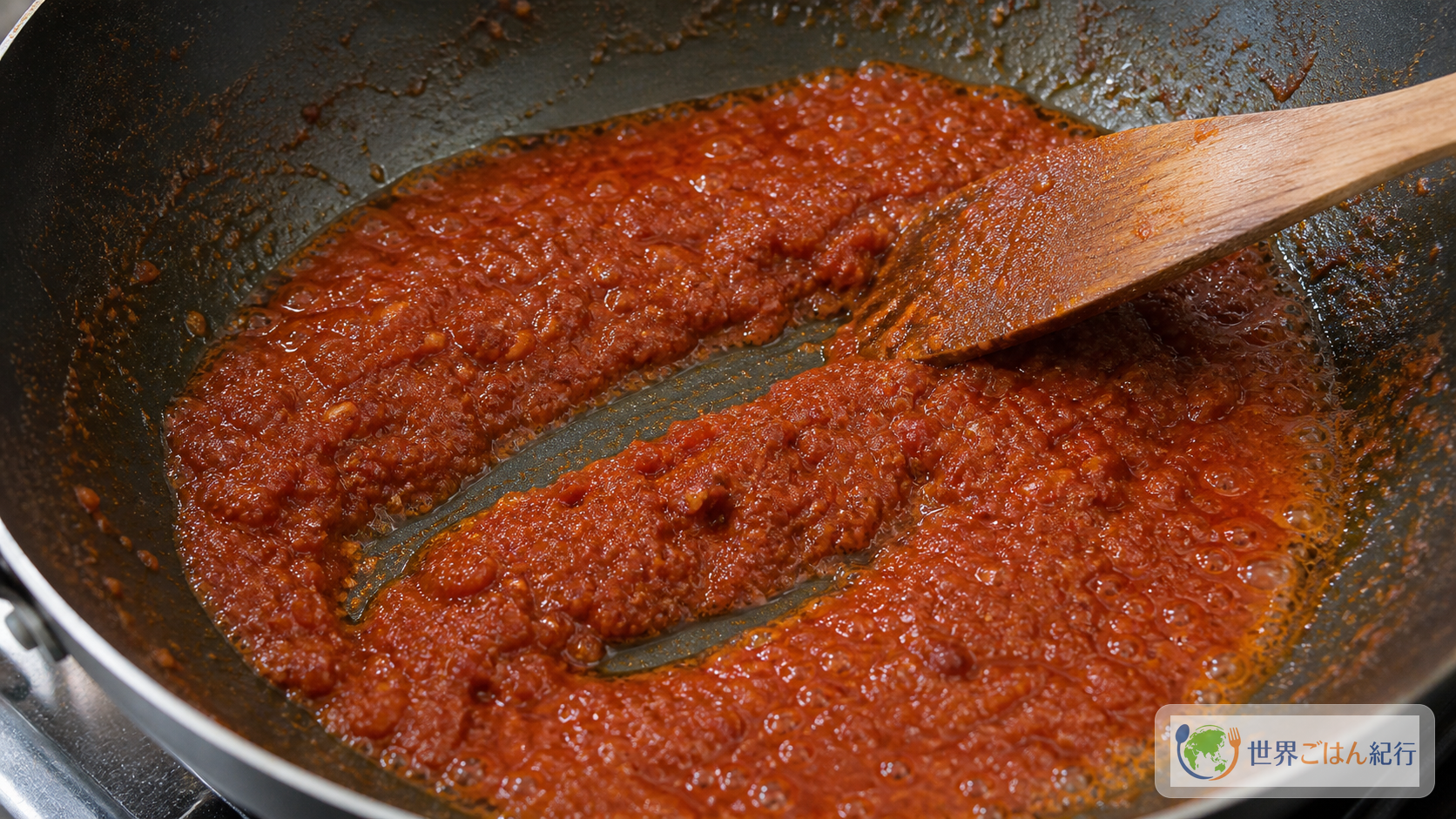
Because the chicken is fried before it is simmered, the steps look a little long. But the only hard part is frying the spice paste all the way through without burning it. Wait until red oil seeps out at the edge of the pan and you can see the trail of the wooden spoon; the flavor of the sauce settles then.
Where it goes wrong
| Problem | Cause | Fix |
|---|---|---|
| Tastes only like tomato stew | Spice paste not fried long enough | Fry 3 to 5 minutes more over low heat and wait until the oil seeps out |
| Bitter | Burned the chilies or tomato paste | Add 3 tbsp water, 1 tsp sugar and 2 tbsp coconut milk and round it out over low heat |
| Too hot | Many chili seeds, strong sambal | Adjust with 2 tbsp coconut milk, more rice and more cucumber |
| Chicken is tough | Cooked all the way through when fried | Next time stop frying once the surface is colored, and finish to 75°C (165°F) in the braise |
| Sauce separated | Boiled hard after the coconut milk | Lower to low, add 2 tbsp water and stir with a wooden spoon for 1 minute |
The most common failure in a home kitchen is not frying the spice paste long enough. Afraid of scorching, people add the tomato early, and the wateriness of the onion and the rawness of the chili remain. Rasa Malaysia's recipe also treats the stage where the oil separates as what decides the flavor. Wait until red oil shows at the edge of the pan, and the taste settles a notch.
Storage and the next day
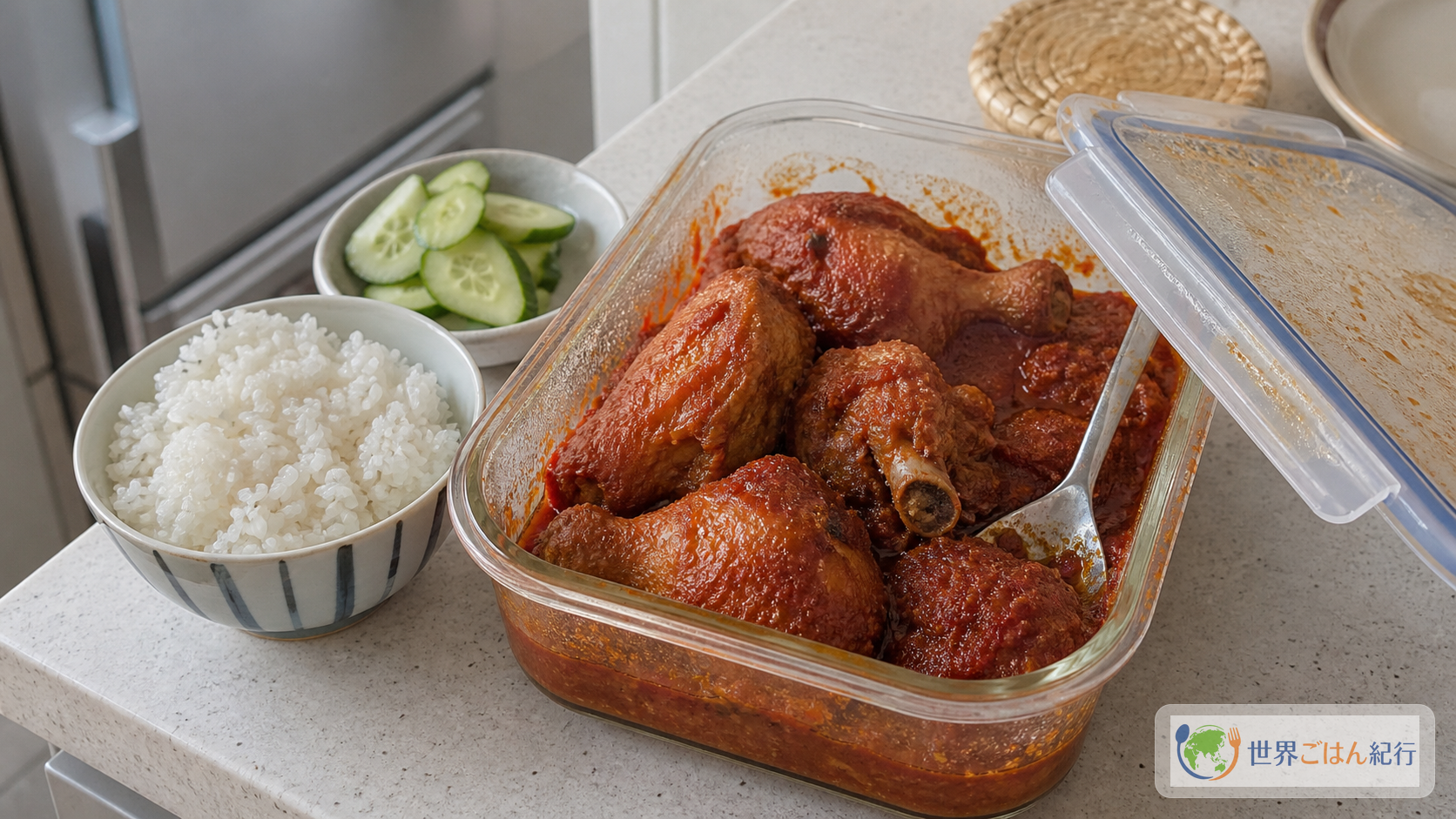
Refrigerated in an airtight container, it keeps about 3 days. Put it in the refrigerator within 2 hours, once the first heat has gone. To reheat, move it to a pan, add 2 tbsp water, and warm over low heat for 6 to 8 minutes until hot through. In a microwave, heat at 600 W for 2 minutes, turn over, and give it about 1 minute 30 seconds more.
If you freeze it, divide the chicken and sauce together into single portions and eat within 3 weeks. Don't freeze the cucumber or fried onions; add them just before eating. The next day, rather than leaning toward a stir-fried noodle such as char kway teow (in Japanese), start with rice, which shows the sauce at its best. If only sauce is left, you can also coat it on boiled eggs, fried tofu or a grilled white fish fillet.
Frequently asked questions
Can I make it with boneless chicken thighs?
Yes. Cut 700 g boneless thighs into 4 cm (1 1/2 in) pieces and shorten the frying in step 3 to 3 minutes per side. For the coating in step 6, about 8 minutes over low heat; check that the center reaches 75°C (165°F) or higher. The flavor is lighter than bone-in, but it is easier to eat.
What if I don't have tamarind paste?
Mix 2 tsp umeboshi (Japanese pickled plum) paste, 2 tsp lemon juice, 1 tsp brown sugar and 1 tbsp water. The sourness comes close, but it won't have tamarind's dark, fruity sweet-sourness. If it is your first time making ayam masak merah, having tamarind paste makes it easier to see where the taste should land.
Can I make it with dried chilies alone, without sambal oelek?
Yes. Increase the dried red chilies to 12 and soak them in hot water for 10 minutes before making the paste. They turn out hotter, so remove more than half of the seeds. Thin, hot dried chilies are common, so the first time you can also use 8 chilies plus 2 tsp paprika for the red color.
What is the most local thing to eat it with?
Plain white rice is fine, but pairing it with tomato rice or nasi minyak brings it closer to a celebration table. At home, the easiest combination is to borrow the coconut rice and cucumber of nasi lemak. If you want another rich meat dish alongside, comparing it with Indonesian rendang (in Japanese) shows how differently coconut and spice paste are used.
Is coconut milk essential?
No. Local recipes include some that put the tomato forward, some that round it with milk or evaporated milk, and some that use coconut milk. This article uses just 100 ml of coconut milk, which is easy to find and gives a roundness that suits rice. For a lighter version, replace it with 80 ml water.
Sources consulted from Malaysia and abroad
- Wikipedia: Ayam masak merah (checked the dish name, main ingredients, the sequence of seasoning with turmeric, frying, then simmering with chili, onion and tomato, and the pairing with tomato rice)
- Rasa Malaysia: Ayam Masak Merah (checked the dried chilies, spice paste, coconut milk, and the step where the oil separates, pecah minyak)
- Kuali: Ayam Masak Merah (checked the sequence of seasoning the chicken with turmeric and salt, frying about three quarters, then simmering in a tomato and chili sauce)
- MAGGI Malaysia: Flavoursome Ayam Masak Merah (checked its place as a celebration and wedding dish and the pairing with steamed rice, nasi tomato and nasi minyak)



