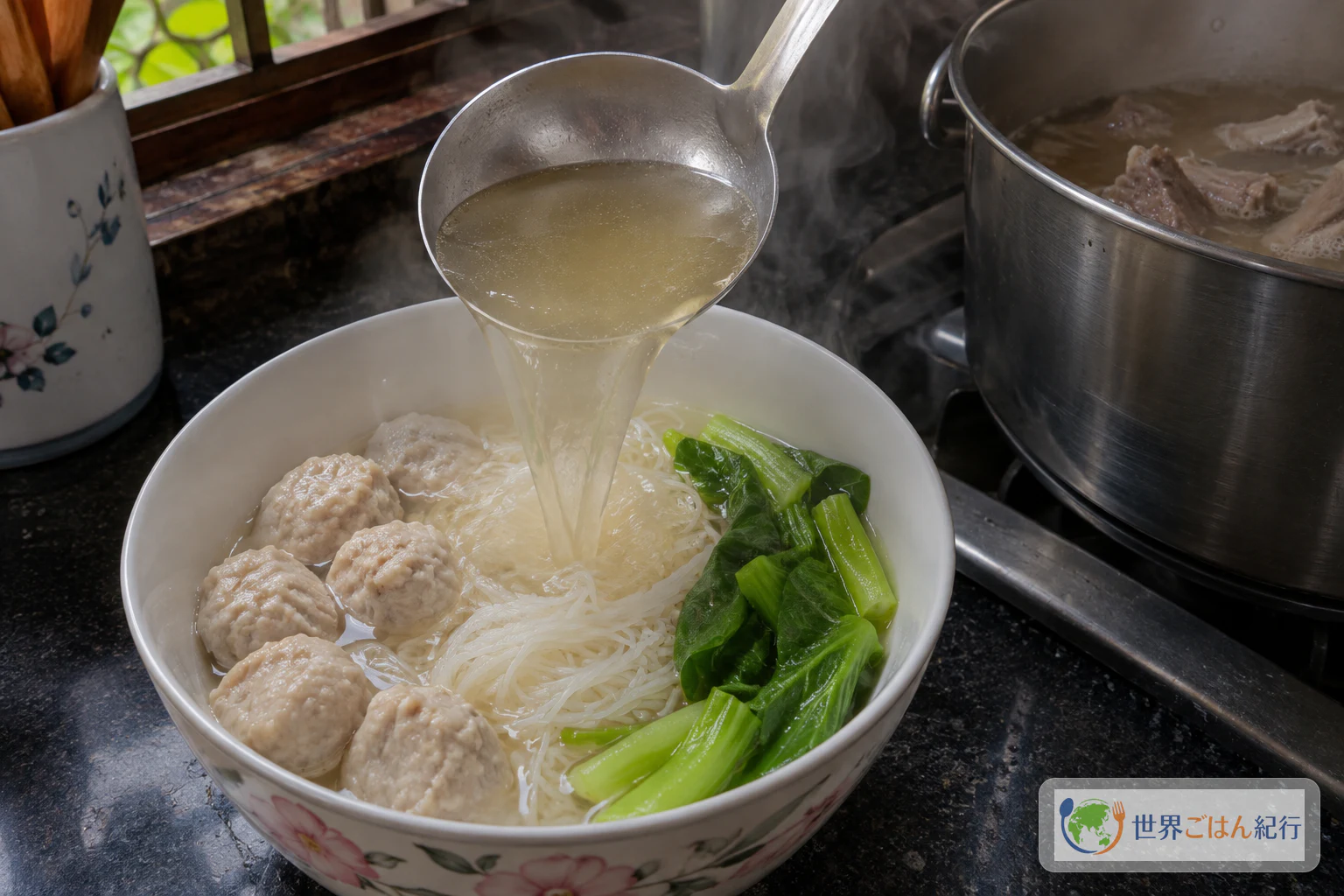
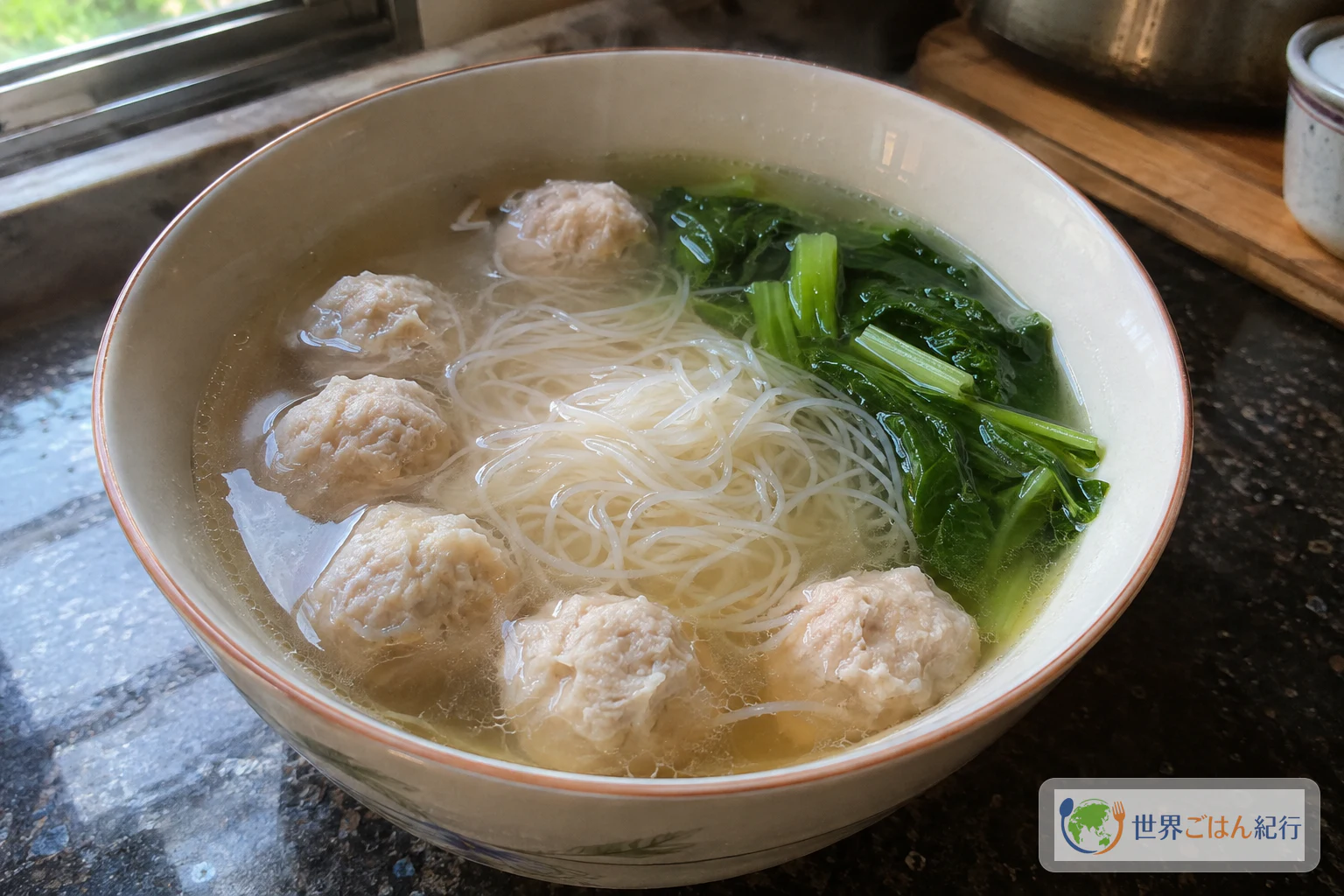
Kyay Oh: A Home Bowl of Noodles, Meatballs and Pork-Rib Broth
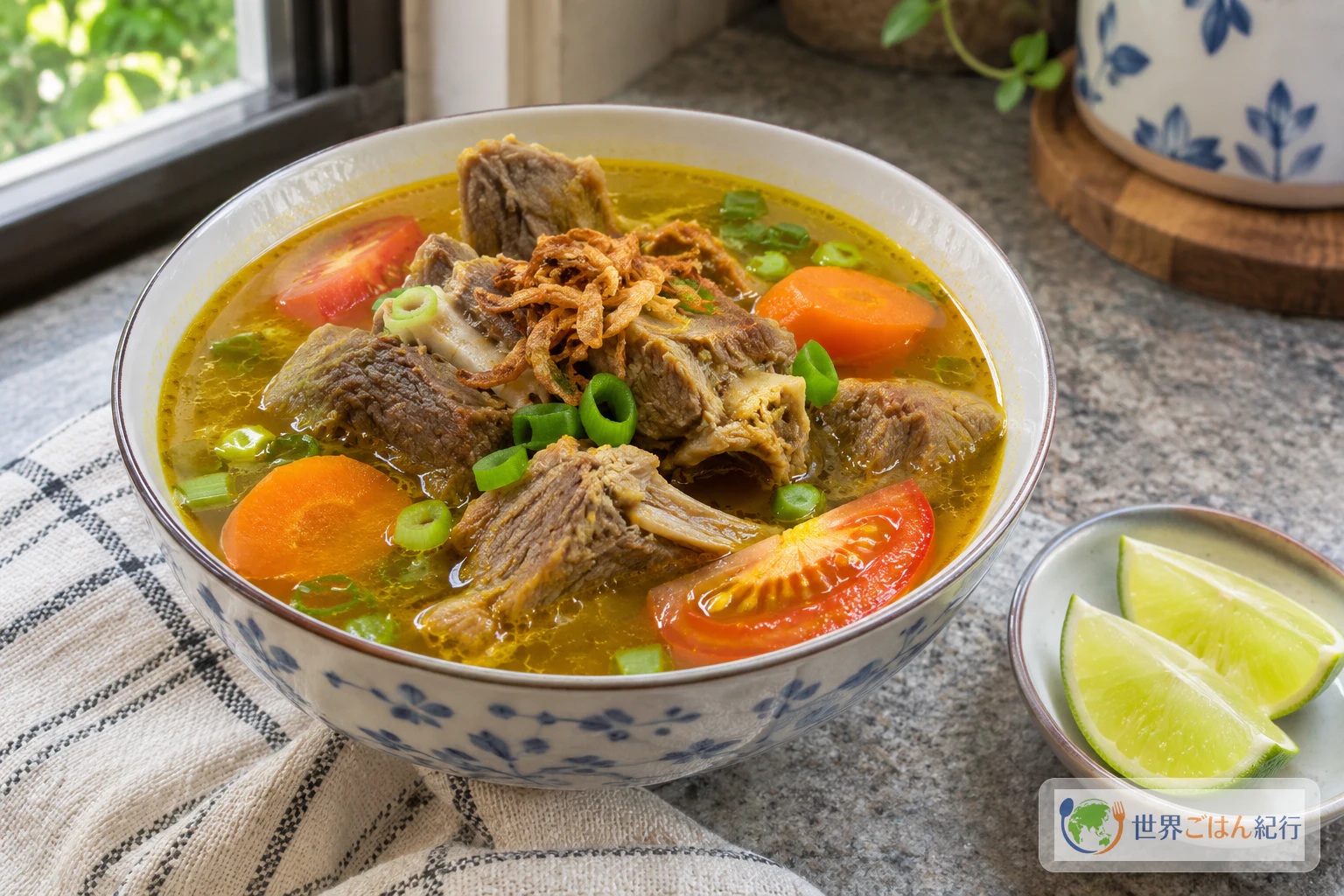
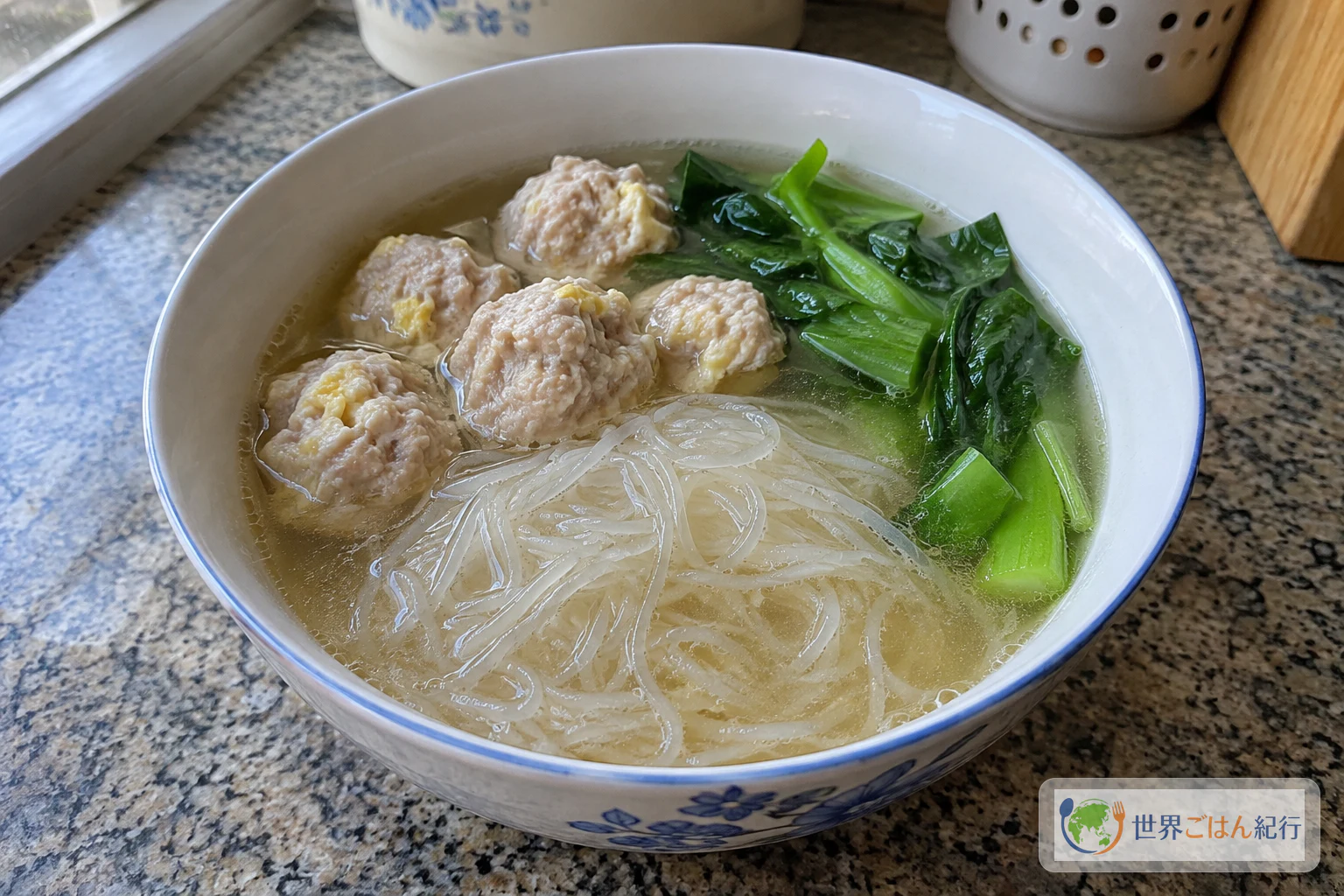
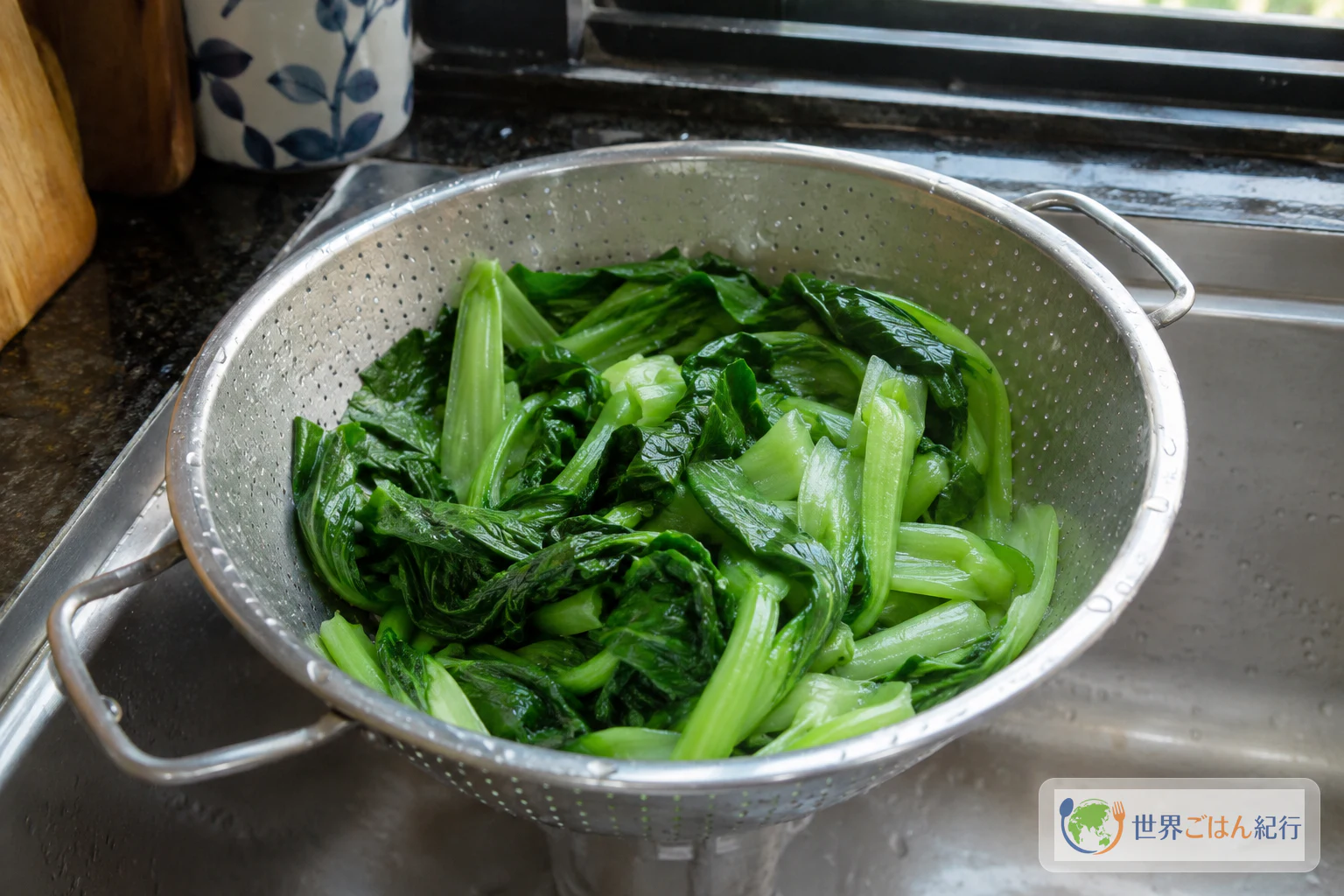
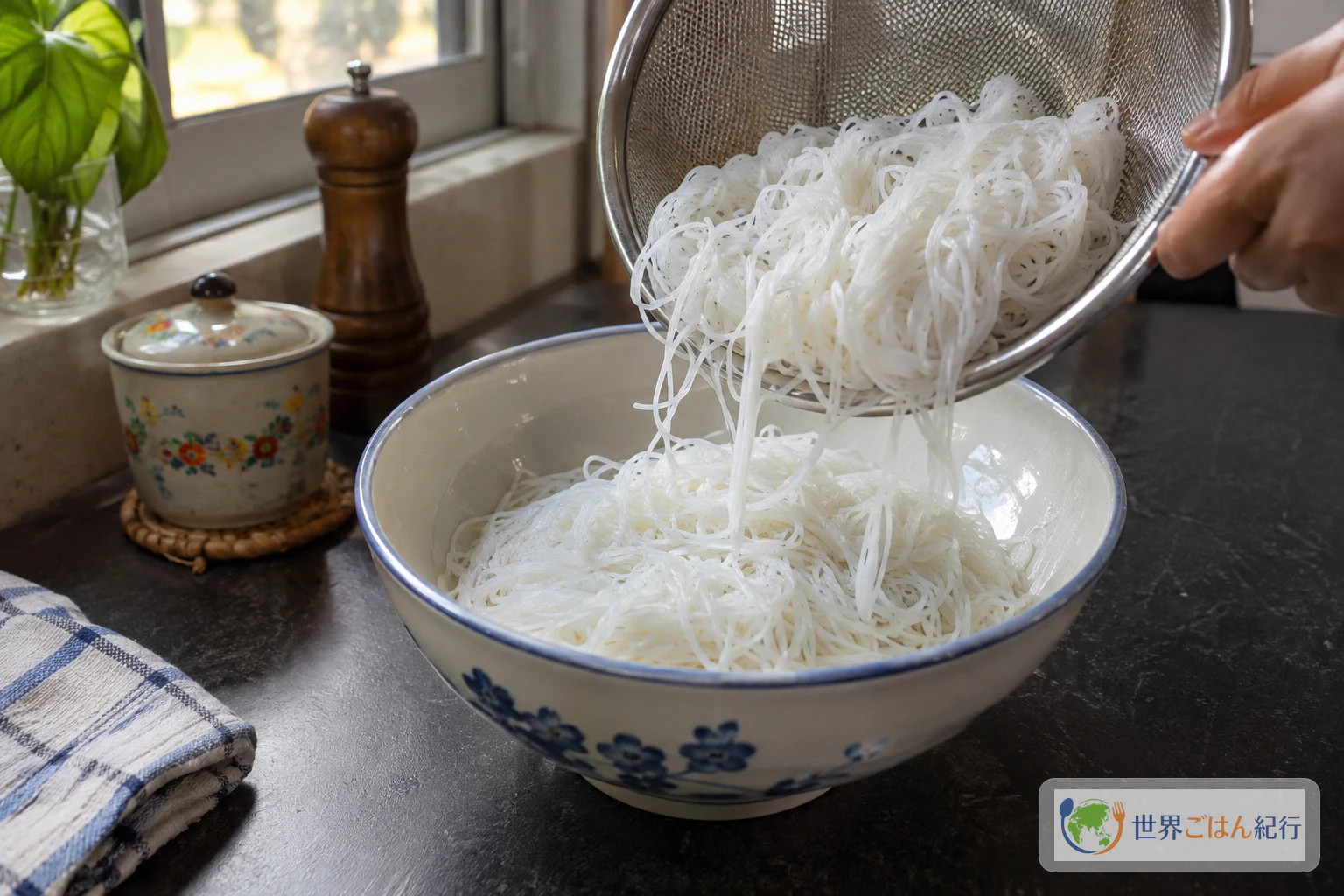
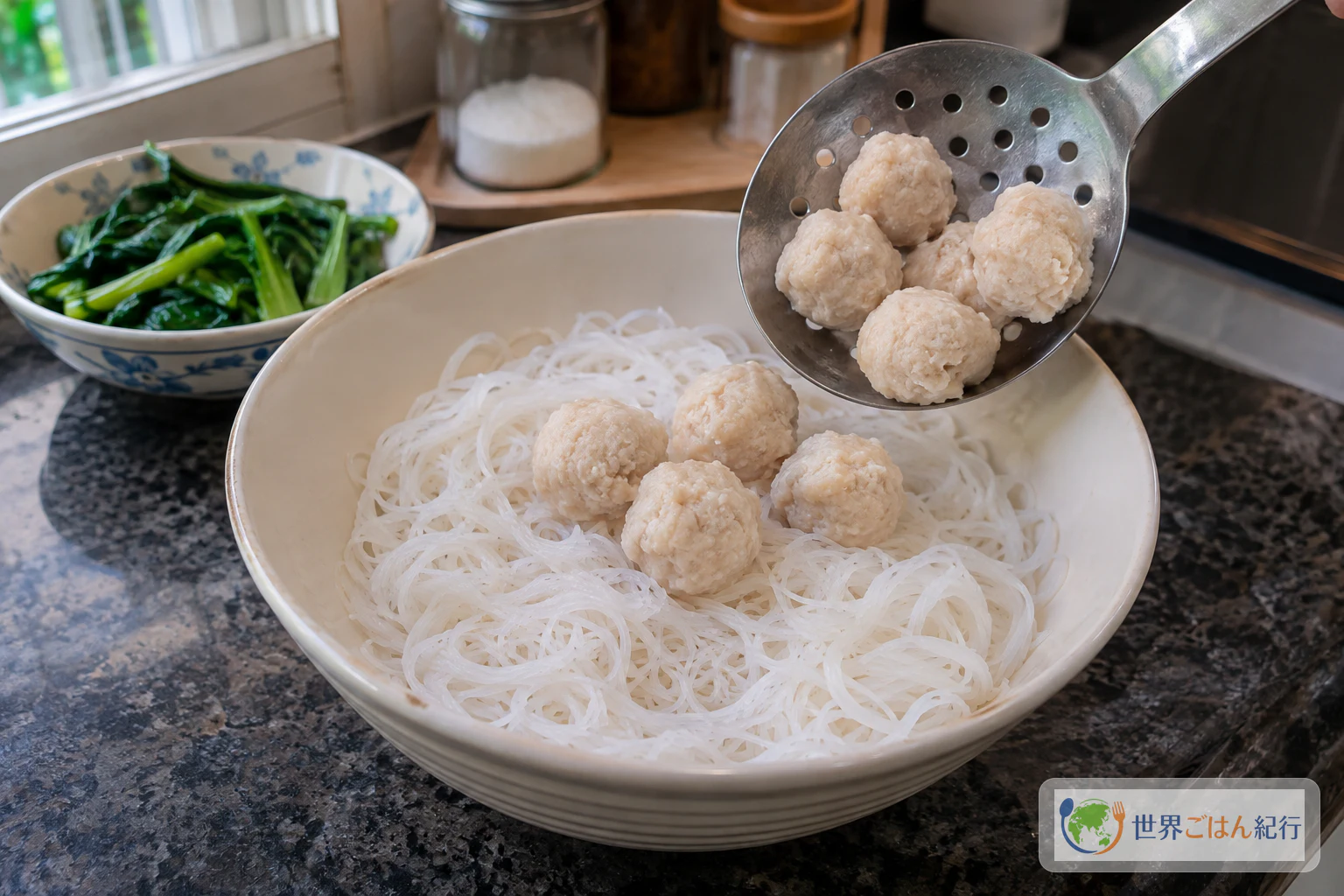
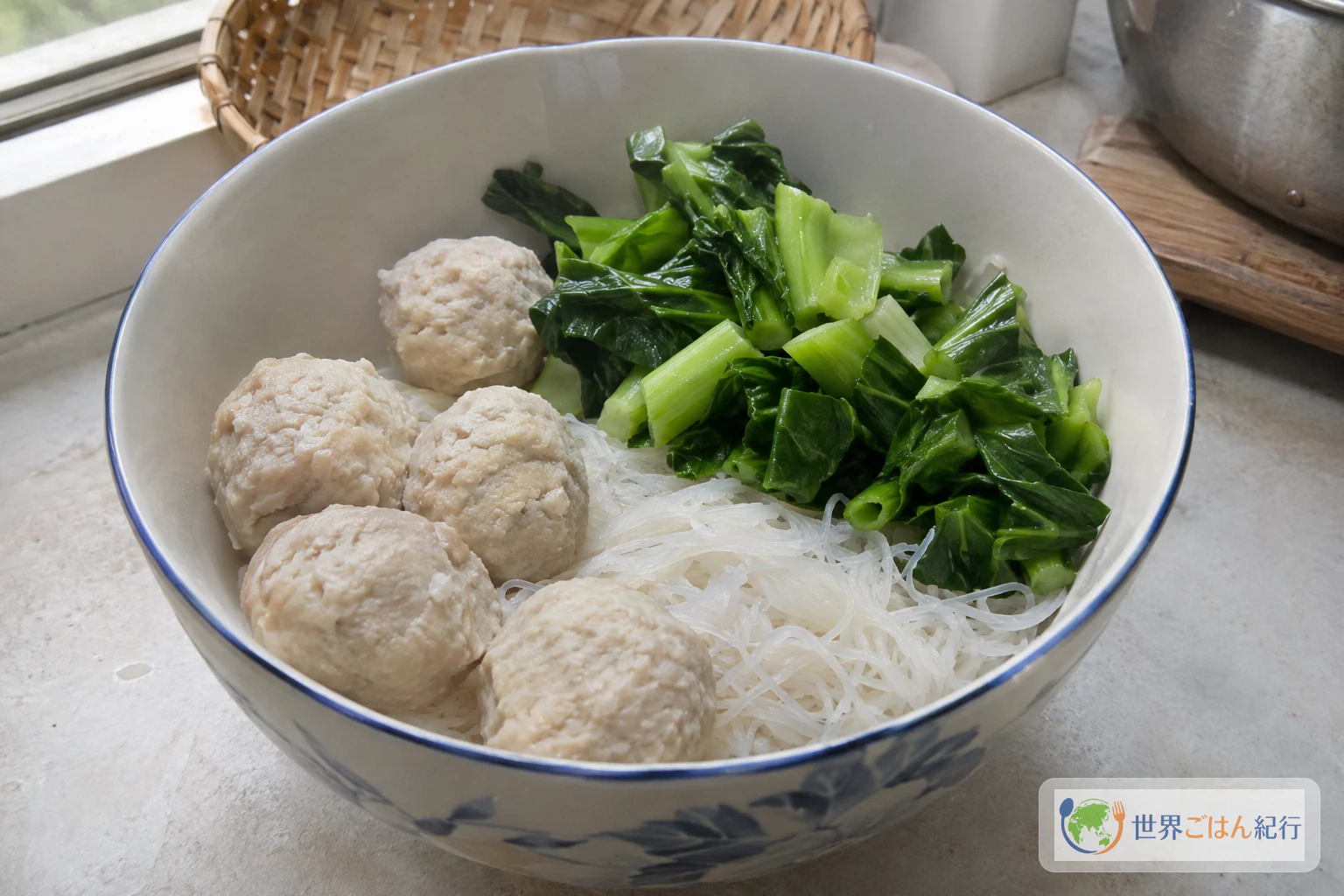
Three things go into the bowl: rice vermicelli, plain pork-and-egg meatballs and blanched gai choy. Hot pork-rib broth goes over them, and the bowl is served right away.
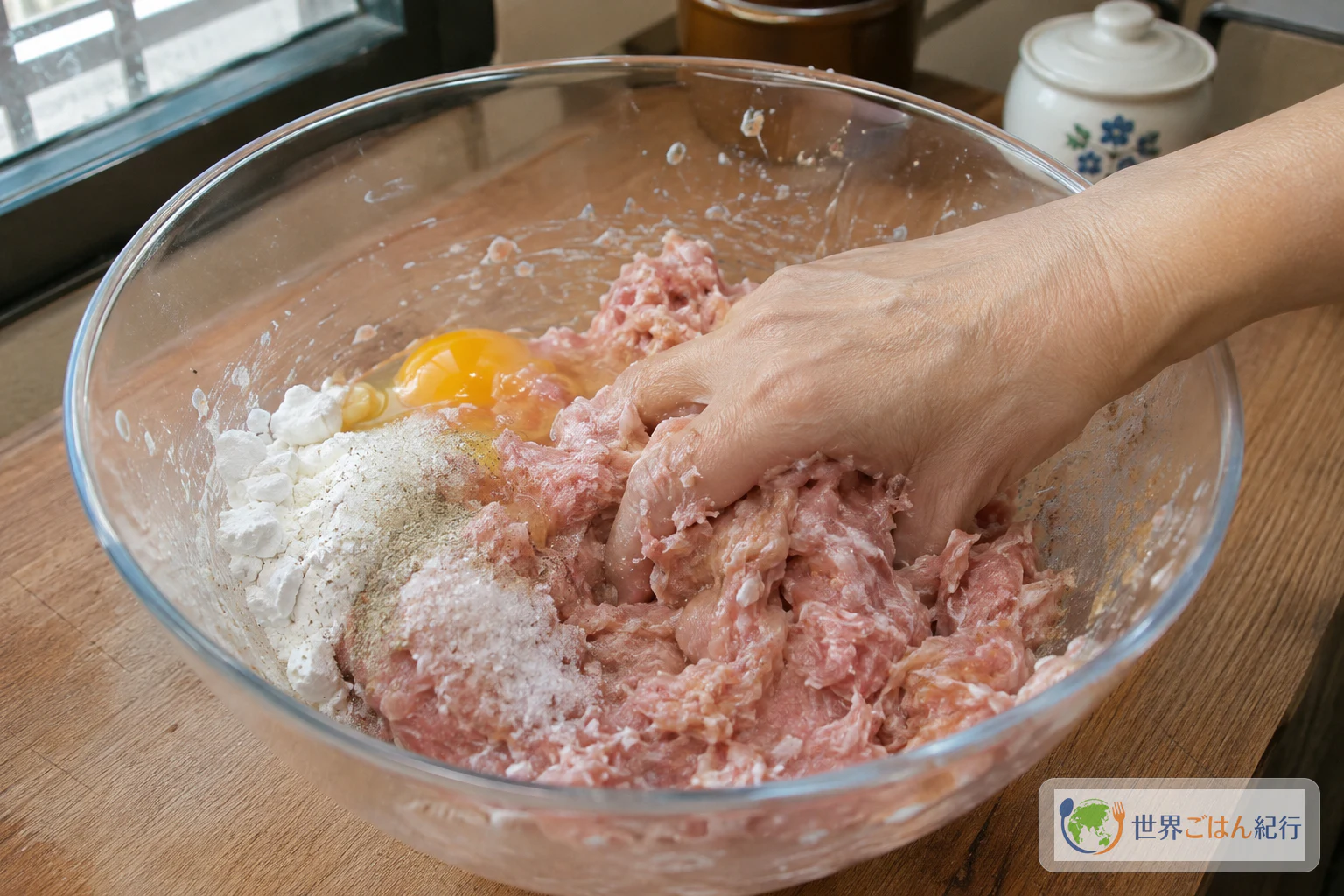
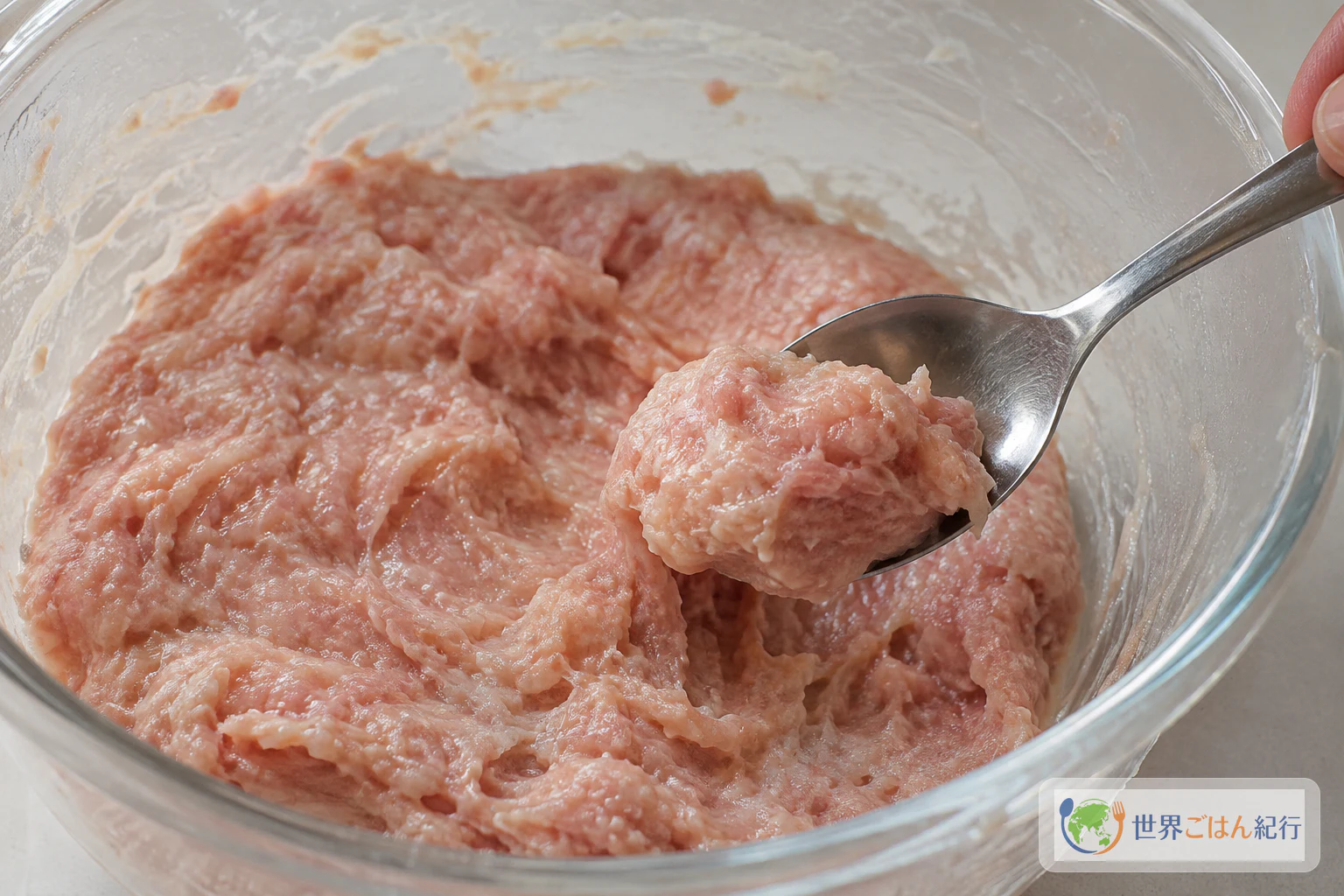
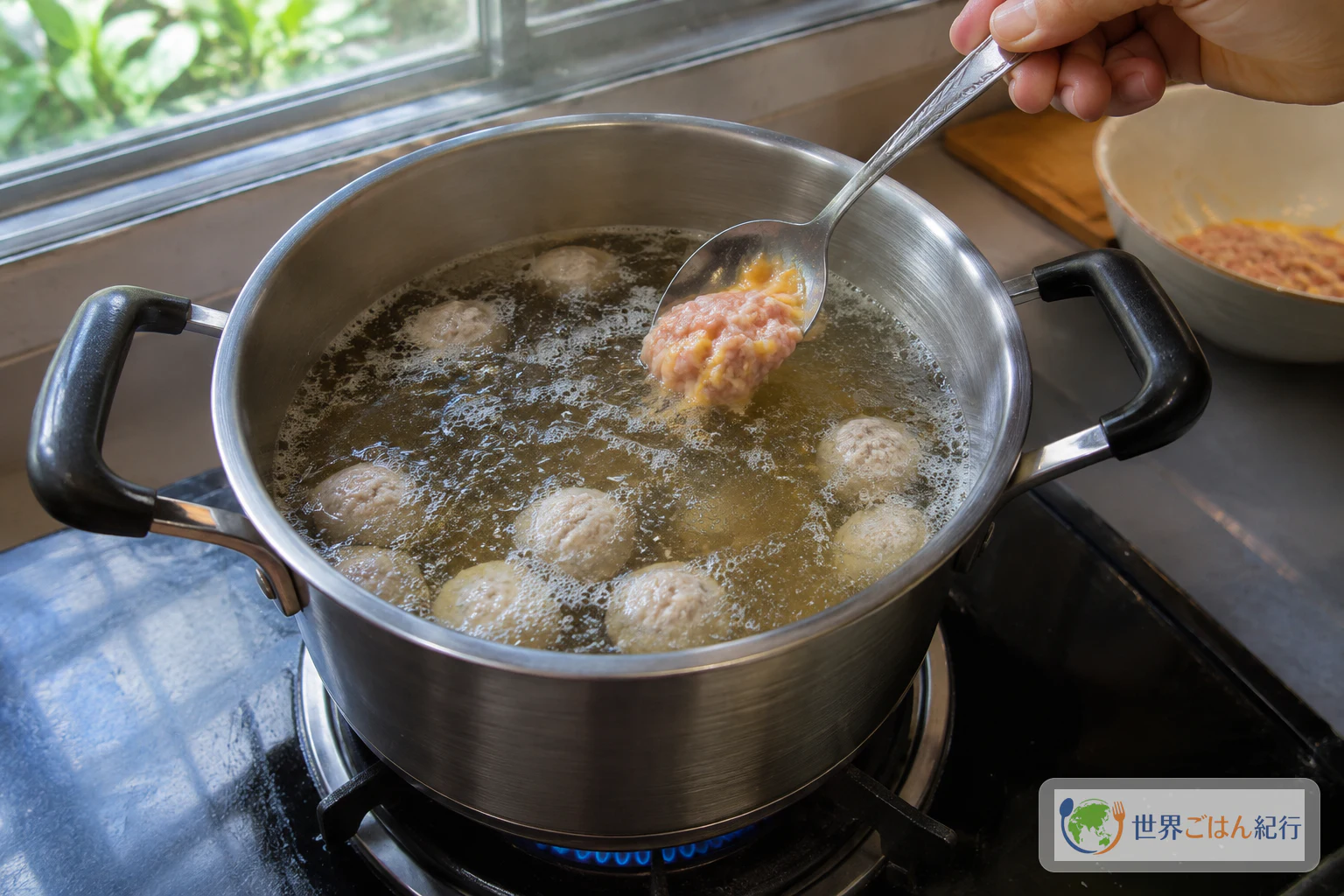
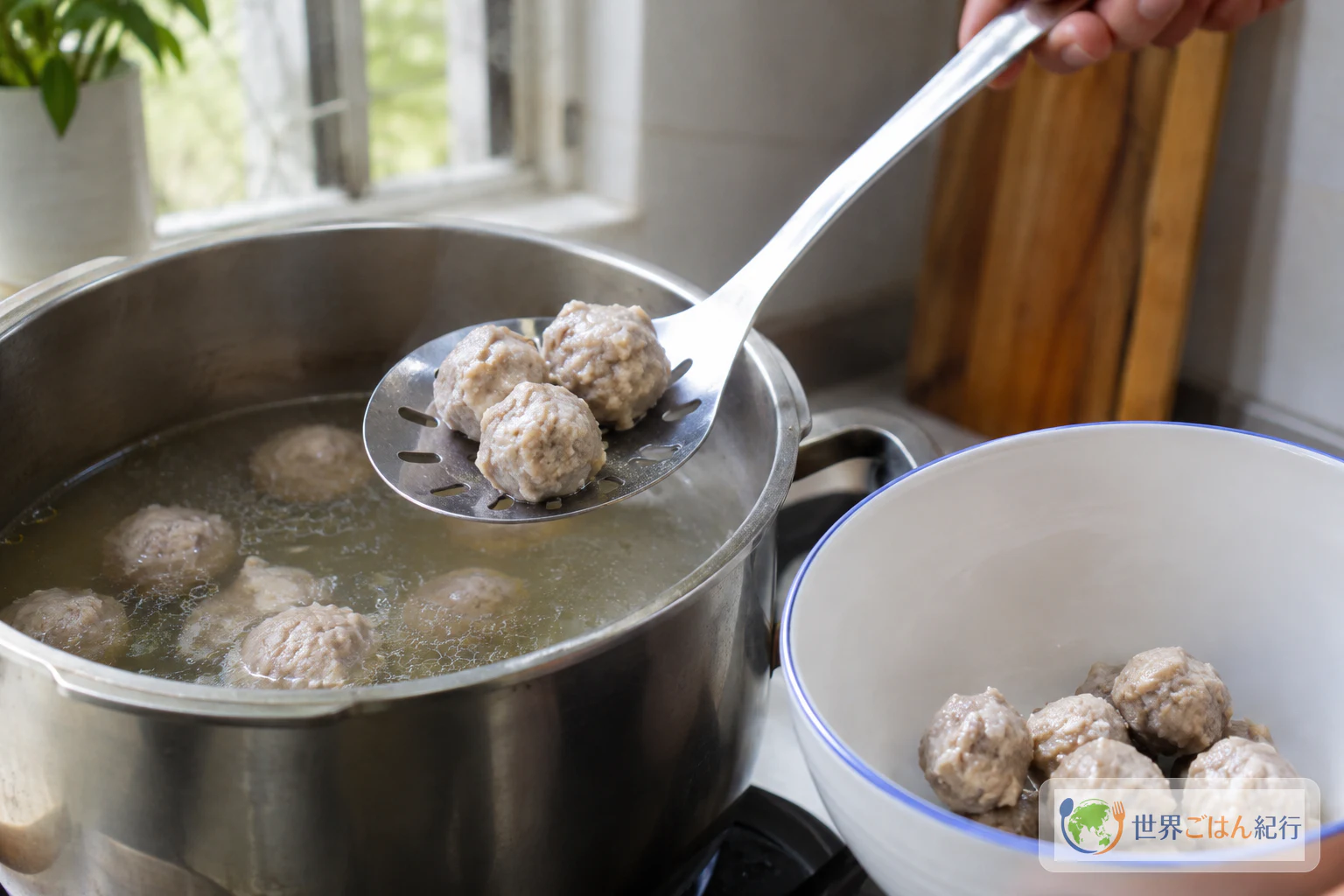
Spoonfuls of soft pork paste slip into a pot of boiling broth, one at a time, while the noodles and greens wait in their own pans. This is Kyay Oh in its plainest form, as described by the home cook behind the Yummy Calories site. The author calls this extras-free bowl the kyay oh they prefer and describes the dish to their husband as comfort food. That is one household's view of the dish, and we don't present it as speaking for all of Myanmar.
The author's recipe has a soup version and a dry version called si chet. This article covers the soup version only. It leaves out the optional fried garlic and chili sauce, along with the offal, fish balls, tofu, quail eggs and other extras the author treats as additions. It keeps the full amounts for 4 servings, including all 500g of pork mince.
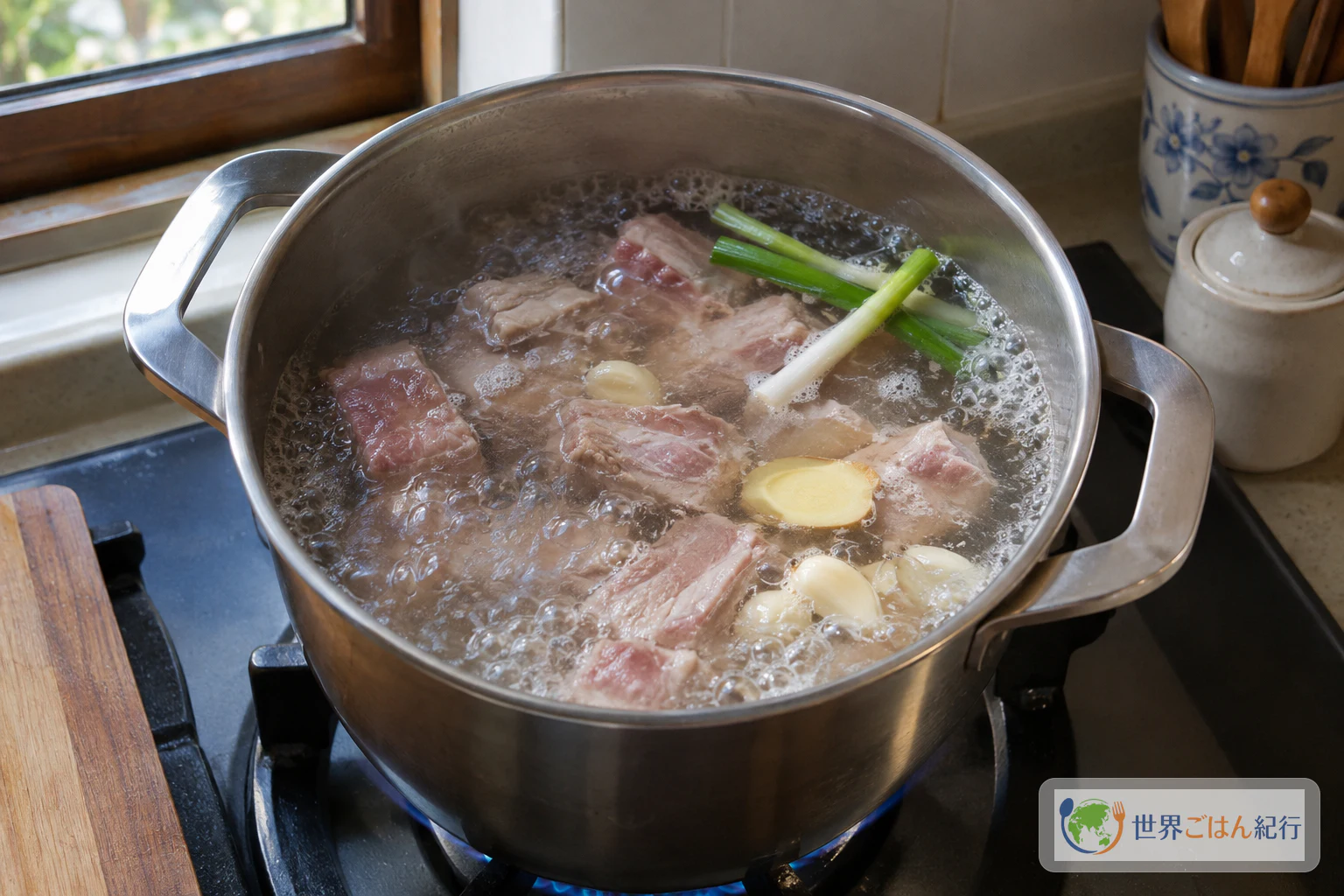
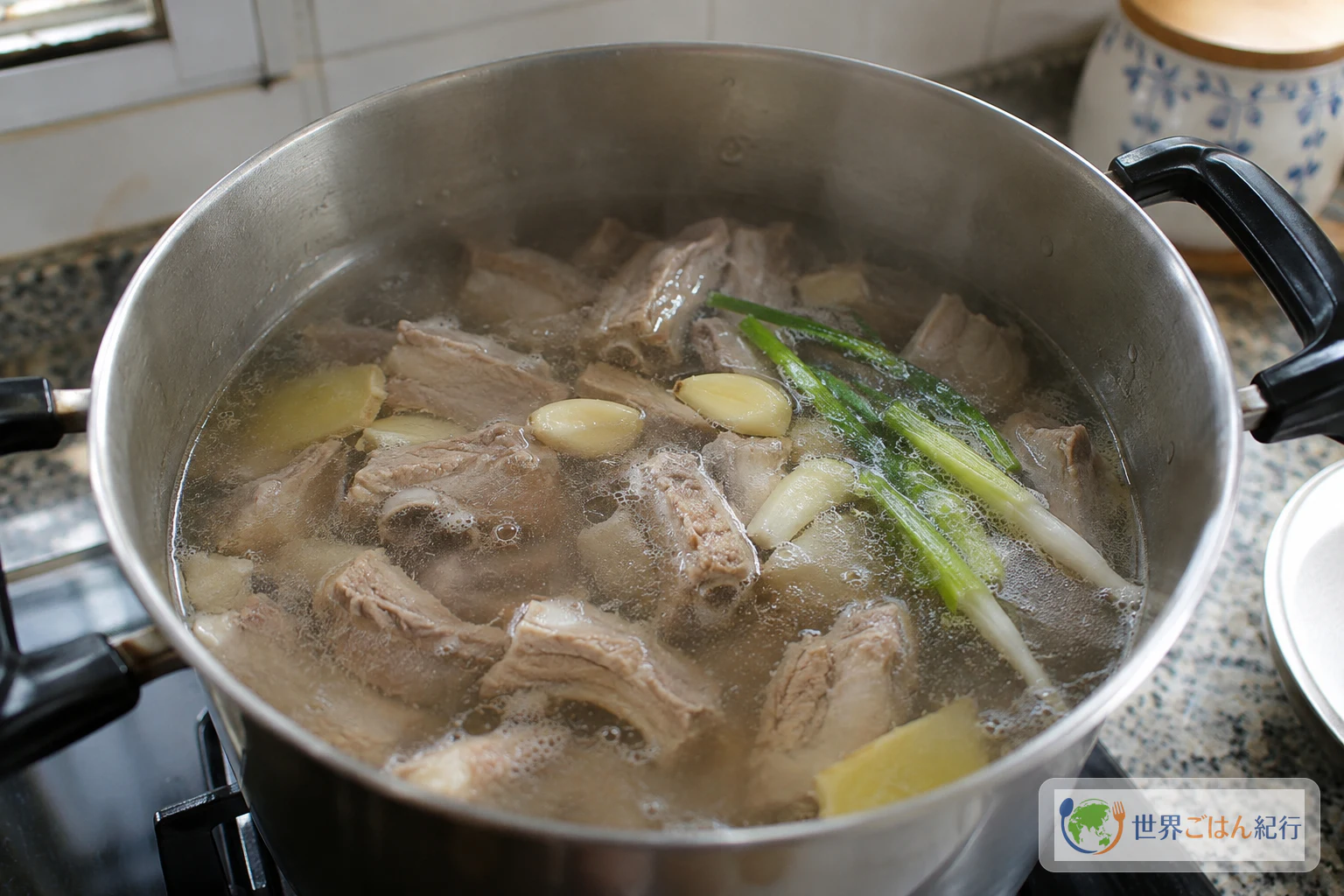
The author's page lists 20 minutes of prep and 1.5 hours of cooking, and the method simmers the bone broth for 1 hour. The first two figures describe the whole recipe, while the last describes one stage of it.
Where we made editing decisions
The author's recipe leaves a few points open, and we want to be clear about how we handled them:
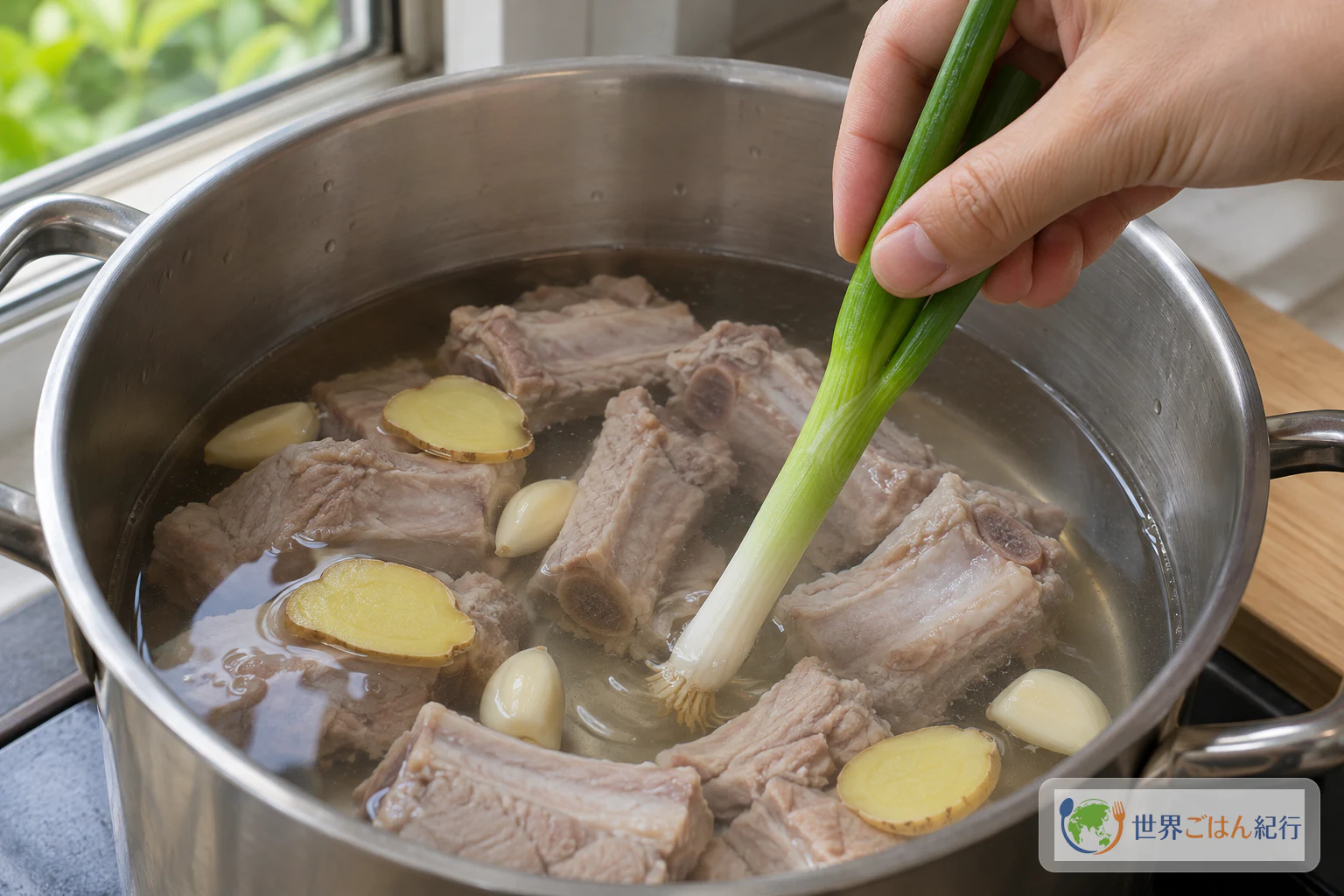
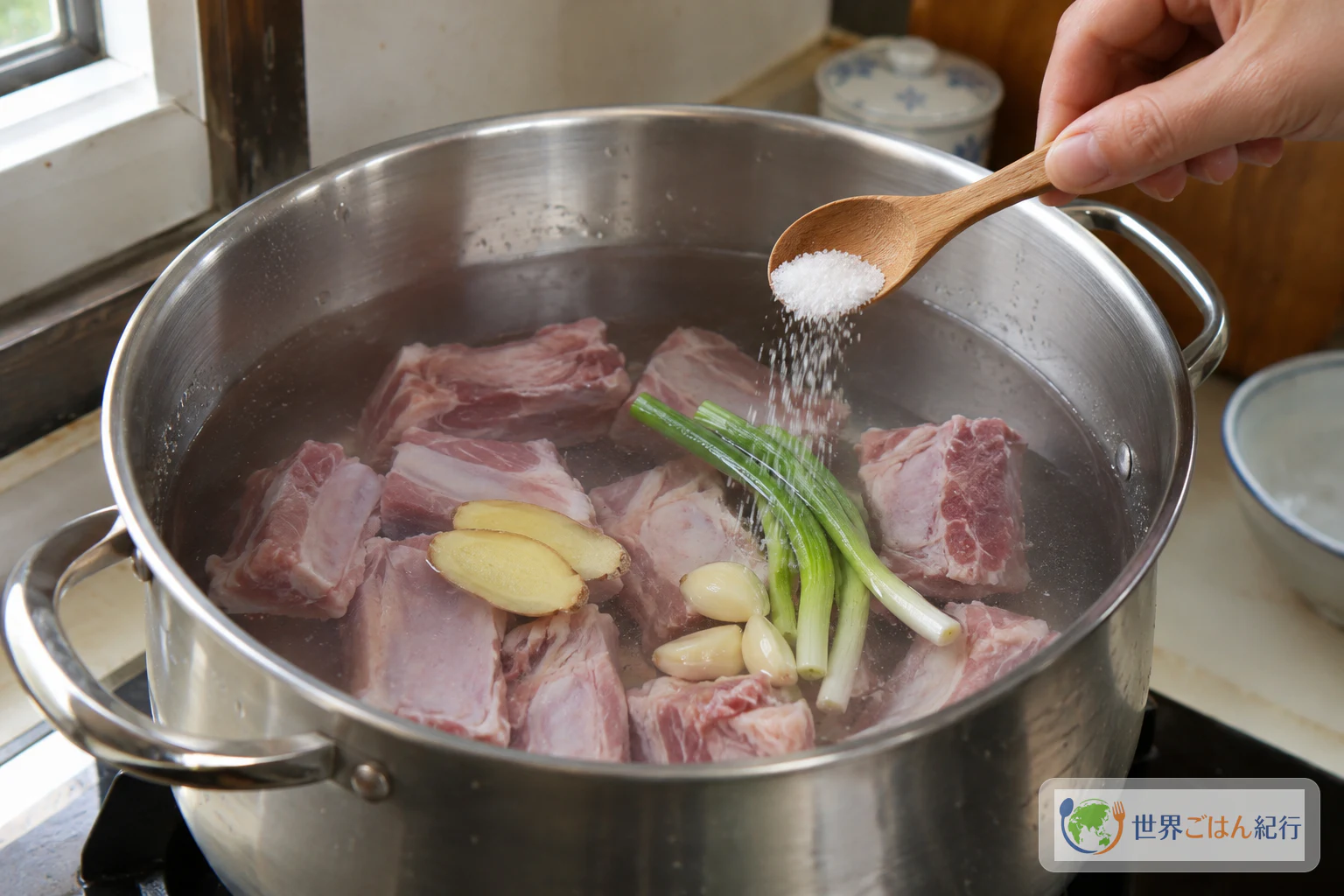
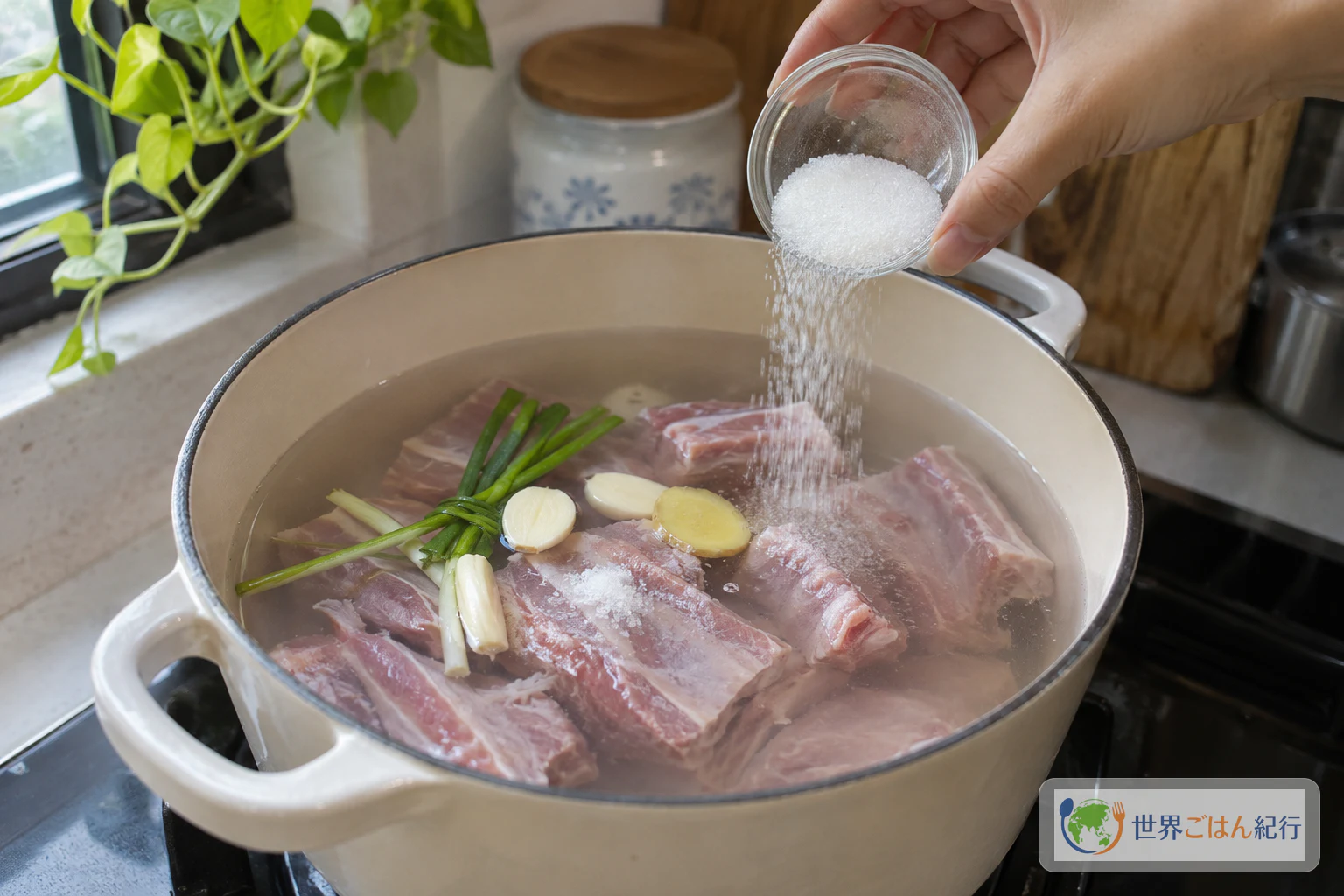
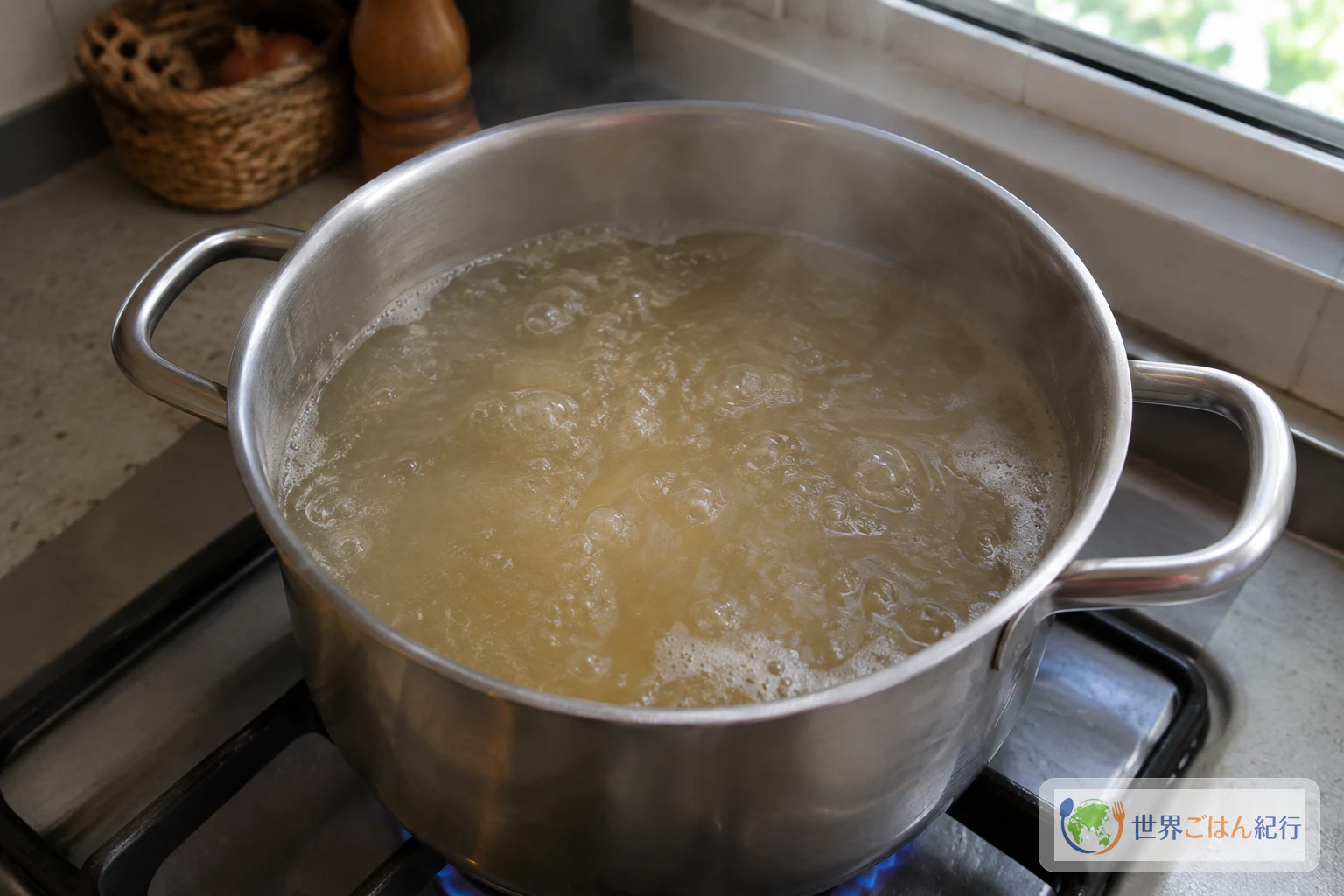
- Broth salt and sugar: Both are in the author's ingredient list, but the method never says when to add them. We add them as the broth begins to cook, using the author's amounts.
- A likely typo: The method says "Bring the pork back to the oil." The next lines describe water, aromatics and an hour of simmering, so we read "oil" as a typo for "boil" and add no oil.
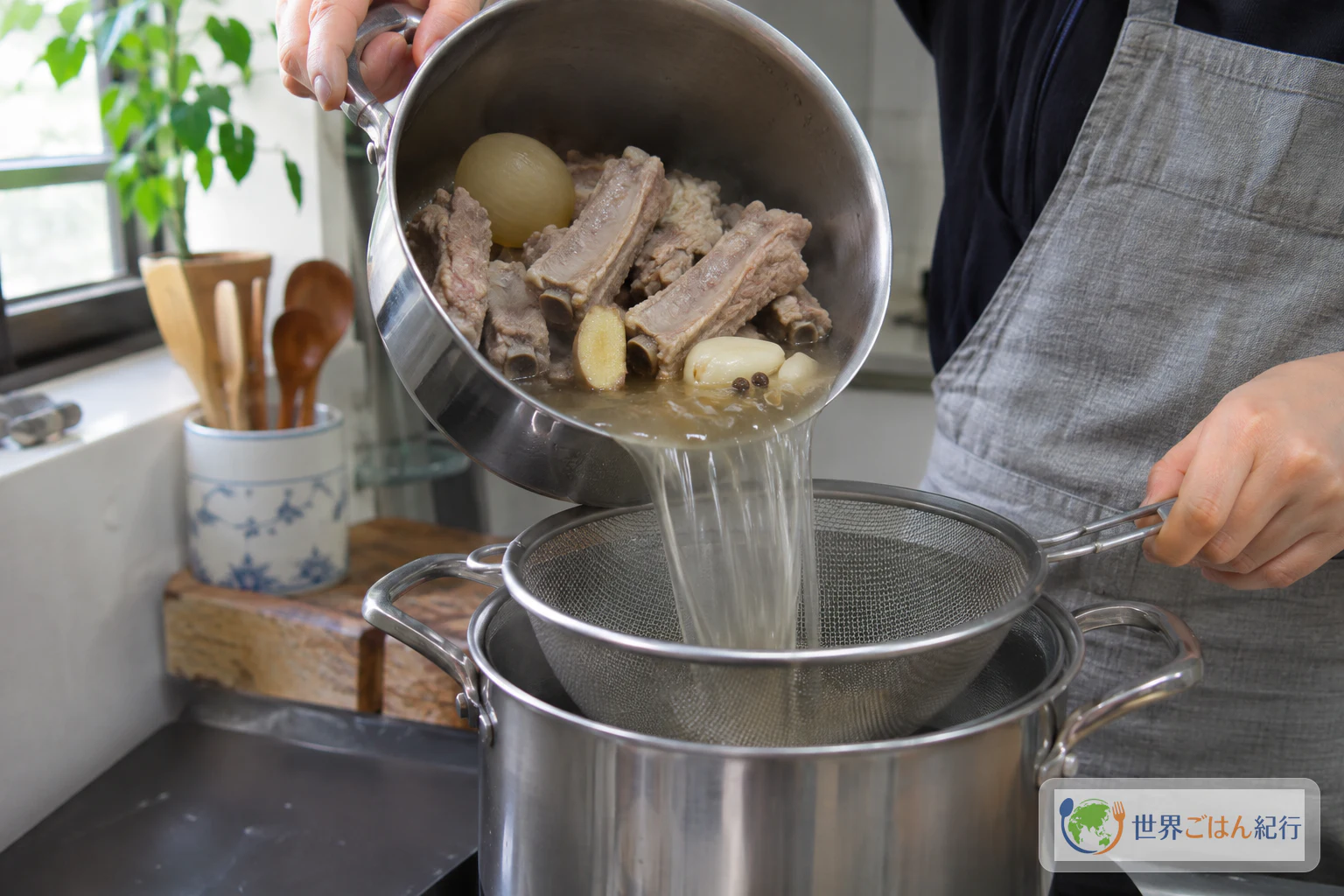
- Straining: The instruction to strain out the ribs and solid aromatics is our own addition, made so the bowls are simpler to assemble.
- Top-up water: The author says to add more water as needed but gives no amount, so we don't give one either.
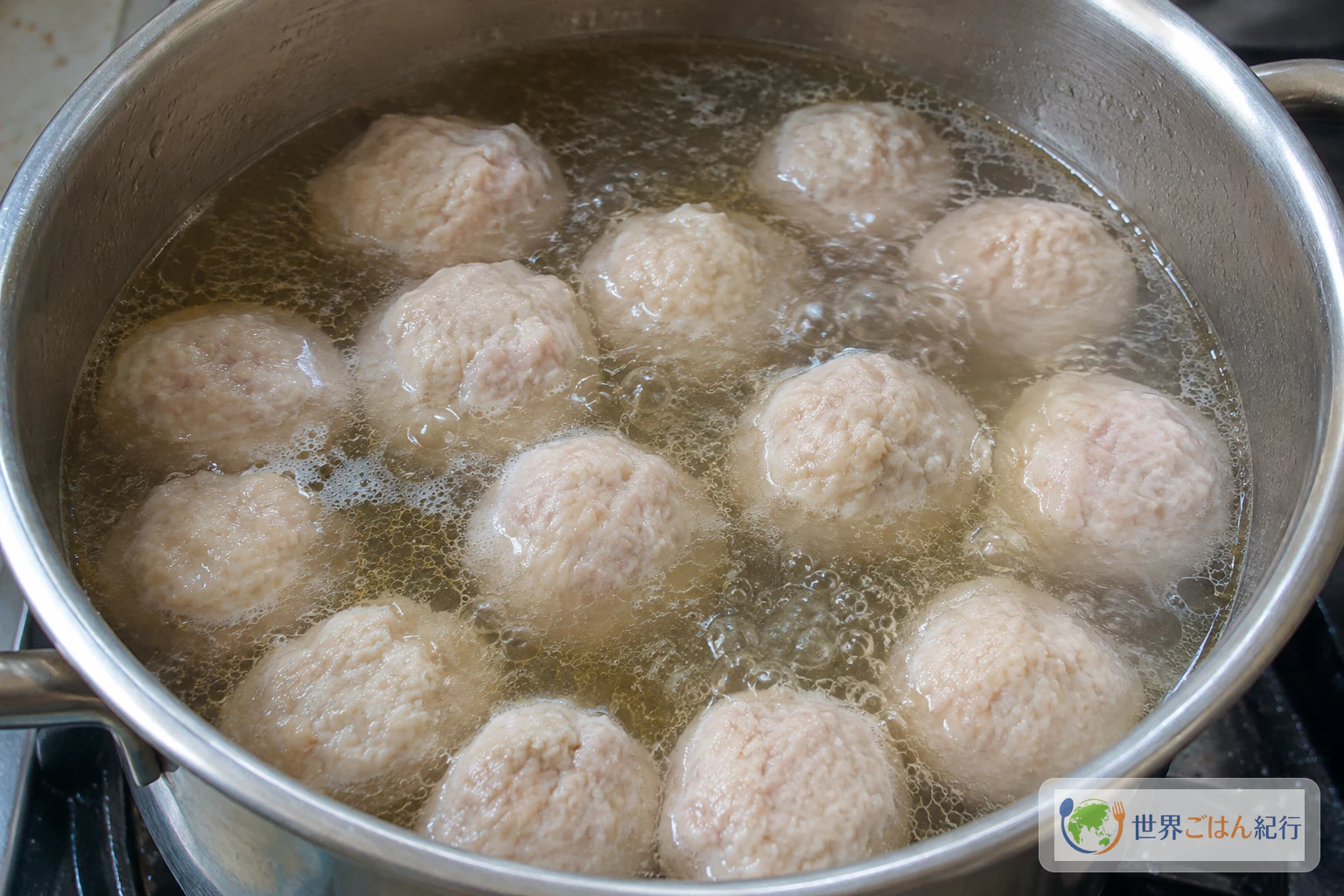
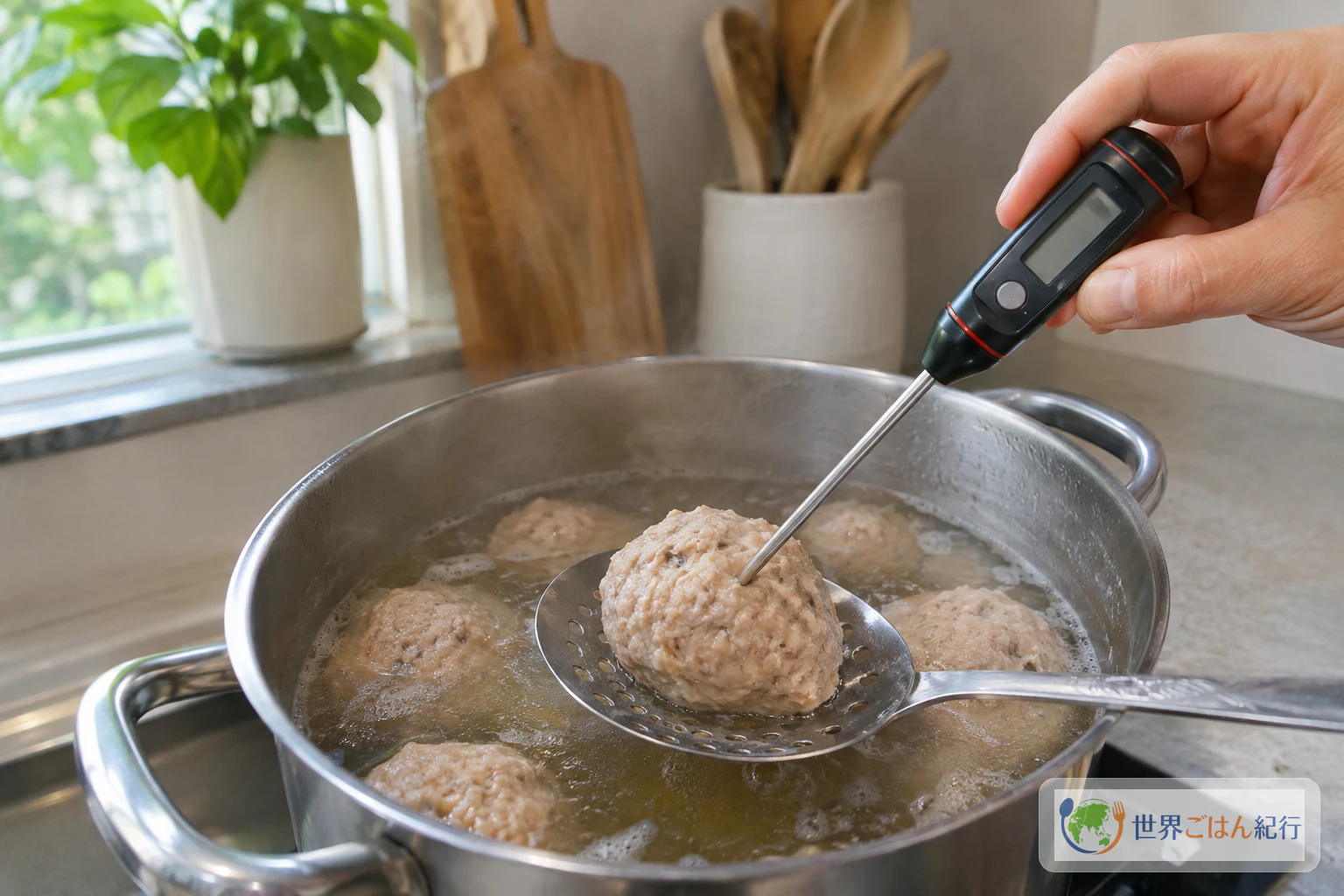
- Meatball safety check: The author uses floating as the sign that meatballs are done. We treat that as a visual cue only and add a thermometer check based on public food safety guidance.
This article is written from the author's published recipe and public guidance. Sekai Gohan has not kitchen-tested this recipe as a whole. The images show what each stage involves, but they can't confirm amounts, time, temperature, hygiene or doneness.
Ingredients for 4 Servings
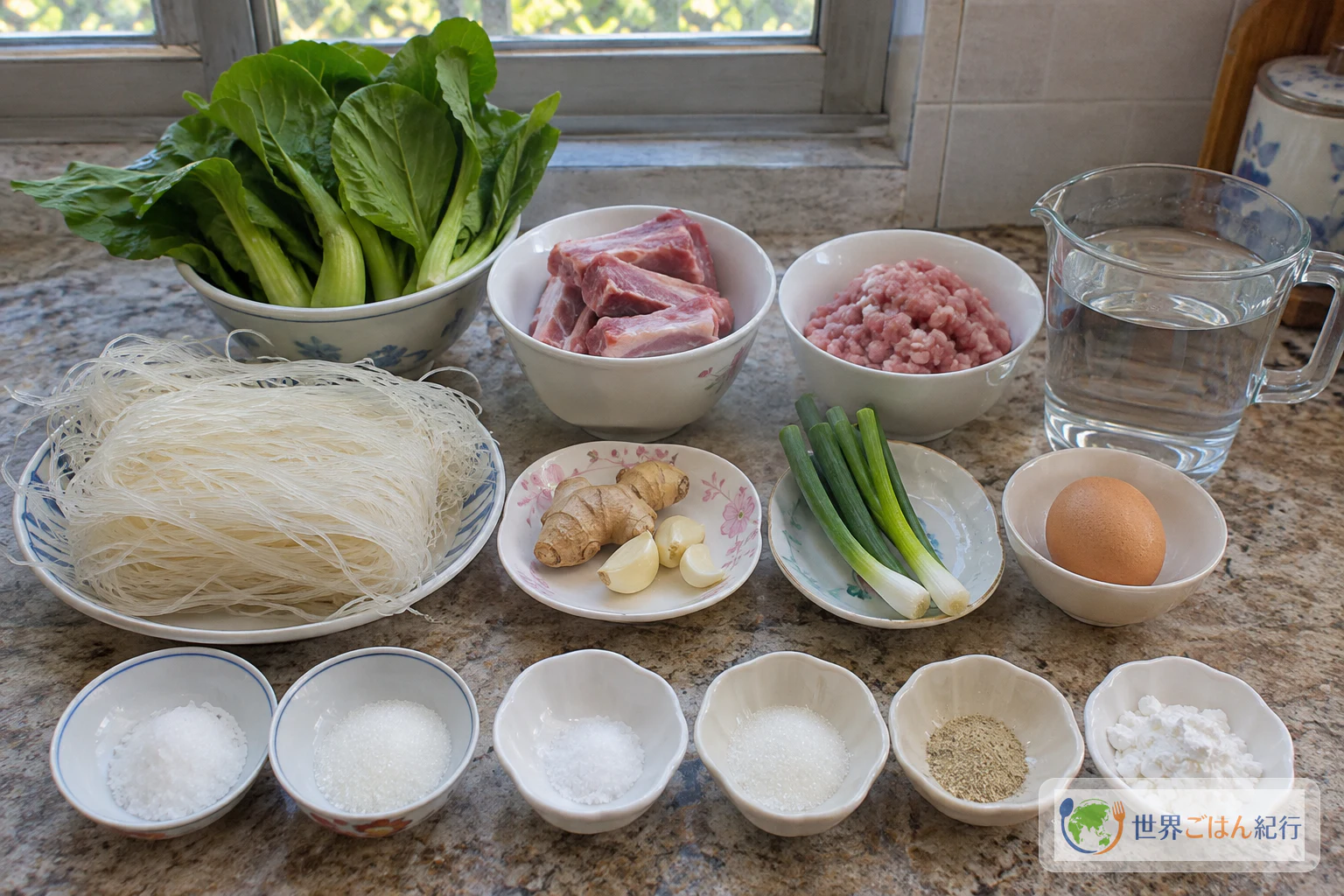
Equipment
- Large pot for parboiling the ribs
- Colander
- Clean stockpot
- Strainer and a second clean pot for the broth
- Separate pans for the noodles and the gai choy
- Separate cutting board for vegetables
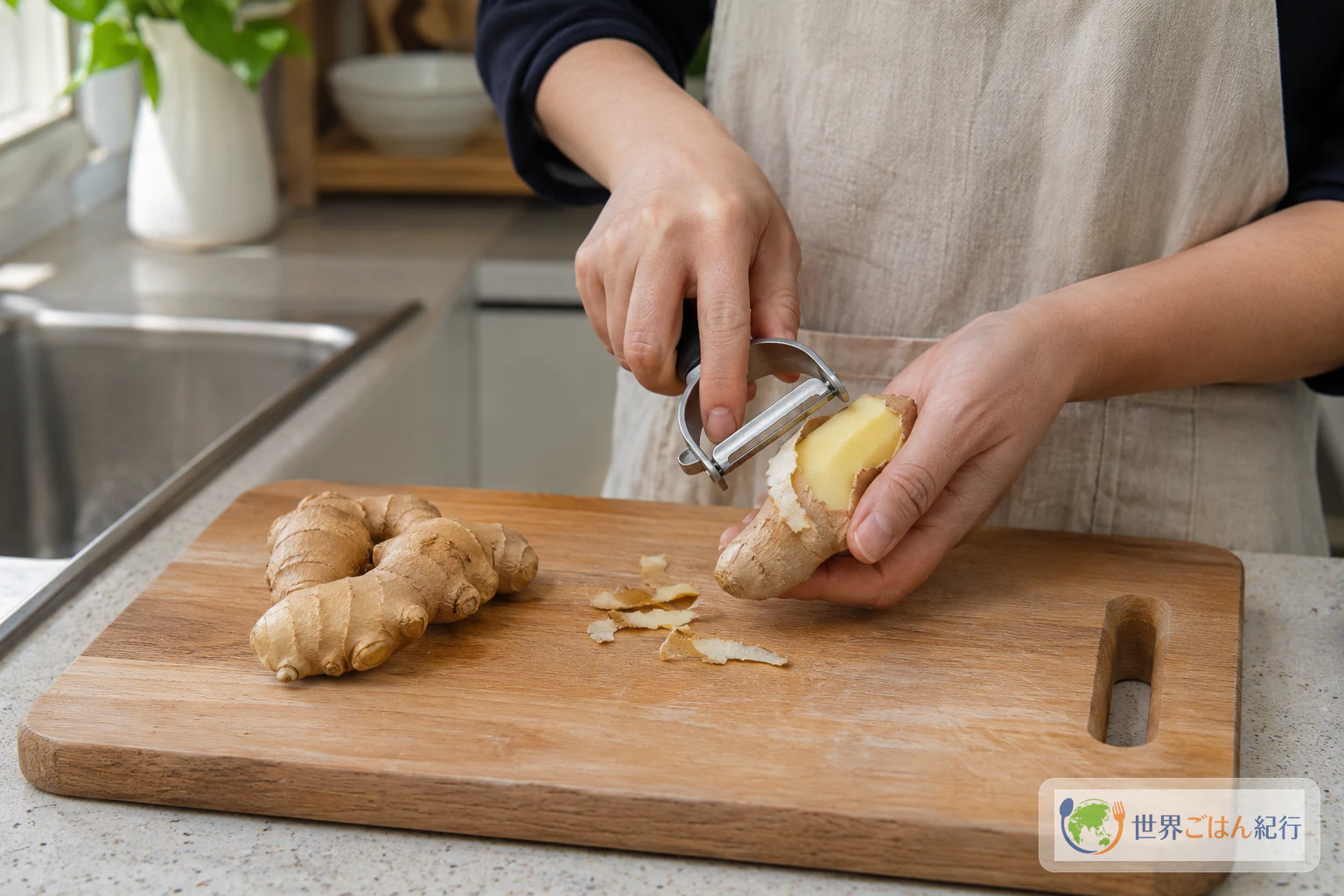
- Vegetable peeler or small knife
- Tongs
- Small bowl for the egg
- Mixing bowl for the meatball paste
- Spoon for portioning the paste
- Slotted spoon
- Food thermometer
- Ladle
- Serving bowls
Choosing and Handling the Main Ingredients
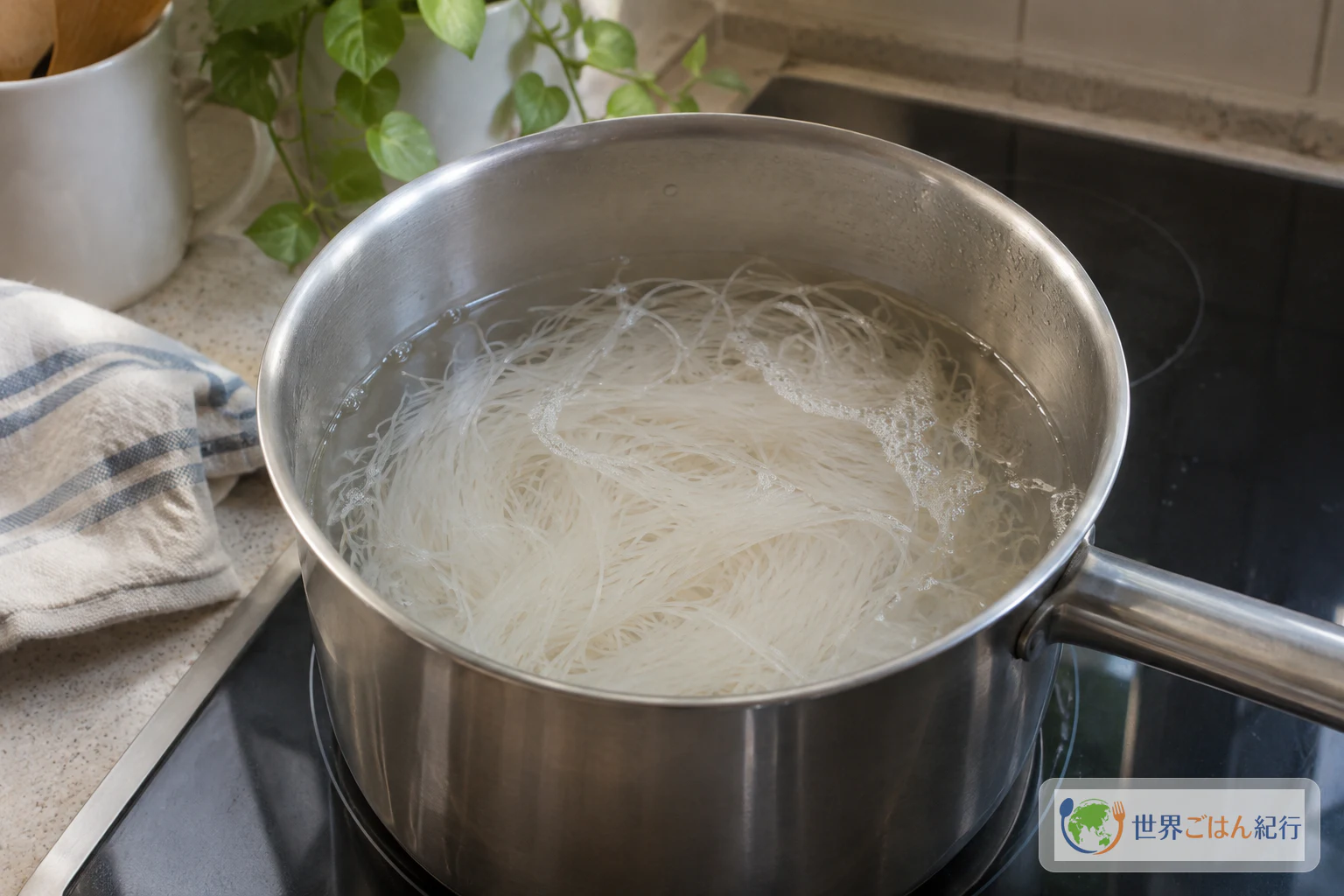
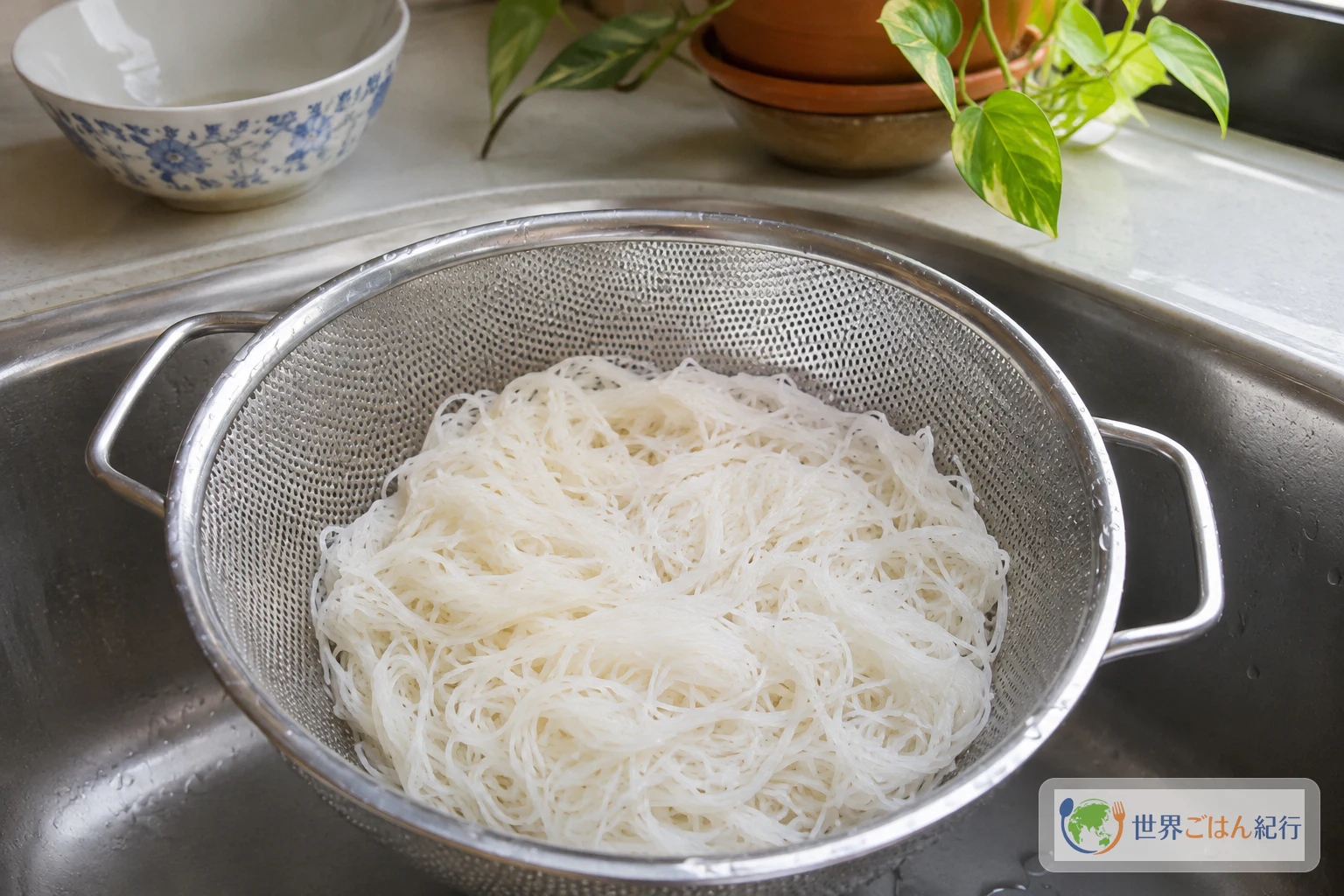
Rice vermicelli: The 300g is the dry weight. Preparation varies by product, so use the method and timing on your pack.
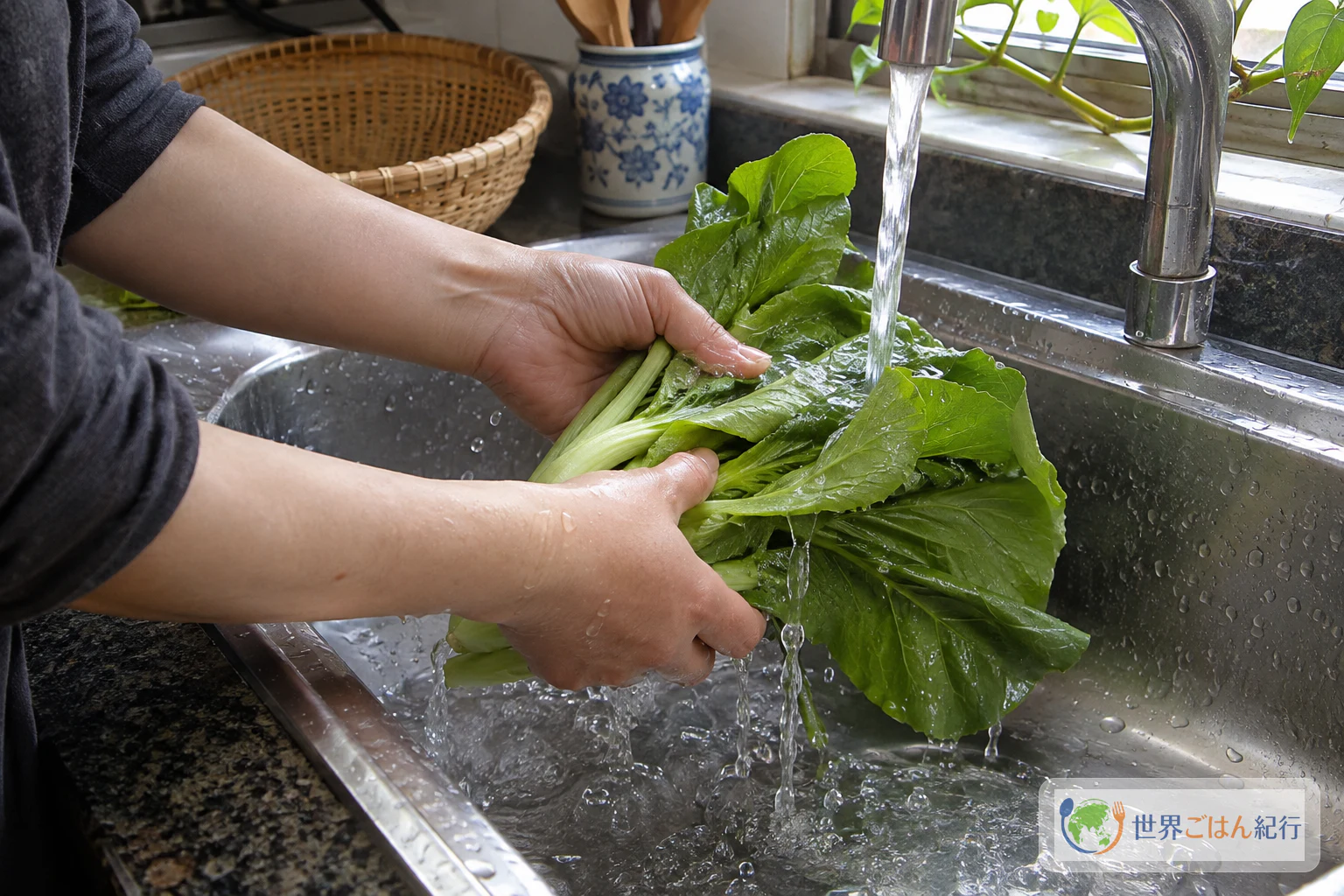
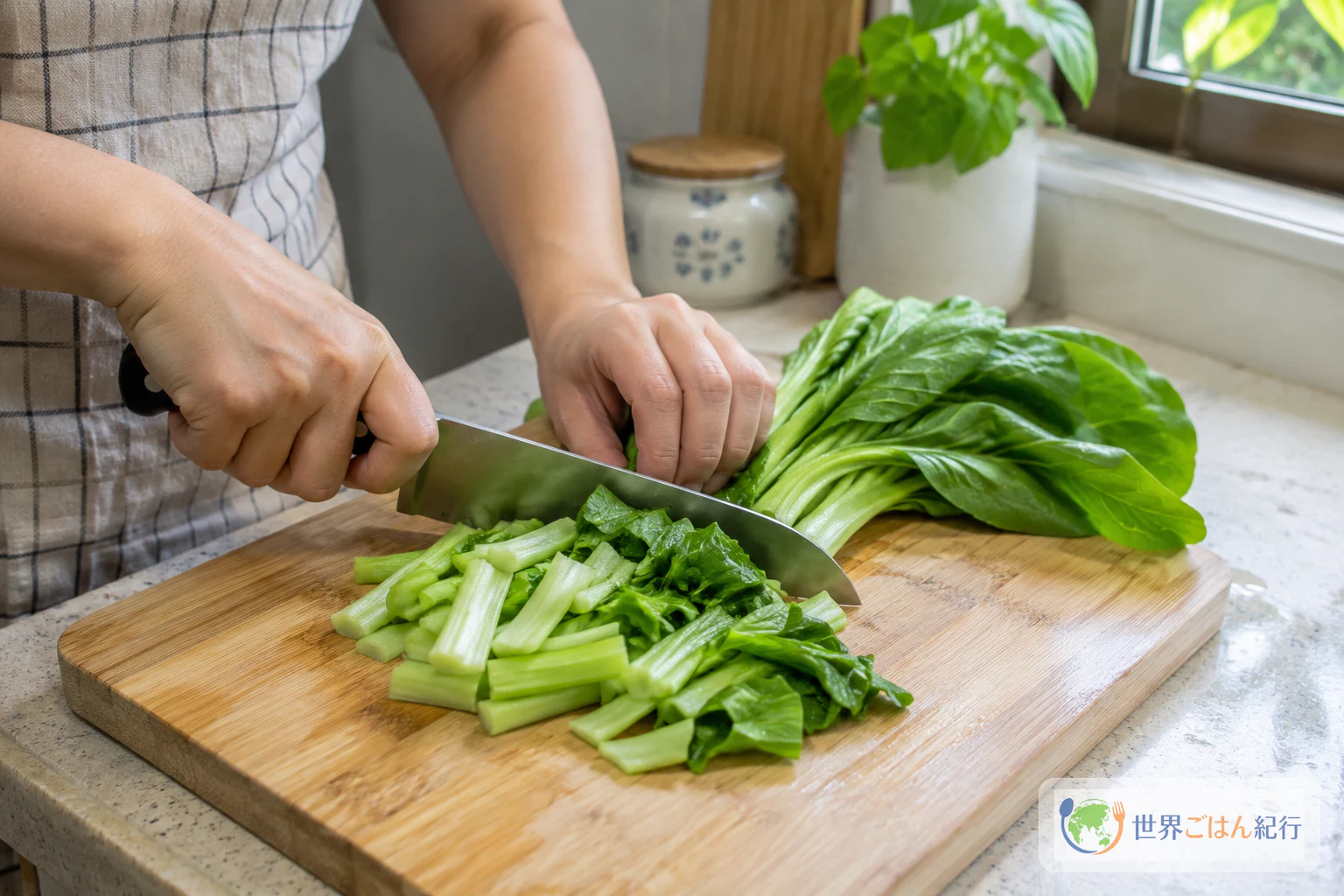
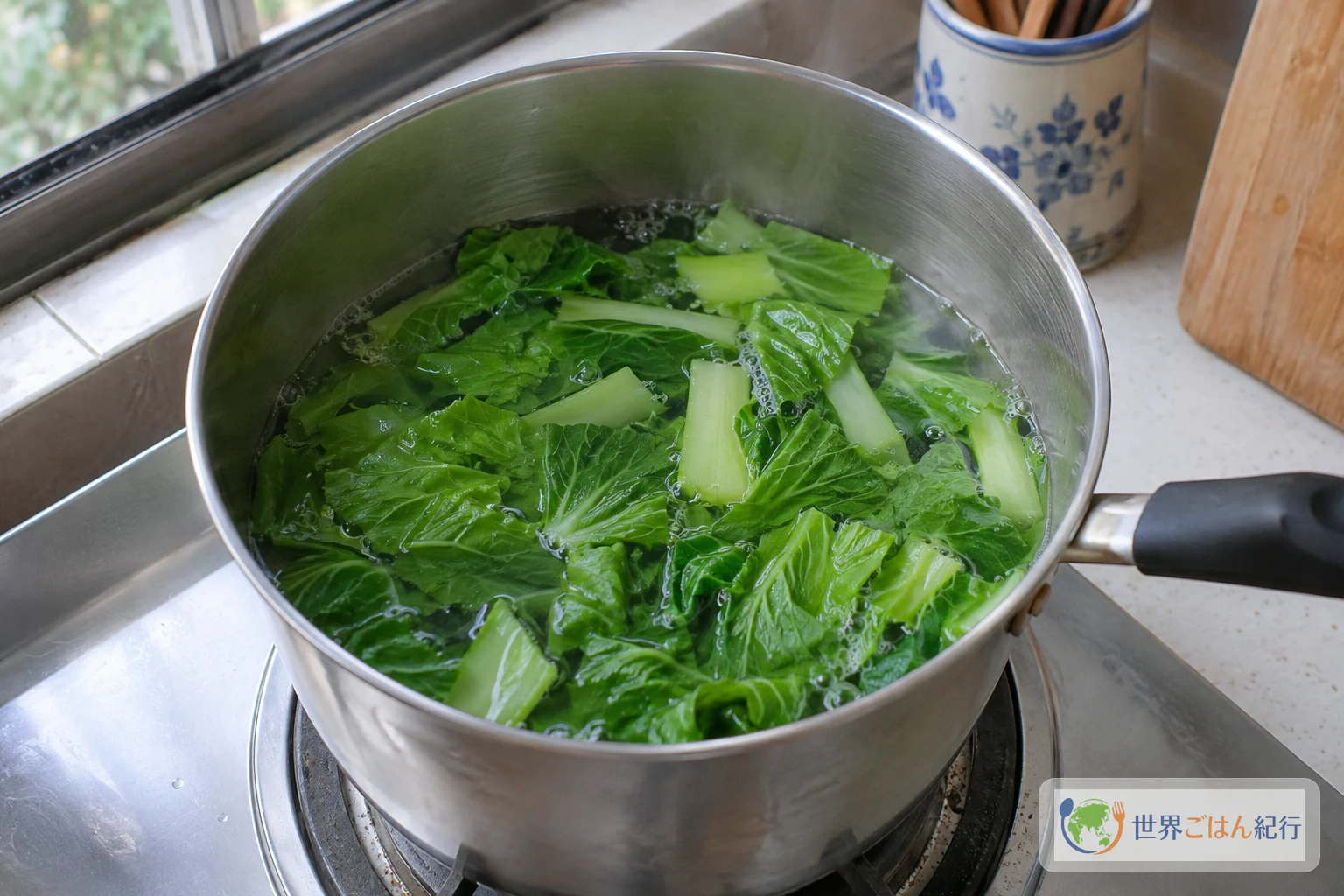
Gai choy: This is a mustard green. We haven't confirmed a substitute for this recipe, so we don't recommend one here.
Corn starch: Use corn starch for the paste. Don't assume potato starch or other starches will behave the same way.
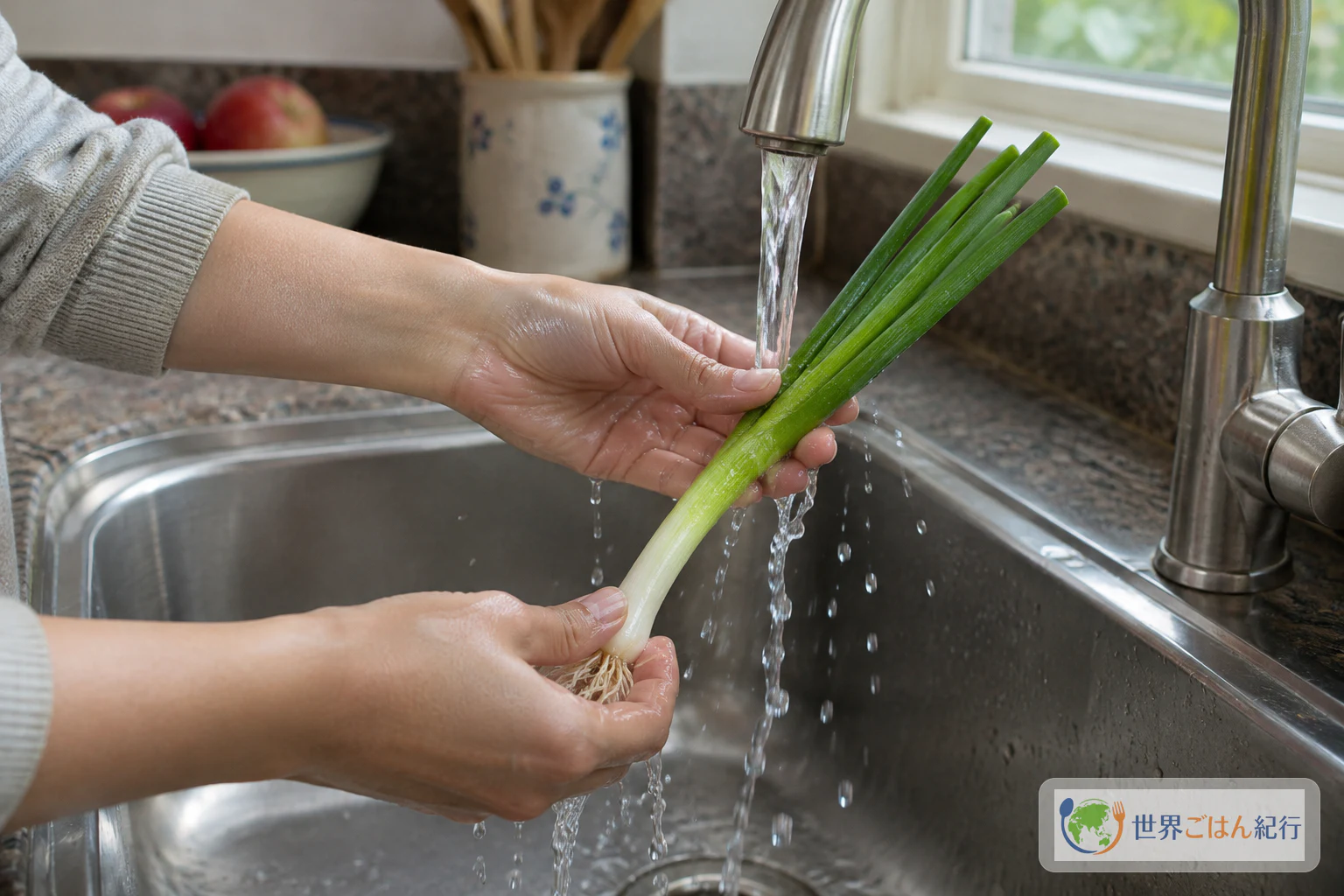
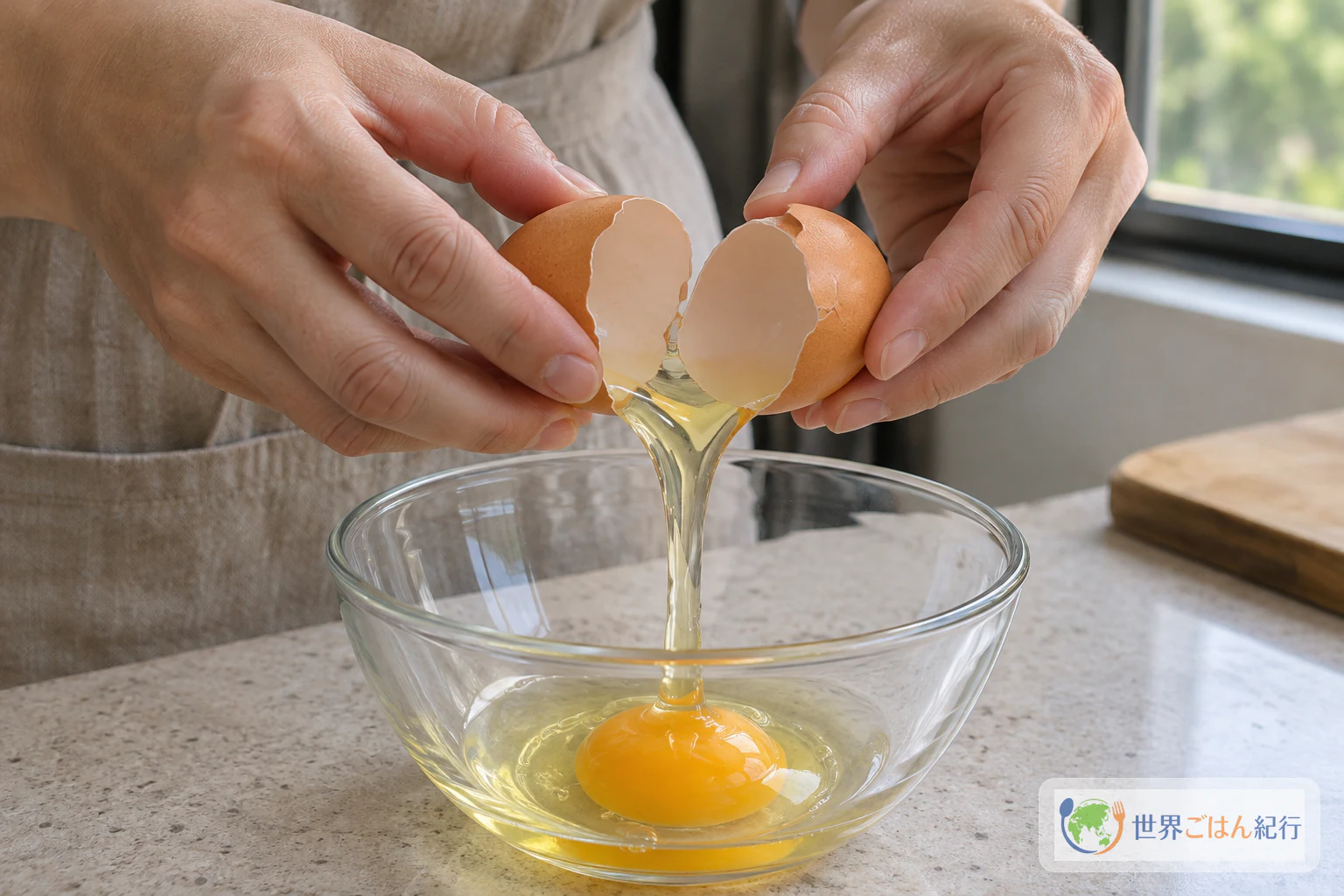
Raw pork and egg: Keep the ribs, mince and egg in the fridge until you need them. Use a separate board for vegetables, and wash your hands and any utensils after they touch raw pork or egg.
Method: Broth First, Then Meatballs, Then the Bowl
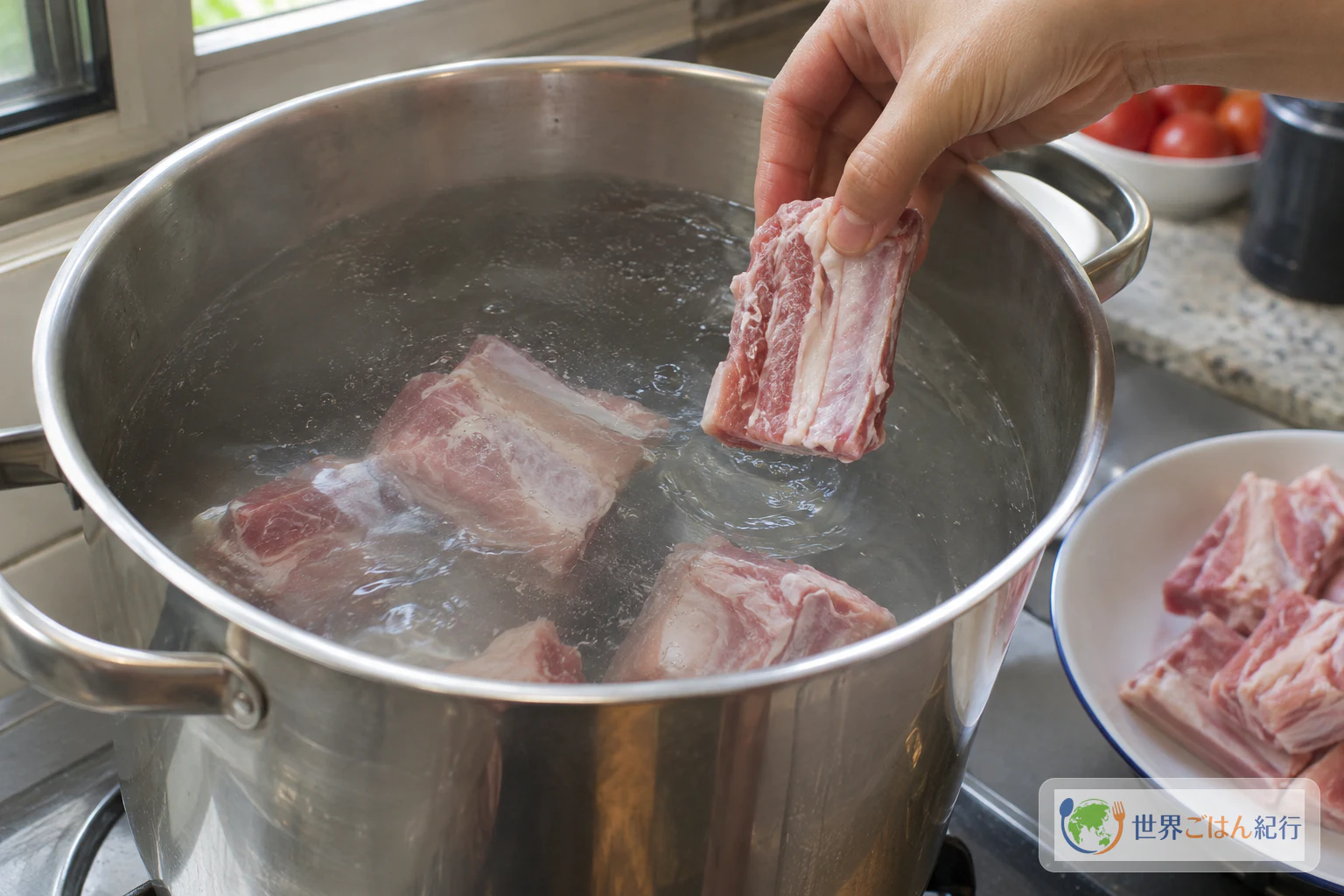
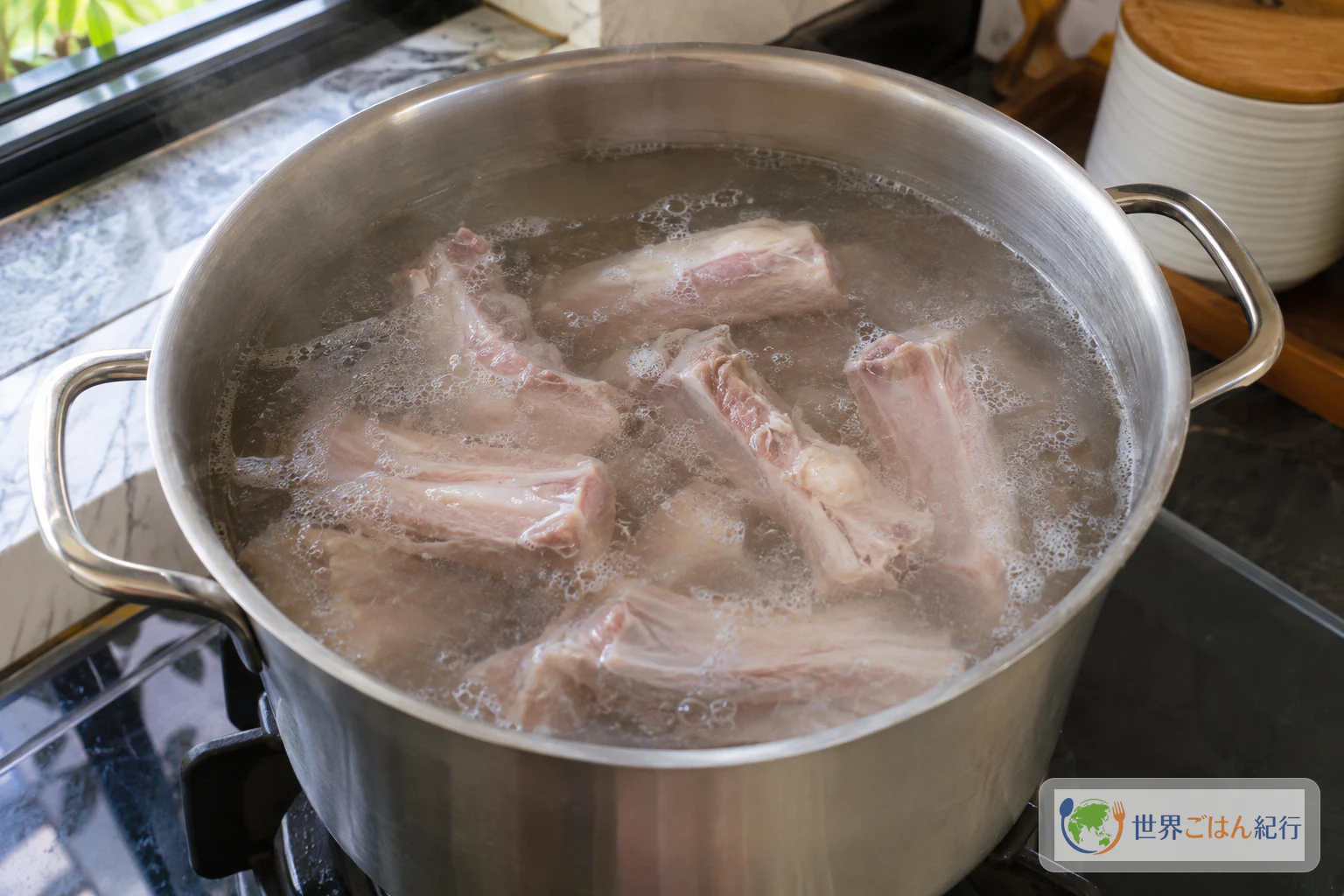
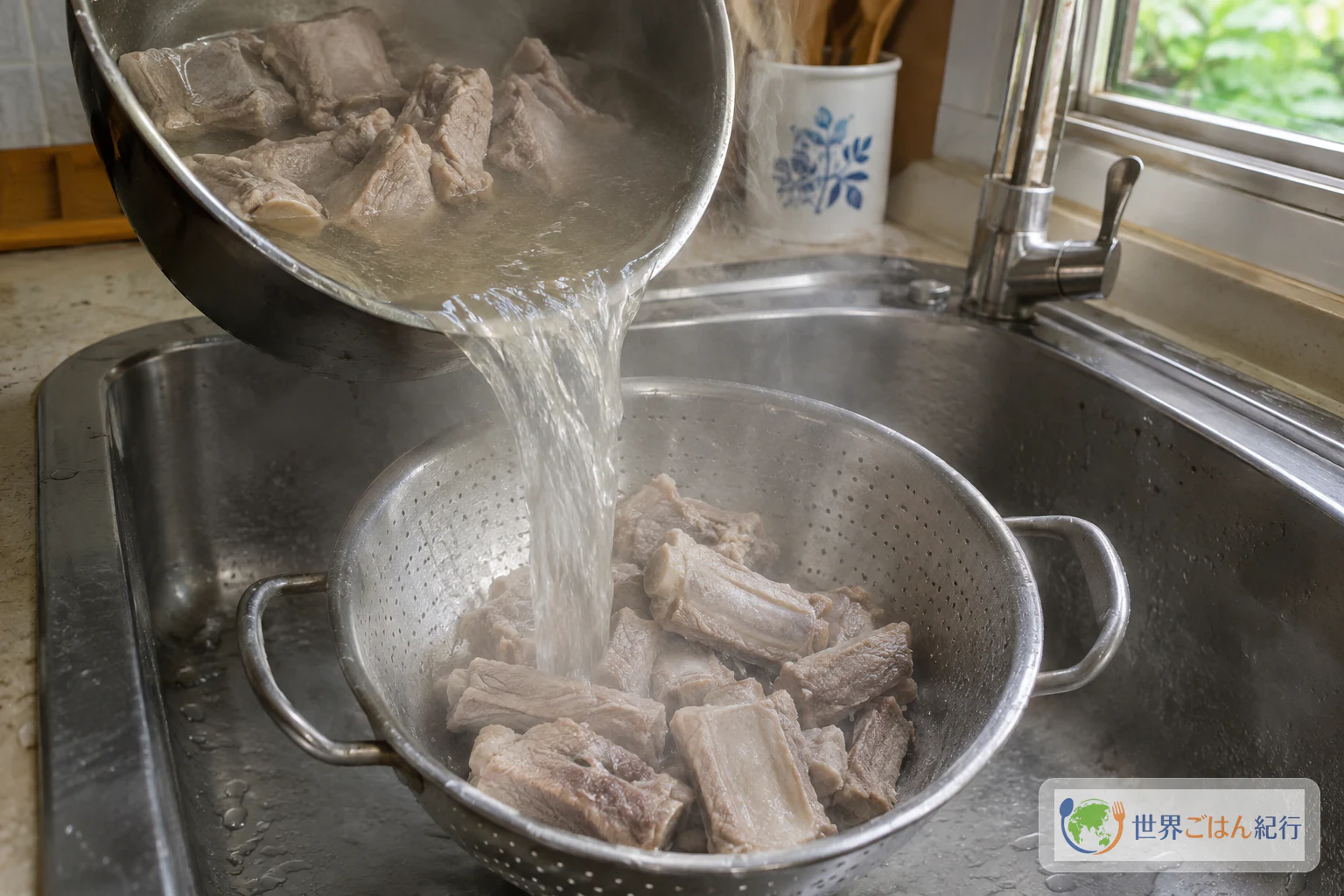
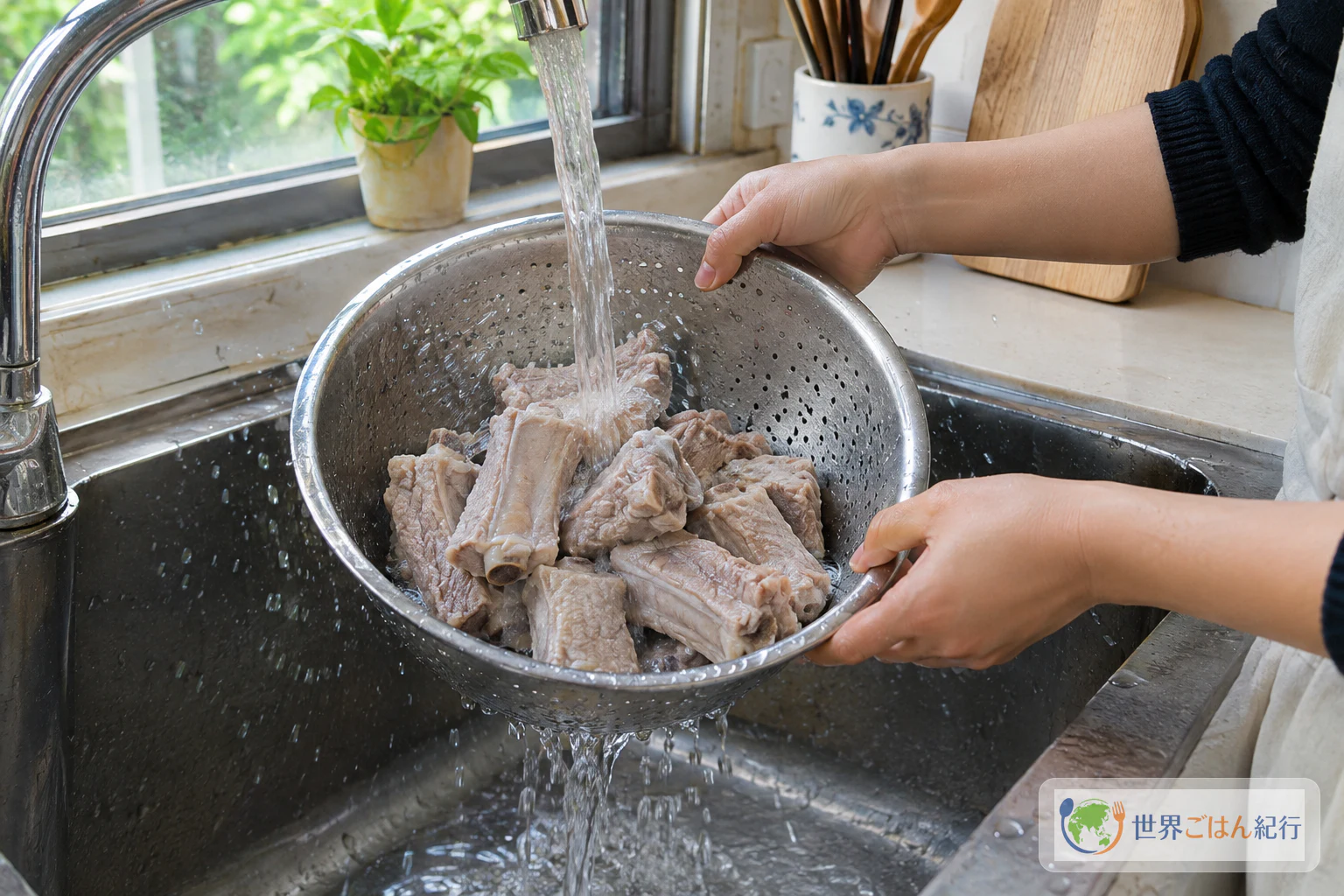
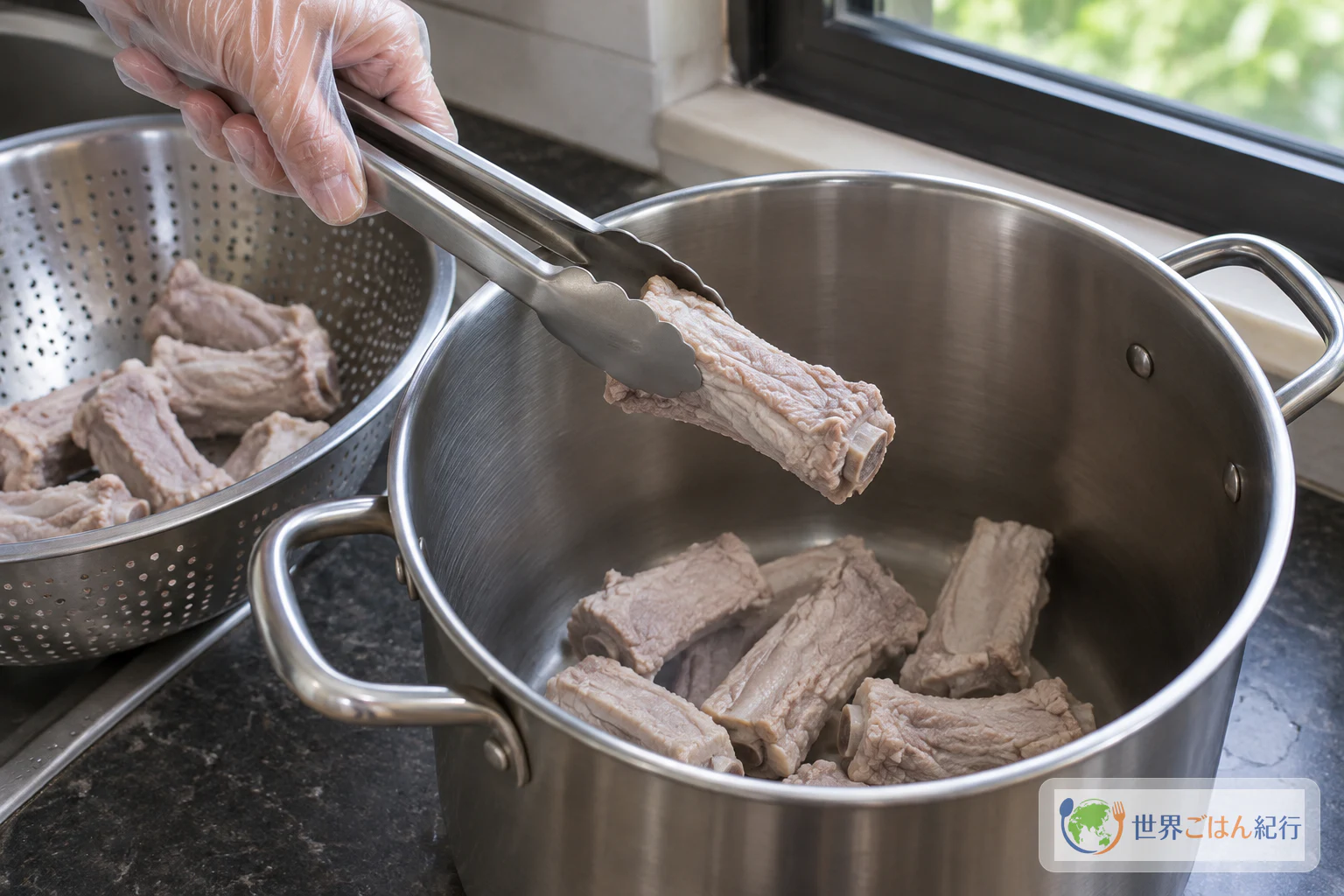
Floating, color and a rolling boil don't prove that meatballs are safely cooked. Check the center with a food thermometer and make sure it is heated at 75°C for at least 1 minute. Hot water can splash when you add, drain or rinse the ribs, so work carefully and keep ready-to-eat food away from the sink.
If Something Seems Off
| Problem | What it may mean | What to do |
|---|---|---|
| The meatballs float, but the center hasn't reached the target | Floating doesn't confirm doneness | Keep cooking and check again until the center is heated at 75°C for at least 1 minute |
| The meatballs look pale and cooked | Their color doesn't confirm doneness | Check the largest one with a thermometer |
| The broth is getting low during the hour | Water is cooking off | Add more water as needed, then taste before serving |
| The broth tastes flat | The salt and sugar are flexible "to taste" amounts | Add a little more salt or sugar and taste again |
| The paste feels very soft | It is meant to be soft enough to scoop | Leave it soft, and don't add flour or shape it ahead of time |
| The broth has some cloudiness or fat droplets | This can happen naturally with pork-rib broth | Strain out the solids and carry on, since the broth doesn't need to be perfectly clear |
| The noodles are too firm or too soft | Times and methods vary by product | Check your pack and follow its directions next time |
Other Ways to Build the Bowl
The versions below are outside this recipe. We mention them to show the range of the dish, and we don't provide amounts or methods for them.
- Si chet: The author's dry version uses its own seasonings, such as soy sauce and oyster sauce.
- Fried garlic and chili sauce: The author treats these as optional in the soup version. The peanut oil with fried garlic appears in the author's ingredient list, but we leave it out here.
- Extra toppings: The author lists offal, fish balls, tofu, quail eggs, an egg on top and other additions. The author also notes that the meatballs can be halved if you add extras, but this version adds none, so it uses all the mince.
- Different meatballs: A home-style recipe on MyFood Myanmar uses meatballs made with fish paste, wheat flour and egg white, and it includes offal in one example. That's a useful contrast, but it isn't the basis for this recipe.
One Dish, Several Bowls
Kyay Oh can look quite different from one kitchen to the next, and we don't treat any one bowl here as the definitive version. The Yummy Calories recipe reflects one cook's preferred bowl at home. The other examples come from specific businesses and sites.
The Nation Thailand profiled a roadside stall in Yangon and interviewed its owner, Than Than Htike. That report describes both soup and dry forms, along with the stall's pork-only meatballs and clear soup. The Strand Cafe's Myanmar menu describes its own Kyay Oh with ingredients that include pork and egg. Neither source supplies amounts or a full method, so we use them only for comparison and not for this recipe.
To see more dishes from the country, visit our Myanmar page.
Frequently Asked Questions
Why use a thermometer if the meatballs float?
The author uses floating as a sign of doneness, but it can't confirm how hot the center has become. Japan's Ministry of Health, Labour and Welfare advises home cooks to heat food at 75°C in the center for at least 1 minute, and this article follows that guidance. FoodSafety.gov in the United States lists 71°C (160°F) for ground meat, measured with a food thermometer. The two figures come from different agencies, and neither is part of the author's recipe.
When do the broth salt and sugar go in?
The author's method doesn't say. We add them as the broth begins to cook, keeping the author's amounts of 2 tbsp salt and 1 tbsp sugar, or to taste.
How much water should I add during the simmer?
The author says about 3L plus more as needed, without giving a top-up amount or frequency. Add what the pot needs and taste the broth before serving.
Can I use the rib meat as a topping?
The author's recipe doesn't call for reusing it, so this version doesn't include it in the bowls.
Can I replace the gai choy or corn starch?
We haven't confirmed a substitute for either one, so we don't recommend any. In particular, we don't treat corn starch and potato starch as interchangeable in this recipe.
Can I store or reheat Kyay Oh?
This article covers only a fully cooked bowl served right away. The recipe gives no storage or reheating guidance, so we don't offer any here.
Sources
- Yummy Calories, "Basic Burmese kyay oh," published 2017-01-21, updated 2022-05-14. Basis for the ingredients, amounts and method of the 4-serving recipe, the soup and si chet forms, optional items, listed times and the floating cue. The page gives no personal name or credentials for the author. https://yummycalories.com/2017/01/21/basic-burmese-kyay-oh-475-calories-per-serve/
- Ministry of Health, Labour and Welfare (Japan), "家庭でできる食中毒予防の6つのポイント" (Six Points for Preventing Food Poisoning at Home). Public guidance on heating food at 75°C in the center for at least 1 minute, handwashing, separating and washing utensils, and clean serving. It is not part of the Kyay Oh recipe. https://www.mhlw.go.jp/www1/houdou/0903/h0331-1.html
- FoodSafety.gov, "Cook to a Safe Minimum Internal Temperature." Comparison figure of 71°C (160°F) for ground meat and sausage, checked with a food thermometer, and the advice to cook raw eggs until the yolk and white are firm. https://www.foodsafety.gov/food-safety-charts/safe-minimum-internal-temperatures
- The Nation Thailand, "A roadside stall serves the best Kyay Oh in Yangon." Interview with stall owner Than Than Htike, covering the soup and dry forms and the stall's meatballs and soup. Used for comparison only. https://www.nationthailand.com/international/30244012
- The Strand Cafe, "Myanmar Menu." The cafe's description of its Kyay Oh. Used for comparison only. https://www.hotelthestrand.com/assets/pdf/The-Strand-Cafe-Myanmar-menu.pdf
- MyFood Myanmar, "ကြေးအိုး," page credited to ချက်ကြည့်ကြစို့. A different home-style version with fish paste, wheat flour and egg white in the meatballs, and an example using offal. Used for comparison only. https://myfoodmyanmar.com/how-to-make-kyayy-oh-at-home/