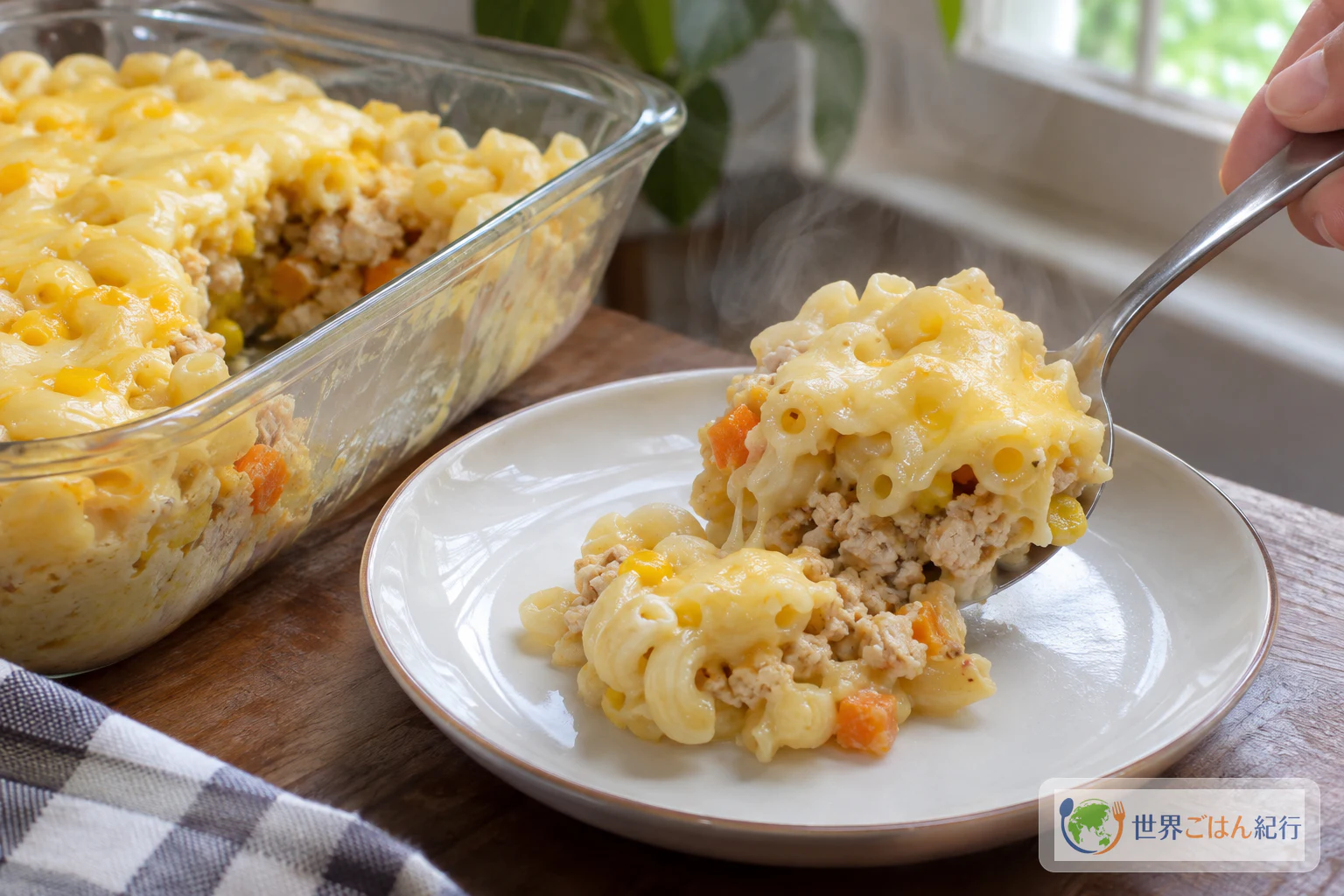
Makaroni Schotel from the Steamer: Pasta, Egg and Cheese Set Without an Oven
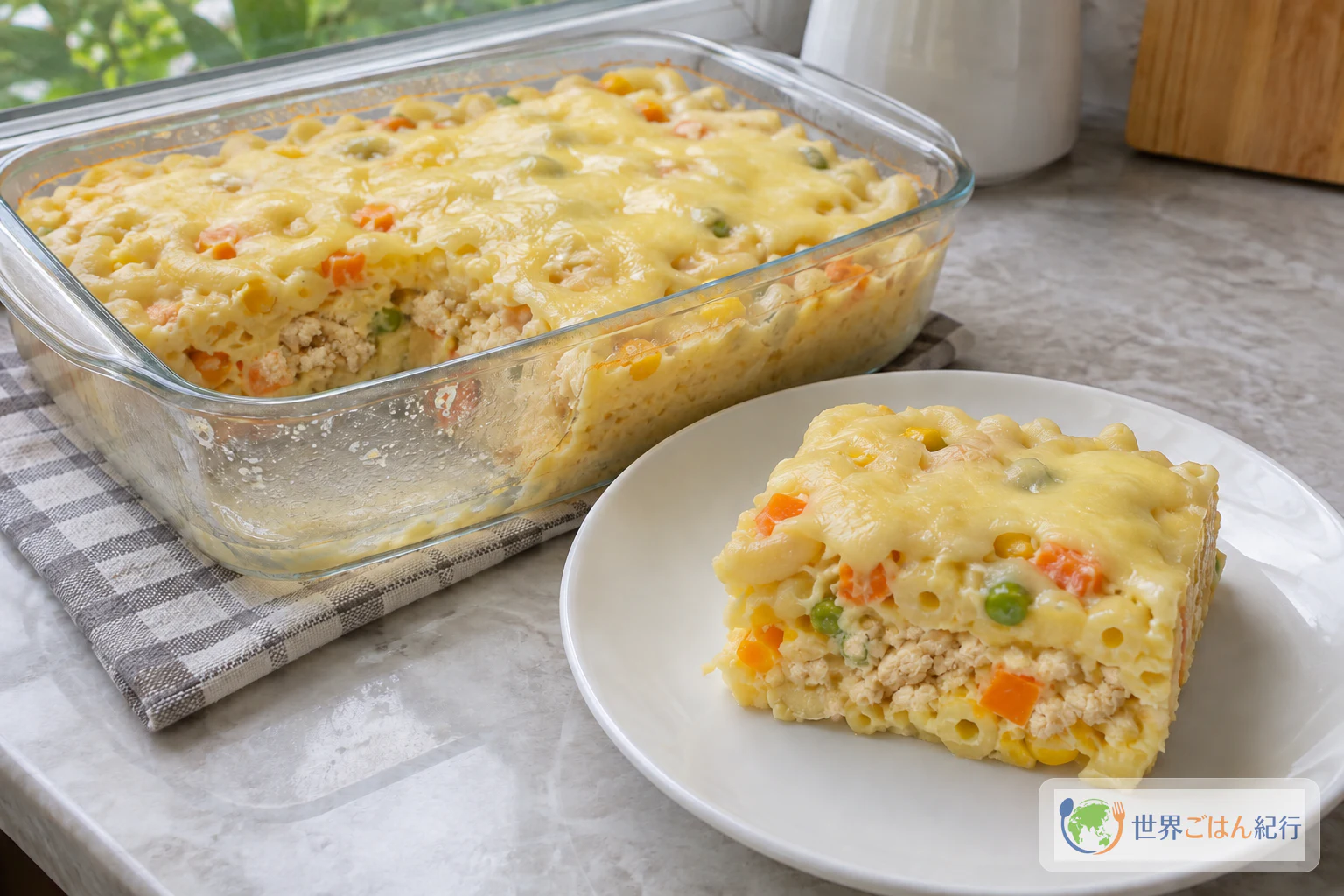
A soft, cohesive block of macaroni, ground chicken and vegetables held together by milk, egg and cheese, with a pale melted cheddar top. No browned crust: this version is steamed, not baked.
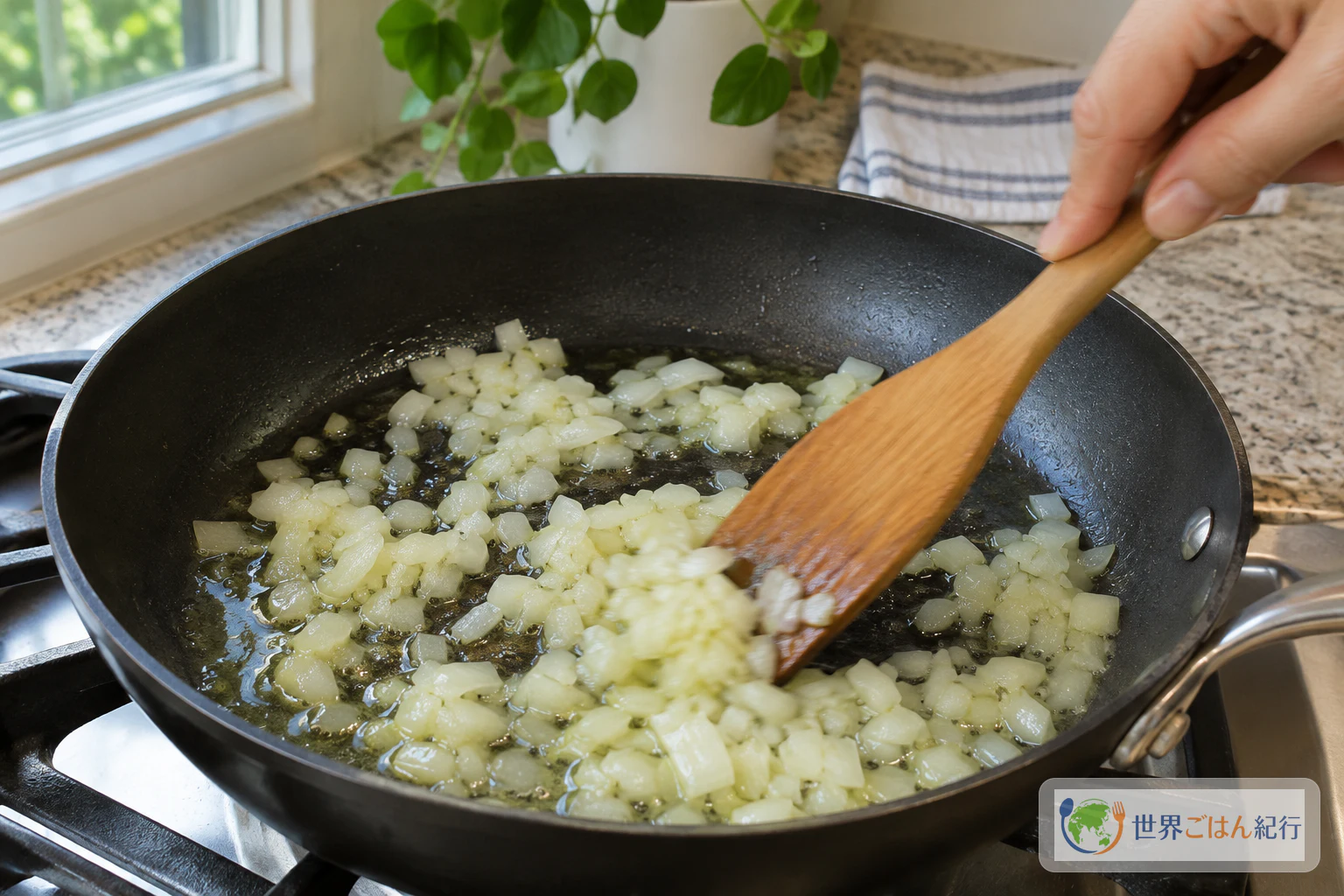
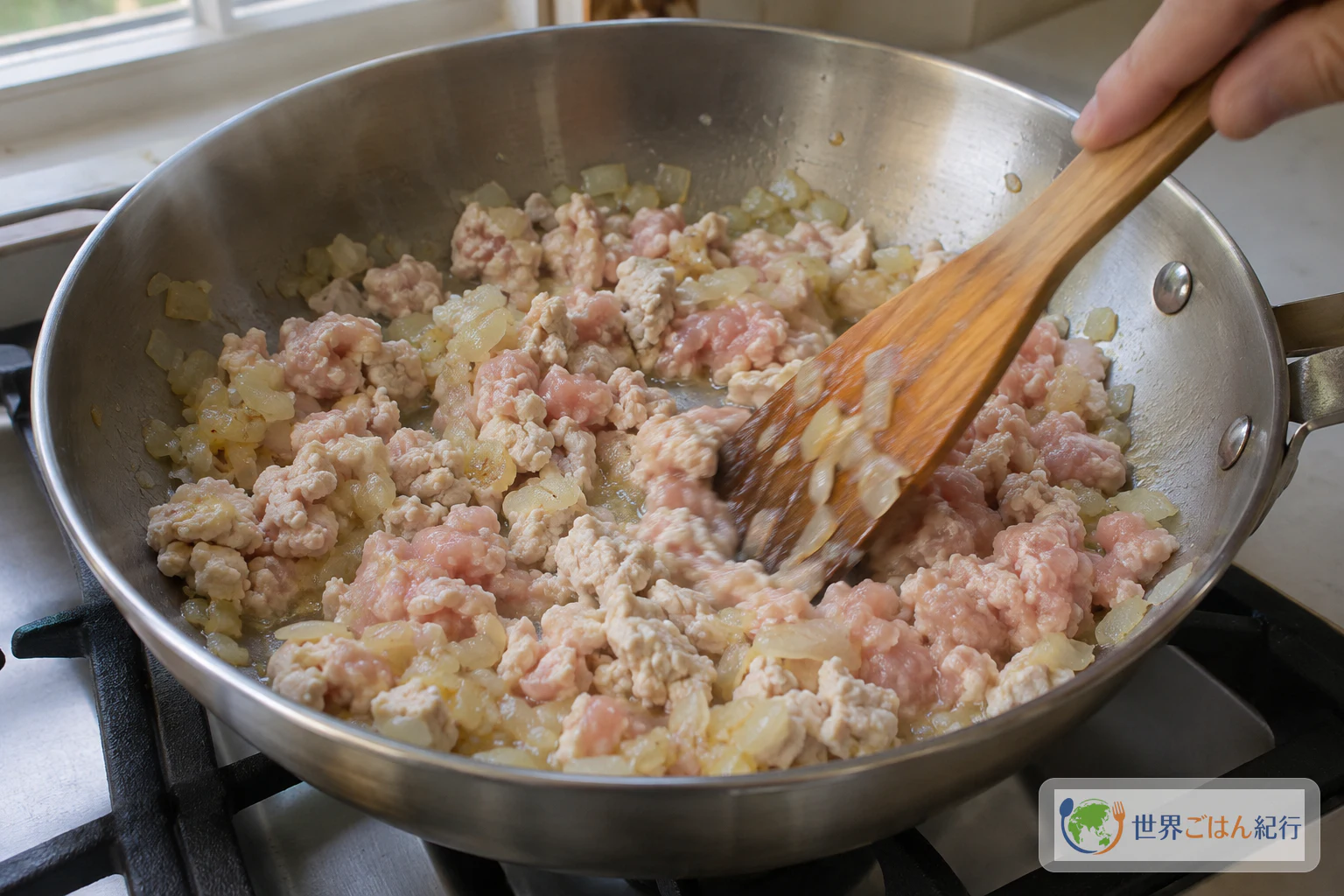
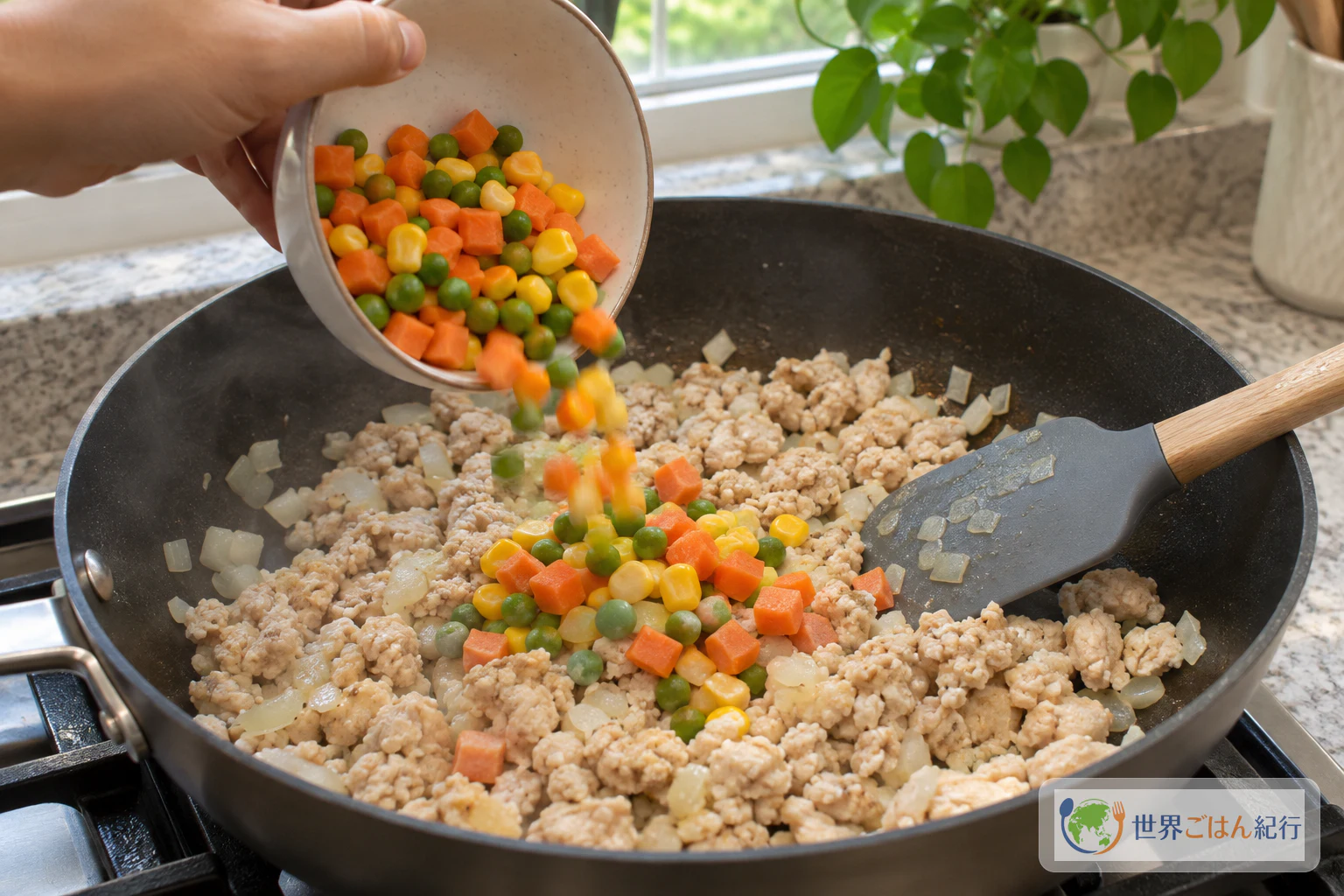
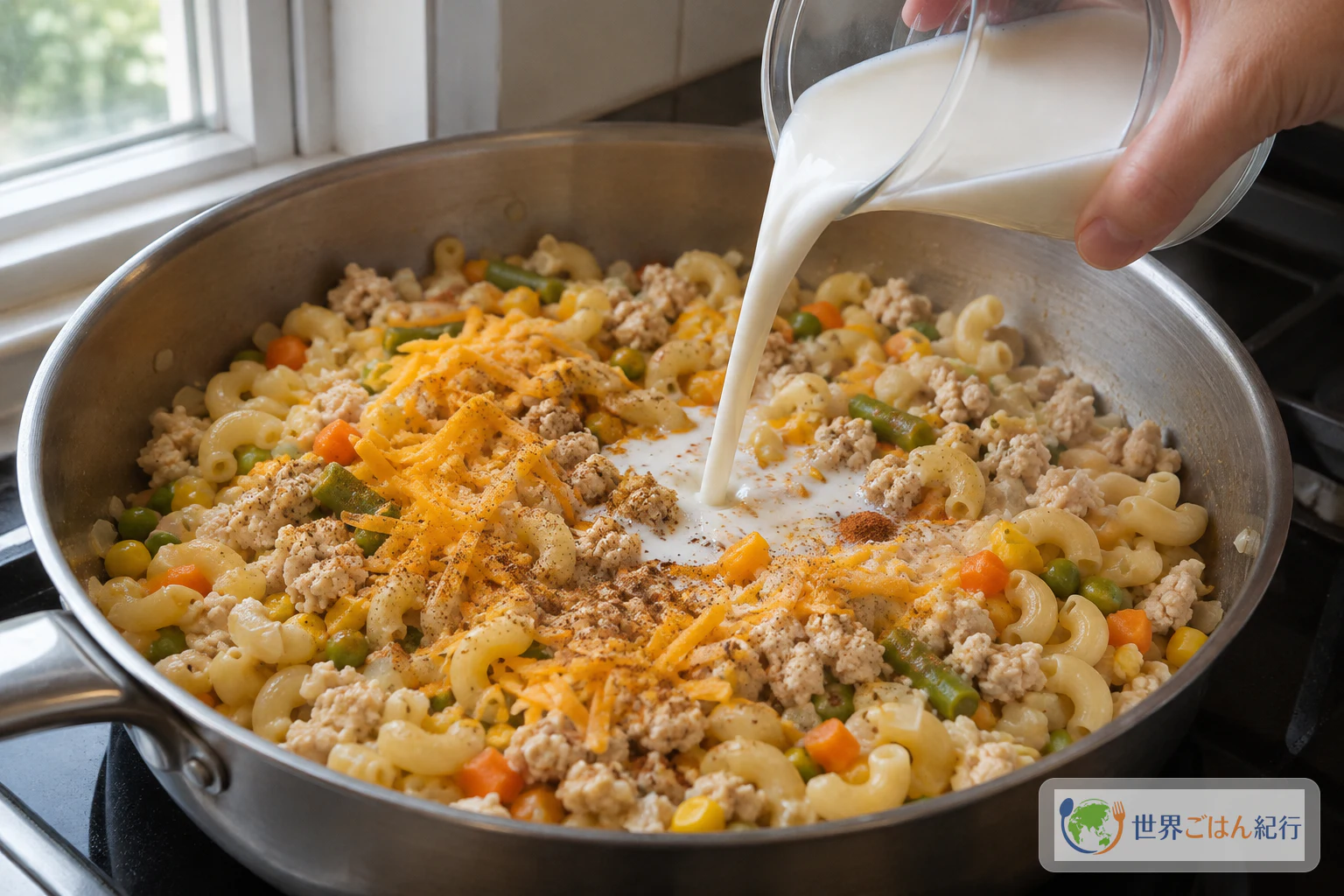
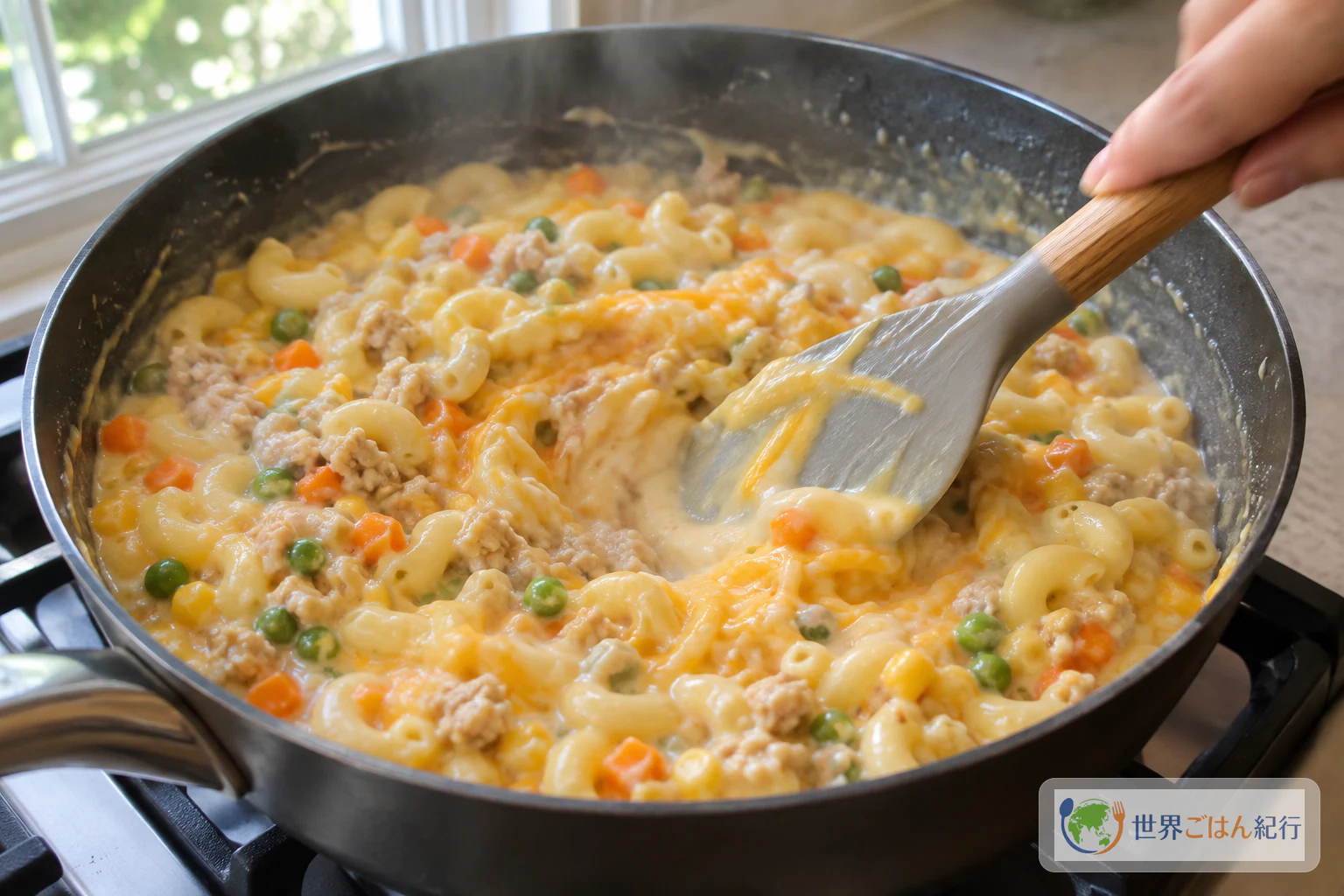
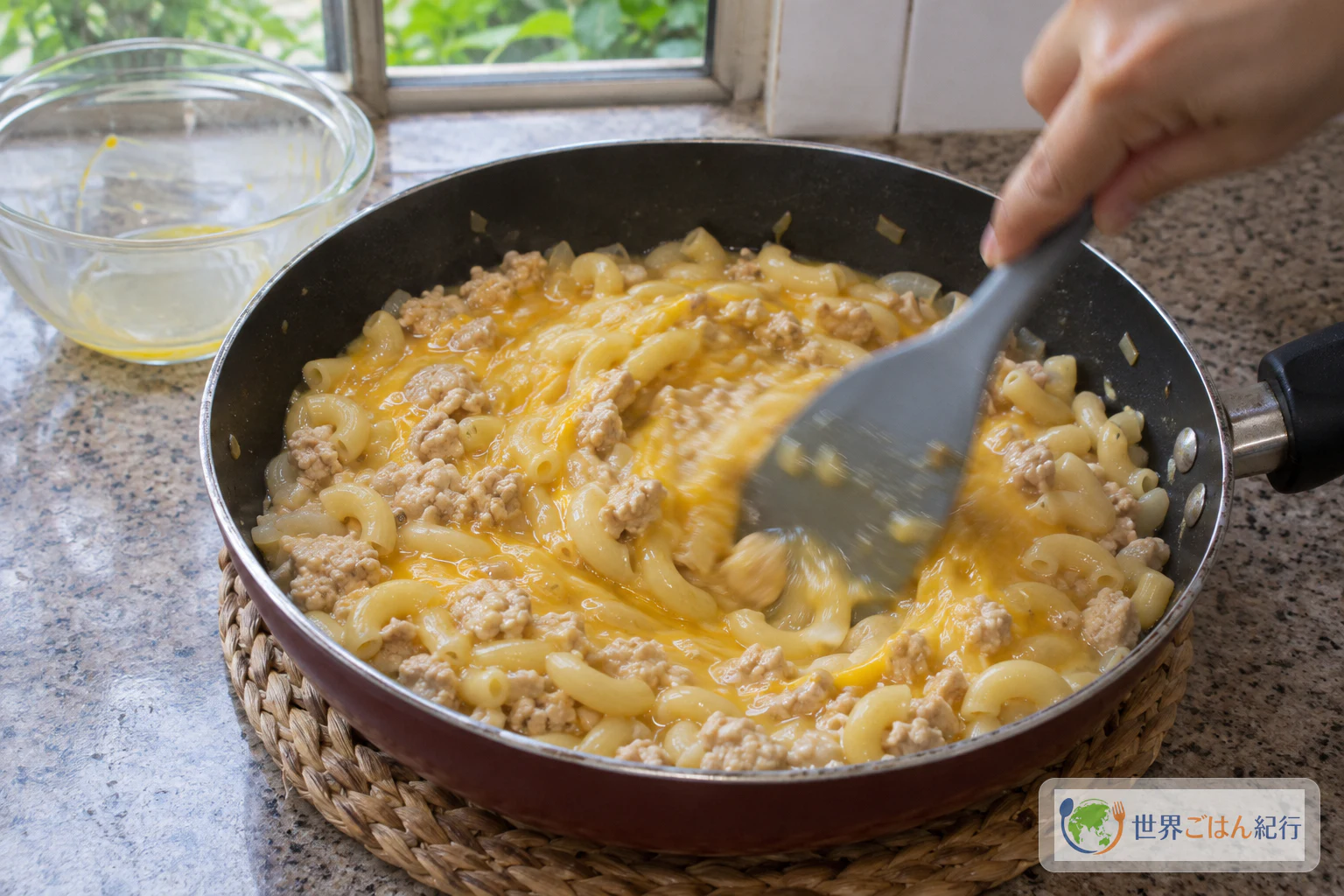
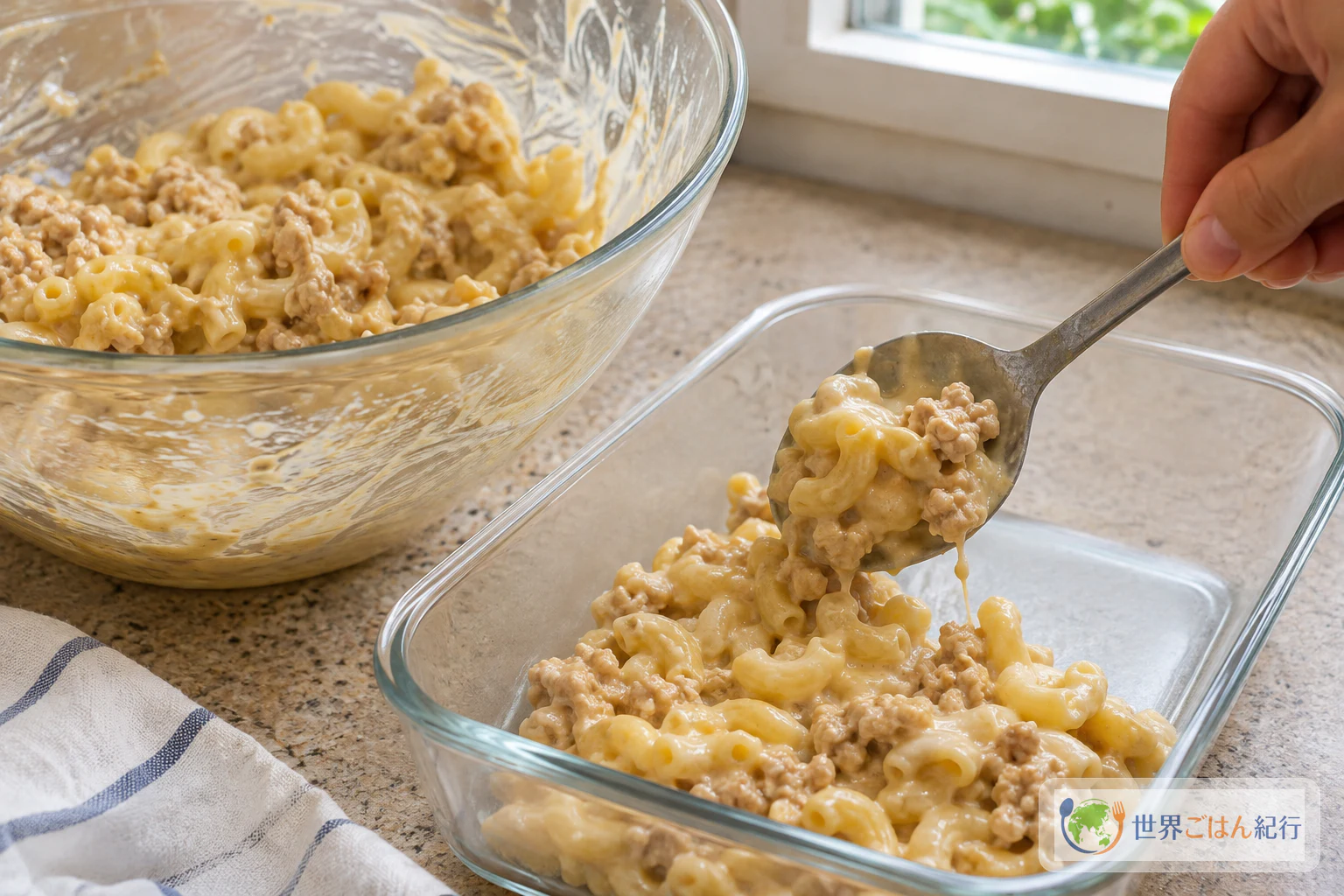
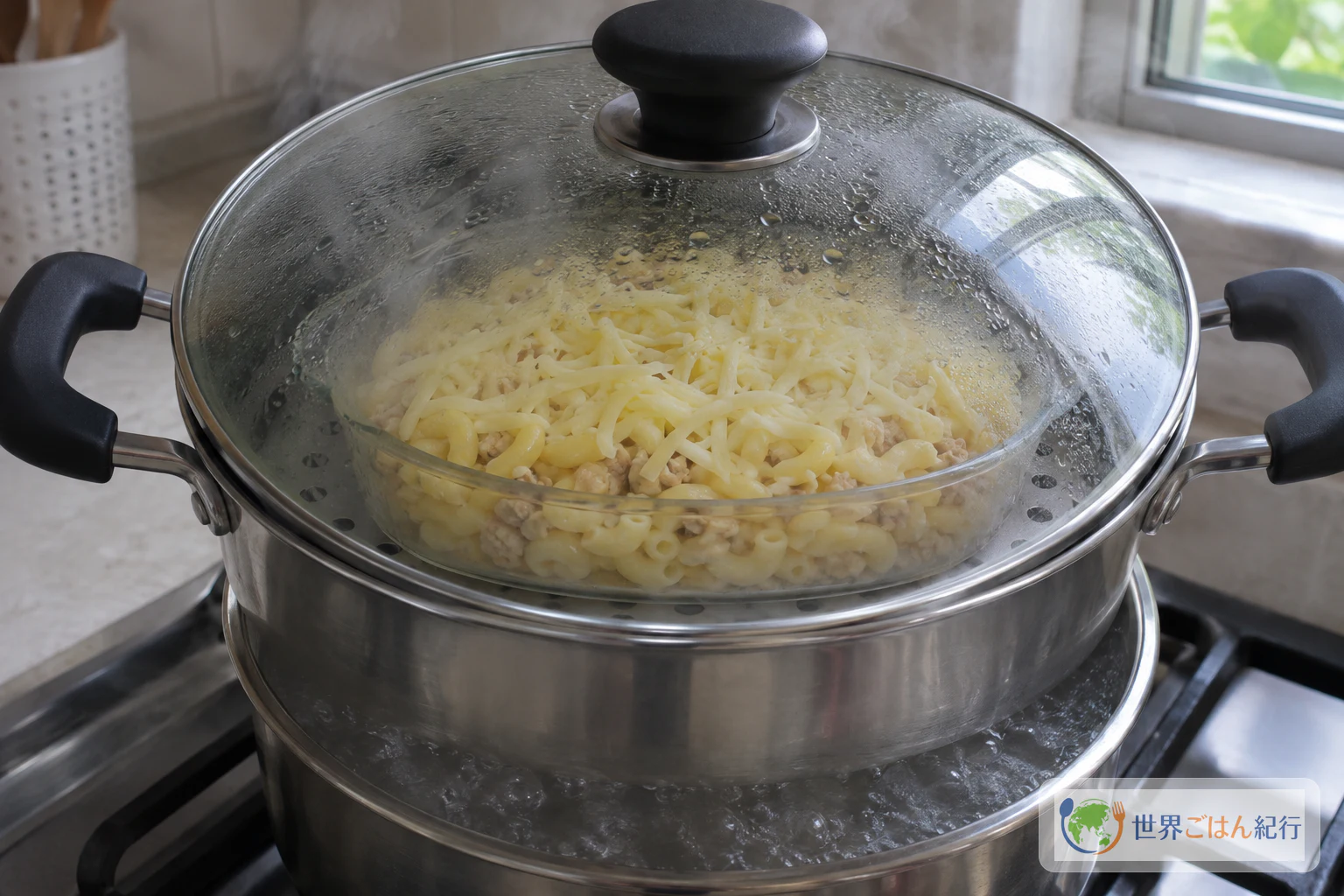
Makaroni schotel is an Indonesian macaroni dish with cheese, and you will see it spelled both schotel and skotel. Many versions are baked. This one is the steamed version, makaroni skotel kukus, from Royco's Nutrimenu recipe collection, where it is filed among snacks (camilan). Onion and ground chicken are cooked in a pan with mixed vegetables, then the boiled macaroni, half the cheese, milk, chicken bouillon powder and nutmeg go in and the mixture is cooked until thick. The heat goes off, beaten eggs are stirred through quickly, and the mixture goes into a heatproof dish with the rest of the cheese on top before steaming until it is cooked through.
The result is not the golden, crusted casserole many people picture. The cheese on top melts pale and soft, and the inside holds together like a savory pudding studded with pasta. That makes it a good choice for a kitchen without an oven, or for a day when you would rather use a steamer.
This is one published version, not the single fixed recipe for the dish. The Royco recipe is labeled 8 portions (8 porsi). That is a portion count as printed, not a promise of eight adult-sized meals, and it does not set how large each piece should be.
Sekai Gohan has not kitchen-tested this recipe. The amounts and order follow the Royco steamed recipe. Where that recipe leaves something open, such as when the macaroni is weighed or how long to steam, this article says so in the sections below rather than filling the gap with numbers.
Steamed or Baked: Two Ways to Make Makaroni Schotel
The same dish name covers quite different recipes. A recipe article from Indonesian public broadcaster RRI (Radio Republik Indonesia) makes a baked makaroni schotel: 250 g macaroni, 200 g minced beef, onion and garlic, 500 ml milk, 3 eggs, cheddar split into 100 g mixed in and 100 g for topping, plus flour, butter, salt, pepper and nutmeg, baked at 180°C for 30–40 minutes.
The steamed Royco version used here is smaller and simpler. It uses ground chicken instead of beef, no garlic, flour or butter, and a sachet of chicken bouillon powder for seasoning. It is set in a steamer rather than an oven.
| Steamed (this recipe) | Baked (RRI comparison) | |
|---|---|---|
| Meat | Ground chicken | Minced beef |
| Binding | Milk, eggs, cheddar | Milk, eggs, cheddar, flour, butter |
| Seasoning | Chicken bouillon powder, nutmeg | Salt, pepper, nutmeg, garlic |
| Cooking | Steamed until cooked through | Baked at 180°C for 30–40 minutes |
| Top | Pale melted cheese | Baked cheese topping |
Keep the two apart when you cook. A browned top and a white sauce made with flour and butter belong to baked recipes and are not part of the steamed version. Mixing amounts from one into the other gives you a third recipe, not either of these.
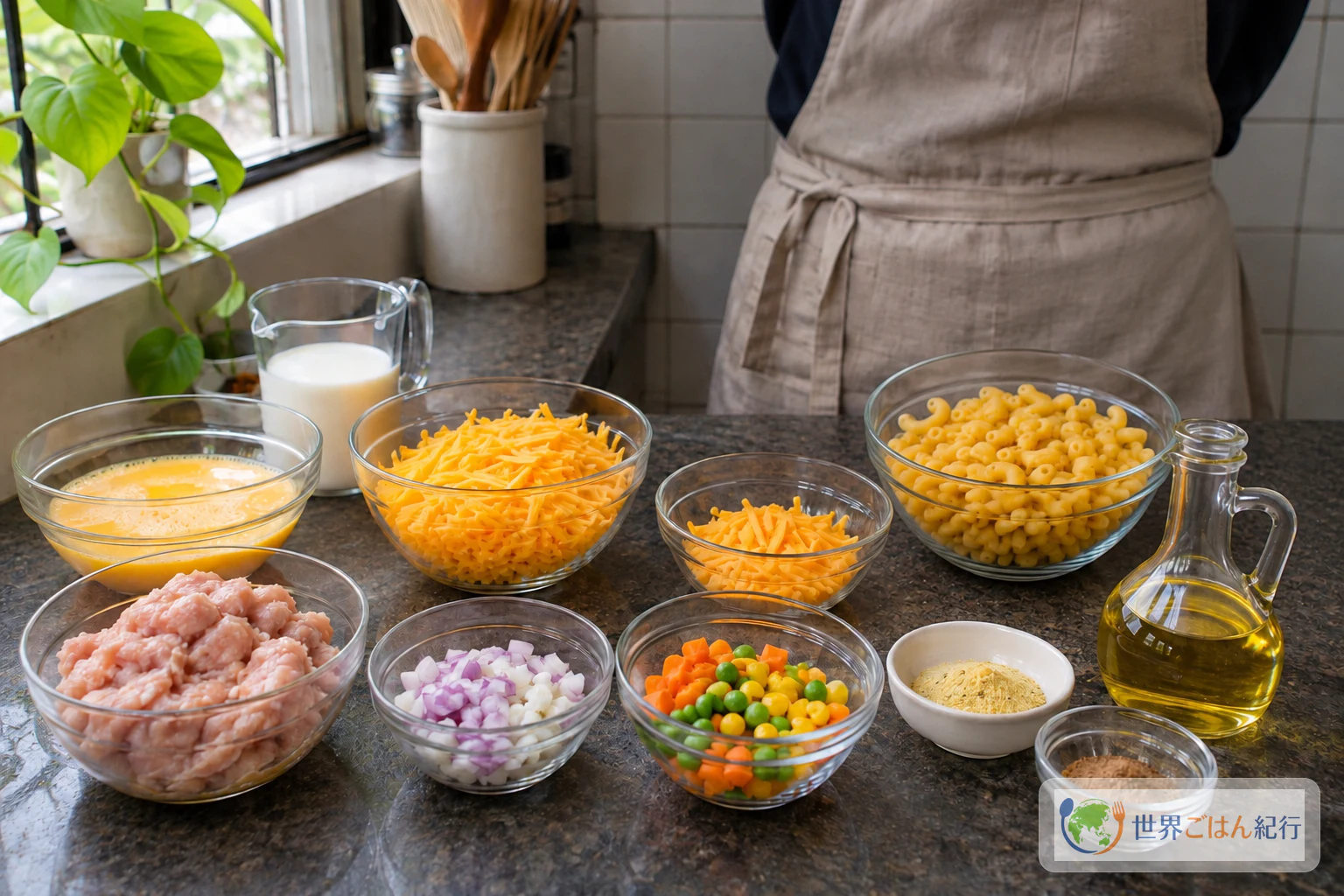
Ingredients for 8 Portions
Equipment
- Pot for boiling the macaroni
- Colander
- Frying pan
- Spatula
- Small bowl for beating the eggs
- Heatproof container that fits inside your steamer
- Steamer with a lid
- Food thermometer
- A separate cutting board and utensils for raw chicken
Choosing and Swapping
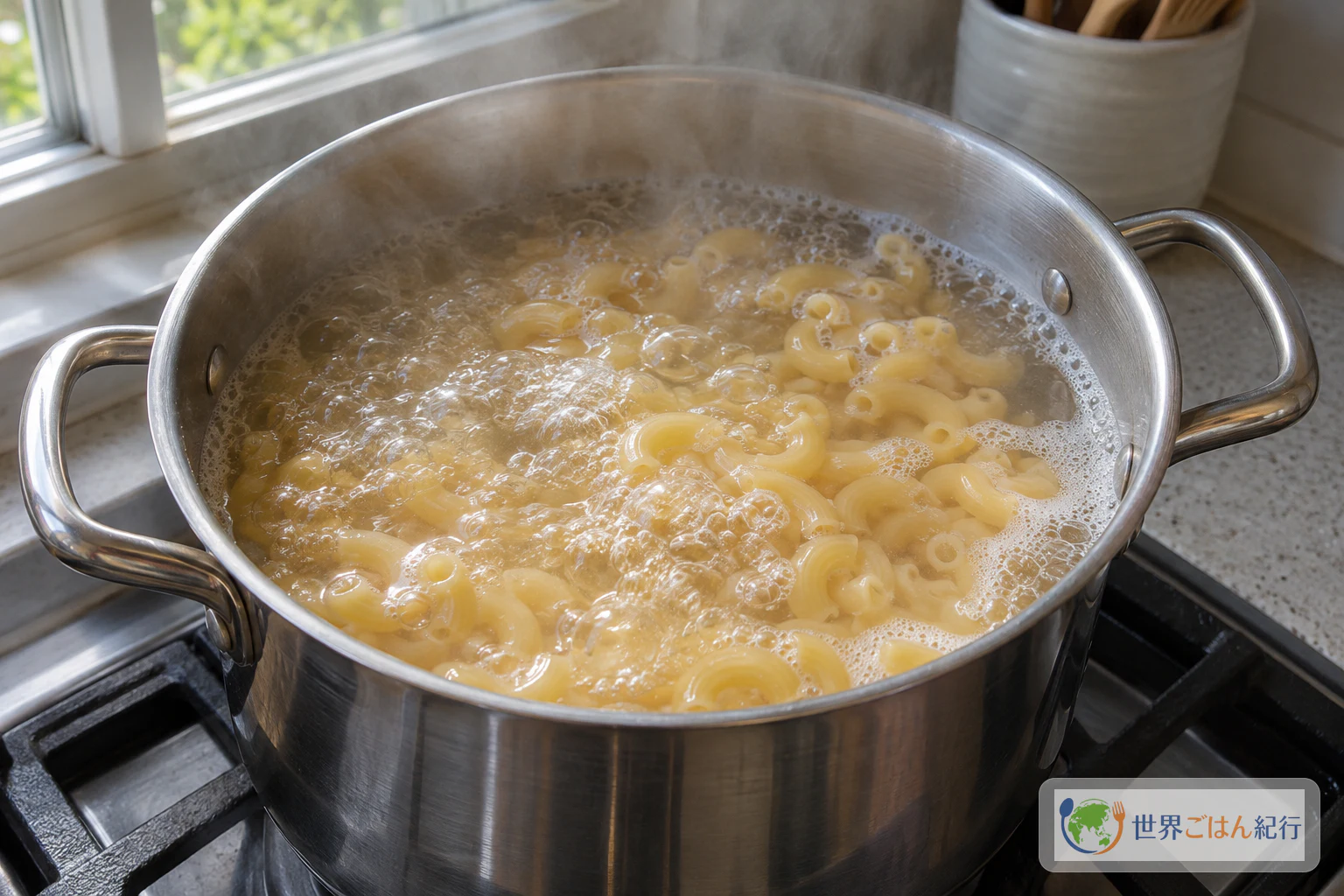
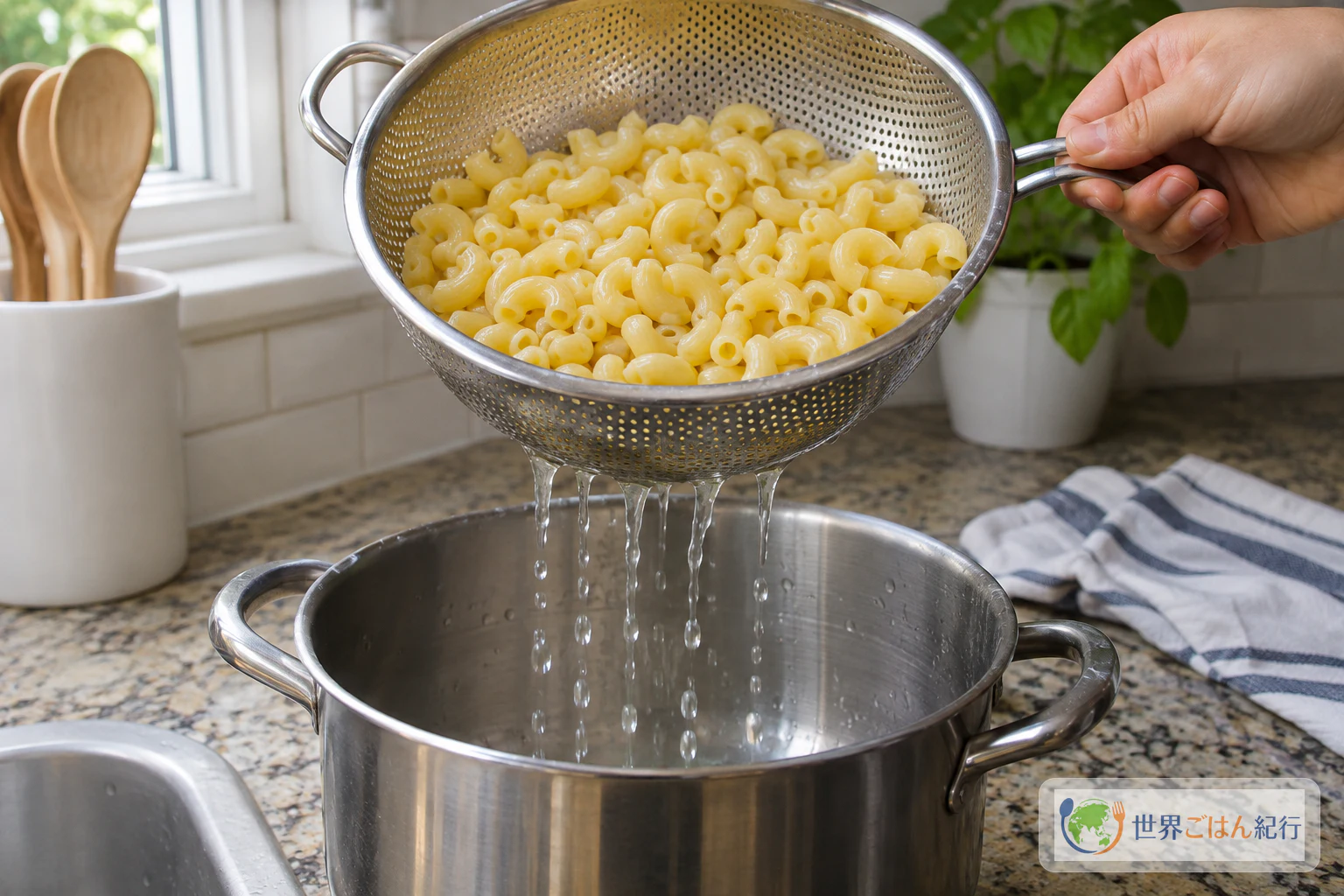
Macaroni. For this version, weigh out 100 g macaroni, then boil and drain it.
Mixed vegetables. Use 100 g of a carrot, pea and corn mix, or other vegetables you like. The carrot, pea and corn combination shown in the photos is an editorial choice.
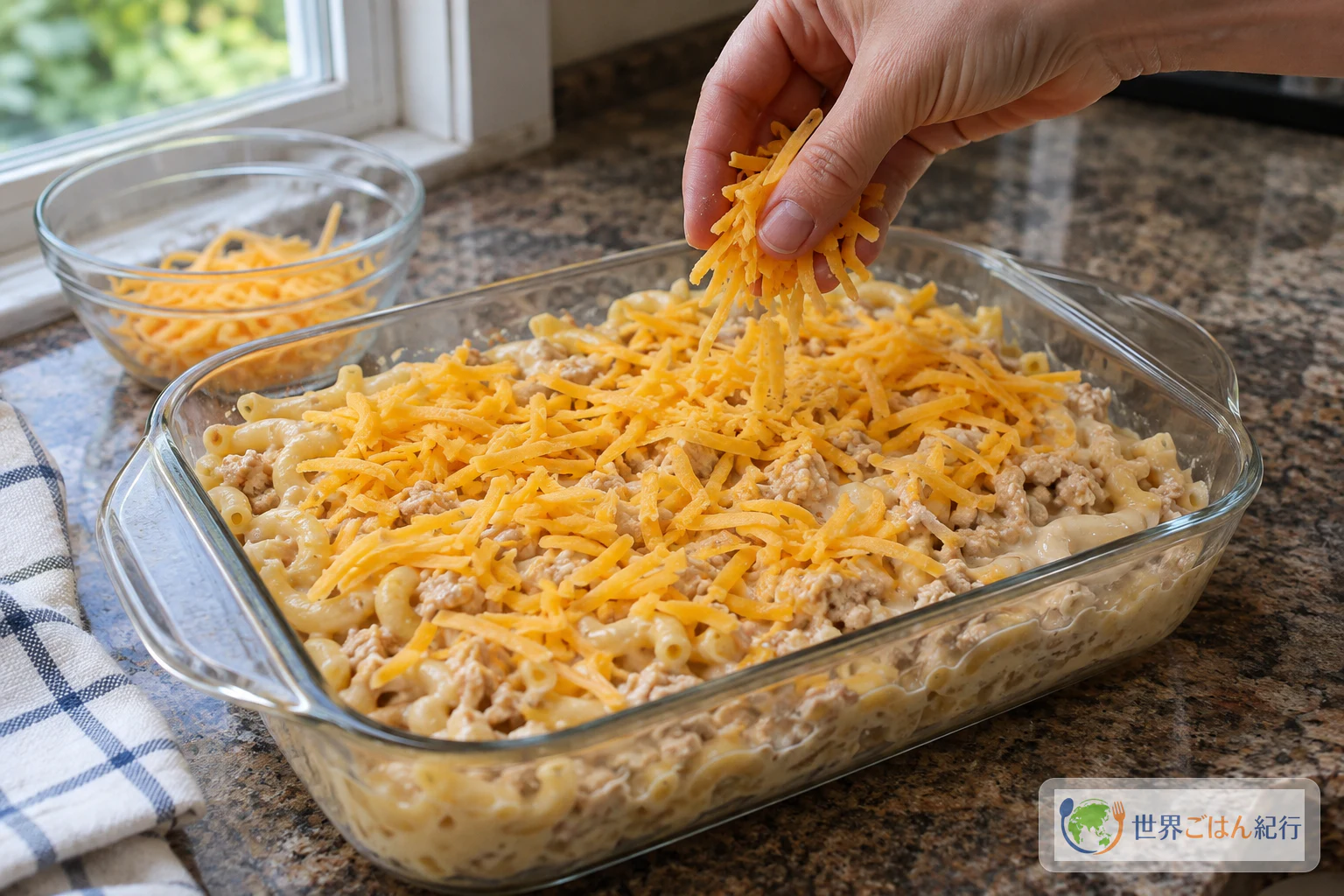
Cheese. Grate the cheddar and divide it into two equal halves before you start: one half goes into the pan, the other onto the top before steaming.
The bouillon sachet. Use one sachet of Royco Kaldu Ayam (chicken bouillon powder). If you cannot find it, use general chicken stock powder as a different seasoning: start with a little, since salt level and flavor differ between products and equal amounts are not equivalent.
What not to add. Leave out extra salt, pepper, garlic, breadcrumbs, beef, butter, flour and cream-soup powder.
Method: From Pan to Steamer
Everything is cooked in the pan until thick, then the heat goes off before the eggs go in. Stir them through quickly, then steam the whole dish until it is cooked through. The egg is not cooked at the pan stage; the steaming is what finishes it.
Judging Doneness: The Steamer, the Thermometer and the Look
The Royco recipe says only to steam until cooked. It gives no minutes, no container size and no heat level, so this article does not invent a steaming time.
The 75°C-for-at-least-1-minute check in step 11 comes from a separate source: general food-poisoning guidance from Japan's Ministry of Health, Labour and Welfare, which says meat dishes, including those made with minced meat, should be heated thoroughly to the center, to 75°C for 1 minute or more. It is general hygiene guidance, not a figure from the Royco recipe, and not a time measured in any particular container.
A set, firm-looking surface or chicken that has changed color does not on its own show that the center is safely cooked. Check the center temperature. Keep raw chicken and its utensils away from cooked food and anything eaten without further cooking, and do not taste the mixture before it is steamed.
When Something Looks Off
| What you see | What to do |
|---|---|
| The mixture is still runny before the eggs go in | Keep cooking and stirring as in step 7 until it thickens, then turn off the heat |
| Egg sets in patches as it goes in | Make sure the heat is off and the pan is off the burner, then stir as soon as the eggs go in. Steam as usual either way |
| The top looks done but the center has not reached temperature | Put the lid back on, keep steaming, and check the center again |
| The cheese top is pale with no crust | That is how the steamed version looks. A browned top belongs to baked recipes |
Variations Within the Recipe
- Vegetables. Swap the carrot, pea and corn mix for other vegetables you like, keeping the 100 g.
- Seasoning. Without the Royco sachet, use a general chicken stock powder as a separate seasoning, starting with a little (see "Choosing and Swapping").
- Baked instead of steamed. If you want a baked casserole, follow a baked recipe such as the RRI version as a whole, rather than putting this mixture in the oven. Its amounts, ingredients and timing are different.
Where This Dish Sits
The Royco page for this recipe has a top heading that carries the name of a different dish, left over from the site template. The recipe section title, ingredient list and five method items below it are all for makaroni skotel kukus. The same steamed recipe, with the same ingredients and steps, also appeared in an earlier Royco Nutrimenu recipe collection PDF from Masak Apa Hari Ini; that file's direct link no longer opens, so the current Royco page is cited below.
Indonesian kitchens also steam savory snacks in other forms. Lemper, for example, wraps glutinous rice and chicken in leaves. And milk and eggs show up in sweet dishes such as klappertaart, a custardy dessert. Makaroni schotel is something else again: a savory pasta dish, and a useful one to know when you want a filling bite without an oven. For more from the same table, browse dishes from Indonesia.
Frequently Asked Questions
Should makaroni schotel be baked or steamed?
Both exist. This recipe is the steamed version from Royco and needs no oven. Baked recipes, like the RRI version, use different ingredients and amounts and bake at 180°C for 30–40 minutes. Pick one recipe and follow it as written rather than combining them.
Is the 100 g of macaroni weighed dry or cooked?
The Royco recipe writes "100 g makaroni, rebus, tiriskan" (100 g macaroni, boiled, drained) and does not say. This article weighs out 100 g and then boils and drains it. That is a practical reading, not the recipe author's stated instruction, and no conversion between dry and cooked weight is given.
Why split the cheese in half?
Half is stirred into the pan with the milk so it melts into the mixture, and the other half is scattered on top before steaming so it melts into a soft layer over the surface.
When do the eggs go in, and are they cooked then?
After the mixture has thickened and the heat is off. Stir them through quickly so they blend evenly. They are not cooked at that point: the dish then goes into the steamer and must be steamed until the center is cooked through.
Is there a fixed steaming time?
No. The Royco recipe says to steam until cooked and gives no minutes or container size. Judge by the center temperature rather than the clock: the general guidance from Japan's Ministry of Health, Labour and Welfare for minced-meat dishes is 75°C at the center for at least 1 minute.
Does 8 portions mean it feeds eight people?
Not necessarily. "8 porsi" is how the recipe labels its yield. It is not a promise of eight adult-sized meals, and portion size is not fixed.
Sources
- Royco / Nutrimenu, "Makaroni Skotel Kukus." The steamed recipe used in this article: ingredients and amounts, cooking order, 8 portions, cheese split between the mixture and the top, eggs added after the heat is off, and steaming until cooked. https://www.royco.co.id/royconutrimenu/nutrimenu-camilan/makaroni-skotel-kukus.html
- LPP RRI (Diah Muji Asruni; editor Mulyati), "Resep Makaroni Schotel dengan Topping Parutan Keju." A baked makaroni schotel, used only to compare ingredients and order with the steamed version. https://rri.co.id/semarang/kuliner/2748401/resep-makaroni-schotel-dengan-topping-parutan-keju
- Ministry of Health, Labour and Welfare (Japan), "食中毒予防:お肉はよく加熱して食べよう" (Preventing food poisoning: cook meat well). General guidance on heating meat dishes, including minced meat, to 75°C at the center for at least 1 minute, and on keeping raw meat utensils apart from ready-to-eat food. https://www.mhlw.go.jp/stf/web_magazine/closeup/08.html