

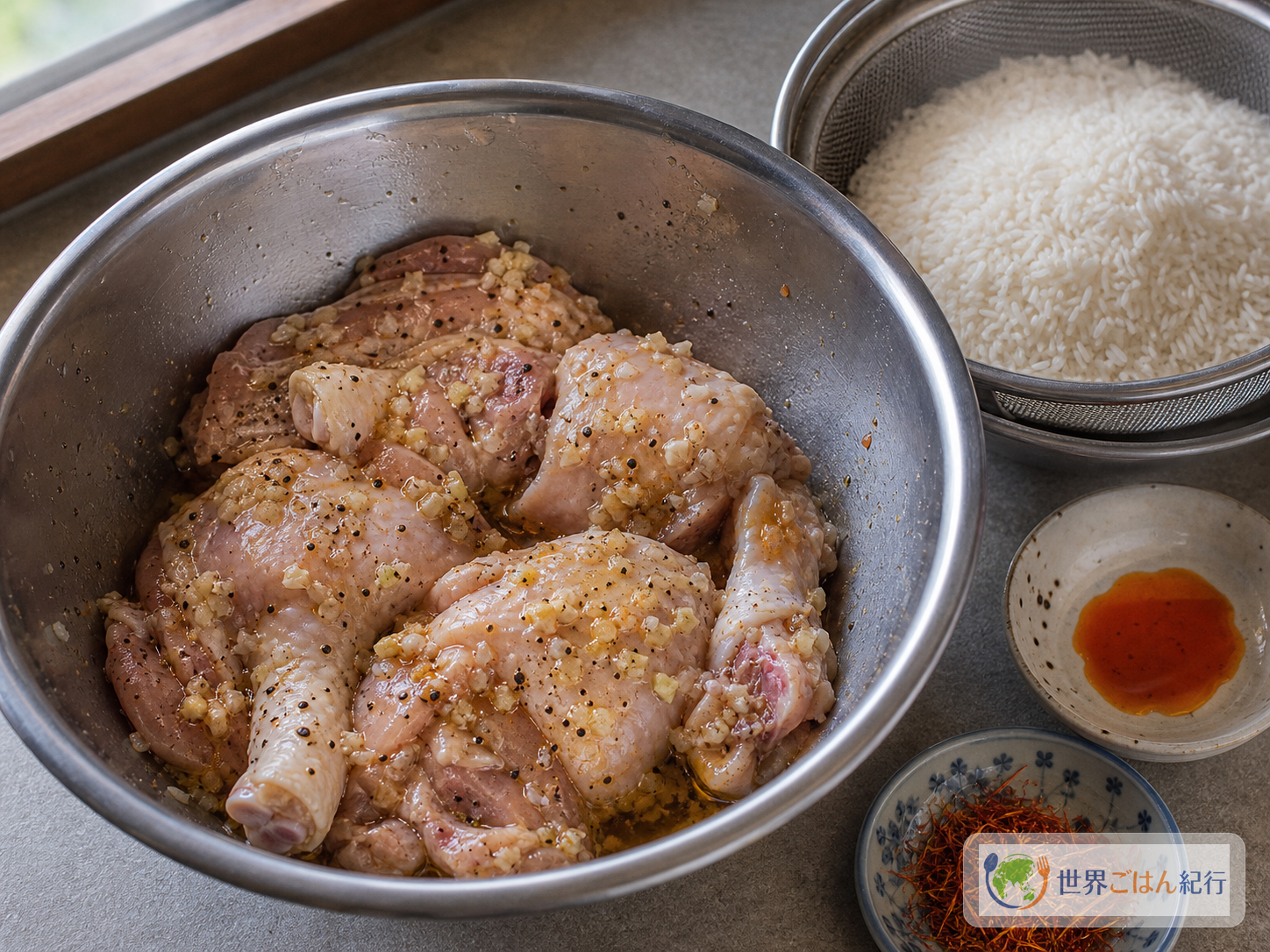
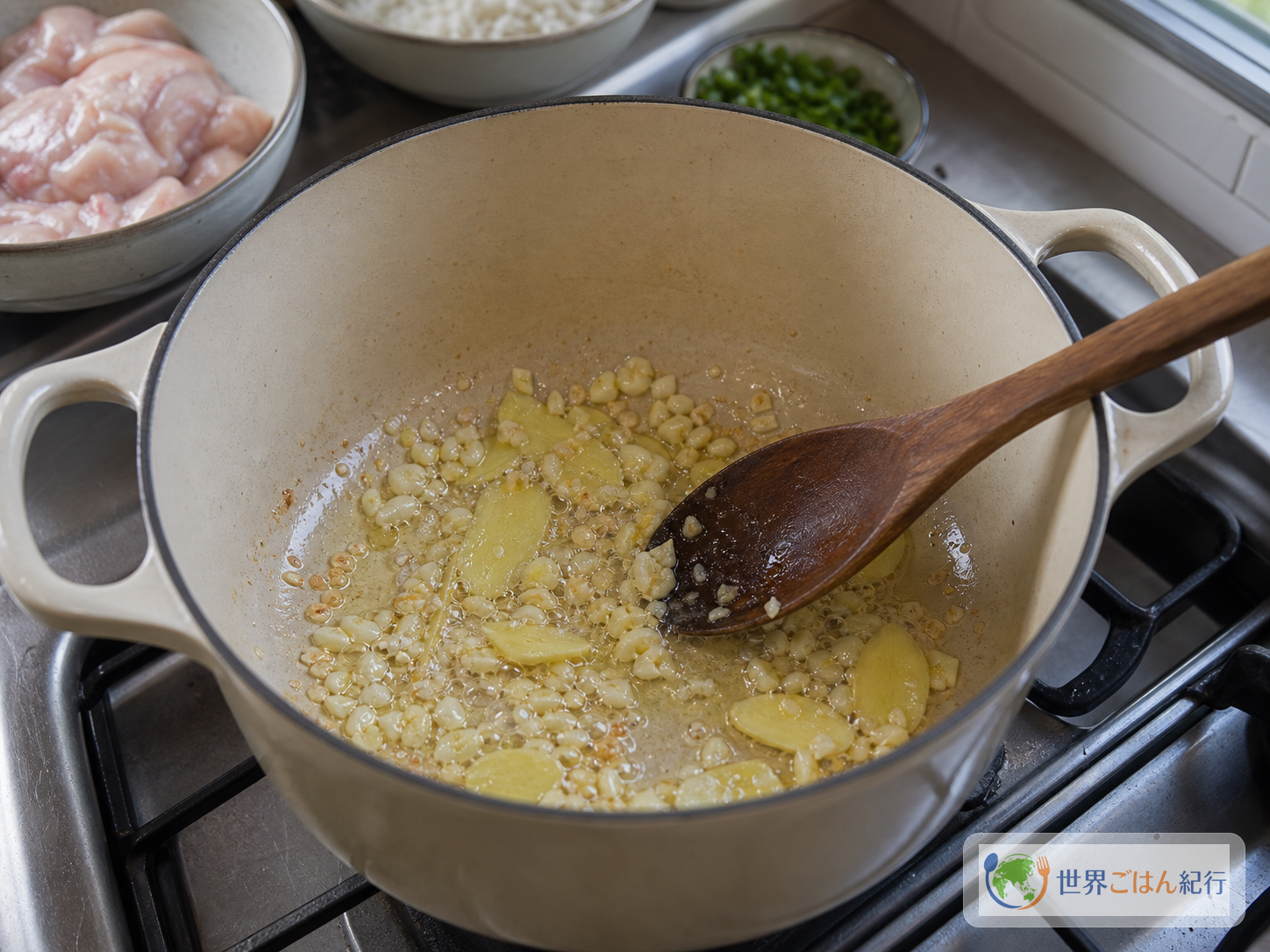
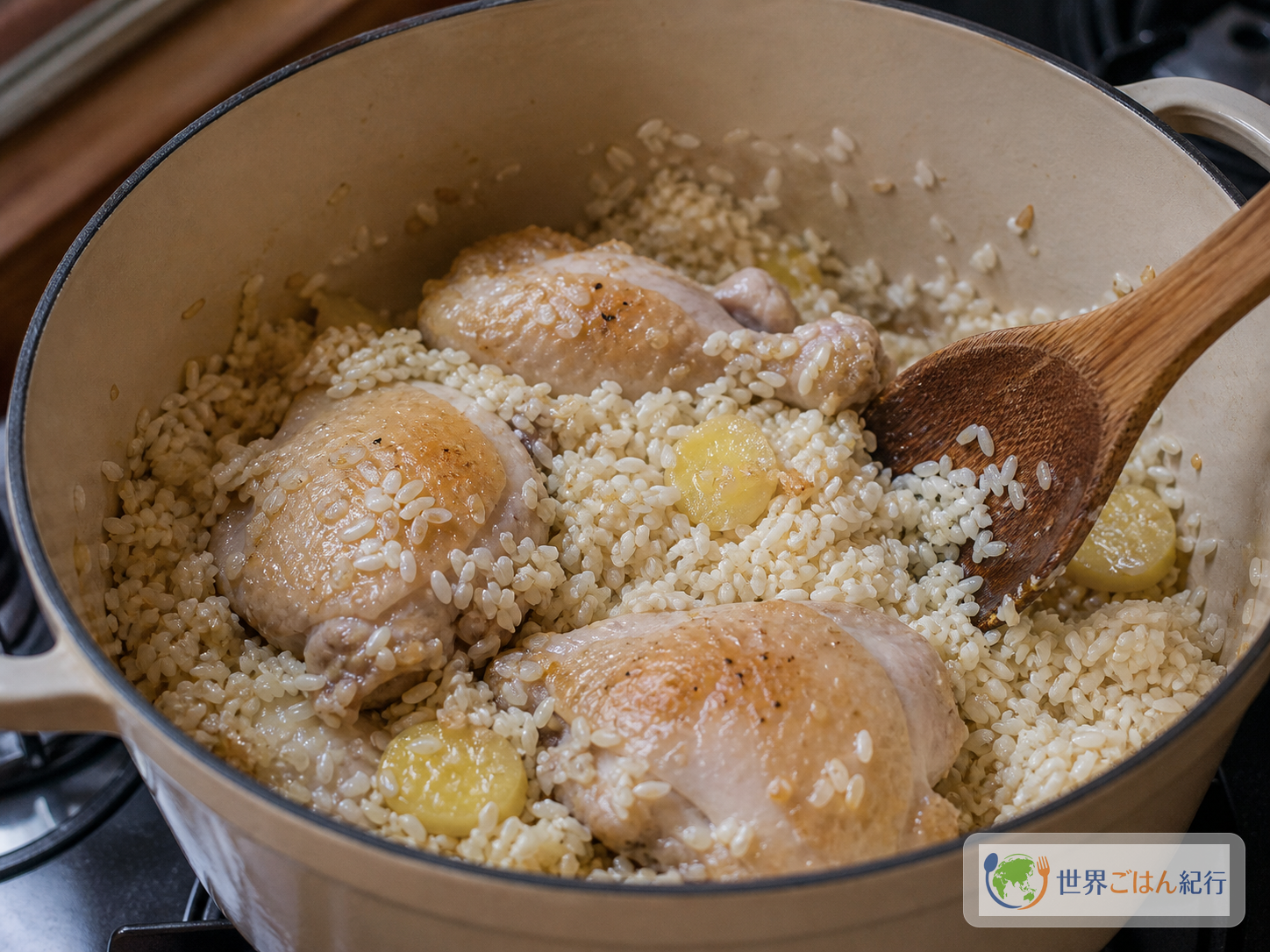
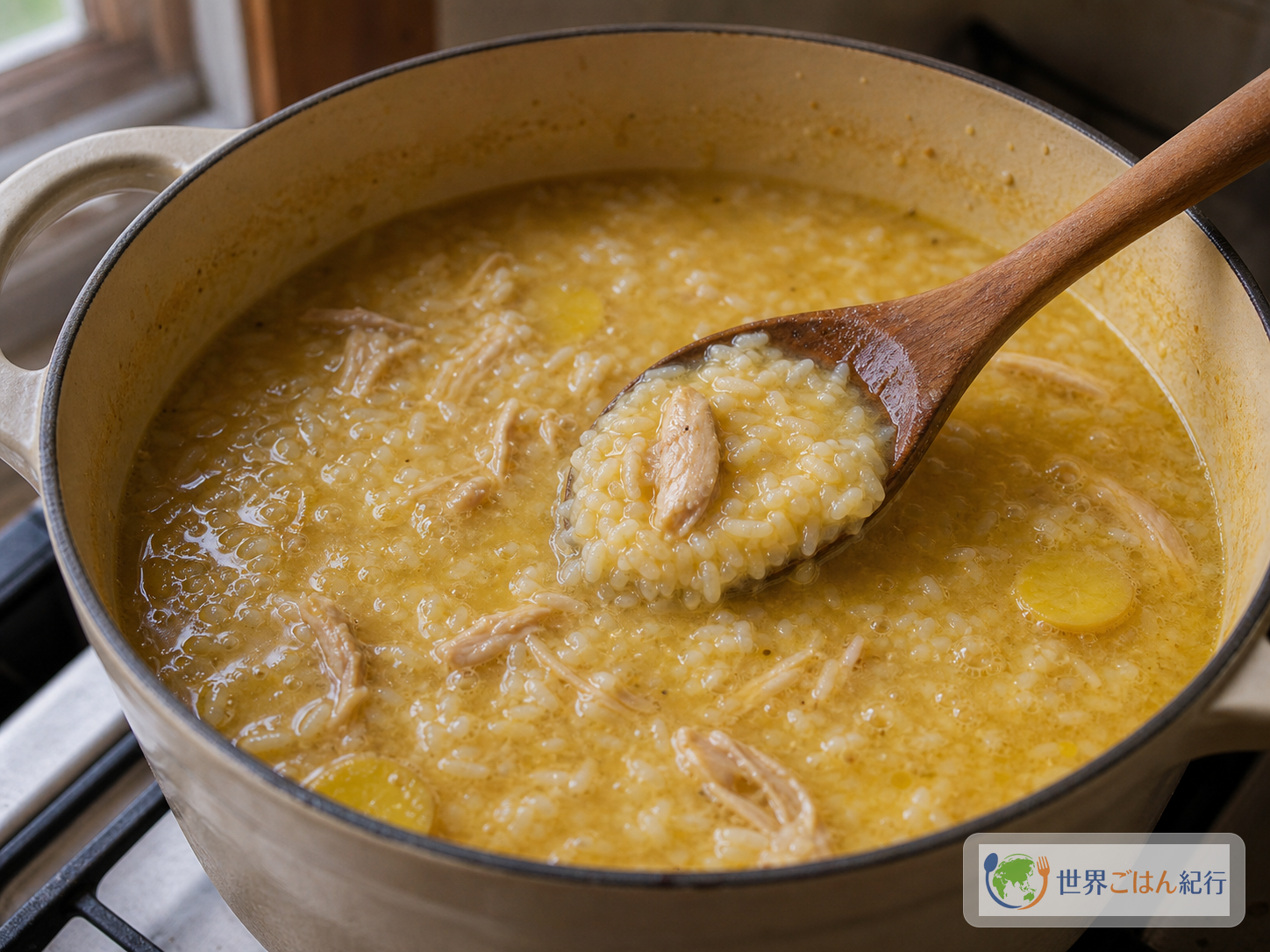
Ginger steam to loosen up the morning table
Slice ginger thinly in a morning kitchen and a sharp, clean aroma rises from the cutting board. Into one pot go garlic, onion, chicken and rice, layered together, and over low heat the edges of the rice slowly break down. Arroz caldo isn't a showy dish. But when the steam carries the saltiness of patis, the savoriness of chicken and the toasty smell of fried garlic, the table moves somewhere quite different from plain white congee.
Arroz caldo is a chicken and ginger rice porridge beloved in the Philippines. The name comes from Spanish and is sometimes translated as "warm rice" or "rice broth," but the flavor is rooted in the Filipino kitchen. It brings in patis (fish sauce), ginger, fried garlic and the tartness of calamansi, and it's eaten for breakfast, as a snack, or as a bowl for days when you want to feel restored.
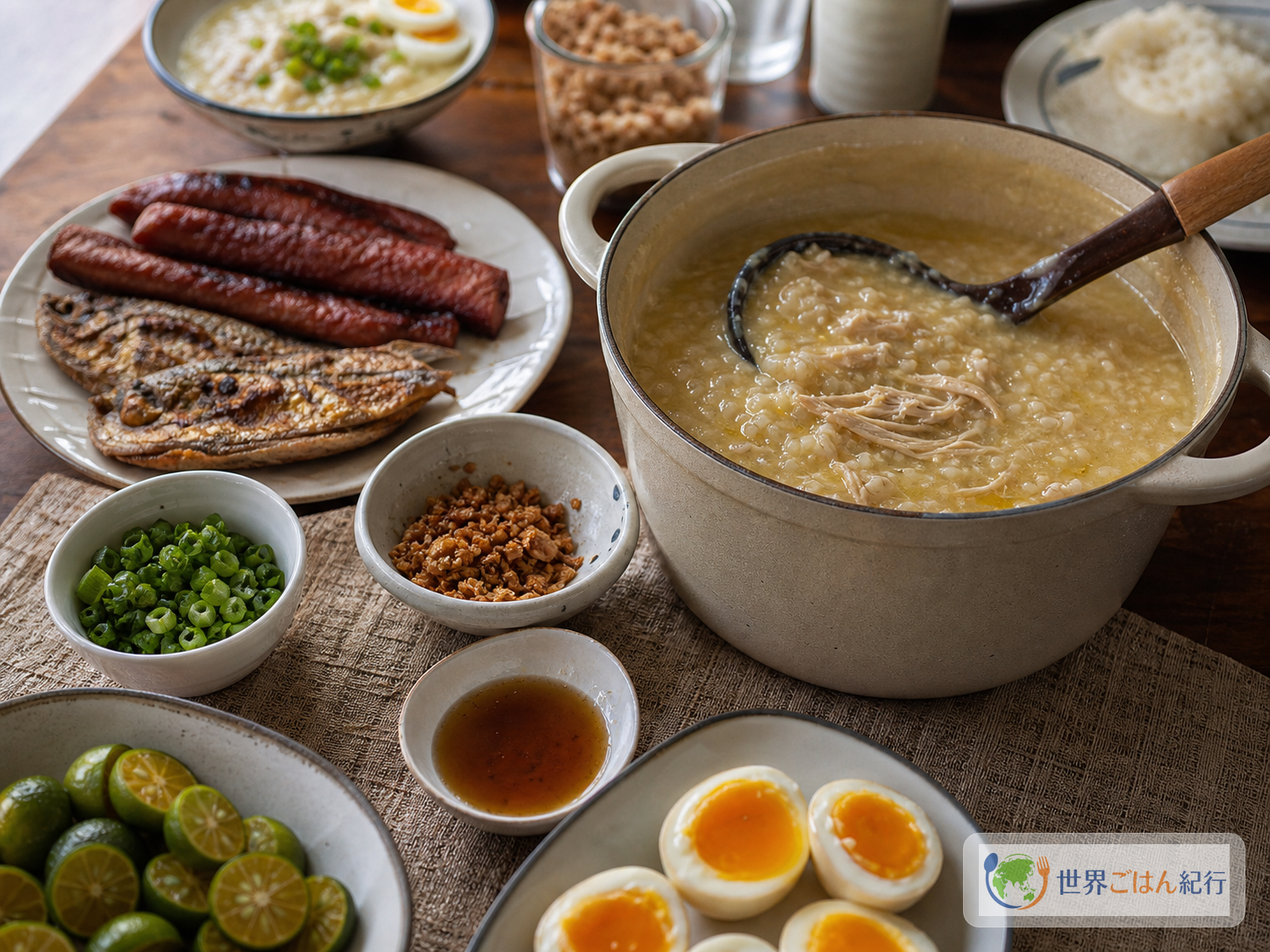
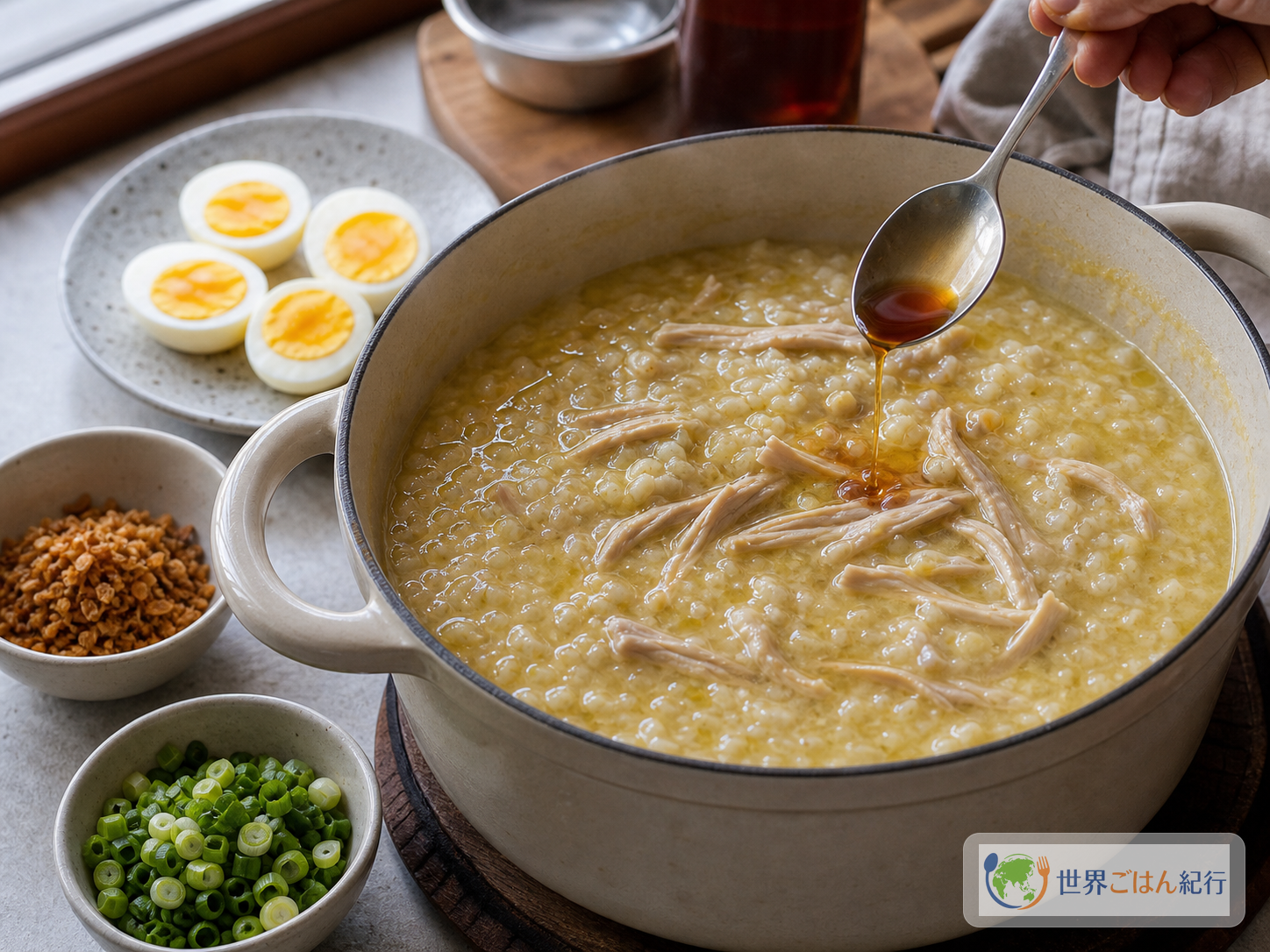
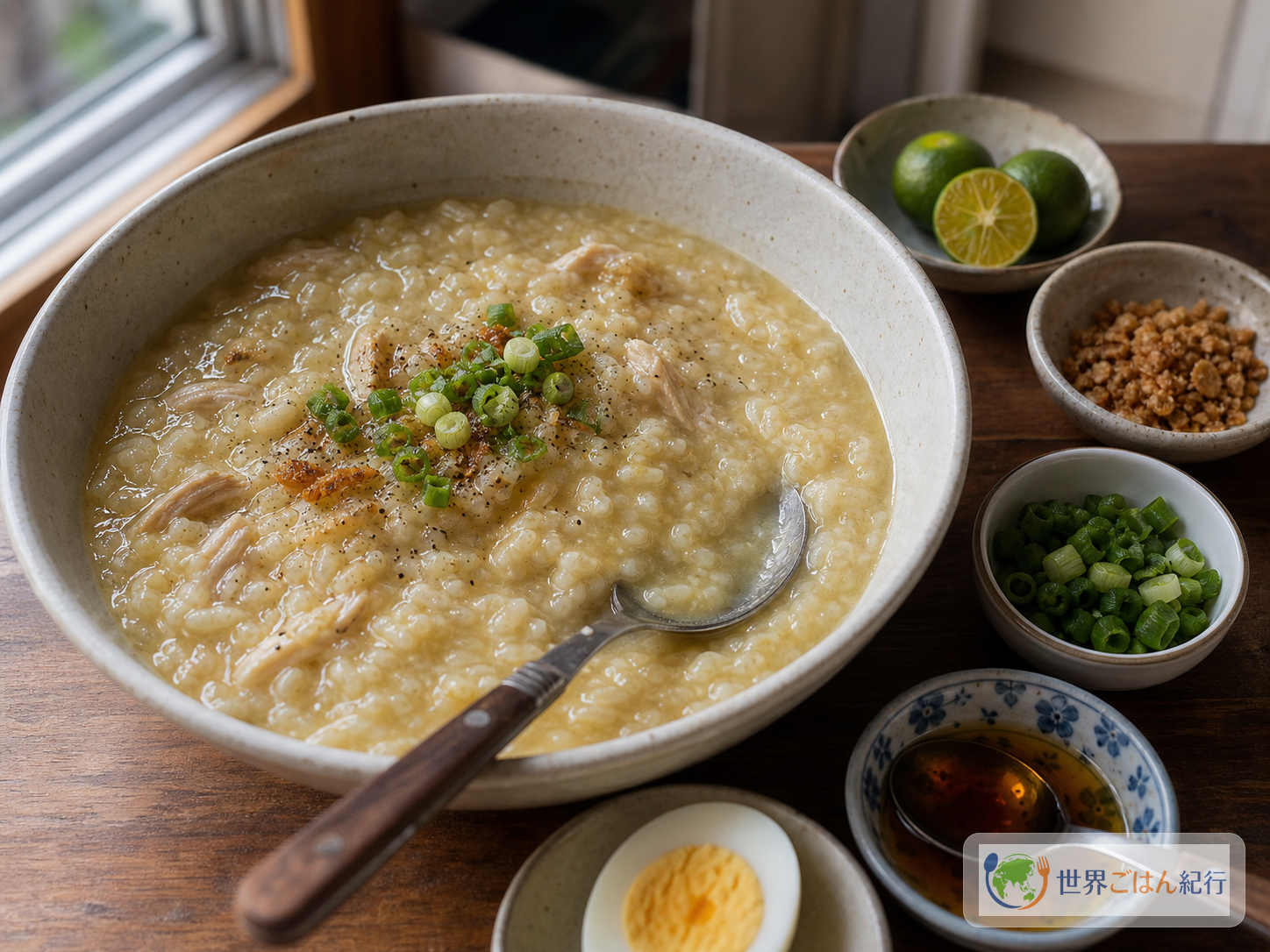
In Filipino homes and markets, arroz caldo shows up as a rainy-day merienda, a breakfast before school or work, and a warm meal on a tiring day. It isn't just leftover rice lightly simmered; raw rice is first coated in oil and aromatics, then cooked into porridge as it soaks up chicken fat and fish sauce. Since egg, scallions, fried garlic and citrus are added after it's ladled into bowls, it works better not to finish the seasoning entirely in the pot, so each person can tune the salt and sourness.
The hard part at home isn't finding unusual ingredients; it's heat control. Rice that's simply boiled turns into thin soup, and rice boiled too hard scorches on the bottom and turns heavy. Sauté the aromatics and chicken first, coat the rice in oil, then simmer gently over low heat to coax out its body. Stick to that order and even a home pot gets close to that round Filipino flavor.
If you're cooking more Filipino food, it leads easily to sinigang, which uses the same patis and calamansi sourness; chicken inasal (in Japanese), chicken enjoyed for its aroma; and the spring rolls lumpiang shanghai (in Japanese).
How lugaw, goto and arroz caldo differ
Look into Filipino rice porridges and lugaw, goto and arroz caldo come up side by side. All three are rice cooked until soft, but what each name covers and which ingredients take center stage differ a little. Lumping them together as "Filipino porridge" is easy, but on the local table the differences are cues for ordering and for a family's own flavor.
| Name | Main ingredients | Flavor focus | How to approach it at home |
|---|---|---|---|
| Lugaw | Rice, ginger, garlic | Rice porridge lightly seasoned with salt and broth | The plainest. Closest to a porridge for days you feel unwell |
| Goto | Beef tripe, beef, offal | Savoriness of offal and garlic | Advanced for home cooks because of the prep |
| Arroz caldo | Chicken, rice, ginger | Chicken broth, patis, fried garlic | The easiest entry point in a home kitchen |
Lugaw is used as a broad word for rice porridge in general and can cover both sweet and savory versions. Layer in chicken, ginger, fish sauce, fried garlic and egg, add a little yellow color, and you have what most people picture as home-style arroz caldo. In goto, the savoriness of tripe and offal comes forward, so even though it's a porridge, it's less a light breakfast and more a filling plate from a street stall or eatery.
Another name worth knowing is pospas, heard in the Visayas. It can refer to a chicken rice porridge whose ingredients overlap with arroz caldo, though some households don't color it yellow with kasubha, and regional and family names are used in overlapping ways. For the home cook, what matters is not classifying the name perfectly but keeping the roles of chicken, ginger, rice, fish sauce and acidity intact.
Arroz caldo is satisfying thanks to the chicken. Its Spanish name makes it sound Western, but what you actually taste is a Filipino porridge held up by ginger and fish sauce. Chinese porridge traditions, a Spanish dish name, and Filipino aromatics and seasonings all share the same bowl, so it's a bit more layered than a simple "chicken porridge." The yellow color sometimes comes from kasubha (safflower) or atsuete (annatto). Color matters, but the heart of the aroma is ginger, garlic and patis.
Ingredients: chicken, rice and ginger broken down in one pot
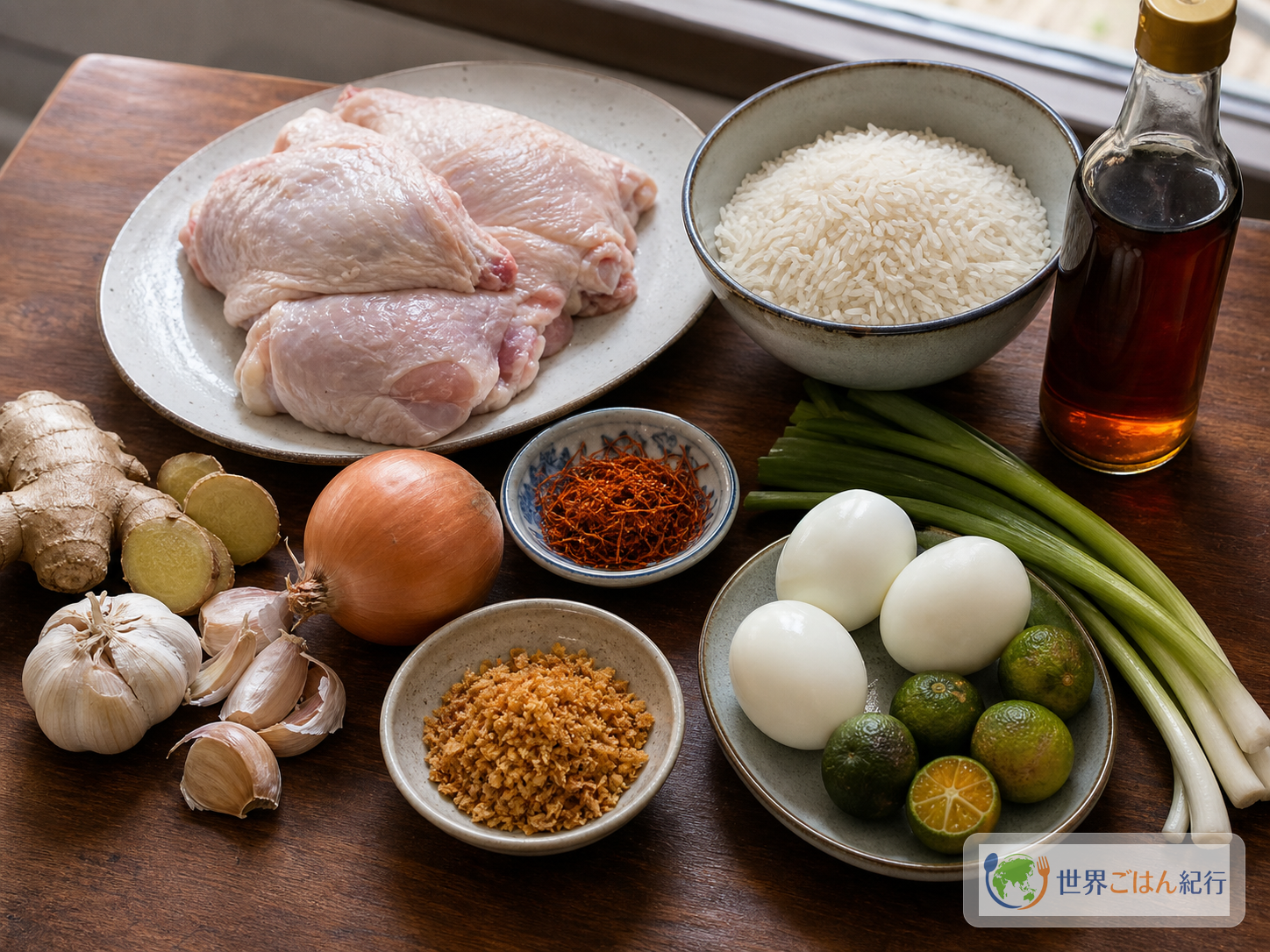
This recipe uses chicken, fish sauce and eggs. To avoid seafood-based seasonings, replace the patis with 1 tbsp light soy sauce plus 1/3 tsp salt. Cook the chicken completely, to an internal temperature of 74°C (165°F) or higher. Add the boiled eggs and fried garlic just before eating so their aroma doesn't get lost in the porridge.
Shopping: focus on patis and coloring, not the meat
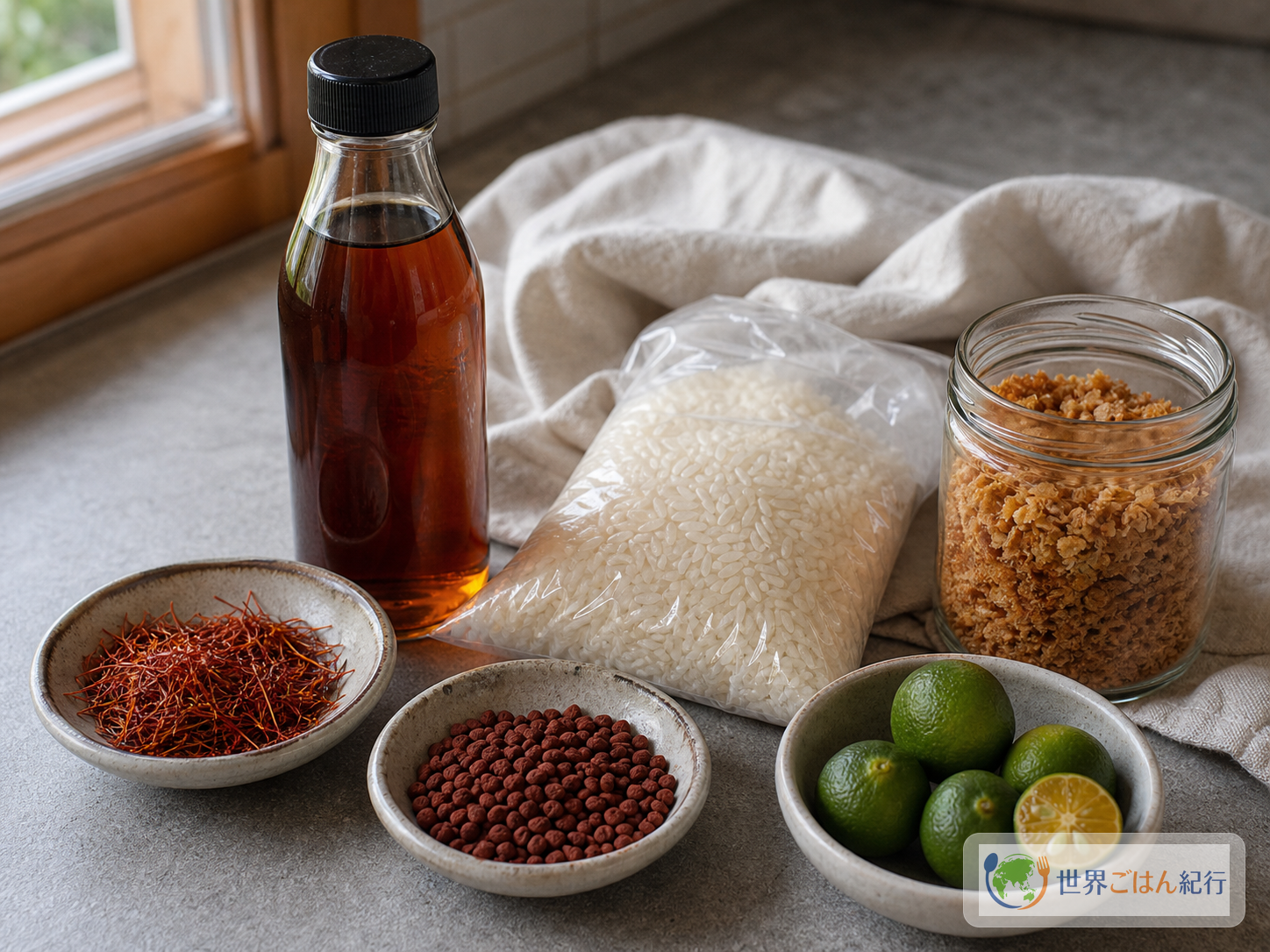
Chicken, eggs and scallions from any supermarket are fine. The items worth seeking out at a Filipino or Asian grocer or online are Filipino patis, annatto or kasubha for color, and a lightly fragrant imported rice. Your first batch can be made with short-grain rice alone, but if you like it, changing the fish sauce and rice shifts the character of the porridge quite a bit.
Some brands of patis taste rounder than Thai fish sauce, and it's the shortest route to giving arroz caldo a Filipino saltiness. You can make it salty with soy sauce alone, but the lingering fish sauce note in the steam is something else.
Annatto isn't essential. But it's an easy way to add yellow when you can't find kasubha, and you can use it in chicken inasal (in Japanese) or Vietnamese bò kho (in Japanese) too. Warm 1 tsp annatto seeds in 2 tbsp oil over low heat for 2 minutes; when the oil turns red-orange, remove the seeds and use the oil.
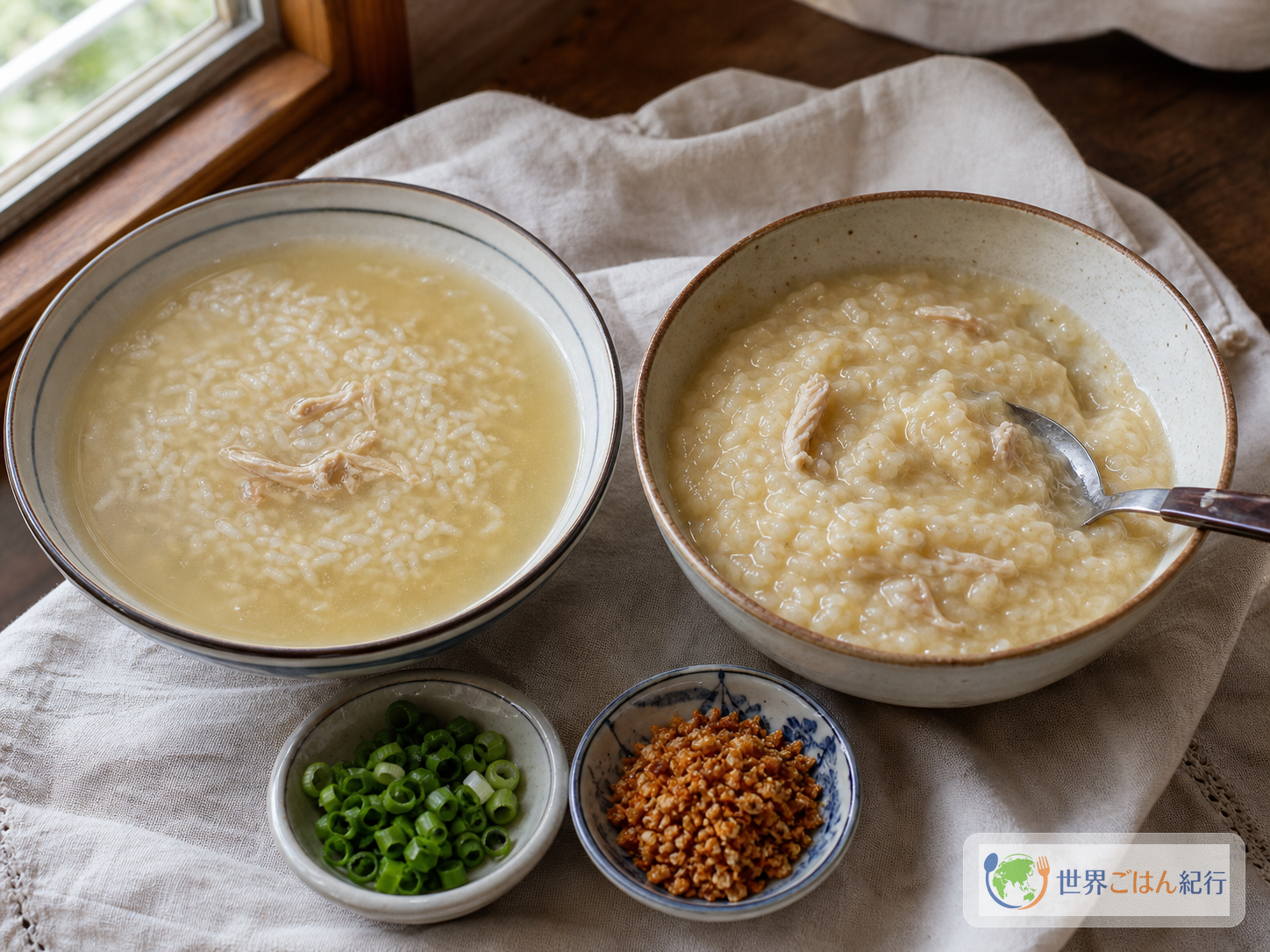
Short-grain rice alone holds together well. For a lighter aroma, swap half of it for jasmine rice. It gets less thick, but the fish sauce and ginger come through more, and the bowl stays light for breakfast.
You don't need to gather everything for your first batch. If you prioritize, get patis first, then annatto or kasubha, and fragrant rice last. Patis changes the shape of the flavor, while the type of rice only adjusts the texture. If a batch made with short-grain rice alone feels a little heavy, adding some jasmine rice next time is plenty.
Method: loosen the rice over low heat
Arroz caldo is brought to a strong boil once, then dropped to low heat. Cooked hard the whole time, it scorches on the bottom and only the outsides of the grains split, making it heavy. Aim for a thickness where, when you run a wooden spoon along the bottom, the rice slowly flows back.
What to keep and what to swap at home
Arroz caldo is a rice porridge, so there's room for substitutes. But pull everything toward a generic rice soup and it becomes a different dish. Separating what to keep from what you can swap makes shopping easier.
| Element | Why it matters | Practical choice at home |
|---|---|---|
| Ginger | Defines the steam of arroz caldo | Use 40 g fresh ginger, not paste from a tube |
| Patis | Creates not just saltiness but a lingering fish sauce note | Filipino patis is ideal. Thai fish sauce also works |
| Broken-down rice | Makes it porridge, not soup | Mix short-grain and glutinous rice and simmer over low heat |
| Yellow color | Shapes the look on the table | Kasubha, annatto oil, then a little turmeric, in order of naturalness |
| Acidity | Cuts the heaviness | Squeeze calamansi, sudachi or lime at the table |
If coloring it with turmeric, use no more than 1/4 tsp. Too much pushes it toward curry and loses the lightness of a ginger porridge. Annatto is mainly about color and doesn't have a strong taste. Kasubha gives an authentic feel, but it can be hard to find, so don't feel you have to hunt for it the first time.
The most important thing at home is not to be shy with ginger. 40 g may sound like a lot, but that's what it takes to stand up to 1.5 gō of rice and 600 g of chicken. The sliced ginger builds the aroma of the broth, and the matchsticks at the end give definition the moment you take a bite. If you're worried about heat, rather than halving the amount, leave out just the finishing matchsticks; that keeps the aroma of the whole pot.
On the other hand, the yellow color isn't an absolute requirement for making it look authentic. It isn't a dish you can't make without kasubha, or that fails without annatto; the coloring is there to make it look right on the table. On days you want to keep shopping simple, get patis and fresh ginger first, and save the color for next time.
Troubleshooting: fixing thin, heavy, or tough chicken
It tastes thin
Before adding more salt, add 1 tsp patis and warm for 1 minute. Fish sauce smells strong right after it goes in, but it takes a little time for the saltiness to settle into the rice. If it still tastes flat, adding 5 g ginger matchsticks and a squeeze of calamansi brings back definition better than more fried garlic.
It's heavy and gluey
The heat was too high, or it reduced too much. Add 150 ml boiling water and rewarm over low heat for 3 minutes. It firms up even more as it cools, so when serving, stop when it's slightly loose. Too much glutinous rice makes it set quite firm by the next day. If you're making it ahead, cut the glutinous rice to 50 g.
The chicken is tough
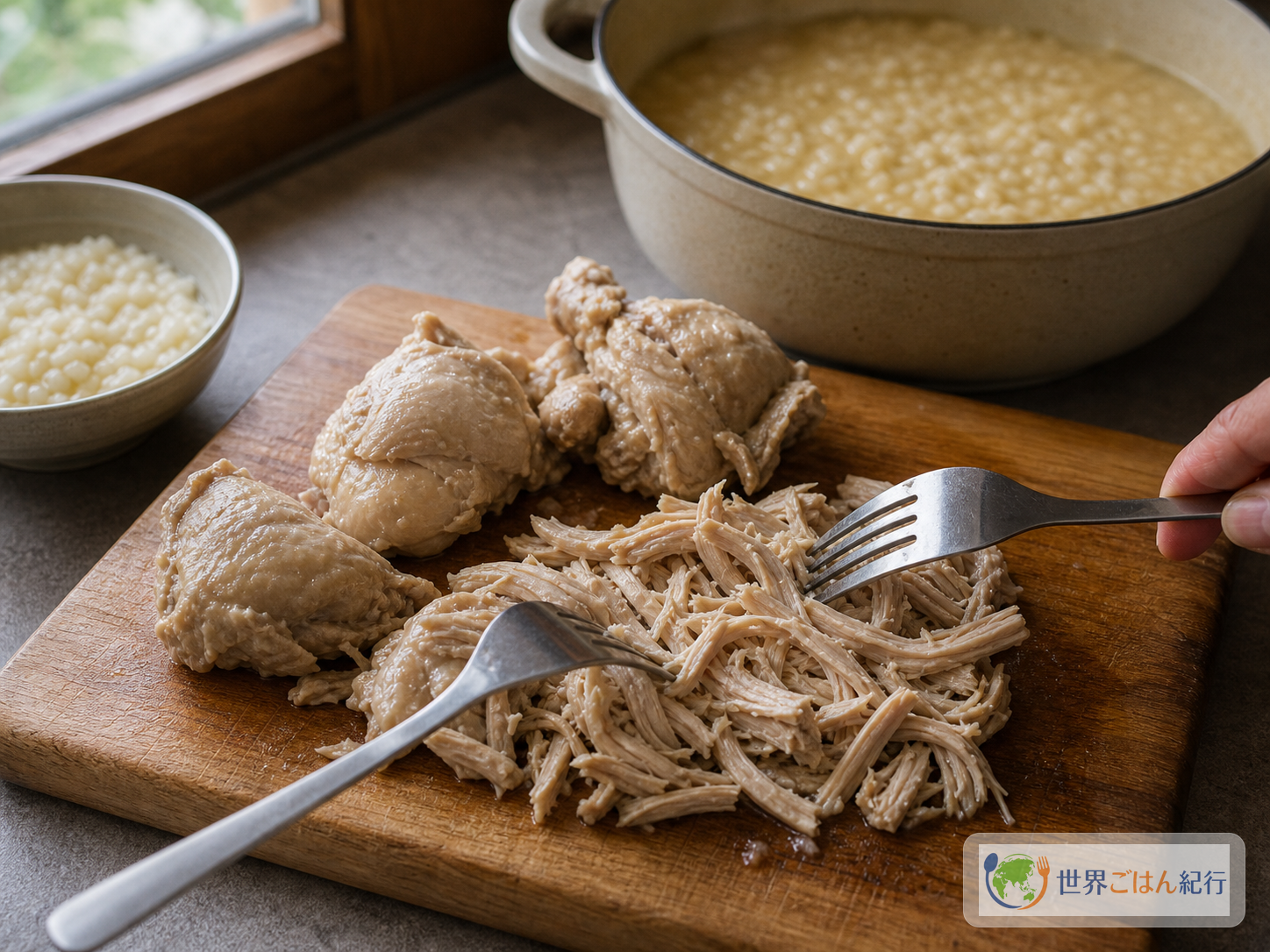
Cutting it too small at the start lets it dry out while it simmers. Use 4 cm cubes or bone-in chunks and shred after cooking for juicier meat. If using breast, don't simmer it for the full 35 minutes; take it out at 20 minutes, shred it, and return it for the last 5 minutes so it doesn't dry out.
The ginger is too hot
Cutting the ginger too thick makes it sharp when you bite into it. Slice it 2 mm thick and cut the finishing matchsticks about 1 mm wide. To tone it down, skip the finishing matchsticks and get the aroma from the simmering ginger alone.
Storage and meal ideas: breakfast or late-night bowl
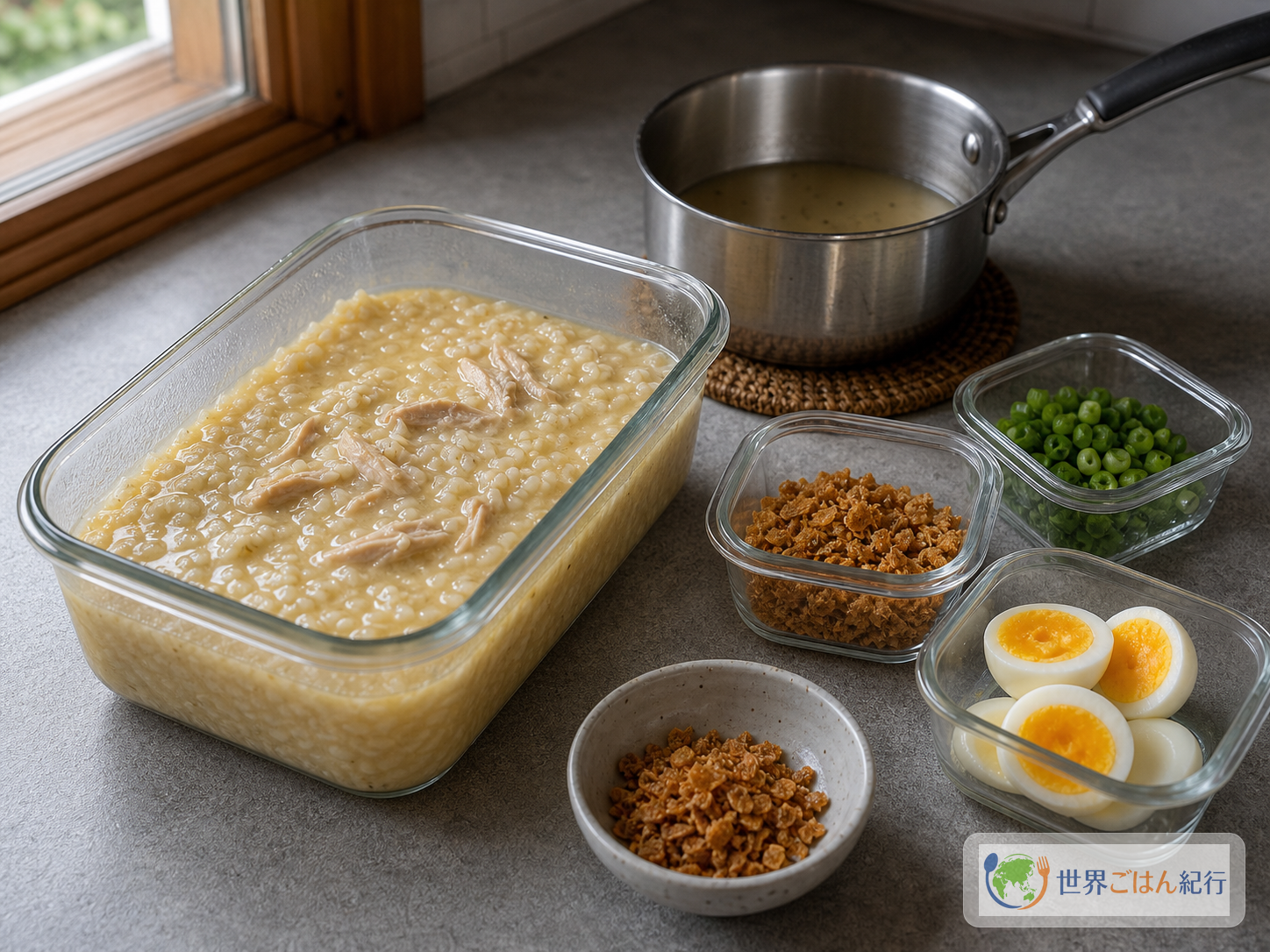
Cool the porridge within 30 minutes and transfer it to a clean container. It keeps about 2 days in the refrigerator or about 2 weeks in the freezer. Keep the boiled eggs, scallions, fried garlic and calamansi separate and add them just before eating. If you store it with the toppings on, their aroma sinks into the porridge and the scallions lose their color.
A pot is best for reheating. For one serving, add 80 ml water or chicken stock and warm over low heat for 6–8 minutes. In a microwave, put it in a heatproof container, add 3 tbsp water, heat at 600 W for 2 minutes, stir, and heat another 1 minute 30 seconds. When it's steaming in the center and the rice has loosened, bring back the flavor with 1/2 tsp patis.
On its own, arroz caldo makes a full breakfast. For a heartier morning, a little sweet-savory longganisa (in Japanese) on the side adds contrast between the gentle ginger porridge and the toasty garlic sausage. For dinner, a light plate such as stir-fried greens or pickled cucumber suits it better than a small bowl of tangy sinigang. On days you want something fried, a small portion of lumpiang shanghai (in Japanese) won't overwhelm the calm of the porridge.
Frequently asked questions
Can I make it with short-grain rice only?
Yes. With short-grain rice only, reduce the liquid to 1.3 L and simmer over low heat for 30–35 minutes. It's looser than with glutinous rice, but with plenty of ginger and patis it makes an easy breakfast porridge.
I can't find kasubha.
It's fine to leave it out. To add color, use 1 tsp annatto oil or 1/4 tsp turmeric. Turmeric has a strong aroma, so don't overdo it chasing a deeper yellow.
Can I make it with cooked rice instead of raw rice?
You can, but the flavor will be lighter. Use 600 g cooked rice and 1 L water or chicken stock, and simmer over low heat for 18–20 minutes. Sauté the chicken with the aromatics first, then simmer. Since there's no step of sautéing the rice, bolster the aroma with patis and fried garlic.
Can I use soft-boiled eggs?
Soft-boiled eggs go well too. But if you're making it ahead or packing it for lunch, hard-boil them. You can also crack eggs into the hot porridge to cook, but for the amounts in this recipe, preparing boiled eggs separately makes them easier to share and store.
I don't like the smell of patis.
Instead of adding 2 tbsp from the start, use just 1 tbsp in the simmer and let everyone add more at the table. To leave it out entirely, substitute light soy sauce and salt, though it will taste less like arroz caldo. For households that don't care for fish sauce, more calamansi or sudachi makes it easier to enjoy.
Is pospas the same dish?
It's close in terms of ingredients. In the Visayas, chicken rice porridge is sometimes called pospas, and like arroz caldo it's made with ginger, chicken and rice. But whether it's colored yellow with kasubha, how much fish sauce goes in and how many toppings are added varies by household. At home, use this recipe as a baseline; skip the yellow color and it leans toward a simpler chicken porridge.
Won't it lack aroma without jasmine rice?
You can get plenty of aroma with short-grain rice alone. The aroma comes less from the rice than from ginger, garlic, patis and the citrus at the end. Mixing in jasmine rice makes it lighter, but the porridge is less thick. On days you're using the rice you have on hand, it's more reliable to stick with 150 g short-grain and 75 g glutinous rice and adjust the liquid as it simmers.



