
The steam of beef bones, and a memory of cool Tagaytay
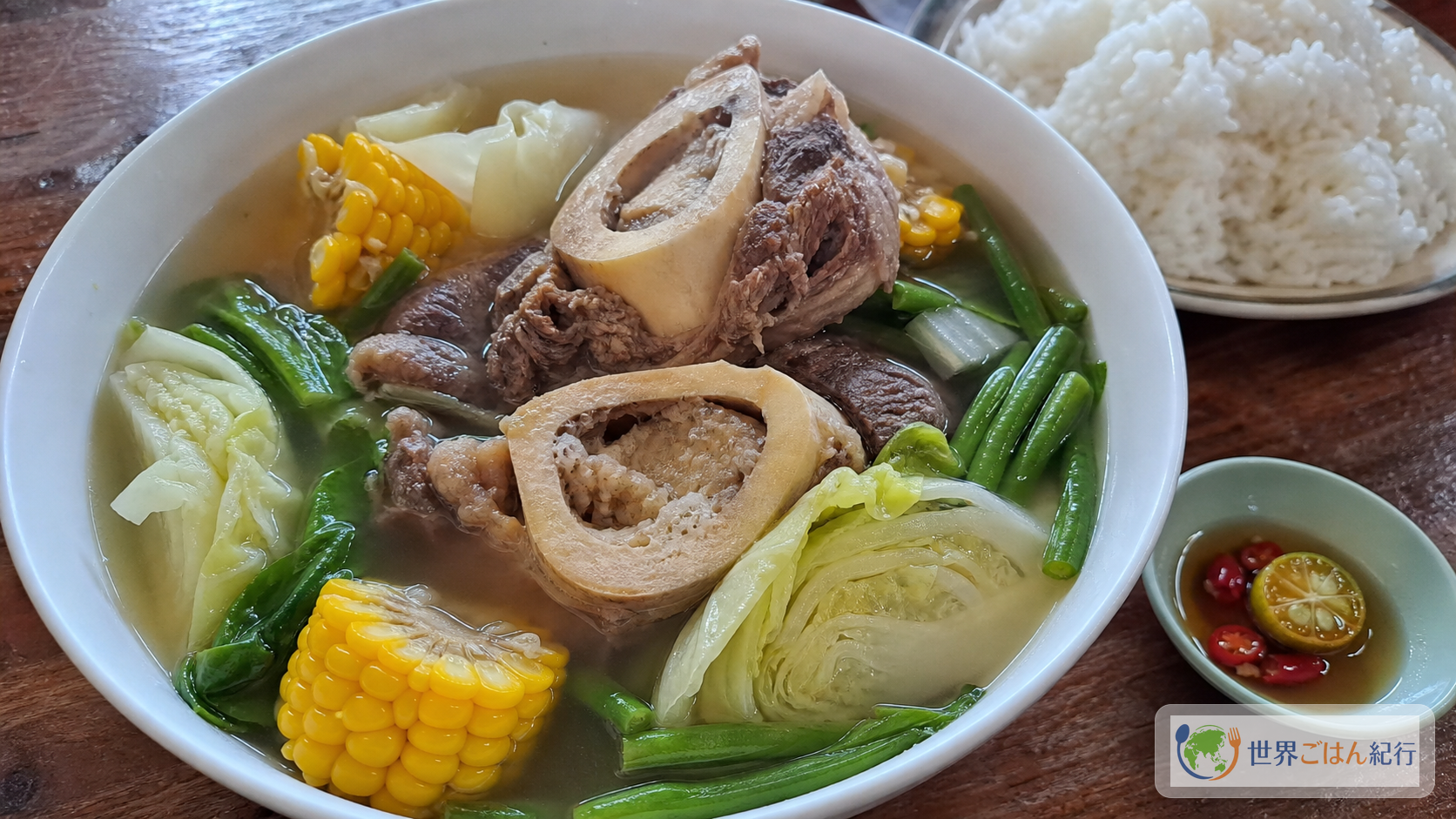
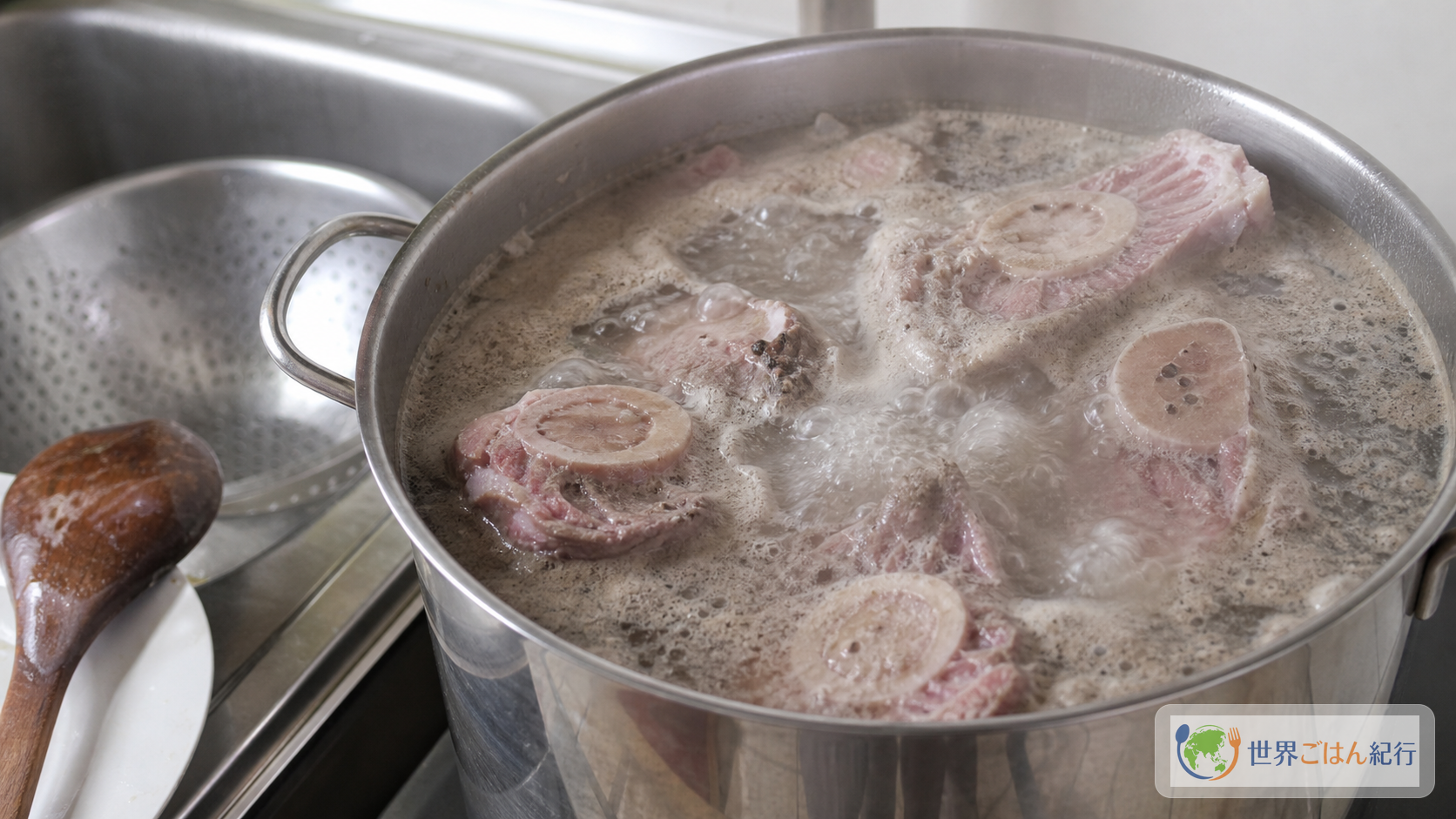
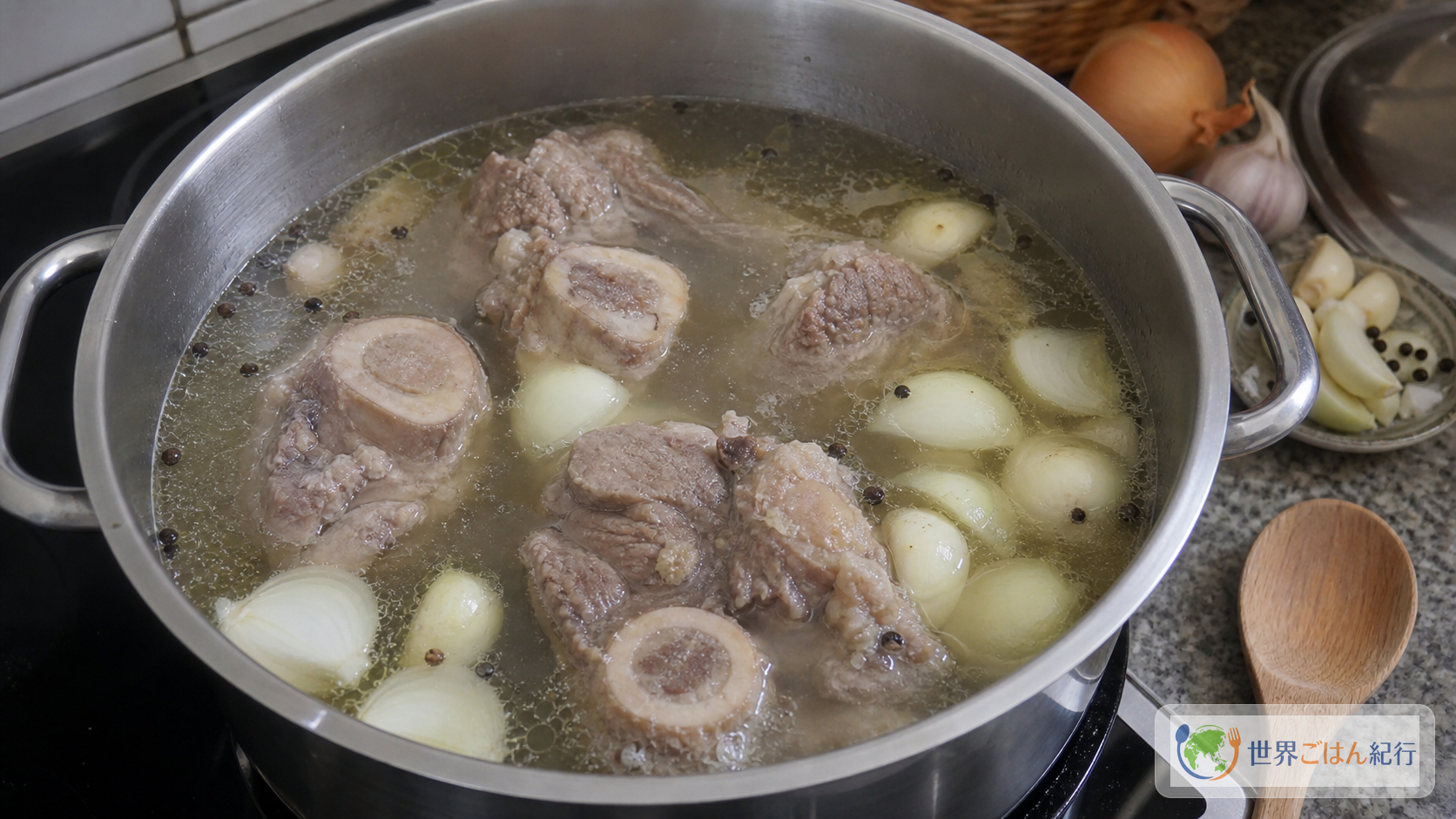
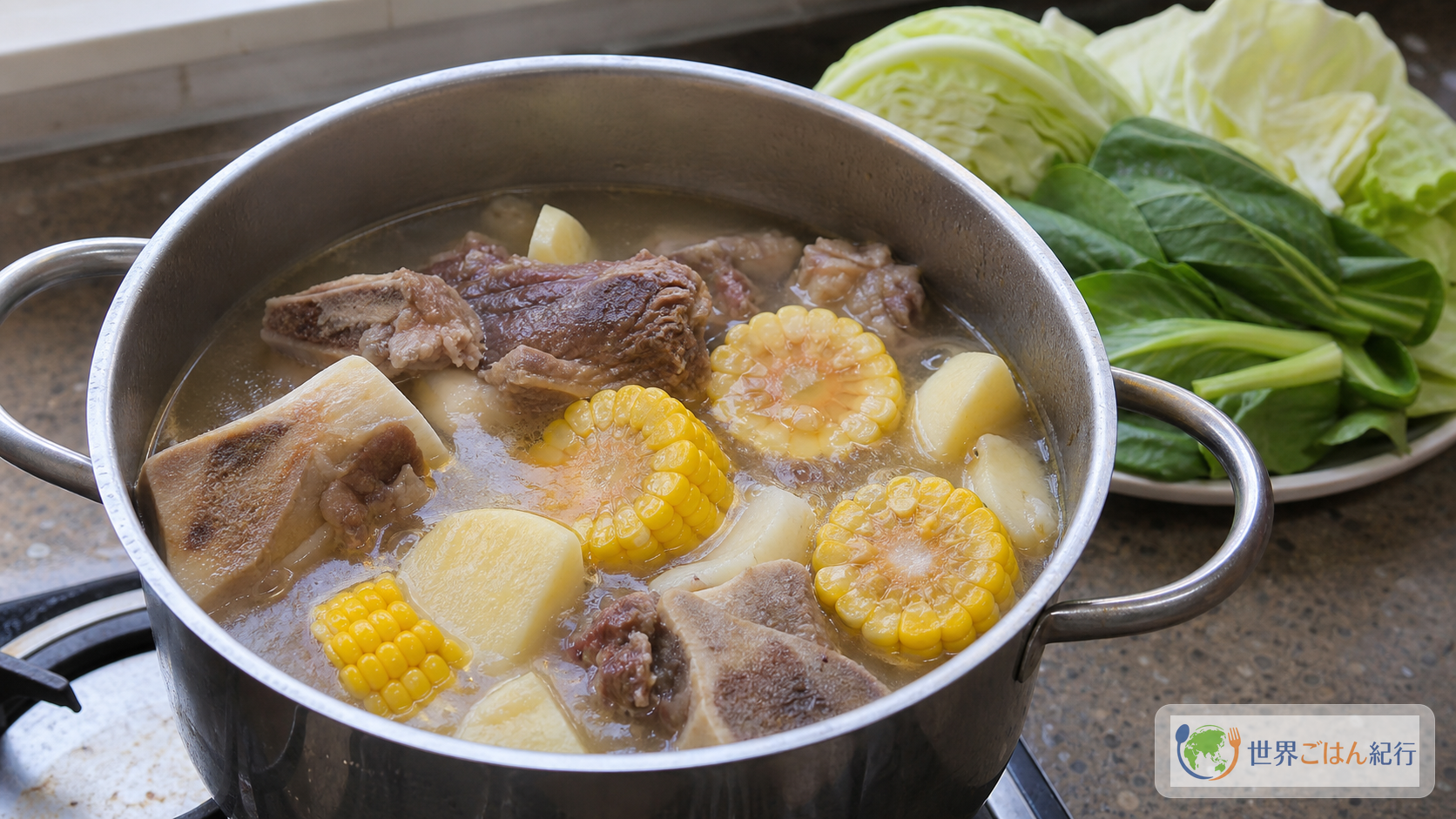
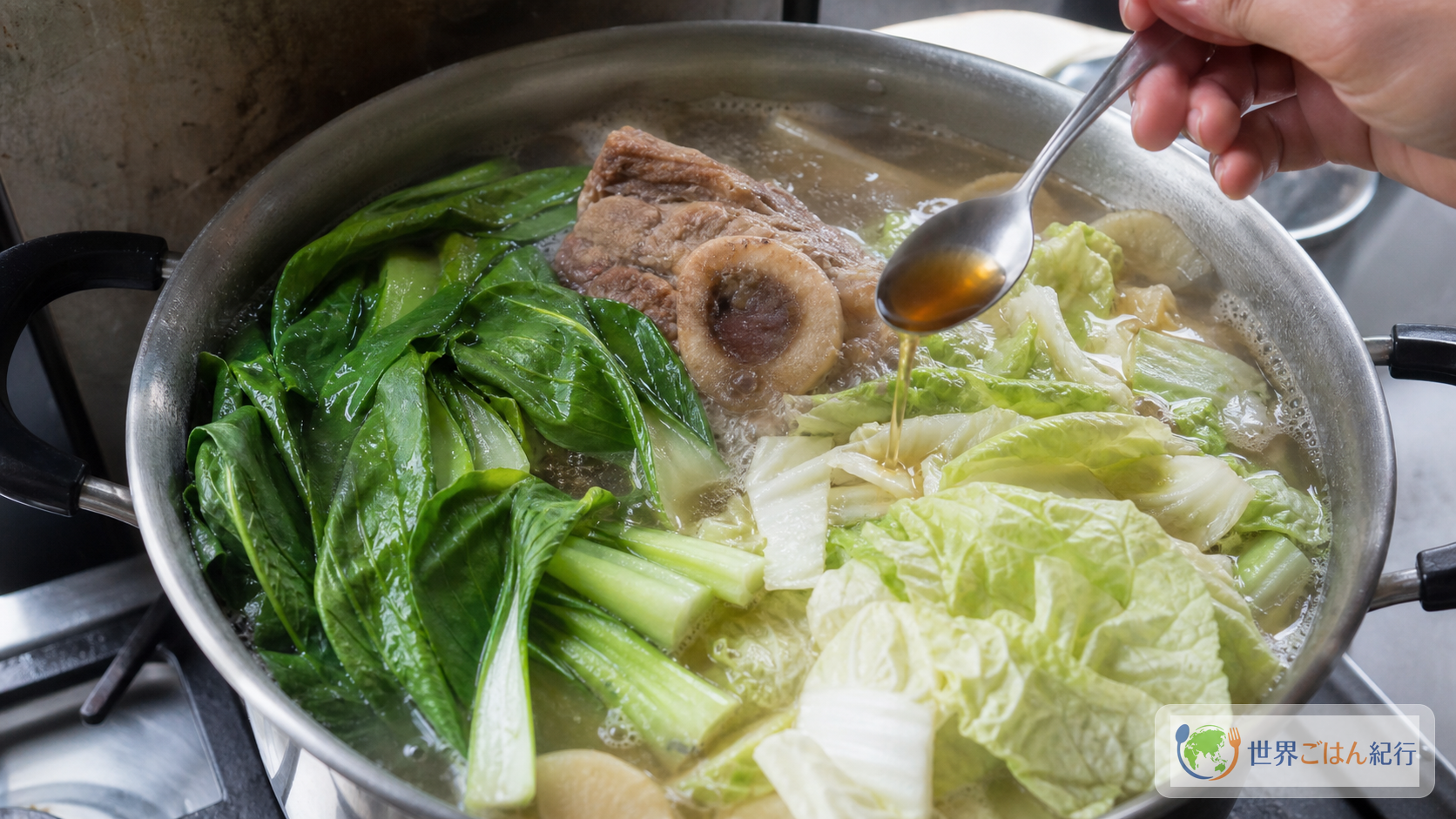
On the day you make bulalo, it goes better if you don't hurry the pot. Parboil the beef shank and throw out the water, wash the surface of the bones, and simmer again in clean water. There are no showy spices: onion, garlic, whole peppercorns, patis. Then you add only corn, cabbage and greens, yet the steam still holds the round aroma of beef bones.
Bulalo is the Filipino soup of beef shank and marrow. In English it is described as beef shank soup or beef marrow stew, and it is talked about as a specialty of southern Luzon, especially around Batangas, Cavite and Tagaytay. It sounds like food for a cold place, but eaten in a cool, high town like Tagaytay, a hot soup strangely suits it.
The hard part at home is not the seasoning but choosing the meat and keeping the broth clear. Thinly sliced supermarket beef will not give you bulalo's marrow richness. How will you combine bone-in shank, oxtail and beef tendon? If you simmer for a long time, where do you skim the fat? When do you add the greens? Decide those things and even a home pot makes a bowl that tastes like bulalo rather than beef and vegetable soup.
Among Filipino dishes, this is a different doorway from sinigang, which defines itself by sourness, kare-kare, eaten with peanut and fermented shrimp paste, and arroz caldo, the morning rice porridge. Monggo, with mung beans as a daily meal, could sit at a nearby table, but bulalo is plainer: at the center of the pot is simply the beef bone broth.
Background: the beef bone soup of Batangas and Tagaytay
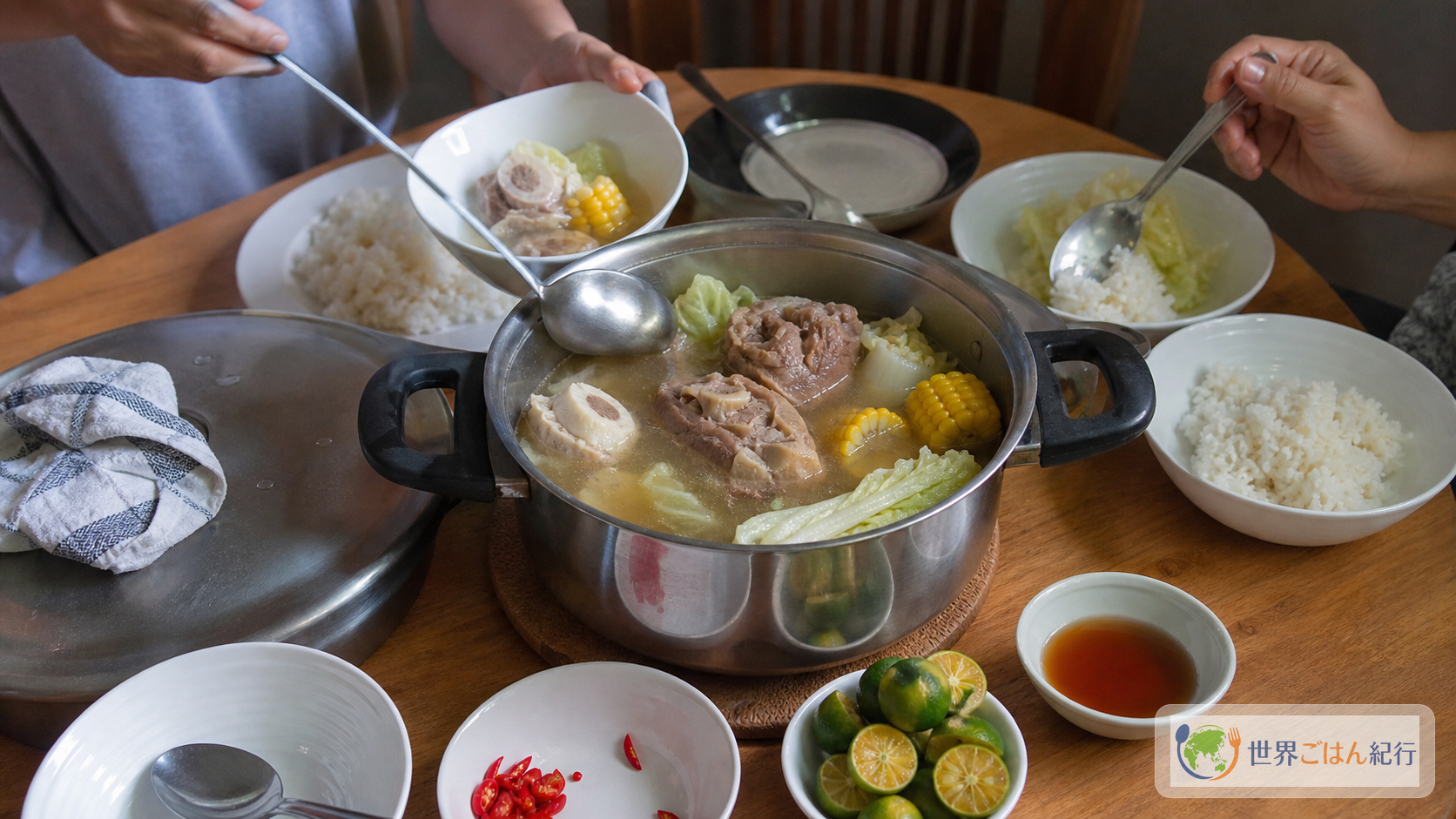
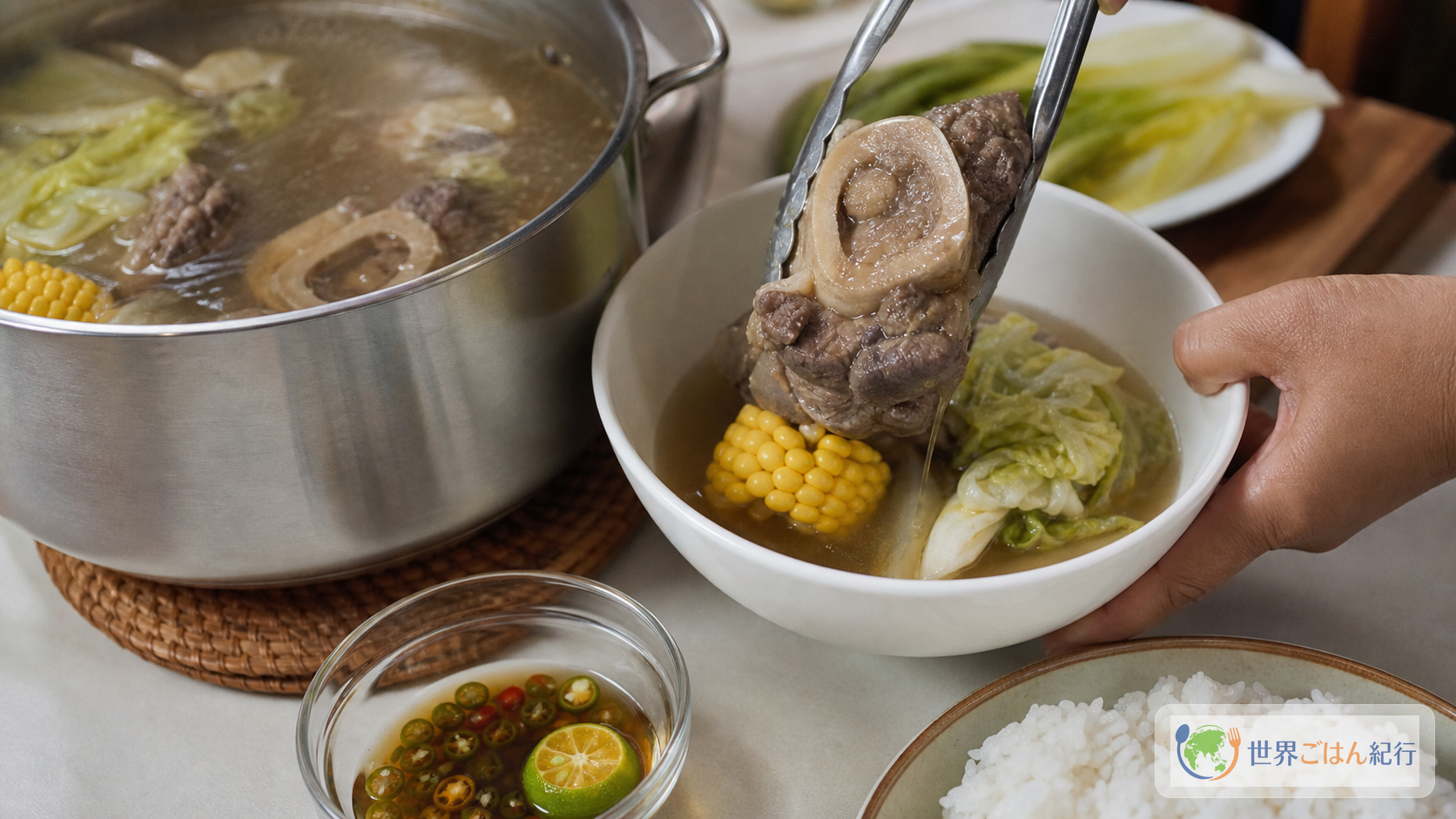
In the Philippines bulalo often arrives in a large pot or deep bowl. Cross-cut bone-in shank sits in the soup, and you crumble the marrow in the center bit by bit with a spoon, moving between soup and rice. If you think of it as a dish in which you eat the bones, broth, corn and greens together rather than making the meat alone the star, decisions about how to cook it become easier.
Bulalo often features as a local dish in Tagaytay travel guides, because eating a hot beef bone soup in the cool highlands is tied to tourists' memories. It also connects to Batangas's beef culture, and whether at home or in restaurants, the cut of meat and the richness of the broth vary by place.
| What matters locally | Why keep it at home | A realistic home approach |
|---|---|---|
| Bone-in beef shank | Marrow and gelatin give the soup body | Look for bone-in shank at a butcher, frozen-meat shop or online |
| Clear broth | Leaving neither too much nor too little fat and scum makes it easy to drink | Discard the parboiling water and simmer gently |
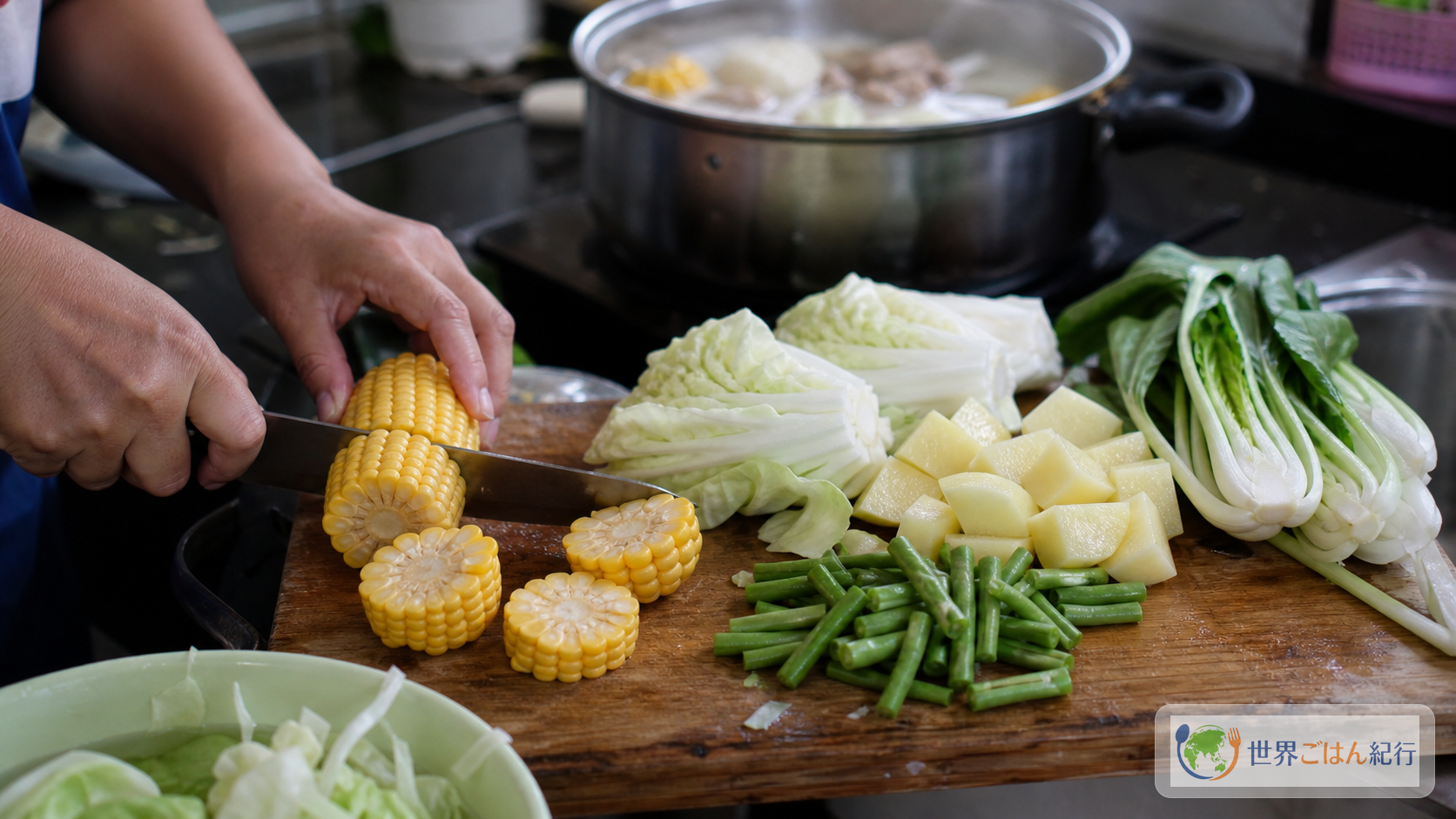
| Corn | Adds sweetness to the beef broth and makes the meal satisfying | Cut fresh or frozen corn on the cob into thick rounds |
| Greens and cabbage | Lighten the heavy beef bone soup | Use bok choy, komatsuna, napa cabbage or cabbage as available |
| Patis | Adds the lingering note of fish sauce that salt alone lacks | Add a little at a time at the end, and also serve it at the table |
Bulalo is shortened to "beef bone soup" in Japanese, but when you cook it at home, the axis of the dish is how far you protect the marrow. On days you can get bone-in beef shank, make it the star as is. On days you cannot, combine beef shank block with oxtail and beef tendon, and accept honestly that the aroma of the bone will be weaker. You can substitute, but you will fail less often if you don't treat the result as exactly the same.
Ingredients: building the broth from beef shank and corn
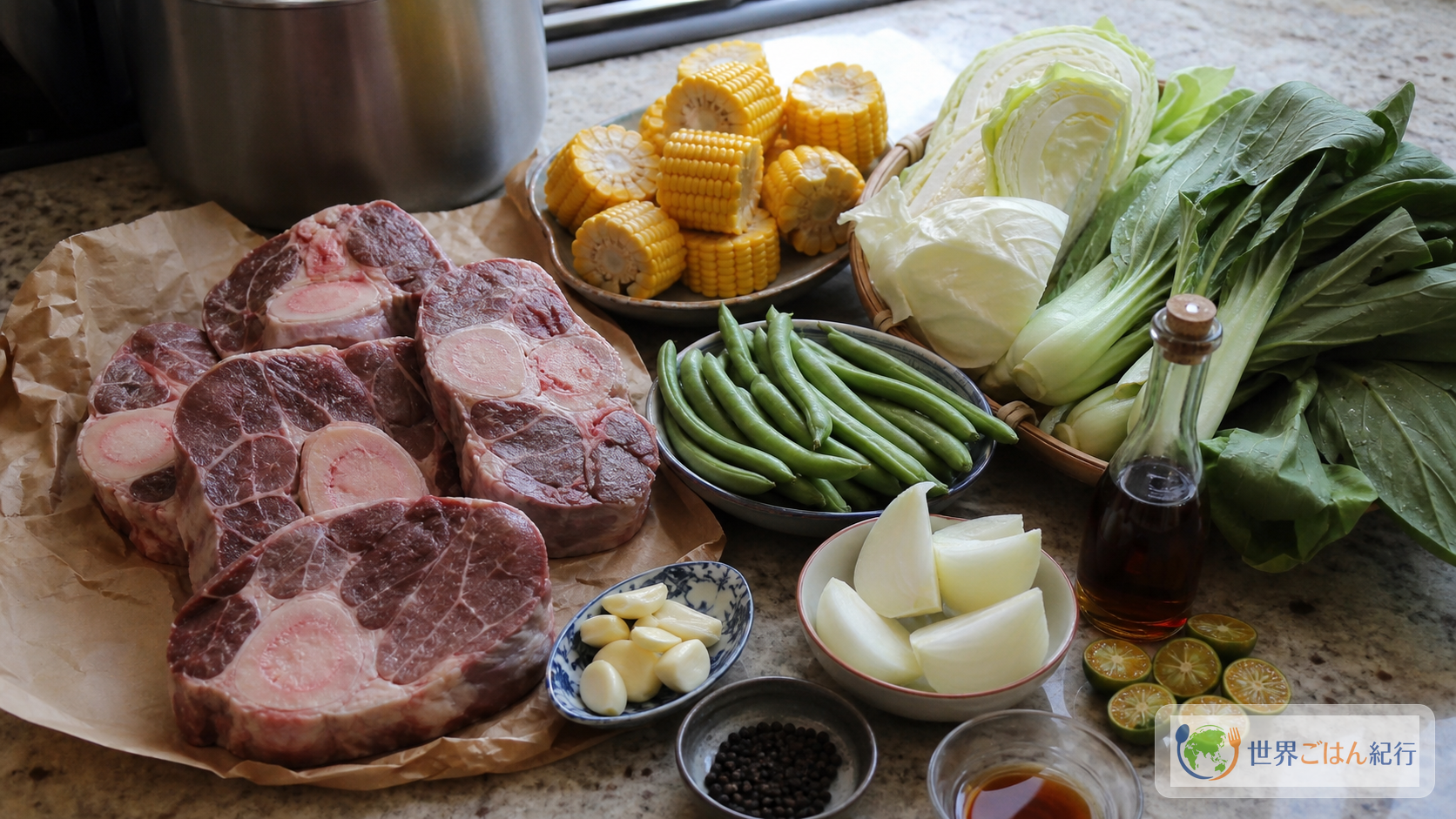
This is made as a big pot for 4. Ideally you have 1.2 kg of bone-in beef shank alone. If that is difficult, combining 700 g bone-in shank with 300 g shank block and 200 g beef tendon balances the amount of meat and the richness of the broth.
This dish uses beef and fish sauce. If you avoid fish sauce, make up the saltiness alone with 1 tbsp light soy sauce and 1/3 tsp salt. The aroma changes, so it is a home substitute rather than a local-style flavor. Cook the beef thoroughly to the center, with no red left around the bone.
What to buy: look at patis, peppercorns and the pot more than the meat
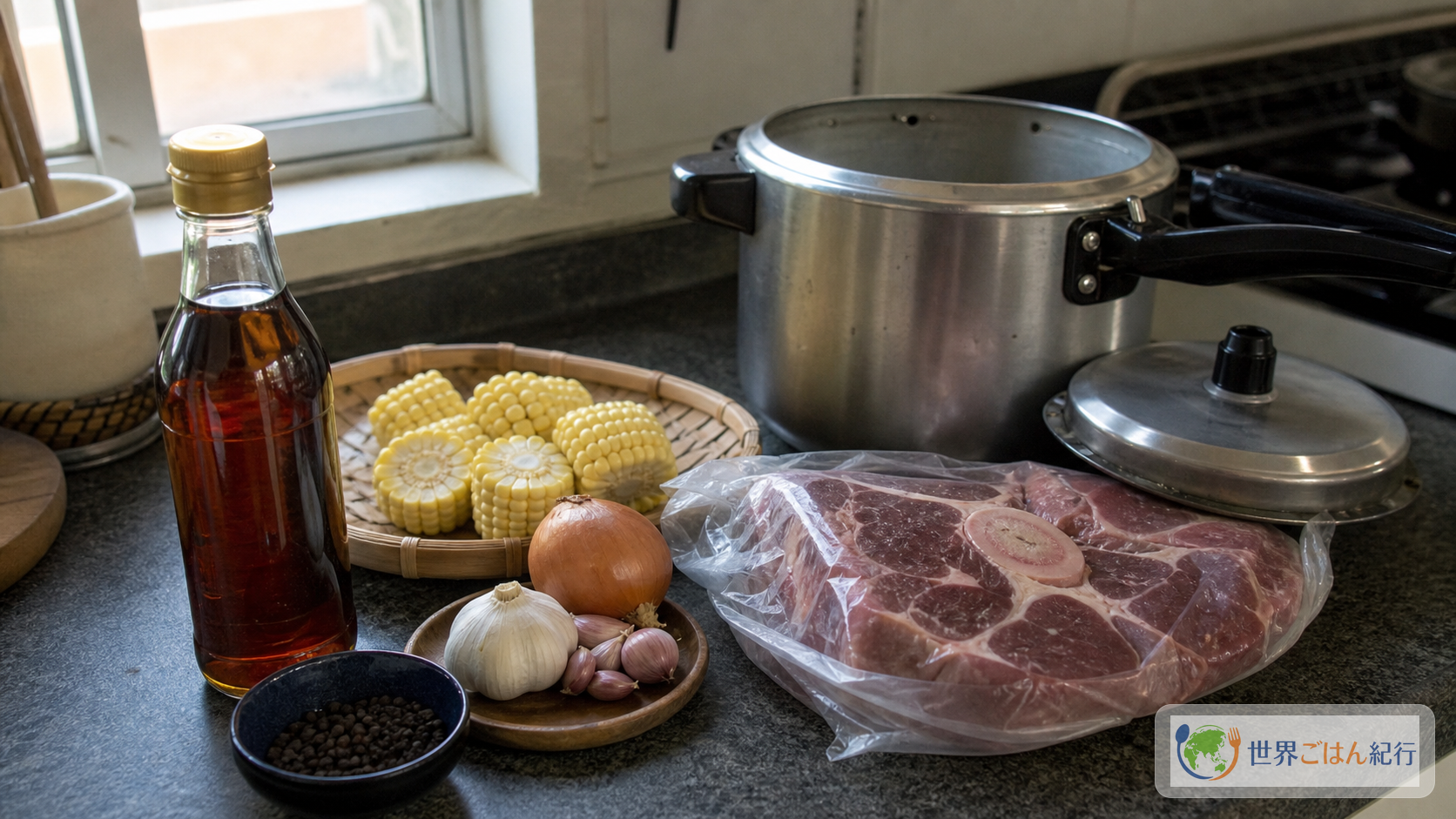
Look for the meat, corn, cabbage and greens first at a nearby grocery and butcher. What is worth looking for elsewhere is patis, strongly scented whole peppercorns and a pressure cooker that can handle long simmering. Beef varies with freshness and delivery conditions, so being able to talk to a nearby shop is more reassuring at first.
Patis adds a lingering note you can't make with salt alone. Bulalo is not a dish that pushes with sourness or heat, so don't overdo the fish sauce either. Put just 1 tbsp in the pot and let everyone add the rest at the table, and the soup won't get heavy.
Whole peppercorns pass their aroma slowly through the simmer. If you use only ground pepper, the heat sinks to the bottom of the soup and the impression of a clear beef broth weakens. If you will make bulalo more than once, a bag of whole black pepper is reusable.
Making bone-in meat tender takes time. A heavy pot is enough for a slow weekend simmer, but if you want to prep on a weekday, a pressure cooker of 4 L or more is realistic. Don't change the order of adding vegetables after pressure cooking, and cook the greens briefly at the end.
Method: don't rush a clear beef broth
For bulalo, it is easier in the kitchen to divide the work into stages than to make the simmer look short. Parboiling pushes the cloudiness out, the main simmer keeps to low heat, and the vegetables go in last. If potatoes and greens go in from the start, the broth clouds, and the leaves sink and turn heavy.
A decision table for getting closer to the original in a home kitchen
Because bulalo has few ingredients, the decisions about substitutes show in the taste. You don't need to get everything perfect, but keep four points in mind: marrow, clear soup, fish sauce and the size of the vegetables.
| What you are deciding | If using as is | If substituting | Notes on substituting |
|---|---|---|---|
| Bone-in beef shank | The most bulalo-like | Oxtail combined with shank | Less marrow. Make up the gelatin with tendon |
| Patis | Aroma leans Filipino | A little Thai fish sauce | The aroma leans Thai, so don't overdo it |
| Calamansi | Light sourness | Sudachi, kabosu | Lemon is strongly scented, so use a little |
| Greens | Close to pechay | Bok choy, komatsuna, napa cabbage | Add leafy greens at the end and don't cook long |
| Corn | The pillar of sweetness and looks | Frozen corn on the cob | Kernel corn alone is not substantial enough |
| Pressure cooker | Easy to shorten the time | Heavy pot on low heat | Takes longer but makes a clearer soup |
You don't have to think too much that "it's a different dish because I'm using local ingredients." On the contrary, simply parboiling carefully, using whole peppercorns and saving the fish sauce for the end brings it quite close to bulalo. Conversely, made only with thin beef slices, ground pepper, soy sauce and thin-cut vegetables, it becomes an easy-to-drink beef soup, but loses the enjoyment of a dish in which you eat the marrow.
What goes wrong: fixing cloudy, greasy and sunken vegetables
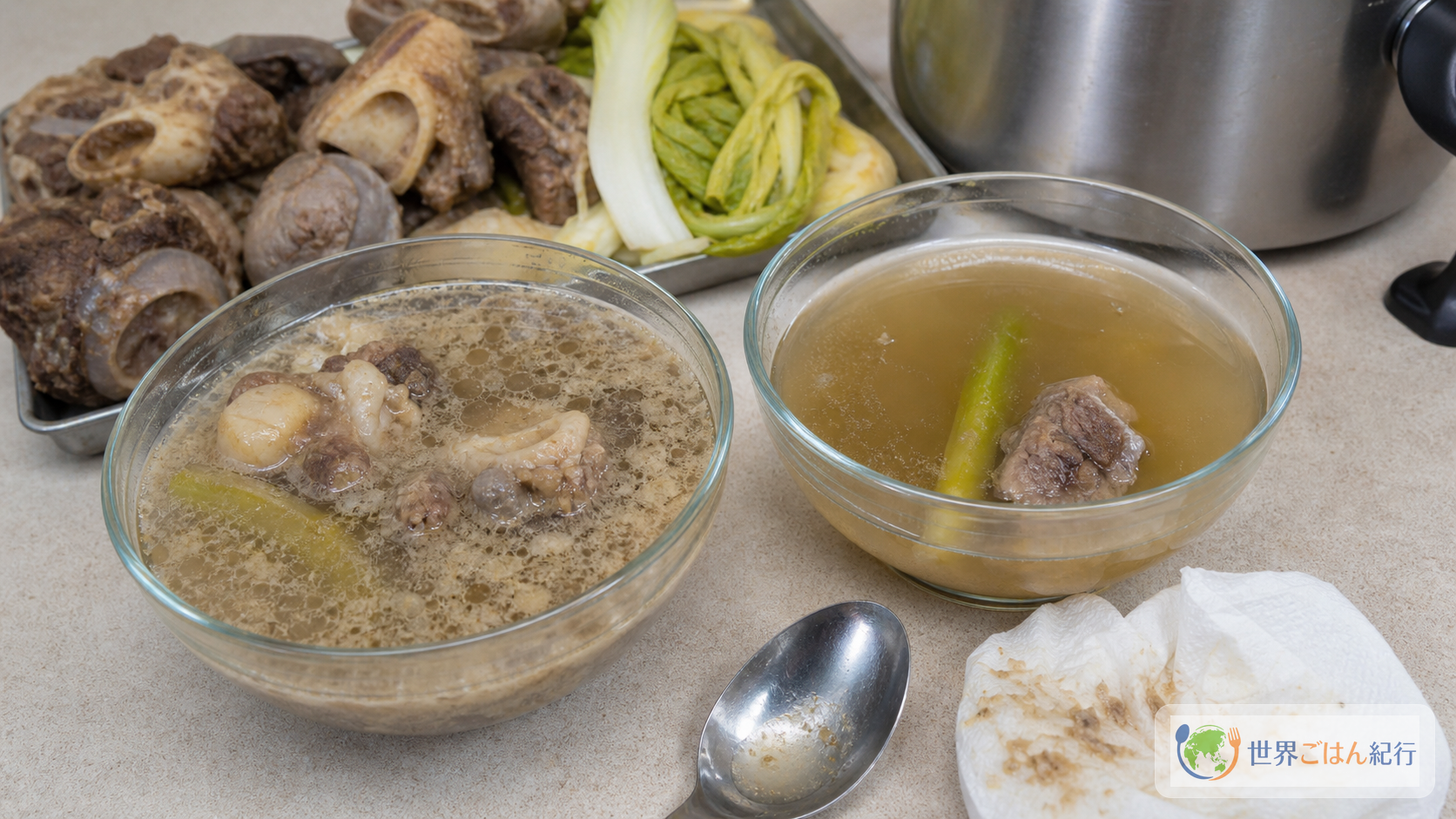
The common failure with bulalo is not weak flavor but a heavy broth. Removing all the fat leaves it wanting, but ignoring the surface dulls the mouthfeel. Vegetables, too, do not get better the longer they cook.
| Problem | Cause | Fix |
|---|---|---|
| Soup is cloudy gray | Not enough parboiling, kept at a hard boil | Discard the parboiling water and keep the main simmer low |
| Greasy | Left too much fat from tendon and marrow | After simmering, ladle 3 to 5 tbsp of fat off the surface |
| Meat is tough | Not simmered long enough, heat so low the temperature doesn't rise | Extend by 30 minutes over low heat and judge by how a skewer goes in |
| Vegetables sink | Greens added too early, cut too small | Add greens for the last 4 minutes and cut large |
| Strong fish-sauce smell | Too much patis from the start | 1 tbsp in the pot, add the rest at the table |
| Potatoes cloud the broth | Broke down, released starch | Cut into 3 cm chunks or larger and stop at 15 minutes |
Even when it seems bland, don't add all the salt at once. Adding a few drops of patis after serving into the bowl lifts the aroma and makes it more satisfying. Making the whole pot stronger makes the saltiness seem sharper when you reheat it the next day.
Storage and menu: separate the soup and bones
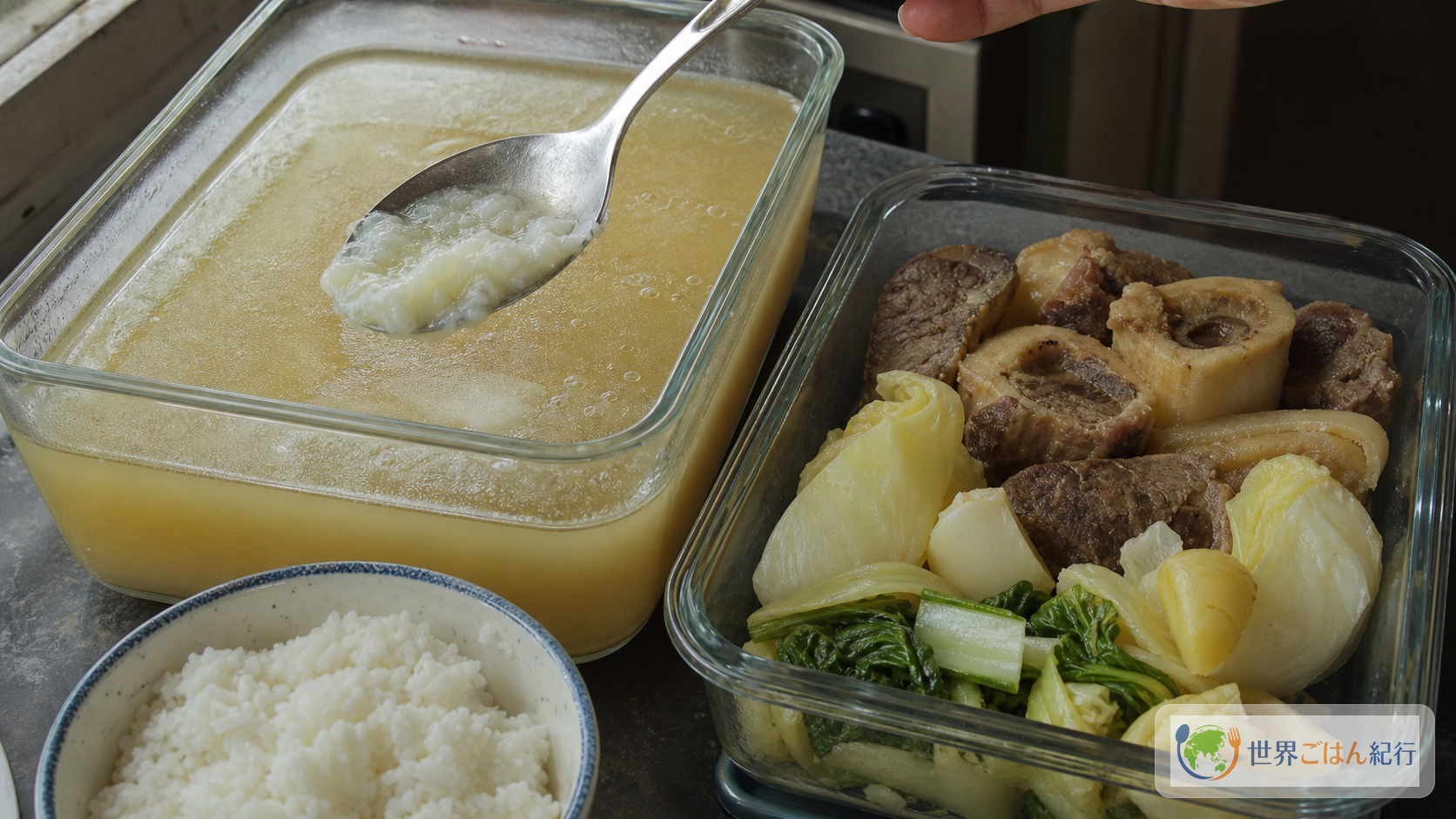
If you make it ahead, separate the soup and the solids. Put hot in a deep container it won't cool, so let it cool for about 30 minutes and move it to a shallow storage container. Refrigerate for 2 days, and freeze for 3 weeks if it is soup only. Potatoes and greens lose texture when frozen, so if you freeze, freeze only the meat and soup.
The next day, white fat sets on the cold surface. You don't have to throw it all away. Leaving about 1 tbsp brings the aroma back when you reheat. On the stove, warm it over low heat for 8 minutes; in a microwave, 3 minutes at 600 W, stirring once partway. To add greens, put in 80 g of komatsuna at the end of reheating and cook for just 1 minute.
For a menu, plain white rice, a quick vinegar pickle of tomato and onion, grilled eggplant or a fragrant dish like chicken inasal (in Japanese) keeps the meal from getting heavy. On days you want sourness, squeeze sudachi in place of calamansi and add just a little red chili.
Frequently asked questions
Can I make it without bone-in beef shank?
You can. But the impression of a dish where you eat the marrow becomes weaker. Combining 500 g oxtail, 500 g shank block and 200 g beef tendon makes up for the broth and gelatin easily. If you make it with only thin beef slices, it is more natural to enjoy it as a beef and vegetable soup, not bulalo.
How much can a pressure cooker shorten it?
Parboil the same way, then do the main simmer at high pressure for 35 minutes with natural release. After release check how tender the meat is, and if it is tough, pressure cook for another 10 minutes. Don't pressure cook the vegetables; add them at the end as with an ordinary pot. Pressure cooking the greens loses color and aroma.
Is the marrow okay to eat?
If the bone-in meat has been cooked thoroughly to the center and handled cleanly, the marrow is one of the pleasures of bulalo. Scoop it a little at a time with a spoon and eat it with the soup and rice. It is rich in fat, so people who don't like it don't need to force it; melting a little into the soup is enough.
Can I replace patis with Thai fish sauce?
Yes. Thai fish sauce varies in sharpness by brand, so start with 2 tsp in the pot. Add more at the table if needed. Replacing it with soy sauce alone gives saltiness but less of the lingering fish-sauce note.
Can I change the vegetables?
Yes. Cabbage, bok choy, komatsuna, napa cabbage and green beans are easy to use. Some households add daikon or carrot, but they make it sweeter, so keep the amount modest. Add leafy greens at the end and turn off the heat while the color remains.



