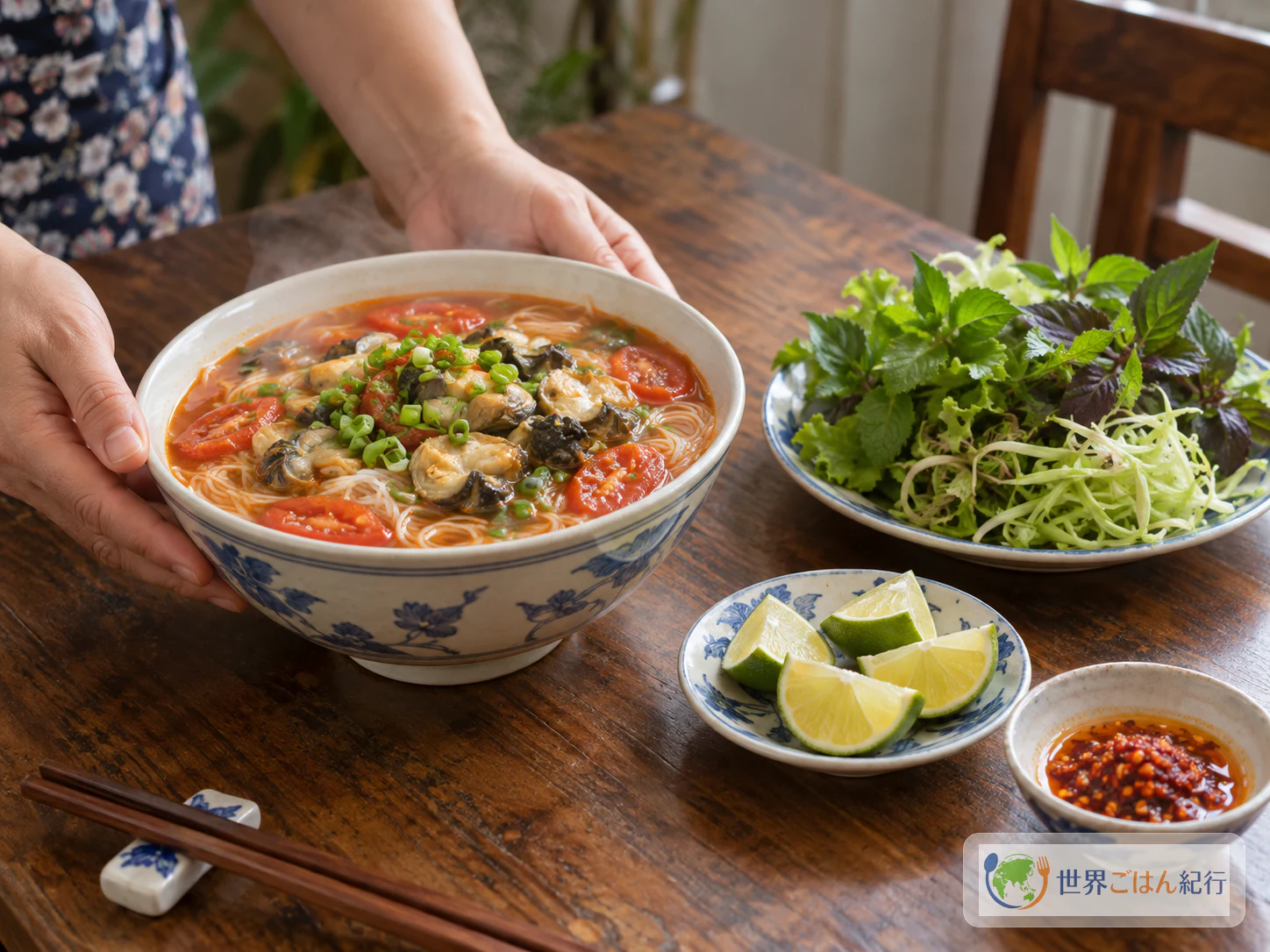
Bún Ốc: Tomato Broth, Fine Rice Noodles and Springy Snails
Make the broth and the snails separately, then bring them together over fine rice noodles at the last moment. Boil the thawed snail meat for 5 minutes before it goes into the seasoning pan, whatever the package says.
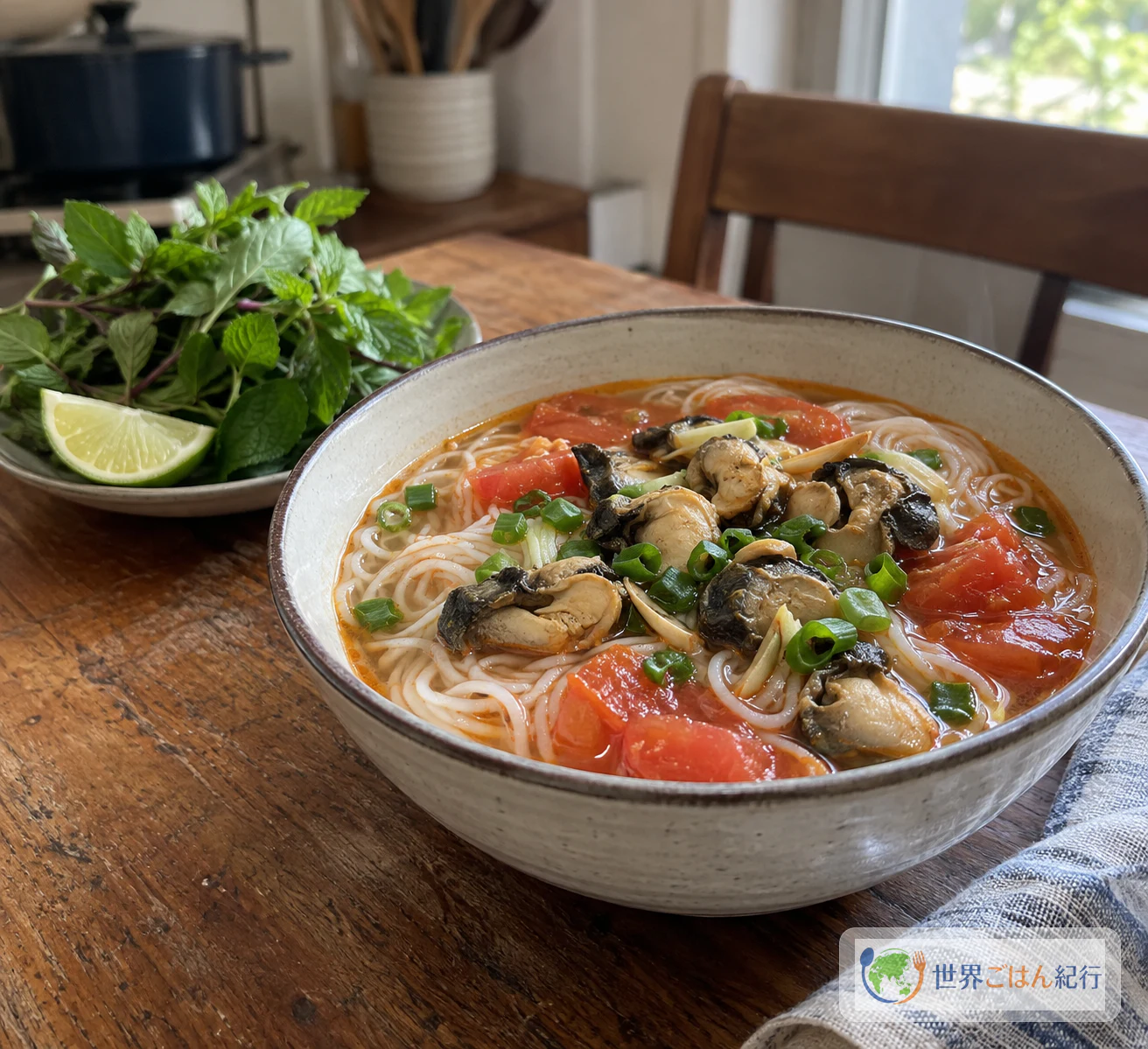
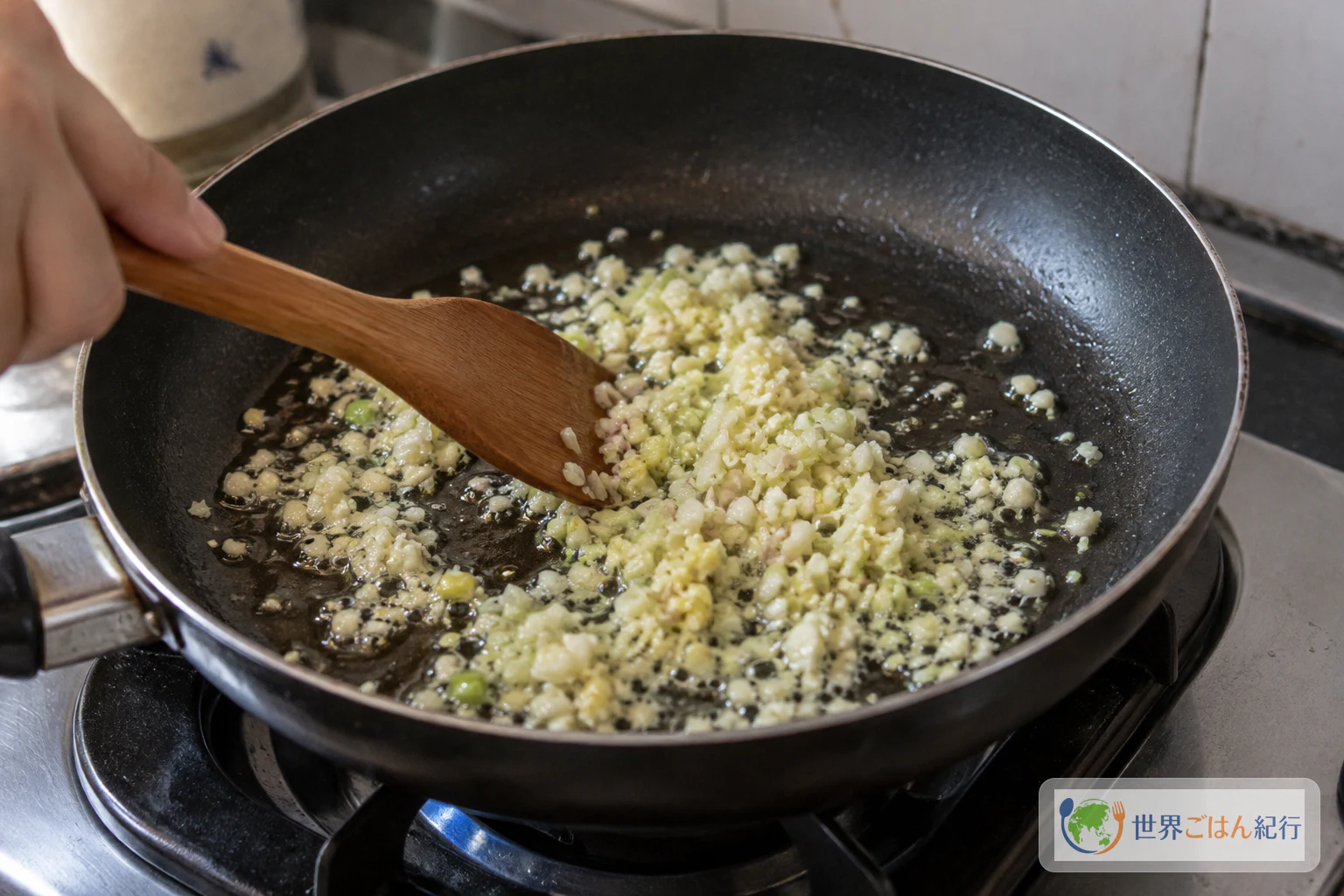
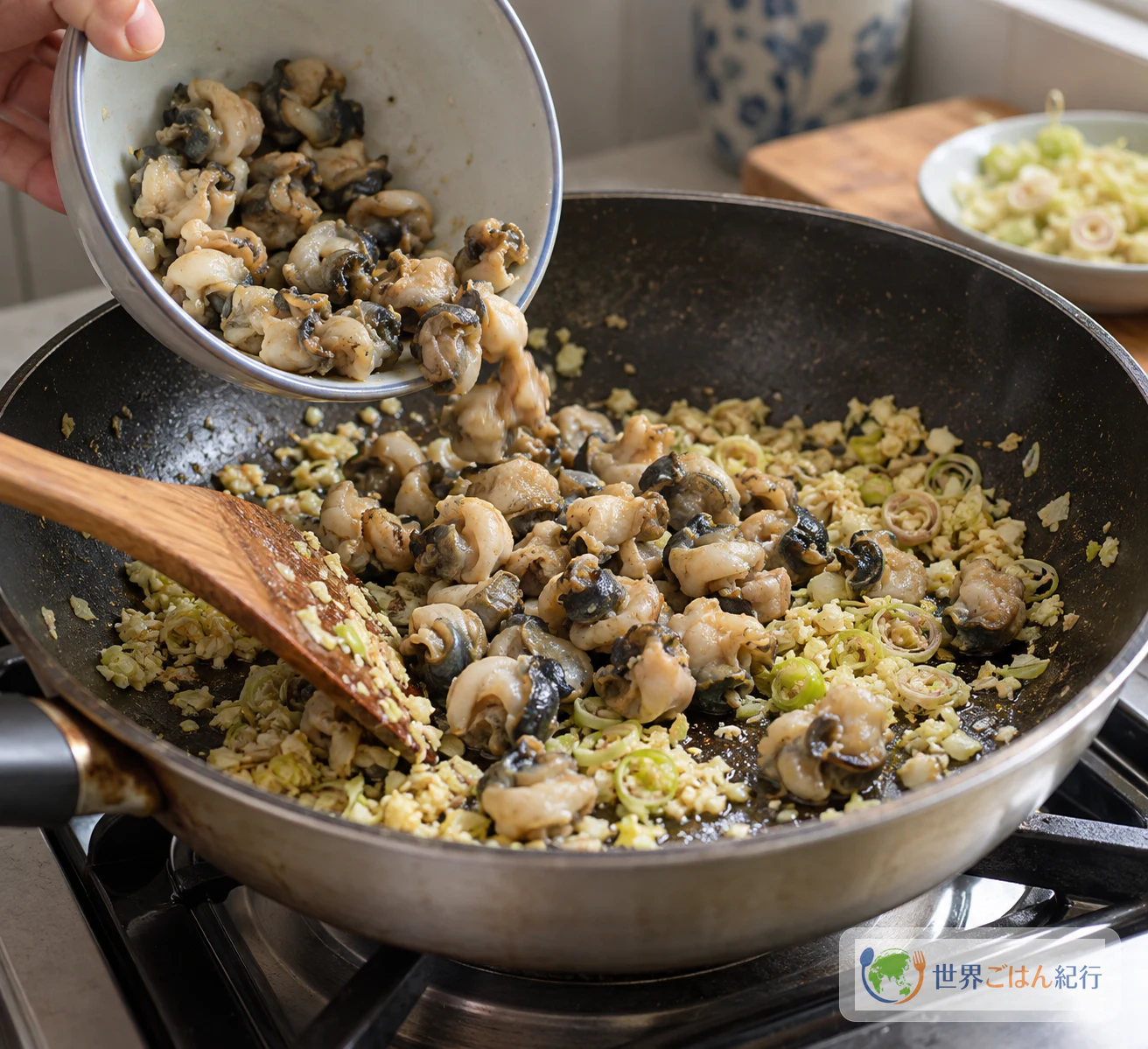
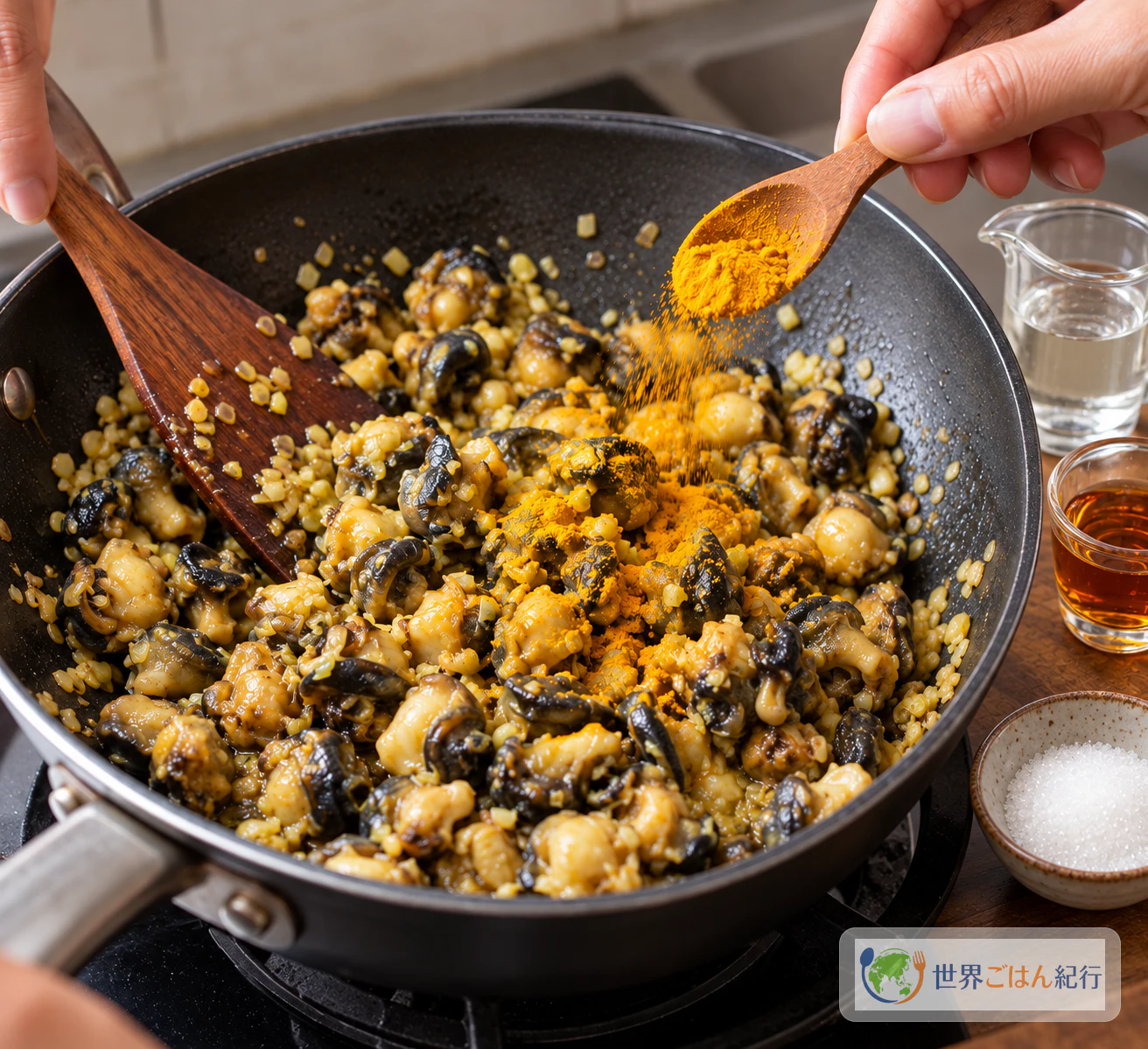
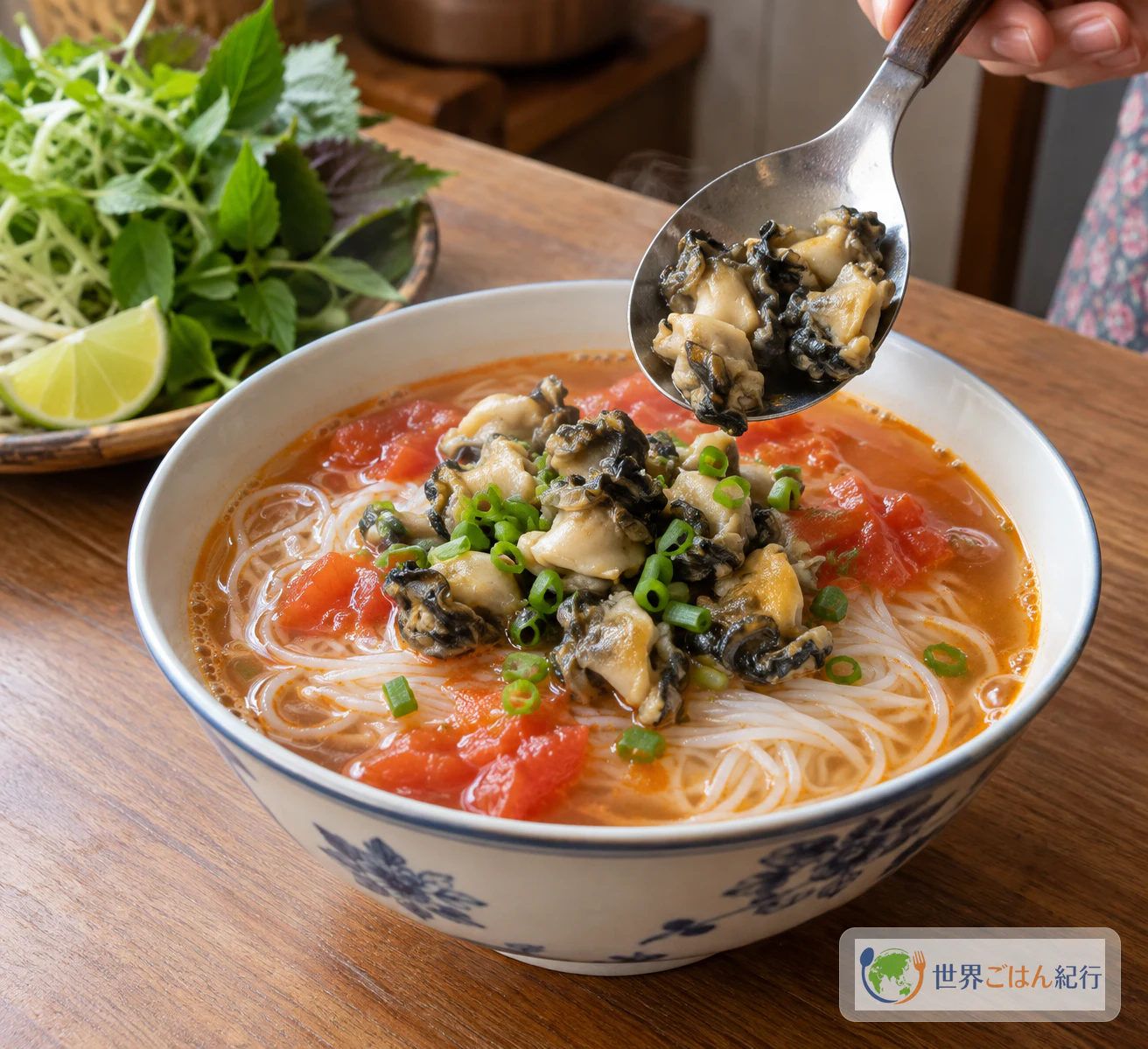
A clear broth takes on the red of tomatoes. Fine white rice noodles go into the bowl, the hot broth follows, and snail meat coated in garlic, lemongrass and turmeric goes on top. Sliced green onion finishes it, while herbs and lime wait on a separate plate.
In the name bún ốc, bún means rice noodles and ốc means snail. Vietnamese writers and cooks closely associate the dish with Hà Nội, and it comes in both hot and cold forms. This article makes the hot noodle soup, using the English-language home recipe by Vicky Pham. It is one home version, not the single authentic formula for Hà Nội, and not a historical prototype. For the wider cuisine, see more dishes from Vietnam.
What we changed, and what we have not done
Pham's recipe calls for frozen Oc Buu snail meat and says "the frozen ones are already prepared," but it never says fully cooked. One listing we found for frozen ốc bươu sold in Japan describes the snails only as pre-processed and does not state whether they are cooked.
So this article adds one step that is not in Pham's recipe: thaw and wash the snail meat, then boil it for 5 minutes, even if the label says it is cooked. This is an editorial safety addition. The Hawaiʻi Department of Health advises boiling snails "for at least 3–5 minutes" to prevent rat lungworm, and we took the upper end of that range. That advice was not written specifically for frozen shelled meat.
The other amounts and the order of cooking follow Pham's recipe. Two details in that recipe disagree with each other, and we resolved them this way:
- Stock powder: the ingredient card lists chicken bouillon powder, while the method says chicken/pork stock powder. We use the measured card item.
- Citrus: the ingredient list says limes, while the method says lemon wedges. We follow the ingredient list.
This recipe has not been kitchen-tested by Sekai Gohan. The package weights, total time and finished volume are not given in Pham's recipe, so they do not appear here either.
Ingredients (5–7 servings)
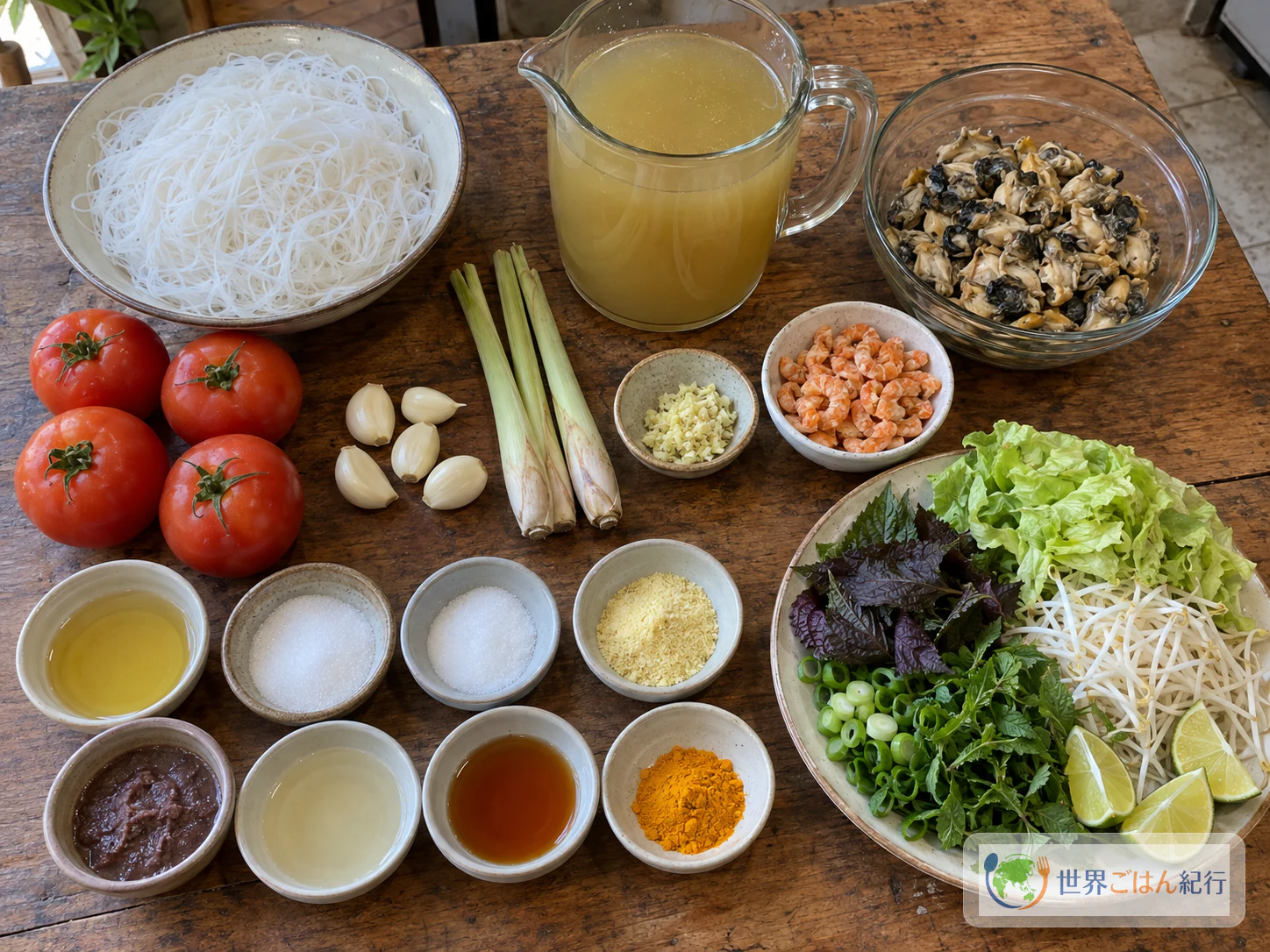
Equipment
- Large, deep pot for the broth
- Mesh strainer
- Frying pan
- Separate pot and colander for the noodles
- Separate pot for boiling the snail meat
- Knives and cutting boards, with one set kept for raw vegetables and herbs
Choosing the Snails, Herbs and Seasonings
Snail meat. Use frozen ốc bươu sold as food. Frozen shell-less snails are common outside Vietnam. In Japan, Vietnamese grocers sell it as "ốc bươu" or "thịt ốc bươu," for example in 500 g bags. Ask the seller about the origin, stock, Japanese labeling and import paperwork before you buy. This is not a product recommendation.
Before you buy, check these points:
- The product is sold as edible frozen food.
- The label shows the name, country of origin, importer and storage method. In Japan, look for this on the Japanese food label.
- The seller can tell you how frozen goods are delivered, and that they arrive frozen. If they arrive thawed, ask the seller what to do.
The name Oc Buu does not establish the species and does not guarantee that the snails are free of parasites.
What this recipe does not cover. Do not use snails gathered from a garden or the wild. Raw snails in the shell, French land escargot, canned escargot and sea snails are also outside this recipe, so do not use them as replacements.
Herbs. Tía tô and kinh giới may be sold under different names, so ask the seller what you are buying. Japanese shiso or mint on their own should not be treated as the same aroma.
Vinegar. Northern Vietnamese versions may use giấm bỗng, a vinegar fermented from glutinous rice. It is not the same ingredient as white vinegar, so do not treat the two as equal swaps.
Noodles and packaged seasonings. Noodle packages vary, and their directions decide the cooking method and time. Stock, bouillon powder, shrimp paste and sate sauce also vary by product, so read each label.
Safety, Allergies and Leftovers
Do not eat snails raw or undercooked. The 1-minute stir-fry is a flavor step, so never rely on it in place of the 5-minute boil. The boil follows public guidance on rat lungworm, but it does not prove that parasites are absent, and it does not address other hazards such as heavy metals, which we have not researched.
Parasites. The U.S. CDC advises against eating raw or undercooked snails or slugs in areas where rat lungworm is found. It also recommends thoroughly washing hands and utensils after preparing raw snails and thoroughly washing raw vegetables. The Hawaiʻi Department of Health advises boiling snails for at least 3–5 minutes and rinsing produce under running potable water.
Kitchen hygiene. Japan's Ministry of Health, Labour and Welfare advises thawing in the refrigerator or microwave and cooking right after thawing. It also advises washing hands before and after handling raw meat or fish, using separate cutting boards, and keeping knives and boards clean. Its guidance is about food poisoning in general and does not address snails or parasites specifically.
Allergies. Snails are mollusks, dried shrimp and fermented shrimp paste can contain crustaceans, and fish sauce comes from fish. Stock, bouillon powder, noodles and sate sauce differ by product, so check each label. We cannot guarantee freedom from cross-contact.
Leftovers. This soup is best eaten freshly made, and we do not give a storage period. If you do keep leftovers, refrigerate them at 10°C or below and eat them soon. Reheat to 75°C or higher, and bring soup to a boil.
Troubleshooting
| Problem | Likely cause | What to do |
|---|---|---|
| Snails are firm or shrunken | Overcooking toughens and shrinks snails | Keep the full 5-minute boil, since safety comes before texture. Keep the seasoning stir-fry to 1 minute |
| Grit in the snails | Frozen snails may still hold grit or gut | Wash and drain thoroughly after thawing, before boiling |
| The package says the snails are cooked | Labels and listings vary | Boil for 5 minutes anyway, or longer if the label says so |
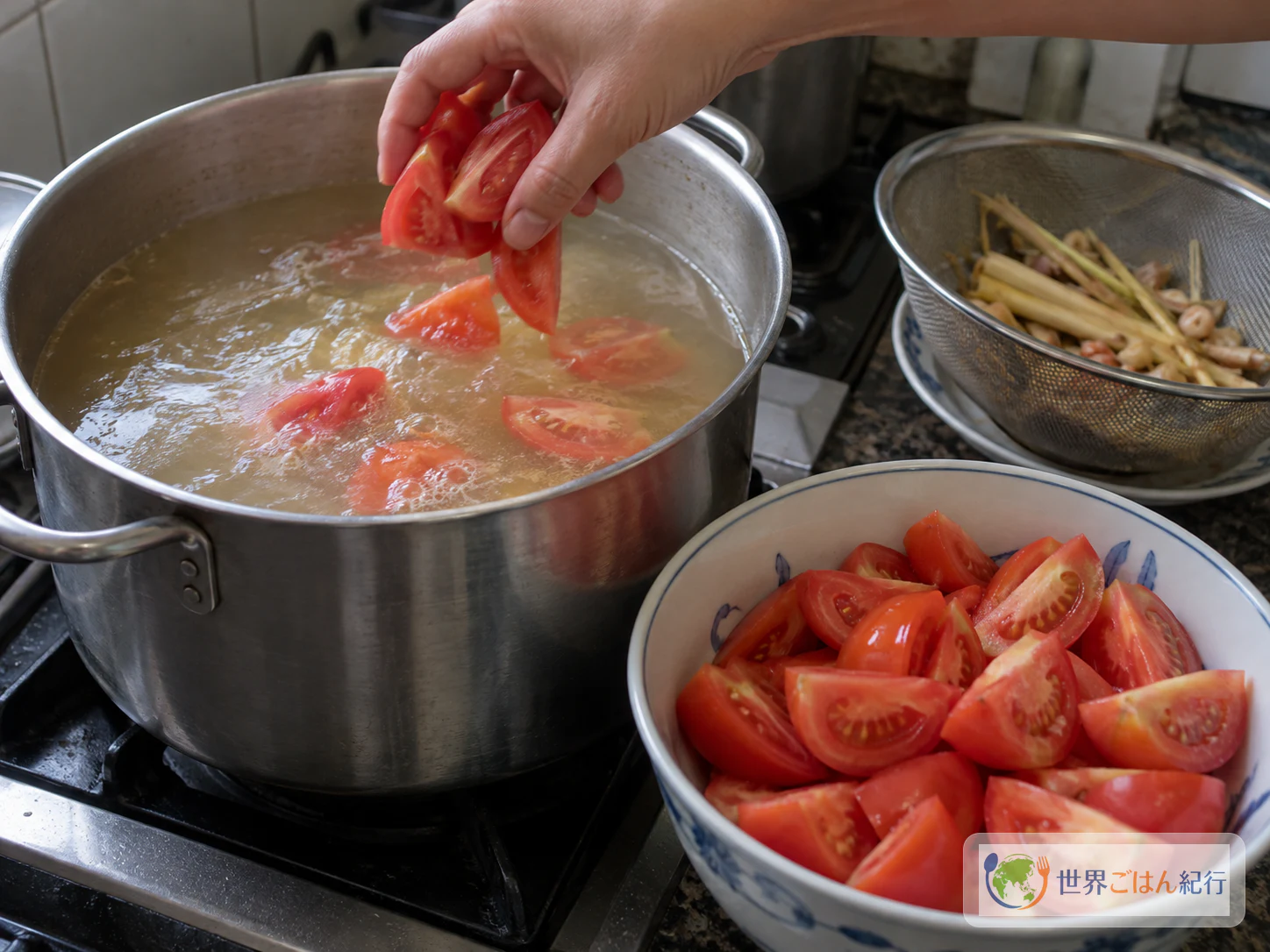
| Tomatoes have collapsed into the broth | They went in too early | Strain first, then add the tomatoes and cook for just 5 minutes |
| Garlic tastes bitter | The aromatics burned | Fry for only about 30 seconds. If they burn, start them again before adding the snails |
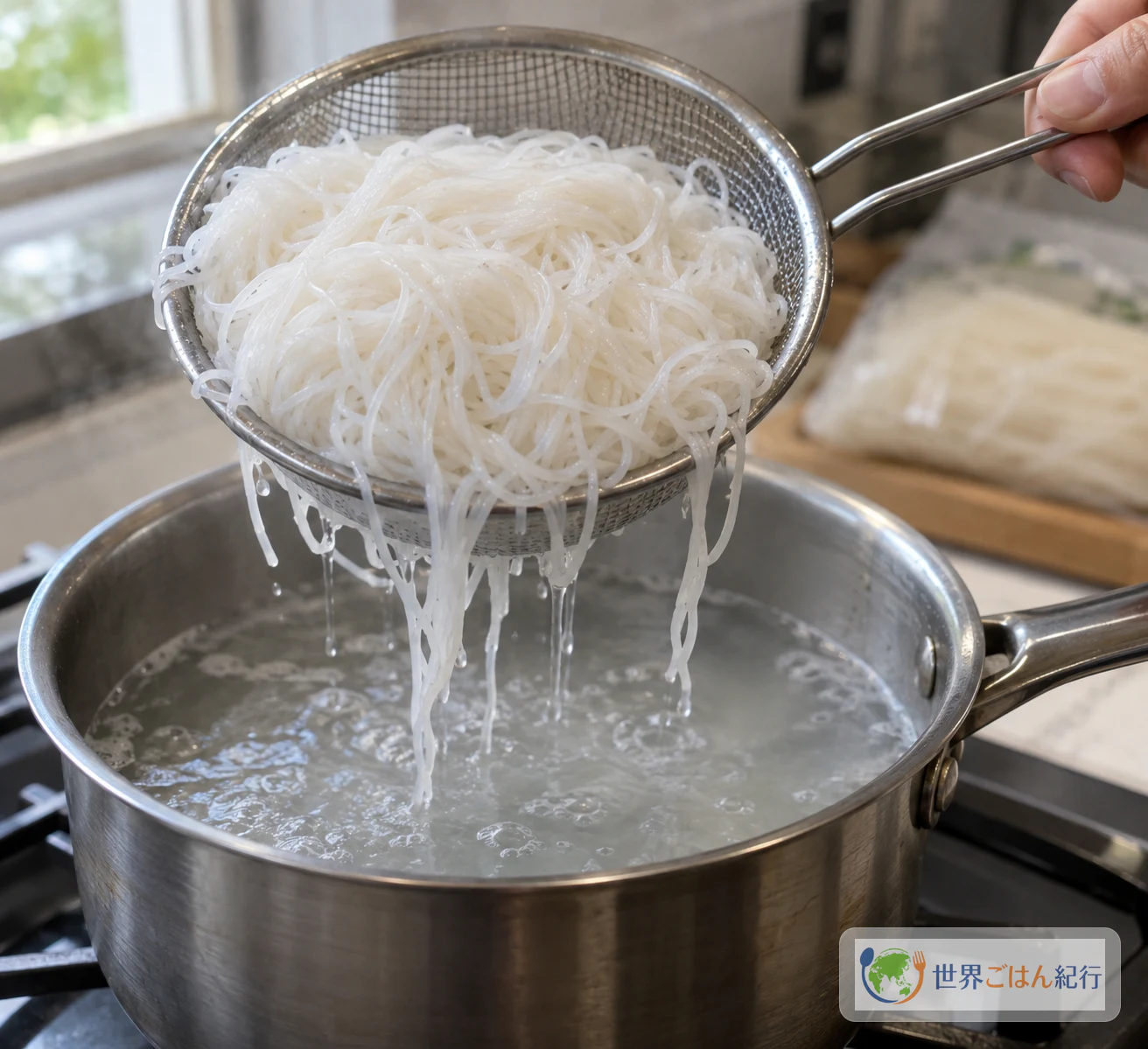
| Noodles are overcooked or undercooked | Noodle types differ | Follow the directions on your package |
| Snails arrived thawed | Delivery conditions vary | Ask the seller before using them |
Meaningful Variations
Keep these choices apart from the base recipe above.
- Chicken or pork stock: Pham's recipe allows either. The choice changes the aroma and richness of the broth.
- Chopped or wedged tomatoes: both are allowed. Chopped tomatoes are likely to break down more than wedges, while the cooking time stays at 5 minutes.
- The herb plate: Pham lists tía tô, kinh giới, mint, lettuce and bean sprouts without fixing amounts. Changing the mix changes the aroma and crunch, but the herbs are not interchangeable.
- Sate chili sauce: use it at the table to adjust the heat. Do not add it to the pot or the snail pan.
- Extra toppings: Pham lists shrimp, fried tofu and fish cakes as optional proteins, along with extra shrimp paste on the side. No amounts or cooking directions are given, so they are not part of this recipe. The broth already contains shrimp paste.
Hot and Cold Bún Ốc: A Hà Nội Dish with More Than One Form
MM Bon Appétit places the dish in Hà Nội and names freshwater snails, rice vermicelli, tomatoes, purple perilla and fried tofu as common elements. It describes a hot broth of tomato and vinegar and a cooled form served with the noodles separate. It also notes that snail size and serving details vary by region.
VnExpress Cooking treats bún ốc nóng (hot) and bún ốc nguội (cold) as distinct Hanoi forms. The cold version keeps noodles and broth separate and highlights snails, glutinous-rice vinegar and chili. The hot version is presented with a lightly sour tomato broth and fresh herbs. VnExpress also separates a simple snail-centered bowl from the toppings some shops have added over time, so those extras are not part of every bowl.
VnExpress also describes the hot form as coming later than the cold one, but the page gives no dated evidence. We repeat that as one writer's account, not as settled history. The materials we used do not establish an inventor or a date of origin.
This article's recipe is the hot form, so do not chill the bowl or the broth, and do not serve the noodles on a separate plate. The hot-and-cold recipes on those pages use different formulas and methods, which we did not merge into this one.
Other Vietnamese noodle dishes on this site are easy to confuse with bún ốc:
- Bún riêu is also a tomato rice noodle soup, but it is built around crab rather than snails.
- Bún chả is another noodle dish linked to Hanoi, served with grilled meat rather than as a noodle soup.
- Bún bò Huế is a spicy noodle soup from another part of Vietnam.
Frequently Asked Questions
What is the difference between bún ốc nóng and bún ốc nguội?
Nóng is the hot form, with hot broth poured over noodles. Nguội is the cooled form, with noodles and broth kept separate. This recipe is the hot form.
Which snails should I buy?
Buy frozen ốc bươu sold as food, and check the label and how it is delivered. This article does not recommend a specific shop or product, or cover other kinds of snail.
Do I still boil the snails if the label says they are cooked?
Yes. Boil them for 5 minutes after thawing and washing, or longer if the label gives a longer time. This boil is our safety addition and is not in Pham's recipe.
Can I use raw snails or canned escargot?
This recipe does not cover them. Garden and wild snails should not be used, as Pham also advises. We found no recipe support for canned escargot in bún ốc, and it is a land snail, a different kind from ốc bươu.
How many grams are in 2 packages of snails or noodles?
Pham's recipe does not say, so we do not give a weight for either. As a rough reference for snails only, two separate recipes use 400–500 g of frozen snails for 4 people (Savoury Days) and about 500 g of shelled snail meat for 5 people (Fifteen.net). You can use those to judge your own quantity, but they are not the amount in Pham's recipe.
How long do I cook the rice noodles?
Follow your package. Pham's recipe gives no fixed time, and products differ.
Can I replace the white vinegar with giấm bỗng?
We cannot call it an equal swap. Giấm bỗng is a glutinous-rice vinegar that may differ in flavor, and we have no tested amount for it in this recipe.
Has this recipe been tested?
No. Sekai Gohan has not kitchen-tested this version, including the added boil.
Sources
- Vicky Pham, "Vietnamese Escargot Noodle Soup Recipe (Bun Oc)." The base recipe: servings, ingredients, amounts, cooking order and times, the frozen Oc Buu described as already prepared, and the advice not to pick snails from a garden. https://vickypham.com/blog/vietnamese-escargot-noodle-soup-bun-oc/
- MM Bon Appétit (Mai), "Bún ốc • Vietnamese snail noodle soup." The link to Hà Nội, common elements, hot and cooled forms, regional variation, and frozen shell-less snails outside Vietnam. Used for context only. https://mmbonappetit.com/bun-oc/
- Bùi Thủy, VnExpress Cooking, "Cách làm bún ốc nóng - nét ẩm thực dân dã Hà thành." The hot Hanoi form, its lightly sour tomato broth and herbs, and shop toppings. Used for context only. https://vnexpress.net/doi-song-cooking-bun-oc-nong-4496617.html
- Bùi Thủy, VnExpress Cooking, "4 cách làm Bún ốc chuẩn vị, dân dã mà dễ làm tại nhà." Hot and cold forms, glutinous-rice vinegar, chili and variants. Used for context only. https://vnexpress.net/doi-song/cooking/mon-an/bun-oc-27175
- U.S. Centers for Disease Control and Prevention, "Preventing Rat Lungworm." Avoiding raw or undercooked snails, and washing hands, utensils and raw vegetables. Gives no cooking time or temperature. https://www.cdc.gov/angiostrongylus/prevention/index.html
- Hawaiʻi Department of Health, Disease Outbreak Control Division, "Neuroangiostrongyliasis (Rat Lungworm)." Boiling snails for at least 3–5 minutes and rinsing produce under running potable water. Not specific to frozen shell-less meat. https://health.hawaii.gov/docd/disease_listing/rat-lungworm-neuroangiostrongyliasis/
- VIETMART, "Ốc bươu (500g)." An example of a frozen listing in Japan, described as pre-processed. Cooked state is not stated. Not an endorsement. https://vietmartjp.com/oc-buou/
- VIETMART, "Chính sách gửi hàng." Delivery zones and a chilled shipping option. Frozen delivery is not explicitly described. https://vietmartjp.com/chinh-sach-vietmart/chinh-sach-gui-hang/
- Savoury Days, "Bún ốc Hà Nội." A reference weight for frozen snails, cleaning frozen snails again after thawing, and the texture caution on overcooking. Its formula is not used. http://www.savourydays.com/bun-oc-ha-noi/
- Ministry of Health, Labour and Welfare (Japan), "家庭でできる食中毒予防の6つのポイント." Thawing, hand and tool hygiene, refrigerator temperature and reheating leftovers. General guidance, not specific to snails or parasites. https://www.mhlw.go.jp/stf/seisakunitsuite/bunya/kenkou_iryou/shokuhin/syokuchu/01_00006.html
- Fifteen.net (Tien – Alden), "Bún Ốc Recipe (Vietnamese Snail Vermicelli Soup)." A reference weight for shelled snail meat only. Its formula is not used. https://www.fifteen.net/recipes/bun-oc/