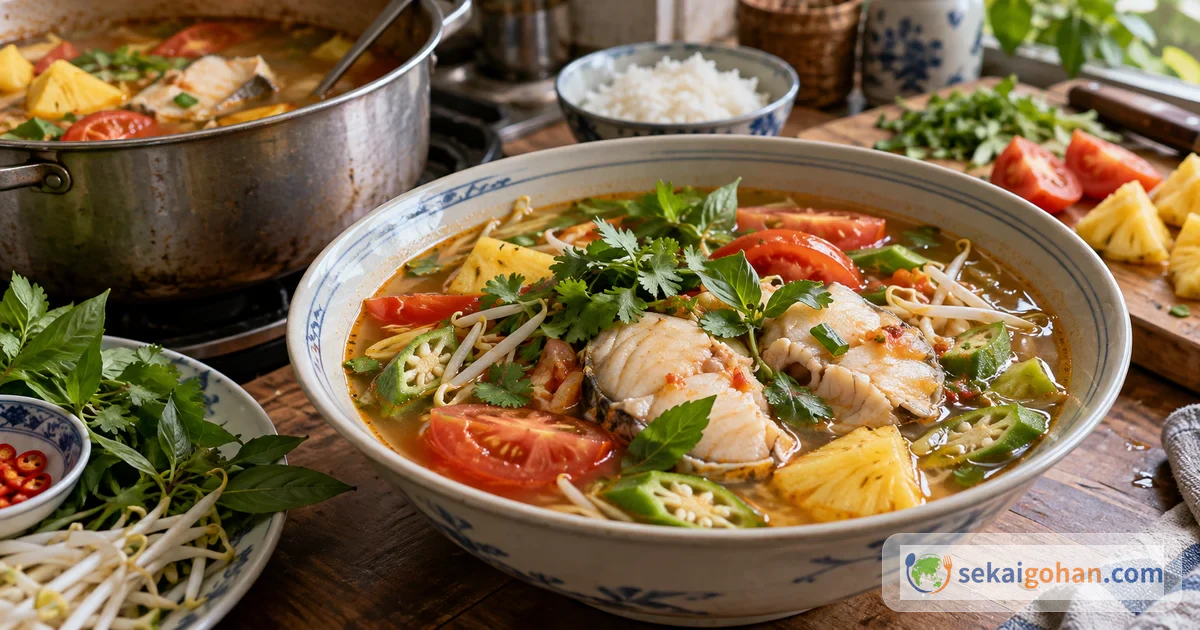
Rivers the color of tea run like a net between rice paddies and orchards. Small boats carry fish, pineapples and heaps of herbs. In Vietnam's southern Mekong Delta, the bounty of river and field goes straight into the family pot. Canh chua cá, a soup that combines the sourness of tamarind, the sweetness of pineapple and the saltiness of fish sauce (nước mắm) and is packed with fish and vegetables, is like the flavor of this delta gathered in one bowl.
A "sour soup" full of the delta's bounty
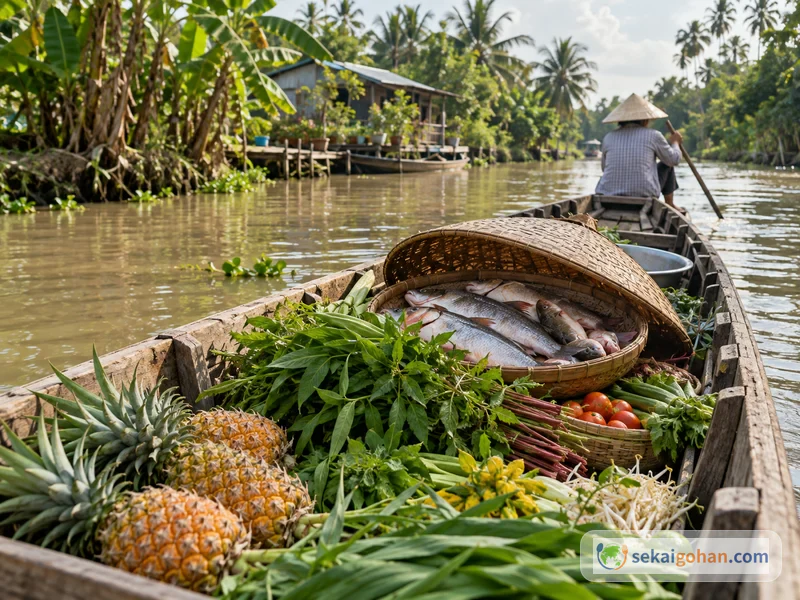
"Canh" means soup, "chua" means sour, and "cá" means fish. As the name says, this is a fish soup with sourness in the lead. The sourness comes from tamarind. Sweetness from sugar and pineapple and the savor of nước mắm (Vietnamese fish sauce) are layered on top, so you taste sour, sweet and salty at the same time, which is the charm of the dish.
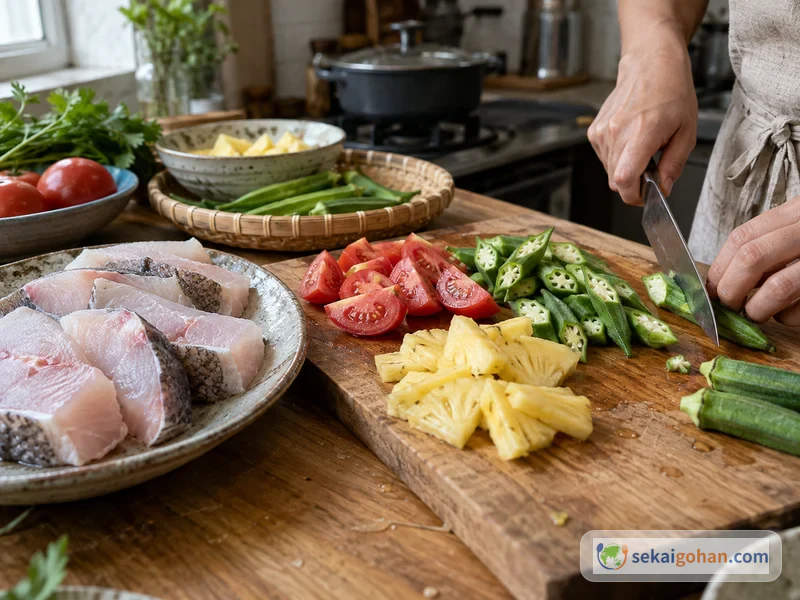
The Mekong Delta is known as a land blessed with river fish, seafood, vegetables and fruit, and many dishes that make use of that richness have been handed down. The fish most often used in canh chua is a kind of catfish; snakehead, tilapia, eel or shrimp are also used. The ingredients include pineapple, tomato, okra and bean sprouts, plus the thick stems of a taro relative that Vietnamese call bạc hà. All of them are everyday ingredients from the delta's fields and waterways.
Among "sour soups," the Philippines' sinigang puts the sourness more forward than canh chua does. Canh chua balances sourness and sweetness with sugar and pineapple, so the first sip tastes gentle.
At a Vietnamese family table, the basic form is to set out rice, side dishes and soup together. Canh chua is a standard soup served with freshly cooked jasmine rice, and some households make it with chicken or shrimp instead of fish.
What to know when making it in a home kitchen
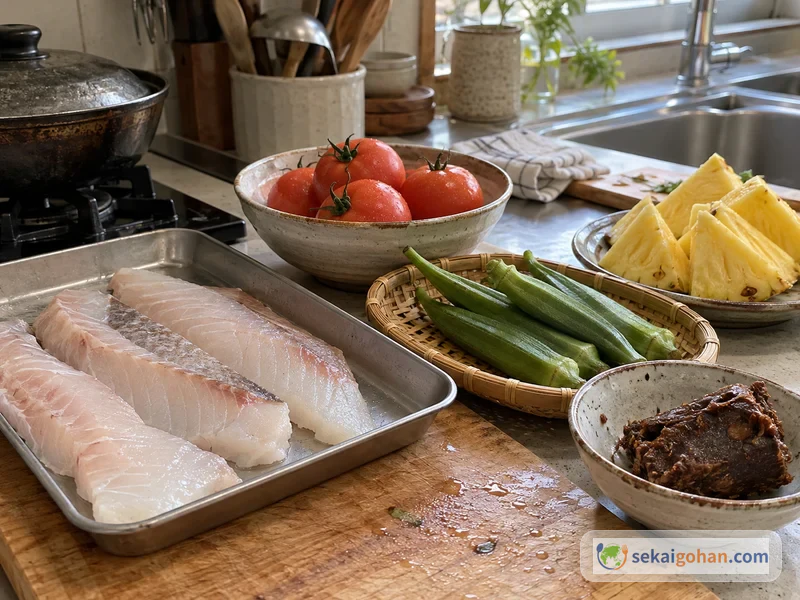
You can make the soup with white fish fillets from an ordinary supermarket. Firm-fleshed fish such as sea bream, sea bass or cod suit it. The catfish relatives commonly used in Vietnam are not widely sold elsewhere. Pangasius (basa), sometimes sold frozen, is also a catfish relative that lives in the Mekong. Bone-in fillets give a better broth, but be careful of the bones when you eat.
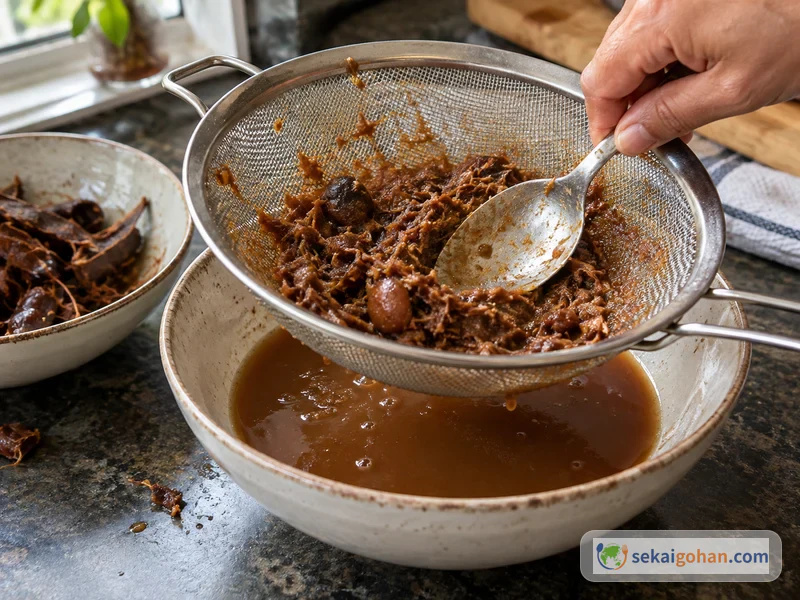
Tamarind is the key to the sourness. Indian and Asian grocers and online shops sell it as pressed pulp blocks or paste. You can substitute lemon or lime, but the fruity sourness unique to tamarind is hard to get, so try to get tamarind if you can. If you use a block, knead it in warm water and use the strained liquid.
A block of tamarind keeps for a long time in the refrigerator. Cut off only what you need with a knife, wrap the rest in plastic wrap and keep it in a storage bag, and you can use it in pad thai from Thailand or sambar from India as well.
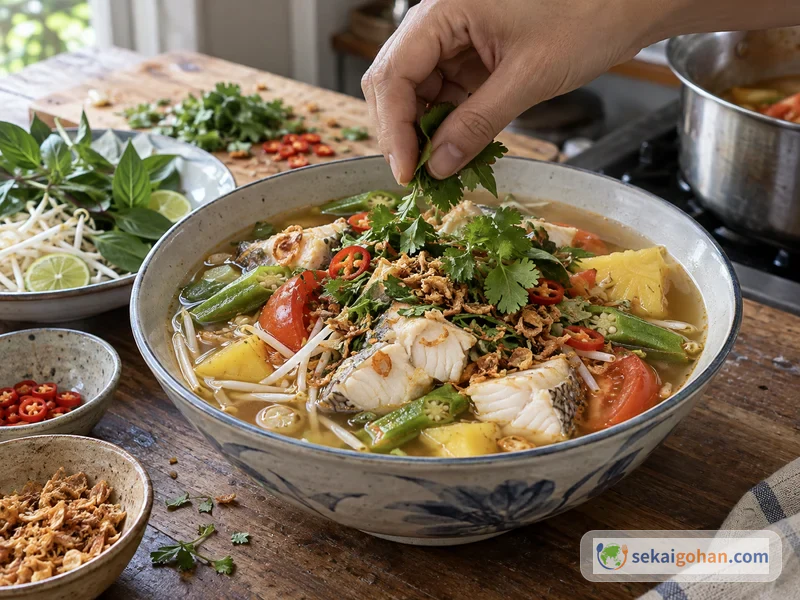
In Vietnam the soup is finished with a generous topping of ngò om, a lemon-scented herb from rice paddies, and ngò gai, or sawtooth coriander. Neither is easy to find elsewhere. There is no true stand-in for ngò om, but you can leave it out and scatter a little Thai basil. For sawtooth coriander, cilantro is the closest in aroma. Bạc hà is also rarely seen outside Vietnam, so make the soup without it. Its main role is to soak up the soup, so the flavor doesn't change much without it.
Ingredients (serves 4)
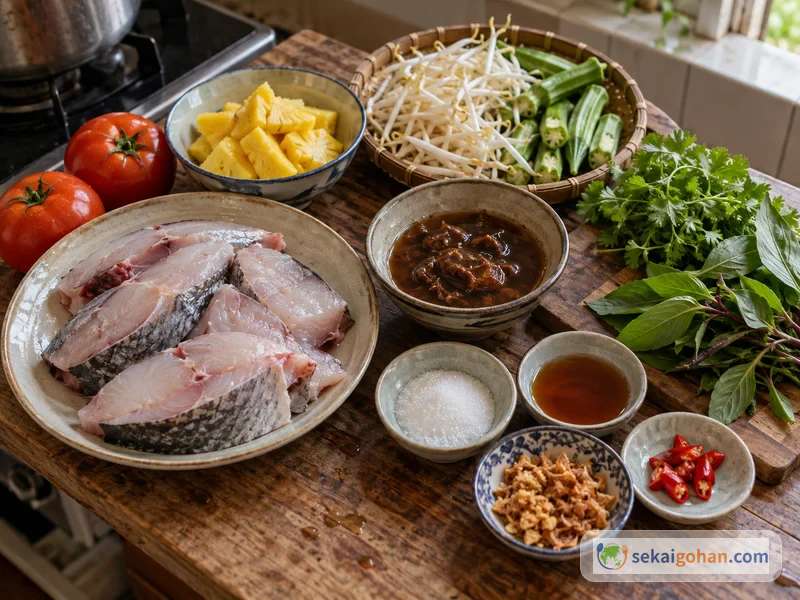
The sourness of tamarind varies quite a bit between brands. Make it first with the amounts in the table and adjust the sweet-and-sour balance at the end with sugar and fish sauce, and you won't go wrong. If it's too sour, add sugar 1 tsp at a time; if it's lacking, add fish sauce 1 tsp at a time.
This dish contains fish and fish sauce. People with a fish allergy should avoid it. Some fried shallots and fried onions are made with wheat flour, so anyone with a wheat allergy should check the ingredient label.
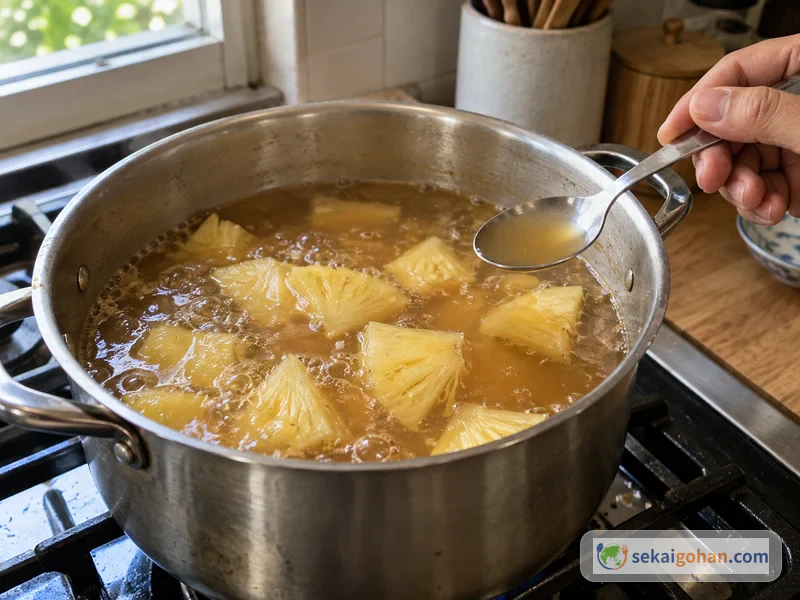
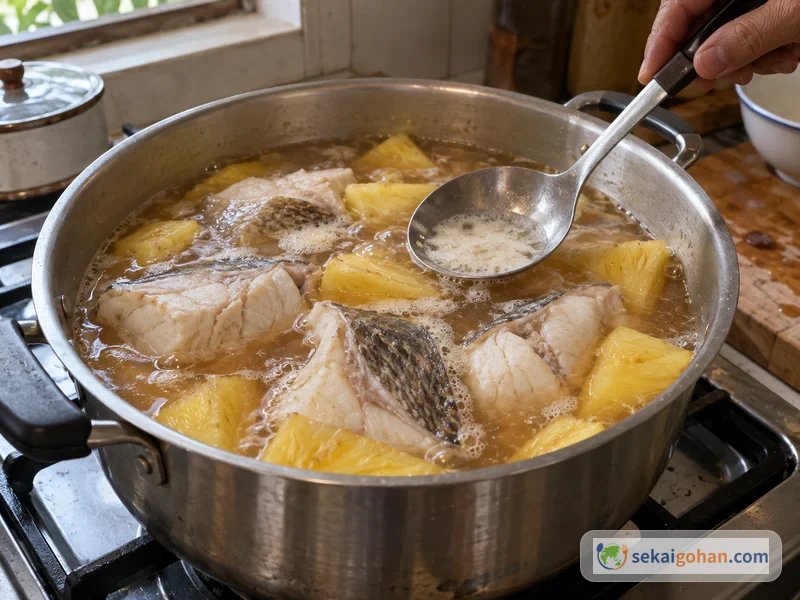
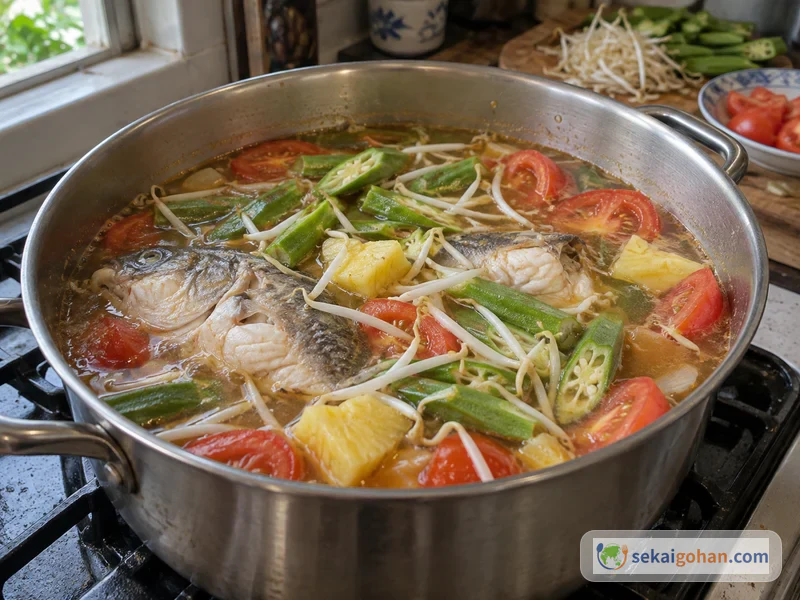
How to make canh chua cá
Plan on about 15 minutes of prep, about 20 minutes of cooking, and about 35 minutes in total. Once the fish goes in, it comes together quickly, so cut the vegetables and herbs first.
Watch for fish bones. If you use bone-in fillets, remove the large bones when plating, and take particular care when small children or older people will eat it.
Bean sprouts and okra continue to cook in the residual heat. If there will be a gap before serving, add the vegetables just before eating to keep them crisp.
Serving and the delta table
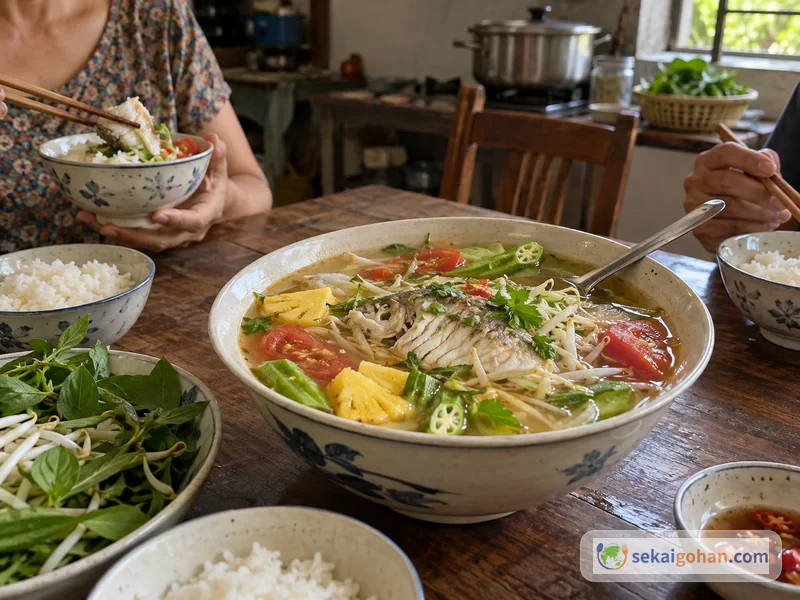
Canh chua cá is set out with jasmine rice, and you sip the soup between bites of rice. It is also good with a little soup spooned over the rice in your bowl. If you boil rice noodles, put them in a bowl and pour the soup over, it becomes a noodle dish that is complete in one bowl.
To round out a Vietnamese meal, pair it with bánh xèo (in Japanese), a Vietnamese-style savory pancake that wraps fillings in a thin crepe of rice-flour batter, and you can see the herb-heavy table of southern Vietnam clearly.
Ways to vary it
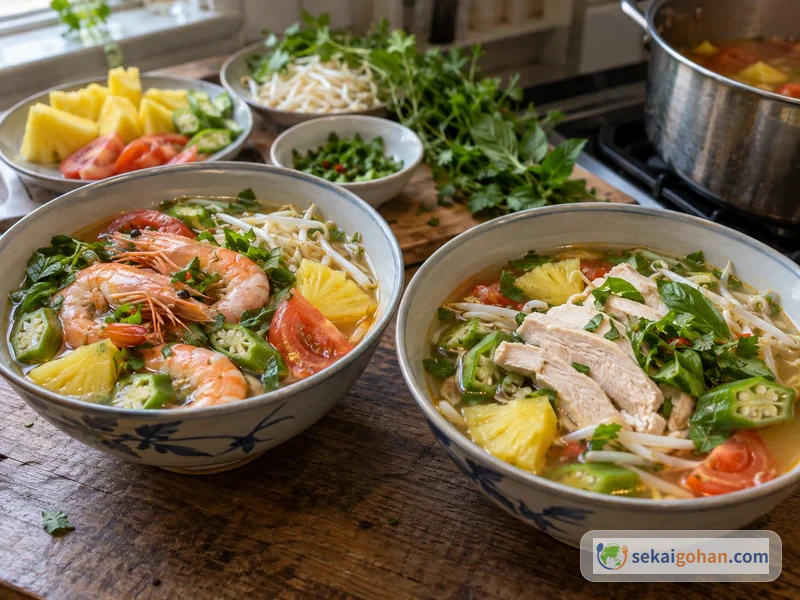
Make it with shell-on shrimp in place of the fish and you have canh chua tôm. Shrimp cook quickly, so add the vegetables as soon as the shrimp turn red and curl up in the soup. Some households use thinly sliced chicken breast. With chicken, cook until it is white through to the center and no clear juices run out.
You can change the vegetables with the season and what's available. In summer use more okra and tomato; in winter, thin slices of celery or Chinese cabbage stems add a crisp texture that suits the soup well. If you want heat, chop red chile and steep it in fish sauce, then add a little at the table so each person can set their own level of spiciness.
Frequently asked questions
What if I don't have tamarind?
You can add sourness with lemon or lime juice. In that case, bring the soup to a boil first, then start with 2 tbsp of lemon juice and taste. You get a cleaner flavor that differs from the fruity sourness of tamarind.
Can I use canned pineapple?
Yes. Drain the syrup well and cut back a little on the sugar to adjust the sweetness. Fresh pineapple gives a stronger sourness and aroma.
Can I make it ahead?
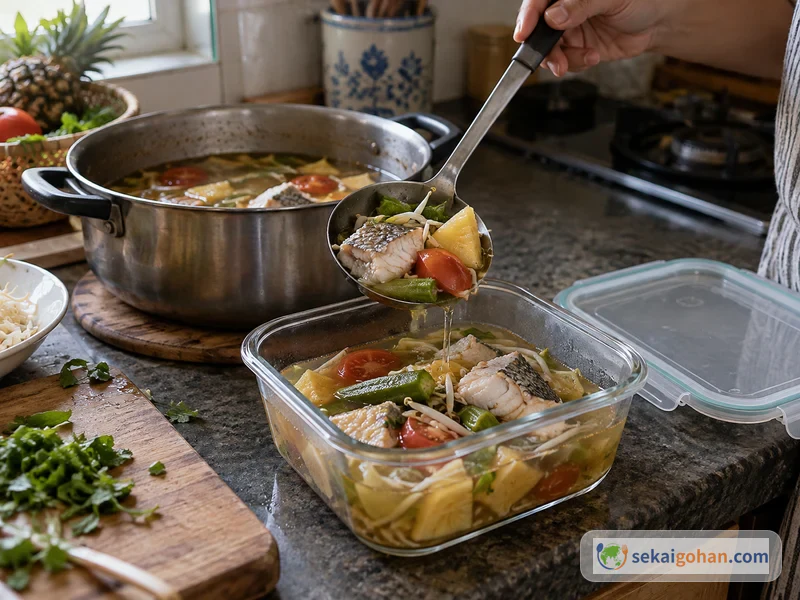
The fish and vegetables break down and lose texture as time passes, so I recommend finishing it the day you make it. If you have leftovers, cool them slightly and refrigerate right away, and when reheating, bring the whole pot to a full boil.
What if I don't like herbs?
You can make it without them. Scattering sliced scallions instead adds color and aroma.
Sources
- Food Network, Luke Nguyen, “Tamarind Broth with Mud Fish and Elephant Ear Stems (Canh Chua Ca Loc).” Accessed and checked 22 October 2026. https://www.foodnetwork.com/recipes/tamarind-broth-with-mud-fish-and-elephant-ear-stems-canh-chua-ca-loc-2118506
- The Christian Science Monitor, Hong Pham and Kim Dao (The Ravenous Couple), “Travel: Vietnam and sour tamarind soup with prawns,” published 5 September 2012. Accessed and checked 22 October 2026. https://www.csmonitor.com/The-Culture/Food/Stir-It-Up/2012/0905/Travel-Vietnam-and-sour-tamarind-soup-with-prawns
- Pups with Chopsticks, “Canh Chua (Vietnamese Sweet and Sour Soup).” Accessed and checked 22 October 2026. https://pupswithchopsticks.com/canh-chua-vietnamese-sweet-and-sour-soup/