
The Story of Khanom Tan: Keeping the Scent of Palm in a Yellow Steamed Cake
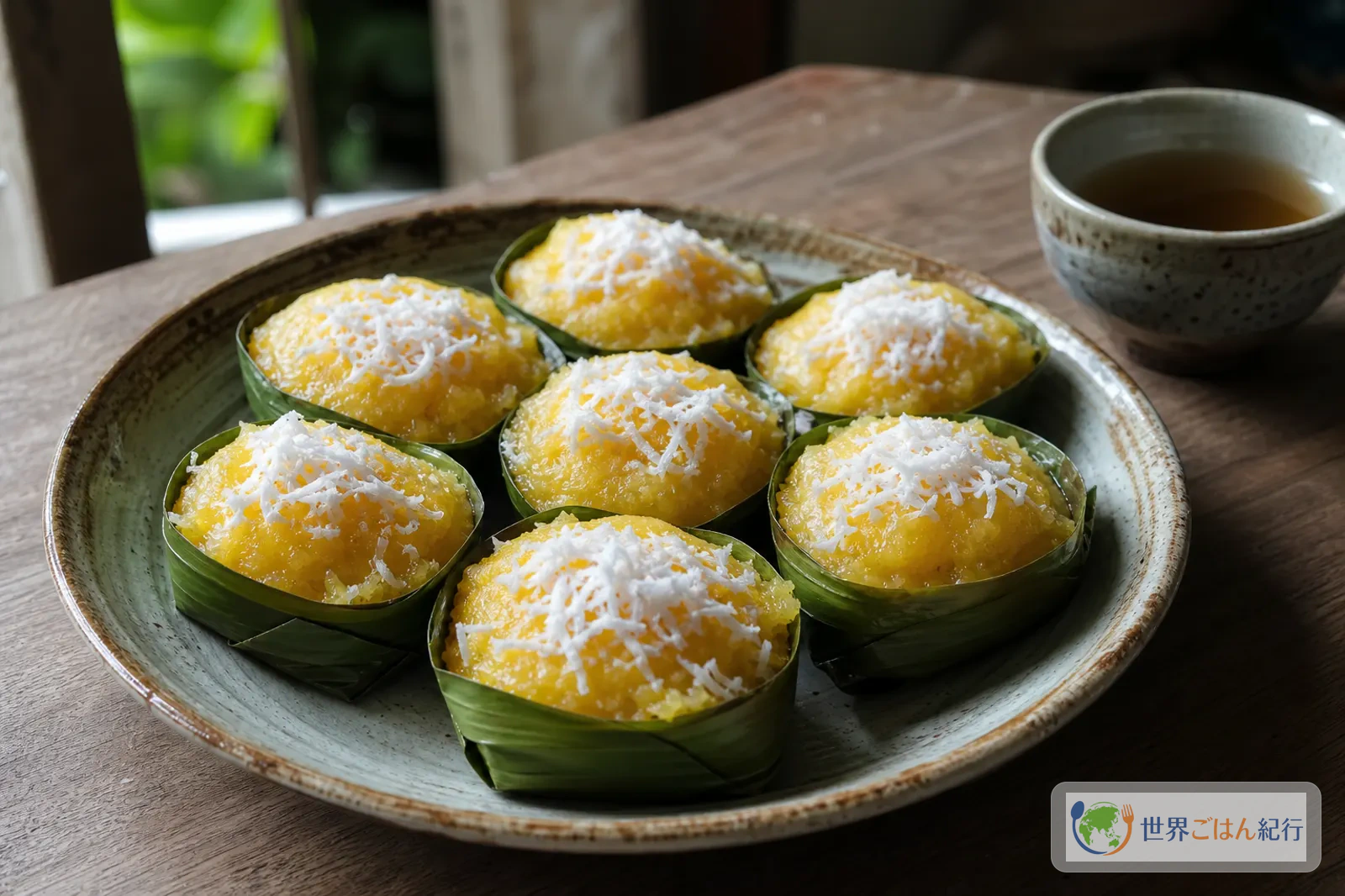
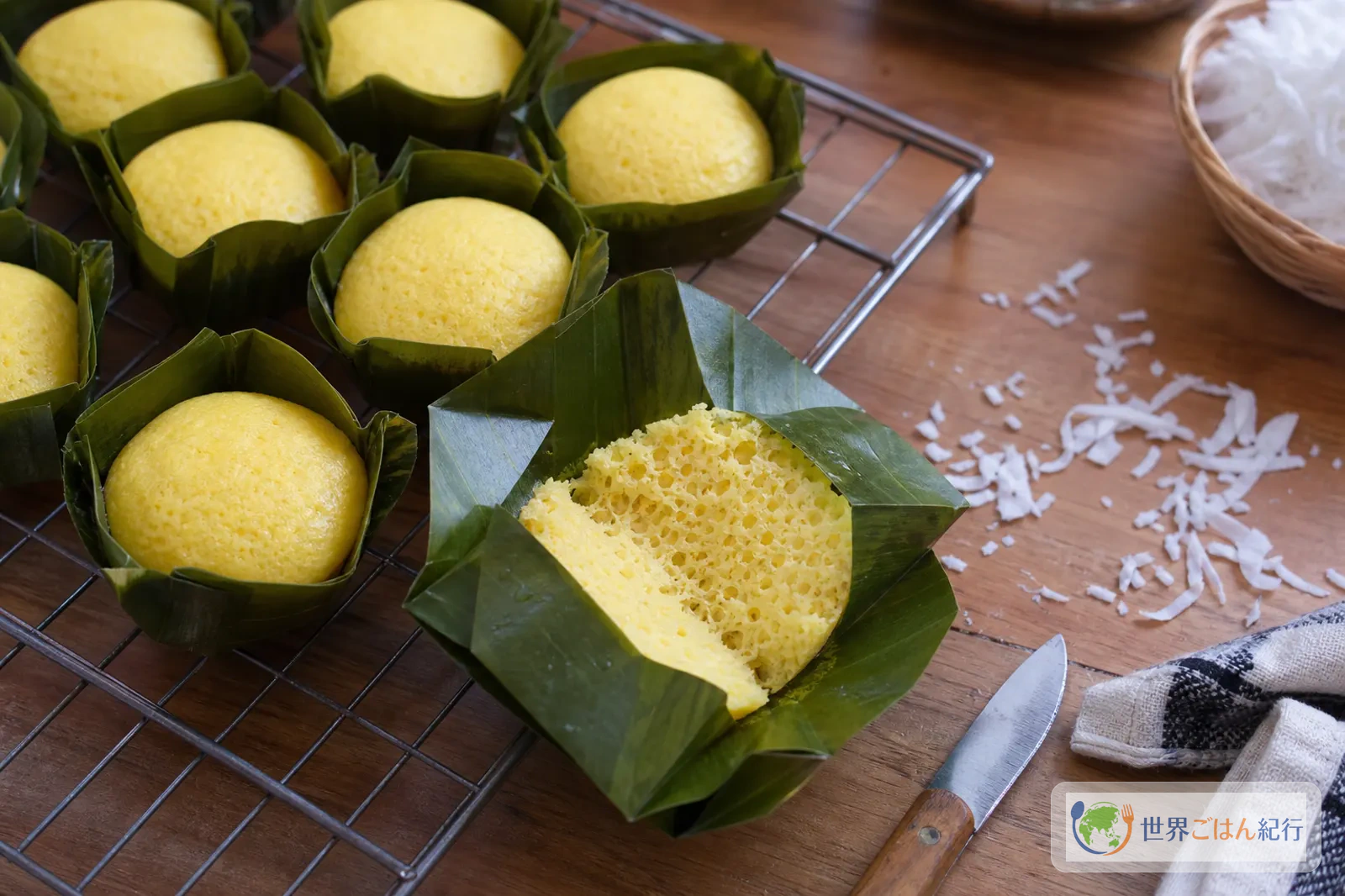
The moment you lift the lid of the steamer, a sweet coconut aroma and something like slightly overripe fruit rise out of the steam. Khanom tan (ขนมตาล / Khanom tan), lined up in small banana-leaf cups in Thai markets, is not a showy cream pastry. It is a plain yellow steamed cake in which ripe palmyra palm pulp is mixed into a rice-flour batter, rested until light, and steamed.
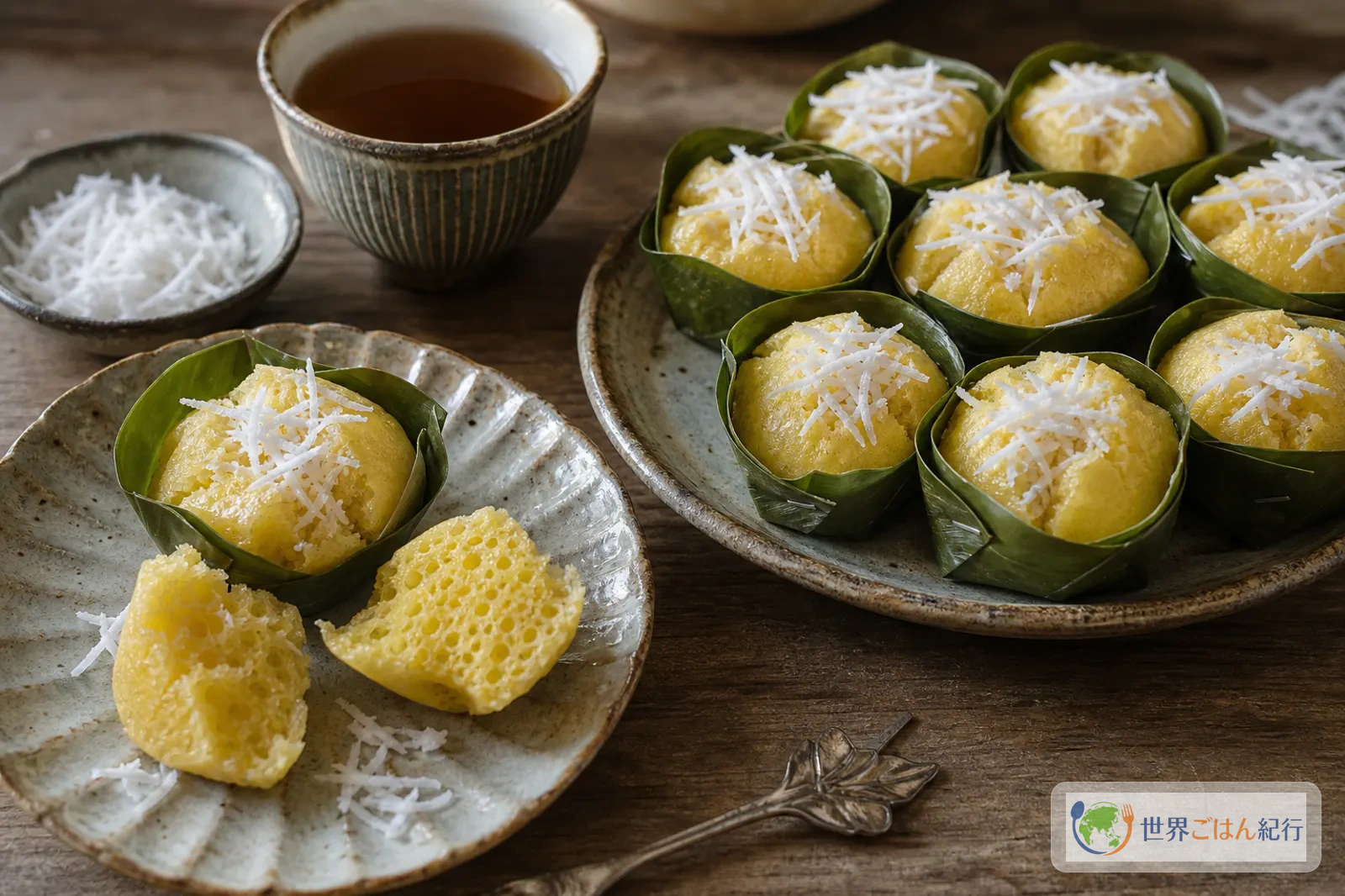
Khanom means a sweet or snack, and tan in this dish means the palmyra palm, that is, the fruit of the palmyra palm. The JIRCAS Database of Fermented Foods of Thailand lists Kha-nom-dtaan as "Palmyra palm fruit cake", a sweet that uses ripe pulp, rice, sugar, coconut, and salt and is fermented for several hours to half a day. Thailand Foundation likewise presents it as a sweet in which ripe toddy palm fruit is mixed with rice flour, coconut milk, sugar, and salt, steamed, and served in small banana-leaf cups.
The difficulty outside Thailand is the ripe palmyra palm pulp at the center of the dish's name. Fresh pulp is almost never found in an ordinary supermarket. If you can find frozen or jarred palm fruit paste, that is the closest; if not, you borrow color and sweet aroma from pumpkin or sweet potato. But in that case it is more honest to think of it not as "a perfect recreation including the palm aroma" but as "a home version of khanom tan made with rice flour and coconut".
Among similar steamed sweets, the Philippines' sapin-sapin stars layers of glutinous rice flour and coconut. Khanom tan is much lighter, forms small bubbles through fermentation or resting, and steams into a soft sponge. If you have ever bought the palm sugar used in pad thai or som tam, you can easily imagine that Thai sweetness is not made from white sugar alone.
What to protect: do not weigh it down with rice flour alone, make the pulp or its substitute paste smooth, rest the batter in a warm place to form bubbles, and puff it all at once with strong steam. The pulp can be substituted, but skip the resting and the steaming heat, and it drifts toward a dense, chewy steamed bun.
Ingredients: Makes 8 Pieces
This amount makes 8 pieces in small cups about 5 cm in diameter. The sweetness is a little more restrained than a Thai market sweet, set at a level easy to eat after a meal. On days you want to move toward the local flavor, replace the unrefined cane sugar with palm sugar.
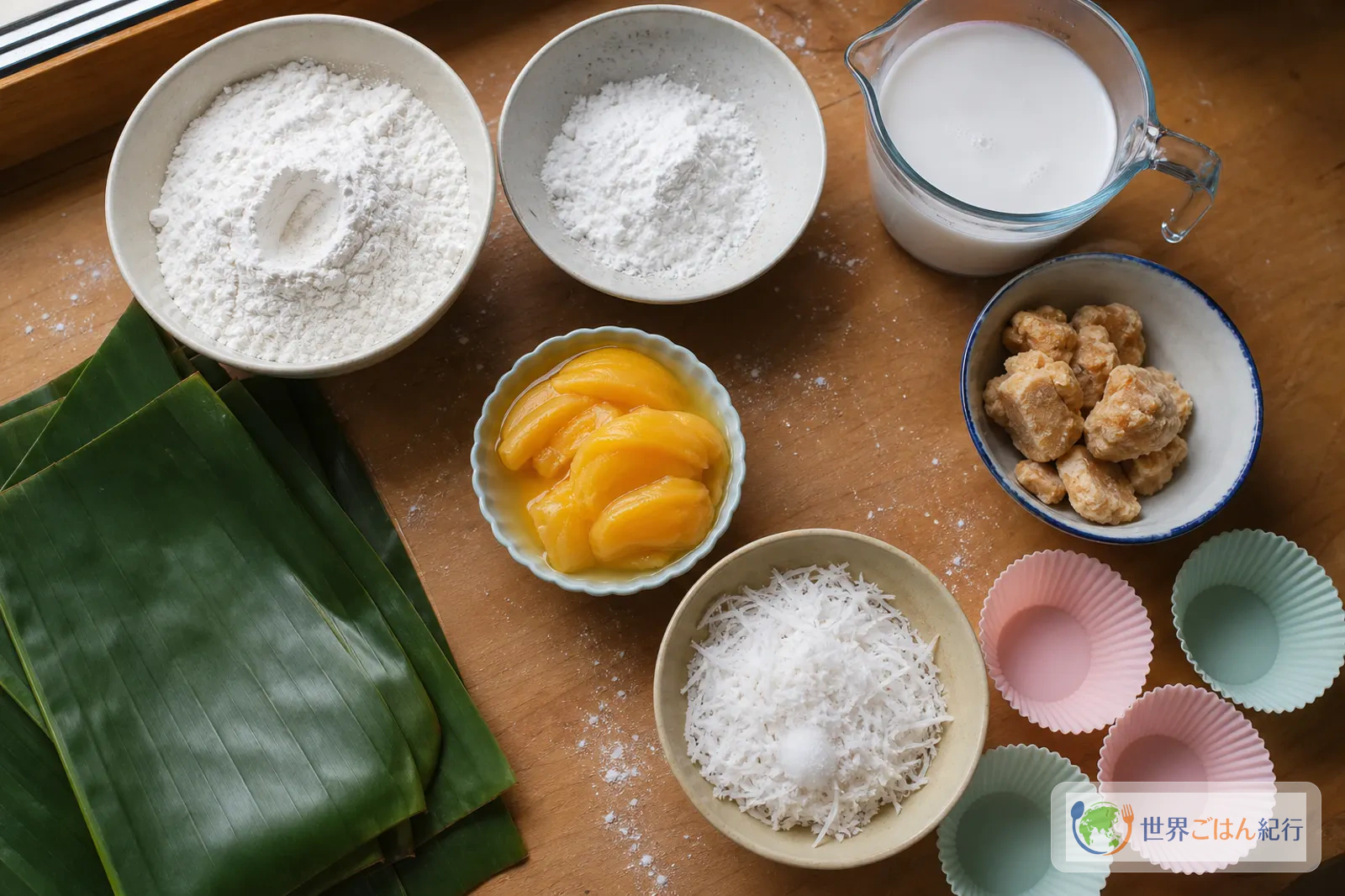
This recipe uses coconut, rice flour, and tapioca starch. Store-bought pulp paste and coconut products may be handled on lines that also process wheat, milk, peanuts, or tree nuts. Check the labels. After steaming, take the cakes onto a clean rack or plate, do not leave them at room temperature for long, and once cooled slightly follow the storage method.
Substitute table for days without pulp
The star of khanom tan is palmyra palm pulp. The substitutes are not a perfect recreation, but they are a realistic compromise that does not break the lightness of the rice flour and the aroma of coconut.
| Situation | What to use | How to make it | Result |
|---|---|---|---|
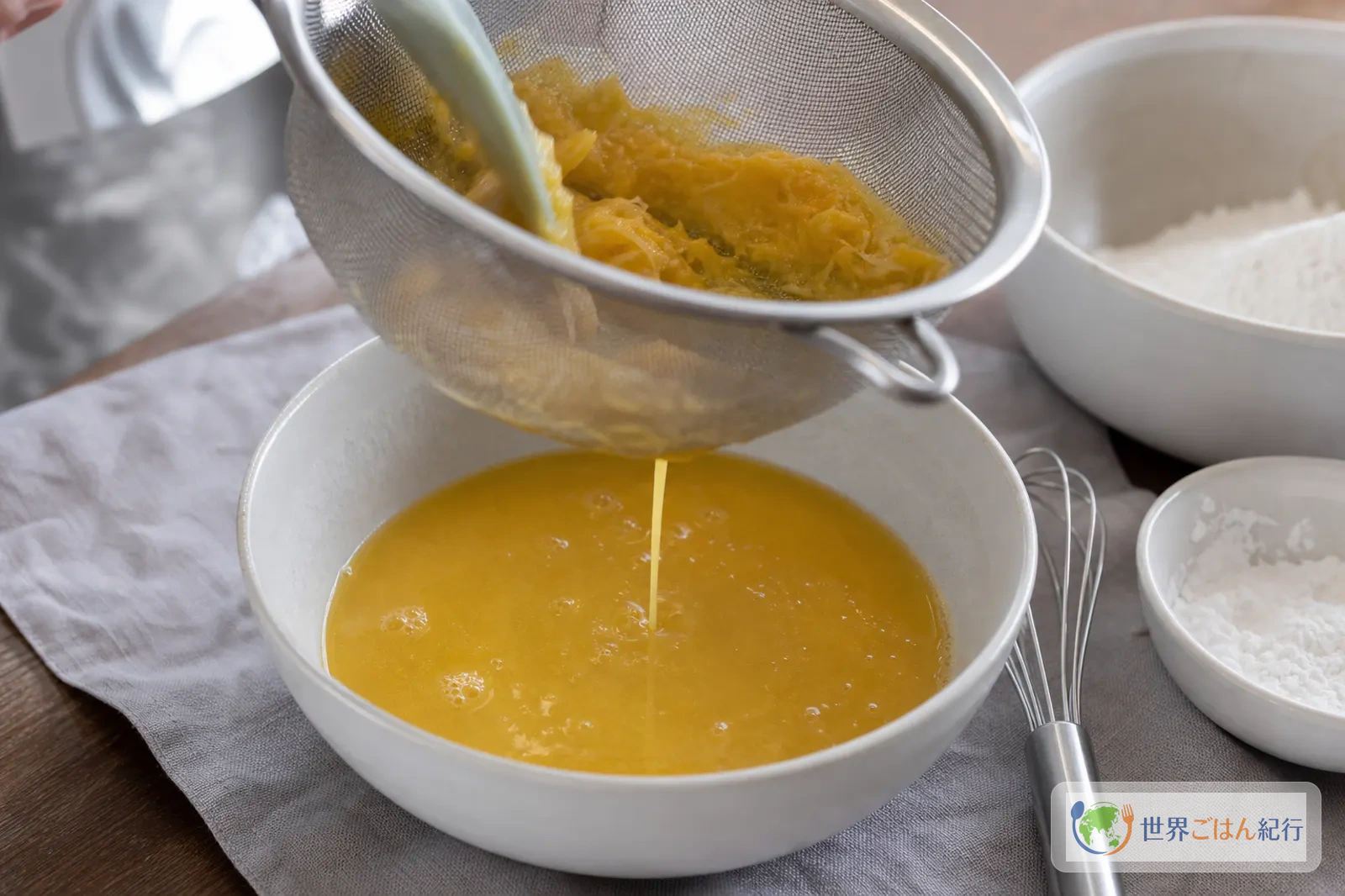
| You have frozen pulp paste | 120 g pulp paste | Thaw and strain out the fibers | Closest in aroma |
| Only canned pulp is available | 120 g pulp and 20 ml of canning liquid | Blend and strain through a sieve | Sweeter, so reduce the sugar by 10 g |
| You can't buy anything nearby | 80 g steamed pumpkin, 40 g steamed sweet potato, 30 ml coconut milk | Remove the skins and press through a sieve | Color is close but the palm aroma is weak |
| You want to add a little sweet aroma | 10 g palm sugar added to the substitute above | Subtract 10 g from the batter's sugar | Leans toward a brown-sugar aroma |
The first things to look for when shopping are pulp paste and banana leaves. But stock fluctuates a lot, so searching by terms such as "toddy palm pulp", "palmyra palm fruit", and "frozen banana leaf" is more realistic than chasing a fixed product name. Here, to reduce failures the first time, we also lay out the flour and coconut that can go into other Southeast Asian sweets. Tapioca starch can also go into the noodles of khao piak sen (in Japanese), and coconut milk into tom kha gai (in Japanese) and gaeng phet (in Japanese).
Method: Rest, Then Puff With Strong Steam
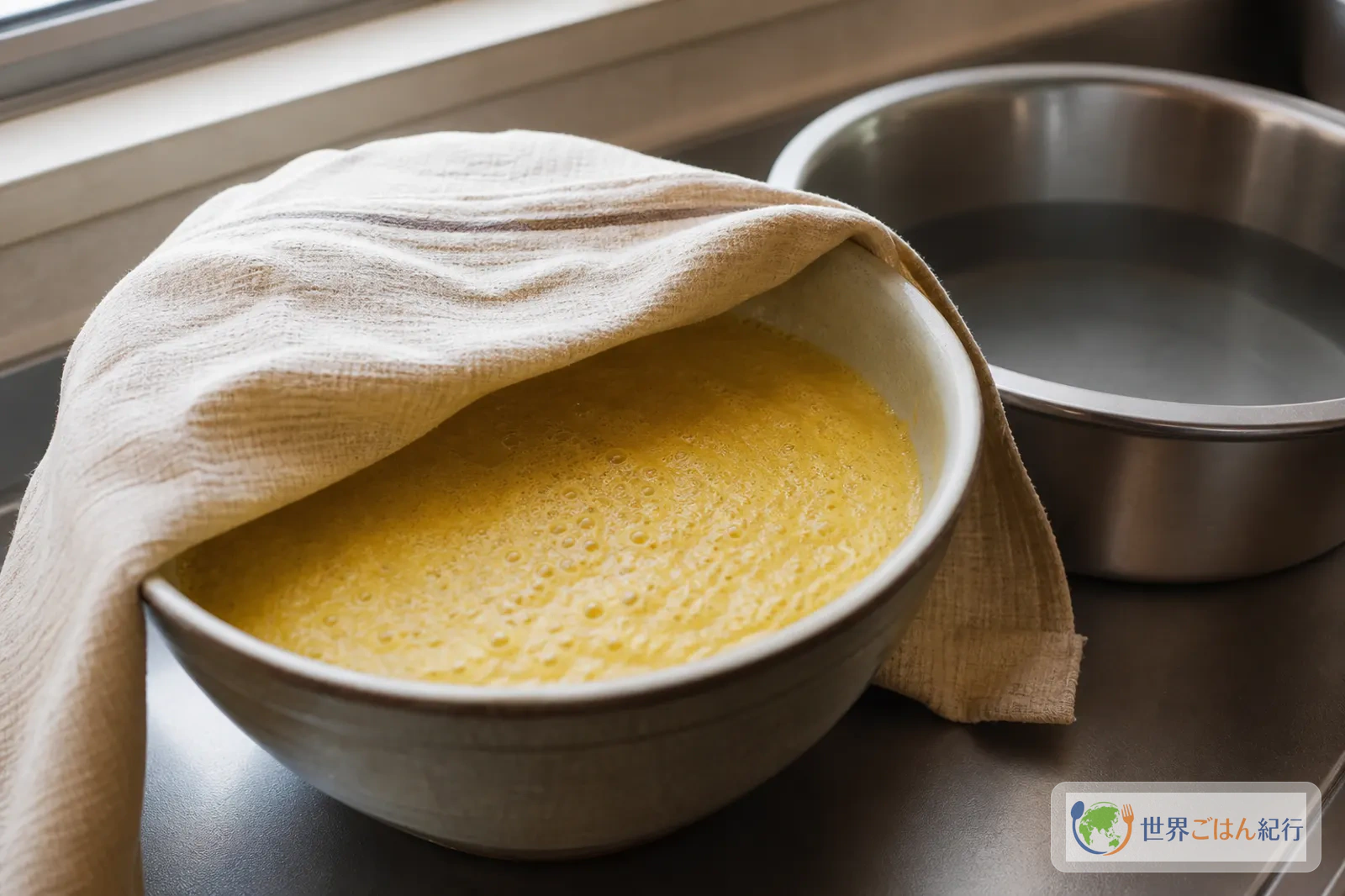
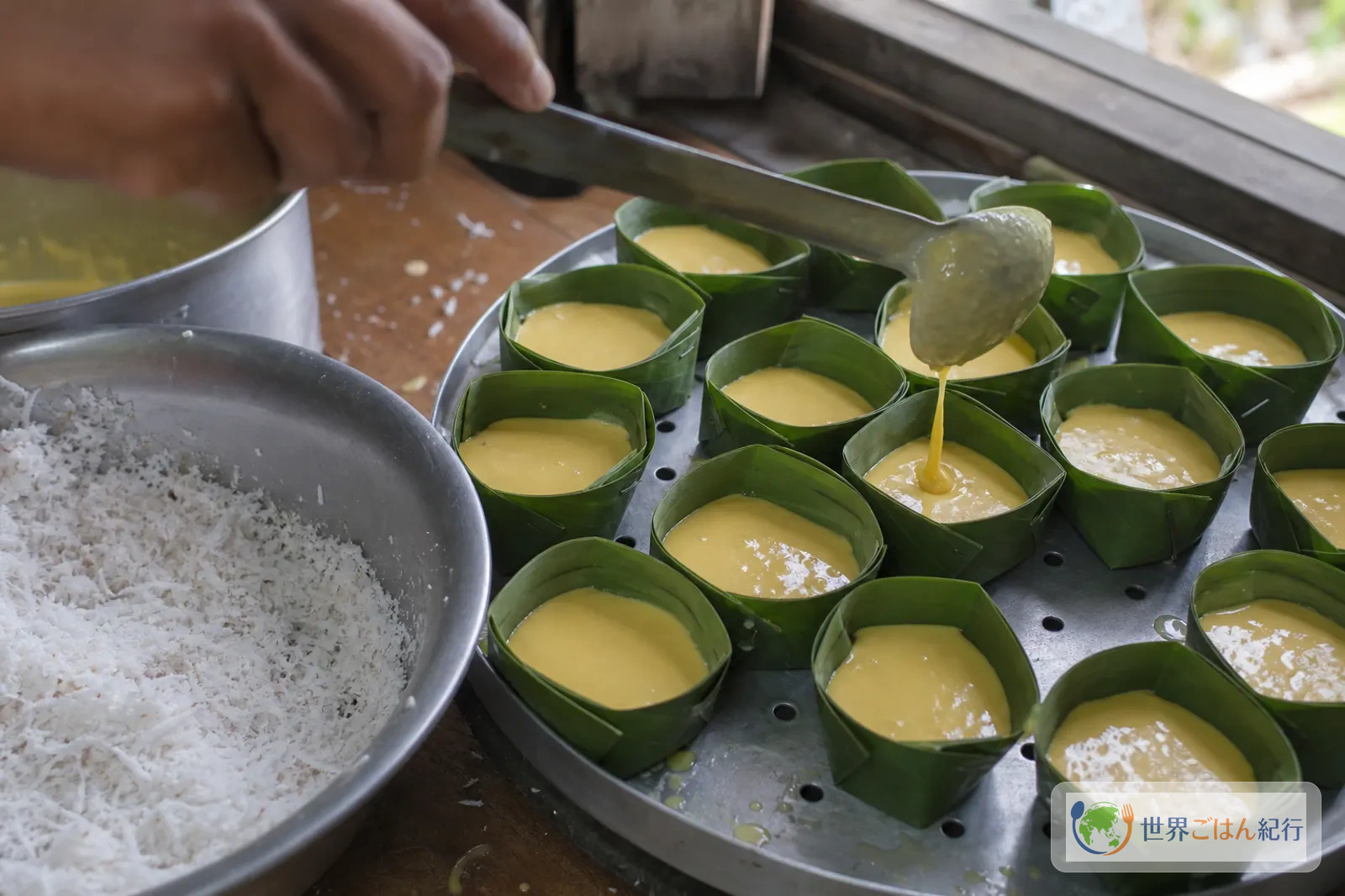
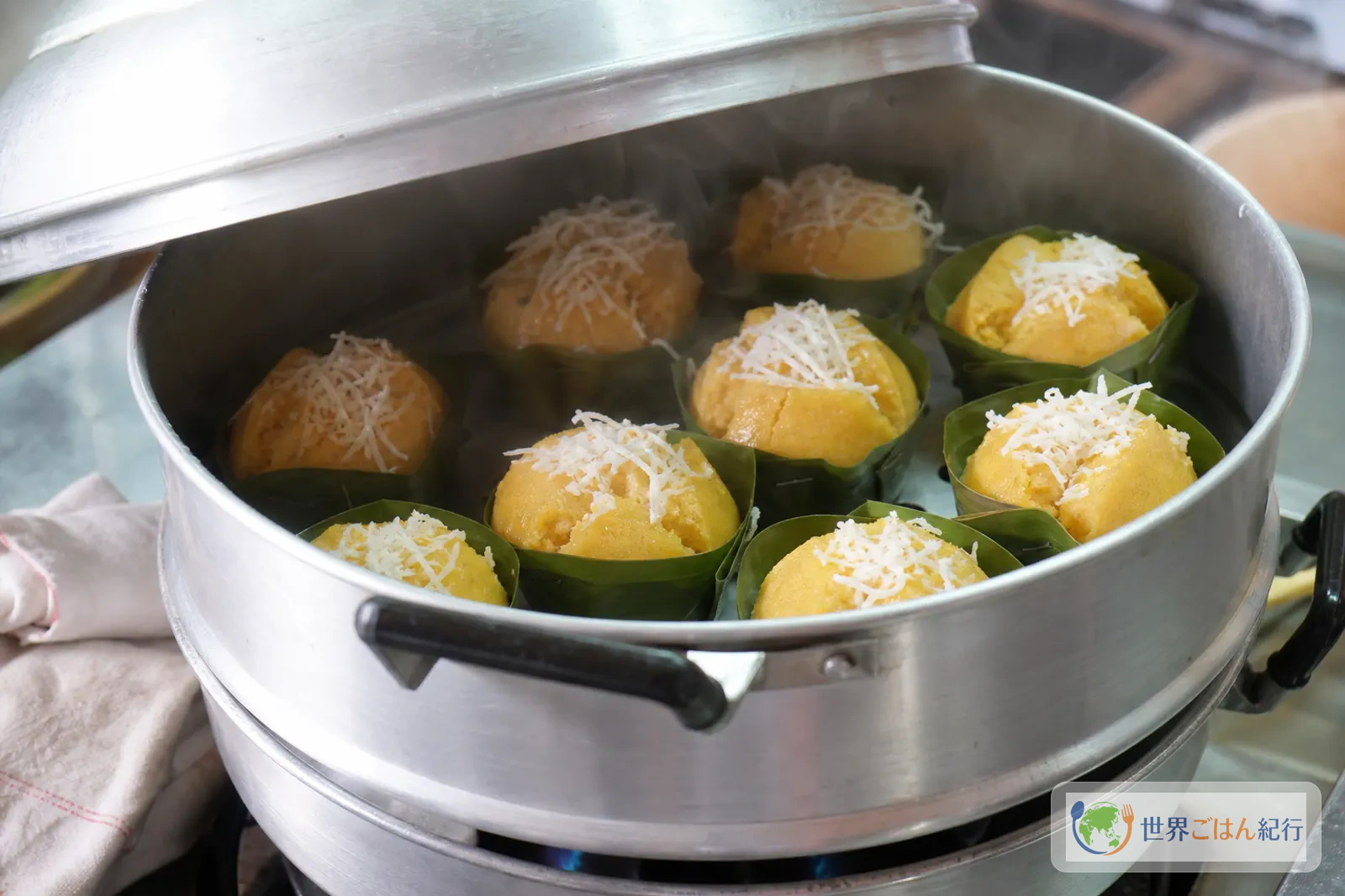
If you steam khanom tan right after mixing the batter, it tends to pack down like a sweet rice-flour dumpling. Rest the batter in a warm place for at least 45 minutes, and steam it after small bubbles appear on the surface. Bring the steamer water to a full boil first, and wrap a cloth around the lid so condensation does not drip onto the batter.
If you rest the batter but the steam is weak, it spreads sideways, and if the steam is strong but the rest was too short, it comes out heavy. Think of it this way: make small bubbles by resting, then push them up all at once with strong steam at the start of steaming, and it fails less.
A Table for Deciding How Close to the Original to Get in a Japanese Kitchen
With khanom tan it is easier to cook if you separate what to protect to keep it khanom tan than to match every ingredient to the local one. The weight of your shopping changes depending on which you prioritize: pulp, flour, mold, or sweetness.
| Point to decide | If making it Thai-leaning | If making it realistically in a Japanese kitchen |
|---|---|---|
| Pulp | Strain ripe palmyra palm pulp and use it | Supply color and sweetness with sieved pumpkin and sweet potato |
| Flour | Grind soaked rice and drain off the water | Use fine joshinko or baking-grade rice flour |
| Resting | Ferment for several hours to half a day | Rest 45 to 60 minutes with 1 g of dry yeast |
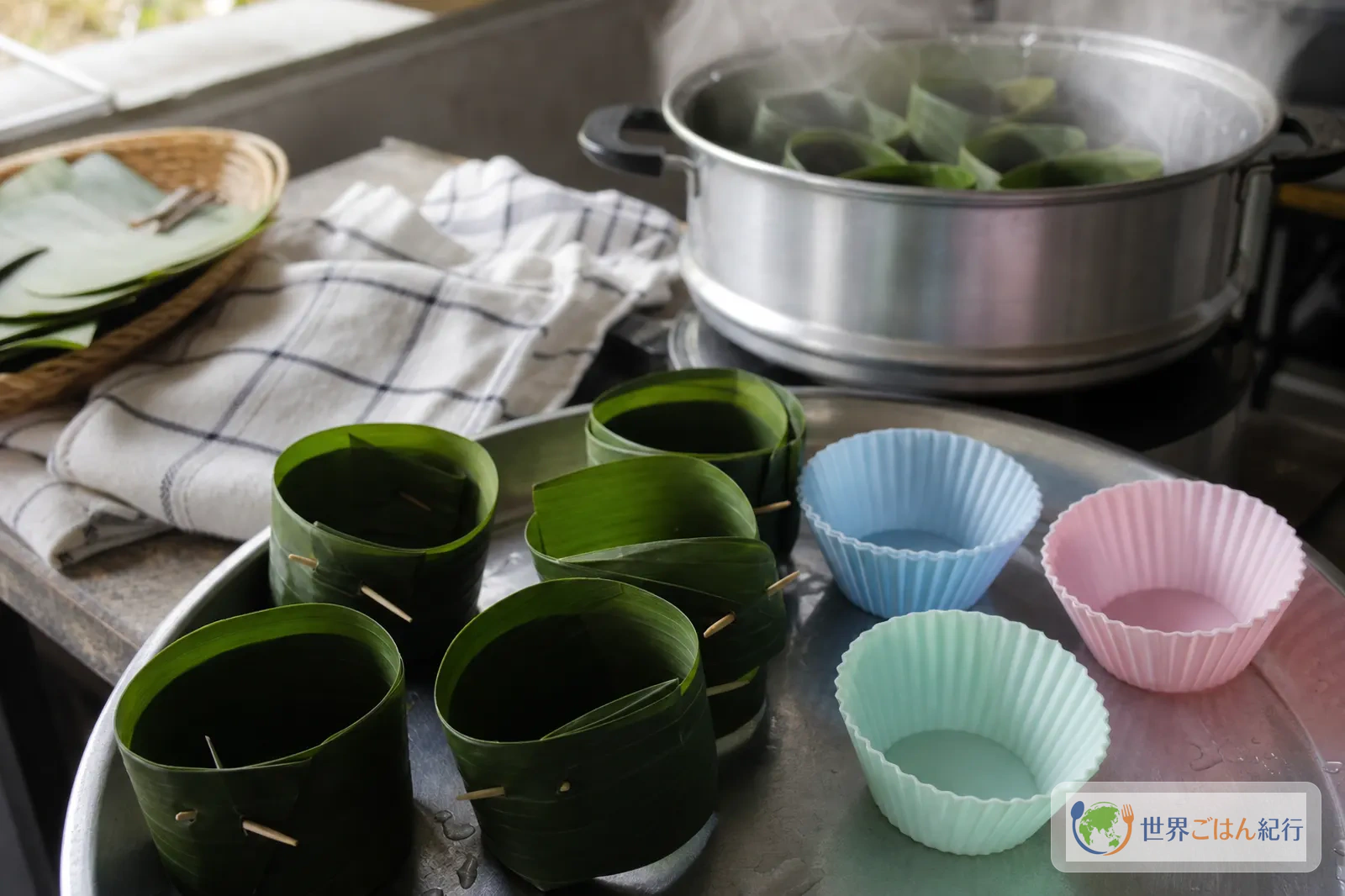
| Mold | Small banana-leaf cups | Silicone cups lightly brushed with oil |
| Sweetness | Properly sweet, like a market sweet | Light with 75 g of sugar, bringing the aroma forward |
| Topping | Freshly shredded coconut | Frozen shredded coconut or fine desiccated coconut |
Banana leaf works on both aroma and appearance. It is an ingredient you want to use if you can get it, but forcing it from the first attempt turns the kitchen into a big job of hunting pulp, preparing leaves, and fermenting. It is enough to first grasp the batter's thickness and steaming with silicone cups, then move to banana leaf the second time.
On the other hand, we do not recommend swapping the rice flour for pancake mix. It is convenient, but the smell of milk and wheat and the strong smell of baking powder come forward, and it becomes a steamed bun more than khanom tan. If the rice flour is coarse, adding a little tapioca starch moves it closer to the local airy springiness.
If you serve it after strongly herbal dishes such as khao soi (in Japanese) or tom yum goong (in Japanese), slightly restrained sweetness suits. As dessert for a day with gapao rice too, the saltiness of the coconut keeps the mouth from feeling heavy.
Why It Fails: Heavy, Cracked, Weak Aroma
Because khanom tan has few ingredients, the reasons for failure are easy to see. When the batter is heavy, suspect too little resting; when the cracks are too large, suspect how the steam hits; when the aroma is weak, suspect the choice of pulp or sugar.
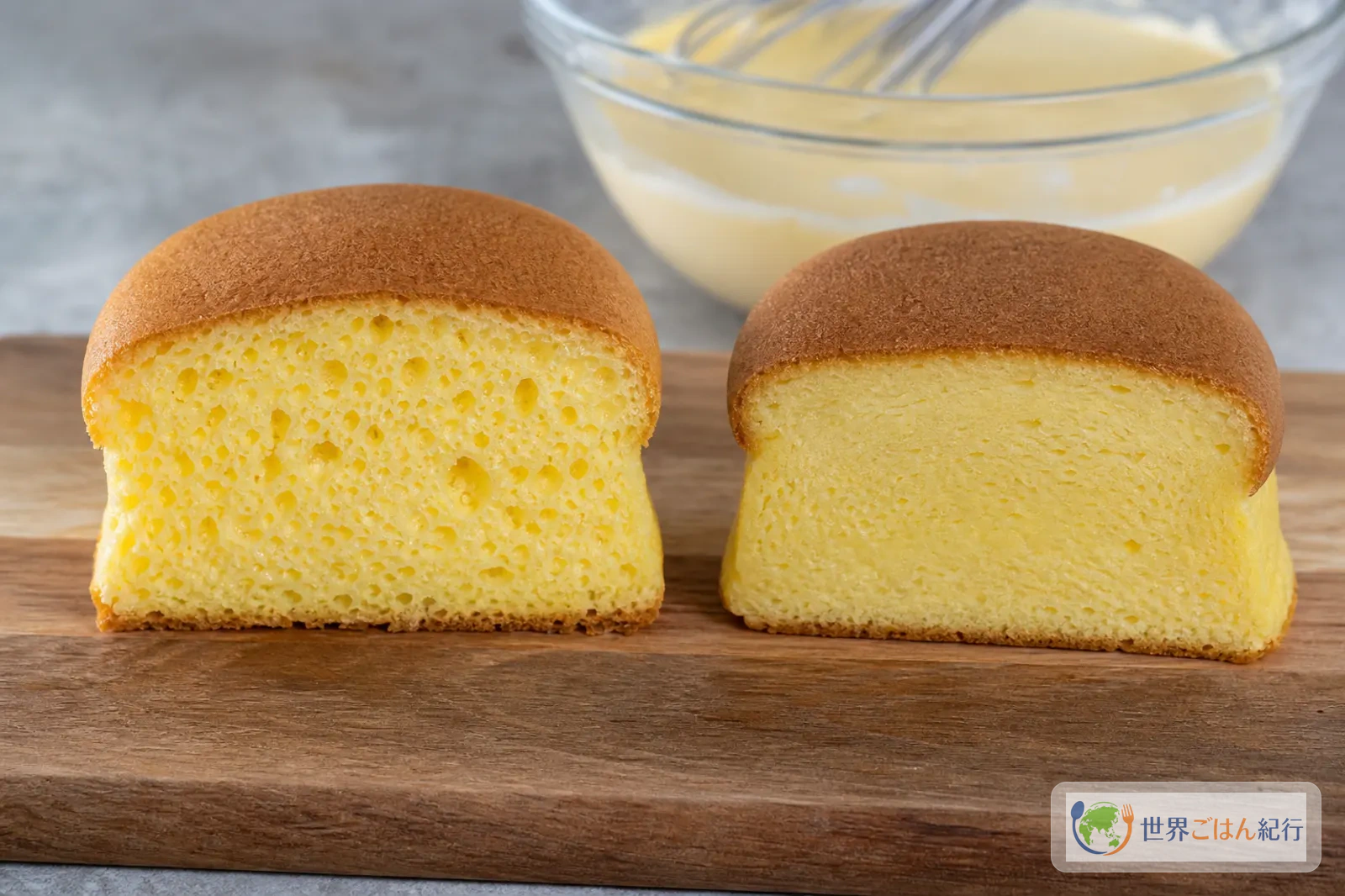
The batter is heavy
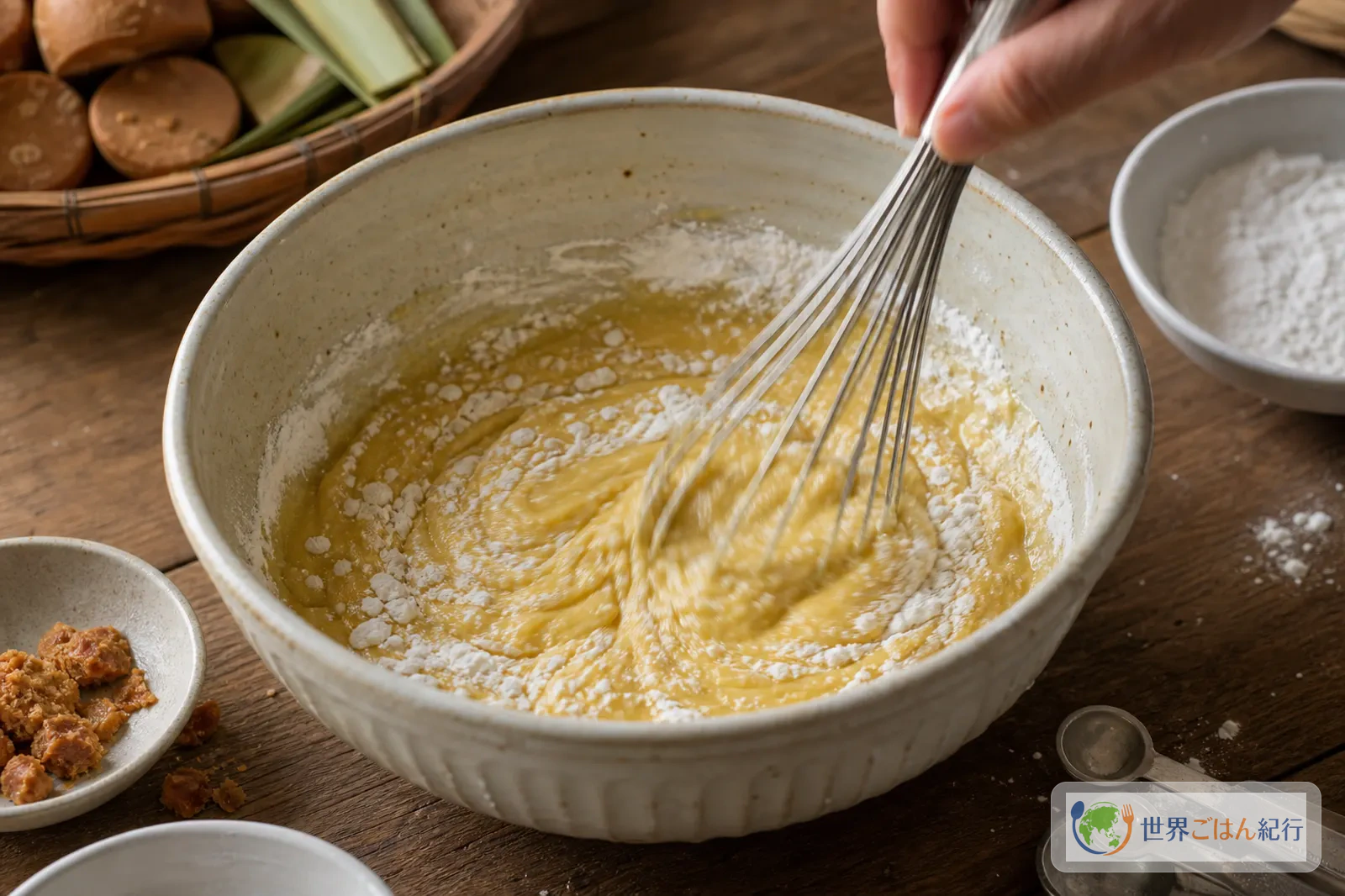
The resting temperature was low, or the rice flour was coarse and absorbed too much liquid. Next time rest the batter at 28 to 30°C and wait until fine bubbles appear on the surface. If you only have coarse joshinko, reduce it to 110 g and increase the tapioca starch to 35 g, which lightens it a little. Over-mixing also kills the bubbles, so stop at 20 seconds after adding the baking powder.
The surface cracks wide open
It may not only be that the steam is too strong; water may be dripping on it. Wrap a cloth around the lid and don't pack the cups into the middle of the steamer. Medium-high heat is fine, but if the water at the bottom of the pot is boiling so wildly that the cups shake, drop to medium. Small cracks are a handmade expression and no problem.
The palm aroma is weak
If you used a substitute for the pulp, the aroma will inevitably be weaker. In the substitute version, adding 10 g of palm sugar and using canned coconut milk gives a little of the rounded quality of Southeast Asian sweets. Adding vanilla extract moves it toward Western pastries, so don't use it.
It turns watery
The pulp paste or frozen coconut has too much moisture. After straining the pulp, leave it in the sieve for 5 minutes, and thaw the frozen coconut and press it lightly with paper towels. Setting the cakes directly on a plate right after steaming wets the bottom, so cool them on a rack for 5 minutes before plating.
How to Eat It, and Storage
Khanom tan is easiest to eat when the steam has settled a little after steaming. If you serve it in small leaf cups as at the market, you can hold it as it is. On days you made them in silicone cups, loosen the edge with a bamboo skewer, set them on a small plate, and add a little more coconut for a neat look.
Hot Chinese tea, unsweetened black tea, or light coffee goes well with it. If you serve it after spicy Thai food, the coconut and rice flour soften the heat of som tam or gaeng phet (in Japanese). On days you move it to breakfast, rewarming for 3 minutes in a steamer keeps the surface from drying better than a microwave.
| When to serve | How to serve it | Reason |
|---|---|---|
| After spicy Thai food | One per person with warm tea | The fat of the coconut rounds the lingering heat of chili |
| Weekend morning | Rewarm refrigerated cakes in a steamer for 3 minutes | The rice flour recovers and the coconut on top is less likely to dry |
| Potluck | Cool them in their cups and line them up in a box | Banana leaves or silicone cups prevent them from collapsing |
| Eating with children | Keep the 75 g of sugar and cut into half-moons | Not too sweet, and a size easy to hold in the hand |
Storage is half a day at room temperature and within 2 days in the refrigerator. The JIRCAS database also gives a shelf life of 2 days. After cooling slightly, wrap each piece in plastic wrap and put it in a storage container. Refrigerated cakes should be warmed in a steamer over medium-low heat for 3 to 4 minutes, and eaten once the surface has recovered its moistness. In a microwave, 20 seconds at 600 W, then 10 seconds more at a time, but heating long makes the rice flour hard.
You can freeze them, but the texture drops a little. Wrap each in plastic wrap, put them in a freezer bag, and use within 2 weeks. To reheat, steam them frozen over medium heat for 7 to 8 minutes. They are ready to eat when warmed to the center and the coconut on top is moist.
Frequently Asked Questions
Can I still call it khanom tan without pulp paste?
Strictly, it is only khanom tan if it contains the palmyra palm pulp that the tan in the name indicates. When making it with pumpkin and sweet potato, it is more accurate to call it a khanom tan-style rice flour and coconut steamed sweet. But since pulp is hard to get in a Japanese kitchen, it is worth making as a substitute version to grasp the steps and texture first.
Are banana leaves required?
They are an ingredient you want to use to move toward the aroma and look, but they are not required. You can steam in silicone cups too. If you use banana leaves, cutting and folding right away tends to crack them, so make them pliable by microwaving at 600 W for 20 seconds or holding them over steam for 30 seconds before fastening.
Won't dry yeast make it taste like bread?
With only 1 g, the bread aroma does not come out strongly. The aim is not to bring out a fermented flavor but to make small bubbles in the batter. If the room is warm and the pulp paste already has a strong fermented feel, you can reduce the dry yeast to 0.5 g and make the resting time 60 minutes.
Can I make it with baking powder alone?
You can, but the texture leans toward a steamed bun. If leaving out the dry yeast, increase the baking powder to 7 g and steam after resting the batter for 20 minutes. The bubbles are light, but the local fermented aroma is weaker.
How sweet is close to the local version?
Some local market sweets are quite sweet. This recipe is restrained to suit Japanese post-meal eating. To lean toward a sweeter market sweet, increase the sugar to 90 g and keep the salt at 2 g. Increasing only the sugar feels heavy, so always mix 1 g of salt into the coconut for finishing.
Primary and Local Sources Consulted
- JIRCAS Database of Fermented Foods of Thailand: Kha-nom-dtaan - checked the ripe palmyra palm pulp, rice, sugar, coconut, salt, fermentation of several hours to 12 hours, and shelf life of about 2 days.
- Thailand Foundation: Khanom Tan: A Classic Thai Dessert You Shouldn’t Miss - checked the meaning of the name, the pulp, rice flour, coconut milk, sugar, salt, banana-leaf cups, and the connection with Phetchaburi.
- Chiang Mai University Library Lanna Food: Khanom tan - checked, as northern Thai information, the ripe pulp, rice flour, coconut, banana-leaf cups, 20-minute steaming, and the tip of fermenting in a warm place.
- Wikipedia: Khanom tan - used to cross-check the English spelling, Thai spelling, and name of the dish.



