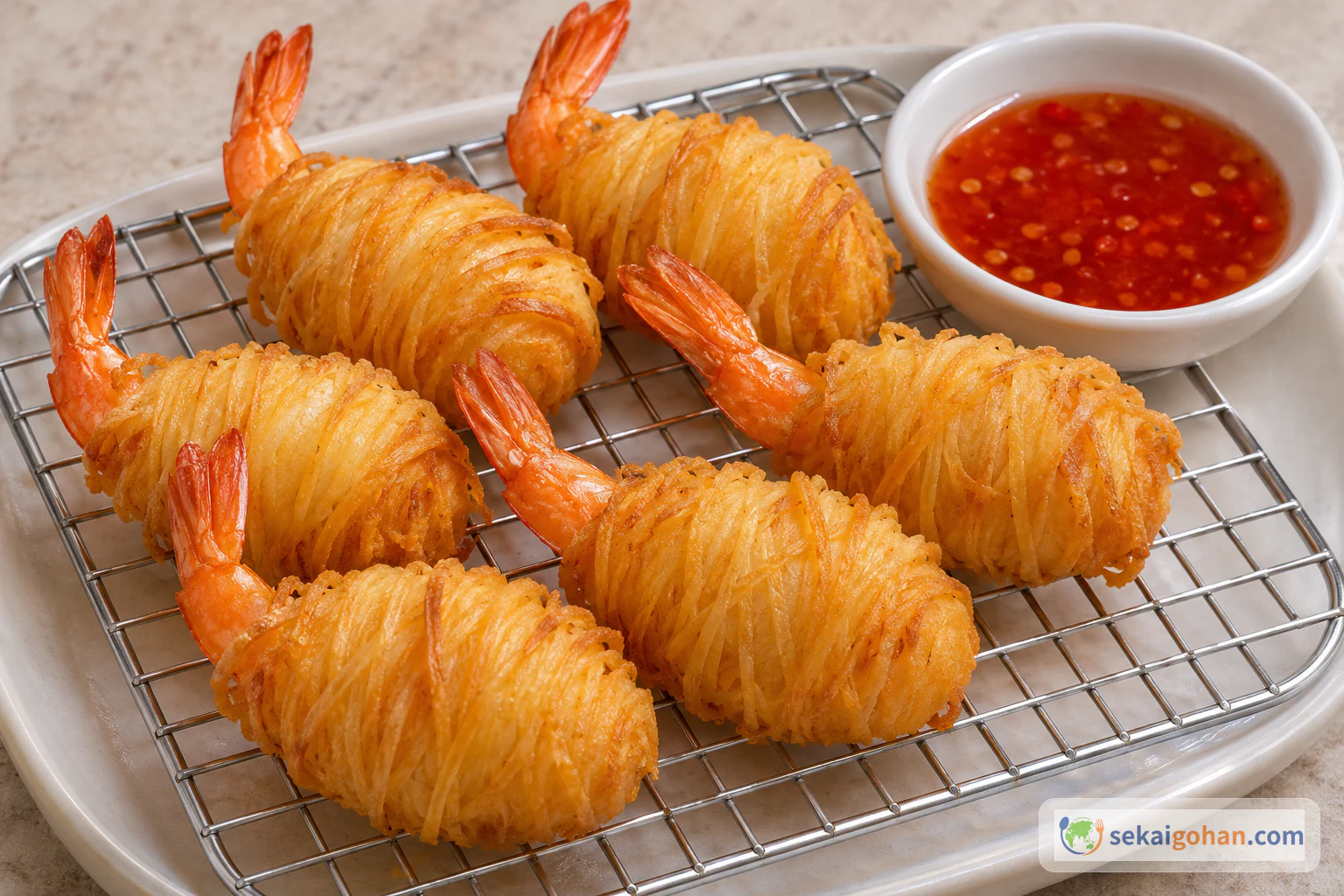
Kung Sarong: Prawns Wrapped in Fine Rice Noodles, Fried Until Golden
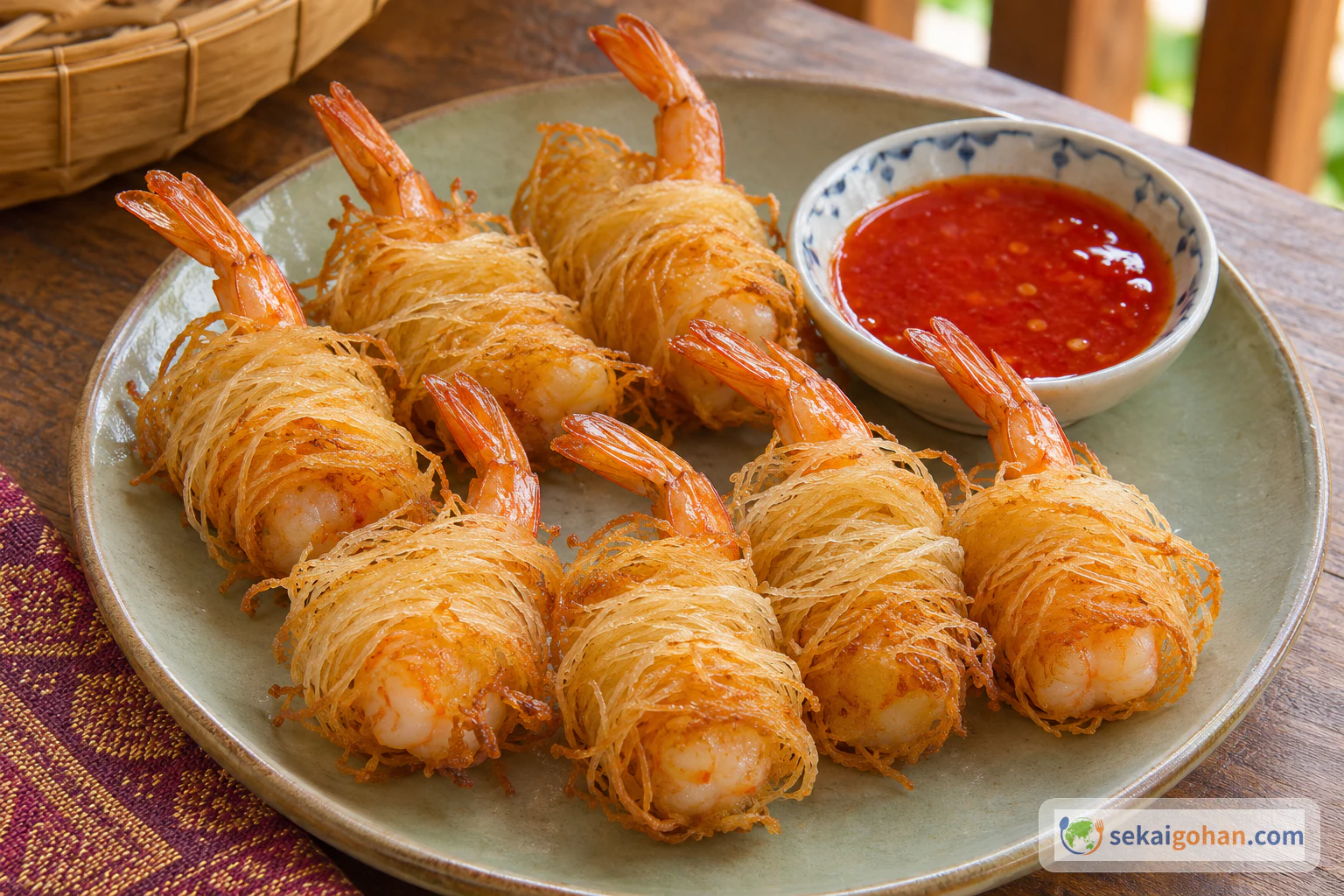
A prawn seasoned with coriander root, garlic, pepper and salt, cooked through inside a thin, crisp wrap of rice vermicelli, with a spicy chili sauce on the side. Few ingredients, so each one matters.
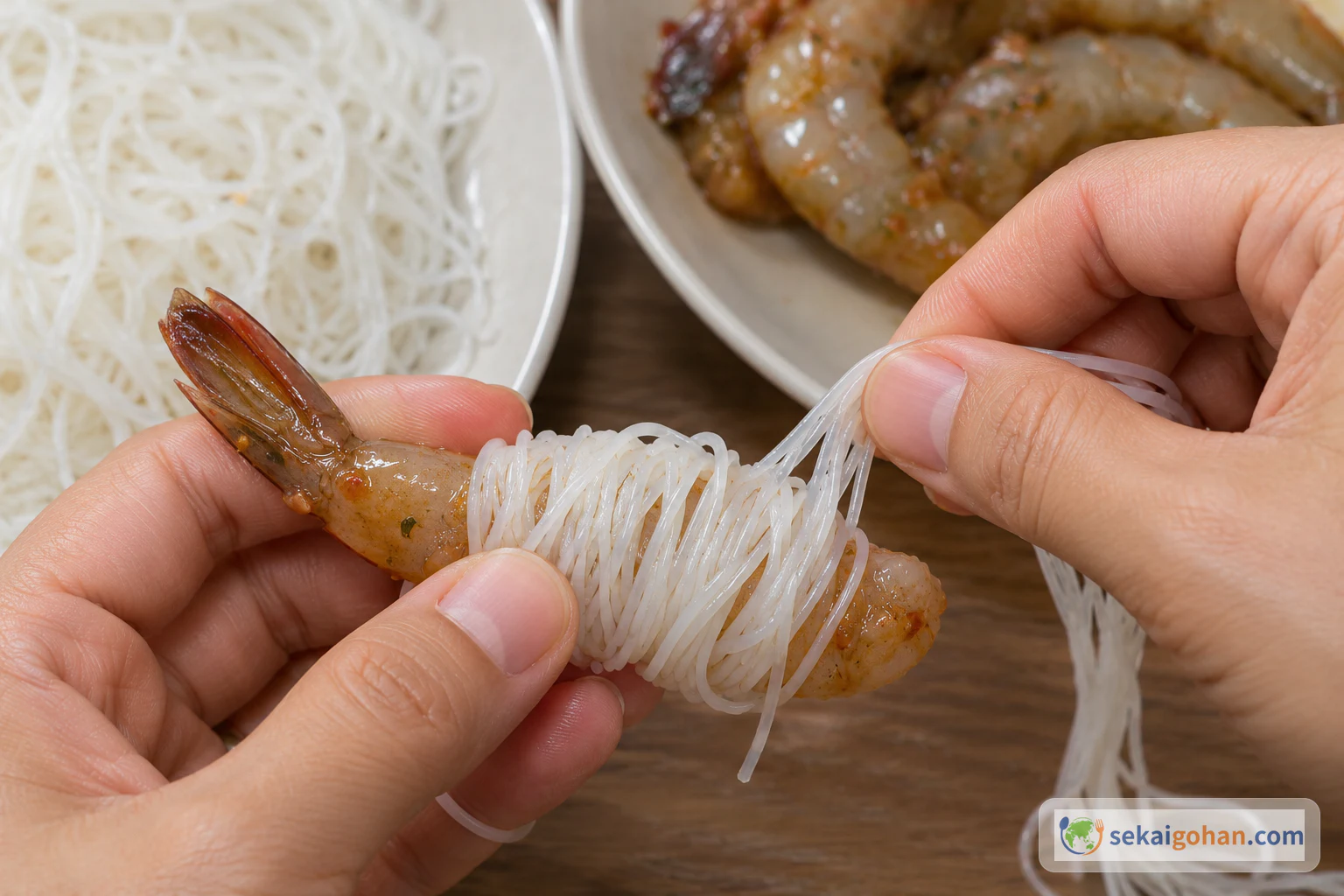
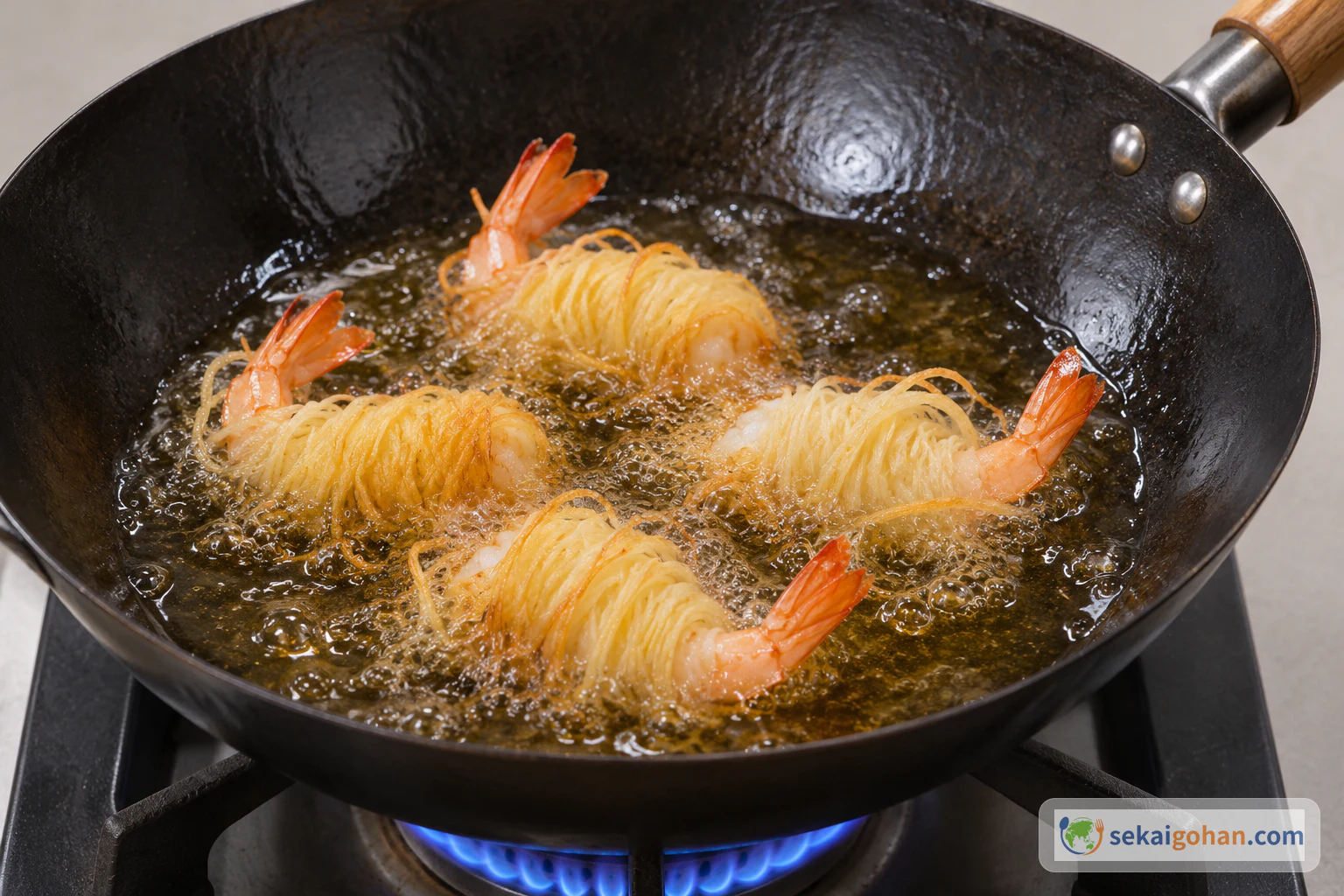
Fine white strands of rice noodle wind around the curve of each prawn, and in the hot oil they turn from pale to gold. Kung sarong (กุ้งโสร่ง) is a Thai dish in which prawns are seasoned, wrapped in thin rice vermicelli and fried, then served with chili sauce for dipping. Thai recipe sites and English-language recipe writers alike describe it as a snack or appetizer.
The appeal is the contrast between the two layers: the noodles become a light, crisp casing, and the prawn inside is seasoned with coriander root and garlic. The romanization varies, so you will also see it written goong sarong or kung sarong, and the Kapook Cooking article spells the Thai name กุ้งสร่ง.
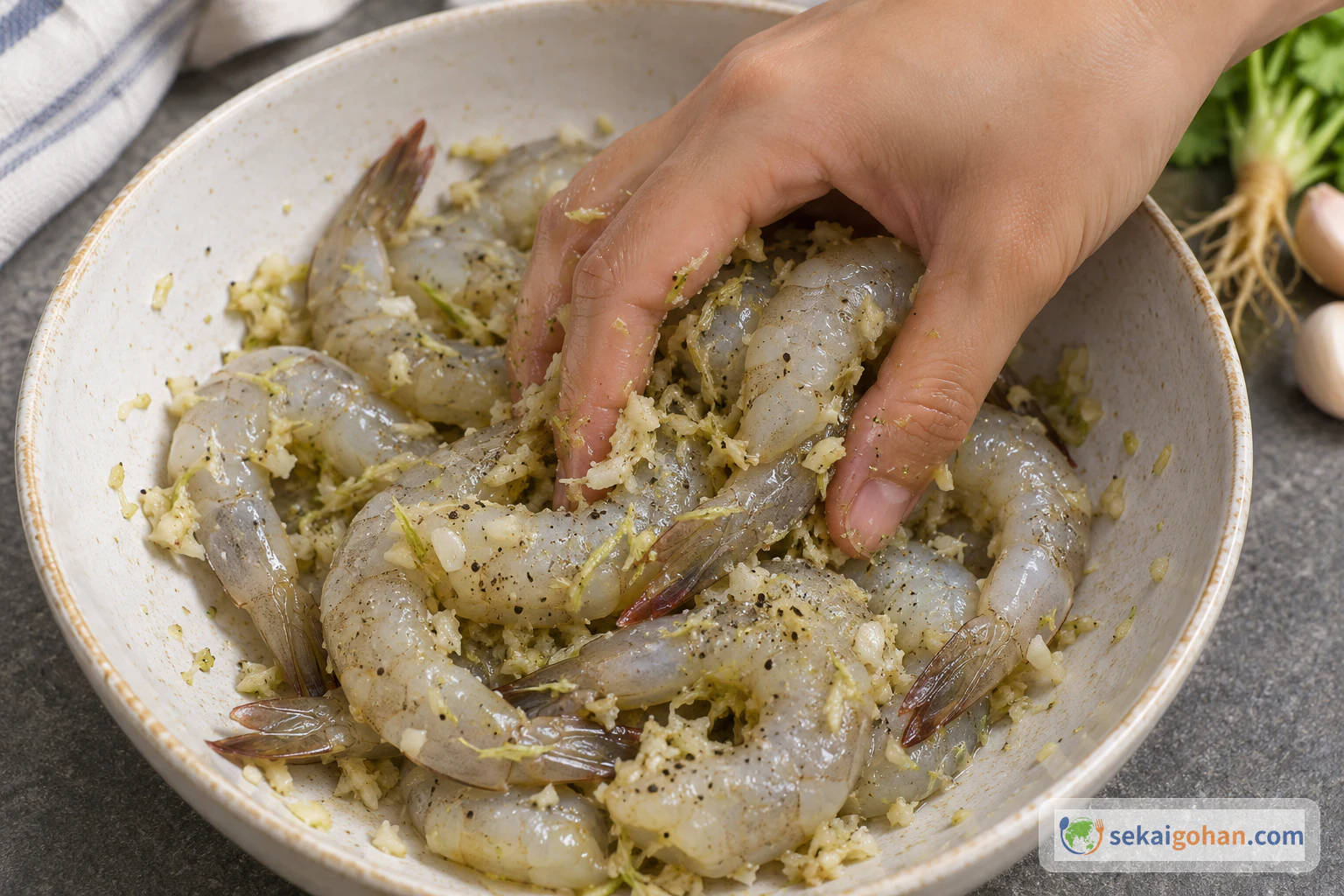
This article follows one recipe: the kung sarong published on the recipe pages of Golden Mountain Sauce, the Thai seasoning maker (ThaiTheparos PLC). That recipe is written for 2–4 servings and uses 7–8 fresh prawns, coriander root, garlic, pepper, salt, 2 cups of already-cooked rice vermicelli, oil for frying, and a spicy chili sauce for dipping. Its method is short: marinate about 5 minutes, wrap, let the wraps dry, fry over medium heat until cooked and nicely colored, then drain and serve. Sekai Gohan has not kitchen-tested this recipe; the 2–4 servings figure is the yield printed with it, not a measured result.
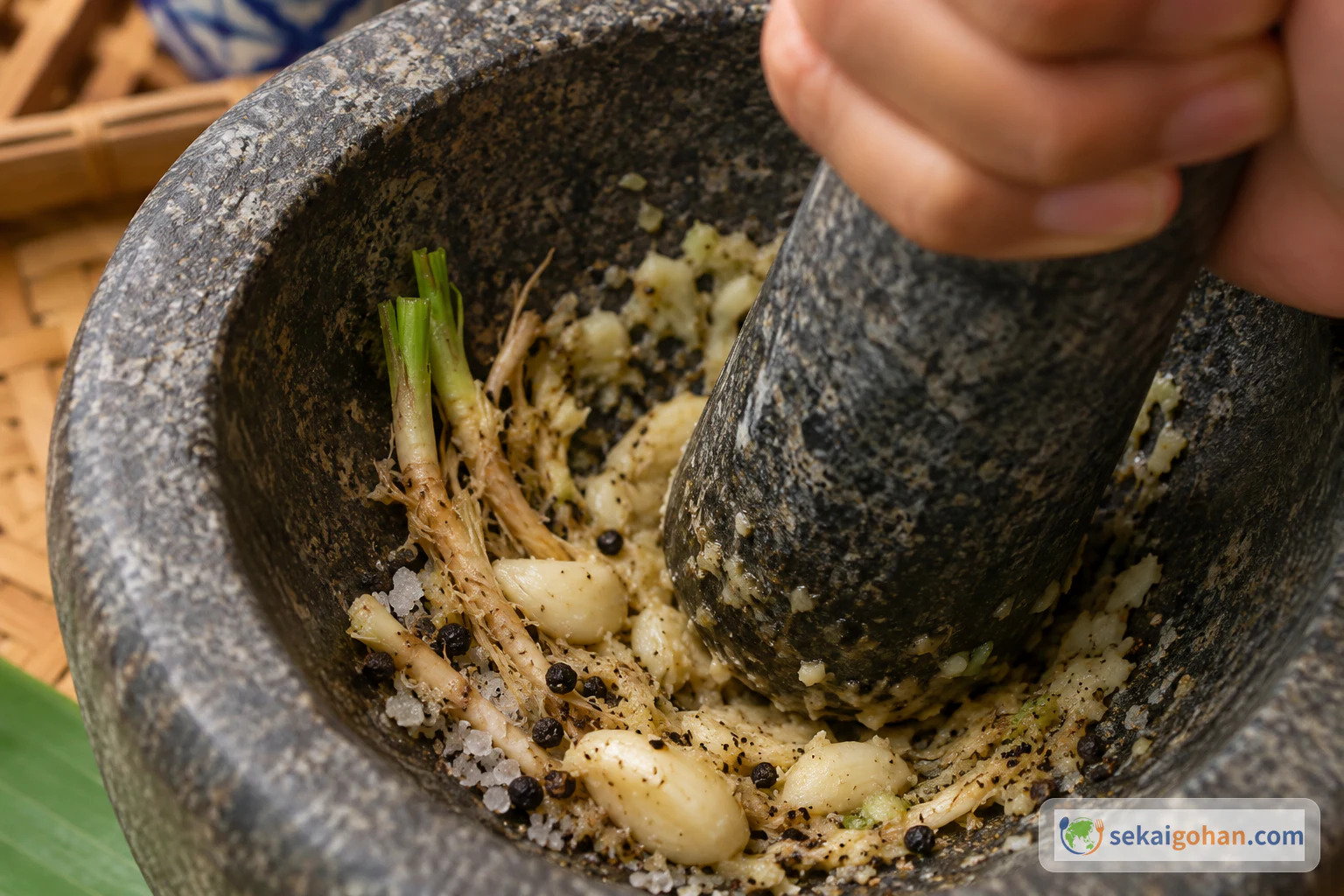
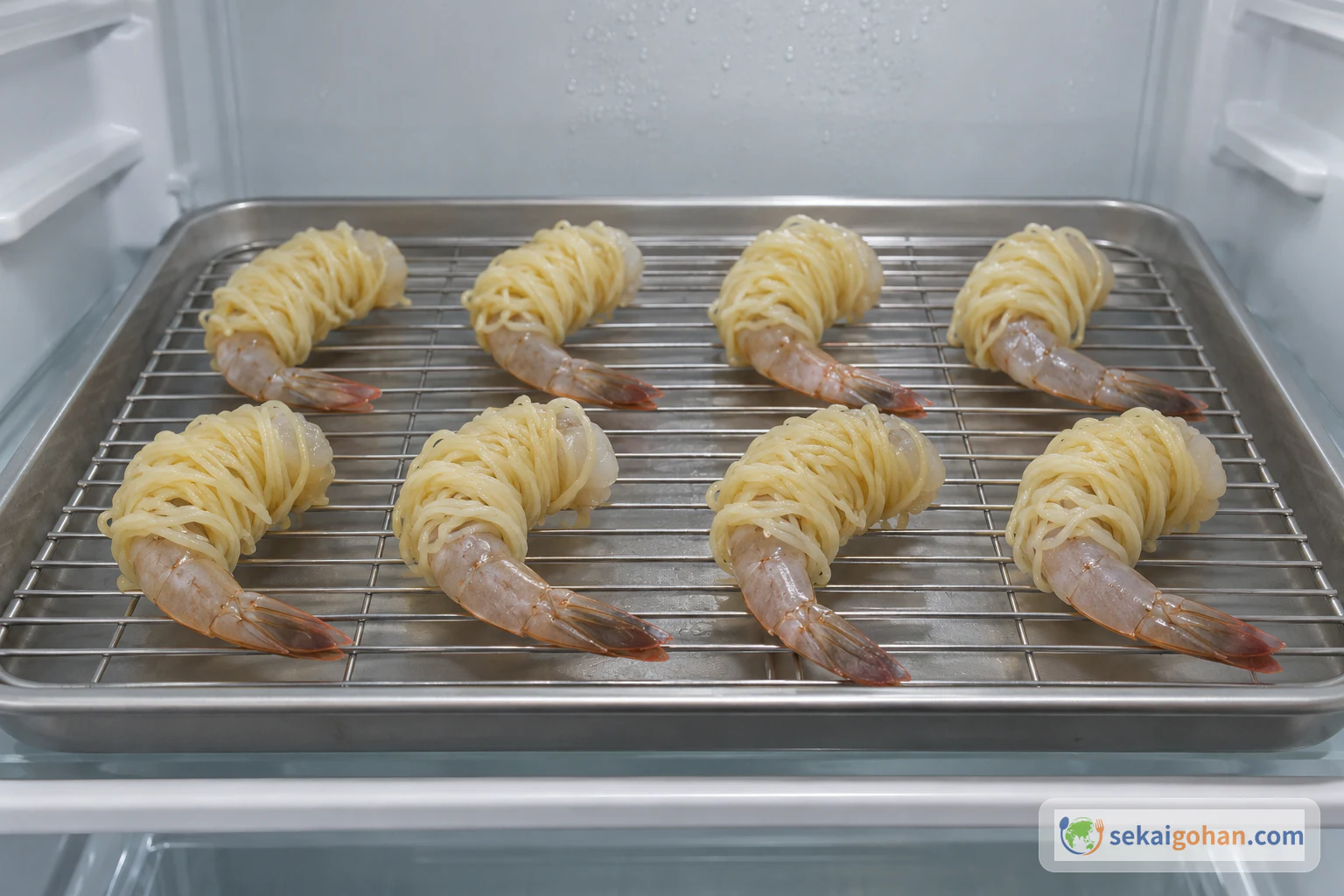
A few preparation details here are our own choices, because the Golden Mountain page does not specify them: crushing the coriander root and garlic in a mortar, using ground pepper (the type is not specified, so we do not name one), using raw prawns that are peeled and deveined with the tail left on, and doing both the 5-minute marination and the surface drying in the refrigerator, following general seafood-handling guidance from the U.S. FDA. The page gives no oil temperature, frying time, drying time, prawn size or dry-noodle weight, and we do not supply numbers for them.
One more detail: the Golden Mountain ingredient list names the company's own extra-hot chili sauce for dipping, while its method names a different product, Sriracha Panich. Because the two do not match, this article simply calls for a spicy chili sauce and does not claim to reproduce either specific product. For more dishes from the same country, see the Thailand page.
Ingredients (2–4 servings)
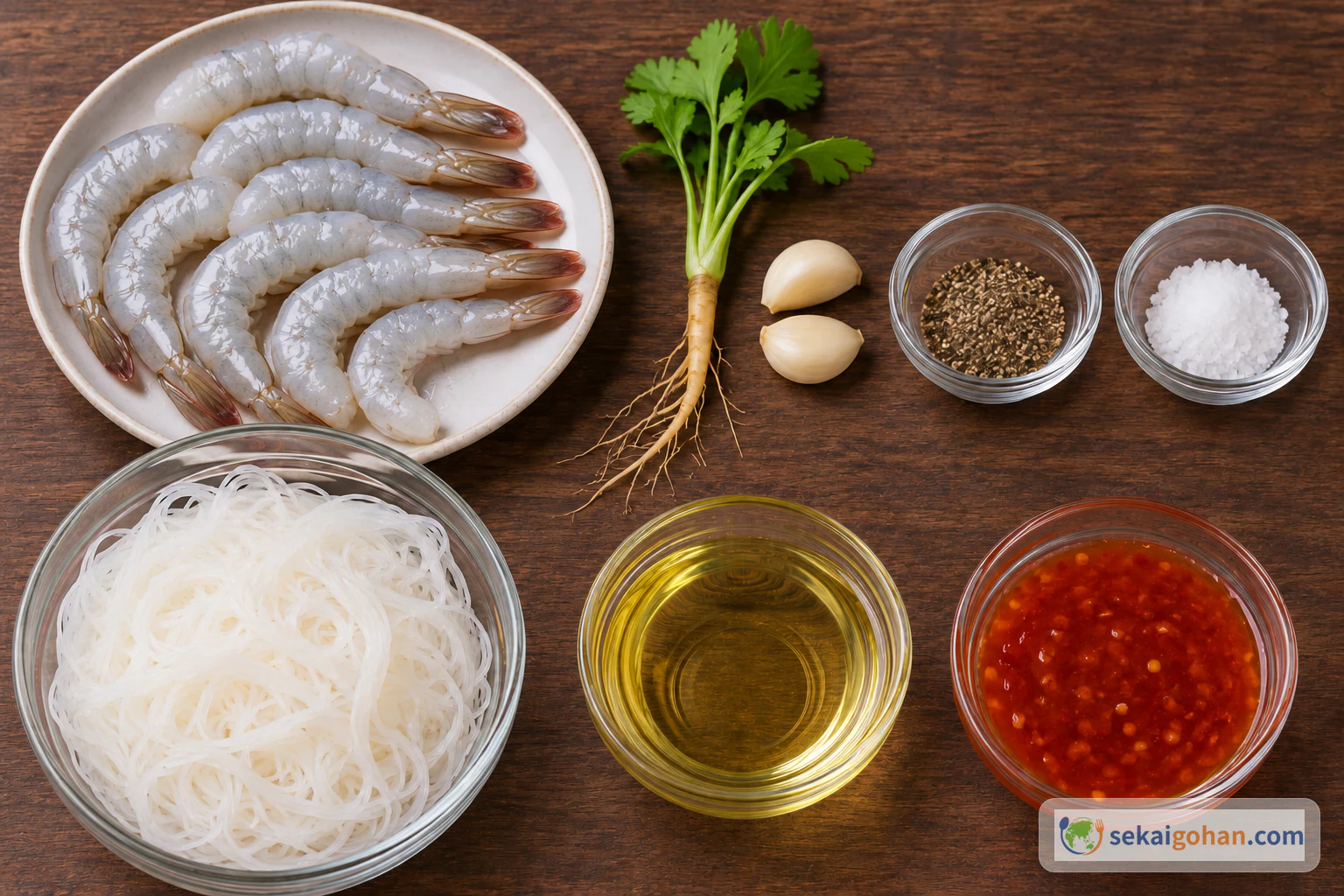
Choosing and Substituting
- Prawns: Use fresh raw prawns. Larger prawns may be easier to wrap.
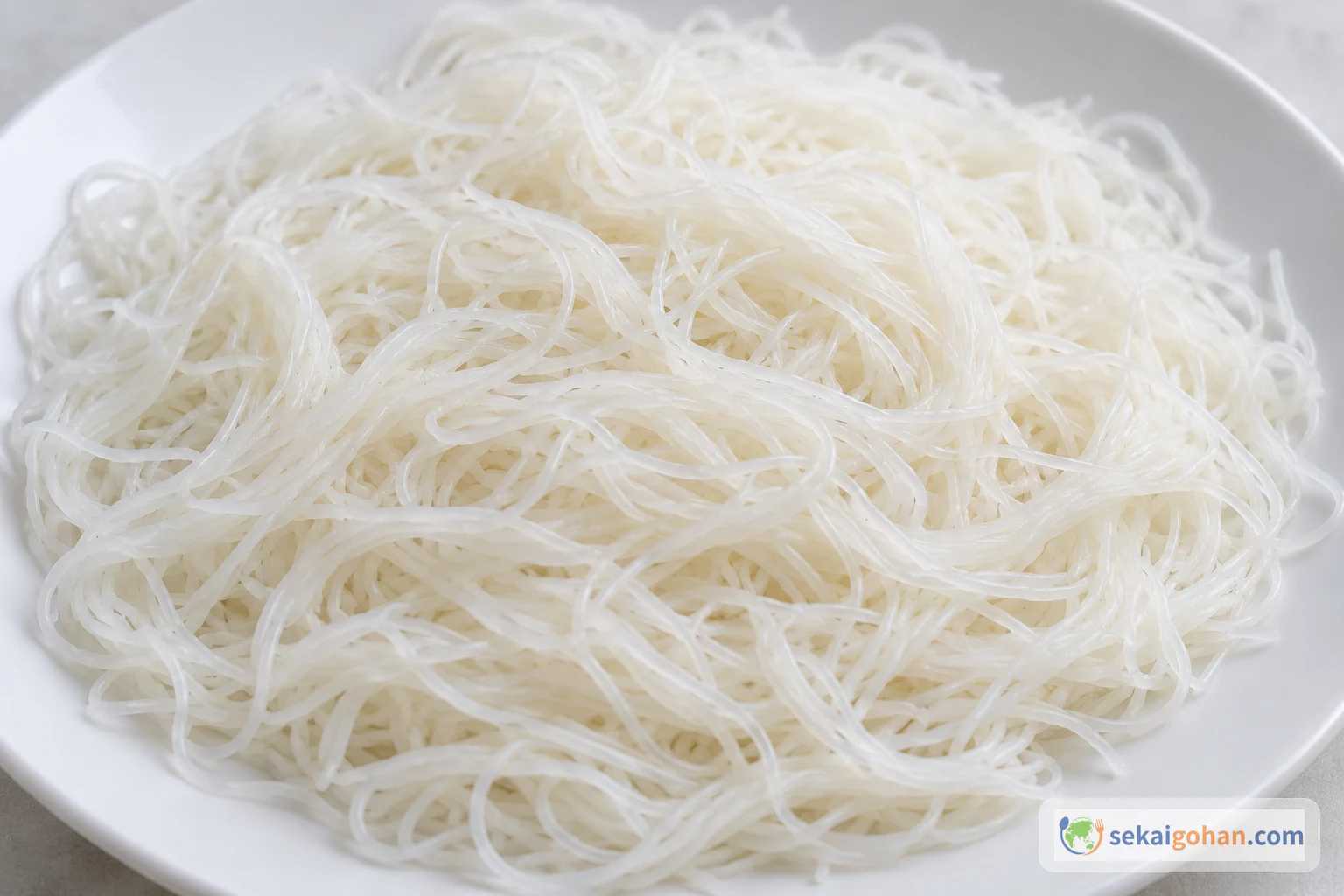
- Rice vermicelli: The dish uses thin rice vermicelli (เส้นหมี่) that has already been cooked. Rice vermicelli sold in supermarkets elsewhere, including Japanese bīfun, is a close candidate, but thickness and springiness after cooking vary by product, so it may wrap and fry a little differently. If you buy dried noodles, cook and drain them first, then measure 2 cups of cooked noodles.
- Egg noodles: Use thin rice vermicelli for this version.
- Coriander root: Use fresh coriander roots.
- Dip: Choose a spicy chili sauce. Sweet chili sauce, plum sauce and mayonnaise-based dips appear in other versions; they give a different flavor and are not part of this recipe.
Equipment
Nothing special is required; ordinary home frying equipment is enough.
- Mortar and pestle, for crushing the aromatics
- Shallow bowl, for marinating
- Wire rack set over a tray, for drying in the refrigerator
- Wok or deep pan, for frying
- Slotted spoon or spider strainer
- Food thermometer (optional), for checking the prawns
Handling Raw Prawns Safely
These points follow the U.S. FDA's general guidance on selecting and serving seafood; they are not part of the Golden Mountain recipe itself.
- Keep raw prawns refrigerated, and thaw frozen prawns safely rather than leaving them out at room temperature.
- Wash your hands and any tools that touched raw prawns, and keep raw prawns apart from cooked food and ready-to-eat foods, including the finished pieces and the chili sauce.
- Cook seafood thoroughly. The FDA's general guideline for most seafood is 145°F; for shrimp, the flesh should be firm, pearly and opaque. A golden noodle wrap alone does not prove the prawn inside is cooked, so check, and use a food thermometer if you are unsure. This guideline is about the prawn, not the oil, and it is not a frying temperature or time.
- Do not taste the raw marinated prawns to check seasoning.
- Follow your equipment's instructions for deep frying, and keep water from dripping into hot oil, which makes it spatter.
Troubleshooting
| Problem | Likely cause | What to do |
|---|---|---|
| The oil spatters hard when the prawns go in | Water on the noodle surface, or drips from the tray | Let the wraps dry longer on the rack in the refrigerator, and lift each piece so nothing drips into the oil |
| The wrap is golden but the prawn may not be cooked | Color comes before doneness | Keep frying over medium heat rather than judging by color; check that the flesh is firm, pearly and opaque, or use a thermometer |
| The noodles clump or tear while wrapping | The cooked noodles are stuck together or too wet | Loosen and drain the noodles well before you start, and wrap with a few strands at a time |
| The dip tastes sweet rather than hot | A sweet chili sauce was used | That is a different flavor; choose a spicy chili sauce next time |
Other Versions You May Meet
Recipes for this dish differ quite a lot, and this article does not mix them into the Golden Mountain version. It is still useful to know what else you may see:
- Kapook Cooking gives a different recipe with 10–12 prawns, 30–50 g of Phuket rice vermicelli or fresh egg noodles, coriander root, garlic, pepper and salt, optional light soy sauce and sugar, and eggs, along with several dipping-sauce options and a frying time of about 3–5 minutes. Those quantities and times belong to that recipe only.
- A Wongnai user recipe makes one serving with four prawns, a pinch each of pepper and salt and rice vermicelli, served with a wasabi-mayonnaise dip.
- Wok and Skillet, an English-language site, starts from 100 g of dried rice vermicelli and 10 shrimp, seasons with sesame oil, salt, white pepper and optional chicken stock granules, and serves sweet chili sauce. It also describes drying the noodles and prawns before frying.
If you like the crisp texture of fried rice noodles, compare the noodle in mi krop, where dry noodles go into the oil, with kung sarong, where cooked noodles are wrapped and then fried. For choosing rice noodles more generally, see pad thai, and for another Thai prawn dish built in a completely different way, see tom yum goong.
The Name and the Wrap
Kapook Cooking and Wok and Skillet both explain the name through the shape of the dish: the noodles wrapped around the prawn are compared to a sarong (โสร่ง), the wrapped cloth garment. Kapook also describes the shrimp version as developing from sarong-style snacks in which meat is wrapped in noodles. This is a description of the dish's look and of how a modern food publication sees its lineage, not a documented history of the name.
There is an older-sounding story connected with the pork version. The home-economics school of Suan Dusit University explains moo sarong, pork shaped and wrapped in fine noodles, and relates an account of its arrival with trade ships, along with a later adaptation to chicken. That account is about the pork dish. It does not tell us when, where or by whom the prawn version was first made, so we do not attach an origin date, a founder or a region to kung sarong. The sources we found present it as Thai food in general, without regional variants to compare.
Frequently Asked Questions
Are kung sarong, goong sarong and กุ้งโสร่ง the same dish?
Yes. Kung and goong are two romanizations of กุ้ง (prawn or shrimp), and the Thai name also appears as กุ้งสร่ง. They all refer to prawns wrapped in noodles and fried.
Can I wrap the prawns with dried rice vermicelli straight from the pack?
No. This recipe calls for rice vermicelli that is already cooked. Cook and drain dried noodles first. The recipe gives the amount only as 2 cups of cooked noodles, with no dry weight, so we do not offer a conversion.
Can I use egg noodles instead?
Some versions, such as Kapook's, allow fresh egg noodles, but that recipe also differs in its quantities and adds eggs. This article stays with thin rice vermicelli.
Which chili sauce should I serve?
A spicy chili sauce. The Golden Mountain page names its own extra-hot chili sauce in the ingredient list but a different product, Sriracha Panich, in the method, so we do not tie the dish to either brand. Sweet chili sauce and mayonnaise-based dips appear in other versions and give a different result.
Why dry the wrapped prawns in the refrigerator rather than on the counter?
The recipe says to let the wraps dry but gives no place or time. Drying them on a rack in the refrigerator is our choice, following general guidance to keep raw seafood cold. A dry surface also means less water reaching the hot oil.
Where in Thailand does kung sarong come from?
The sources we found do not establish a region or a date of origin for the prawn version. The historical account published by Suan Dusit University concerns pork sarong, not prawns.
Sources
- Golden Mountain Sauce (ThaiTheparos PLC), "กุ้งโสร่ง." The recipe followed in this article: 2–4 servings; 7–8 fresh prawns, coriander root, garlic, pepper, salt, 2 cups cooked rice vermicelli, frying oil and the company's extra-hot chili sauce for dipping; marinate about 5 minutes, wrap, dry, fry over medium heat until cooked and nicely colored, drain and serve. The page gives no prawn size, dry-noodle weight, drying time, oil temperature or frying time, and its method names a different chili sauce product from its ingredient list. https://www.goldenmountainsauce.com/menu-detail.php?id=140
- Kapook Cooking, "กุ้งสร่ง สูตรอาหารไทยโบราณ กรอบอร่อย พร้อมเคล็ดลับพันเส้นให้สวยเป๊ะ." The comparison of the noodle wrap to a sarong, the description of the prawn version as developing from meat sarong snacks, and a separate recipe with eggs, optional soy sauce and sugar, several sauces and about 3–5 minutes of frying. A modern media account, not a primary historical record. https://cooking.kapook.com/view297455.html
- Wongnai, "สูตร กุ้งโสร่ง พร้อมวิธีทำโดย Nickktwf." A user-submitted one-serving version with four prawns, pepper, salt and rice vermicelli, served with wasabi mayonnaise. https://www.wongnai.com/recipes/ugc/4b5025cddd7b4524a4bcd40f775fce1c
- Suan Dusit University School of Culinary Arts, "หมูสร่ง อาหารไทยโบราณ." An explanation of pork sarong wrapped in fine noodles, with a historical account of its arrival via trade ships and a later chicken adaptation. Its subject is the pork dish, not prawns. https://food.dusit.ac.th/home/?p=14671
- Char Ferrara, "Goong Sarong – Thai Fried Shrimp in Crispy Vermicelli Noodles," Wok and Skillet. Describes the dish as a Thai appetizer and explains the sarong image; a separate recipe starting from dried rice vermicelli with sesame oil and sweet chili sauce, including drying before frying. https://www.wokandskillet.com/goong-sarong-deep-fried-shrimp-wrapped-in-vermicelli-noodles/
- U.S. Food and Drug Administration, "Selecting and Serving Fresh and Frozen Seafood Safely." General guidance on refrigeration, safe thawing, separating raw and cooked foods, and cooking seafood to 145°F, with shrimp flesh firm, pearly and opaque. It does not give oil temperatures or frying times. https://www.fda.gov/food/buy-store-serve-safe-food/selecting-and-serving-fresh-and-frozen-seafood-safely