

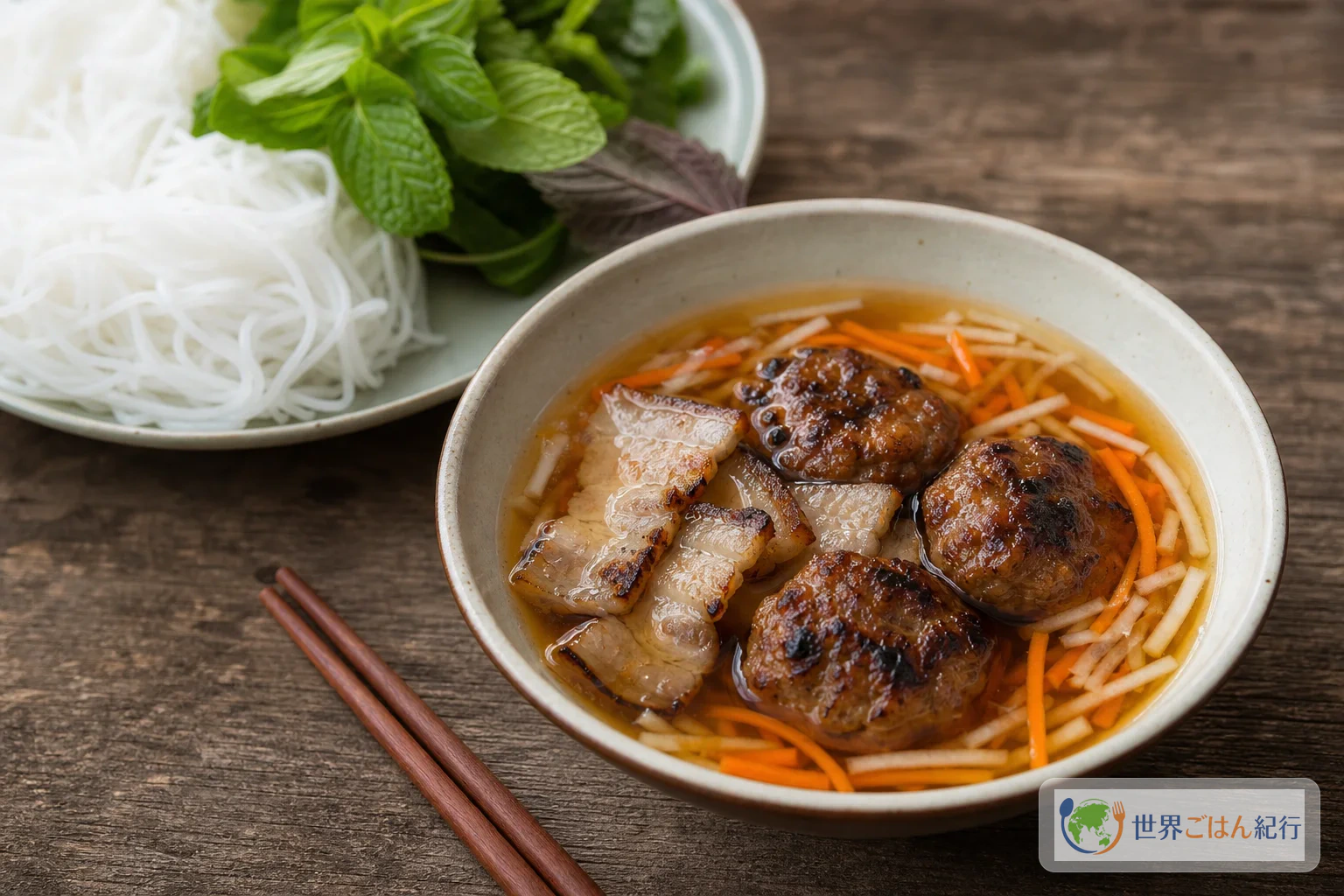
A Hanoi lunch: grilled pork sunk in a sweet-sour sauce
You don't set the freshly grilled pork on a plate; you sink it straight into a warm, sweet-sour sauce. The first time you make bun cha, that is a small surprise. Why put meat you worked to grill so well into liquid? But a few minutes later, when you take a little rice noodle, tear some herbs, lift a pork patty out of the sauce and slurp them together, you see why. The aroma of caramelized sugar, the saltiness of fish sauce, the sourness of lime and the green of the herbs finally come together in one mouthful.
Bun cha (Bún Chả) is the representative dish of Hanoi in northern Vietnam, grilled pork with rice noodles. It may look close to the southern mixed noodle dishes like bun thit nuong, but the Hanoi style is distinguished by serving the rice noodles, herbs and meat-in-sauce separately. In a different direction from a dish like banh mi, which Vietnamized French-derived bread, it builds on the aroma of charcoal fire and the sweet-sour of fish sauce. The Vietnam tourism authority also introduces it as one of the dishes to eat in Hanoi, and the standard form is charcoal-grilled pork and cold rice noodles eaten with a sweet-sour dipping broth.
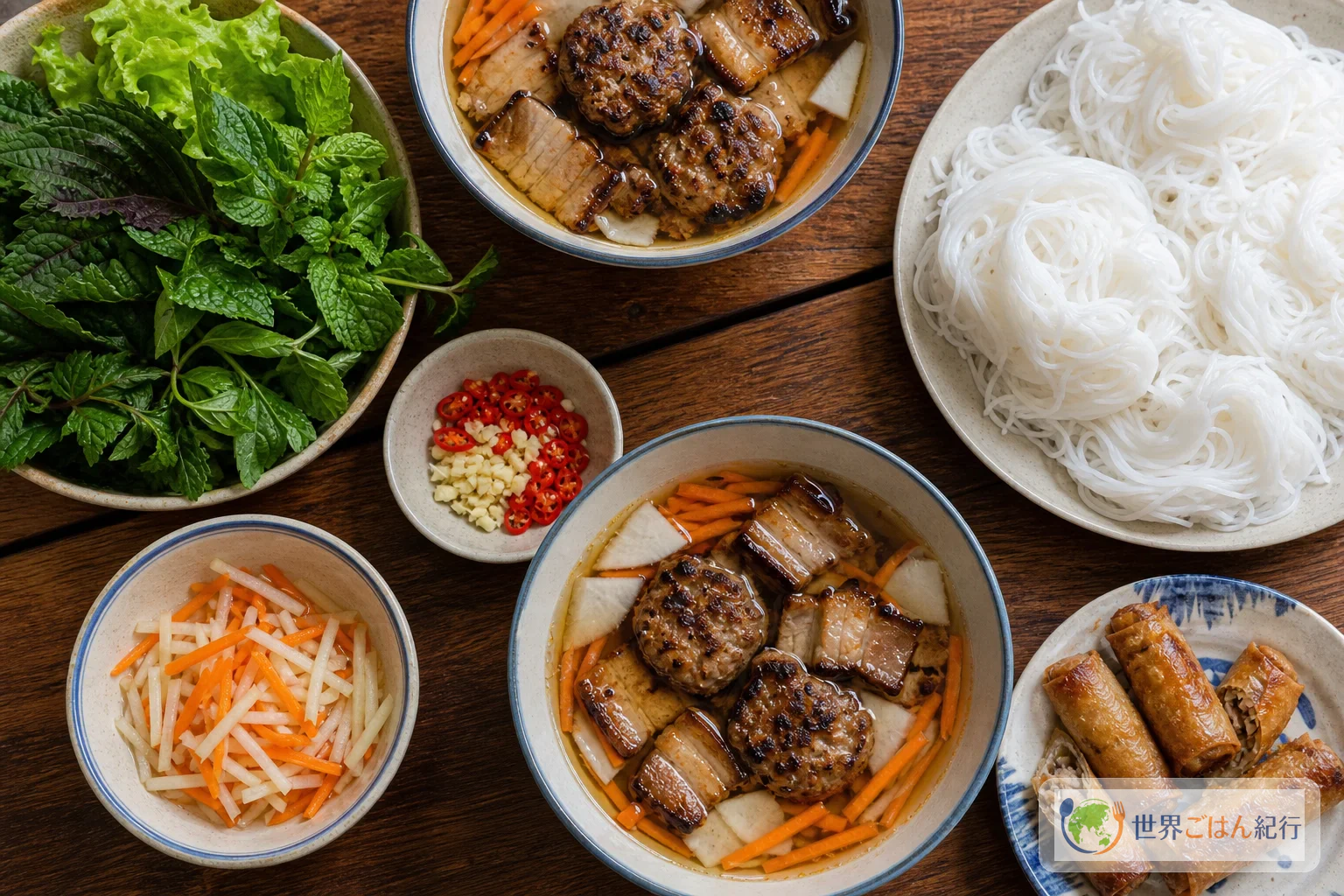
The hard parts in a home kitchen are the charcoal aroma and green papaya. Here the charcoal is approximated by strong browning in a fish grill or grill pan, and the green papaya is replaced with daikon and carrot. It is not a complete substitution, but the core to protect is four things: "the toasty note of grilled pork," "warm nuoc cham," "cold rice noodles" and "a mountain of herbs."
Ingredients (serves 4)
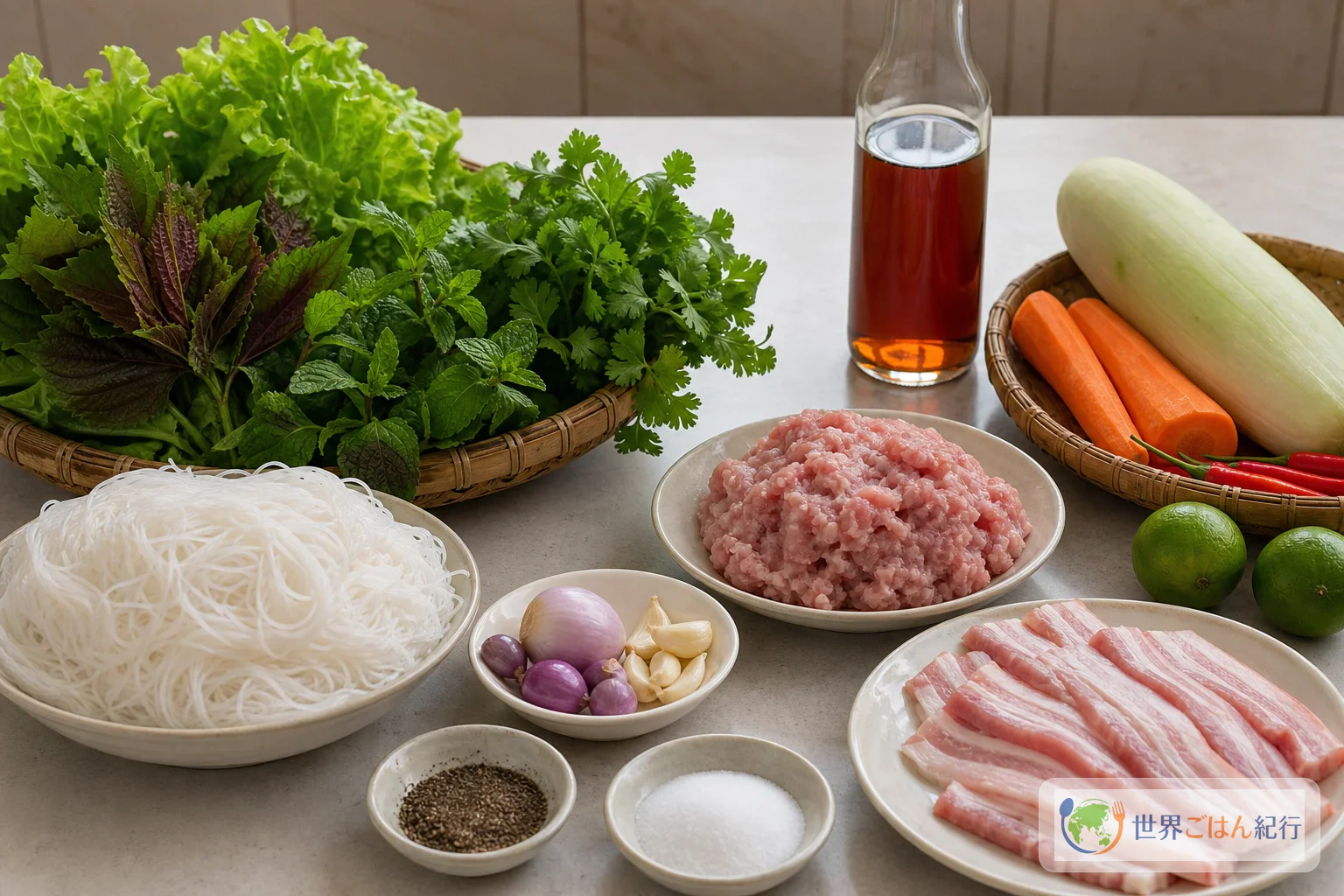
Fish sauce is made from fish. Depending on the product, it may be handled in the same facility as soy sauce-type seasonings containing wheat and soy. Salt intake can run high if you drink up the sauce, so at first use only as much as you dip the meat and noodles in, and if you want to dilute it, add 2 tbsp warm water at a time.
The rice noodles, the fish sauce and an instant-read thermometer make or break bun cha. Pork patties in particular are hard to judge for doneness at the center by browning alone, so if you shape them thick, a thermometer is worth using.
Method: grill, soak, then slurp
Bun cha is a dish that is both "a grilled dish" and "dipping noodles" at once. If you get the sauce, pickled vegetables, noodles and herbs ready before you start grilling the meat, you can bring it to the table without losing the freshly grilled aroma.
Points that decide the local character
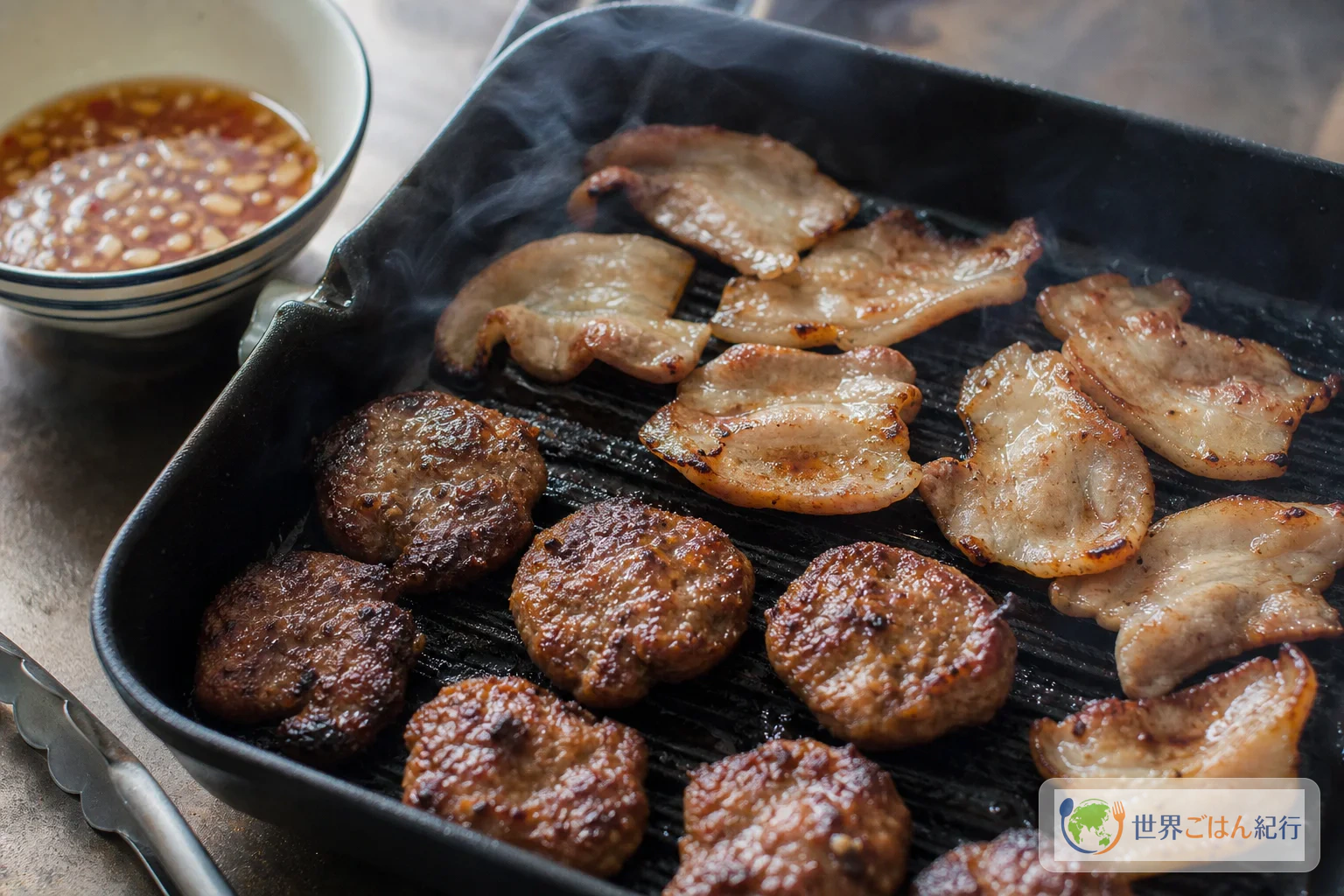
Don't fear browning, even without charcoal
The charm of bun cha is the deep brown on the surface of the pork. Because sugar and fish sauce are included it scorches easily, but if grilled pale it is merely sweet pork. Use a grill pan, fish grill or toaster oven to make toasty spots on the surface while avoiding black, bitter char. Aim for that boundary.
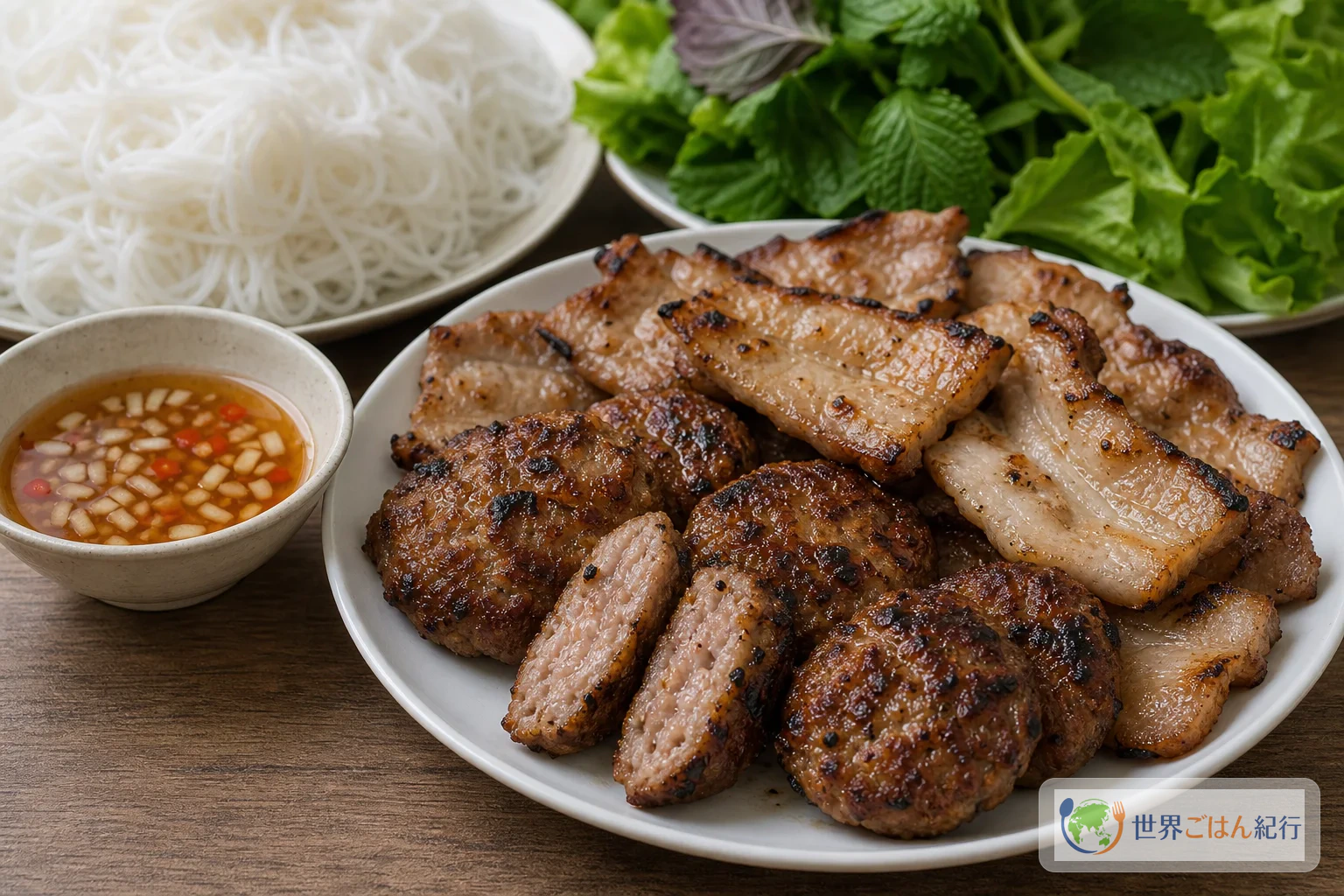
Daikon can substitute for green papaya, but its role is different
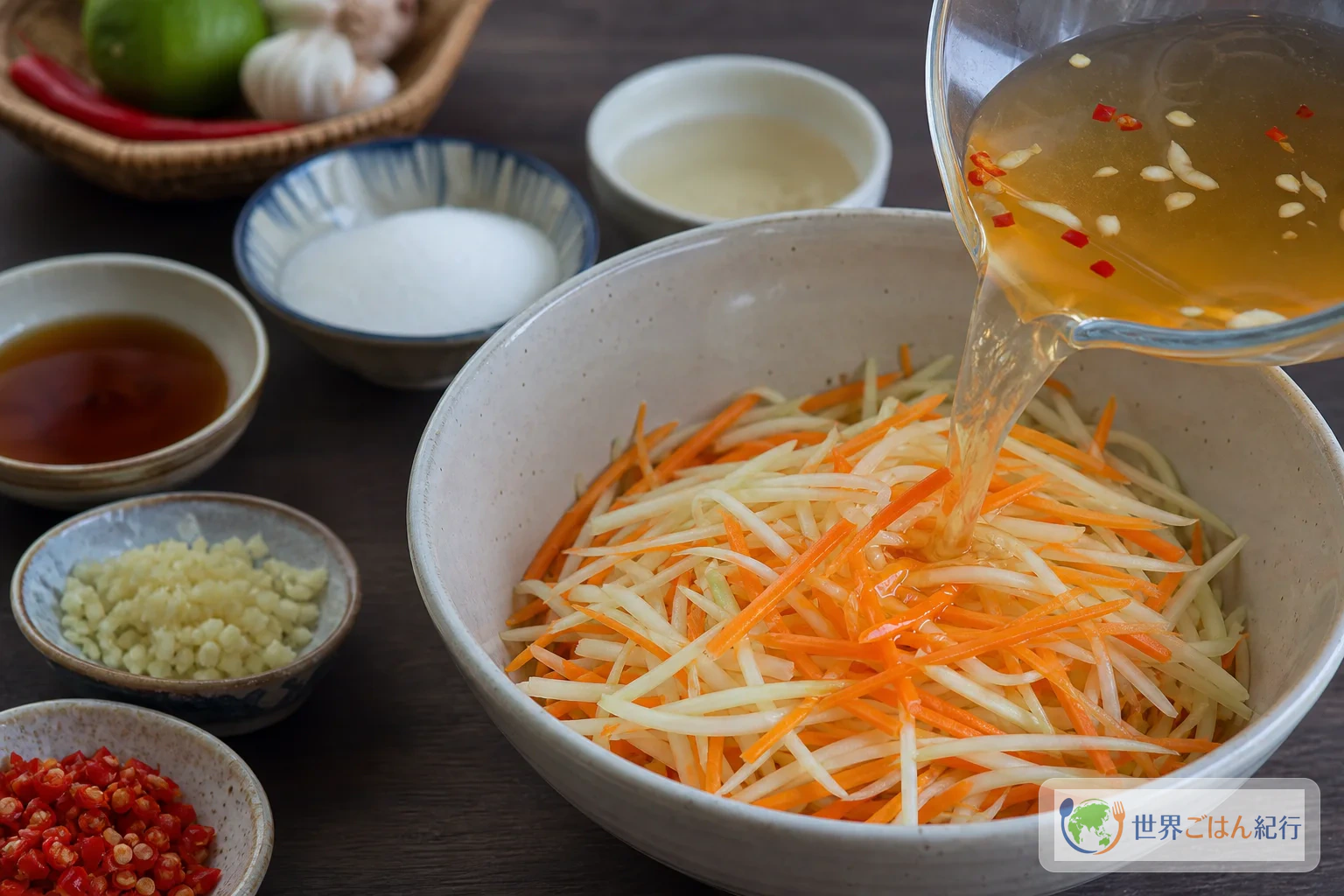
Locally, a vegetable with a texture close to green papaya or kohlrabi is sometimes put in the sweet-sour sauce. If you can't find green papaya, daikon and carrot work perfectly well. However, daikon releases water easily, so cut it 2 mm thick and let it sit with salt for 10 minutes before putting it in the sauce to keep it from being watery.
Bun cha and pho have a different rhythm of eating
With pho ga and bun bo Hue (in Japanese), the soup, noodles and toppings are finished in the bowl. Bun cha is a dish where the eater takes rice noodles, adds herbs and combines them with the meat sunk in the sauce. Like banh xeo (in Japanese), it has the pleasure of assembling at the table.
Storage and reheating
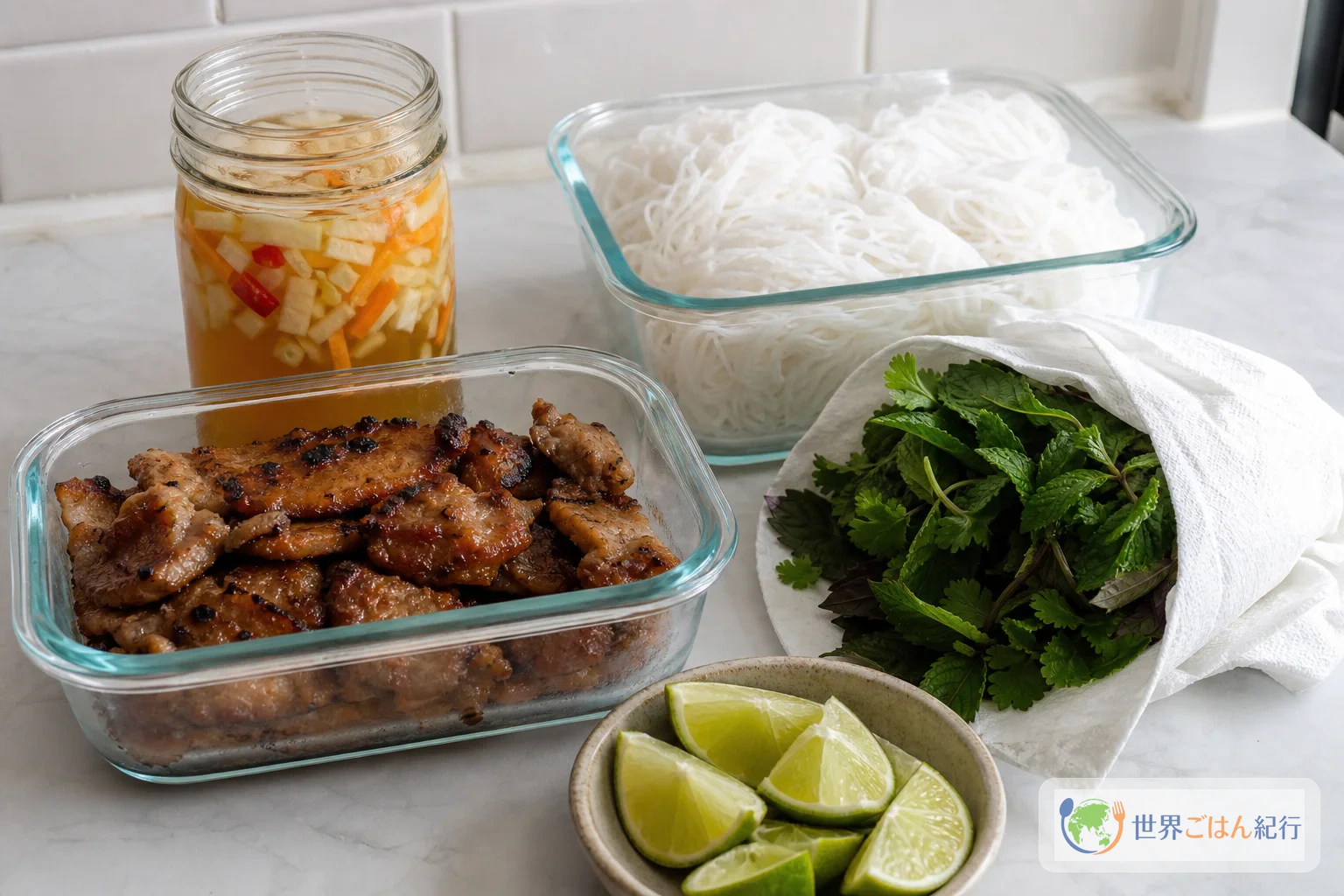
Cool the grilled pork slightly, put it in an airtight container and plan to finish it within 2 days refrigerated. To reheat, put 2 tbsp sauce in a frying pan and warm over low heat for 2–3 minutes, stopping when the surface of the meat has returned to moist. In a microwave at 600 W it takes 40–60 seconds, but overheating makes the patties hard.
Nuoc cham keeps about 3 days refrigerated if it is before the meat goes in. The sauce after the meat has soaked is safest used up the same day. Rice noodles tend to firm up in the refrigerator, so if you carry them over to the next day, pour boiling water over them for 10 seconds to loosen them and immediately rinse again in cold water.
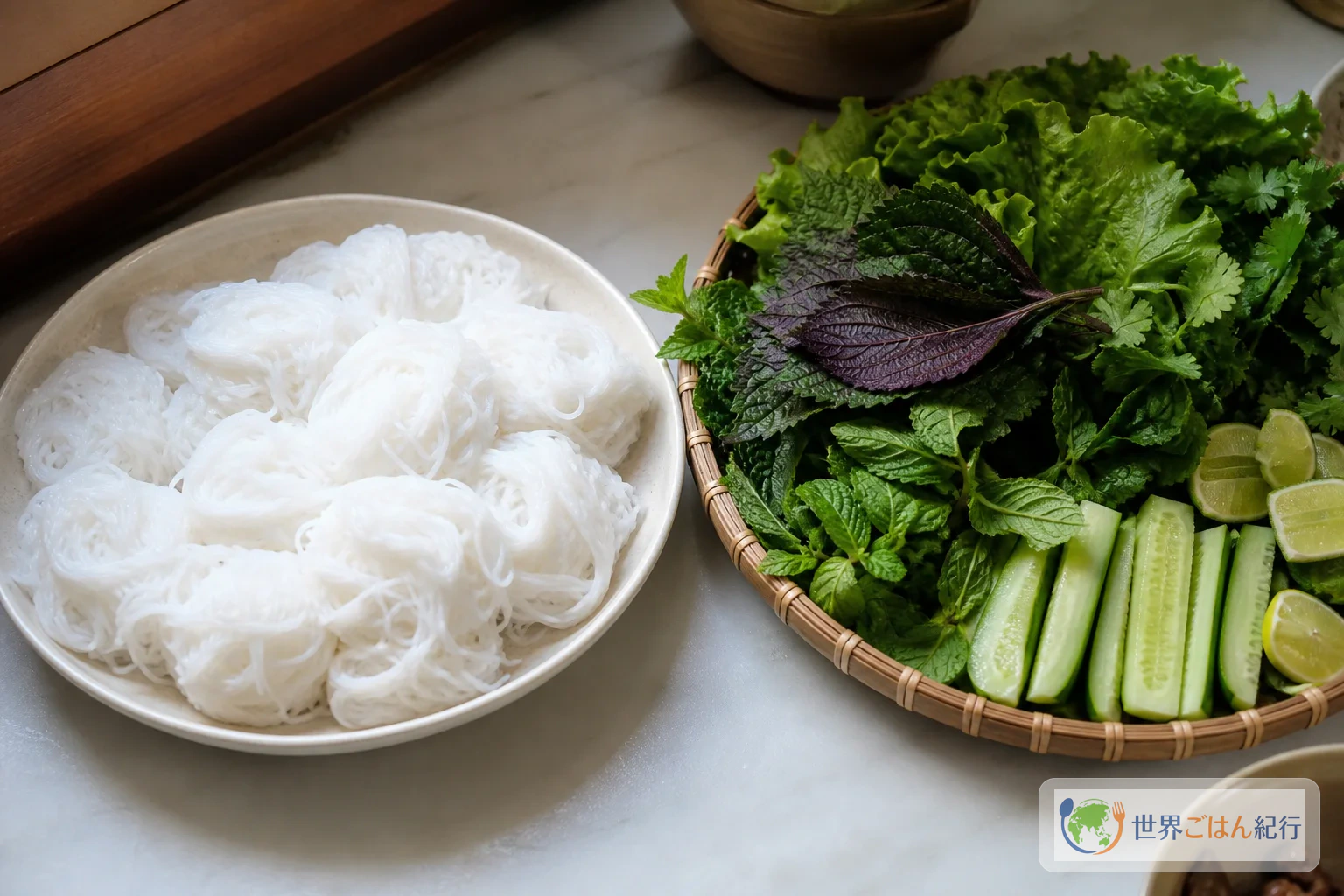
Wrap the herbs in damp paper towels and refrigerate in a container. Mint and cilantro lose their aroma easily, so the next day they are easy to use up by adding to a sweet-sour dish such as pad thai or som tam.
Where it tends to go wrong
The meat is tough
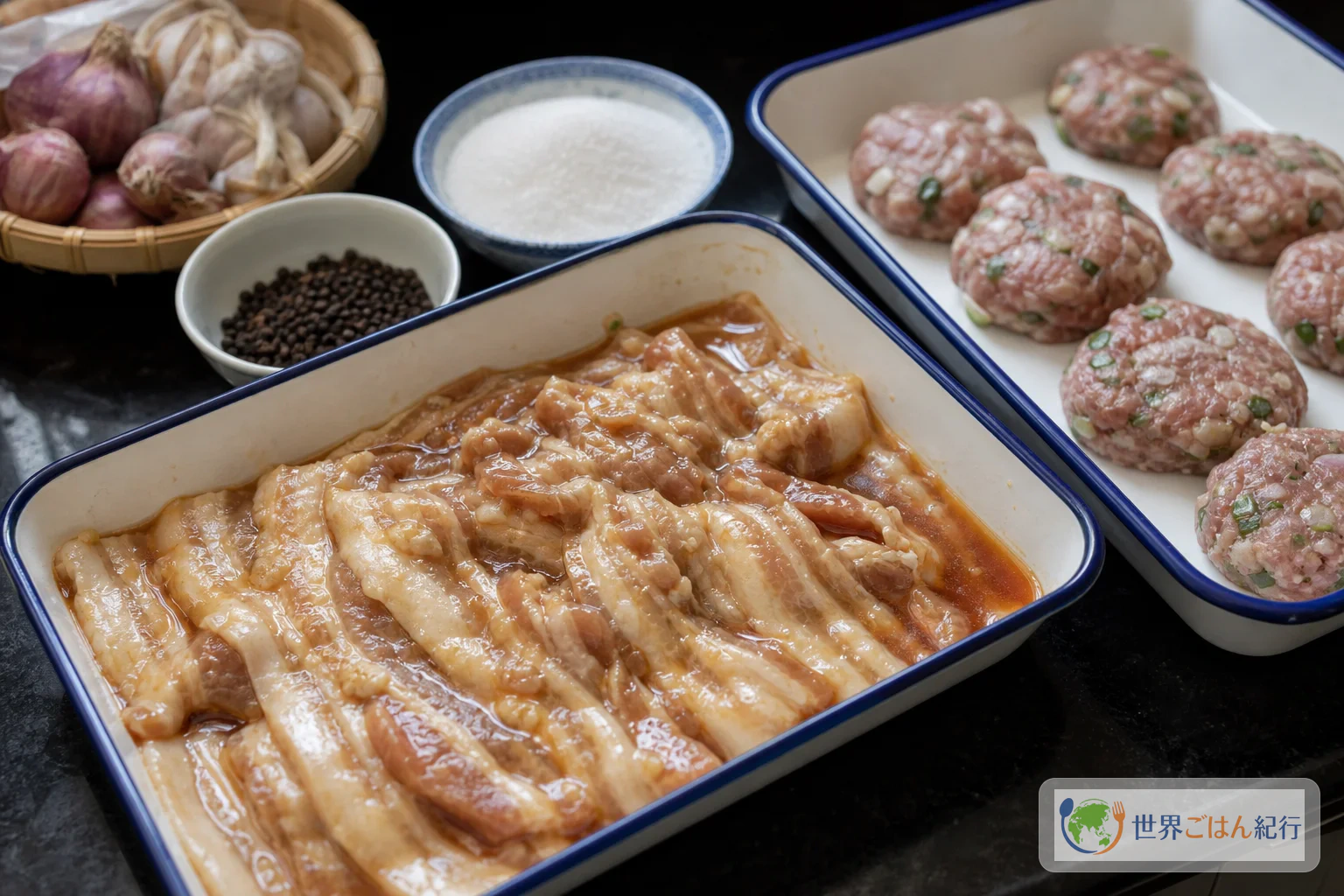
The cause is patties that are too thick, or overcooking. Beyond 1.5 cm thick, the outside tightens while the heat travels to the center. Next time shape them flat, and take them out as soon as the center reaches 75°C.
The sauce is salty
The saltiness of fish sauce varies by product. Add 2 tbsp water, 1 tsp sugar and 1 tsp lime juice to bring back sweetness and sourness at the same time, so the outline doesn't blur even when diluted. Once rice noodles go in, the saltiness seems weaker, so a sauce that is slightly strong when tasted alone is about right.
The rice noodles stick together
The slime after boiling remains. Rinse under running water for 30 seconds, drain in a colander for 5 minutes, and loosen into small portions by hand just before eating. Coating them in oil makes them less able to take up the sauce, so for bun cha, finishing them with water suits better.
FAQ
Is bun cha served hot or cold?
The meat and sauce are warm, and the rice noodles and herbs are eaten at room temperature or slightly cool. If everything is hot the herbs wilt, and if everything is cold the fat of the grilled pork feels heavy.
Can I make it with something other than pork?
You can eat something close with boneless chicken thigh, but the character of bun cha as a dish name comes from pork. When making it with chicken, use a sour marinade like chicken inasal and brown it strongly for satisfaction.
Is green papaya essential?
It is not. If you want to approach the local texture, green papaya or kohlrabi suits, but daikon and carrot make a perfectly good version in a home kitchen. What matters is slicing the sweet-sour vegetables thin and keeping the sauce from turning watery.
Can I make nuoc cham ahead?
Before the meat goes in, it keeps about 3 days refrigerated. Garlic and chile give a strong aroma, so if you use it the next day, adding them just before eating gives a lighter finish.
Sources
- Vietnam National Authority of Tourism, "10 must-try Hanoi dishes"
- Serious Eats, "Bún Chả Hà Nội Recipe"
- Japan Ministry of Health, Labour and Welfare, "Cook meat thoroughly before eating" (title translated): https://www.mhlw.go.jp/stf/seisakunitsuite/bunya/0000049964.html



