

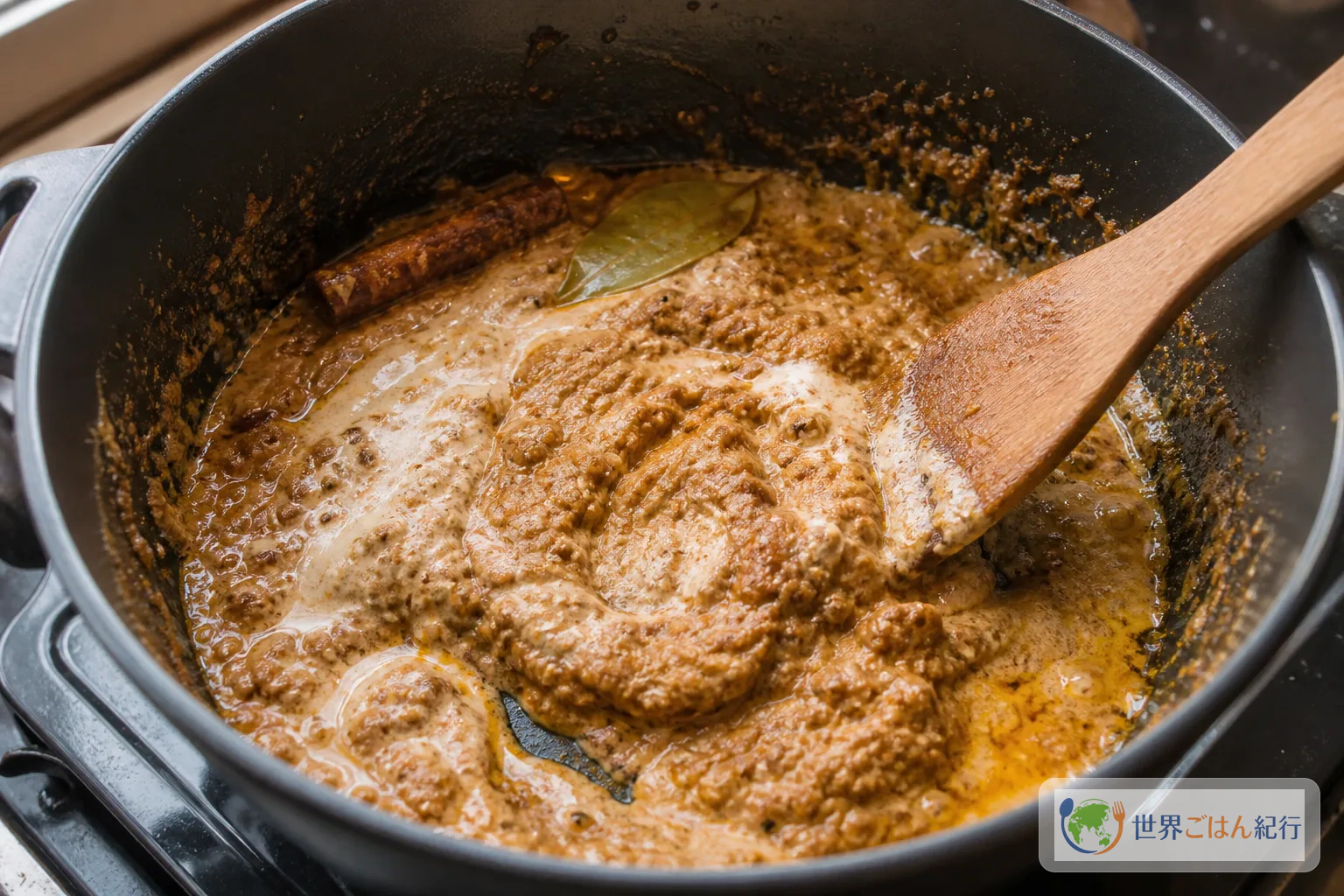
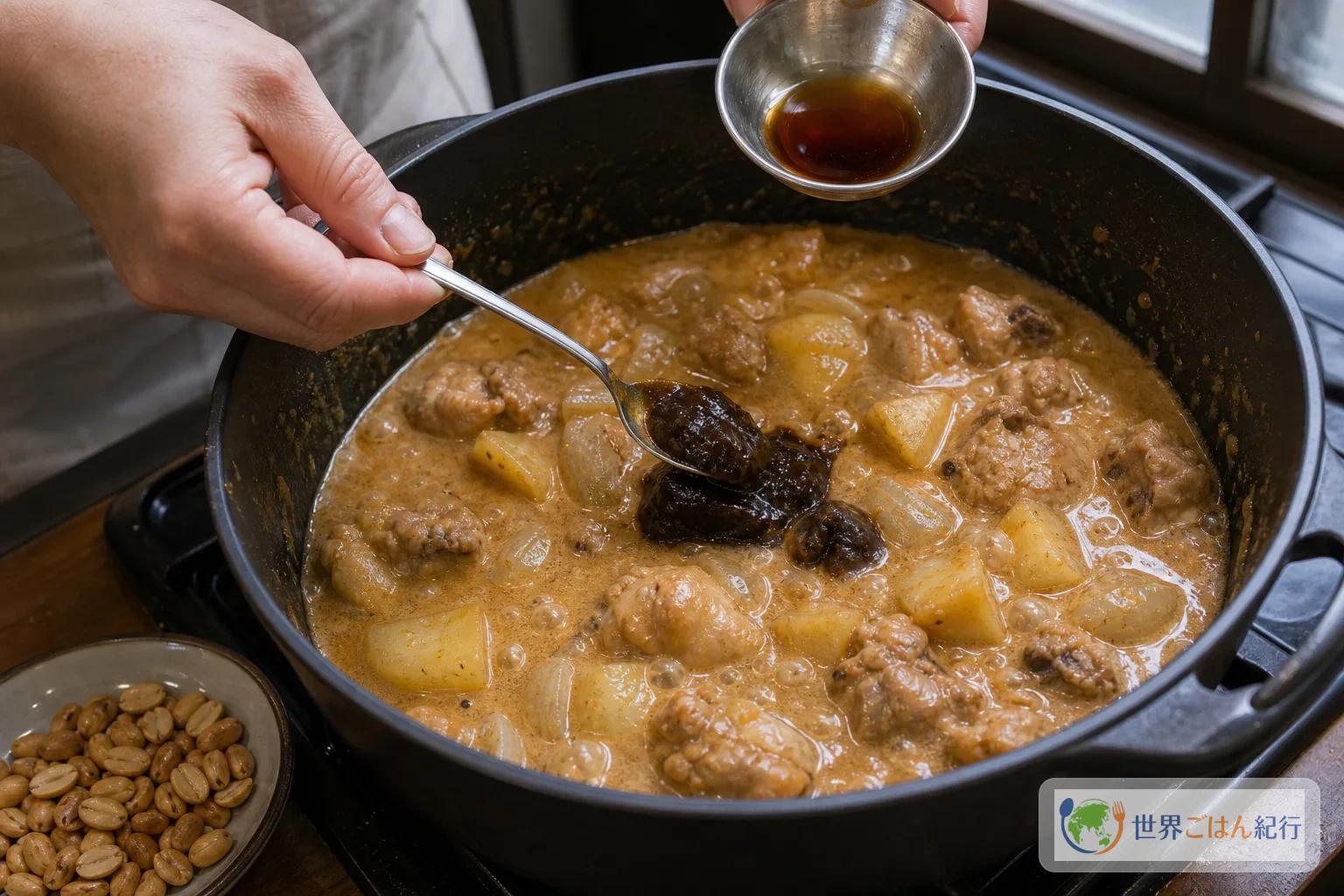
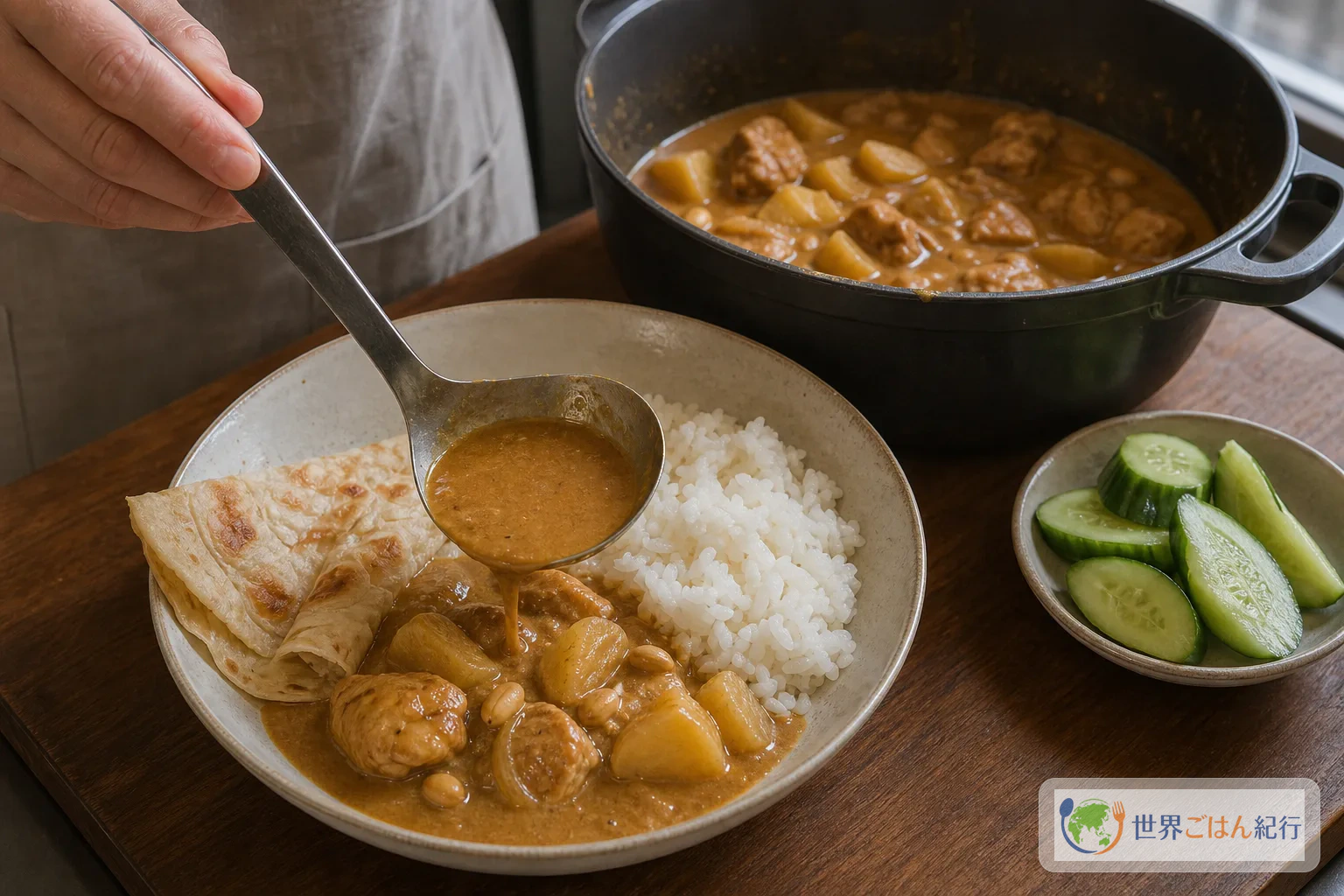
Open a can of coconut milk on an evening counter and a little white cream has set under the lid. Drop in brown paste, spread it with a wooden spoon, and the smell of cinnamon, cumin, garlic and cooked onion slowly rises. It isn't the sharp heat you picture when you think of Thai food. It's sweet and round, yet fish sauce and sourness call out for rice.
Massaman curry (แกงมัสมั่น / gaeng matsaman) is a curry enjoyed for the depth of its spices, often linked to the food culture of southern Thailand and its Muslim communities. At home, build it on chicken thighs, potatoes, onion, coconut milk and a store-bought massaman curry paste, and set the final outline with tamarind, fish sauce, sugar and peanuts.
This article settles it into a form that is easy to reproduce in a home kitchen: the heat that wakes up the paste without scorching it, a simmer that keeps the potatoes intact, a substitute for days without tamarind, and reheating the next day.
What is massaman curry? The southern kitchen behind the sweet aroma
Massaman tempts you to shelve it with coconut-based Thai dishes such as gaeng phet (in Japanese) and tom kha gai (in Japanese), but its aromas go in quite a different direction. Instead of the bright heat of chilies, the warm scents of cinnamon, cardamom, clove, cumin and coriander come forward. A National Geographic article also presents massaman as a mellow curry, shaped by spices from across Asia, in which chili is not the star the way it is in red or green curries.
The Thai word แกง is close to "soup" or "curry," and มัสมั่น is a name usually explained in connection with a Muslim background. The exact origin is hard to pin to one source, but the Michelin Guide's explanation also treats it as a dish where royal-court cooking, trade, Muslim communities and southern food culture overlap. So in a home kitchen too, the dish takes clearer shape if you care about the depth of the spices, the savory flavor of the meat, and where the sourness and salt land, rather than just making a sweet coconut curry.
If khao soi (in Japanese) creates lightness with noodles and crisp fried noodles, massaman is a dish you spoon bit by bit over white rice or roti, which catch the sweet-savory sauce. At the table, a sour side such as som tam, or lightly salted cucumber, keeps the meal from feeling heavy to the end.
How is it different from gaeng phet?
If you make massaman as a sweet version of red curry, it turns out quite blurry. The difference isn't only how hot it is. What the pot needs to protect differs in aroma, ingredients, and how the flavor is closed.
| What to compare | Massaman curry | Gaeng phet |
|---|---|---|
| Aroma | Warm spices: cinnamon, cardamom, clove, cumin, coriander | Red chili, lemongrass, makrut lime, galangal |
| Heat | Mild, with sweetness more forward | Heat and the green notes of herbs stand out |
| Ingredients | Chicken or beef, potato, onion, peanuts | Chicken, eggplant, bamboo shoots, basil and so on |
| Sourness | Tamarind adds a rounded sourness | Sourness isn't pushed; herbs cut through |
| How to eat | Rice, roti, cucumber or a sour side | Jasmine rice, herbs, a light vegetable side |
Even with a store-bought massaman paste, adding tamarind, fish sauce, sugar and peanuts at the end builds the flavor and keeps it from tasting flat and sweet like a retort pouch. Tamarind isn't just sour; it also has a dark, dried-fruit sweetness, so replacing it with lemon alone makes the outline harsh. You can substitute if you don't have it, but it's worth buying the first jar.
Ingredients: shopping choices for a home kitchen
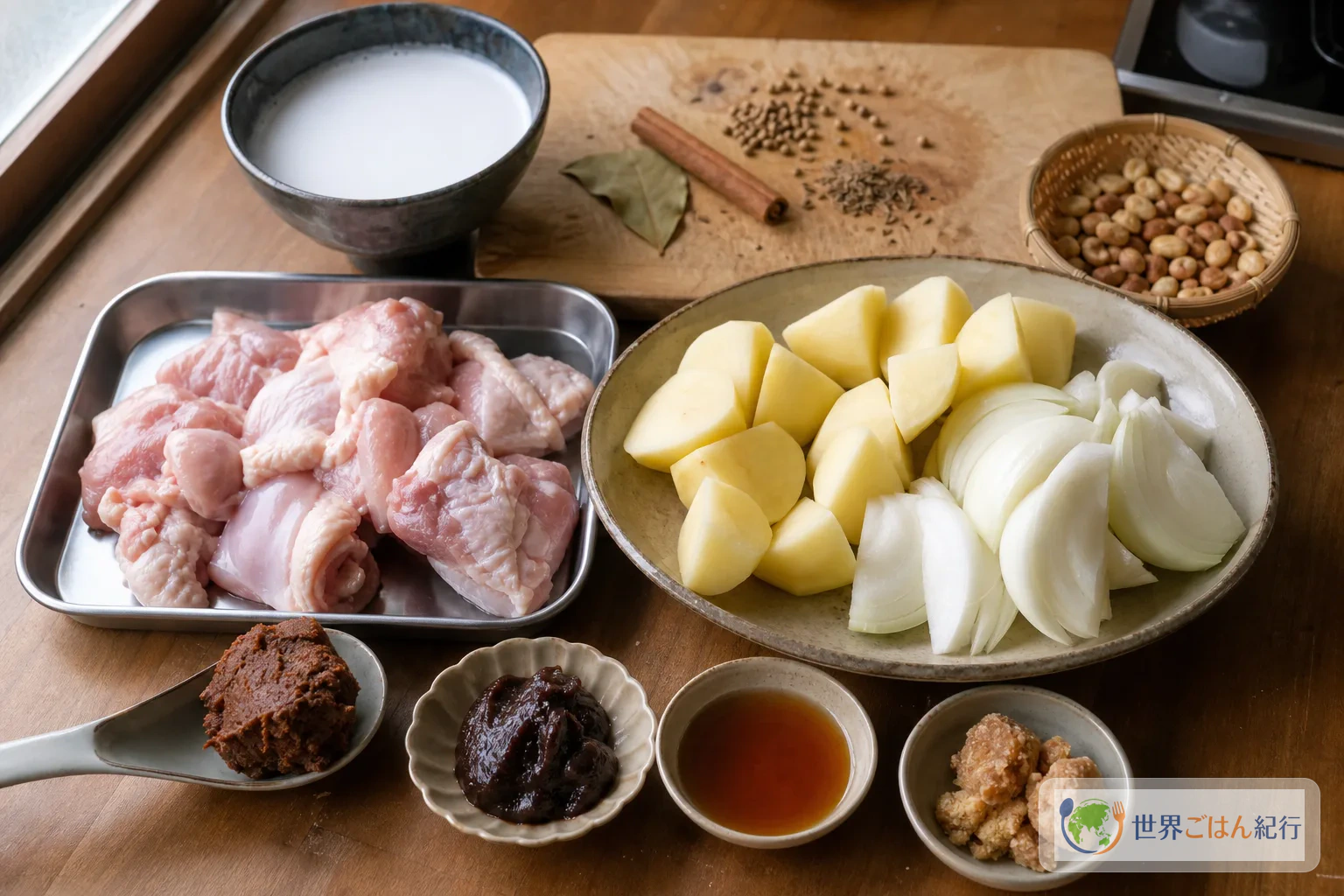
This serves 4. The chicken is built on thighs, which are easy to find and give flavor even in a short cook. If you use beef, see the substitution table later in the article and change the simmering time.
Be careful with peanuts, fish sauce, coconut and chicken. Store-bought pastes can contain shrimp, fish, dairy, wheat and soy. If you're cooking for a family, check the paste's ingredient label first.
Shopping notes: the ingredients people hesitate over
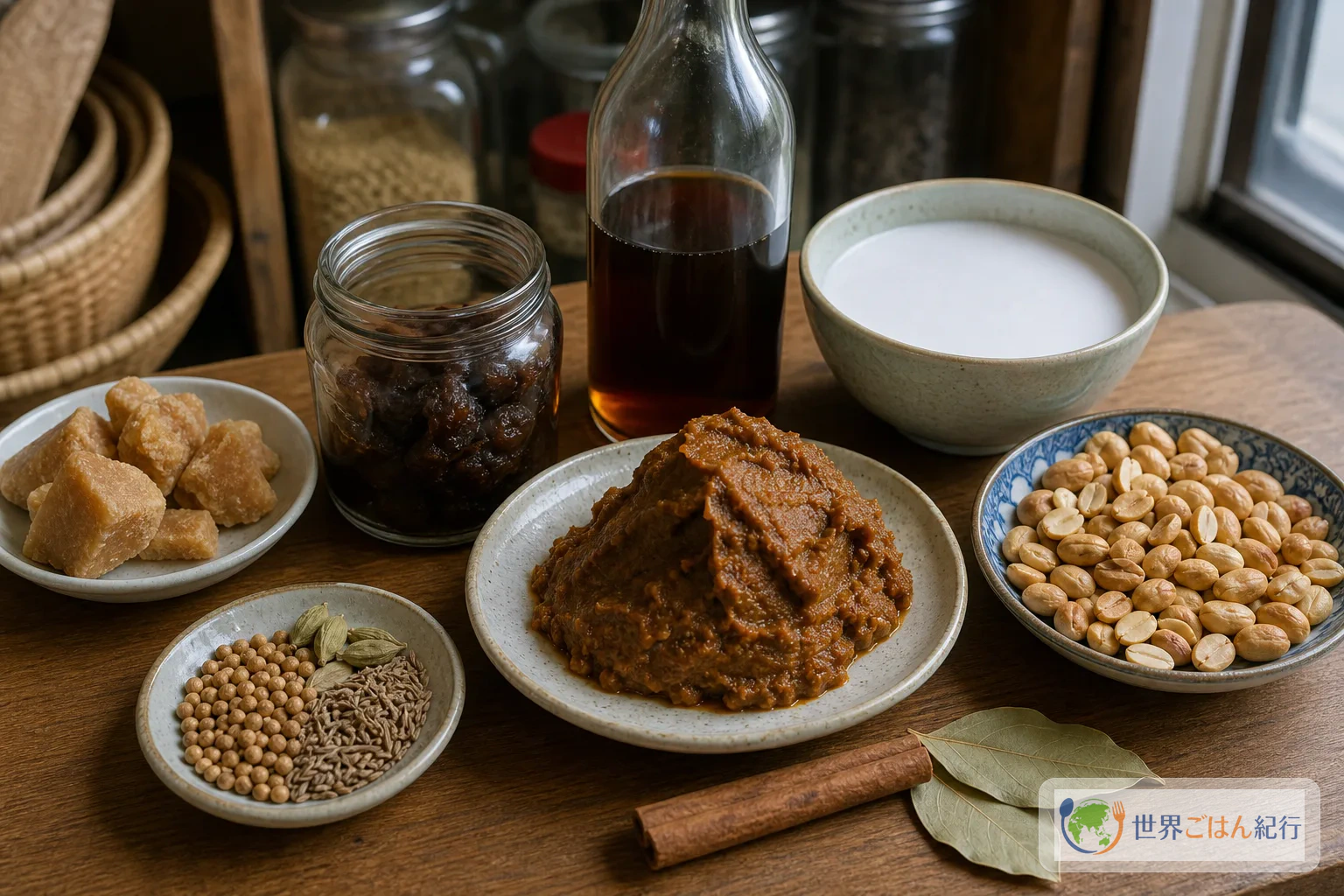
For massaman paste, a store-bought product from an import grocery or Thai grocery gives steady results. Choose one that smells of cinnamon and cardamom-type spices as well as red chili, lemongrass and galangal. Adding cinnamon to red curry paste will do in an emergency, but for the first time a paste made for massaman makes it easier to see where the flavor should land.
Tamarind, coconut milk and fish sauce decide this dish's flavor. The meat and potatoes can come from any supermarket, but if you buy these three together they can also go into your next pad Thai or tom yum goong (in Japanese).
Method: wake up the paste, keep the potatoes whole
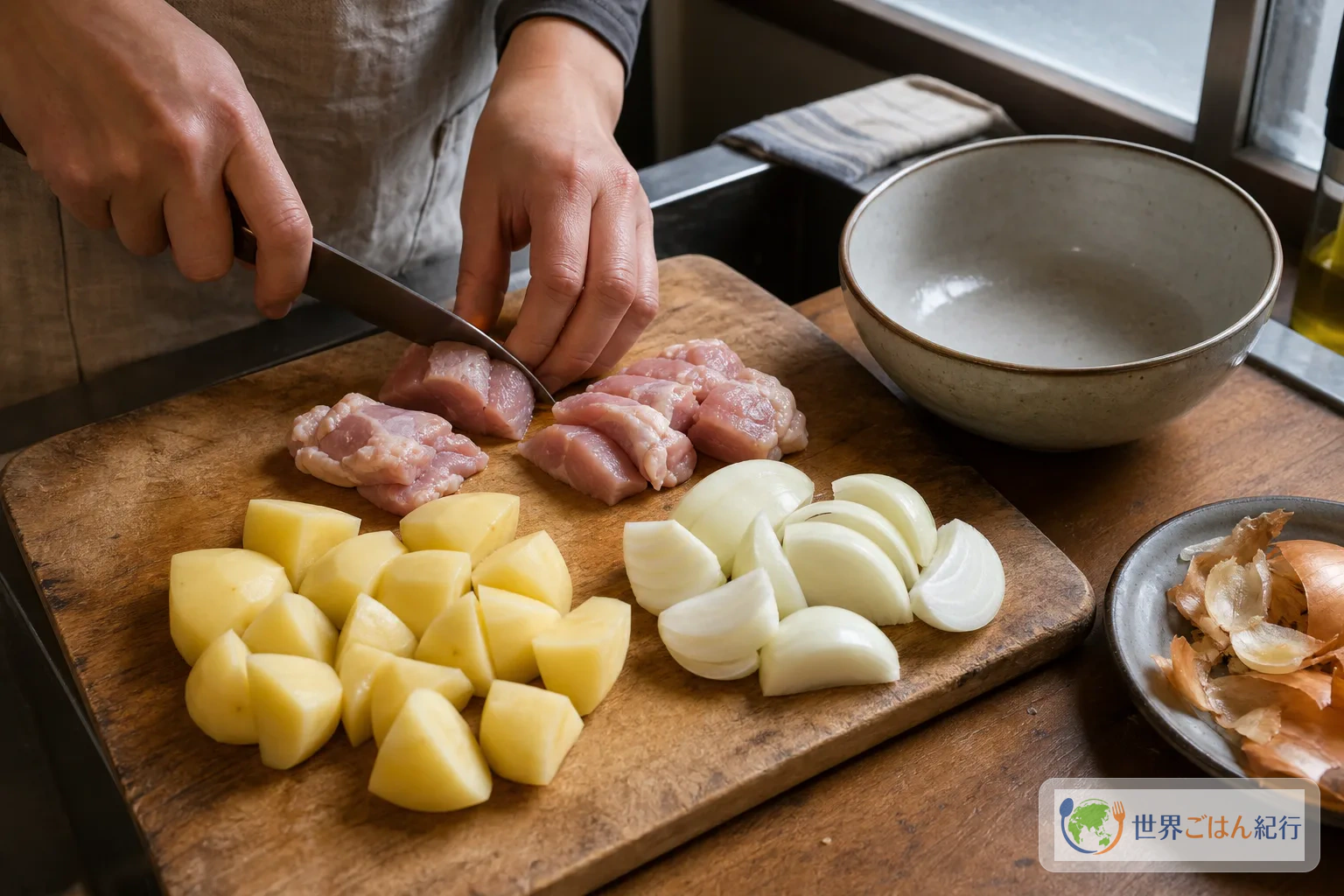
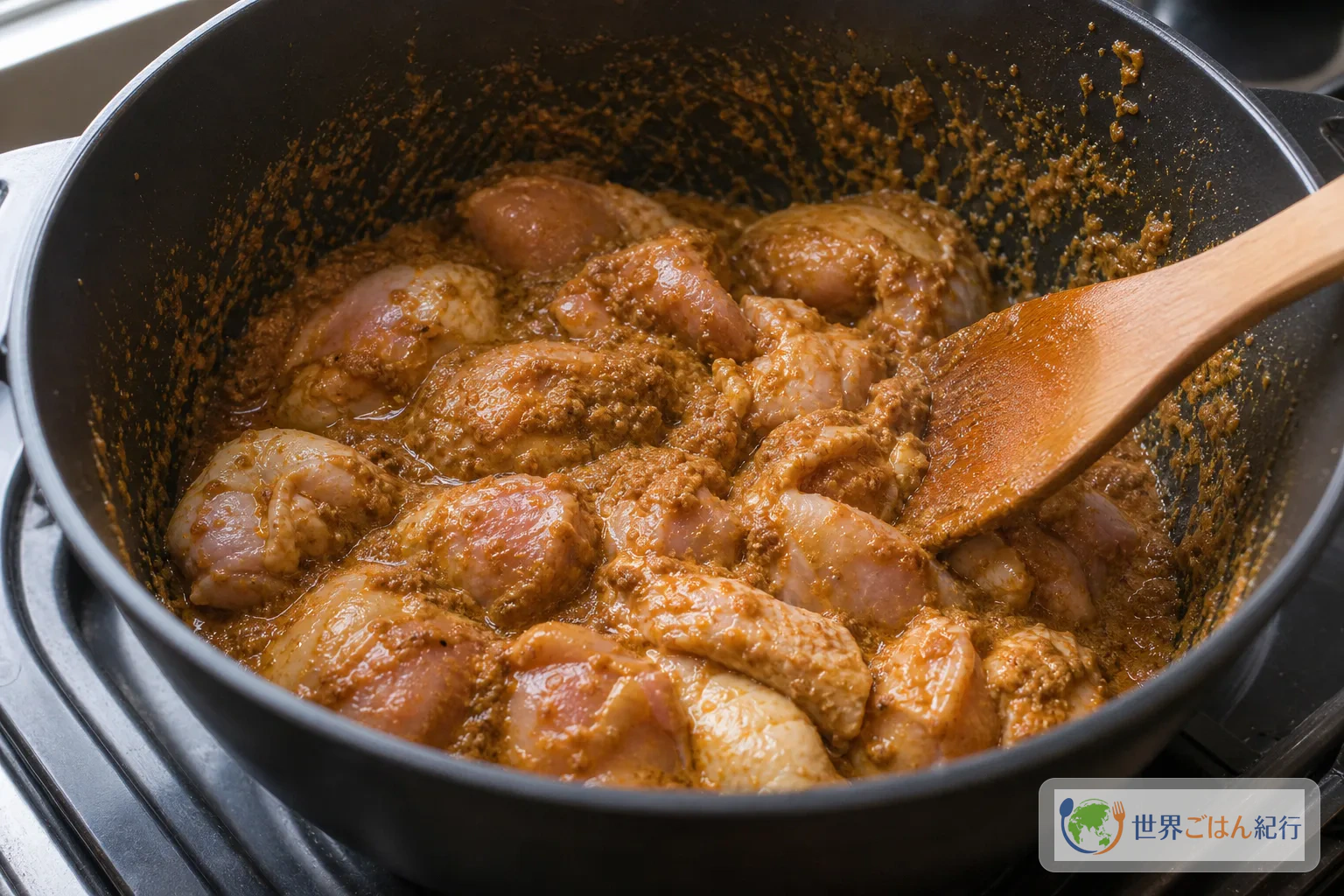
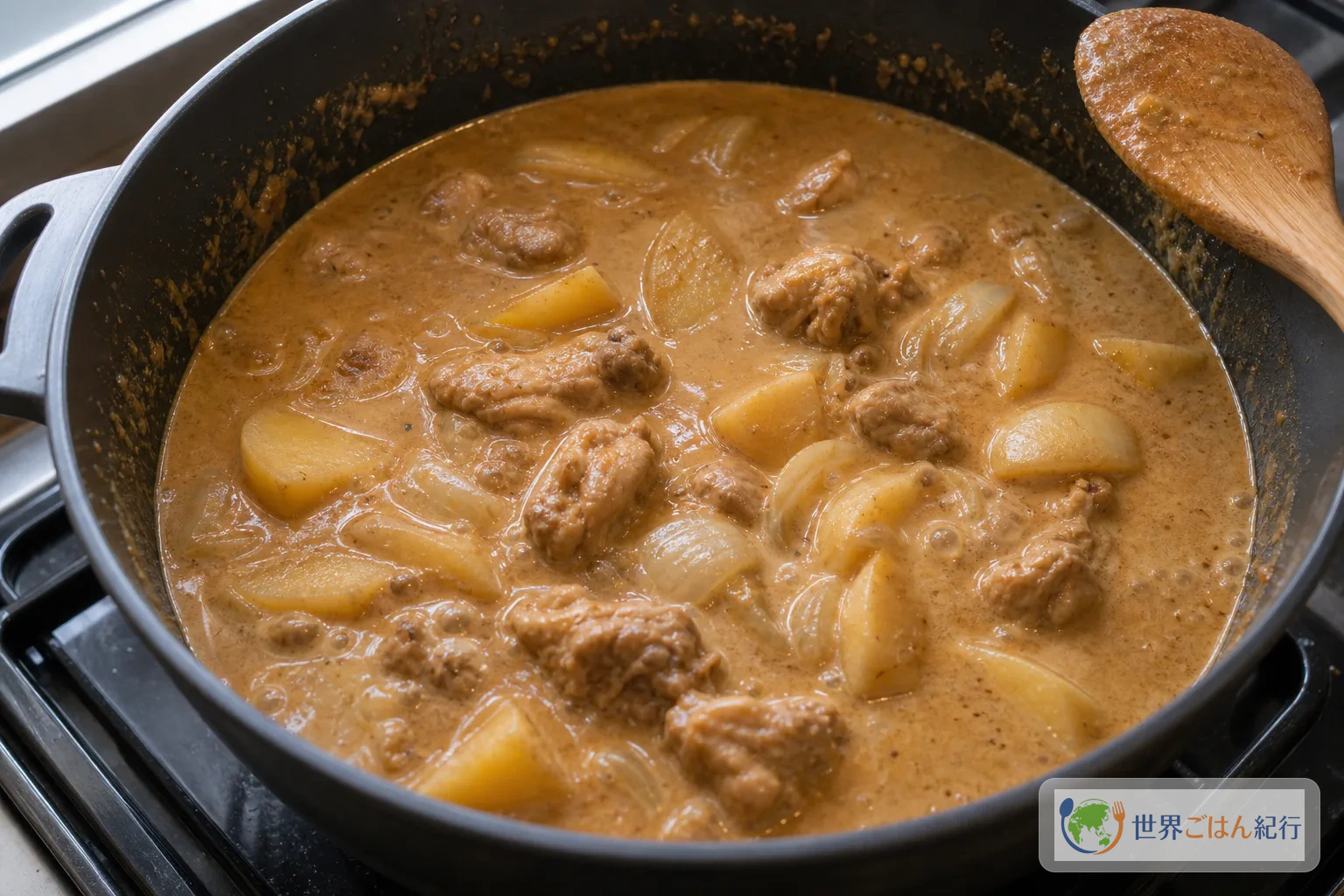
Massaman is made in this order: wake up the paste, coat the meat in aroma, simmer the potatoes gently, and finish by tuning it sweet and sour. If you cut everything before lighting the heat, you can move calmly before the paste scorches.
Tasting from the pot alone makes the sweetness and salt seem strong. Put a little curry on 1 tsp of rice and see whether sweetness, salt and sourness come through in turn after you chew. A flavor that tastes a little strong with the rice is just right at the table.
A table of substitutions to keep in a home kitchen
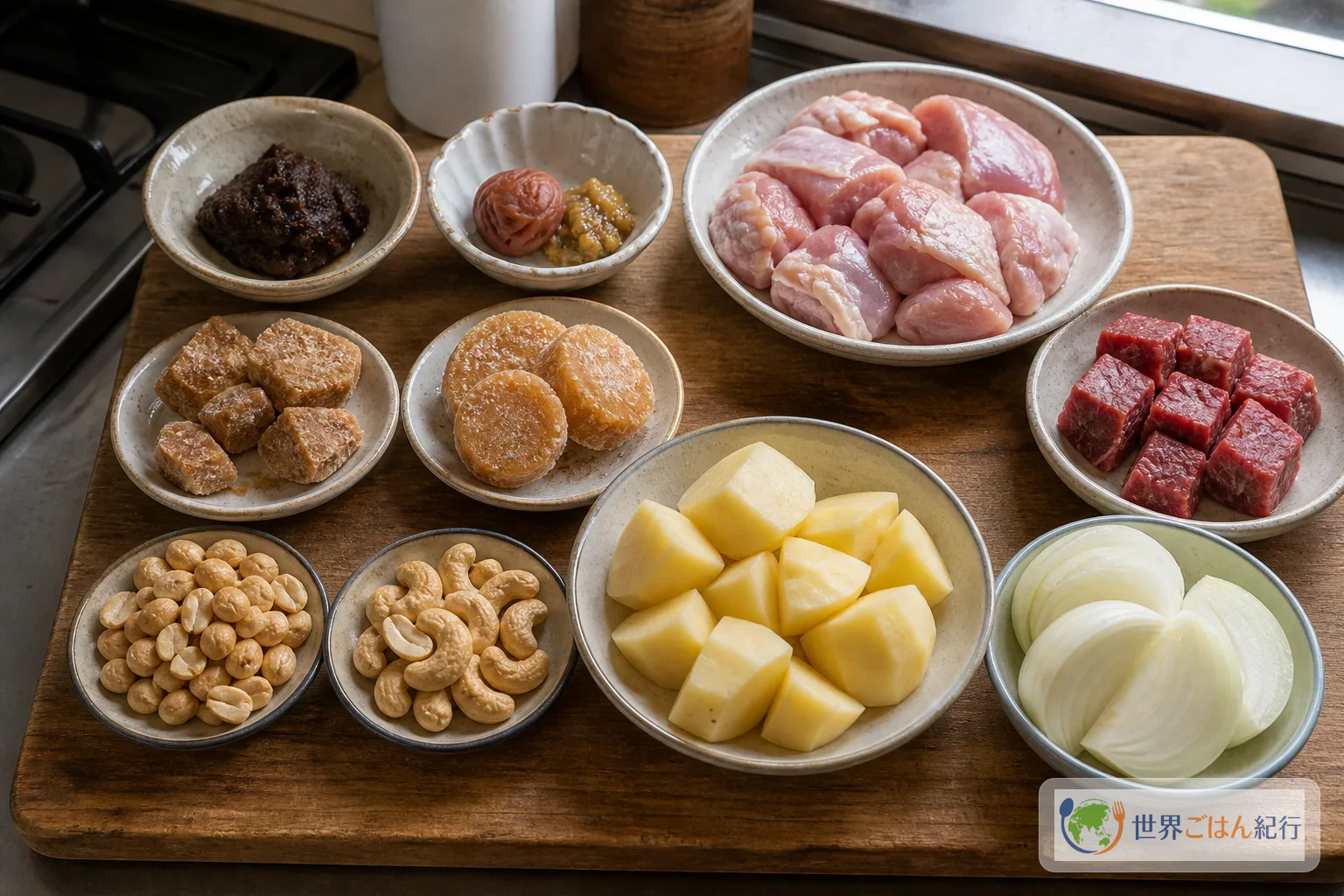
Massaman has a wide range in its meat and sweetener. But drop the paste, coconut, tamarind and fish sauce all at once and it becomes a sweet stew rather than a Thai curry. If you substitute, change one thing at a time.
| Ingredient to change | Substitute | How to use it |
|---|---|---|
| Chicken thighs | Beef shank, shoulder or short rib | Cut 600 g into 4 cm pieces and simmer over low heat for over 90 minutes. Add the potatoes for the last 25 minutes |
| Potatoes | Sweet potato, lotus root | Sweet potato adds sweetness, so reduce the sugar to 2 tsp. Cut lotus root 1.5 cm thick |
| Palm sugar | Raw cane sugar, dark brown sugar | Same amount of cane sugar. Dark brown sugar is strong, so start from 2 tsp |
| Tamarind | 2 tsp lemon juice, 1 tsp umeboshi (pickled plum) paste, 1/2 tsp cane sugar | For emergencies. Adding small amounts at the table rather than in the pot keeps the sourness from standing out |
| Peanuts | Cashews | Chop coarsely, same amount. If nuts are off the table, leave them out and add 50 ml more coconut milk for richness |
| Fish sauce | 1 tbsp light soy sauce, 1/4 tsp salt | You won't get the fish sauce aroma. It is less Thai, but works as a home version |
A beef version gives a deeper aroma but turns tough in a short cook. BBC Good Food's beef version also builds on a long simmer with potatoes and onion. A workable split is chicken thighs for weeknight dinners, and beef shank on a weekend when you can watch the pot.
What goes wrong: split, thin, too sweet
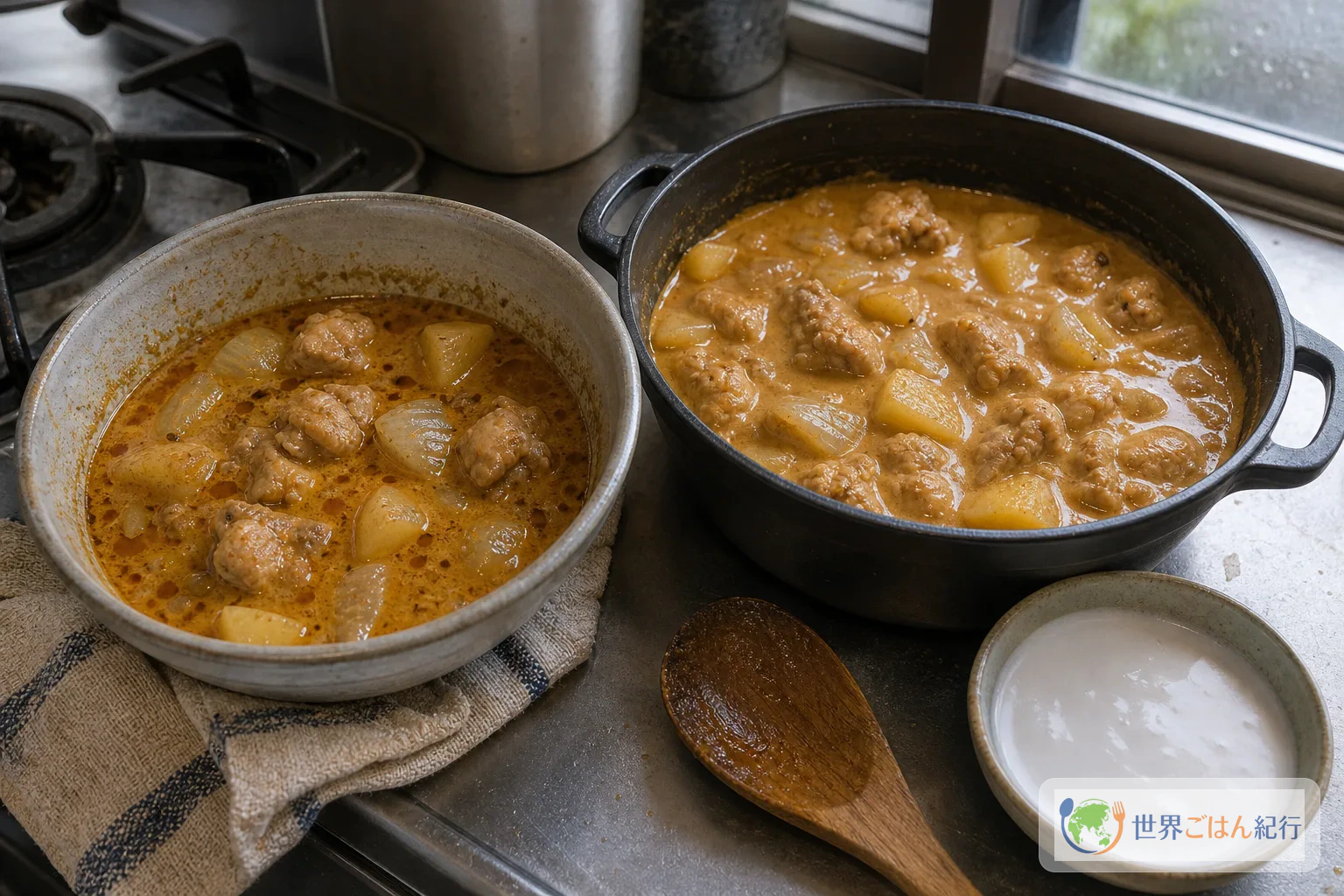
Oil floats in large pools
Coconut oil separating out is not in itself a failure. The problem is when hard boiling makes the oil droplets large and the sauce grainy. Drop to low heat, add 2 tbsp coconut milk and stir for 1 minute. Resting 5 minutes before serving lets the oil settle into fine droplets.
The sauce is thin
There is too much water, or the potatoes and onion have released moisture. Take off the lid and reduce over medium-low heat for 3–5 minutes. Adding fish sauce first makes it too salty, so cook off the moisture first, bring it back to a thickness that thinly coats a wooden spoon, and then taste.
Sweet but doesn't snap into focus
Either too much sugar was added or the tamarind is weak. Dissolve 1 tsp tamarind in 2 tsp water and blend it in over low heat for 1 minute. If it lacks salt, add 1 tsp fish sauce. Pouring lemon juice straight in and in quantity sharpens the aroma and moves away from massaman's roundness.
The potatoes break down
They were cut too small or stirred too hard over high heat. Cut them into 3 cm pieces and during the simmer turn them from the bottom with a wooden spoon only about twice. Next time use waxy potatoes; with starchy potatoes, test with a skewer at 15 minutes and turn the heat off early, finishing in residual heat.
The paste smells raw
The time frying in coconut cream may have been too short. Adding water right after the paste leaves the spices powdery. Next time fry it over medium heat for 3–4 minutes until oil seeps out around the edge. If it looks like it will scorch, add 2 tsp oil rather than water, which loses less aroma.
Storage and menus: spoon a little over rice the next day
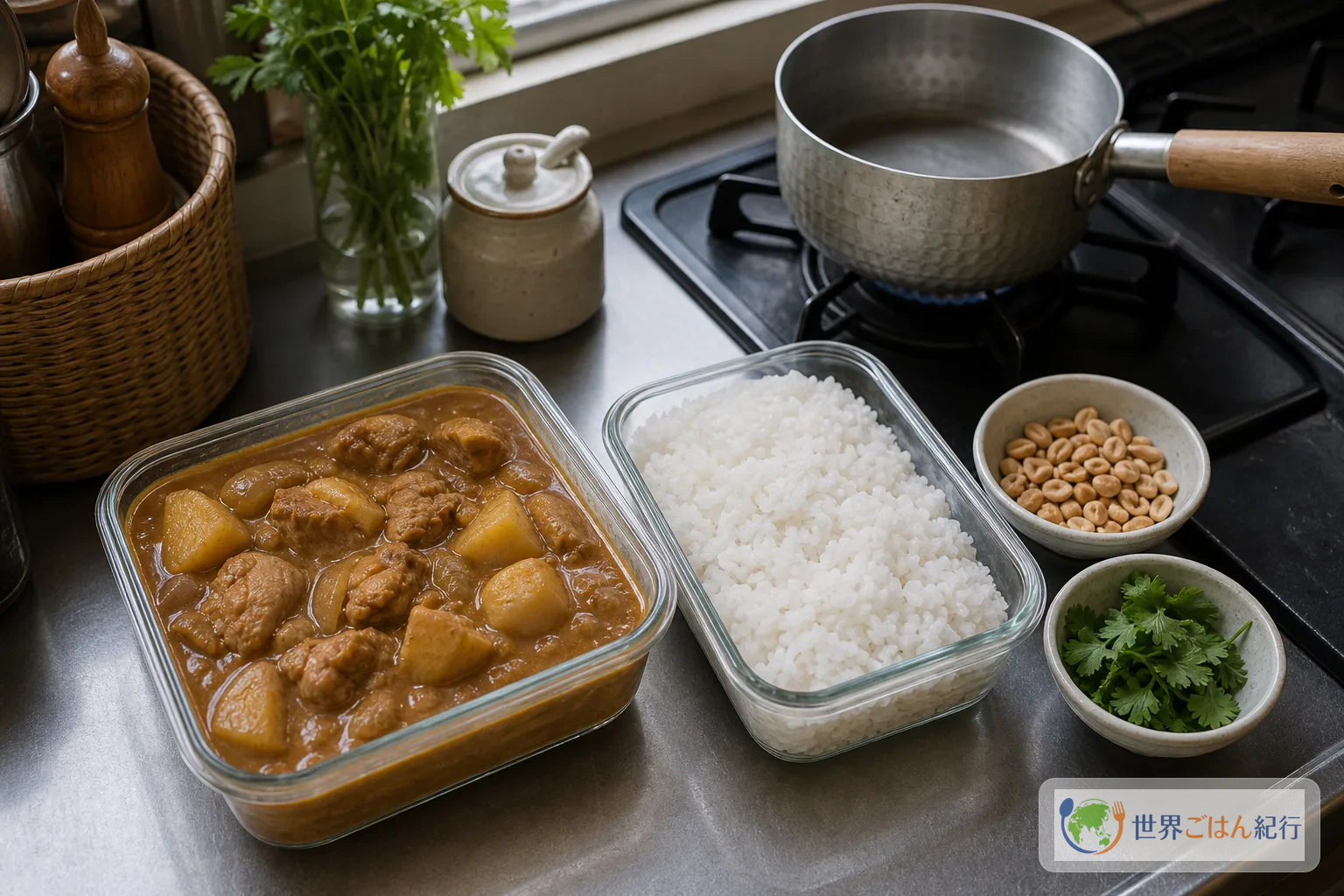
Once the steam has gone, refrigerate the curry and rice in separate containers. As a guide, refrigerator storage is within 2 days, and freezer storage is 2–3 weeks. Potatoes change texture a little when frozen, so if you plan to freeze, either mash them small and stir them into the sauce, or finish eating the potatoes first and freeze only the rest.
To reheat, plan on 6–8 minutes over low heat on the stove, or 2 minutes at 600 W in a microwave, stirring, then 1 minute more. Boiling hard makes the coconut split coarsely, so stop as soon as it bubbles. Peanuts go soft in storage, so adding them just before eating keeps them toasty.
For the menu, the meal comes together if you cut the rich curry with sourness and texture. For an all-Thai table, a little of the herbaceous gapao, the sour som tam and the savory kai yang spread the direction of the heat. On a lighter day, a quick palate cleanser of cucumber and red onion left for just 10 minutes with vinegar, salt and a little sugar is plenty.
Frequently asked questions
Q1. Can I make it with only store-bought massaman paste?
Yes. But paste alone can be strong in sweetness and salt from the start and weak in sourness. Adding tamarind, fish sauce and sugar separately, even in small amounts, gives you room to adjust the flavor. Stop at 70 g of paste at first, and at the end taste it with rice rather than from the pot.
Q2. Is it okay without peanuts?
If there is a nut allergy, don't add them. The toasty flavor will be less, but adding 50 ml more coconut milk and scattering a little crispy fried onion at the end makes up for it. If you substitute cashews, you still need to check for allergies.
Q3. How do I change it for beef?
Cut 600 g of beef shank or shoulder into 4 cm pieces, coat them in paste, increase the water to 300 ml, and simmer over low heat for over 90 minutes. Don't add the potatoes and onion at the start; add them for the last 25 minutes. Season with tamarind and fish sauce after the beef is tender enough to break with chopsticks.
Q4. If the coconut milk splits, can I still eat it?
Yes. In Thai curry, a little oil floating on the surface is normal. Only when it becomes a large layer of oil, lower the heat, stir in 2 tbsp coconut milk, rest it for 5 minutes and then serve. Removing all the oil for looks takes the aroma out too.
Q5. Can I serve it as a mild curry for children?
It depends on how hot the paste is. Reduce the paste to 50 g from the start and build the outline with fish sauce and tamarind. It is safer for adults to add chili oil or chilies at the table. Adding more sugar to make it sweet leads to a flavor you tire of.
Sources
- National Geographic, "Deconstructing massaman curry, Thailand's mellow classic", updated April 13, 2023, https://www.nationalgeographic.com/travel/article/deconstructing-massaman-curry-thailand-mellow-classic
- Michelin Guide Thailand, "What Is Massaman Curry and Where to Find the Best Bowl in Thailand", https://guide.michelin.com/th/en/article/features/iconic-dishes-what-is-massaman-curry-thailand
- Temple of Thai, "Thai Massaman Curry Recipe", https://www.templeofthai.com/recipes/massaman_curry.php
- BBC Good Food, "Beef massaman curry recipe", https://www.bbcgoodfood.com/recipes/beef-massaman-curry
- Thai Food Guide, "Massaman Curry", https://www.thaifoodguide.com/recipes/massaman-curry



