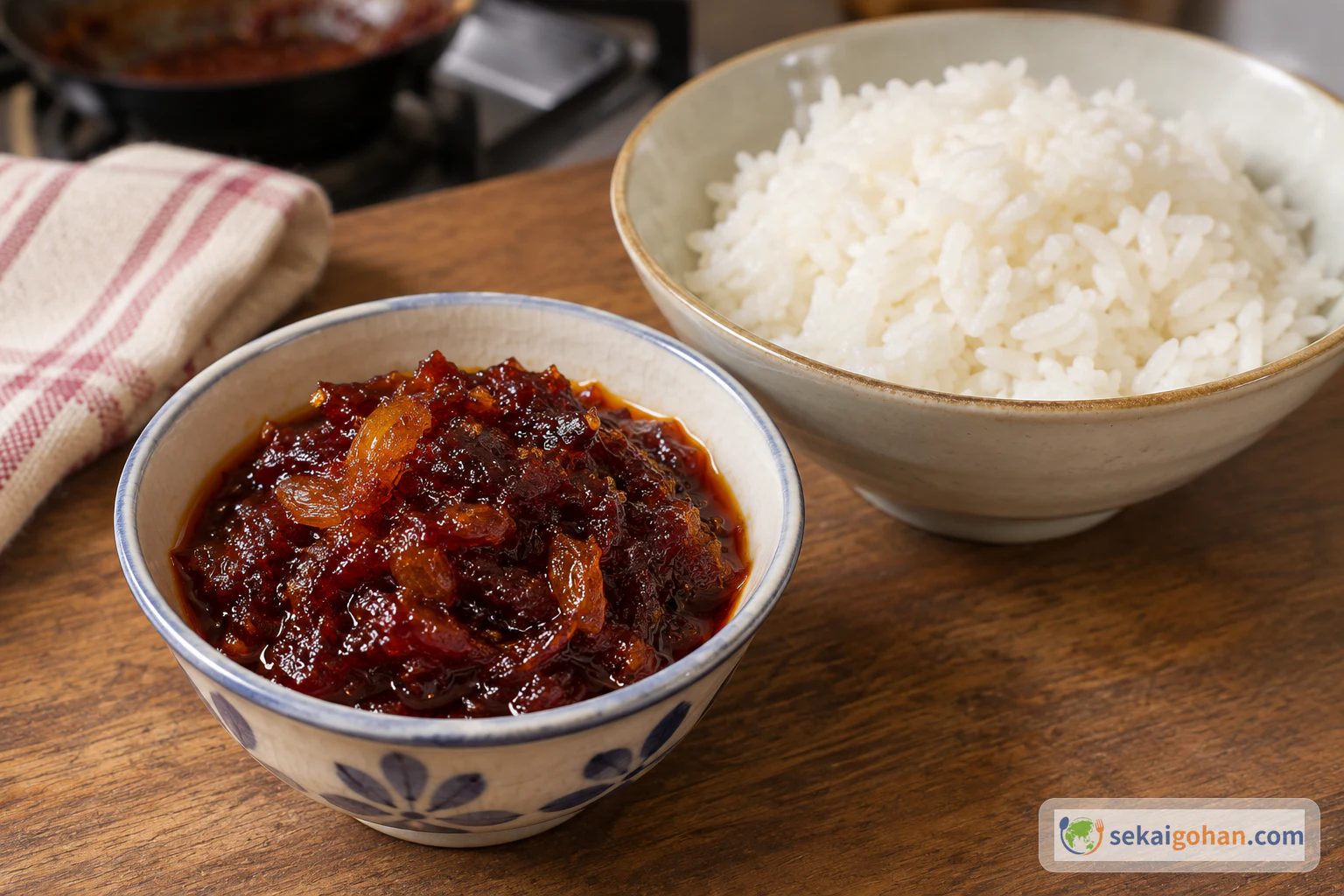
Nam Phrik Phao: Fried Aromatics and Dried Chiles Brought Together in Oil
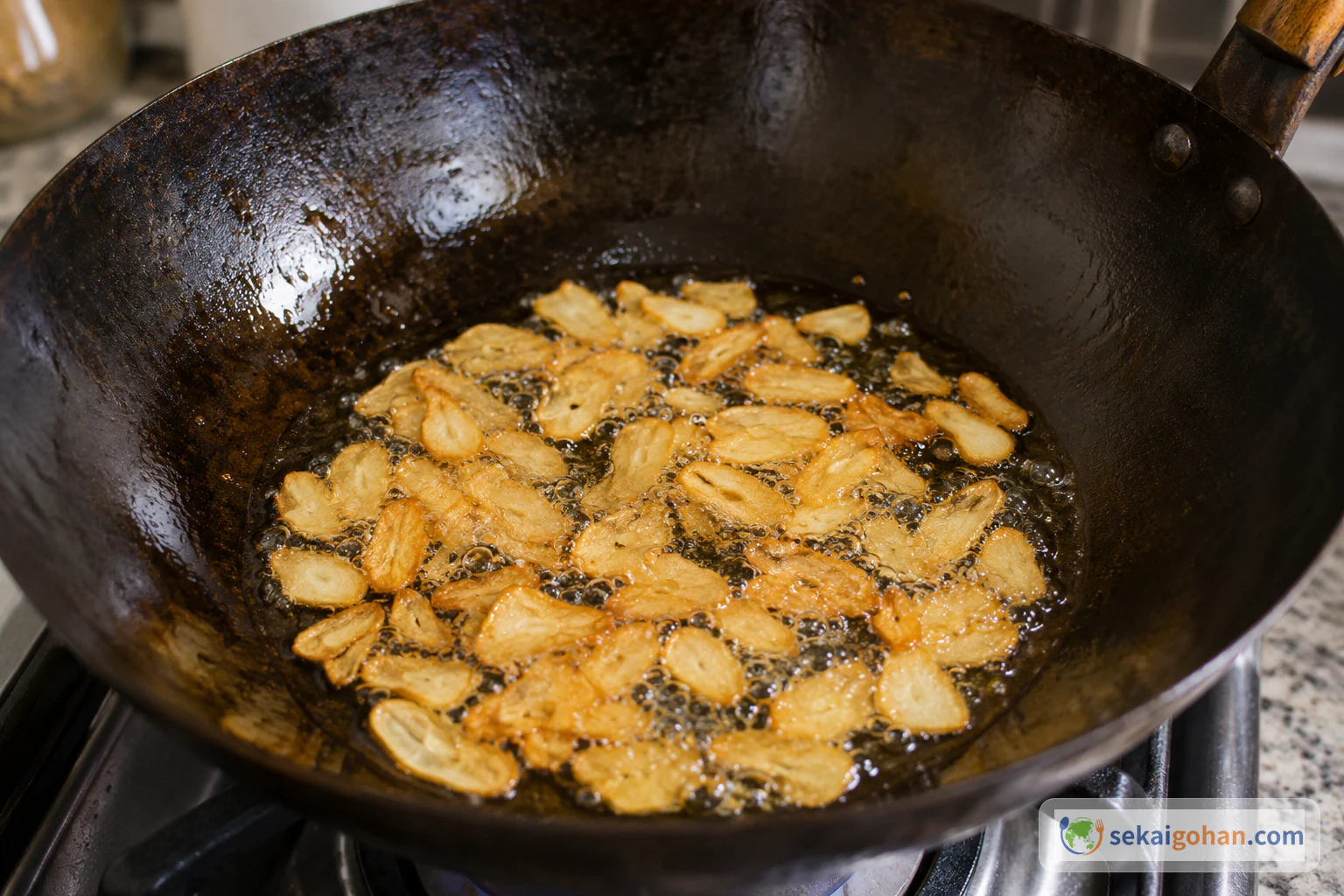
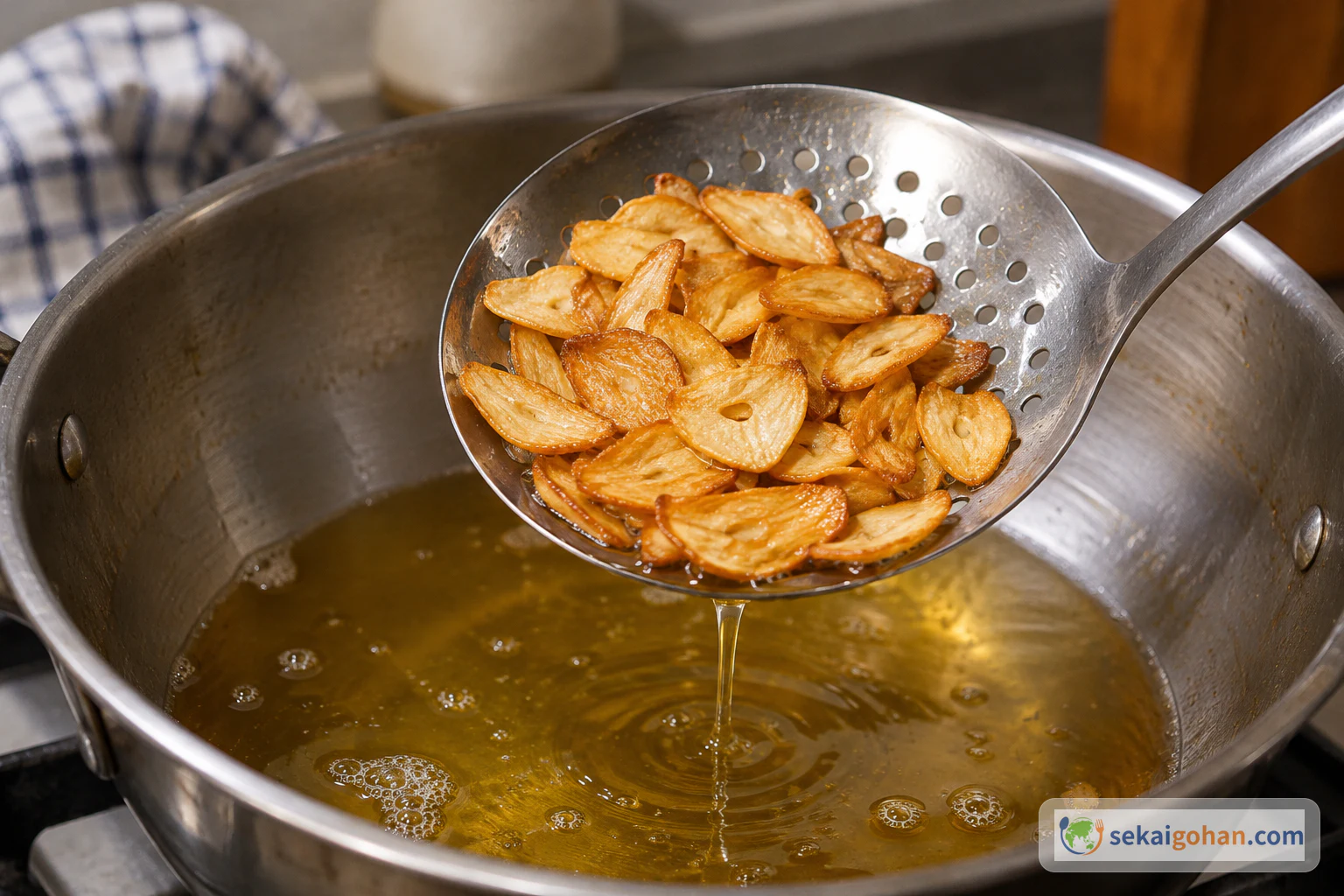
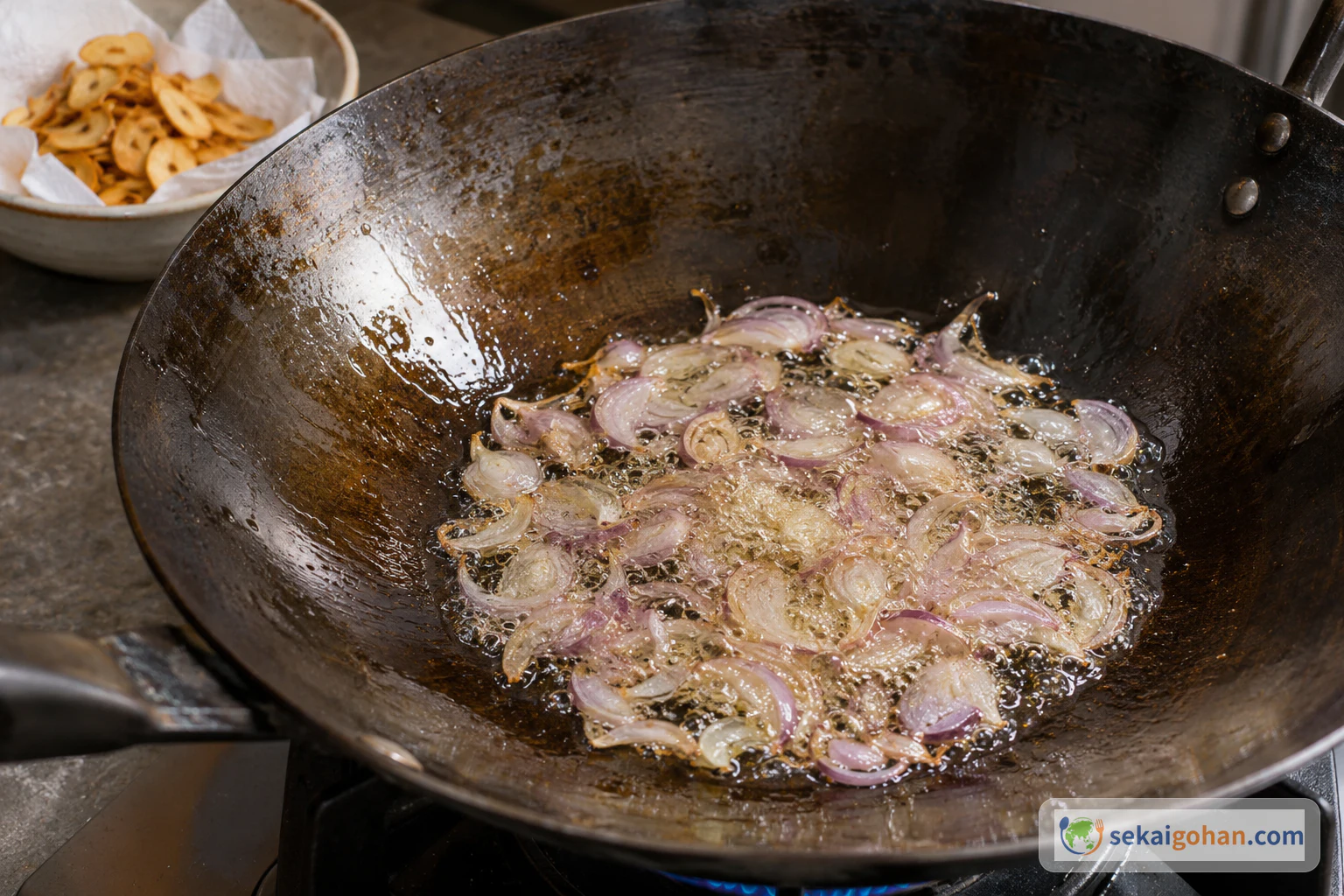
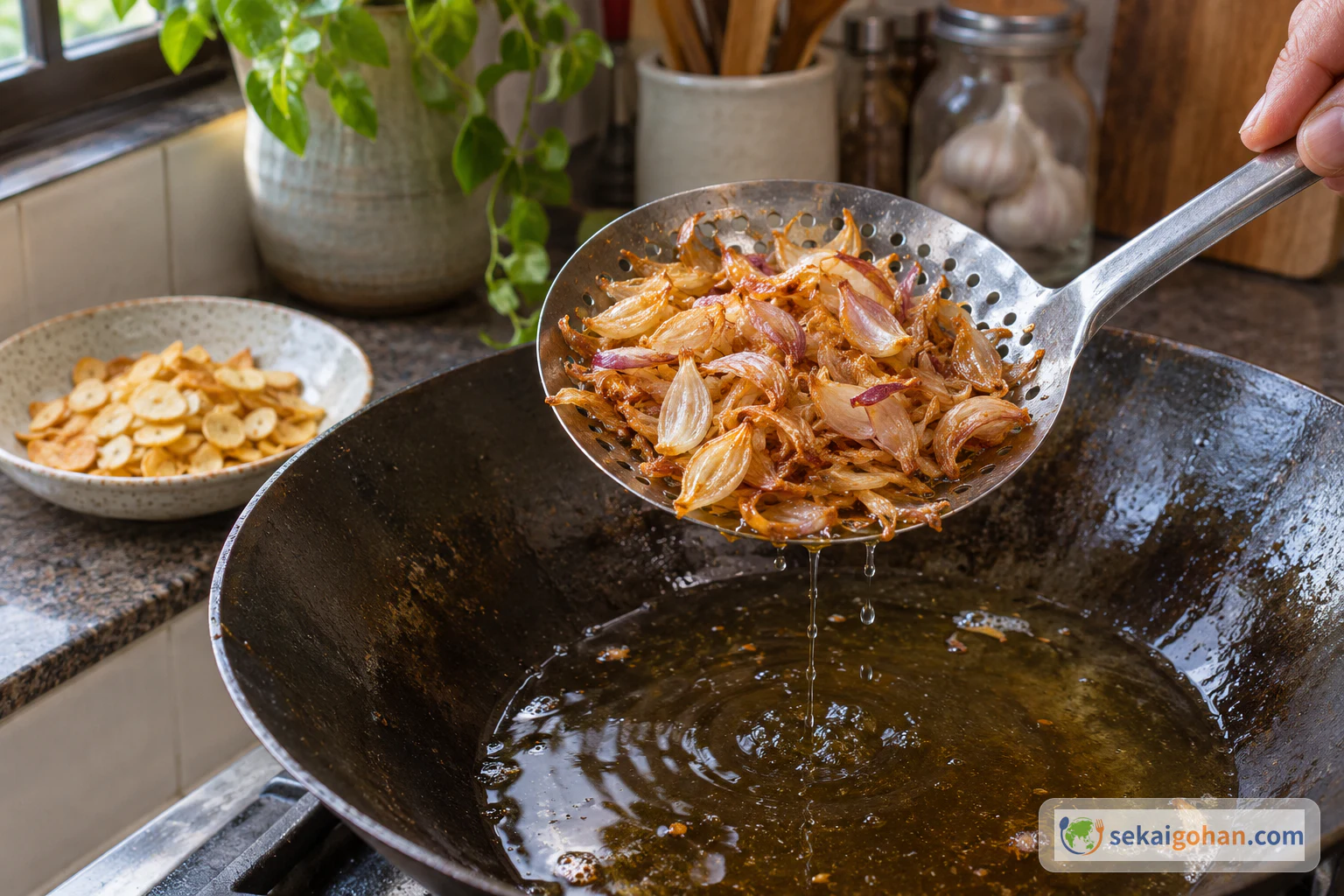
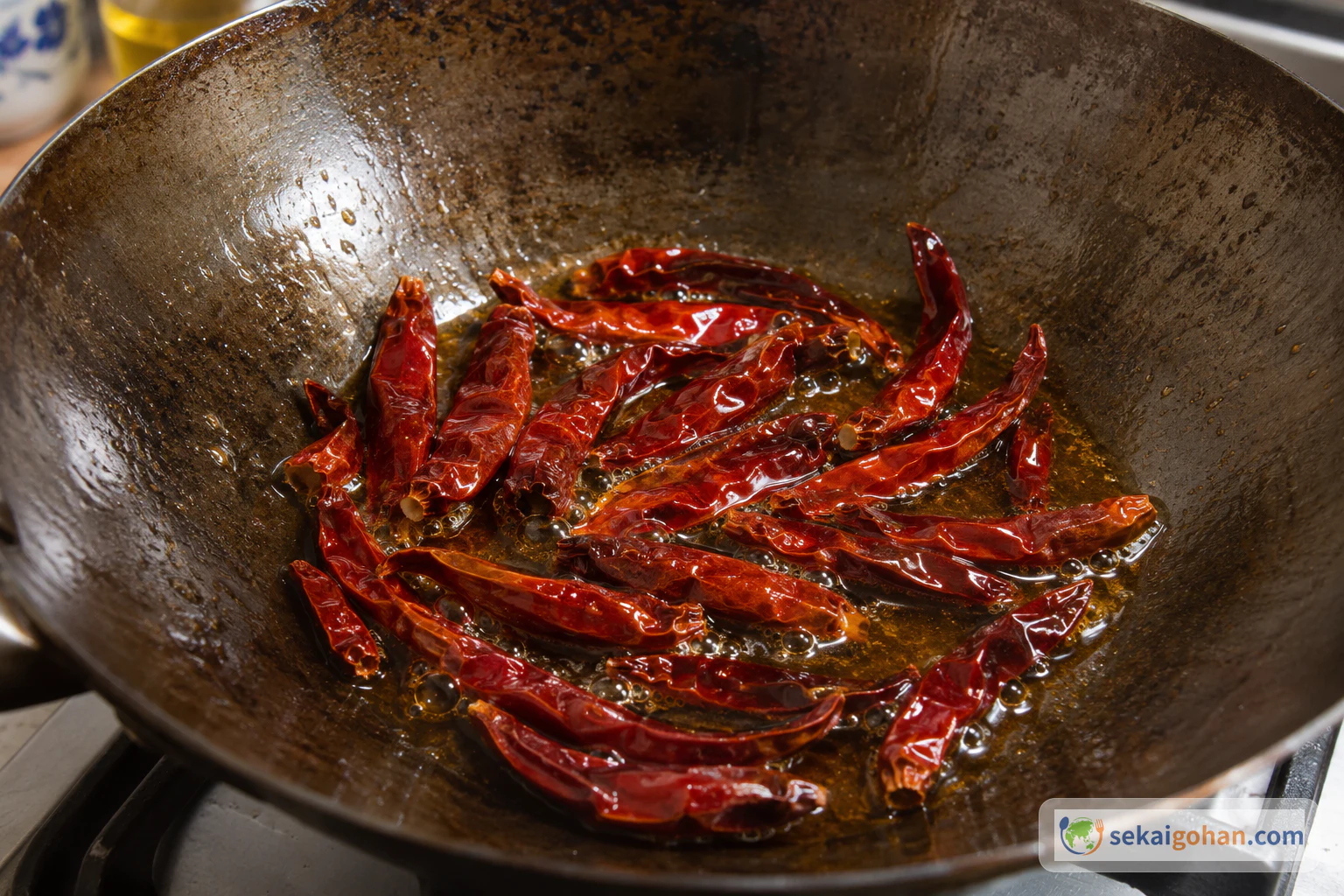
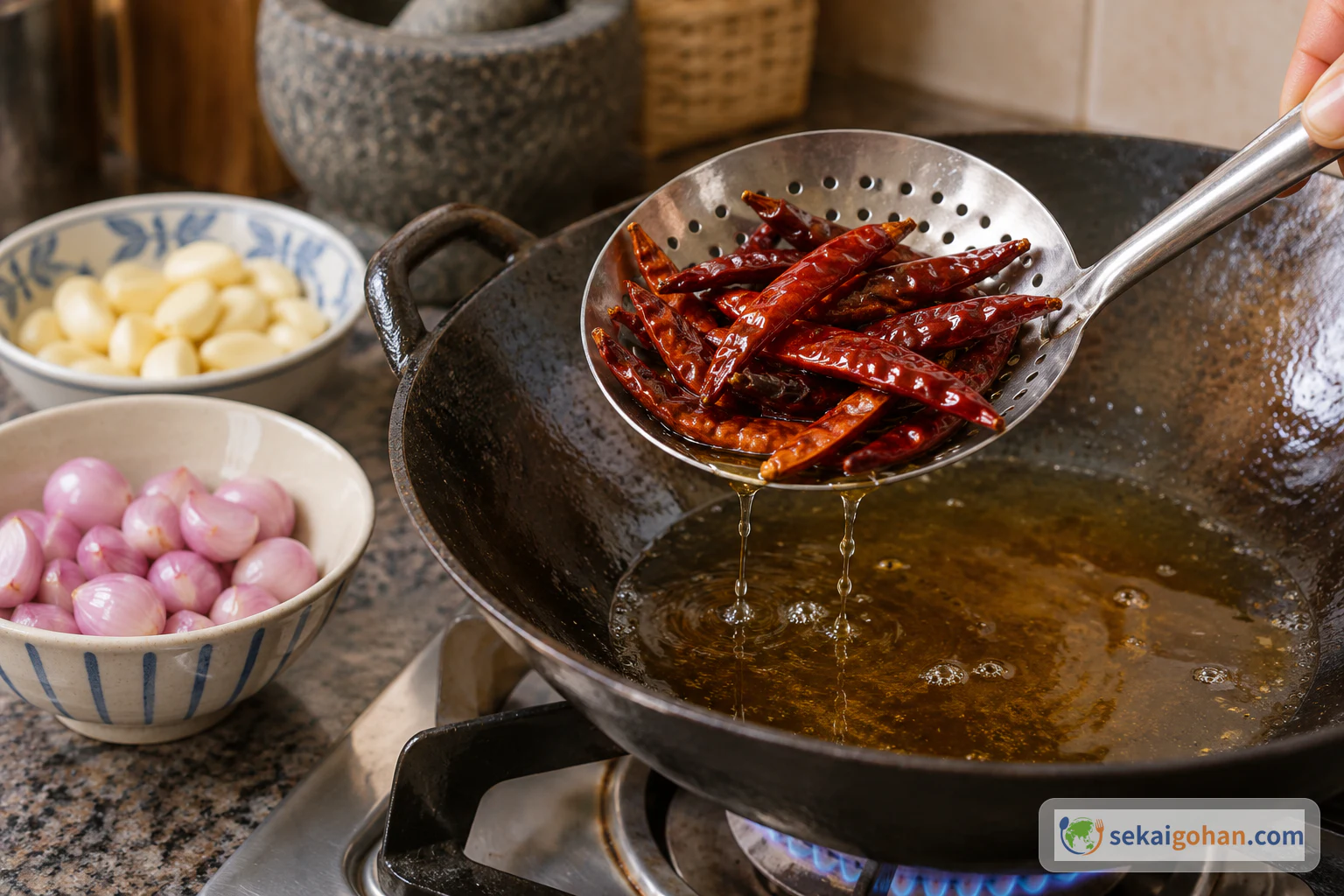
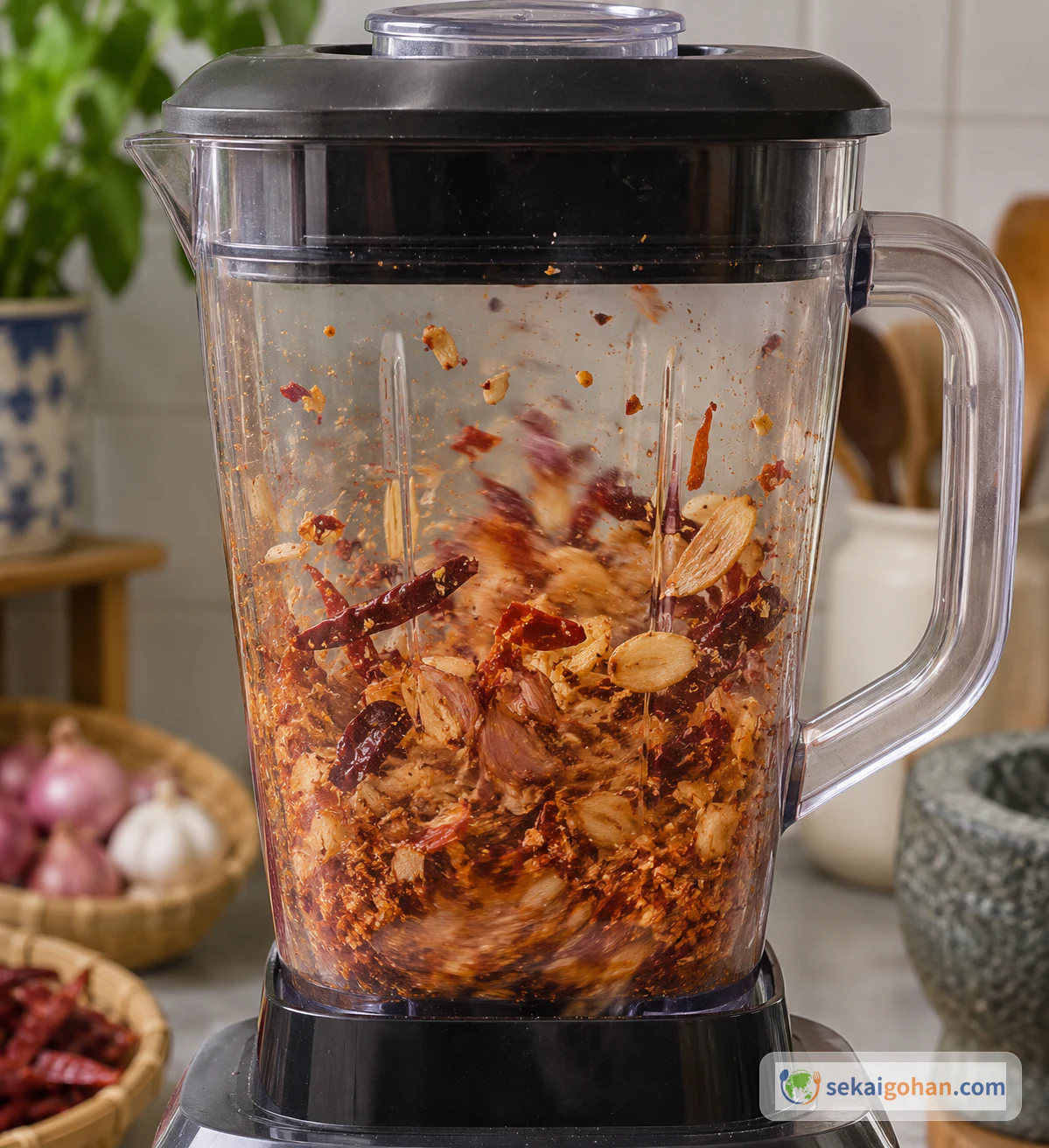
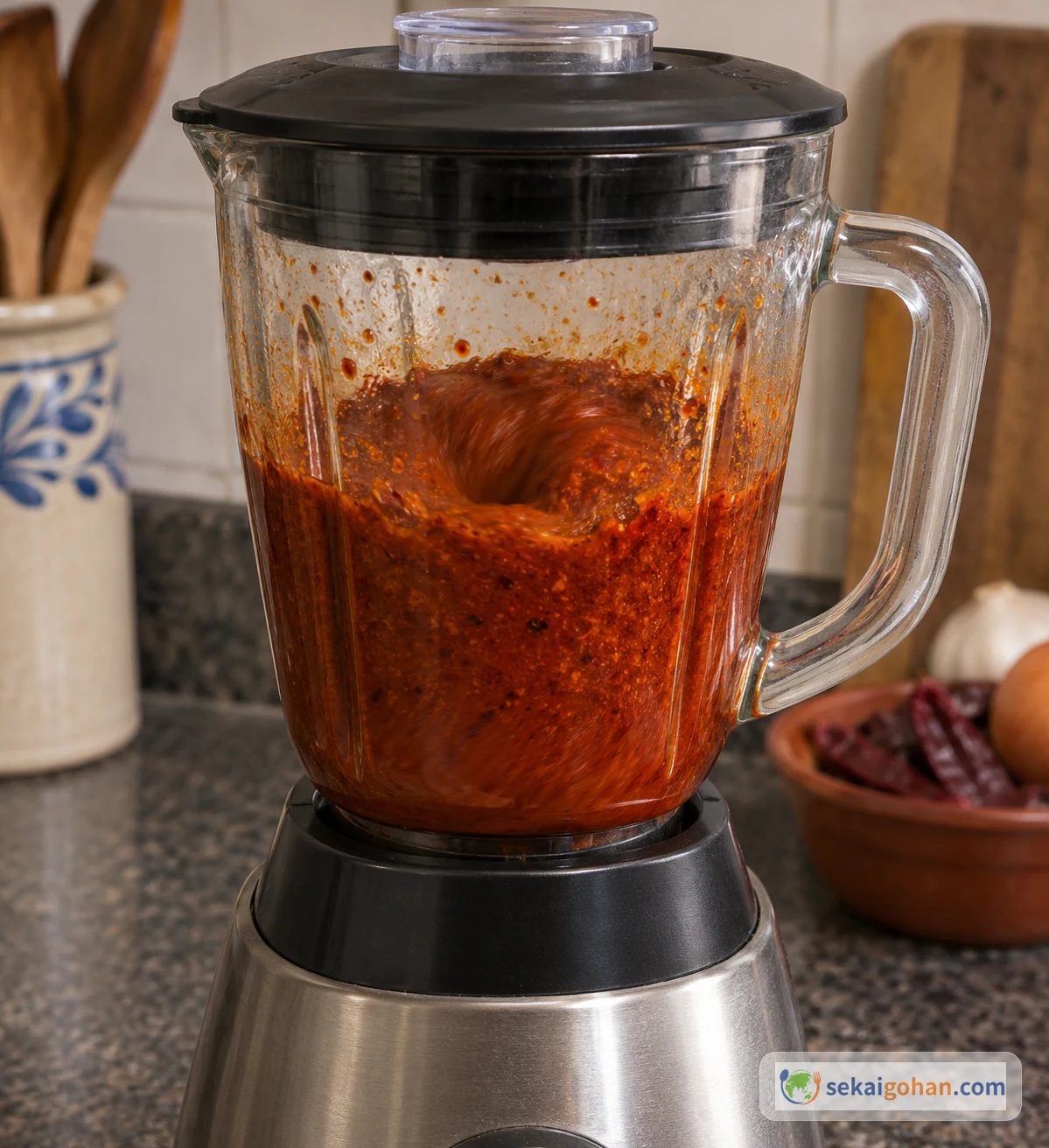
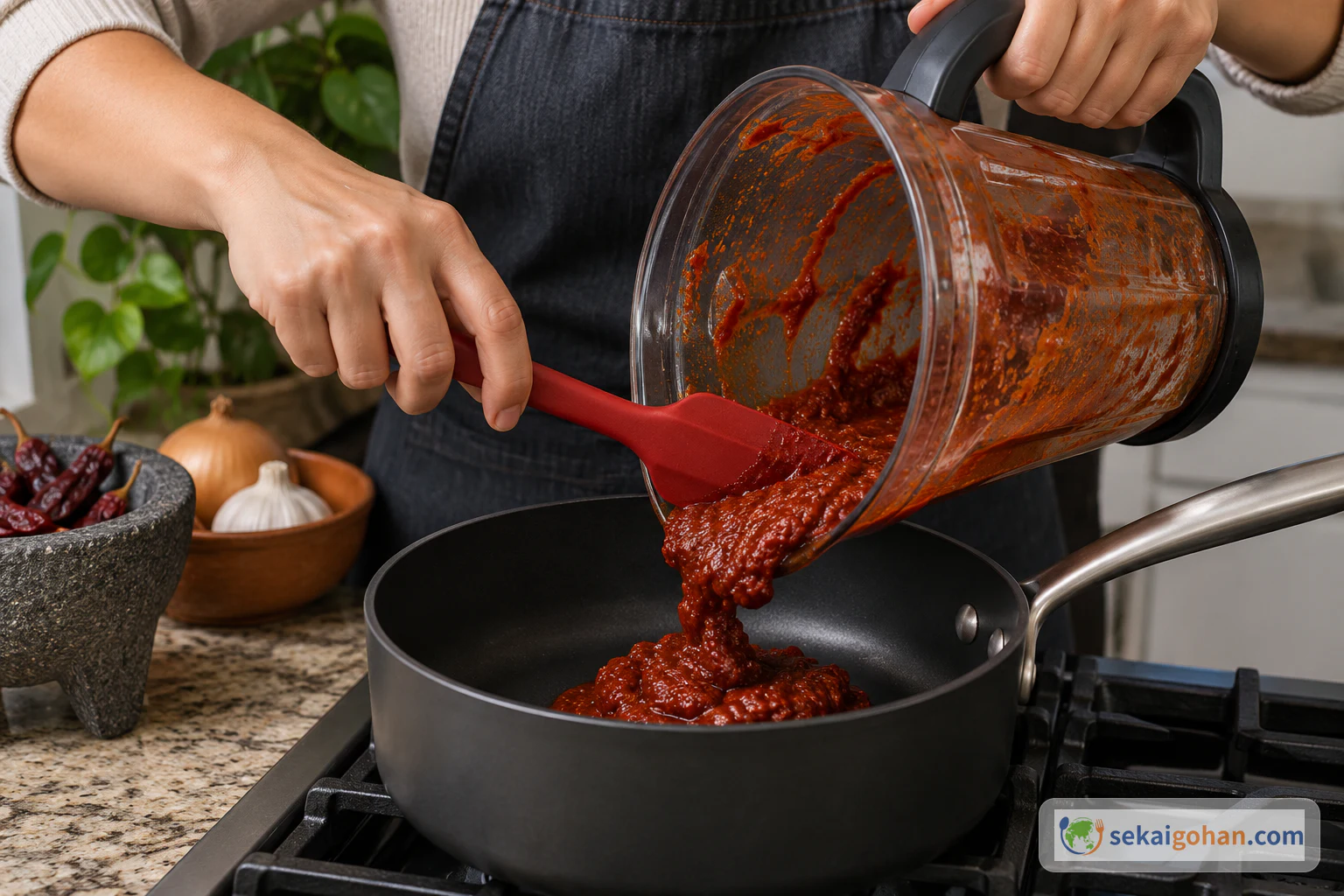
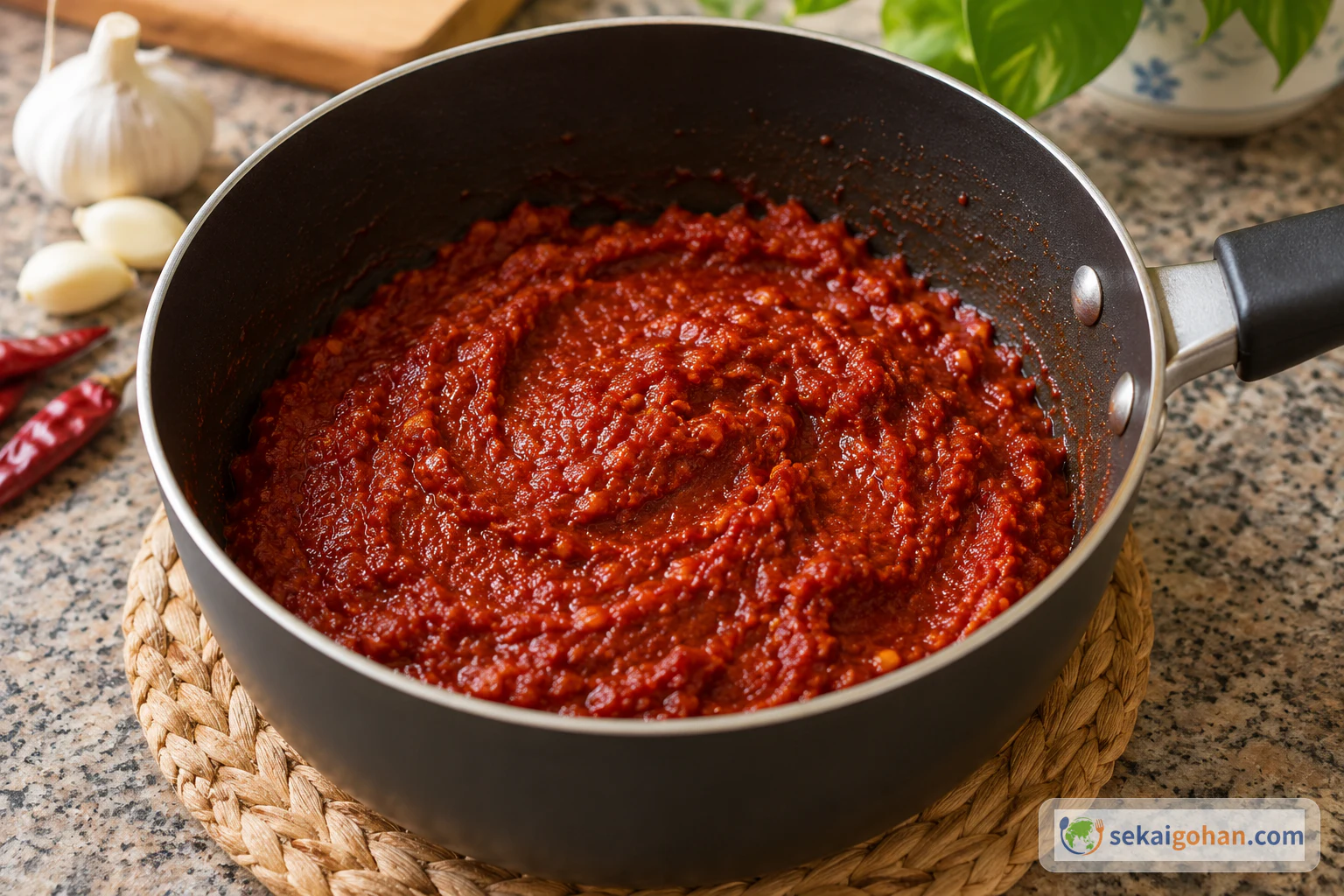
Fry the garlic, shallots and dried chiles separately until golden. Blend them with just ½ cup of the same oil, then season the paste briefly over low heat. Refrigerate any you keep and use it within 4 days.
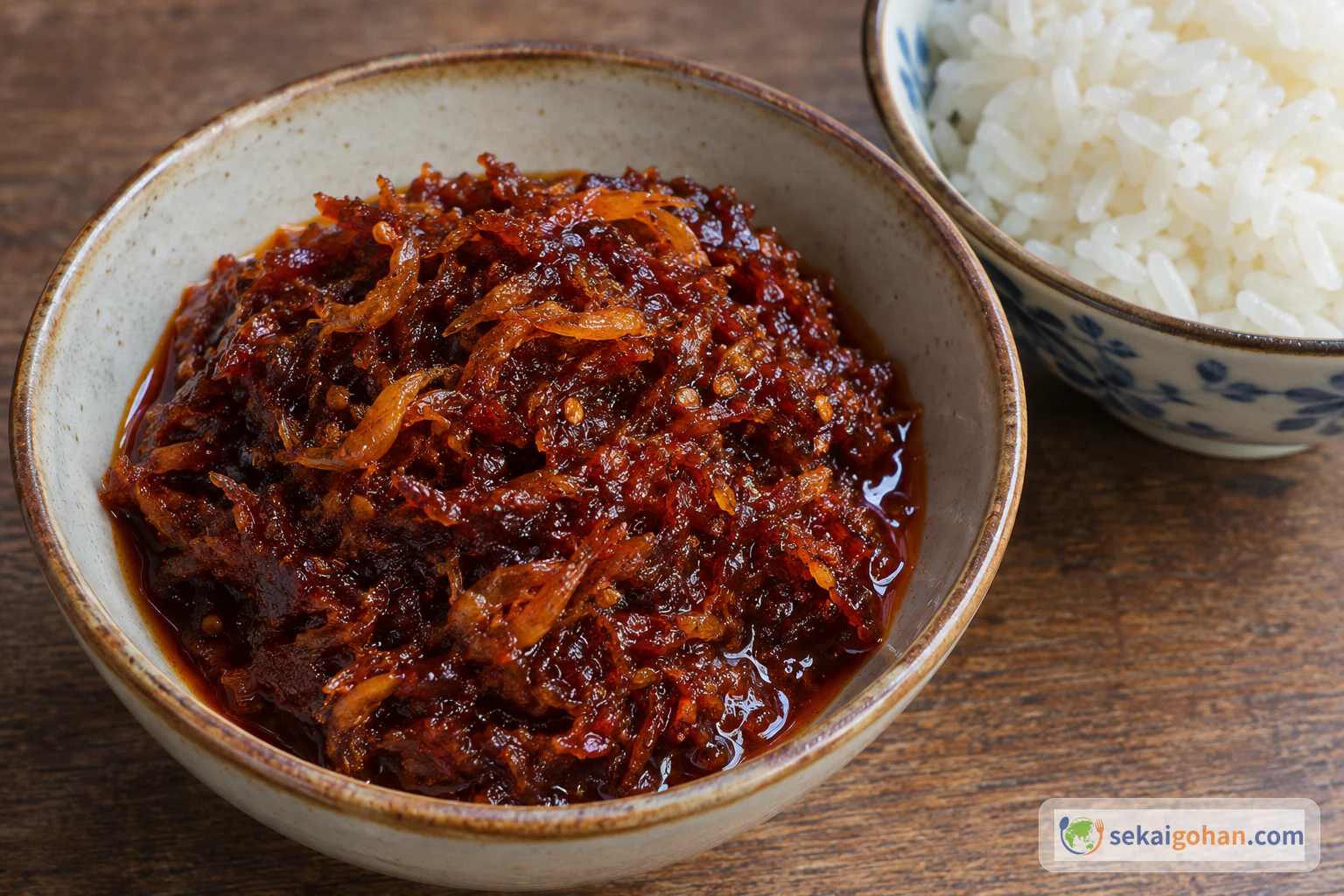
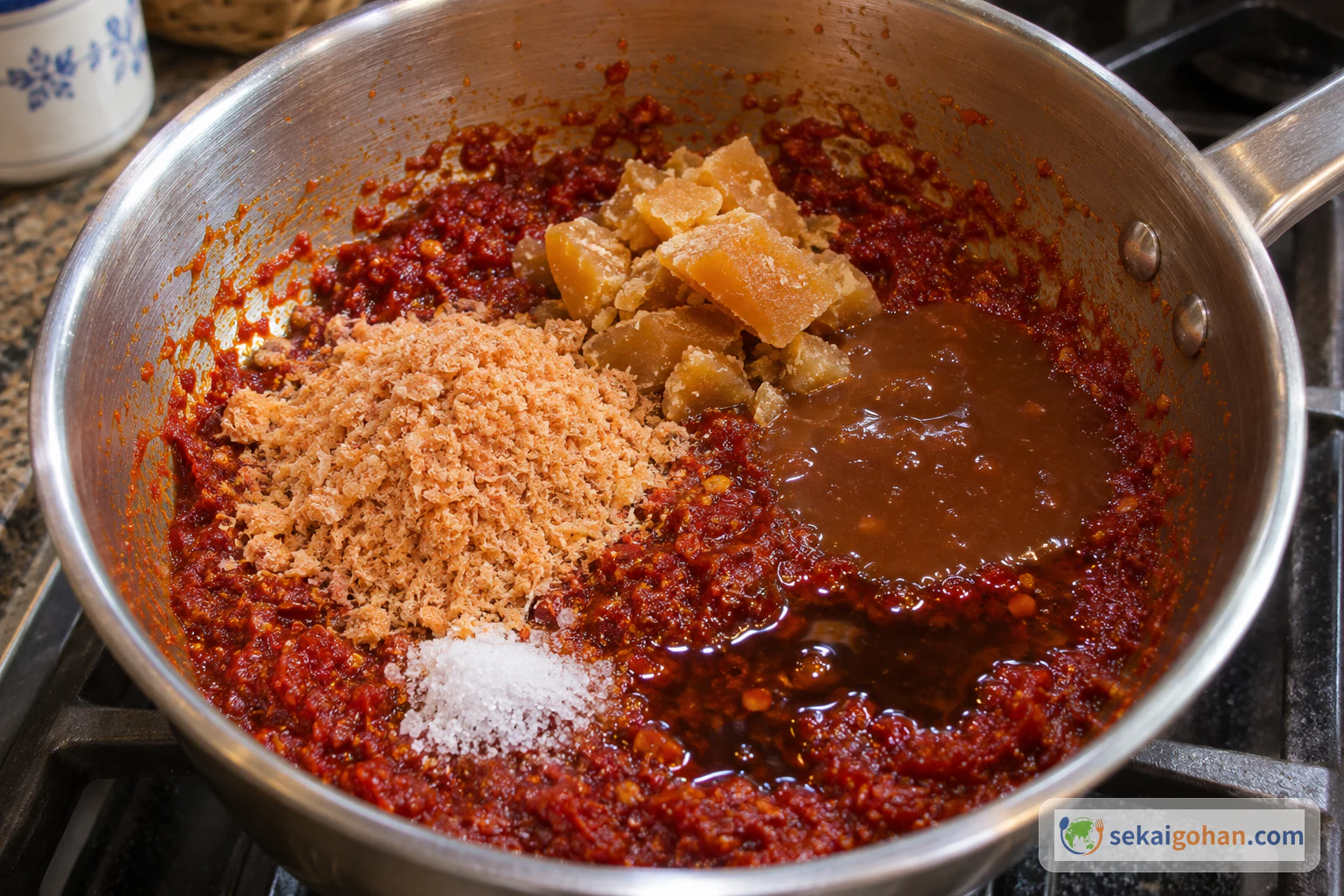
A dark red paste can go two ways at a Thai table: into a pot of tom yum, or into a small bowl beside rice. Nam phrik phao (น้ำพริกเผา, also spelled nam prik phao or nam prik pao) is built from dried red chiles and fried aromatics held together with oil. Ground dried shrimp, palm sugar, tamarind juice and fish sauce then bring savory, sweet and sour notes.
This article follows one recipe: "Roasted Chile Paste / Nam Prik Phao" from The Culinary Institute of America's World Flavors: Thailand, credited to Chai Siriyarn of Marnee Thai Restaurant. Other published versions differ considerably, so this is one version rather than the definitive one. You can explore more of the country's cooking from our Thailand page.
We have not kitchen-tested this recipe, and we have not run pH or storage tests on it. The 1½-cup yield is the figure printed with the CIA recipe, not something we measured.
Not the same paste as nam prik kapi
"Nam phrik" covers a wide family, and this article does not mix its types. Nam prik kapi is a dip built on kapi (fermented shrimp paste), fresh chiles and lime. Nam phrik phao as made here starts from dried chiles and fried garlic and shallots, then uses ground dried shrimp and a short cook over low heat.
Ingredients: Makes 1½ Cups
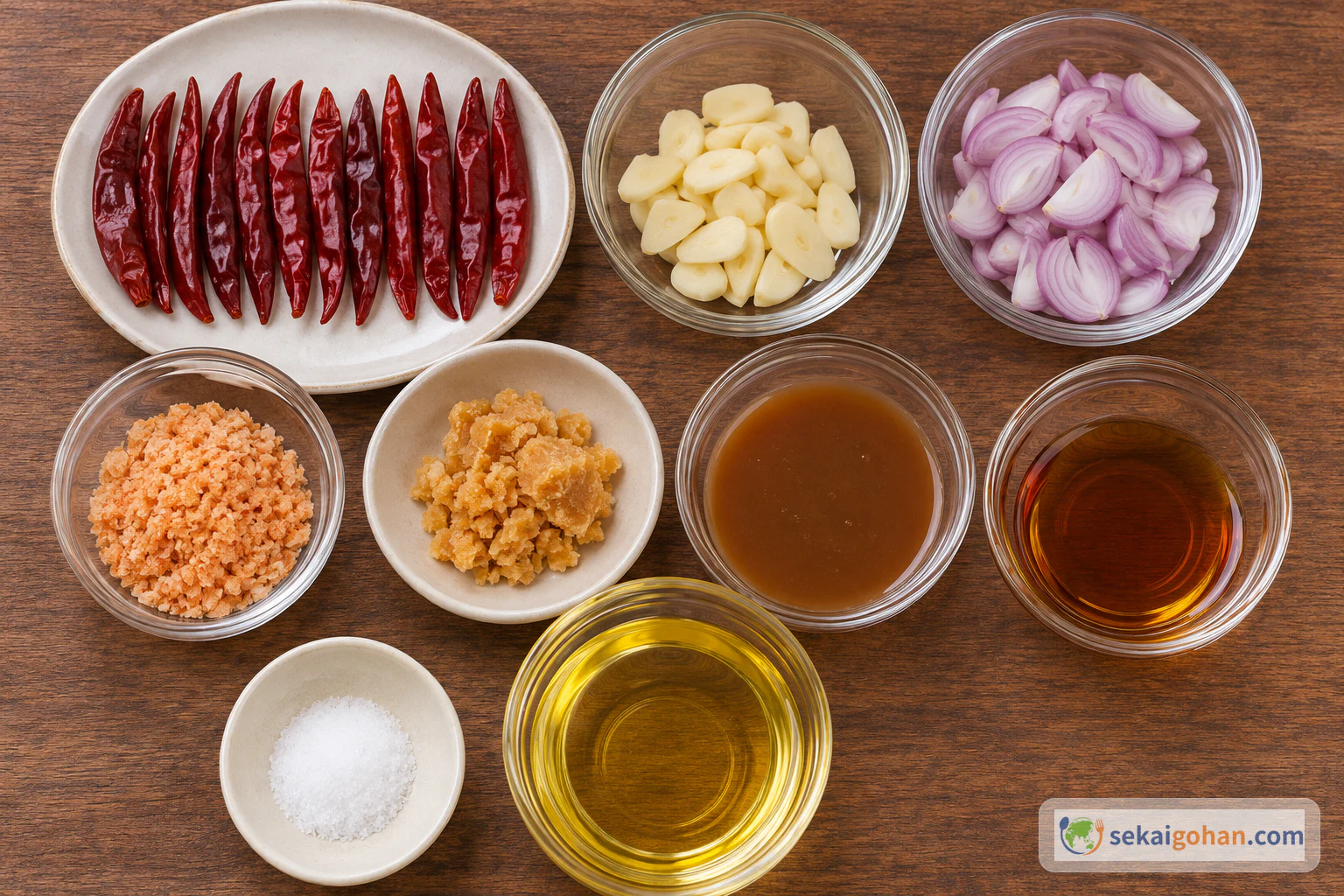
Slice the garlic and shallots finely before you heat the oil.
Equipment
- Wok or deep pan for frying
- Slotted spoon
- Bowls for the drained garlic, shallots and chiles
- Measuring cups and spoons
- Blender with a lid
- Spatula
- Nonstick saucepan
- Heatproof trivet
- Clean container with a lid, if you are keeping any paste
Choosing and Measuring: Keep This Formula Together
Ground dried shrimp is not shrimp paste. Shrimp paste is a different ingredient with a different method around it, so don't swap it in here. Don't add coconut sugar or water, and don't dry-roast the ingredients either.
Chile count. Use 12 dried chiles. No second, separately worked-out amount is offered.
This paste contains shrimp and fish, and we do not offer a version without them. Check the labels of packaged ingredients if you are cooking for someone with allergies.
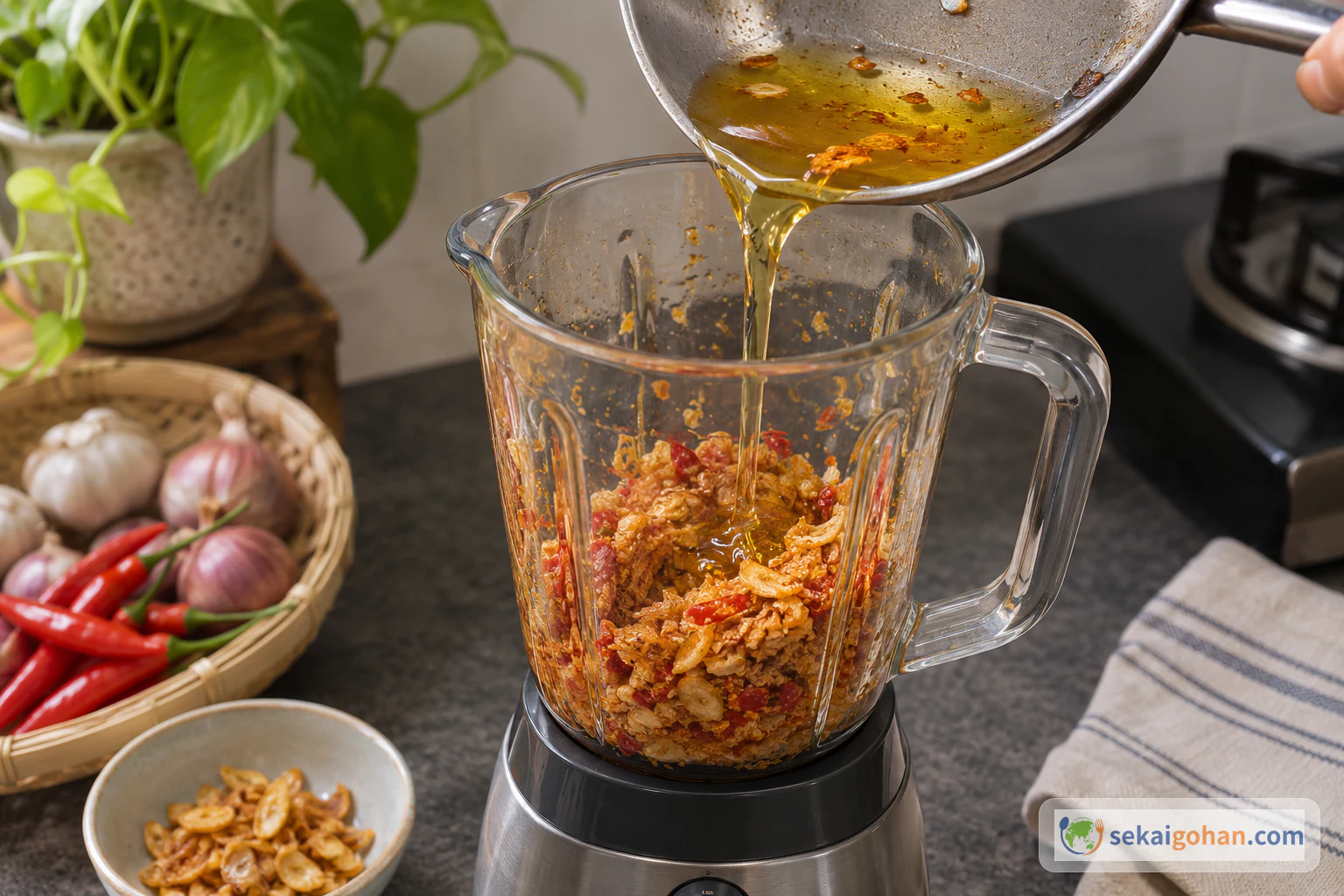
The frying oil is hot through several stages. Keep children away from the stove, stay with the pan, and take care when pouring oil into the blender. Check your blender's instructions on hot contents before you start.
Method: Fry Separately, Blend, Then Season Over Low Heat
Color is your guide for the frying, so have your slotted spoon and bowls ready before the oil goes on.
Storage: Refrigerate and Use Within 4 Days
Let the worst of the heat go, put the paste in a clean container and refrigerate it. Use it within 4 days, and throw away anything left after 4 days.
The US Centers for Disease Control and Prevention (CDC) advises refrigerating homemade oils made with garlic or herbs and throwing away unused oil after 4 days. Because this paste binds fried garlic and shallots in oil, we apply that limit to it as a precaution. It is not a period validated for this recipe, and we have not tested this paste's acidity or storage life.
The CDC also notes that botulism toxin can't be detected by look, smell or taste, so a paste that seems fine may not be safe. Neither the sourness of the tamarind nor the cooking is a reason to extend the limit.
The CIA recipe mentions keeping the paste refrigerated for months, and another recipe we consulted also makes a refrigeration claim. We do not follow either. This article gives no guidance for room-temperature storage, jarring, sealing for long-term keeping, or freezing.
Troubleshooting: Fixes Within This Recipe
Time-saving guesses are easy to make here, because the recipe gives no frying temperature or time. These fixes stay within what it does specify.
| Condition | What to look at | What to do |
|---|---|---|
| Unsure when to lift out the garlic or shallots | The color in the oil | Use golden as your signal, and fry each one on its own so you can watch it |
| The rough mixture is hard to blend | Whether the oil has gone in | Stop the blender and add the ½ cup oil from step 8; it is there to help the blending |
| You want a looser paste | The amount of oil | Stay at ½ cup. Any remaining frying oil does not go into the paste |
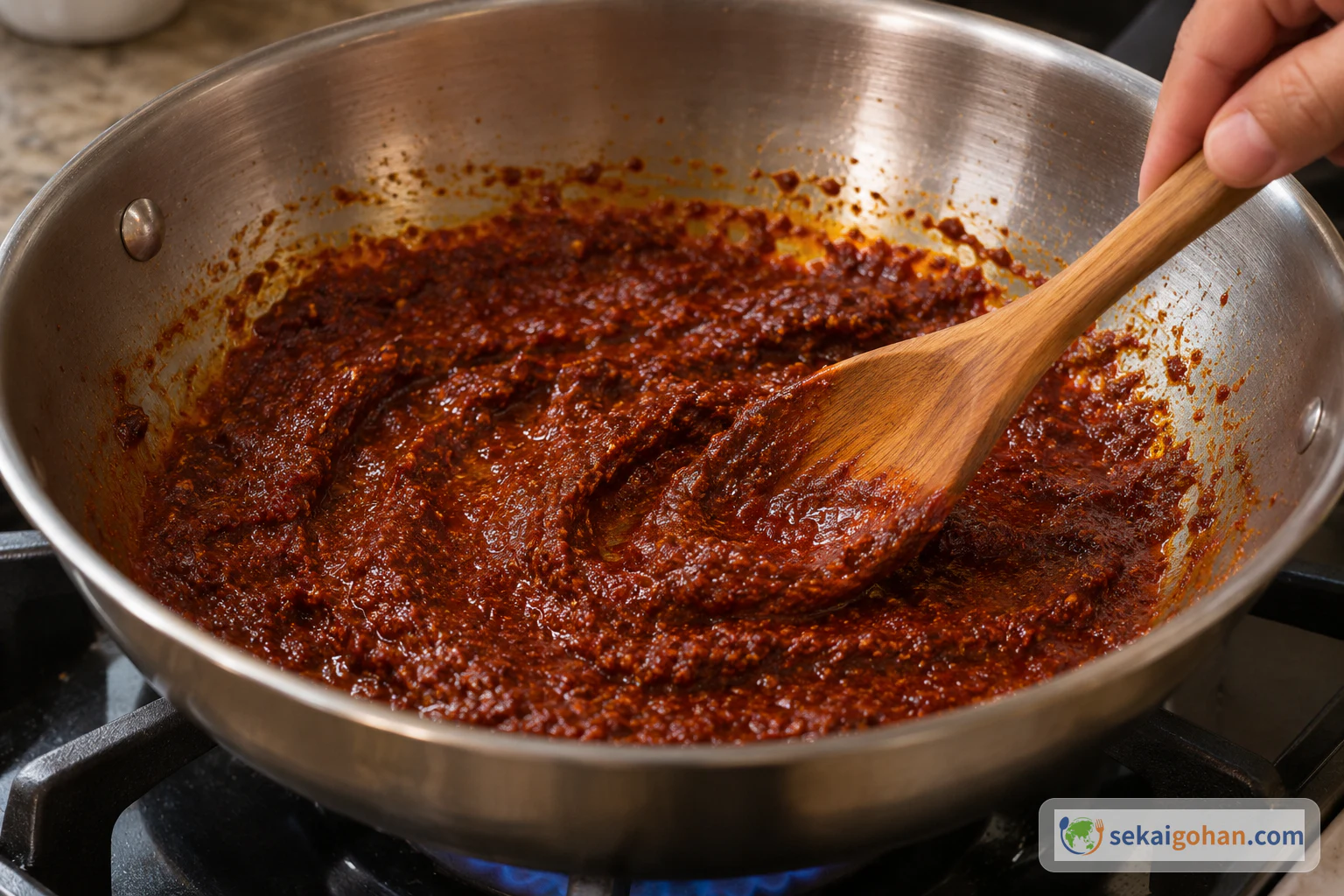
| The paste is catching in the saucepan | The heat and your stirring | Keep the heat low and keep stirring through the roughly 3 minutes |
| The paste still looks and smells fine after 4 days | The date, not its appearance | Throw it away. Look, smell and taste can't confirm that it is safe |
Other Versions: Separate Recipes, Not Add-Ons
Comparing recipes shows how much nam phrik phao can vary. If one of these appeals to you, follow it as a whole, because its amounts and method belong together. We have not combined any of them with the recipe above.
| Version | Main ingredients | Method |
|---|---|---|
| CIA, credited to Chai Siriyarn (used here) | Dried red chiles, garlic, shallots, oil, ground dried shrimp, palm sugar, tamarind juice, fish sauce, salt | Fry separately, blend with oil, stir with the seasonings over low heat for about 3 minutes |
| Pholfoodmafia, credited to Phol Tantasathien | Small and large dried chiles, shallot, garlic, rice bran oil, fish sauce, palm sugar, tamarind paste, dried shrimp | Soak the chiles, toast the aromatics and chiles separately, cook the paste, season it, and add the dried shrimp near the end |
| ThaiCookbook.tv, credited to W. Tipsuwan | Two types of dried chile, shallot, garlic, shrimp paste, tamarind fruit, salt, coconut sugar, fish sauce, water, vegetable oil | Dry-roast the aromatics, chiles and shrimp paste, pound them, then fry in oil |
The Pholfoodmafia page lists its fish sauce as 120ml in the Thai text and 120g in the English translation. We note the mismatch but have not tried to resolve it.
How the Paste Is Used
The same CIA volume includes a separate tom yum goong recipe that lists nam prik phao as an ingredient. ThaiCookbook.tv also describes using it in tom yum and eating it with rice. So it works both as a cooking ingredient and as something to serve alongside a meal. Those sources support these uses, but not a claim about where the paste began or that it is eaten the same way throughout Thailand, so we make neither.
For this version, the character comes from what the recipe puts together: fried garlic and shallots, dried chiles, the savoriness of dried shrimp, and the sweet-sour balance of palm sugar and tamarind.
Frequently Asked Questions
What do I do with the leftover frying oil?
Only ½ cup of the frying oil goes into the paste, and any remainder stays out of it. The CIA recipe doesn't say what to do with leftover oil, and how much remains will vary. This article gives no instructions for storing, reusing or discarding it.
Can I keep the paste for months in the refrigerator?
We don't recommend it. Although the CIA recipe mentions keeping it for months, that claim comes with no validated conditions. Use the paste within 4 days and throw away what's left, as explained in the storage section.
Can I use more or fewer chiles?
The CIA recipe allows "chile to taste," but we chose its standard 12 and have not worked out or tested any other amount.
Can I use shrimp paste instead of ground dried shrimp?
Not in this recipe. Shrimp paste appears in a different version that also has its own dry-roasting method and other ingredients. If you want to try it, follow that recipe in full.
Do you have metric conversions?
No. The recipe doesn't specify its cup standard, so converting to grams or milliliters would add precision it doesn't have. The amounts stay in cups, tablespoons and teaspoons.
Why is it called a "roasted" chile paste if the ingredients are fried?
"Roasted Chile Paste" is the English title printed with the CIA recipe, and its method fries the garlic, shallots and chiles in oil. Other versions do dry-roast or toast their ingredients, which is another reason not to assume one method from the name.
Sources
- The Culinary Institute of America, World Flavors: Thailand, "Roasted Chile Paste (Nam Prik Phao)," recipe credited to Chai Siriyarn, Marnee Thai Restaurant (printed page 33). The recipe's amounts, stated yield and method, and a separate tom yum recipe that uses the paste. https://ciaprochef.com/wp-content/uploads/2024/04/WCA_Thailand_Recipes.pdf
- Pholfoodmafia, "Nam Prik Pao (น้ำพริกเผา)," credited to Phol Tantasathien. A separate recipe used for comparison only. https://www.pholfoodmafia.com/recipe/nam-prik-pao-%E0%B8%99%E0%B9%89%E0%B8%B3%E0%B8%9E%E0%B8%A3%E0%B8%B4%E0%B8%81%E0%B9%80%E0%B8%9C%E0%B8%B2/
- ThaiCookbook.tv, "Thai Roasted Chili Sauce — Nam Prik Pao," recipe credited to W. Tipsuwan. A separate recipe used for comparison and for the tom yum and rice uses. Its storage claim is not used as safety evidence. https://www.thaicookbook.tv/thai-recipes/sauces-and-condiments/roasted-thai-chili-paste-nam-phrik-pao/index.php
- US Centers for Disease Control and Prevention, "Home-Canned Foods | Botulism." General guidance on refrigerating homemade oils made with garlic or herbs, throwing them away after 4 days, and the toxin being undetectable by look, smell or taste. It does not validate a storage period for this recipe. https://www.cdc.gov/botulism/prevention/home-canned-foods.html
- Ministry of Health, Labour and Welfare, Japan, "家庭での食中毒予防" (Preventing food poisoning at home). General guidance on clean utensils and on cooling and storing food quickly. It does not validate a storage period for this recipe. https://www.mhlw.go.jp/stf/seisakunitsuite/bunya/kenkou_iryou/shokuhin/syokuchu/01_00008.html