Bananas and Bread in One Pan: A Baked Pudding to Slice Cold
Bread that has drunk in sweetened coconut milk, bananas folded through it and laid across the top, and a slice that holds its shape because it has been chilled before cutting. No eggs, no flour, no starch.
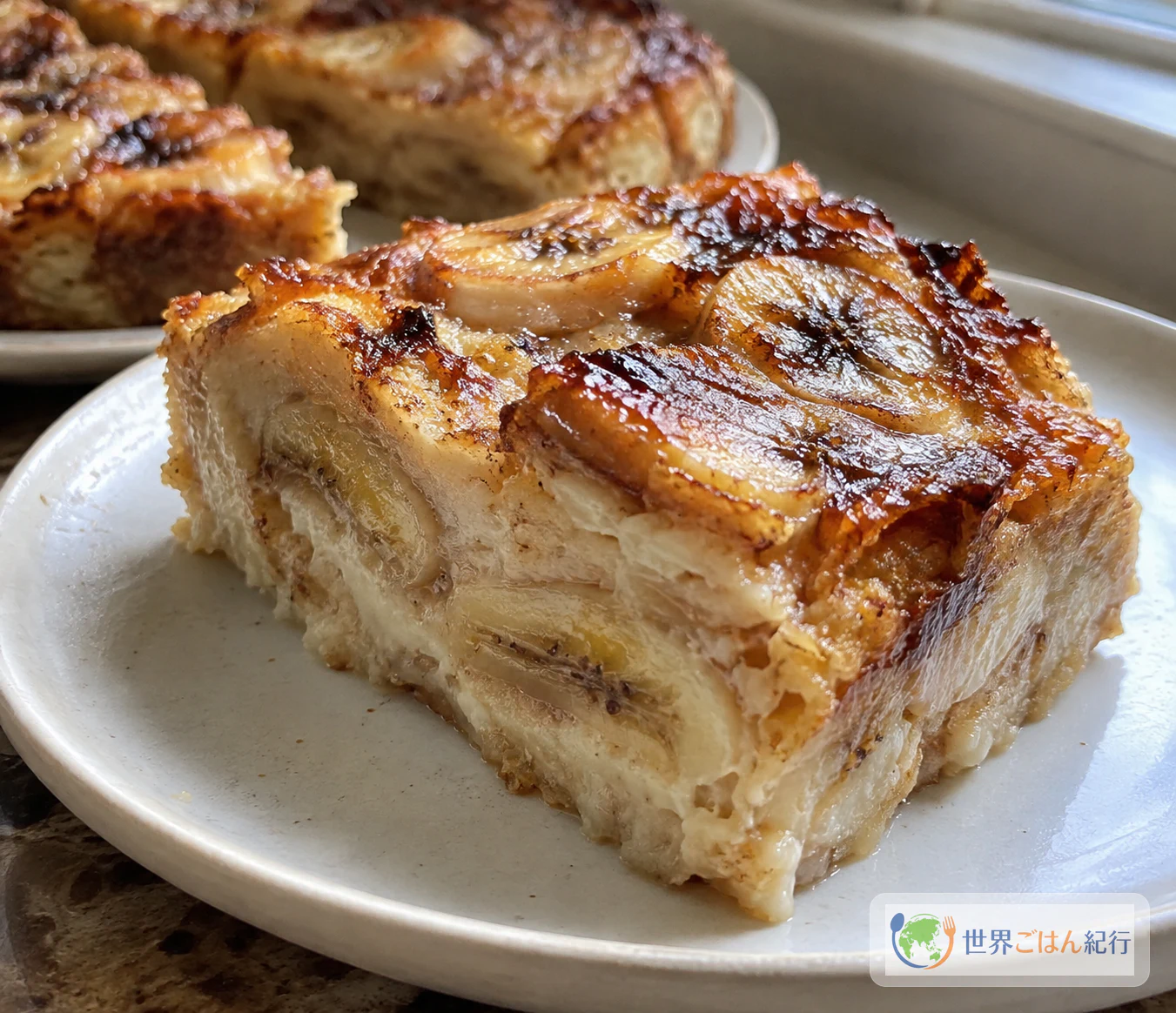
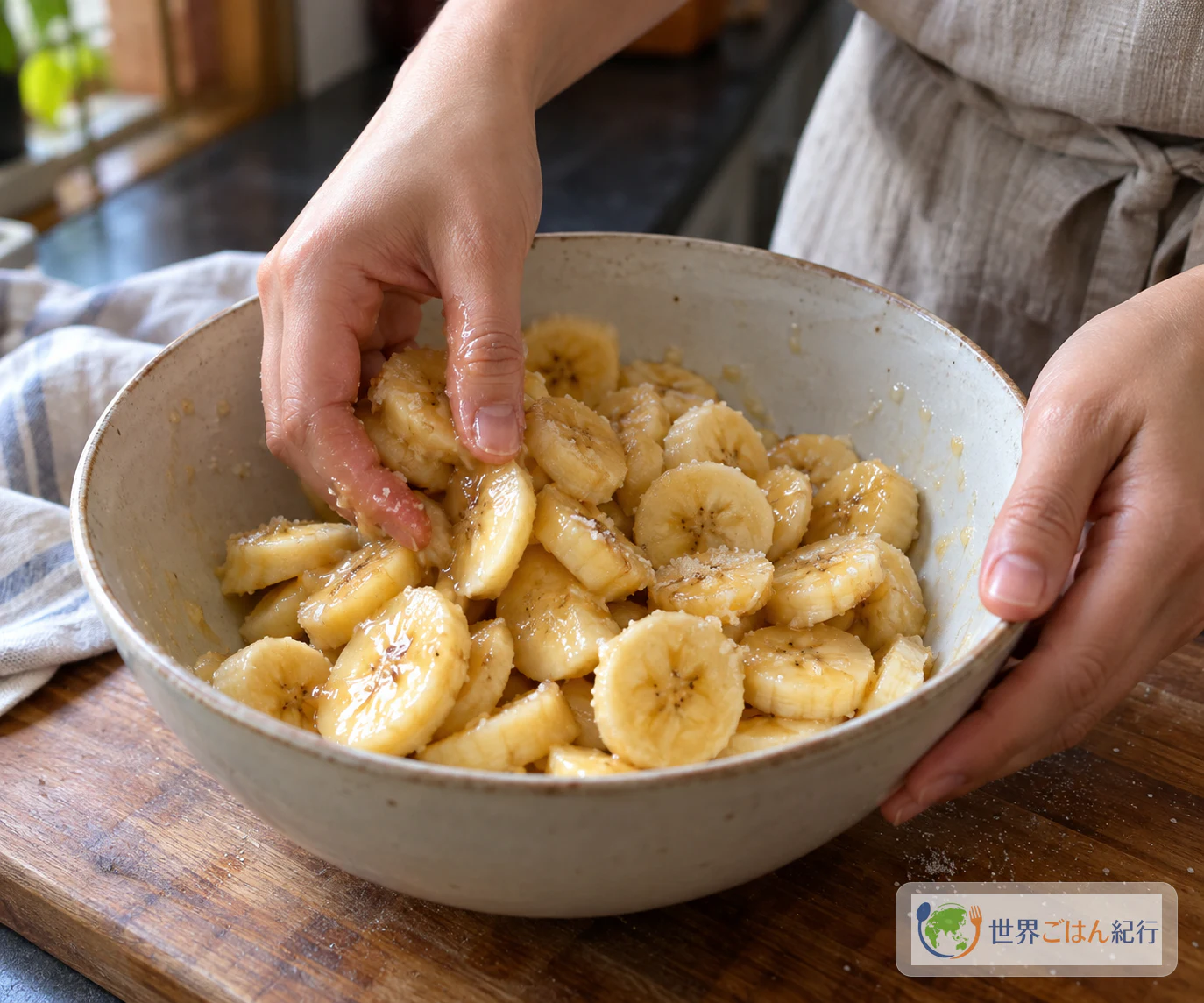
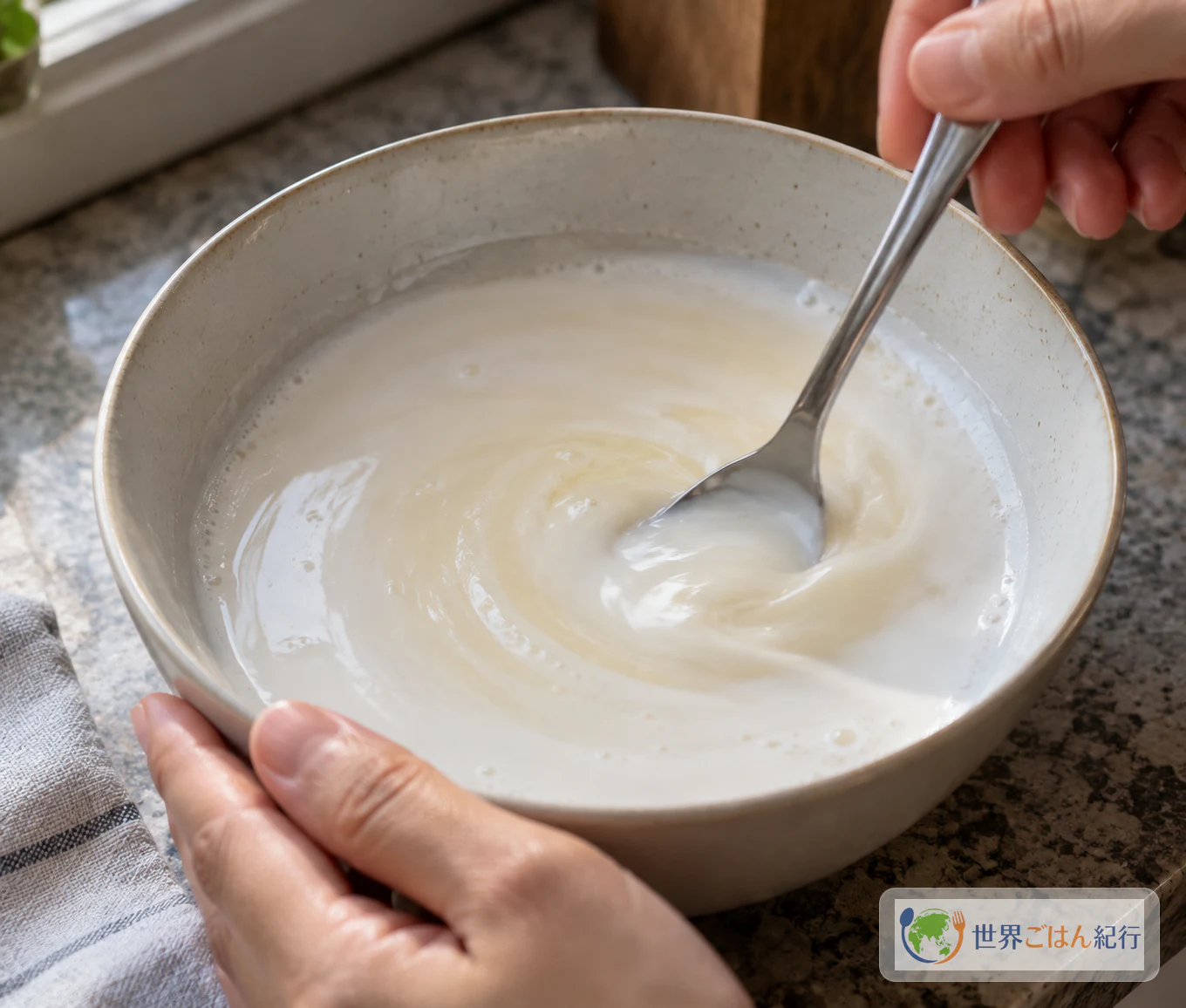
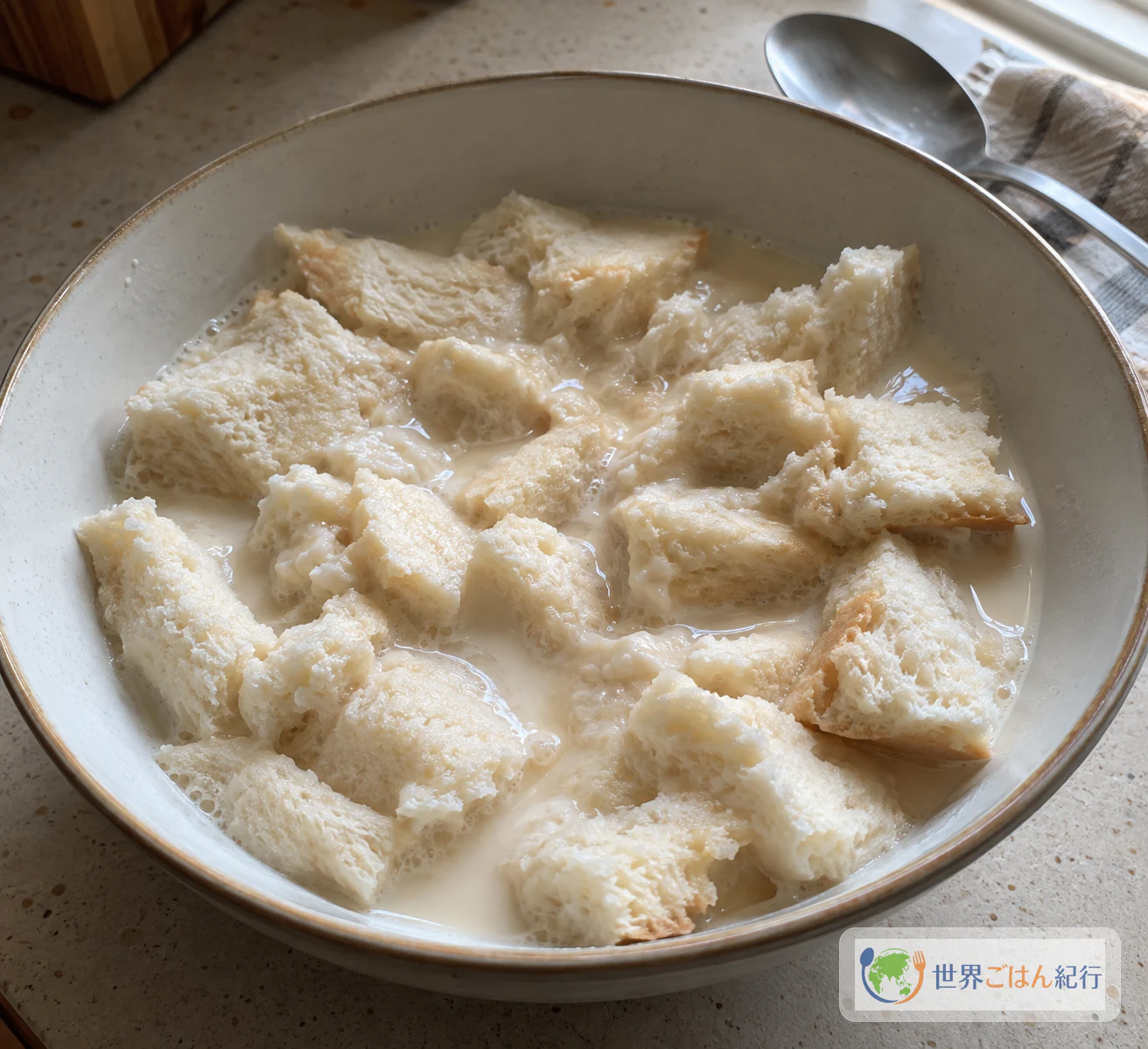
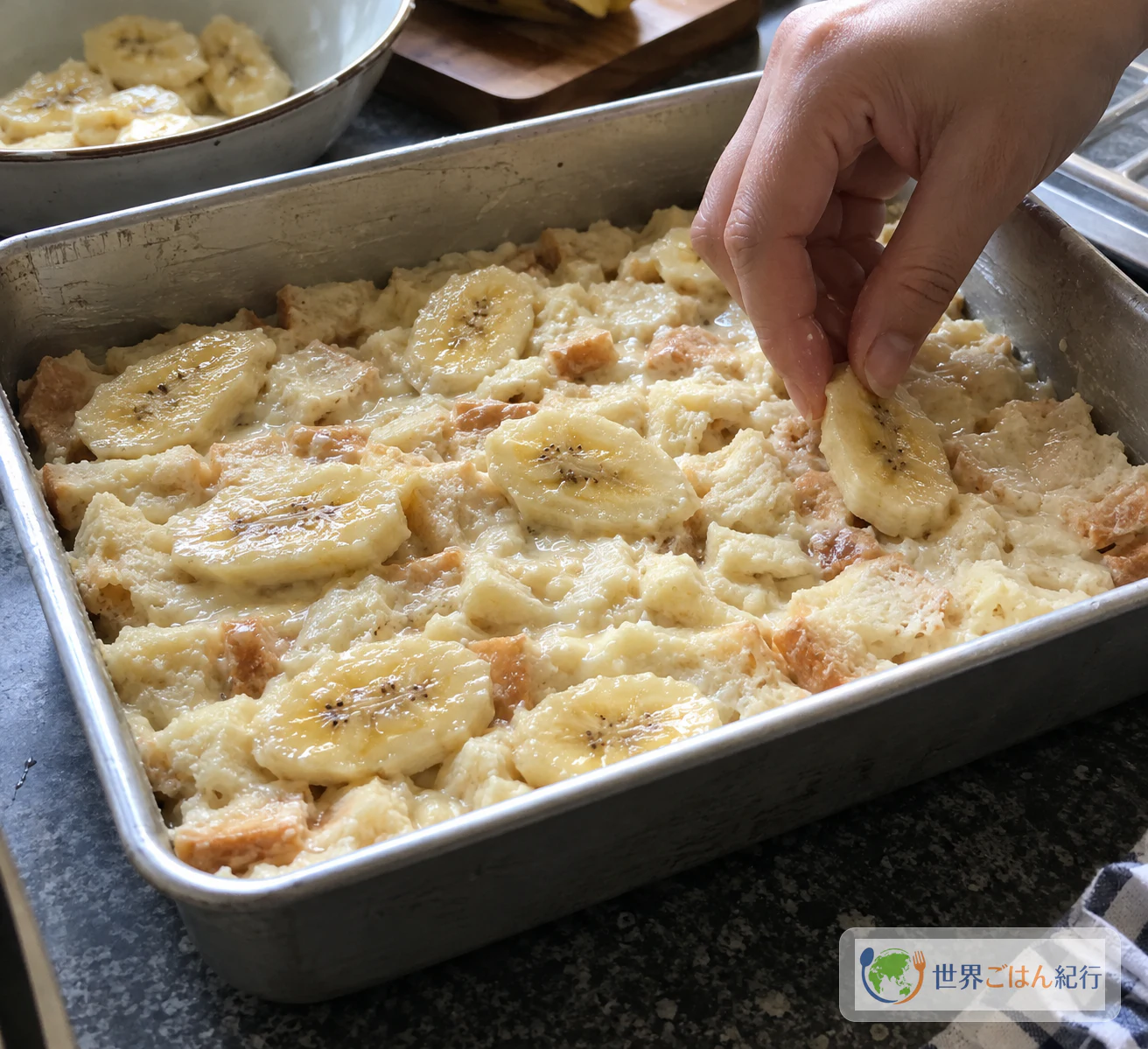
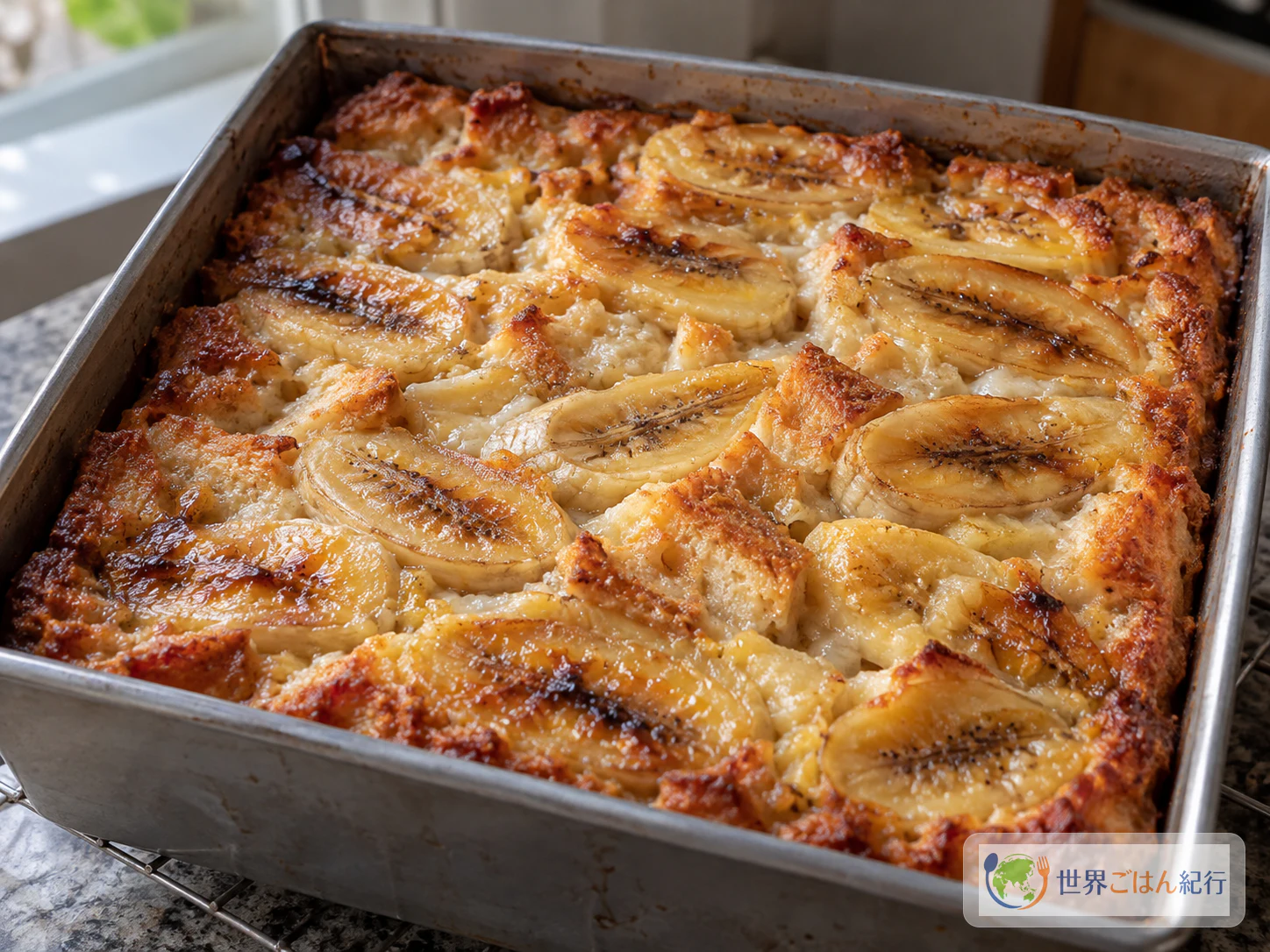
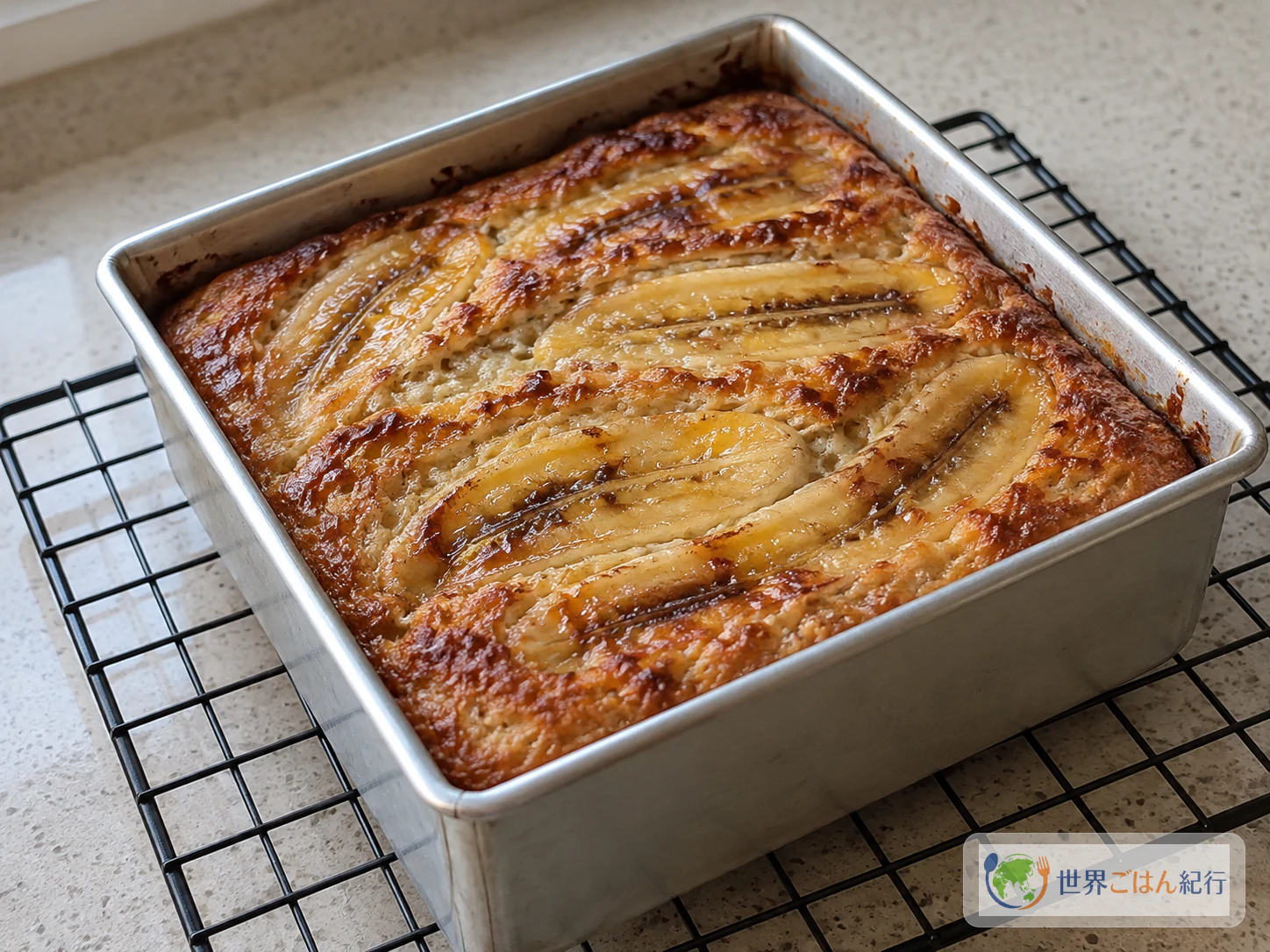
Sliced bananas rest in the refrigerator with sugar and a splash of rum. In a second bowl, torn pieces of soft white bread soak in coconut milk sweetened with condensed milk. The two come together in a buttered pan, a final layer of banana goes on top, and the oven does the rest: first from below, then from above, until the bananas darken to caramel and the edges turn golden.
This is bánh chuối nướng, a Vietnamese baked banana dessert. Nướng marks it as the baked kind, which matters because the name bánh chuối also covers steamed and fried banana sweets. The result sits somewhere between a cake and a pudding. The texture is dense and soft rather than light and spongy. Its "custard-like" interior comes entirely from bread that has soaked up the coconut liquid; no eggs are involved.
The recipe here follows the ingredient list and method published by Helen Le on Helen's Recipes, without additions. That recipe states a yield of 6–8 slices (4–6 servings); this is the recipe's own figure, not a measured result. This recipe has not been kitchen-tested for this article, so treat the oven times as guides and use the color of the bananas and edges as your signal. For more dishes from the same country, see the Vietnam country page.
Bánh Chuối Has a Steamed Side Too
Search for bánh chuối and you will meet more than one dessert. The Wikipedia entry for bánh chuối, a short stub with citation warnings, separates baked, steamed and fried forms. It is useful only as a map of the names, not as evidence of history.
The steamed form, bánh chuối hấp, is a different recipe with different ingredients. VnExpress Cooking's version uses chuối sứ bananas, sugar, bột năng (tapioca starch), a coconut sauce and white sesame. A Việt Nam News recipe from chef Lê Đức Hải of Ngon Garden Restaurant, steamed in coconut, uses ripe bananas with coconut thread, cassava starch and rice flour, and is served with coconut and sesame. Both rely on starch and steam to get their texture, not bread and an oven.
None of those starches, sesame or coconut sauces belong in the baked version below, and the two methods should not be mixed. The sources consulted for this article do not establish where bánh chuối nướng originated or connect it to particular festivals, so this article makes no claims about either.
Ingredients for Bánh Chuối Nướng
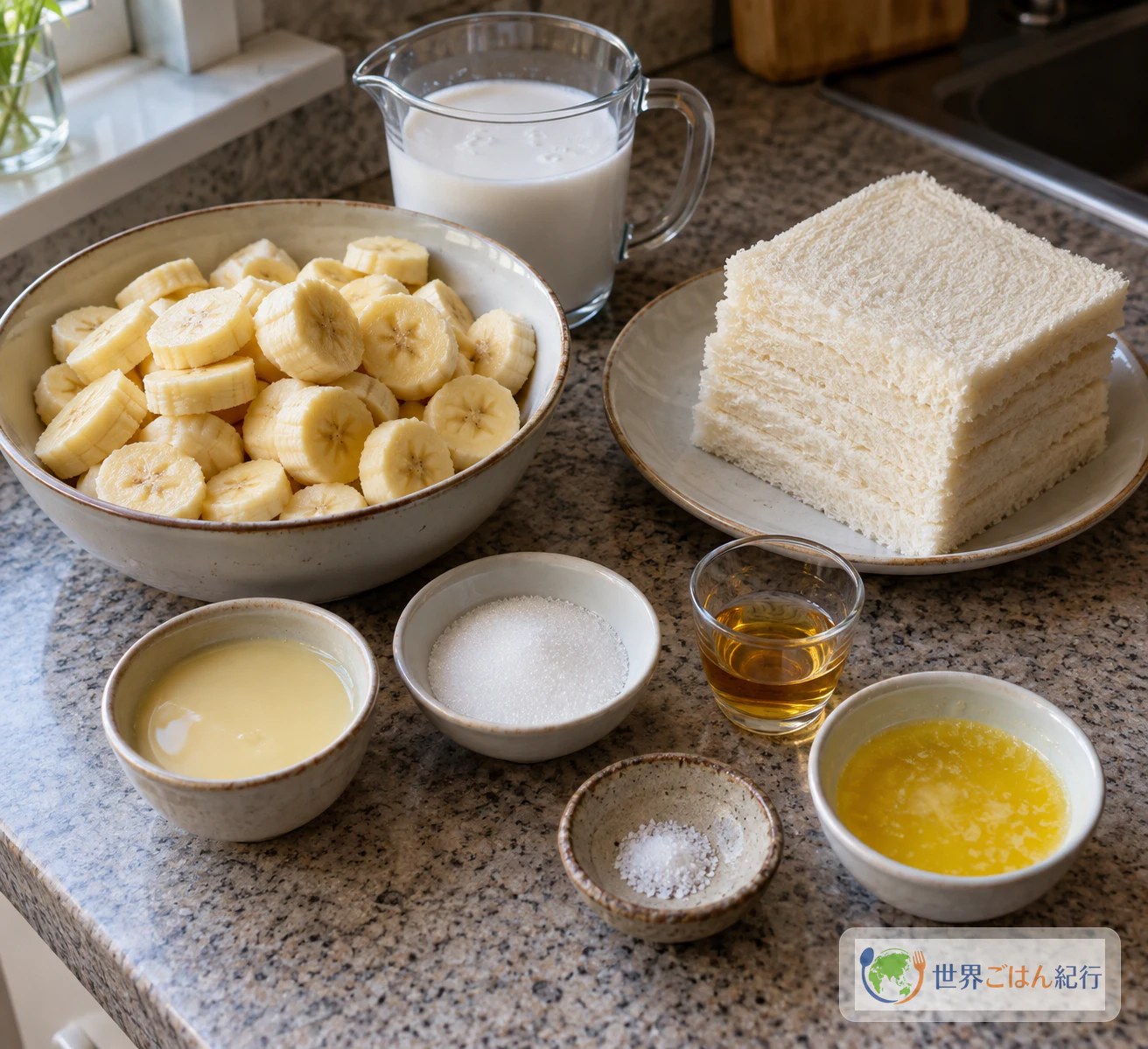
Sandwich bread contains wheat, and butter and sweetened condensed milk contain milk. Check the labels of the bread, coconut milk and condensed milk you buy, including any shared-facility statements. The rum is optional.
Equipment
- 2 bowls (one for the bananas, one for the coconut milk mixture)
- An oven-safe baking pan, such as a plain square pan
- A pastry brush
- An oven with separate bottom-heat and top-and-bottom-heat settings
- A wire rack
- An oven thermometer (optional, useful for checking your oven's real temperature)
Choosing Bananas, Bread and Coconut Milk
Bananas. Use bananas you can find. Choose ones that are ripe, soft and fragrant but not damaged.
Condensed milk and coconut milk. These are easy to confuse on the shelf. The condensed milk must be sweetened condensed milk; evaporated milk or ordinary milk are not the same thing. For coconut milk, choose an unsweetened product, canned or in a carton. No brand is required.
Bread. Use ordinary sandwich bread with the crusts cut off. A baguette or sweet enriched bread would absorb liquid differently and change the sweetness, so they are not recommended here.
Method: Soak, Layer, Bake in Two Stages, Then Chill
The first stage is bottom heat only. The second stage, with top and bottom heat, ends either after about 30 minutes or when the top bananas have caramelized and the edges are golden brown. Watch the pan, not just the timer.
Reading the Bake and Cutting Clean Slices
The two oven stages do different jobs. Bottom heat comes first, and only after 15 minutes does the top get its butter and heat from above. The second stage is where the color develops, so finish it by looking at the pan. Bananas that have turned deep caramel and edges that have gone golden brown are the signs to look for, whether that takes the full 30 minutes or not.
Chilling is part of the method, not an optional extra. A fully cooled, well-chilled pan holds together when cut, and the slices show a dense, moist interior of bread and banana. Small holes from the bread and uneven bits of banana in the cross-section are normal.
| What you see | Likely reason | What to do |
|---|---|---|
| Pale top after the second stage | Oven running cool, or not enough time from above | Keep baking with top and bottom heat until the bananas caramelize and the edges turn golden. An oven thermometer can show whether your oven reaches 175°C/350°F |
| Bread pieces still dry or firm in places | Bread not soaked long enough | Give the bread the full 15 minutes in the coconut milk mixture before layering |
| Slices slump or crumble | Cut too soon | Cool completely and chill for several hours or overnight before cutting |
| Too sweet or not sweet enough | Ripeness of the bananas | Next time, adjust the sugar within 2–3 tbsp |
Serving
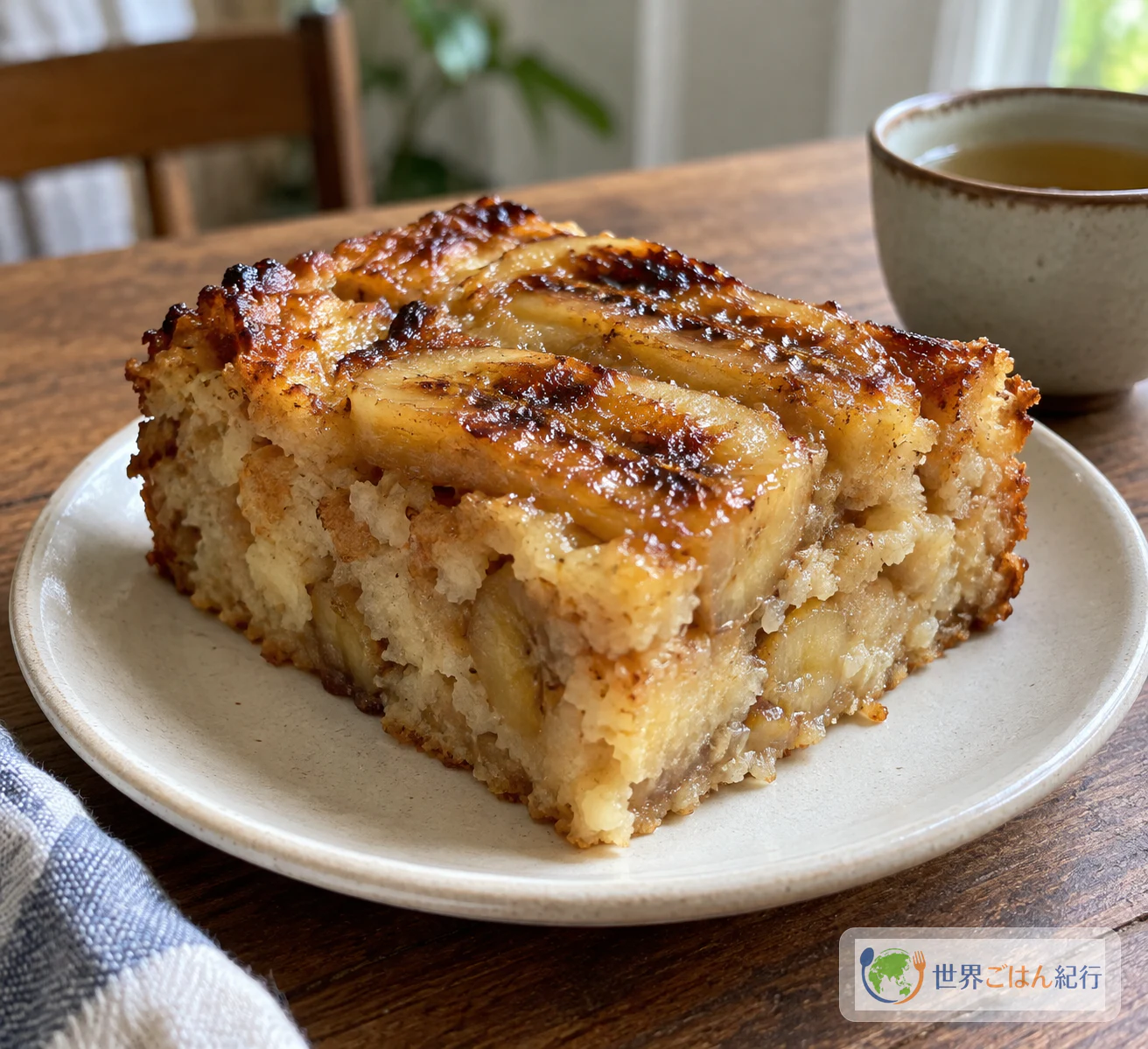
Bánh chuối nướng is served cold, in slices. A cup of unsweetened tea alongside is one simple option. That pairing is a suggestion, not a description of how it is eaten across Vietnam.
This article does not give a storage period for leftovers.
Variations That Stay Within the Recipe
- Sweetness: Use 2 tbsp sugar for very ripe bananas, or 3 tbsp if they are less sweet. Stay within that range.
- With or without rum: The rum is optional. If you leave it out, don't replace it with another liquid.
- Bread: Keep to crustless sandwich bread. Changing the type of bread changes how much liquid it takes up.
- Your oven: Ovens differ, so let the color of the top and edges decide when the second stage ends.
- Temperature at the table: Don't cut it warm. Cool it completely, chill it, then slice.
Anything beyond these, such as eggs, flour, starch or other fruit, would make it a different recipe.
Frequently Asked Questions
How is this different from bánh chuối hấp?
Bánh chuối hấp is steamed and built on starch. The VnExpress version uses tapioca starch (bột năng) with a coconut sauce and sesame. The Việt Nam News version uses cassava starch and rice flour. Bánh chuối nướng is baked and gets its body from bread soaked in coconut milk. The ingredients and methods are separate, so don't combine them.
Is the rum necessary?
No. Helen's Recipes lists it as optional. Leave it out without adding any other liquid in its place.
Do I use the bread crusts?
No. The recipe calls for sandwich bread with the crusts removed.
How long is it in the oven?
There are two stages: 15 minutes with bottom heat only, then about 30 minutes with top and bottom heat, or until the bananas caramelize and the edges turn golden. These figures do not include preheating, resting the bananas, soaking the bread, cooling or chilling.
When can I cut it?
After it has cooled completely and then been refrigerated for several hours or overnight.
How long does it keep?
Helen's Recipes says it keeps for 7–10 days. That claim has not been checked against food-safety guidance, so this article does not repeat it as advice and gives no storage period.
Is it a traditional dish from a particular region?
The sources consulted for this article do not establish its origin, region or festival connections, so no such claim is made here.
Sources
- Helen Le, "Bánh chuối nướng – Baked banana cake/pudding," Helen's Recipes. The ingredients, amounts, resting, soaking, oven temperature and two-stage baking, cooling and chilling, and the stated yield of 6–8 slices (4–6 servings) used in this article. Its 7–10 day storage claim is not adopted. https://helenrecipes.com/recipe-48-banh-chuoi-nuong-baked-banana-cakepudding/
- VnExpress Cooking, "Bánh chuối hấp." A steamed bánh chuối using chuối sứ bananas, sugar, bột năng, a coconut sauce and white sesame, cited to distinguish the steamed form from the baked one. Its amounts are not used. https://vnexpress.net/banh-chuoi-hap-4311309.html
- Việt Nam News, "Banana cake steamed in coconut juice (bánh chuối hấp nước cốt dừa)," chef Lê Đức Hải / Ngon Garden Restaurant. A separate steamed version with ripe bananas, coconut thread, cassava starch and rice flour, served with coconut and sesame. Cited only to show the steamed type; its amounts are not used. https://vietnamnews.vn/sunday/ong-taos-kitchen/853979/banana-cake-steamed-in-coconut-juice-banh-chuoi-hap-nuoc-cot-dua.html
- Wikipedia, "Bánh chuối." A stub used only as a pointer to the baked, steamed and fried forms that share the name. Not used for history or culture. https://en.wikipedia.org/wiki/B%C3%A1nh_chu%E1%BB%91i