

On a Sizzling Plate, Sourness and Fat Burst Together
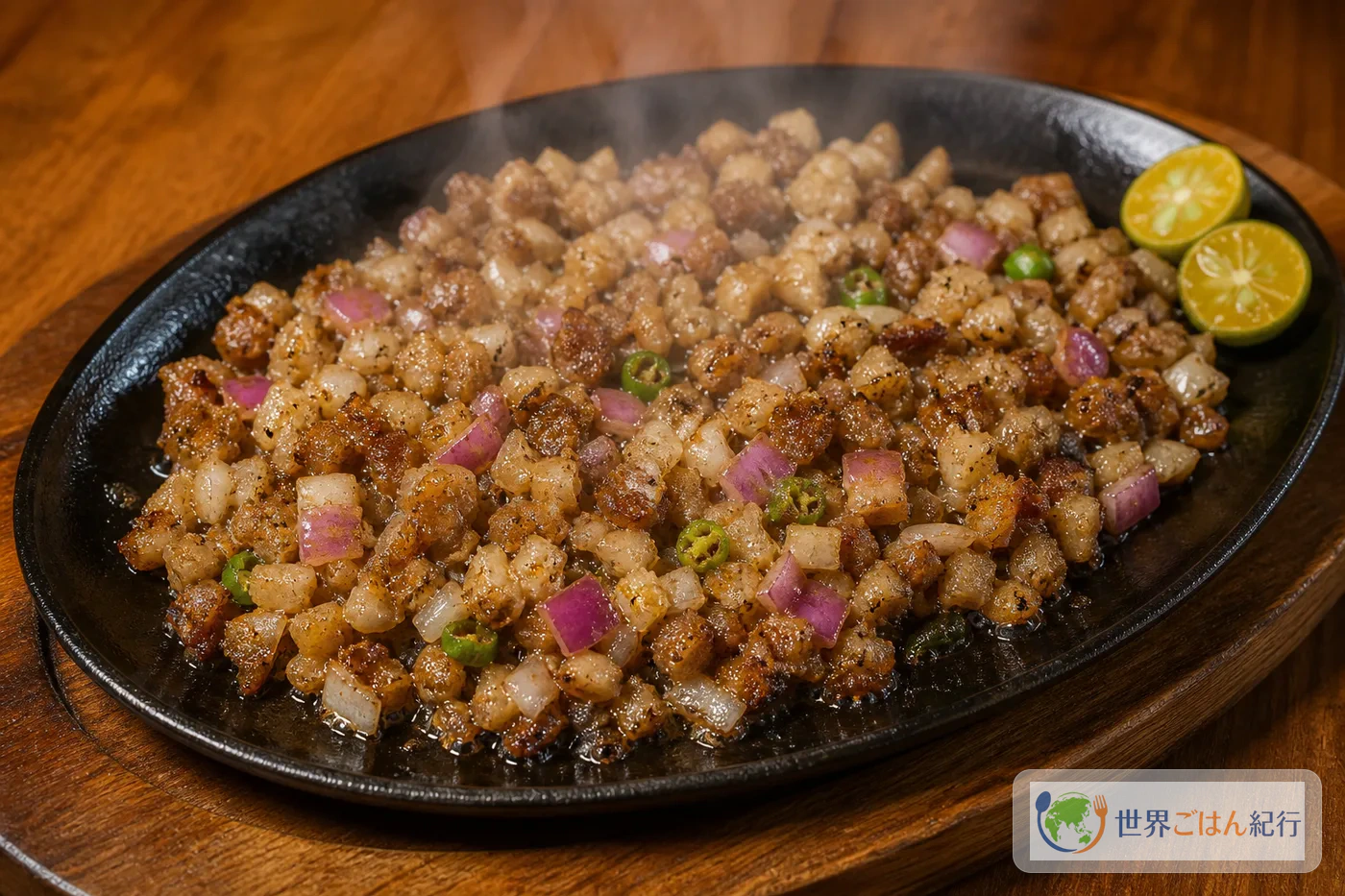
Spread chopped pork on a heated plate and the first thing you hear is a short sizzle. The bite of onion, the green aroma of chili, and the sourness of calamansi overlay the pork fat, and the steam alone calls for white rice. Sisig is less a stir-fry than a "chopped-pork sizzling-plate dish eaten for its sourness."
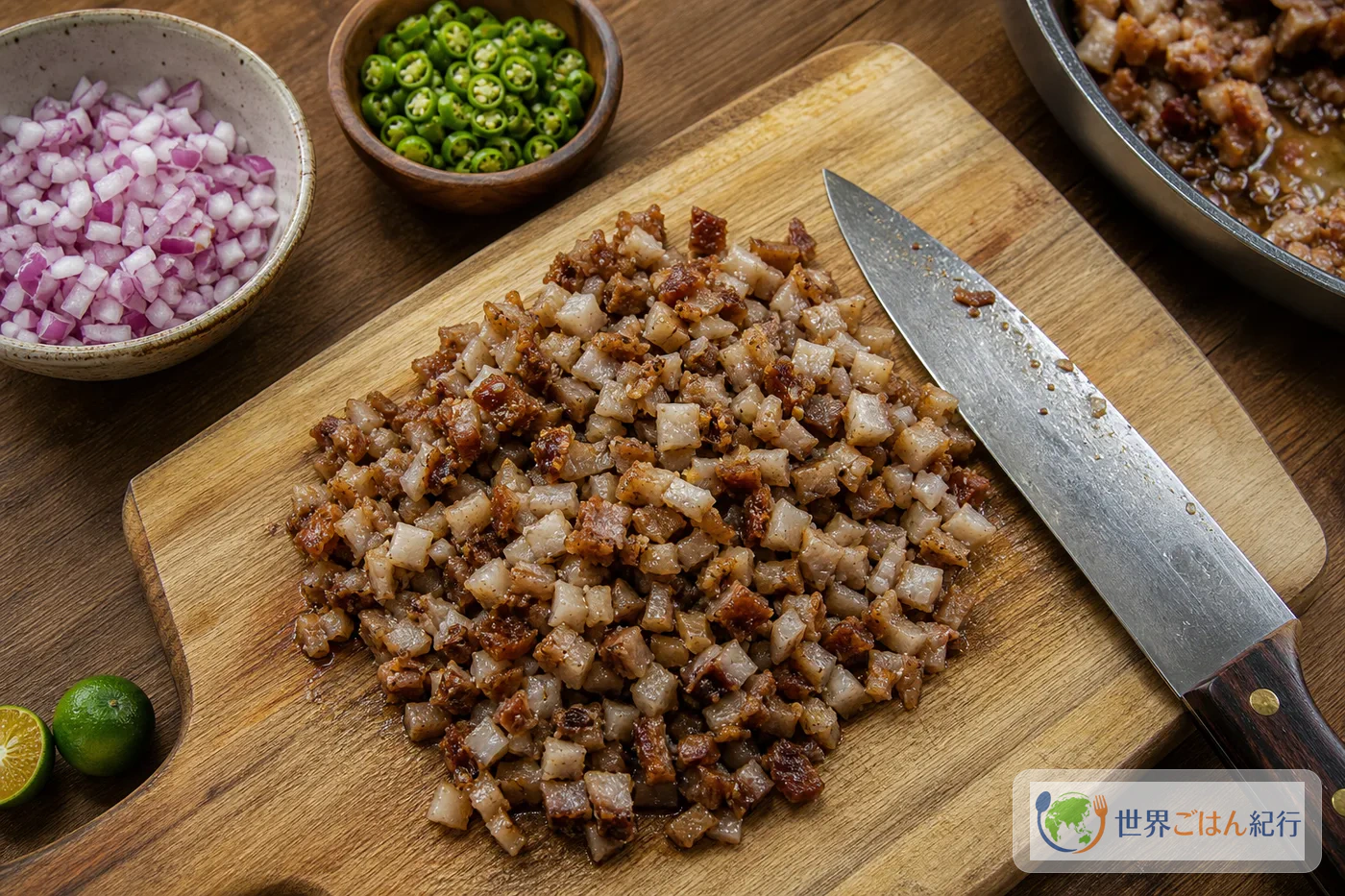
Sisig is a dish often associated with Pampanga province in central Luzon, Philippines, especially the area around Angeles. The modern standard is to parboil pork face, ear, pork belly, and chicken liver, sear them, chop them fine, toss with onion, chili, and calamansi, and return them to a hot plate. In the Philippines it is eaten both as pulutan, a drinking snack, and as a main dish over white rice.
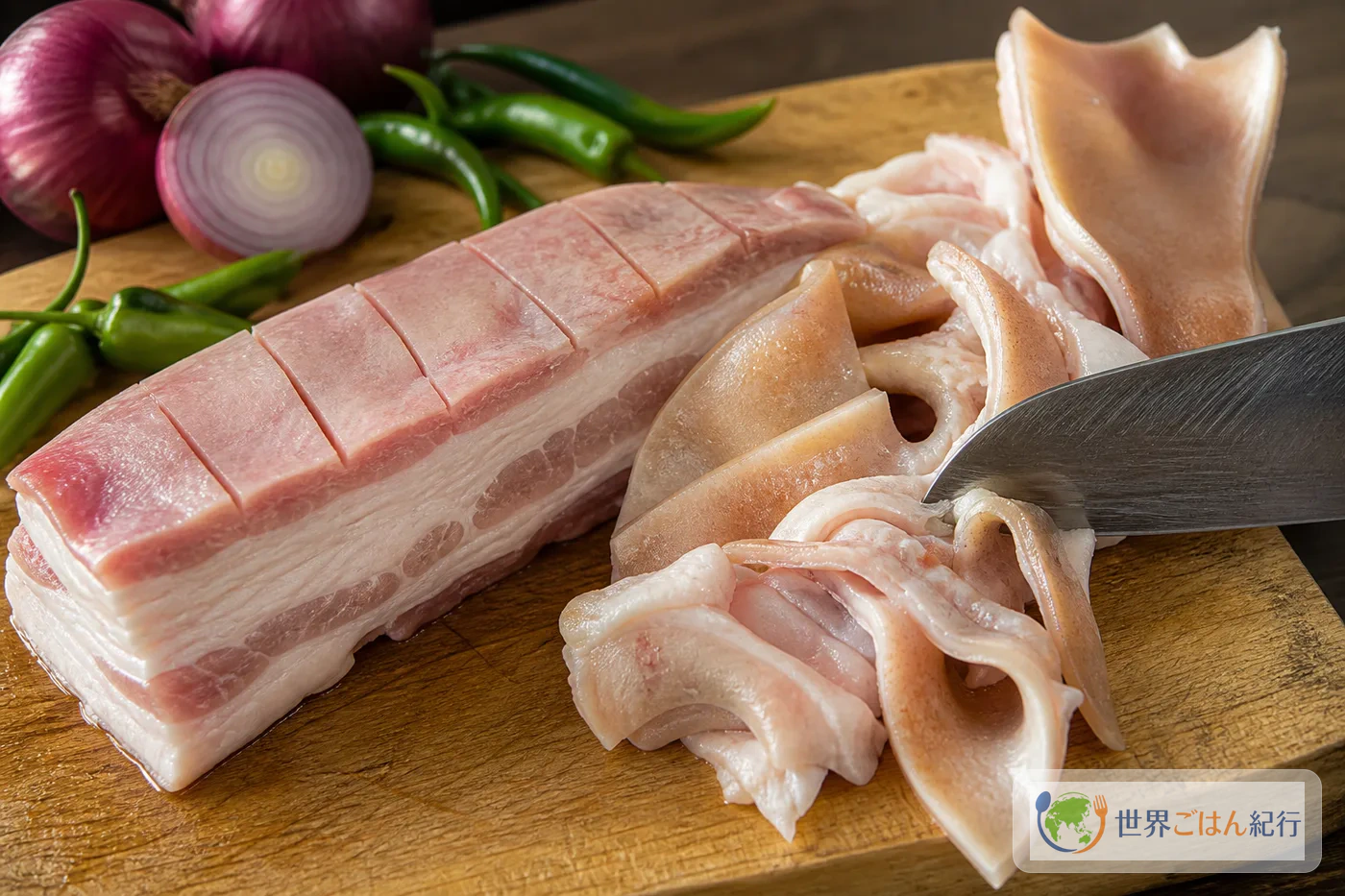
The hard parts of making it elsewhere are that pork face is hard to find, that pig's ear is tricky to prepare, and that chicken liver can come across strongly. This article uses pig's ear if you can find it at a butcher or Asian grocery, and if not, a home version that makes up the texture with pork belly and pork shoulder. Some shops top it with egg and mayonnaise, but here the axis is the Pampanga-leaning sourness, the chopping, and the savor of liver.
If chicken inasal is a chicken dish of smoke and vinegar, sisig is a dish of chopped pork and sourness. Set beside adobo (in Japanese), braised in soy sauce and vinegar, and the sour soup sinigang, it becomes clear that Filipino cooking is not only "sweet and salty."
Sisig is a name strongly tied to the food culture around Pampanga. In older usage the word refers to dishes of meat or green fruit dressed with vinegar or sour juices, and the modern "chopped pork served on a hot plate" is described as a style that spread in the later 20th century. This article uses the spelling "sisig."
Background: The Taste Angeles' Sizzling Plates Spread
Pampanga is often spoken of in the Philippines as the "culinary capital." Sisig is one of its signature dishes, and Rappler's article on Pampanga food culture describes how sisig served around the railroad crossing in Angeles spread as a local specialty. The idea of eating meat trimmings and pork face with sourness, heat, and a seared crust shows both the practicality and the appetite of the place.
A name that cannot be left out when speaking of modern sisig is Lucia Cunanan, known as Aling Lucing. Positively Filipino summarizes how, in the early 1970s in Angeles, a version of grilled pig's ear chopped and dressed with vinegar became popular, and then the style of serving it on a hot plate spread. There are several accounts in culinary history, but it helps to separate "the old form of boiled pork eaten with sourness" from "the modern form seared and served on a hot plate."
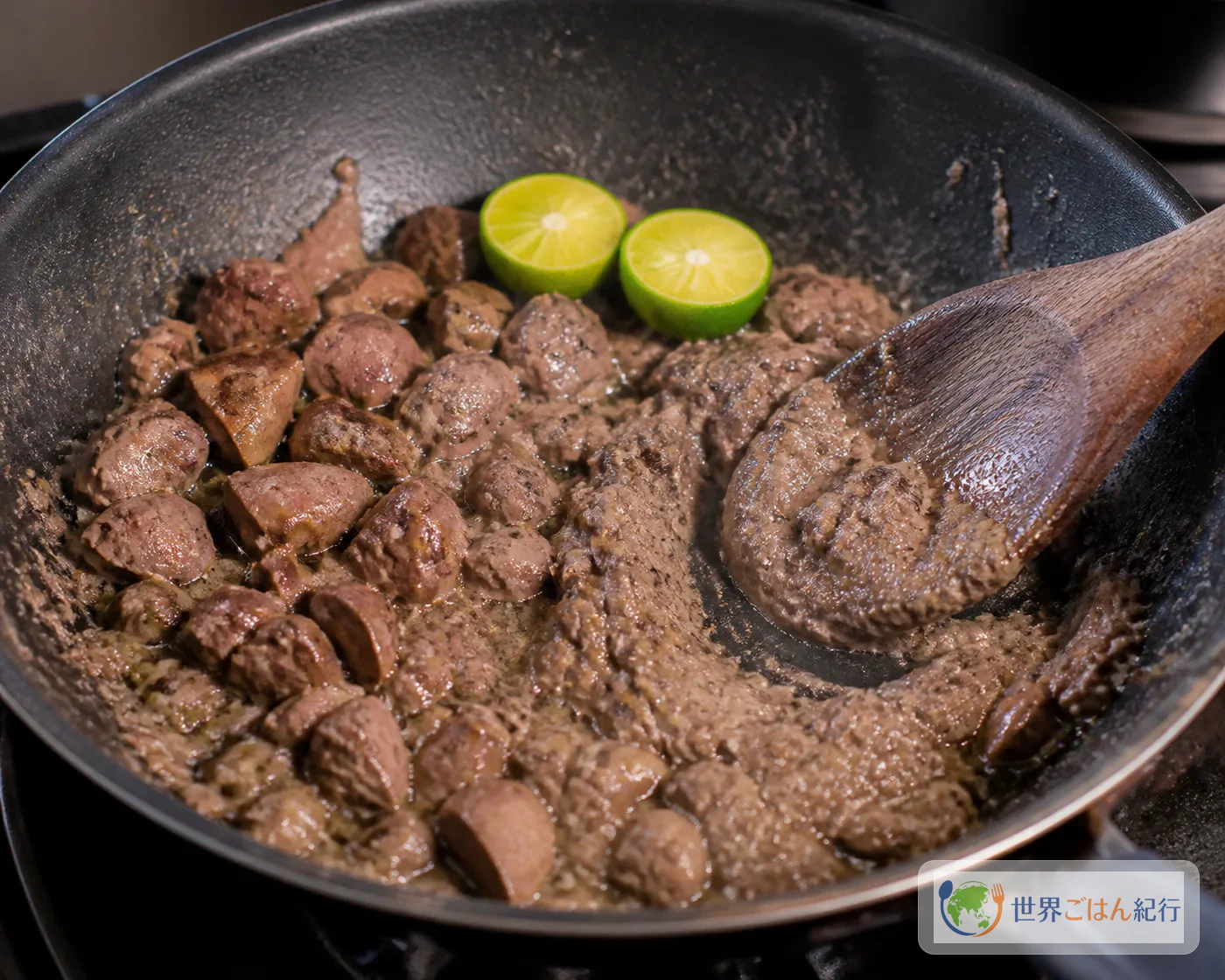
Seen with the eyes of a pub kitchen, sisig sits somewhere between grilled offal, pig's feet, yakitori skin, and stir-fried offal. It does not simply season cheap cuts heavily; it chops fat, cartilage, liver, sourness, and heat small and mixes them in every bite. That is why the crunch of pig's ear matters, and why it is better not to overdo the chicken liver for the balance of the whole.
There are regional differences too. Pampanga-leaning versions value sourness, onion, pork face, and the savor of liver. In Manila shops you often see richer styles with mayonnaise, butter, raw egg, and chicharon added. Dinakdakan of the Ilocos region uses similar cuts but is a different dish, cut larger and often dressed with brain or mayonnaise. For a first time at home, it is safer to get the skeleton of pork, liver, sourness, onion, and chili first, and add things to taste.
Ingredients (serves 4): Build the Texture with Pig's Ear and Pork Belly
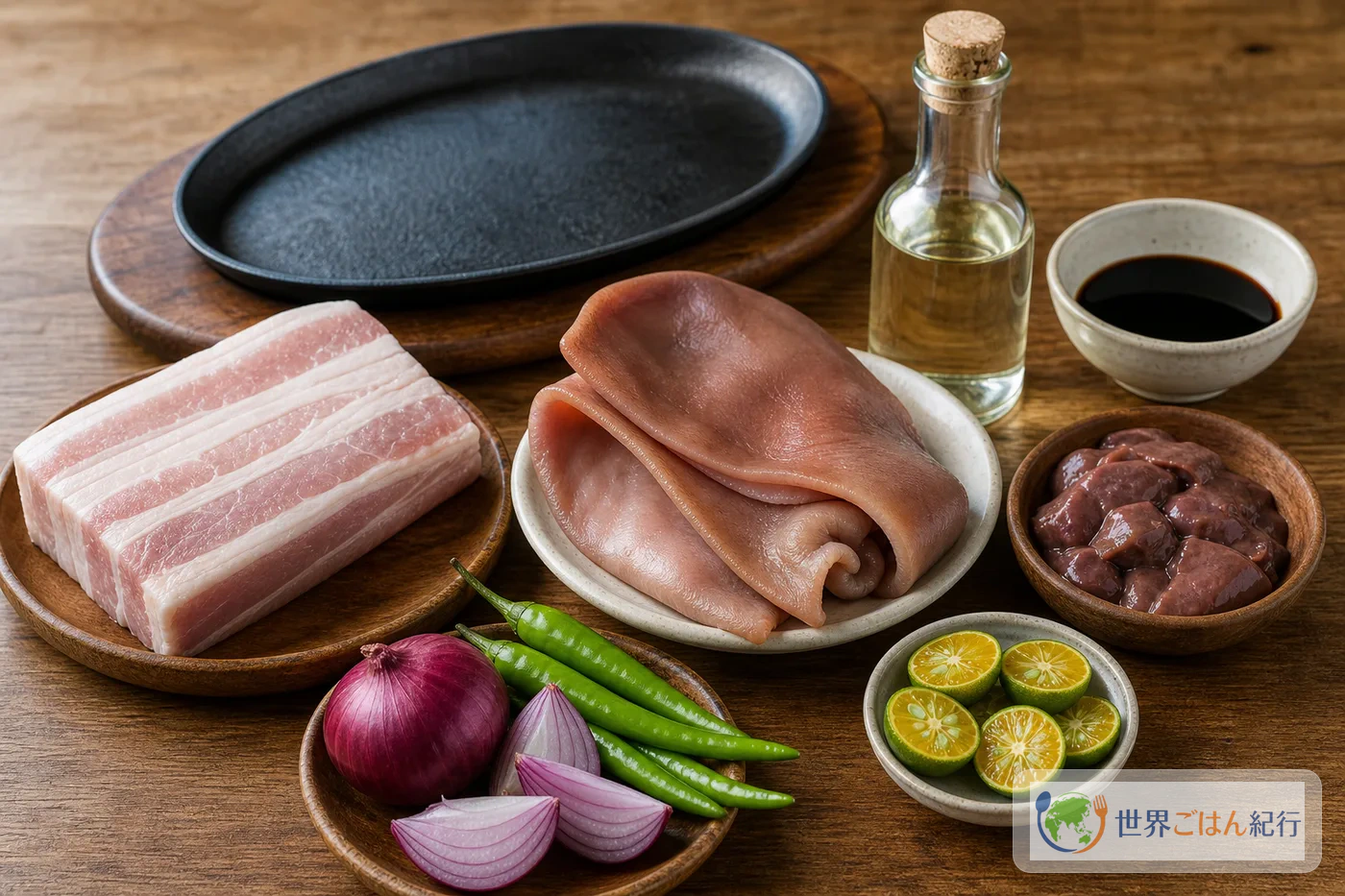
If you can get pig's ear, use it. If not, reduce the pork belly a little and add pork shoulder to build chew. Pig's ear alone has little fat and pork belly alone gets too soft, so mixing both is the home-version compromise.
This dish uses pork, chicken liver, fish sauce, and soy sauce (some products contain soy and wheat). Cook the chicken liver thoroughly through the center, and do not reuse the cutting board and knife that cut the raw meat for cooked ingredients. Do not leave leftovers long at room temperature; move them to a shallow container and refrigerate.
Shopping notes
The high points of sisig's character are patis, vinegar, and a hot plate. Ask a butcher about the pork, and start the imported items with fish sauce and vinegar; they can also be used in pancit canton and tortang talong.
Instructions: Parboil, Sear, Chop, and Finish on the Plate
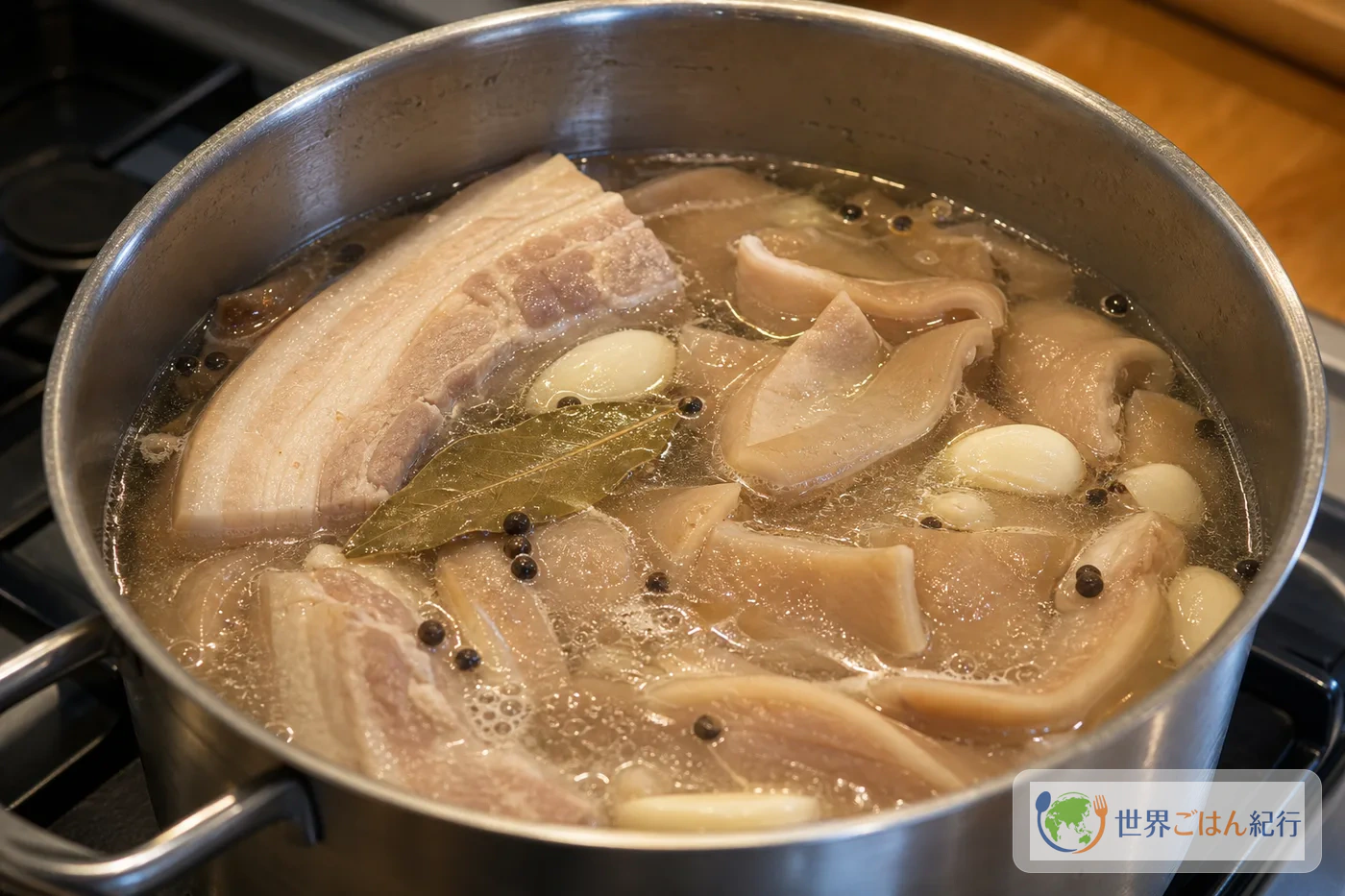
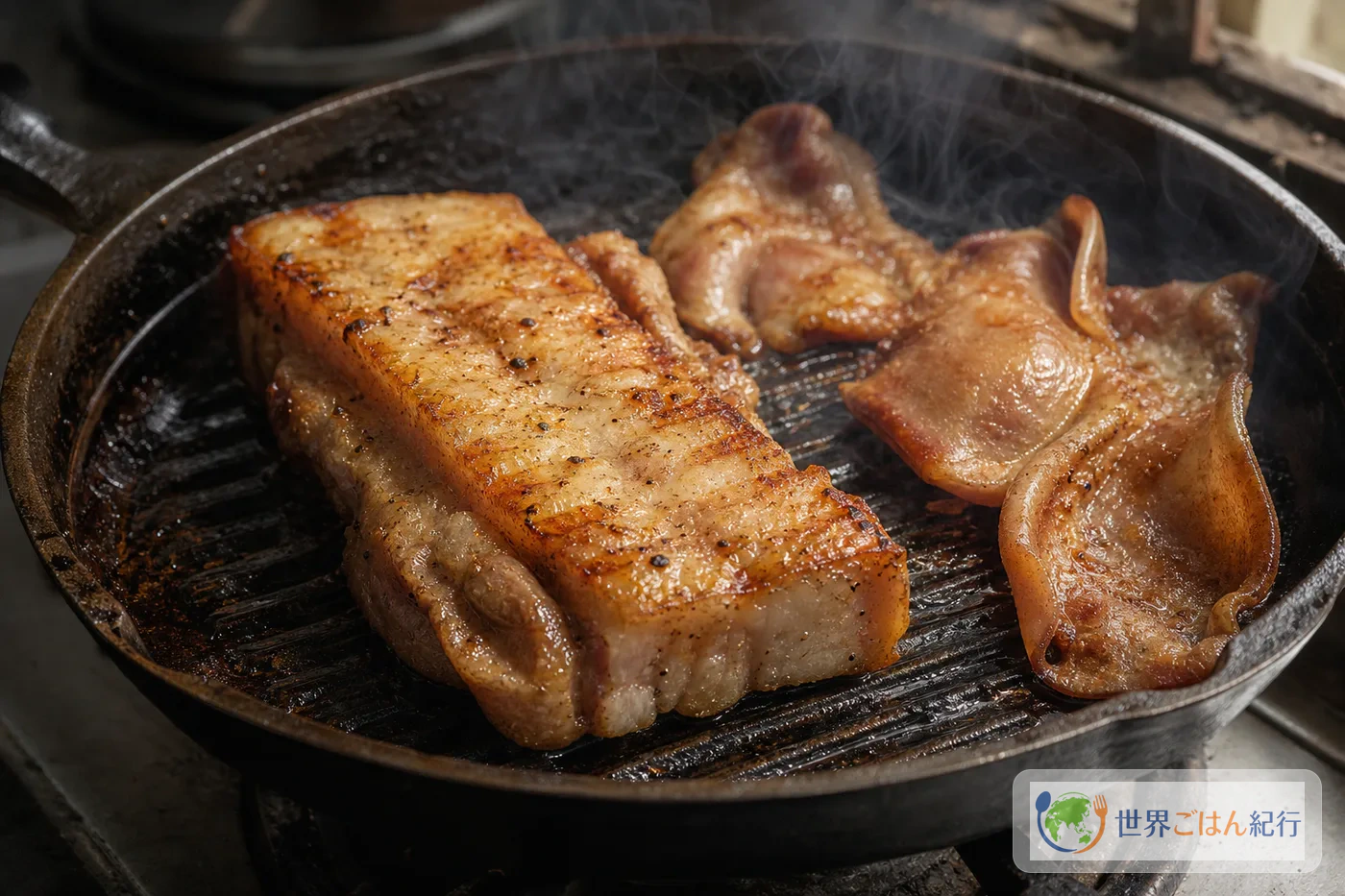
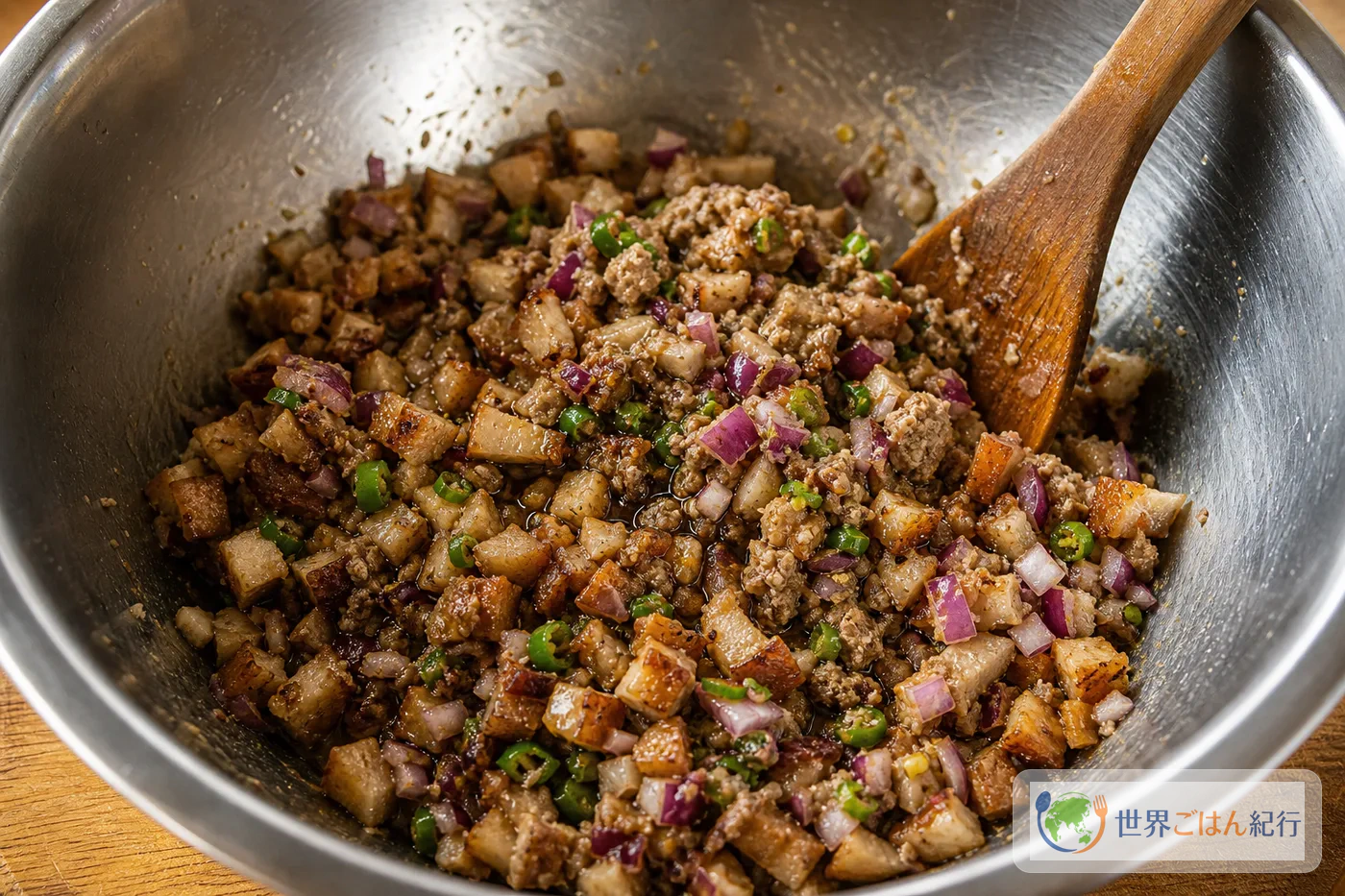
Soften the pork first, then put a crust on it, and finally combine it with the sourness and onion. If you stir-fry everything from the start, the pig's ear ends up tough, the pork belly greasy, and the liver dry and crumbly.
Home cooks often drop a raw or soft-cooked egg onto the hot plate. It looks fun, but if the plate is not hot enough the egg does not set properly. If you use one, drop a small egg onto the skillet right after finishing, while it is hot, and stir until the white sets. If unsure, no egg makes the outline of the flavor clearer.
A Branching Table for Getting Close to the Original at Home
If you tried to reproduce sisig's ingredients exactly, you would need pork face, ear, calamansi, coconut vinegar, and a sizzling plate. But even without all of them, once you decide what to protect you can get quite close.
| Ingredient/tool in question | Closest to the original | Realistic home substitute | Judgment |
|---|---|---|---|
| Meat | Pork face, ear, cheek | Pig's ear plus pork belly, or pork shoulder | Having the ear's texture brings it much closer |
| Liver | Chicken liver, pork liver, the savor of brain | A little chicken liver, or liver pâté | Too much tastes of iron |
| Sourness | Calamansi, dayap, vinegar | Sudachi, lime, lemon, rice vinegar | Keep some sourness to the end |
| Fish sauce | Patis | Fish sauce, from 1 tsp | Borrow the fermented aroma, not the saltiness |
| Finish | A hot plate | A skillet, a heavy frying pan | The crust on the bottom becomes the flavor |
Without pig's ear, mixing pork shoulder works better than pork belly alone, because the texture does not go monotonous. With 600 g pork belly alone the fat is delicious, but the soft fat continues in the mouth. Adding 250 g pork shoulder creates chewing time and brings out the onion and sourness.
If you rank the shopping priorities, the meat comes first, then the sourness, then the plate. On a day you find pig's ear that alone is a big step forward. On a day you cannot, ask the butcher for "pork shoulder a little thick, to be seared and chopped," and put your effort into leaning the sourness toward calamansi. Conversely, if the pig's ear and the sourness are both weak and you only add mayonnaise or egg, you move away from sisig toward a richer stir-fried pork.
For calamansi, a combination of sudachi and lime is the easiest substitute. Lemon alone works too, but the aroma turns sharp and can cut the pork fat too much. Do not put all the juice in the bowl; keep a last squeeze so that it can be squeezed little by little at the table.
Mayonnaise is fine to add to taste, but for the first time it is better to leave it out so the core of the dish shows. If you add it, add up to 2 tsp after turning off the heat. If you add a lot, the dish moves from one tightened by sourness toward a rich pork salad.
What Goes Wrong: Fixing Watery, Tough, and Liver-Smelling Sisig
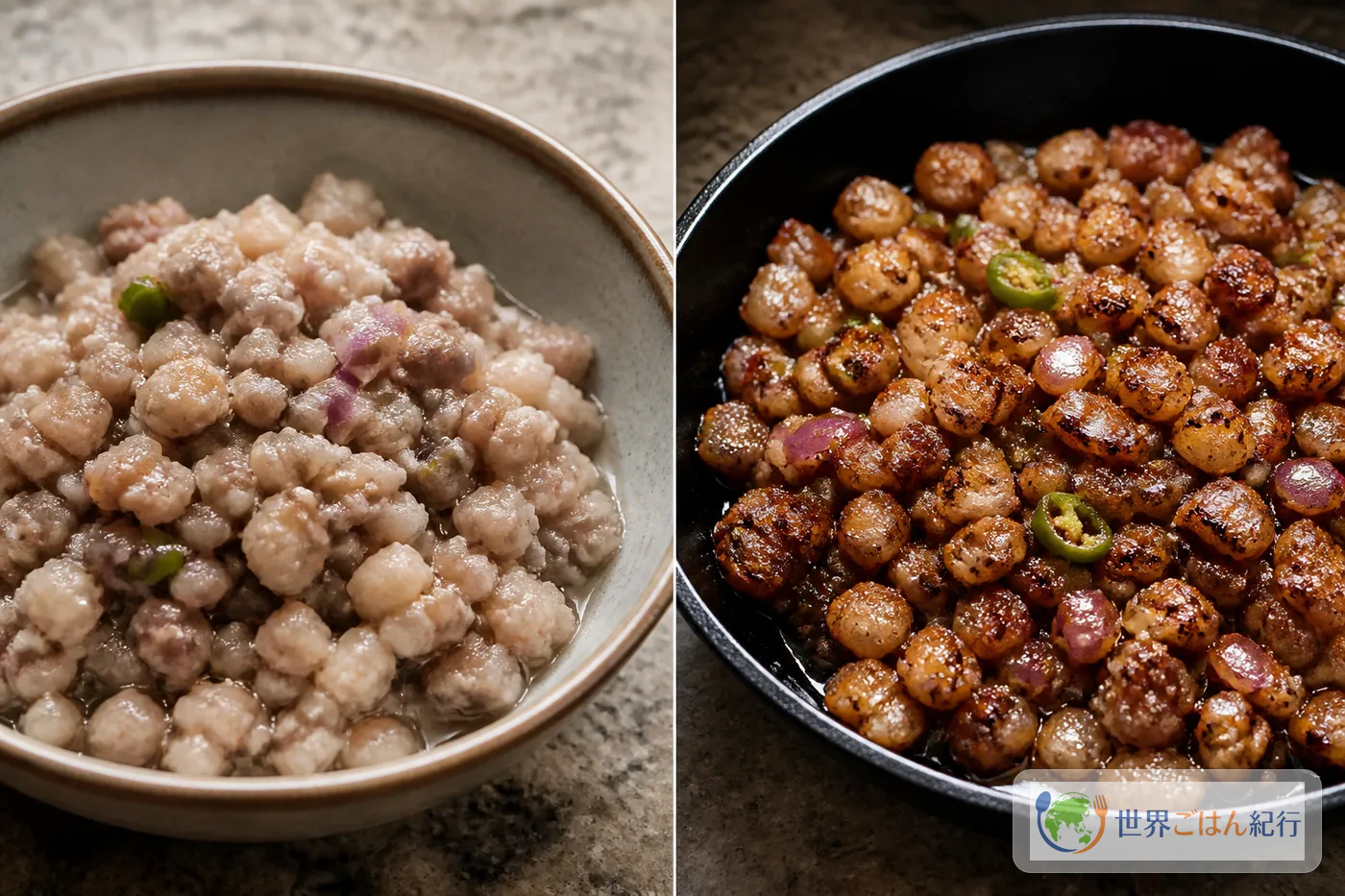
Most sisig failures are about moisture and how it is chopped. If you chop parboiled meat while it is still wet, the meat holds water in the bowl and takes no crust even when moved to the plate. Conversely, overcook it, and the ear is tough and the pork belly loses too much fat.
| Failure | Cause | Fix |
|---|---|---|
| Watery | The surface was not dried after parboiling, or too much dressing | Sear only the meat first on the plate and reduce the dressing in a small pot for 30 seconds |
| Pig's ear is tough | Underparboiled, or heated briefly over high heat | Parboil another 15 minutes over low heat until a skewer goes in |
| Greasy | The pork belly is very fatty, or not enough crust | Wipe off excess fat before chopping and sear the bottom on the plate |
| Smells of liver | Too much liver, undercooked, or not cleaned of blood | Halve the amount, cook through the center, then mix in the citrus |
| Too salty | Added soy sauce and fish sauce all at once | Dilute with white rice, onion, and chopped cucumber |
| Too sour | Too much juice at the start | Take it with a pinch of sugar, a little seared pork, and warm rice |
FoodSafety.gov gives the standard for whole cuts of pork as a 63°C internal temperature followed by a 3-minute rest, and 74°C for poultry including chicken. For sisig, the pork is parboiled and then seared, and the chicken liver is cooked separately. It is safest not to mix in liver that still has red juice, and to reheat leftovers until hot through.
Eating and Menu: White Rice, Vinegar, and a Sour Soup
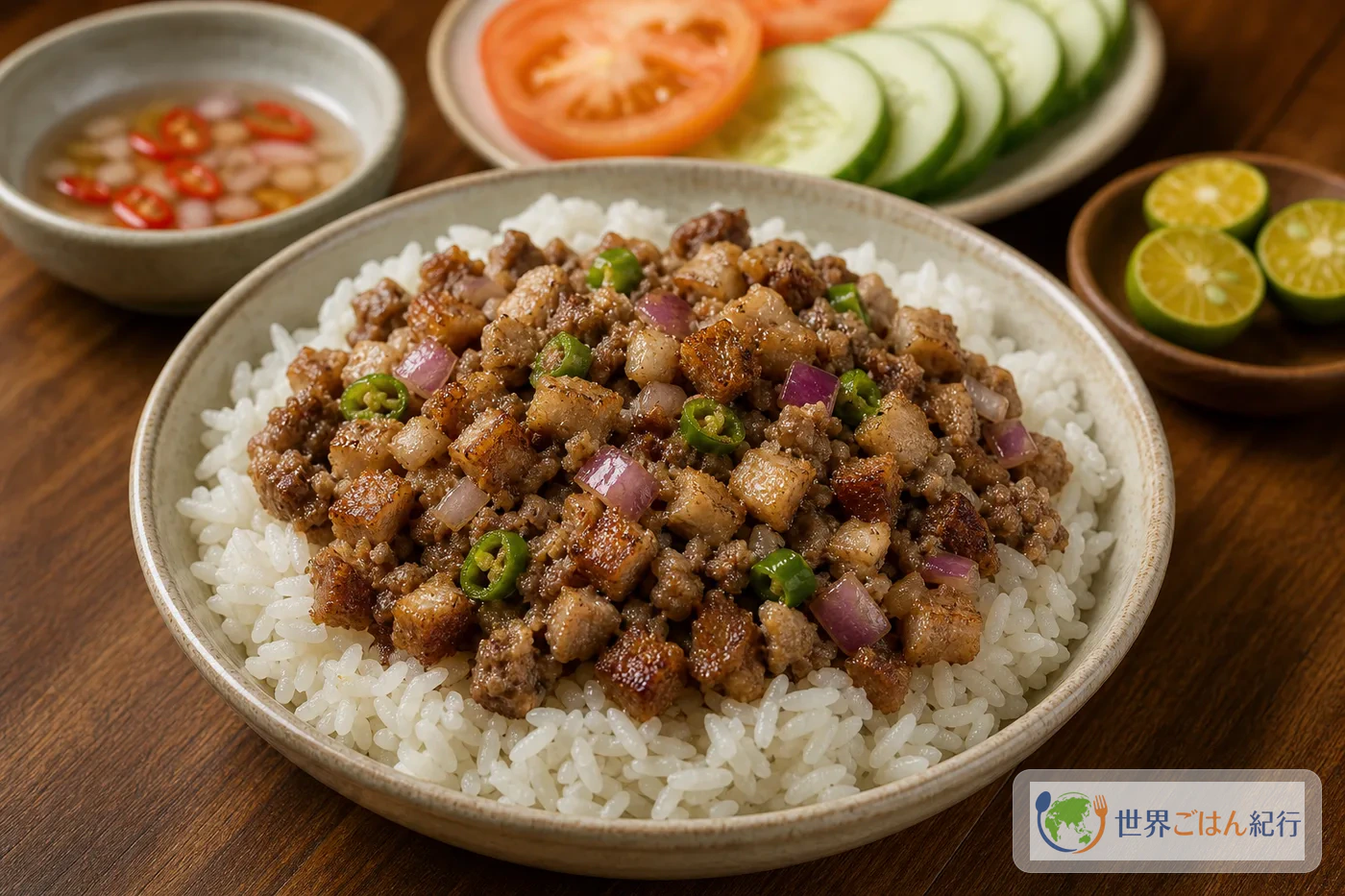
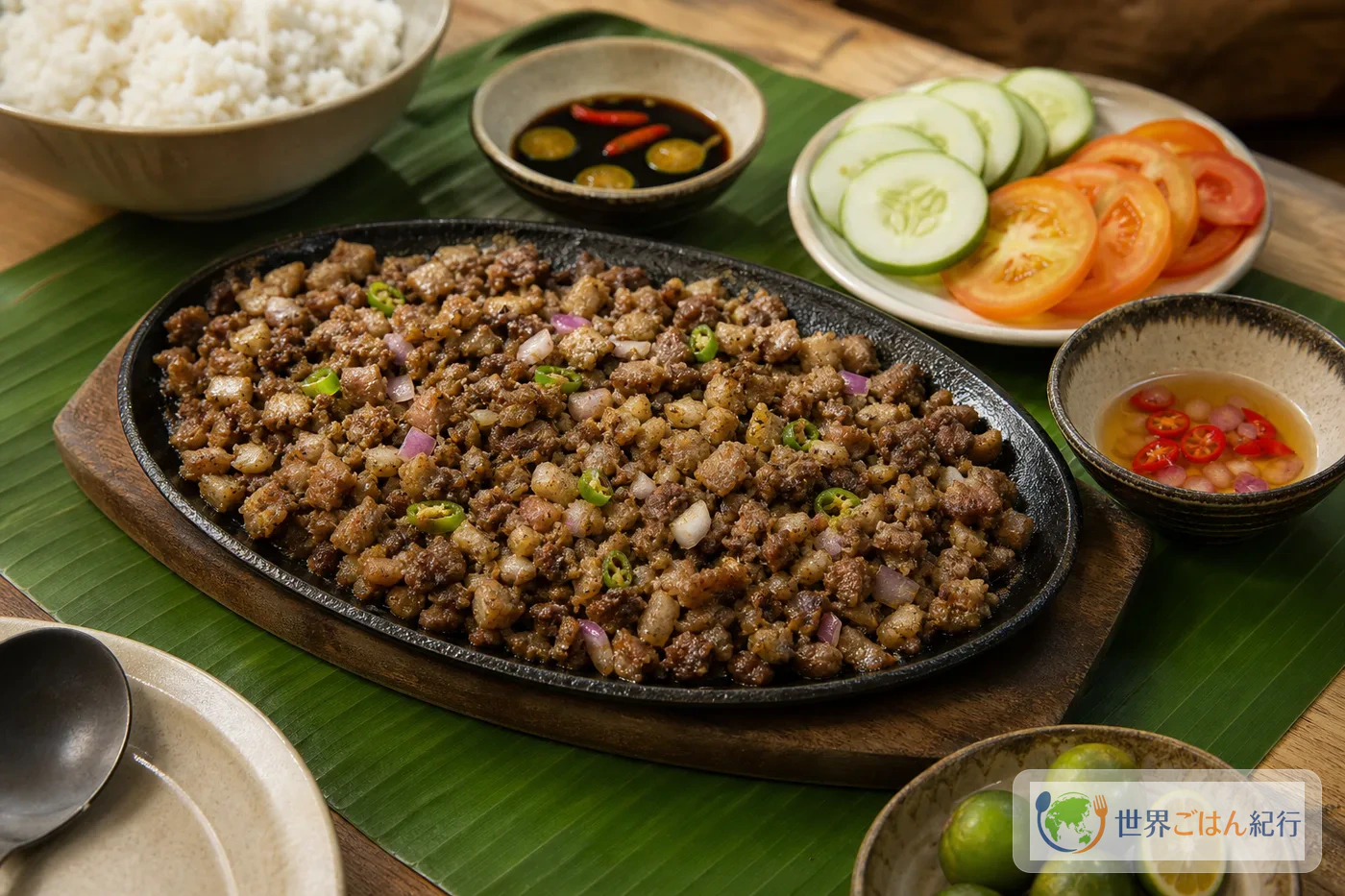
Sisig tastes strong when tasted alone. Put it over white rice, take a little vinegar from a small dish, and squeeze citrus partway through, and the fat loosens and it is easier to keep eating. At the Filipino table you often see strong main dishes taken up by white rice and sourness.
To build a Filipino menu, a small bowl of the sour sinigang keeps the pork fat from feeling heavy. For the liveliness of a big platter, add a little lumpiang shanghai, and on a day you want noodles, a modest pancit canton.
For heat, it suits home cooking better not to decide everything in the pan. Keep the sisig itself at medium with 2 green chilies, and put chopped chili and vinegar on a separate dish for those who want more. For children or people who dislike heat, chopped cucumber, tomato, and a firmly cooked egg make it easy to share the same plate.
| Occasion | Combination | Reason |
|---|---|---|
| Weekday dinner | Sisig, white rice, tomato, cucumber | Vegetables take up the fat and sourness |
| Filipino menu | Sisig, sinigang, a little pancit | Strong main, sour soup, and celebration noodles are separated |
| Guests | Sisig, lumpia, chicken inasal | Sizzling plate, fried food, and grilled food vary the texture |
| Milder heat | Less chili, vinegar dish, firm-cooked egg | The table can adjust the flavor |
Storage and Reheating: Over Rice the Next Day
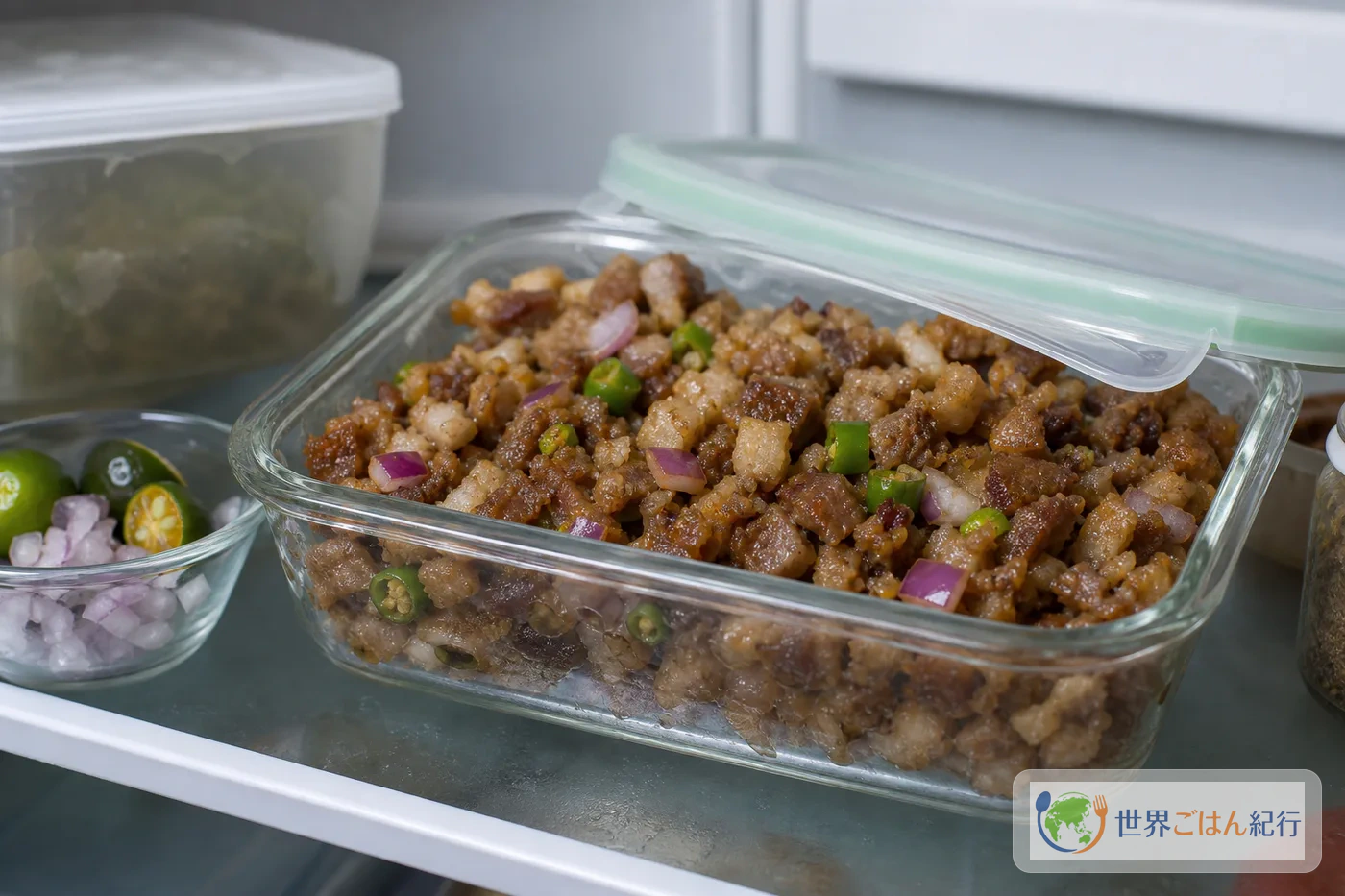
Refrigerate for up to 2 days as a guide. Because it uses pork and chicken liver, do not leave it out on the table for long. When there are leftovers, spread them in a shallow container and refrigerate once the heat is off. Stored with plenty of onion and citrus mixed in, the aroma gets stronger, so if you plan to make it ahead, add the onion and part of the juice just before eating.
A frying pan suits reheating. Warm over medium-low heat for 2 minutes, add 2 tsp water to loosen, and finally sear the bottom for just 1 minute over medium heat. If you use a microwave, cover loosely with plastic wrap and heat at 600 W for 1.5 minutes, stir, then add 30 seconds. Confirm it is hot in the center, and finally squeeze citrus to bring the aroma back.
You can freeze it, but the texture of the onion and the springiness of the ear drop. If freezing, divide only the chopped meat before adding the onion and citrus. After thawing, sear it back on a plate and add onion, chili, and juice, and the outline returns close to freshly made.
Frequently Asked Questions
Q1. Can I make it without pig's ear?
Yes. Use 250 g pork shoulder in place of 250 g pig's ear. With pork belly alone the impression of soft fat is strong, so mixing in shoulder for chew makes it more like sisig. You cannot bring back the crunch of cartilage, but the chopping and the crust make up for much of it.
Q2. What do I use if I don't have calamansi?
A mix of sudachi and lime is easiest. As a guide, 2 tbsp sudachi and 1 tbsp lime, tasting at the end and adding more. You can make it with lemon alone, but the acid tends to come out sharp, so start with 2 tbsp. Do not put all the juice in at the start; keeping some to squeeze at the table makes it harder to fail.
Q3. I don't like chicken liver. Can I leave it out?
You can, but the body of the sisig gets a little weaker. If you dislike liver, reduce the chicken liver to 60 g, or use just 1–2 tbsp liver pâté. If you leave it out entirely, add 1/2 tsp more patis and make the crust stronger to supply the savor.
Q4. Can I make it like the shops that add mayonnaise?
You can. Mix in 2 tsp after turning off the heat. Cooking mayonnaise long on a hot plate easily separates the oil, so add only a little at the end. If you want to keep the Pampanga-leaning sourness, adding more calamansi or sudachi suits better than mayonnaise.
Q5. Can I make it ahead?
Up to the chopped meat it suits making ahead. Parboil, sear, chop, and refrigerate the meat, then just before eating combine the liver, onion, chili, and juice and finish on the plate. If storing the finished dish, 2 days refrigerated is the guide, and add citrus after reheating.
Q6. Can I make a version without heat?
Yes. Replace the green chili with 4 shishito peppers and omit the red chili. Removing all the heat can make the flavor feel heavy, so keep the black pepper and citrus. For people who like heat, put chopped chili in the vinegar dish and serve it on the side.
Summary: With the Chopping and Sourness of Pork, Your Kitchen Moves Closer to Pampanga
Sisig is not a dish of just collecting unusual ingredients. It mixes the texture of pig's ear, the fat of pork belly, the savor of chicken liver, the bite of onion, and the sourness of citrus, bite by bite, within a fine chop.
For the first time, if you cannot get pig's ear do not force it; add pork shoulder and make it. What to protect: softening in the parboil, searing the surface well, chopping into 5–7 mm cubes, keeping the sourness to the end, and making the bottom toasty on a hot plate.
Put it over white rice, set a small dish of vinegar beside it, and squeeze citrus partway through. By the time the sound of the plate settles, it is no longer just stir-fried pork; the strength and sourness of a Filipino table remain on the plate. To widen next into Filipino cooking, connect to the sour sinigang, the charcoal-grilled chicken inasal, and the big-platter noodles pancit canton, and the same shopping gets used.
Sources
- Panlasang Pinoy, "Sisig Recipe" https://panlasangpinoy.com/filipino-food-appetizer-pulutan-sisig/
- Positively Filipino, "Sisig's Origin Story" https://www.positivelyfilipino.com/magazine/sisigs-origin-story
- Rappler, "Sinful, savory, satisfying: A mouthwatering guide to Pampanga's sisig" https://www.rappler.com/life-and-style/food-drinks/sizzling-sinful-savory-mouthwatering-guide-pampanga-sisig/
- FoodSafety.gov, "Cook to a Safe Minimum Internal Temperature" https://www.foodsafety.gov/food-safety-charts/safe-minimum-internal-temperatures



