Bánh in: A Pressed Sweet That Needs Time to Settle
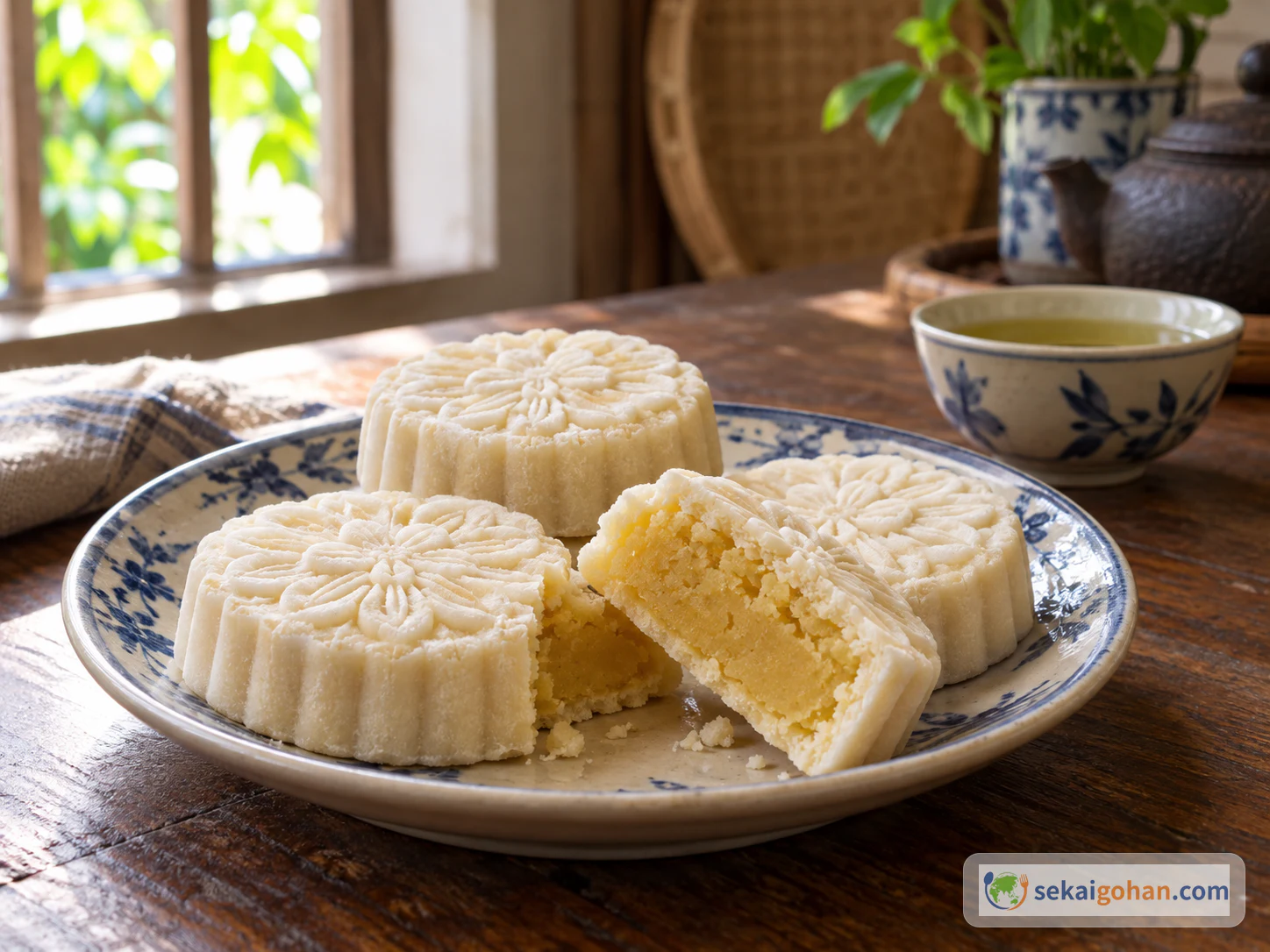
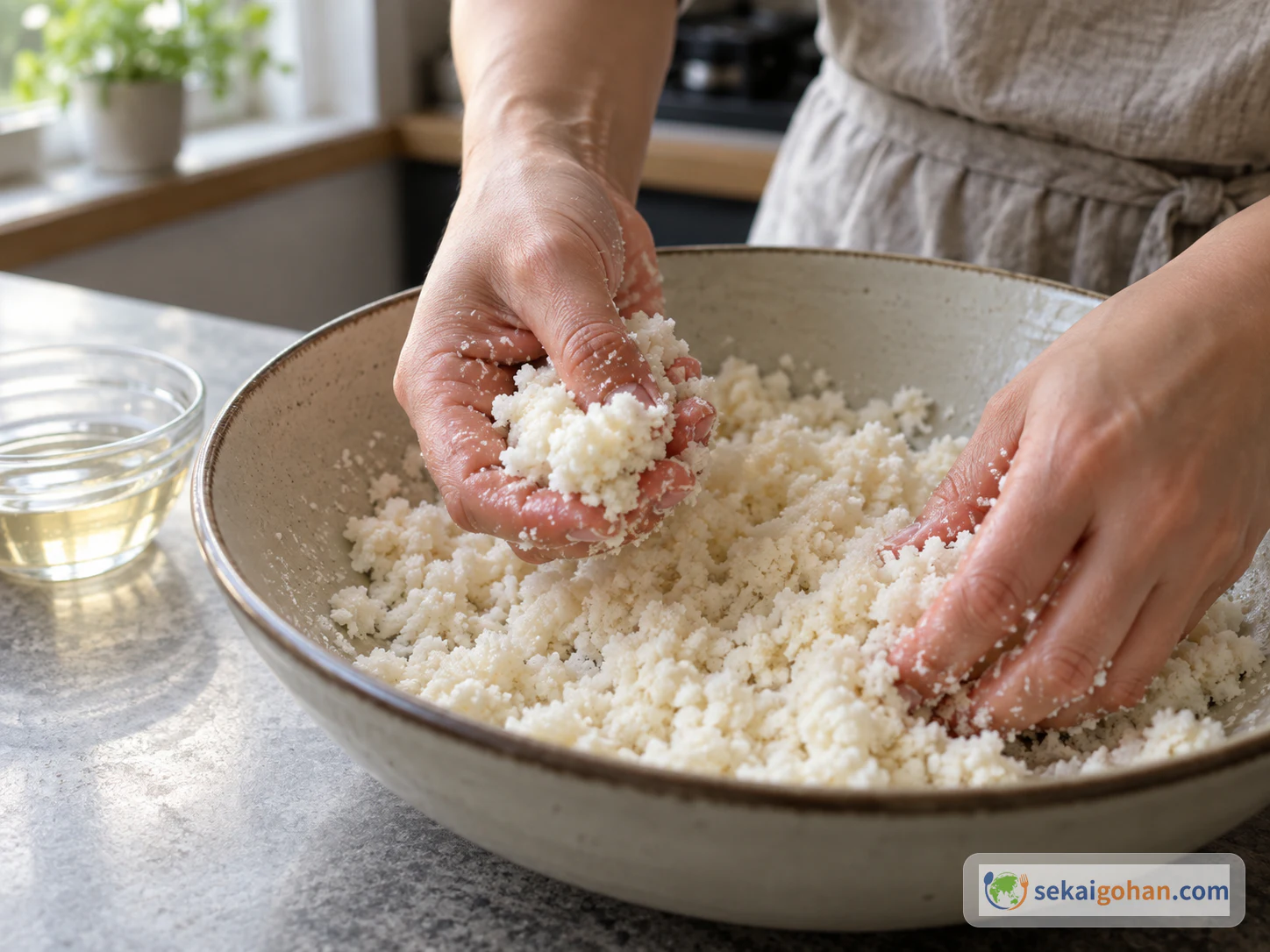
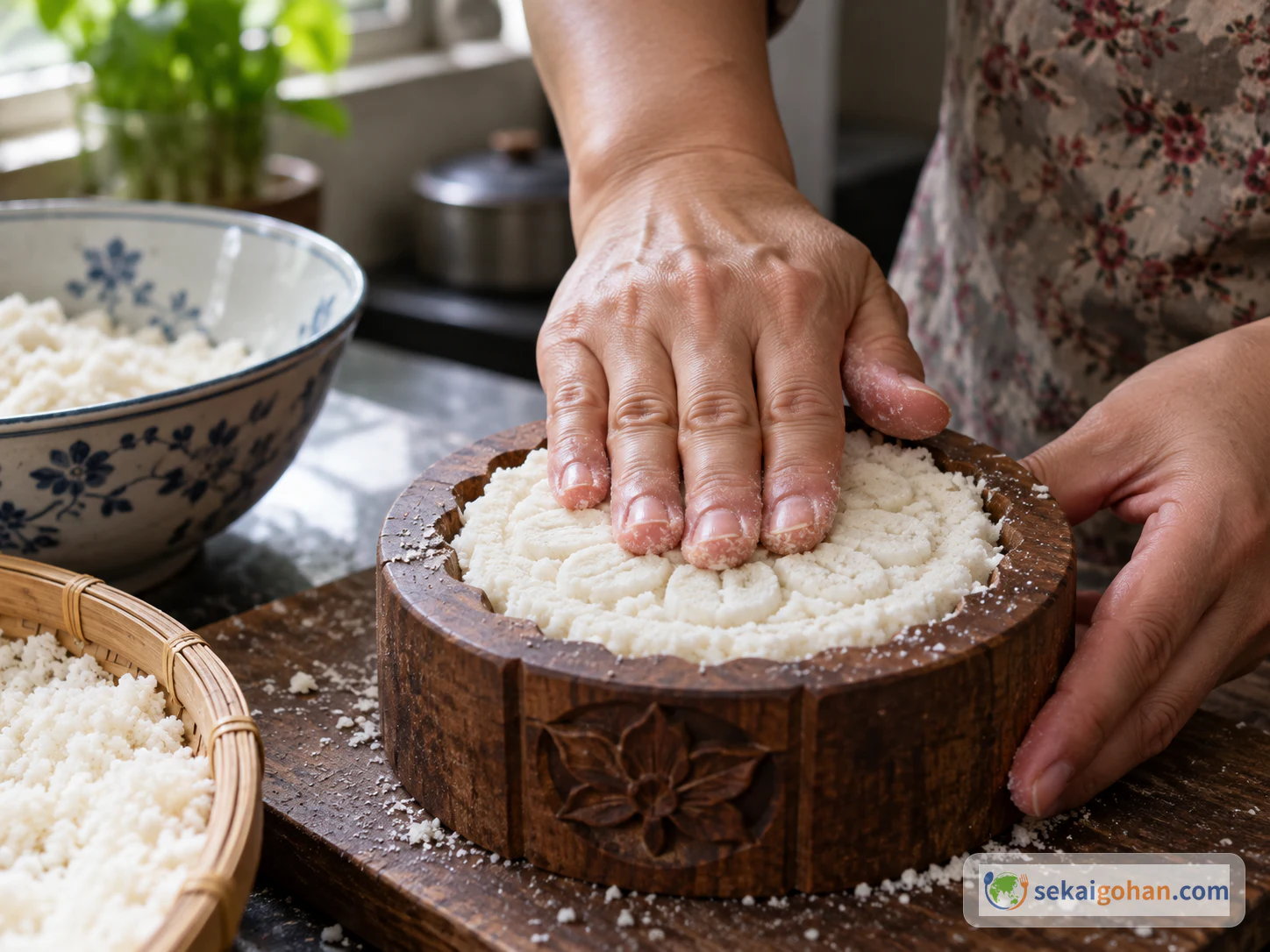
Aim for a shell of fine, damp crumbs pressed firmly around a smooth mung bean filling. Nothing is baked or steamed after molding. The final step is simply to leave the cakes undisturbed.
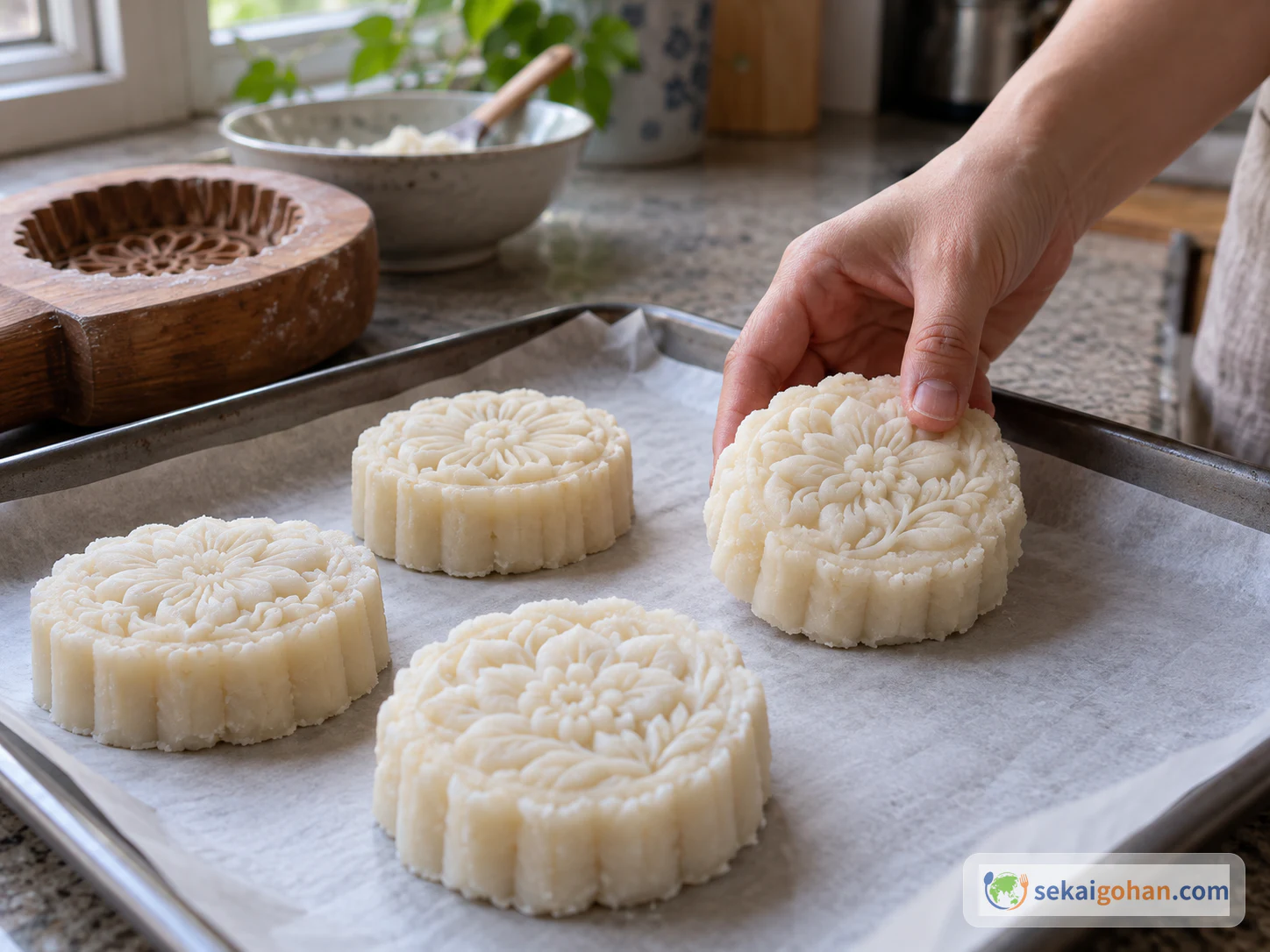
Bánh in are small sweets pressed in a carved mold, and the mold leaves its pattern on top. Infonet / Vietnamnet describes them as a sweet from Huế, offered at Tết and served to guests, and also connects them with Nguyên tiêu, the 15th day of the first lunar month. A freshly unmolded cake is fragile, so it has to rest before its shape settles.
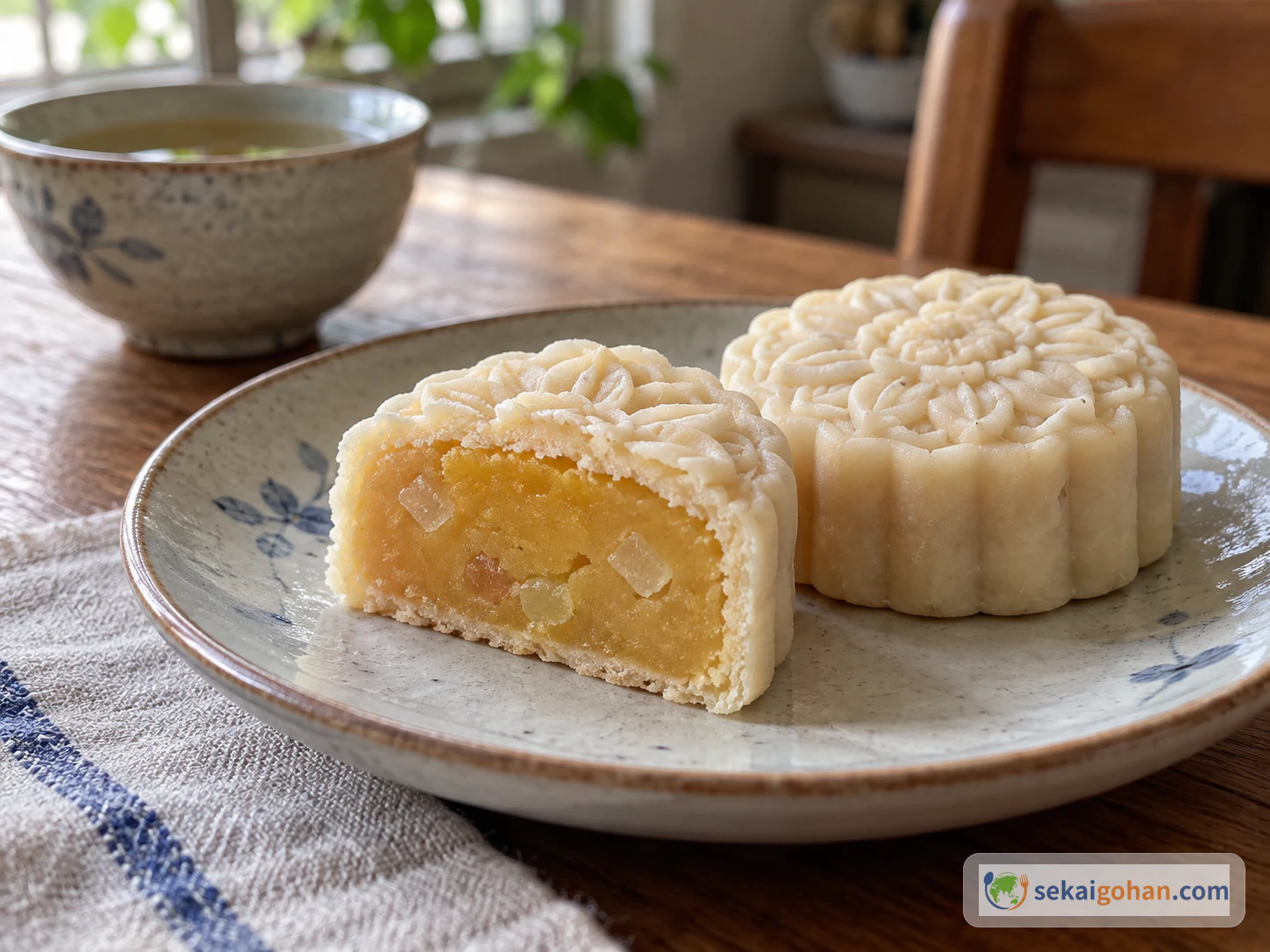
This article covers one version: bánh in nhân đậu xanh, filled with peeled mung beans. Not every bánh in has a filling, and some use a different one. The recipe follows the single set of amounts and steps published by Infonet / Vietnamnet, without mixing in proportions from other recipes.
Before You Start: What Is and Isn't Confirmed
The amounts and method below come from the Infonet / Vietnamnet recipe. We have not test-cooked it, so treat the textures described in the steps as your main guide.
A few gaps in the published recipe are worth knowing about before you shop:
- Salt: The ingredient list includes 1g of salt, but the method never says when to add it. We list it without assigning it to a step, and this question remains unresolved.
- Yield: The recipe gives no fixed number of cakes or servings. The amounts of shell and filling differ, so you may have some of either left over. The amounts should not be scaled by guesswork.
- Storage: The recipe gives no storage conditions or shelf life, so we don't state any here.
- Bean water: The only guide is a level 1–1.5 cm above the beans, with no measured volume.
Ingredients for Filled Bánh in
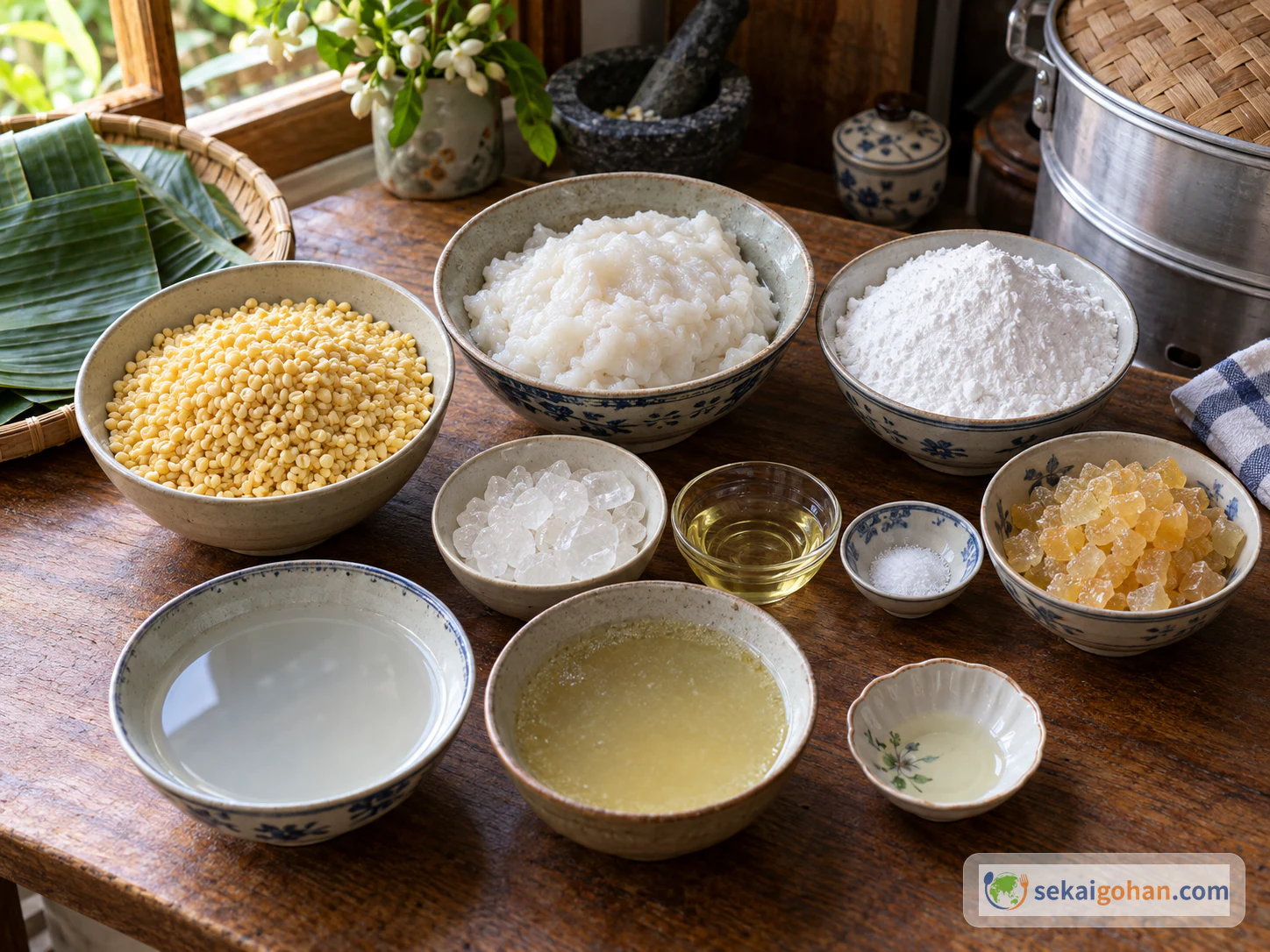
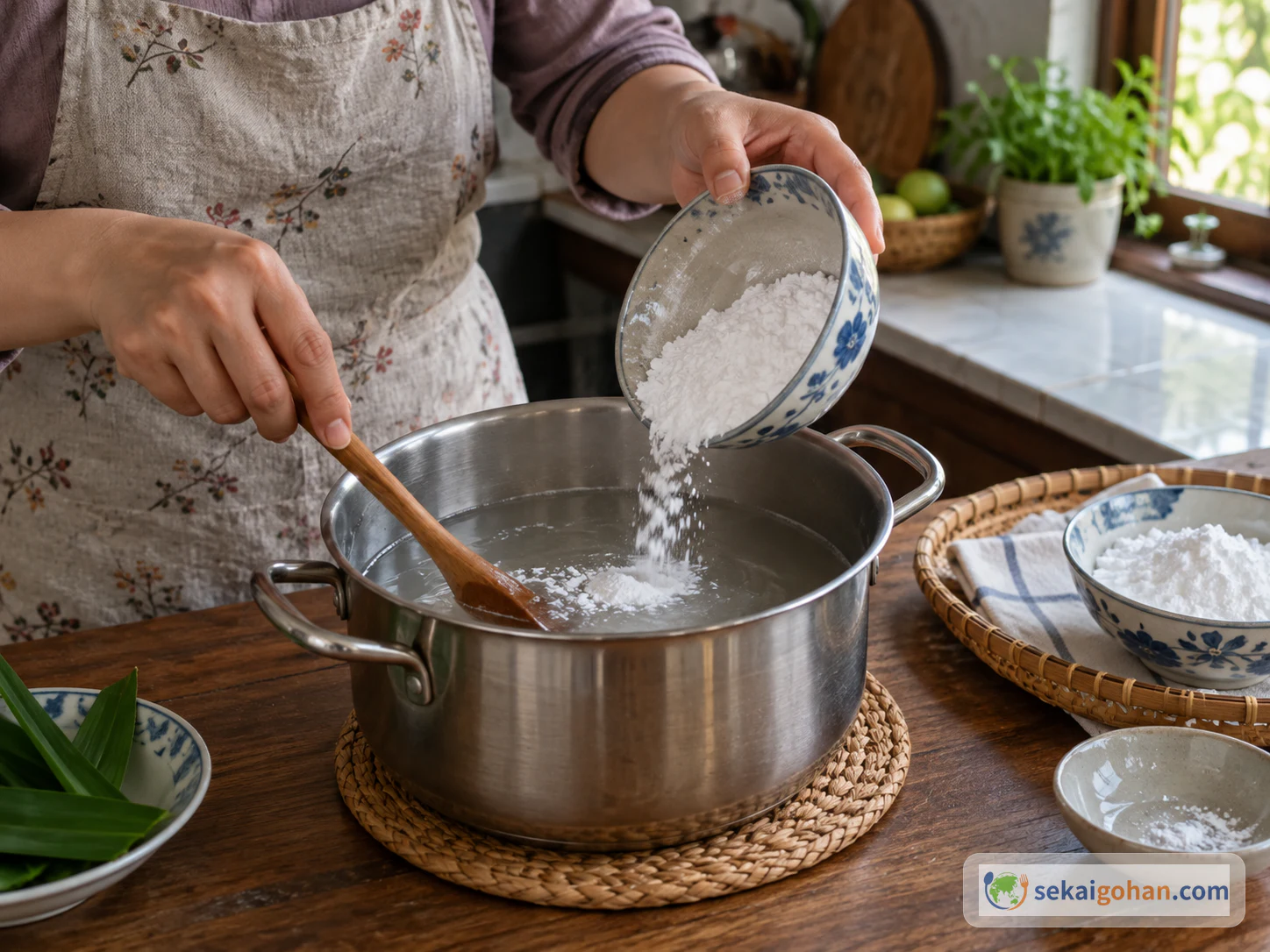
The two sugars have separate jobs. Powdered sugar goes into the shell syrup, and rock sugar goes into the filling. The 150ml of drinking water is for the syrup only, so measure it separately from the water used for the beans.
Equipment
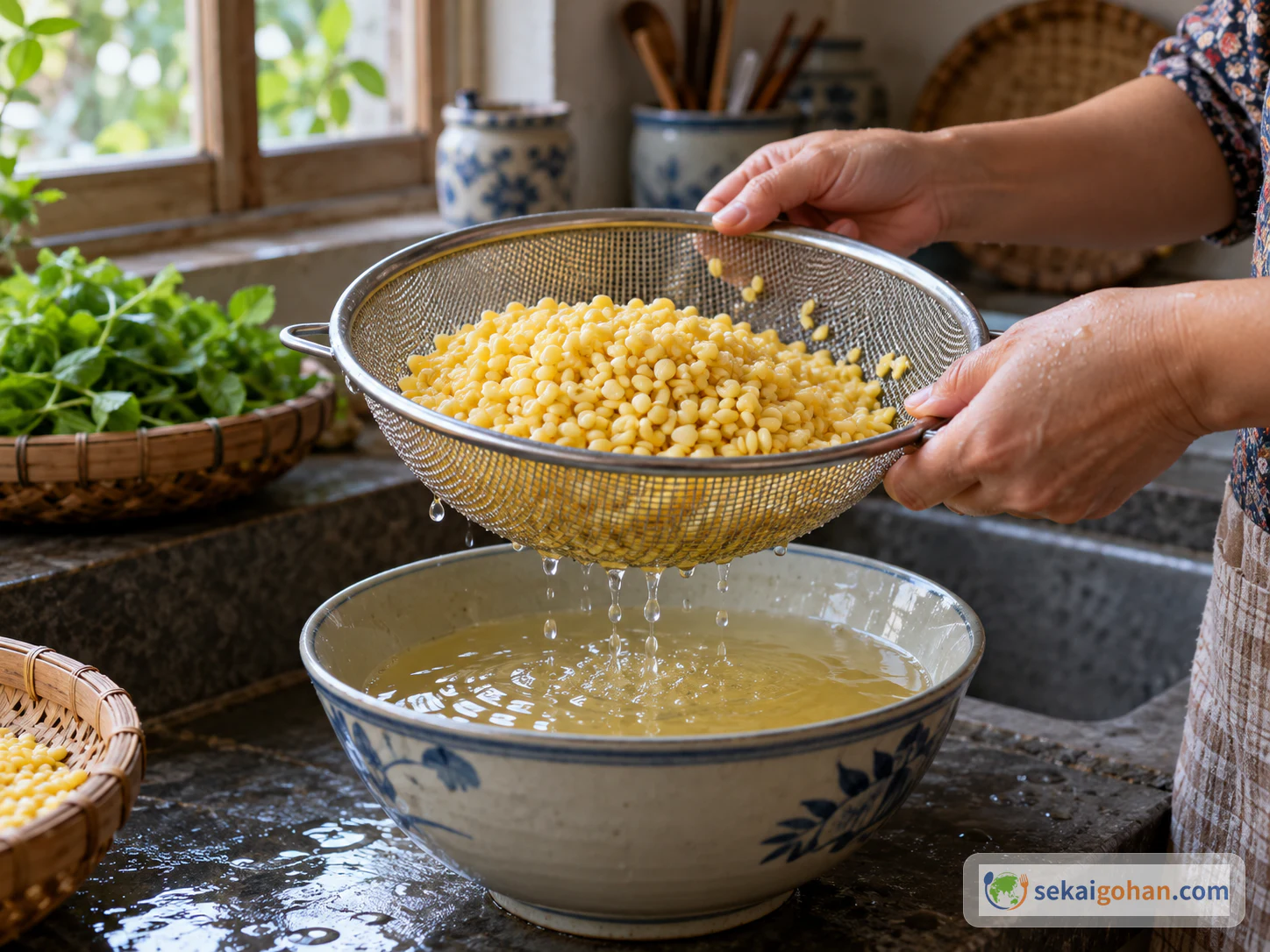
- Bowl and strainer for soaking and rinsing the beans
- Pot
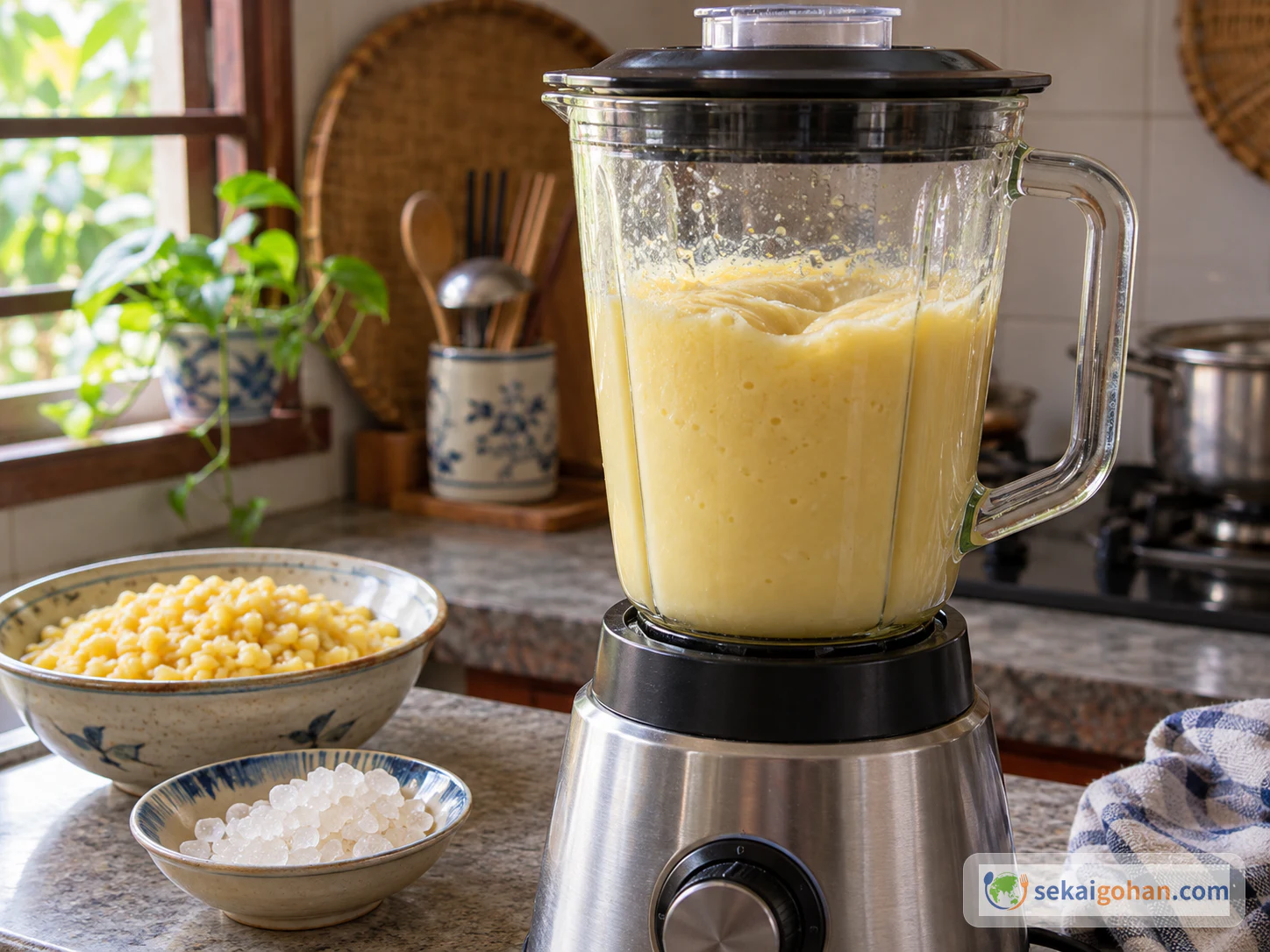
- Blender
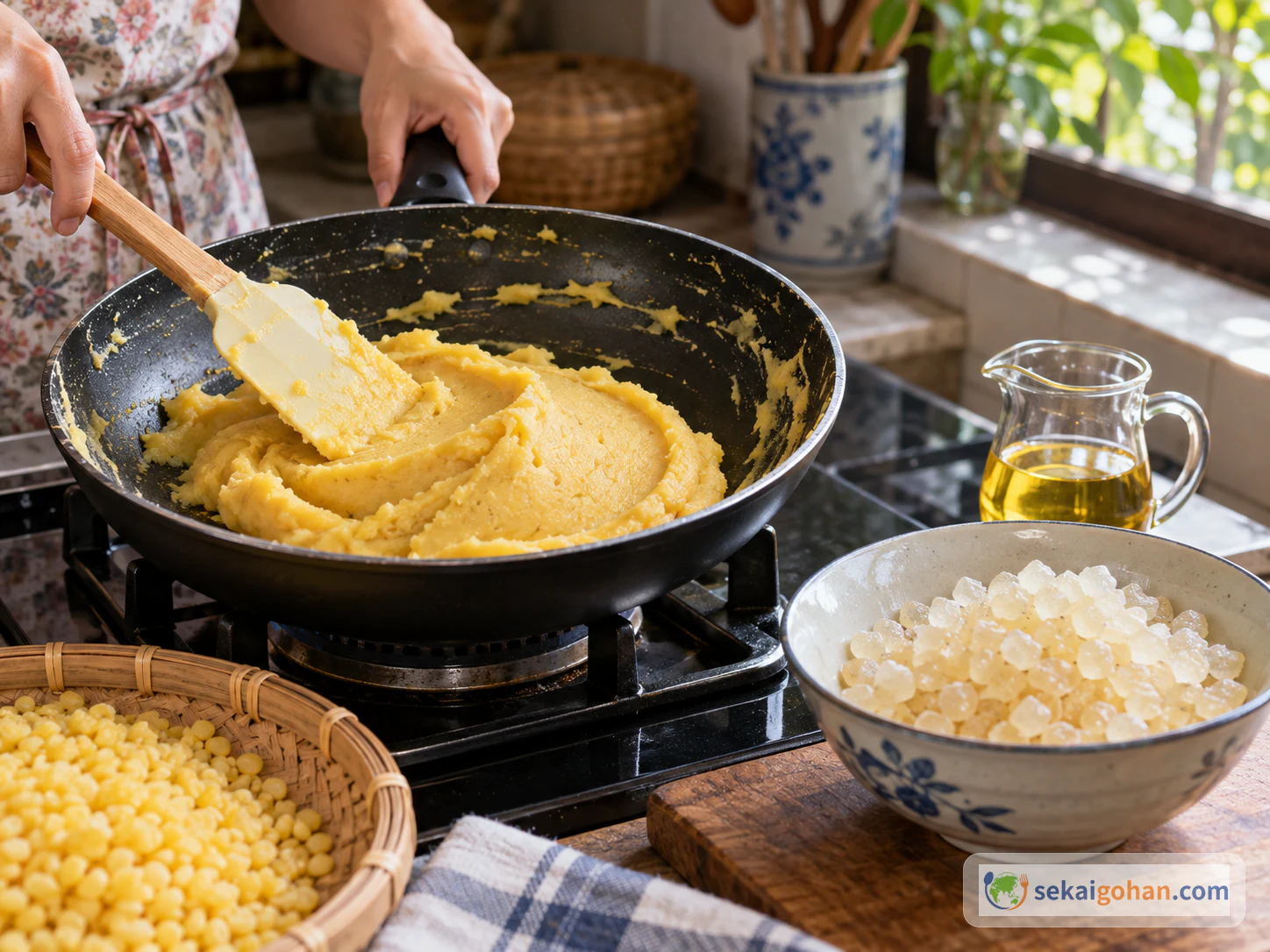
- Nonstick skillet
- Wide mixing bowl
- Mooncake mold or similar sweet mold
Choosing and Substituting: Start with the Flour
Cooked glutinous rice flour is the ingredient to track down. In Vietnamese it is bột nếp chín, and it is also known as the flour used for bánh dẻo. Because the shell gets no further cooking, this flour can't be treated as interchangeable with other rice flours. No equal-weight swap with mochiko, shiratamako or raw glutinous rice flour has been confirmed, so check what a product is before you rely on it.
- Powdered sugar: You can make it in a dry blender.
- Candied winter melon: This is optional and can be left out.
- Pomelo blossom water: This is also optional and can be left out.
- Mold: A mooncake mold works. The size of each cake will depend on your mold.
Troubleshooting: Reading the Filling and the Crumb
| What you see | What to do |
|---|---|
| The beans are too thick to blend | Add a very small amount of water, only as much as the blender needs |
| The filling won't roll into a ball | Keep stirring it in the skillet until it gathers into a firm mass |
| The powdered sugar isn't dissolving | Add it more gradually and keep stirring until the syrup is fully dissolved |
| The crumbs fall apart when squeezed | Rub in a little more syrup, then squeeze again |
| The mixture is turning into a sticky lump | Stop adding syrup. No rescue for an overly wet shell has been confirmed, so add it more slowly next time |
| A cake is fragile after unmolding | This is expected. Leave it where it is for at least 1 hour before moving it |
Variations: What You Can Change
- Plainer filling: Leave out the candied winter melon for a filling of mung beans alone.
- No floral scent: Leave out the pomelo blossom water.
- A different pattern: Use the mold you have. Floral designs and characters are both decorative, and reproducing a particular character isn't a cooking requirement.
- Tea: Choose any unsweetened tea. No specific traditional variety has been confirmed for this sweet.
Unfilled versions and other fillings also exist, but this article's amounts apply only to the mung bean version, so they shouldn't be assumed to carry over.
Bánh in in Huế and at Tết
Infonet / Vietnamnet's recipe article presents bánh in as coming from Huế and places it among Tết offerings, sweets for guests and Nguyên tiêu. Wikipedia's overview also connects it with Huế and Tết, and mentions molds bearing "thọ," the character for longevity. These descriptions come from those publications, and they don't establish a custom shared by every family or across a whole region. Their exact historical dates and the origin of the name are also unconfirmed here. In this article, "bánh in" simply names a sweet pressed in a mold.
Household and regional versions vary. Travel S Helper describes Huế-style bánh in both with and without filling, and a home cook's post on Cookpad Vietnam shows another filled, molded version with different proportions. We use these only as examples of the range and don't merge their quantities or steps into this recipe.
Some similar-sounding or similar-looking Vietnamese sweets are different dishes:
| Sweet | How it differs |
|---|---|
| Bánh da lợn | A steamed layered sweet |
| Bánh đậu xanh nướng | A baked mung bean cake |
| Bánh đậu xanh from Hải Dương | A pressed sweet from northern Vietnam, treated as a separate confection |
For more of the country's cooking, see our Vietnam recipes.
Frequently Asked Questions
Do the cakes need baking or steaming?
No. The recipe uses cooked glutinous rice flour, and the mung bean filling is cooked on the stove. The cakes are pressed, unmolded and rested for at least 1 hour.
Can I use regular glutinous rice flour, mochiko or shiratamako?
We can't confirm that. The Infonet / Vietnamnet recipe calls for bột nếp chín, and we have not verified a same-weight swap with mochiko, shiratamako or raw glutinous rice flour. Treat any of these as an untested experiment, not as this recipe.
When does the salt go in?
The Infonet / Vietnamnet recipe lists 1g of salt but doesn't give a step for it. We haven't invented one, so its timing remains an open question and is yours to decide.
How many cakes does this make?
The recipe doesn't give a fixed yield. The number will depend on your mold and how you portion the shell and filling, and you may have some of either left over.
Do I have to use all the syrup?
The recipe doesn't say that every drop must go in. Add it gradually and stop when the crumbs are fine and damp and hold together when squeezed.
How long do the cakes keep?
The recipe gives no storage conditions or shelf life, so we can't offer a confirmed time or method. It only advises waiting until the shape has fully settled before wrapping.
What should I drink with bánh in?
Unsweetened tea is a simple pairing. The sources we used don't confirm a specific traditional tea, so we don't name one.
Sources
- Infonet / Vietnamnet, "Tự tay làm món bánh in thơm ngon cúng Rằm tháng Giêng." The main recipe for bánh in nhân đậu xanh, with its ingredients and method; the description of the sweet as coming from Huế; and its place as an offering and for guests at Tết and Nguyên tiêu. It does not state a yield, when to add the salt, a measured volume of bean-cooking water or a storage period. https://infonet.vietnamnet.vn/tu-tay-lam-mon-banh-in-thom-ngon-cung-ram-thang-gieng-277647.html
- Huyen le Tran, "Bánh in nhân đậu xanh," Cookpad Vietnam. A user-posted home example of a filled, molded version. Its amounts and method differ and are not used in this recipe. https://cookpad.com/vn/cong-thuc/10402479
- Travel S Helper, "Bánh in Huế — pressed mung-bean cakes." Supplementary reference for Huế-style versions with and without filling, and for mold pressing and resting. Its quantities, nutrition and storage details are not used. https://travelshelper.com/world-of-food/vietnamese-national-dishes/b%C3%A1nh-in-hu%E1%BA%BF-pressed-mung-bean-cakes/
- Wikipedia, "Bánh in." Supplementary overview of the links to Huế and Tết and the "thọ" mold. Not used as a main source. https://en.wikipedia.org/wiki/B%C3%A1nh_in