Nước Sâm: A Dark Amber Drink from Sugarcane, Flowers and Dried Fruit
Keep the simmer gentle, cool the drink in the refrigerator rather than on the counter, and let the sugarcane and monk fruit carry the sweetness. No sugar goes in.
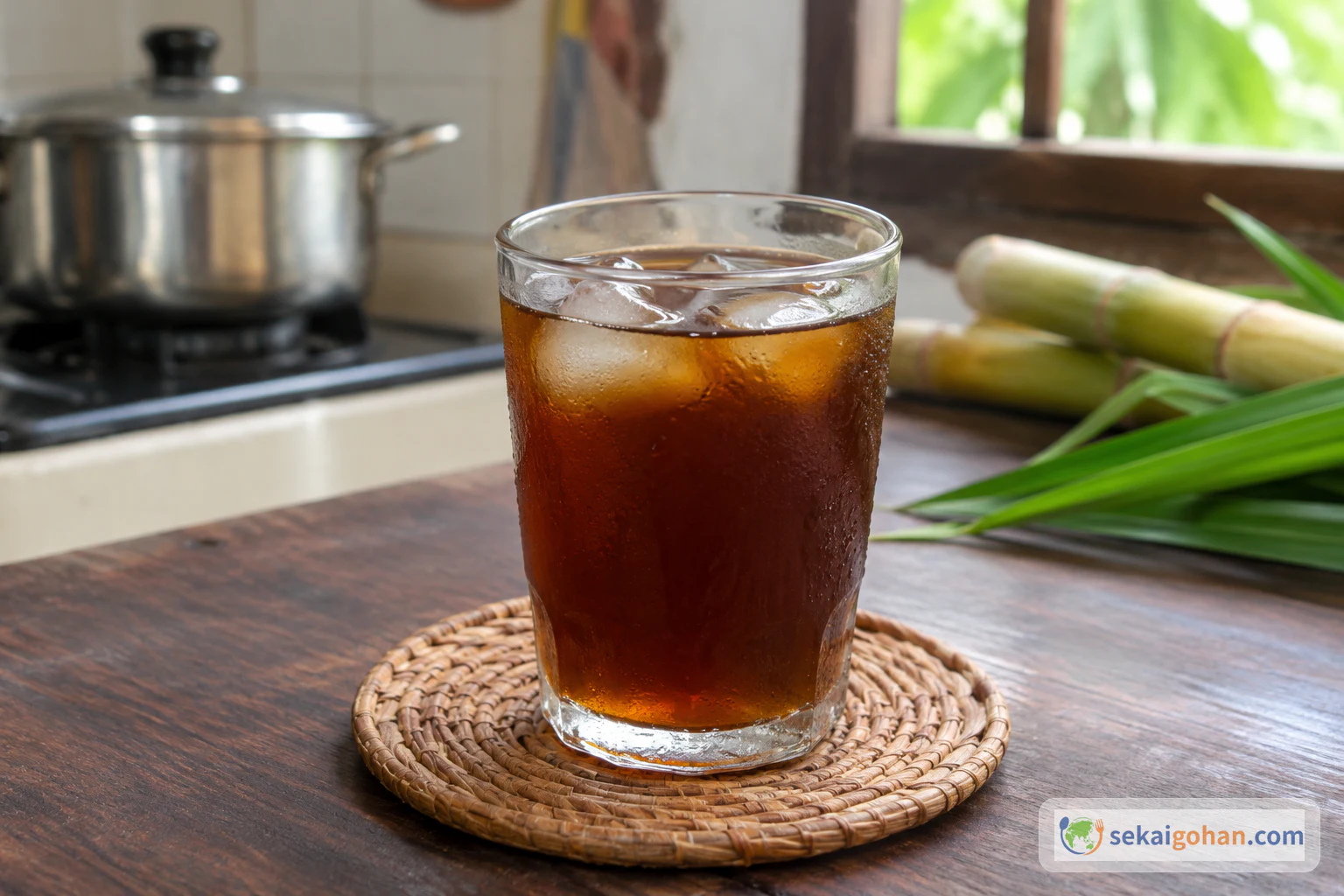
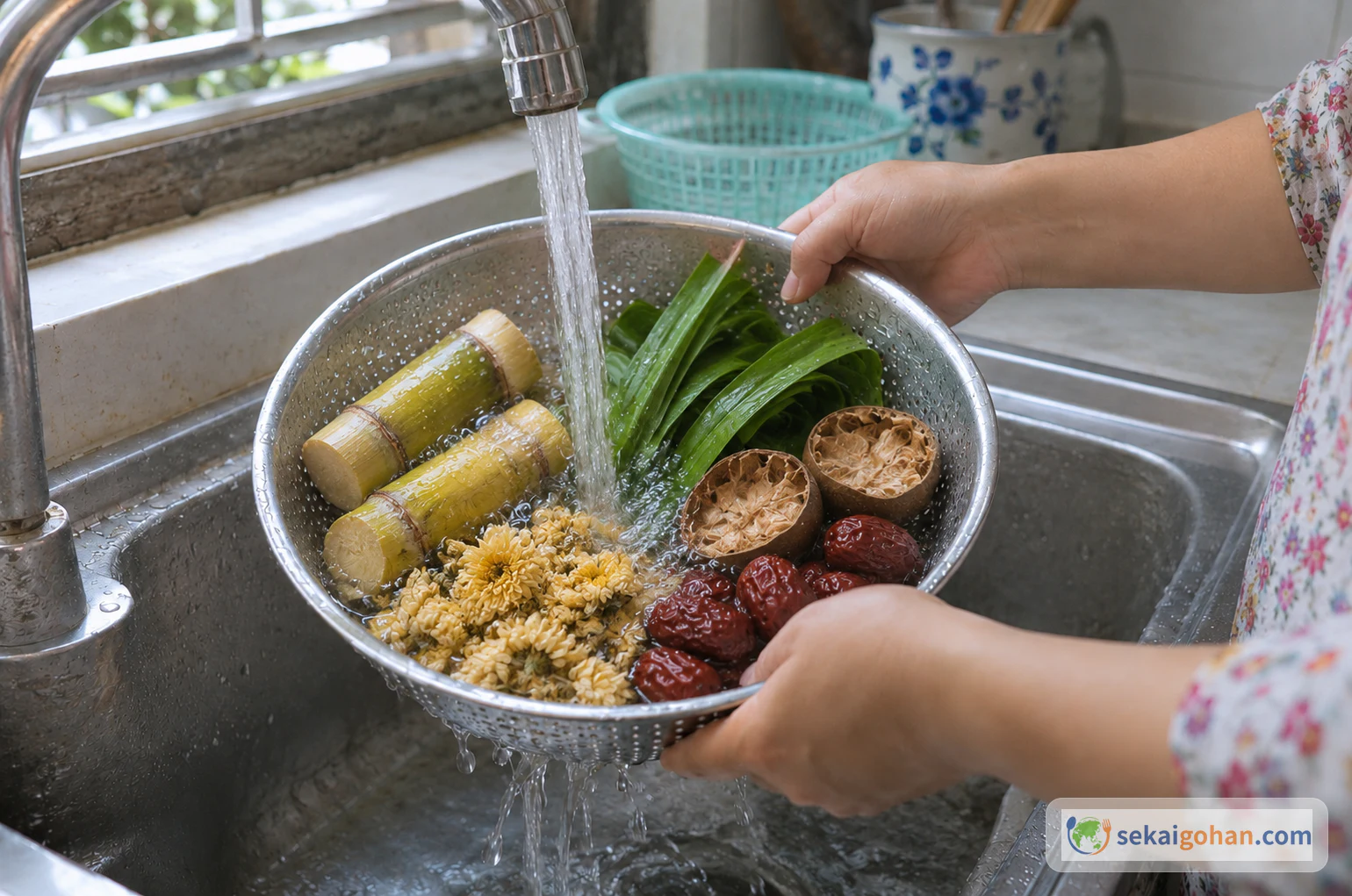
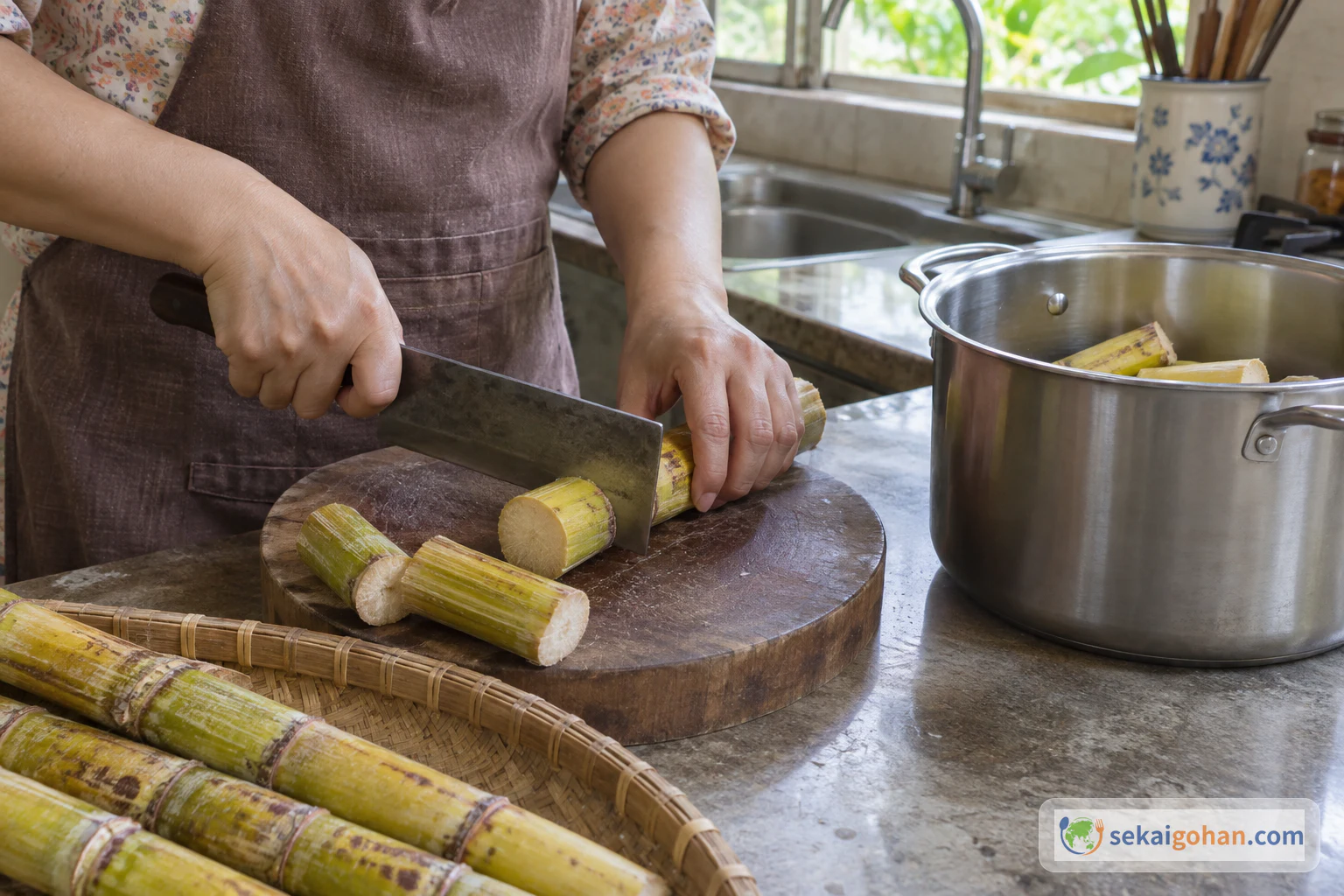
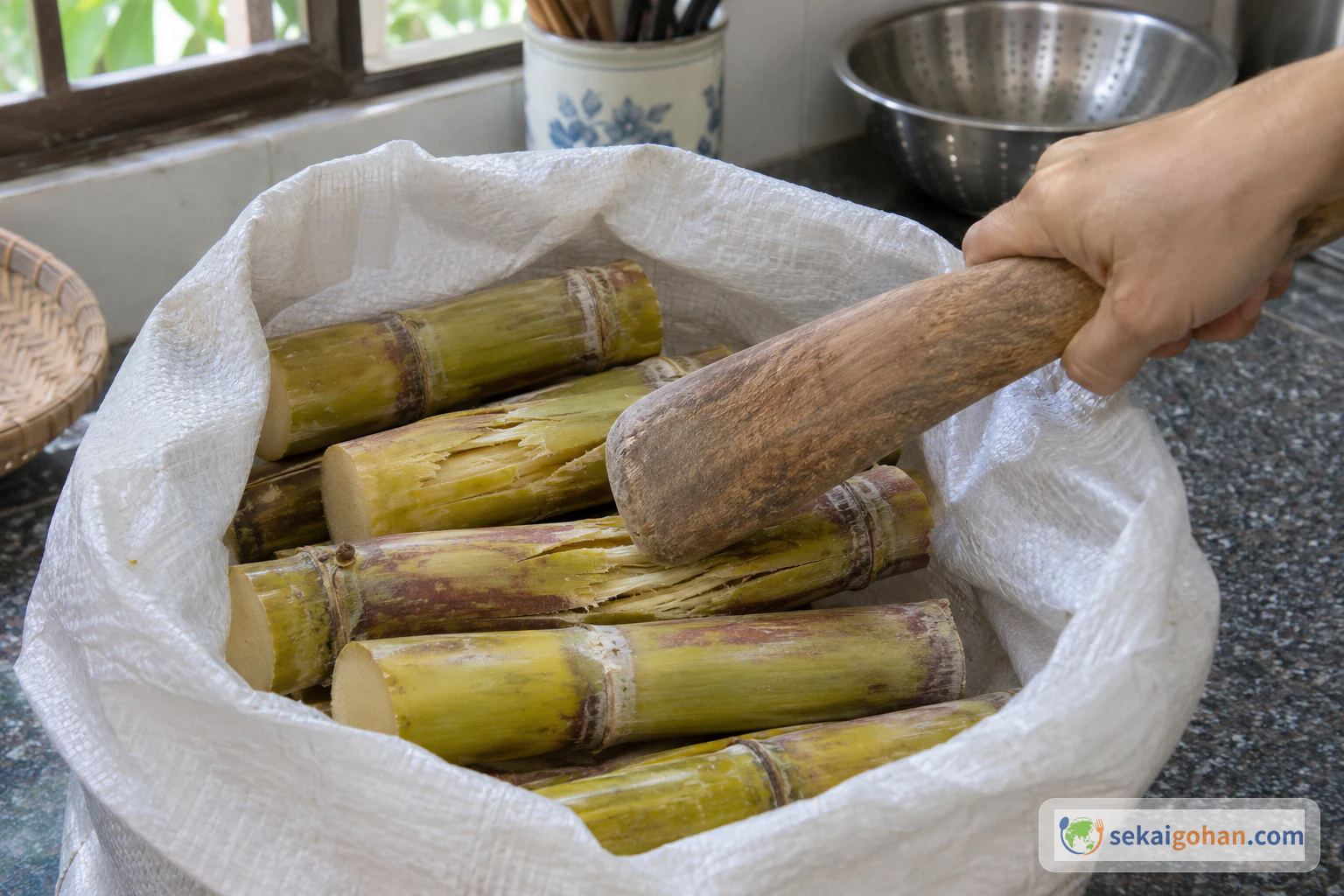
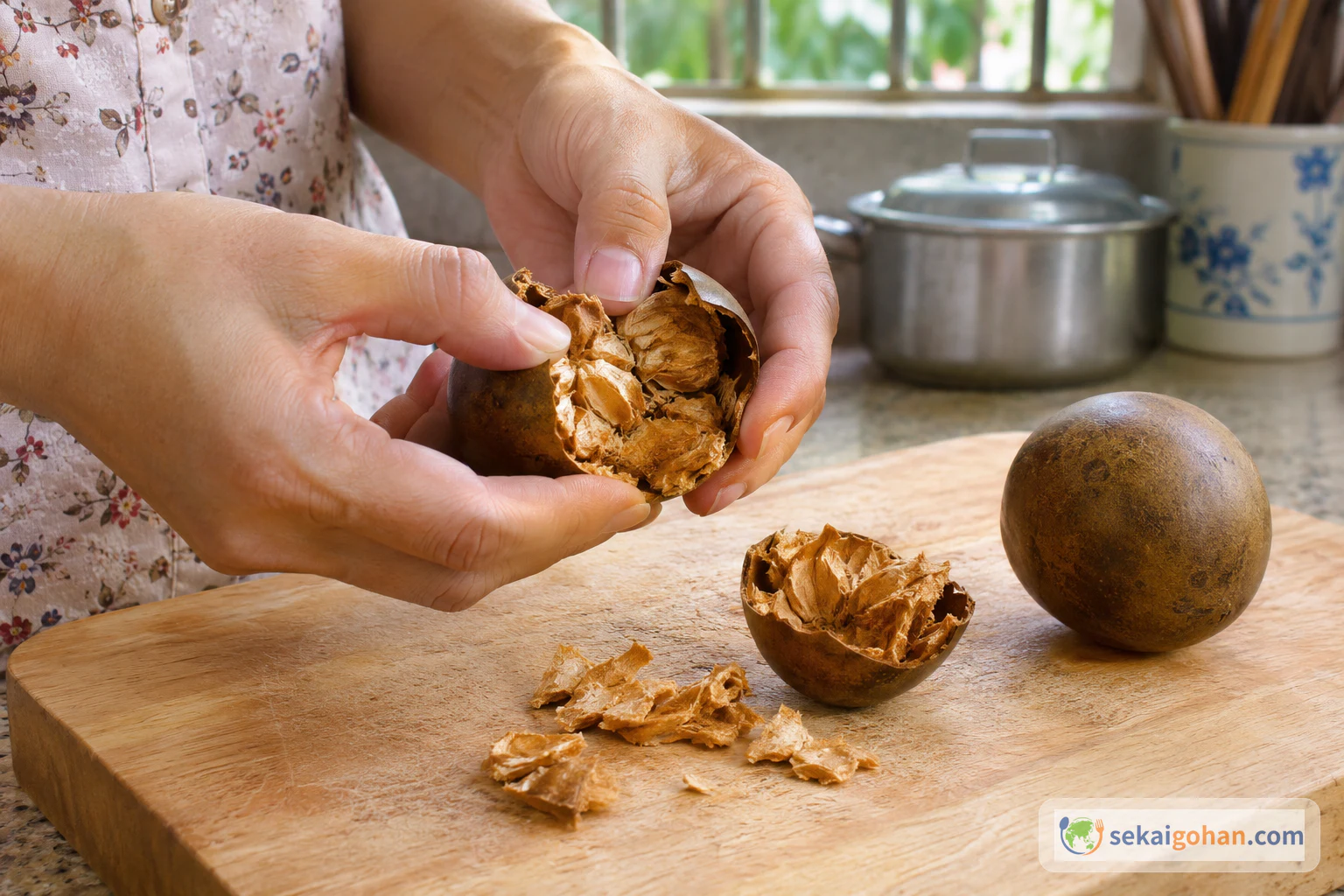
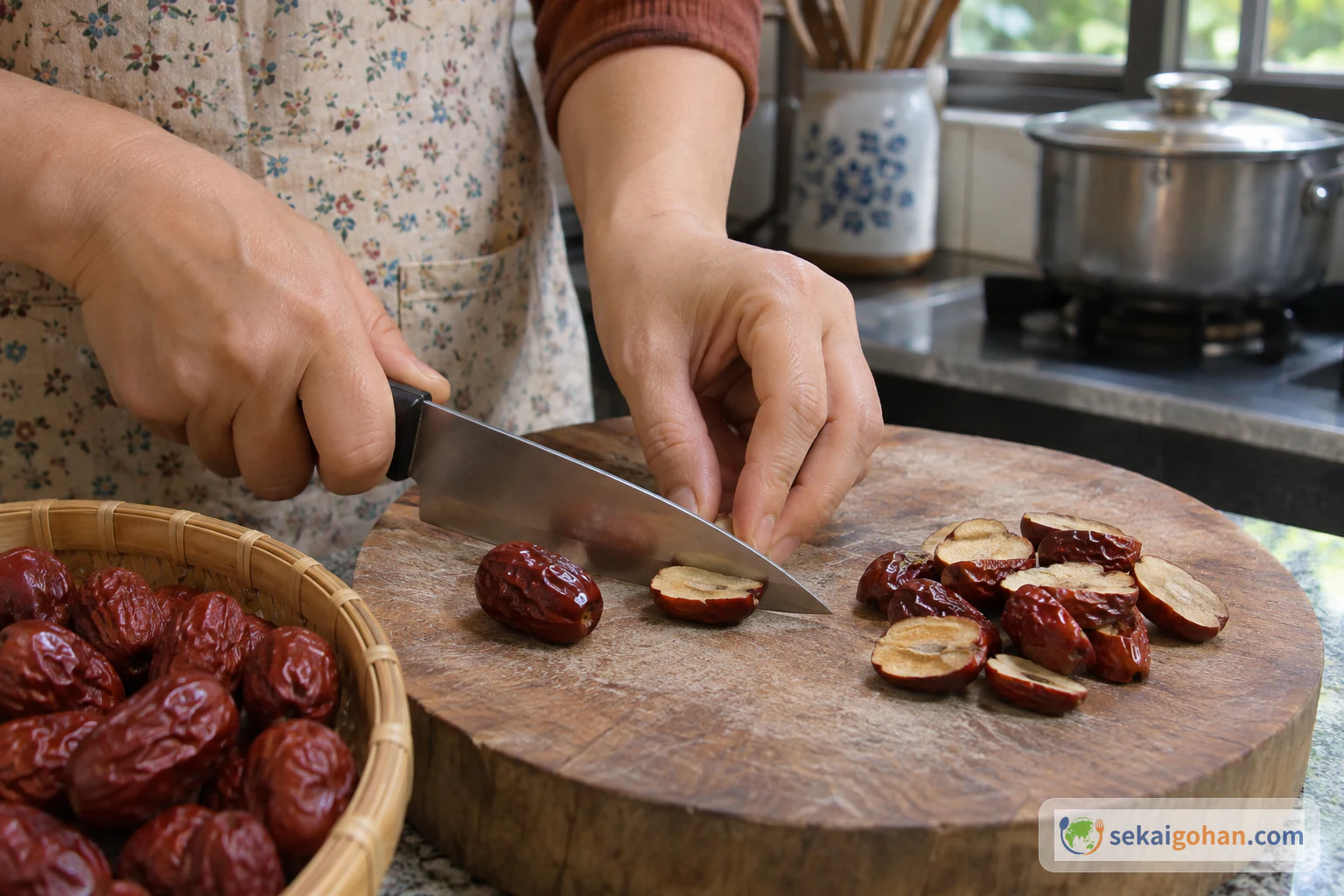
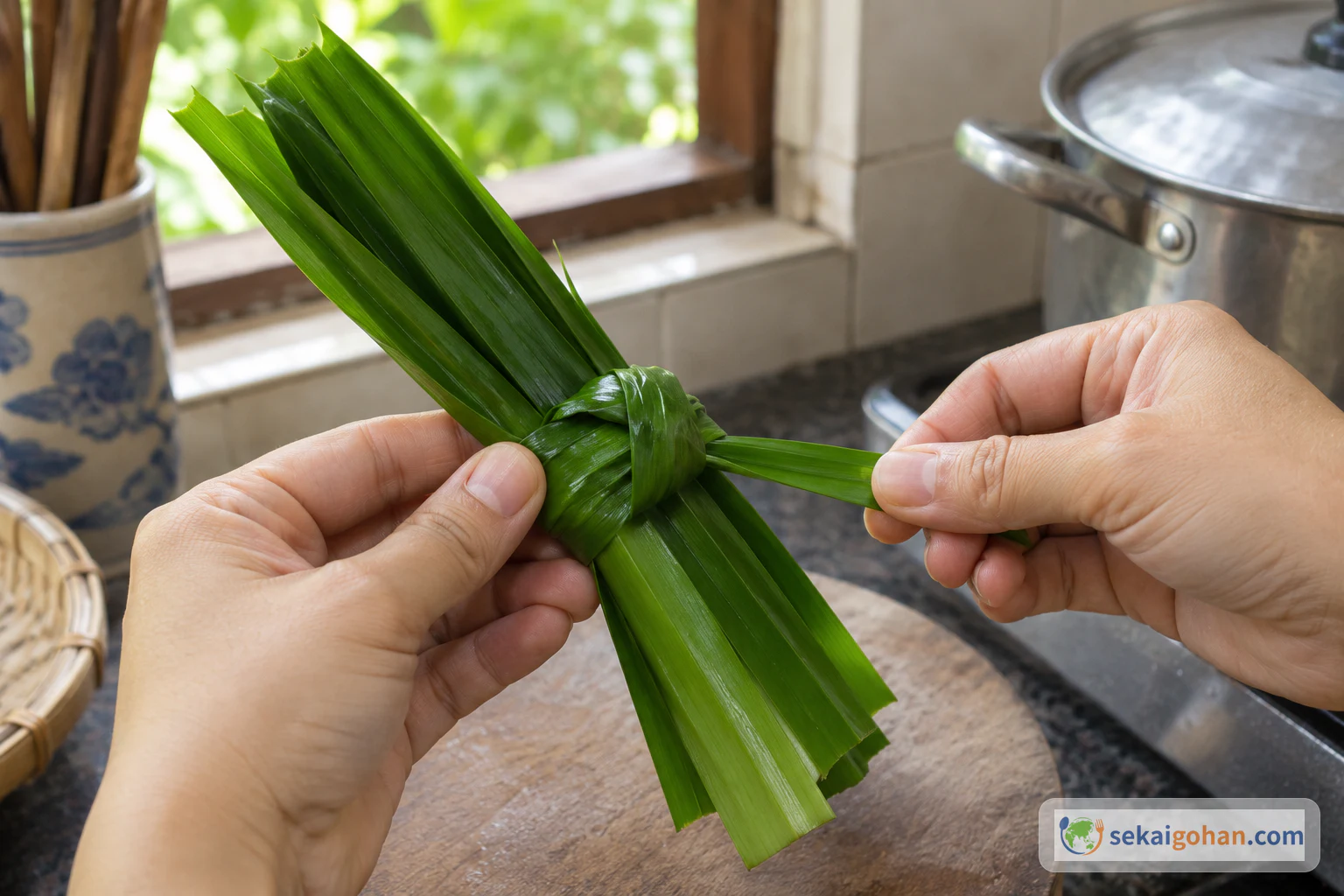
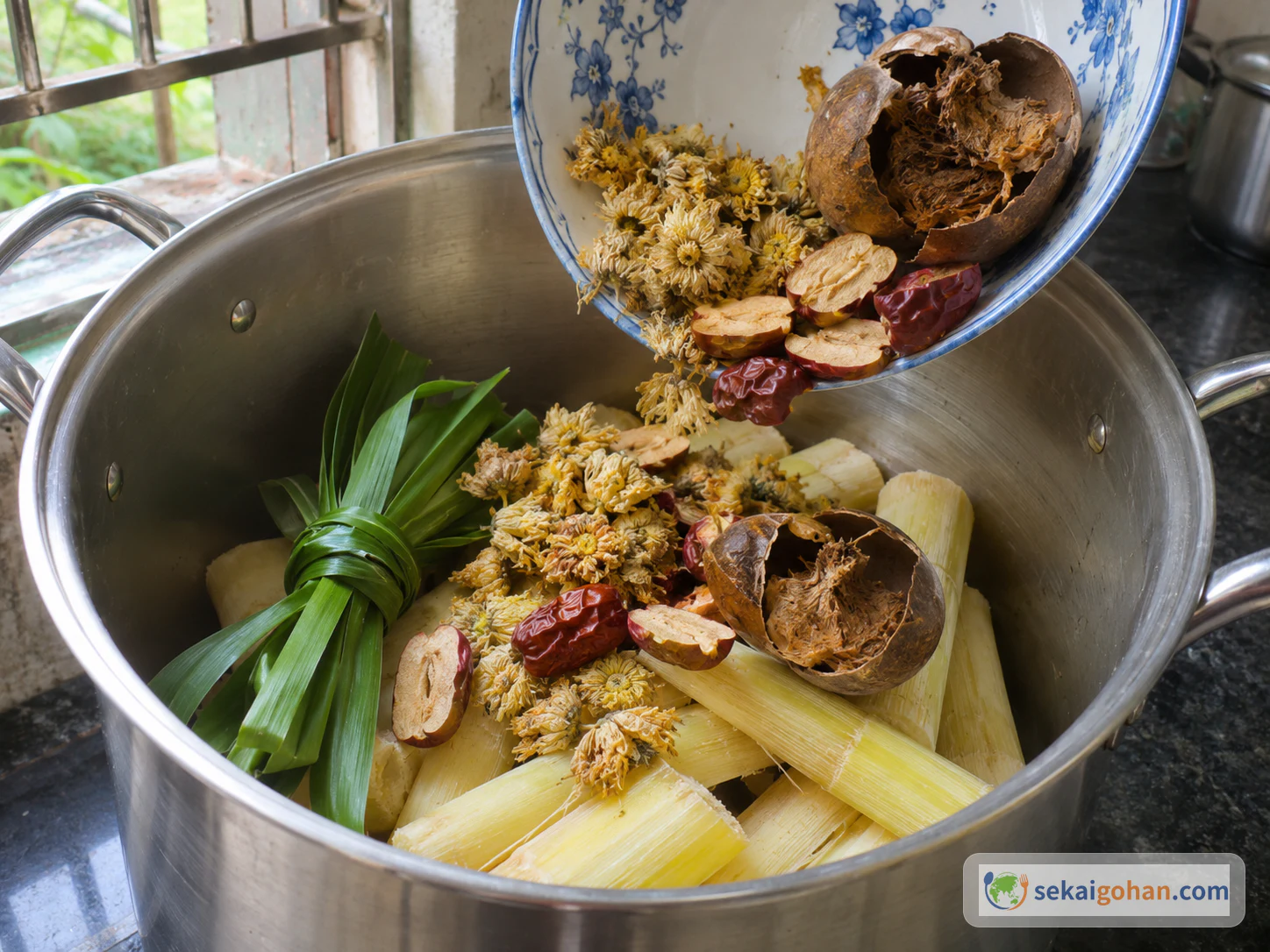
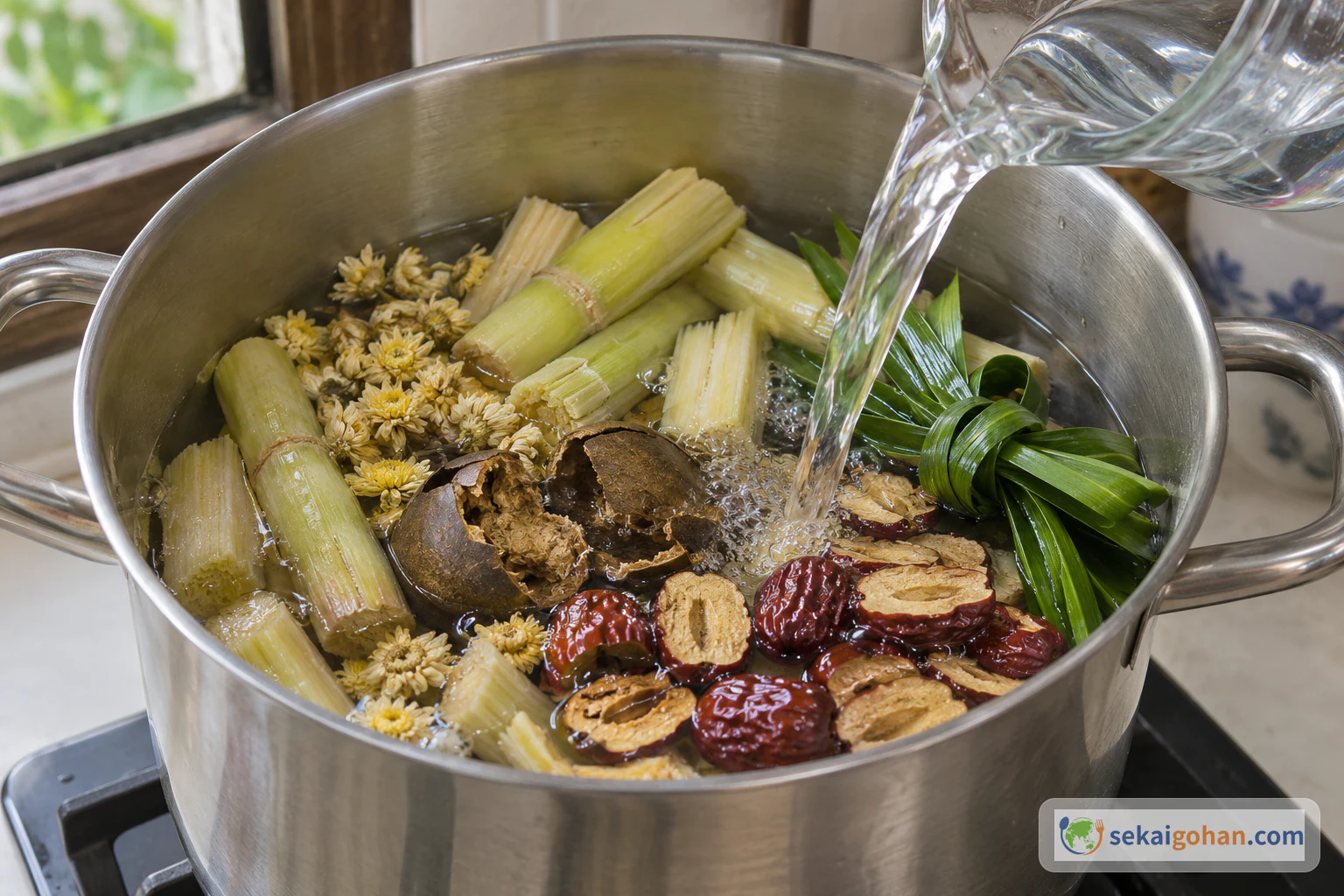
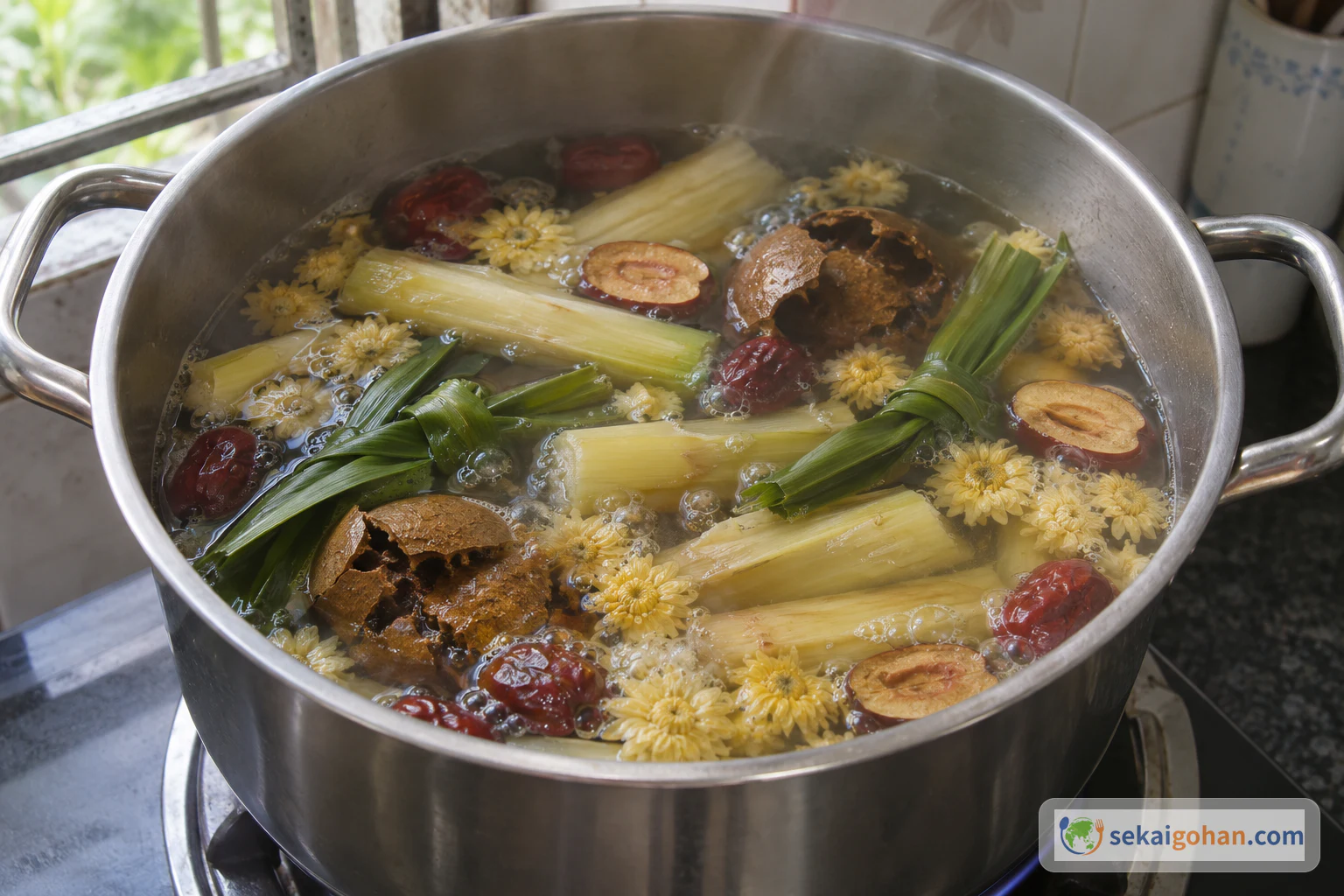
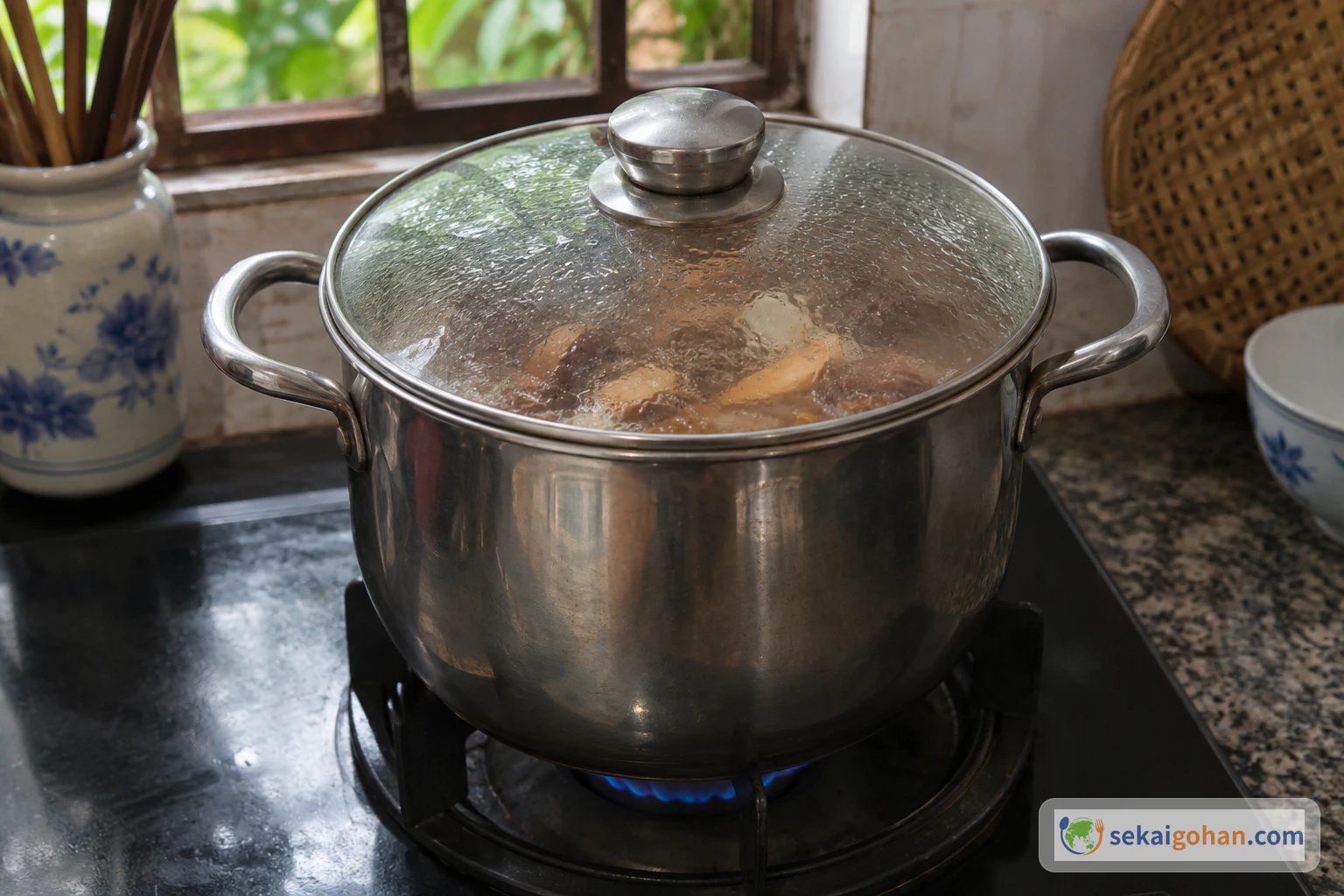
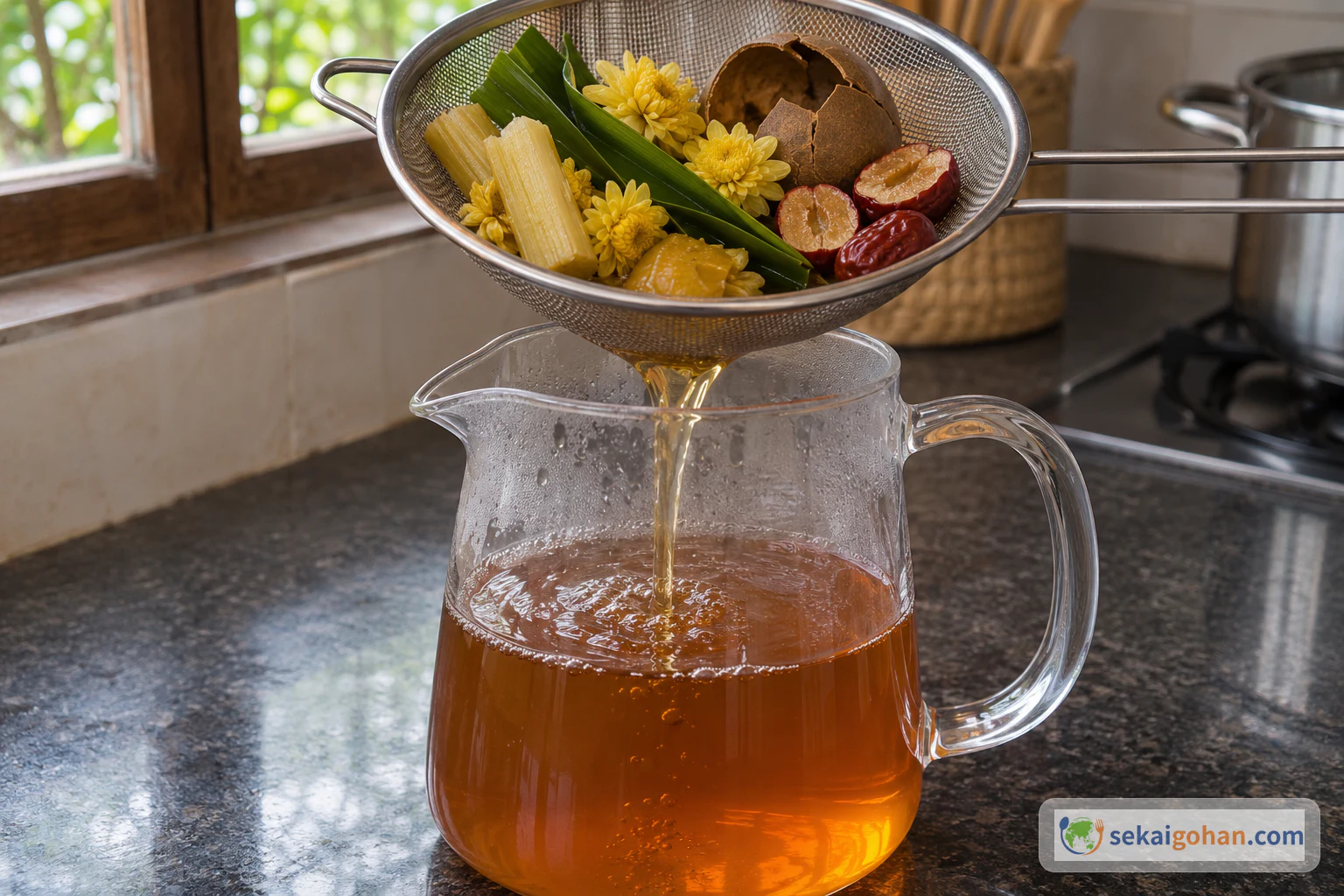
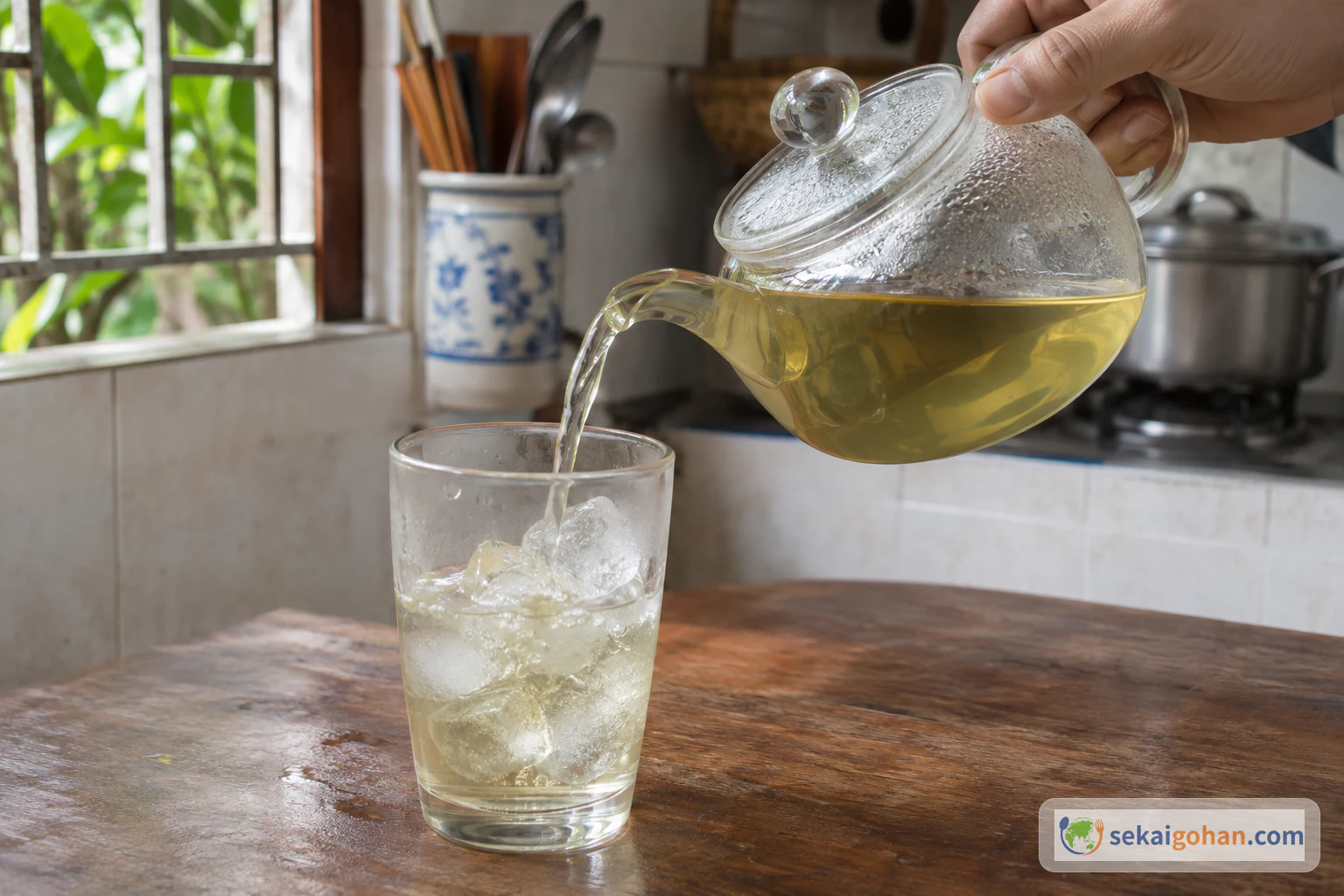
Cracked sugarcane, knotted pandan, dried chrysanthemum flowers, monk fruit and halved jujubes go into a big pot of plain water. After a gentle covered simmer, the liquid is strained, chilled and poured over ice. That is nước sâm as this article makes it: an iced herbal drink, called Vietnamese herbal tea in the recipe we follow.
There is no single formula for nước sâm. Vicky Pham's recipe explains that the mix varies, so this article follows one specific version from it rather than presenting a national standard. We use plain water only and leave out the optional sweetness adjustment. We make no health or medicinal claims for this drink.
About This Version: What We Follow and What We Changed
Sekai Gohan has not kitchen-tested this recipe. We have not run any cooking, temperature, cooling, sterilization or storage trials. The photos are illustrative and do not prove a flower's species, its suitability as food, a temperature, or the safety of the drink.
Amounts and order. The ingredients, amounts and basic order come from Vicky Pham's recipe card, kept in its US units. The card labels the recipe as 6 servings, with 10 minutes of preparation, 50 minutes of cooking and 1 hour in total. These are the author's labels, not our measurements. They do not give a final volume or a cup size, and the hour is not a promise that cooling is included.
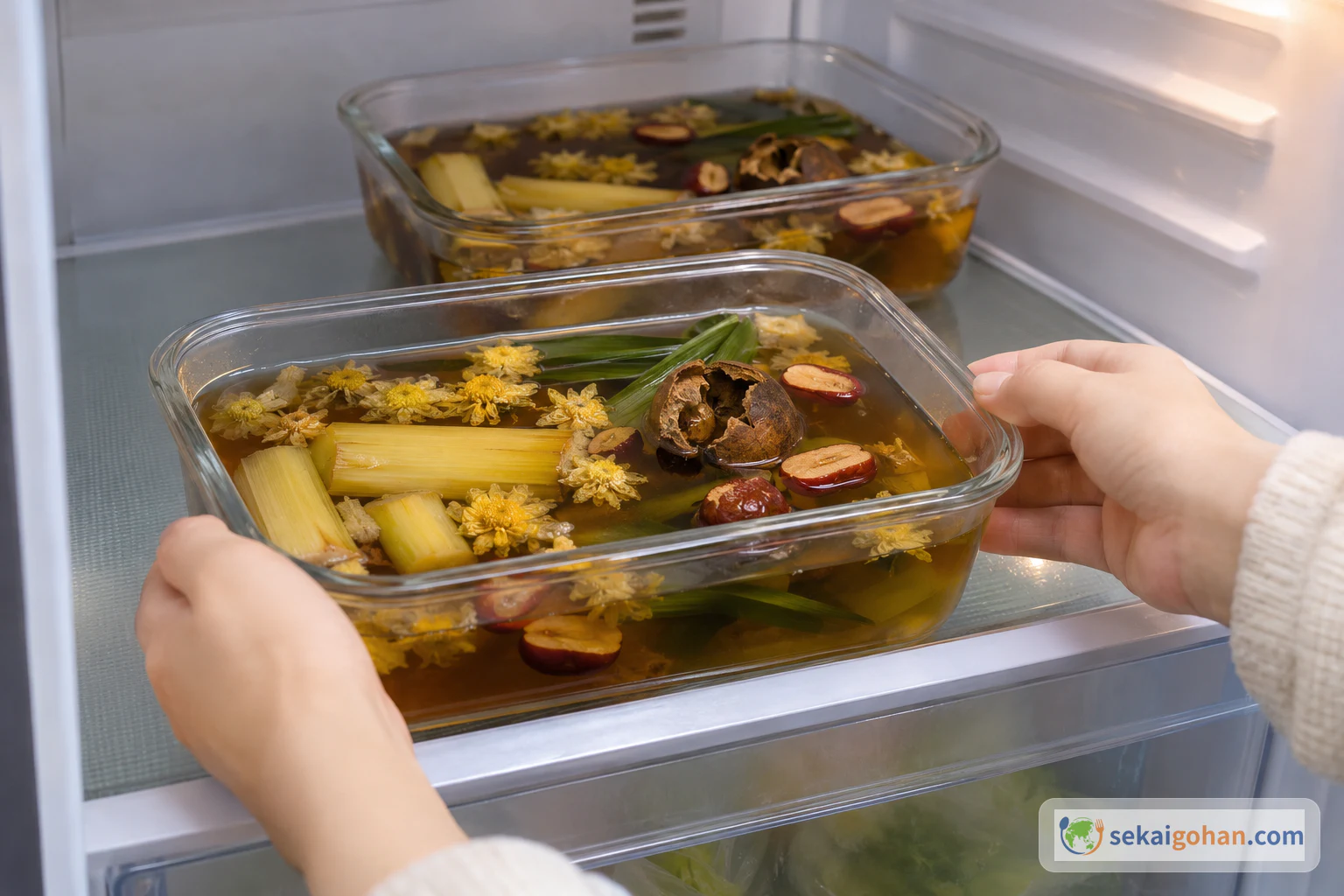
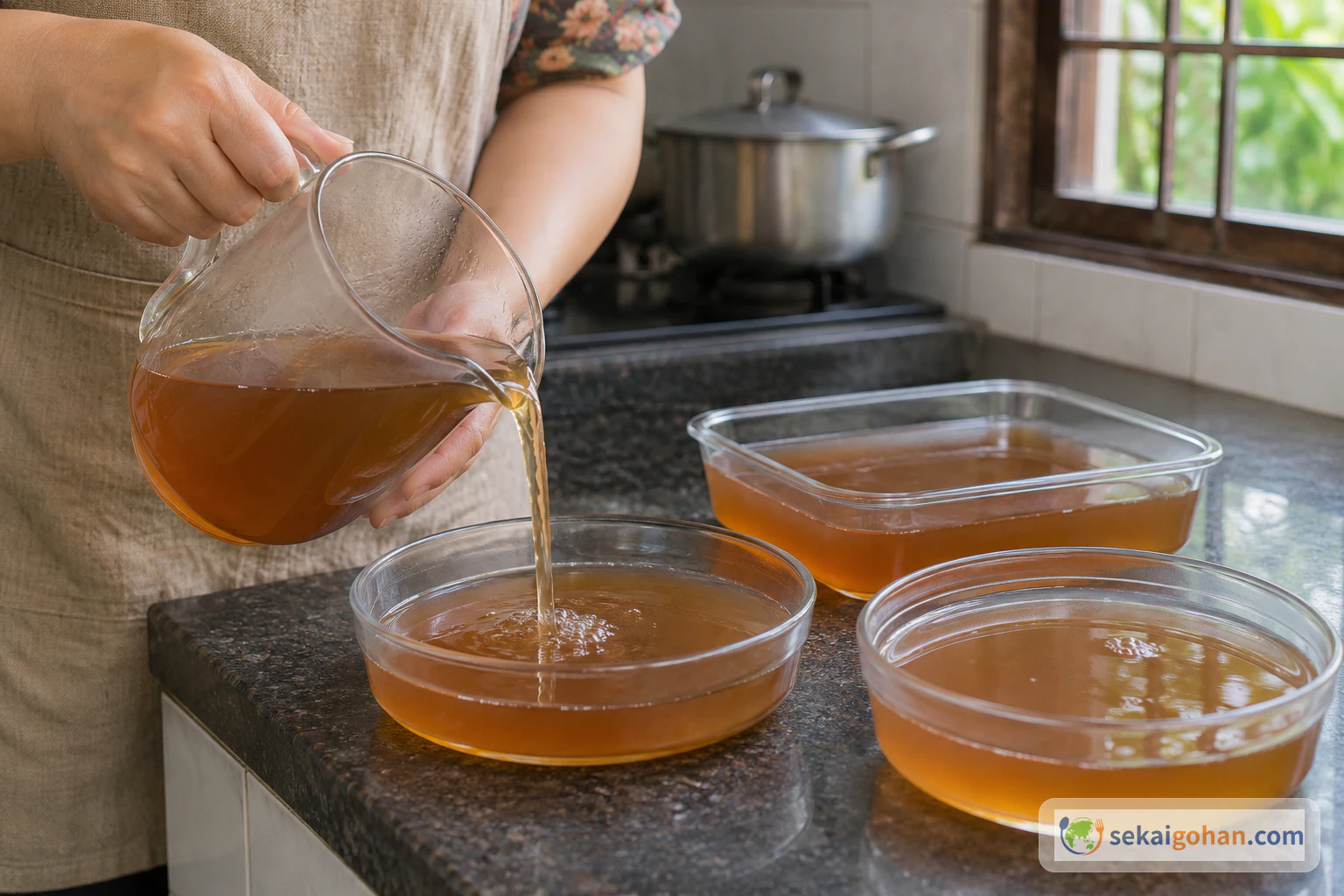
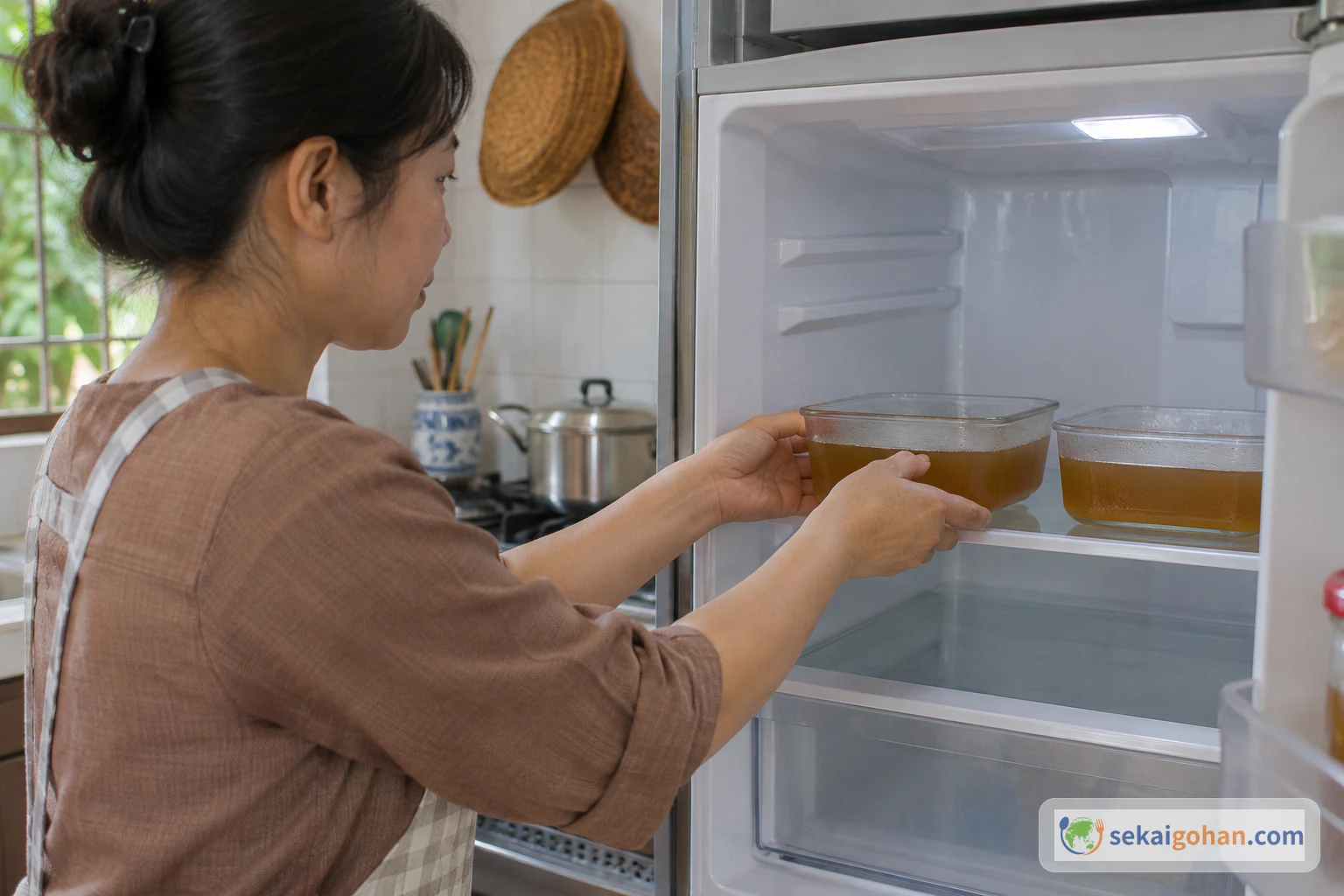
Cooling. Vicky Pham's recipe cools the drink, strains it, chills it and serves it over ice. We keep that order, but we do not take "cool" to mean leaving a big pot on the counter until it is completely cold. Dividing the liquid and solids into shallow containers and refrigerating them before straining is our own handling addition. It does not appear in the recipe. It draws on general FDA guidance about cooling large amounts in shallow containers, and it is not a measured or proven safety process.
The flowers. Vicky Pham's recipe does not name a chrysanthemum species, a food grade or a product label. As an editorial choice, we limit the ingredient to dried flower heads of Chrysanthemum morifolium sold and labeled as food. Japan's Ministry of Health, Labour and Welfare lists this plant's flower heads among materials not judged to be pharmaceuticals unless medicinal effects are claimed. That list only sorts materials by pharmaceutical status. It does not assess safety as a food or vouch for any individual product, and it does not establish that the recipe's author meant this same plant.
Ingredients: Sugarcane, Plain Water, Flowers, Pandan and Dried Fruit
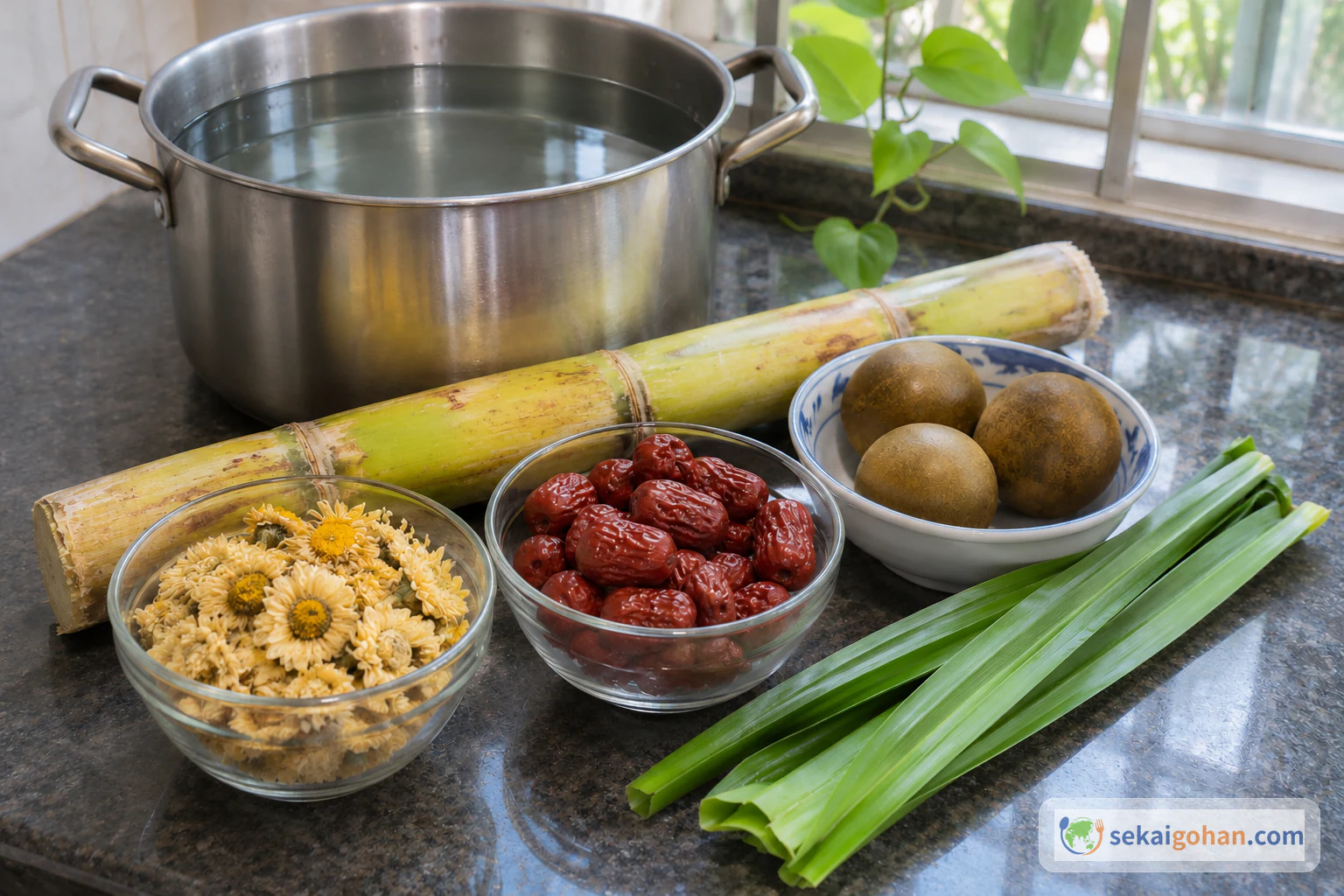
Equipment
- Large stockpot with a lid, big enough to hold 6 US quarts of water and all the solids with safe room to spare
- Knife and cutting board
- Sturdy food-safe bag
- Sturdy wooden tool for cracking the sugarcane
- Fine-mesh strainer
- Clean heat-safe shallow containers
- Clean heat-safe pitcher
- Clear glasses for serving
Choosing and Buying: Flowers First
Dried chrysanthemum flowers. Choose a dried product meant for eating or drinking, such as flowers sold for chrysanthemum tea. Look for dried flower heads of Chrysanthemum morifolium, with a product name, ingredient labeling and seller details on the pack. Do not use any of these:
- Ornamental or garden flowers
- Wild flowers you have picked
- Products with unclear ingredients or pesticide use
- Flowers sold as medicine
This article does not guarantee that the drink is suitable during pregnancy, while taking medication, or for people with pollen or plant allergies. If you have concerns, ask a doctor or pharmacist before drinking it.
Other ingredients. Use edible sugarcane. Keep the pandan as fresh leaves rather than swapping in an extract or another plant. Use whole dried monk fruits, not an extracted sweetener.
Keeping It Cold: What the General Guidance Covers
Keep the strained drink refrigerated in clean shallow containers, with the refrigerator at 40°F (4°C) or below. We do not give a number of days, because the recipe states no storage period and we have not tested one.
The figures in this article come from general food-handling guidance. The FDA's Safe Food Handling page covers clean hands, tools and surfaces, refrigerating within 2 hours (1 hour above 90°F), cooling large amounts in shallow containers, and a refrigerator at 40°F or below. FoodSafety.gov states the 40°F (4°C) figure directly. Neither source addresses this particular drink, its sterilization, its shelf life or whether the flowers are suitable as food.
Troubleshooting: Common Problems
| Problem | What to do |
|---|---|
| The sugarcane won't fit in the pot | Cut it into shorter pieces before cracking it |
| The pot reaches a hard, rolling boil | Lower the heat right away to a gentle simmer and cover |
| The full pot is too hot to divide | Wait only until it is safe to handle, then divide it. Don't let it sit until it is completely cold |
| The drink was left out past the 2-hour limit (1 hour above 90°F) | We can't vouch for it. Re-chilling it or the earlier 50-minute simmer does not make it safe, so don't treat it as safe to drink |
| The color differs from the photos | Color and appearance do not show whether the recipe was followed, what temperature the drink reached, which flower was used or whether it is safe. Check the steps and your flower label instead |
| The flower label is unclear | Don't use that product. Find one sold and labeled as food |
| It tastes less sweet than you expected | This version has no added sugar. See the variations below for what other versions do |
Variations: Other Mixes, Different Drinks
Vicky Pham's recipe offers a few options that we do not use here:
| Option | In the recipe | In this version |
|---|---|---|
| Liquid | Water, boiled sweet corn water, or a combination; a corn silk bundle is an offered substitute | Plain water only |
| Sweetness | Optional adjustment after straining | No added sugar |
| Sugarcane | Peeling is optional | Your choice |
Other versions may include different ingredients, such as winter melon, prepared rehmannia, cogon grass root or ginseng. We do not add them here or offer amounts for them. Treat them as different mixes rather than simple add-ins, and don't swap them into this pot.
Some drinks with similar-sounding names or similar roles, such as sâm bổ lượng, trà bí đao and nước mía, are separate subjects and are not covered here.
Nước Sâm in Vietnamese Life: Street Drinks and Remembered Aromas
Vicky Pham's recipe explains that the mix of nước sâm is not uniform, varying between families and shops. Two Vietnamese pieces offer a look at the drink's place in everyday life, though neither is a recipe or a health reference.
A 2014 VnExpress travel article on Saigon's everyday refreshment streets gives the street-level setting. Its ingredient wording includes rau bắp, which we leave in the original rather than translating it as whole corn. The article describes that moment, so it says nothing about which vendors operate today.
A 2020 essay by Hoàng My in Nhân Dân, "Thức uống dân gian," evokes the drink's aromas through pandan, ngò già, rễ tranh and mía lau. We keep those terms in Vietnamese, because the essay gives a description rather than a standard formula, and we do not add those ingredients to this recipe.
For more of the country's food, see Vietnam.
Frequently Asked Questions
Does nước sâm contain ginseng?
This version does not. That says nothing about every version, since the mix varies.
Do I need to add sugar?
Not in this version. Vicky Pham's recipe allows an optional sweetness adjustment, but we leave it out and use only what comes from the ingredients in the pot.
How much does this make?
The recipe card says 6 servings, but that is the author's label. Neither the card nor we give a measured final volume or a cup size, so we can't tell you how many glasses to expect or how many people it will serve.
How long does it keep in the refrigerator?
We can't give a number of days. The recipe does not state one and we have not tested it. The general refrigeration figures above are not a shelf life for this drink.
Does the 50-minute simmer make the drink safe?
No. The simmer draws out flavor and is not proof of sterilization or a safe storage period. Neither the simmer nor the general refrigeration guidance establishes that the drink is safe for everyone to consume.
Can I use any dried chrysanthemum?
No. Use dried flower heads of Chrysanthemum morifolium sold and labeled as food, with clear product, ingredient and seller information. Vicky Pham's recipe does not name a species, so this limit is our editorial choice. Don't try to judge a flower's species or suitability from how it looks or from the photos here.
Is it suitable during pregnancy or while taking medication?
We do not guarantee that it is. The same goes for people with pollen or plant allergies. If you have concerns, ask a doctor or pharmacist before drinking it.
Does nước sâm have health benefits?
This article makes no such claims. We present it as a drink only.
Sources
- Vicky Pham, "Vietnamese Herbal Tea (Nước Sâm)." The only source for this version's ingredients, amounts, 6-serving label, preparation, simmer of about 50 minutes, straining, chilling and serving over ice, and for the explanation that the mix is not uniform. It does not name a chrysanthemum species or food grade, or give a final volume or storage period. https://vickypham.com/blog/vietnamese-herbal-tea-nuoc-sam/
- VnExpress Du lịch, "Các phố giải khát bình dân ở Sài Gòn," 2014. Context on everyday drinks in Saigon at that time, including the wording rau bắp. A travel article, not a recipe source. https://vnexpress.net/cac-pho-giai-khat-binh-dan-o-sai-gon-2962165.html
- Hoàng My, "Thức uống dân gian," Báo Nhân Dân, 2020. An essay describing aromas including pandan, ngò già, rễ tranh and mía lau. Not a source for quantities, a standard formula or medical information. https://nhandan.vn/thuc-uong-dan-gian-post579685.html
- U.S. Food and Drug Administration, "Safe Food Handling." General guidance on clean hands, tools and surfaces, refrigerating within 2 hours (1 hour above 90°F), shallow containers for large amounts, and a refrigerator at 40°F or below. Not specific to this drink. https://www.fda.gov/food/buy-store-serve-safe-food/safe-food-handling
- FoodSafety.gov, "4 Steps to Food Safety." General refrigerator guidance of 40°F (4°C) or below. Not a sterilization, cooling or shelf-life finding for this drink. https://www.foodsafety.gov/keep-food-safe/4-steps-to-food-safety
- Ministry of Health, Labour and Welfare of Japan, notice on the food and pharmaceutical classification of ingredients (August 5, 2026), Attachment 2. Lists Chrysanthemum morifolium flower heads among materials not judged to be pharmaceuticals unless medicinal effects are claimed. Not a food safety assessment, a guarantee for any product, or guidance on use during pregnancy or with medication. https://www.mhlw.go.jp/hourei/doc/tsuchi/T260807I0020.pdf