Bánh Pía: A Small Pastry Whose Crust Peels Apart in Layers
Keep the two doughs separate until you layer them, roll gently so the layers survive, and cook the filling until it is firm enough to wrap. The flaky lard-scented crust, mild mung bean, strong durian aroma and salty yolk are the four things to protect.
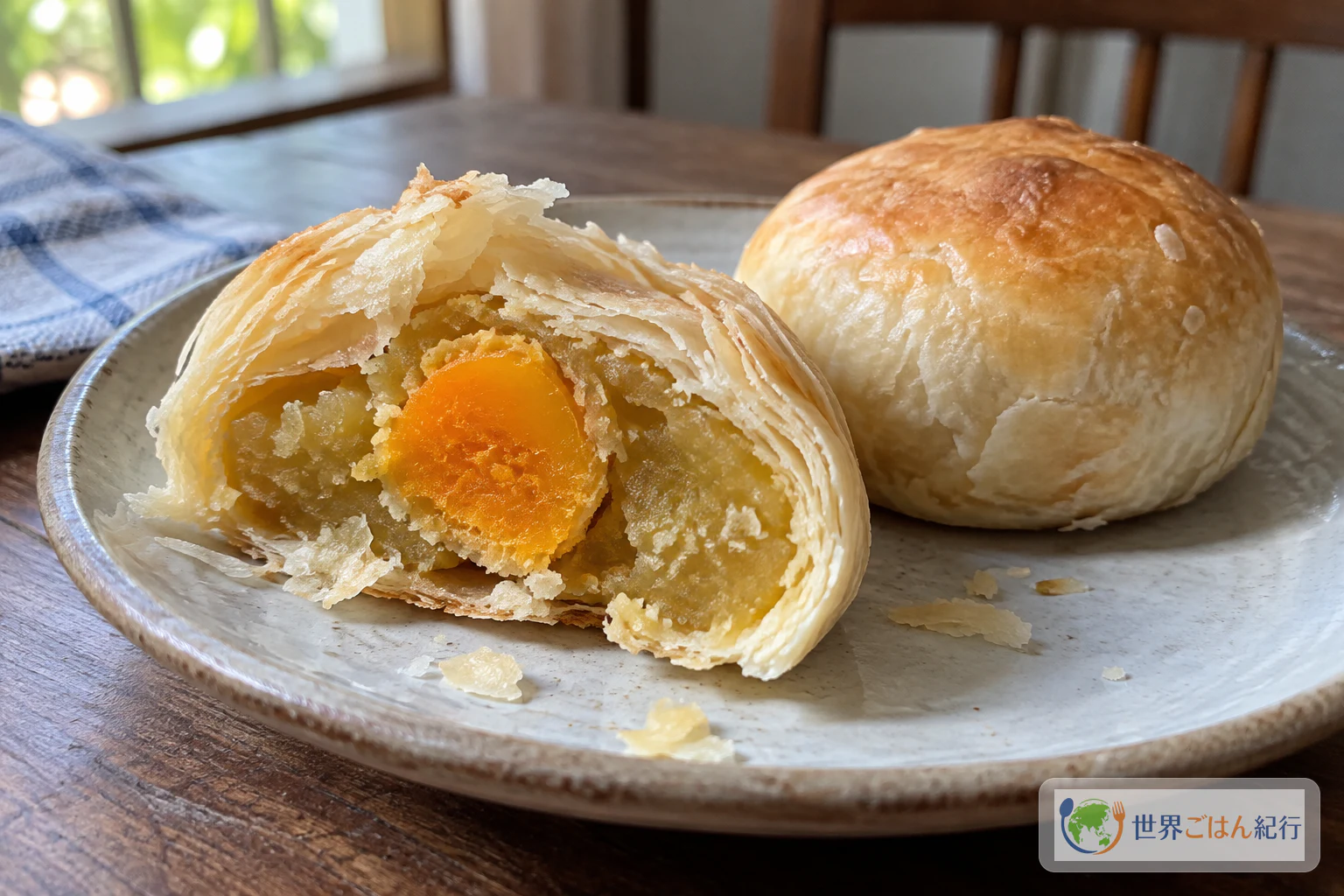
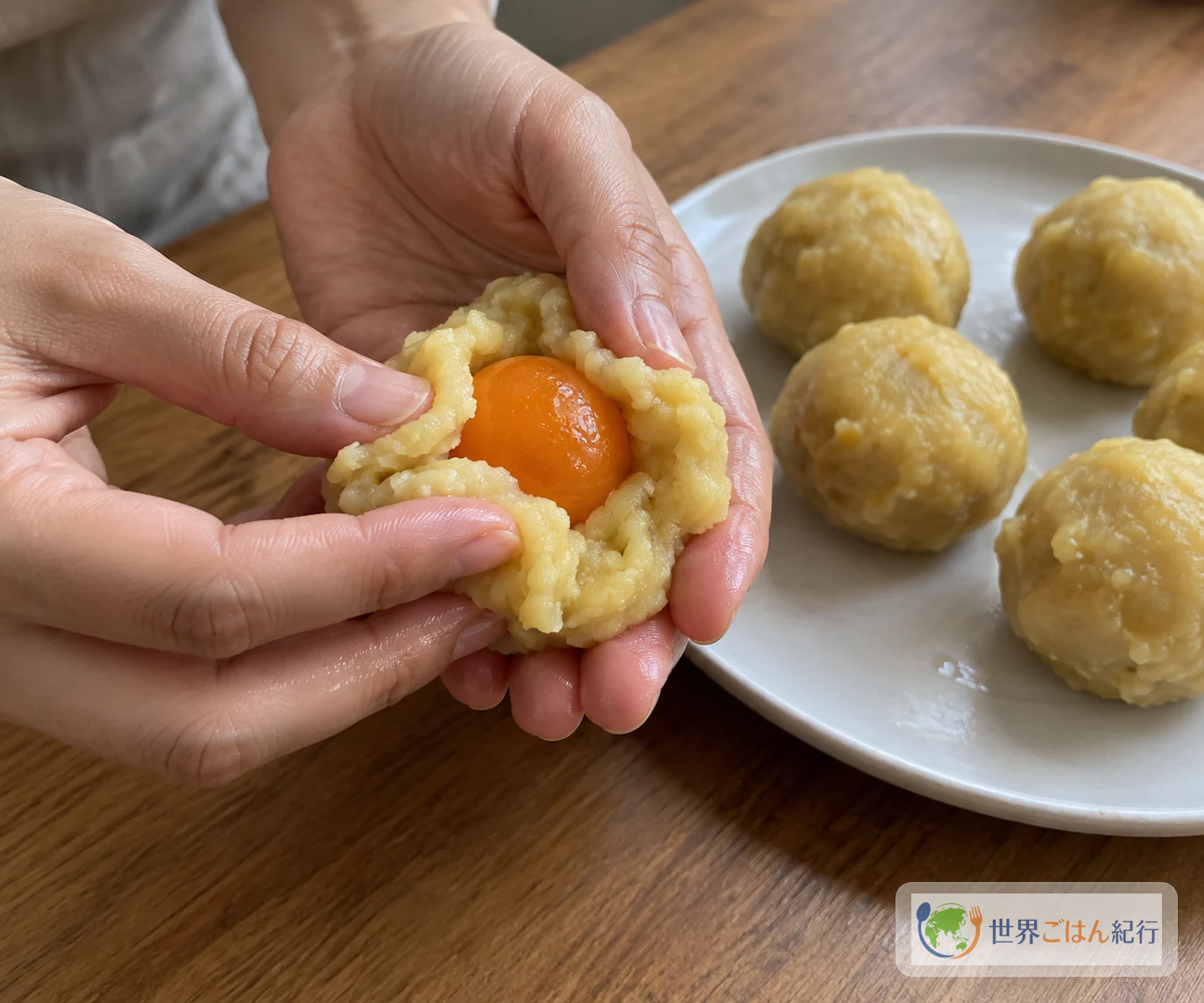
Break a bánh pía in half and the baked crust gives way in thin, papery sheets. Inside sits a pale filling of mung bean and durian, and in the very center, one round salted duck egg yolk. In Sóc Trăng, the pastry is also called bánh lột da, a name a local newspaper links to the way its layers can be peeled away one by one.
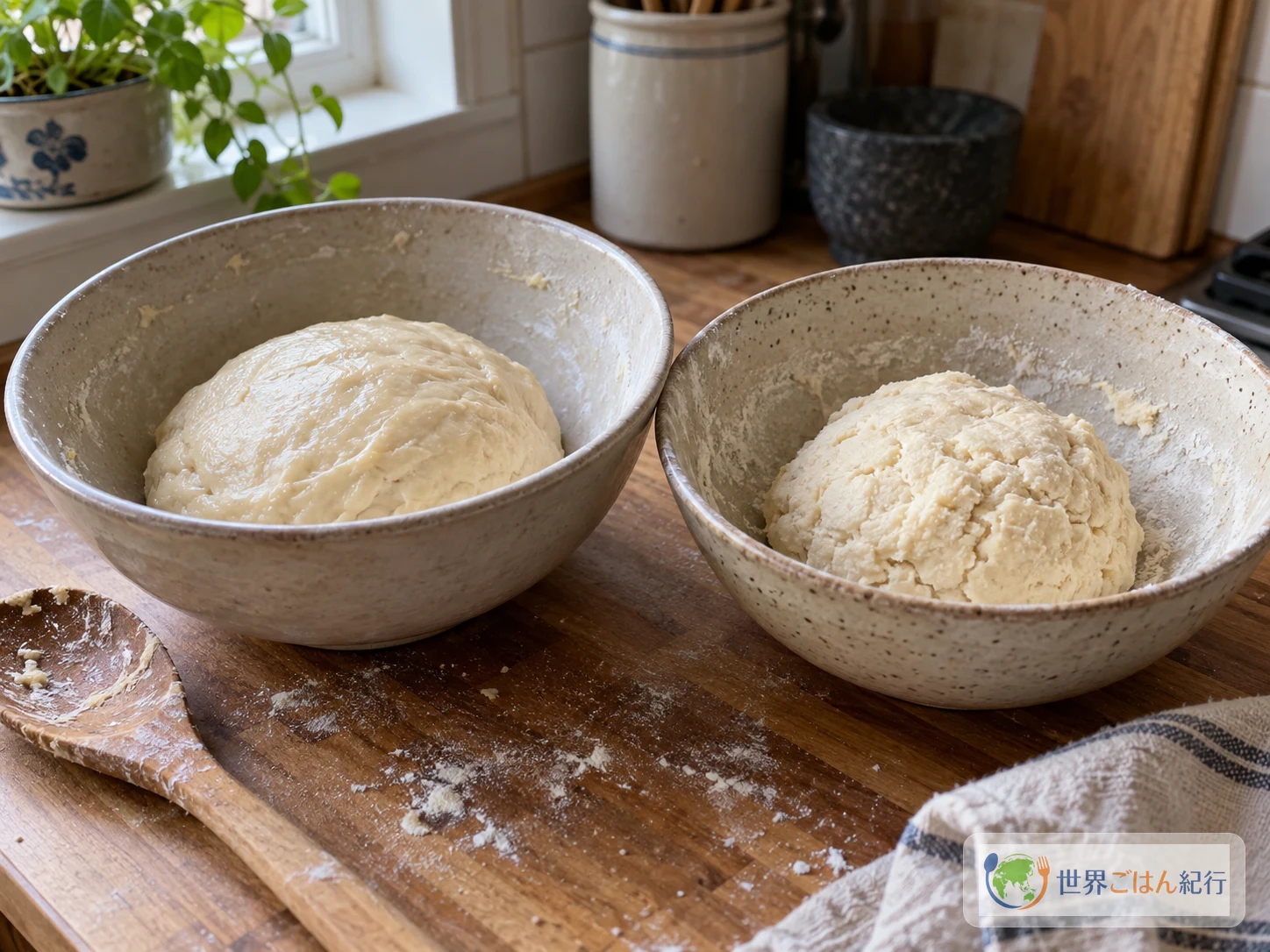
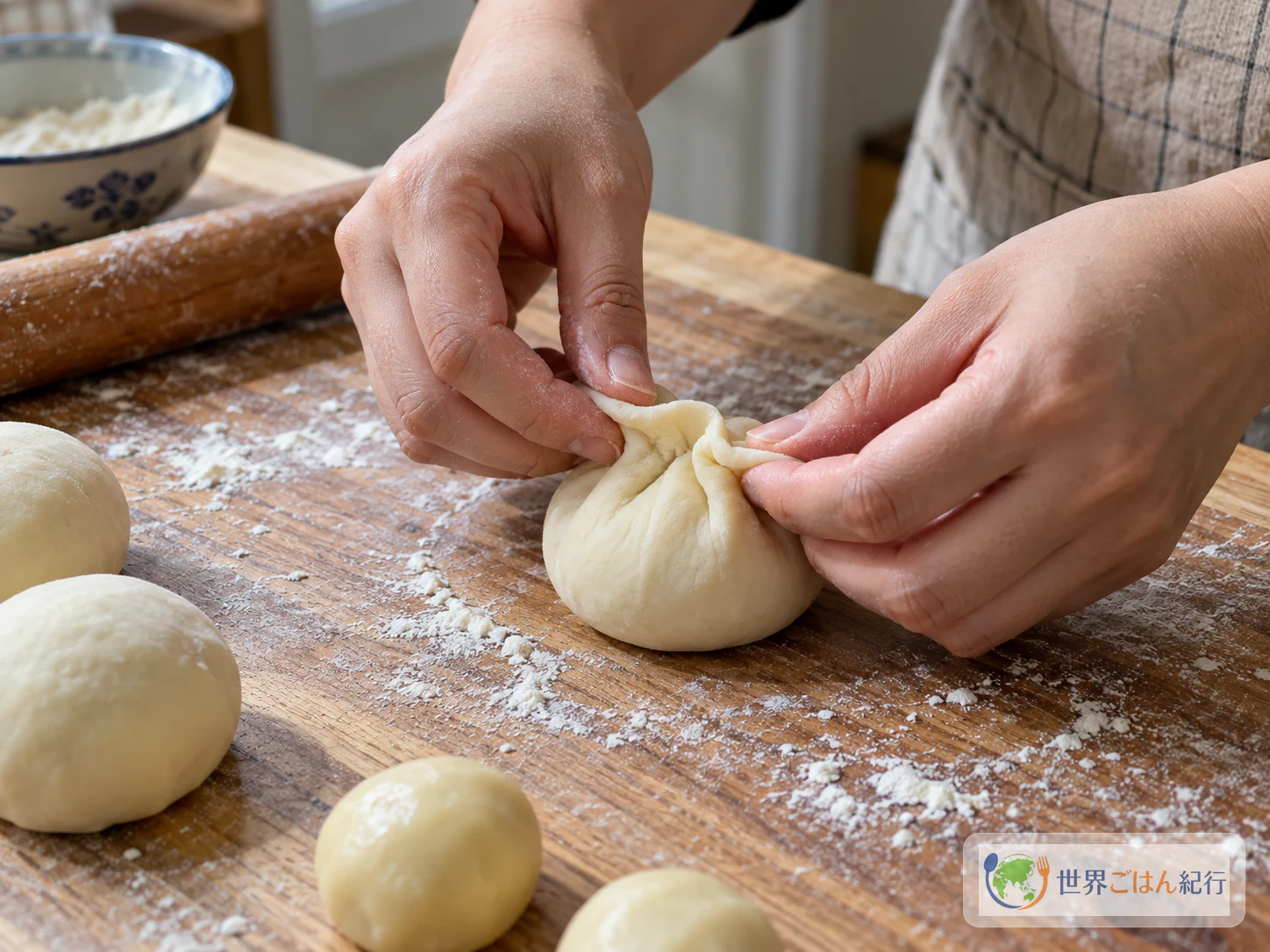
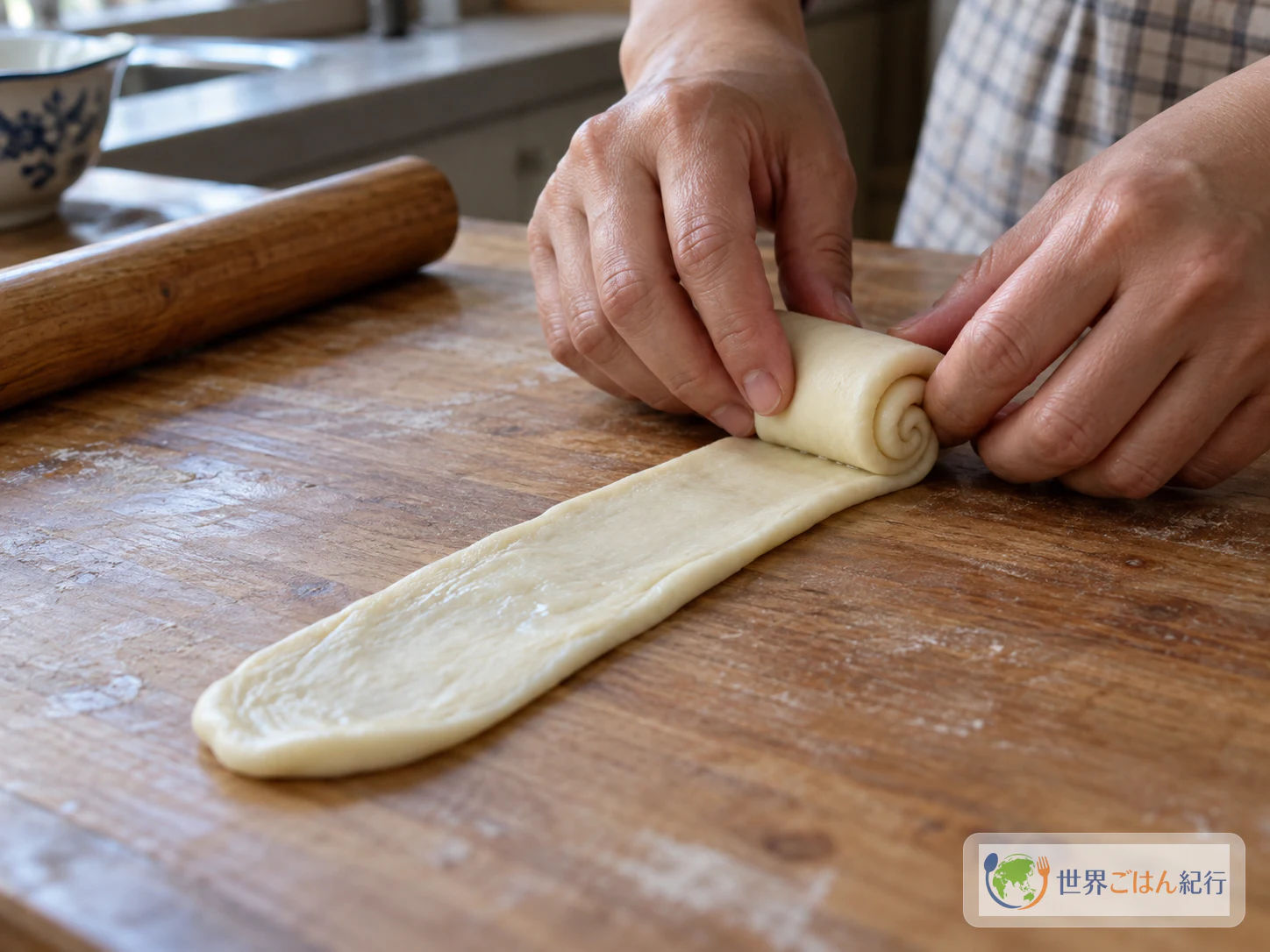
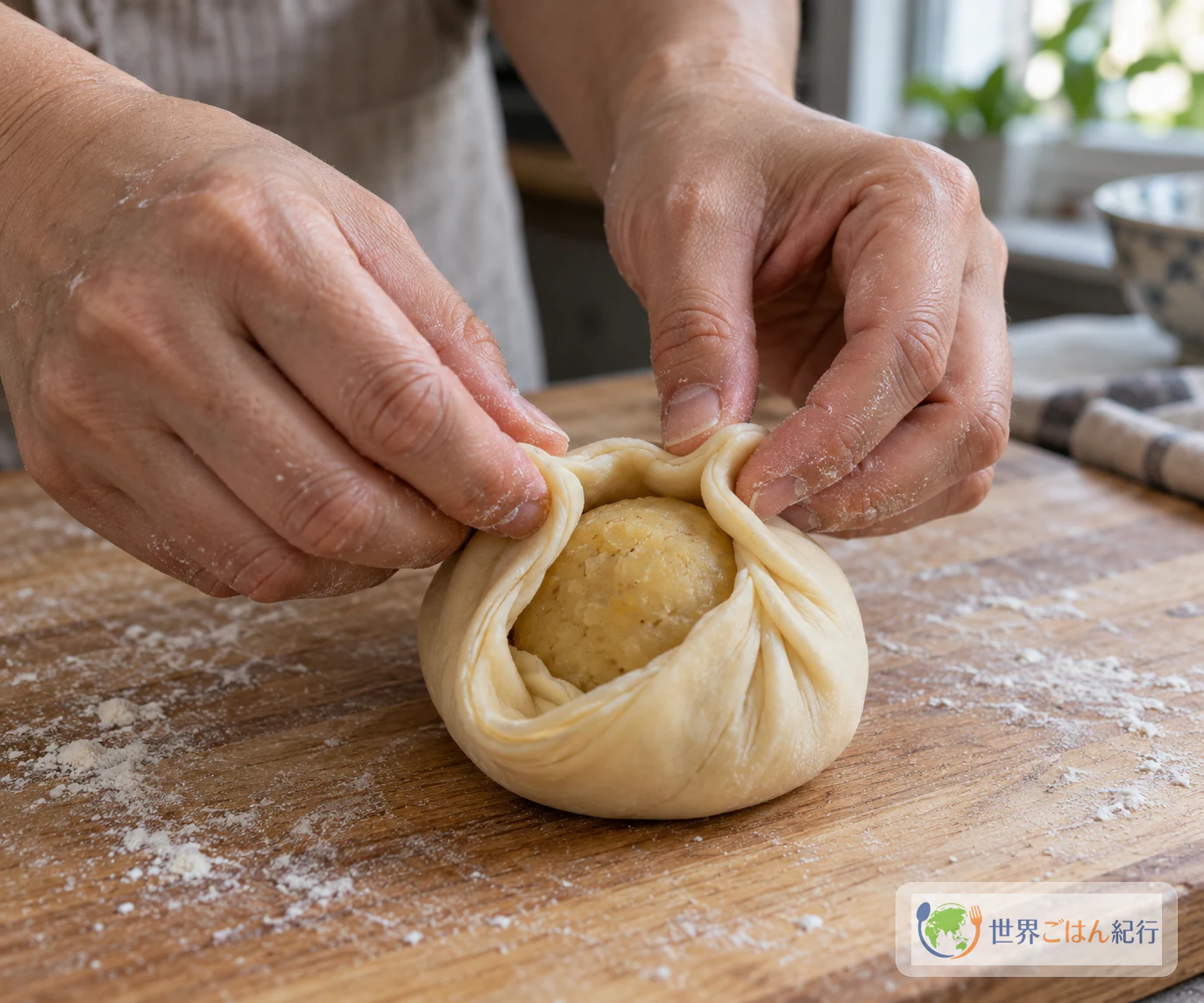
This article follows the Sóc Trăng style with mung bean, durian and salted duck egg yolk. The recipe is a single home-style version divided into 12 pieces, with a water dough and an oil dough wrapped and rolled together to form the layers. The two hardest parts at home are handling those two doughs and cooking the moisture out of the filling, so the steps below spell out what to look for at each stage.
This recipe has not been kitchen-tested by Sekai Gohan. The dough and filling are divided into 12, but the number and weight of finished pastries have not been confirmed by a test bake.
Bánh pía is not the same pastry as Indonesian bakpia pathok or Filipino hopia, and it is not treated here as a type of mooncake recipe from elsewhere. For more dishes from the same country, see Vietnamese recipes.
From Teochew Layering to a Sóc Trăng Filling
Vietnam's Department of Cultural Heritage explains that pía (or pi-é) is a Teochew word for cake, and connects the pastry to the Minh Hương (Hoa) community who settled in the region and to Teochew mooncakes. Its record describes bánh pía making as a trade around Phú Tâm, Thuận Hòa and An Hiệp in Sóc Trăng Province, with family workshops in the villages and around Vũng Thơm selling through shops and markets. The same record describes the traditional two-layer crust of water dough and oil dough, made with tapioca starch, wheat flour and fat.
When the Teochew settlers arrived is not settled by the available sources. The Department of Cultural Heritage places the migration in the 16th century, while a Vietnam News Agency report places it in the 17th century. This article does not choose between them: it is enough to say the pastry is said to have been brought to the Mekong Delta by Teochew migrants.
The filling has changed over time. The Department of Cultural Heritage lists older fillings that included mung bean, sugar, fat, a salted vegetable called Can Xại and salted duck egg yolk, with more variety appearing later. Báo Sóc Trăng describes mung bean as the early filling and durian as a later addition that came through food exchange with Kinh communities of the south. The Vietnam News Agency report names durian, salted duck egg yolk, mung bean and taro among the flavors of Sóc Trăng bánh pía. These are descriptions from regional reporting; they do not mean every workshop today uses the same mix.
Ingredients: Two Doughs and a Filling Built Around 12 Yolks
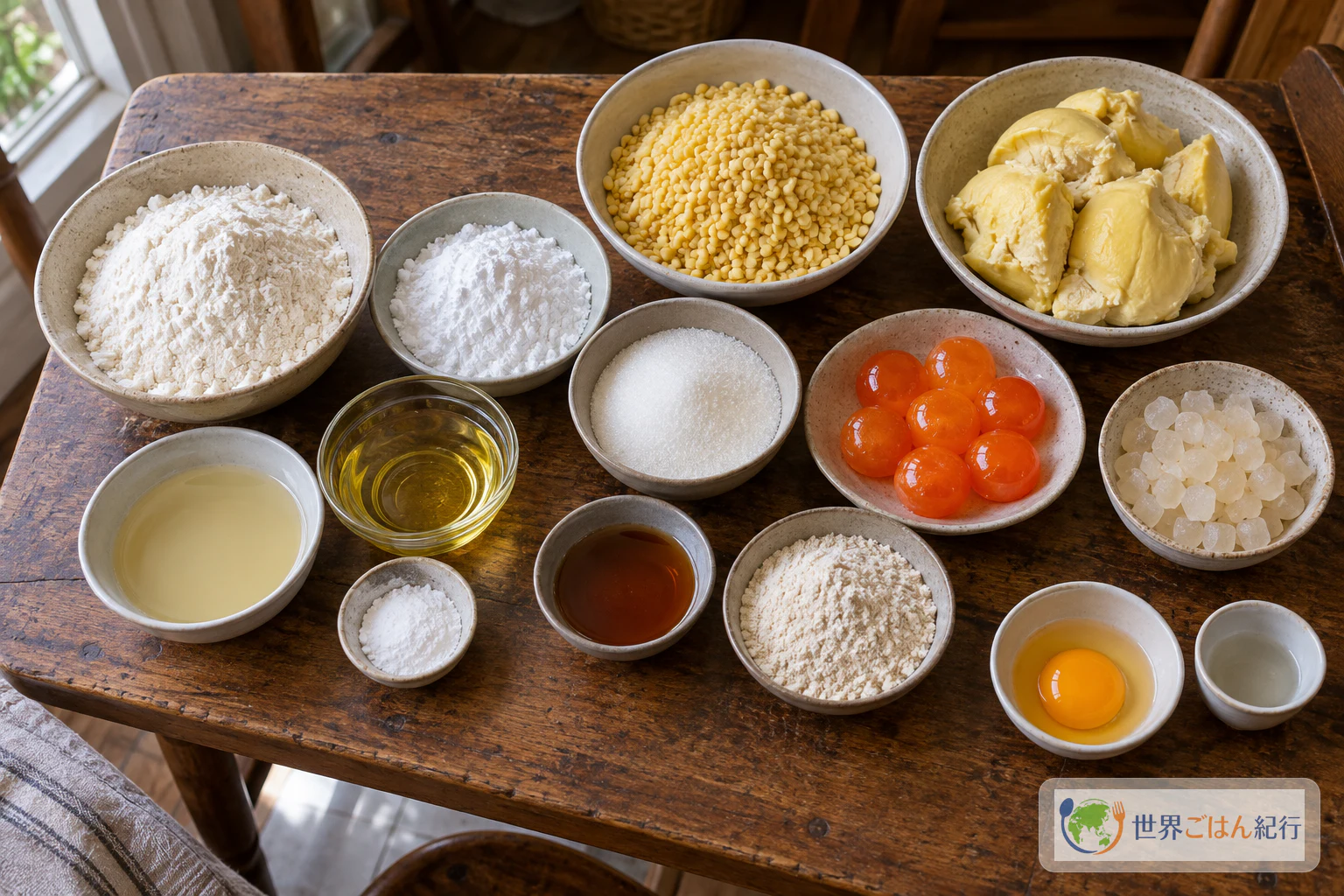
The water dough forms the outer, stretchy layer; the oil dough is wrapped inside it to create the flakes. The filling is divided into 12 balls, each holding one salted duck egg yolk. The chicken egg yolk at the bottom is only for brushing on the surface.
This pastry contains wheat, egg (both duck and chicken) and pork fat. Check the labels of processed items such as salted egg yolks, malt syrup and frozen durian for allergens, including soy and shared-facility statements. The Japanese Ministry of Health, Labour and Welfare's home food-safety guidance recommends heating cooked foods until the center reaches 75°C for at least 1 minute; use that as the guide for the duck yolks. Rice wine adds flavor and does not make yolks safe in place of cooking. Do not leave the pork fat out in the open air at room temperature for a long time. If you stop partway through, refrigerate what you have made, covered, and make sure everything is heated through when you resume.
Choosing and Substituting: What Changes the Pastry
Wheat flour. Use ordinary wheat flour. A low-protein flour such as cake or pastry flour is one editorial choice, but no flour type has been tested here.
Tapioca starch is not potato starch. The oil dough uses bột năng, tapioca starch. Do not assume potato starch or cornstarch behaves the same; no tested substitute is offered. Look for "tapioca starch" or "tapioca flour" at Asian grocers or online.
Durian. The fruit flesh is the center of the aroma, so it is used as the main ingredient rather than relying on durian essence. If you use frozen durian, one editorial idea is to thaw it and drain off excess liquid, since extra water makes the filling harder to firm up. Jackfruit or other fruits are not equivalent replacements.
Salted duck egg yolks. You can start from whole salted duck eggs or buy salted yolks on their own. Saltiness and moisture vary by product, so check the package. If the yolks are sold already cooked, follow the label.
Malt syrup. Mạch nha binds the filling. Other syrups have not been shown to match its flavor or sweetness; if you swap one in, treat it as a trial and expect a different taste.
Roasted glutinous rice flour. This is roasted glutinous rice flour (sold for bánh dẻo), not raw glutinous rice flour or a starch. It is only an adjuster for a filling that is still too loose after cooking; if your filling holds its shape once cooled, you may not need it.
Lard. The lard in both doughs can be replaced entirely with vegetable oil. Expect a different aroma and a less tender, flaky crust. The candied pork fat in the filling is a separate ingredient, and leaving it out also changes the texture of the filling.
Equipment
- Digital scale that reads in 1g steps
- Blender (or a masher)
- Wide, heavy pan or skillet for cooking the filling
- Steamer
- Rolling pin
- Plastic wrap or a clean cloth for covering dough
- Baking tray
- Oven, plus an oven thermometer if you have one
- Food thermometer
- Pastry brush and a clean toothpick
Method: Firm Filling First, Then the Layered Crust
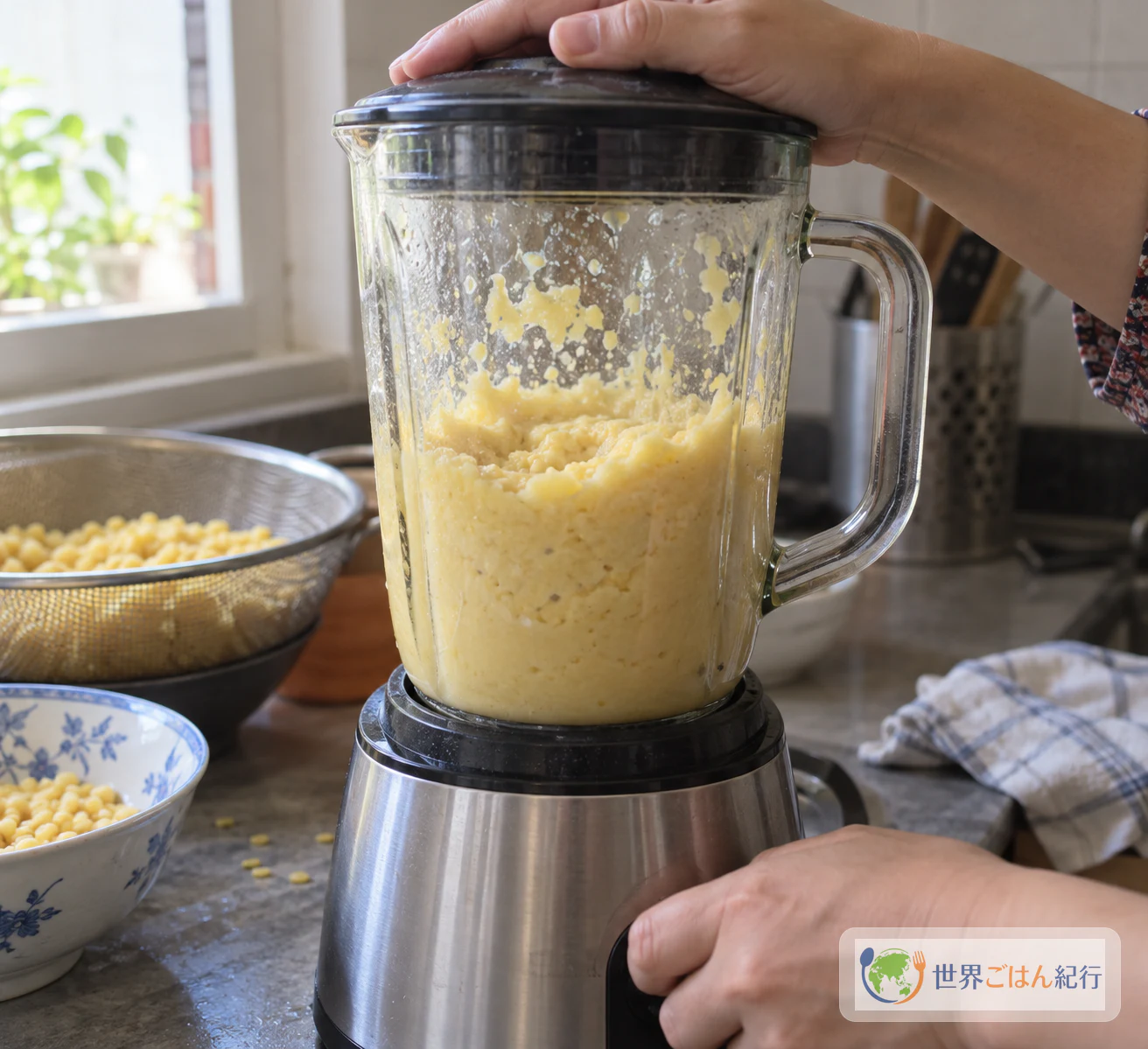
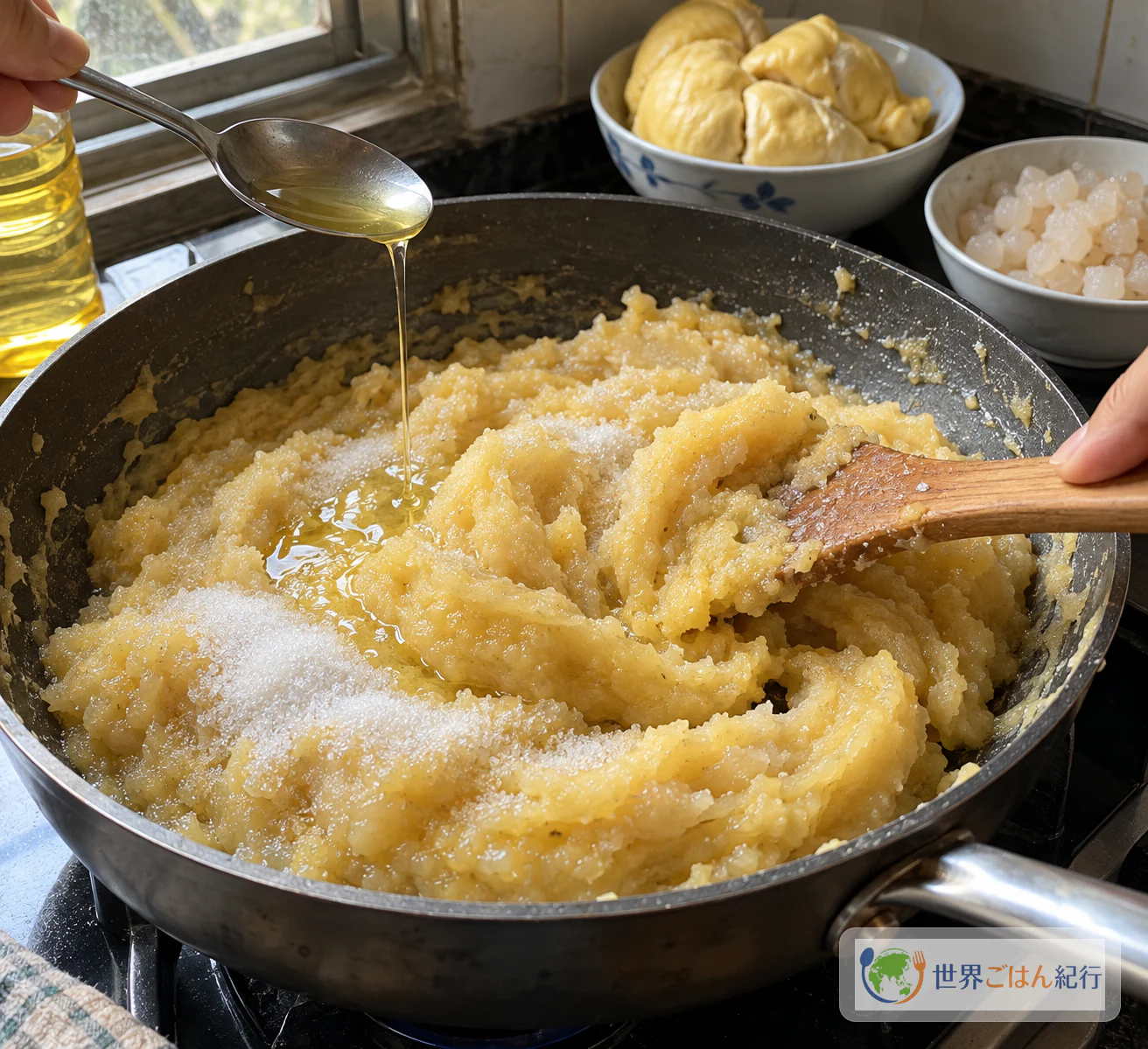
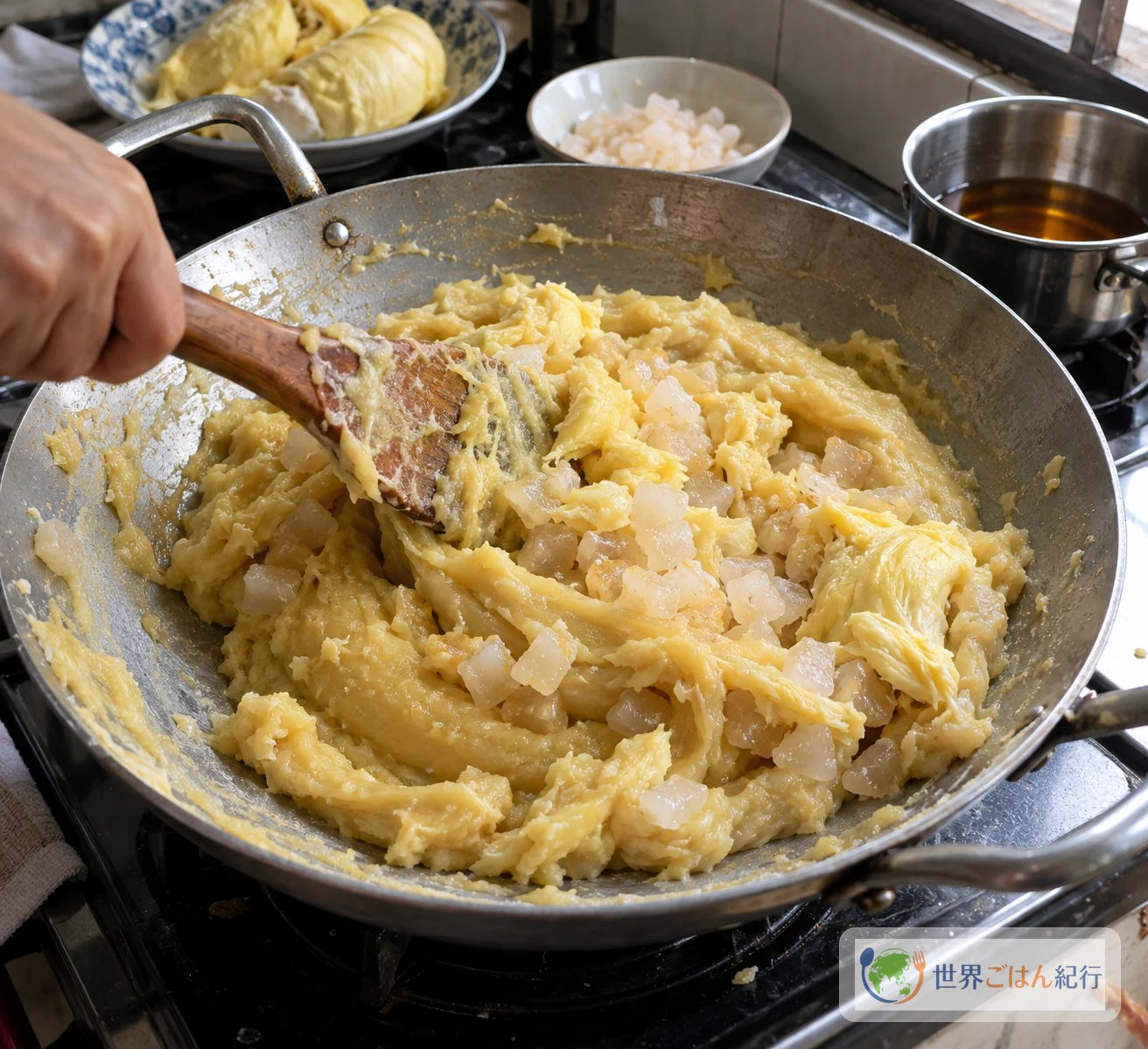
Make the filling first and let it cool completely; cold, firm filling balls make the delicate dough work much easier. Keep each piece of dough covered until you use it so the surface doesn't dry out.
When It Goes Wrong: Layers, Leaks and Color
| Problem | Likely cause | What to do |
|---|---|---|
| No visible layers | Oil dough leaked out of the water dough, too much dusting flour, rolling or pressing too hard, glaze applied too heavily, dough surface dried out | Seal the seam fully in step 8, roll with light pressure, keep dough covered, and brush the wash on once and thinly |
| Filling too soft to wrap | Bean cooking water not drained, filling not cooked long enough | Drain the beans well, then cook until the paste turns clear and leaves the pan. Use the roasted glutinous rice flour only if it is still loose |
| Filling leaks during baking | Filling still warm, seam not sealed, pressed too hard | Wrap only completely cooled filling, press the gathered edges firmly, and place seam side down |
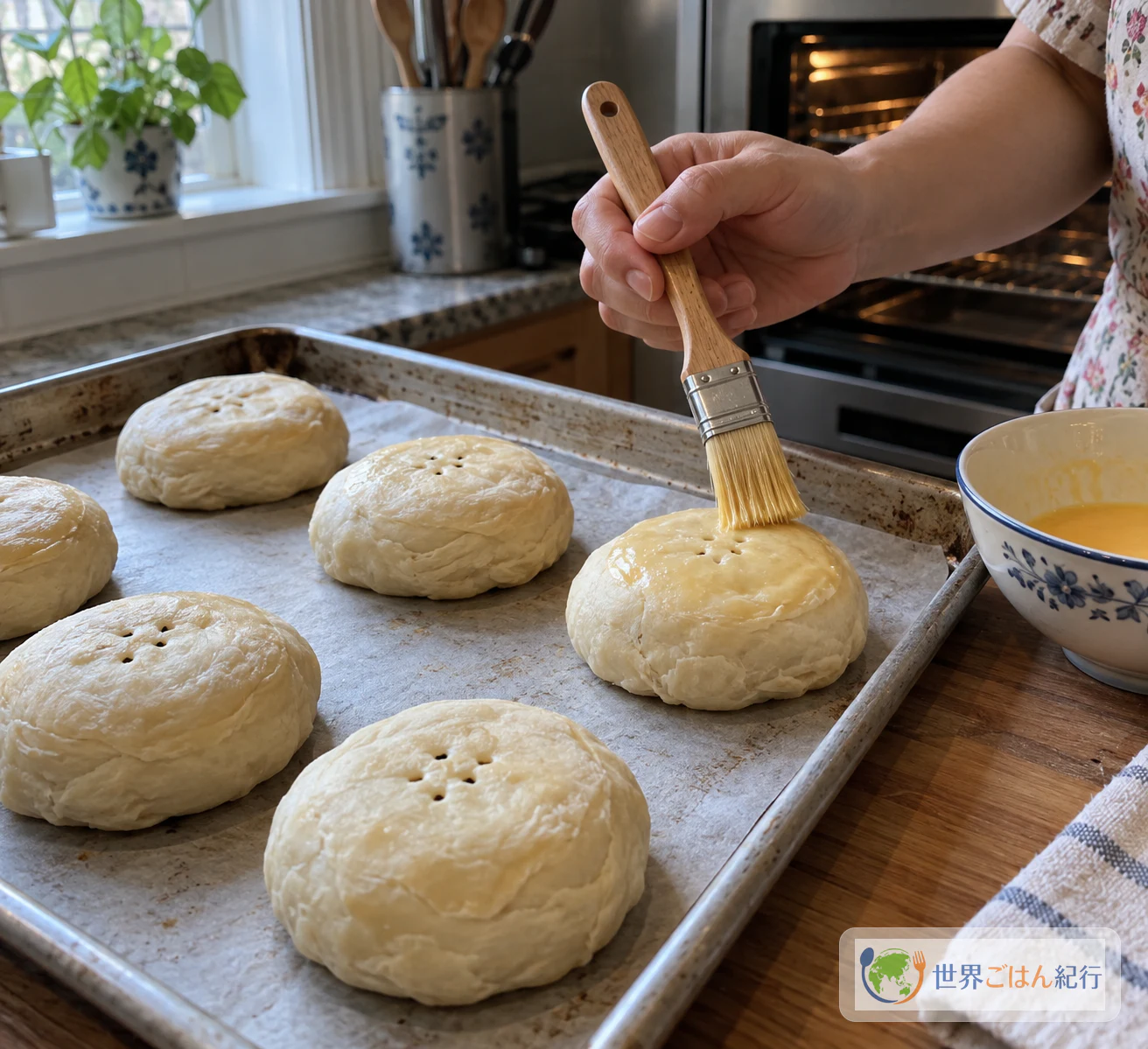
| Top browns but center seems underdone | Oven runs hotter or cooler than its setting | Start at 220°C and check the real temperature with an oven thermometer. Judge the crust by color and make sure the yolks were cooked through before wrapping |
A Vietnam News Agency report on a workshop describes ovens at around 270°C. That is a figure from large commercial ovens, not a setting for a home oven.
Variations
These are editorial ideas that move away from the base recipe:
- Without durian. Use only mung bean and salted yolk, closer to the earlier filling described by Báo Sóc Trăng. This is no longer the Sóc Trăng durian version.
- Without the salted yolk. A smaller tea-time pastry. You lose the saltiness and the yolk in the cross-section.
- All vegetable oil in the doughs. Allowed by the recipe, but the aroma and flakiness change.
- More or less durian. Changing the 200g changes the moisture and sweetness of the filling, so you will need to readjust how long you cook it. This is not offered as a base amount.
- Plain tops. Some bánh pía carry a red mark. It is skipped here; leaving it off doesn't change the taste, and soaking the surface with too much color can glue the top layers together.
Sharing the Cross-Section, and Bánh Pía as a Gift
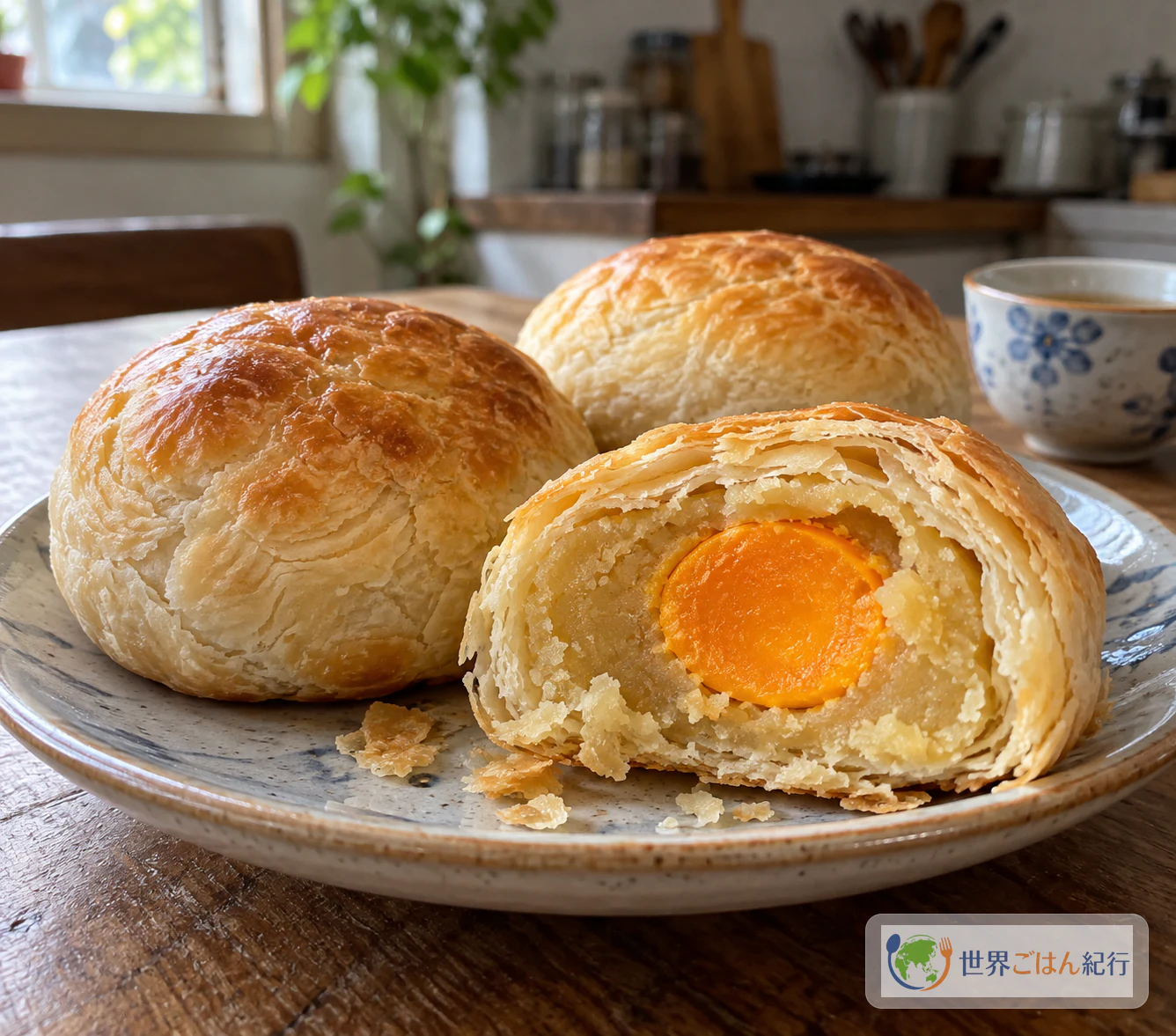
Once cooled, a bánh pía can be broken or cut into small pieces so everyone sees the layers, the pale filling and the orange yolk. Serving it with tea is an editorial suggestion, not a claim about how it is always eaten in Vietnam.
In Sóc Trăng, the pastry also travels beyond the table as a gift. Báo Sóc Trăng records that at Hoa weddings in Sóc Trăng, pía is one of five kinds of cakes presented together under the name "Ngũ phúc kỳ xương." The Vietnam News Agency reports bánh pía given as gifts at Cúng Trăng, the moon festival of the tenth lunar month, and at Tết. These are examples recorded in regional reporting, not a description of customs across all of Vietnam.
The story of the pastry has more than one version. Its arrival is dated to the 16th century in one source and the 17th in another, and its fillings have run from salted vegetables and fat to durian and taro. The layered crust and the Teochew name are what connect them.
Leftovers
Don't leave baked pastries at room temperature for a long time. Once they have cooled, divide them into clean, shallow containers so they chill quickly, cover them and refrigerate. Reheat thoroughly before eating.
Frequently Asked Questions
Are bánh pía and bánh bía different pastries?
They are treated here as spelling and regional variants of the same name. Bánh pía is distinct from Indonesian bakpia pathok and Filipino hopia, which differ in country, dough and filling.
Can I use potato starch instead of tapioca starch?
The oil dough calls for bột năng, tapioca starch. Potato starch behaves differently and is not considered an equal substitute, and no tested alternative amount is given. It is best to find tapioca starch.
What if I don't want to use lard?
The recipe says the lard in both doughs can be replaced entirely with vegetable oil, though the aroma and flakiness of the crust change. The candied pork fat in the filling is a separate ingredient; swapping oil into the doughs does not replace it, and the filling will not have the same texture without it.
Should I leave them at room temperature for a day so the flavor settles?
A different home recipe (What To Cook Today) suggests the flavors settle by the next day, but that is about taste, not a safe room-temperature storage time. Cool the pastries, refrigerate them in clean, shallow containers without delay and reheat thoroughly before eating, following the Japanese Ministry of Health, Labour and Welfare's home guidance. No storage period is given here.
How many does this make?
The recipe divides the doughs and filling into 12. This has not been confirmed with a test bake, so no finished count or weight per pastry is given. The 10-piece recipe on What To Cook Today uses different amounts and should not be mixed with this one.
Sources
- Lambanhngon.com / Hunnie Cake, "Công thức và Cách làm bánh pía." A home recipe the author describes as adapted from a Hoàng Tâm prototype. Used only for the first, 12-piece recipe on the page: the water dough, oil dough and filling ingredients, the filling method, the double rolling and wrapping, and the 220°C bake with pricking and a thin yolk wash. The separate second recipe on the same page uses different weights, sugar, oil and baking order and is not mixed in. It is a secondary home recipe, not a standard artisan formula. https://lambanhngon.com/huong_dan_lam_banh/cong-thuc-va-cach-lam-banh-pia/514.nhtml
- Cục Di sản văn hóa (Vietnam Department of Cultural Heritage), "Nghề làm bánh Pía, tỉnh Sóc Trăng." The Teochew meaning of pía / pi-é, the pastry trade around Phú Tâm, Thuận Hòa and An Hiệp, the Minh Hương (Hoa) and Teochew mooncake roots, the two-layer dough, and older fillings including Can Xại and salted duck yolk. It dates the migration to the 16th century, which differs from the Vietnam News Agency report. https://dsvh.gov.vn/nghe-lam-banh-pia-tinh-soc-trang-3329
- Báo Sóc Trăng (Sóc Trăng Newspaper), "Tìm hiểu về bánh, kẹo của người Hoa Sóc Trăng." The link to the Teochew Hoa community and the Vũng Thơm and Phú Tâm bakeries, the name bánh lột da, mung bean as the early filling with durian added later through food exchange, and pía among the five cakes at Hoa weddings. Regional reporting that does not represent every household or wedding. https://baosoctrang.org.vn/van-hoa-the-thao/202101/tim-hieu-ve-banh-keo-cua-nguoi-hoa-soc-trang-2c4201a/
- Vietnam News Agency (VNA), "Bánh pía Sóc Trăng." Dates the Teochew arrival to the 17th century; names durian, salted duck yolk, mung bean and taro as flavors; describes repeated rolling of water and oil doughs; reports bánh pía as gifts at Cúng Trăng and Tết. The workshop oven temperature of about 270°C is not applied to home baking. https://vietnam.vnanet.vn/vietnamese/tin-tuc/banh-pia-soc-trang-33987.html
- Ministry of Health, Labour and Welfare (Japan), "家庭での食中毒予防" (Preventing food poisoning at home). General guidance: heat cooked foods until the center reaches 75°C for at least 1 minute; refrigerate if you pause cooking and reheat thoroughly when you resume; don't leave cooked food at room temperature for long, and store leftovers in clean, shallow containers. It gives no storage period for this pastry. https://www.mhlw.go.jp/stf/seisakunitsuite/bunya/kenkou_iryou/shokuhin/syokuchu/01_00008.html
- What To Cook Today, "Homemade Banh Pia Durian Mung Bean Pastry." An independent home recipe used for comparison: it also separates water and oil doughs and rolls them twice, but makes 10 pastries with different amounts, so it is not mixed into this recipe. Its suggestion to let the flavors settle overnight is not used as room-temperature storage guidance. https://whattocooktoday.com/banh-pia.html