Bánh Tét: A Leaf-Wrapped Rice Cylinder Made for the New Year
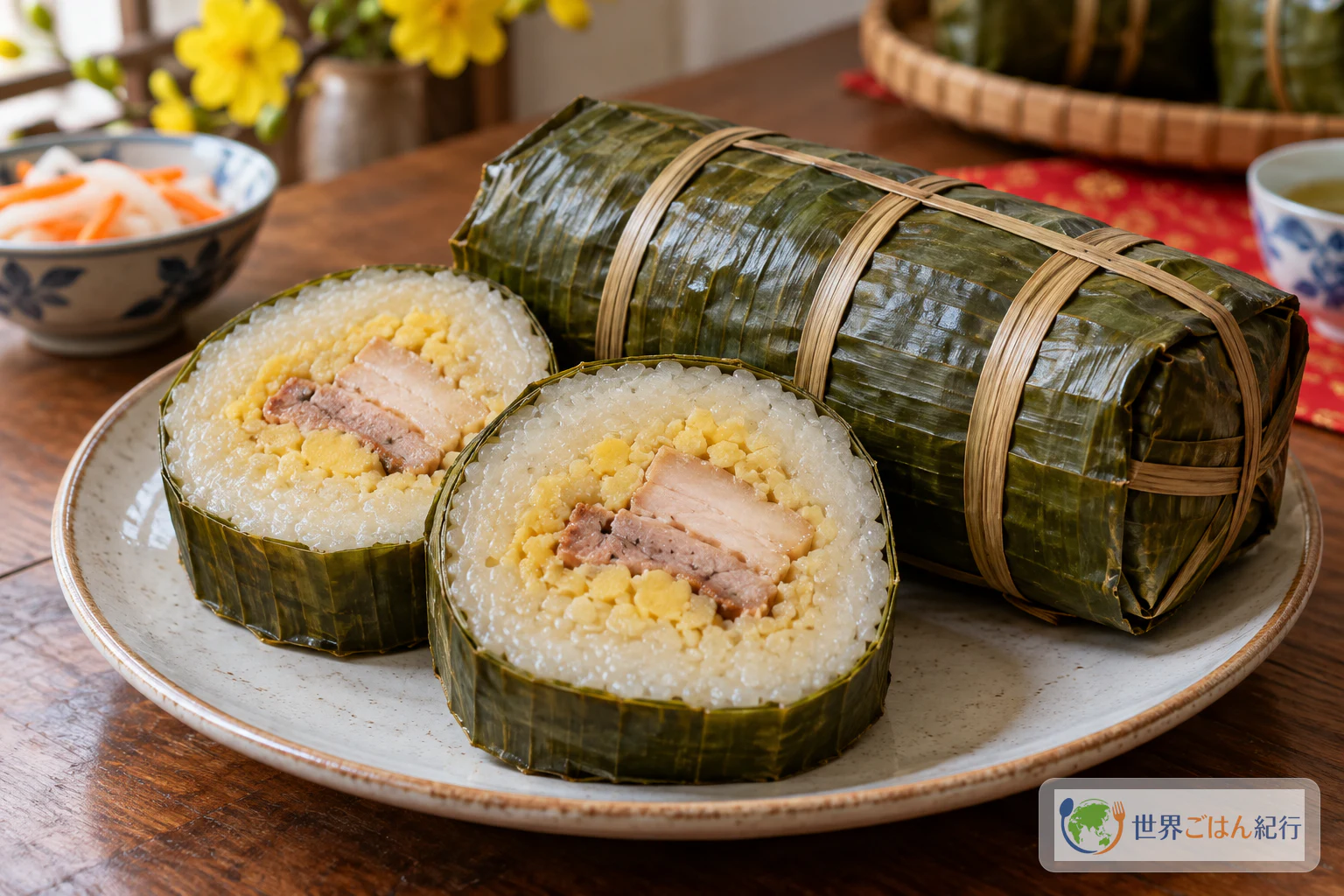
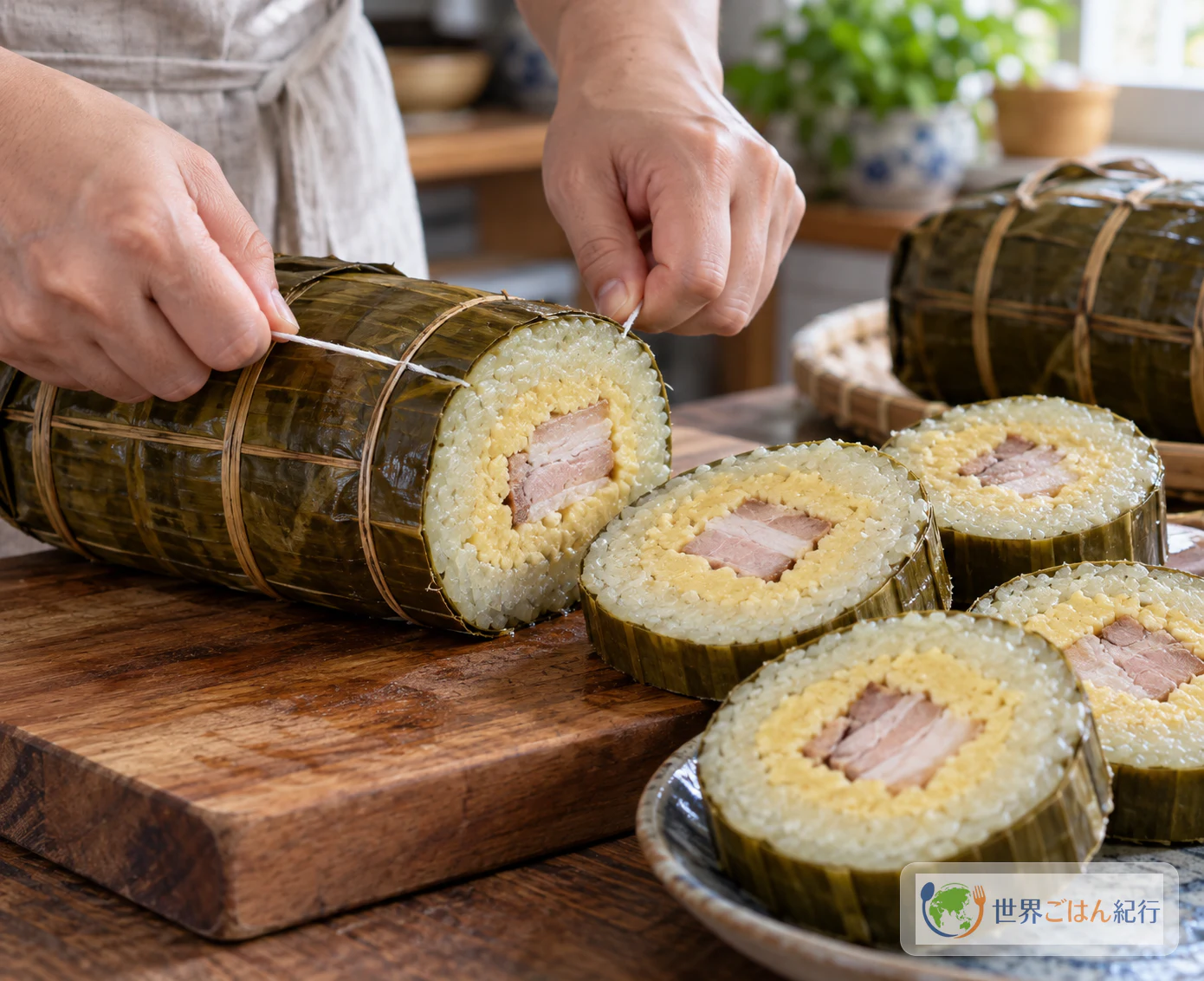
Chewy glutinous rice, a plain yellow layer of mung bean, the richness of pork belly, a savory edge of fish sauce and black pepper, and the scent of banana leaf. Every slice should show the rice wrapped around a mung-bean ring with pork at the center.
In the last days before Tết, the Lunar New Year, families in Vietnam gather to wrap rice cakes. A Vietnamese government article on Tết customs describes families coming together around the 27th to 29th days of the final lunar month to wrap bánh chưng and bánh tét, with rice at the heart of both.
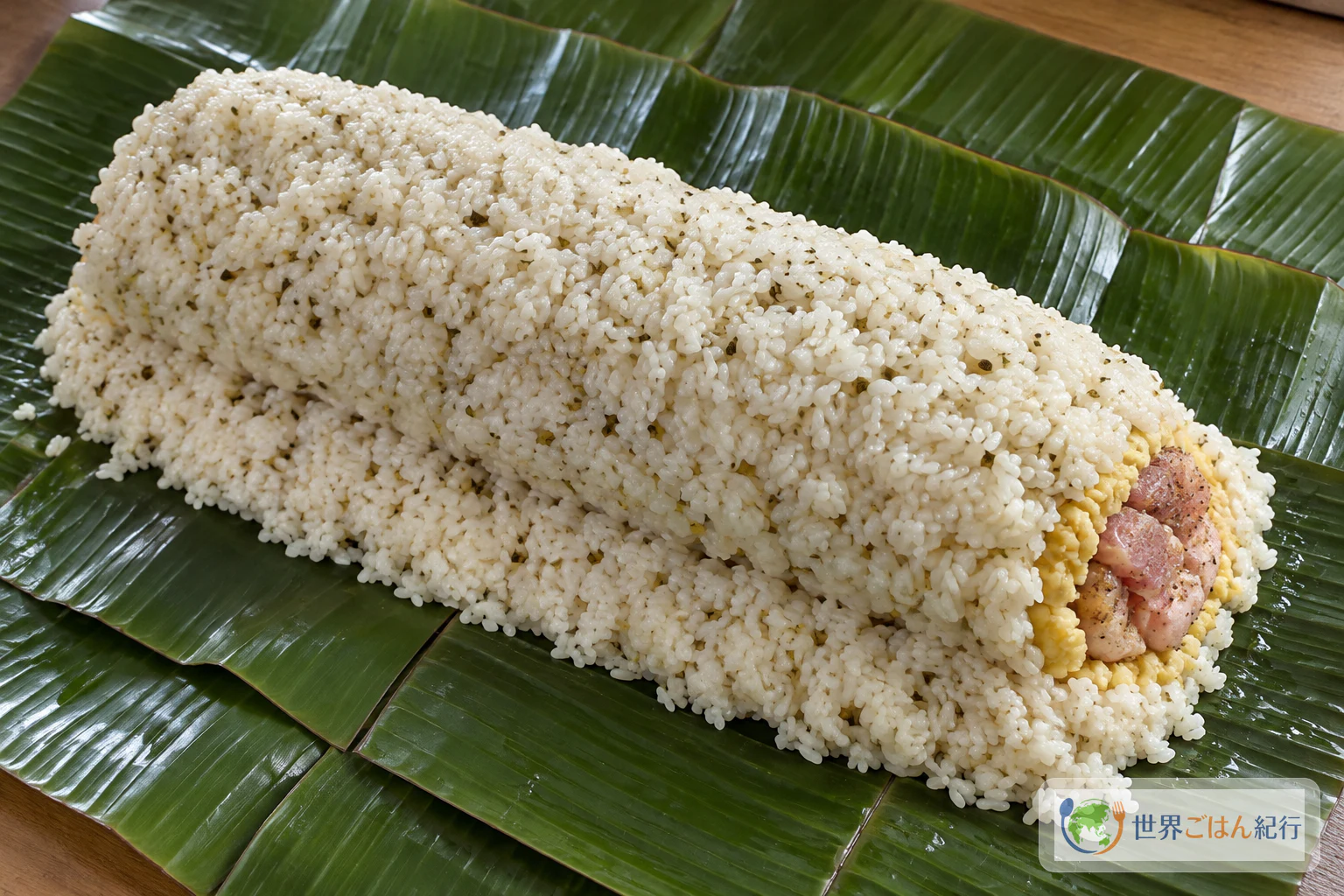
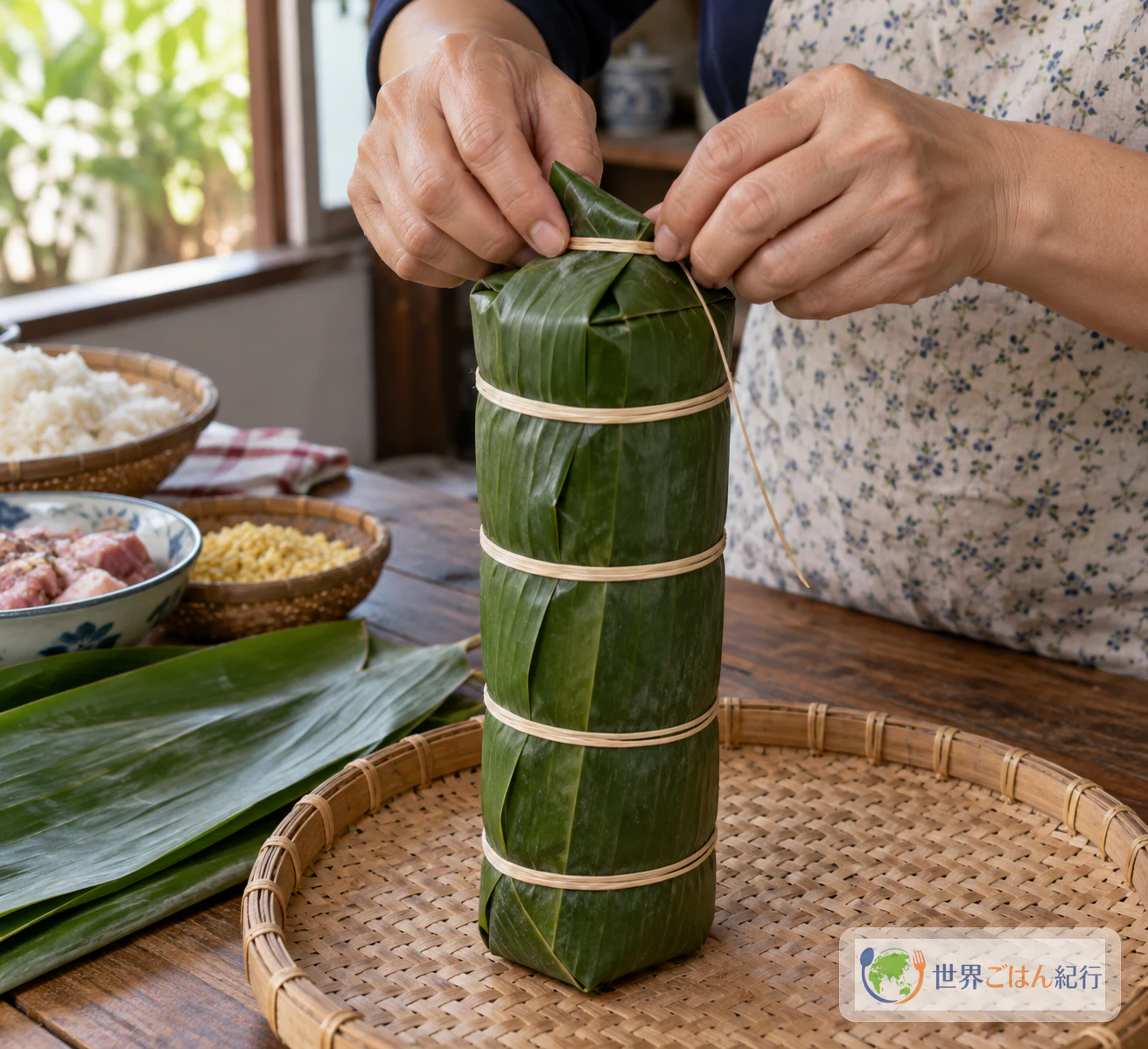
Bánh tét is the cylindrical one. Glutinous rice, mung bean paste and pork belly are rolled in banana leaves, tied, and simmered for many hours. On the plate it appears as round slices, each with a white ring of rice, a yellow layer of mung bean and pork in the middle. Because the cooking is long, it is a dish of planning ahead: soaking, seasoning, wrapping, and then keeping a pot topped up through a long simmer.
The same government article contrasts the cylindrical bánh tét of the south with the square bánh chưng of the north. The two share rice, mung bean and pork, and the difference in shape is a useful entry point into regional cooking, not a rule that every household or every region follows. For more dishes from the country, see our Vietnam page.
This recipe follows one published home recipe (Helen Le's) without rescaling or mixing in other versions. We have not kitchen-tested it. The yield and times quoted below are the source's own estimates, not measured results.
Ingredients for Savory Bánh Tét
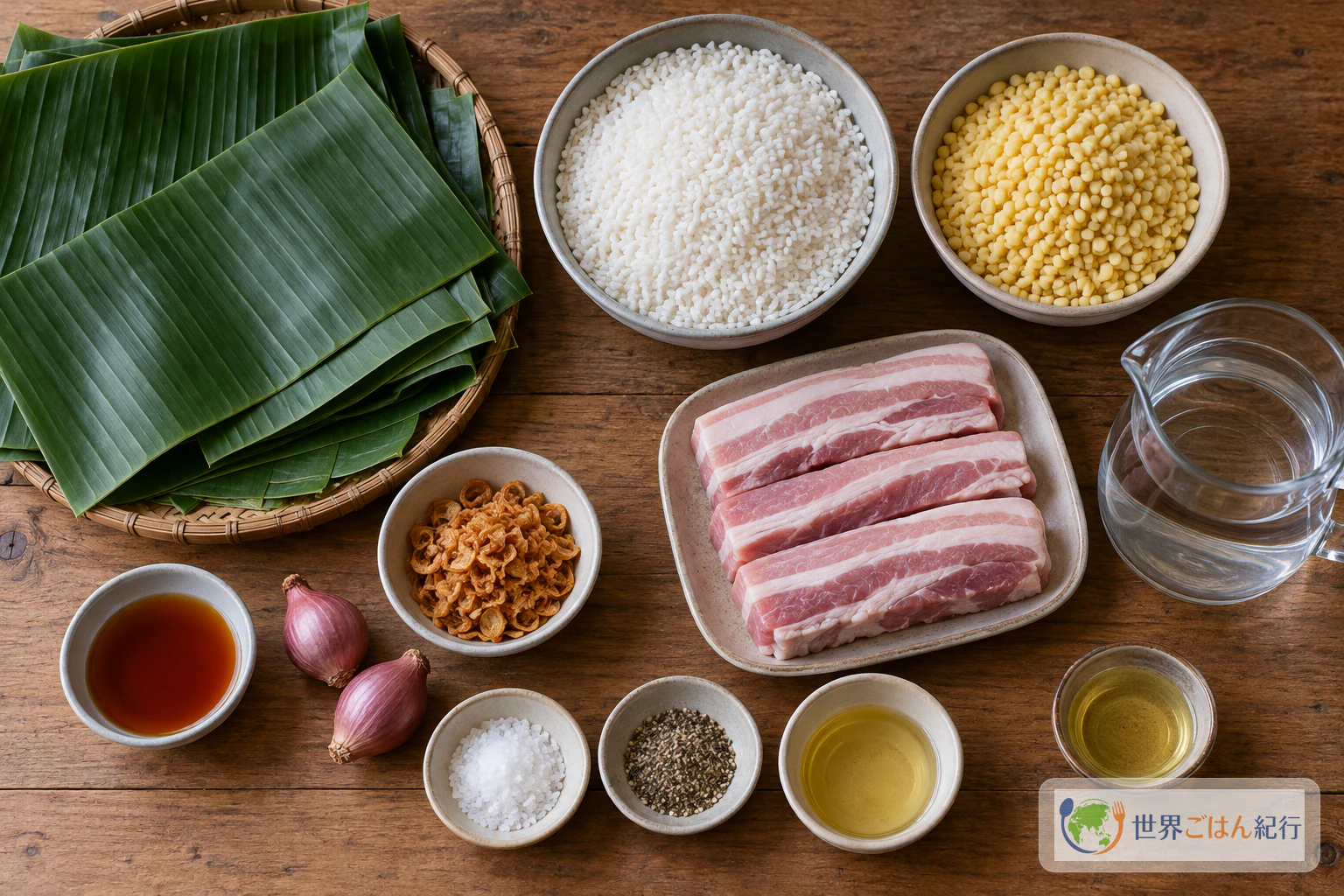
Makes 4–5 cakes, 10–15 servings.
Water for soaking, cooking the beans and simmering the cakes is not part of the measured ingredients. There is no sugar, coconut milk, pandan, garlic or egg in this cake, so don't add them.
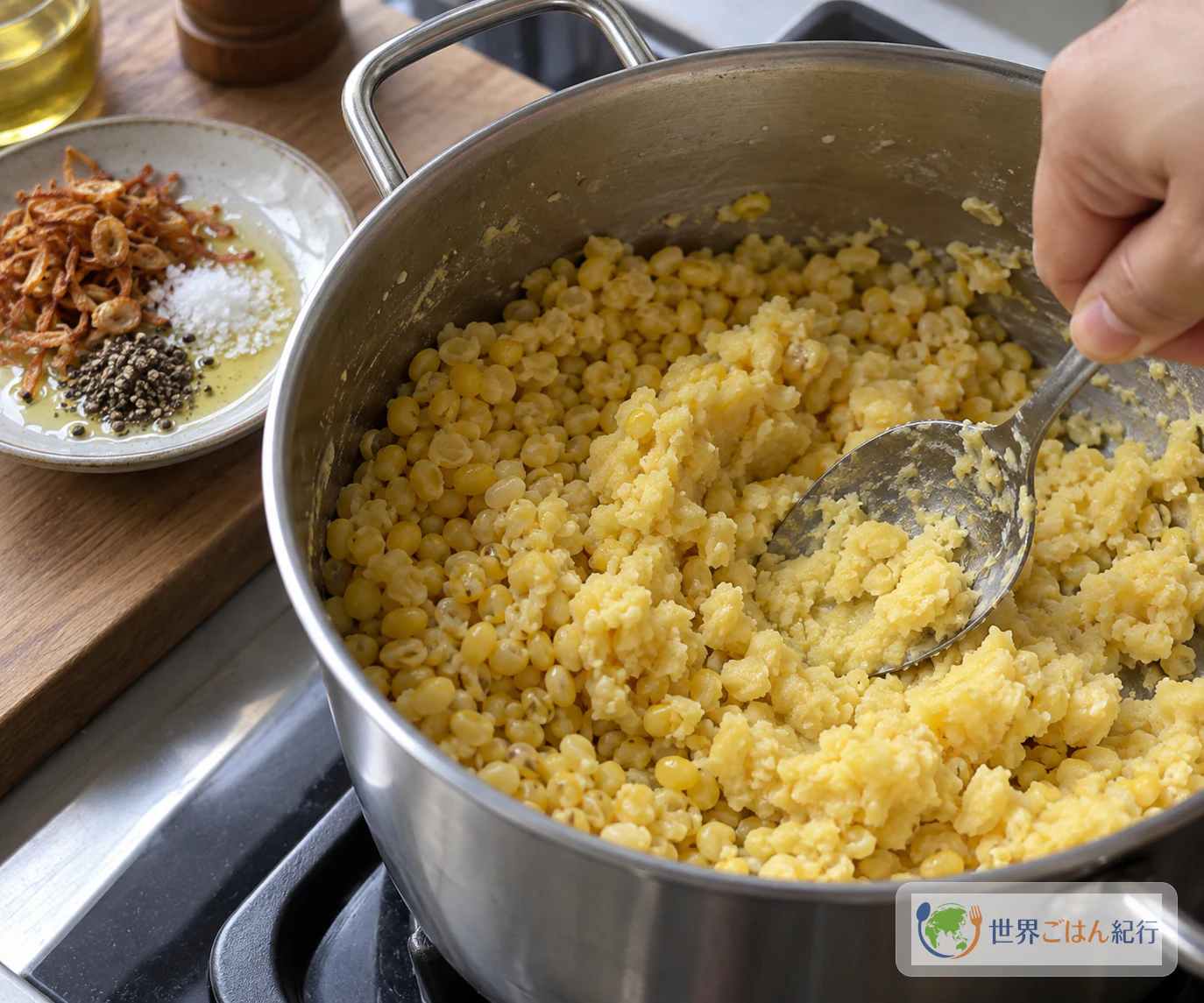
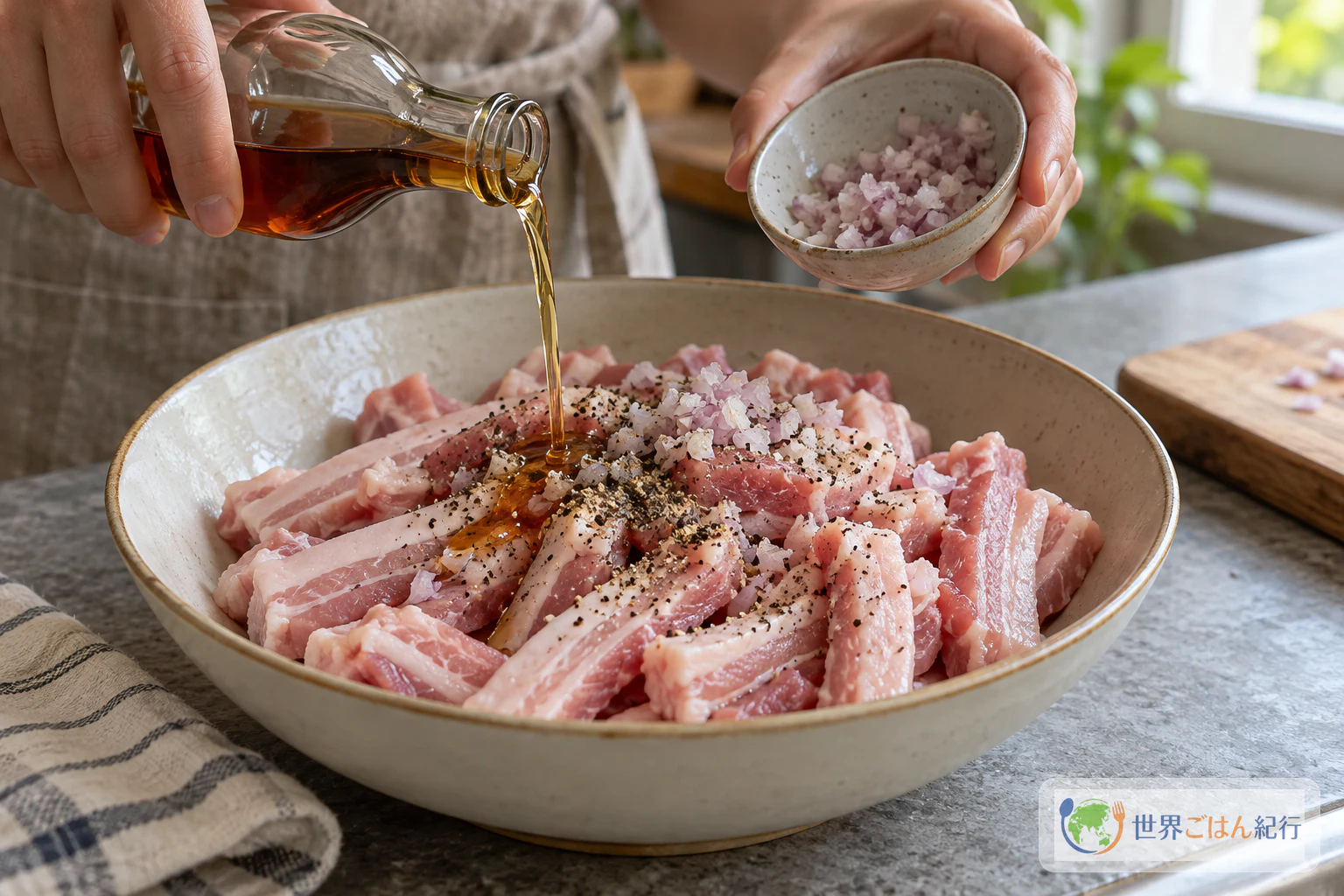
Each seasoning has a set destination: salt goes half to the beans and half to the rice; pepper half to the beans and half to the pork. Keep them apart as you work so nothing gets seasoned twice.
Fish sauce is made from fish. Check the label of the product you buy, and check labels of the other packaged ingredients, such as fried shallots, as well.
Equipment
- Bowls for soaking the rice and the mung beans separately
- A pot for cooking the mung beans, and a spoon or masher
- A separate cutting board and knife for raw pork
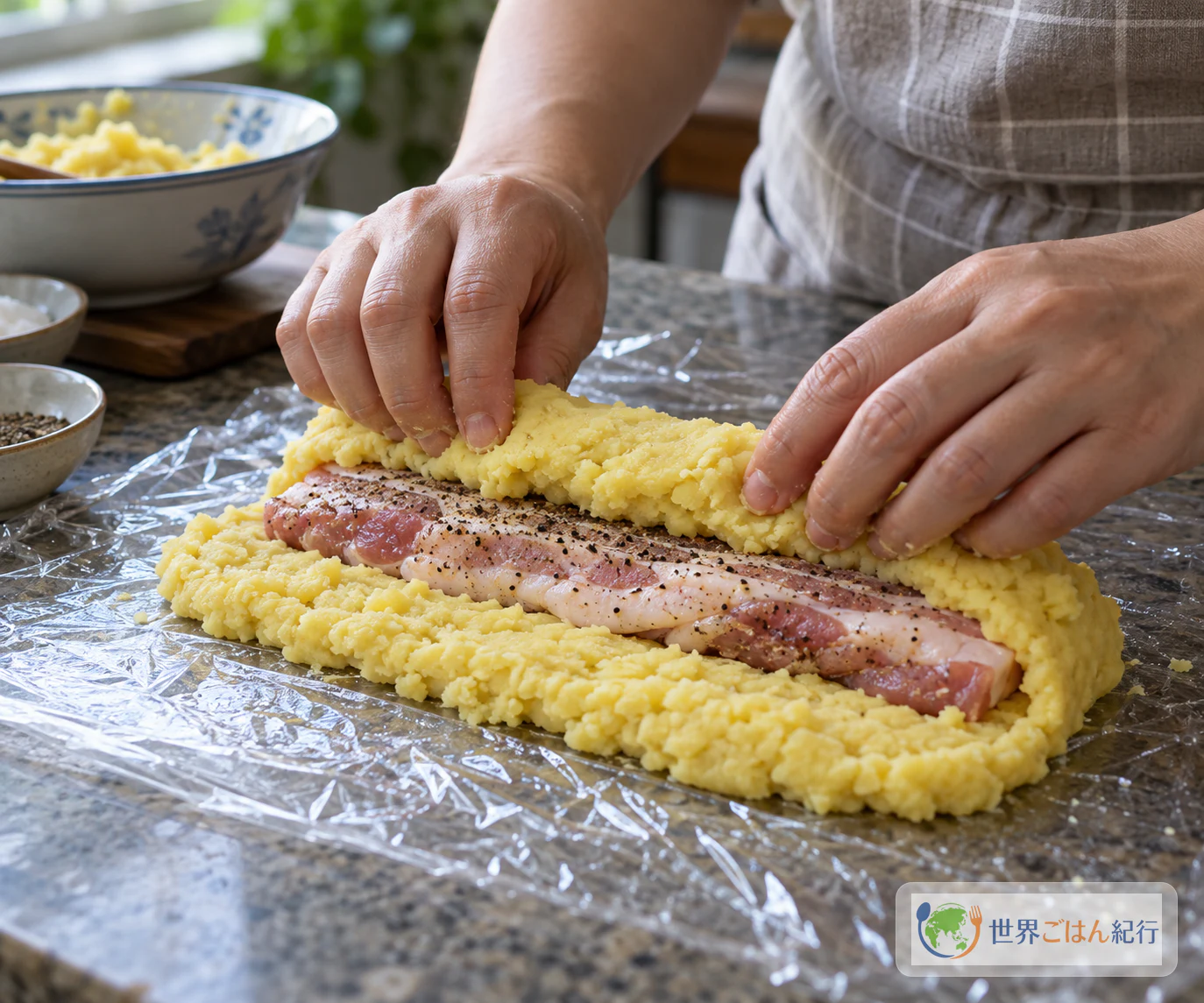
- Food-safe plastic wrap, for shaping the mung bean and pork logs
- Food-safe cooking twine or string, as needed
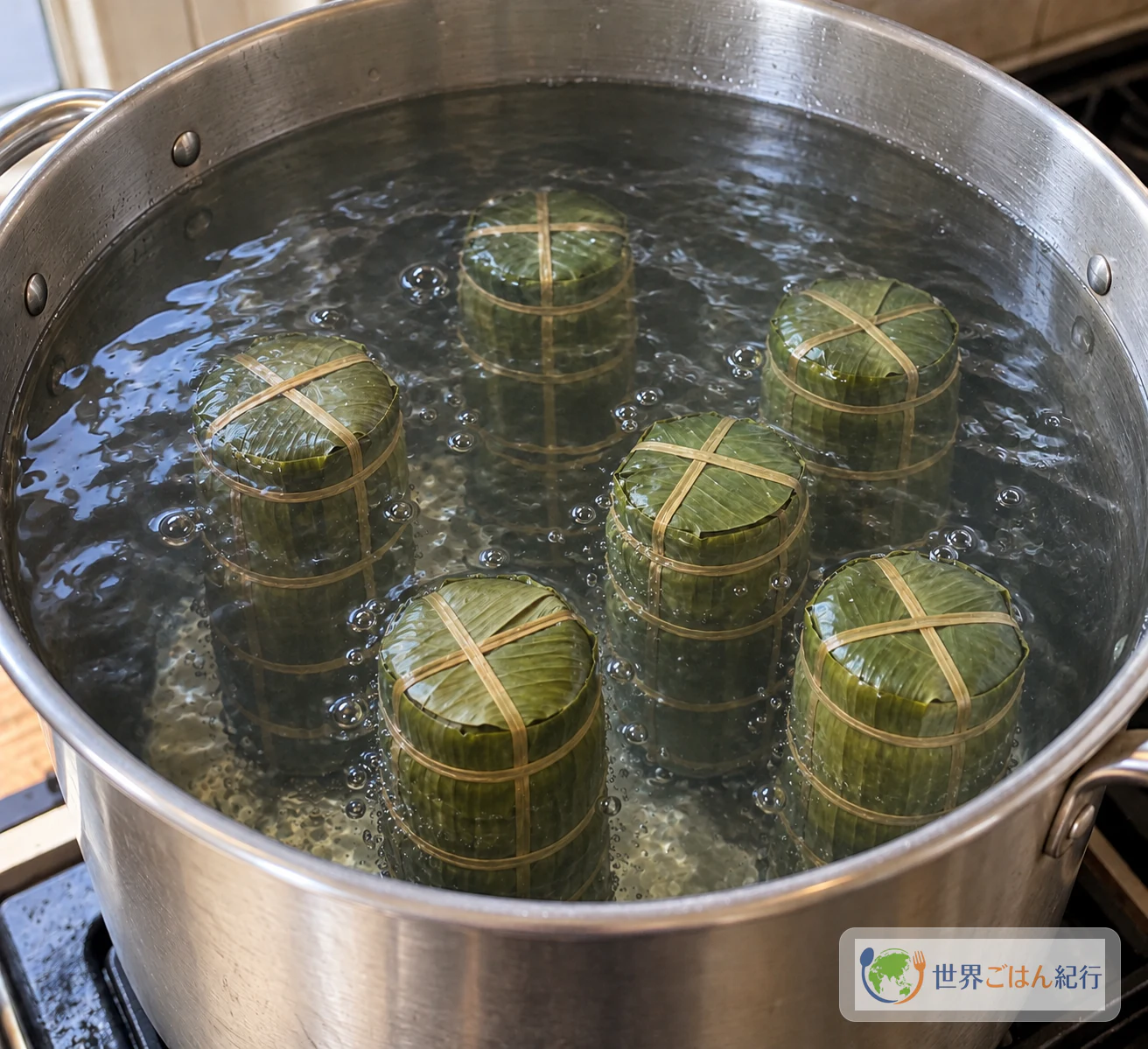
- A large stockpot deep enough to hold the cakes standing upright and fully submerged
- A kettle, for keeping hot water ready to top up the pot
- Clean thread or floss, for slicing the cooked cake
- A food thermometer, for reheating leftovers
- A skillet (optional, for frying slices)
Choosing and Shopping: Rice, Beans, Leaves and Fish Sauce
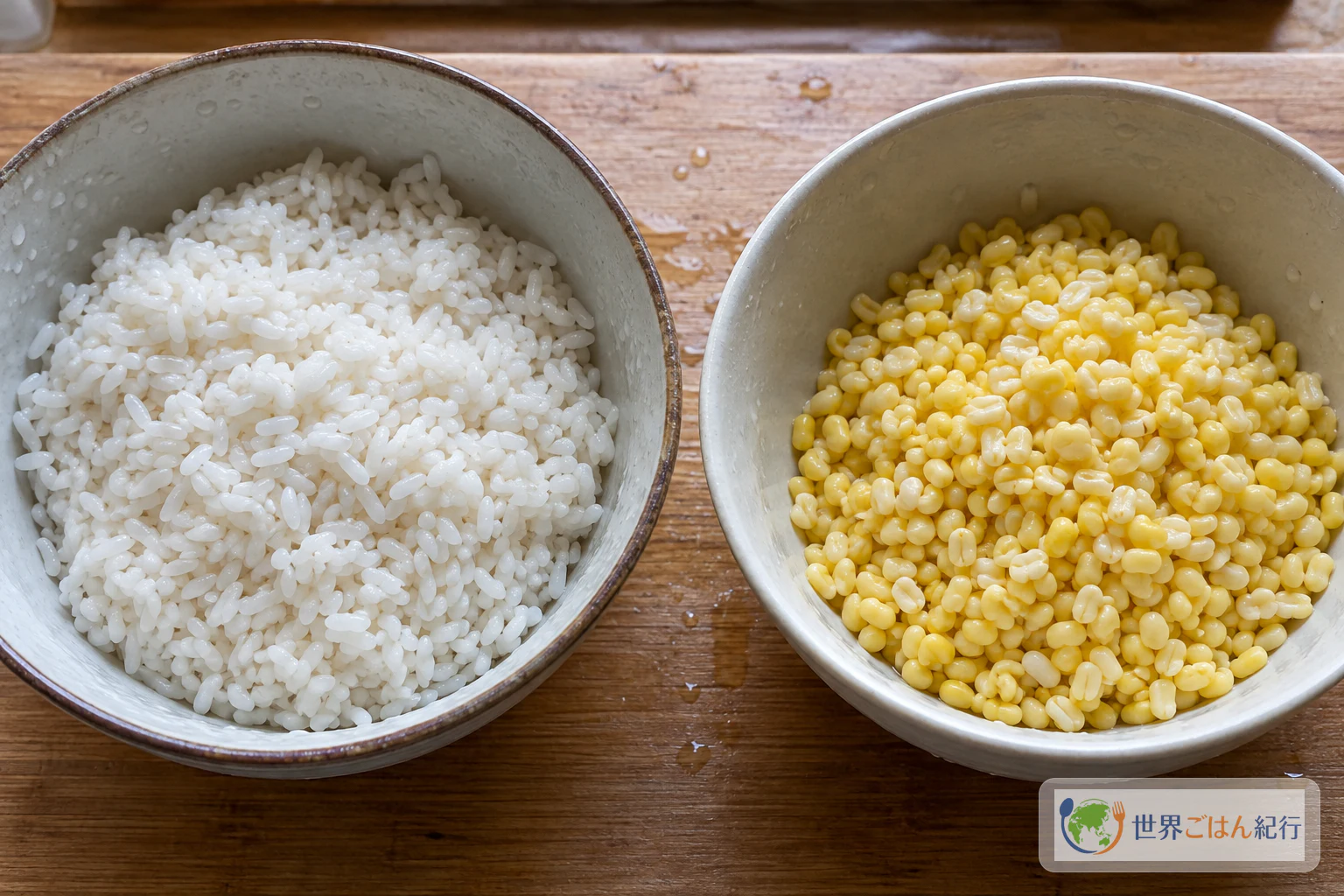
Glutinous rice (sold as sticky rice, sweet rice or gạo nếp) is what makes the rice hold together into a firm cylinder after the long simmer. Ordinary long-grain or short-grain rice is not the same ingredient.
Peeled split mung beans are small and yellow, without their green skins. Don't confuse them with whole green mung beans or with adzuki beans; those were not part of this recipe and we can't say how they would behave.
Banana leaves are usually found at Asian grocers, often frozen. If you buy frozen leaves, follow the package for thawing and handling. We haven't been able to confirm any wrapper that gives the same result, so a substitute should be treated as untested.
Fish sauce gives the pork its salty, savory depth. It is not interchangeable with soy sauce. Likewise, onion or other alliums in place of shallots would be a change to the recipe rather than an equivalent.
Method: Soak, Season, Wrap and Simmer
Plan on roughly 3 hours of prep and 10 hours of cooking, with the cake ready in about 13 hours. With a 4-hour soak, your own pot and your own wrapping speed, your actual day may run differently. Plan to keep someone near the pot for the whole simmer.
Troubleshooting: Leaks, Loose Centers and Underdone Rice
| Problem | Likely cause | What to do |
|---|---|---|
| Rice leaks out of the leaves | Gaps where the leaves meet, ends folded loosely, too few ties | Close the cylinder with the overlapping leaves, fold the ends carefully, and add more ties along the body. Keep the cakes fully submerged |
| The filling falls apart or sits off-center | Beans not cooked until mashable, pork not enclosed before placing | Cook the beans until they mash easily, wrap the pork in the paste first, and place the log in the middle of the rice |
| The rice hasn't come together | Simmer too short, or the water level dropped | Don't shorten the 8–10 hour simmer or skip topping up with hot water |
Storage and Leftovers
Once the cake is cooked, set aside what you'll eat right away. Refrigerate the rest of the cooked cake within 2 hours, or within 1 hour if the room is above 32°C (90°F). Reheat leftovers to 74°C (165°F), and use a food thermometer to check. These sources don't give a storage period for a whole cake, refrigerated or frozen, and the source's air-drying step does not mean the cake can be kept at room temperature.
Variations
The recipe above is the savory version. These are separate dishes or ways of serving, not additions to it:
- Sweet banana bánh tét. GoVietnam's guide to Gò Công describes a sweet banana version alongside the savory mung bean and pork one.
- Purple rice with lá cẩm. Some versions color the rice with lá cẩm leaves. We haven't confirmed amounts or methods, so it isn't covered here.
- With pickles. Both the source recipe and GoVietnam mention slices served with pickles. They are an optional side, not part of the recipe's ingredients.
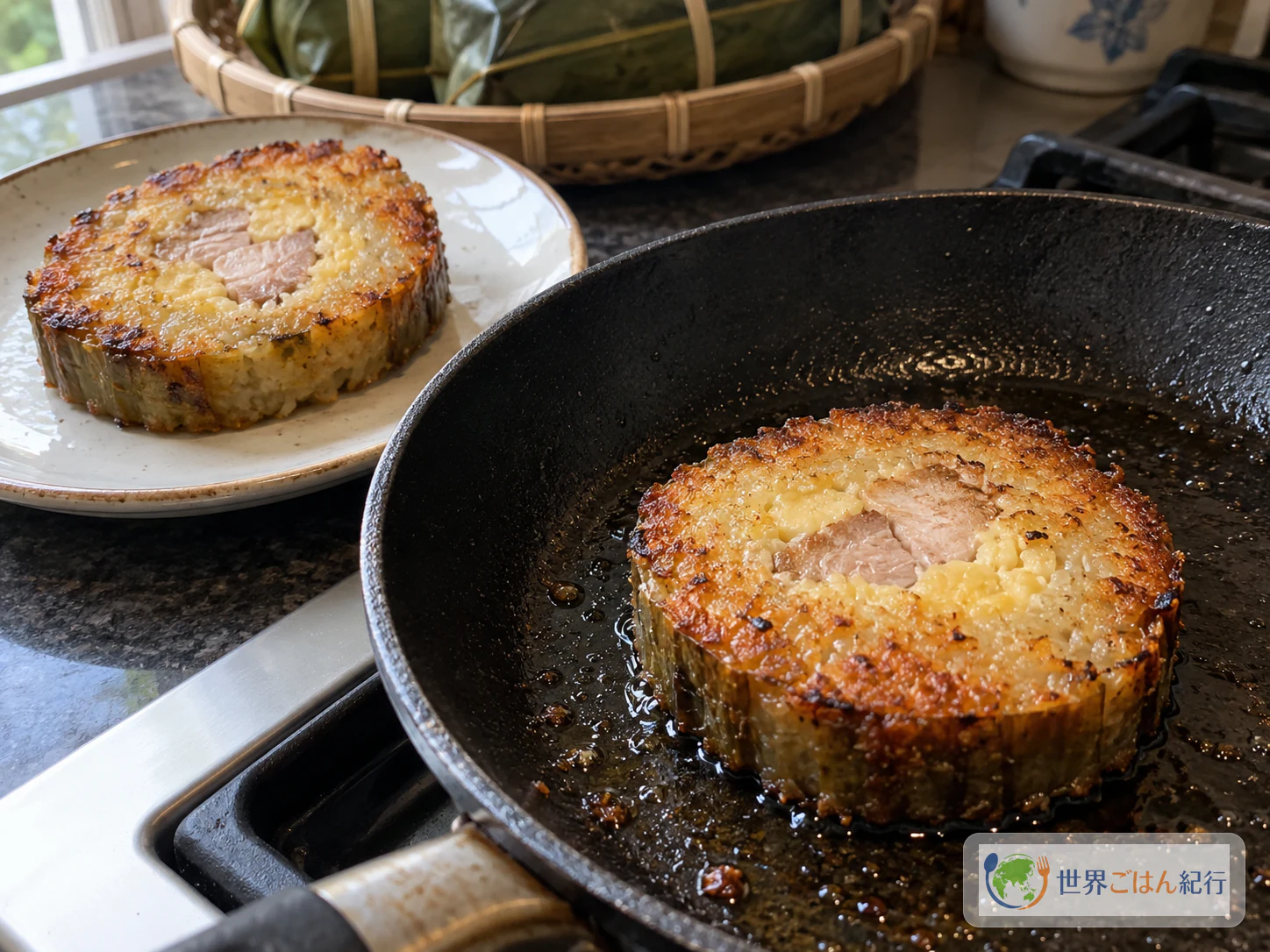
- Fried slices. The source recipe mentions frying, and GoVietnam describes pan-fried leftover slices (see step 9).
Culture: Tết, Family Tables and Gò Công
Rice cakes like bánh tét are tied to the work of preparing for Tết. The Vietnamese government article on Tết customs describes families wrapping bánh chưng and bánh tét together in the days just before the New Year, and frames the south's cylindrical cake and the north's square one as two forms built around rice.
In Gò Công, GoVietnam describes bánh tét appearing at Tết and other local feasts, in savory and sweet banana versions, sliced and served with pickles. These are details of one area and shouldn't be taken as the rule for every Vietnamese household. Origin stories for these cakes do circulate, but the sources here don't establish them, so they're left out.
Frequently Asked Questions
How is bánh tét different from bánh chưng?
Both are leaf-wrapped rice cakes made with rice, mung bean and pork. The government article on Tết customs contrasts the cylindrical bánh tét of the south with the square bánh chưng of the north. Treat that as a general picture rather than a strict regional boundary.
How long does it simmer?
This recipe simmers the cakes for 8–10 hours, fully submerged the entire time, topping up with hot water as needed. Look for a plump cake with rice that has come together.
What if I can't find banana leaves?
We haven't been able to confirm a substitute that gives the same result. Banana leaves are often sold frozen at Asian grocers; follow the package for thawing.
Is there a sweet bánh tét?
Yes. GoVietnam describes a sweet banana version in Gò Công. It is a separate variation, not something to mix into the savory recipe here.
How should I eat leftovers?
Refrigerate cooked leftovers within 2 hours (1 hour above 32°C / 90°F), then reheat them to 74°C (165°F), checked with a thermometer. Slices can be pan-fried as part of reheating, as described in step 9.
Sources
- Helen Le, "Bánh Tét – Vietnamese Cylindrical Sticky Rice Cake," Helen's Recipes. The adopted recipe: all ingredient amounts, the 4-hour soak, the mung bean filling and pork seasoning, wrapping, the submerged 8–10 hour simmer and its visual doneness, rinsing and air-drying, and serving with pickles or fried; also its stated estimates of 4–5 cakes, 10–15 servings, and prep, cook and ready times. https://helenrecipes.com/recipe-banh-tet-vietnamese-cylindrical-sticky-rice-cake-2/
- Báo Điện tử Chính phủ (Government of Vietnam e-newspaper), "Những phong tục trong ngày Tết cổ truyền." Families gathering around the 27th–29th days of the lunar month to wrap bánh chưng and bánh tét before Tết, and the contrast between the southern cylindrical bánh tét and the northern square bánh chưng, with rice central to both. https://thanglong.chinhphu.vn/nhung-phong-tuc-trong-ngay-tet-co-truyen-10325352.htm
- GoVietnam.travel, "Bánh tét, bánh ít Gò Công – Vietnamese Savoury Cake." Gò Công bánh tét as a banana-leaf-wrapped cylindrical sticky-rice cake in savory mung bean and pork belly and sweet banana versions, eaten at Tết and other local feasts, served sliced with pickles, with leftover slices pan-fried. https://govietnam.travel/en/food/banh-tet-banh-it-go-cong/
- FoodSafety.gov, "Bacteria and Viruses." General guidance to refrigerate cooked leftovers within two hours (one hour above 32°C), reheat leftovers to 74°C, and use a thermometer. https://www.foodsafety.gov/food-poisoning/bacteria-and-viruses