Bánh Tiêu: A Thin Round of Dough That Swells Into a Hollow Shell
A thin sesame-coated round, hot oil at 180°C, and a light sweetness. Roll each piece to 3–4 mm and let the oil do the rest: the dough swells into a round, golden shell that is airy and hollow when you tear it open.
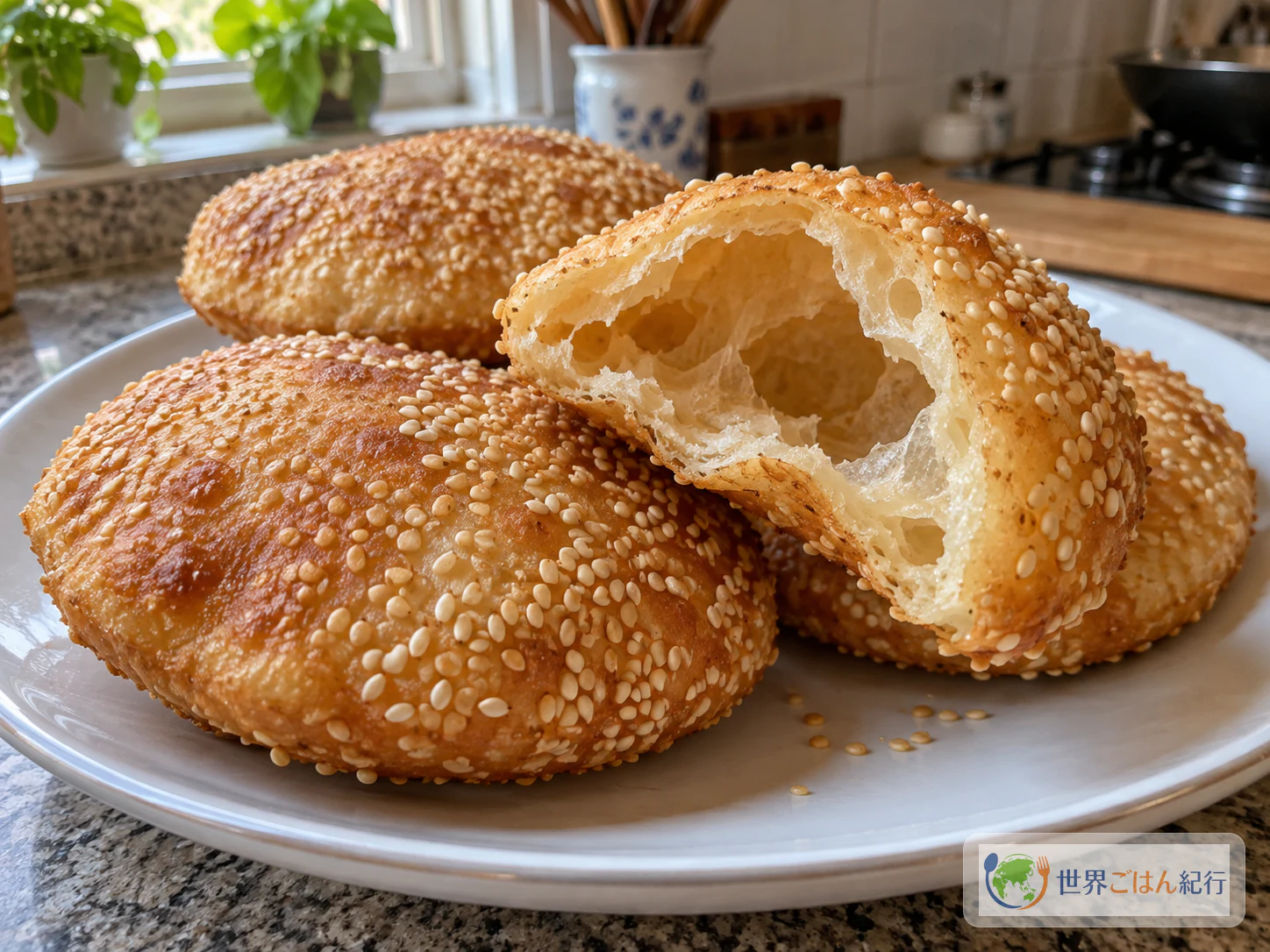
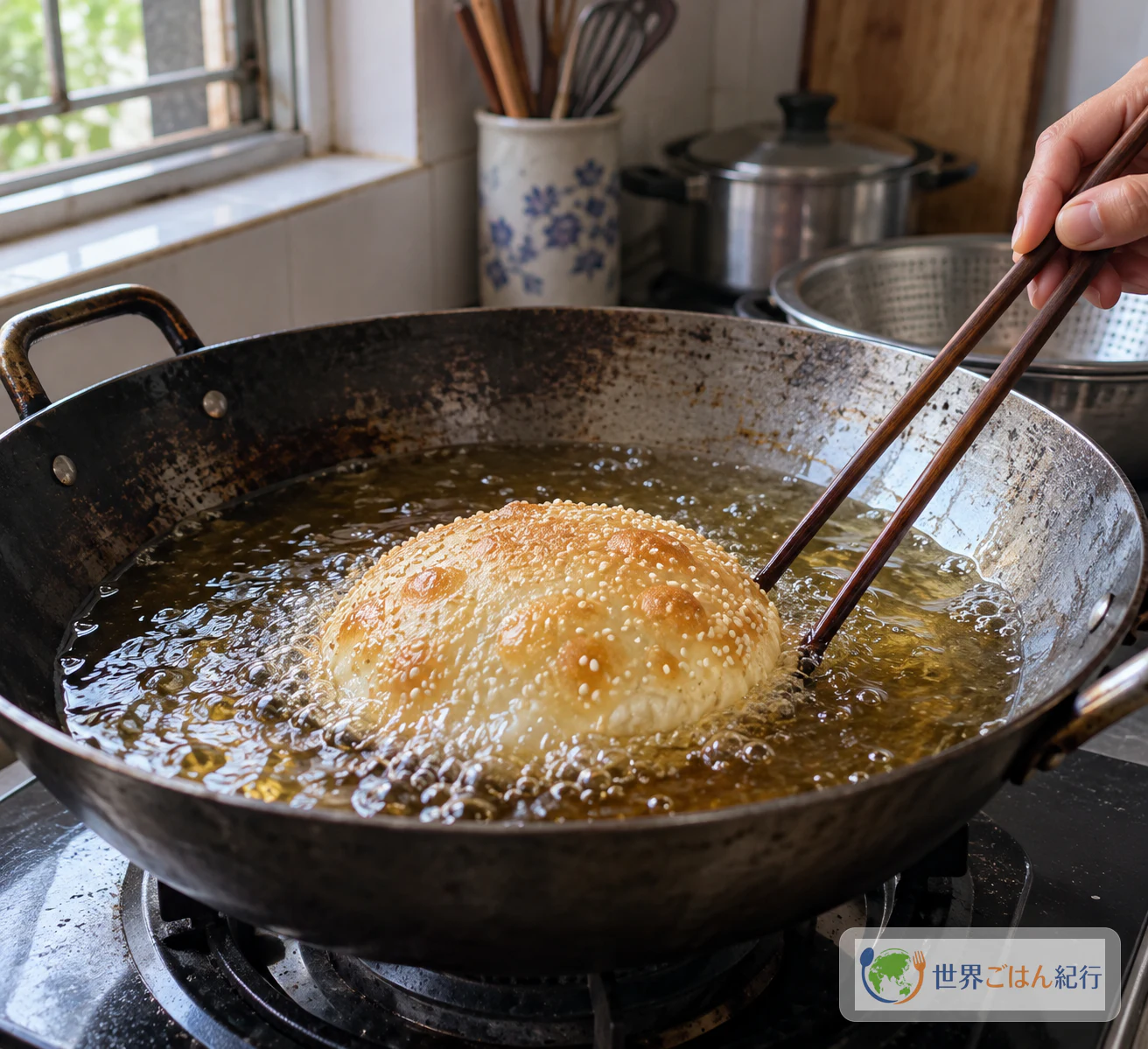
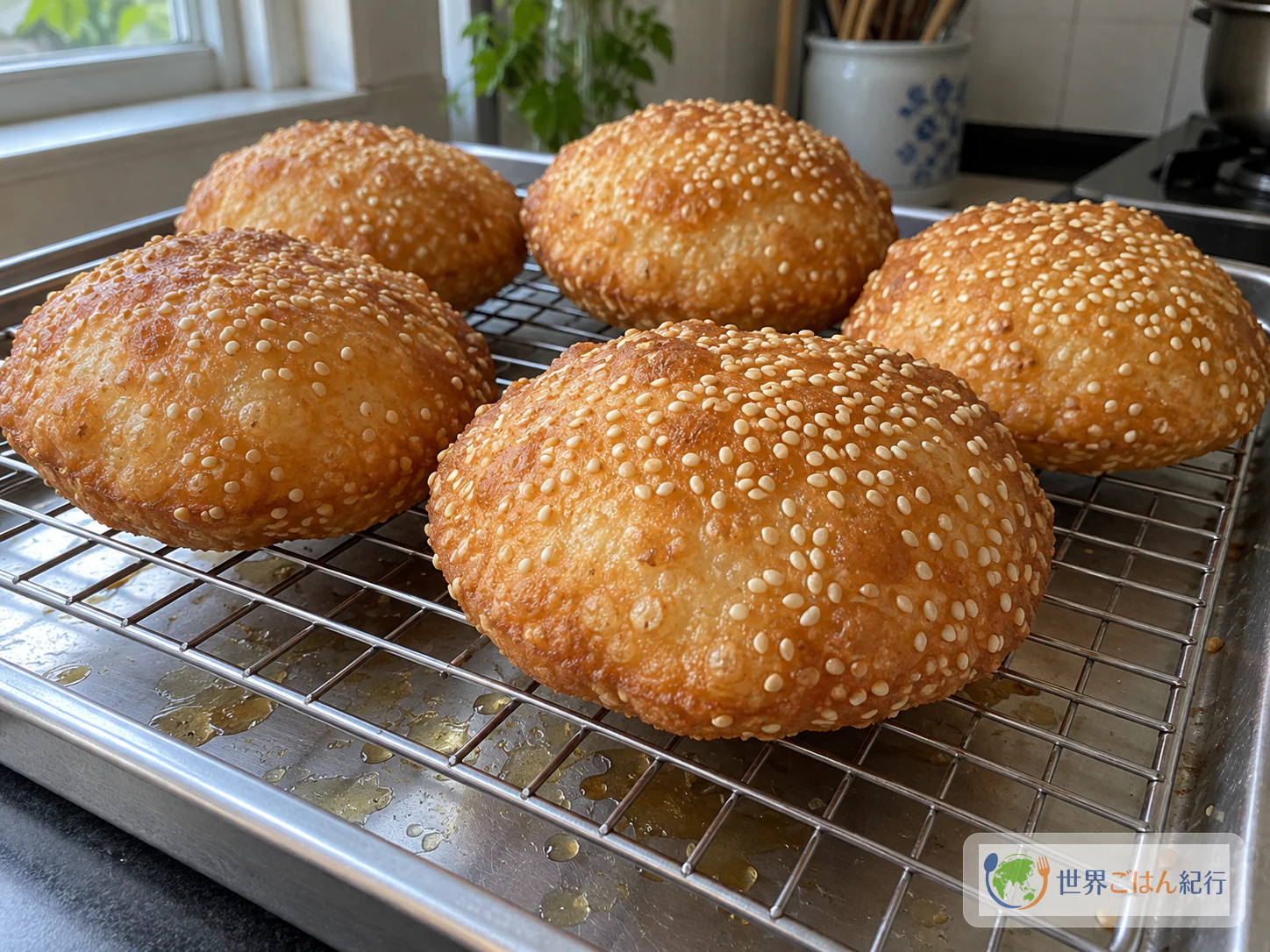
A flat, thin disc of dough speckled with white sesame slides into hot oil. Within moments it begins to swell, the surface lifting until the whole round puffs into a golden pillow. Tear one open after it has cooled slightly and the inside is mostly air, surrounded by a thin wall. That is bánh tiêu, a Vietnamese fried bread with a gentle sweetness and the aroma of sesame.
This recipe follows the egg-enriched bánh tiêu formula published by Interflour Vietnam, a flour milling company, which describes the version with egg as its updated recipe. Dough is portioned at 40–60 g, rolled to 3–4 mm, and fried at 180°C. There is no filling, no pepper, no condensed milk and no vanilla: just wheat dough, a little egg, sugar and sesame.
This recipe has not been kitchen-tested by Sekai Gohan. The amounts and steps are written as published, and results with flour from your local supermarket may differ.
For more dishes from the same country, see our Vietnam food guide.
Sesame, Sweetness and Air: What Bánh Tiêu Is
Bánh tiêu is a round fried bread whose defining features are its thin, puffed shell, its hollow center and its sesame-studded surface. A news feature from VTC News describes bánh tiêu in Vietnam as a well-loved sweet fried snack topped with sesame, one that contains no pepper at all.
A home-cooking recipe site, Thật Là Ngon, presents bánh tiêu as a snack to make at home and describes enjoying it with family over tea. That is one household recipe's picture of the table, not a nationwide custom or a ceremonial practice, but it gives a sense of the dish's everyday, unfussy place: something sweet and light alongside a hot drink.
Recipes vary. The Interflour formula used here includes egg and calls itself an updated version; the Thật Là Ngon recipe is a different formula with condensed milk, oil and vanilla in the dough. Neither should be read as the single traditional definition of the dish, and the two are not mixed in this article.
Where the Name Comes From: Stories, Not Settled History
In Vietnamese, tiêu brings pepper to mind, yet the bánh tiêu most people know is a sweet sesame fried bread. The VTC News feature takes up exactly this puzzle and presents two explanations. One links the name to Chinese migrant communities and a peppered bun; the other is a folk explanation that the name comes from the pastry's appearance, with sesame seeds speckling the surface.
The article does not cite historical sources or scholarly research for either account, and we have not found specialist studies that confirm them. So the origin of the name is best read as an open question with more than one story attached. This article does not treat any direct line from a pepper bun to today's bánh tiêu, or any particular migration route or date, as established fact.
Ingredients for One Batch
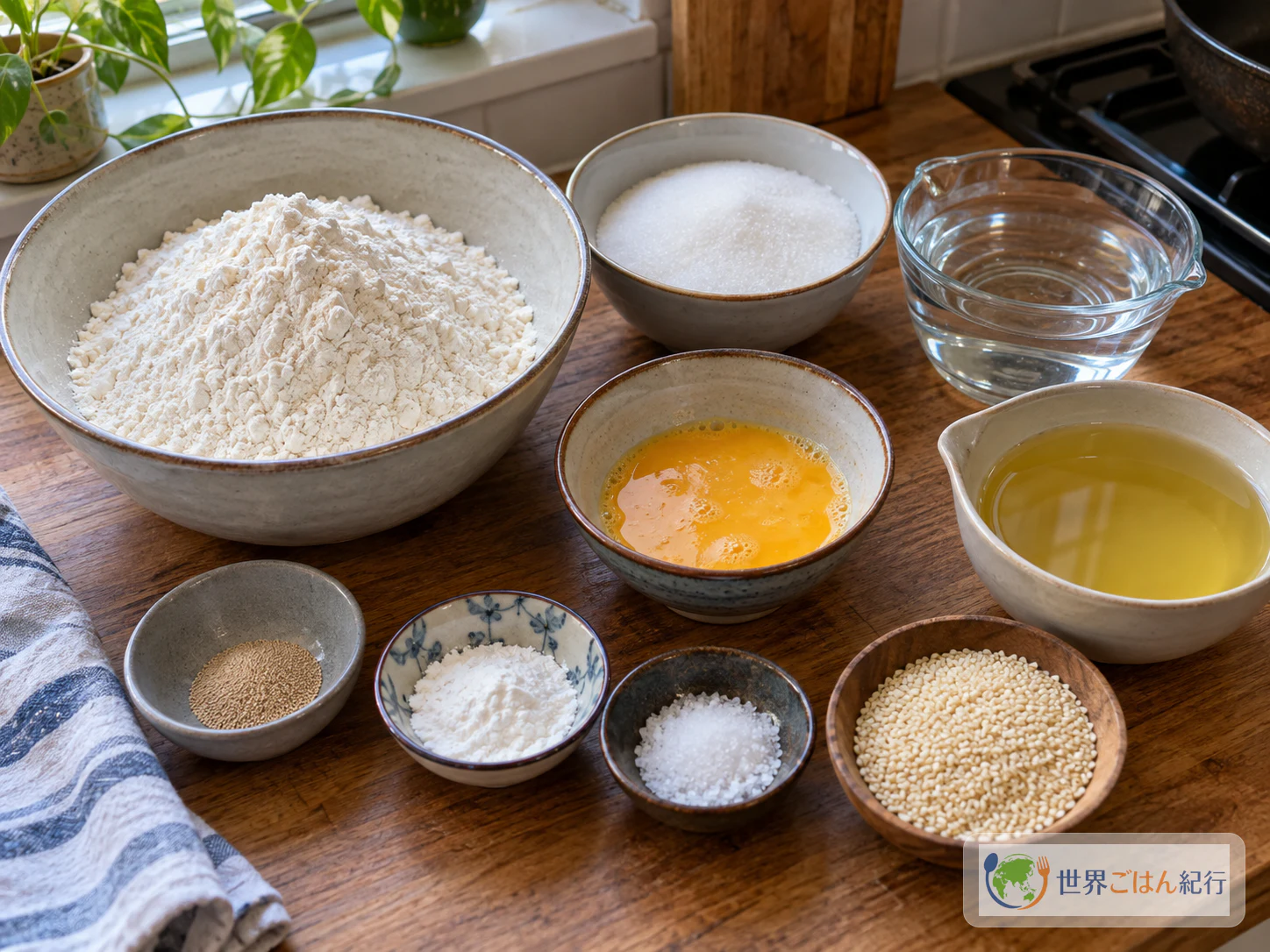
One batch is based on 500 g of flour. Divide the dough into 40–60 g pieces; how many pieces you get depends on the weight you choose.
This recipe contains wheat, egg and sesame. If you share frying oil with other foods, be aware of cross-contact.
Choosing Flour, Yeast and Sesame
- Flour: Start with a general all-purpose flour. Flours differ in how they absorb water, and there is no confirmed equivalent for the Vietnamese all-purpose flour this dough was developed with, so the feel of the dough and how much it puffs may differ.
- Yeast: Look for a sugar-tolerant (osmotolerant) instant dry yeast, often sold for sweet doughs. It is a close option rather than a guaranteed match. If you use ordinary instant yeast, fermentation may progress differently.
- Baking powder: Use baking powder, not baking soda.
- Sugar: Ordinary white or granulated sugar is the obvious choice, though sweetness and how it dissolves can vary.
- Water: Do not use hot water.
- Sesame: White sesame is used here for the coating.
- No dusting flour, oil or other additions in the dough: Keep to the listed dough ingredients.
Equipment
- Mixing bowl
- Clean cloth or plastic wrap to cover the bowl
- Kitchen scale
- Rolling pin and a clean board
- Shallow bowl for the sesame
- Deep pot for frying
- Deep-fry thermometer
- Long chopsticks or a slotted spoon
- Wire rack or absorbent paper
Method: Rest, Roll Thin, Fry Hot
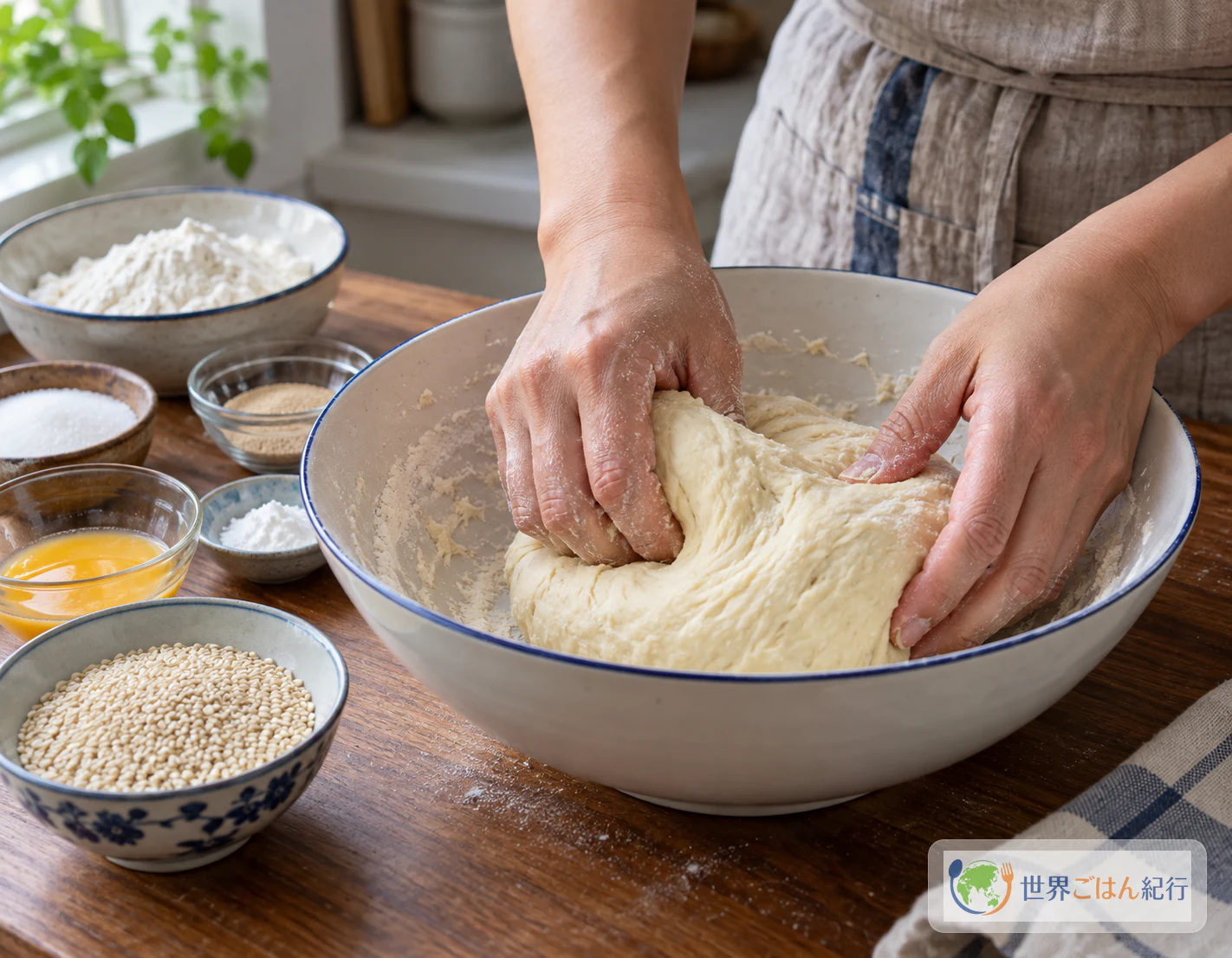
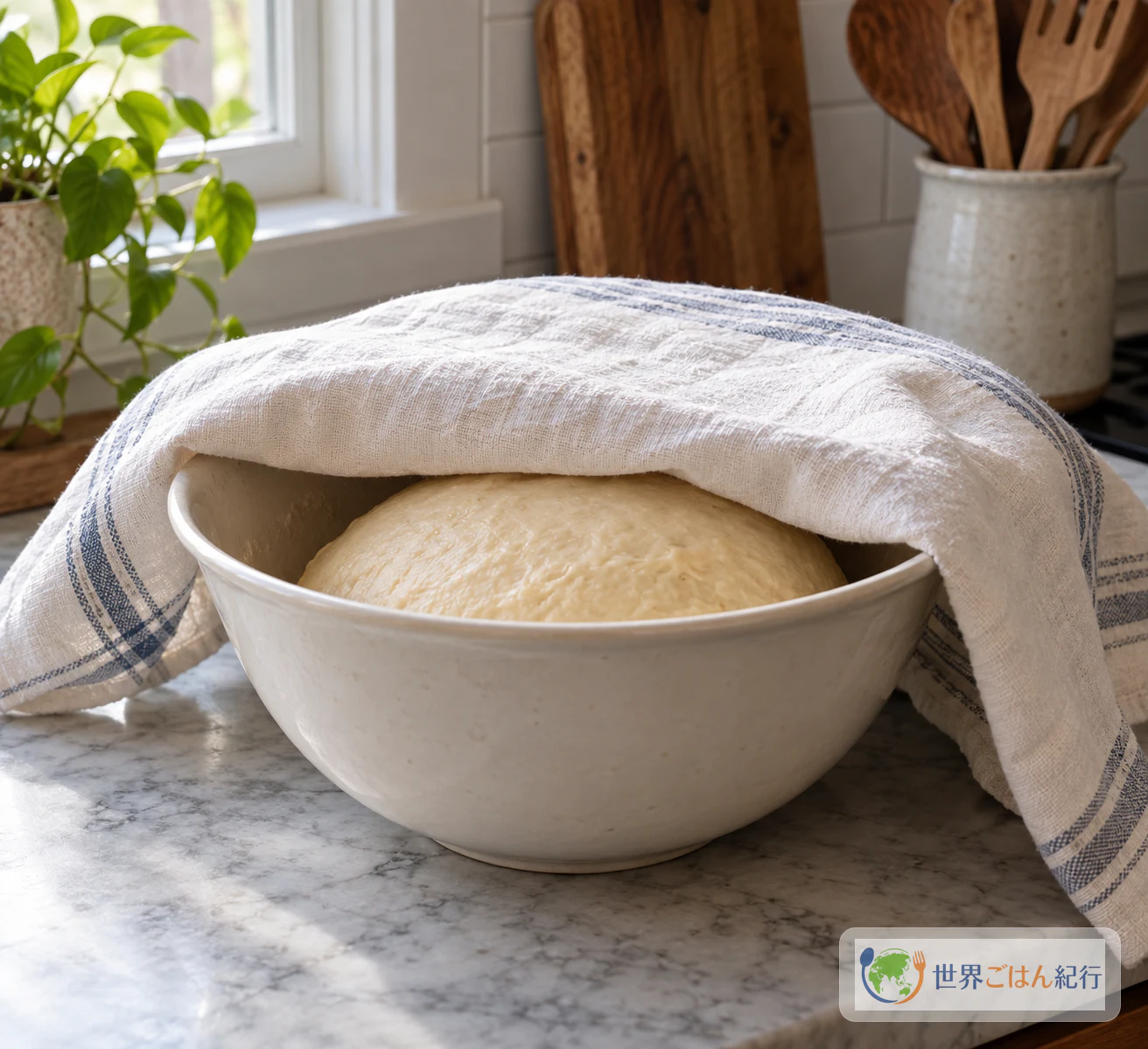
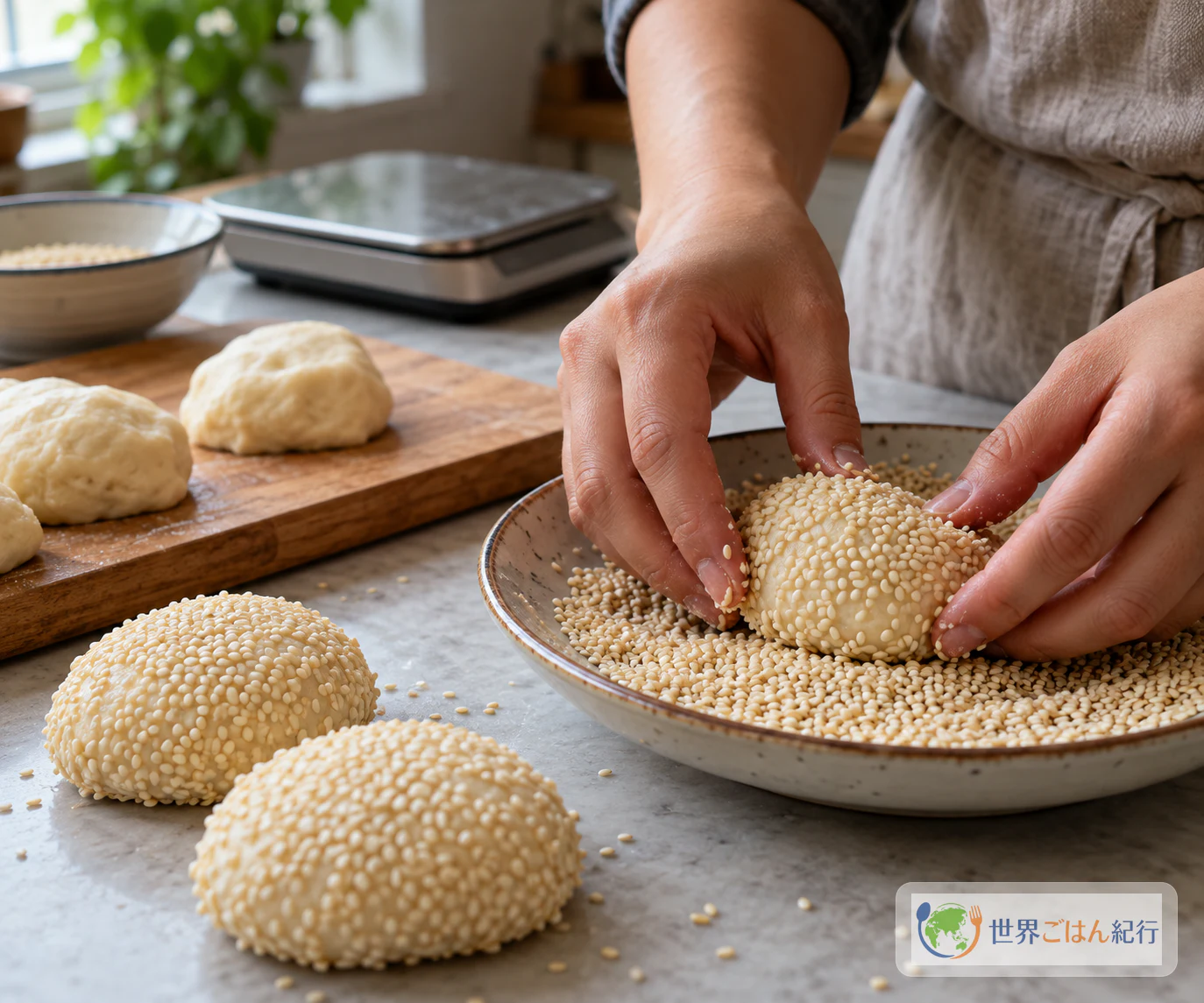
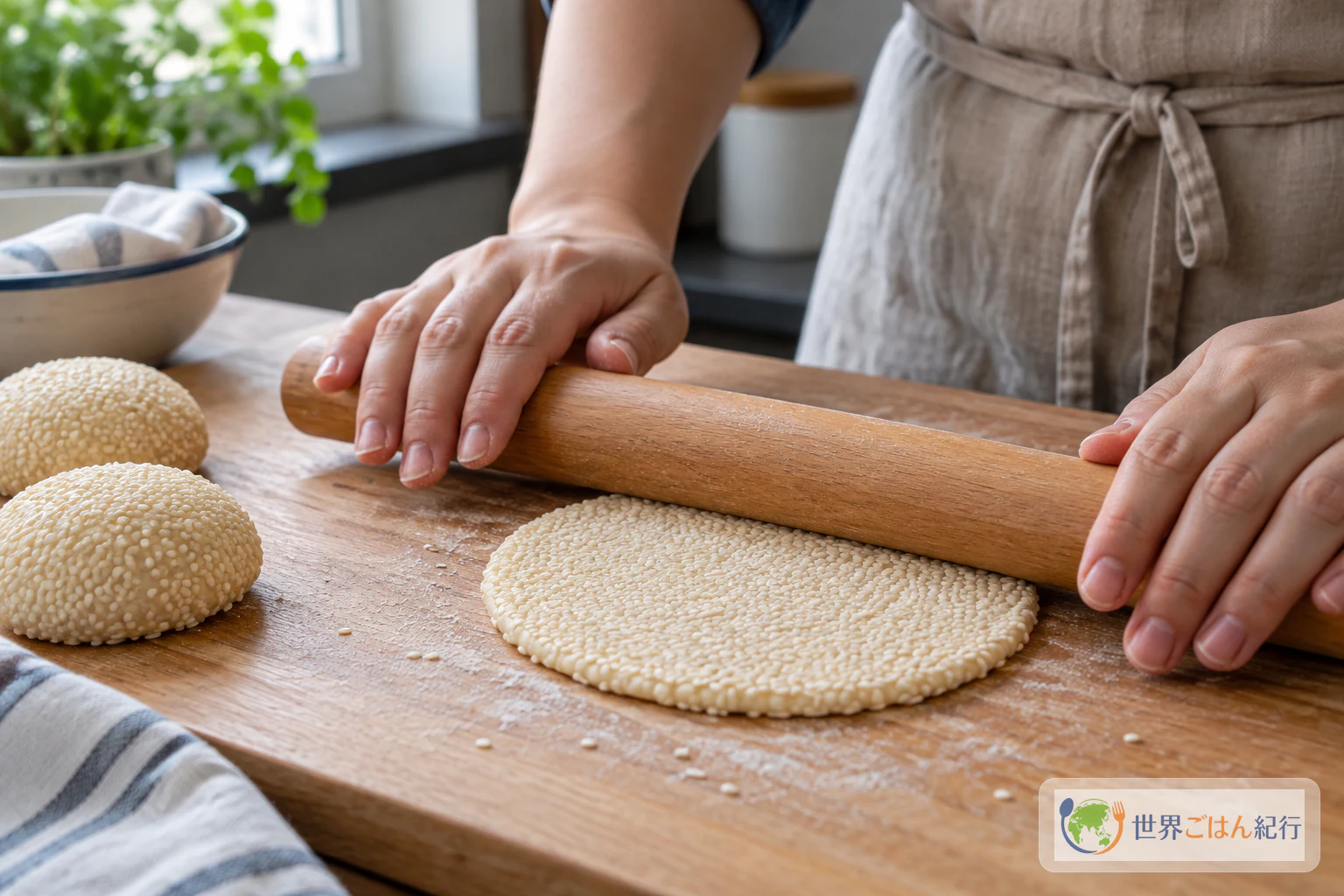
The dough rests twice: first as a whole mass, then again as sesame-coated portions before rolling. Roll after the second rest, not before.
Flat, Dark or Uneven: What to Check
The recipe does not diagnose failures, so treat these as points to check rather than certain causes.
| Problem | What to check | What to adjust |
|---|---|---|
| The rounds don't puff | Thickness, oil temperature, yeast, flour | Keep to 3–4 mm and 180°C. Check that your yeast is in good condition, and keep in mind that your flour may absorb water differently |
| The outside darkens before the round has puffed and cooked | Whether the oil has climbed above 180°C | Check with a thermometer and lower the heat |
| The oil cools and frying stalls | Too many rounds at once | Fry fewer at a time and let the oil come back to 180°C between batches |
| Sesame falls off | How well the seeds were pressed on | Coat the pieces well before the 10-minute rest |
Variations: Keep Them Separate From This Formula
This article keeps to the basic sweet, sesame-coated form. Other versions exist, but each should be made from its own recipe rather than blended into this one.
- Condensed-milk versions: Some home recipes, such as the one on Thật Là Ngon, use condensed milk, oil and vanilla with very different flour, water, sugar and yeast amounts. Make those as a separate recipe; don't swap their quantities into this one.
- Egg-free versions: The egg-enriched formula here is described by its publisher as an updated version, which implies egg-free recipes exist. Use a dedicated egg-free recipe rather than simply leaving out the egg here.
- Black sesame or a different sugar: These would change color, aroma and sweetness. They are untested here.
Serving: Fresh From the Oil, With Tea
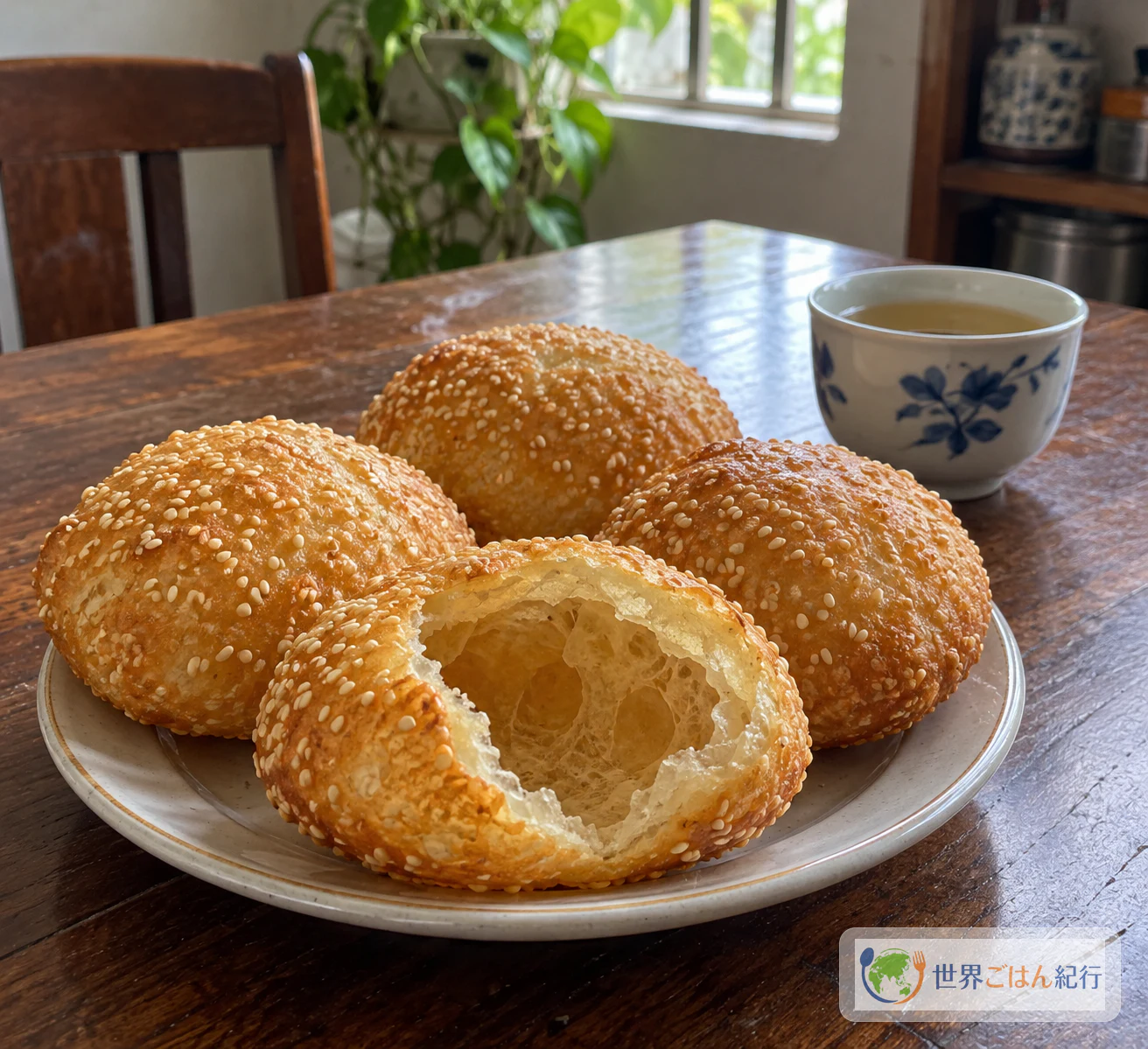
Serve it without any filling or dip. Tear one open to see the hollow inside, and the sesame aroma and light sweetness come through right away. The Thật Là Ngon home recipe suggests enjoying it with family over tea, which suits its modest sweetness.
They are at their best texture soon after frying, once cool enough to handle. Remember that they contain wheat, egg and sesame when serving guests.
Frequently Asked Questions
Why is the inside hollow?
Bánh tiêu is a dough designed to puff: a thin round of 3–4 mm meets oil at 180°C and swells into a shell. VTC News also mentions that thinness plays a part in the puffing, but its more technical explanation is not backed by specialist sources, so we won't go further than that here.
How many does one batch make?
The recipe sets the portion weight at 40–60 g but does not give a count. The number you end up with depends on the weight you choose for each piece.
Can I use potato starch or rice flour?
The recipe is built on wheat flour. We have no tested formula for those substitutions, so the same result can't be promised.
Is there pepper in bánh tiêu?
No. The sweet sesame fried bread made here contains no pepper. The name may bring pepper to mind, but VTC News presents more than one story about where the name comes from, and none is confirmed.
Can I store leftovers?
We have not found reliable guidance on safe storage times or reheating in the references used for this article, so we don't give any. Bánh tiêu is best eaten soon after frying.
Do I need the exact flour and yeast brand?
No brand is required. The formula was developed by a Vietnamese flour mill with its own all-purpose flour and a high-sugar dry yeast; local flour and sugar-tolerant yeast are reasonable alternatives, but differences in water absorption and fermentation have not been tested.
Sources
- Interflour Vietnam, "Banh Tieu." The recipe used in this article: the egg-enriched formula (described by the company as its updated version), ingredient amounts, the 60–90 minute rest, 40–60 g portions coated with sesame and rested 10 minutes, rolling to 3–4 mm, and frying at 180°C for 2–3 minutes before turning and frying until golden. It does not state a total yield, the amount of frying oil, or adjustments for other flours. https://vn.interflour.com/en/recipes/B%C3%A1nh%20Ti%C3%AAu/
- Thật Là Ngon / Đậu Phương Trinh, "Cách Làm Bánh Tiêu." A home recipe presenting bánh tiêu as a family snack enjoyed with tea, and dividing, sesame-coating, rolling and frying the dough. Its formula differs (including condensed milk), so its amounts are not used here. https://www.thatlangon.com/cong-thuc/cach-lam-banh-tieu/
- VTC News, "Vì sao gọi là bánh tiêu?" A news feature describing bánh tiêu as a sweet sesame fried snack without pepper, and presenting two explanations for the name: one linked to Chinese migrants and a peppered bun, and a folk explanation based on appearance. It does not cite scholarly or primary sources, so neither explanation is treated as settled. https://amp.vtcnews.vn/vi-sao-goi-la-banh-tieu-ar1026668.html