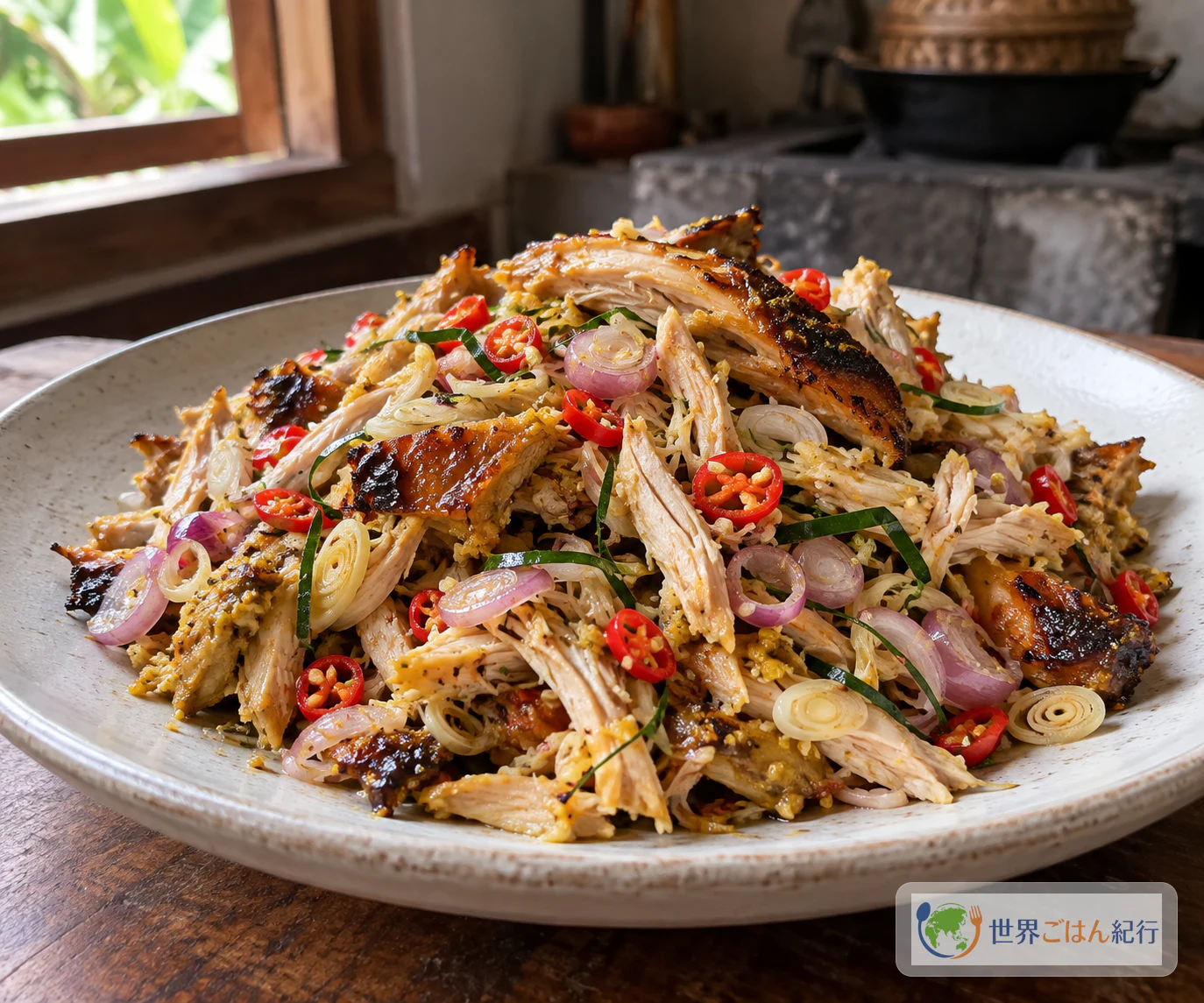
Ayam Panggang from Bali: Grilled, Shredded and Tossed with Raw Sambal
This is one Balinese version of ayam panggang, from chef Wayan Sutariawan. It is not the single recipe for all of Indonesia, where the name covers many different grilled chicken dishes.
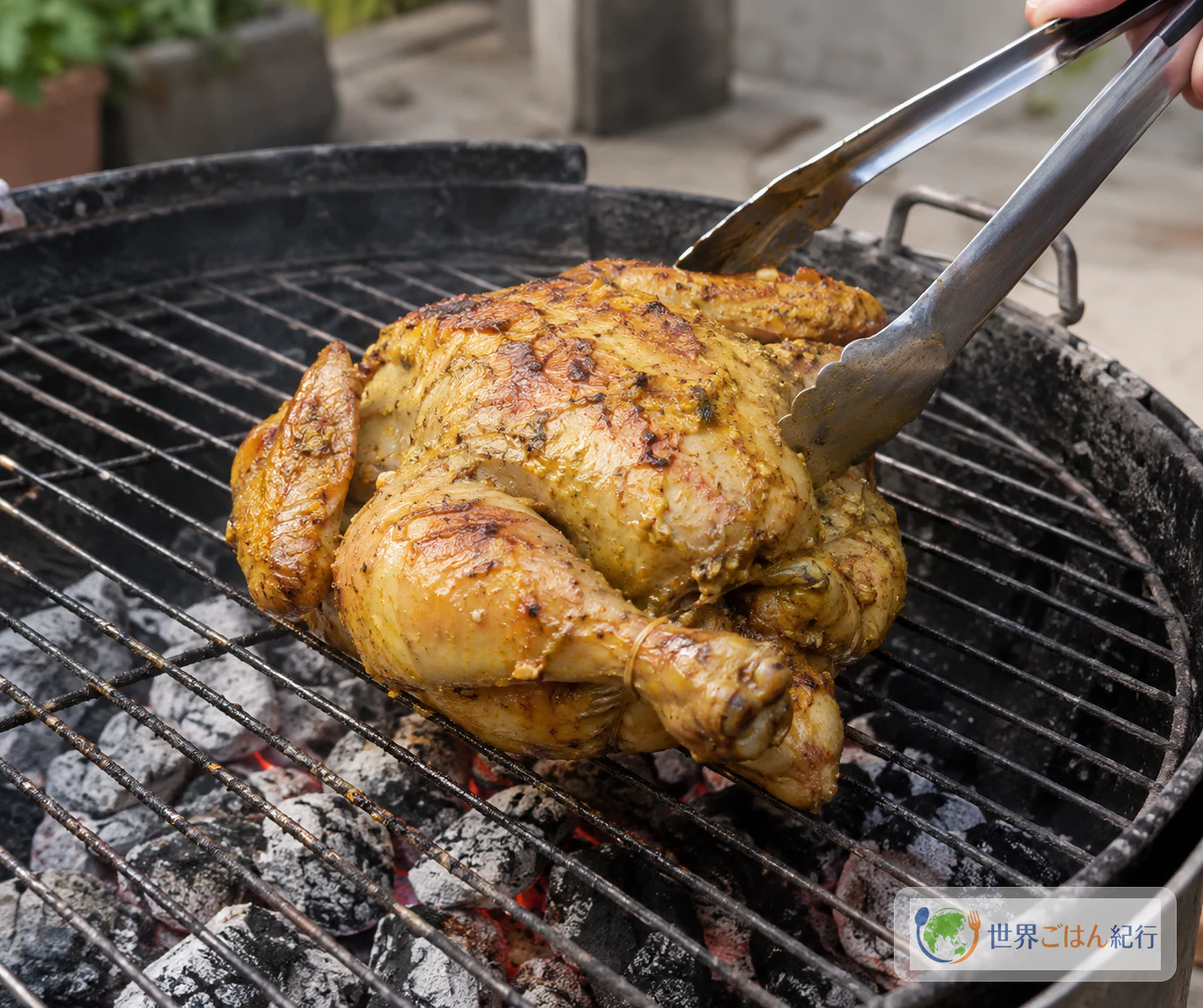
Wayan Sutariawan, head chef at Four Seasons Resort Bali at Sayan, writes of a family meal that follows ceremonies in the chef's home village: chicken in a simple root-spice marinade, grilled over coconut husks for a smoky aroma, and served with sambal matah. That is one cook's own memory of one village, not a description of every Balinese household, but it gives a clear picture of the dish.
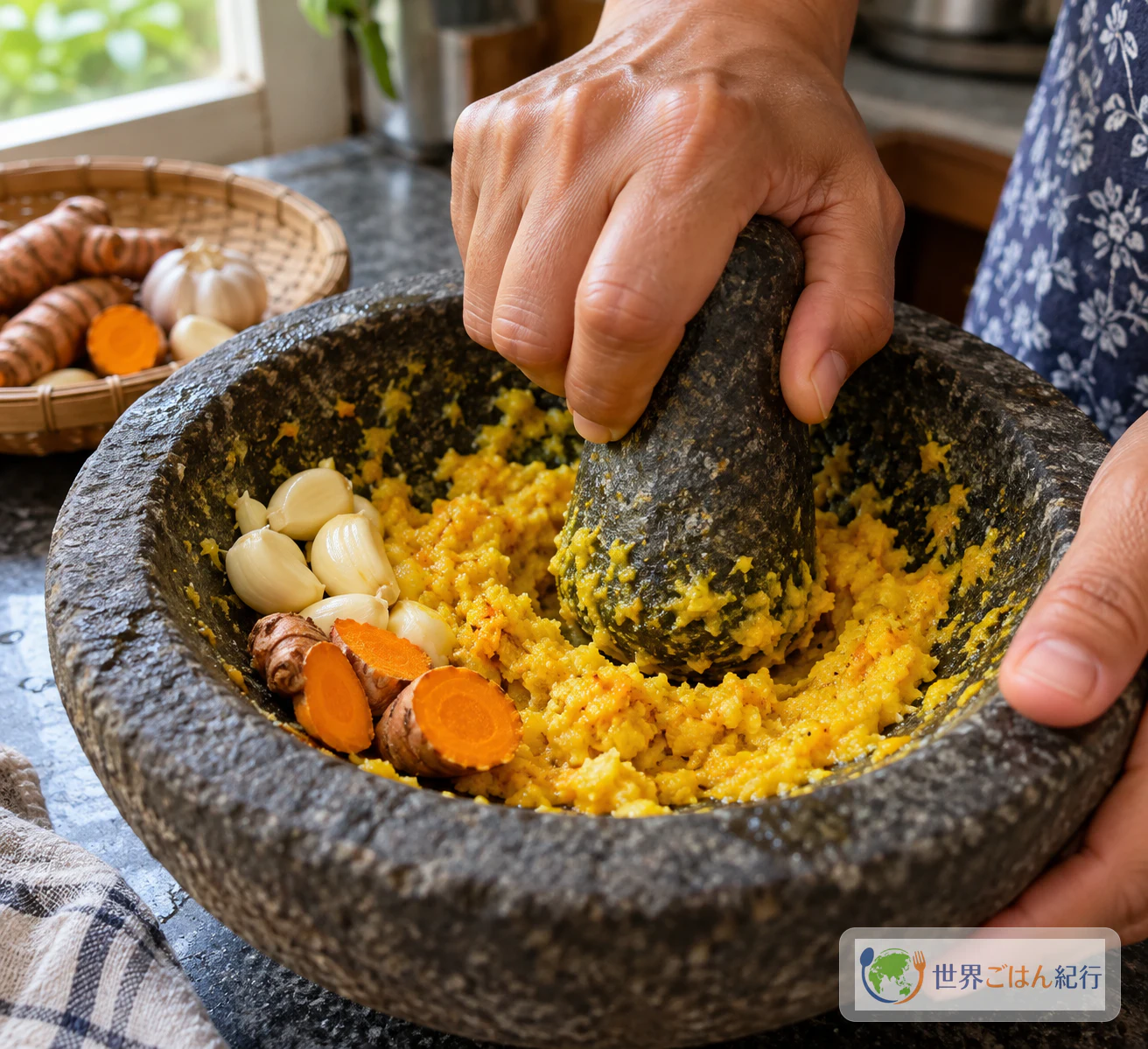
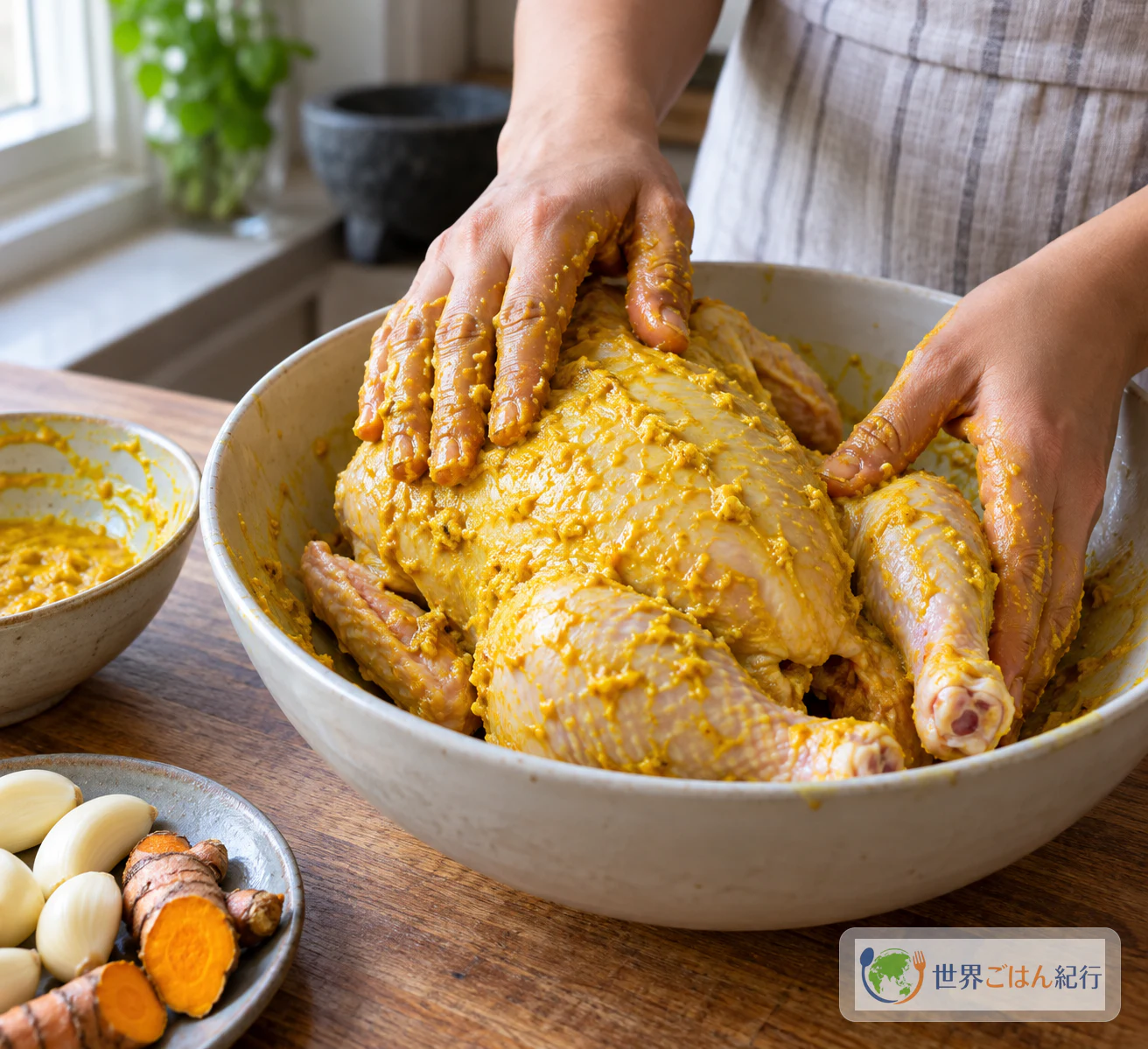
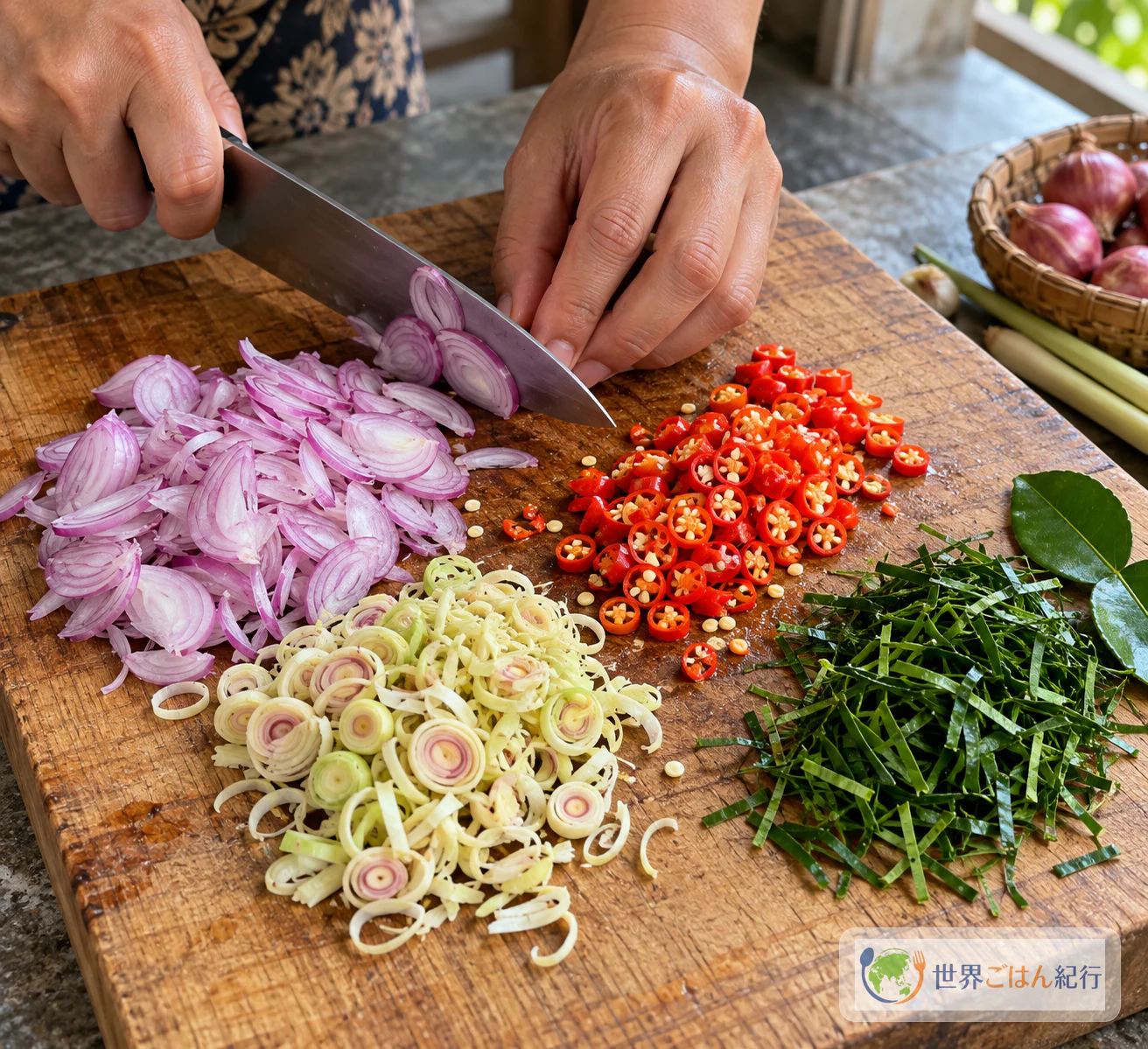
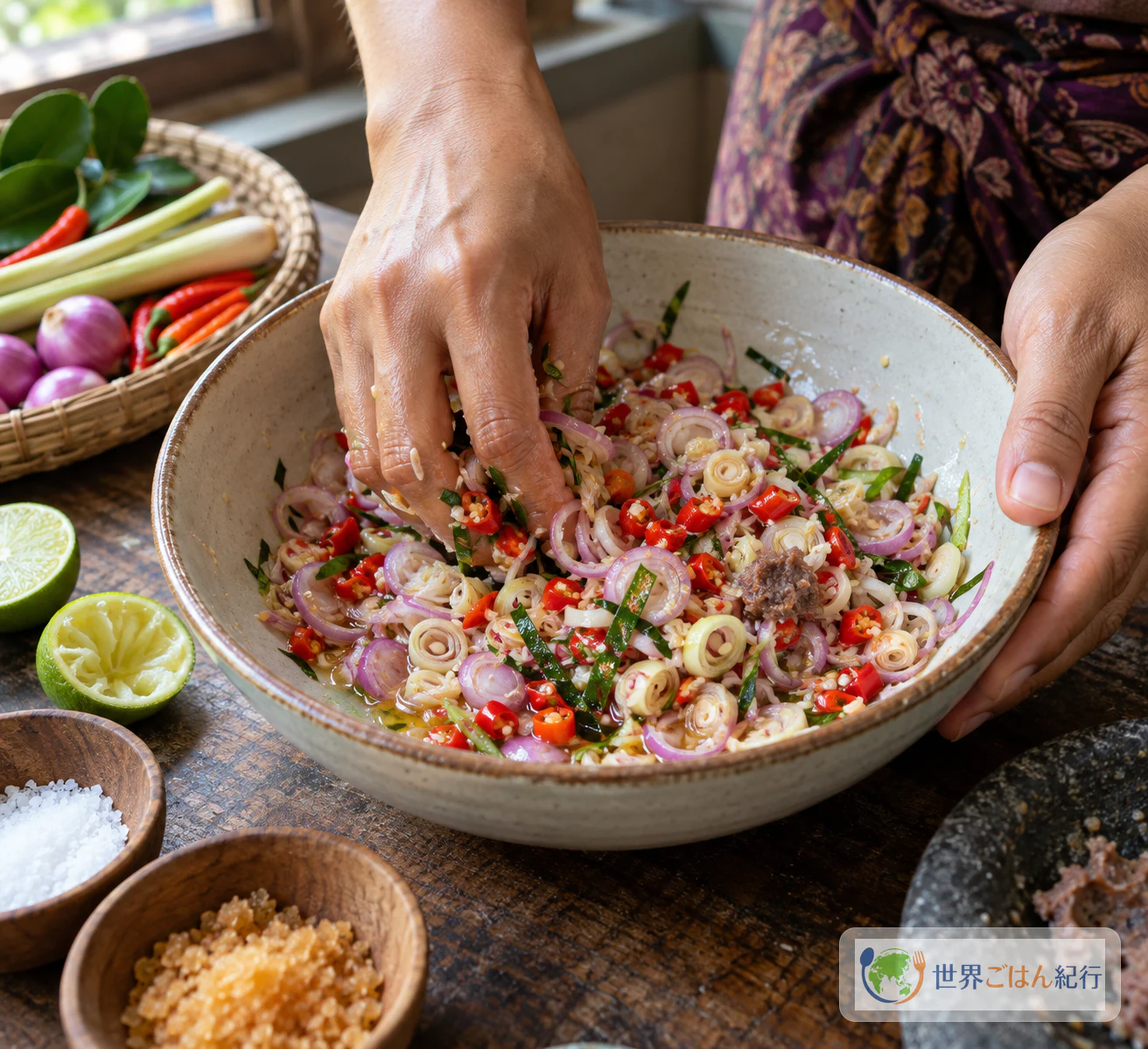
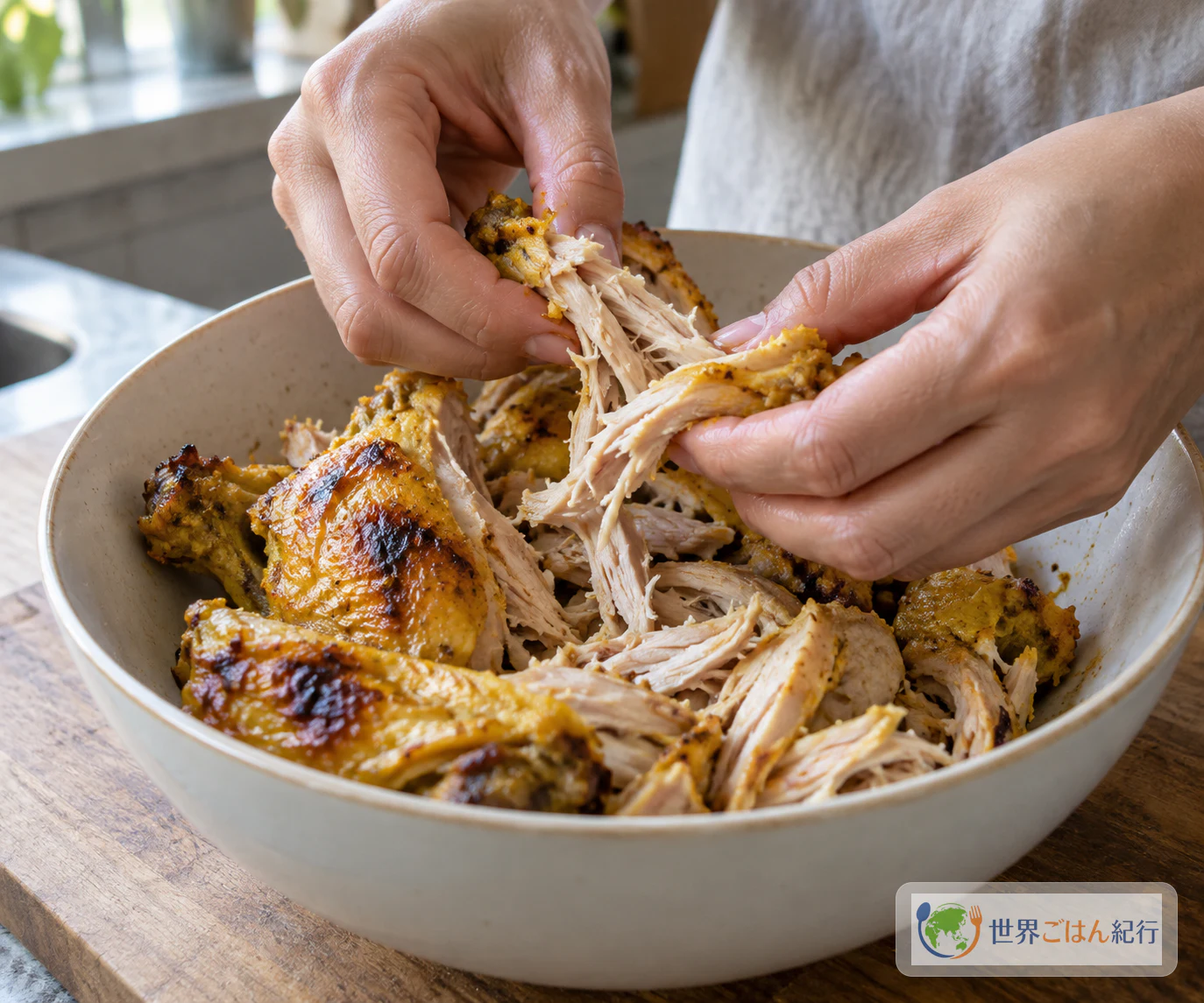
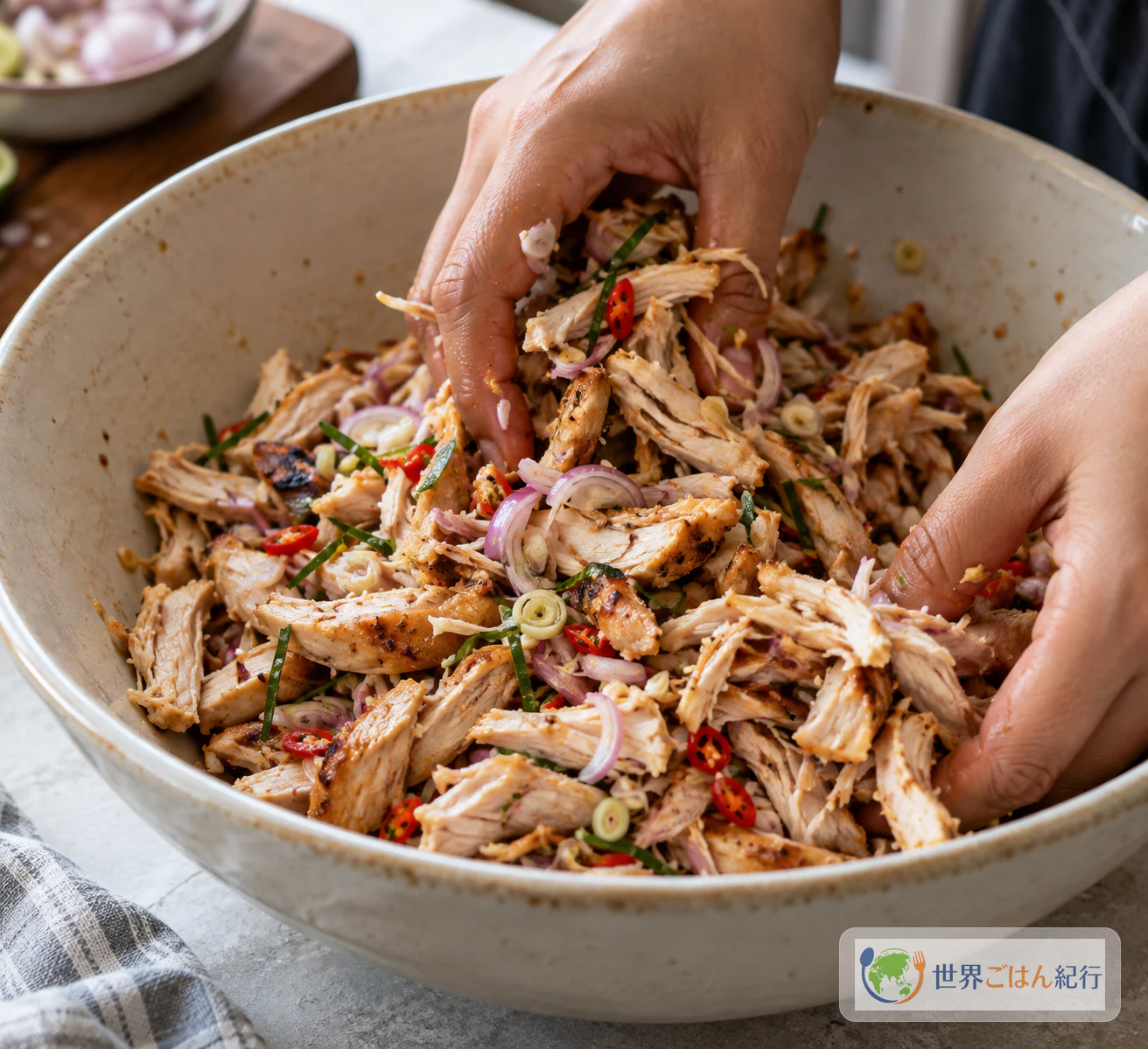
The recipe is short. Garlic and fresh turmeric are ground to a smooth paste, then mixed with coconut oil and salt and rubbed over a whole chicken. Once grilled and cooled, the bird is pulled apart by hand and mixed with a raw sambal of shallots, lemongrass, chili and lime leaves.
The amounts and steps below come from Sutariawan's cookbook, Cherished Recipes from My Childhood. The cookbook lists 4 portions, 15 minutes of preparation and 30 minutes of cooking. It does not say whether those figures include the marinating rest of at least 15 minutes, so no total time is given here. The 30 minutes is the published figure, not a time verified for different grills or birds. This recipe as a whole has not been kitchen-tested by Sekai Gohan, so use the cues in each step along with the clock.
Ingredients for Ayam Panggang and Sambal Matah (4 Portions)
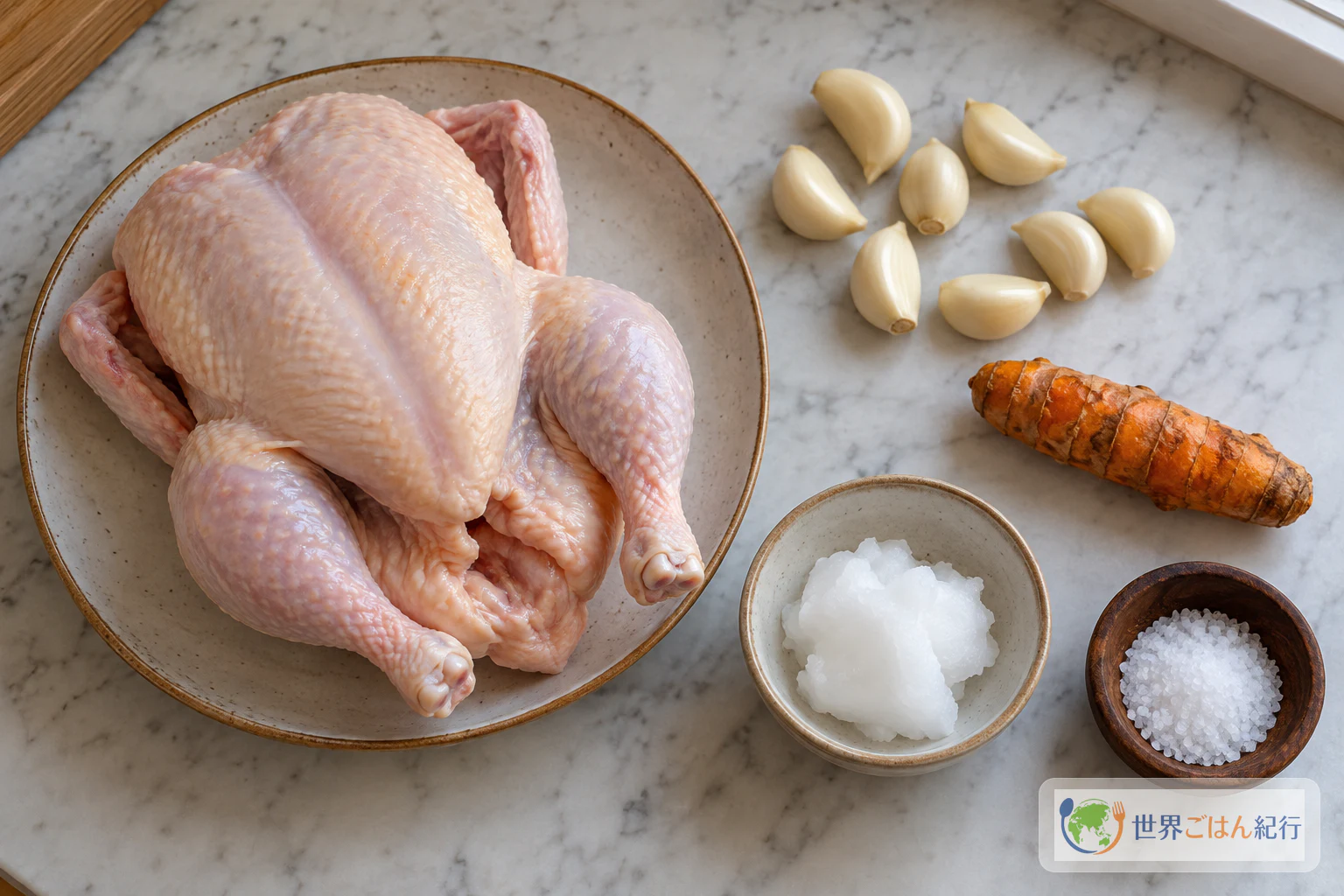
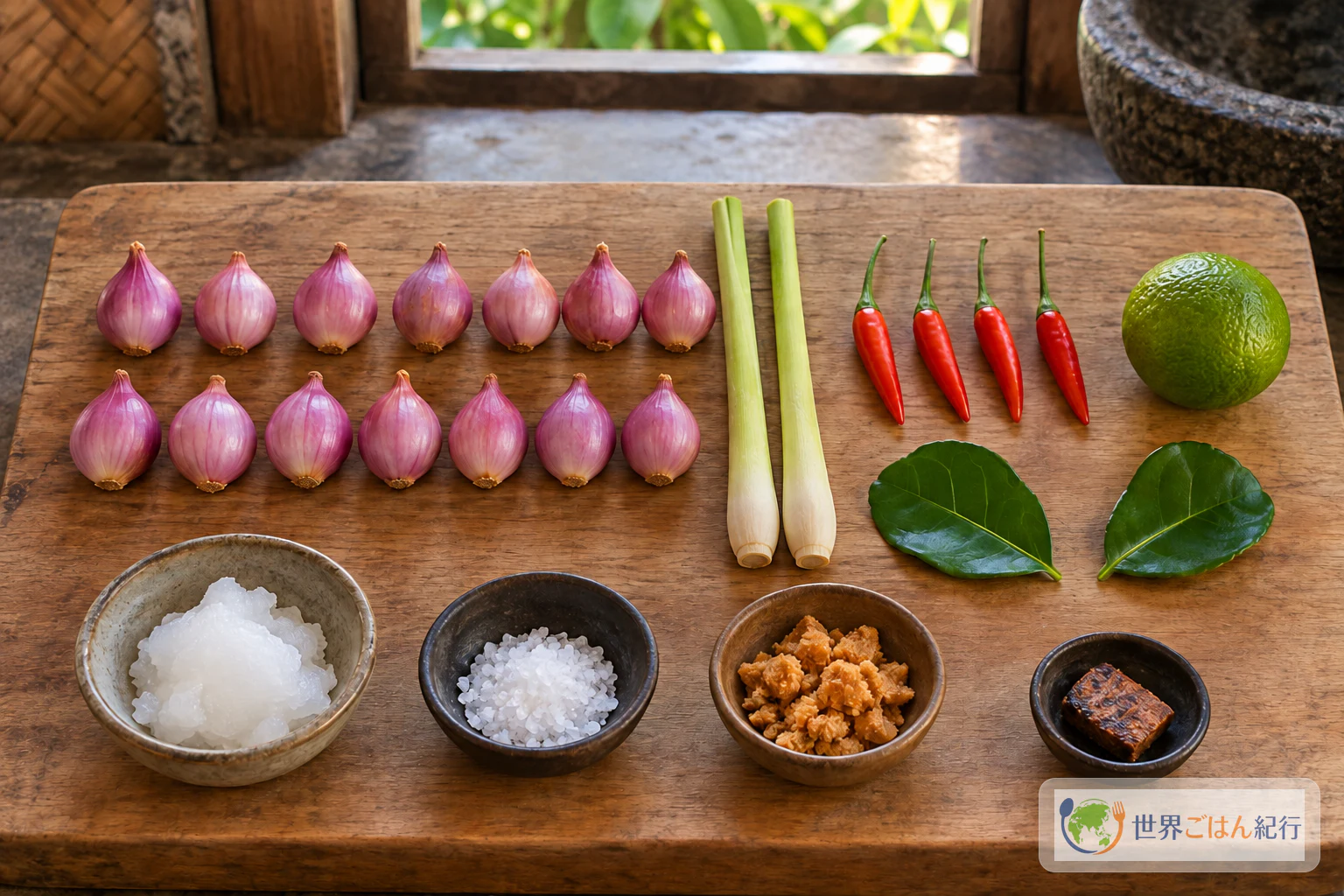
This dish contains chicken. Shrimp paste contains crustaceans; leave it out for anyone with a shellfish allergy, and check the labels of any packaged ingredients you use.
Equipment
- Mortar and pestle, or another way to grind the garlic and turmeric smooth
- Charcoal grill or barbecue grill
- Long tongs for turning the chicken
- Cutting board and knife
- Separate bowls for the sambal and the shredded chicken
Choosing the Chicken, Turmeric and Aromatics
Chicken. Look for a small whole bird close to 800g. Cut pieces such as thighs cook differently, and no tested amounts or times are available for them, so treat them as a different dish rather than a direct swap.
Turmeric. Use fresh turmeric. There is no tested conversion to ground turmeric, so none is given here.
Lime leaves. No single replacement is recommended. If you can't find them, the sambal will taste different without them.
How to Make Ayam Panggang
Marinate the chicken first. Make the sambal while the chicken grills, then bring the two together after the chicken has cooled and been shredded.
Serving
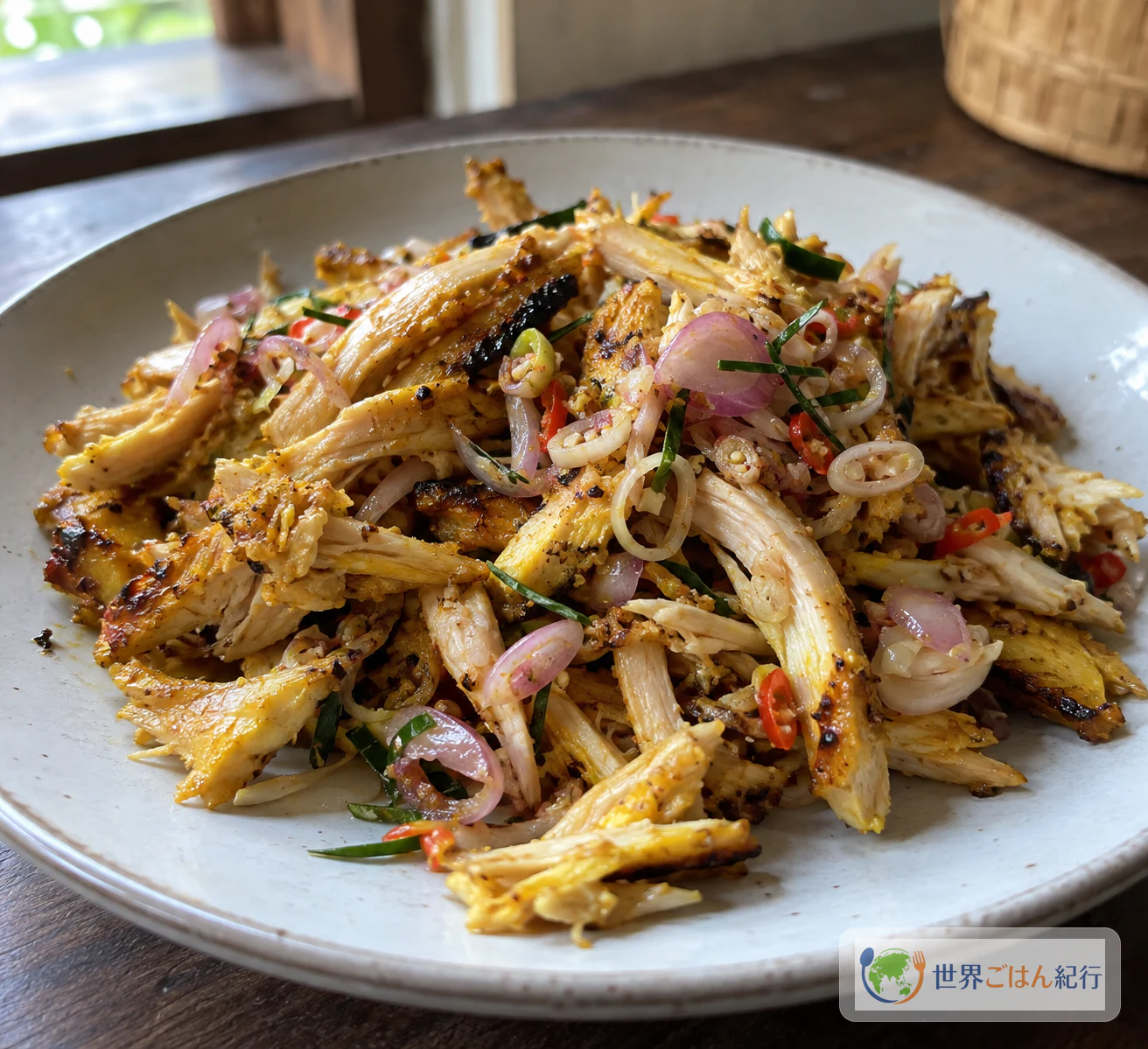
Serve the chicken as soon as it is mixed, on a plain plate. Rice and side dishes aren't part of this recipe, so anything you add is your own choice.
Eat the sambal matah immediately after making it. No storage time is given for the sambal or the mixed dish.
If Something Goes Wrong
| Problem | What to do |
|---|---|
| The paste is still coarse | Keep grinding until it is smooth before adding the oil and salt |
| The skin has color but the chicken isn't cooked through | Keep grilling and turning it, and don't shred it yet |
| The chicken has reached 30 minutes but isn't done | Keep cooking; the time is only a guide |
| The sambal tastes flat | Adjust with a little more salt, then taste again |
| The chicken is getting too much sambal | Stop adding it and mix before tasting again; adding gradually is easier than correcting afterward |
| The sambal is too hot | Use less of it on the chicken today, and try fewer chilies next time |
Variations That Change the Dish
| Change | What to expect |
|---|---|
| Leave out the shrimp paste | It is optional, and leaving it out removes the crustacean ingredient |
| Use fewer chilies | Reduces the heat; bird's eye chilies and other varieties aren't equal in strength |
| Use onion instead of shallots | An editorial swap that moves the sambal away from the cookbook version |
| Use lemon instead of lime | An editorial swap that changes the aroma |
| Use charcoal or a barbecue instead of coconut husks | A practical choice for home cooks, but the aroma won't be the same |
One Name, Many Grilled Chickens
The cookbook itself says that every village and city across Indonesia has its own version of grilled chicken. The name alone doesn't settle which dish is meant, so it helps to look at how each one is seasoned and served. Two other regional examples show how far apart they can be. For more of the country's cooking, see our Indonesia page.
| Dish | Where | What sets it apart |
|---|---|---|
| Ayam panggang (this recipe) | Bali, as written by Wayan Sutariawan | Garlic and turmeric marinade, whole chicken grilled, then shredded and mixed with raw sambal matah |
| Bakakak Hayam | Sundanese | A whole seasoned chicken grilled until browned and crisp, served with sambal and lalapan, and associated with special events such as weddings and thanksgiving gatherings |
| Ayam Panggang Seraten | Sekarbela village, Mataram, Lombok | Split village chicken, grilled or oven cooked, with a roughly ground, sautéed seasoning served over it; formerly served once a year during Maulid Nabi and now found in some Lombok restaurants |
These are examples, not a complete map of Indonesian grilled chicken, and their ingredients and methods aren't mixed into this recipe.
Frequently Asked Questions
Can I make it without coconut husks?
Yes. The cookbook gives charcoal or a barbecue grill as options. The chicken will still grill, but don't expect the same aroma as a coconut husk fire.
Can I use chicken thighs?
The cookbook calls for an 800g whole chicken. Cut pieces change how the chicken cooks, and there are no verified amounts or times for them, so this recipe doesn't treat them as equivalent.
Can I cook it in the oven?
The cookbook doesn't offer an oven method, and oven roasting hasn't been verified for this recipe, so no temperature or time is given.
What internal temperature should the chicken reach?
The cookbook says only to grill until cooked through and gives no internal temperature or doneness test. Rather than add a number that isn't part of the recipe, this article points you to your local food-safety authority's guidance for poultry.
How long does the chicken take to cool?
The cookbook says to cool it at room temperature but gives no time, so none is given here.
How much sambal matah goes into the chicken?
The cookbook says to mix the chicken with sambal matah but doesn't state a quantity. Its sambal recipe is listed as 200g, or 4 portions. Adding it a little at a time is this article's suggestion, not an instruction from the cookbook.
What is sambal matah?
The cookbook presents it as a raw sambal suitable for ayam panggang, made with shallots, lemongrass, chilies and lime leaves. They are mixed by hand with coconut oil, lime juice, salt and palm sugar, with grilled shrimp paste as an option.
Can I keep leftovers?
The cookbook says to consume the sambal immediately, and it gives no storage period for the sambal or the finished dish. This article doesn't add one.
Why isn't the 1 tbsp of salt converted to grams?
The cookbook doesn't say which tablespoon size it uses or what kind of salt it means, so any conversion would be a guess. The same caution applies to the 1/4 cup of coconut oil.
Sources
- Wayan Sutariawan, Head Chef, Four Seasons Resort Bali at Sayan, Cherished Recipes from My Childhood. The recipes for Ayam Panggang and Sambal Matah, including amounts, method and listed portions and times, the author's account of the village meal after ceremonies, and the statement that places across Indonesia have their own versions of grilled chicken. https://www.fourseasons.com/content/dam/fourseasons/images/web/UBU/PDF/2022_UBU_Cookbook.pdf
- Indonesia.travel, "Bakakak Hayam, Kelezatan Ayam Panggang Khas Sunda." The description of Bakakak Hayam as a Sundanese whole grilled chicken associated with special events and served with sambal and lalapan. https://www.indonesia.travel/id/id/travel-ideas/gastronomy/bakakak-hayam
- Chef Jayadi, Indonesian Chef Association, "Ayam Panggang Seraten." The Lombok origin of Seraten in Sekarbela village, its association with Maulid Nabi, and its separate ingredients and method. https://indonesianchefassociation.com/recipe/ayam-panggang-seraten