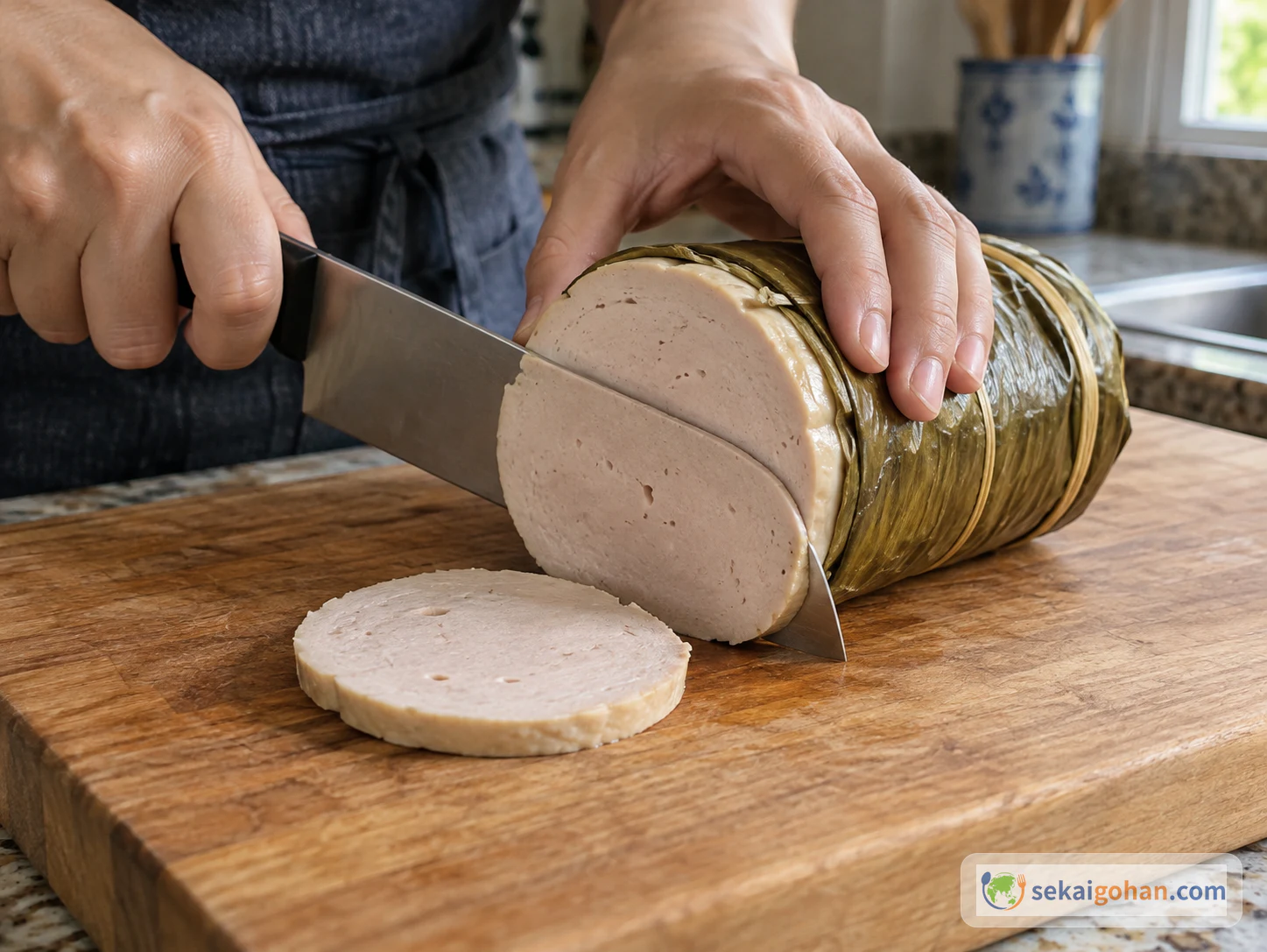
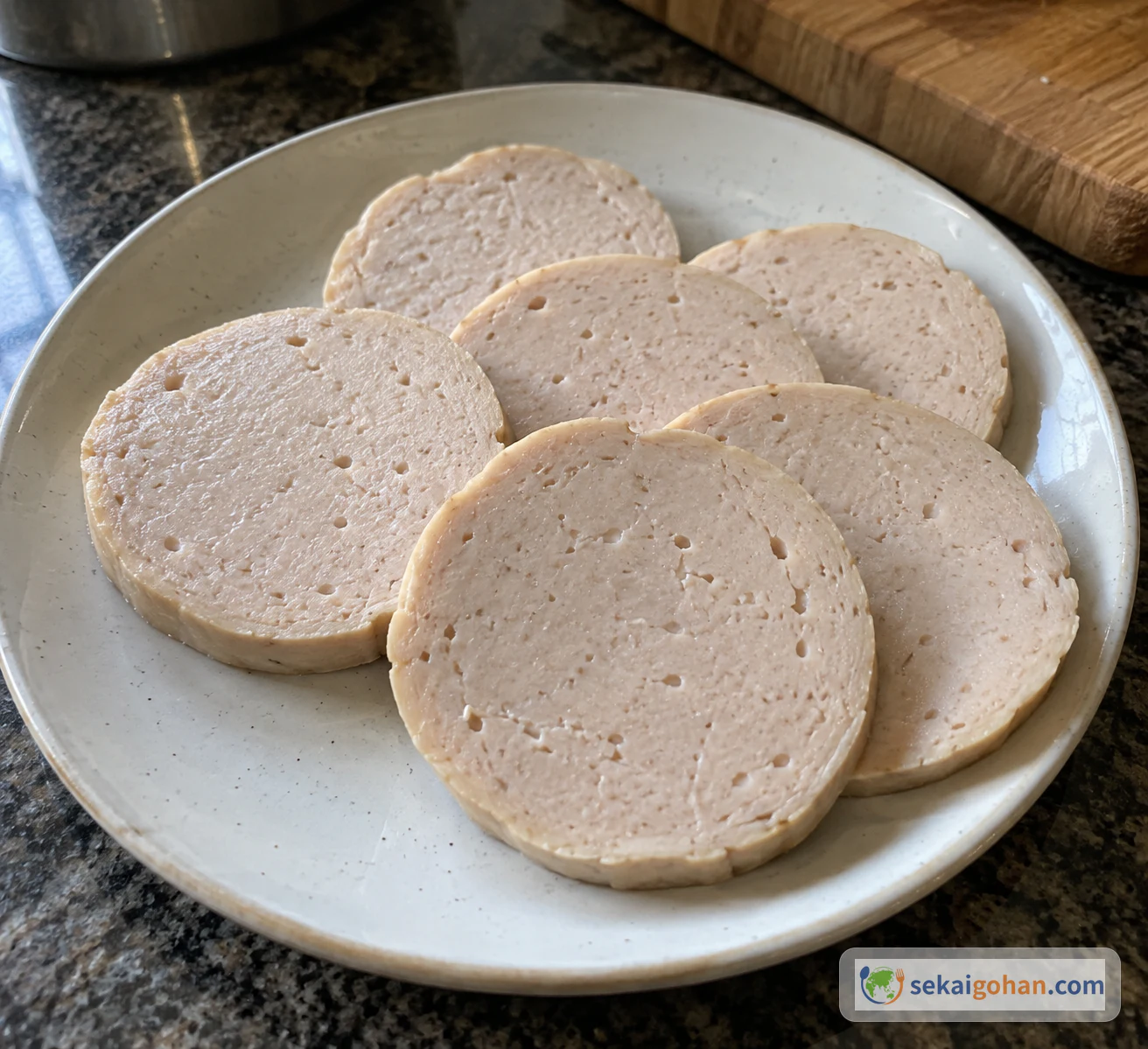
Giò Lụa: A Pale, Sliceable Pork Roll for Celebration Tables
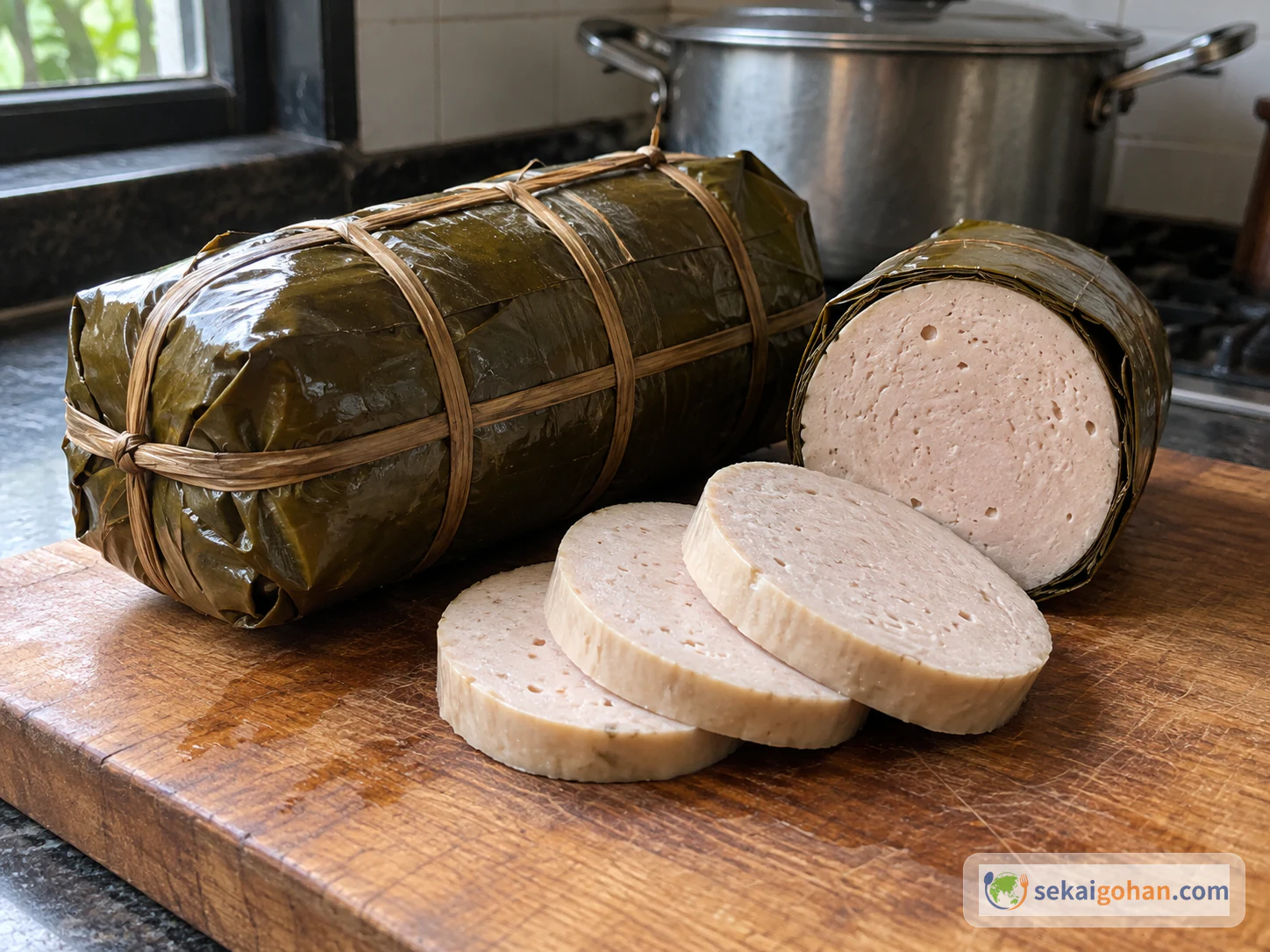
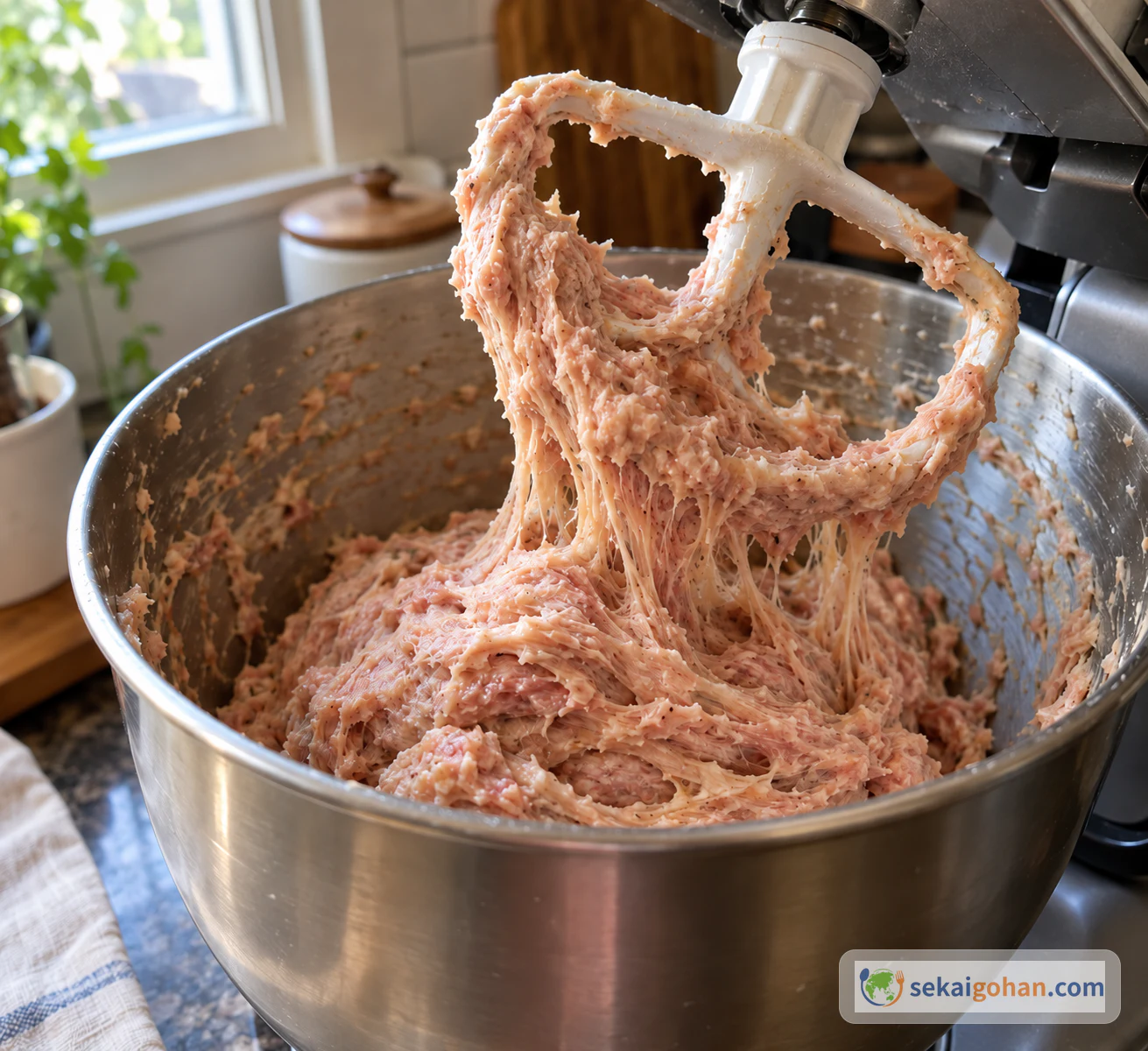
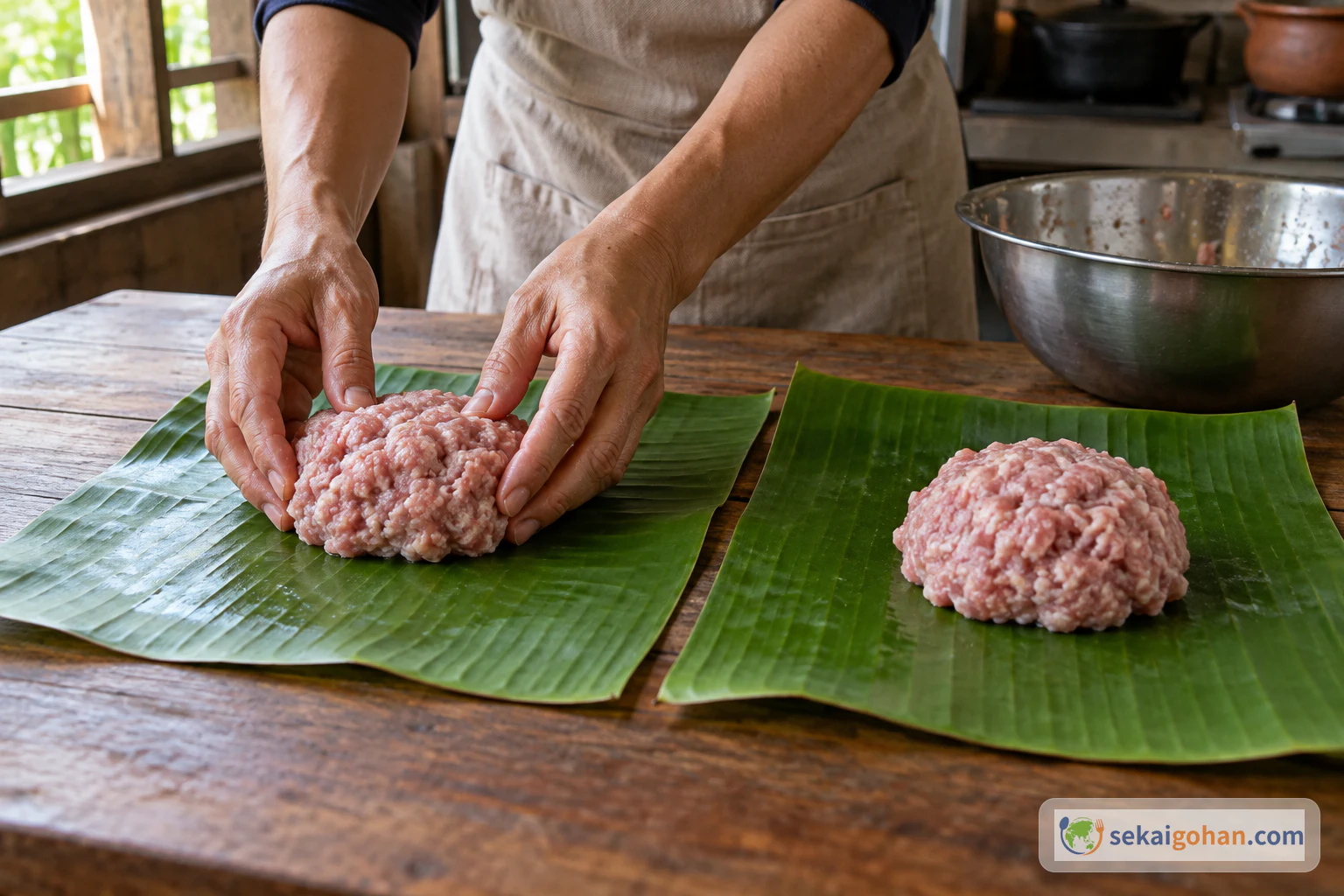
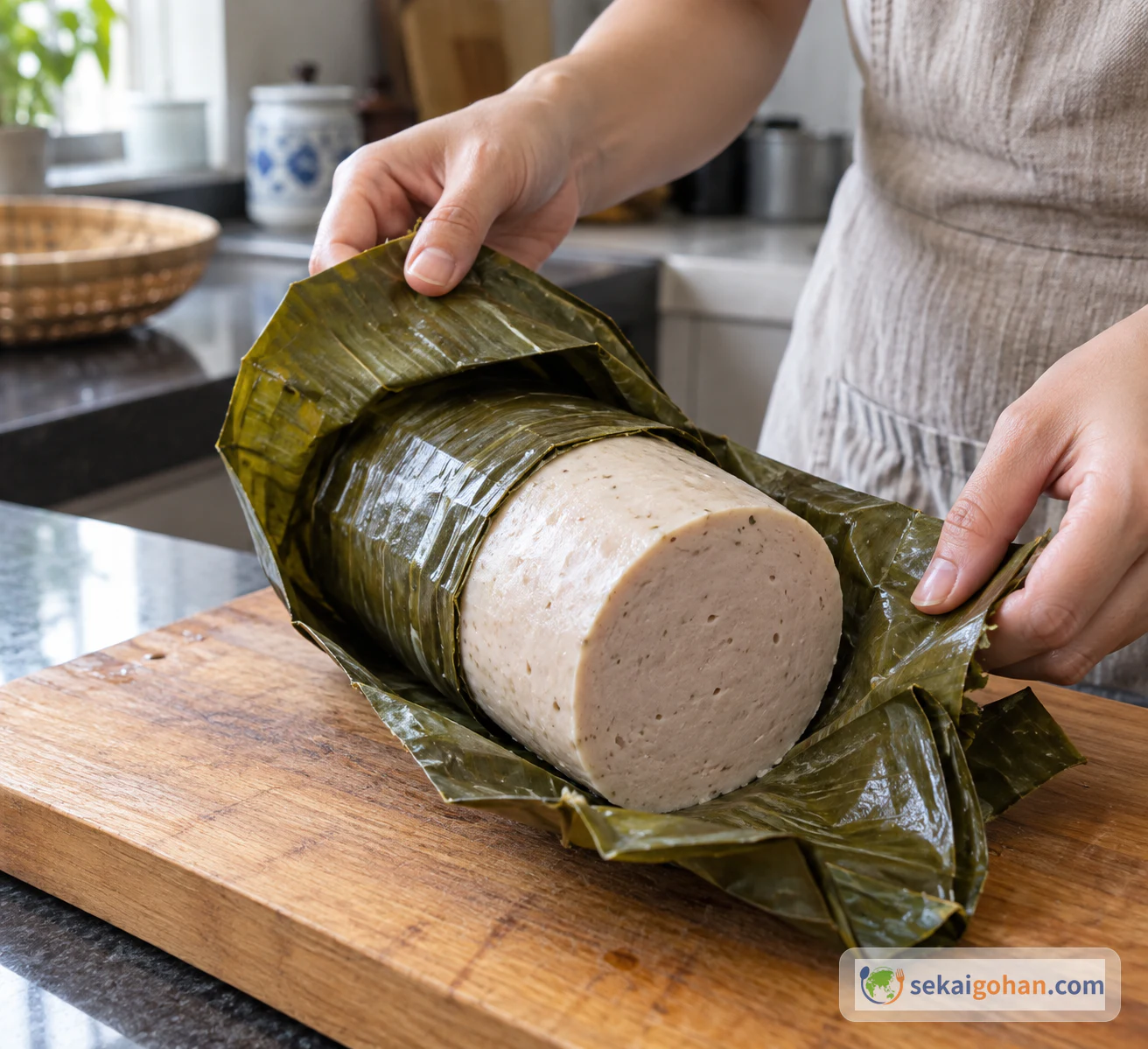
Beat the pork until it turns sticky and lighter in color, wrap it snugly in banana leaf, boil it, and check that the thickest part reaches a safe temperature. Then chill it before you unwrap and slice.
At Tết, the Lunar New Year, a plate of pale, neatly sliced pork roll often sits on the table. Vietnam Pictorial describes giò lụa as a dish eaten at Tết and at other special occasions such as weddings, parties and death anniversaries, and as something given as a gift to friends and relatives. The same article presents it as a Tết dish shared across the north, center and south of Vietnam.
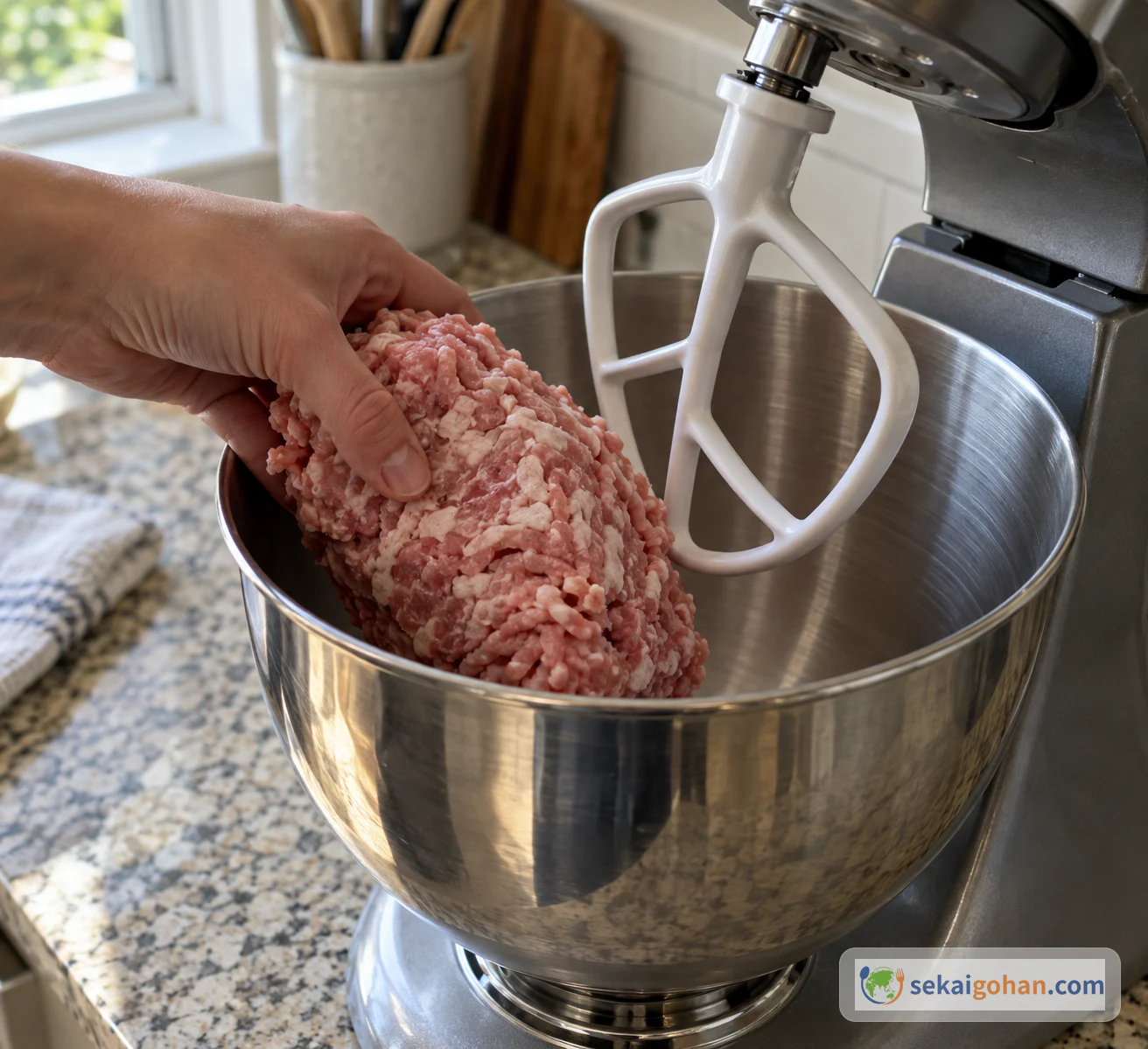
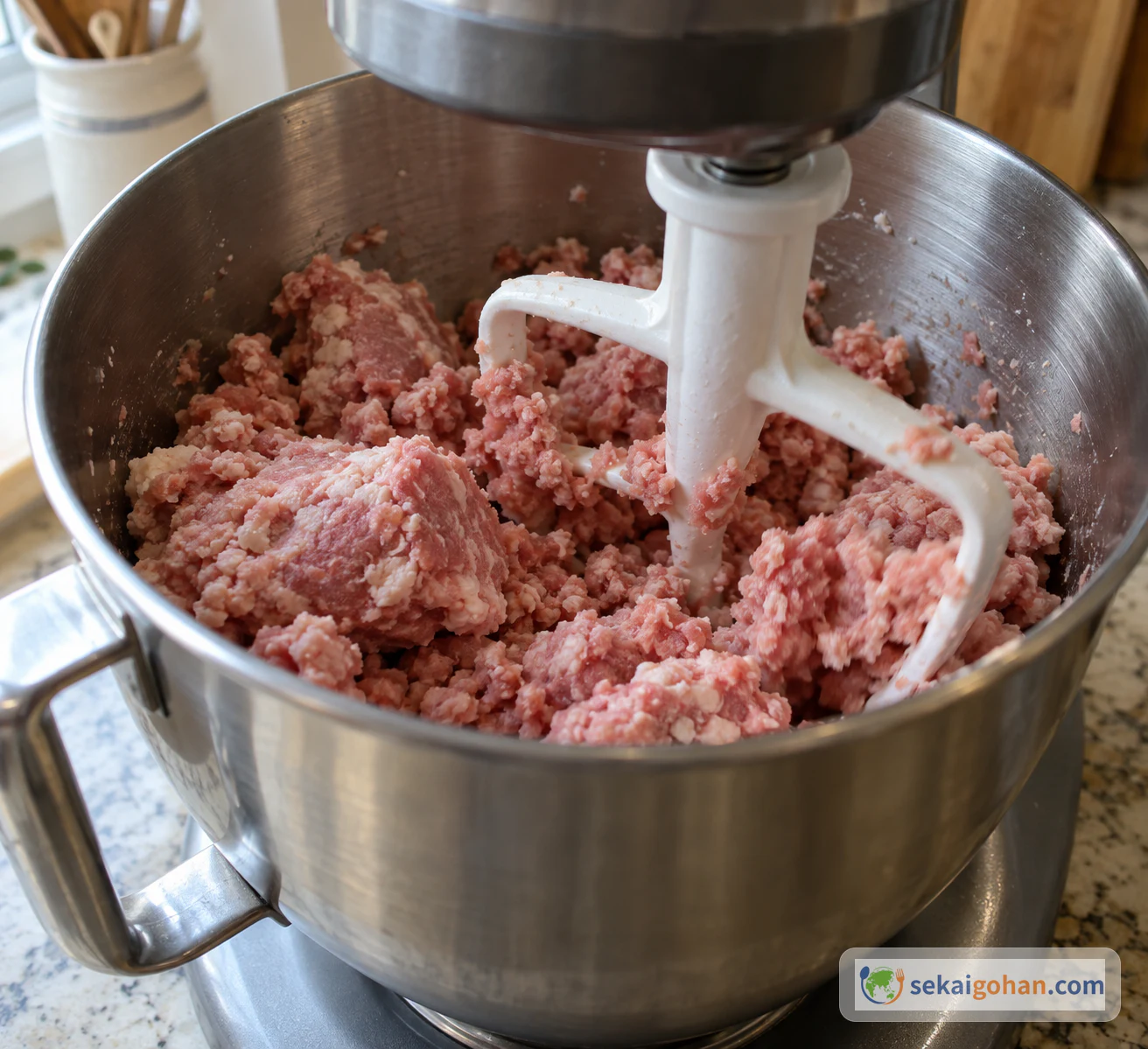
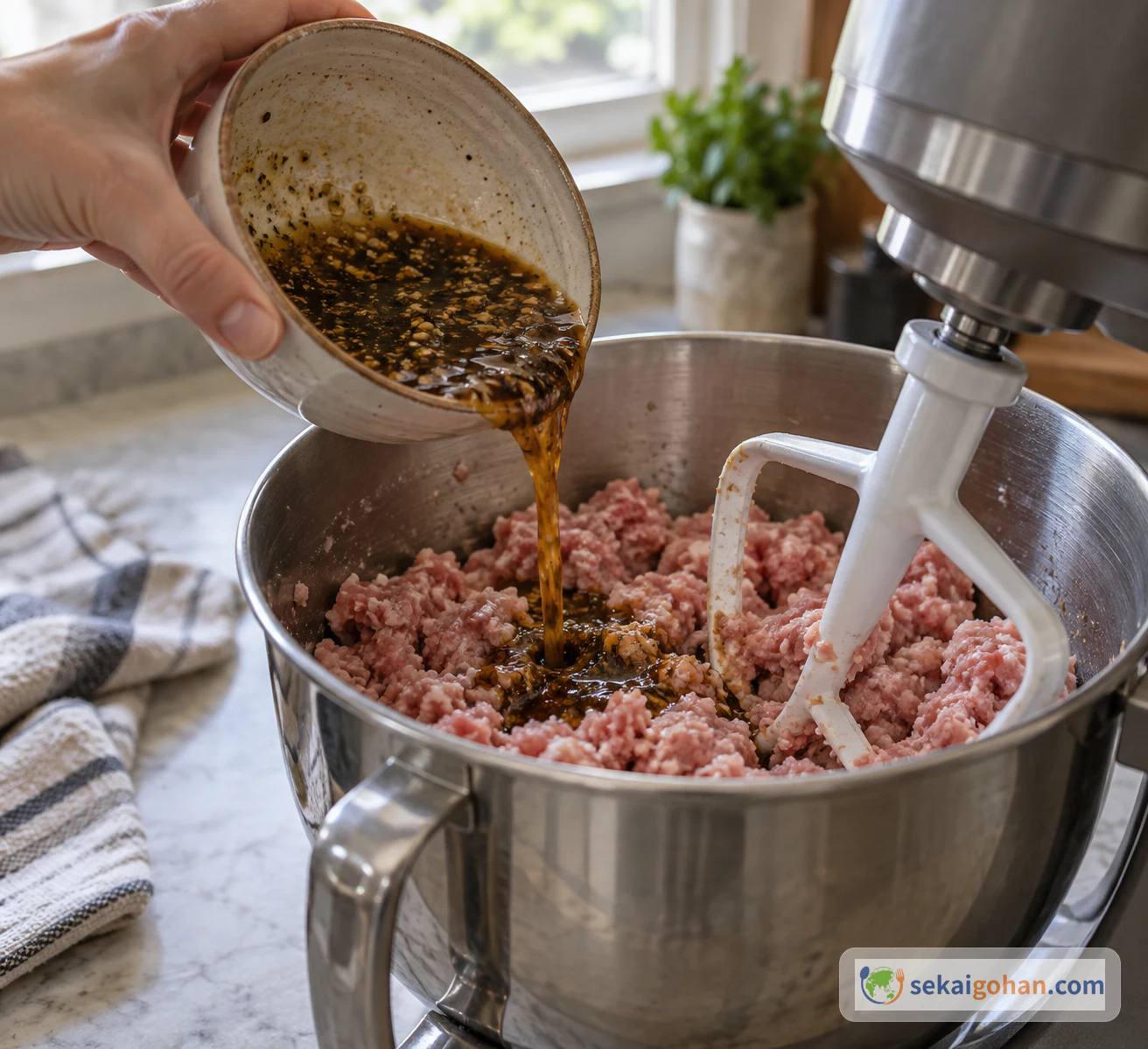
Sift & Simmer, whose recipe this article follows, introduces the dish under the names chả lụa and giò lụa, mentions giò sống, and also uses the English term "Vietnamese ham." In that recipe, ground pork is beaten by machine into a smooth, sticky paste, wrapped in banana leaves and cooked into a roll firm enough to slice.
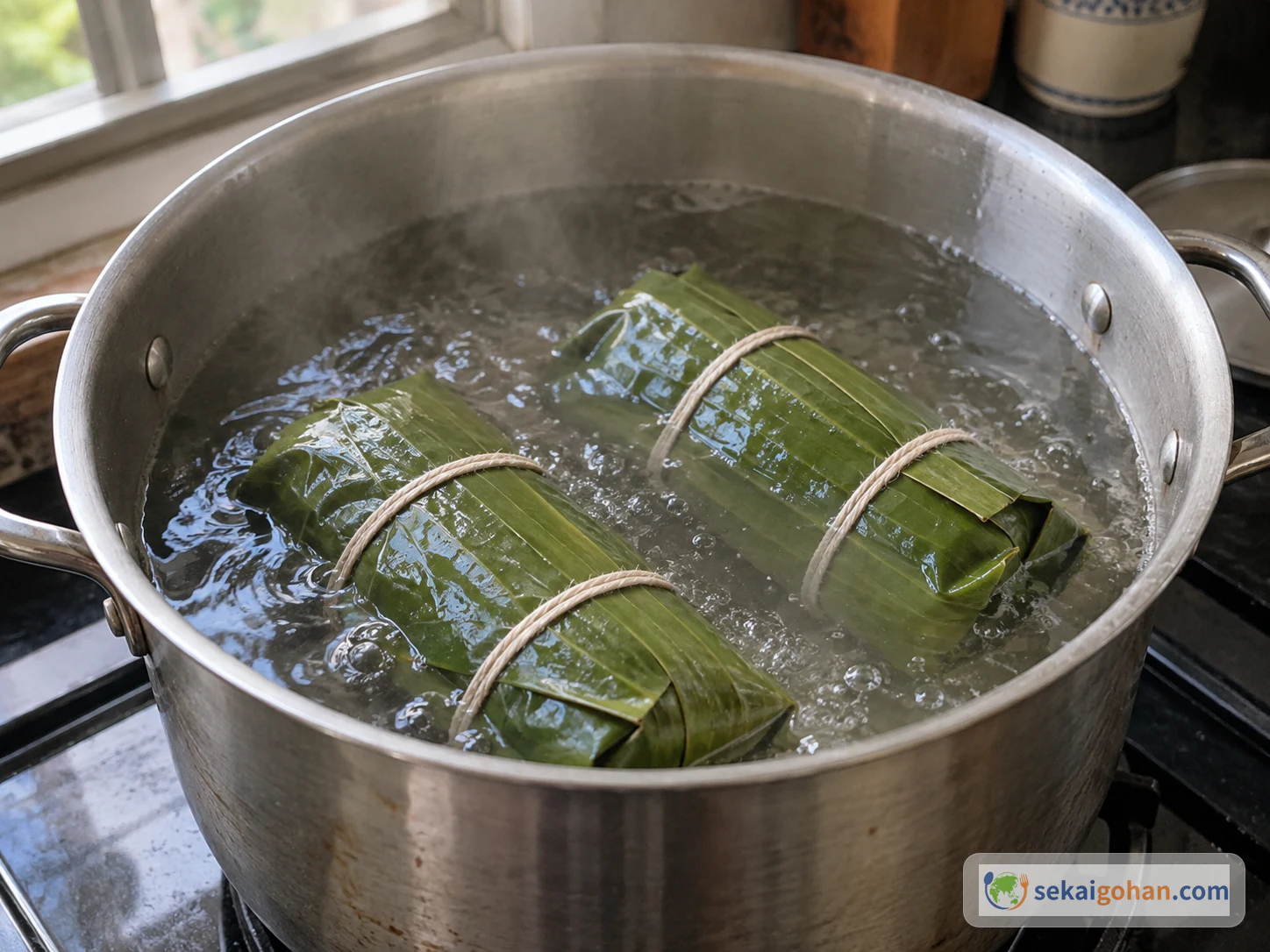
In English, giò lụa is also called "steamed pork roll." The recipe here, however, does not use a steamer: the wrapped rolls are fully submerged in water and boiled. Keep that difference in mind when you compare recipes.
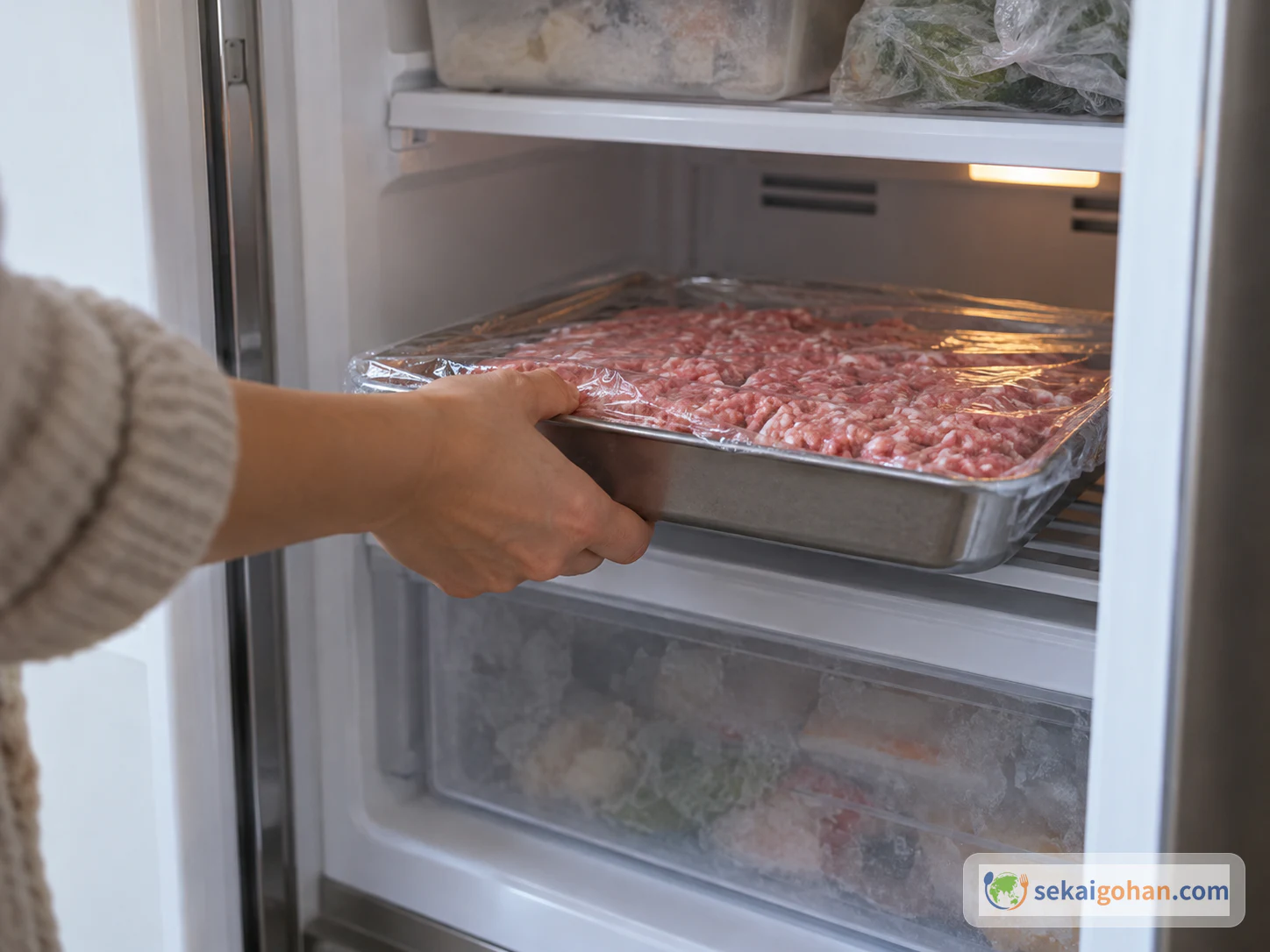
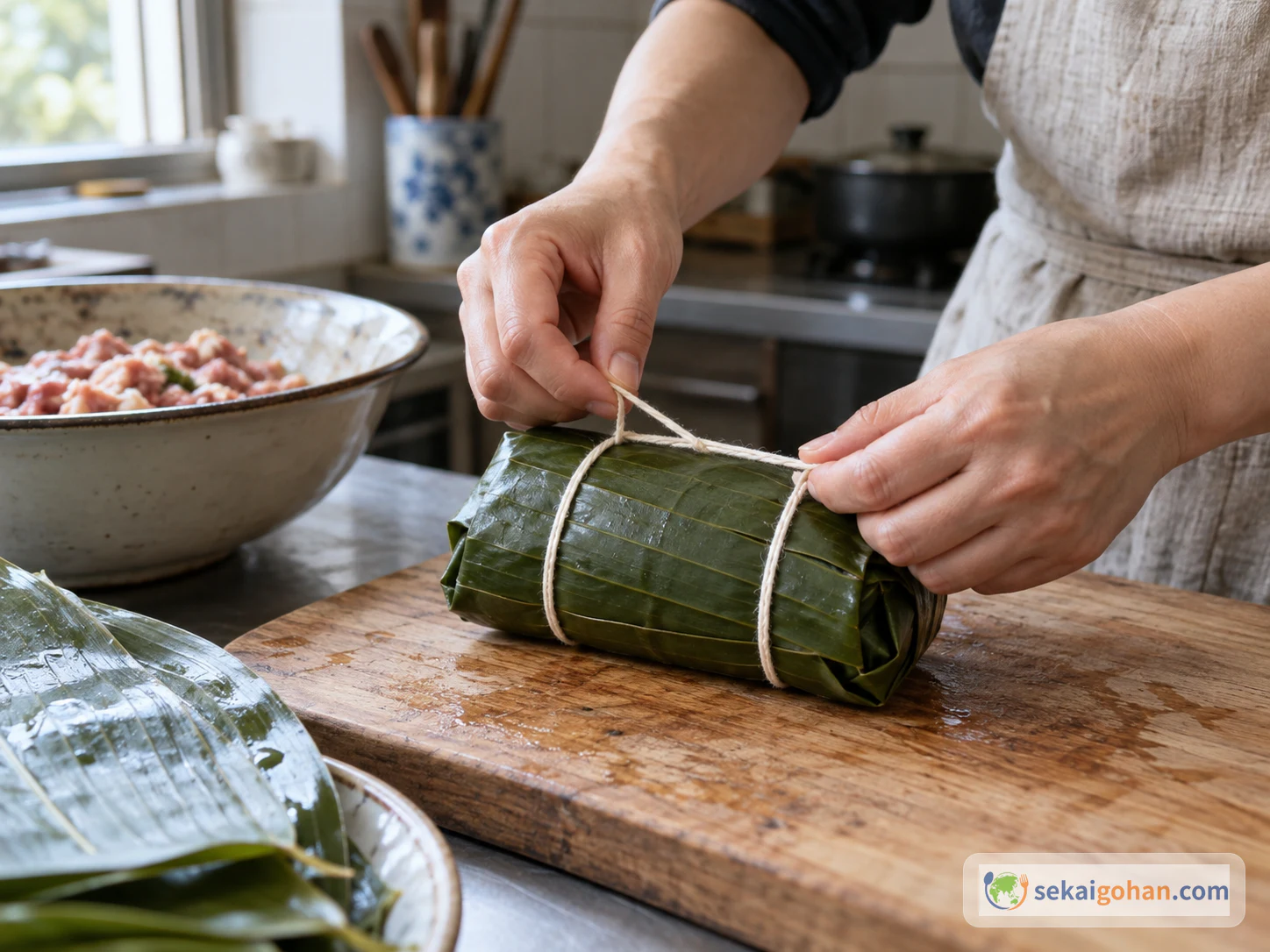
This version follows a single source from start to finish: Michelle's written recipe at Sift & Simmer, using a stand mixer with a paddle, 1 lb of ground pork, two short rolls, two layers of banana leaf per roll and a 45-minute boil. The alternatives that recipe mentions are gathered in their own section further down, so the main method stays consistent.
Ingredients for Two Short Rolls
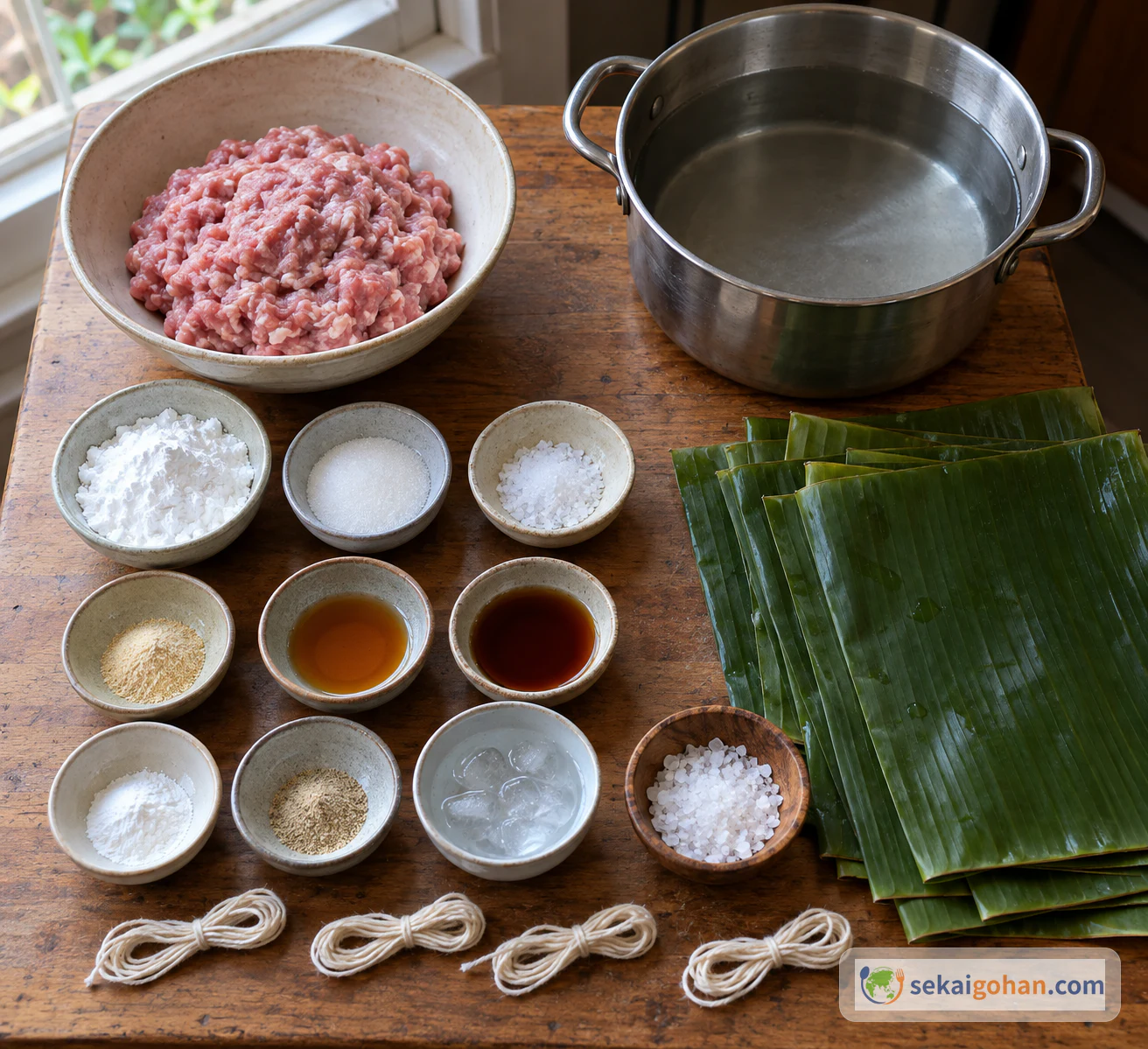
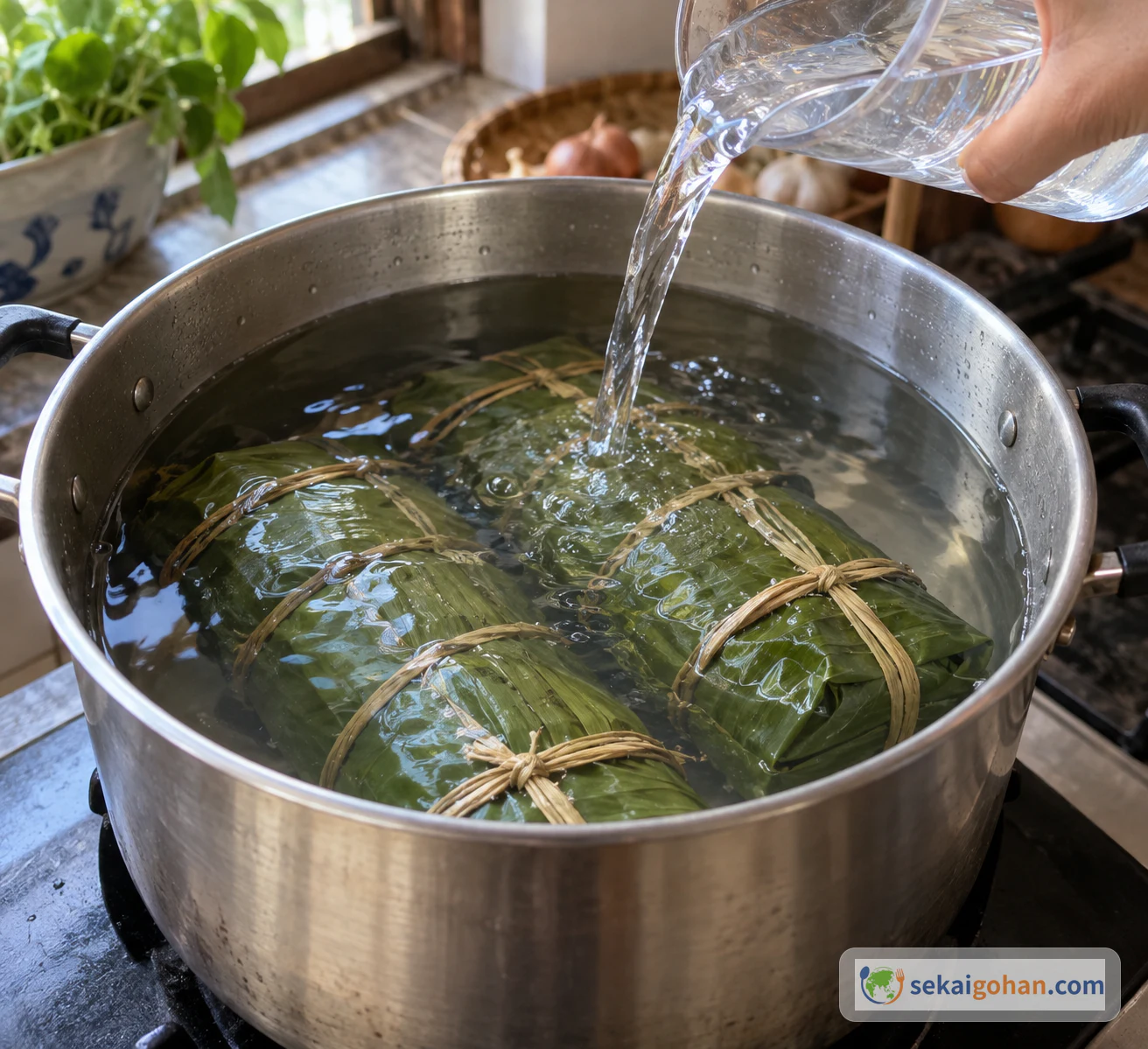
Use water as needed for the pot.
The recipe makes 12 servings; that is not a count of slices.
This recipe contains pork, fish sauce and sesame oil. Check each product's allergen label, including fish-derived ingredients and sesame; no ingredient list can promise the absence of cross-contact. Keep raw pork, and the tools and hands that touch it, away from food that is ready to eat.
Equipment
- Stand mixer fitted with the paddle (flat beater)
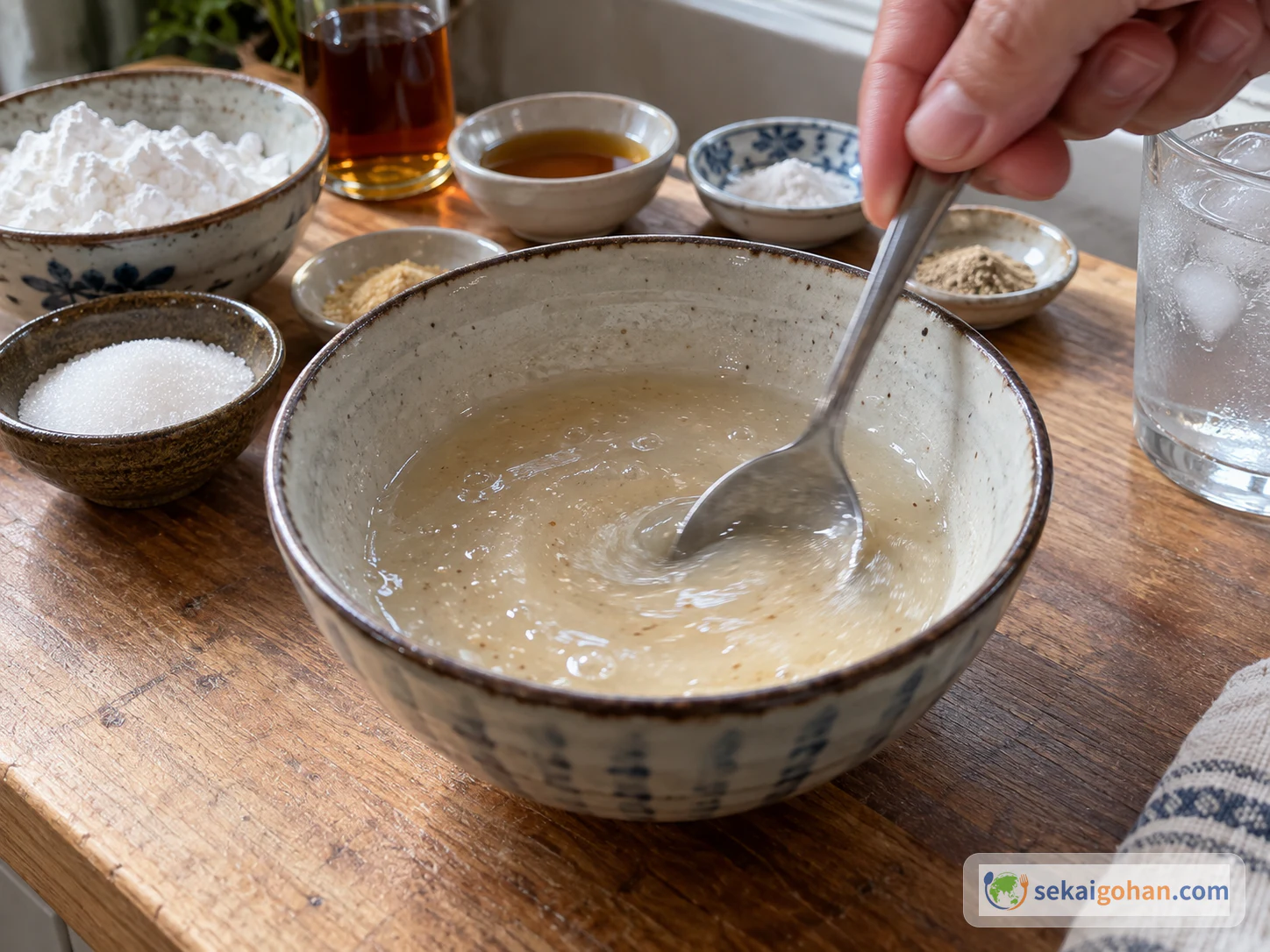
- Small bowl for the seasoning mixture
- Cotton kitchen twine, 4 pieces (two per roll). Choose twine sold for food use
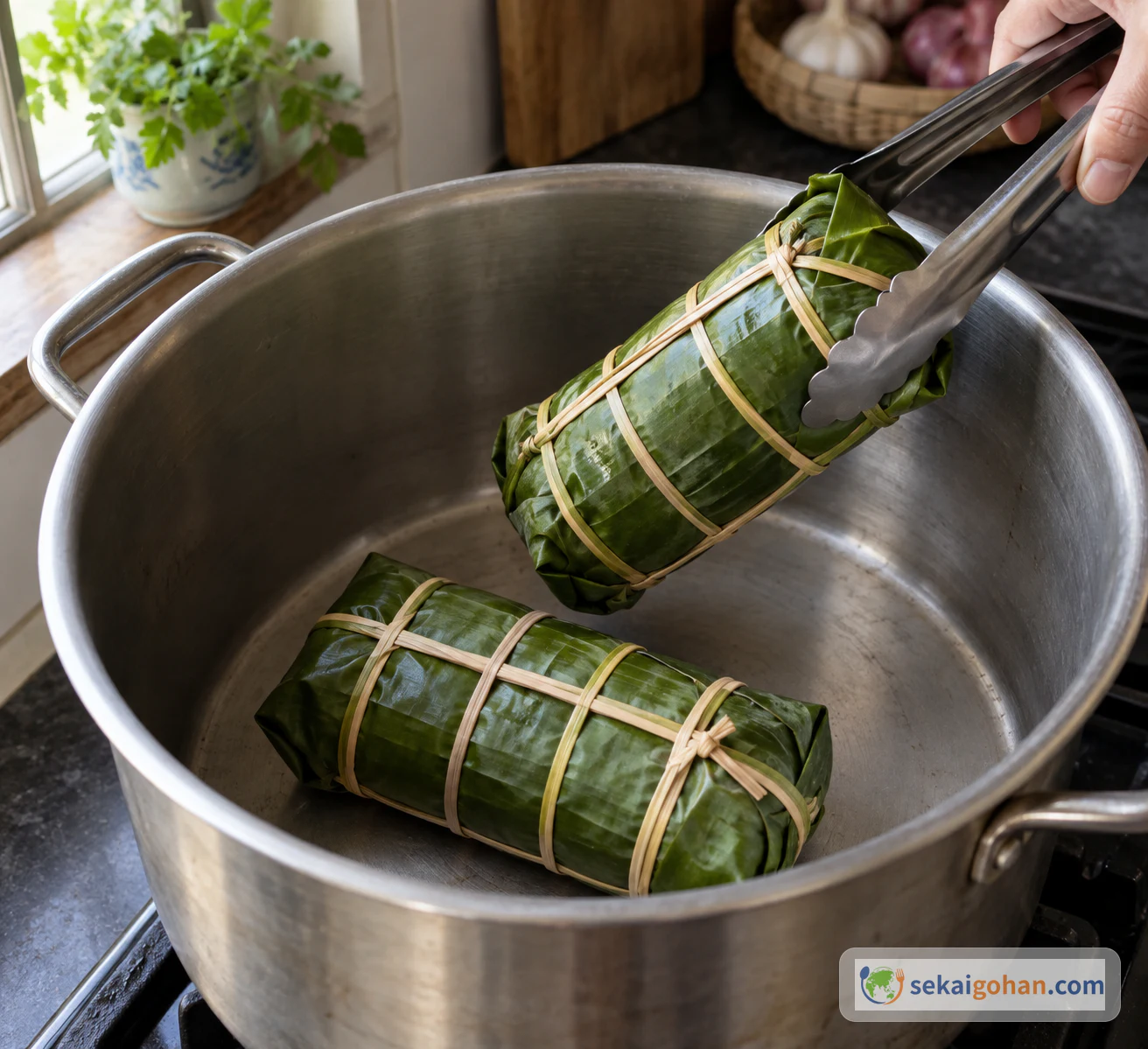
- Large pot that can hold both rolls fully submerged
- Clean food thermometer
- Plate or tray for the cooked rolls
- Knife and cutting board
Choosing and Substituting: What the Source Allows
Potato starch. Look for a product labeled potato starch. Sift & Simmer names tapioca starch as an alternative, but cornstarch is not the same ingredient and is not part of this recipe.
ALSA baking powder. Use ALSA baking powder, which is single-acting. Its current formulation, and whether an equivalent is sold where you live, could not be confirmed. Do not quietly swap in another baking powder and expect the same result; if you cannot find it, treat any replacement as your own experiment rather than this recipe.
No curing agents. Do not add curing salt, nitrite, phosphates or borax. The texture in this recipe comes from the beating in step 3.
Alternatives. These options also work: tapioca starch instead of potato starch, vegetable oil instead of sesame oil, black pepper instead of white, aluminum foil instead of banana leaves, and a high-powered food processor instead of a stand mixer. You can also steam it or make one large roll. The method below does not use any of these, and how they change the flavor or texture is not measured. If you choose one, change only that one thing and keep the rest of the method as written.
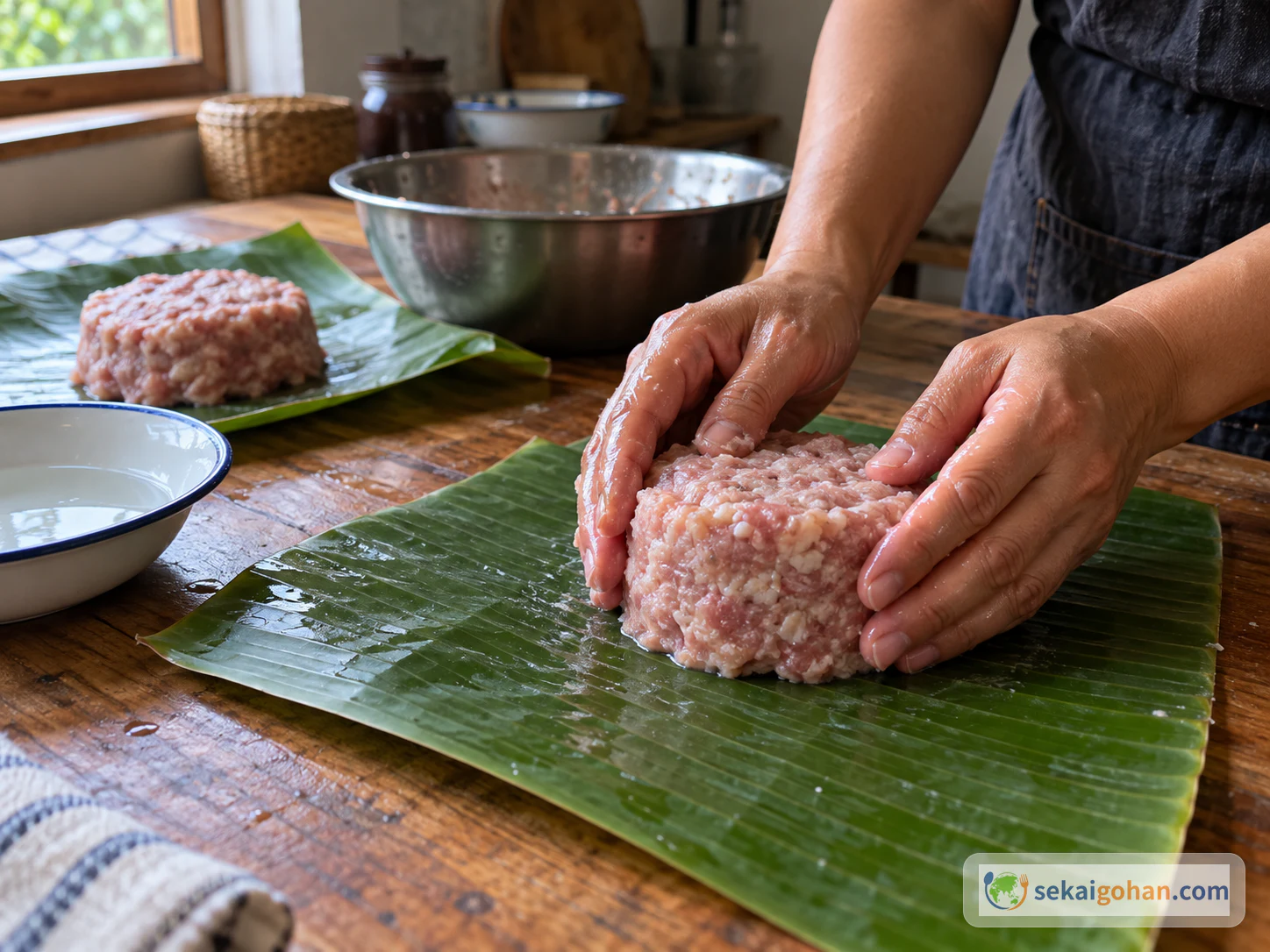
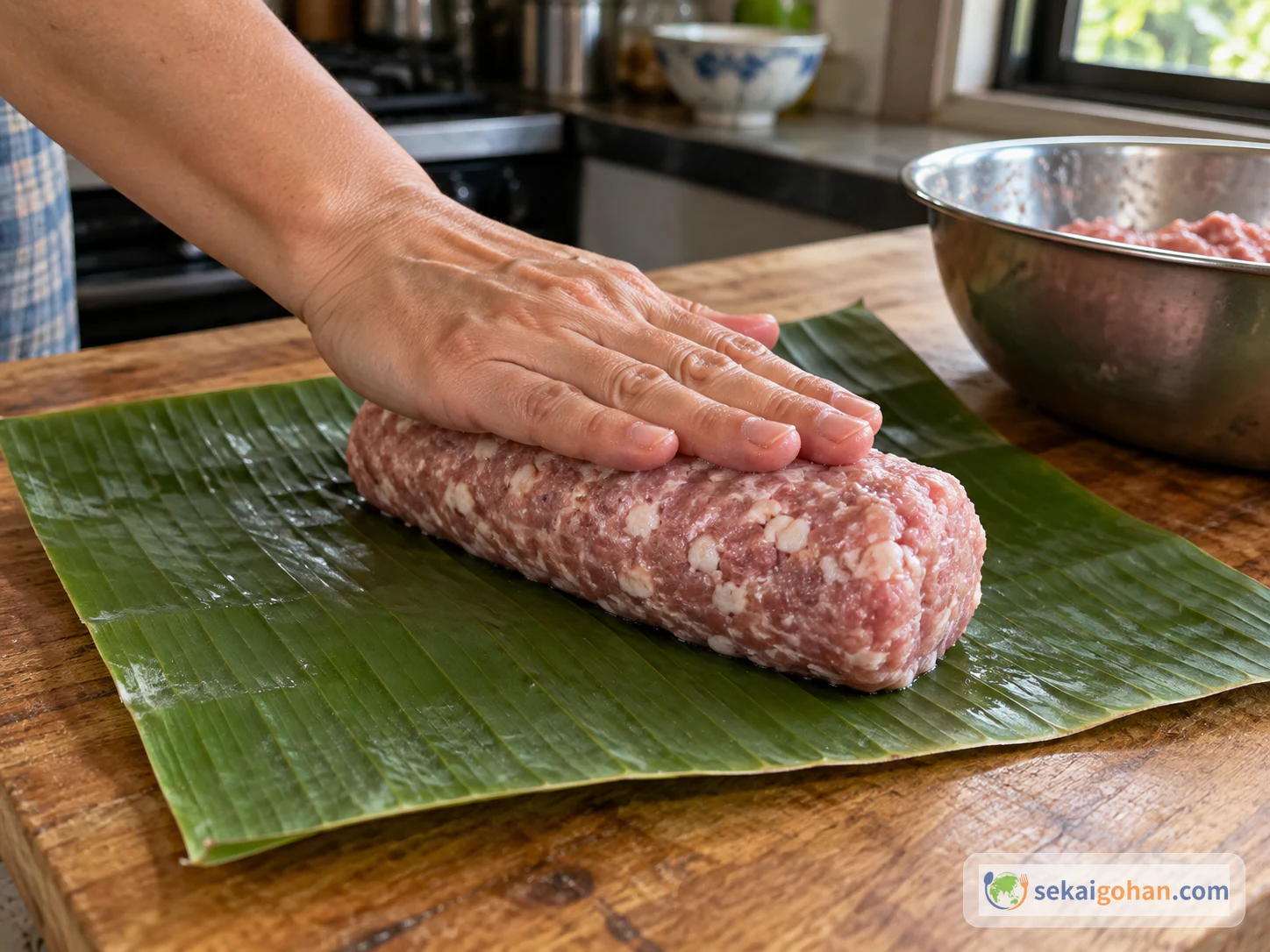
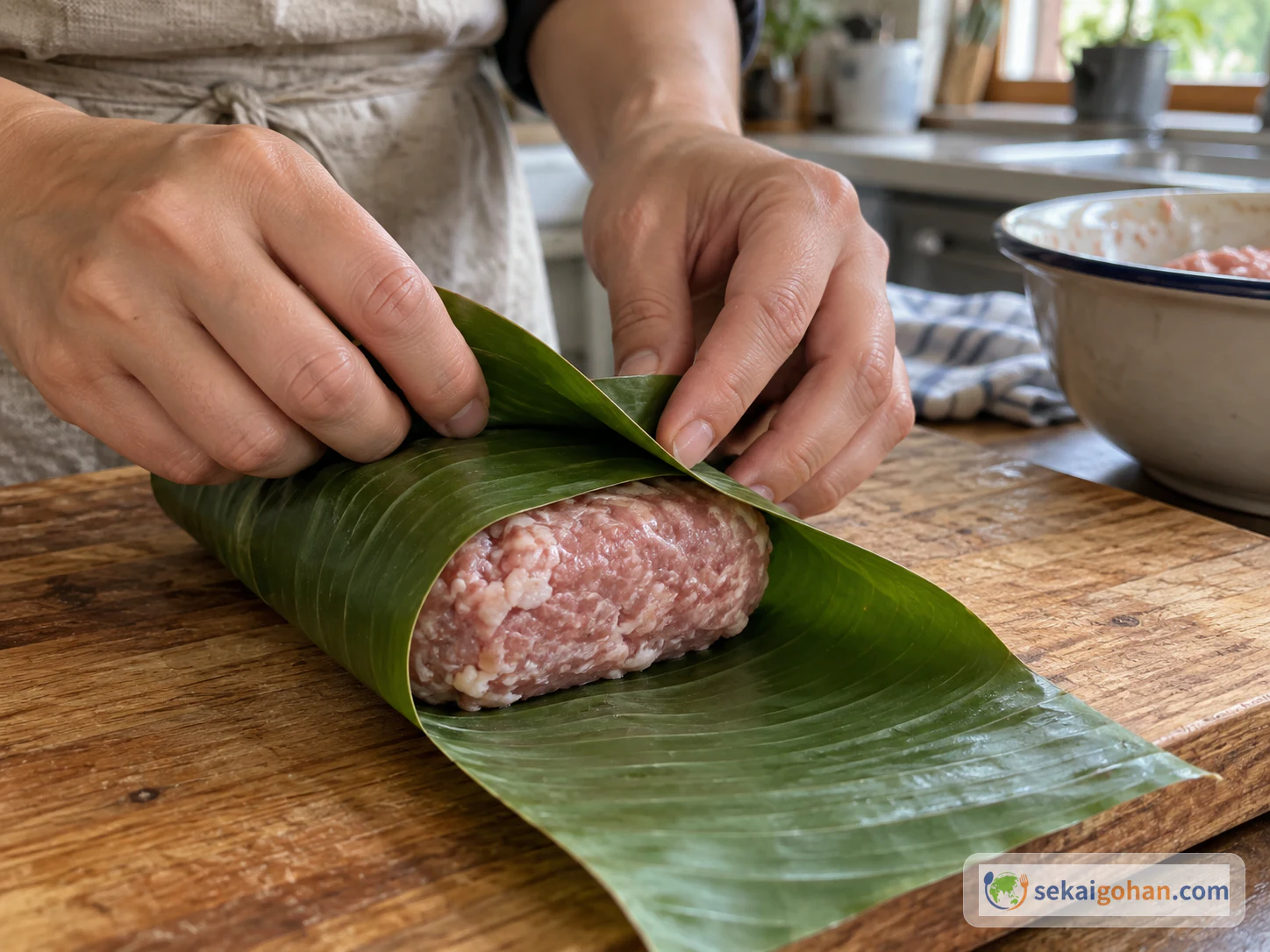
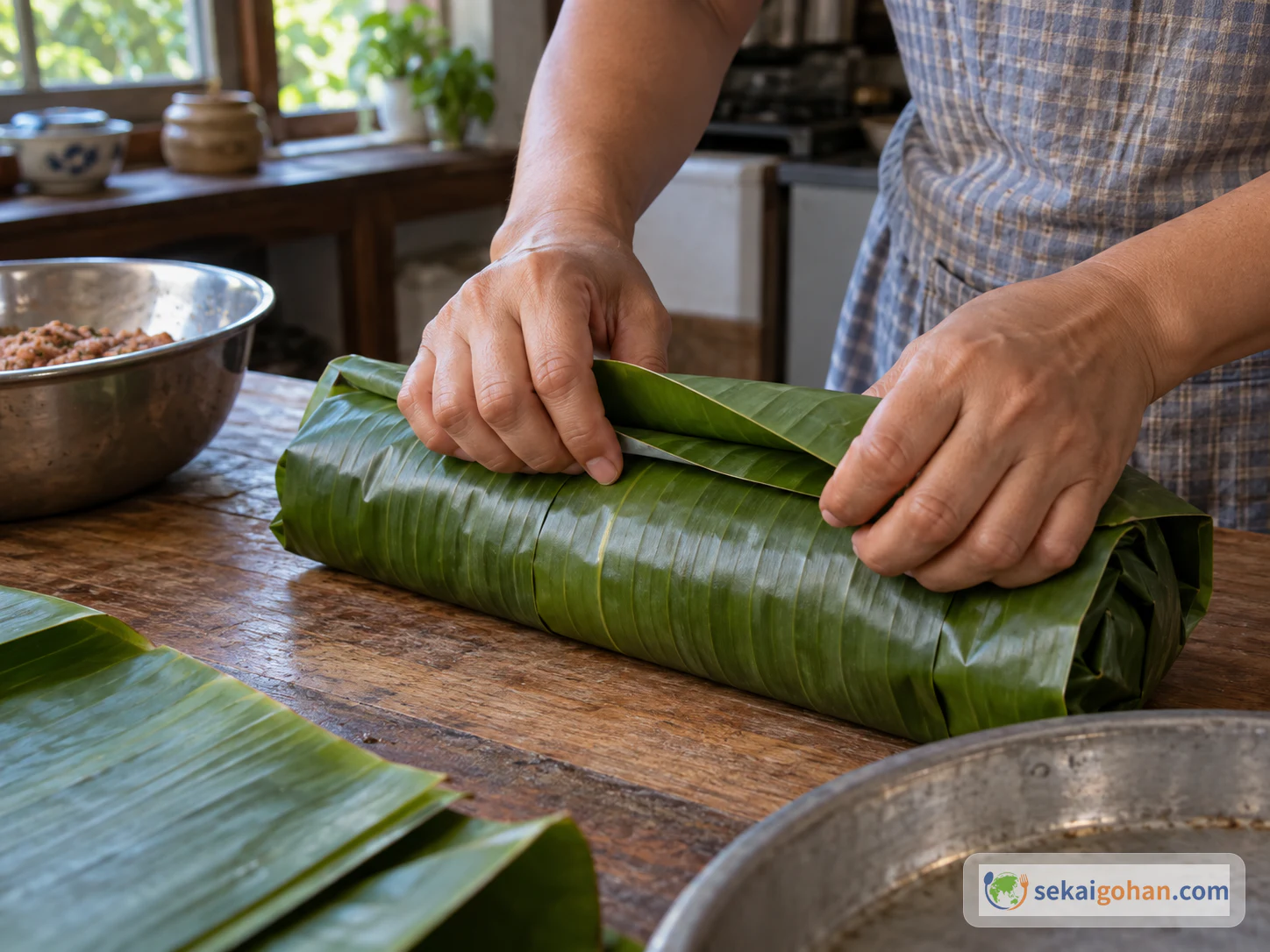
Method: Beat, Wrap in Two Layers, Boil, Check, Chill
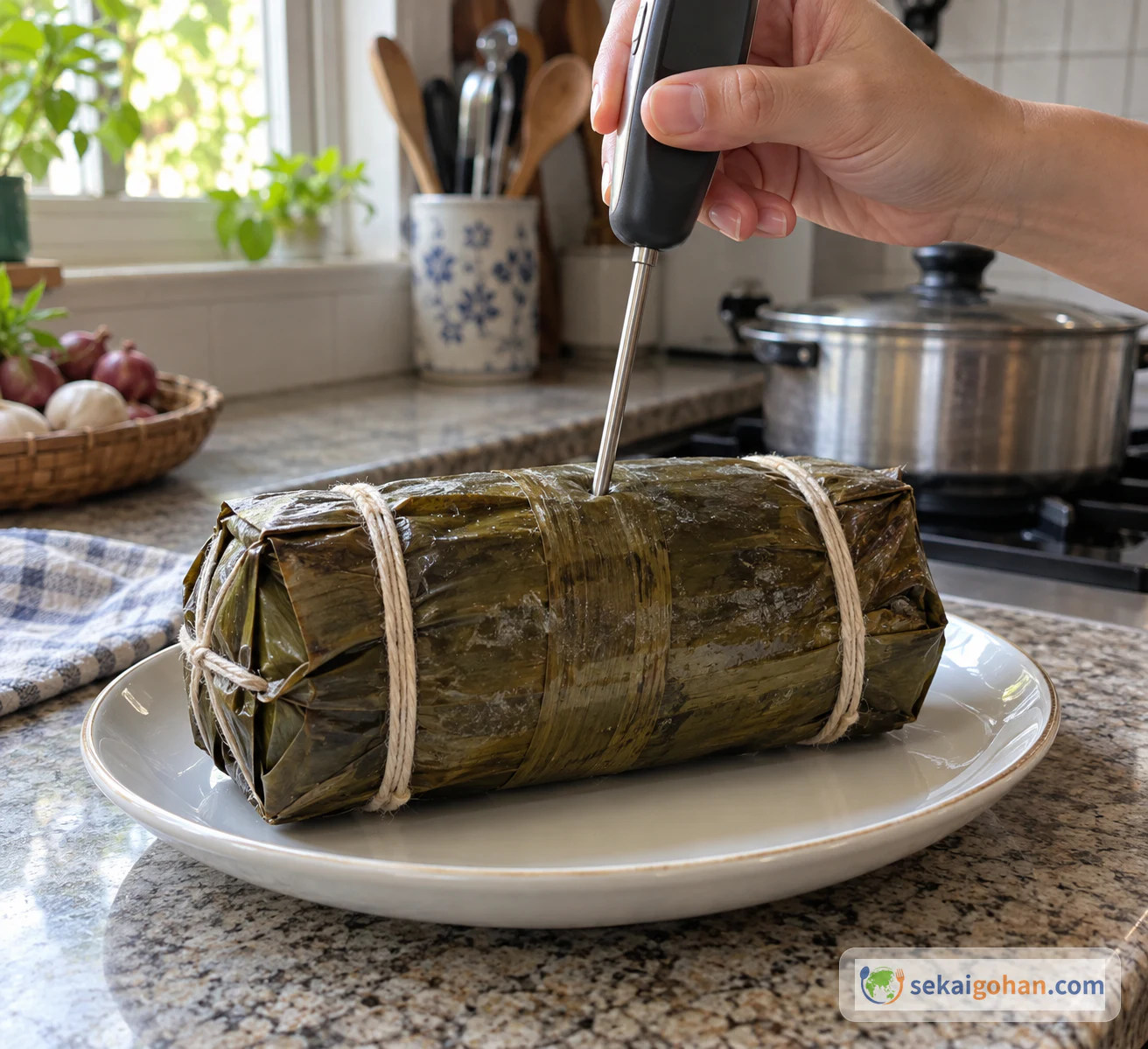
Boil the rolls for 45 minutes. That is the cooking time, not proof that the center is safe. After the boil, measure the thickest part with a thermometer. The one-hour total does not include the recommended 2-hour partial freeze or the cooling time, so plan around the steps rather than that figure.
Temperature, Cooling and Storage: Keep Each Rule Separate
| Question | What to follow | Source |
|---|---|---|
| Is it cooked safely? | 160°F (71°C) in the thickest part, measured with a food thermometer | FoodSafety.gov |
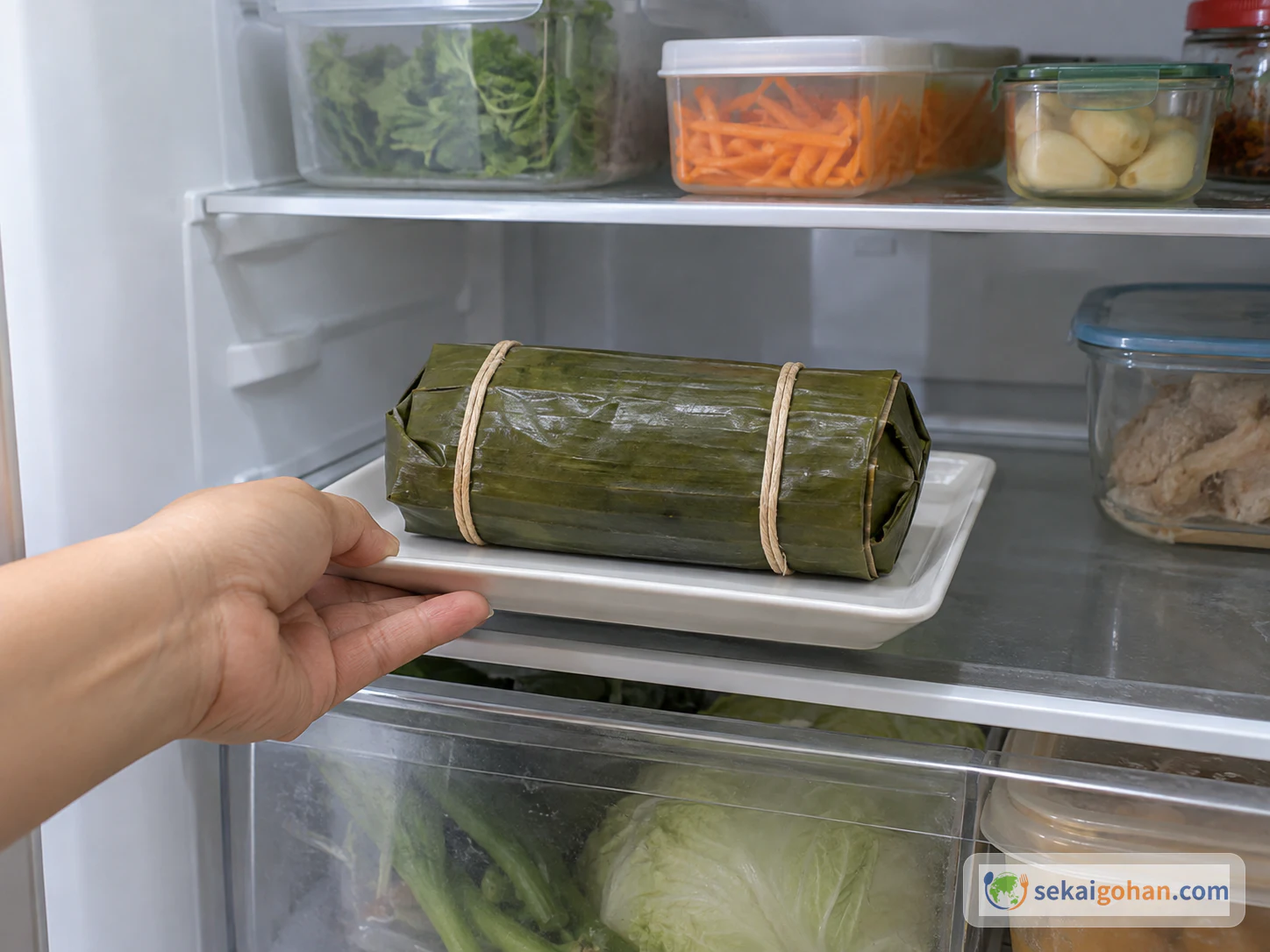
| How soon to refrigerate? | Within 2 hours of cooking; within 1 hour above 90°F (32°C) | FoodSafety.gov |
| How long does it keep? | 3–4 days at 40°F (4°C) or below, the general limit for cooked meat and poultry leftovers | FoodSafety.gov |
Sift & Simmer says the roll keeps in the refrigerator for one week. This article does not adopt that figure: the public home food-safety chart gives 3–4 days for cooked meat leftovers. That chart lists factory-packaged, fully cooked sausage separately, and a homemade roll should not be assumed to fall into that category. The sources give no reheating guidance specific to giò lụa.
Troubleshooting
| Situation | What to do |
|---|---|
| The paste has no long strands yet | Keep beating within the source's 10–15 minute guide until strands appear and the color lightens |
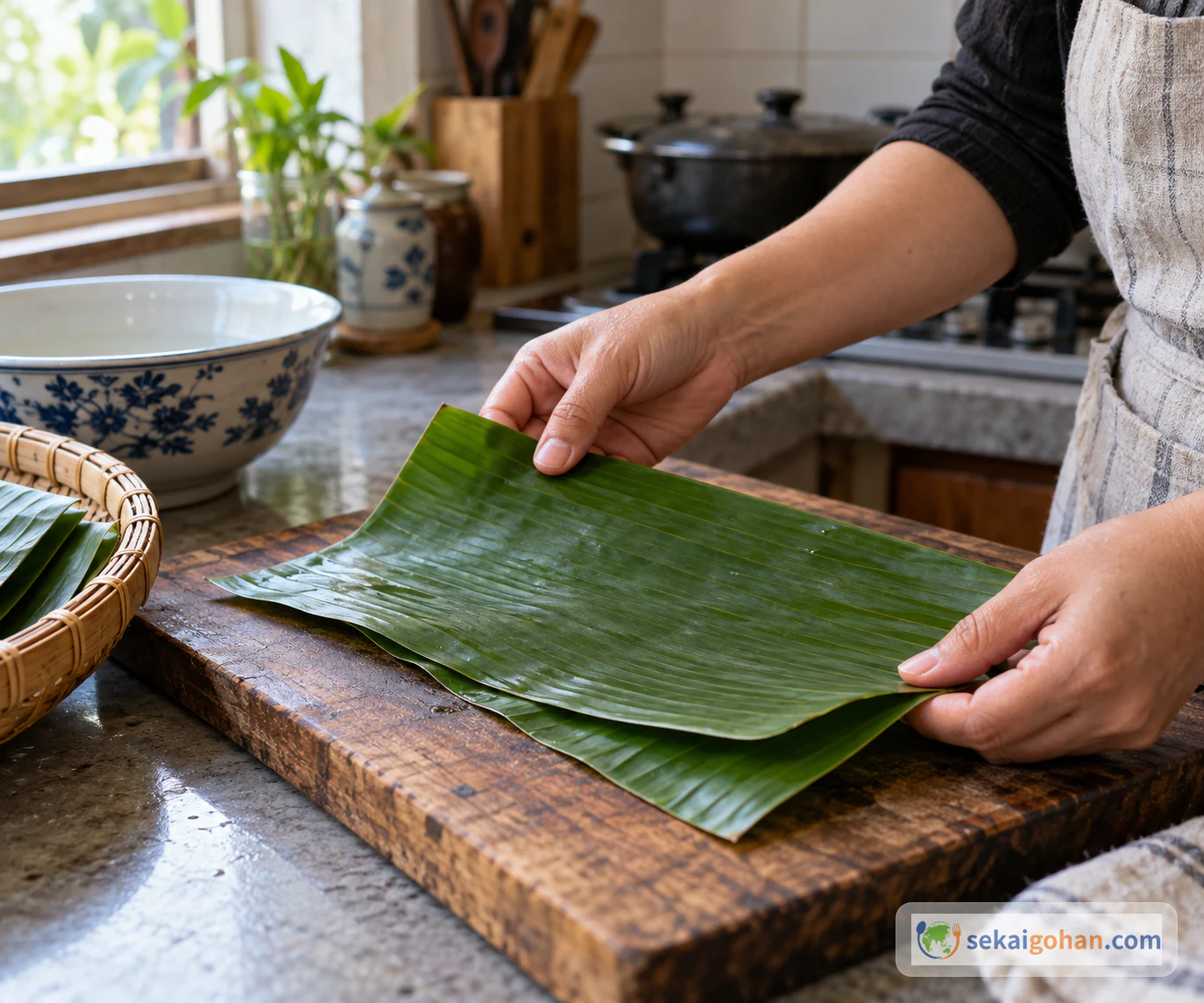
| Cracks show in the wrapping | Wrap the second leaf so it covers the first with no cracks showing, then tie with two pieces of twine |
| The rolls rise above the water | Top up the pot so they stay submerged throughout the boil |
| The center reads below 160°F (71°C) after 45 minutes | Return the roll to the boiling water, keep cooking and measure again. There is no fixed number of extra minutes |
| The roll is still warm when the refrigeration limit arrives | Refrigerate it anyway and let it finish cooling in the refrigerator. Do not leave it out to cool fully |
| Small holes in the slices | Thumping and kneading in step 5 reduces air pockets, but it cannot guarantee a slice with no holes at all |
Serving: Thin or Thick Slices Alongside Other Dishes
Sift & Simmer suggests slicing giò lụa thinly or thickly and eating it with noodle soups, in bánh mì, with rice rolls, with sticky-rice dishes, or with dipping sauces. These are examples from that recipe, not the only way it is eaten. For related Vietnamese dishes, see bánh cuốn and bún riêu. On a celebration table, plain slices on a plate are enough to stand on their own.
Variations: Other Versions to Keep Distinct
The Sift & Simmer alternatives. Steaming, one large roll, foil instead of leaves, or a food processor instead of a stand mixer all change the method. Sift & Simmer gives about 1 hour for its steamer option. For the large-roll and other options, this article does not give a time. Whatever the route, the center-temperature check and the refrigeration limits still apply.
A hand-pounded version. Vietnam Pictorial describes a different method: lean pork and fish sauce only, pounded by hand, wrapped in banana leaves, tied with bamboo strips and boiled for about 1 hour. That is a separate version with its own ingredients and process. Do not mix its steps or timings into the recipe above.
Giò Lụa in Vietnamese Food Culture
Vietnam Pictorial's article places giò lụa among Tết dishes and describes it at weddings, parties and death anniversaries, as well as being given as a gift. It also describes the dish as shared across Vietnam's north, center and south at Tết. Sift & Simmer likewise connects the dish to Tết in its introduction. These are the descriptions of those two articles; the sources used here do not establish the dish's origin, the history of its name, or a single traditional recipe for every household. The stand-mixer method in this article is one written home version among several, not "the" standard.
Frequently Asked Questions
Are giò lụa and chả lụa different dishes?
Sift & Simmer presents both names for the same pork roll, alongside giò sống and the English term "Vietnamese ham," and Vietnam Pictorial uses giò lụa for the same kind of dish. The sources here do not set out a regional rule for which name is used where.
What internal temperature should it reach?
FoodSafety.gov lists 160°F (71°C) for ground meat and sausage. Measure in the thickest part with a clean food thermometer. If it is below that, keep cooking and recheck.
Can I use a different starch, oil or pepper?
Sift & Simmer names tapioca starch for potato starch, vegetable oil for sesame oil, and black pepper for white pepper as alternatives. How much they change the flavor or texture is not measured. Cornstarch is not one of the listed alternatives.
Can I steam it instead of boiling?
Sift & Simmer mentions steaming as an alternative, for about 1 hour. It is a different method from the boiled version in this article, so do not combine the two. Either way, check the center temperature before chilling.
How many days does it keep?
Use the general guideline for cooked meat and poultry leftovers: 3–4 days in the refrigerator at 40°F (4°C) or below, refrigerated within 2 hours of cooking (1 hour above 90°F/32°C). The one-week figure on the recipe page is not used here as a safety limit.
Can I add curing salt or another additive to make it springier?
No. Curing salt, nitrite, phosphates and borax are not part of this recipe. The springy texture comes from beating the pork in step 3.
Sources
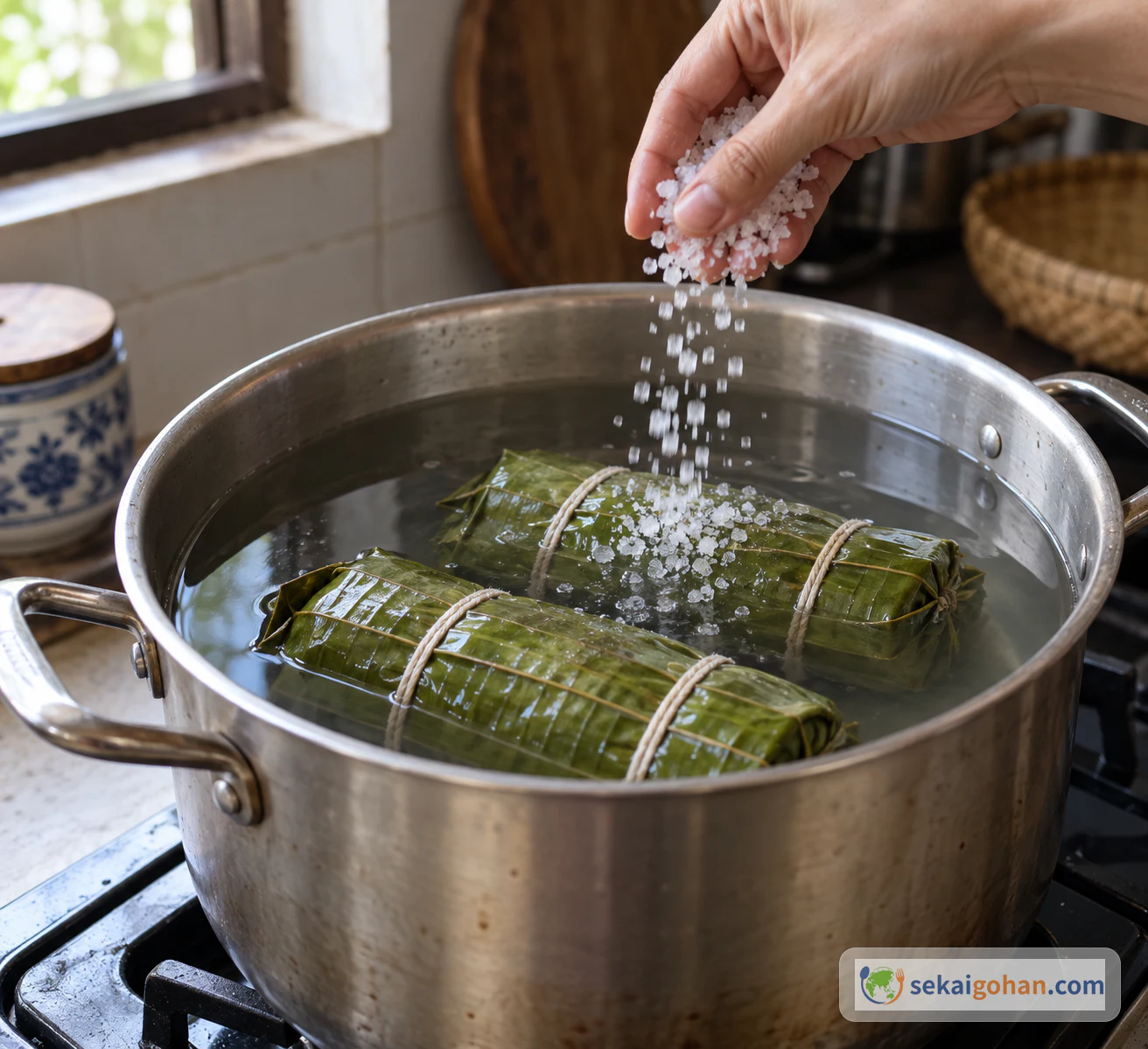
- Michelle, "Vietnamese Pork Roll (Cha Lua)," Sift & Simmer, 2022. The recipe followed here: all ingredients and amounts, partially freezing the pork, beating with a paddle until strands form and the color lightens, wrapping two rolls in double banana leaves with two twine ties each, boiling submerged in salted water for 45 minutes, cooling before unwrapping and slicing; also the names chả lụa / giò lụa / giò sống, the author's listed alternatives, the connection to Tết and serving suggestions. https://www.siftandsimmer.com/vietnamese-pork-roll-cha-lua/
- Khanh Long, "Gio lua, delicious Vietnamese ham," Vietnam Pictorial / Vietnam News Agency, 2019. Giò lụa at Tết, weddings, parties and death anniversaries, as a gift, and as a Tết dish shared across the north, center and south; also the separate hand-pounded version described in the variations section. https://vietnam.vnanet.vn/english/english/tin-tuc/gio-lua-delicious-vietnamese-ham-195919.html
- FoodSafety.gov, "Cook to a Safe Minimum Internal Temperature." The safe minimum internal temperature of 160°F (71°C) for ground meat and sausage. https://www.foodsafety.gov/food-safety-charts/safe-minimum-internal-temperatures
- FoodSafety.gov, "Cold Food Storage Chart." Cooked meat and poultry leftovers: 3–4 days in the refrigerator at 40°F (4°C) or below. https://www.foodsafety.gov/food-safety-charts/cold-food-storage-charts
- FoodSafety.gov, "Warm Up with a Safely Slow-Cooked Meal." Placing the thermometer in the thickest part of the food, 160°F (71°C) for ground meats including pork, and refrigerating cooked food within 2 hours (1 hour above 90°F/32°C). https://www.foodsafety.gov/blog/warm-safely-slow-cooked-meal