

The story of bún thịt nướng: a southern grilled pork noodle bowl you finish by tossing
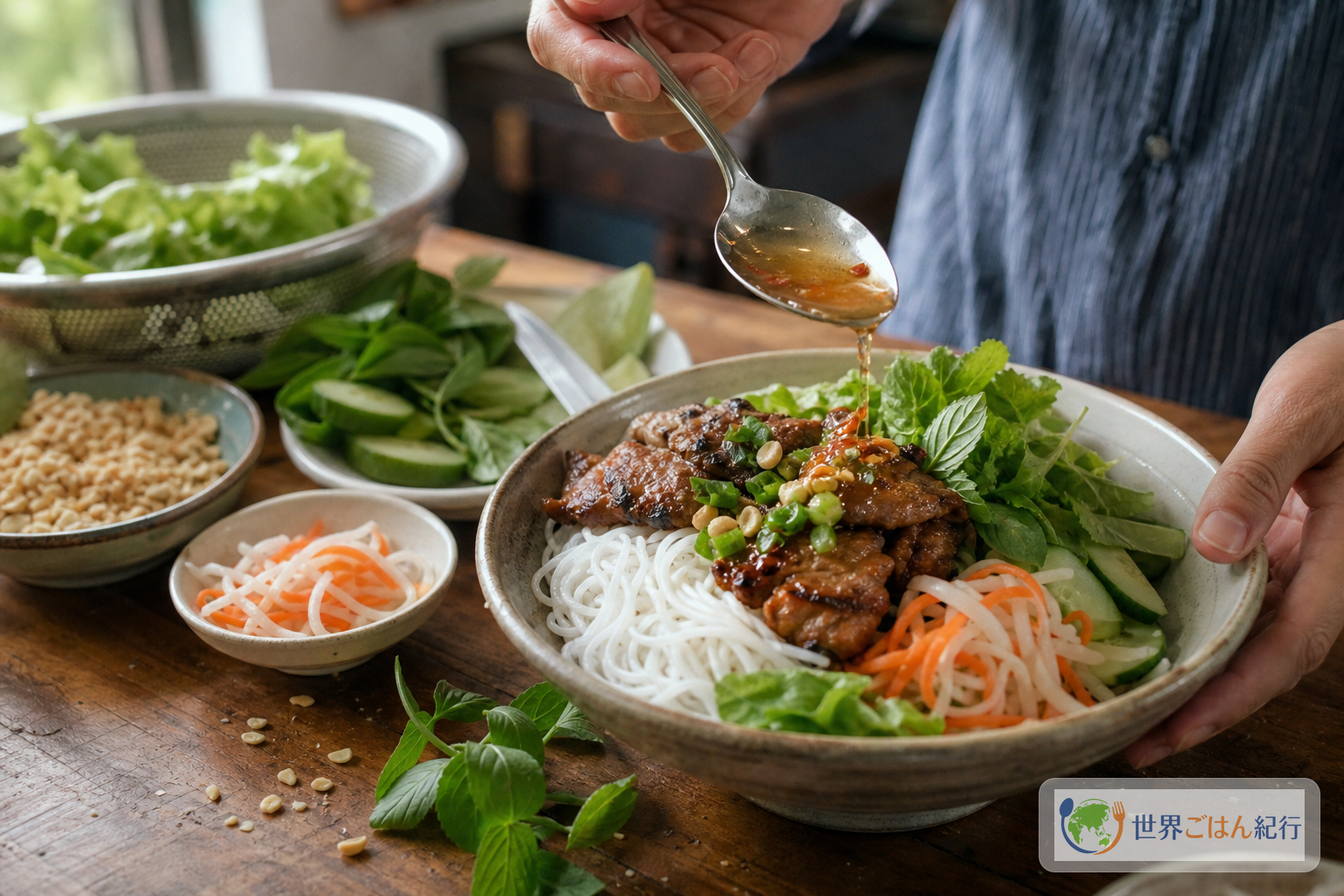
Chop lemongrass and the air in the kitchen turns at once into the doorway of a Vietnamese restaurant. A green citrus scent, the saltiness of fish sauce, the sweet smell of sugar catching on the grill. Lay the grilled pork over white rice vermicelli, pile on pickled vegetables and herbs, pour nước chấm over, and what were separate things a moment ago become a single bowl.
Bún thịt nướng (Bún thịt nướng) is a dish of grilled pork and rice noodles that is eaten often in southern Vietnam. Bún is thin rice vermicelli and thịt nướng is grilled meat. It resembles Hanoi's northern bún chả (in Japanese), but it is eaten quite differently. Bún chả serves a sweet-sour dipping broth with meat, the noodles and the herbs separately. Bún thịt nướng is finished inside the bowl by tossing the rice vermicelli, grilled pork, herbs, pickled vegetables, peanuts, scallion oil and nước chấm together.
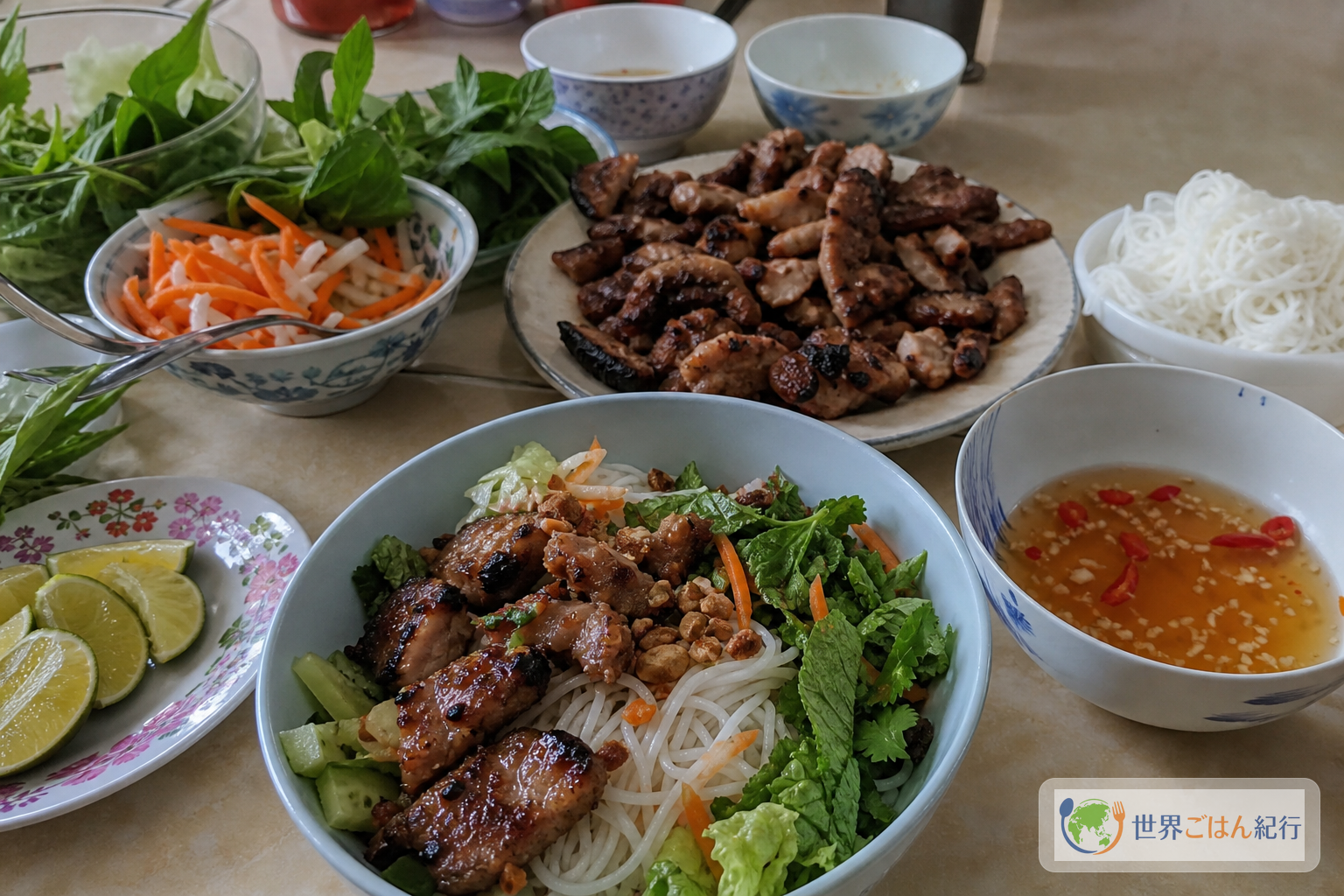
When you make it outside Vietnam, the hard part is not bringing in a charcoal fire. It is three things: coating thinly sliced pork well with lemongrass, not making the nước chấm too strong, and not chilling the rice noodles so much that they clump. You can approach the charcoal aroma of a street stall with a grill pan or an oven broiler, and put together a realistic herb set with mint, cilantro and perilla.
In Vietnamese it is written Bún thịt nướng. English spellings vary, such as "bun thit nuong" and "bún thịt nướng". This article uses bún thịt nướng throughout.
How is it different from bún chả?
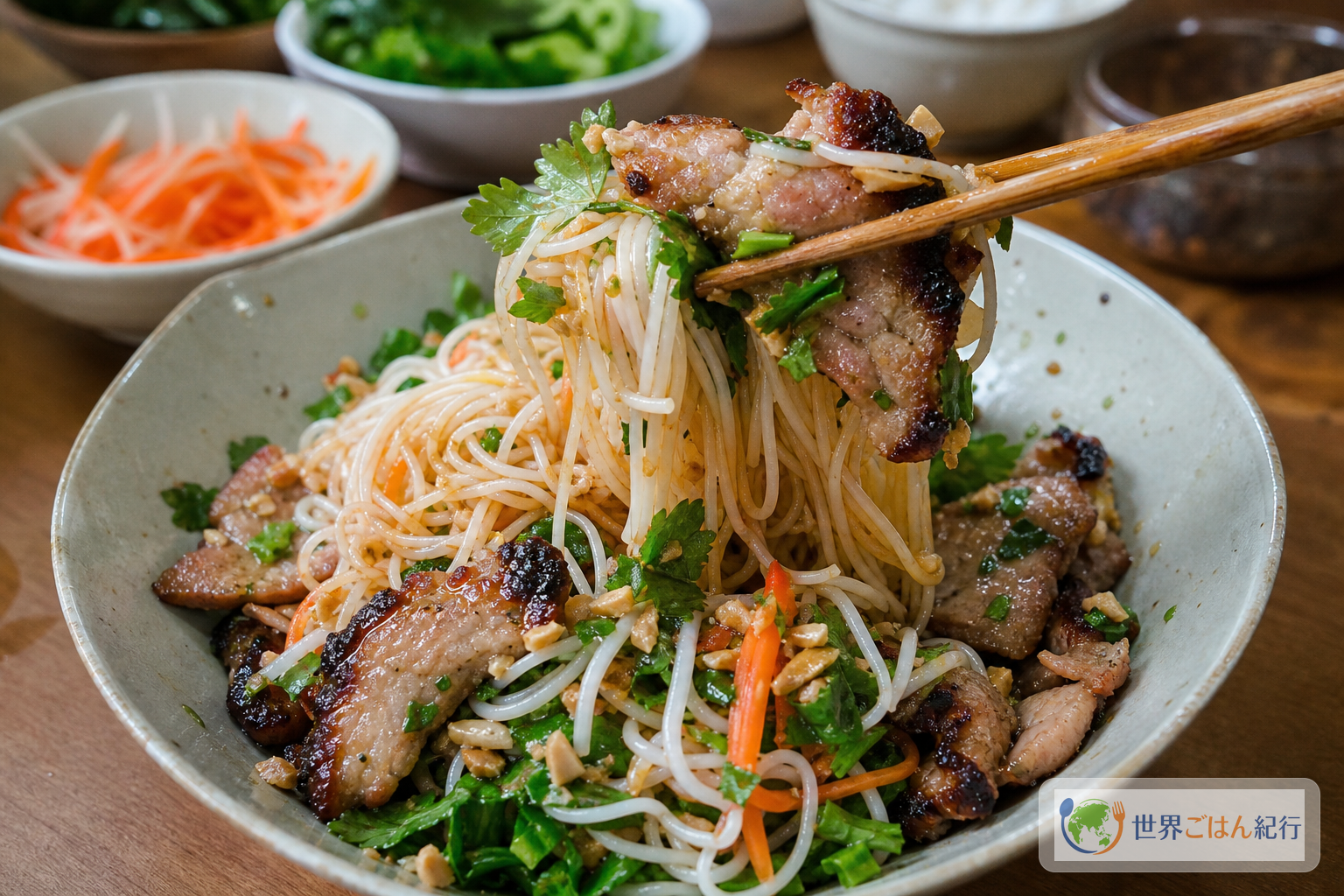
Knowing how it differs from bún chả before you cook keeps you from getting confused. Both use grilled pork, rice noodles and a sweet-sour fish sauce dressing. But northern bún chả is closer to dipping noodles, while southern bún thịt nướng is closer to tossed noodles. What differs is what you put together in the bowl.
| Comparison | Bún thịt nướng | Bún chả |
|---|---|---|
| Main region | The south; common at eateries and stalls around Ho Chi Minh City | A signature lunch in Hanoi, in the north |
| How it is eaten | Layer noodles, vegetables and grilled pork in a bowl and pour on nước chấm | Dip rice noodles and herbs into a warm broth with meat |
| Meat | Mainly thinly sliced lemongrass pork | Often pork patties together with pork belly |
| Aroma | Lemongrass, scallion oil and peanuts come forward | Charcoal-grilled pork and a sweet-sour dipping broth come forward |
| What to keep at home | That herbs, pickles and meat juices come together as one when tossed | That the broth is warm and you sink the meat in it |
Unlike noodle soups such as phở gà (in Japanese) and bún bò Huế (in Japanese), bún thịt nướng has no stock. For that reason the seasoning of the pork, the nước chấm and the moisture of the herbs become the flavor directly. Make these thin and you end up with merely a cold rice noodle salad.
Ingredients (serves 4): think of the lemongrass pork and the nước chấm separately
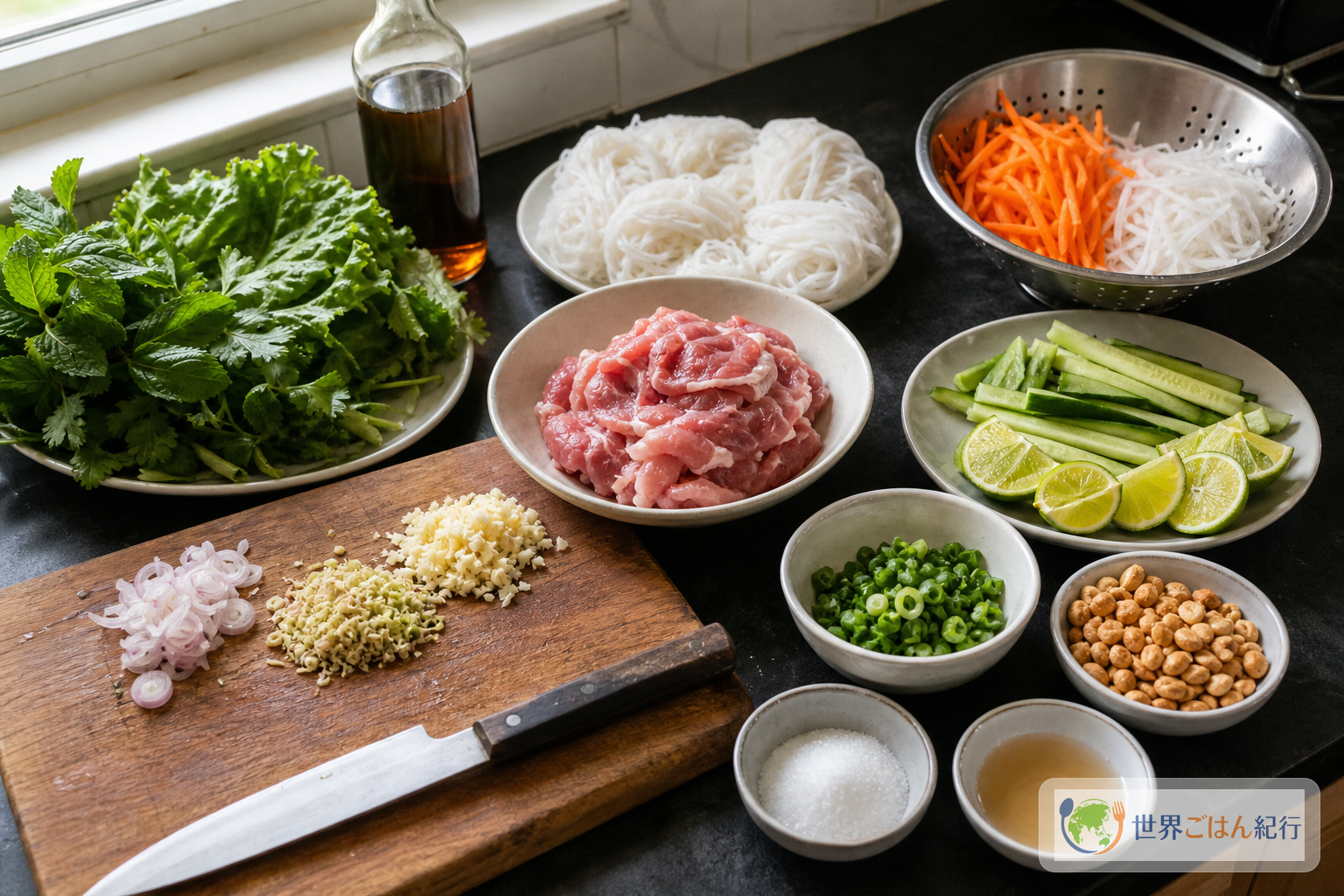
To get close to the local flavor, use pork shoulder (Boston butt) or pork belly sliced for grilling. Thin lean loin alone tends to turn tough after grilling. If you can't find shoulder, mixing 300 g of pork belly with 300 g of thinly sliced pork leg balances toasty flavor and lightness.
Fish sauce is made from fish. Peanuts are used, so if there is a food allergy, set some aside separately. Cook the pork through to the center, and wash the cutting board and knife you used for the meat before cutting herbs or cucumber. Browning alone makes it hard to judge doneness, so check a thick slice with a thermometer for reassurance.
What is worth buying extra is not meat or vegetables but the things that concern the staple, the aroma and safety checks. With rice noodles, fish sauce and a probe thermometer, you can reuse them not only for this dish but for tom yum goong (in Japanese), tom kha gai (in Japanese) and bún chả. For lemongrass, look for frozen stalks and choose ones where you can see a thick base.
On days you can't find thin bún, Vietnamese rice noodles or rice noodles for phở can stand in. Flat noodles change the texture, but they still work as a staple that carries herbs and nước chấm.
Method: grill, chill, and toss at the end
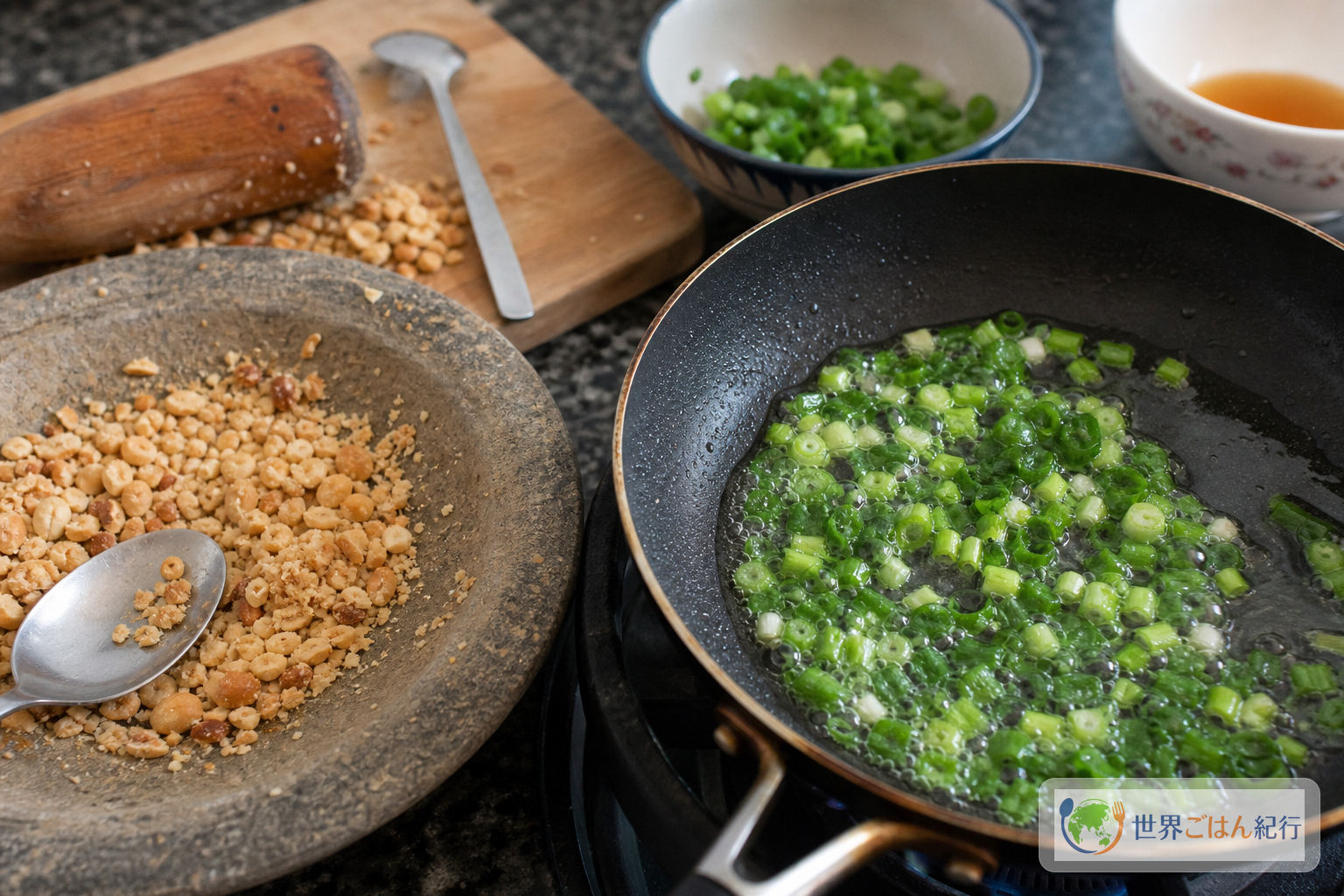
Bún thịt nướng puts hot pork, rice noodles near room temperature and cold herbs in one bowl. If you start looking for ingredients after you grill the pork, the noodles clump and the meat cools. Line up the nước chấm, pickled vegetables, rice noodles and herbs before the meat goes on the heat, and the last 3 minutes get easier.
Where it goes wrong: the line between browning and water
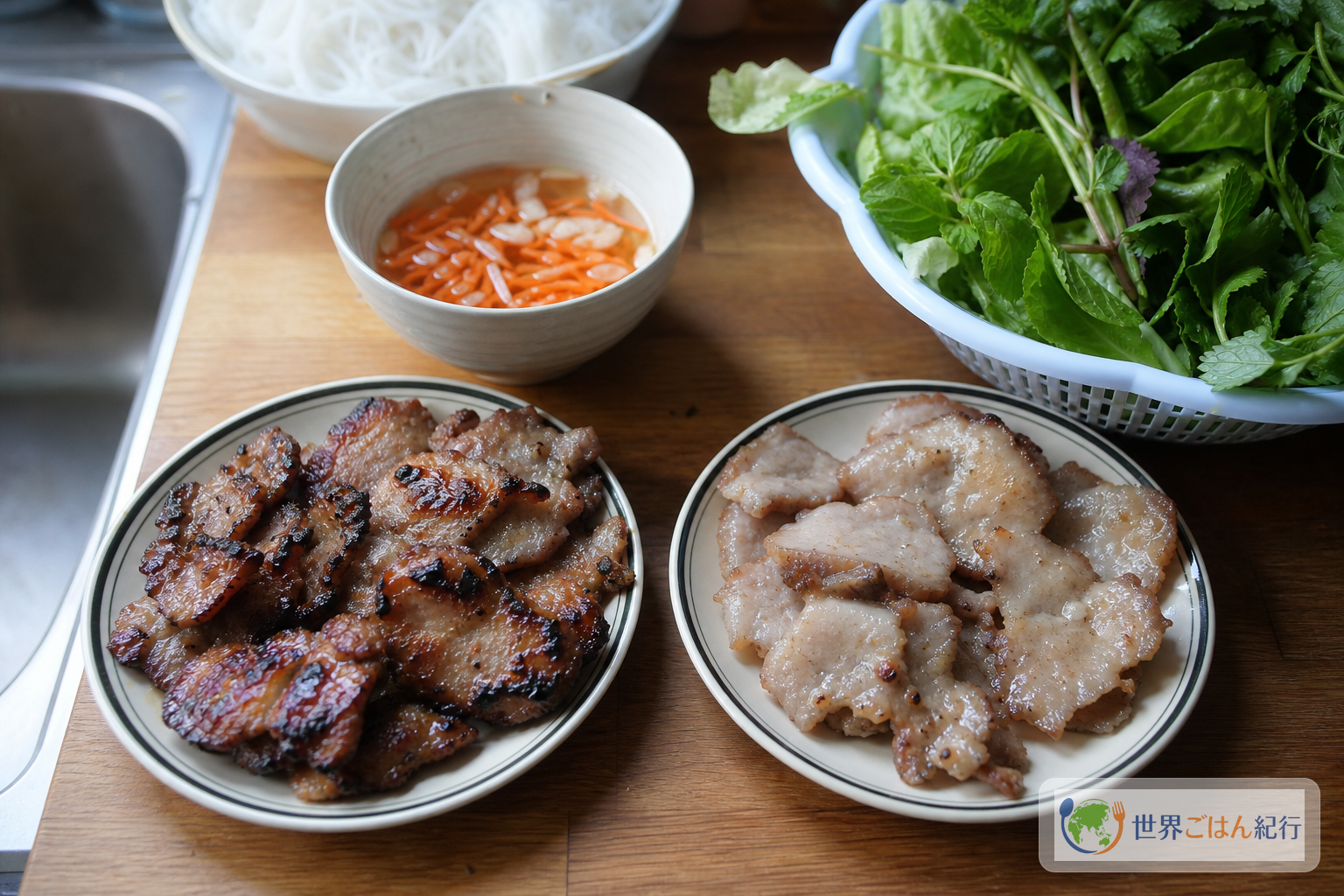
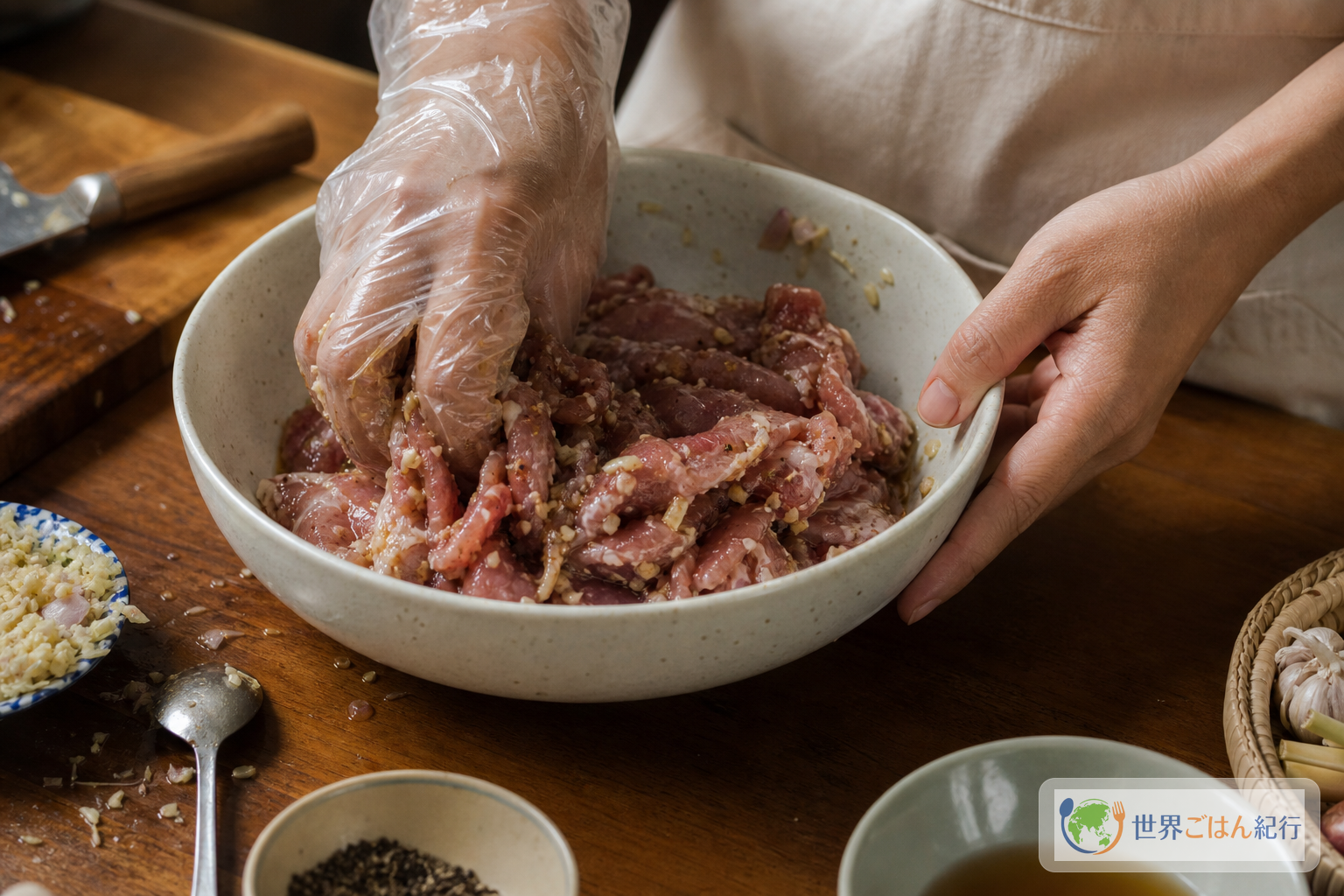
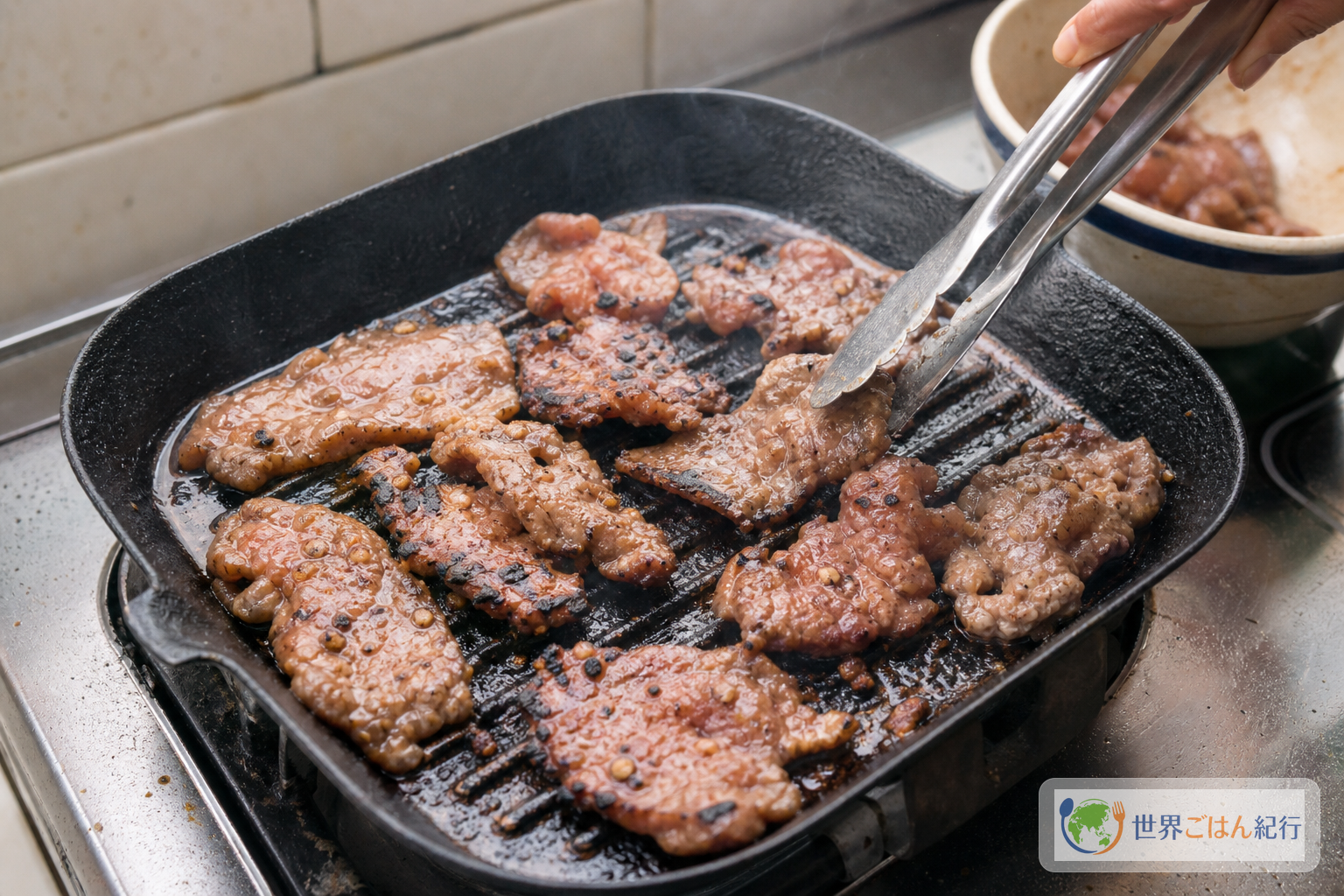
The most common failure with bún thịt nướng is watery meat. Grate the onion or garlic in the marinade too fine and water comes out, so the meat simmers in the pan before it browns. Chop them and use just enough to coat the meat. It also matters not to crowd the meat before grilling. Lay the pork across the whole pan and the temperature falls, so juices come out before browning. Grilling in 2 batches ends up faster.
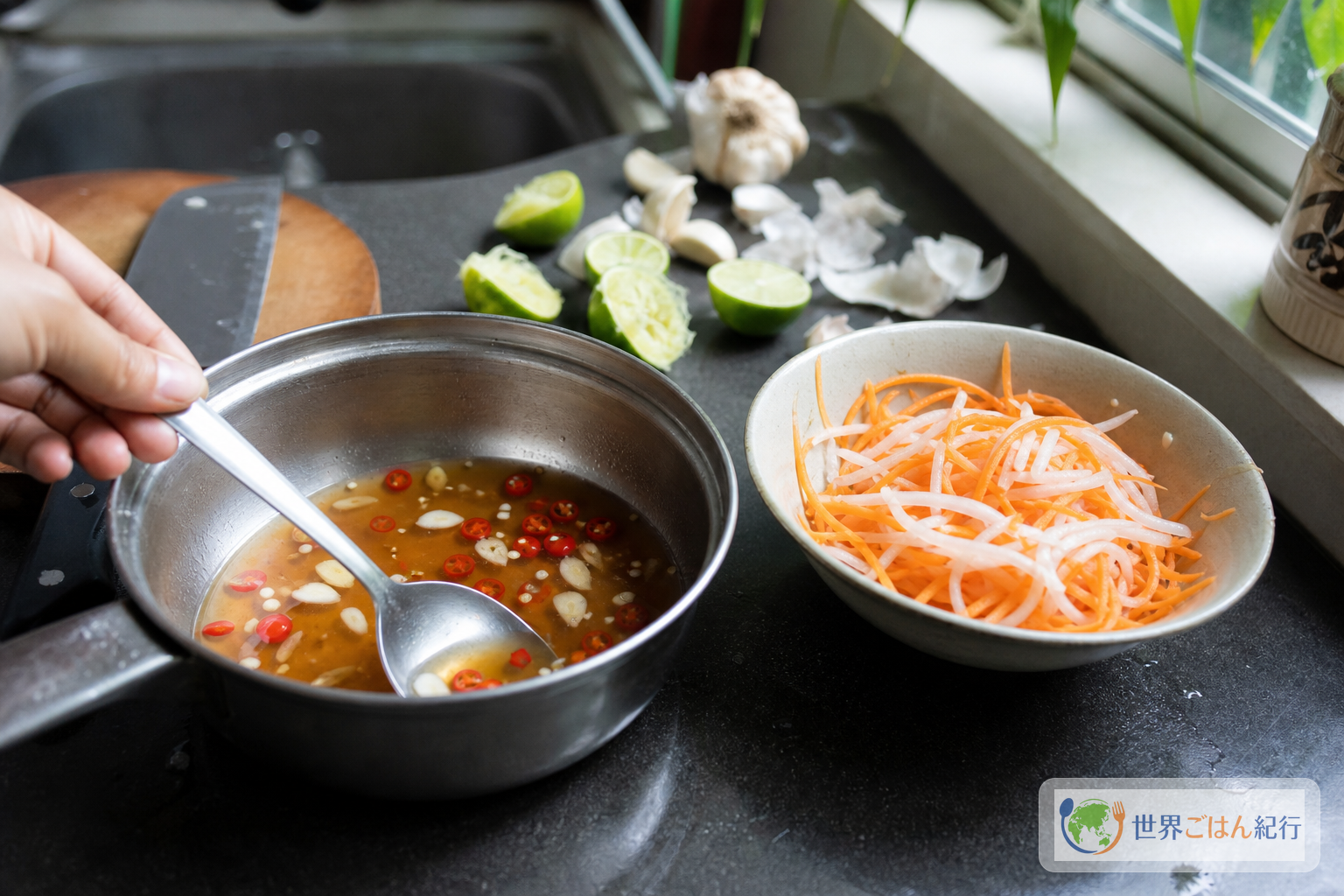
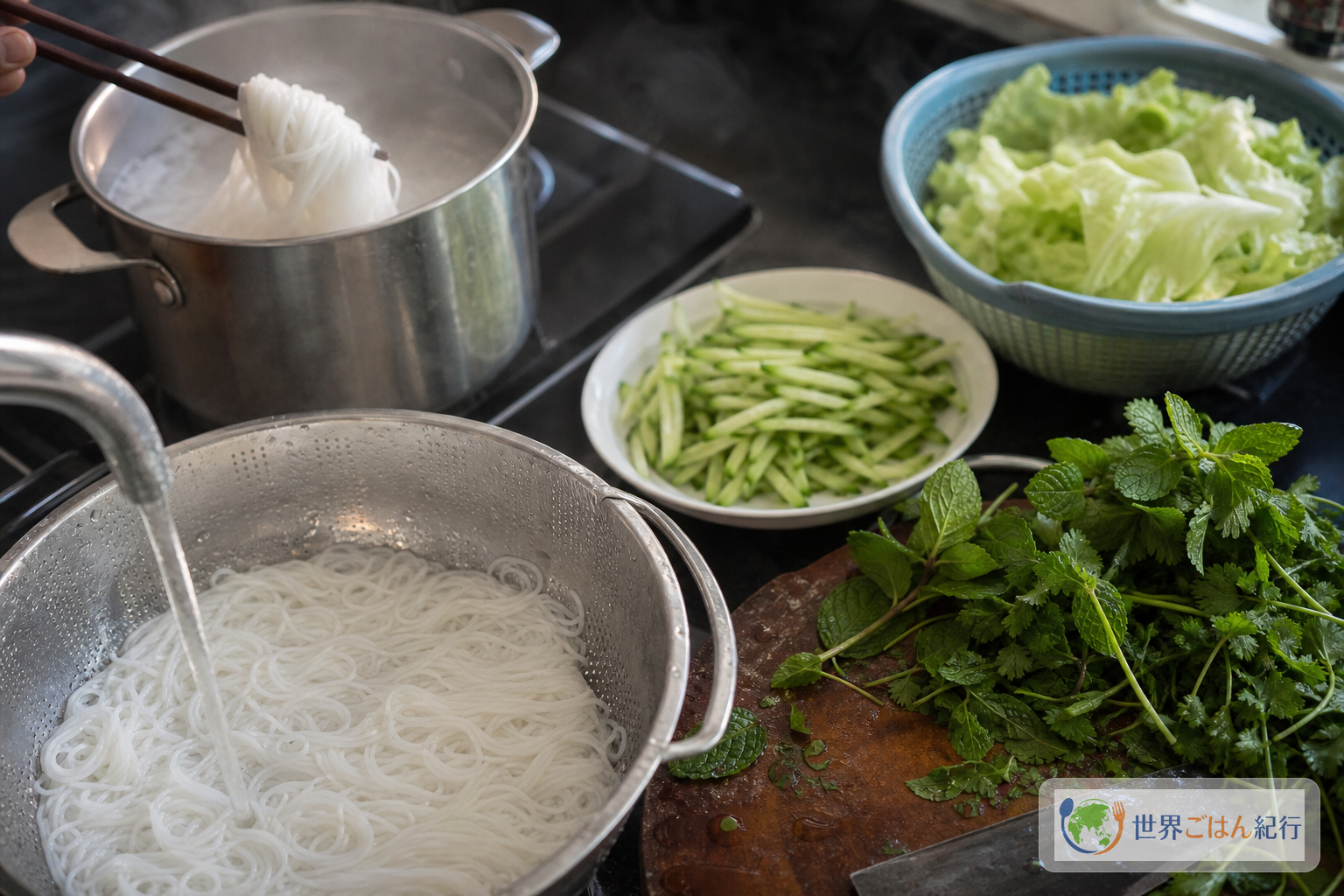
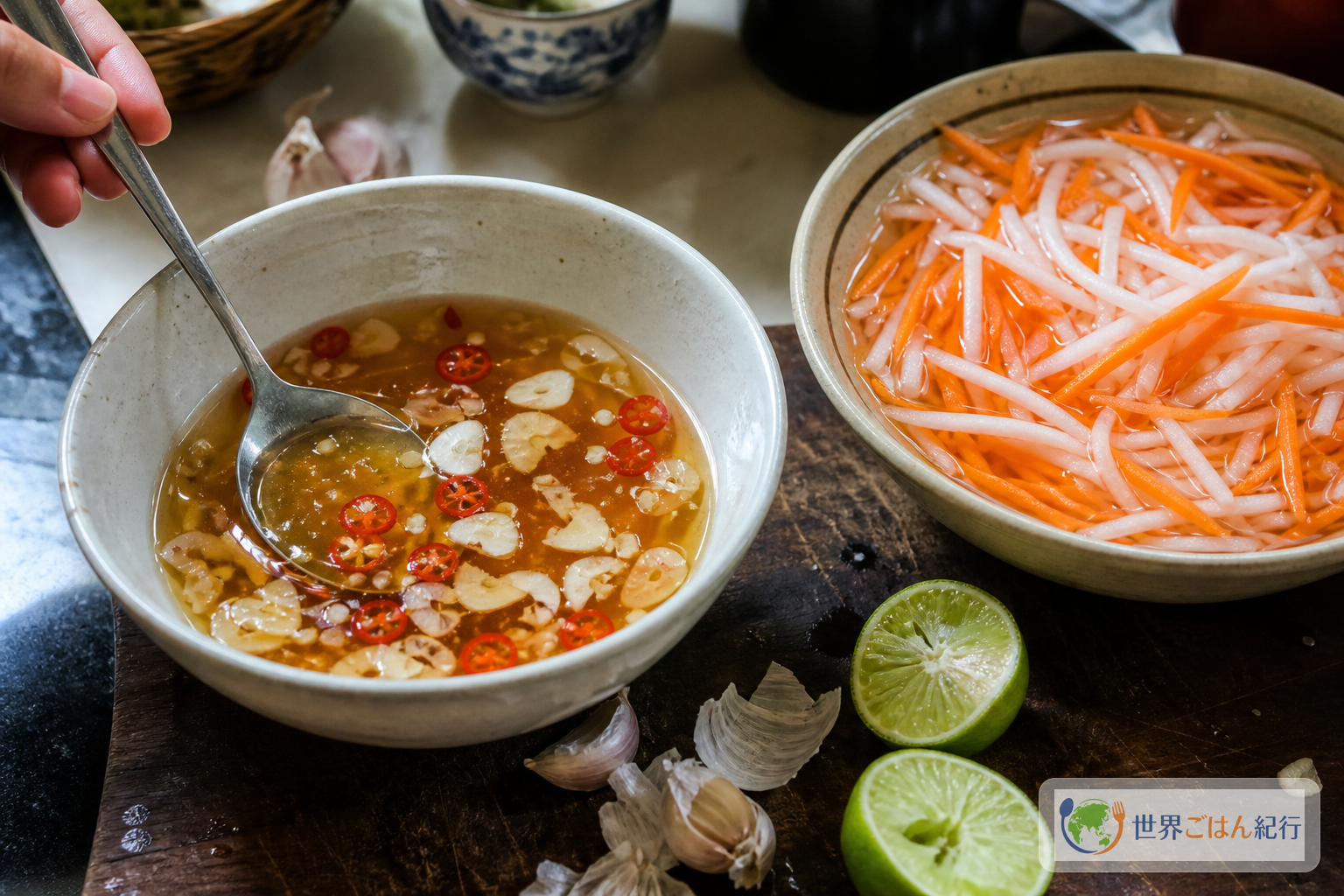
If the nước chấm is too salty, mix 2 tbsp water, 1 tsp sugar and 1 tsp lime juice to bring it back a little. Reducing only the fish sauce erases the lingering depth of fish sauce, so add sweetness and acidity together when you dilute. If the rice noodles clump, you drained them too thoroughly and left them for a long time. Just before eating, sprinkle on about 2 tbsp of lukewarm water, loosen them with chopsticks and then put them in the bowl.
Herbs wilt when hot pork is laid directly on a heap of leaves. In the bowl, put the rice noodles at the bottom, the meat in the center and the herbs at the side, and toss just before eating to keep the aroma. Crushing peanuts to a fine powder makes them soak up the dressing and get heavy, so leaving half whole is just right.
Storing it, and eating it the next day
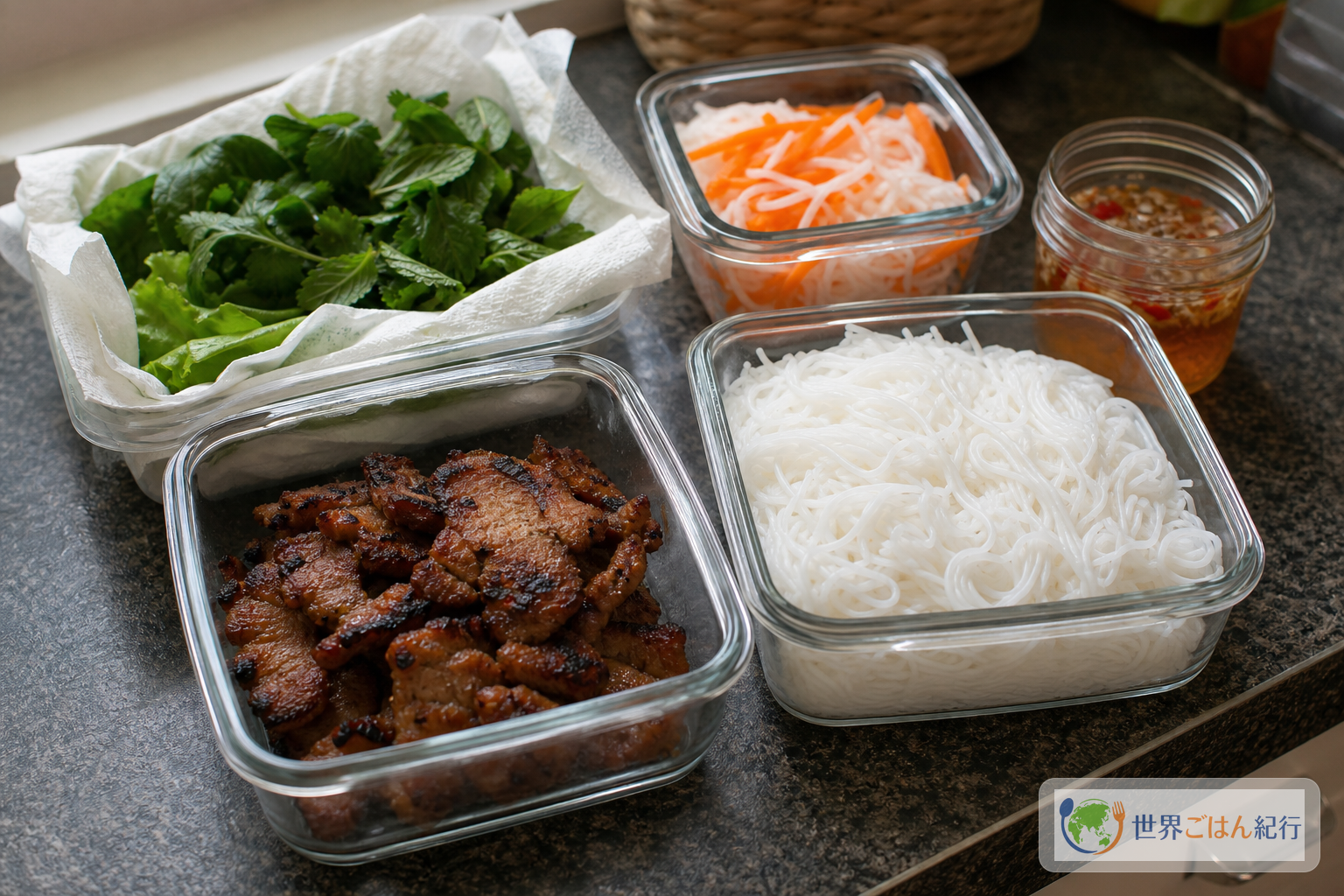
If you make ahead, don't store it mixed. Let the grilled pork cool, and aim for 2 days refrigerated in an airtight container. To eat it, put 2 tsp of water in a pan and warm it for 2–3 minutes over medium-low heat. In a microwave, use 600 W for 40–60 seconds and let it stand 30 seconds after heating; the meat is less likely to turn suddenly hard.
Keep the nước chấm about 3 days in a clean jar in the refrigerator. With garlic and chili left in, the aroma gets stronger, so if you will use it from the next day on, you may strain them out first. Finish the pickled vegetables within 2 days refrigerated. Rice noodles are best on the day, but if you have leftovers, drain them, refrigerate, and the next day pour boiling water over them for 10 seconds to loosen them. Aim for 1 day for herbs, washed and wiped dry and kept in a container lined with paper towels.
The next day you can use it without making a bowl. Wrap the warmed grilled pork in lettuce and dip in a little nước chấm, and it becomes a light side dish close to the way bánh xèo (in Japanese) is eaten. When you have few rice noodles, adding a little hiyamugi or somen still holds the meal together. But somen has salt, so start with less nước chấm.
Background: a southern bowl with plenty of room for tossing
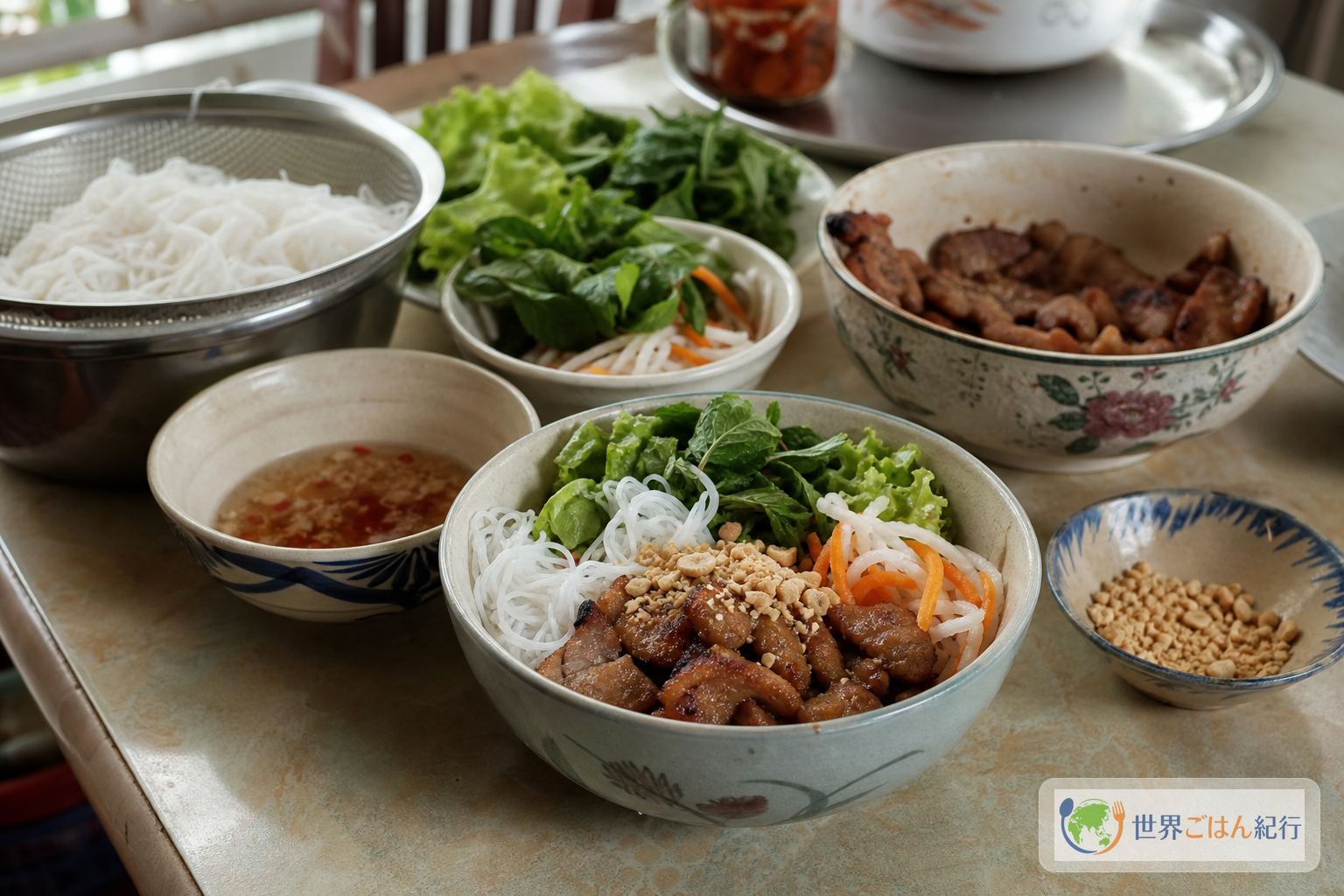
Vietnam's rice noodle dishes change character quite a lot from place to place. Northern bún chả sinks meat into a sweet-sour broth and combines noodles and herbs bit by bit. Central bún bò Huế (in Japanese) is a hot noodle soup with a broth of fermented shrimp paste and lemongrass. Southern bún thịt nướng brings in sweetness, herbs, peanuts and scallion oil, and the flavor is completed by tossing.
When you make the southern style at home, being too afraid of sweetness moves you away from the local outline. Sugar and honey are there not just to sweeten but to brown the pork and round off the corners of the fish sauce. Conversely, make the nước chấm too strong and the bottom of the noodles gets salty by the last bite. Rather than settling the dressing in one go, adding a little at a time over the bowl is less likely to go wrong in a home kitchen.
The easy things to substitute are the herbs. Even without tía tô or Vietnamese balm, combining perilla, mint and cilantro builds the layers of green aroma. The hard thing to substitute is lemongrass. Adding ginger or lemon zest still makes something delicious, but it won't have the aroma of grilled pork that makes it bún thịt nướng. This is the one thing worth seeking out, even frozen.
FAQ
Can I make it with something other than pork?
You can make it with chicken thighs. Slice into pieces about 1 cm (1/2 in) thick, marinate with the same seasoning for 30 minutes, and cook over medium heat 3–4 minutes on each side. Beef works too, but the sweet grilled-pork feel from fish sauce and sugar is weaker. For the first time, pork shoulder or pork belly is recommended.
What if I don't have lemongrass?
You can omit it, but the center of the dish is a little missing. On days you really can't get it, use 5 g of ginger, 1/2 tsp of grated lemon zest and a little more garlic. This is a shortcut for a home kitchen, though, not the local aroma itself. If you like it, look for frozen lemongrass next time.
Can I use rice noodles for pho?
Wide pho-style noodles are edible, but the lightness typical of bún thịt nướng is harder to get. If you can, choose thin rice noodles, rice vermicelli, or round rice noodles labeled "bún." If you use wide noodles, make the nước chấm slightly weaker and add more herbs and cucumber, and it is less likely to feel heavy.
Can I make it without heat for kids?
Yes. Leave the chili out of the nước chấm and add chili only to the adults' bowls. If a child dislikes the smell of fish sauce, don't pour all the dressing from the start; begin with 1 tbsp in the child's bowl. Fish sauce is also in the marinade for the pork, so leaving it out entirely makes it a different dish.
What goes with it to make a menu?
If you add a soup, a clear chicken soup or a simple phở gà (in Japanese) broth works. On days you want a little fried food, chả giò (in Japanese), which you eat with the same nước chấm and herbs, is the natural choice. To branch out in Vietnamese cooking, moving on to bánh xèo (in Japanese) that you wrap to eat, the noodle soup bún bò Huế and northern bún chả lets you reuse rice noodles, herbs, fish sauce and lemongrass without strain.



