Mè Xửng Huế: Sesame on the Outside, Peanuts Inside, a Chew in Between
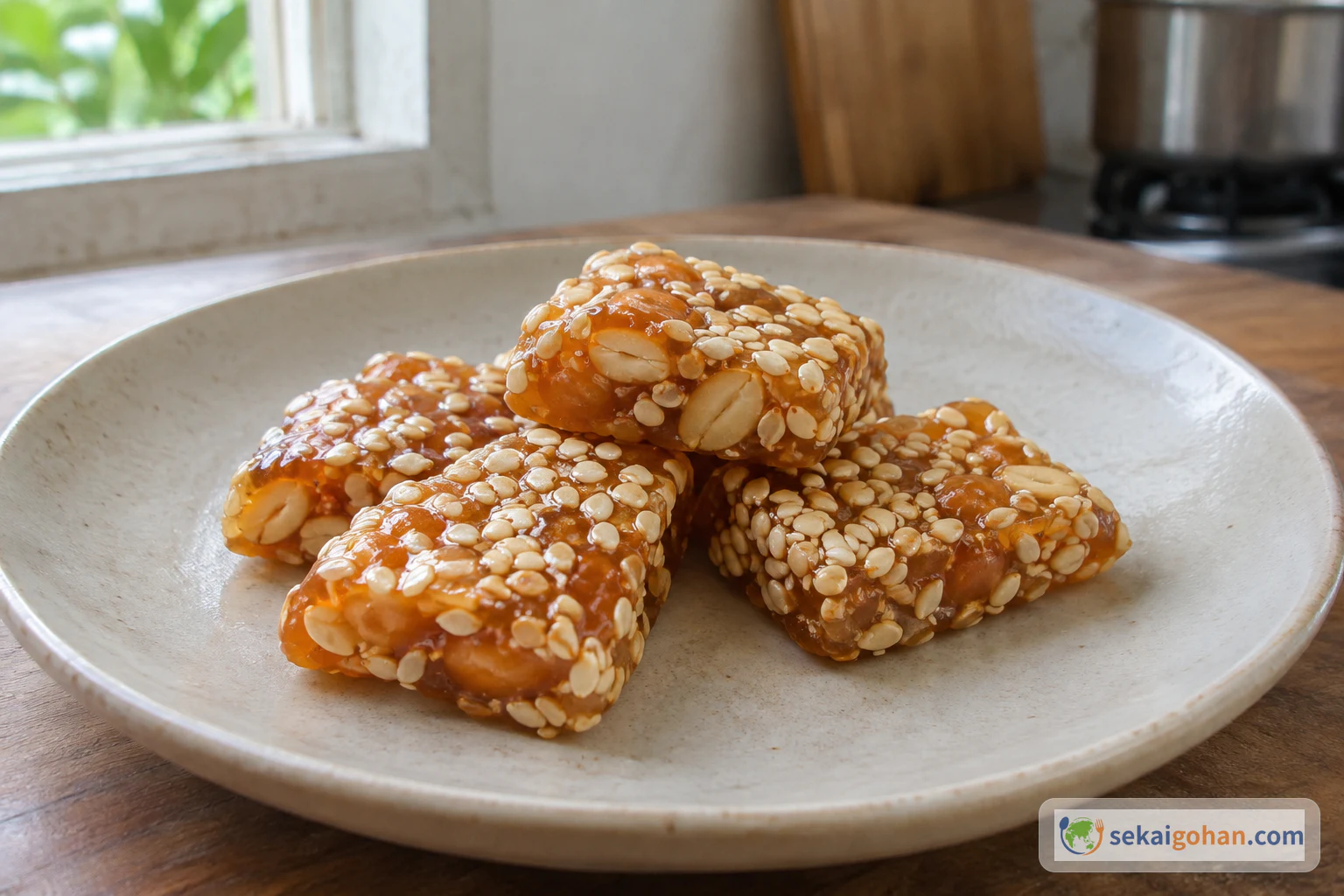
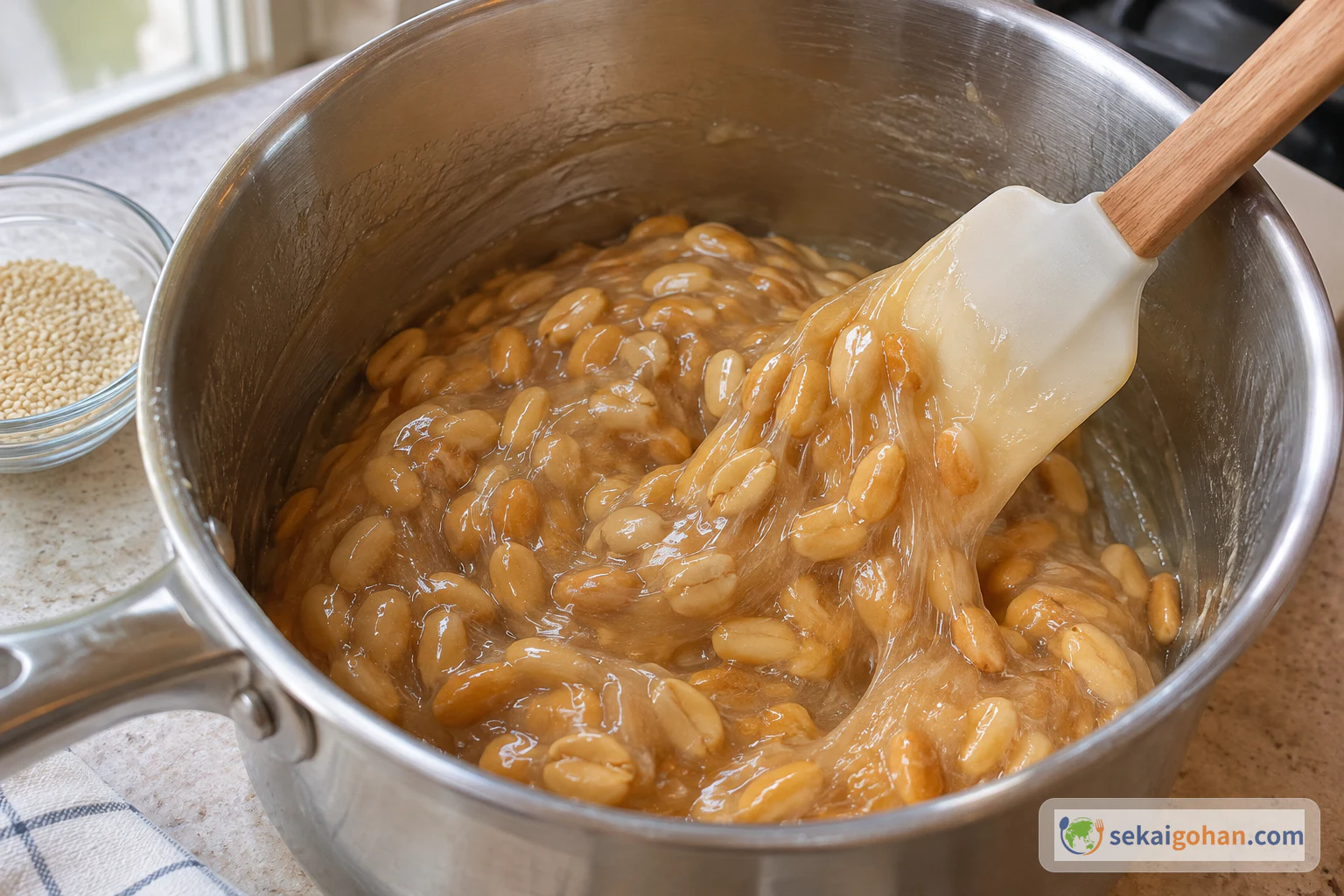
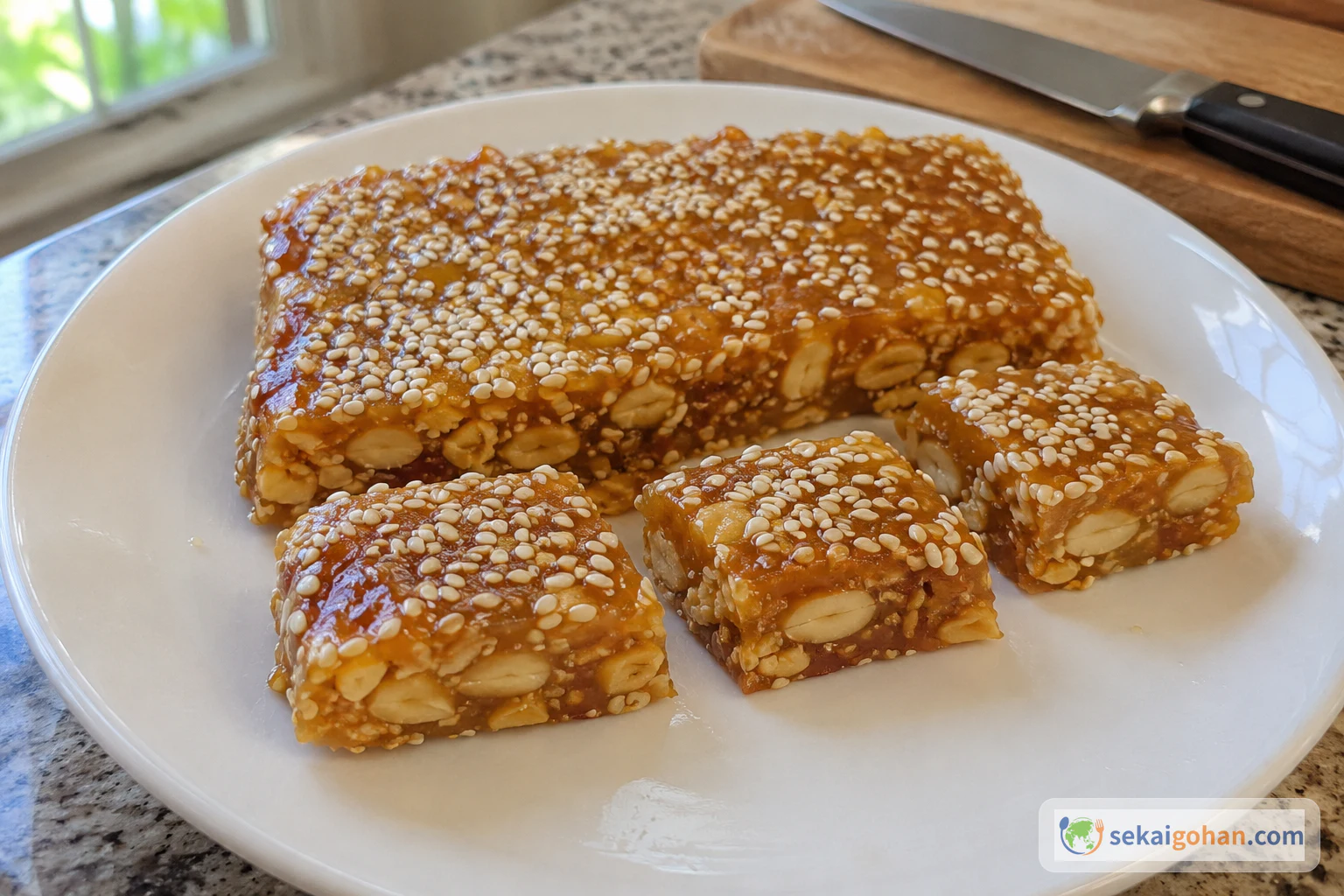
Roasted sesame on the top and bottom, peeled roasted peanuts inside, and a syrup cooked only until it turns honey-colored. This is the chewy style of mè xửng, not the thin, glassy mirror style or the crispy style made with rice wafers.
Mè xửng is a sesame sweet closely tied to Huế, the old capital in central Vietnam. In a 2024 Việt Nam News feature, Huế confectioners describe two main faces of it: a thick, chewy candy around 3 cm deep, and a thin, transparent "mirror" type. The same feature presents it as a Huế specialty bought as a gift and souvenir, and eaten with lotus-scented tea.
This article makes one home version of the chewy type. The formula comes from recipe developer Herman Huang, who recreated the candy in his own kitchen after visiting Vietnam in 2019; it was published by Kat Lieu on Modern Asian Baking. It is one cook's home recreation, not the formula of a Huế workshop or factory, and Huế makers' own recipes may differ. Sekai Gohan has not kitchen-tested this recipe.
The method is short but works with hot sugar syrup, so read it through once before you start. For more dishes from the same country, see Vietnamese recipes.
Chewy, Mirror and Crispy: Which Mè Xửng This Is
Mè xửng is not one fixed candy. The travel site GoVietnam distinguishes the chewy (dẻo) type, an improved chewy type and a crispy (giòn) type, and describes the candy broadly as built on sesame, malt syrup (mạch nha) and sugar, with peanuts added by some makers. Sovaba Travel likewise sorts it into chewy, crispy and mirror types, and both travel sites suggest eating it with tea.
| Type | How it is described | In this recipe |
|---|---|---|
| Chewy (dẻo) | Thick, soft-chewy candy; Việt Nam News describes a thickness of around 3 cm | This is the type made here, with peanuts |
| Mirror | Thin and transparent | Not covered; it needs a different syrup and thickness |
| Crispy (giòn) | Served with rice wafers for a crisp texture | Not covered; the texture and method are different |
The home recipe used here does not include malt syrup, rice wafers or ginger, even though other makers' versions may. Mixing ingredients from different styles into one pan would not give you any of them faithfully, so this article keeps to a single chewy formula.
Ingredients: One Small Batch of Chewy Sesame-Peanut Candy
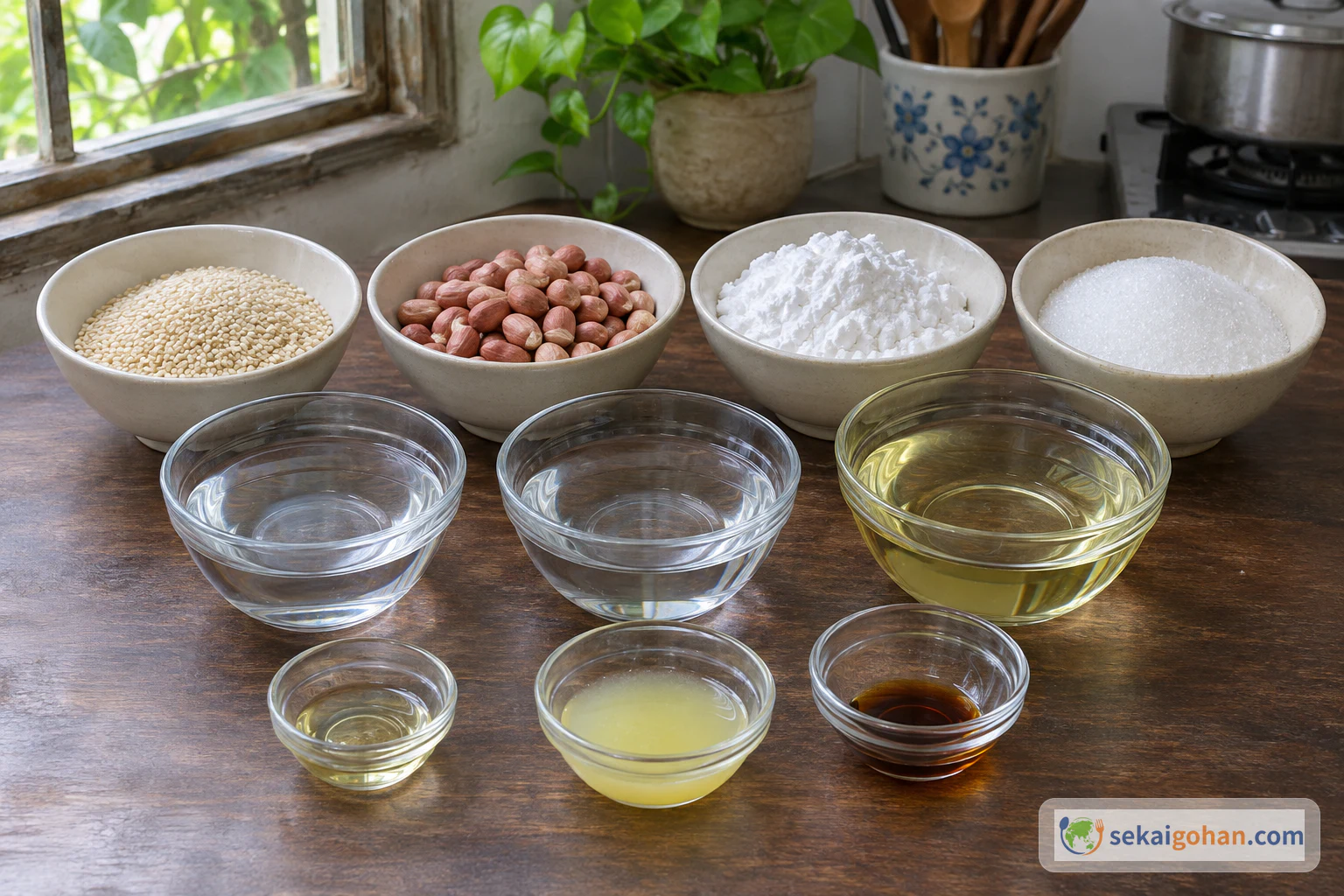
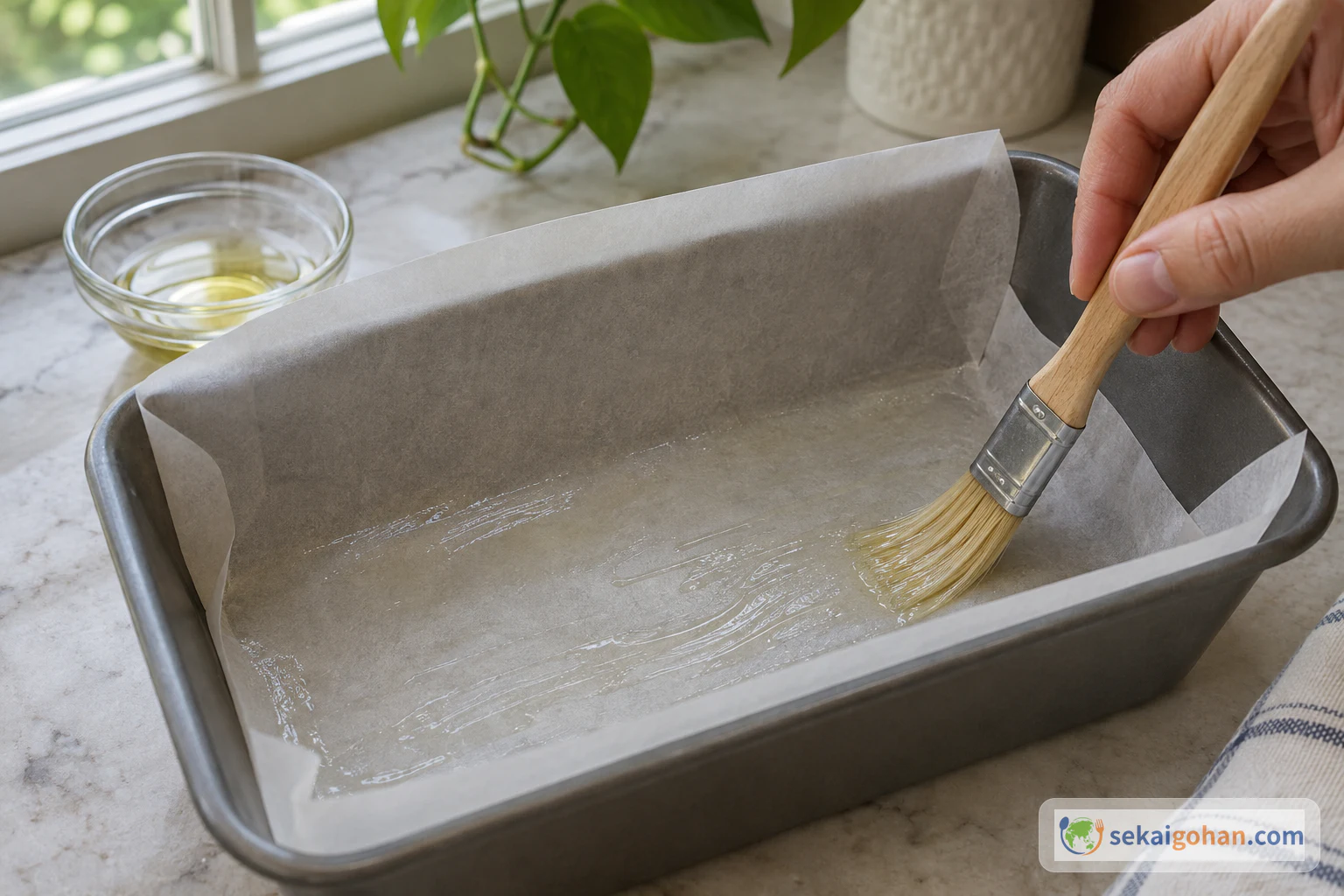
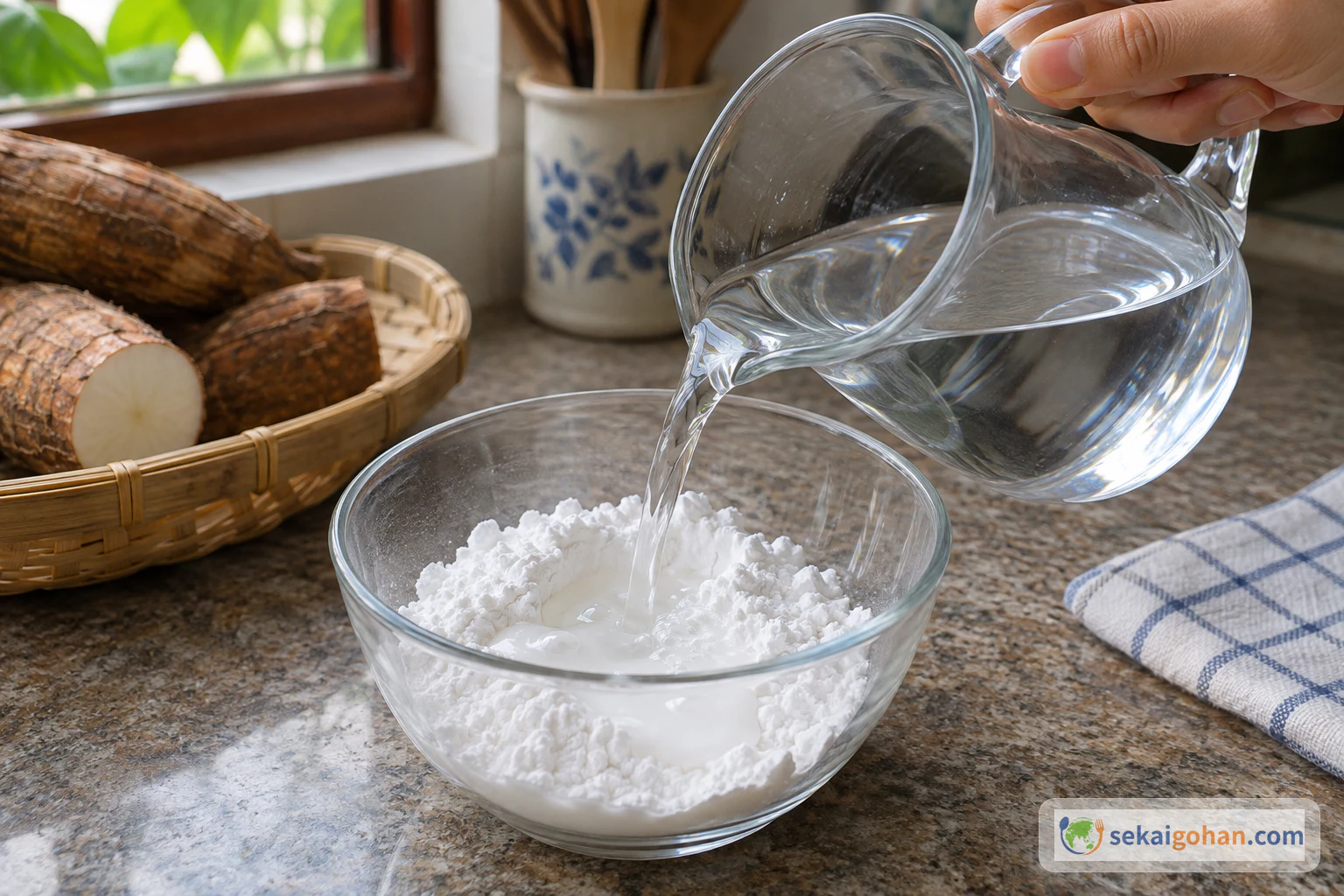
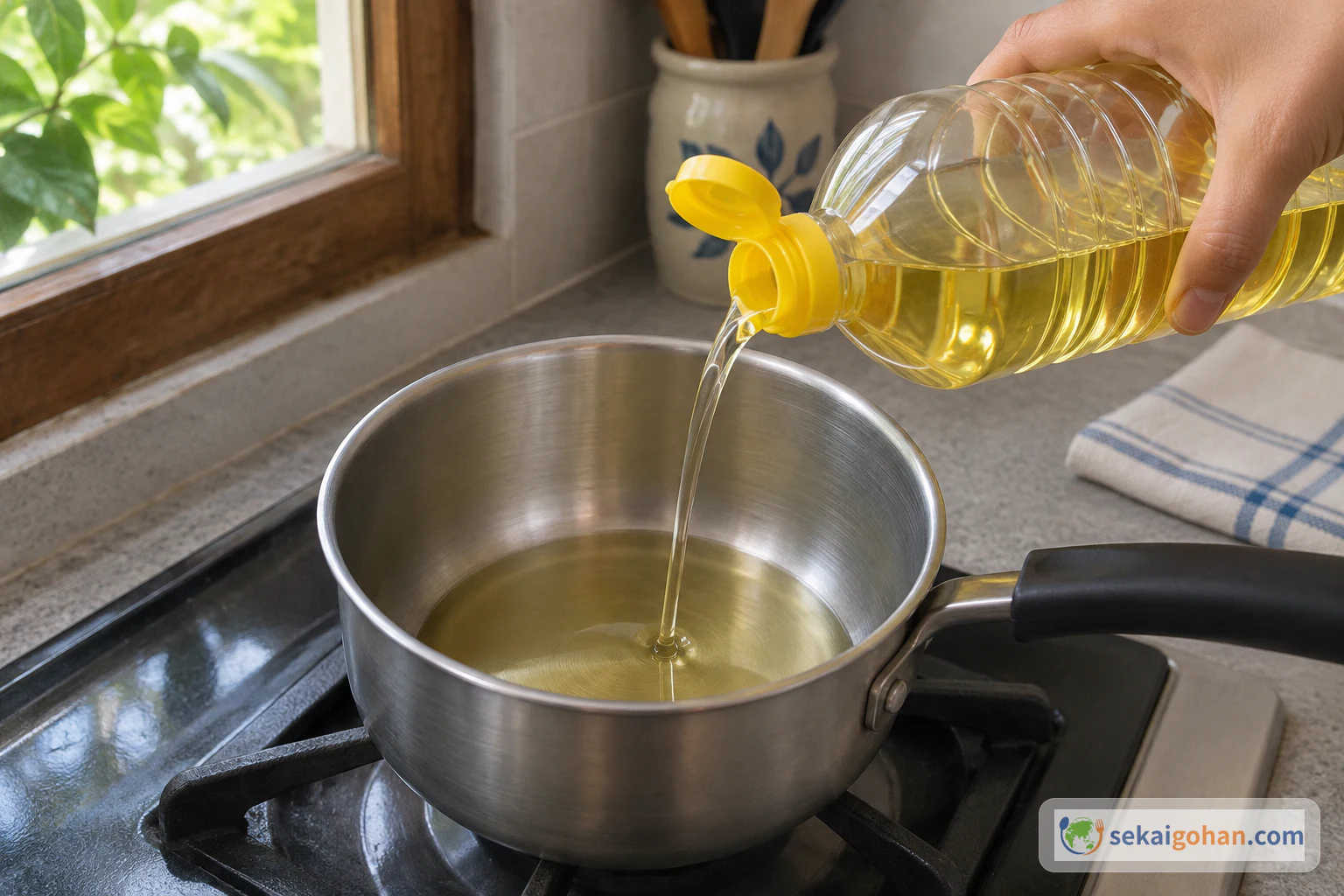
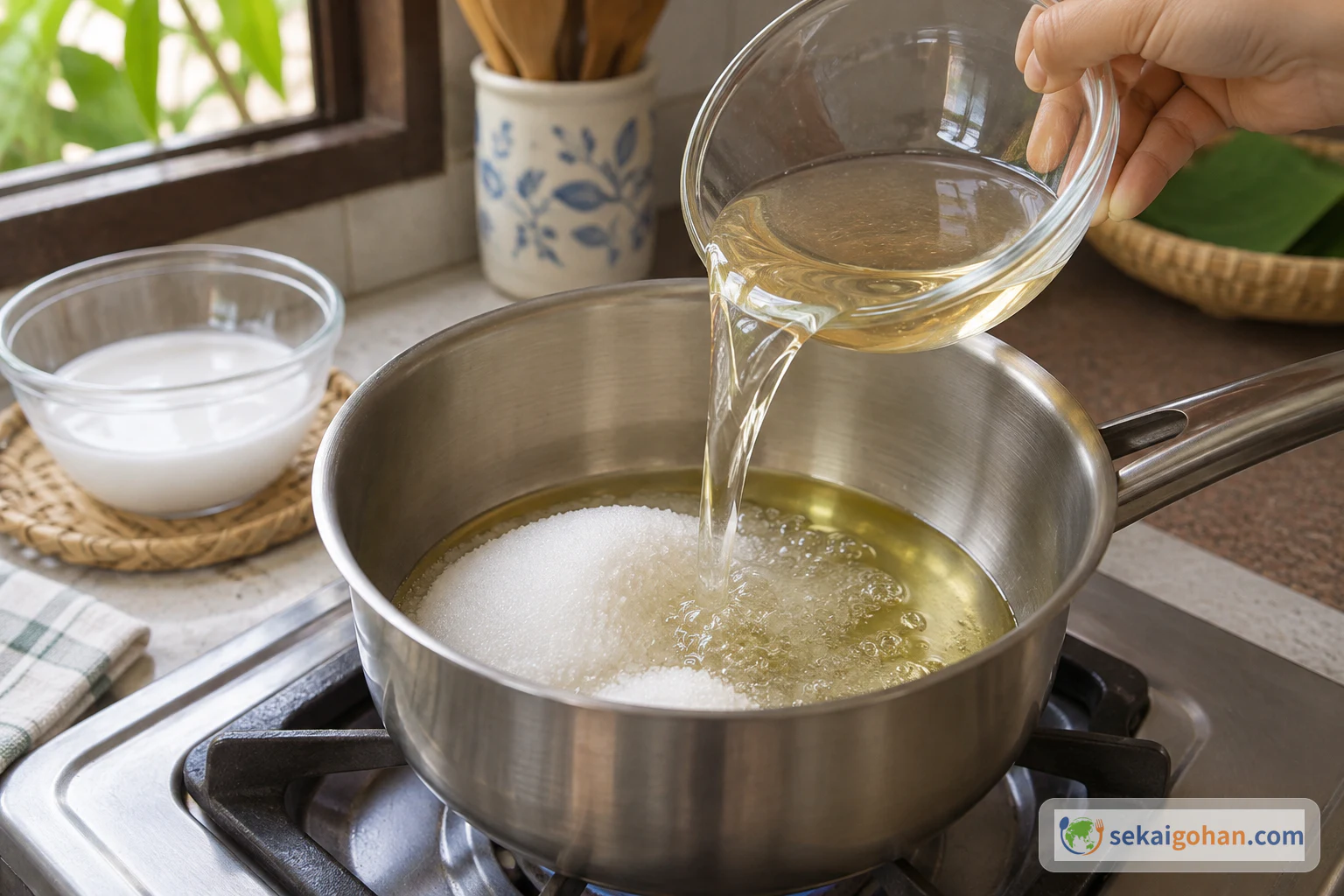
Water and oil each appear twice. One 40 ml portion of water goes into the starch, the other into the syrup. The 1/2 tablespoon of oil goes into the syrup; the oil for greasing the pan is a separate small amount.
This candy contains peanuts and sesame. Tapioca starch is not wheat starch, but check the packaging of the starch, sesame and peanuts for cross-contact statements if you are cooking for someone with allergies.
Equipment
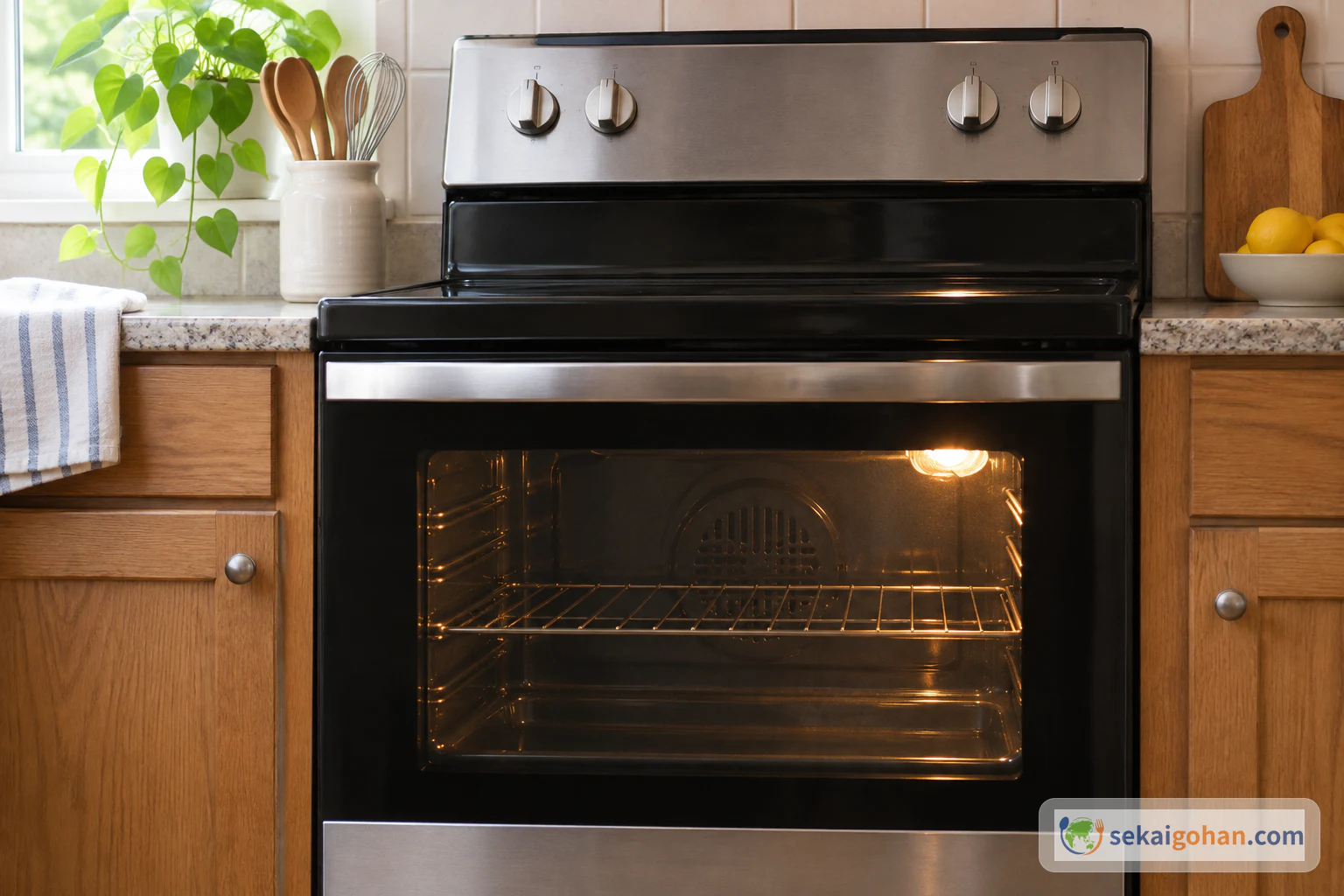
- Oven
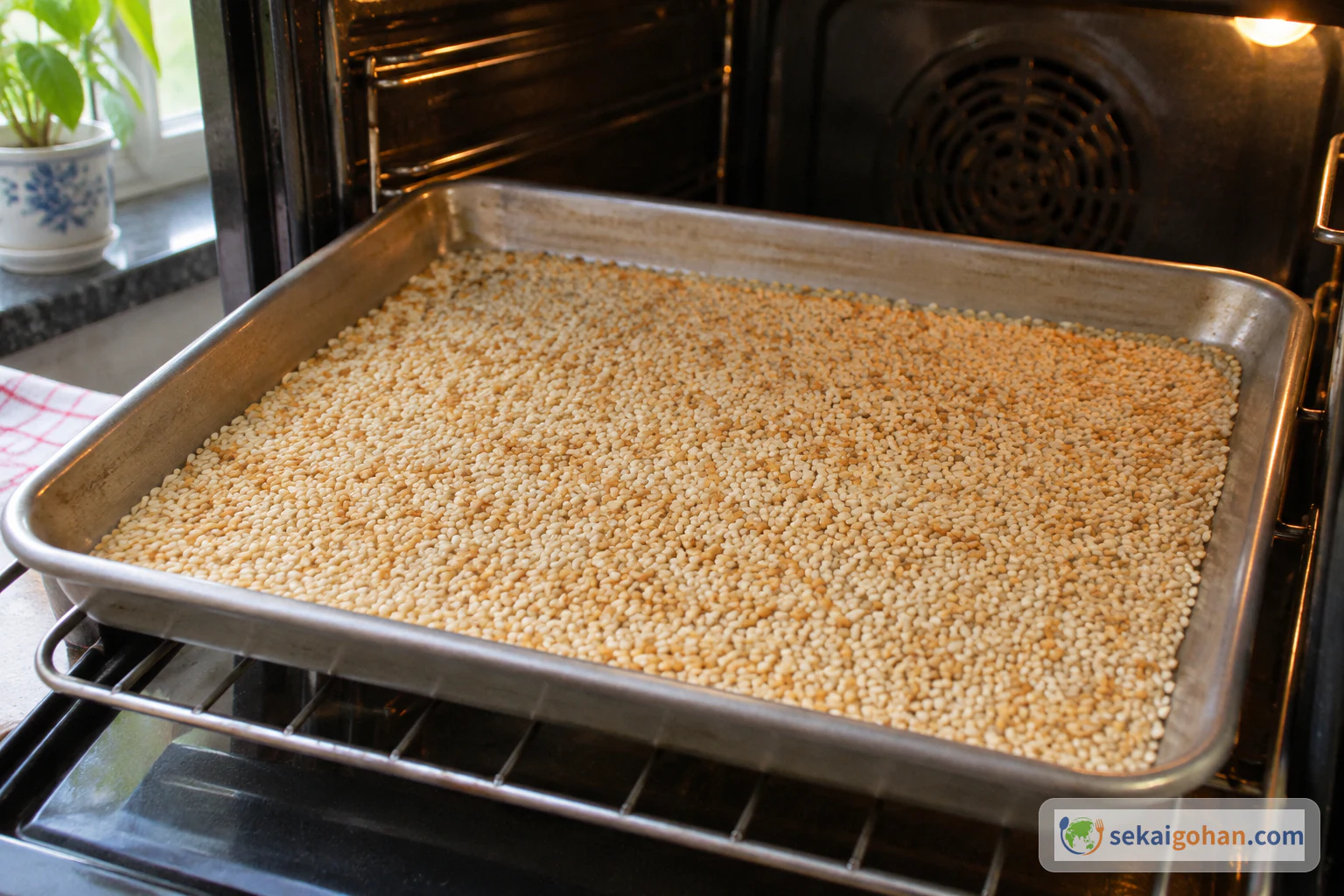
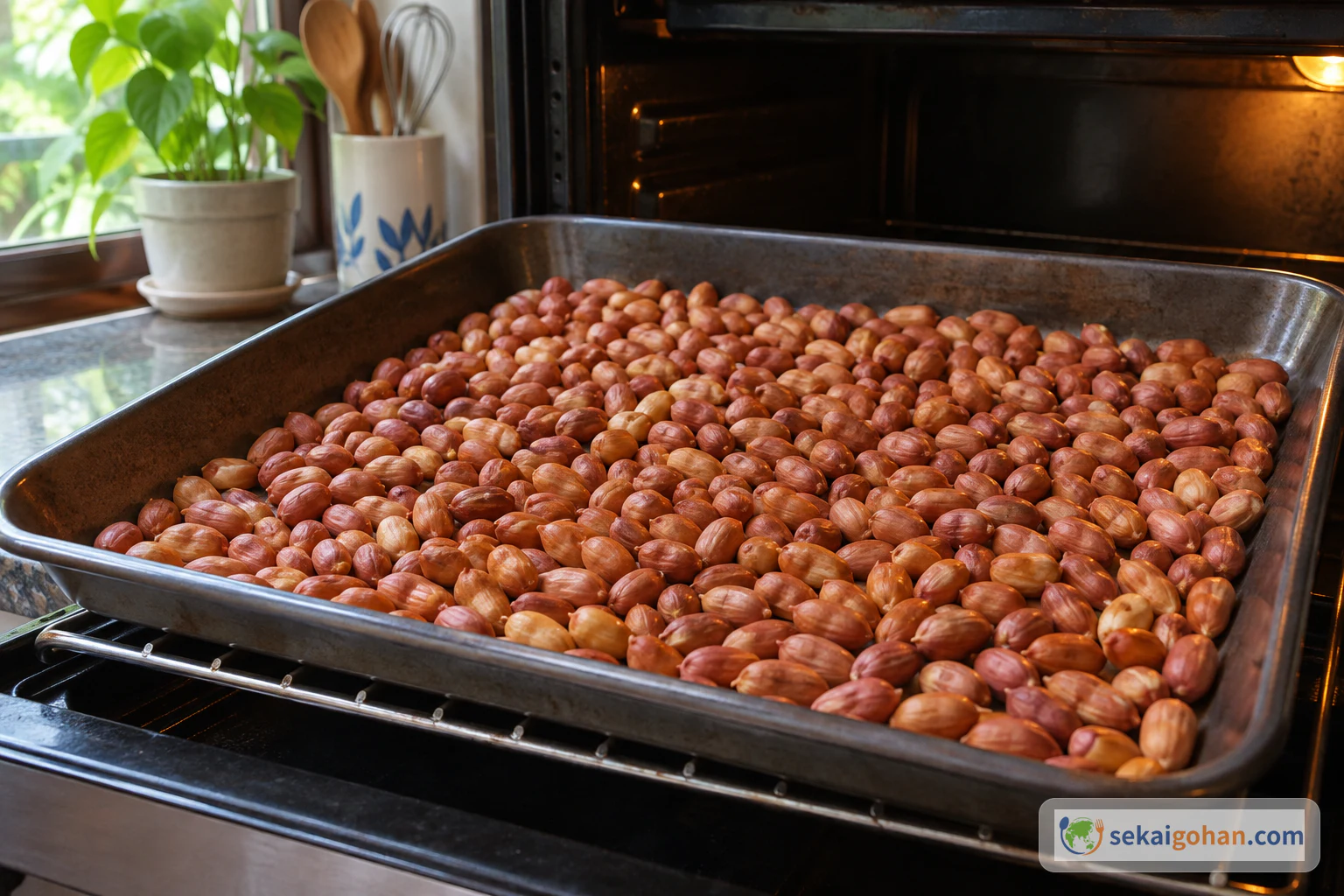
- Oven tray (for roasting the sesame and peanuts separately)
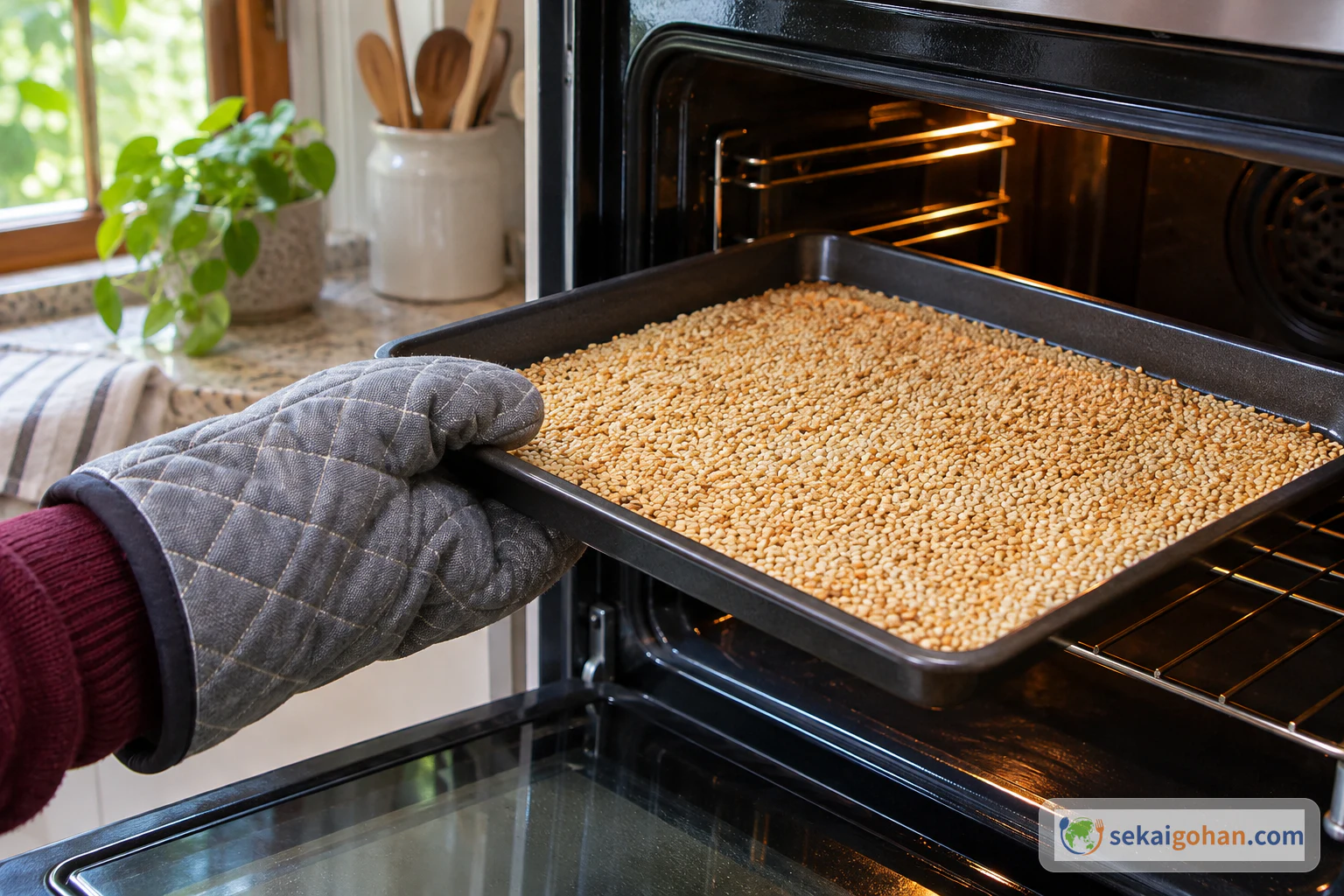
- Oven mitts
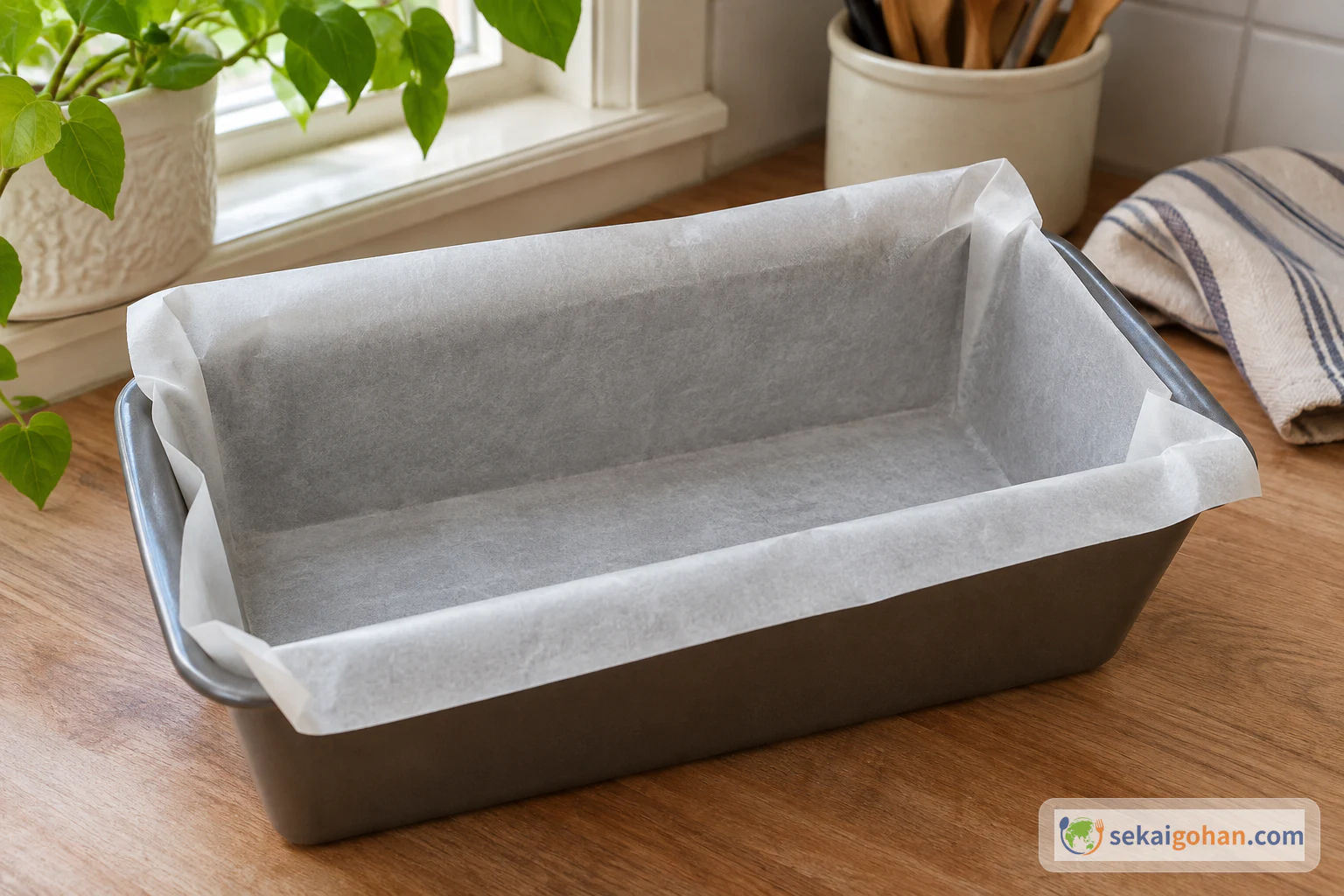
- Baking pan (the photos show a loaf pan)
- Baking parchment
- Pastry brush
- Small bowl and a whisk or spoon for the slurry
- Small saucepan
- Heatproof spatula
- Small spoons for the lemon juice and vanilla
- Clean knife and cutting board
Choosing and Substituting
- Sesame: buy raw, unroasted white sesame. The seeds are roasted in the oven, so pre-roasted sesame would be roasted twice. Black sesame is possible, but it changes the color and aroma.
- Peanuts: raw, unsalted shelled peanuts with their thin skins suit the method, since the peanuts are roasted and then peeled.
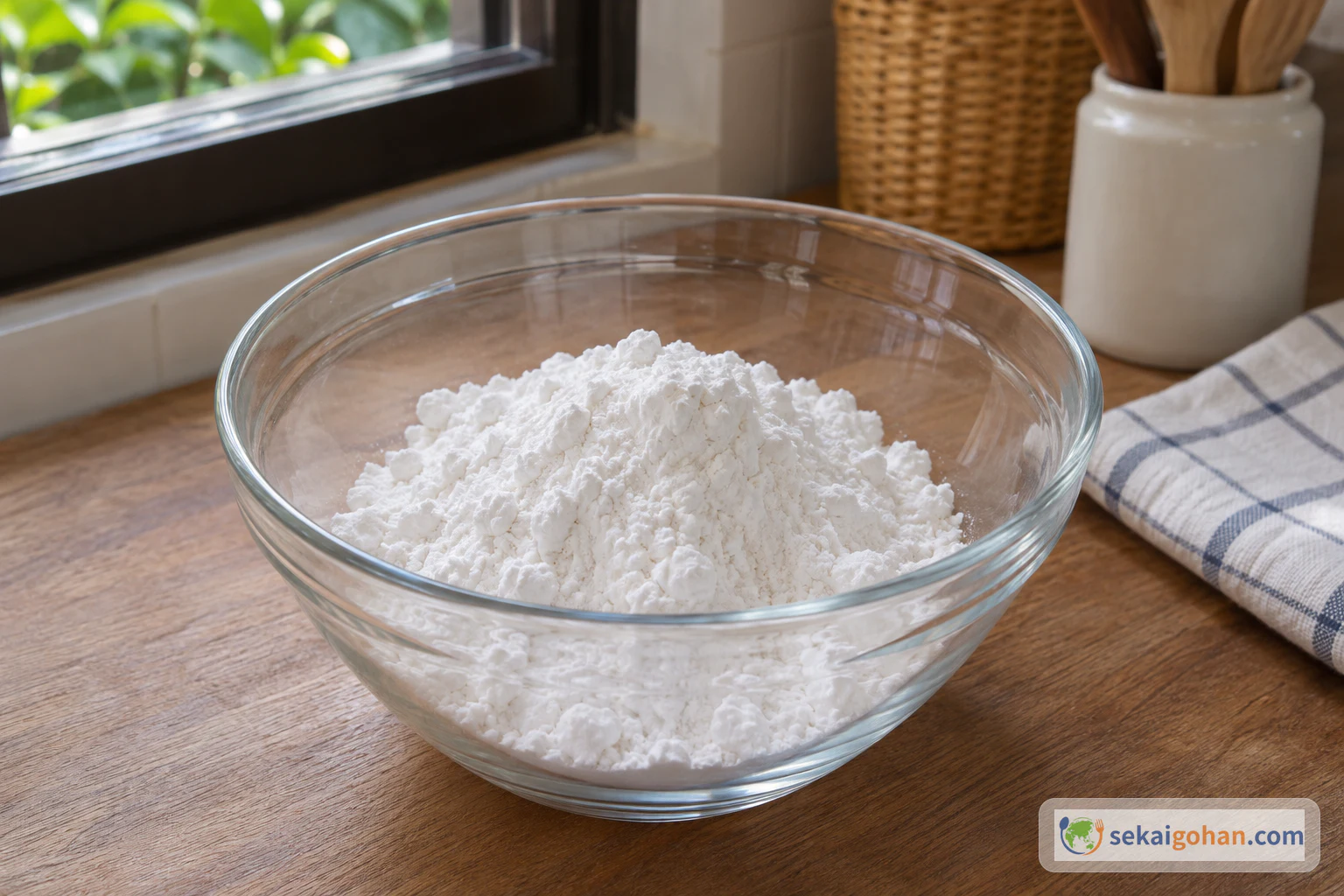
- Tapioca starch: this is also sold as cassava starch. Potato starch (such as Japanese katakuriko) has not been shown to give the same texture, so it is not used as a stand-in here.
- Oil: a mild vegetable oil with little aroma is a reasonable choice for both the syrup and the pan.
- Other nuts: swapping in other nuts moves away from the Huế peanut type and does not make the candy safe for anyone with nut allergies.
- Thermometer: a thermometer is not required. Watch for the syrup to turn honey-colored.
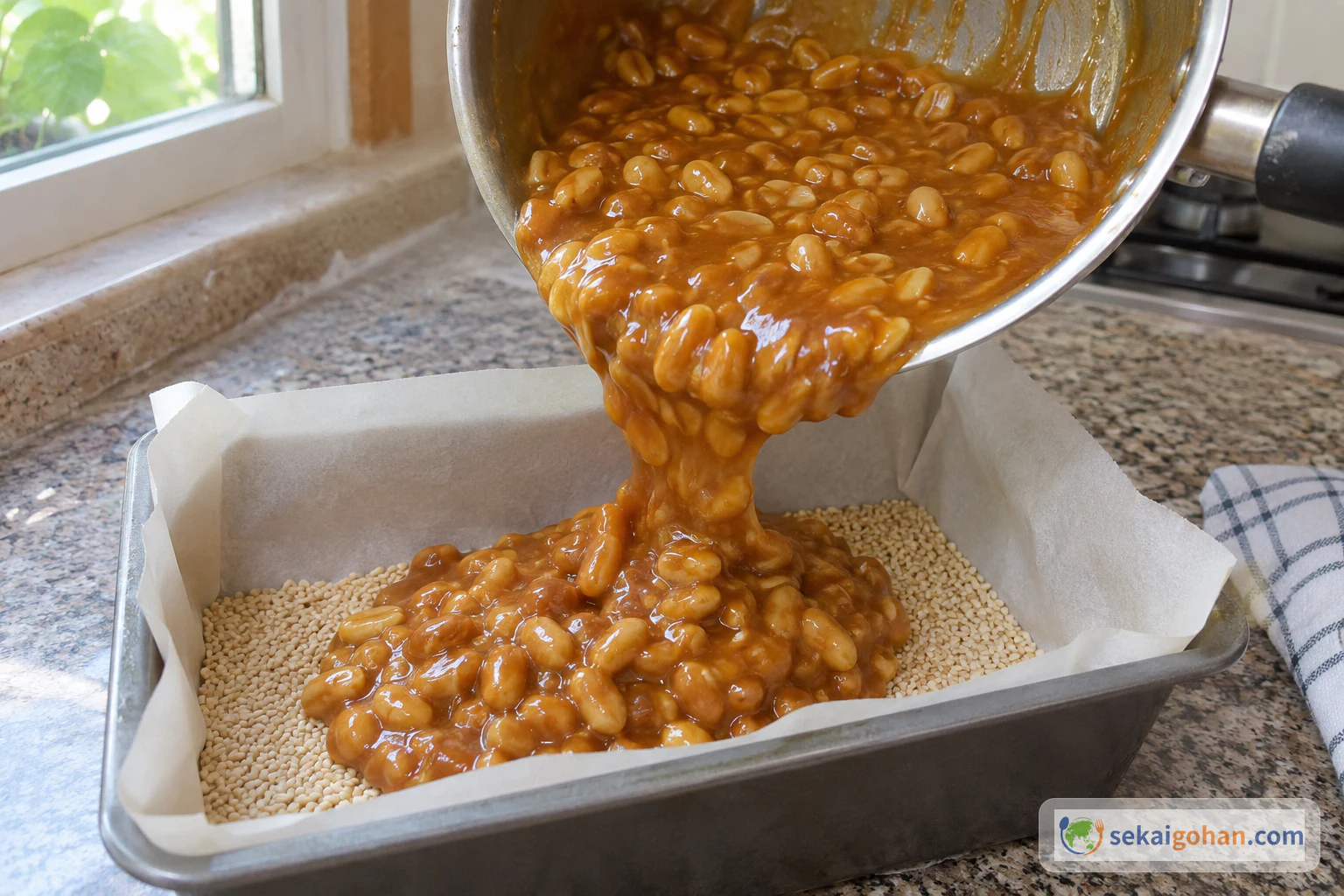
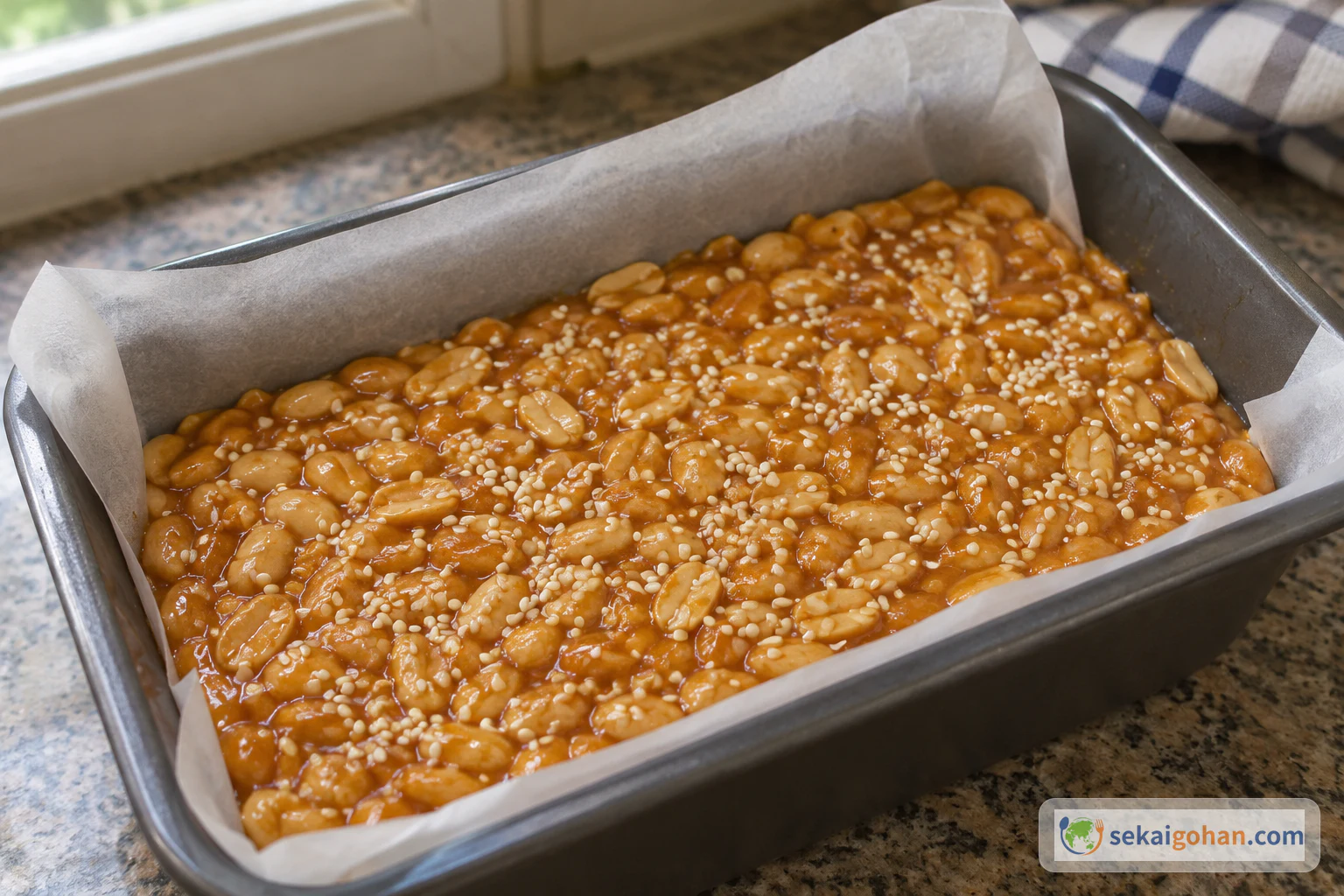
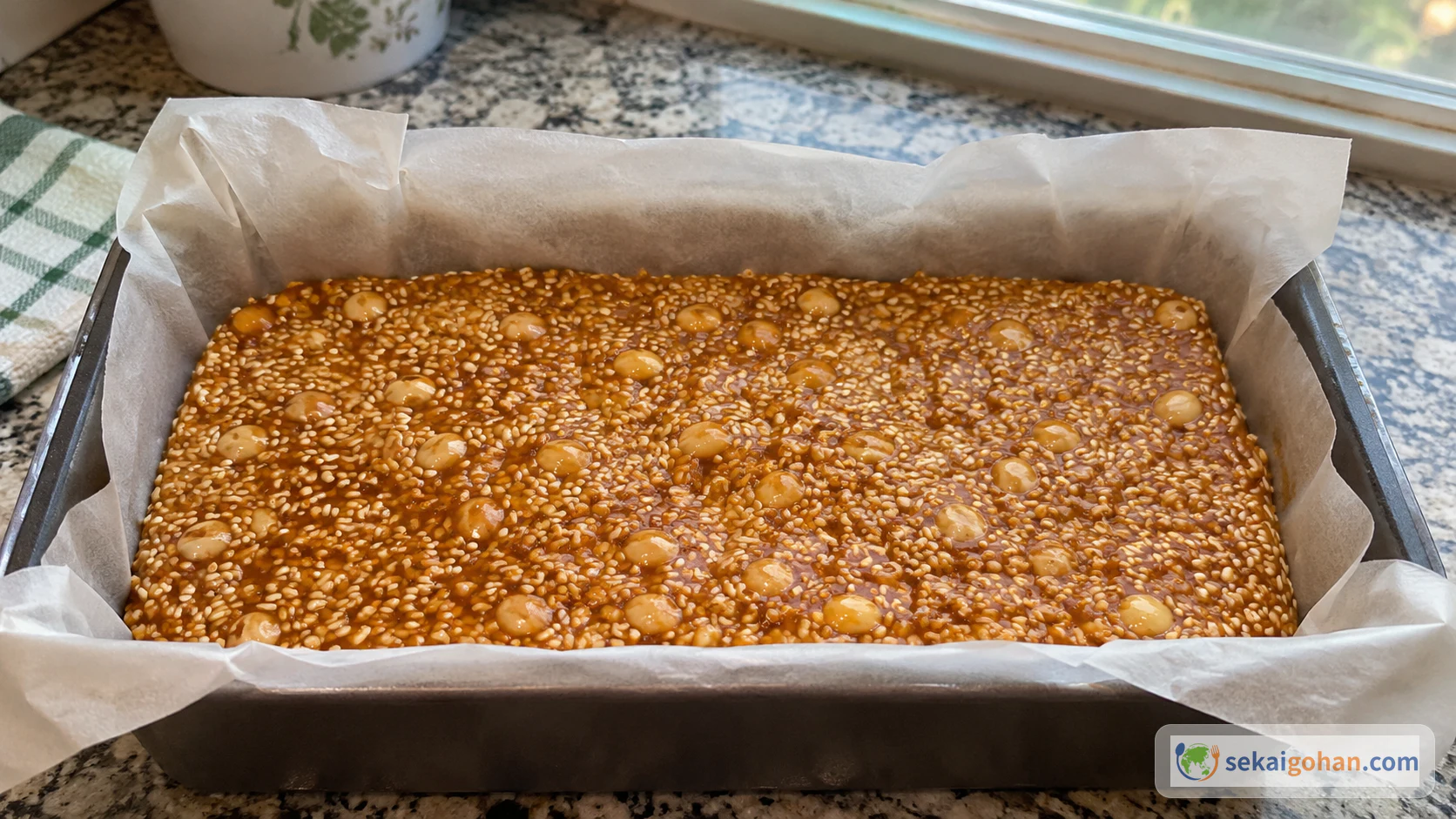
Method: Roast, Prepare the Pan, Cook the Syrup, Set
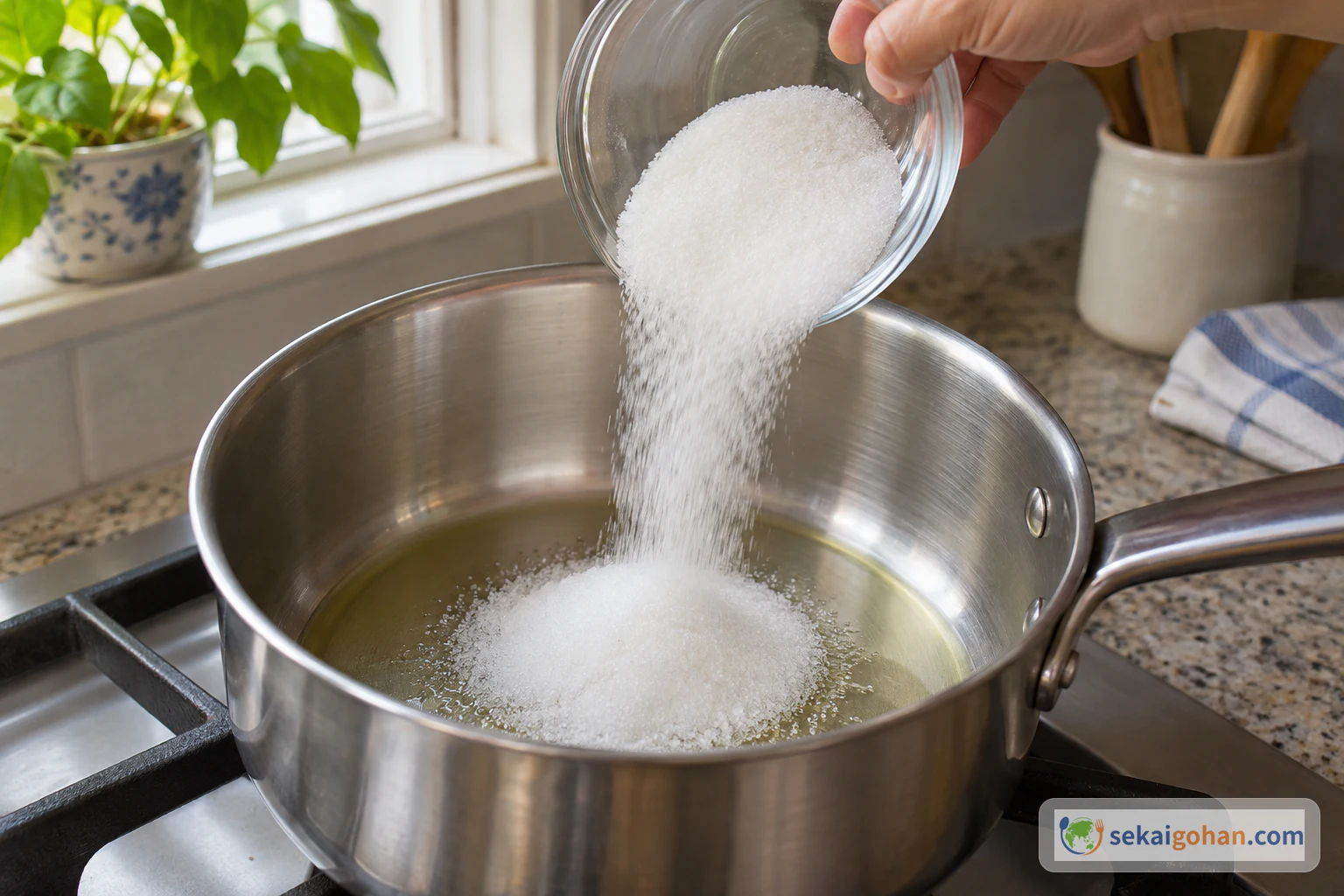
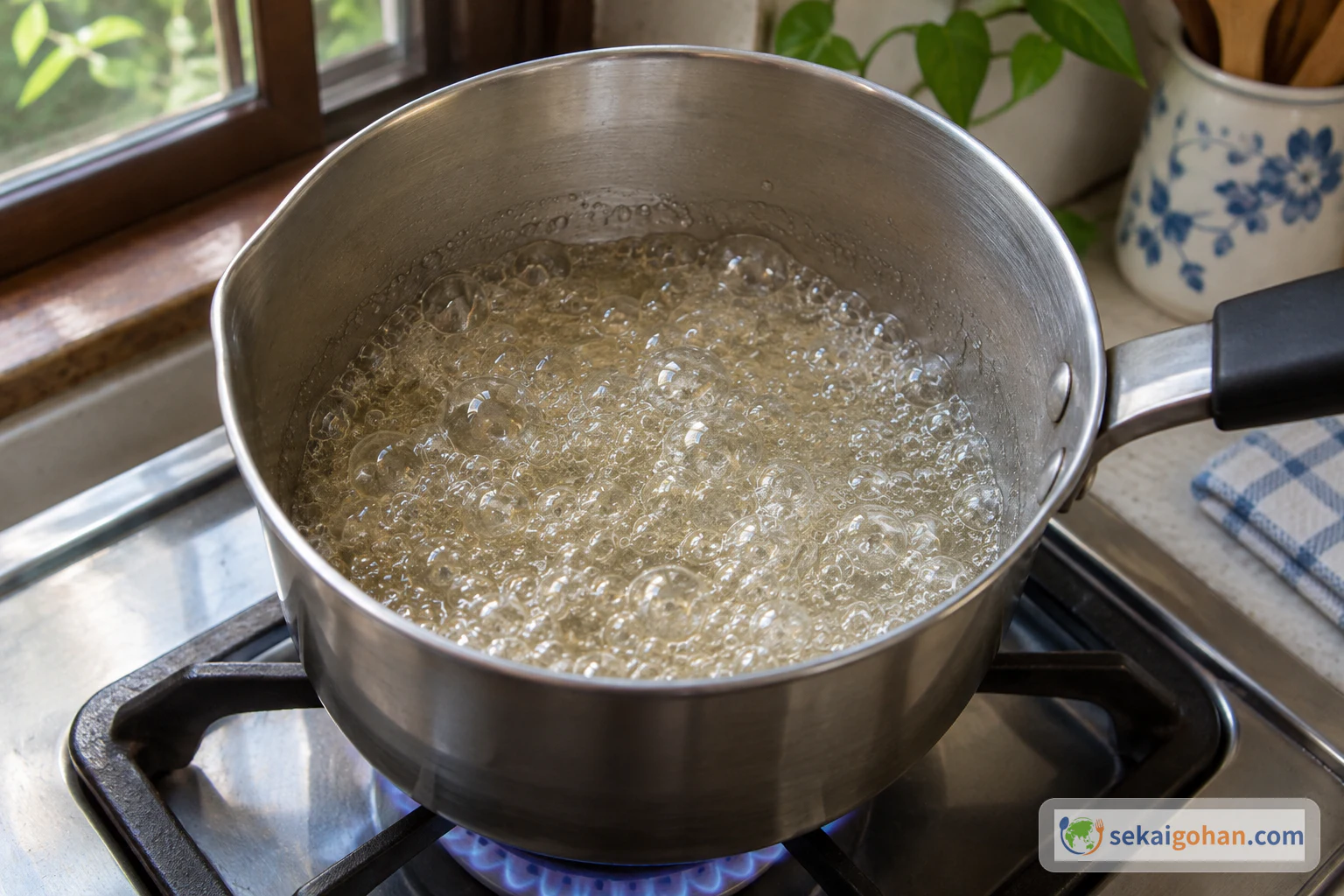
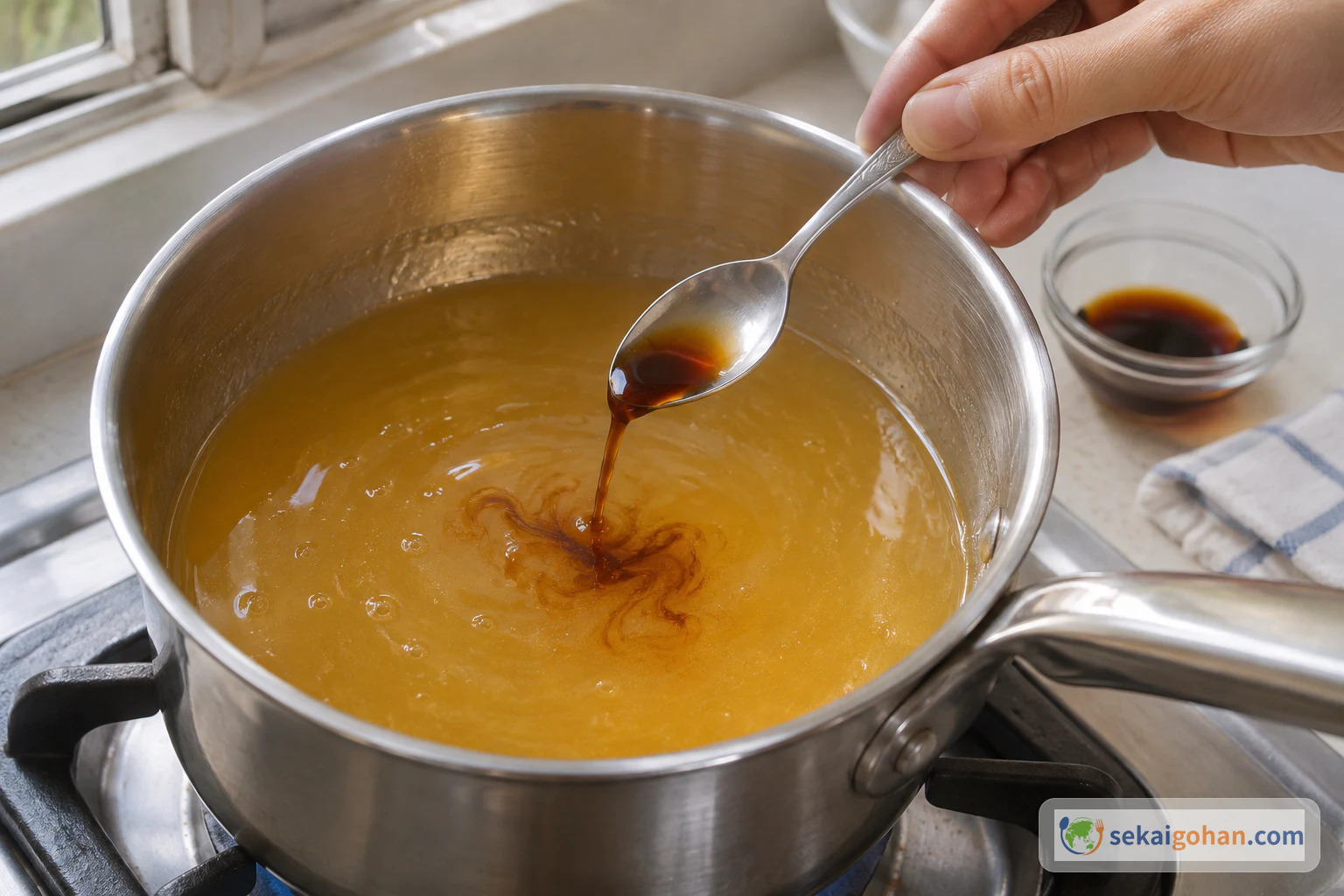
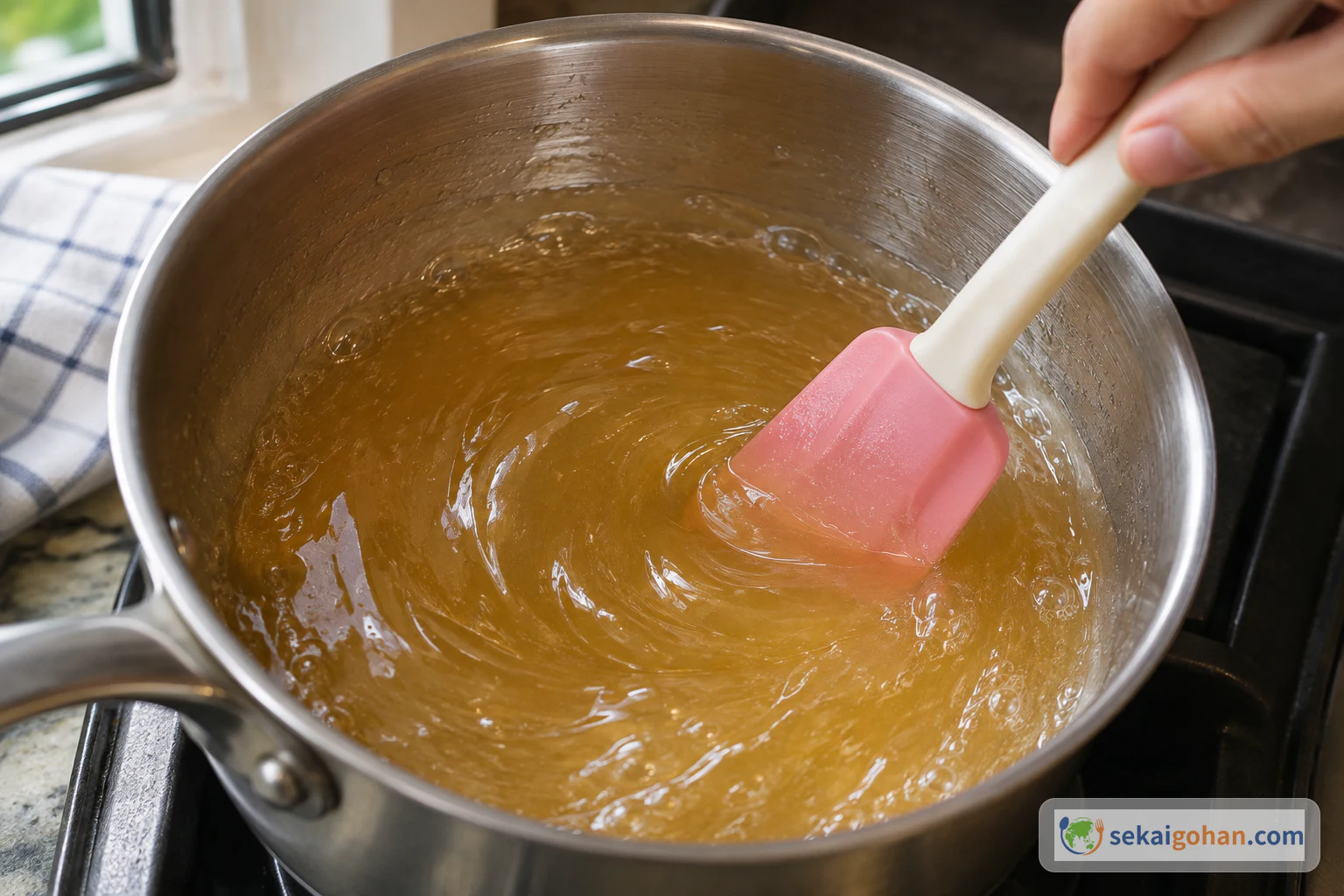
Cooking sugar syrup is very hot and sticks to skin. Use a stable saucepan on a burner where it cannot tip, keep children away from the stove, and stir and pour slowly with a heatproof spatula.
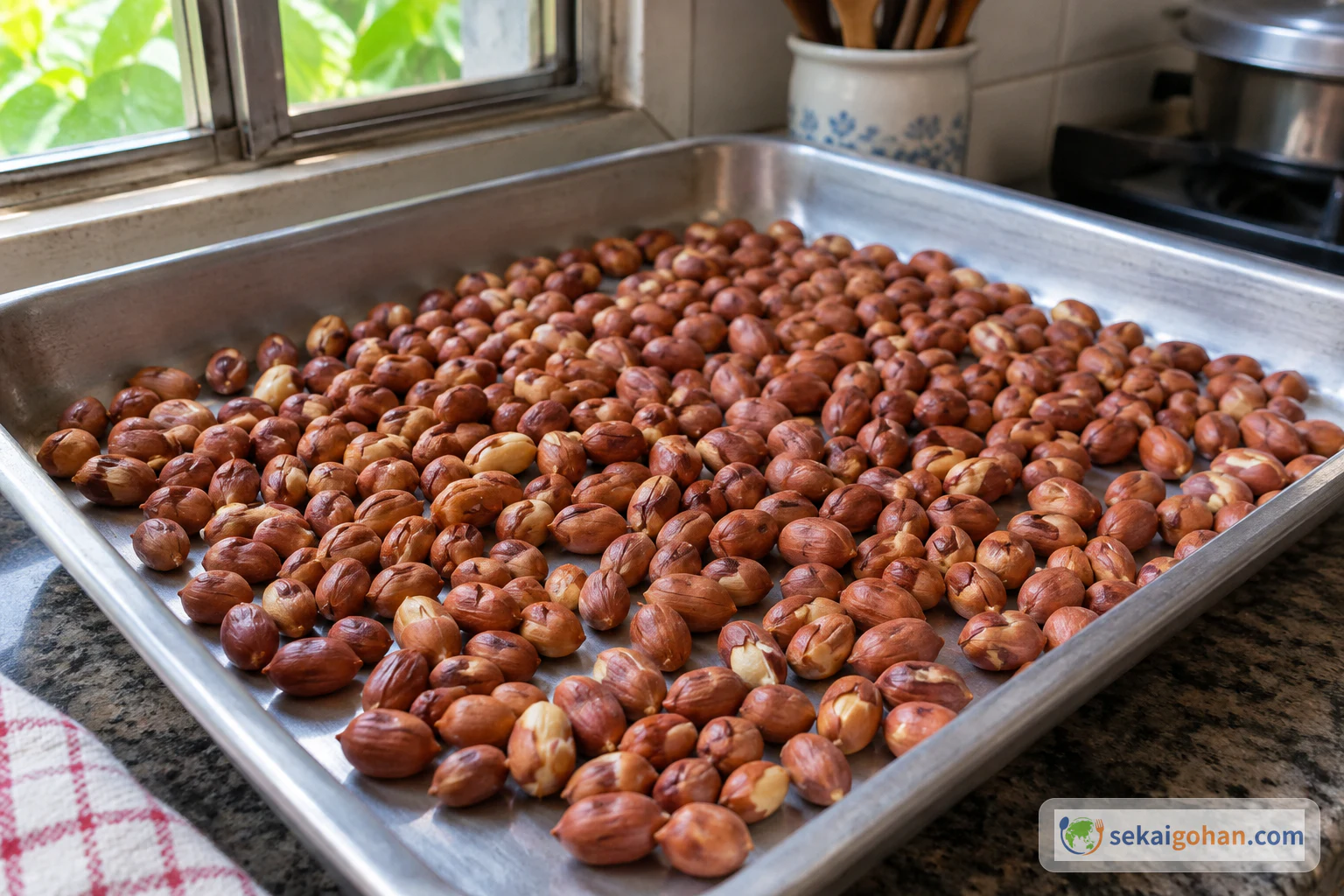
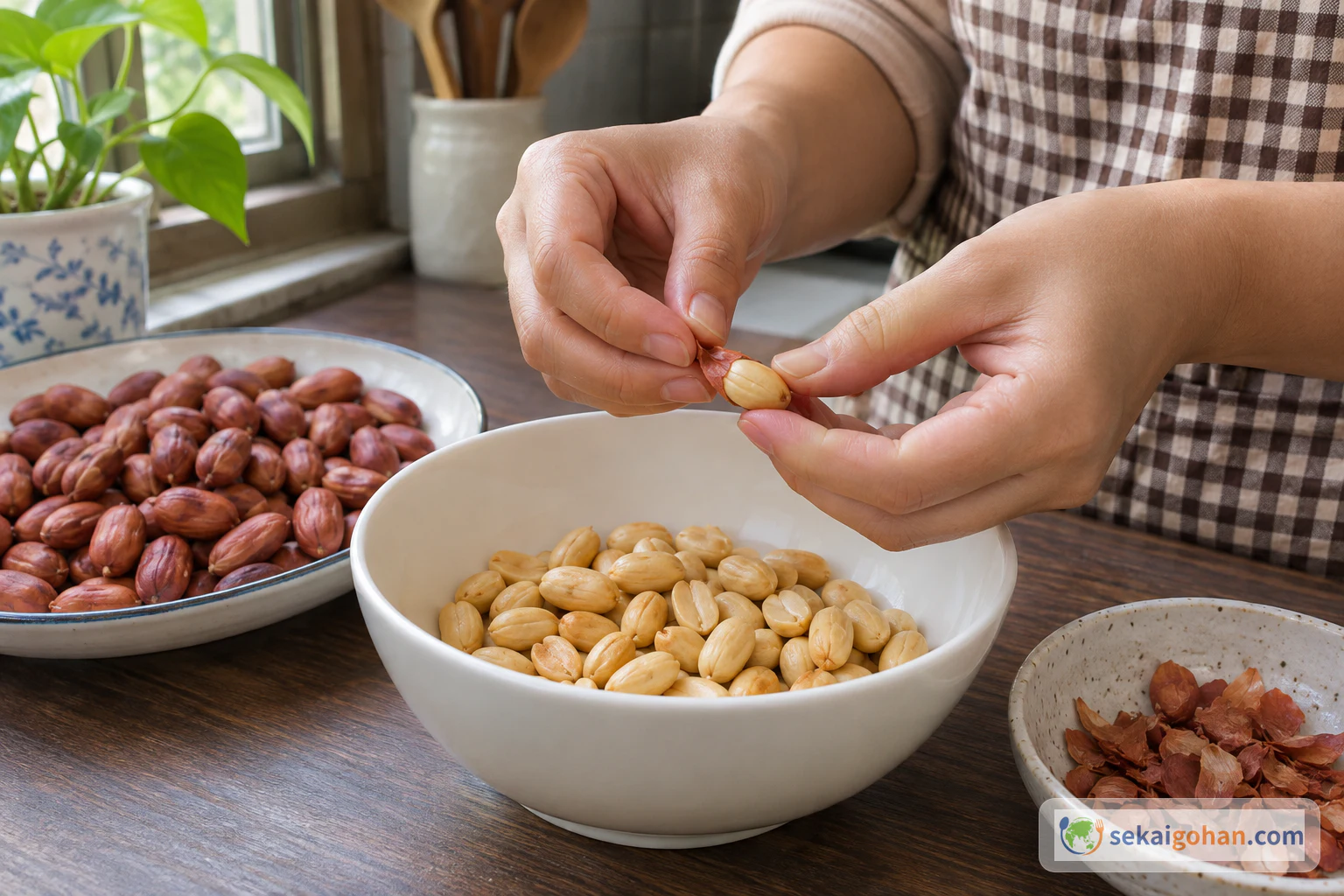
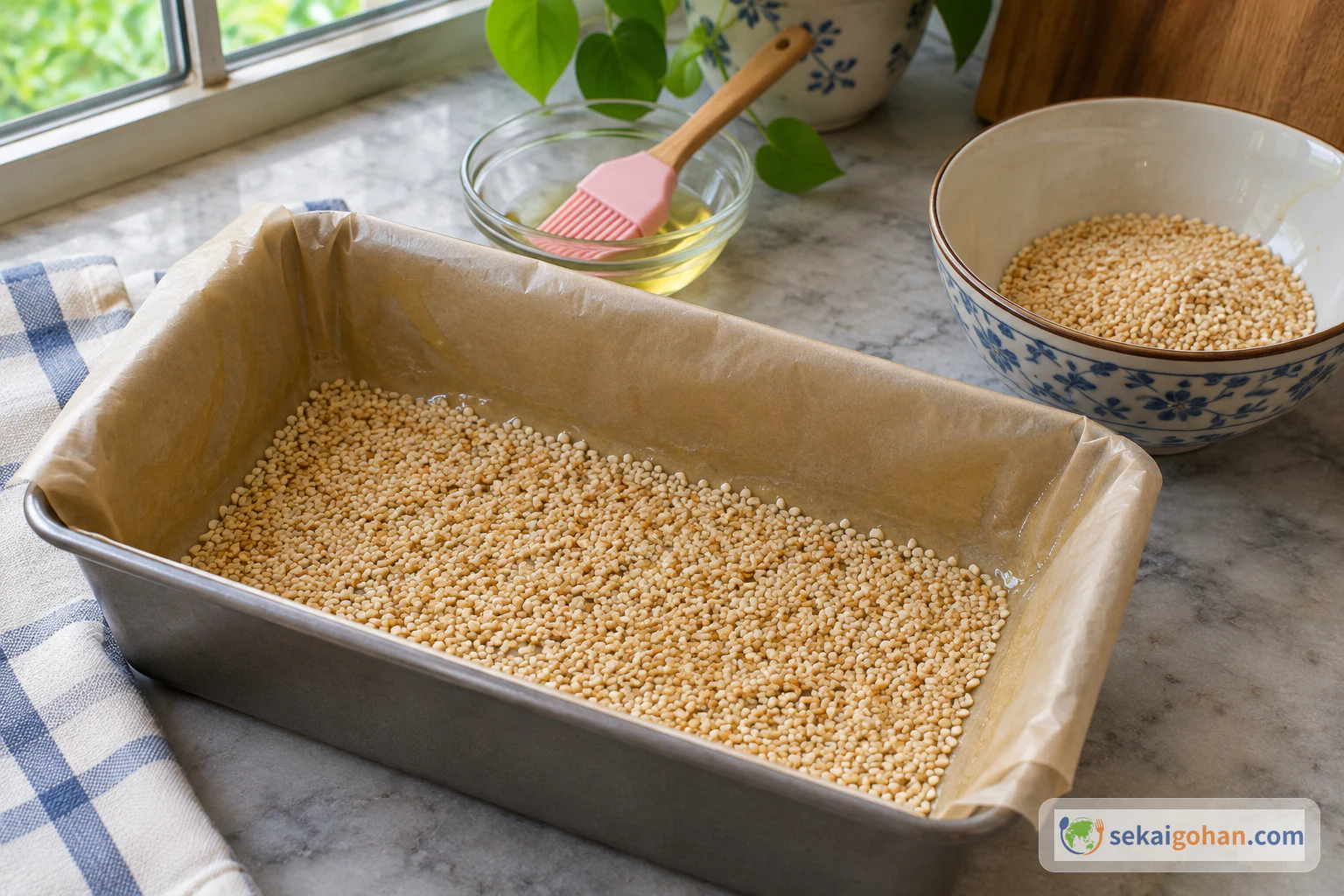
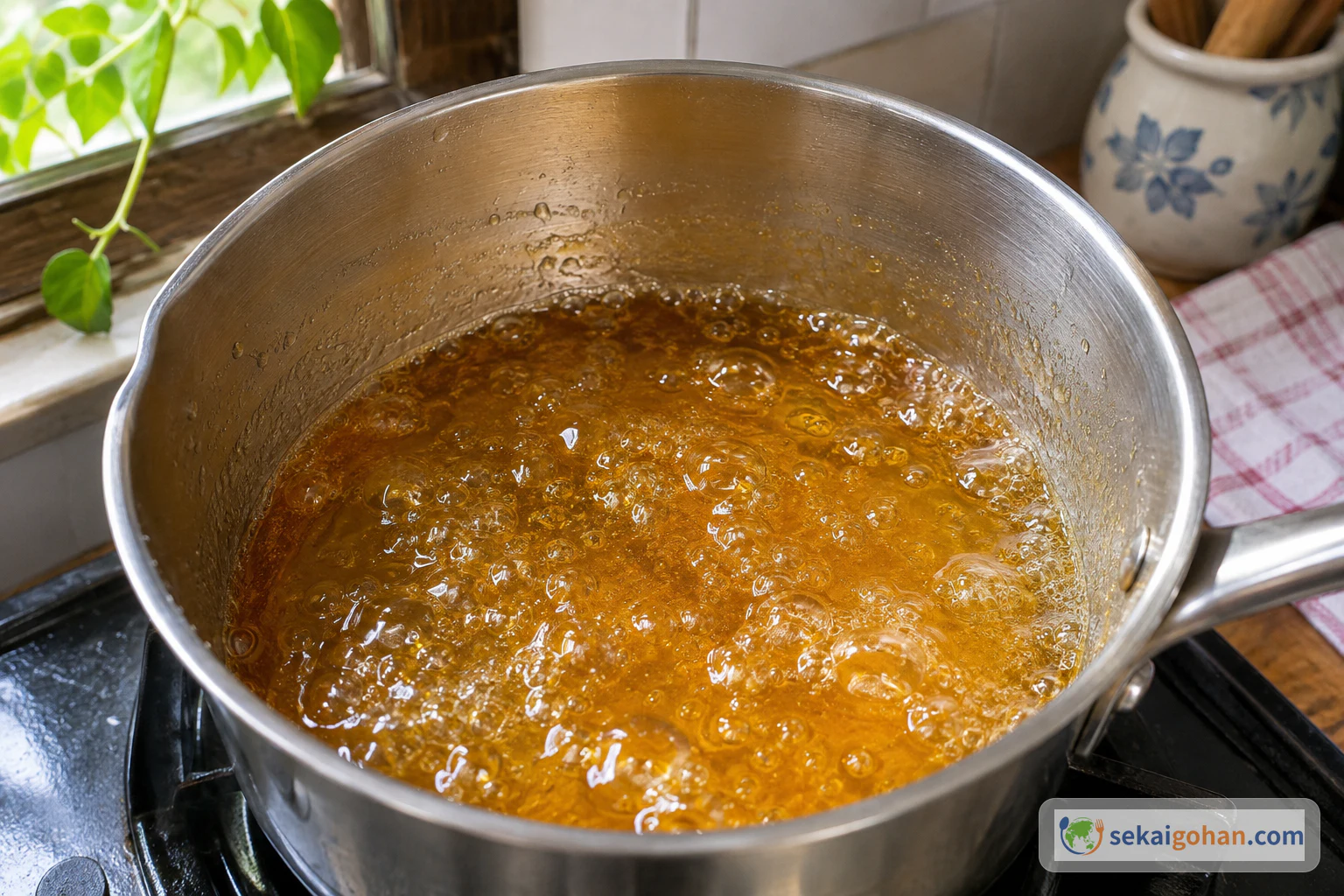
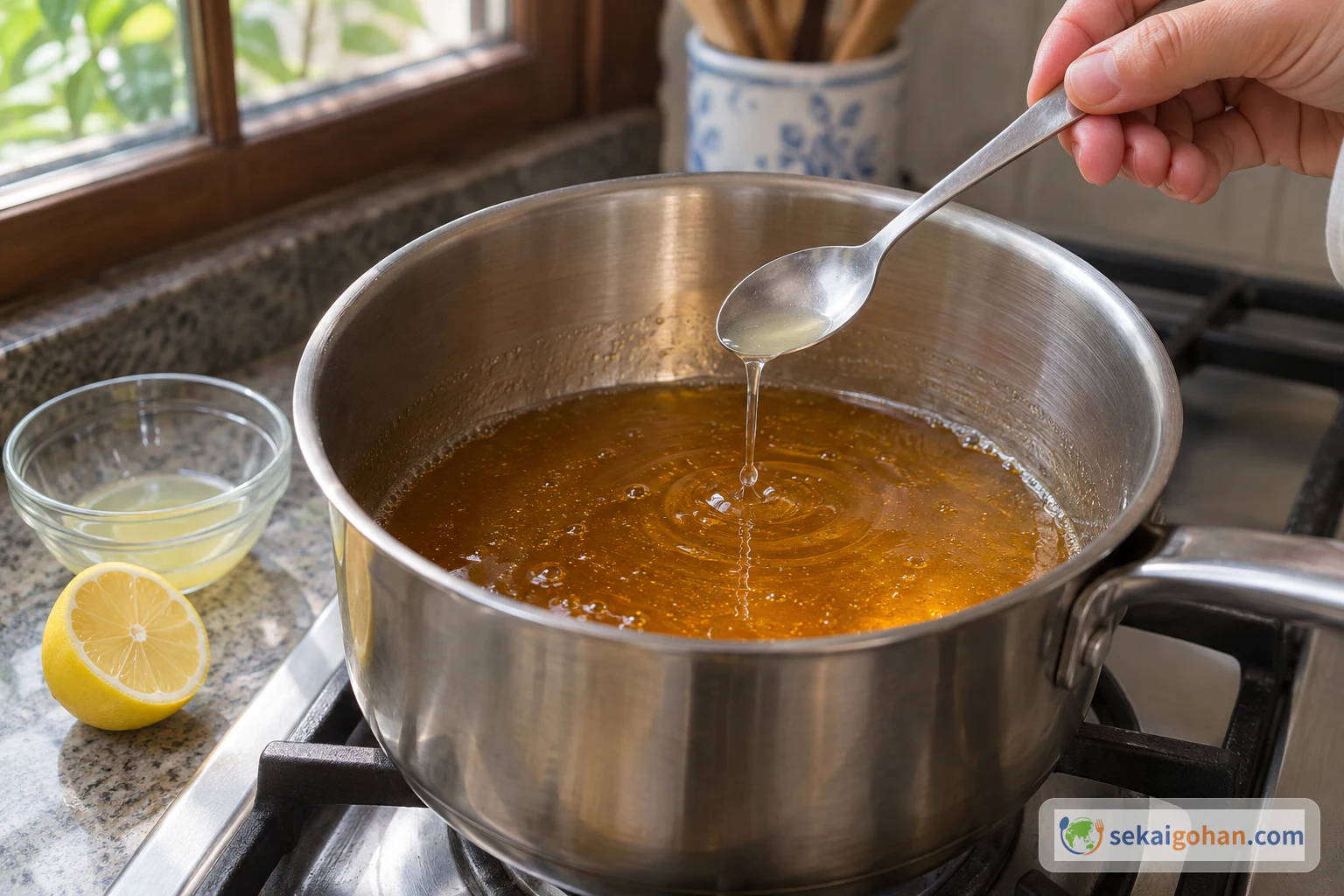
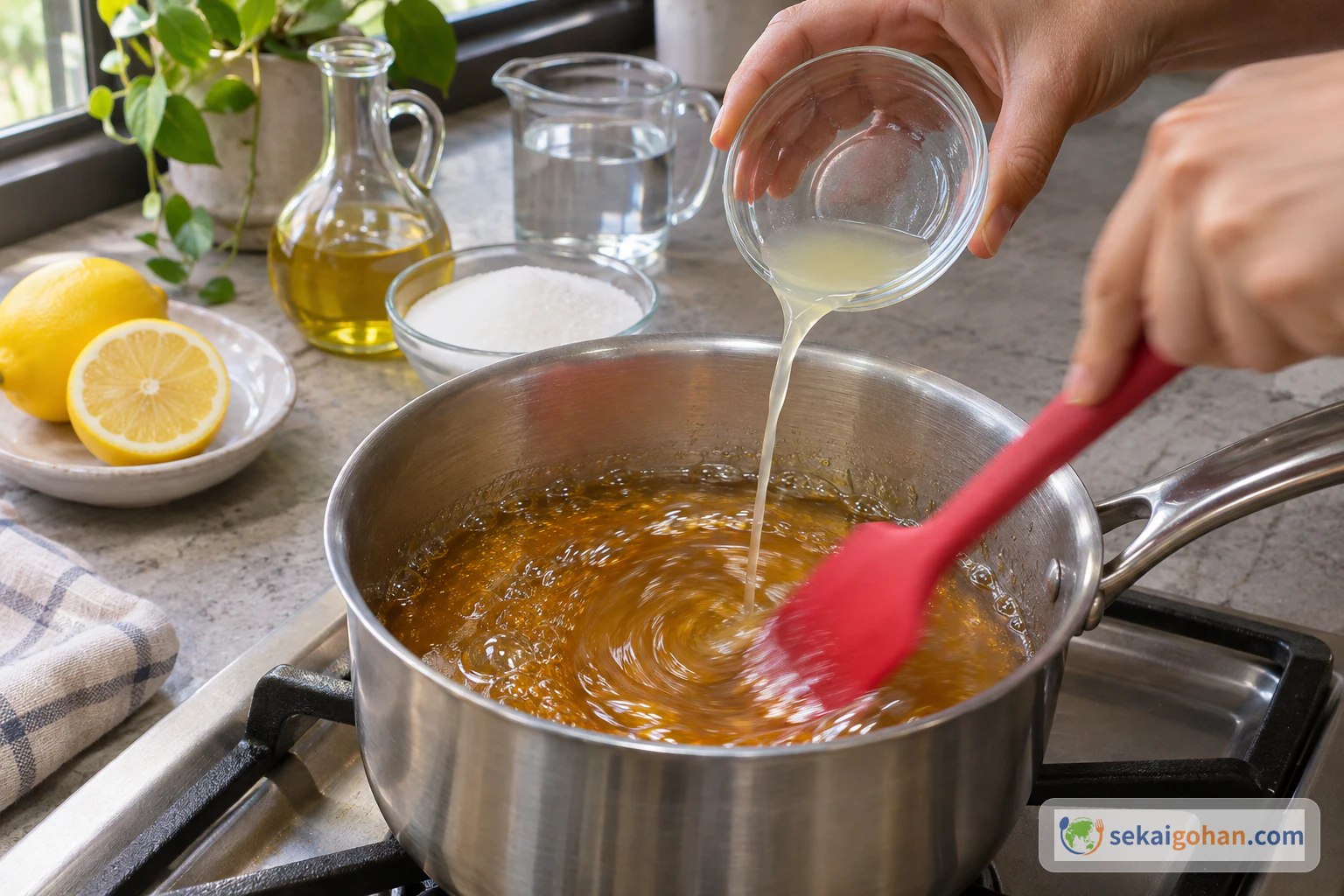
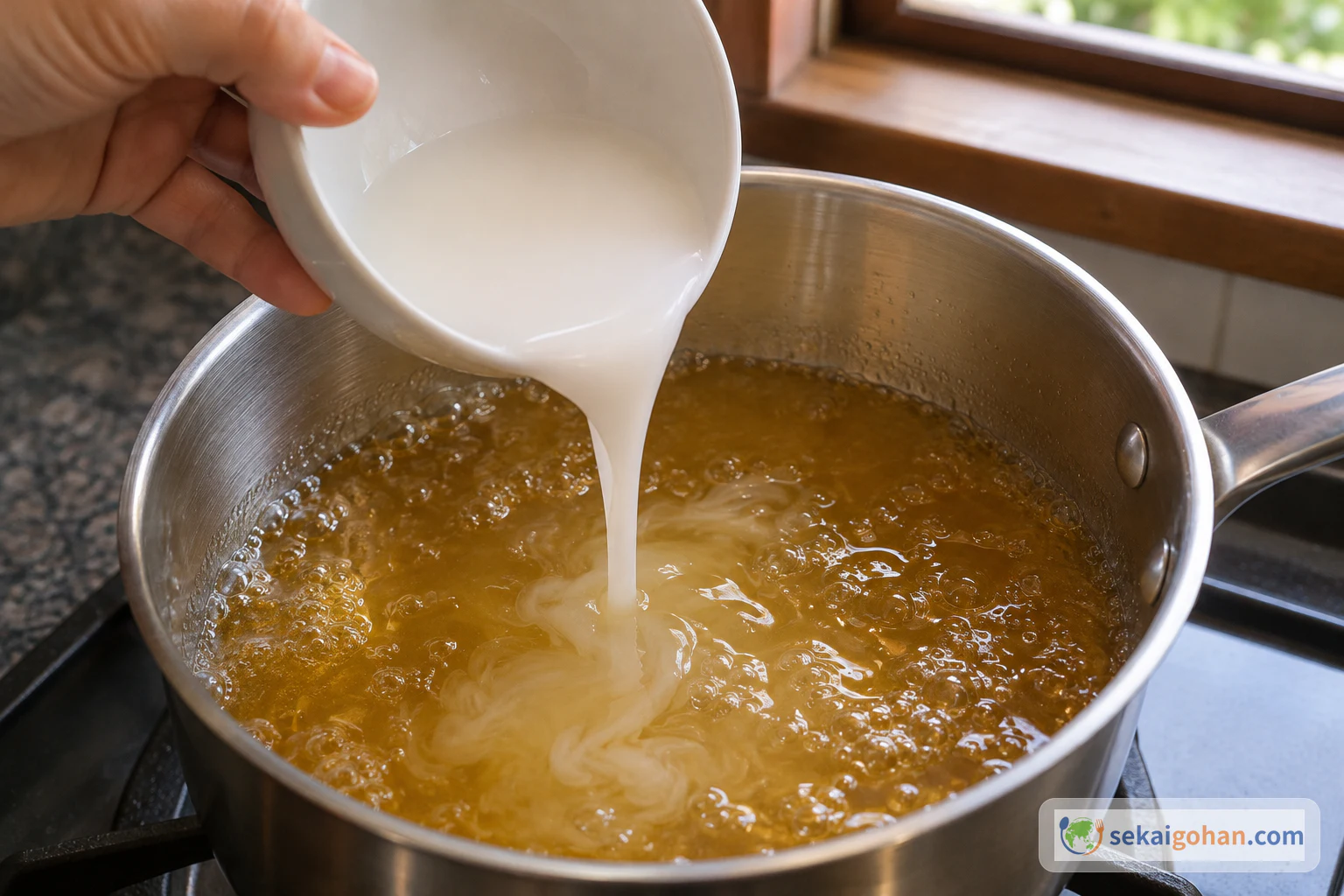
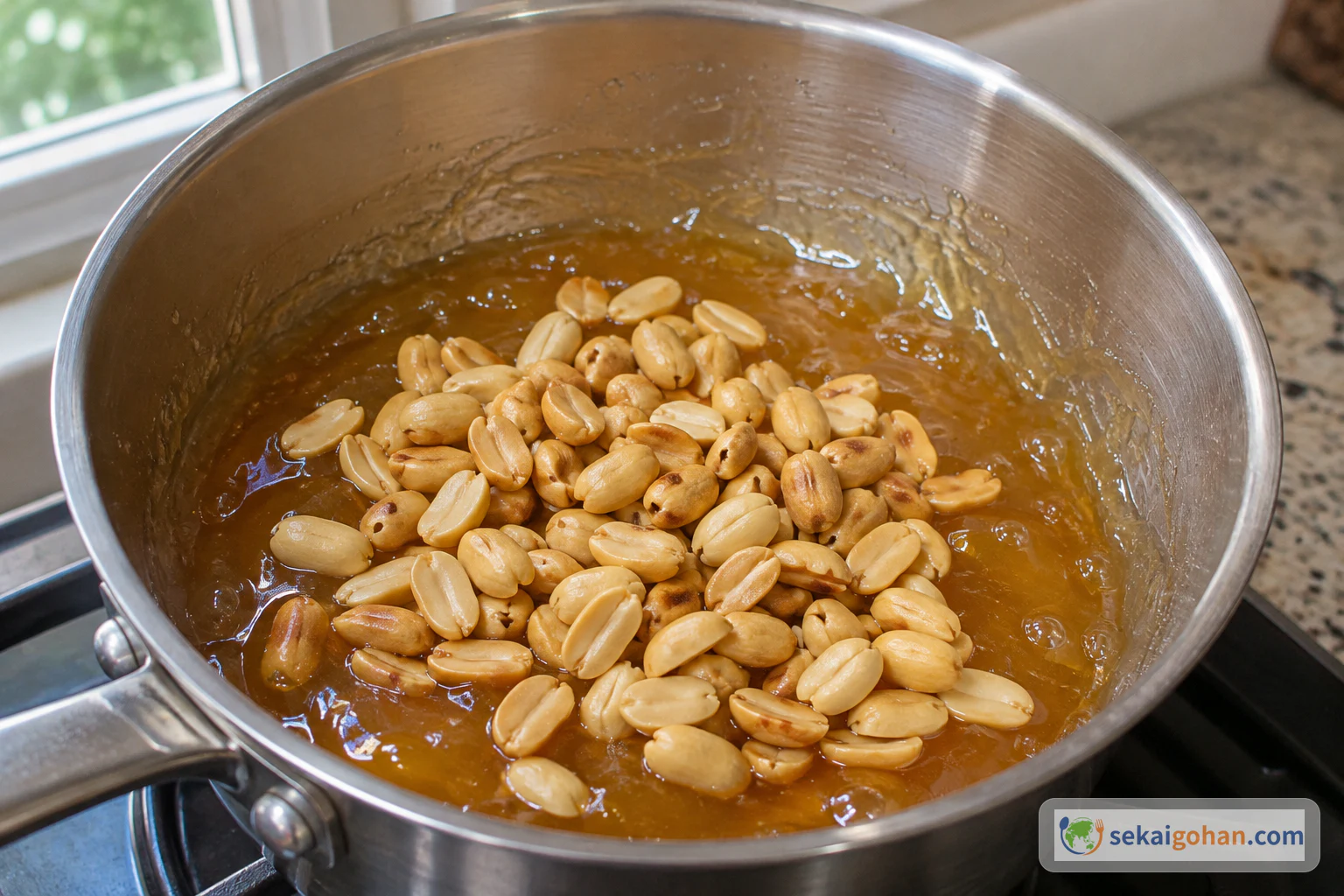
Roast the sesame and peanuts first and let the peanuts cool, so that once the syrup is honey-colored everything else is ready to go in without waiting.
When Things Go Off Course
The recipe gives only a few cues: the roasting temperature and times, a honey color for the syrup, about a minute of stirring after each addition, and 4 hours of cooling. It gives no syrup temperature, pan size or target texture measurement, so some problems have no tested fix.
| What you see | Likely reason | What to do |
|---|---|---|
| Sesame or peanuts darkening quickly | Ovens and nut sizes roast differently | Watch closely and take them out before they burn; aim for a toasty aroma and golden color |
| Peanut skins hard to remove or too hot to handle | Peanuts not yet cool | Let them cool fully before peeling |
| Syrup getting darker than honey | Cooked past the color cue | Honey color is the only stopping point given; next time watch more closely as it changes |
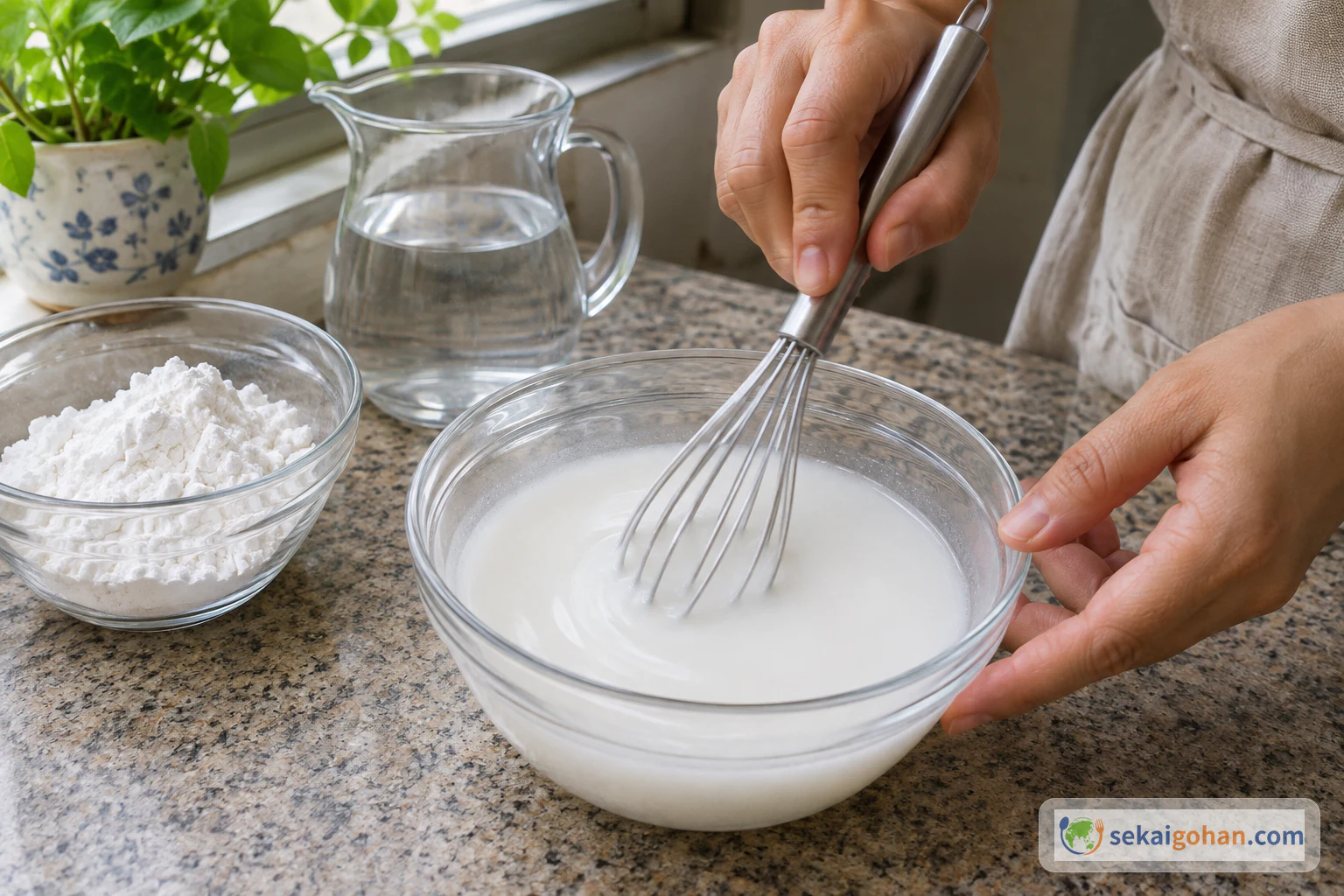
| Lumps of starch | Slurry not stirred smooth | Stir the starch and water until completely smooth before the syrup is ready |
| Candy too soft to cut, or setting too hard | Not known from this recipe | There is no tested correction. Rather than casually reheating it, a separate trial measuring syrup temperature and water would be needed |
Serving: With Tea, as in Huế
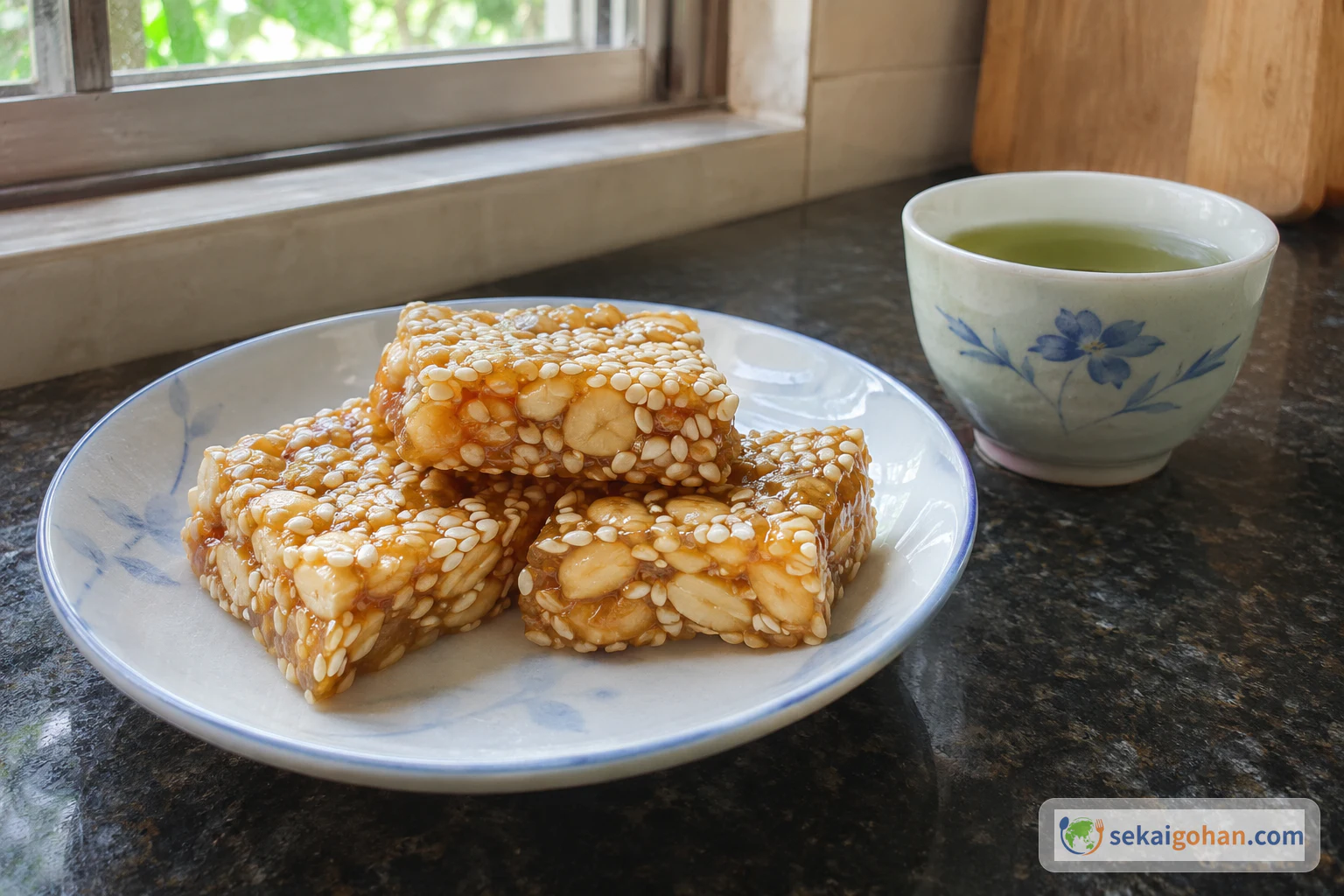
In Huế, Việt Nam News describes mè xửng as a gift and souvenir enjoyed with lotus-scented tea, meaning tea perfumed with lotus flowers. GoVietnam suggests green tea. If lotus-scented tea is hard to find, a cup of plain green tea works as a simple accompaniment. Tea is optional and is never part of the candy itself.
Variations (Kept Separate from the Main Recipe)
- Mirror type: thin and transparent. It needs its own syrup and thickness, so it can't be made just by spreading this recipe thinner.
- Crispy type: served with rice wafers. The texture and method differ from the chewy type.
- Ginger aroma: some makers' versions include ginger. It is not part of this recipe and is not added here.
- Other nuts: possible in principle, but the result moves away from the Huế peanut type.
- Tea on the side: an optional table idea that doesn't change the candy.
Frequently Asked Questions
How is this different from mirror-type mè xửng?
According to Huế makers in the Việt Nam News feature, the chewy type is thick, around 3 cm, while the mirror type is thin and transparent. This recipe makes only the chewy type; the mirror type needs a different syrup and thickness.
Can I use potato starch (katakuriko) instead of tapioca starch?
That substitution hasn't been shown to give the same texture, so this article doesn't recommend it. Tapioca starch, also sold as cassava starch, is the starch the recipe uses.
Can I make it without peanuts or sesame?
This formula doesn't answer that. Sesame and peanuts are central to the candy, and removing them would make a different sweet with no tested method behind it. Anyone with a peanut or sesame allergy should not eat this candy.
How many pieces does it make?
The recipe gives no yield or pan size, so no piece count is given here. The amounts have not been scaled or adjusted.
How long does it keep?
The recipe gives no storage method or storage period, and this article doesn't supply one. The 4 hours of cooling in the method is setting time, not a shelf life. Room-temperature keeping safety has not been established.
What temperature should the syrup reach?
No temperature is given. The only cue is that the syrup becomes honey-colored, so there is no thermometer target to aim for.
How long does it take?
The published recipe lists 15 minutes of preparation, 20 minutes of cooking and 4 hours of inactive time, 4 hours 35 minutes in all. These are the listed times, not measured timings.
Sources
- Modern Asian Baking (published by Kat Lieu; recipe developed by Herman Huang), "The Perfect Bite: Chewy Sesame Candy Recipe (Kẹo Mè Xửng)." The full ingredient amounts and method used in this article: a home recreation Herman Huang developed after visiting Vietnam in 2019, along with its listed preparation, cooking and inactive times. It does not represent a Huế workshop or factory formula and gives no yield, pan size, syrup temperature or storage period. https://www.modernasianbaking.com/recipes/chewy-sesame-candy-ko-m-xng-hu
- Việt Nam News, "Sesame and areca sweets have long been loved as a specialty of Huế," 2 July 2024. Reporting by Duy An with Huế confectioners including Hoàng Thị Huệ and Hồ Thị Hoa: the difference between the thick chewy type and the thin, transparent mirror type, the candy's role as a Huế gift and souvenir, and eating it with lotus-scented tea. https://ovietnam.vietnamnews.vn/sesame-and-areca-sweets-have-long-been-loved-as-a-specialty-of-hue-post358103.html
- GoVietnam.travel, "Giới thiệu Mè xửng là kẹo vừng đặc sản của Huế Thành phố Huế." A travel editorial used for mè xửng as a Huế sesame sweet and gift, the chewy, improved chewy and crispy types, its broad base of sesame, malt syrup and sugar with peanuts added by some makers, and eating it with green tea. Not used for history, origin or the recipe. https://govietnam.travel/food/me-xung-hue-2/
- Sovaba Travel, "Hue Sesame Candy (Me Xung Hue) – Traditional Flavor in a Gift Package from the Dreamy Land." A travel-company article used as supplementary support for the chewy, crispy and mirror types and eating the candy with tea. Not used for the recipe, history, nutrition or prices. https://sovaba.travel/en/blog/article-hue-sesame-candy-me-xung-hue-traditional-flavor-in-a-gift-package-from-the-dreamy-land