Bánh Canh Tôm Cua: Thick Noodles, Crab and Shrimp in a Coconut Milk Broth
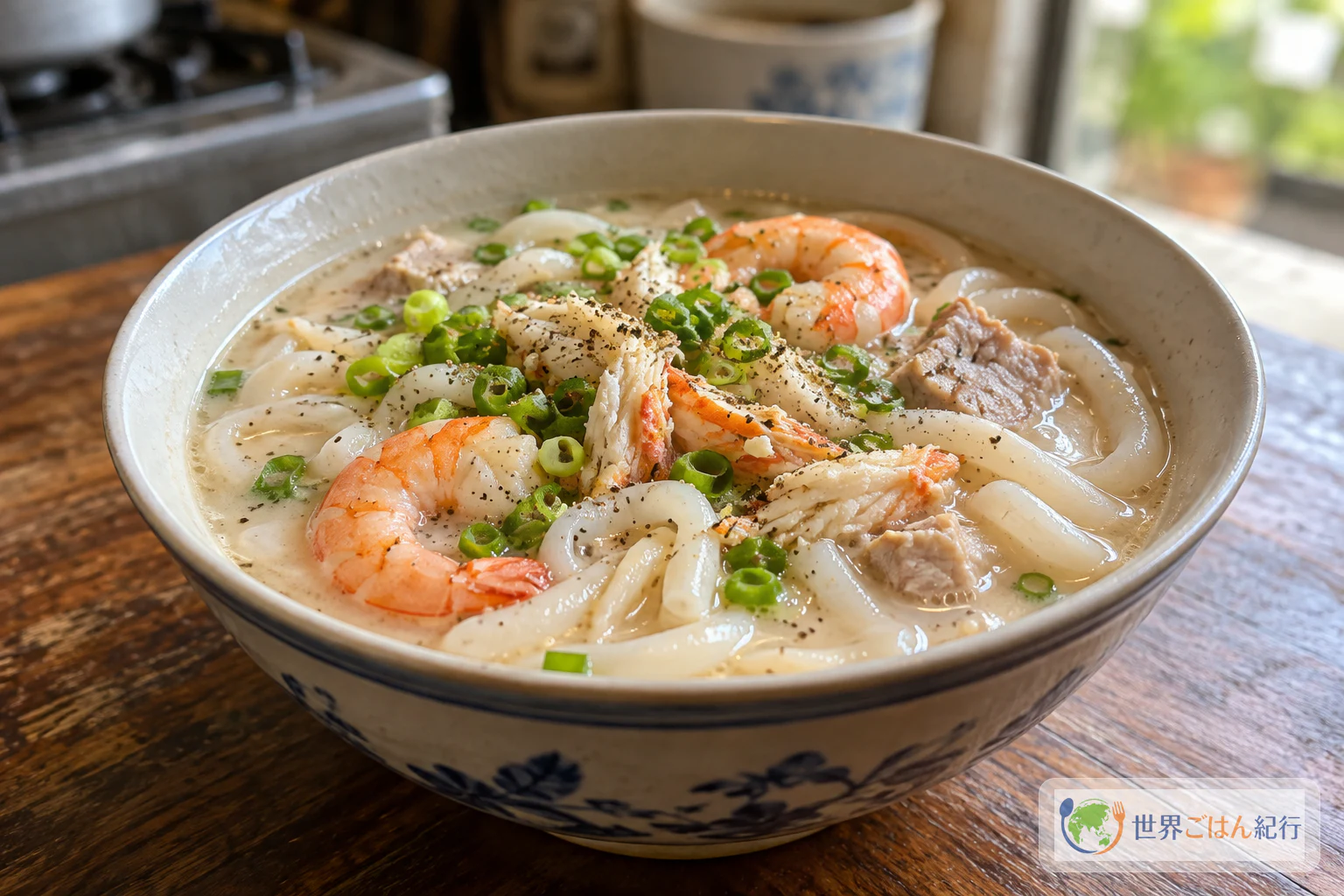
Short, thick noodles of rice flour and tapioca starch, cooked in the same pot that becomes the soup. Pork and shrimp go in partway through, and the crab, scallions and the last of the coconut milk go in after the heat is off.
In the Mekong Delta, rice paddies and ponds of farmed shrimp and crab can sit side by side. A cookbook from an Australian agricultural research project in the region, Farmers' Gourmet, includes a recipe for tapioca noodle soup with crab and shrimp, bánh canh tôm cua. It links the dish especially to Cà Mau province and describes it as something made for family reunions and celebrations. That description comes from the farmers involved in that project, so it is best read as their table rather than a rule for every household in the delta.
Bánh canh is often thought of as a single noodle soup, but the name covers a family of dishes built on thick noodles, with broths and toppings that change from place to place. This article follows one specific version: the crab and shrimp soup from that cookbook, with pork and coconut milk, and noodles made by hand from rice flour and tapioca starch. It is not the thick crab soup of Ho Chi Minh City or the clear pork broth of Trảng Bàng, and the two are not mixed here. For more dishes from the same country, see Vietnam.
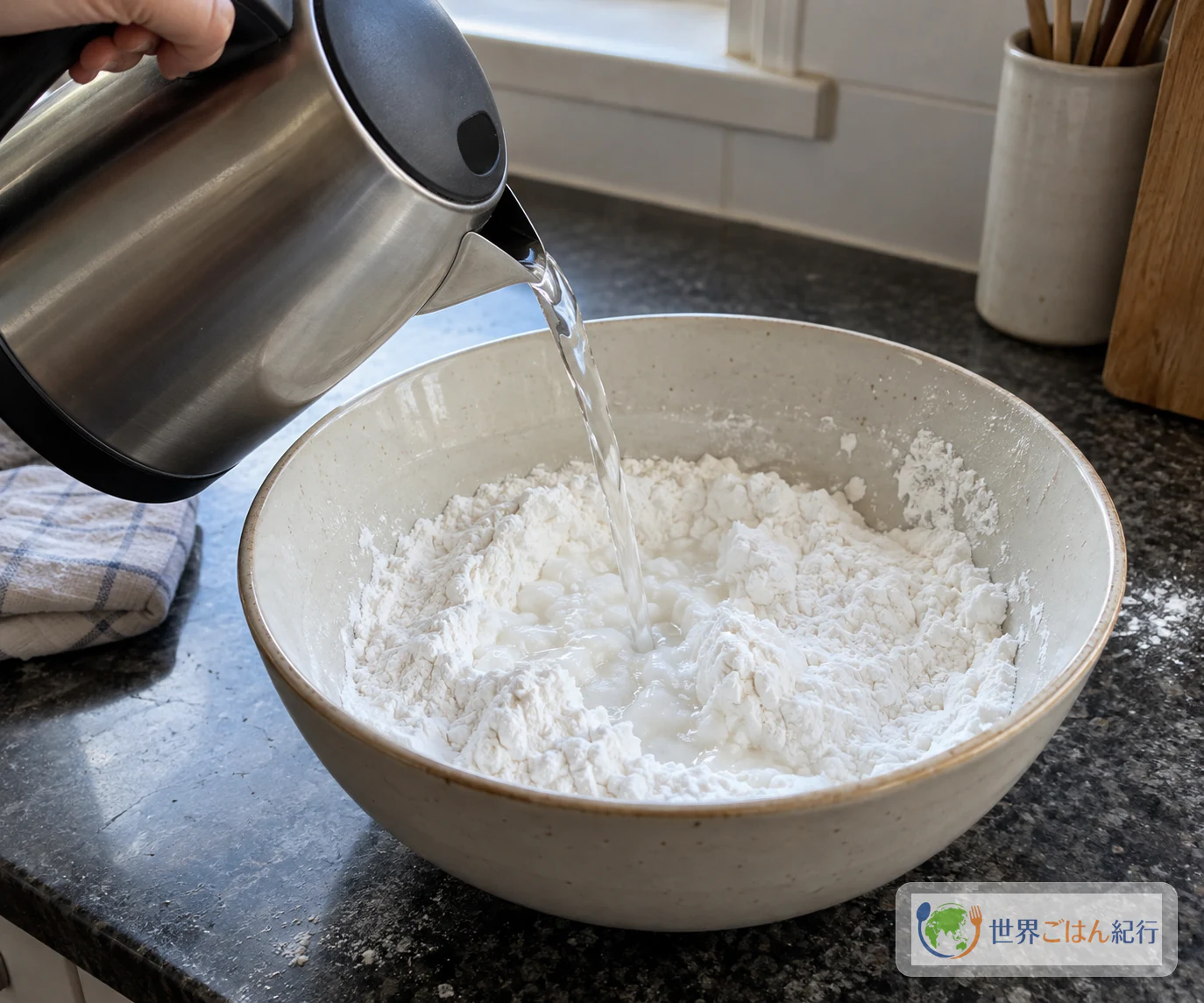
This recipe has not been kitchen-tested. In particular, the dough uses 500g of flour and starch with only 70ml of boiling water, and whether that amount of water gives a workable dough has not been tried. No adjusted water amount is offered here, so treat the measurements as a starting point rather than a guaranteed result. The recipe also gives no number of servings or total cooking time.
What Bánh Canh Is: One Name, Many Bowls
Bánh canh noodles are thick and chewy. Home cook Vicky Pham describes them as made from tapioca flour, or from tapioca combined with rice flour, and her own bánh canh is built on a pork-bone broth with optional toppings; she also writes of eating noodles at breakfast, lunch and dinner. That is one cook's account, not a survey, but it shows how wide the dish can be.
Regional versions pull in different directions. Vietnam's travel portal describes the bánh canh cua of Ho Chi Minh City as thick noodles with crab in a thick broth, often with extra toppings, served hot with pepper, chili and lime. In Trảng Bàng, in Tây Ninh province, the bowl is a clear pork broth with rice-flour noodles, pork and herbs.
The version here sits apart from both. Its broth is pale and milky from coconut milk, and the noodles are cooked directly in the soup pot rather than separately. The crab, shrimp and pork reflect the cookbook's Mekong Delta setting, where rice and farmed seafood come from the same land. No reliable record of the dish's origin, inventor or date was found, so none is given.
A few points in the recipe that are unclear
The Farmers' Gourmet recipe leaves some gaps, and they are kept visible rather than filled in:
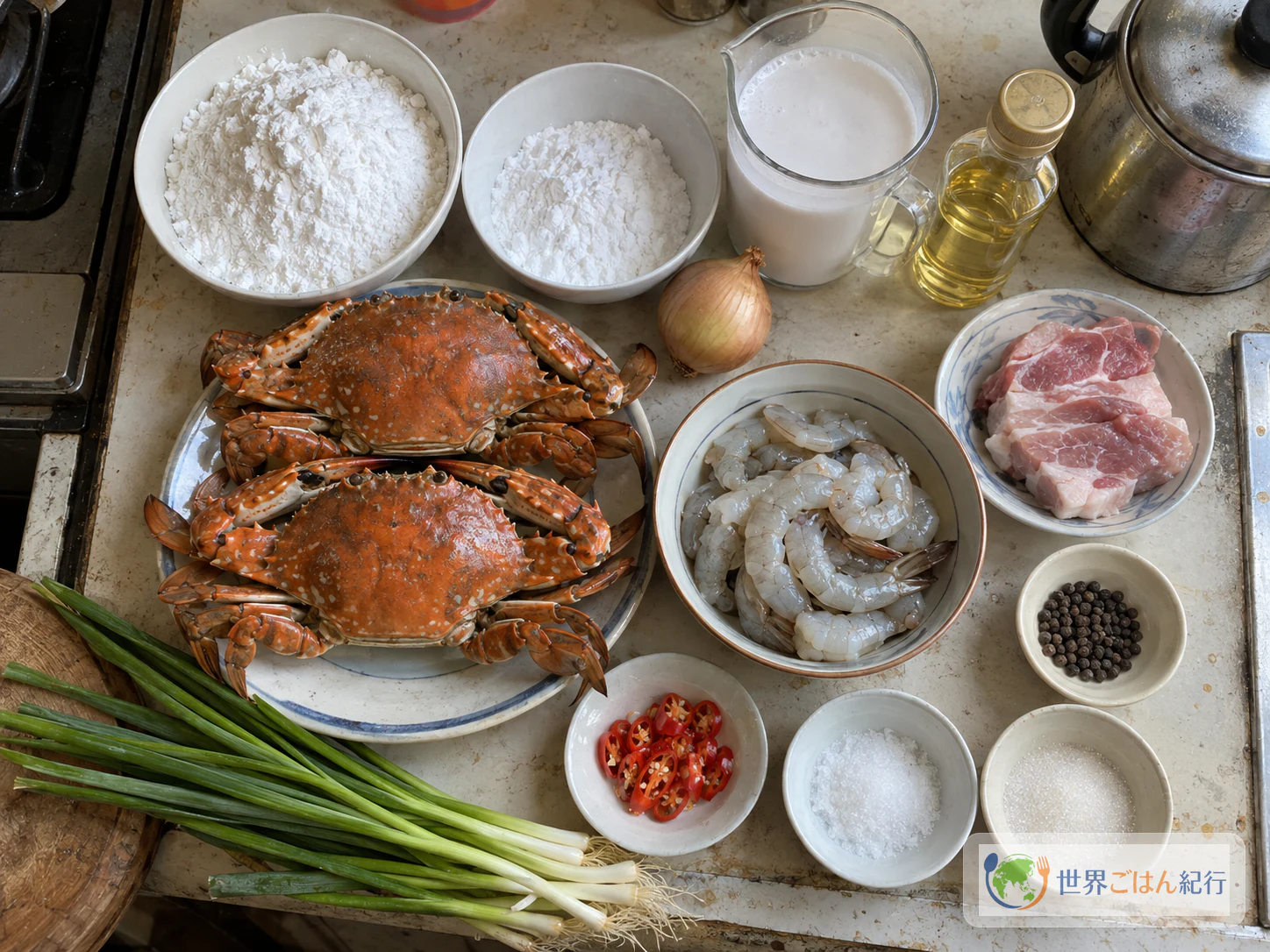
- Crab weight. The ingredient list gives 2 large crabs with a weight of 600–800g, but it does not make clear whether that is the weight of each crab or of both together.
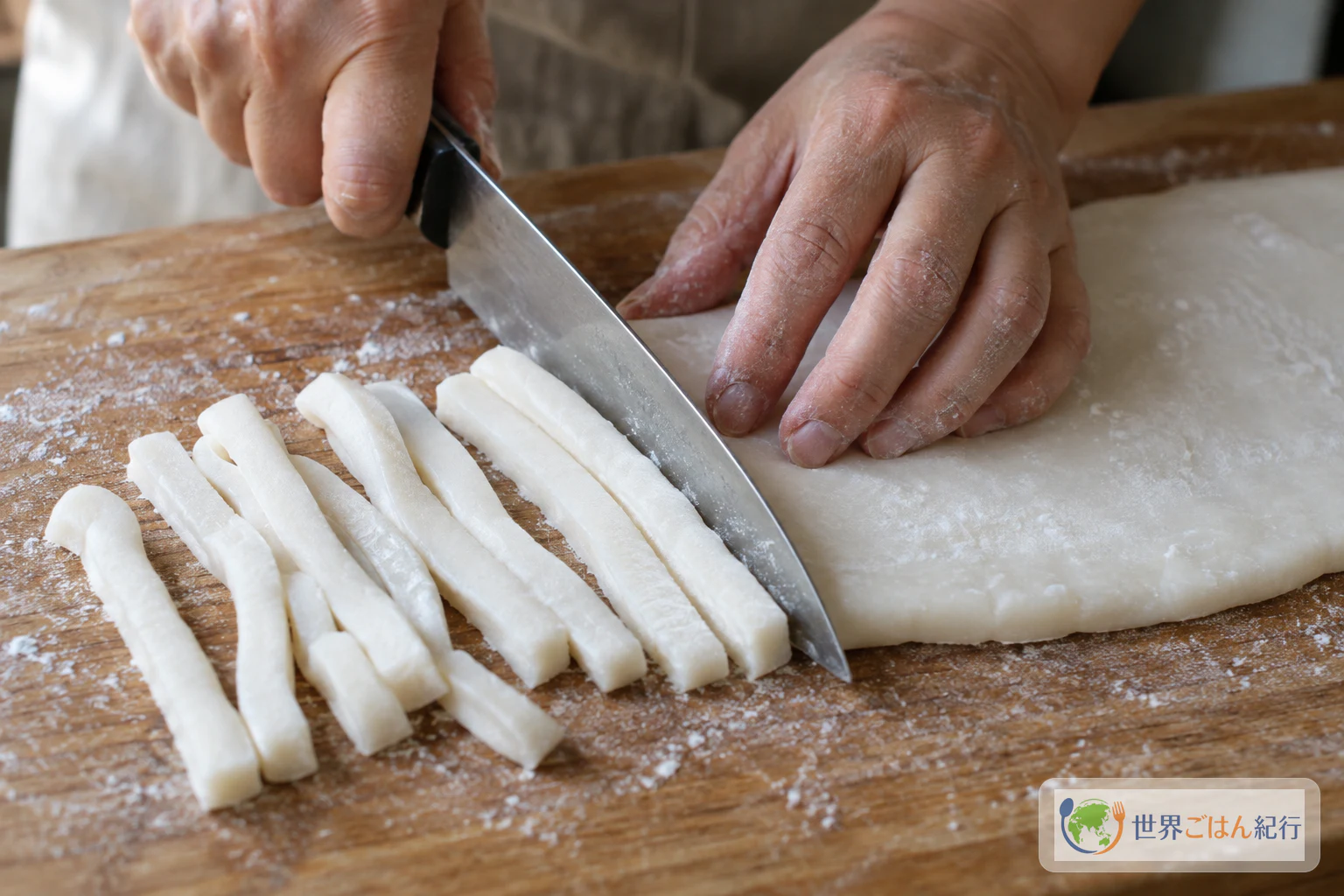
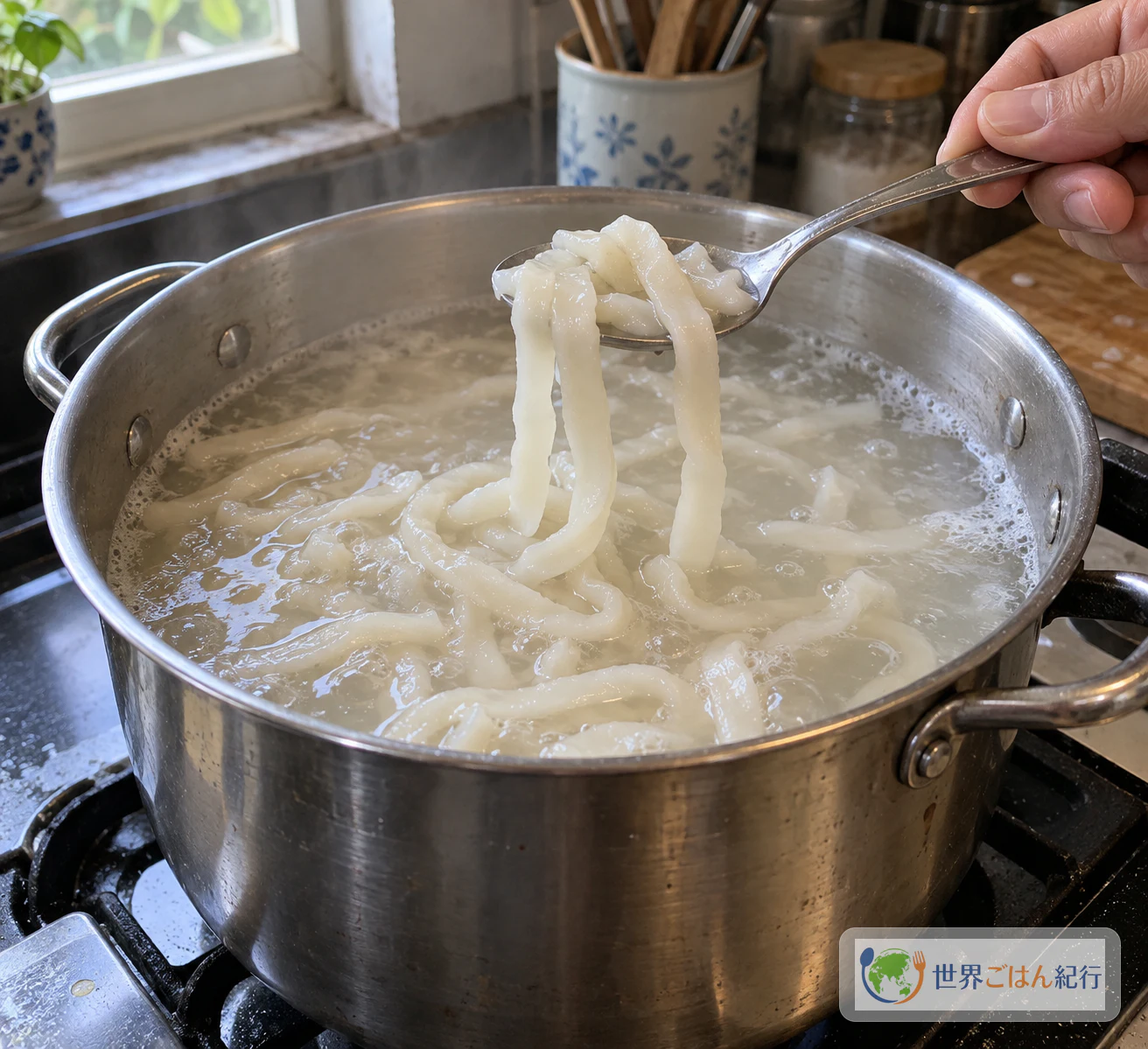
- Noodle size. The dough is rolled about 0.4cm thick and cut into 7cm strips. Whether 7cm is the length or the width is not stated. These are not wide 7cm ribbons like lasagna sheets; the photo in step 2 shows short, thick strips, but it is not a measurement.
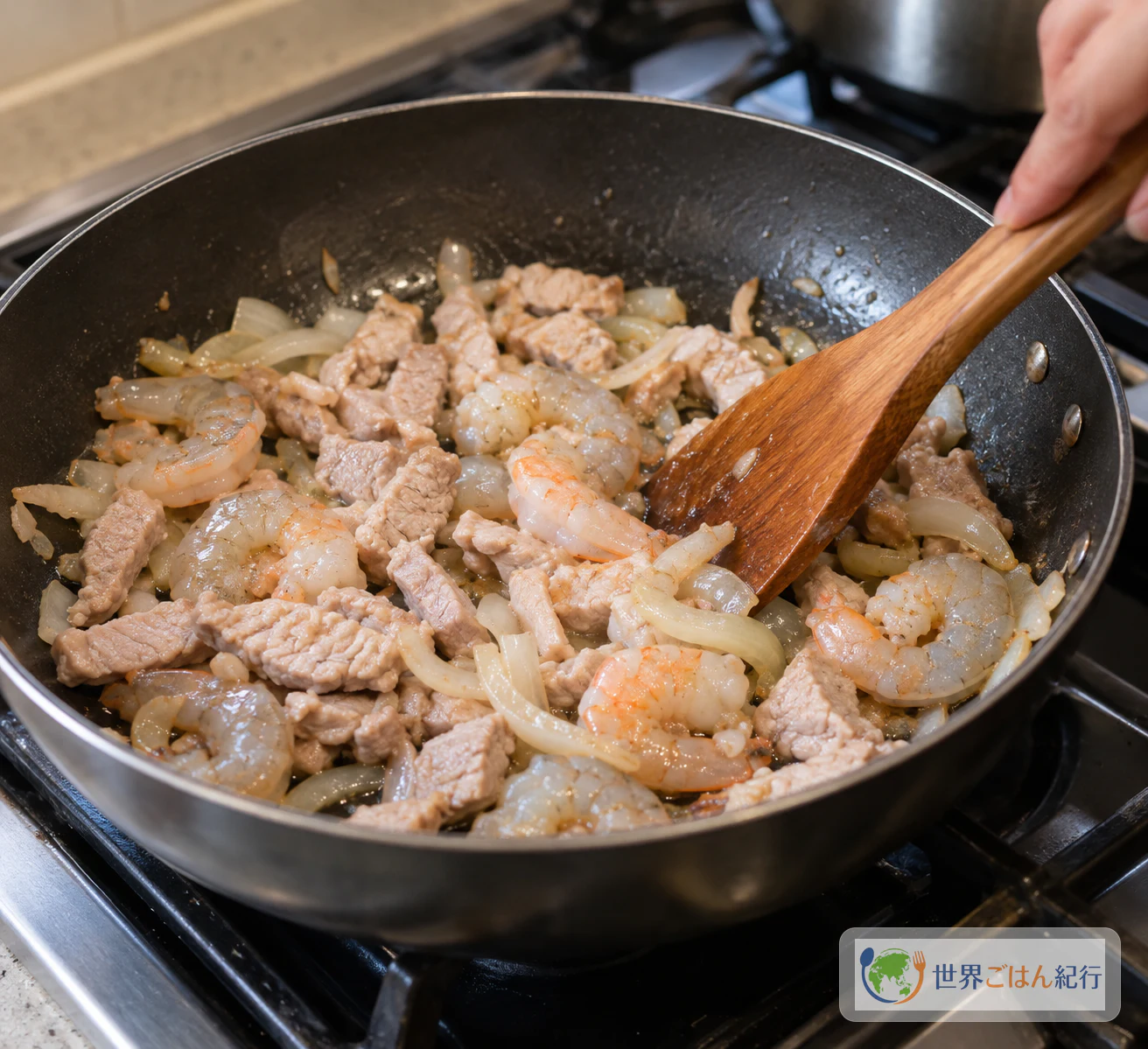
- Onion and oil. The method sautés the pork and shrimp with onion in oil, but neither appears in the ingredient list and no amounts are given.
- MSG and chili. Both appear in the ingredient list without amounts.
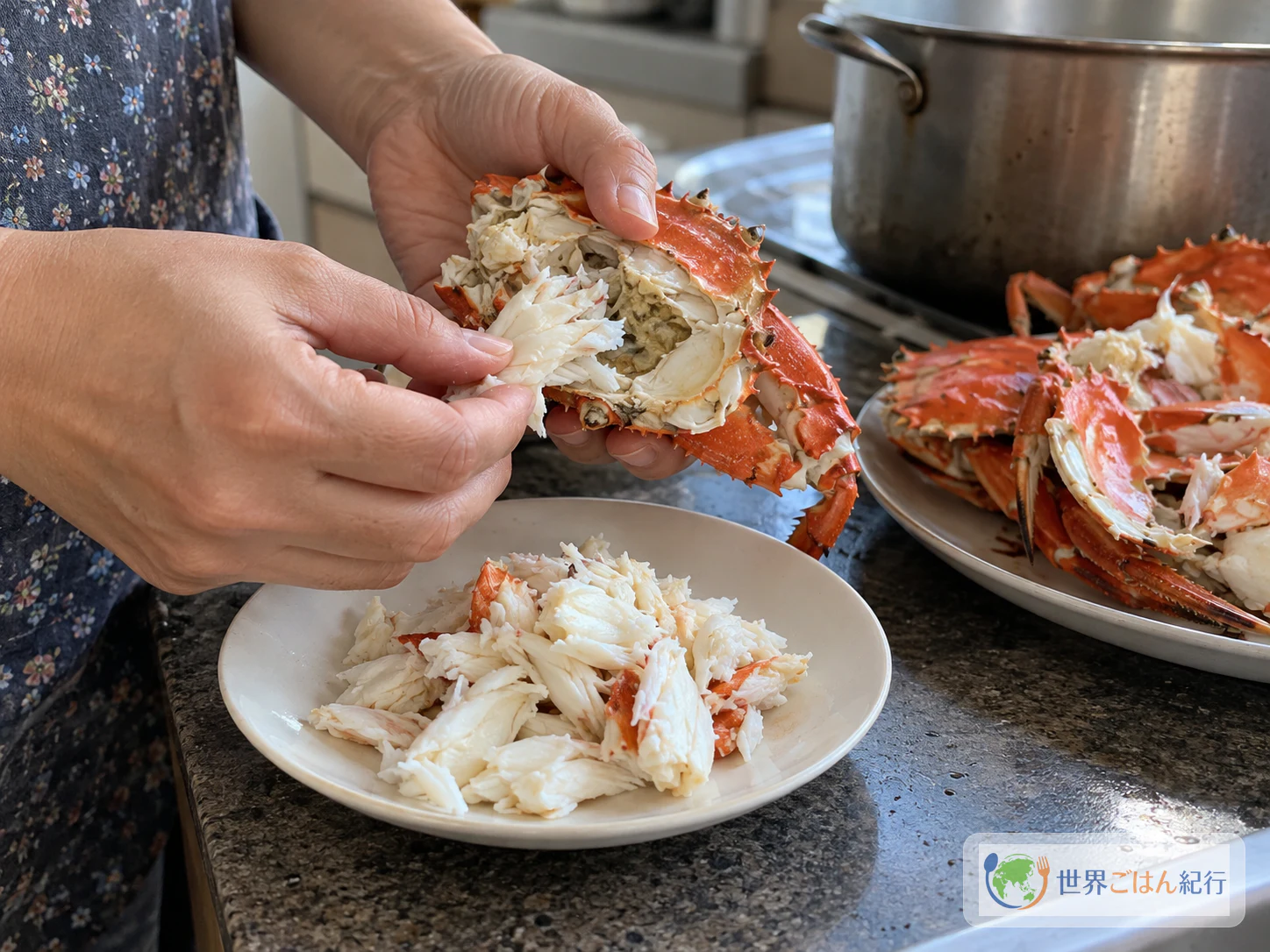
- Crab at serving. The method only boils the crab, but the serving note mentions stir-fried crab. This article uses the boiled, picked crab meat throughout and does not add a separate crab-frying step.
Ingredients: Noodle Dough, Seafood and Coconut Milk
Choosing and Substituting Ingredients
Tapioca starch is not the same as potato starch or cornstarch. The noodles are built on tapioca starch, and swapping in another starch has not been tested here. A different texture is likely, so don't assume the result will be equivalent. Look for it labeled tapioca starch, tapioca flour or bột năng at Asian grocers.
Rice flour varies. Rice flours sold for different purposes may absorb water differently. Changing the ratio of rice flour to tapioca starch has not been tested, so keep the 200g and 300g as listed.
Crab and shrimp. Choose crab and shrimp sold for cooking, and cook them thoroughly. Crab, shrimp and pork each bring something different to the broth; the crab meat is kept for the end so it stays in pieces. Choose two large crabs and expect some difference in how much meat you get.
Pork. Small pieces that cook quickly in a pan suit the sauté.
Store-bought noodles. Bánh canh noodles can be bought at Asian food shops. If you use them, follow the package directions for cooking; their ingredients and behavior in the pot may differ from handmade noodles.
Equipment
- Heatproof bowl
- Chopsticks or a spatula for the first mixing
- Rolling pin and board
- Knife
- Pot for boiling the crabs
- Frying pan and wooden spatula
- Large pot that holds 1.5L of water with room for the noodles
- Kitchen shears or a crab pick (optional, for removing crab meat)
Method: From Dough to Bowl in One Soup Pot
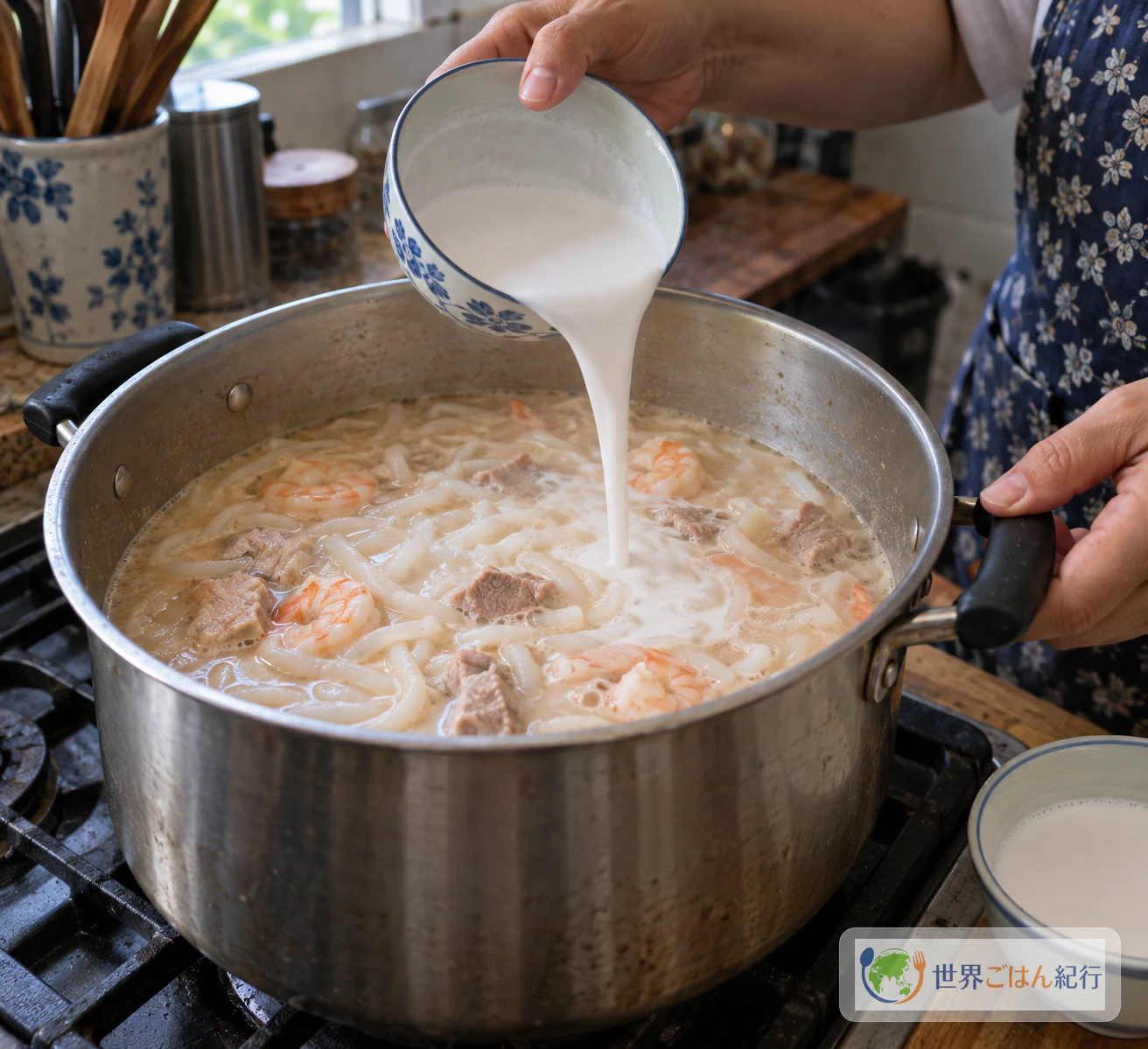
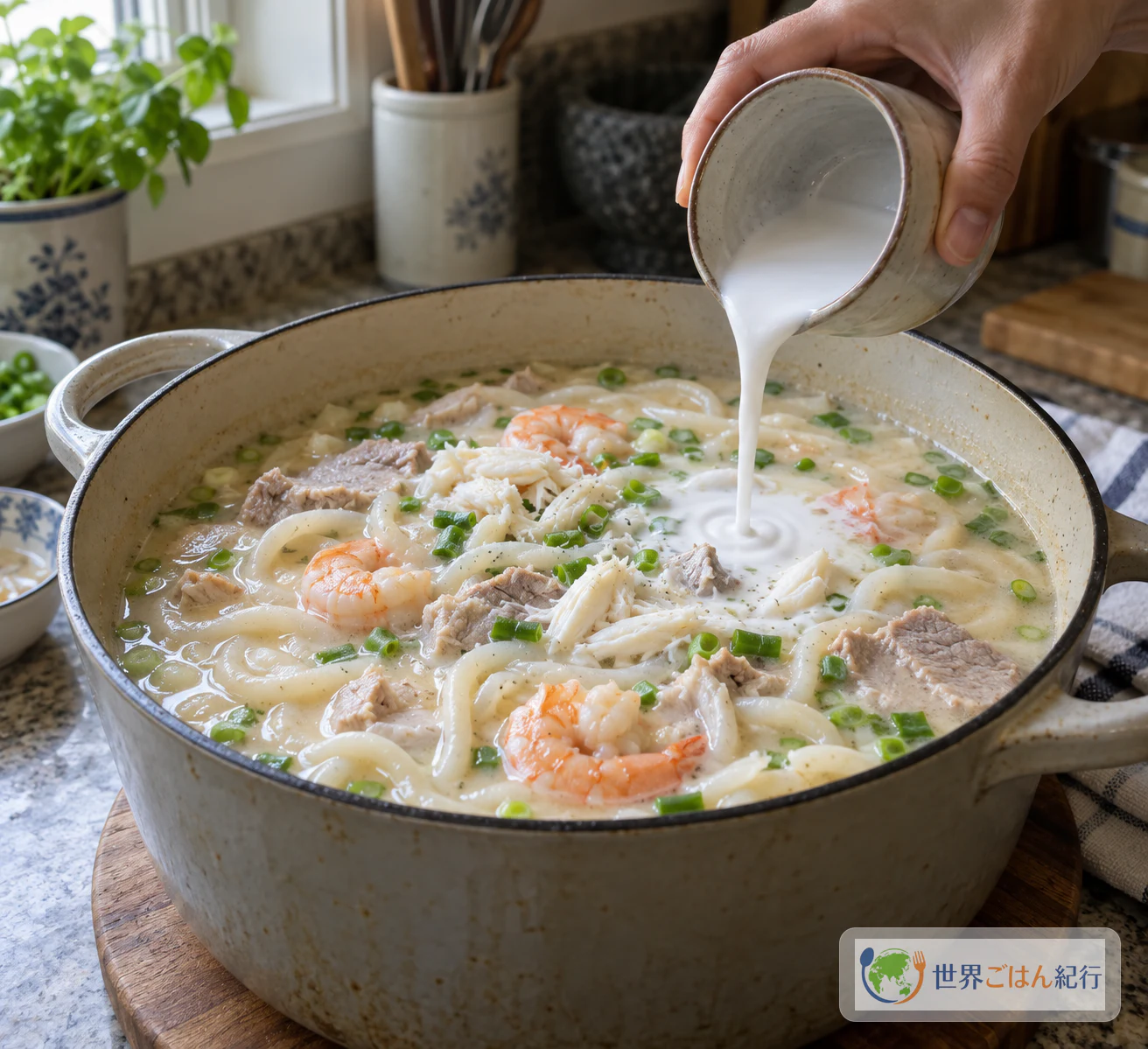
The noodles cook in the water that becomes the soup; don't drain them. Pork and shrimp go into that same pot with the first coconut milk, and the crab, scallions and last coconut milk go in only after the heat is off.
When Things Go Wrong
| Problem | What to consider |
|---|---|
| The dough is sticky | No amount of extra flour is given for this. Don't assume the water was mismeasured; dust the board lightly and see whether resting has helped before changing anything else. |
| The dough won't come together | The 70ml of water for 500g of flour and starch has not been kitchen-tested, and no tested amount of extra water can be given. If you adjust it, note what you added so you can repeat or correct it next time. |
| The broth is thicker or cloudier than expected | The noodles cook in the soup pot, so their starch goes into the broth. That is part of this method. Cooking the noodles in a separate pot is a possible change, but it has not been tested and will alter the broth. |
| The shrimp or pork is tough | They are sautéed and then simmered again, so cut the pork into small pieces and don't let the sauté run long. |
| The crab meat breaks up | Add it only after the heat is off and stir gently. |
This dish contains crustaceans (crab and shrimp). Buy crab and shrimp sold for cooking and cook them thoroughly. Check labels on coconut milk, flours and any store-bought noodles for allergens.
How to Eat It and How It Differs by Region
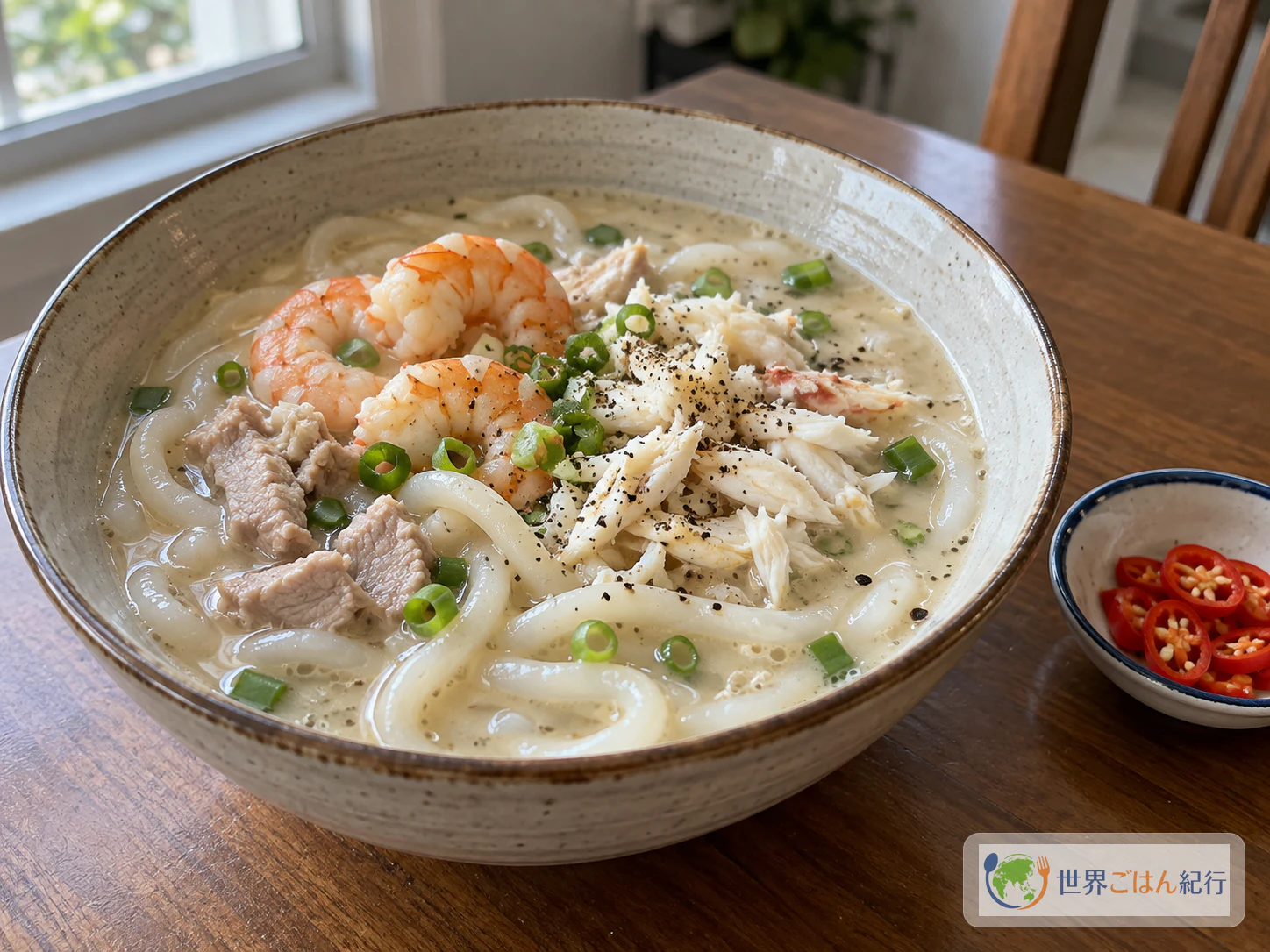
Serve the soup hot, with the scallions bright on top and black pepper scattered over the bowl. Chili is optional; set it on the table so each person can decide. The cookbook places this bowl at family reunions and celebrations, and its pairing of farmed shrimp and crab with rice noodles reflects the project setting in the Mekong Delta.
In Ho Chi Minh City, bánh canh cua is a thick crab soup, and pepper, chili and lime are common at the table. In Trảng Bàng, the broth is clear and built on pork, with rice-flour noodles, pork and herbs. Both are bánh canh, and both are different from this pale coconut milk bowl. Lime, herbs, fish sauce and other toppings from those versions are not part of this recipe.
Variations worth considering
- Store-bought bánh canh noodles. Skip steps 1 and 2 and follow the package directions. The texture and the way the noodles thicken the broth may change.
- Noodles cooked separately. This might give a clearer broth, but it is not part of the recipe here and has not been tested.
- Chili on the side. It appears in the ingredients without an amount, so let each person adjust their own bowl.
- No MSG. It has no amount and can be left out; taste and adjust the salt yourself.
- Onion and oil. They are part of the method but have no measured amounts. Leaving them out is not part of the recipe, and anyone aiming for a measured version would need to test it.
Frequently Asked Questions
Can I use potato starch or cornstarch instead of tapioca starch?
The recipe is built on tapioca starch, and no substitute has been tested. Other starches are likely to change the texture, so they should not be treated as equivalent.
Can I use store-bought noodles?
Yes. The Farmers' Gourmet cookbook notes that bánh canh noodles are sold at Asian food shops. Follow the package directions for cooking, since the ingredients and cooking behavior may differ from the handmade noodles.
How many servings does this make?
The recipe does not give a number of servings or bowls, so none is stated here.
Do I add all the coconut milk at once?
No. About 150ml goes into the pot with the pork and shrimp, and the remaining 50ml goes in at the end, after the heat is off.
How much onion and oil should I use?
The method uses onion and oil, but no amounts are given and none are added here. Use a modest amount, enough to sauté the onion until fragrant.
Is 600–800g the weight of each crab or both?
The recipe lists 2 large crabs at 600–800g without making clear which is meant. Two large crabs is the firmer part of the instruction.
The recipe mentions stir-fried crab at serving. Should I fry the crab?
The method itself only boils the crab, and only the serving note mentions stir-fried crab. This article uses the boiled, picked crab meat and does not add a separate frying step.
Is the 7cm the width or the length of the noodles?
It isn't stated. The dough is cut into 7cm strips after being rolled about 0.4cm thick. Bánh canh noodles are thick and short, so don't read it as 7cm-wide ribbons.
Has this recipe been tested?
No. The measurements have not been kitchen-tested, and the dough's amount of water in particular has not been tried in practice.
Sources
- Australian Centre for International Agricultural Research (ACIAR), hosted by the Australian Embassy Vietnam, Farmers' Gourmet, "Tapioca Noodle Soup with Crab and Shrimp" (bánh canh tôm cua), pp. 36–37. The recipe followed in this article: the noodle dough, resting and cutting, the one-pot method with coconut milk, pork, shrimp and crab, and the dish's connection to the Mekong Delta, especially Cà Mau, and to family reunions and celebrations in the project's context. https://vietnam.embassy.gov.au/files/hnoi/Cookbook_Eng_web.pdf
- Vicky Pham, "Vietnamese Thick Noodle Soup (Banh Canh)." The texture of bánh canh noodles and the flours used, a pork-bone broth version with optional toppings, and the author's own account of eating noodles throughout the day. A separate recipe, not combined with the one above. https://vickypham.com/blog/vietnamese-thick-noodle-soup-banh-canh/
- GoVietnam.travel, "Bánh canh cua Thành phố Hồ Chí Minh." Bánh canh's regional variety, and the Ho Chi Minh City crab version with thick noodles, crab and thick broth, served hot with pepper, chili and lime. https://govietnam.travel/food/banh-canh-2/banh-canh-cua/
- GoVietnam.travel, "Bánh canh Trảng Bàng Tây Ninh." The Trảng Bàng version with clear pork broth, rice-flour noodles, pork and herbs, used here only for comparison. https://govietnam.travel/food/banh-canh-2/banh-canh-trang-bang/