





The Story of Phở Gà, Steam in a Morning Kitchen
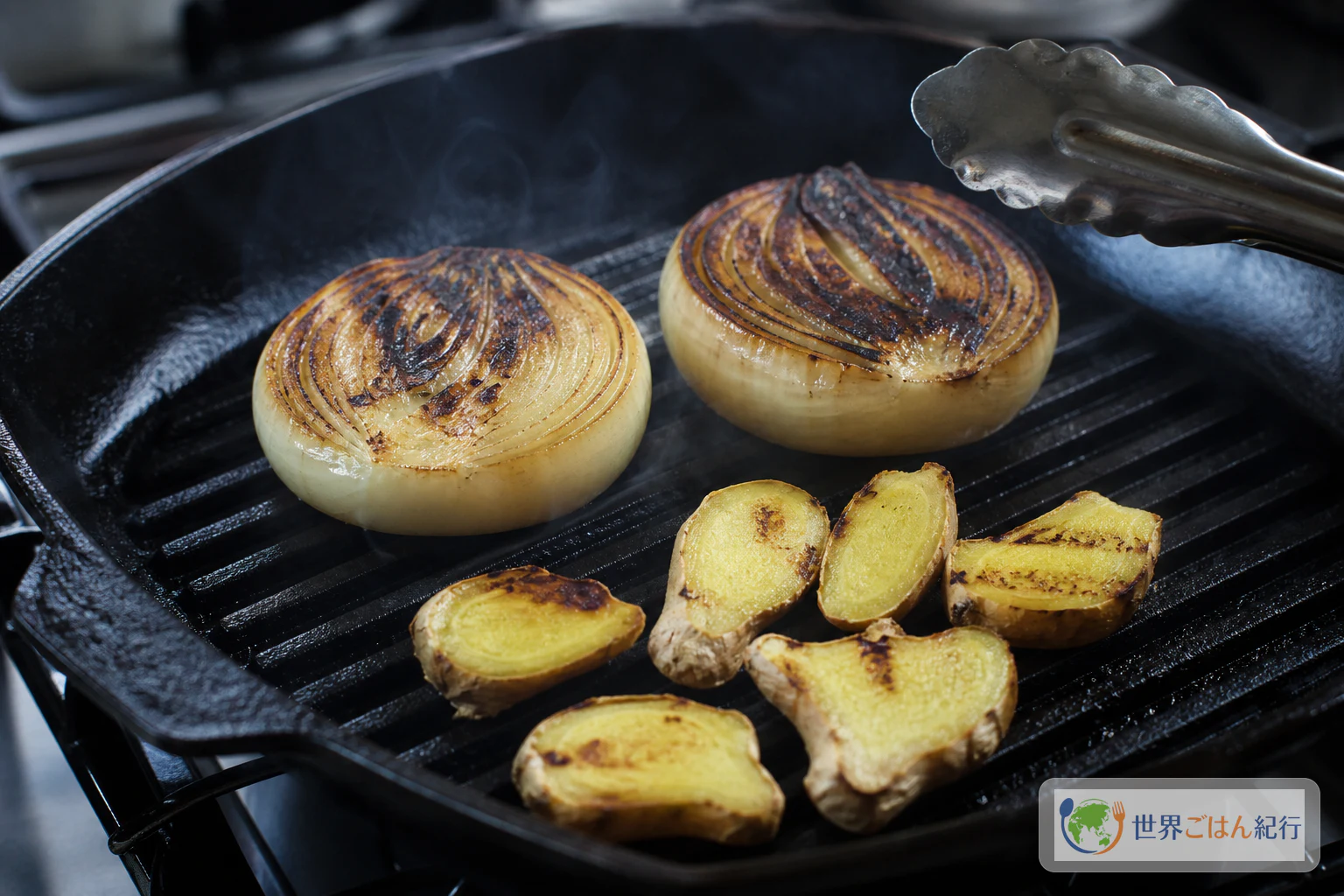
Halve an onion and cut the ginger thick. Set them on the grill rack, and the skins slowly blacken and a sweet smell rises before anything goes into the pot. No meat has gone in yet. The next hour may feel a little daunting, but half of phở gà is decided here.
Phở gà is a Vietnamese rice-noodle soup made with chicken broth. If you only describe it as lighter than beef phở bò, you might imagine a mild chicken soup. In fact the fat of the chicken, charred aromatics, the saltiness of fish sauce, and the roundness of sugar layer together, and at the end lime and herbs move its outline. It is not a dish that makes the broth heavy; it is a dish that keeps room for aroma without letting off-flavors in.
Say that on a weekday evening one person in the family dislikes cilantro and another wants to add heat. Rather than fixing everything in the pot at one taste, putting scallion, lime, and chili on separate plates makes a more phở-like table. The first sip is the clear broth alone. The second brings sourness, the third heat. The knack is to leave room for the flavor to change in the bowl.
There are several accounts of where phở began. The Vietnam National Administration of Tourism describes Nam Định as spoken of as its geographic birthplace and the flow by which it took root in Hanoi as an urban food culture. Another account says that beef became easier to obtain in the French colonial period of the late 19th century and broths using bones developed. Phở spread while changing form as it was sold on the street. Reading the Vietnam tourism board's history of phở, you also learn that in 1930s Hanoi there were mobile vendors carrying a small kitchen on a shoulder pole.
Chicken phở, according to the same page, appeared in 1939. It took hold as a bowl separate from beef phở, with differences from home to home in how the chicken is simmered and which spices are kept. Building on that, here the broth is made with a whole chicken and chicken carcasses, and the star anise and cinnamon are not allowed to get too strong.
Ingredients: Local Substitutes and What Is Worth Seeking Out
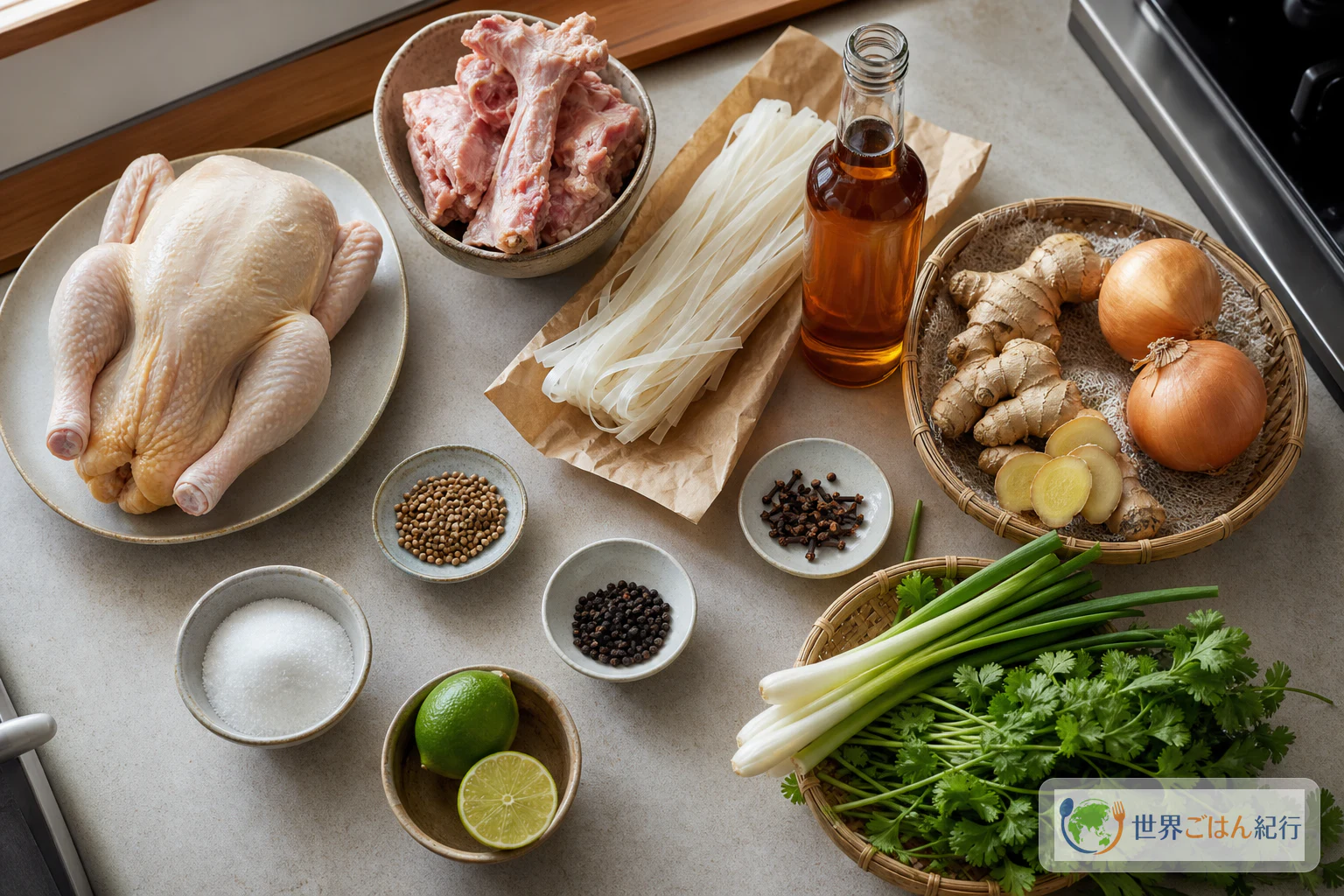
Phở gà is not a dish that gets more authentic the more ingredients you add. First gather bone-in chicken parts that give savor, flat rice noodles, and fish sauce. Without a whole chicken you can make it with drumettes and thighs, but if you swap the flat phở noodles for thin rice vermicelli the texture becomes much lighter.
Fish sauce and phở noodles are not one-time purchases; you can use them up. Fish sauce also goes into stir-fries and Thai dishes, and rice noodles into pad Thai and Vietnamese dry noodle dishes. Conversely, if flat rice noodles and fish sauce are already at a nearby store, there is no need to order more online.
The condition for buying rice noodles for phở is that the bag says "phở," "bánh phở," or "flat rice noodles," and that you can check the quantity and ingredients. If you substitute thin rice vermicelli, the amount of soup absorbed changes, so follow the package for the boiling time. Check whether the pack is 400 g, the noodle width, and the ingredient list. Skip buying if you can substitute flat rice noodles you already have at home.
Fish sauce is a seasoning made by fermenting fish, so people with seafood allergies should replace it with light soy sauce and salt and also check the product's label. For the chicken, confirm with a food thermometer that the center of the thick part has reached 74°C or higher. The US Department of Agriculture's Food Safety and Inspection Service (FSIS) also gives the safe minimum internal temperature of poultry, including whole chicken, as 165°F (73.9°C). Washing raw chicken under running water easily splashes juices around, so handle it unwashed, and use separate cutting boards and tongs before and after cooking.
Instructions: Eight Steps That Keep the Broth Clear
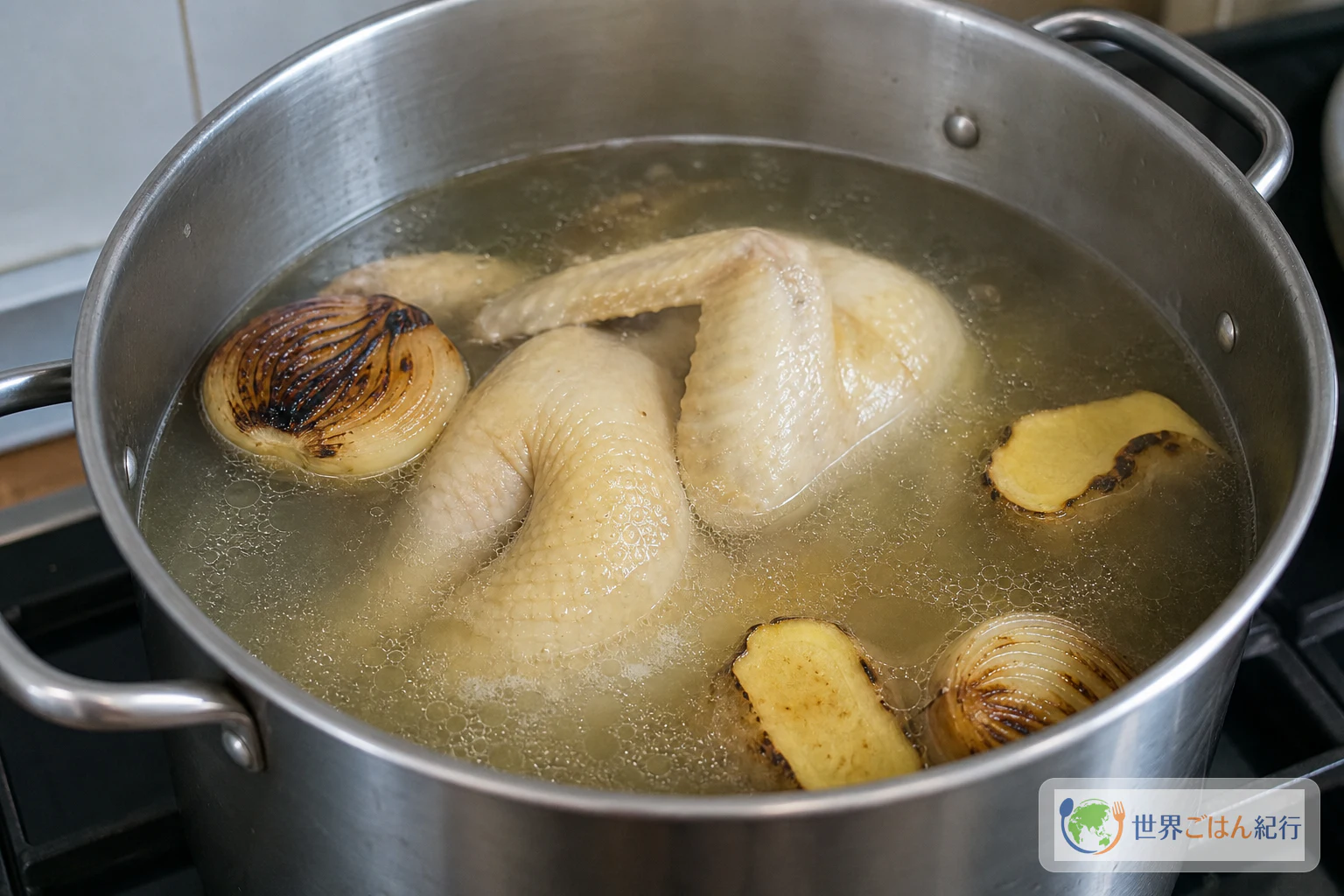
Phở gà is less a dish that gets better the longer it simmers than one in which you must not disturb the pot. Boil it hard and fat and fine bits of meat scatter through the broth and the clarity is lost. Proceed while watching that the surface of the pot is trembling gently and that the aroma is not leaning too much toward char.
If the broth has turned white and cloudy from too strong a heat, the flavor is not ruined. Take out the chicken and aromatics once and skim the fine foam with a strainer. Return to low heat and keep the broth quiet. Even if it does not return to complete clarity, as long as there is no burnt bitterness, lime and scallions make it perfectly eatable.
Why keep the broth light
Andrea Nguyen's chicken phở recipe is among the sources for this one. This version is scaled for four, and the herbs are added at the table. In households that want to keep the chicken aroma, you can also choose not to add star anise and cinnamon.
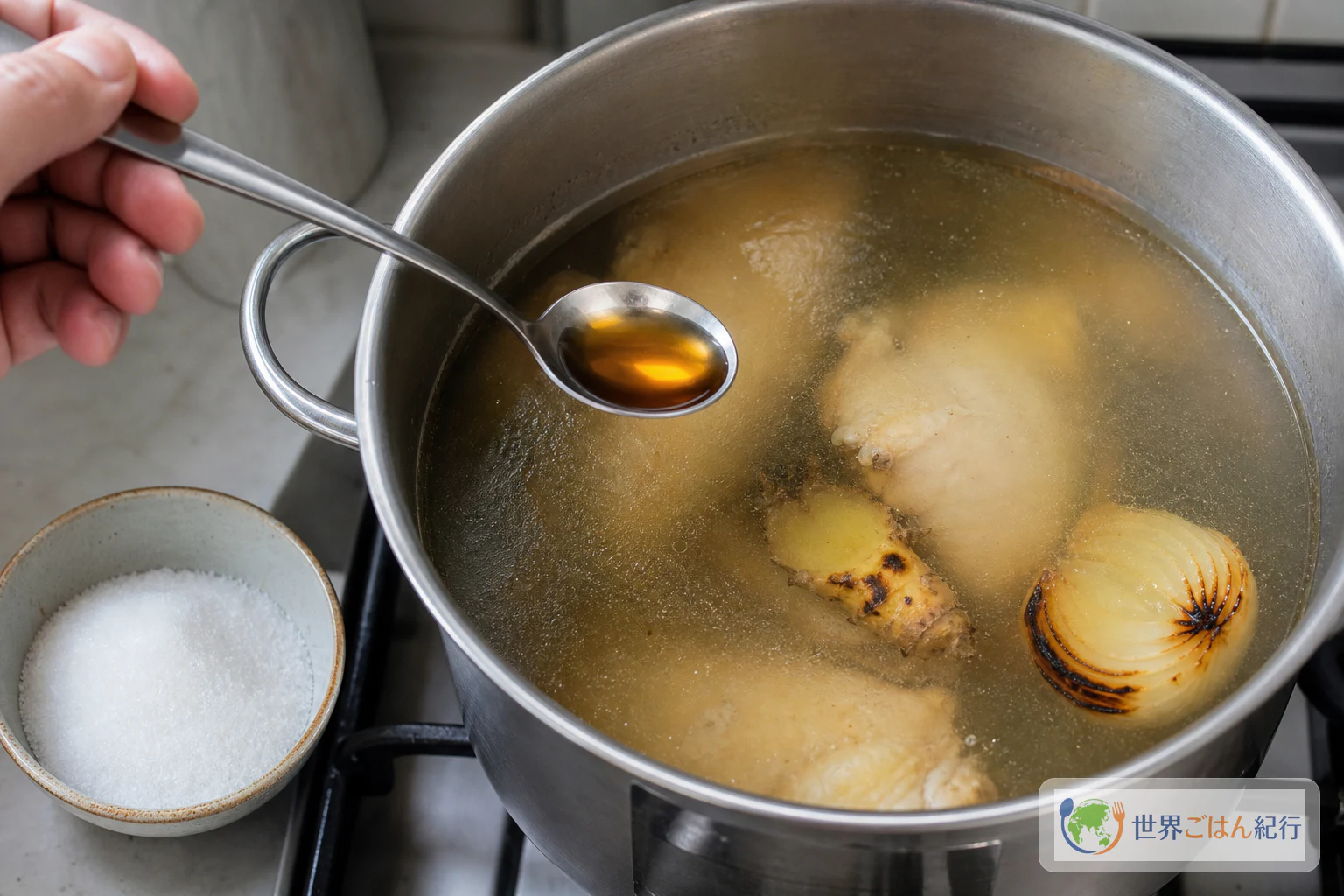
Adding the fish sauce last is also a home-cooking decision. If it is simmered long from the start, the aroma of the fish sauce weakens and only the saltiness comes forward. Added after the broth is made, and with a small dish on the side for those who want more, it is easier to serve even to people who do not like fish sauce.
Shopping Decisions for Aroma and Texture
Coriander seeds are a spice that is hard to justify buying just for phở gà. But toasting the seeds for only a minute and lifting them out after a short time gives the chicken broth a citrus-like brightness. Powder changes how the aroma rises and how easily it can be removed, so this recipe uses whole seeds.
What to check is that the coriander seeds are whole, not powder, and the quantity and expiry date. The condition for buying is that you plan to make phở gà two or more times, or will use whole spices in curries and pickles too. If you are not confident of using them up in this one dish, make it with the black pepper you already have and keep the aroma lighter; it wastes less.
Fish sauce adds a fermented savor that salt water alone cannot make. The condition for buying is that you make phở or stir-fries several times a month and do not mind the smell of fish sauce. Skip it if you need to avoid seafood or if light soy sauce gets you to the taste you like. Check the volume and ingredient list on the label, and follow the product's directions for storage after opening.
Background of the Dish, and the Tables of North and South

Phở is not a dish that one shop perfected and handed out nationwide. It took shape in the towns of Nam Định and Hanoi, spread south with people on the move, and has been made in Vietnamese communities abroad too. The Vietnam National Administration of Tourism explains that after the division of the country in 1954 phở spread with people moving from north to south, and that in the south it changed in the direction of a sweeter broth and more herbs and condiments.
Northern-leaning phở is eaten by first sensing the outline of the broth. A little scallion, cilantro, lemon, and chili is added, and the diner adds little. In the south, a separate plate of bean sprouts, basil, mint, and the like is served, and sweetness, hoisin sauce, and chili sauce are added as people assemble their own bowl. It is not a matter of which is right. In a home kitchen, make the first pot northern-leaning and clear, then add more plates so it can also move toward the southern style, which makes the flavors easy to compare.
To widen your Vietnamese table, after a clear noodle soup, bánh mì, which cuts through with pickled vegetables and bread, and bánh xèo (in Japanese), cooked from rice-flour batter, show the use of fish sauce and herbs going in another direction. For a gentle chicken-broth noodle comparison, Laos's khao piak sen (in Japanese) is also in a similar spot.
The axis of flavor to hold in a home kitchen
Keeping the following order raises fidelity more than gathering every local ingredient. First, build sweet toasty notes with charred onion and ginger. Next, do not boil the chicken hard, and do not cloud the broth. Finally, move the fish sauce, sugar, lime, and herbs separately. In this order, even if you swap cilantro for mitsuba or the whole chicken for drumettes, the way of eating phở gà is preserved.
If you pick just one thing that is hard to find, start with flat rice noodles for phở. More than the substitutes for chicken or onion, the width of the noodle and the slippery feel as you slurp it shape the impression of the bowl. Fish sauce is the next candidate. Coriander seeds are for people who want to check the difference in aroma.
Storing what you cannot finish
Move the broth and chicken to separate clean containers and refrigerate once the heat is off. For home quality, use up the broth and chicken within 2 days as a guide, and boil rice noodles each time. If freezing, freeze only the broth, in single-serving portions with no toppings, and the noodles will not go soft. Reheat the broth until thoroughly hot all the way through and return the chicken. It is also important not to leave the dish at room temperature for a long time.
Frequently Asked Questions
If you buy one thing for authenticity, flat phở noodles. If you buy one for depth of flavor, fish sauce. Add coriander seeds only if you want the aroma another step brighter.
Q1. Is it still phở gà without a whole chicken?
Yes. You can make it with 8 drumettes and 2 chicken thighs, or 500 g chicken wings and 2 chicken thighs. Including bone-in parts gives the broth body. If using only breast meat, add carcasses or wings, and take out the meat partway so it does not overcook.
Q2. Is it lacking without star anise and cinnamon?
It will not be lacking. You might want to add them thinking of the aroma of phở bò, but phở gà takes shape with only coriander seeds, black pepper, and charred ginger. If you do add them, start with 1 star anise and cinnamon of 5 cm or less, check the aroma at about 15 minutes, and take them out.
Q3. I don't like cilantro. What should I serve instead?
Mitsuba, water dropwort, shiso, and scallion, in that order, are easy to try. The direction of the aroma changes, but you keep the role of adding a green fragrance to the chicken broth. If you use no herbs, make the lime and black pepper slightly stronger and the flavor is less likely to go flat.
Q4. Can I swap the phở noodles for vermicelli?
You can. But vermicelli is thin and clings to the soup more lightly. If you buy flat noodles, check not only the product name but also the noodle width and boiling time on the package. How dried noodles are rehydrated differs by maker, so follow the package.
Q5. The broth turned cloudy. Can I eat it?
If there is no burnt bitterness or off smell, you can eat it. Lower the heat, skim the foam from the surface, taste, and then adjust the fish sauce and lime. Next time, give priority to cleaning the pot after the parboil and to not raising big bubbles during the simmer.
Q6. Can I make it ahead?
Refrigerate the broth and chicken separately and use them up within 2 days as a guide. Boil the noodles just before eating. Freeze only the broth, and after thawing reheat until the center is 74°C or higher as a guide. The flavor after adding fish sauce and herbs changes easily, so separating the toppings and seasonings before storing makes adjusting easier.
Sources
- Vietnam National Administration of Tourism, The story of Vietnamese pho, accessed July 2026
- Andrea Nguyen, Chicken Pho Noodle Soup Recipe (Pho Ga), published 2007, update checked July 2026
- U.S. Department of Agriculture, Food Safety and Inspection Service, Chicken from Farm to Table, accessed July 2026
- U.S. Department of Agriculture, Food Safety and Inspection Service, Safe Minimum Internal Temperature Chart, accessed July 2026
- David McKelvey, Pho ga, Hanoi, Wikimedia Commons, CC BY 2.0
- T.Tseng, Pho ga, Mary's chicken, Wikimedia Commons, CC BY 2.0
- Ccharlyzee, Chicken Pho, Wikimedia Commons, CC BY-SA 4.0



