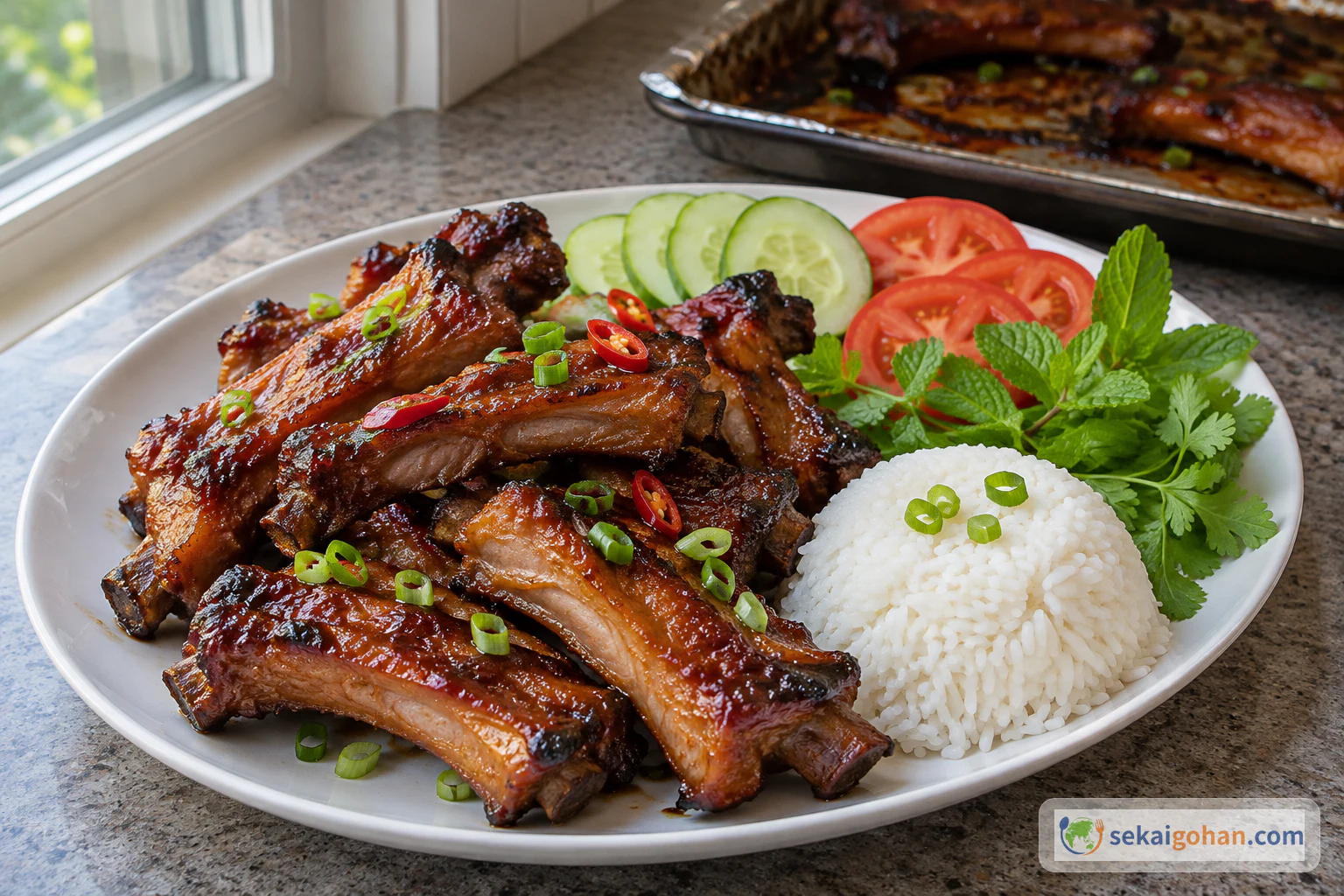
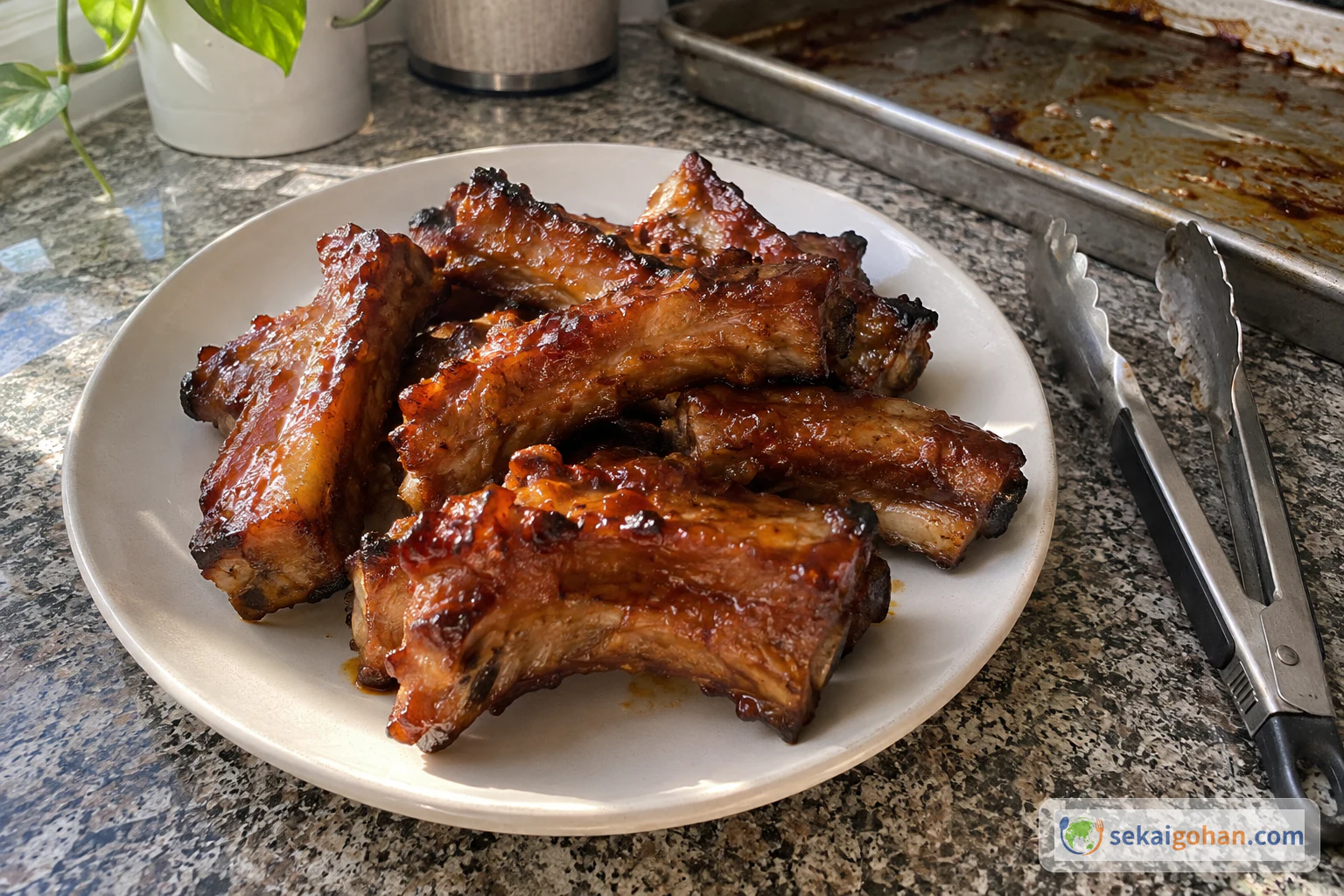
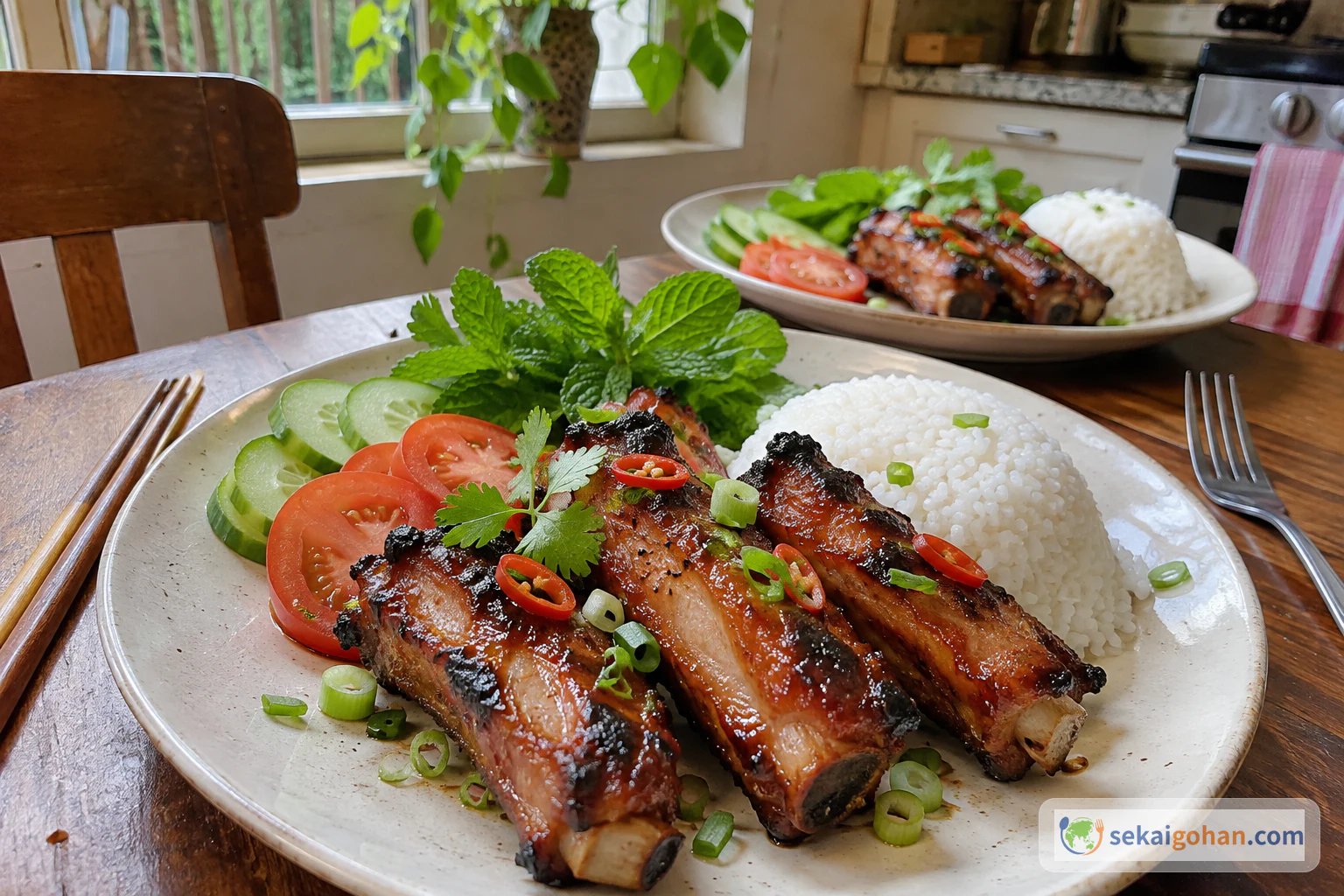
Halfway through the bake you open the oven to baste, and the smell rushes out: lemongrass, garlic, and fish sauce turning sweet and dark where the sugar meets hot metal. The edges of the ribs are already going from amber to deep brown, with small black spots where the glaze has caught. In Saigon that same smell drifts off charcoal grills, and the rib lands on a plate of broken rice that people eat with a spoon and fork. Sườn nướng is pork rib marinated in fish sauce, sugar and lemongrass, then grilled or baked until sticky. It tastes salty first, then sweet, with a sharp citrus-grass perfume, and the mint, cucumber and chilli beside it keep every bite fresh.
Ribs, Broken Rice and a Lemongrass Brush
The rib at the center of the plate
Sườn is the rib section of the pig, bone-in ribs or chops, and nướng means grilled. The name covers any marinated bone-in pork from that cut cooked over heat, so it belongs to no single plate. It is served on its own, laid on rice, put over rice noodles or tucked into bread.
The plate most people picture is cơm tấm, the broken-rice dish of Saigon. It is usually described as a meeting of kitchens: a grilled chop called sườn nướng kiểu Pháp, "French-style", next to a Chinese-style steamed egg cake, chả trứng, shredded pork skin, bì, in the northern manner, and the sweet-sour fish sauce dressing of the south. On that plate the grilled pork costs the most. It also decides where people eat. Each shop's marinade is its own, and the smoke from the charcoal is what you smell before you reach the counter. One account traces the dish to a shop called Thuận Kiều in District 11 in the early 1970s; where cơm tấm with grilled pork actually began is not settled.
Street vendors baste as they grill with a brush made from lemongrass stalks, bruised and tied together, so each pass leaves a little more of the herb's scent on the meat. Some cooks sweeten the marinade with sweetened condensed milk instead of honey or sugar, and the milk also softens the pork.
One name, several marinades
Households and stalls cook sườn nướng in more than one way. The cut changes, the sweetener changes, and so does what it is cooked on. The version below uses bone-in pork back ribs, a wet marinade of fish sauce and plenty of sugar, and a home oven, which makes it the easiest to cook well in a kitchen without a charcoal grill.
| Style | Cut | What sweetens and seasons it | Cooked on |
|---|---|---|---|
| Back ribs, lemongrass (this recipe) | Bone-in pork back ribs | Fish sauce, sugar, lemongrass, garlic, white pepper | Oven |
| Chop, lemongrass (sườn nướng sả) | Bone-in pork chops | Fish sauce, oyster sauce, sugar, honey, lemongrass, garlic, scallion whites | Grill over direct heat |
| Chop, honey (sườn nướng mật ong) | Pork loin chop (sườn cốt lết) | Fish sauce, honey, oyster sauce, soy sauce, lemongrass, shallot | Charcoal or air fryer |
Some related dishes are easy to confuse with this one. In bún thịt nướng, thinly sliced pork shoulder is grilled and served over rice noodles, which makes it a different cut and a different meal. Sườn ram and sườn xào chua ngọt use the same ribs but braise or stir-fry them in a sweet-sour sauce, without any grilling. For more of the country's cooking, see the Vietnam page.
Ingredients (serves 6)
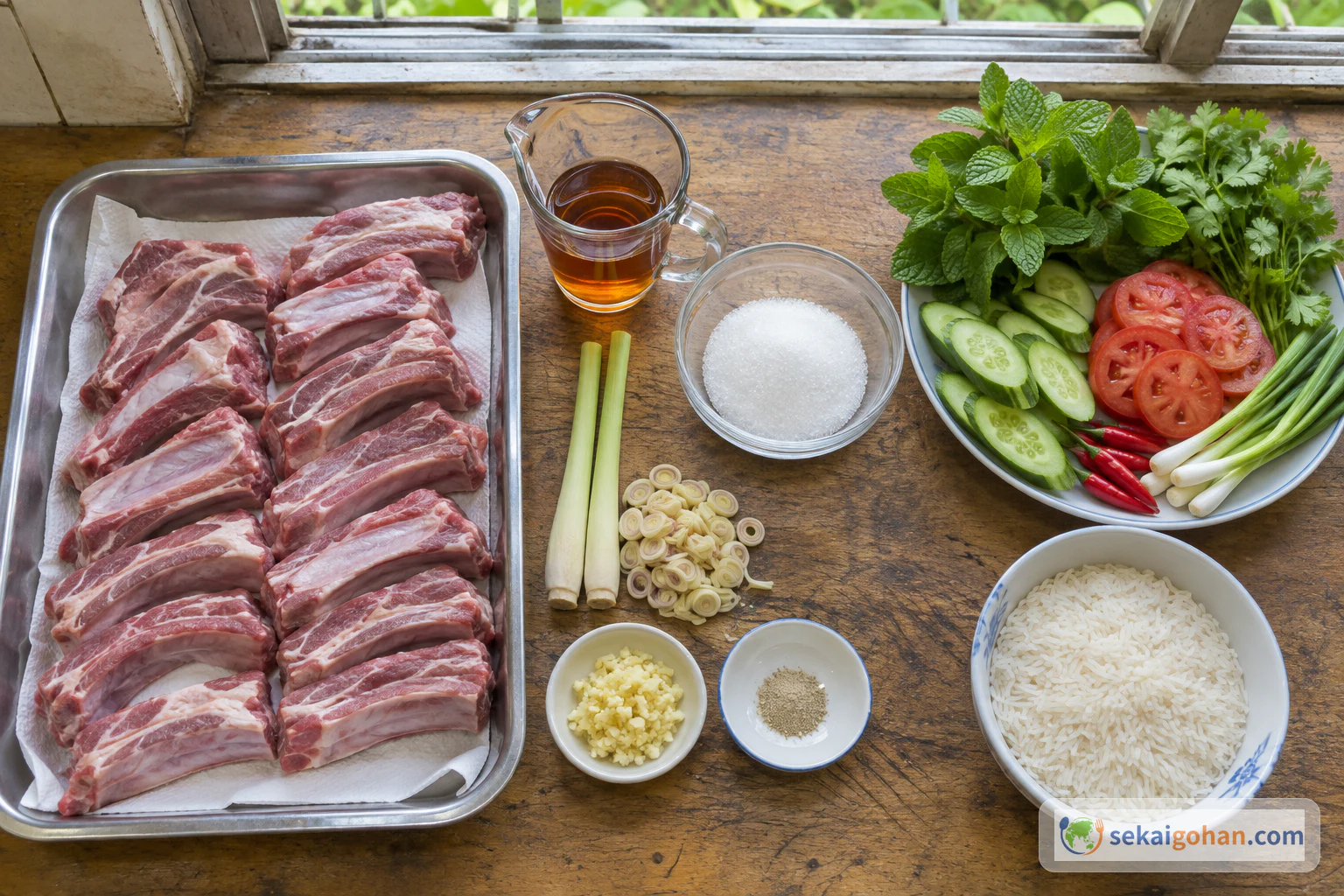
Use the full amount of sugar. It looks like a lot, but cutting it back leaves the ribs dull and pale. The deep amber shine and the charred edges both come from that sugar.
Fish sauce contains fish. The main recipe has no milk, egg, wheat or peanut. The chop styles above add oyster sauce (shellfish) and soy sauce (soy), a condensed-milk marinade adds milk, and ribs served in bread add wheat. Mint and coriander are part of the plate, so leave them off for anyone who reacts to fresh herbs.
Equipment
- Sharp knife and cutting board
- Paper towels
- Large mixing bowl and whisk
- Lidded container large enough to hold the ribs in their marinade
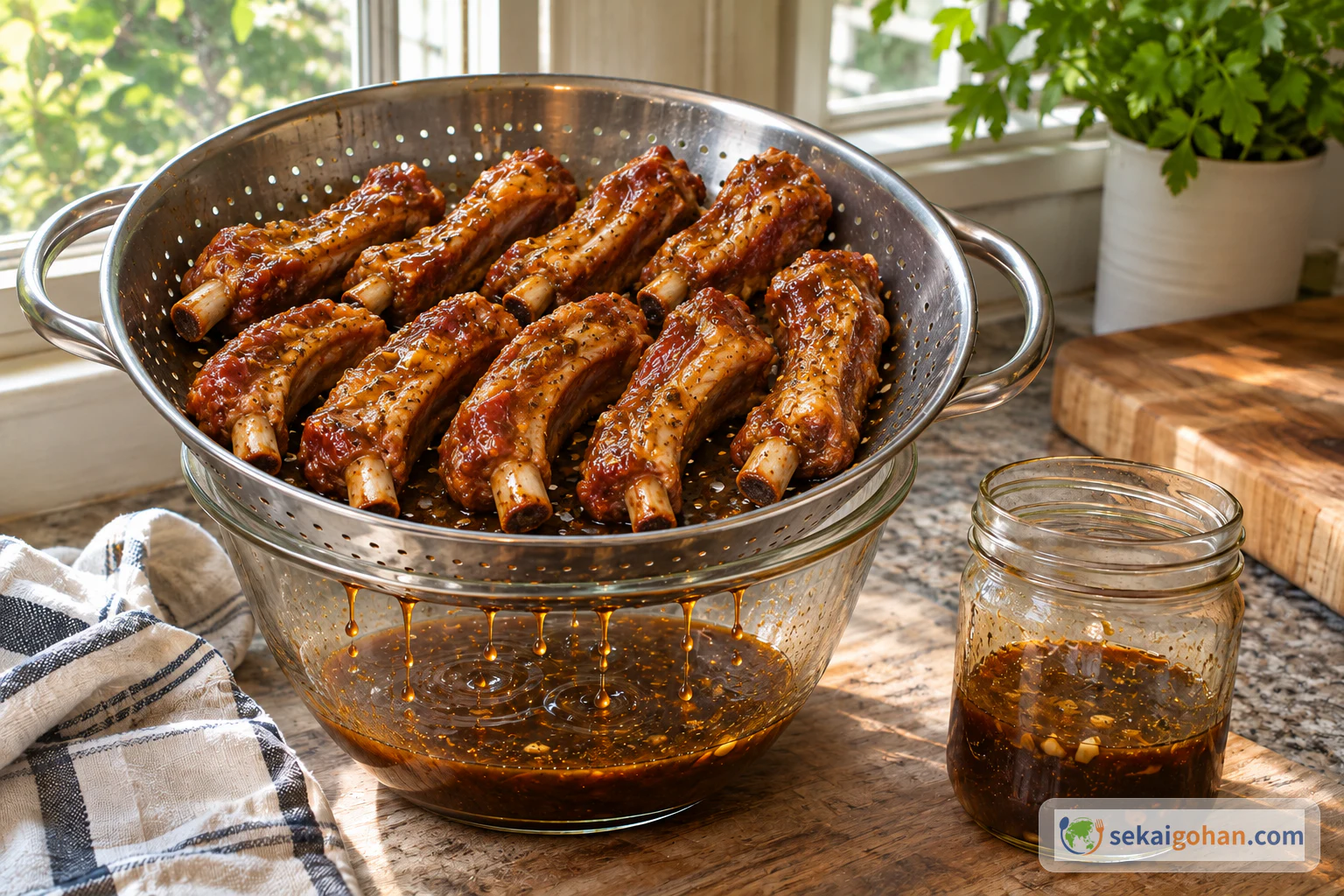
- Colander set over a bowl
- Small clean jar for the basting marinade
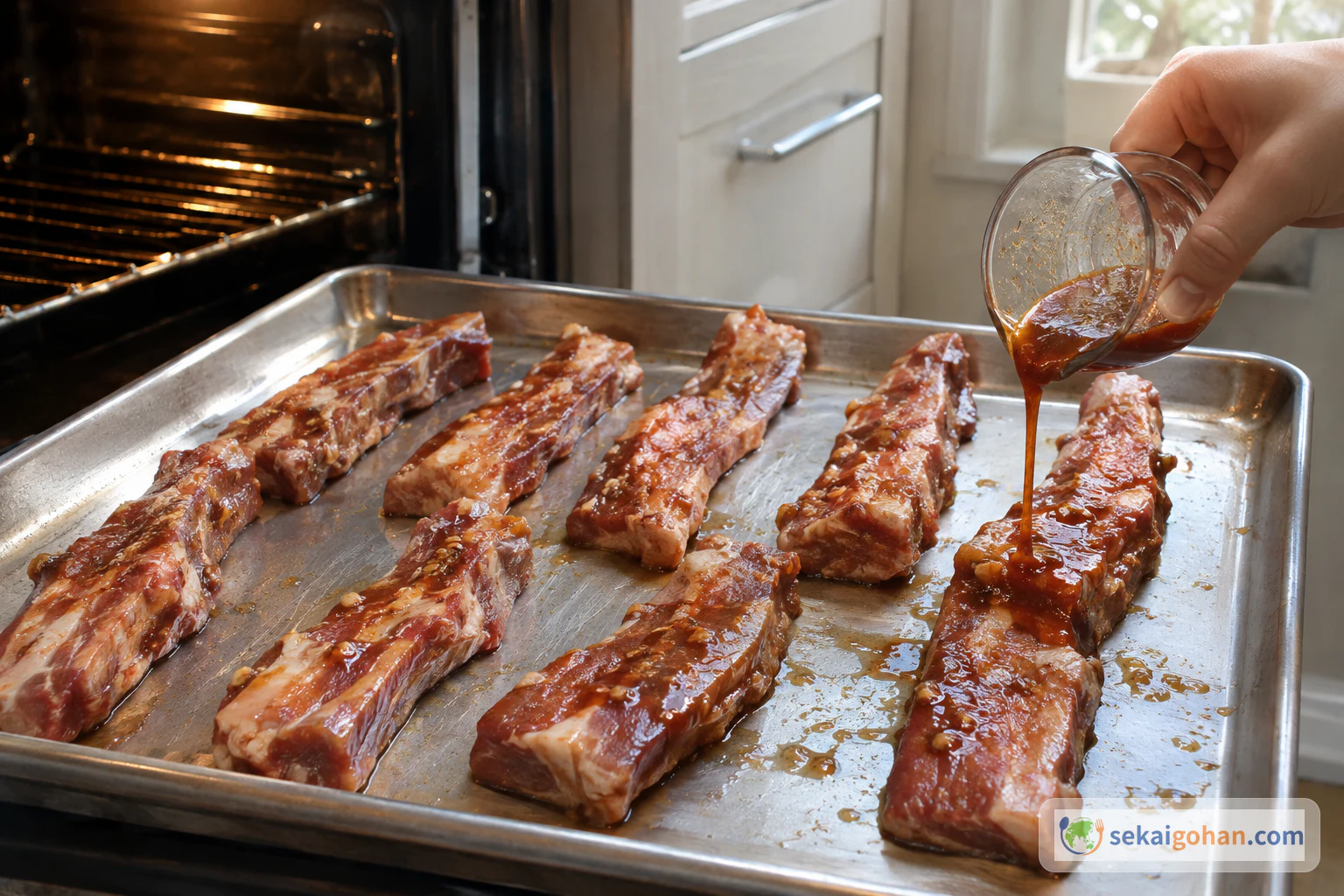
- Metal baking tray, used bare
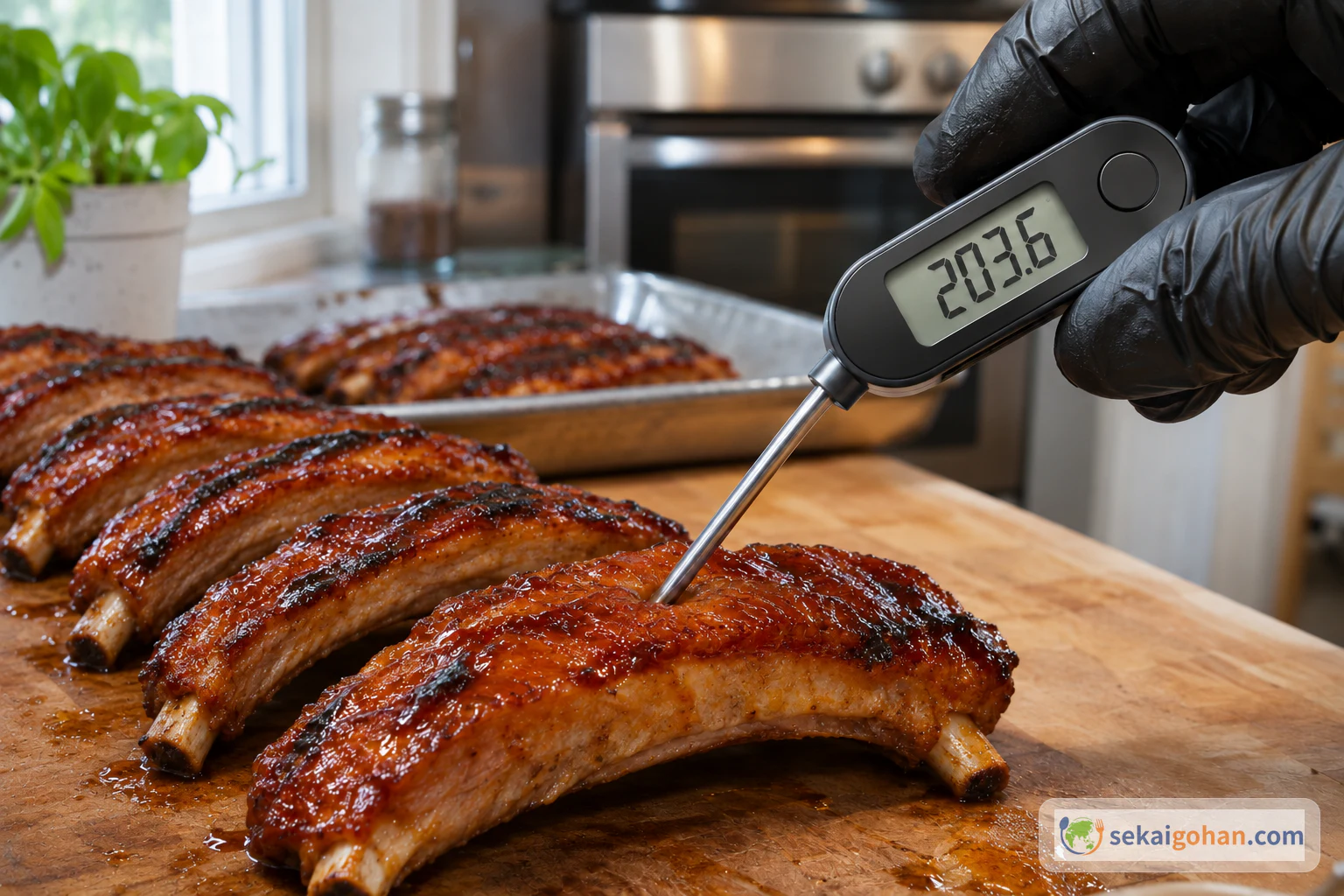
- Instant-read thermometer
- Aluminum foil
- Clean serving plate and clean tongs
- Thin disposable gloves (optional, for handling raw meat)
Choosing and Substituting
Fish sauce is the one thing to buy with care. Look for it at an Asian grocer or online. Brands differ a lot in saltiness, so make the first batch with the full amount, taste, and adjust next time. Soy sauce in its place changes the aroma completely and turns this into a different dish.
Fresh lemongrass, white part only, gives the brightest perfume. The woody green tops add fiber without scent. Frozen minced lemongrass is the next best option and keeps well in the freezer. Ground dried lemongrass also works, at 1½ tsp in place of ¼ cup chopped fresh, but the aroma is much weaker.
Caster sugar dissolves fastest. Ordinary fine granulated sugar works if you whisk longer. Black pepper can replace white, though it leans muskier and loses some of the clean bite. Garlic from a jar is fine, but keep the amount as it is, because extra garlic covers up the lemongrass.
For the meat, ask for bone-in pork back ribs, the ribs from the upper rib cage, and look at the thickness. Even, moderately thin ribs glaze and cook through together. If coriander is not liked at your table, put more mint on the plate. Any cucumber does the job of the Lebanese one, and jasmine rice or Japanese-style short-grain rice both work under the ribs.
Method
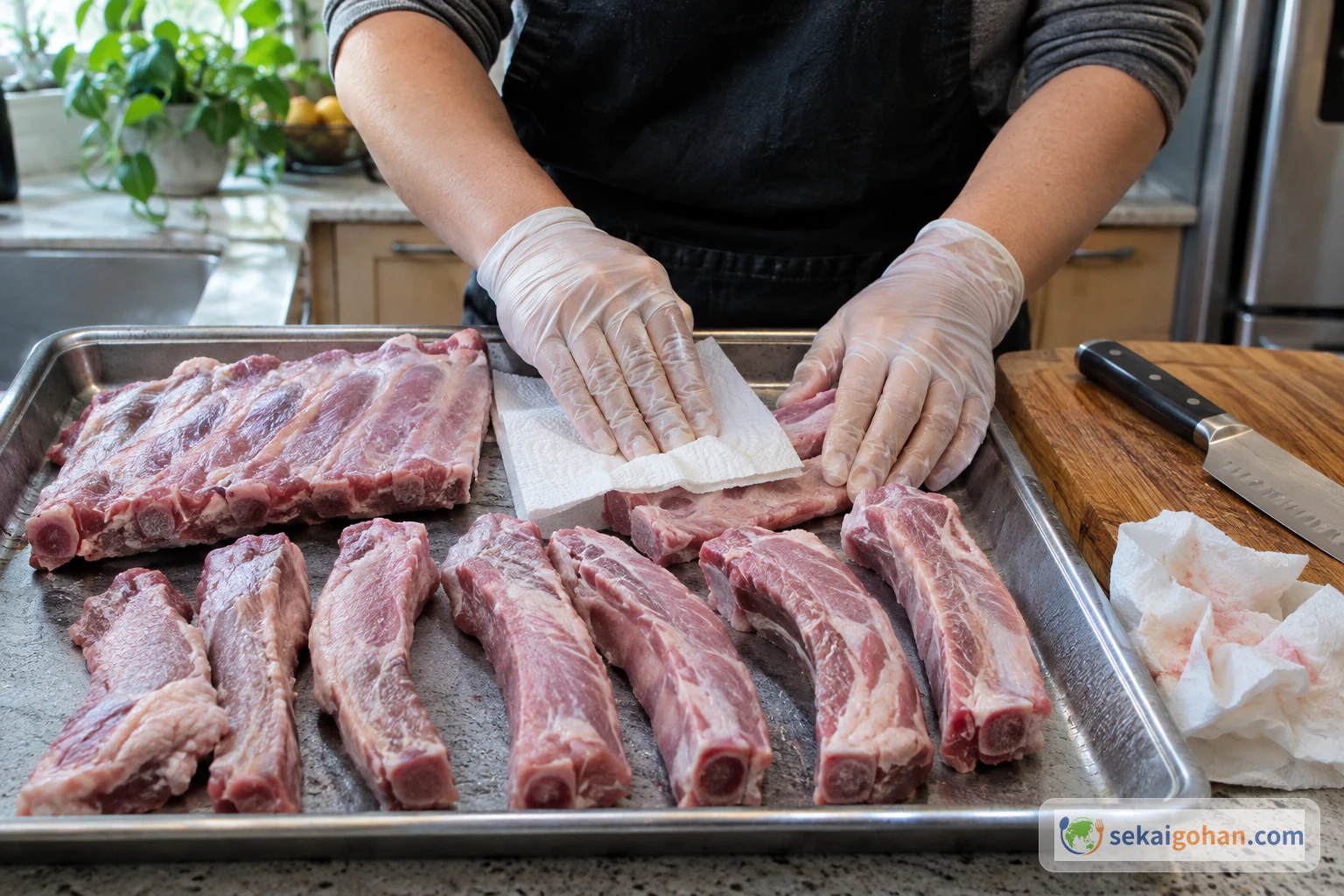
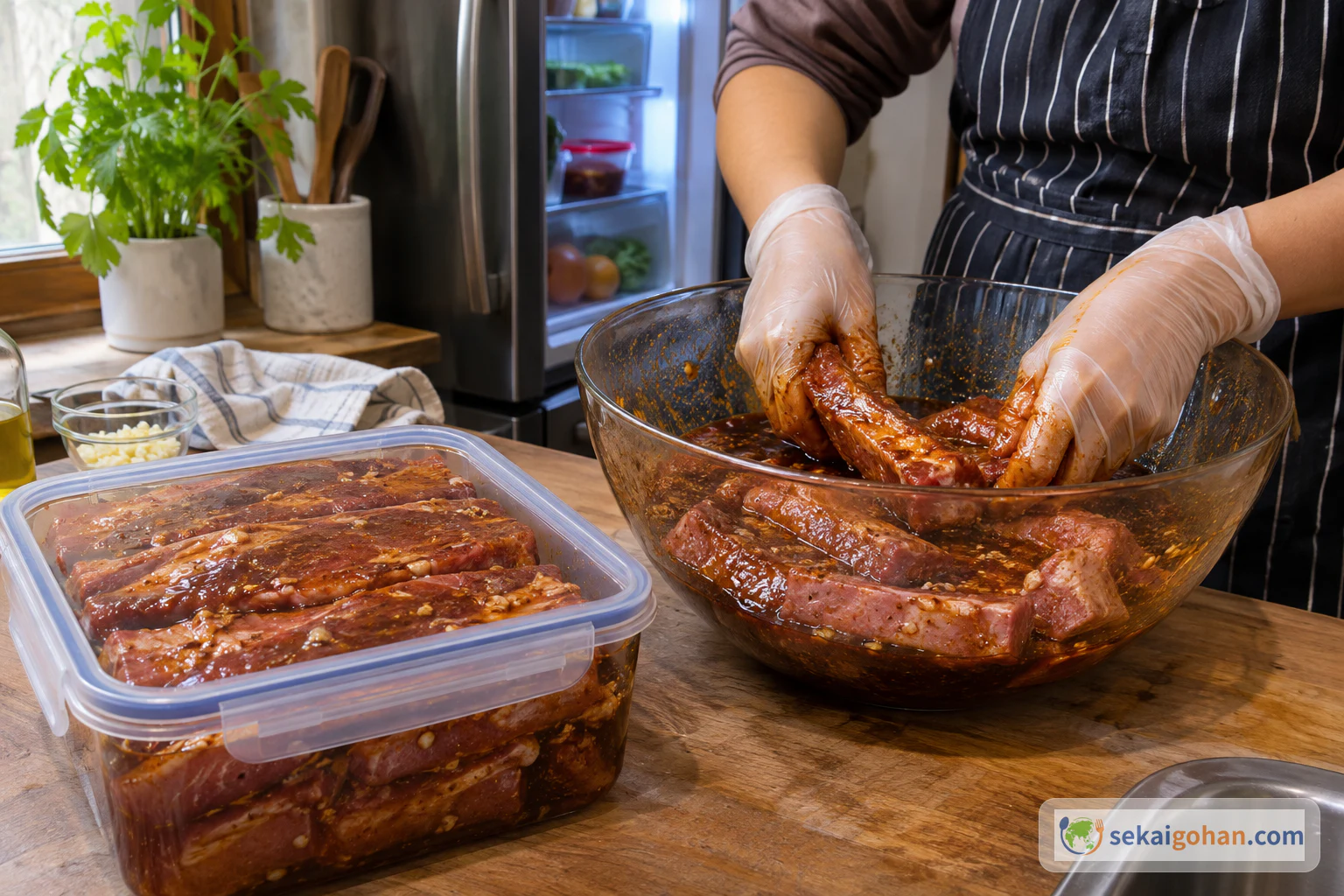
Most of this dish is waiting. Cutting, drying and mixing take a short time, and then the ribs need at least 5 hours in the fridge, so start in the morning or the night before. After that the work goes quickly: drain, lay out, bake, check the temperature, rest and plate. Have the thermometer within reach before the tray goes in.
Two moves decide whether you get a glaze or a stew. Drain the ribs properly, and never line the tray. Liquid around the meat and paper under it both trap steam, and steamed ribs stay wet and pale however long they bake.
Pork must be cooked through to the center. Hepatitis E virus, food-poisoning bacteria and parasites can sit inside the meat, and heat is the only thing that reduces that risk. Children, older people and anyone with weakened immunity are most at risk. The marinade has touched raw pork, so baste only while the ribs are still cooking, and keep the tongs, brush and plates used on raw meat away from the cooked ribs.
Treat the 20 minutes as the time to start checking. Thick ribs, a crowded tray or a cool oven all slow things down. The thermometer reading decides when the ribs come out.
When It Goes Wrong
| What you see | Why | What to do |
|---|---|---|
| Black, bitter surface | The sugar-heavy glaze scorched | Bake at 375°F (190°C), lay foil over ribs as soon as they darken too fast, and baste only in the first half of the bake |
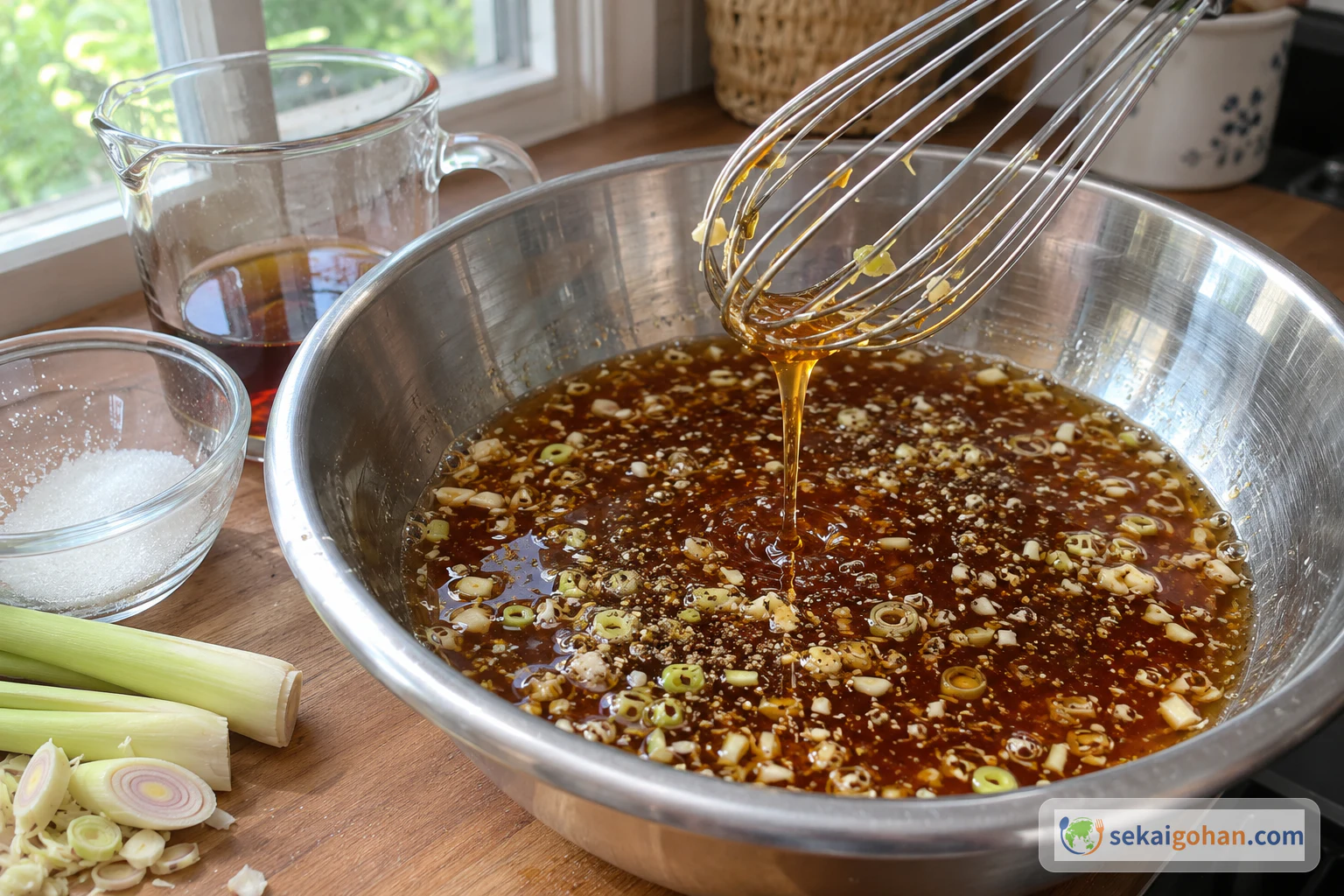
| Dark burnt specks across the tray | Sugar left undissolved in the marinade | Whisk until no grains remain before the ribs go in |
| No shine, watery ribs | The tray was lined or the ribs went in wet | Use a bare tray and drain the ribs in a colander until they stop dripping |
| Center below temperature | The ribs were judged by time alone | Keep baking until the thickest part holds 167°F (75°C) for 1 minute; thicker ribs need longer |
| Too salty | Your fish sauce brand runs salty | Make the next batch with about a tenth less fish sauce; keep the first batch at the full amount |
| Faint lemongrass | Dried, old or green-top lemongrass | Use the white part of fresh stalks, or frozen minced |
Serving, Variations and Storage
At the table
Serve the ribs hot with steamed rice and a heap of herbs. People pick the meat off the bone between mouthfuls of rice and cucumber. Saigon's cơm tấm plates are eaten with a spoon and fork, and chopsticks also work at a home table. A sweet-sour fish sauce dip is a good extra. Stir together 3 tbsp fish sauce, 3 tbsp sugar, ¾ cup plus 1 tbsp (200 ml) water and 2 tbsp lime juice, then add chopped garlic and chilli to taste. Make it fresh, separate from the marinade. Leftover meat pulled off the bone goes well in bánh mì or over bún with herbs.
Variations
- Lemongrass brush. Bruise a few lemongrass stalks, tie them into a bundle and use it to baste during the first half of the bake. The ribs end up with a brighter top note of lemongrass, as at a street grill.
- Grill pan or overhead grill, no oven. Brown both sides over medium heat, then cover with foil and let the ribs cook through more gently. Direct heat adds smoky edges, but the sugar burns faster, so watch the color and confirm 167°F (75°C) in the center.
- Chops with scallion oil. Use bone-in pork chops in the lemongrass marinade and grill them over medium-high heat, about 8 minutes a side for thin chops and about 10 for chops over 1 inch thick. Finish with mỡ hành: the green parts of spring onion with 1 tbsp oil, microwaved for 1 minute and spooned over. The result looks like the meat on a cơm tấm plate, with a soft onion richness on top.
- Honey and oyster sauce in the air fryer. Sweeten with honey and add oyster sauce for depth, then cook at 355°F (180°C) for 20 to 25 minutes, turning and brushing thinly with marinade for color. The sweetness is rounder and the shine stronger, and this style uses far less fish sauce. Check the center temperature here too.
Storing and reheating
Once the ribs have cooled slightly, put them in a covered container and refrigerate promptly; never leave them out at room temperature. Reheat until hot all the way to the center. A microwave heats unevenly, so either check the thickest part with the thermometer or warm the ribs in a frying pan or under the grill.
Frequently Asked Questions
Can I use spare ribs instead of back ribs?
Yes, but spare ribs have a thicker layer of meat, and the center takes longer to come up to temperature. Bake them past the 20-minute check and keep going until the thickest part holds 167°F (75°C) for 1 minute, which counts the same as 63°C for 30 minutes. Cover with foil once the glaze is dark enough.
That is a lot of fish sauce. Can I make less?
Most of the marinade is drained off and discarded, so the amount is there to cover the ribs, and you eat only a small part of it. To serve three, halve everything evenly: 1⅔ lb (750 g) ribs, ¾ cup plus 1 tbsp (200 ml) fish sauce, 7 oz (200 g) sugar, 1 stalk lemongrass, 1 clove garlic and ½ tsp white pepper. Halve every ingredient by the same amount so the balance stays the same.
Can I boil the leftover marinade into a sauce?
Throw it away. It has soaked raw pork for hours, and it goes on the ribs only while they are still cooking. For something to dip into, mix the fresh fish sauce dressing described under serving.
Can I tell doneness by color instead of using a thermometer?
The meat at the center turns whitish as it cooks, and that is a useful sign. The dark glaze makes color hard to read, though, and the meat next to the bone behaves differently. The thermometer reading in the thickest part is what tells you the ribs are done.